do you understand Cap and Trade?

Not exactly hiking, but an important issue for all of us who want protection for the great outdoors.

Hank Green, the EcoGeek explains Cap and Trade in 3:30sec.

Click PLAY or watch it on YouTube.

( via Treehugger – Cap and Trade Explained in Under Four Minutes (Video)

is the Ursack truly bear proof?

I’ve been considering the Ursack system for protecting food from bears.

above_tree-ursack
more photos

Those who try Ursack seem to like the product. But it’s not currently approved for use in the Sierras.

I currently use a 2 lb 9oz Bear Vault. It’s great.

bear-vault-bv500
details – Amazon

… On the other hand, the Ursack V27 that holds almost as much food weighs only 7.5oz. (Recommended is to use a small Brillo pad squeezed under the opening to protect your yummies from mice and insects.)

Calipidder posted a terrific comparative review of all the available systems.

(via Two-Heel Drive)

Sierra High Route – American Adventure


Allie Comeau on the Sierra Blogging Post had to include a Sierra trip as one of her Top 10 American Adventures.

Good call.

It’s on our list of the best hikes in North America. Similar to the famed John Muir Trail, but without wasting so much time and energy descending each day. On the Sierra High Route you try to stay HIGH.

9. Hiking the Sierra High Route, California: The 195-mile stretch between King’s Canyon and Yosemite National Park is not for the faint of heart. This trail, through the country’s most rugged terrain, is challenging to say the least.

This one is dangerous. The expert is Steve Roper.

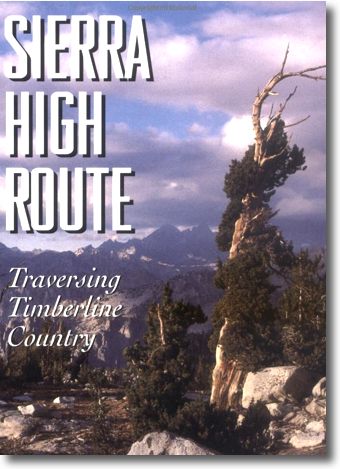
The Sierra High Route (also called the Roper Route) is a cross-country hiking route, 195 miles (314 km) long, through the Sierra Nevada. It was scouted by Steve Roper and described by him in his book Sierra High Route: Traversing Timberline Country (1982; 1997). …

Wikipedia

sierra-high-route

I’m going to need Steve’s guidebook.

Amazon – The Sierra High Route: Traversing Timberline Country

2 hikers dead on Kokoda Track

The Kokoda Track is one of the best, and toughest, hikes in the world.

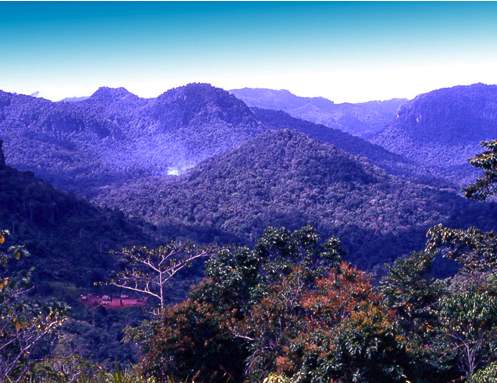
kokoda

… a single-file foot thoroughfare that runs 96 kilometres (60 mi) overland — 60 kilometres (37 mi) in a straight line — through the Owen Stanley Range in Papua New Guinea (PNG). The track is the most famous in PNG and is renowned as the location of the World War II battle between Japanese and Australian forces in 1942. ..

On Wednesday, a 26-year-old New South Wales man became the second Australian to die on the track in less than a week.

He died at Ioribaiwa village while trekking with Executive Excellence.

The company says it is working with authorities to have his body returned home as soon as possible. …

Last week 36-year-old Samantha Killen, from Hamilton in south-west Victoria, died on the trek.

samanthakillencrop-420x0

The mother of two was trekking with her father when she collapsed and died on Friday afternoon.

Her father told police his daughter had developed sore legs and appeared to be dehydrated and disorientated in the lead-up to her death.

Just a coincidence?

Earlier, a Kokoda Track tour operator said it was inevitable more deaths would occur unless operators he has described as “cowboys” were banned.

The chairman of the Kokoda Ethics Committee, Aidan Grimes, said some companies skimp on safety by taking up to 150 people trekking and by failing to check their fitness levels. …

ABC – Kokoda deaths not deterring trekkers

related – Kokoda death highlights safety concerns

best SAFE hikes in Australia?


More often than not on our list of best hikes in the world we promote “challenging” adventures.

The very dangerous West Coast Trail is our #1 pick. One in every hundred hikers has to be evacuated!

What if you don’t want to be evacuated?

From Our Hiking Blog:

We have come up with a short list that meets the following criteria:

– No death defying stunts required to complete the trip
– Relatively mountain / drop off free
– Challenging enough to make you feel a sense of accomplishment
– Multi day with at least 3 nights camping required
– Generally isolated and away from too much infrastructure

Before we give you the list, recall that Australia is chock full of dangerous animals. My friend from Canberra found a poisonous snake in the back seat of his car while putting his infant daughter into the car seat. I’d rather risk a Grizzly than meet a Brown Snake on the Trail.

The walks, in no particular order, are:

  • Great South West Walk – Victoria
  • Wilsons Promontory Circuit Walk
  • Overland Track – Tasmania
  • Australian Alps Walking Track
  • Thorsborne Trail – Hinchinbrook Island – Queensland
  • Bibbulmun Track – Western Australia
  • Great Ocean Walk – Victoria
  • Read the entire entertaining post – Hiking with Bathmophobia – 7 hiking trips that won’t scare you to death (too much) !

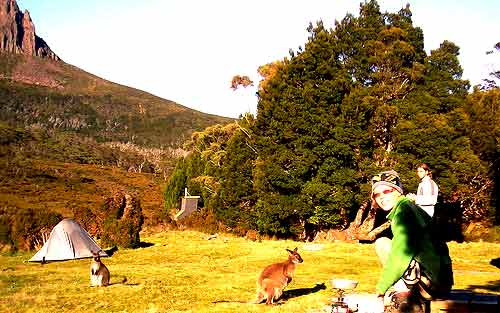
    wallaby
    photo – besthike editor Rick McCharles – Overland Track, Tasmania – 2007 trip report

    Survivorman is back – Survive This

    … When Les Stroud announced his retirement from “Survivorman” last year, wilderness-TV fans shed some tears, but we all hoped he’d be back. We’re happy to report the time has come: Les Stroud returns to Canadian TV this week with “Survive This,” in which eight teenagers with varying levels of outdoor skill are thrust into the Northern Ontario woods to survive with no tools outside of their clothes. …

    Daily Dirt – SURVIVORMAN RETURNS—THIS TIME, FOR THE KIDS

    teenagers

    I’ve got some teenagers I want to nominate for next year’s series.

    YTV – Survive This

    === related

    The Pulse blog’s Steve Howe will be watching any TV show related to wilderness safety. Check his recent post: EASTER VANISHINGS AND RESURRECTIONS – A quick survey of the missing, the found, and the lucky

    Lake Vesuvius Lakeshore Trail, Ohio


    The WARNING SIGNS on this trail are over zealous. From one trip report circulated by email:

    It was a beautiful day, no rain and warm sun shining down on the steamy well watered ground.

    We decided to take full advantage of the rare sunny day in Ohio. Just a piece up the road is Wayne Forest State Park.

    We set out for the park and to our delight a hike around Lake Vesuvius. The map showed a fairly flat 8 mile trail all the way around the lake.

    Perfect!

    The fearless leader Scott jumped out in the lead and set a good pace, until……

    the WARNING sign……..
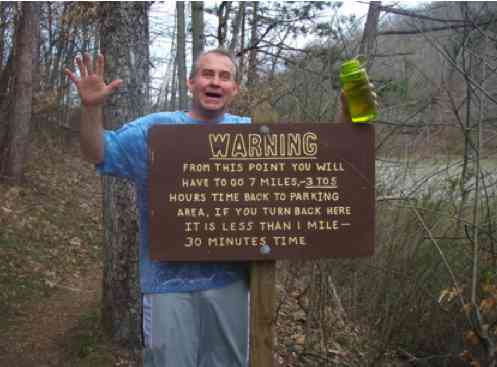
    warning-sign

    Would we be able to make it? Should we turn back now? OH MY 7 more miles to go EEKKK! I quickly calmed Scott down and told him we would be just fine! Let’s just enjoy the beautiful early spring flowers and push on ahead!

    So we hiked on looking for the perfect place to have lunch.

    We resisted the lunch recommended to us by the nice Forest Service man, Mr. Boggs. He said in a heavy Kentucky accent “Ain’t nothin’ better then sittin’ on a log with a good Balona’ sandwich, yew should russell yer selves up one”

    After lunch we continued hiking and then It hit us…..

    THE SECOND WARNING SIGN!
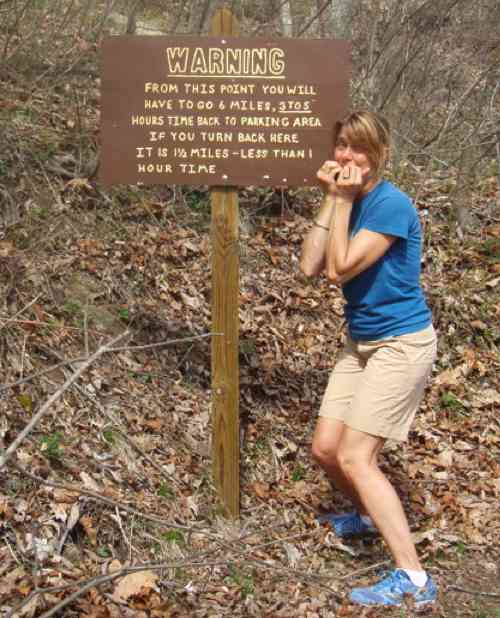
    warning-sign2

    6 MILES! Maybe we should turn back? The sign says it will take us another 5 hours! That’s about 1 mile per hour how could we ever do that?

    But the healthy lunch I made for Scott wasn’t full of Balona’ and this time he was the one to say we should press on!

    And so we did, up little hills, around big rocks, through a few mud bogs. The sun was warming up the ground and Canada Geese were defending their soon to hatch eggs.

    We never saw another hiker. I was sure it was because these Ohio hikers can’t handle the big miles. Look at us we’re doing just fine!

    But I spoke too soon! that was not it at all,

    And we soon found out.

    Now, I can’t say for sure. But maybe, the nowhere to be found, other hikers knew something we didn’t?

    like what was waiting up around the next bend!
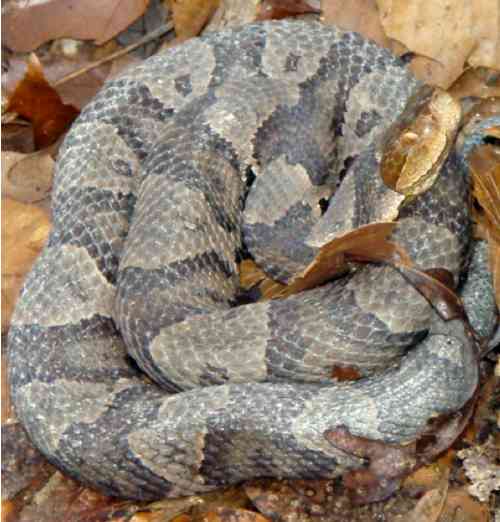
    copperhead

    Now this California girl had no idea what this nice specimen of a snake was, but my fearless leader Scott knew just what it was. A COPPER HEAD!

    We turned around and headed back to the car. Not that we couldn’t do the miles, but just in case the warning was more about the snakes!

    Back at the Ranger Station, Mr Boggs informed that indeed that is a Copper Head, “Out early this year!”

    GREAT! I hope they like Balona’ Sandwiches better then hikers in shorts exposing bare skin for the first of the season bite!

    Trail on Kilimanjaro – part 2

    Entertaining!

    Its day three of Trail Magazine’s attempt on Mt Kilimanjaro via the Machame route, and things are starting to get tough. The mountain is getting seriously spectacular but the air is getting thin and exhaustion is kicking in. As midnight on the last day approaches, will it be a glorious dawn on Africas Highest mountain or a whopper of a disappointment? Join Trail Magazines Simon Ingram to find out…

    Click PLAY or watch Part 2 on YouTube.


    official website of TRAIL and Country Walking magazines – Live for the Outdoors

    To see a 6min highlights clip of Day 1 and Day 2 of the Machame Route, click through to The Adventure Blog.

    best hike – Kilimanjaro information page

    avoiding trailhead vehicle break-ins

    From Rocky Thompson:

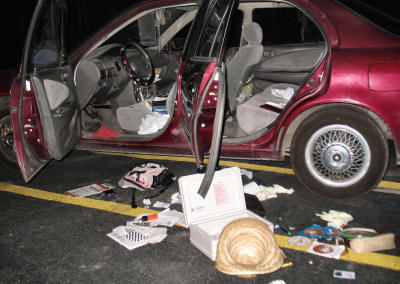
    Colorado police arrested a four-person burglary crew that would run a smash-and-grab on cars parked at trailheads. The four thieves-who are kind of like supergroup combination of Bonnie and Clyde plus Thelma and Louise-would wait until hikers had left their cars before smashing windows and stealing credit cards to buy video games and electronics. …

    car-broken

    The Goat Hikers Targeted by Criminal Masterminds

    I’ve tried just about everything over the years, including leaving an empty vehicle unlocked.

    There’s no perfect solution. Each trailhead needs be considered individually.

    In Hawaii last year I left my rent-a-car miles from the (reportedly dangerous) trailhead at a campground. Walked the extra distance to the trail, for security.

    At many trailheads in Canada there’s no worry. Remote hikes in the Rockies are almost all safe.

    Leave a comment if you’ve a strategy to share.

    Lost in the Yellowstone

    Lost In the Yellowstone: Truman Everts’s Thirty Seven Days of Peril is a surprisingly engaging read. One of the best survival stories ever.

    50

    One Amazon customer review:

    21ea4q50hgl_sl500_aa180_Today, being lost in Yellowstone National Park is as simple as turning on the wrong road after you lost your complimentary map or you can not locate the restroom in the Old Faithful complex. For Truman Everts, being lost in Yellowstone was a struggle between life and death. Everts’s account details his 1870 adventure in Yellowstone after finding himself separated from his travelling companions.

    The separation began Everts’s thirty-seven day struggle for survival in a pre-developed Yellowstone in which Everts had to find what little food and shelter he could just to survive.

    Readers will find this account to be a real-life struggle for survival reminiscent of Jack London’s fictional work. The editor, Lee Whittlesey, does a superb job of editing Everts’s story by providing the reader with additional information and the historical background of the book.

    The work is also illustrated with many early day photographs of Yellowstone which provides an stunning visual account of early-day Yellowstone National Park. This book will be appreciated by anyone looking for an exciting true-life adventure story as well as historians of the American West. People who have been “lost” recently in Yellowstone will also appreciate the book, even if their modern-day adventure pales in comparison to Evert’s

    His bad luck was horror show. Everything went wrong. He was treed one a night by a cougar, for example.

    Almost his only food for 37-days was the root of a plant commonly known today as Everts thistle or elk thistle.

    It’s a shame he could not catch fish. (He did gulp down a couple of mineral tainted minnows.)

    yell-early-anglers

    Yellowstone photo from 1923 – National Parks Traveler

    related – Yellowstone Park – Lost in the Yellowstone Wilderness: The Story of Truman Everts

    related – guidebook – Yellowstone Treasures: The Traveler’s Companion to the National Park