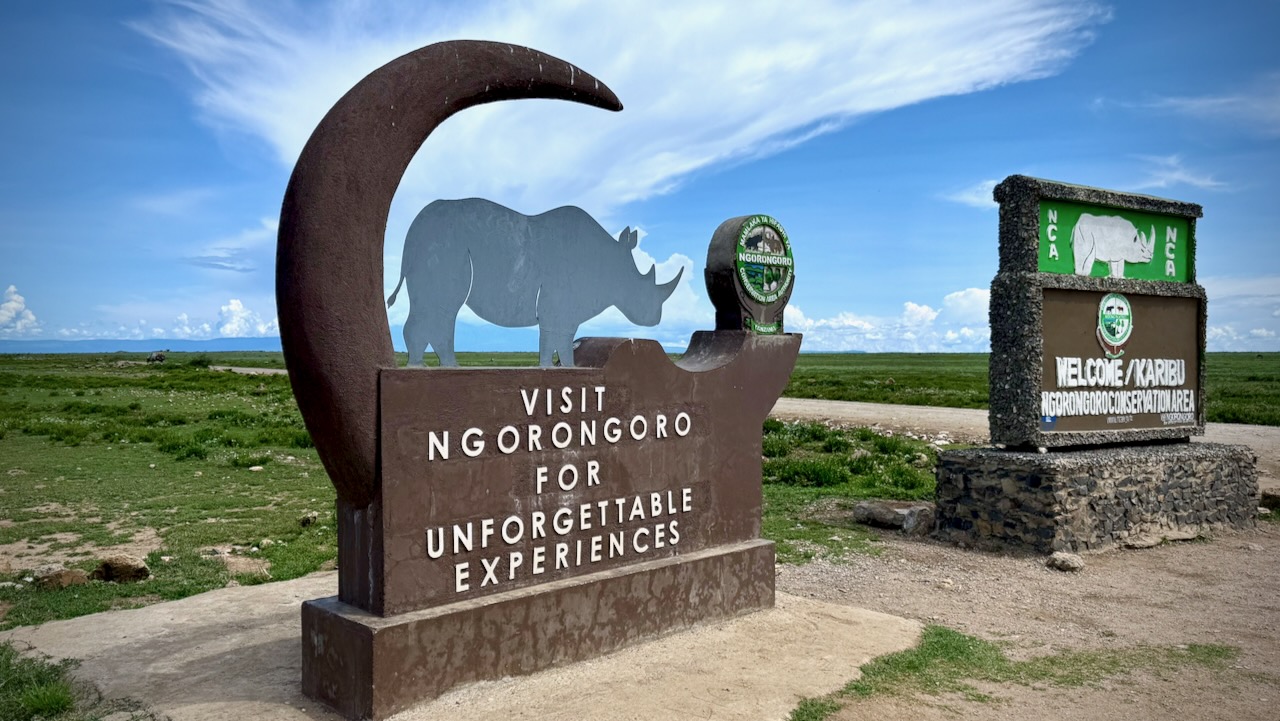
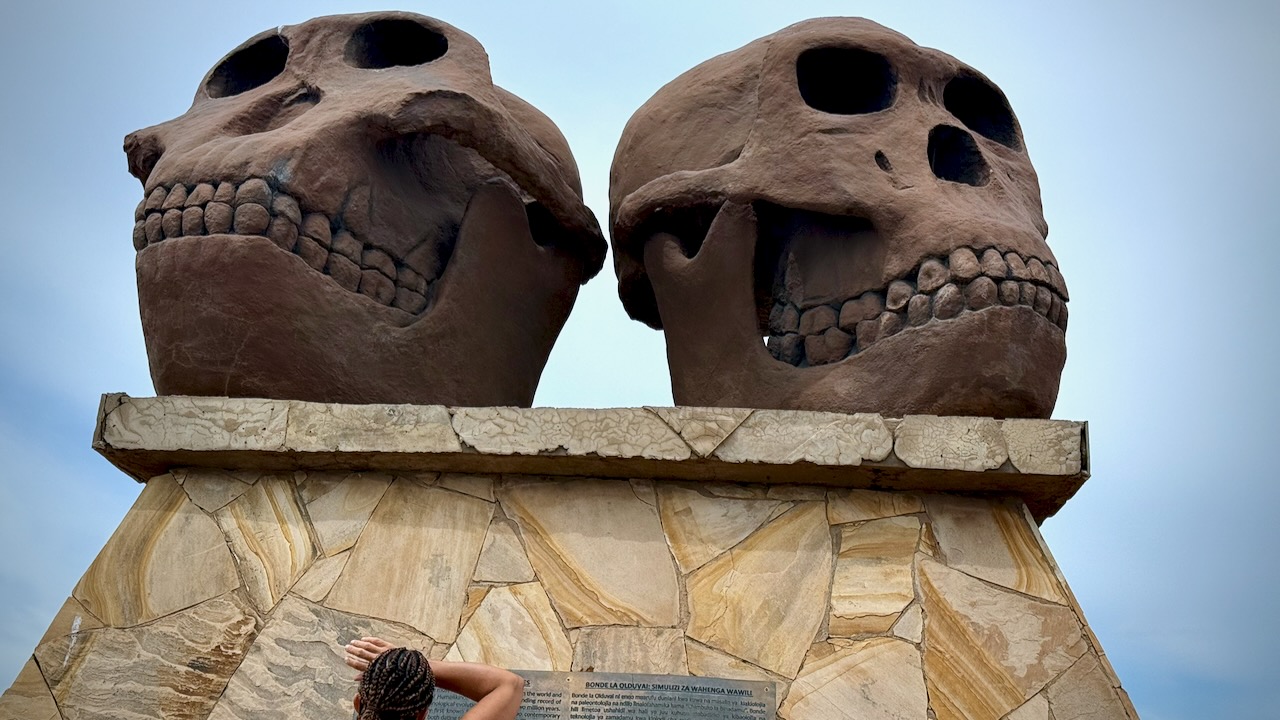
This is where Mary Leakey worked for decades. Olduvai Gorge. Hominin fossils more than 3.75 million years old.
The Maasai still live in the highlands here, though they are no longer in the caldera nor in the National Parks. Maasai herds can be as impressive as the wild animals.
Kids as young as age-4 are sometimes given responsibility to watch them.
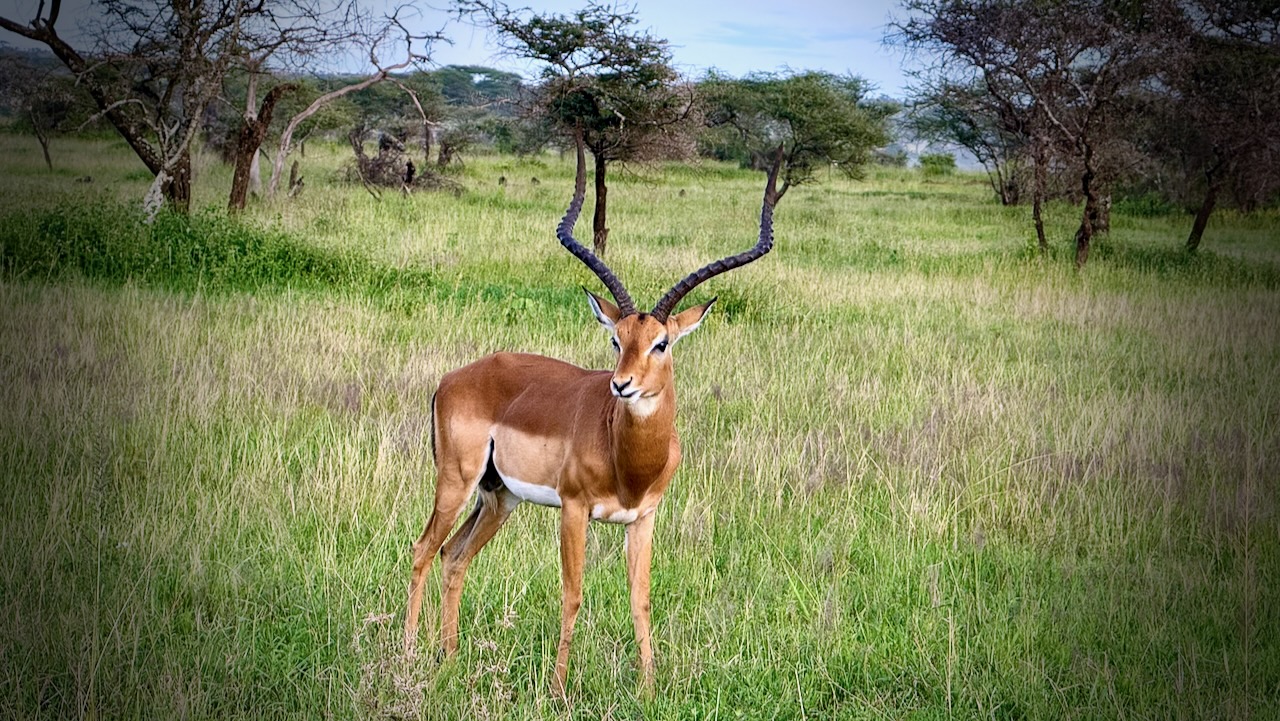
I hadn’t realized how many Impala and similar antelopes roam these grasslands.
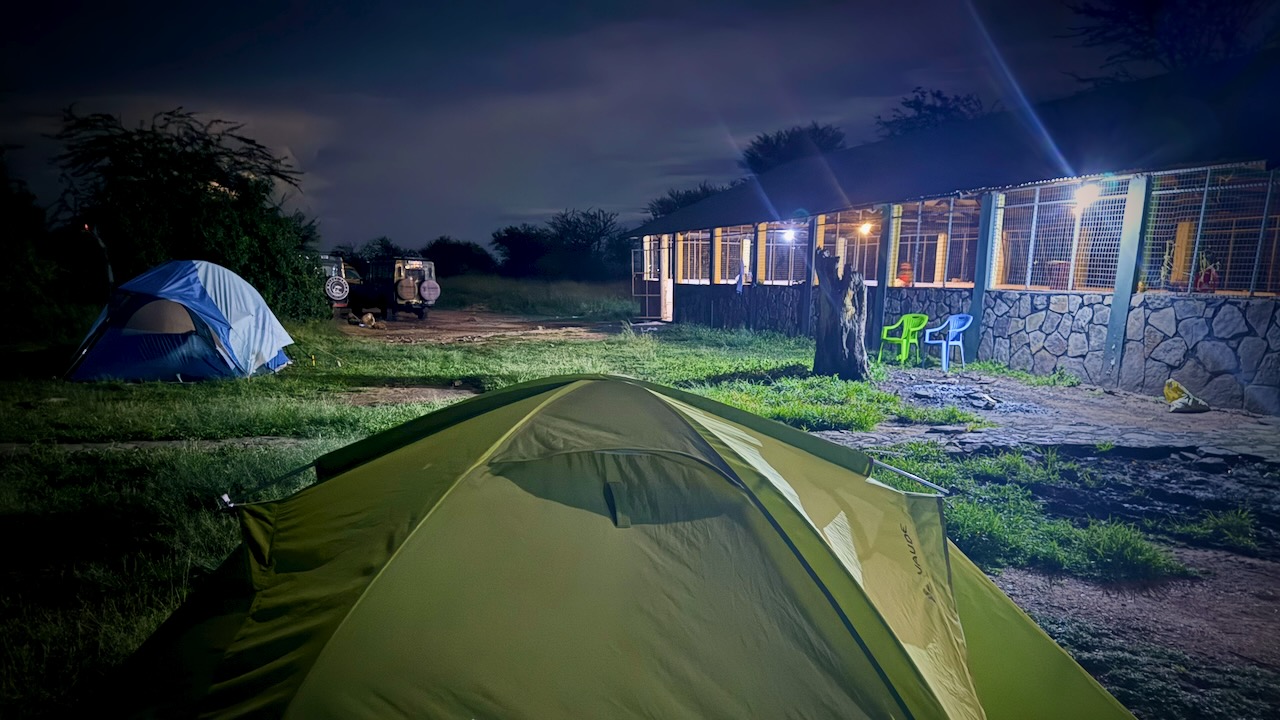
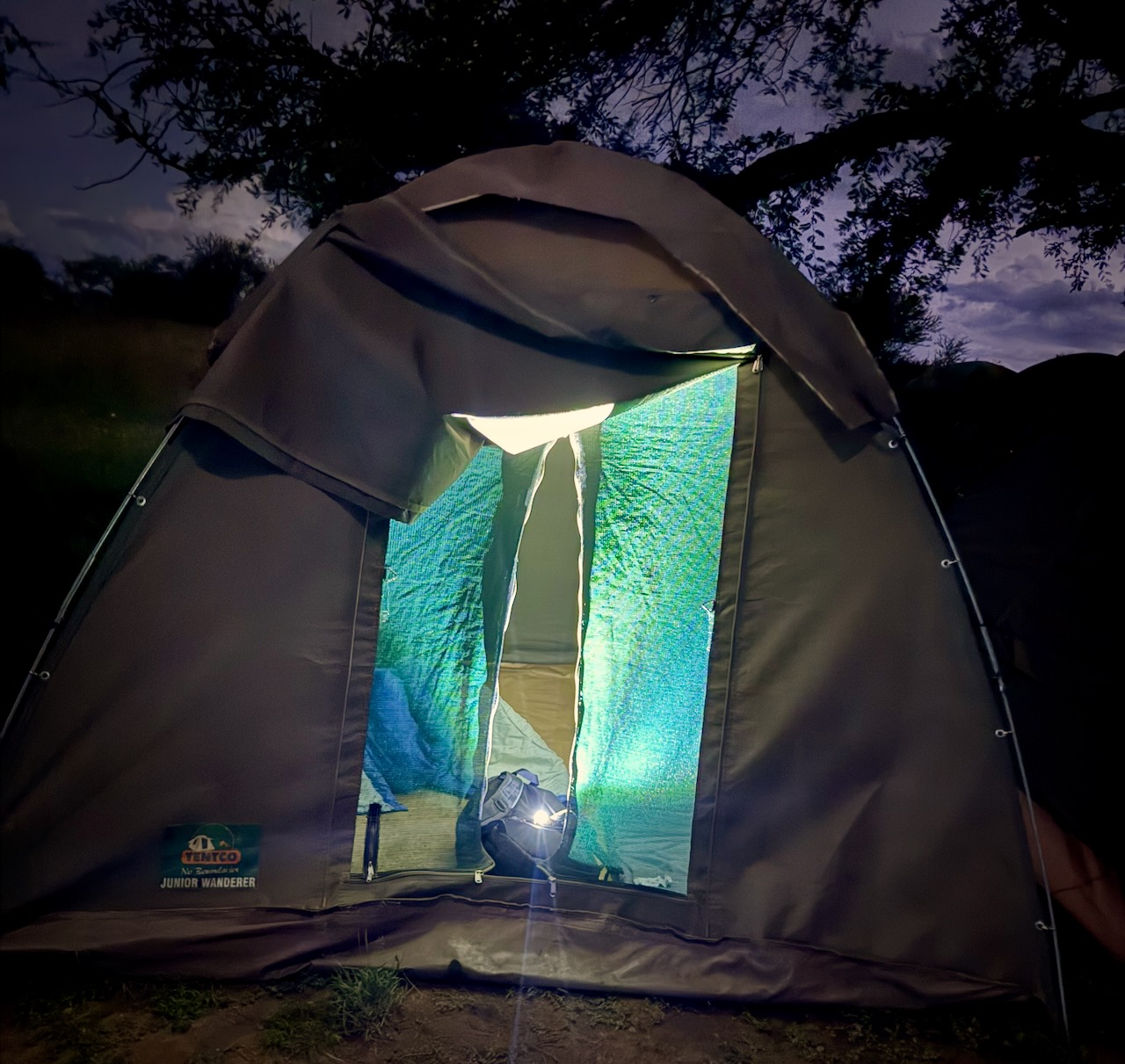
We camped in Serengeti.
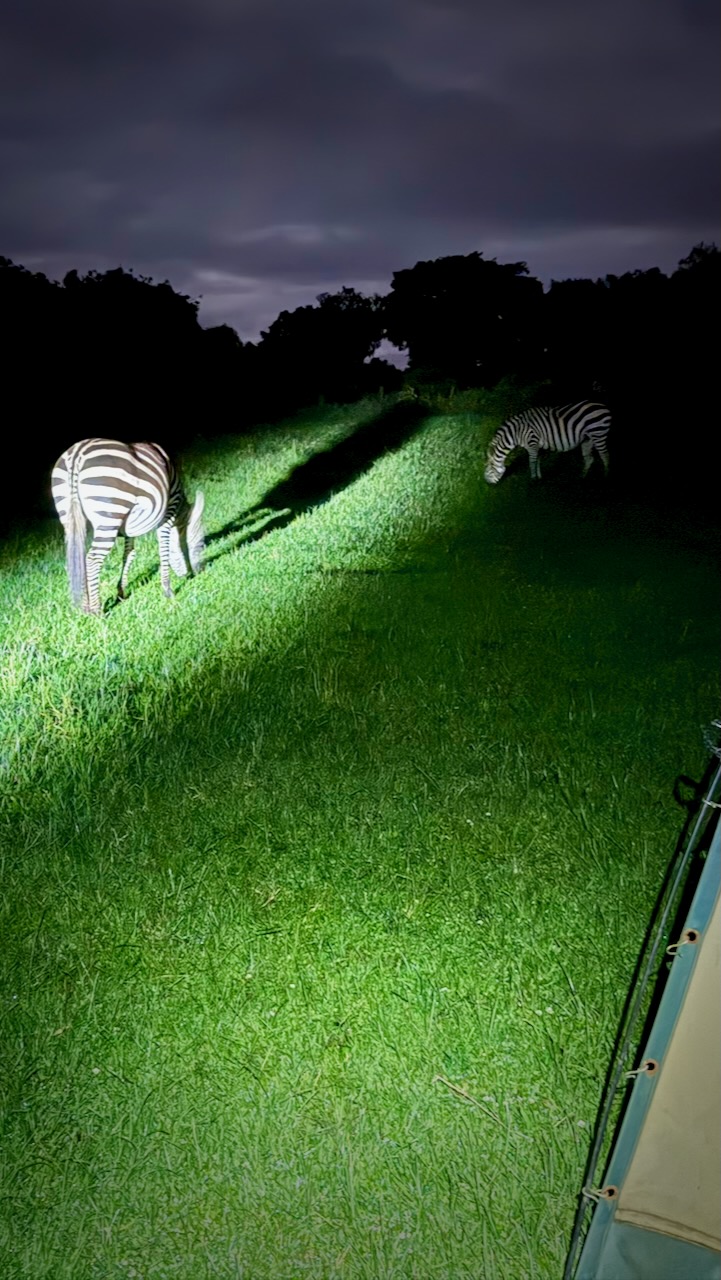
Simple canvas tents. I used my own sleeping bag and air mattress.
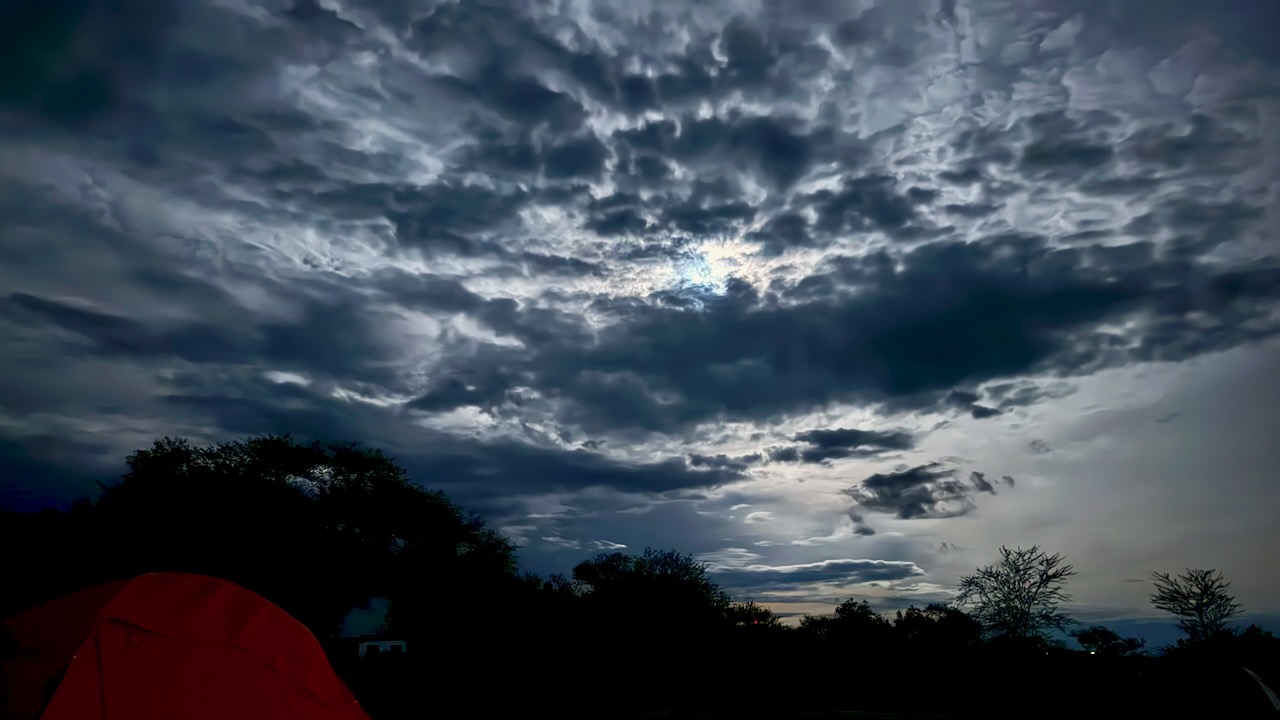
During a 2am pee break, here’s how the sky looked to my iPhone 16 Pro.
We awoke to heavy rain. It seems the “long rains” from March to May have just begun.
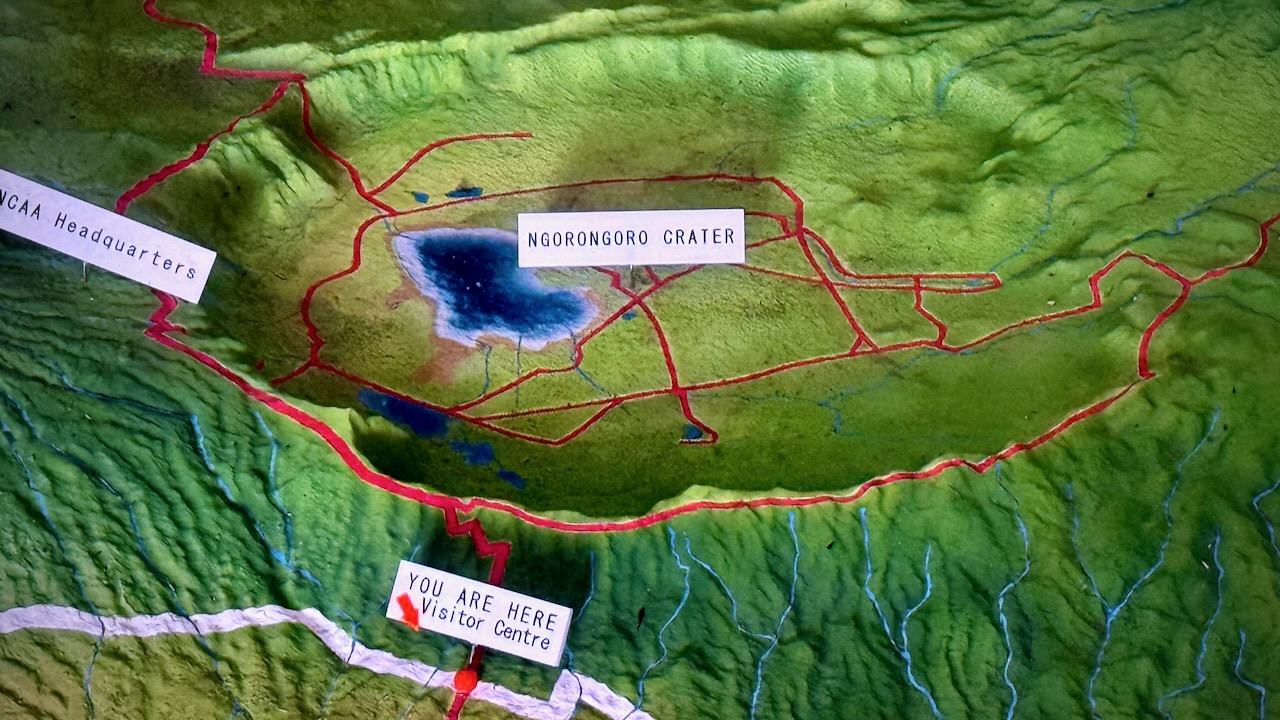
Early start dropping down into the crater.
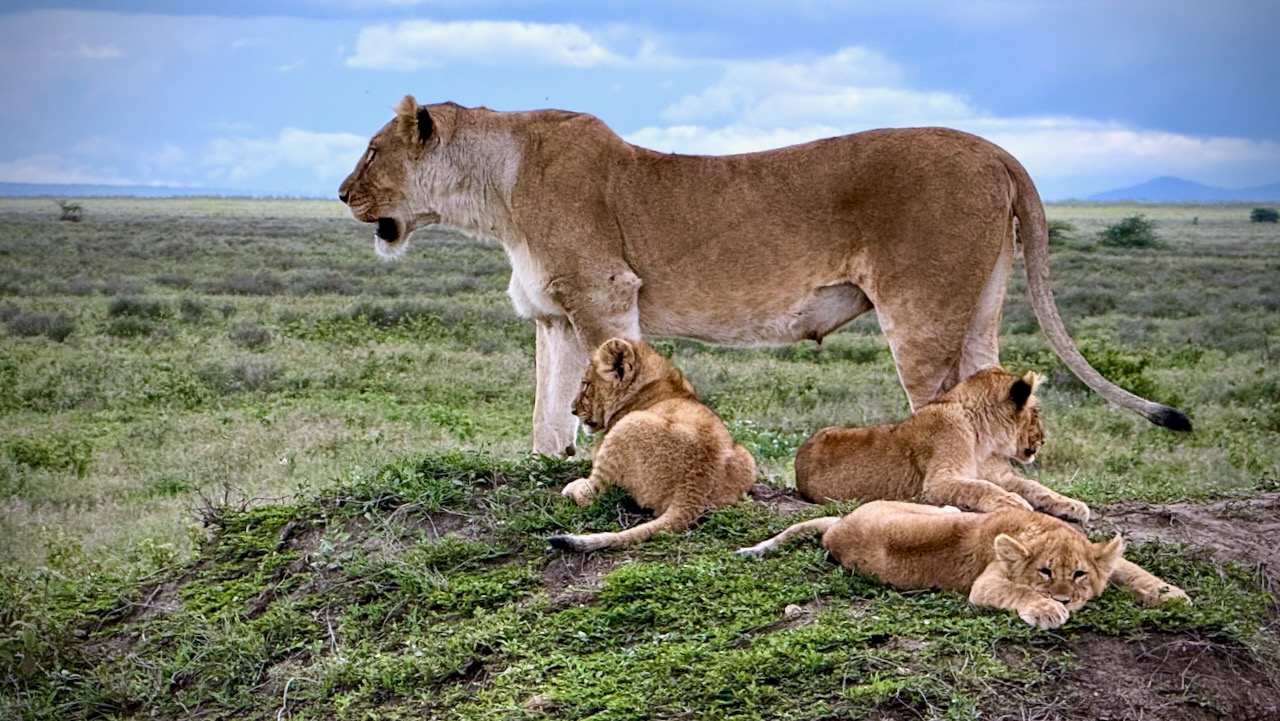
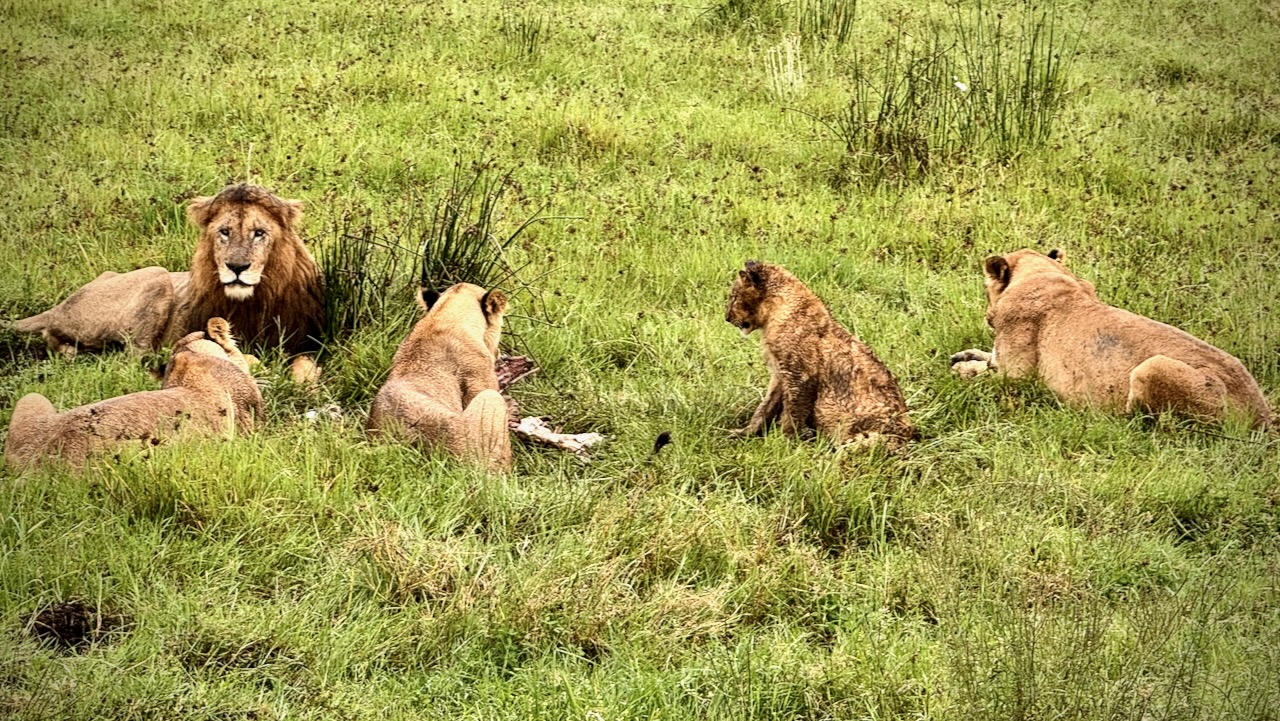
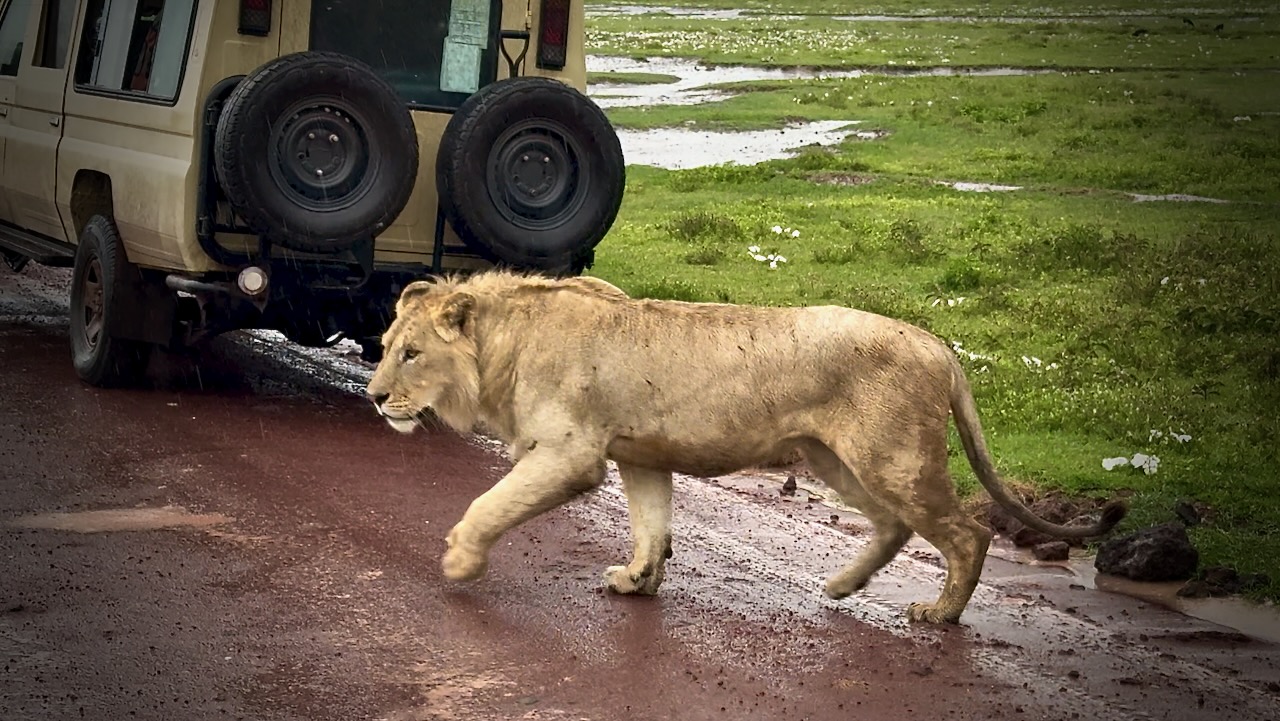
Predators were still working on their kills from the previous night. It seems young zebra are the dinner of choice for most.
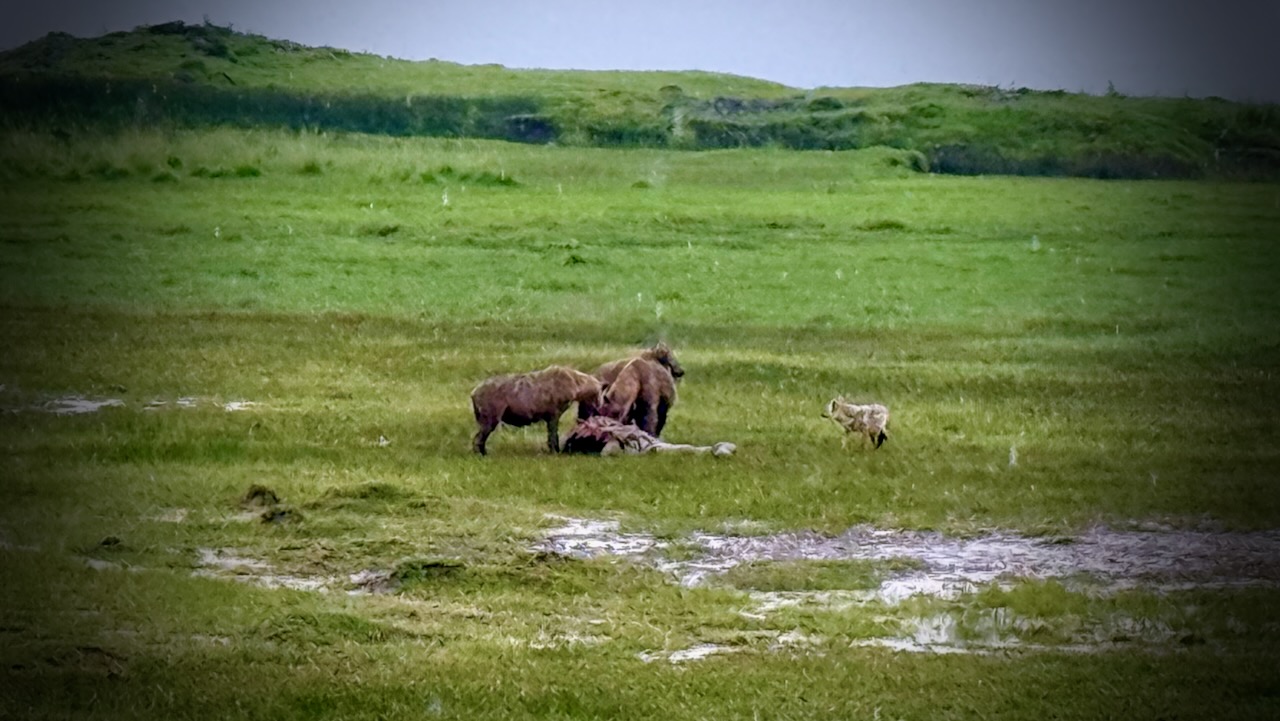
These hyenas were almost finished with their kill. A jackal was sneaking in to get quick bites, when it could.
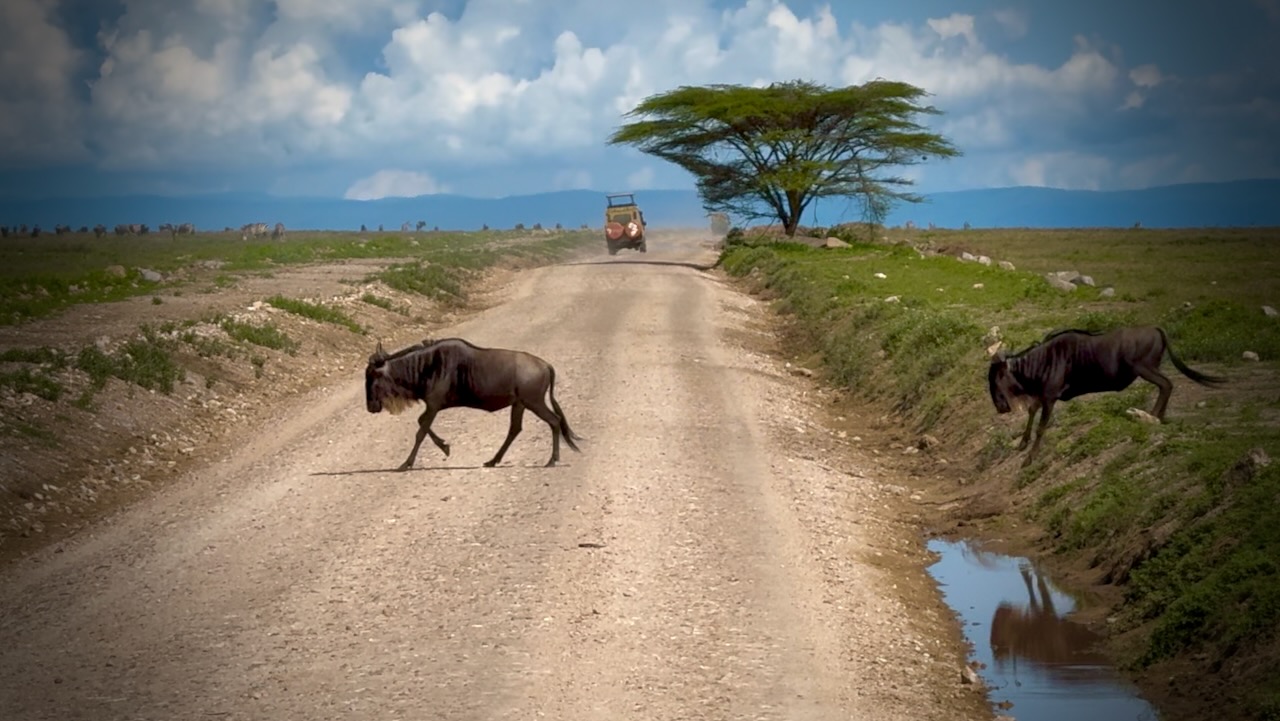
Why did the Wildebeest cross the road.
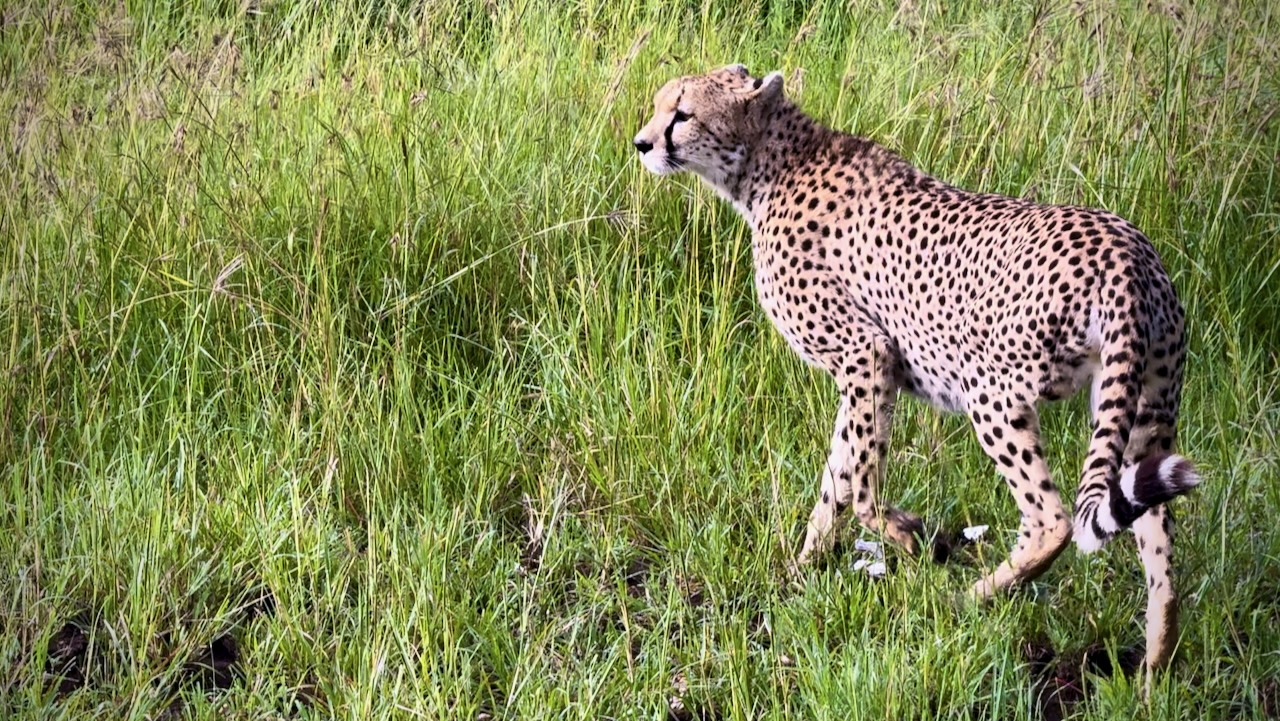
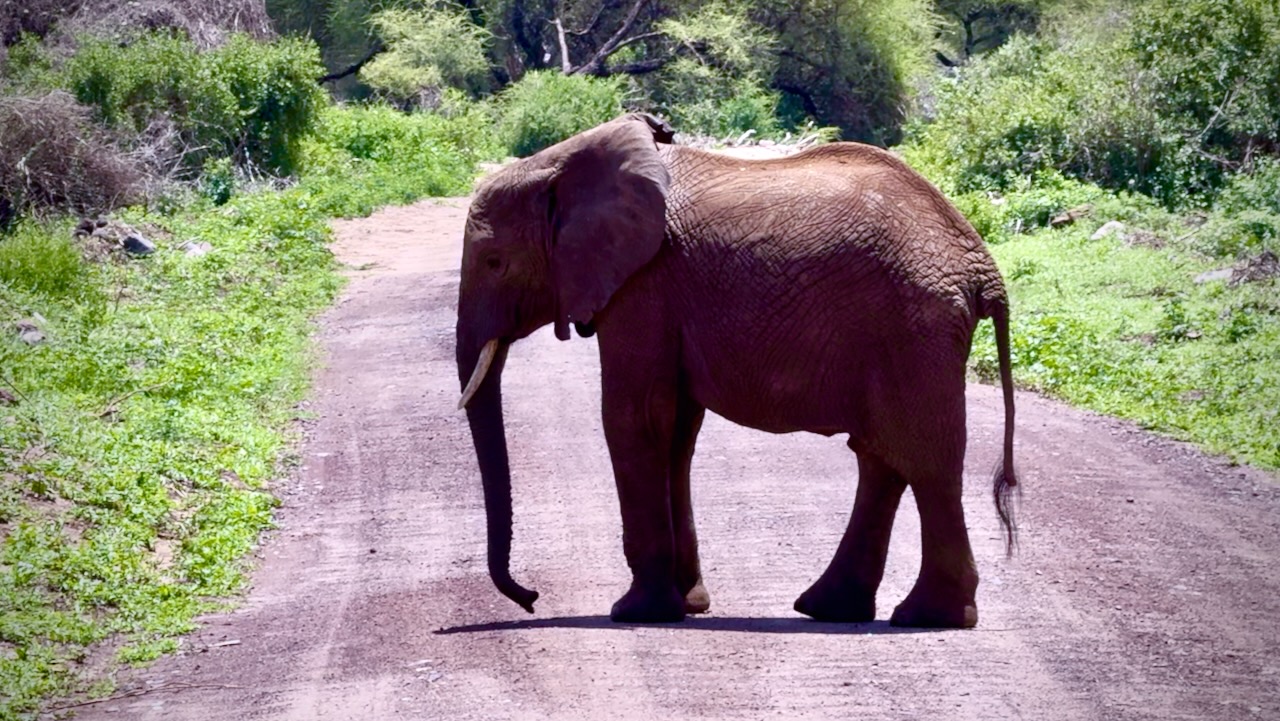
Animals migrate for grazing and water sources. Predators follow.
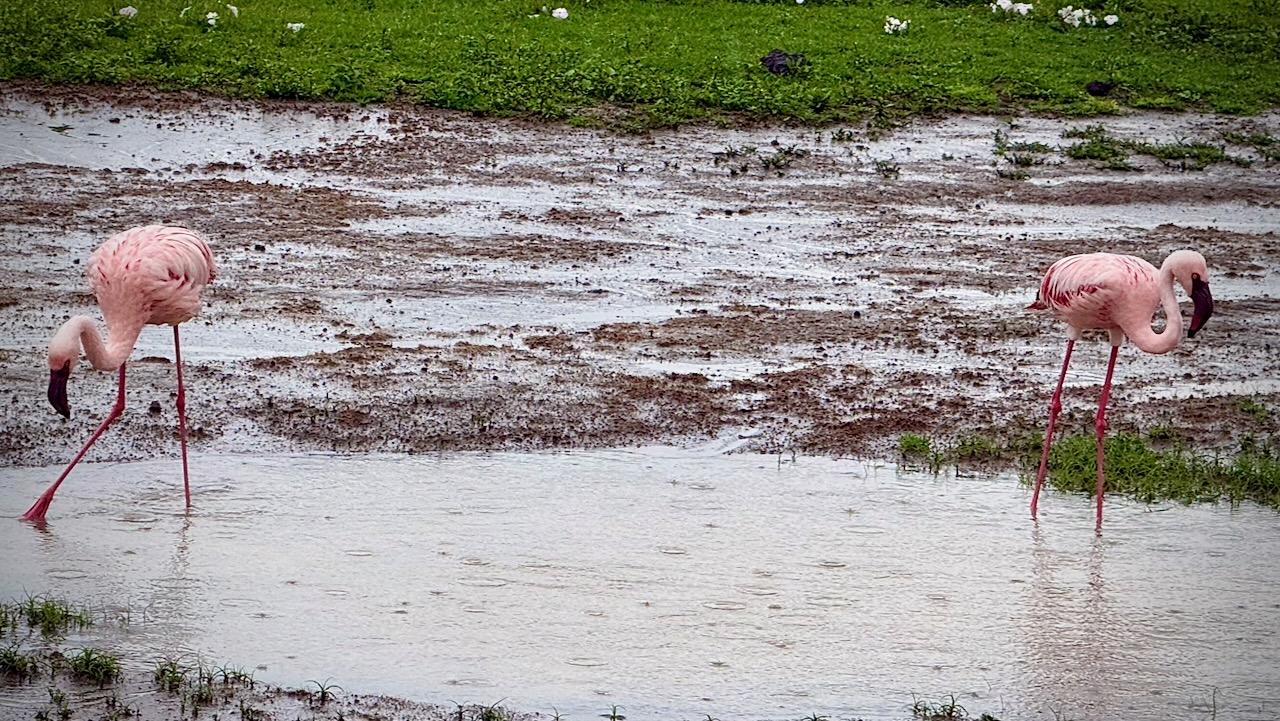
There was plenty of water in the crater while we were there. Flamingos a highlight.
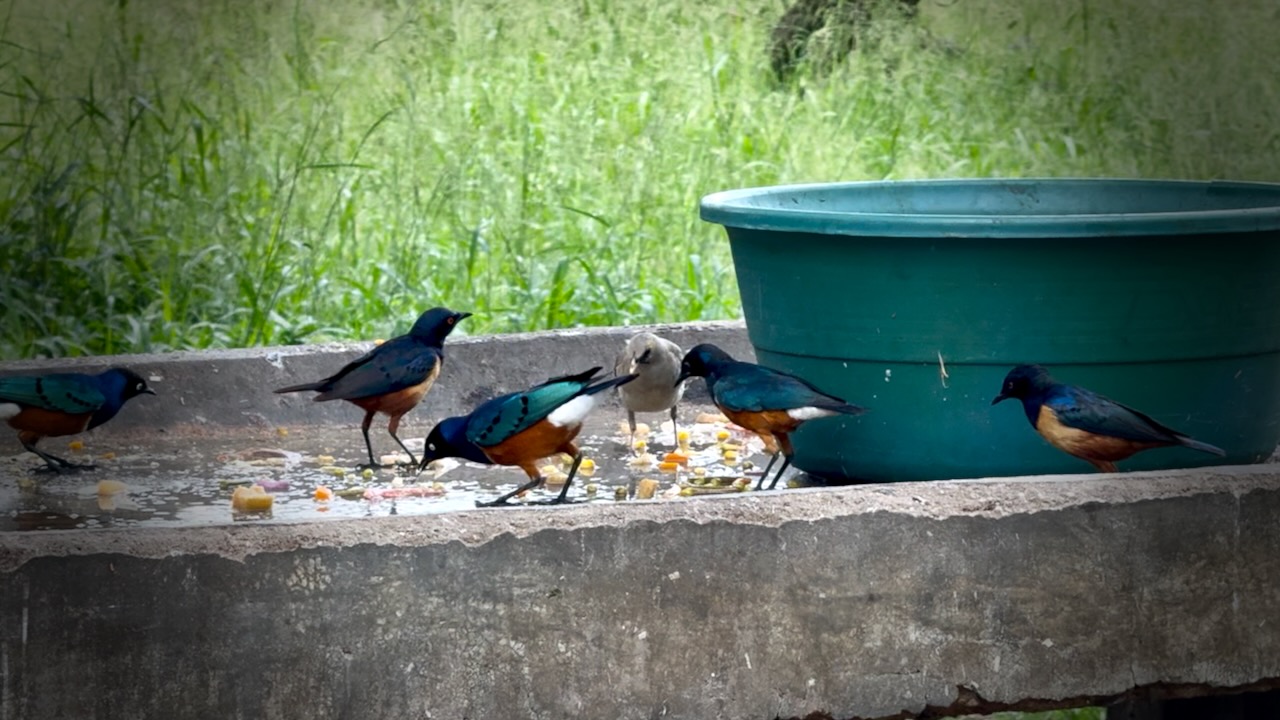
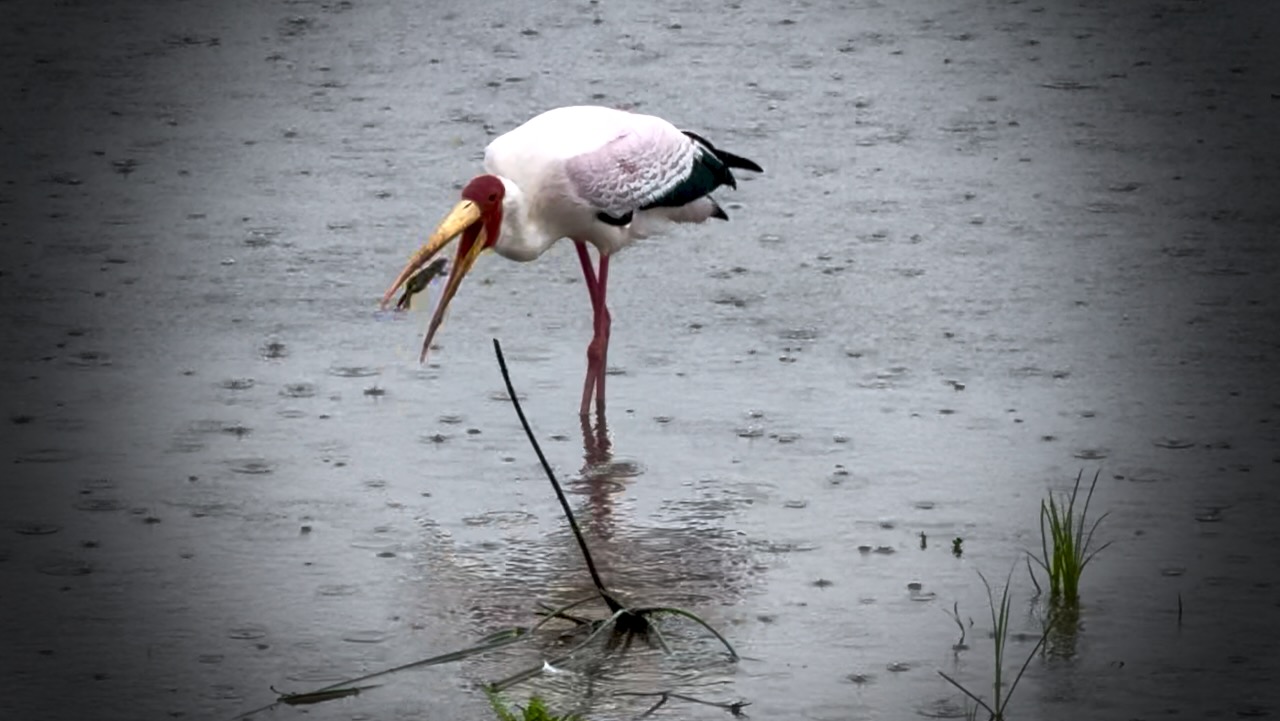
Water birds of all species eat well here.
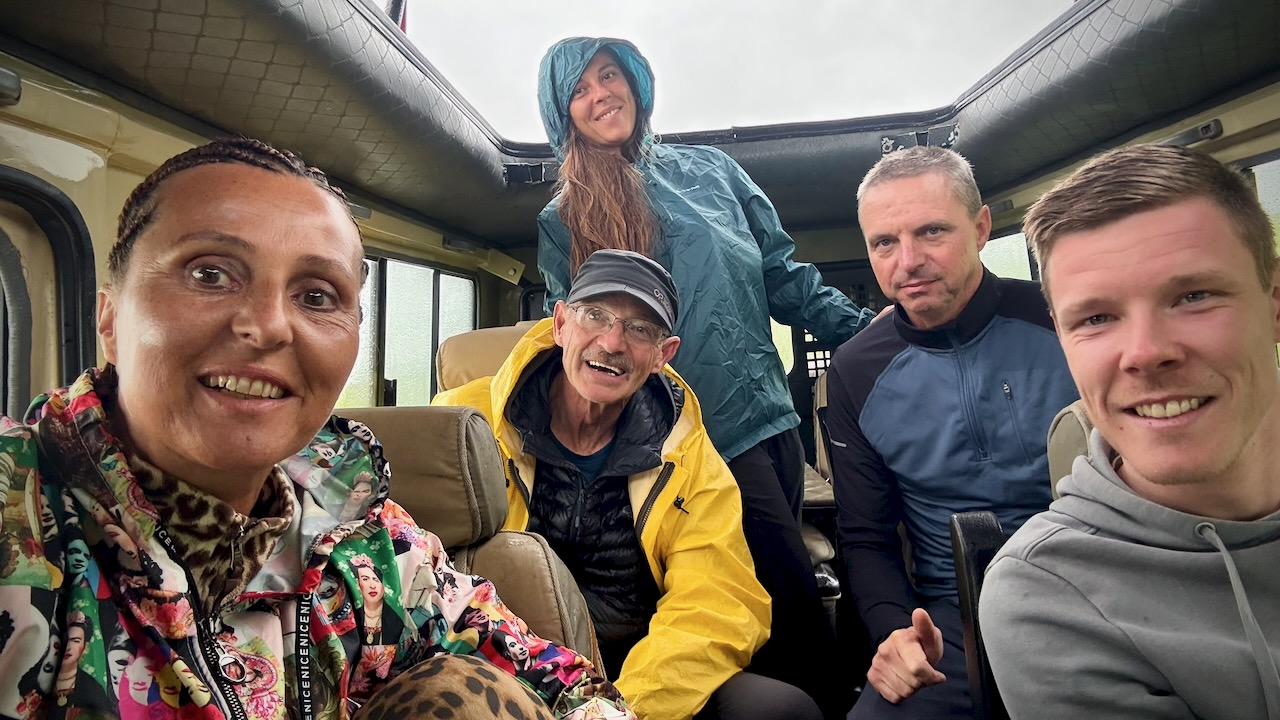
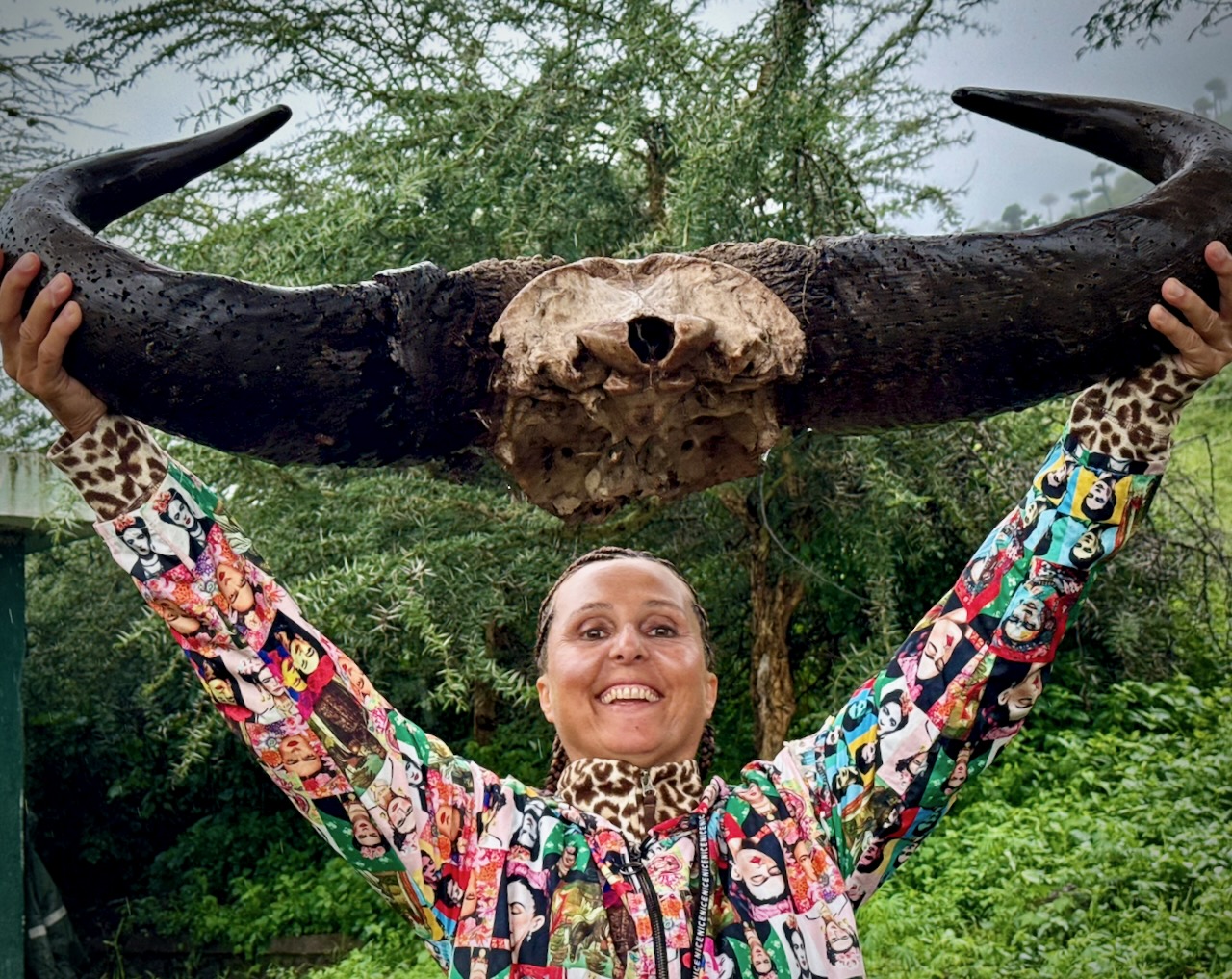
Everyone enjoys the safari experience.
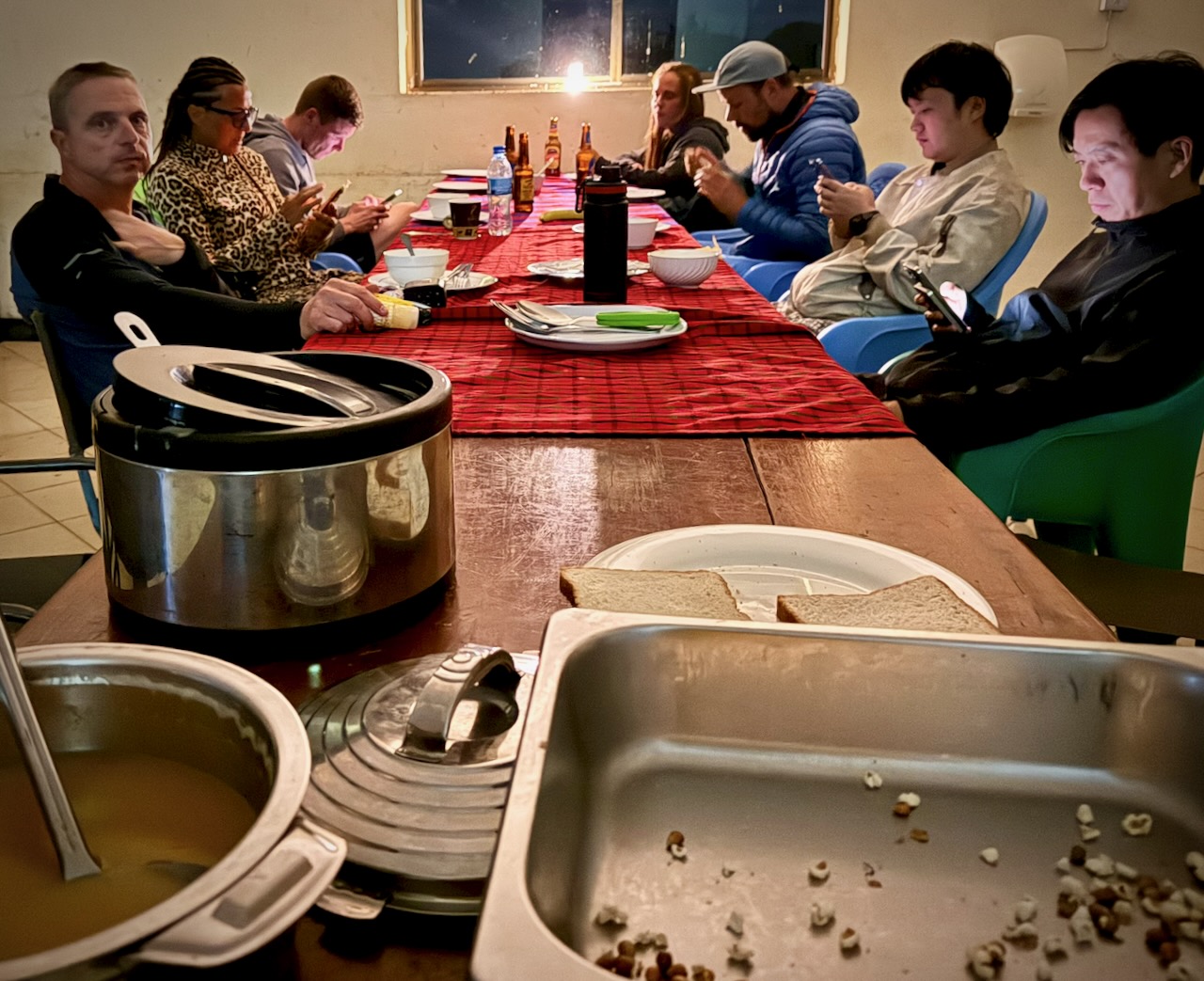
Needing to drop off 2 of our group of 5, we drove all the way back to the Mosquito River hotel. This means I actually spent 2 of the 4 nights in a comfortable hotel, even though I’d signed up for camping. 😀
Last day we had only 2 of our original five signed on for the 5th day.
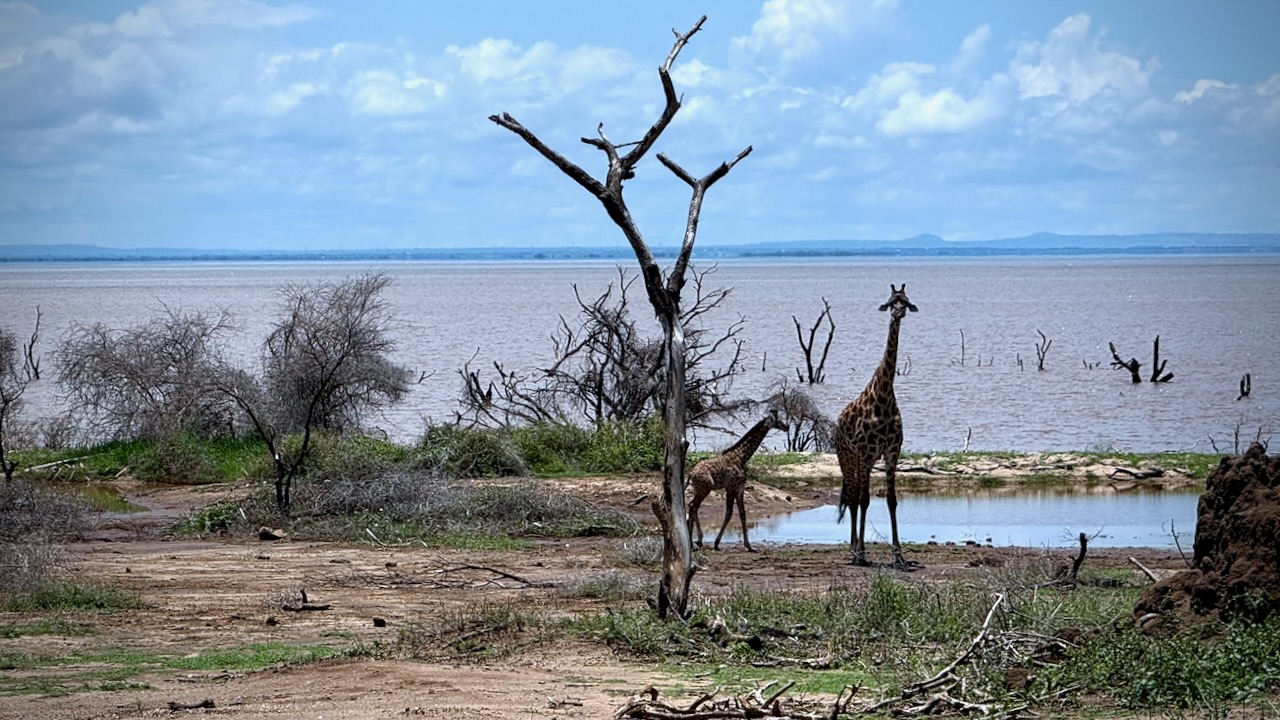
Manyara was better than expected. A small, well-maintained park alongside a muddy Lake.
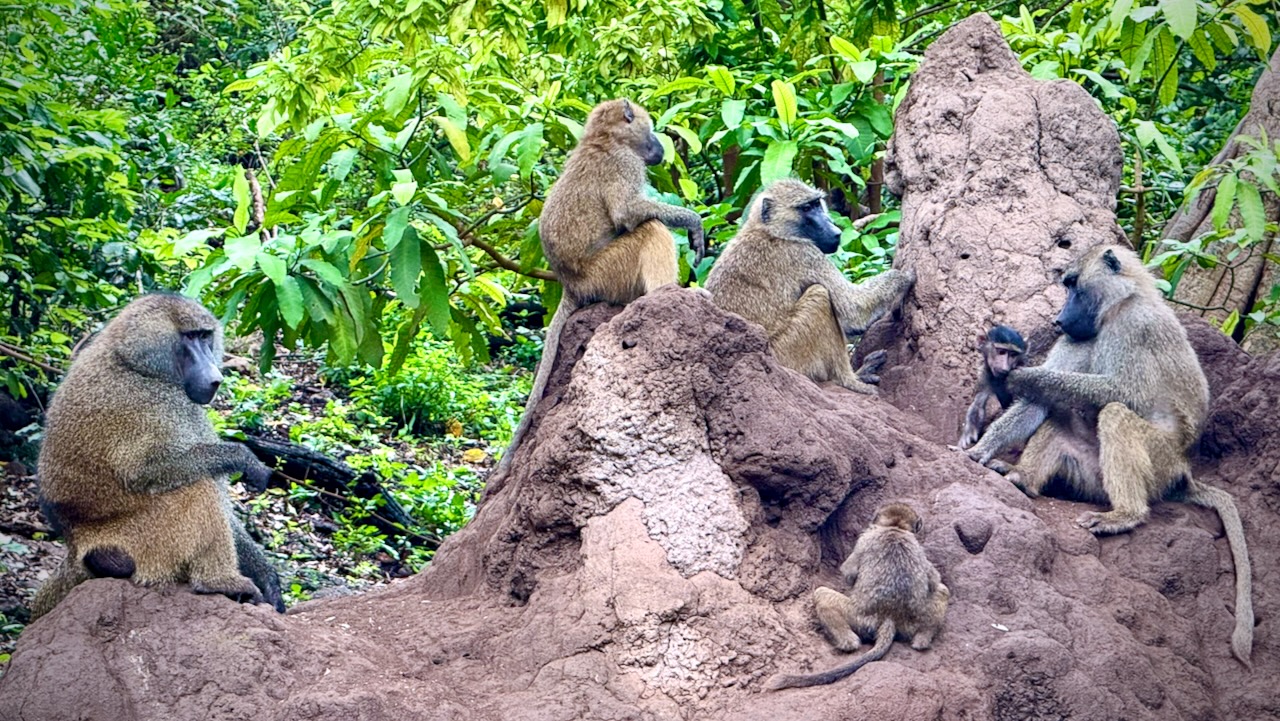
We’d not seen many baboons nor monkeys over the previous 4 days. Made up for it here. We saw thousands of entertaining baboons playing, fighting, chasing, grooming.
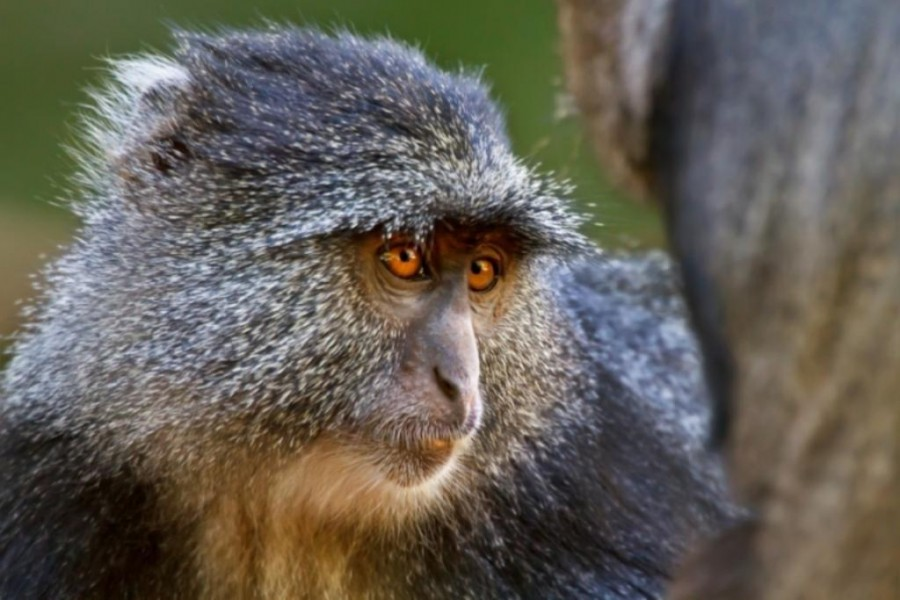
Plenty of Blue monkeys. And Blackface (Vervet) monkeys, as well. The different species seem to cooperate well.
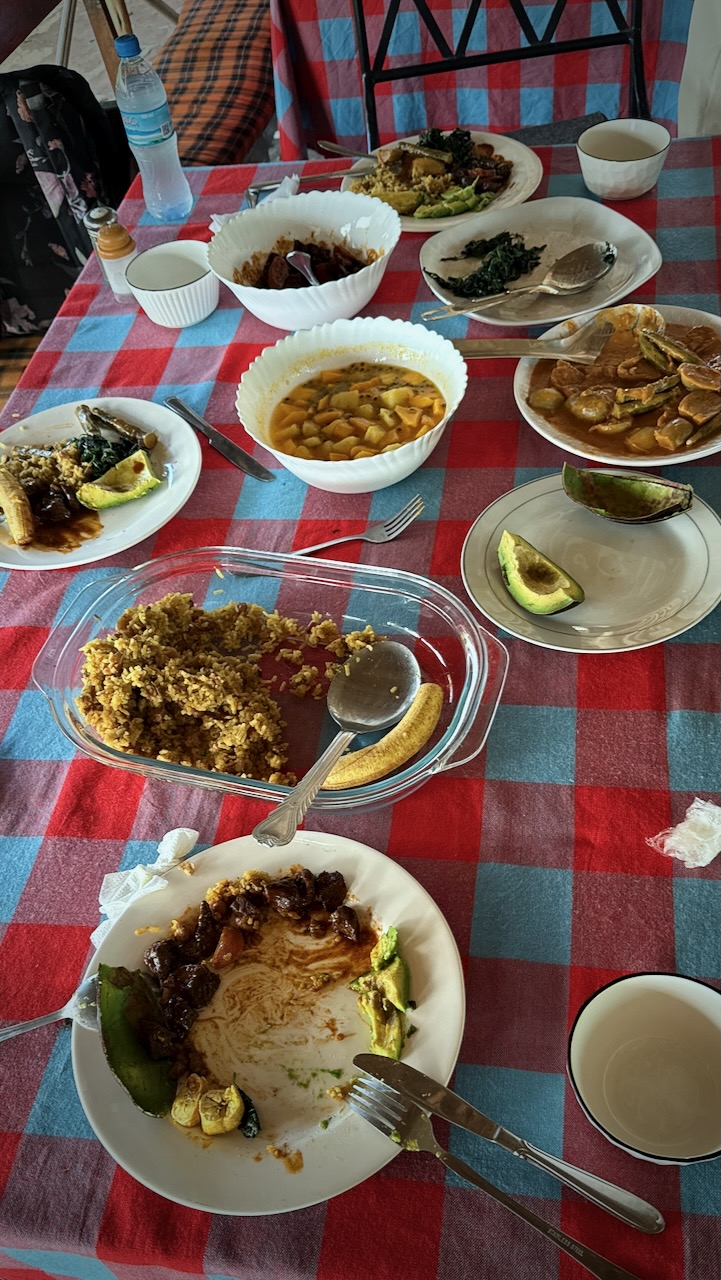
Back to the hotel for one last lunch from Tony.
His best yet.
And then the 3 hour drive back to Arusha. Our safari ended.
TIPS
It’s confusing to decide on which company to go with. Certainly you’ll be in the same Toyota LandCruiser, on the same bumpy roads, seeing exactly the same animals with most.
The only one that caught my eye for the camping option is Suricata Safaris.
Prices go way up from $200 / day depending on where you sleep each night. Luxury lodges are available. Budget about 10% for tips. And about 10% for unexpected charges.
Private bookings are more expensive, as well.
Though I did 5 days, 4 nights — optimal, I’m thinking, is 4 days, 3 nights. You’ll probably miss Lake Manyara National Park if you do this.
My iPhone 16 Pro was perfect for climbing Kilimanjaro. But it’s a frustrating, crappy option for safari. I constantly wanted more optical zoom. Bring an excellent camera on a short tripod, if you can. Also binoculars.
My only other safari was Addo Elephant Park, South Africa, in 2013. Excellent. My guide provided a checklist of animals and birds we might see ➙ and it was super fun to fill that checklist during the day. I wished I had something similar here.
Power failures are a near daily occurrence in Tanzania. Bring power banks to recharge your electronic devices.
Wifi is slow and inconsistent here. Best get phone data which works quite well.
Many tourists are over-charged. Some cheated. We had a driver for a day who claimed I had shortchanged him $40. I hadn’t. But rather than argue I gave him an extra $20 — and reported to his employer.
Worst story I heard in person was a tourist landing in Zanzibar at 3am who was stopped by two supposed police. They took his passport. Two hours later he bribed them $200 to get his passport back.
Most of the worst stories I heard were in Zanzibar.
BEST is to have transportation from airports arranged in advance with your accommodation.
Second best is to download the ride sharing Bolt app. It worked well for me.
Arguing with taxi drivers is the worst option.
Intercity buses can be OK — but driving is slow in East Africa. Short flights a better option.
We had 22 hikers. 18 of us made both summits. That’s about typical for the Machame Route. It went well for me. My 3 weeks training & acclimatizing in Ecuador prior to this trip was a good idea.
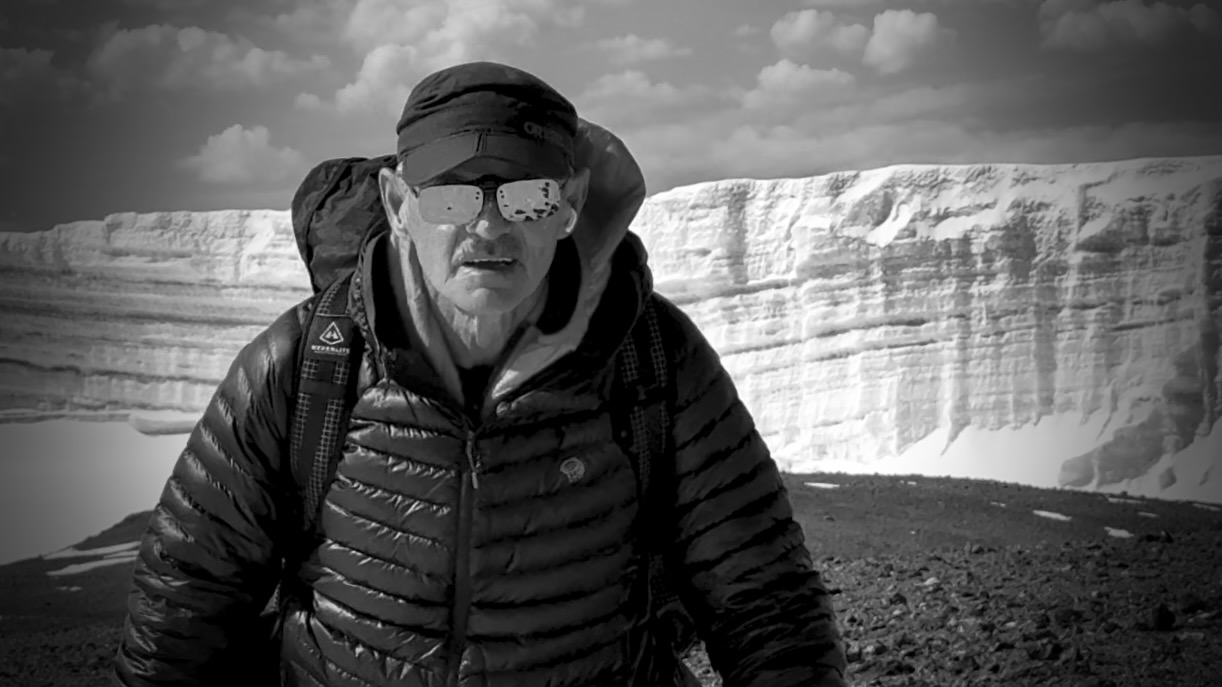
Kili Summit Ridge
Age & fitness matter much less than the ability to acclimatize to altitude.
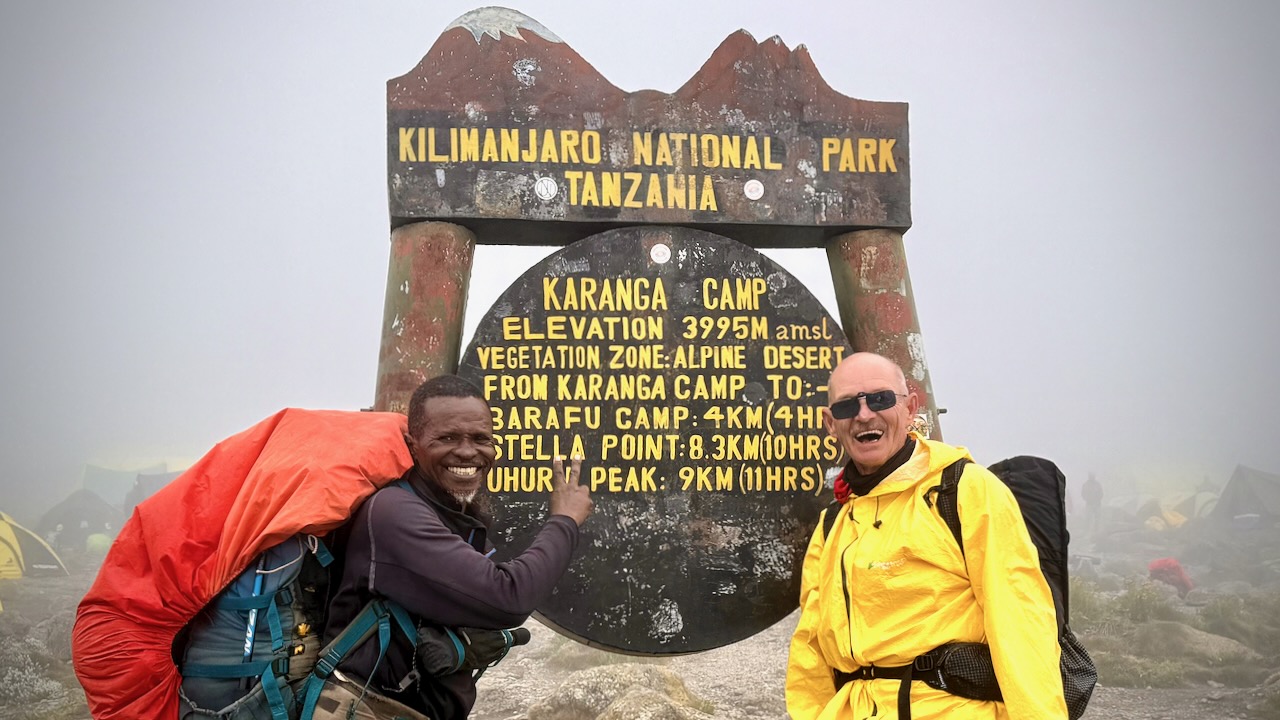
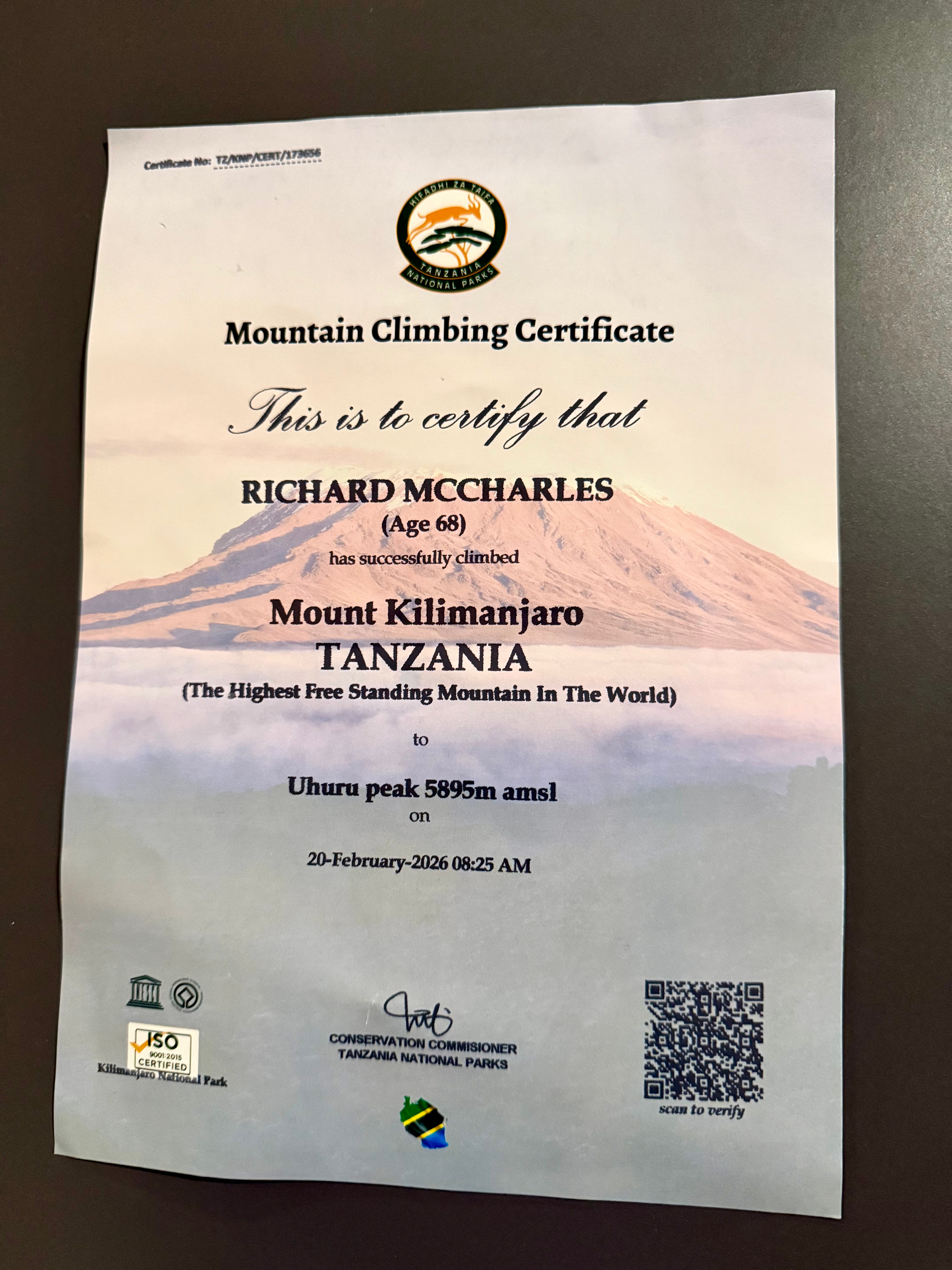
It took me 68-years to finally get to Kilimanjaro. The eldest my African guide got to the summit was 79.
We had another in our group age-66.
Truly impressive is one of our assistant guides who’s been to the summit over 200 times over 31 years. He’s age 64.
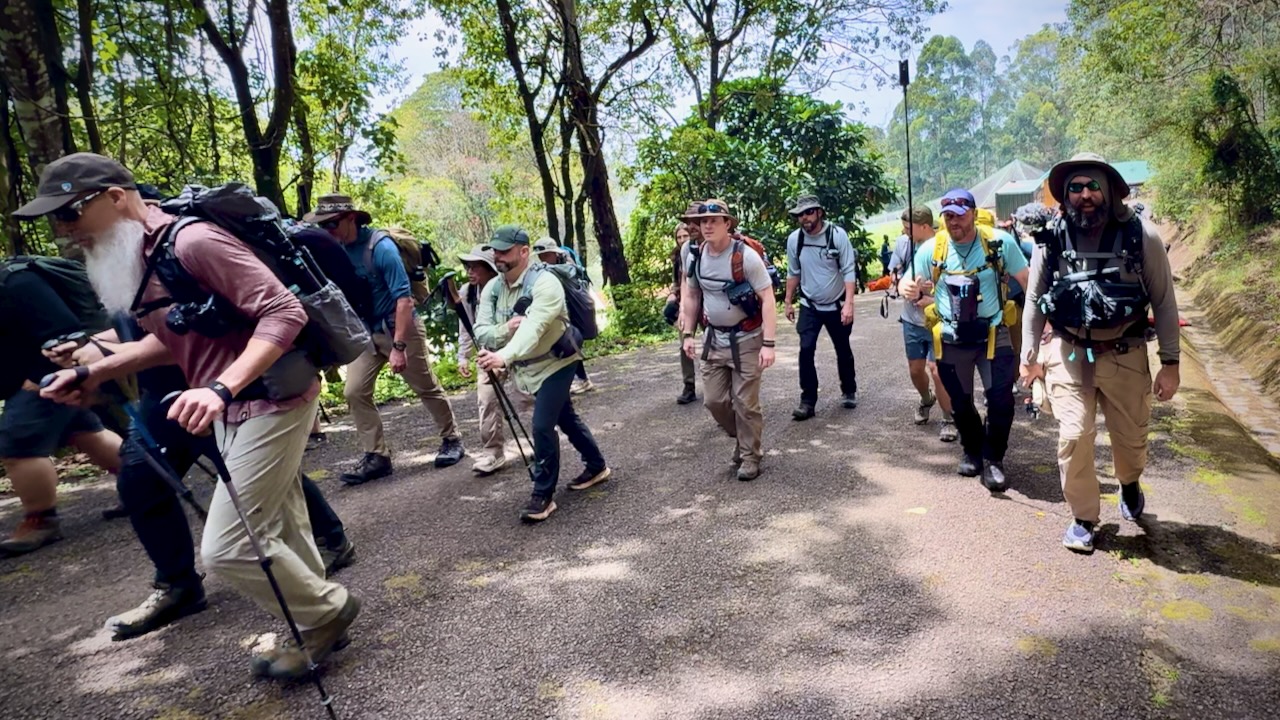
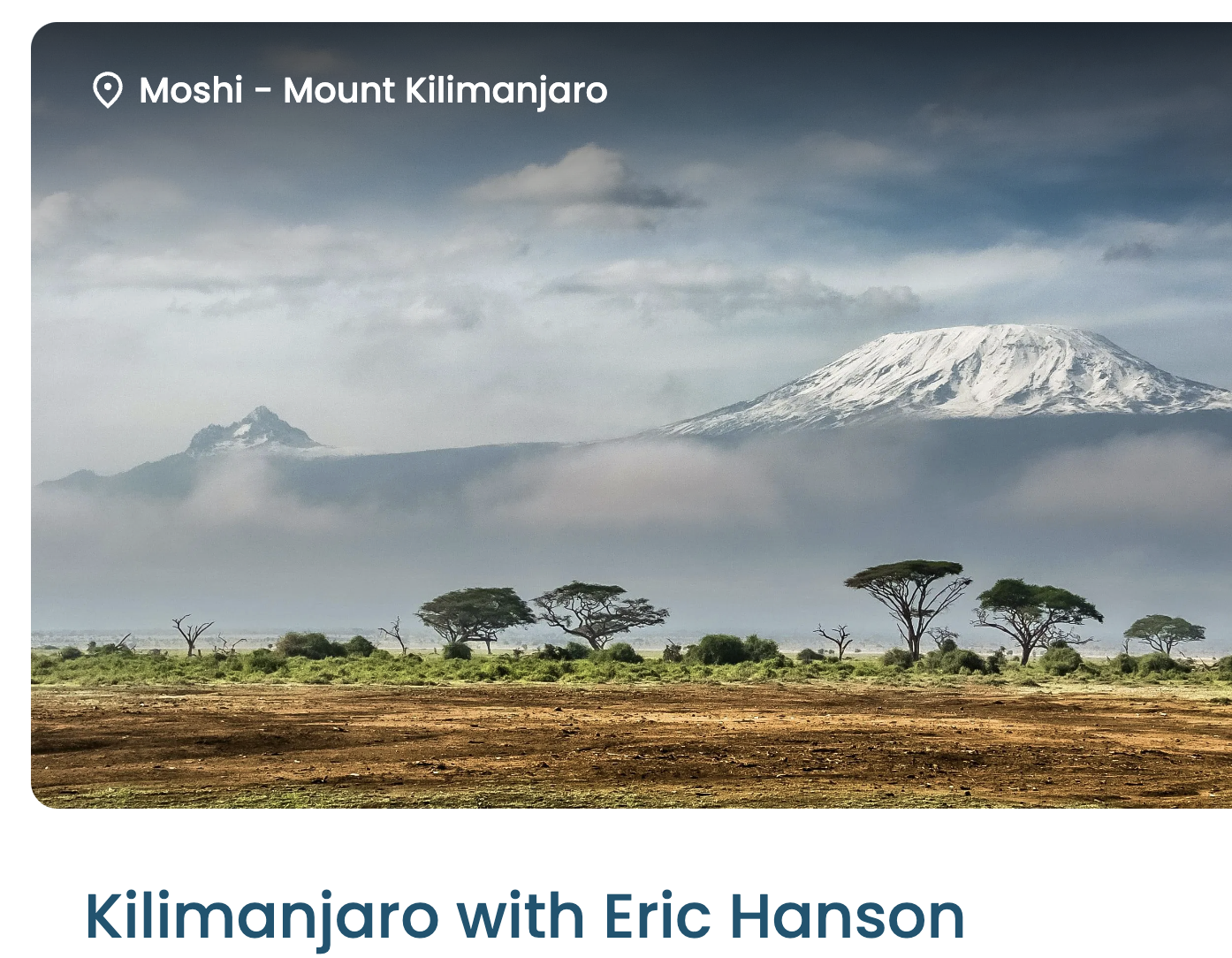
Here we are — clean & keen — at the start of the 7 day adventure.
In fact, it was a party from the start as many who had hiked with Eric in the past joined for Kili. I was simply an addition to a large group, many who knew one another. This is a very social adventure ➙ shared suffering.
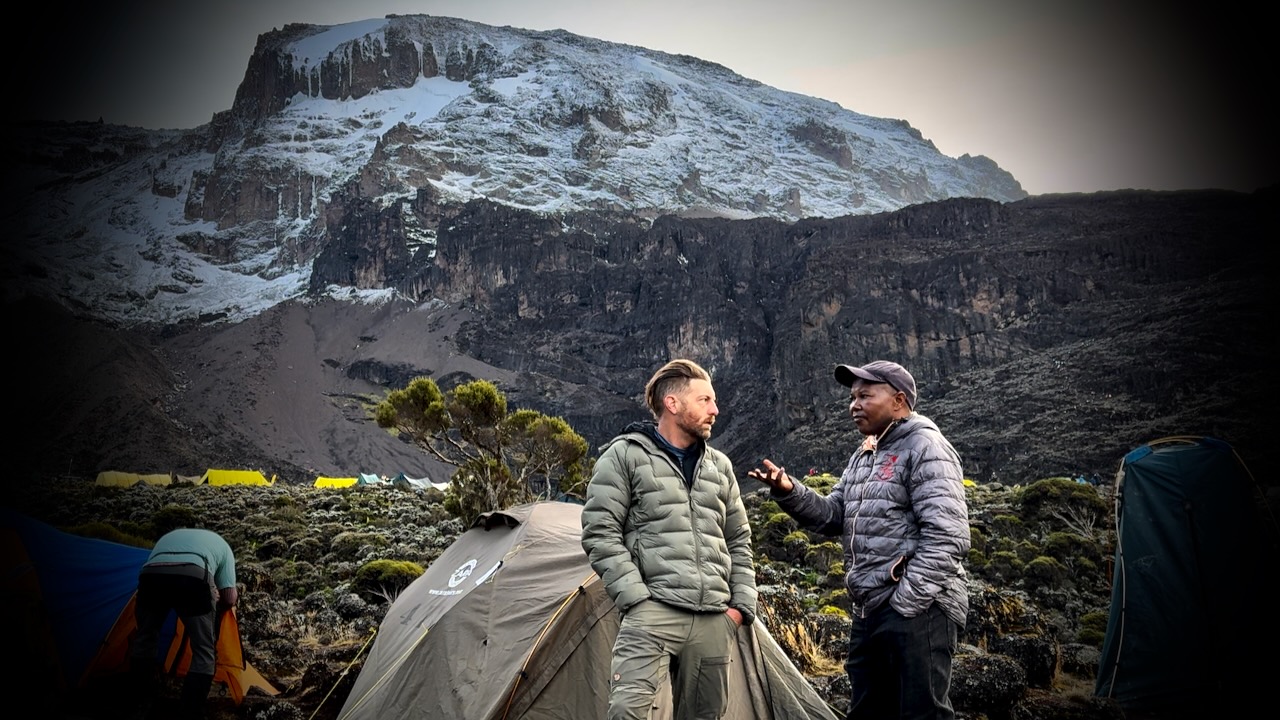
Eric was our American guide. Freddy our African guide. Both responsible for keeping us safe. It was these two who’d make the decision whether or not you were healthy enough to keep climbing.
Those who decided to go down were unable to acclimatize quickly enough. We had daily blood oxygen tests.
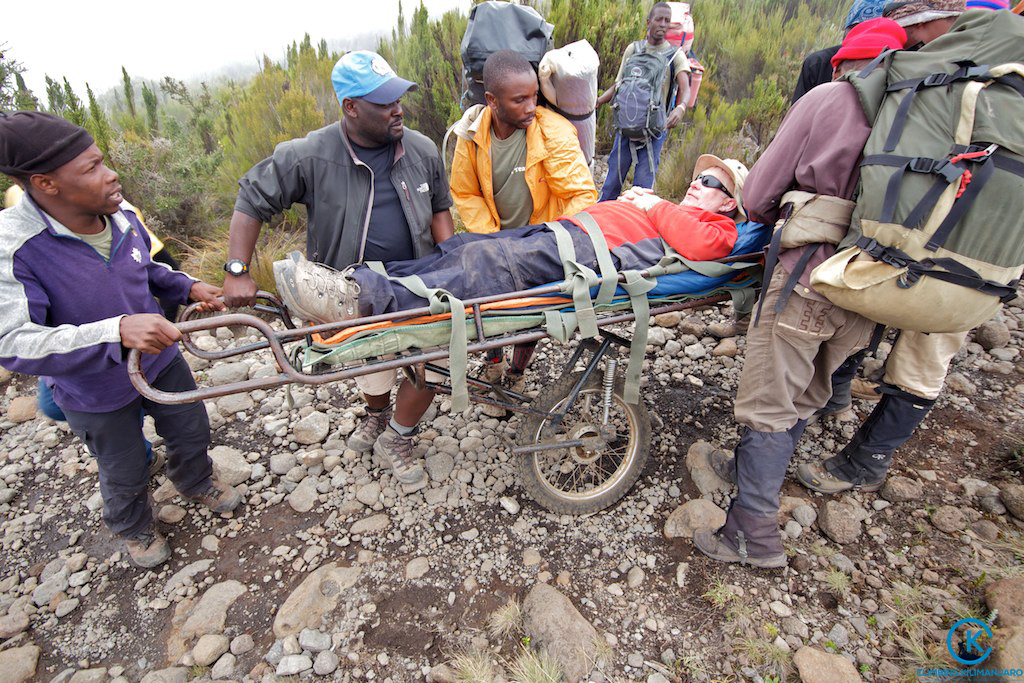
Three decided to walk out. One took a helicopter, hoping she will recoup the $4100 cost through insurance.
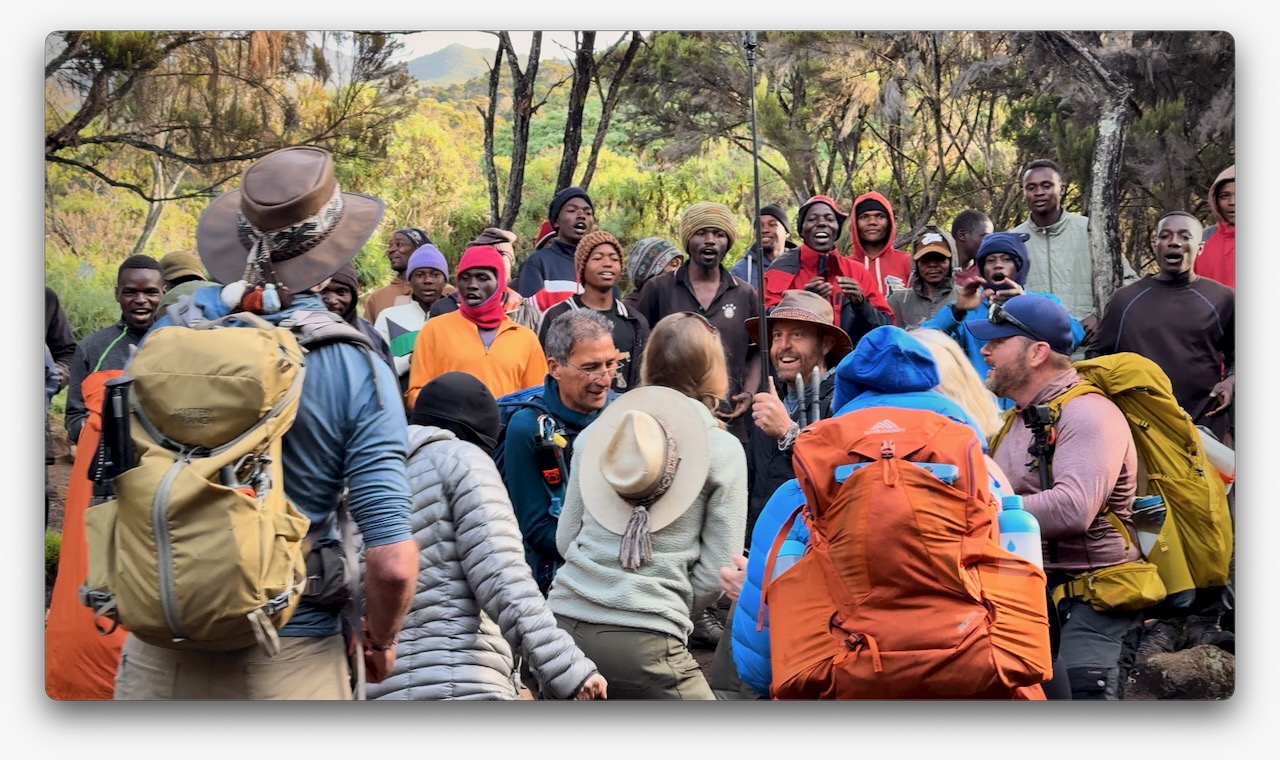
New to me on a trail was the singing and dancing. Non-stop. To the top.
Oddly, all 7 days we had the same weather. Some sort of micro-climate.
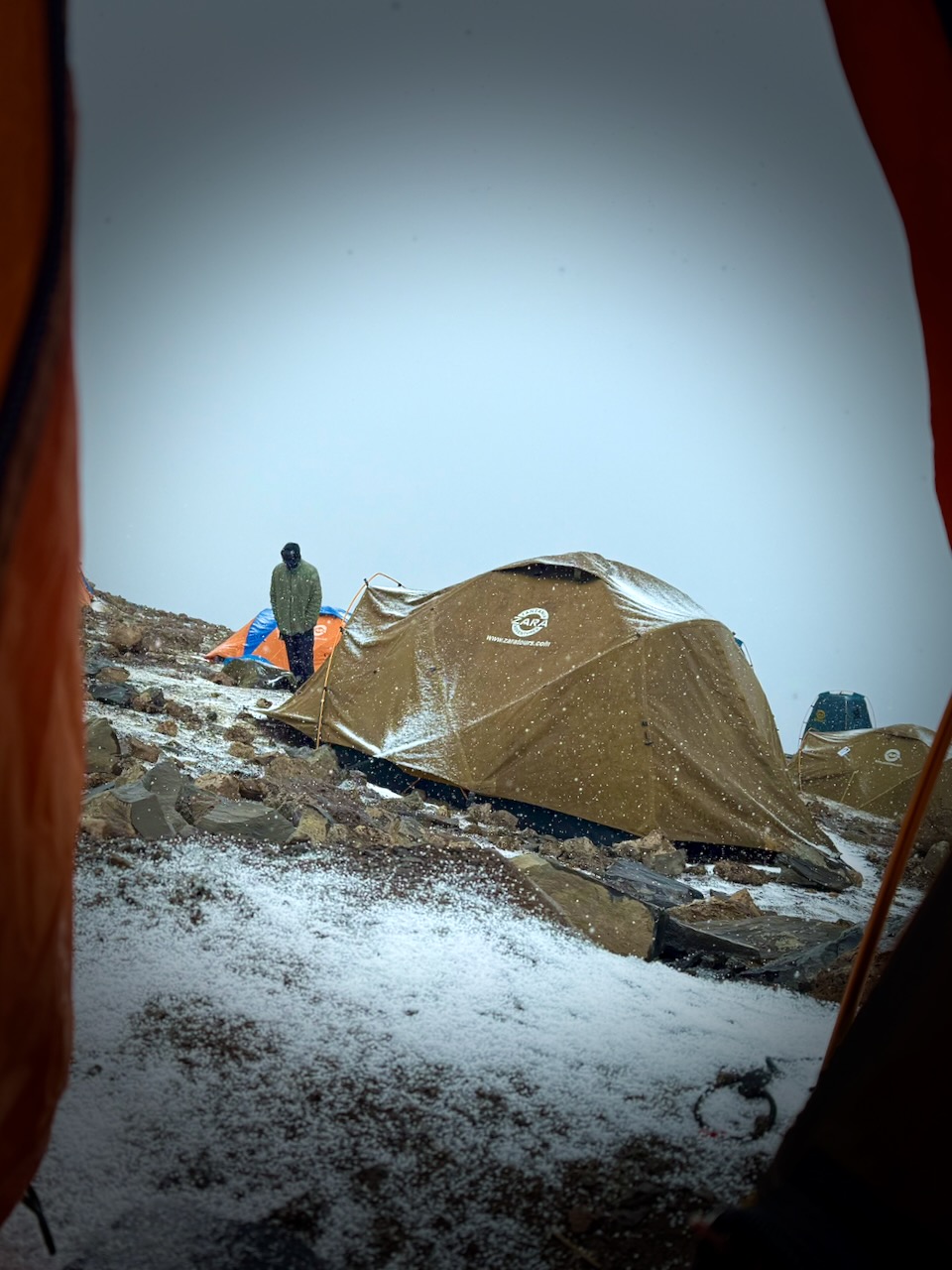
Morning clear. Sunny to start the hiking day. Snow, sleet, and hail in the early afternoon. Clearing by dinner time. Clear skies at night. Kili summit clear at dawn.
We added and removed layers non-stop during the day.
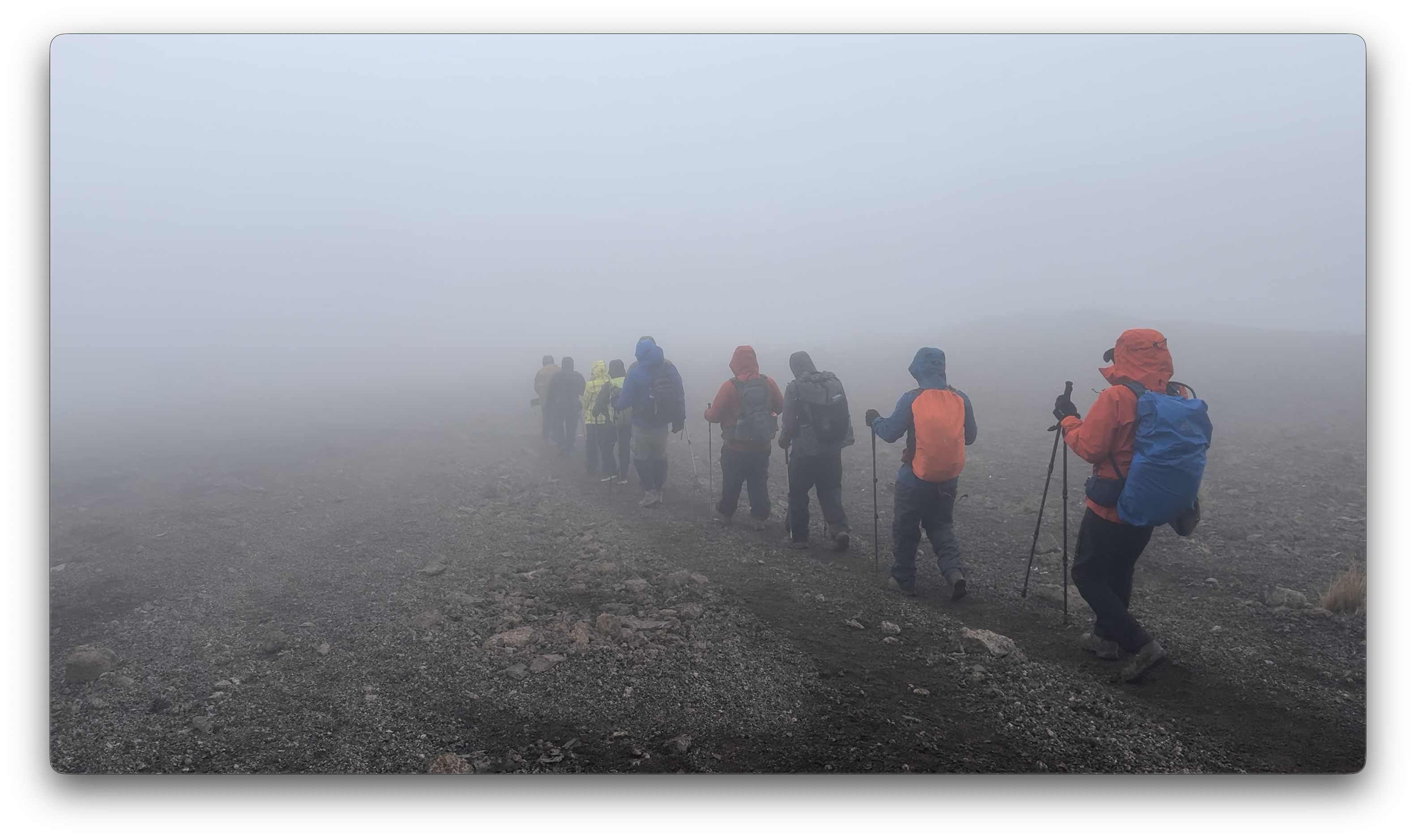
Each day we spent some time hiking through clouds.
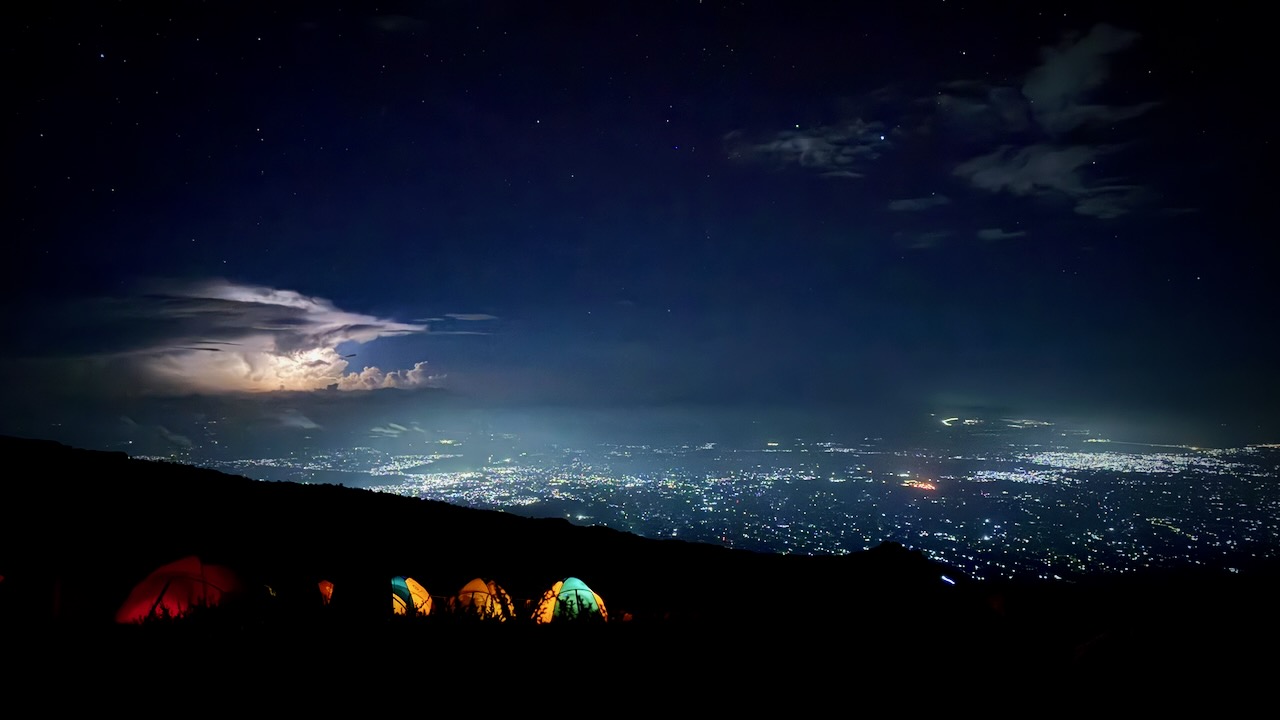
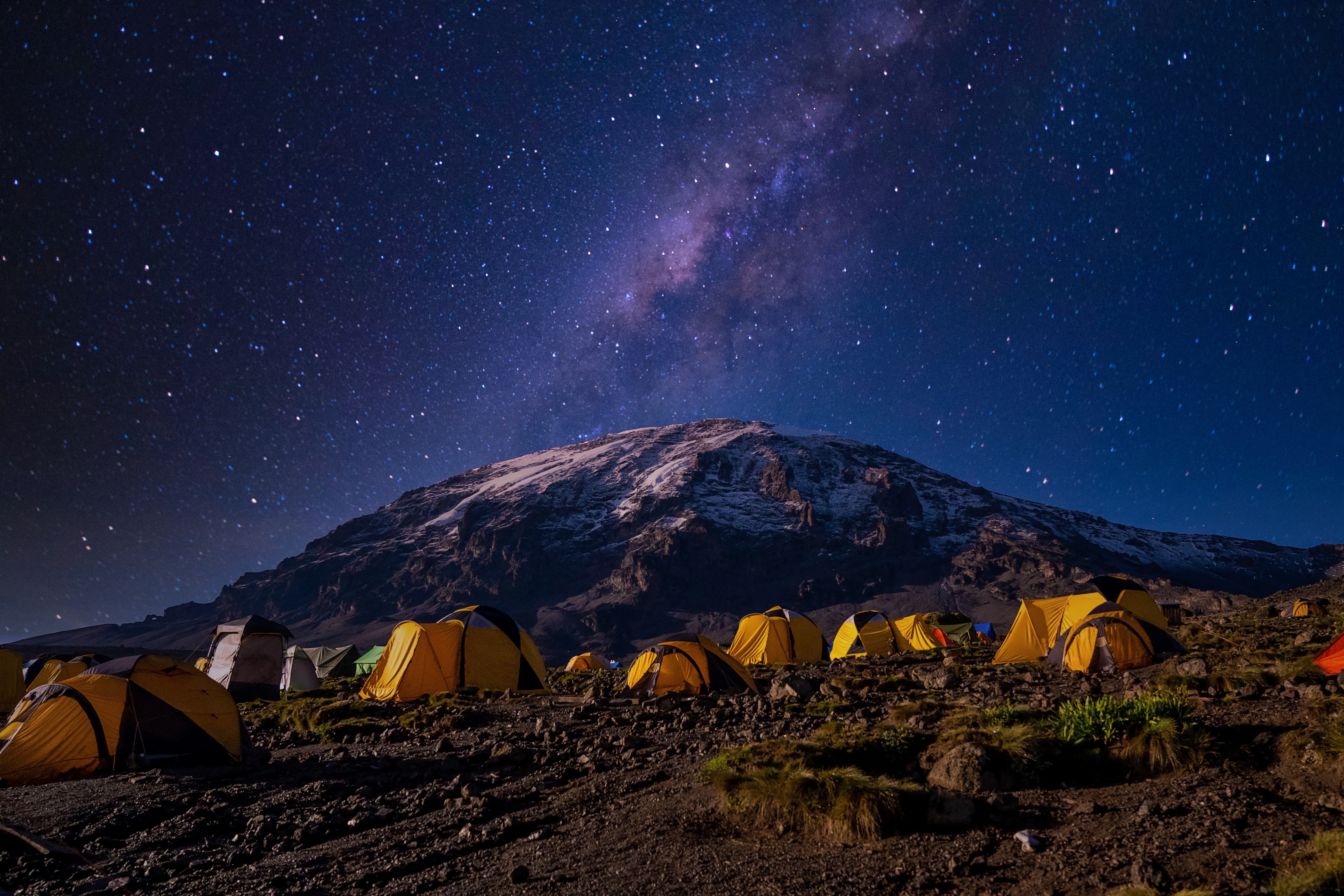
We mostly had clear skies at night. The iPhone 16 Pro is terrific at night photography on a tripod.
I’d paid a little extra to have a tent to myself. It was fairly comfortable — though many of our tent sites were far from level. 😀
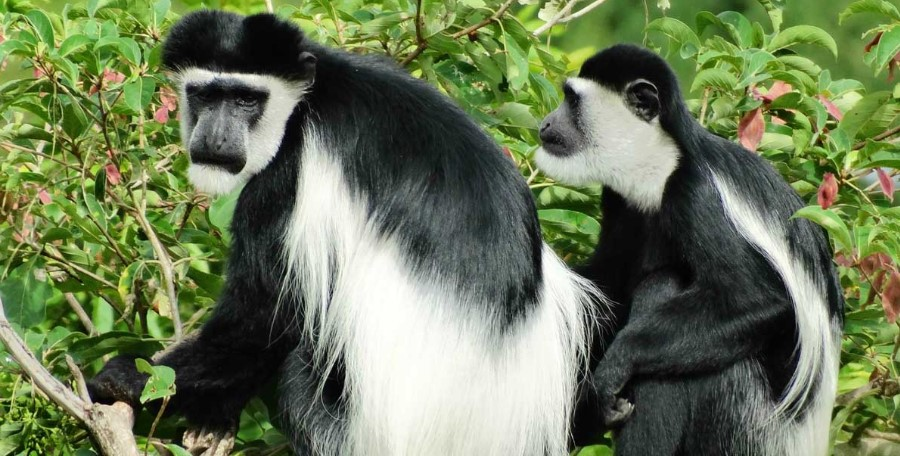
We were happy to see two kinds of monkeys. But both were at lower slopes, close to the start and finishing gates.
Blue Monkey.Black-and-white Colobus.
Baboons and velvet monkeys have been spotted, but rarely.
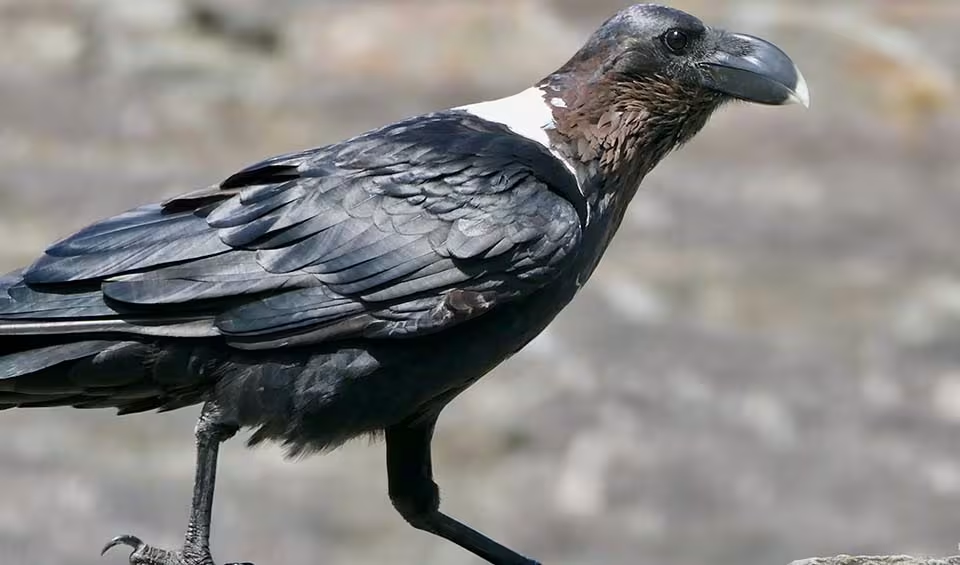
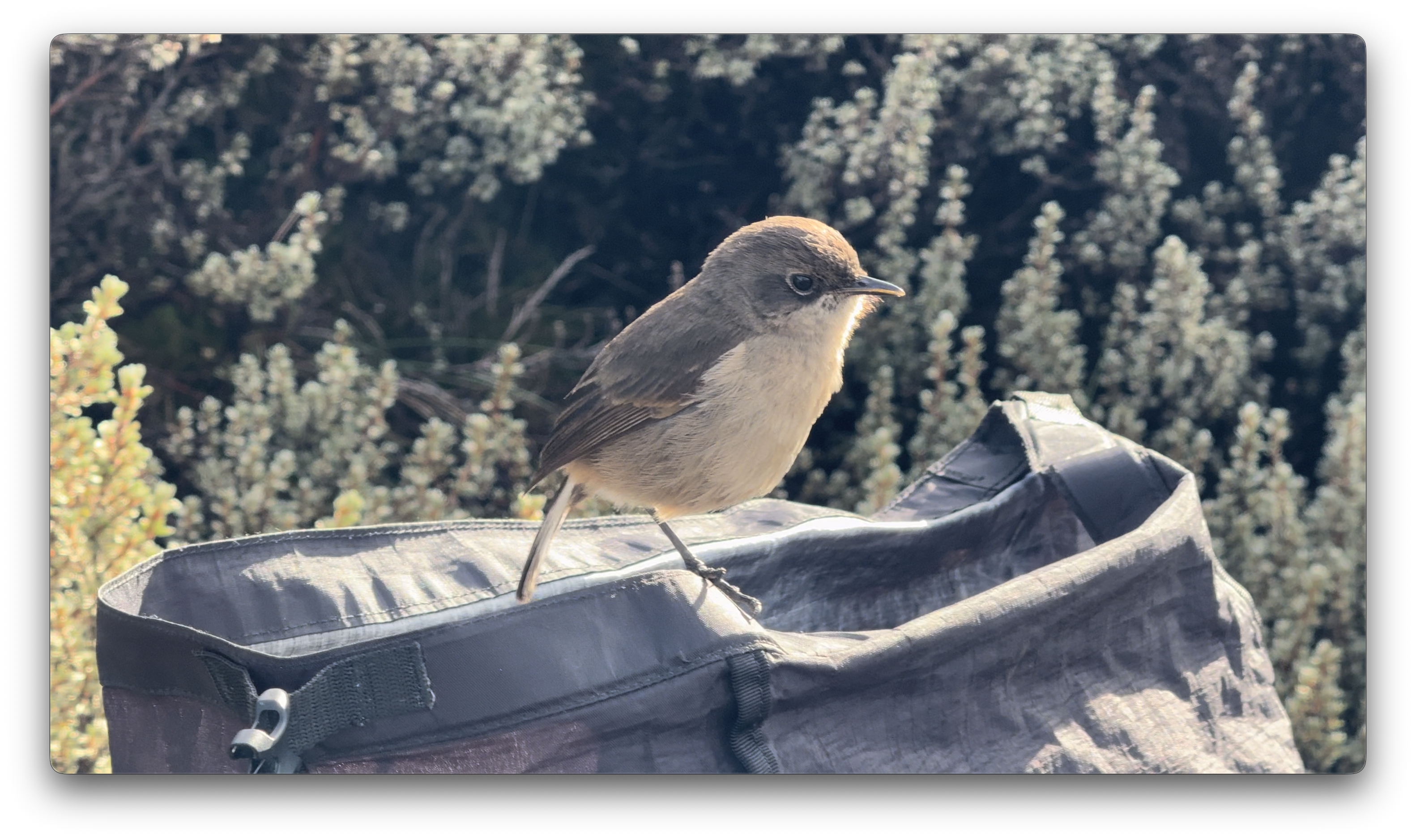
This bird took a dump in my backpack. 😀
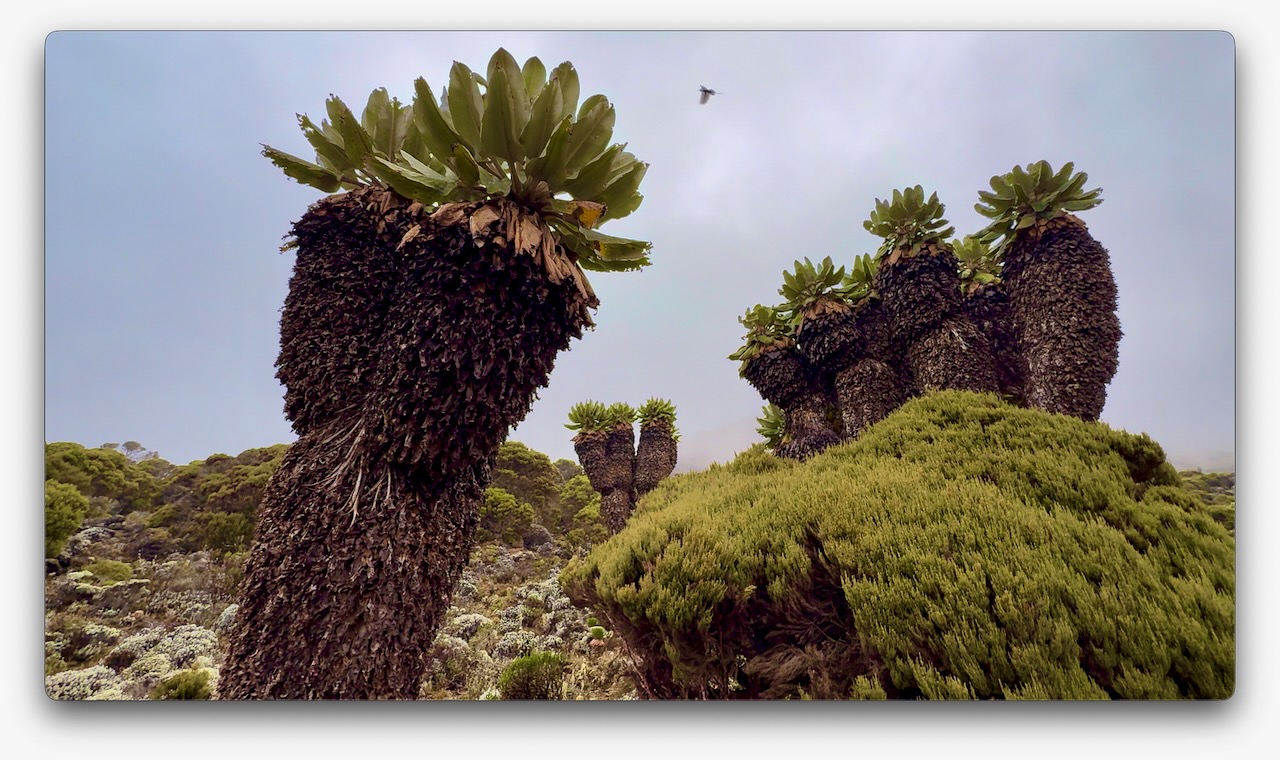
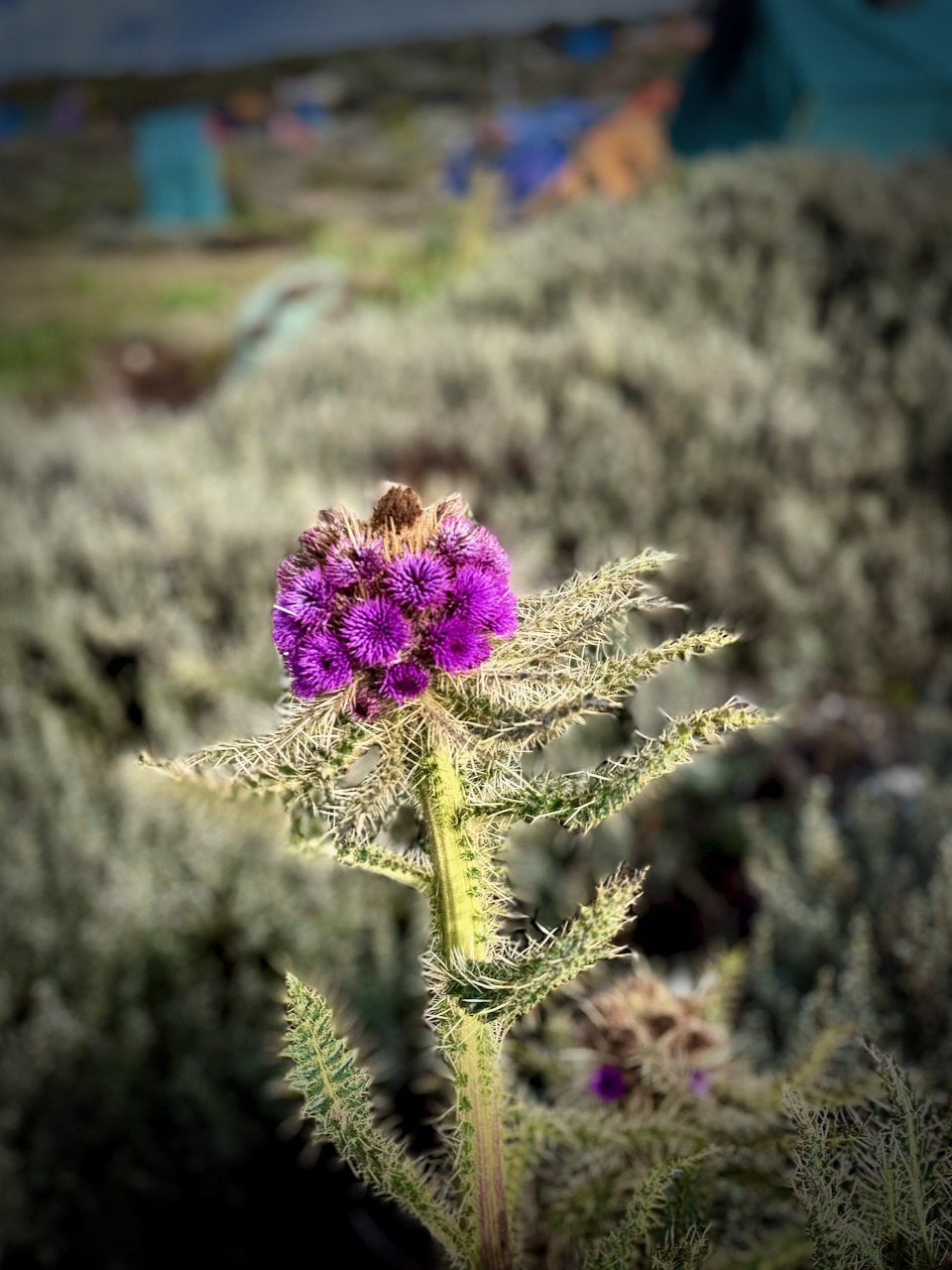
Vegetation was much more interesting as we climbed through so many different ecological zones.
I do love thistles.
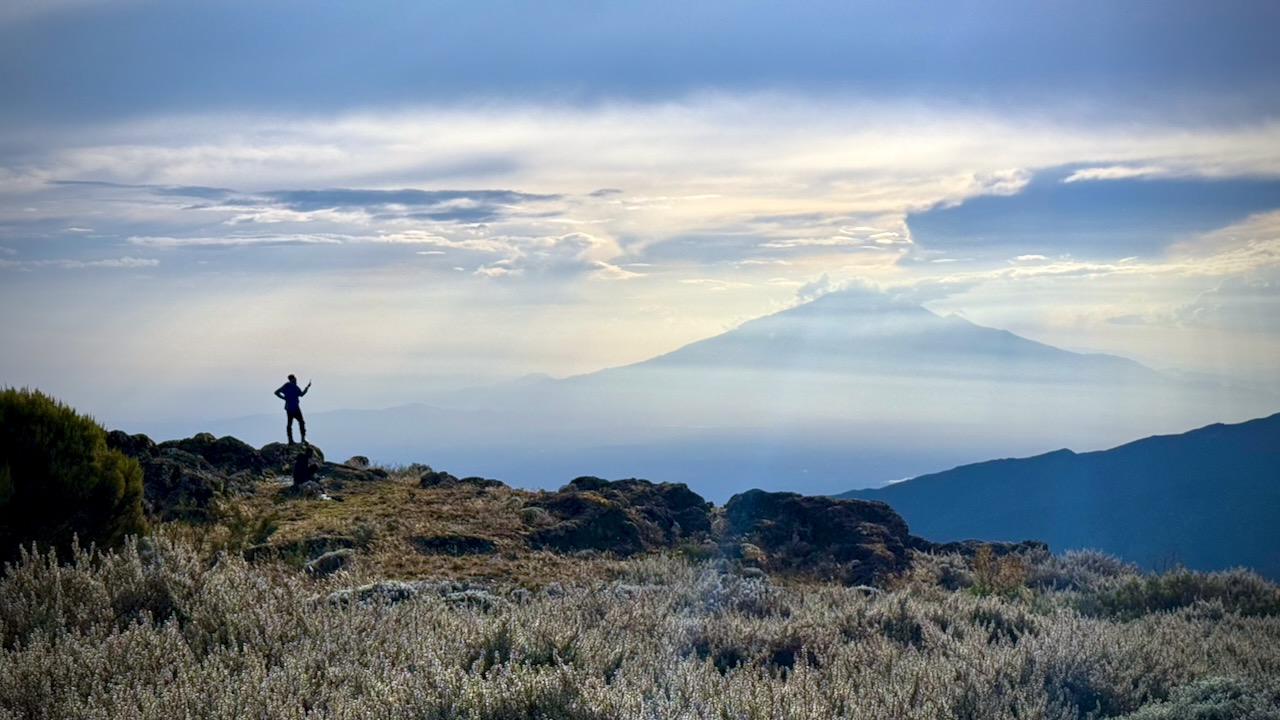
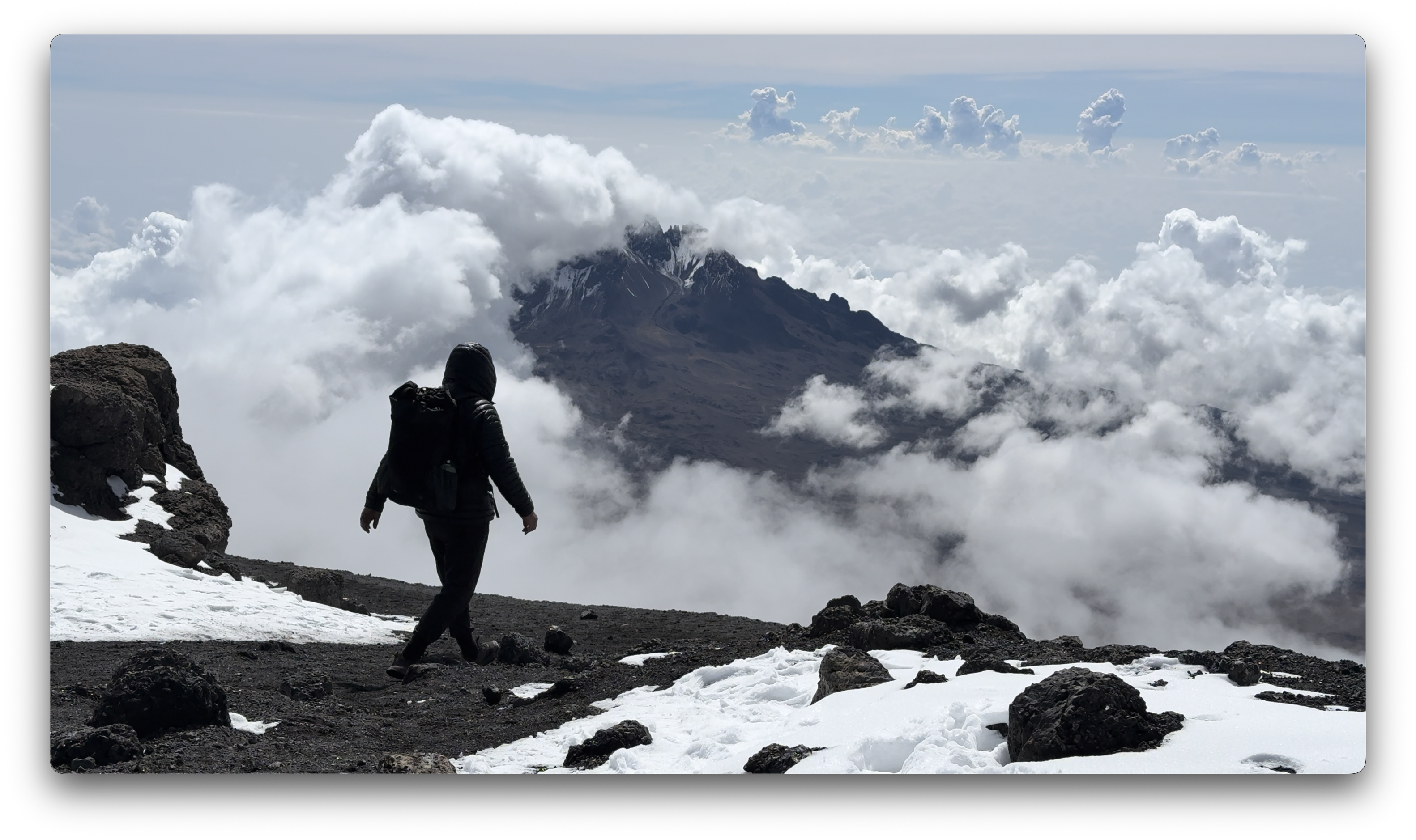
We had great views over to nearby Meru volcano. When you see hikers posed like this, you know they are searching for line-of-sight mobile phone reception. 😀
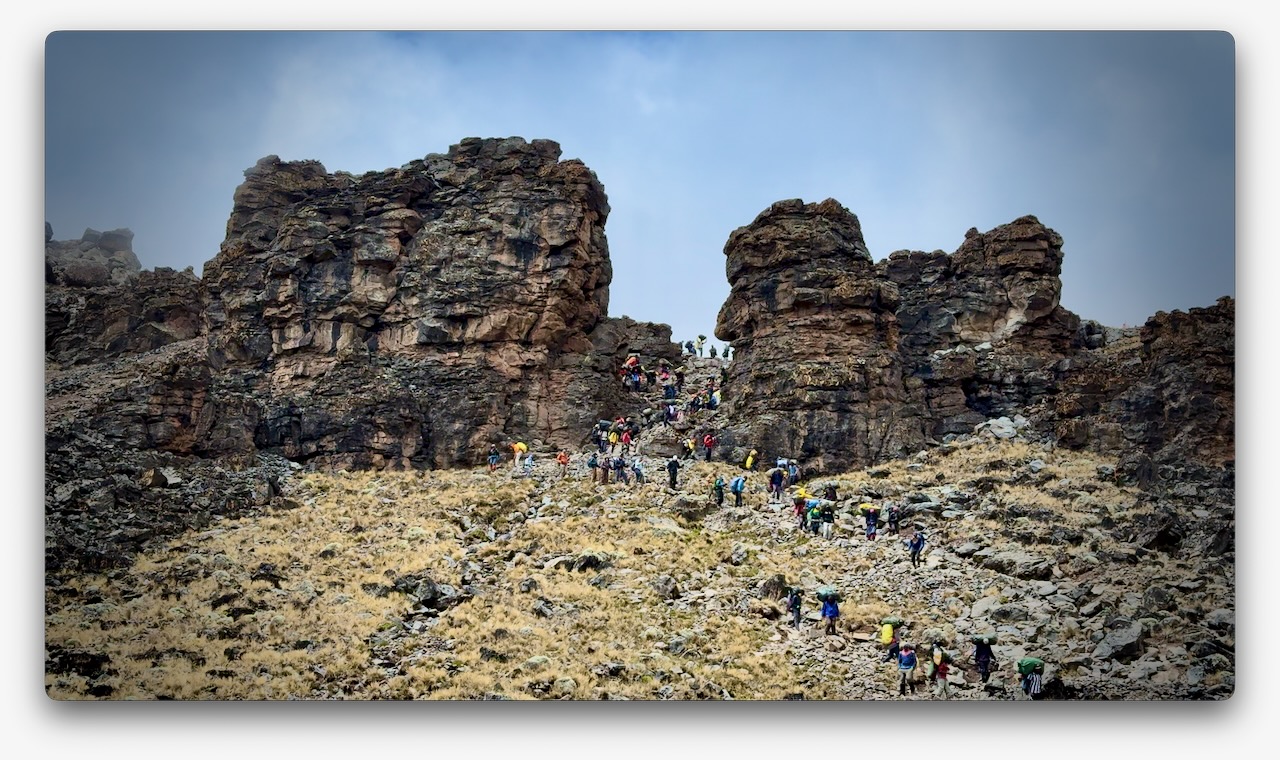
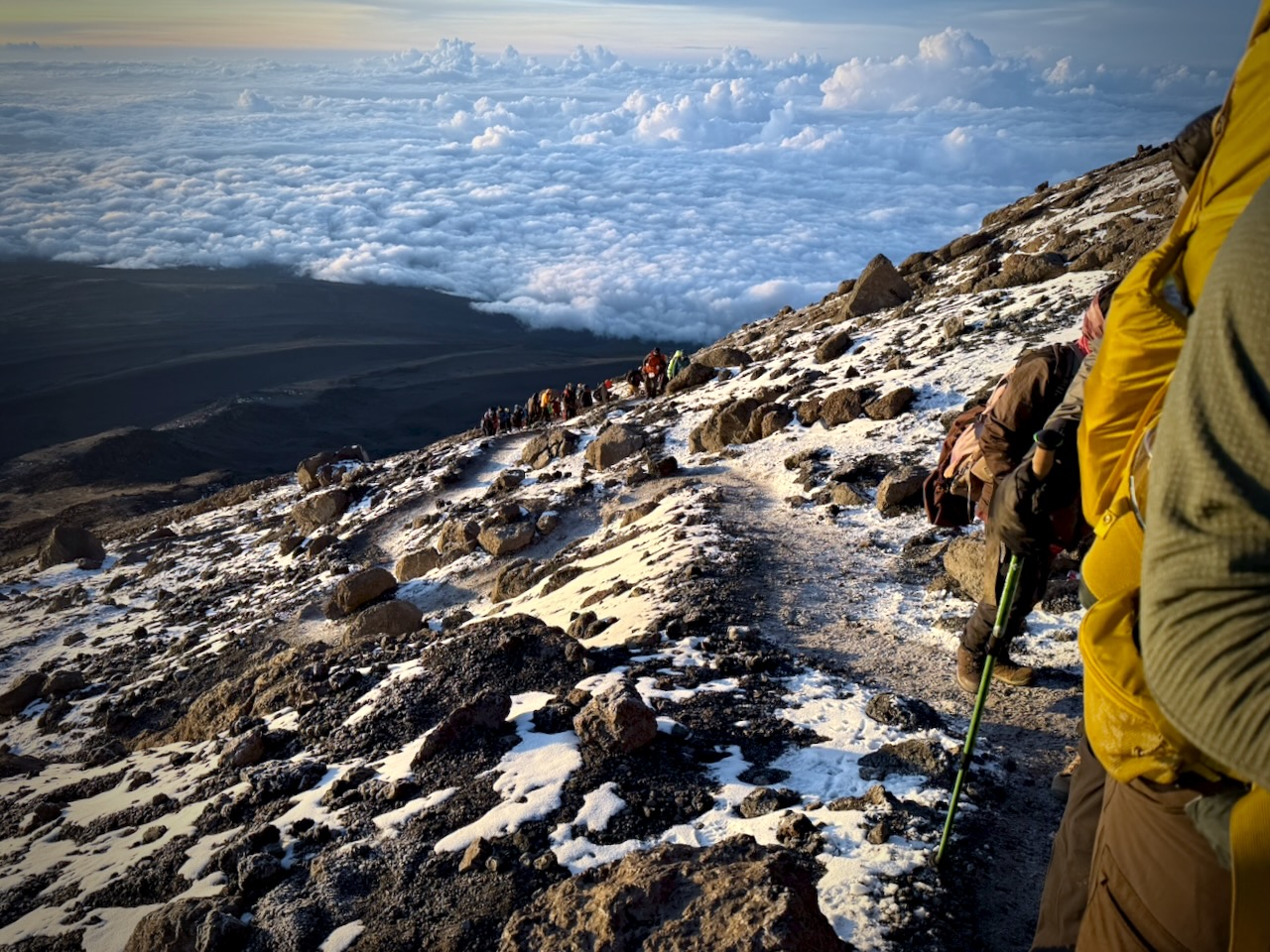
The Machame Route was crowded when I was there. We often had long lines of hikers & porters.
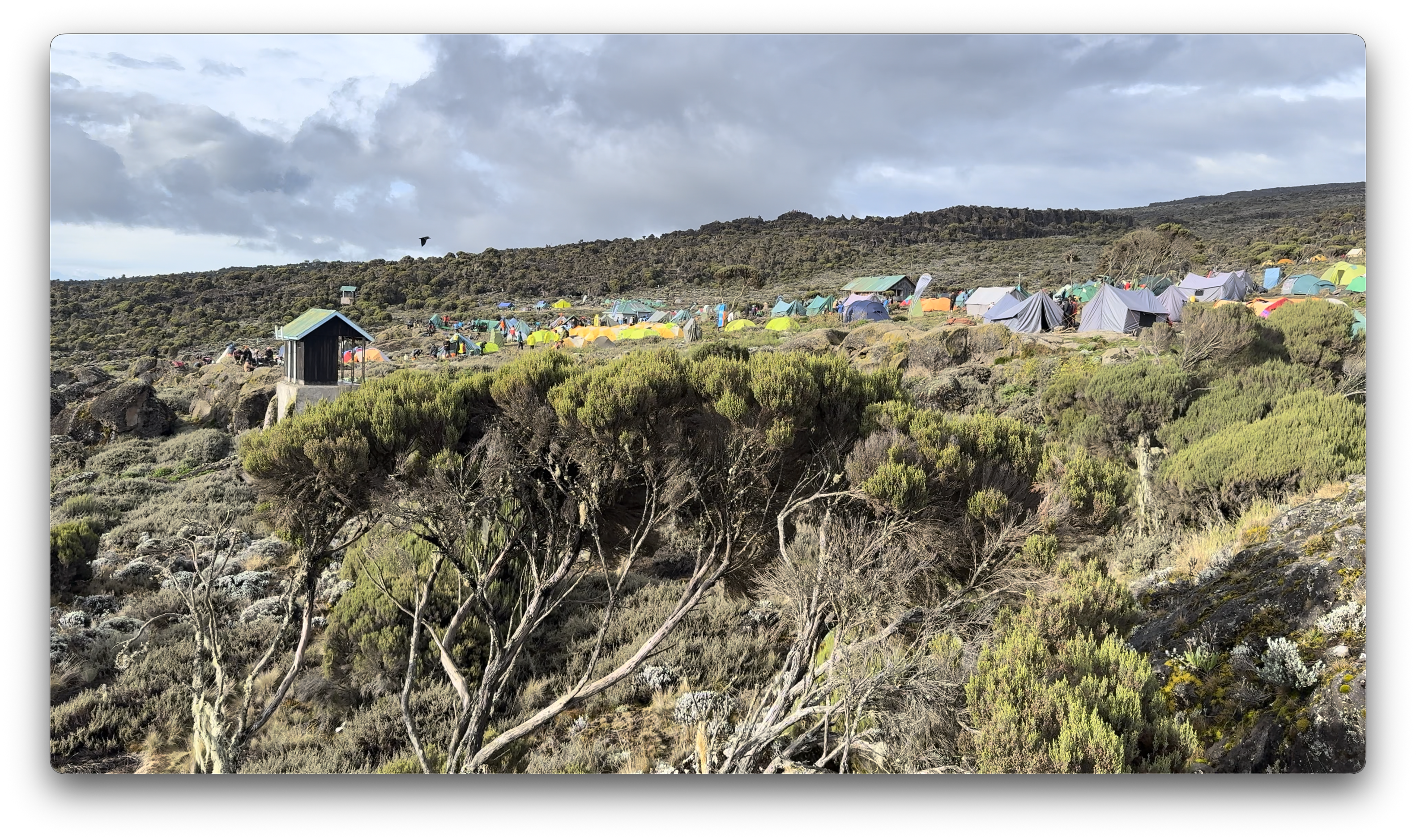
Camps are crowded and littered.
Personally, I felt the portable toilets provided weren’t great. I preferred squatting over a hole in the concrete in the permanent toilet buildings.
Hygiene is not top of mind for any of the guiding companies. In particular, I was surprised alcohol gel was not constantly provided.
That said, nobody in my group got sick from water or food.
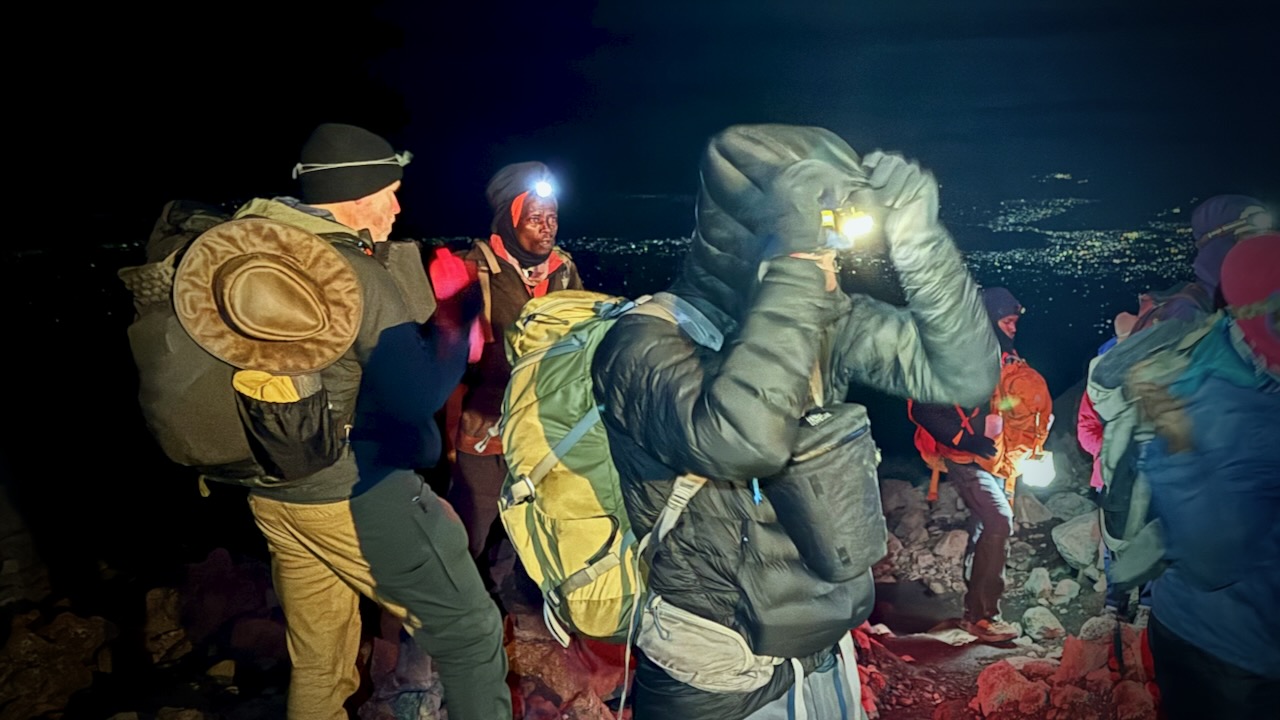
CRUX of Kilimanjaro is summit night. One of the toughest hiking days any of us could recall. I felt perfect. No pain. No problems … when starting.
Wake at midnight. Hot drinks 12:30pm. Start up at 1am.
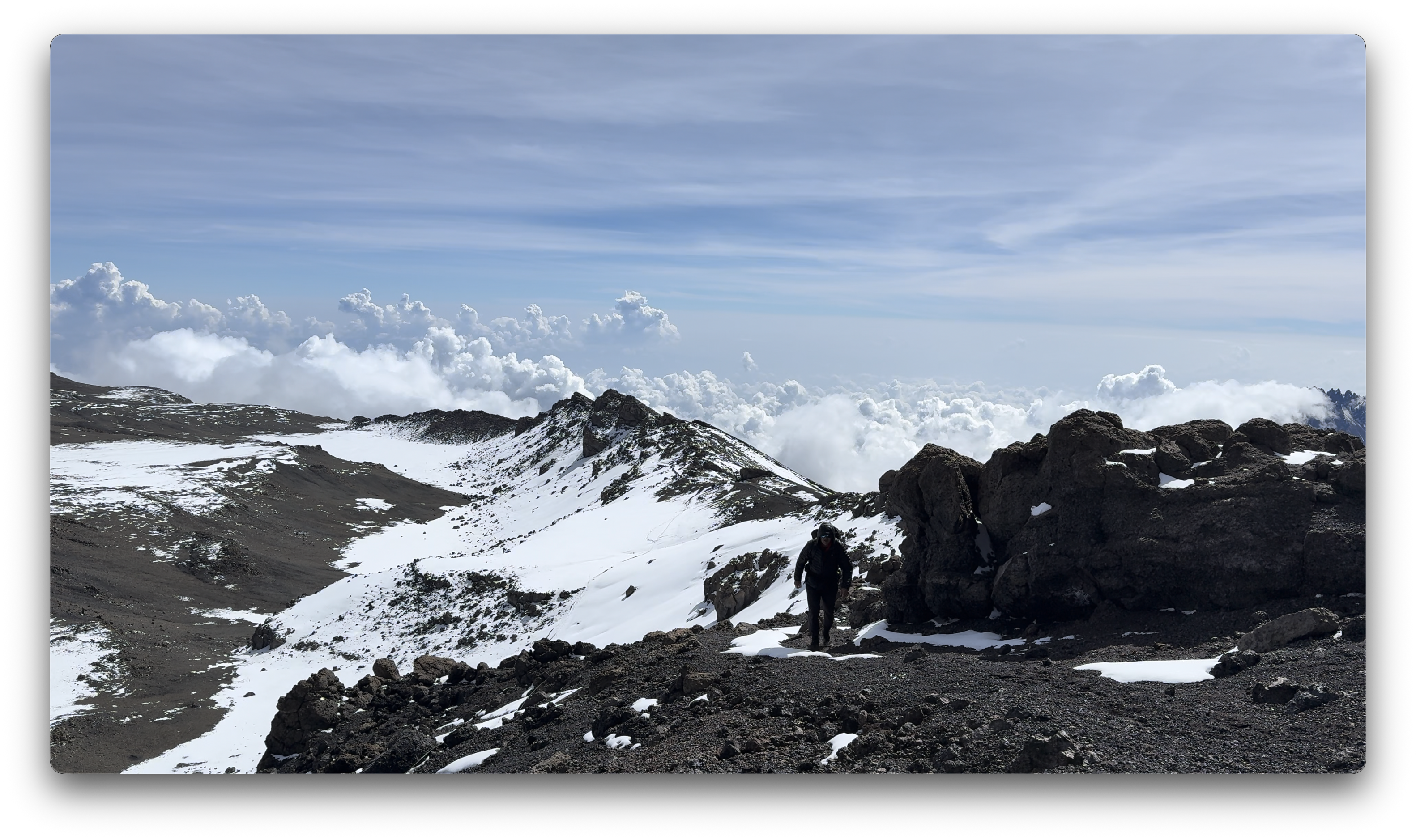
It was a slow, cold trudge until dawn.
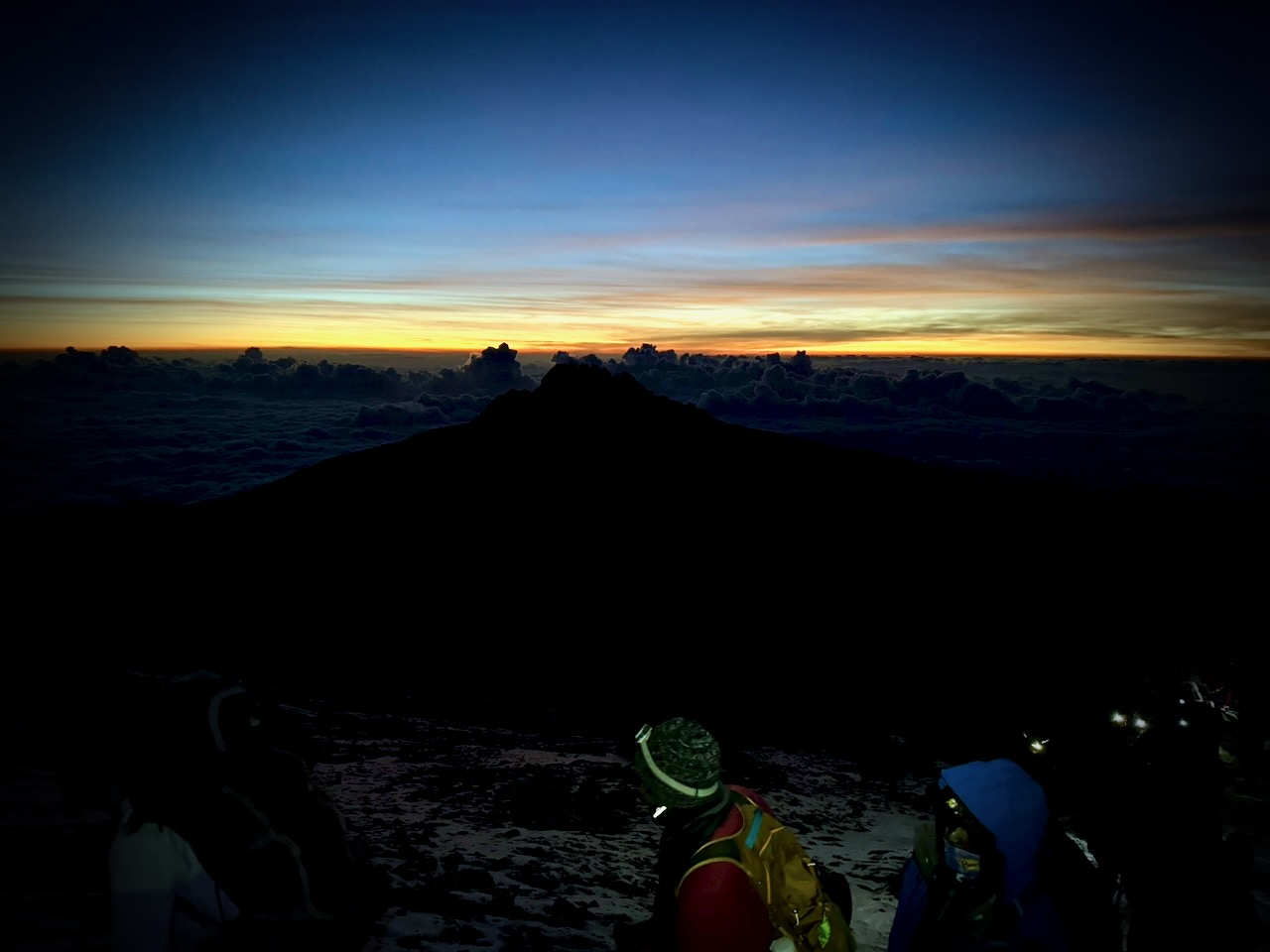
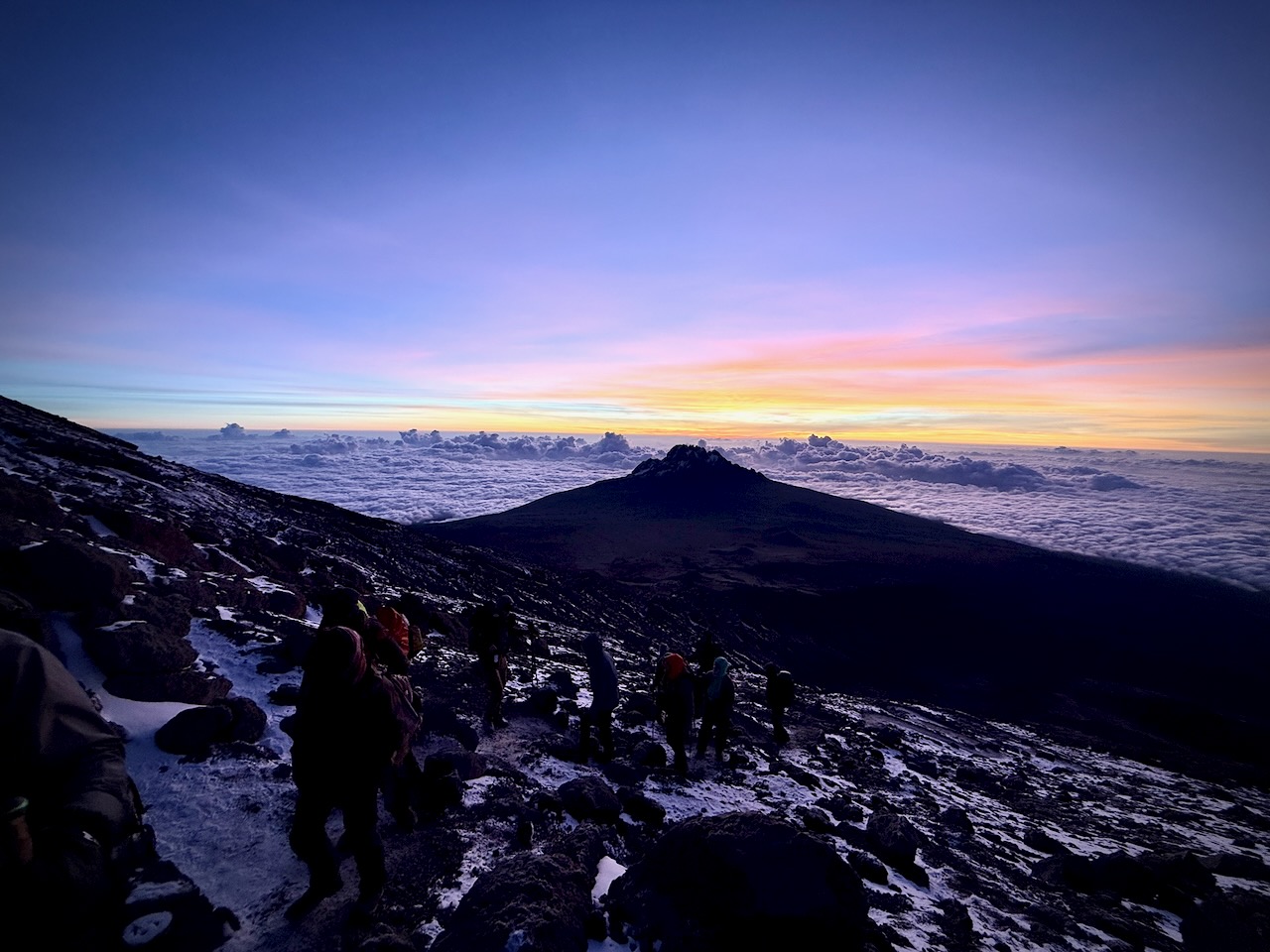
We had an ideal view of the changing light.
Way above the clouds.
We finally reached the first summit peak. And on perhaps another 35 minutes to the highest peak.
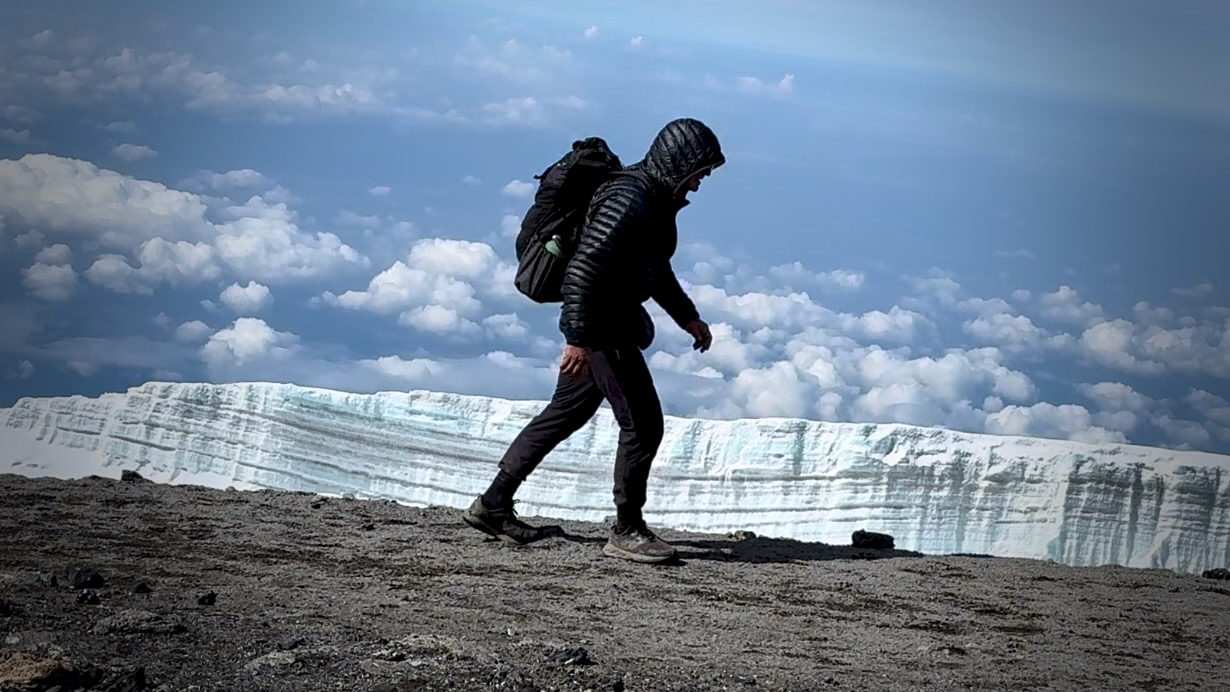
I took a LOT of photos and video up there. Most impressive were the odd, receding glaciers.
That was the FUN part.
Guides hustled us down as quickly as possible to avoid altitude sickness. We climbed down 8000 feet, not getting into low camp until 6pm or so. I ascended & descended for 16 hours, grabbing 1 hour sleep around noon.
Sore knees. Sore toes. And cramping quads.
Highlight?
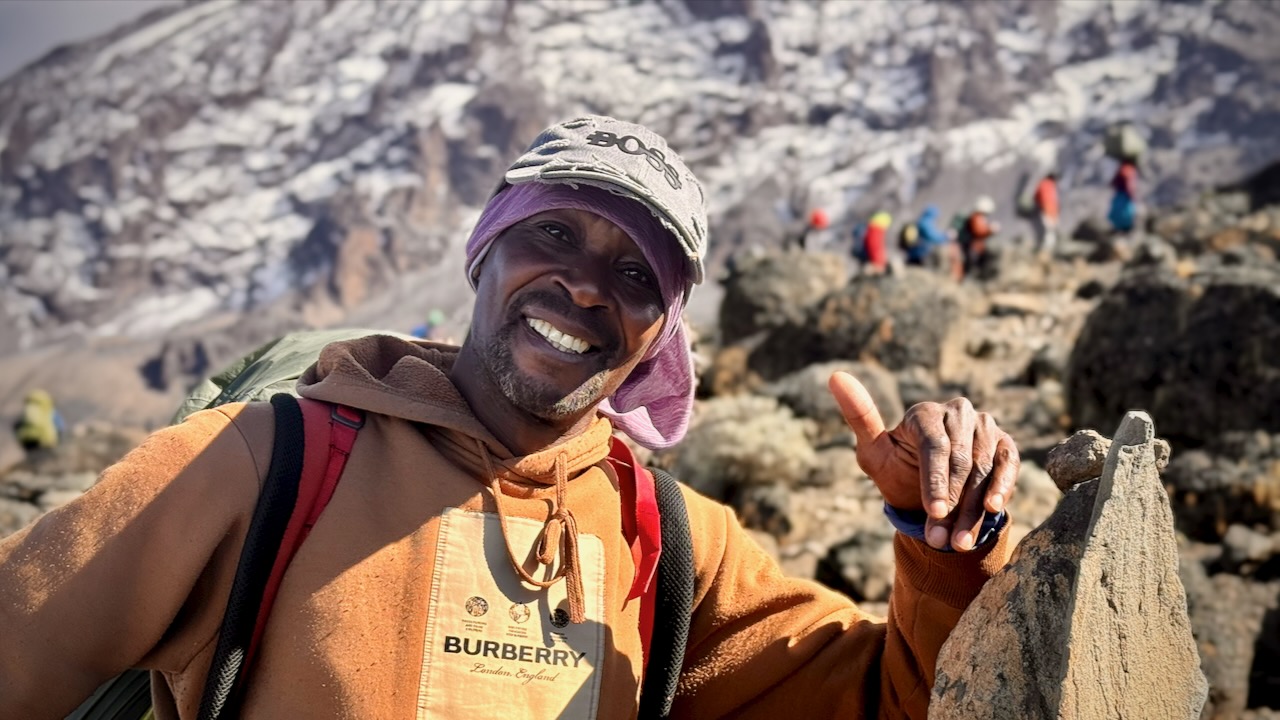
Most would agree that the porters, guides, and staff were the most impressive takeaway from this adventure. We probably had over 100 staff taking care of us over the week. And these folks will do positively anything you request.
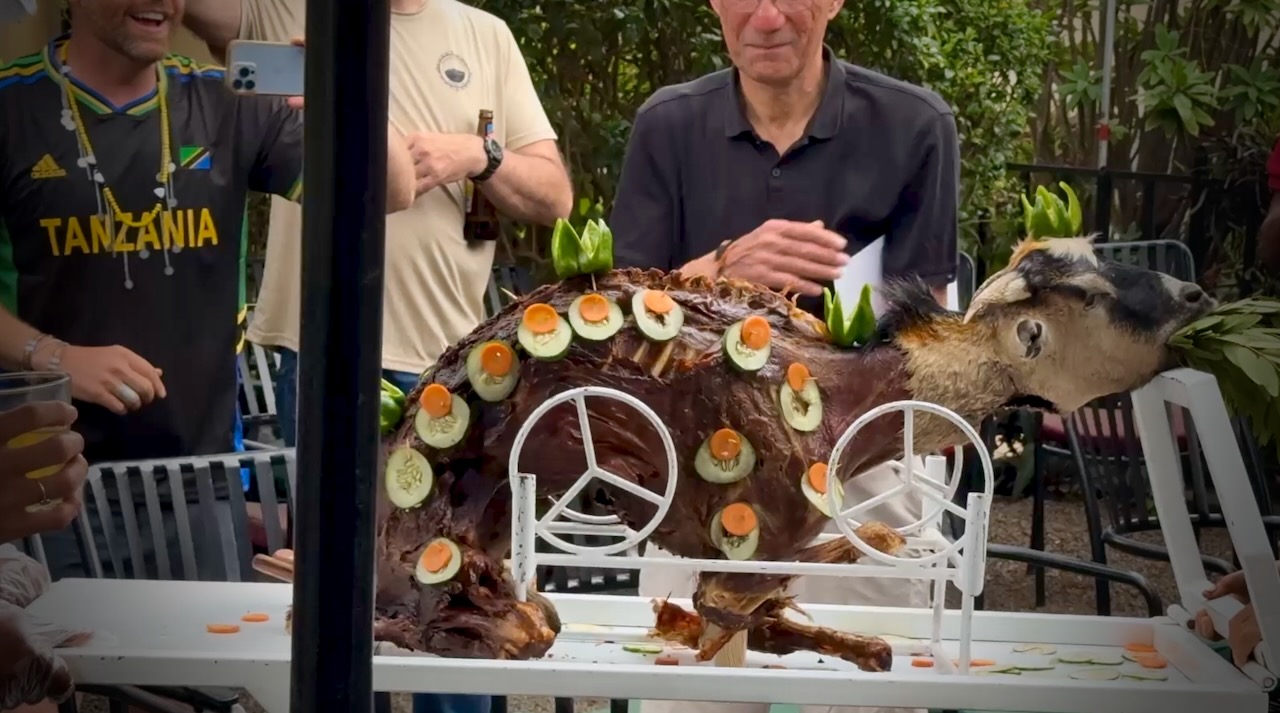
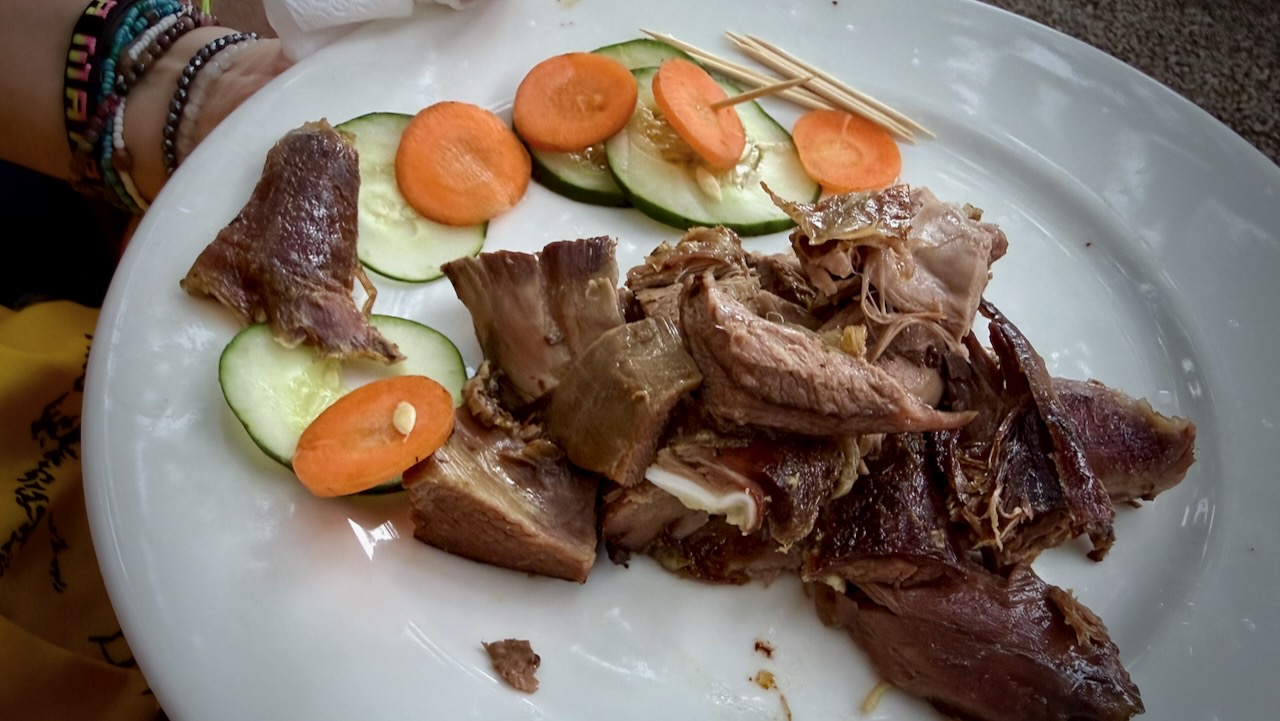
Back at the hotel, we celebrated with alcohol and devoured a full roast goat. Delicious.
A hiker died on Kilimanjaro while I was there. Reported heart attack.
On December 24, 2025, a rescue helicopter crashed, killing all 5 people on board. Two were hikers being evacuated.
10–20 deaths annually out of 30,000+ climbers.
I wrongly thought Kilimanjaro would be easy for me. It wasn’t.
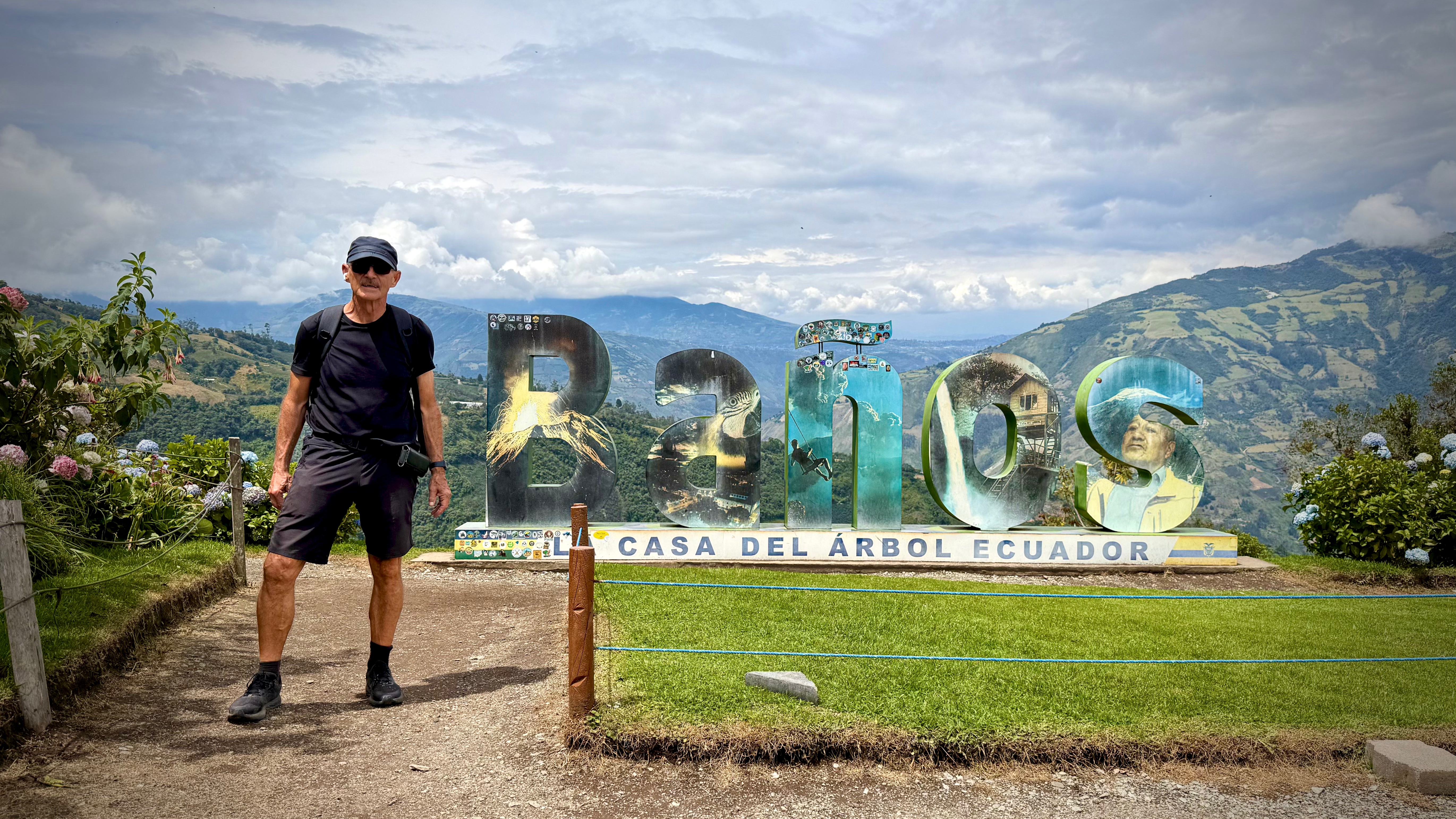
Baños de Agua Santa (Baños) is a small mountain town, the nation’s gateway to the Amazon. And legitimately touted the Adventure Capital of Ecuador.
Activities similar to what you are offered in New Zealand, but for 10% of the cost. There MIGHT be some compromises on safety and liability, however. 😀
I came for the hiking and cycling. And for altitude acclimatization. It’s at 1,820 metres (5,971 feet). Three weeks at altitude conditioning in preparation for Kilimanjaro up next.
Machame Route (Whiskey Route) for me should be relatively easy. BUT many have to turn back due to altitude sickness symptoms.
My plan is to spend some weeks in Ecuador above 3000m and — hopefully — have some acclimatization ➙ then fly directly to Kilimanjaro airport. Altitude sickness is near impossible to predict. (I’ve never had any despite hiking higher than 6000m many times.)
I’ll stay on in East Africa following Kili. My first visit.
This is the 2nd time I’d signed up for Kilimanjaro. The first was in 2020 — cancelled by Covid.