Suzie Dundas posted a terrific trip report for Outside magazine:
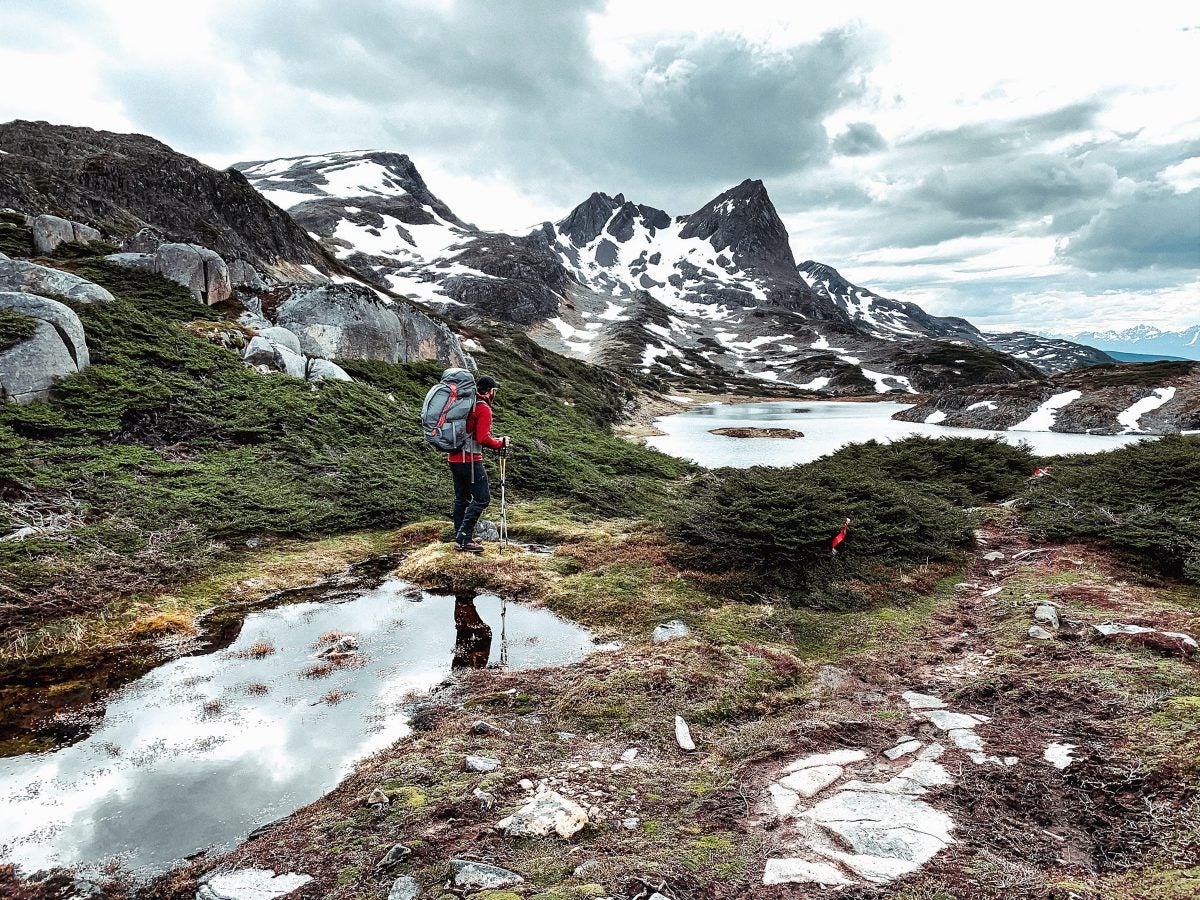
Dientes de Navarino is a trek of superlatives.
It starts from the southernmost town in the world—Puerto Williams, on the 55th parallel. …
Our upcoming trek would cover anywhere from 35 to 45 miles, depending on what route we chose and how accurately our trackers would monitor our steps through mud and snow.
First trekked in the late 1990s but only officially (and partially) marked in 2016, around 200 people attempted the trail annually before its blazing. Since then, the number has gone up to between 1,000 and 1,500 per year. …
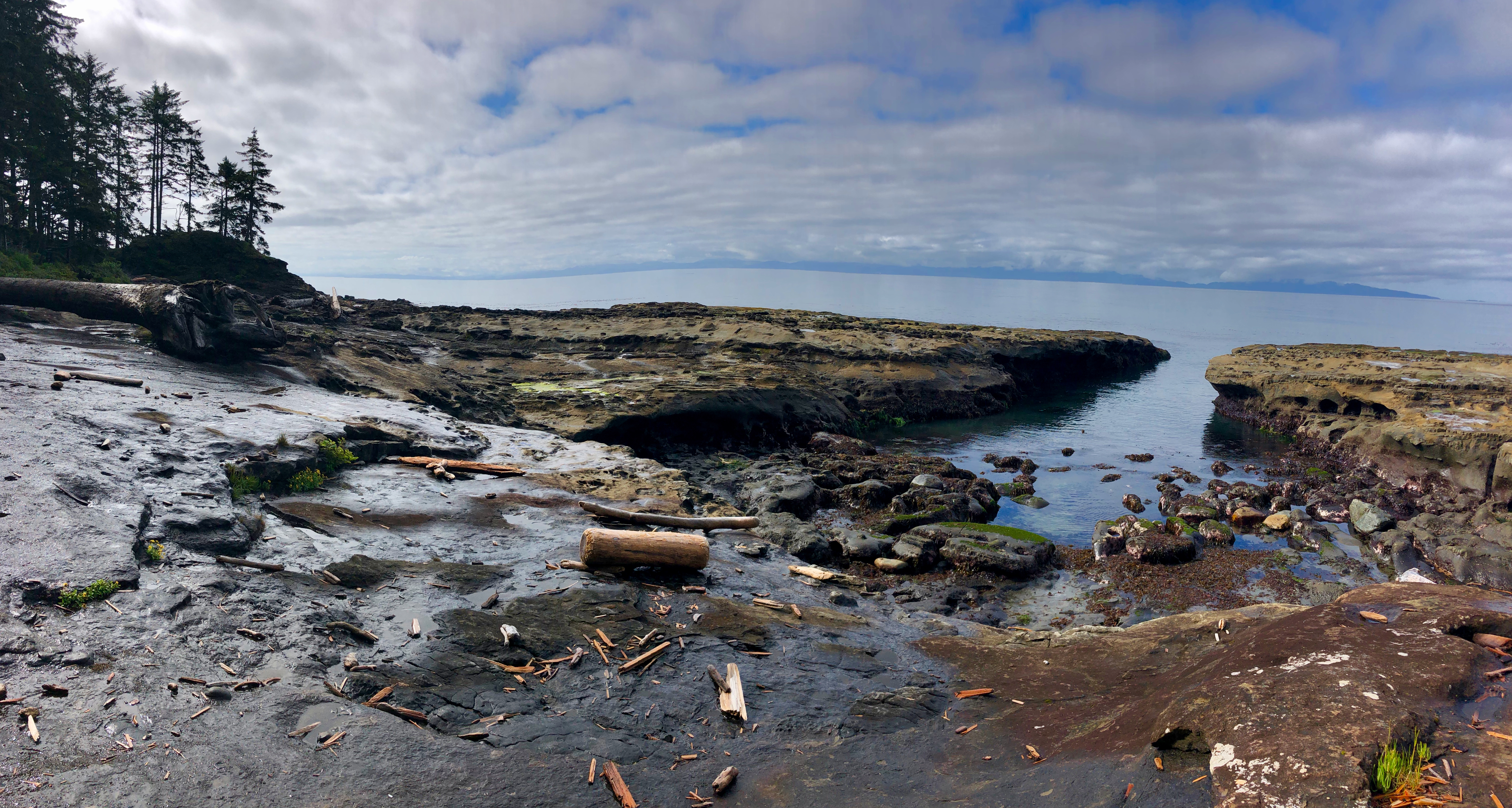
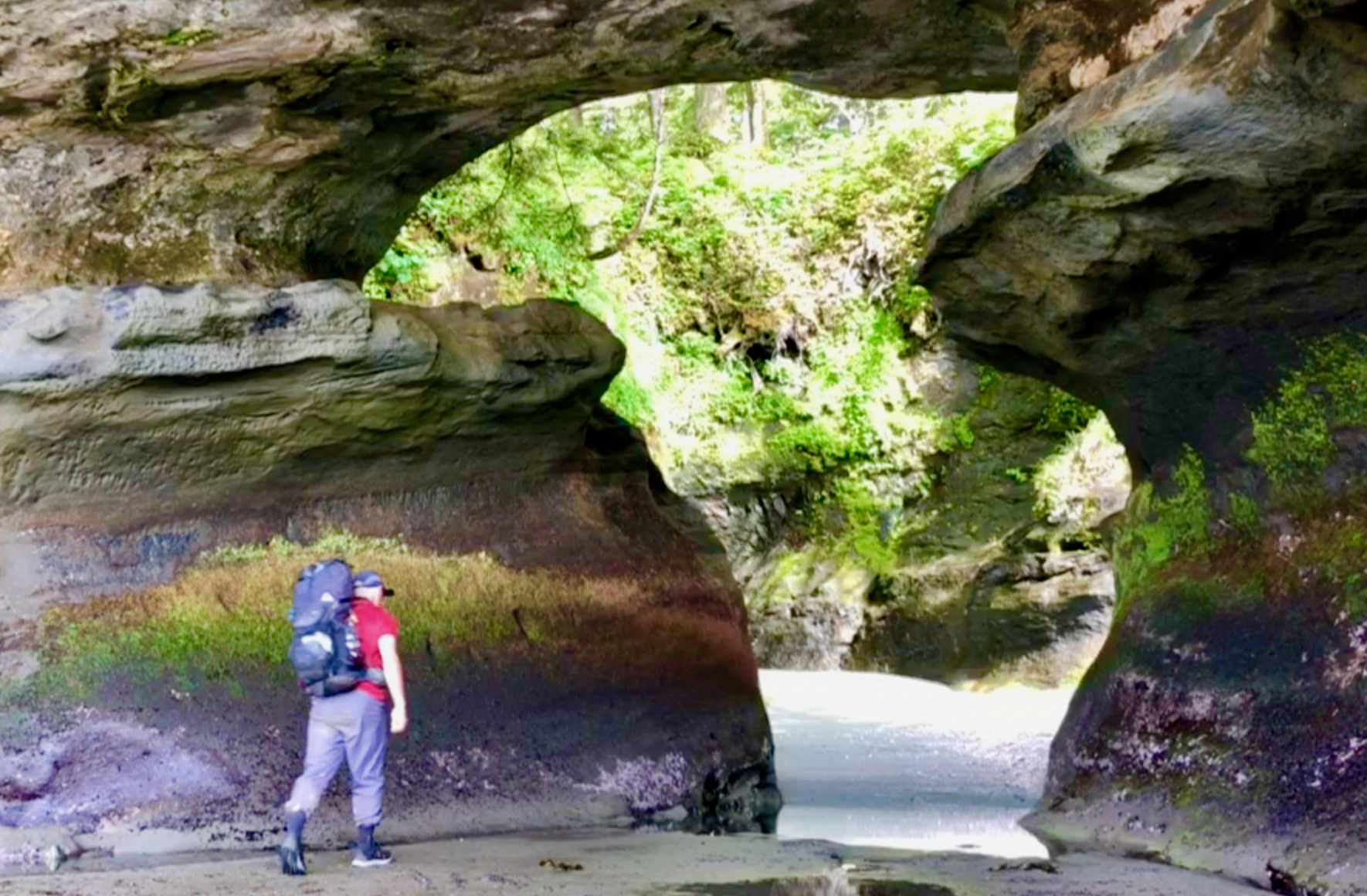
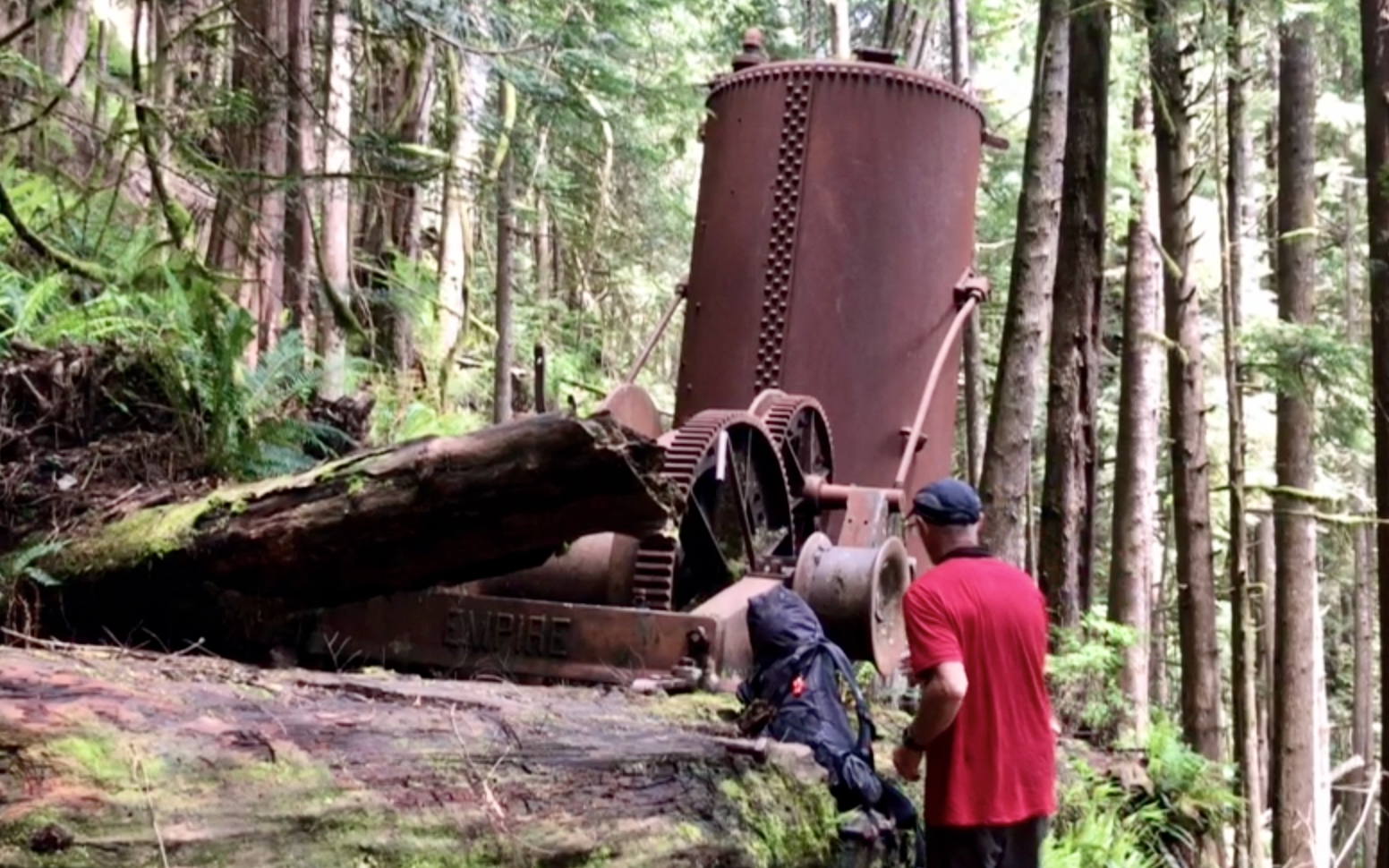
The first time I hiked the West Coast Trail I fell 7 times in 7 days.
No injury.
June 2021 I fell only twice in 6 days. An improvement. But broke a camera on the first. And badly bruised my thigh on the second. 😕
About one in a hundred hikers are evacuated on the very challenging West Coast Trail.
MANY are carrying more weight than they can comfortably balance.
As a Gymnastics coach, I teach kids the safest ways to land and fall. In this video I’ve applied those same techniques for hikers. Absorb IMPACT FORCES over time and surface area.
BEST strategy is to pull in your arms (dropping poles). Take the first impact landing on your backpack.
Having things dangling can complicate. Keep your pack as compact as possible. Fragile equipment protected inside.
How do beekeepers make a living? Why is there so much honey fraud? And why did billions of bees suddenly disappear? To find out, guest host Steve Levitt activates his hive mind.
SOURCES:
Alex Sapoznik, historian, reader in late medieval history at King’s College London.
Chris Hiatt, past president of the American Honey Producers Association, owner of Hiatt Honey Company.
Michael Roberts, founding executive director of the Resnick Center for Food Law and Policy at U.C.L.A. Law School.
Walter "Wally" Thurman, professor emeritus of agricultural economics at North Carolina State University.
RESOURCES:
"U.S. honey is increasingly supplied through imports," by David Olsen (USDA Economic Research Service, 2018).
"Economic Effects and Responses to Changes in Honey Bee Health," by Peyton Ferrier, Randal Rucker, Walter Thurman, and Michael Burgett (USDA Economic Research Service, 2018).
"The Fable of the Bees: An Economic Investigation," by Steven Cheung (The Journal of Law and Economics, 1973).
"Sugar and Sweeteners Yearbook Tables – Visualization: Meeting honey demand in the United States," (USDA Economic Research Service).
Hosted by Simplecast, an AdsWizz company. See pcm.adswizz.com for information about our collection and use of personal data for advertising.
Jeff “Legend” Garmire is an adventurer who climbed the Colorado 14ers, survived The Great Western Loop, broke the Arizona Trail self-supported FKT, Long Trail Unsupported FKT, and the Colorado Trail Unsupported FKT and much more.
Free Outside is his telling of his Calendar Year Triple Crown: Appalachian Trail, Pacific Crest Trail, Continental Divide Trail.
I listened to the audio version which Jeff reads himself.
Fast paced. No dull moments.
8000 miles averaging over 30 miles a day.
I enjoyed the book.
It’s real to his experience. So real that no editor seems to have corrected spelling nor typos.
Seemed to me the CDT would be my least favourite of the three — overall. Too many cows. Too much dirty drinking water.
I embarked on my first solo backpacking trip in 2014. It’s no small admission to say that the effort changed the course of my life.
That trip was — perhaps — overkill for my first shot at backpacking solo. I completed 150 miles, combined over multiple trips on the Continental Divide Trail in Montana and Wyoming. But I dialed in my system and wilderness skills, powered through blisters, and faced my fears over the course of those miles.
In a world filled with noise, constant companionship, phones that never power down, and internet advice coming at us incessantly, here’s one more bit of advice I’d like to impart — turn it all off. Take a walk in the dirt.















 besthike.com