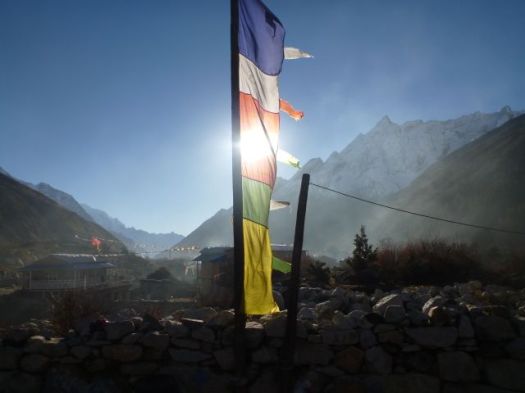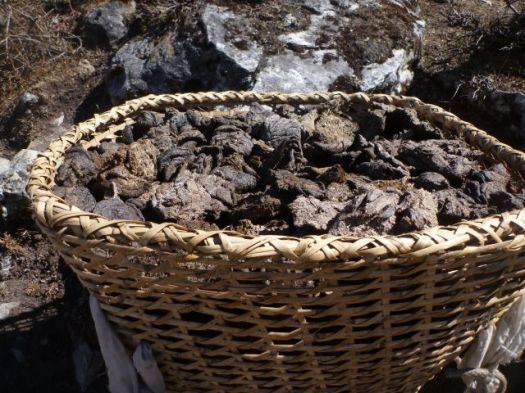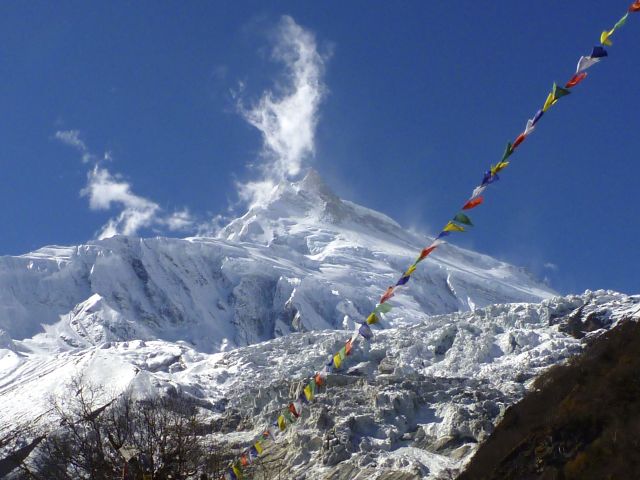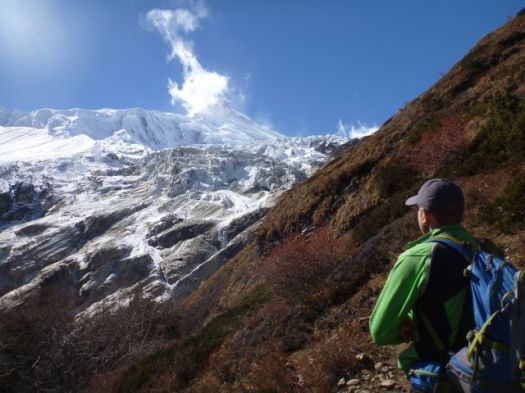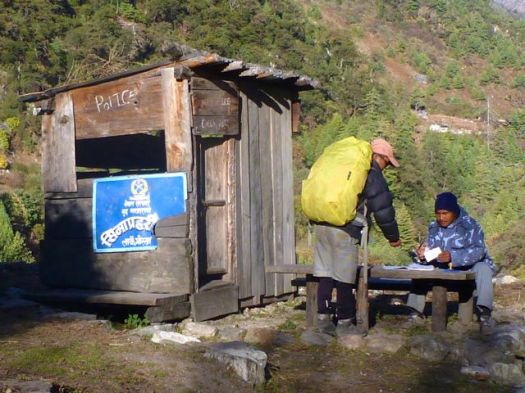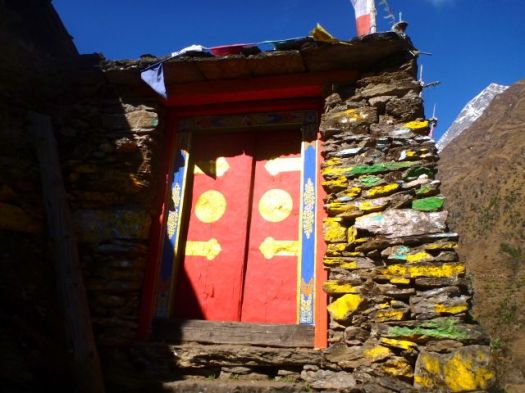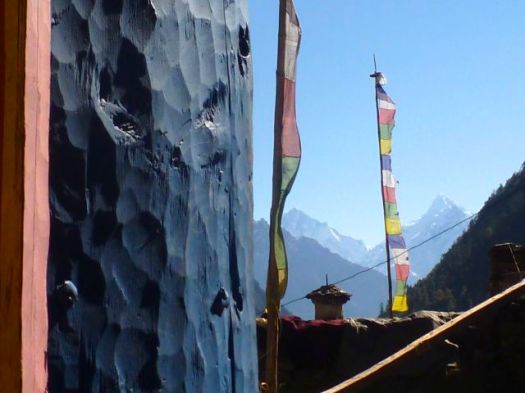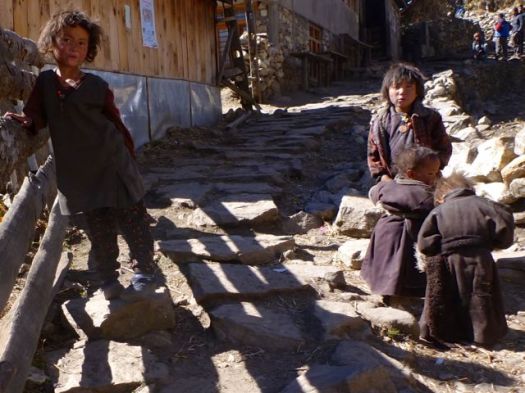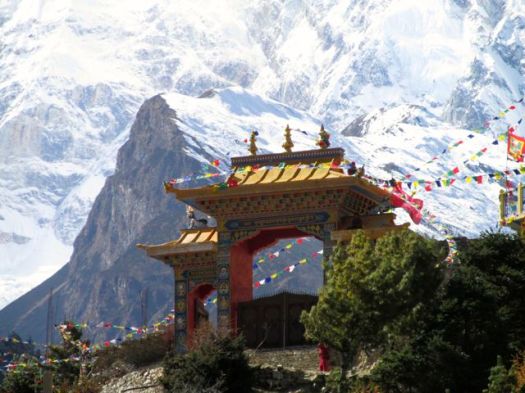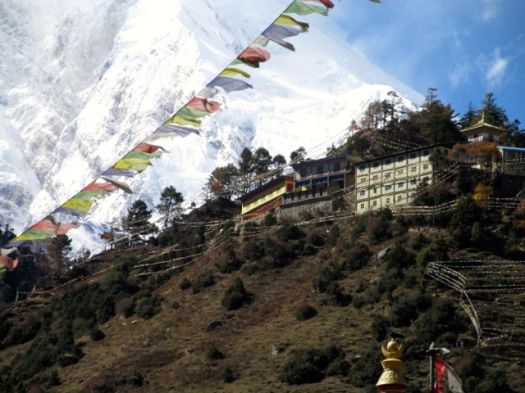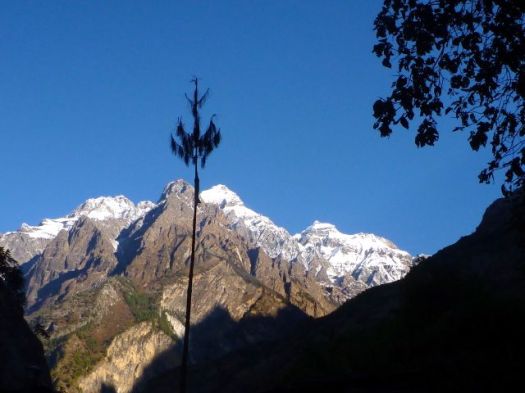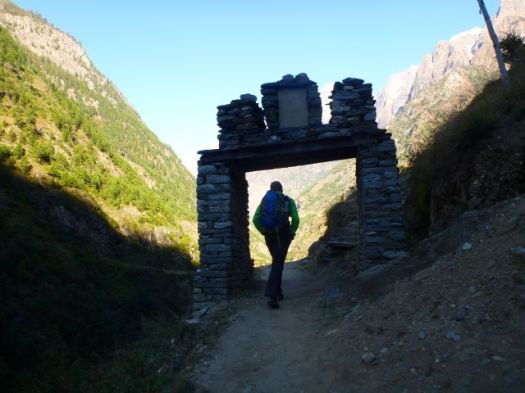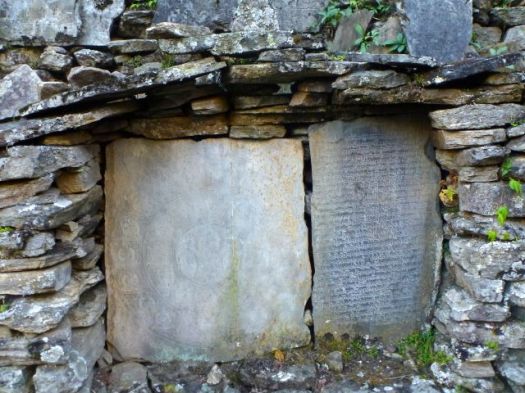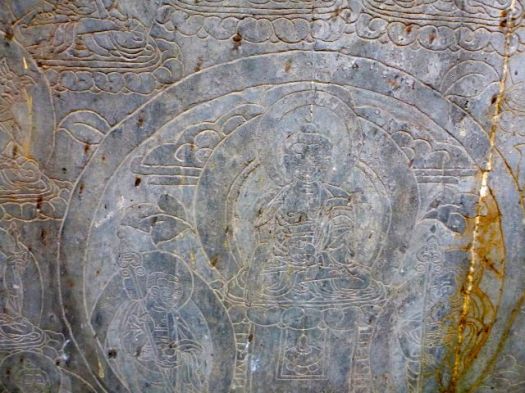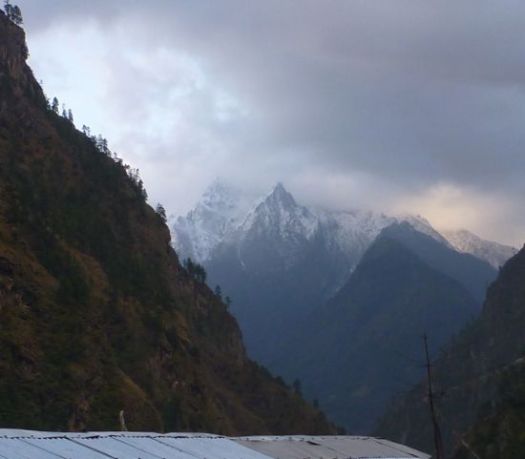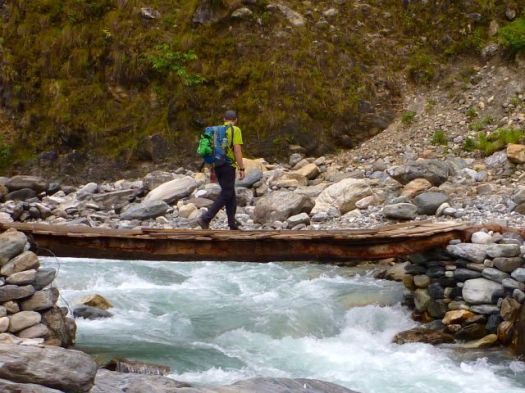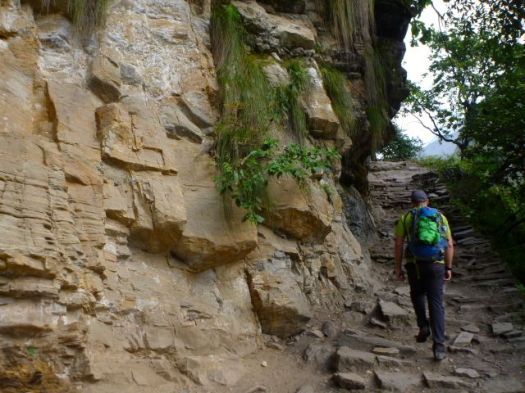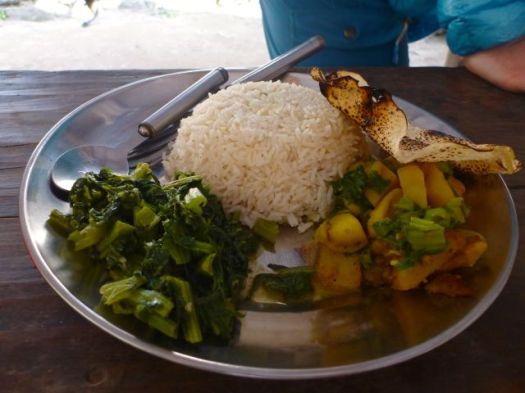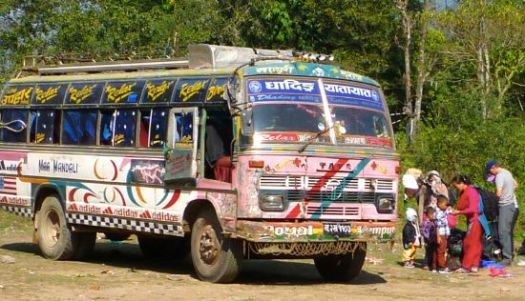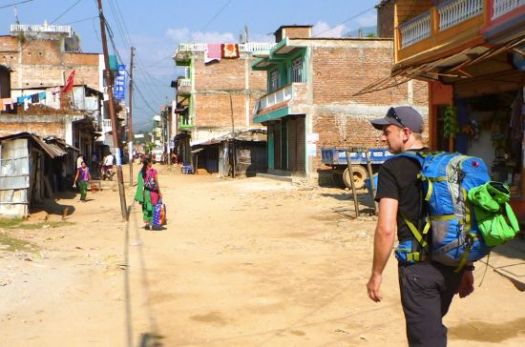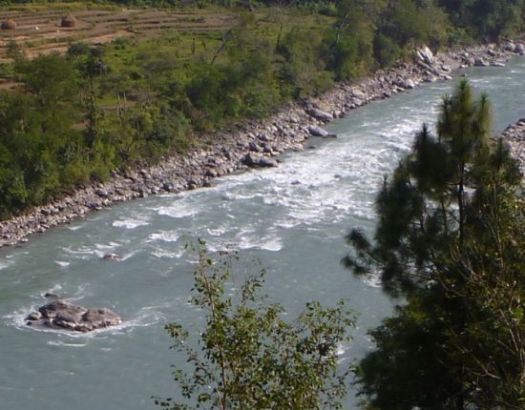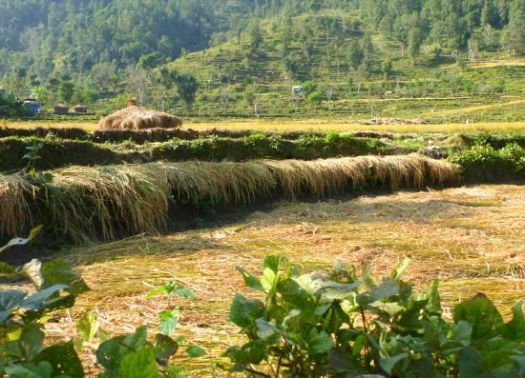
Manaslu Circuit – day 0

by site editor Rick McCharles

I returned to Nepal — my 4th visit — to trek the relatively NEW Manaslu Circuit.

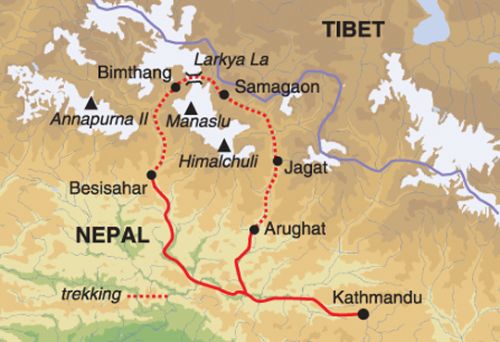
Manaslu mapThat map is linked from Andy Bryant’s excellent 2011 trip report.

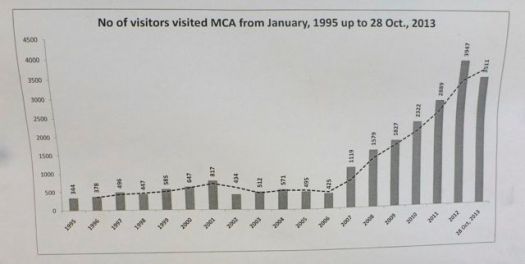
Manaslu is the hottest hike in Nepal right now. Check the rapidly increasing number of permits granted as infrastructure has improved over the past few years. For at least 3 seasons it’s been possible to “tea house trek”,  sleeping under a roof every night rather than in a tent. The restaurants are now almost as good as Annapurna and Everest.

P1240844

My main source of information was the Manaslu Circuit Trek independent website.

I’d hoped to hike Manaslu independently as I’d done Everest and Annapurna in the past. Unfortunately — as of 2013 — Manaslu still requires at minimum one certified Guide and a group of 2 hikers.

Permits can only be purchased by a licensed trekking agency.

Through TrekkingPartners.com I met Mike Howarth from the U.K. who was on a year long cycling trip. He wanted to take a break from the bike and hike Manaslu independently . We both wanted to find a way to hike it independently.

A visit to the Tourism Board office in Kathmandu convinced us that was not going to happen. 😦 We’d need to sign on with a trekking agency.

We first checked two top end agencies, one at the Kathmandu Guest House. Both were fairly expensive.

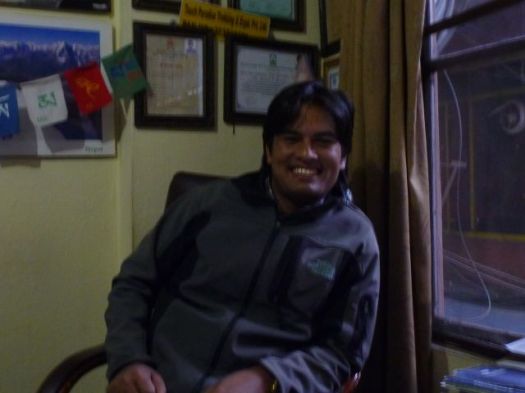
On a whim I thought to ask the owner of a North Farce garment factory in Thamel where I had purchased a Down jacket and Gortex shell for a reference. He called Bharat Prasad Dhakal at a small outfit called Touch Paradise.

Bharat
Bharat

To his credit, Bharat understood immediately that we wanted the minimum possible support. He gave us a good price. Called a young guide. We would carry out own packs. No porters. No pack animals.

Mike and I decided to pay for our own food day-to-day. (We could have opted for an all inclusive price, our guide paying for everything.)

In the end, the 11 days (including tips) cost me about $500 total. The highest price we were quoted was about $1000.

We don’t recommend signing on with some guy you’ve not researched in advance. But in this case, it worked.

A straight talker, Bharat explained in no uncertain terms that we could not start for 3 days due to the National holiday called Tihar or Deepawali in Nepal. The government permit offices would be closed.

P1240153

During the 3 day delay we did some shopping and enjoyed Tihar in wonderful Bhaktapur.

P1240037

Frustrated at the time, that delay turned out to be a blessing. If we had departed immediately, we might have been stopped by a freak snow storm at 5106m (16,751ft) Larkya Pass, the crux of the Circuit.

We had plenty of time for last minute research.

P1240246

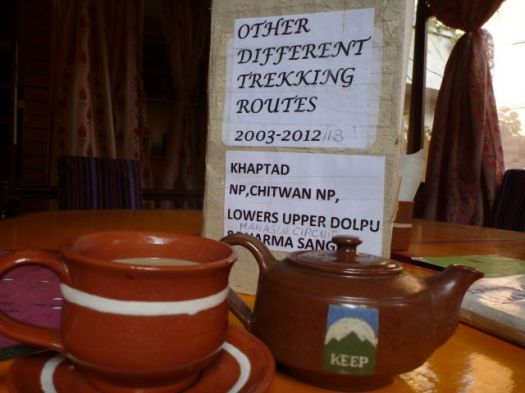
I visited (KEEP) Kathmandu Environmental Education Project  (and Porters’ Clothing Bank) to check past trip reports.

P1240250

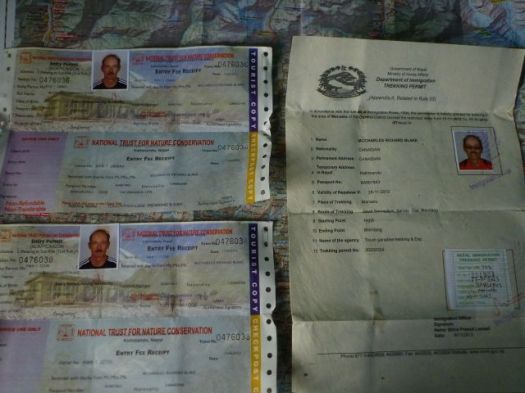
The day before departure we met back at Touch Paradise to pay the second half of our trip cost. And collect our permits.

P1240325

For Manaslu we needed 3 permits:

  • 2013 $20 / person Manaslu Conservation Area Park (MCAP) permit
  • 2013 $20 / person Annapurna Conservation Area Park (ACAP) permit
  • 2013 $70 / group Manaslu Restricted Area permit
  • 2013 … no TIMS (Trekkers Information Management System) card was required

We were good to go!

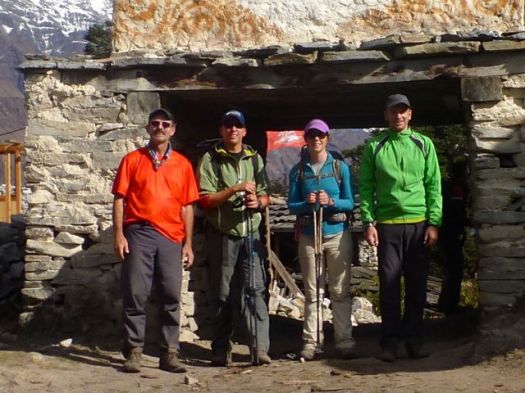
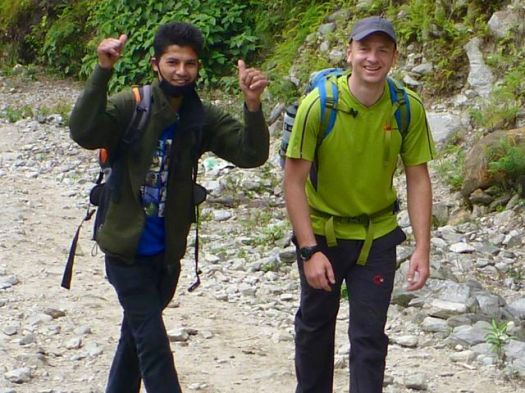
guide Bijaya ("BJ") and Mike Howarth
guide Bijaya (“BJ”) and Mike Howarth

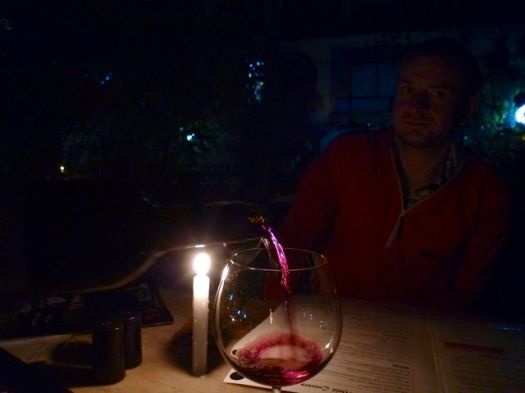
The delay allowed time for me to celebrate my 57th birthday at Kilroy’s. Mike insisted we splurge on a bottle of Shiraz.

P1240066

see high resolution photos from this day on flickr

day 0 | day 1 | day 2 | day 3 | day 4 | day 5 | day 6 | day 7 | day 8 | day 9 | day 10 | info
Nepal’s Great Himalaya trail in 152 days

If I could do ANY thru hike in the world, it would be this one.

GreatHimalayanTrail-Map-600

… one continuous trek. The 152 day trek commences in the far east in the Kanchenjunga region where the world’s third highest peak stretches skyward, and traverses the country to the high plateaus on the Tibetan borderlands in the far west.

Along this 1700km trail you’ll encounter some of the wildest and most remote mountain environments imaginable. You’ll see all of Nepal’s 8000 metre peaks, cross tens of passes ranging from moderate to extreme and witness villages where the culture has remained intact for centuries.

It’s a trek that should only be considered by those with extensive trekking and mountaineering experience, a high level of fitness and a flexible approach as there will be the need to adapt to a range of situations throughout the trek. …

World Expeditions

Cost is about $35,000 / person, I’ve heard.

UPDATE:

Another agency — Adventure Geo Treks Deutschland — is offering the adventure over 167 days for about 16,000 euro or $23,000. Danke Dieter.

altitude adaptation is genetic

En route to Thorung La I learned something new from a doctor in Manang at the daily HRA Altitude Talk.

High-altitude adaptation has a genetic component.

Some people who live at high altitudes suffer breathlessness, palpitations and dizziness, while others have no health problems, and now a new study reveals which genes may explain the difference.

The genetic changes, described today (Aug. 15, 2013) in the American Journal of Human Genetics, allow people to take in enough oxygen from the thin mountain air without developing the heart attacks and strokes of chronic mountain sickness.

“We have ascertained there is a major genetic component that allows populations at high altitude to live better,” said study co-author Dr. Gabriel Haddad, a pediatric pulmonologist at the University of California at San Diego. …

Altitude Sickness: Genetics May Explain Why Only Some Fall Ill

Thorong La, 5,416 m (17,769 ft)

I’ve been over 5000m dozens of times, never having any altitude sickness.

Perhaps I’ve got good genes. 🙂

Read more on wikipedia – High-altitude adaptation in humans – Genetic basis:

… The underlying molecular evolution of high-altitude adaptation has been explored and understood fairly recently. Depending on the geographical and environmental pressures, high-altitude adaptation involves different genetic patterns. …

Everest Estate disaster

by site editor Rick McCharles

Colonel Sir George Everest (July 4, 1790 — December 1, 1866) was a Welsh surveyor and geographer, and the Surveyor General of India from 1830 through 1843.

GeorgeEverestEverest was largely responsible for completing the Great Trigonometric Survey of India along the meridian arc from southern India extending north to Nepal, a distance of about 2,400 kilometres (1,500 mi). …

Many consider the Trigonometric Survey one of the greatest accomplishments of man.

He was a “humourless individual having the knack of putting everyone’s back up. But since he was a genius, his antisocial habits have been glossed over.”

– Trekking Holidays in India

He did not want Chomolungma to be named for himself. George might never have seen Everest. And had no interest in it. After all, he was Surveyor General of India. The world’s highest peak is on the Tibet / Nepal border.

Sir George Everest’s House and Laboratory, also known as the Park Estate, is situated about 6 kilometres (4 mi) from the Mall in Mussoorie.


… The house is situated in a place from where one can catch the panoramic view of Doon Valley on one side and a panoramic view of the Aglar River valley and the snowbound Himalayan ranges on the other.

The house is under the jurisdiction of the Archeological Survey of India and has been long neglected. …


… The floor is littered with bricks, stones and cow dung. The house is also used as shelter from rain and snow by the cows, goats and horses from the nearby village. Its walls are covered with graffiti, which are mostly declarations of love. …

wikipedia

Day hiking (part of the Benog Tibba Circuit) to visit his former Estate, I bumped into a Christian evangelist, Ray Eicher, whose family have lived in India for generations. He set me in the right direction, in a couple of ways.

Everest Estate, Mussoorie-4

Everest Estate, Mussoorie

Everest Estate, Mussoorie-2

Everest Estate, Mussoorie-3

more of my photos

more Everest Estate photos

This kind of neglect of historical monuments is typical in India. My evangelist friend, who lives nearby, is sorely disappointed.

The historic Clock Tower in Mussoorie was recently torn down. At this point, plans to rebuild are stalled.

P.S.

…. Sir George Everest’s surname is pronounced … Eve-rest with “Eve” pronounced as in the woman’s name. …

Manaslu Circuit, Nepal

by site editor Rick McCharles

The Manaslu Trek (or Manaslu Circuit Trek) is a 14-day tea-house trek which circumnavigates the 8th highest peak in the world (8,156m).

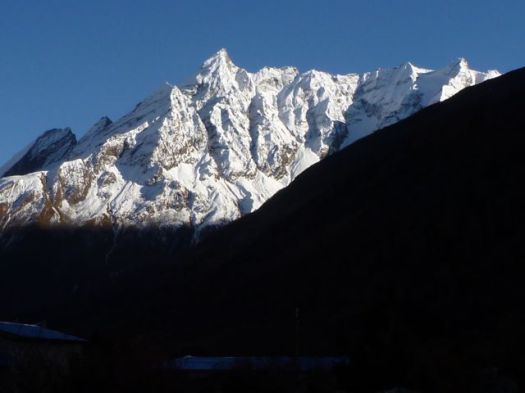
Manaslu sunrise

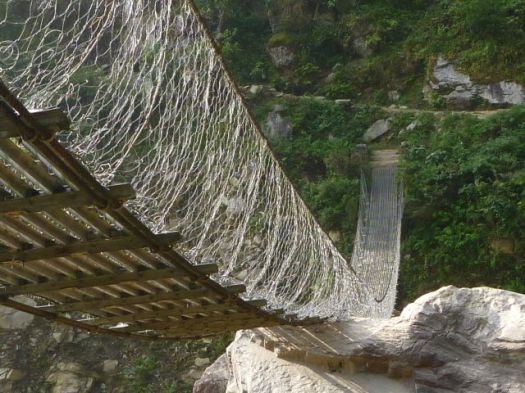
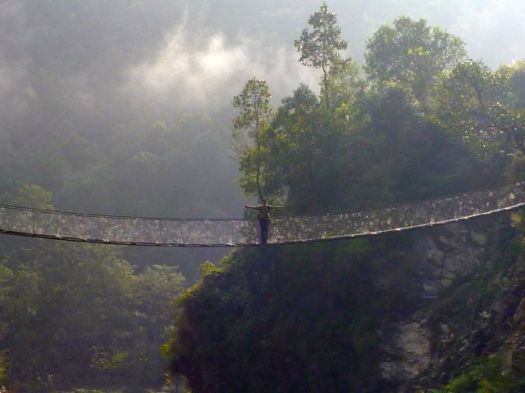
The trek has all the elements of other treks in Nepal including both Hindu and Buddhist culture, protected wildlife, rhododendrons and wild flowers, raging rivers, precarious bridges and stunning mountain scenery.

The trek is much easier than it used to be with greatly improved trails along the Budi Gandaki river gorge. In terms of difficulty, it is comparable with the Annapurna Circuit Trek or Everest Base Camp trek. Its highlight is undoubtedly the spectacular unhindered views of Manaslu. …

Wikitravel

Two of us plan to try this high altitude trek starting Nov. 7th. It’s touted the NEW Annapurna Circuit, the old Annapurna having been degraded by road construction. 😦

Guy Shachar posted the best almost independent (hired guide/porter, carried their own packs) trip report (2011) I’ve seen:

  • Manaslu Circuit Trek- Around Manaslu Trek – detailed itinerary and trail description

  • Manaslu Circuit Trek- Around Manaslu Trek – General Information
  • Manaslu

    More of Guy’s photos

    … Until recently the trek used require camping, but building of tea-houses means the trek can be completed using local accommodation. …

    When trekking through the Manaslu region, ten peaks of over 6,500 metres (21,300 ft) in height are visible, including peaks of over 7,000 metres (23,000 ft) elevation. …

    wikipedia

    We plan to go very lightweight. Quite fast. Perhaps 11 days.

    We carry our own packs. Have no fixed itinerary. Our guide carries his own gear. We pay his costs — including insurance. Rate is $25 / day.

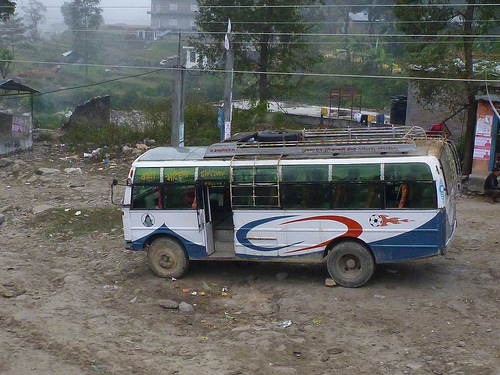
    A private car to the trailhead costs at least $120. We’ll take the bus both ways.

    Altitude acclimatization is easy on this trip. You start at Arughat 600m and work slowly and steadily up to crossing Larkya La 5135m. Of course if anyone suffers altitude sickness signs, it’s easy to quickly backtrack.

    ImagineTreks_Manaslu_profile

    Manaslu-Circuit-Trek-II-location-map

    We’re not likely to make many sidetrips.

    Wish us luck. 🙂

    Kuari Pass trek – day 6

    by site editor Rick McCharles

    day 0 | day 1 | day 2day 3 | day 4 | day 5 | day 6

    We arose at first light last morning, the coldest yet.

    dawn - Kuari day 6

    dawn - Kuari day 6-2

    frost - Kuari day 6

    Our adopted dog was quick to the fire.

    dog warming up - Kuari day 6

    last morning Camp - Kuari day 6

    Nanda Devi - Kuari day 6

    I’d have to rate the day before and the two days after Kuari as about as good as hiking gets.

    pack mule - Kuari day 6

    Kuari day 6

    Kuari day 6-2

    Kuari day 6-3

    Kuari day 6-4

    Kuari day 6-5

    Our guide was happy to get back to mobile phone service. He confirmed out pick-up time.

    Kuari day 6-7

    phone service reached - Kuari day 6

    We wandered lazily down through huge alpine meadows. Please that the trek had been a success.

    Kuari day 6-8

    Reaching this Hindu Temple having connection to great epic Ramayana means you’ve almost completed the Kuari.

    Hindu Temple - Kuari day 6

    We finished at the Auli Ski Resort, India’s finest. (Ski Jan-March.) Asia’s longest Cable Car (4km) is a must. The road to get there is deadly. This was one of the hosts of the 1st South Asian Winter Games in 2011.

    Auli ski lift - Kuari day 6

    Auli - Kuari day 6

    Auli - Kuari day 6-2

    Our driver was waiting just outside the gates. 🙂

    Red Chili van at Auli - Kuari day 6

    It was 10hrs back to Rishikesh with a hotel stop en route.

    The most dangerous aspect of Himalaya trekking by far is the drive to and from the trailheads. Washouts and landslides are frequent.

    road wash out near Joshimath Kuari day 6

    road wash out near Joshimath Kuari day 6-2

    OK. The giant spider we found awaiting us at our (Le Meadows) Hotel room might look even scarier. 🙂

    BIG spider at hotel - Kuari day 6
    Before the trek I knew about the June flooding, but not exactly how bad it had been. More than 5700 dead. 😦

    One of the 4 Holy Hindu mountain temples, nearby Kedarnath, was inundated with water, mud and boulders from landslide.  Several died from drowning or being crushed by stampeding pilgrims.

    Yet the roads were back to “normal” by October.

    See all high resolution photos from this day.

    End.

    If you might be interested in trekking Kuari yourself, start with our Kuari Trek information page. 🙂


    Kuari Pass trek – day 5

    by site editor Rick McCharles

    day 0 | day 1 | day 2day 3 | day 4 | day 5 | day 6

    We rose early, keen to get up to the Kuari Pass 3640m (12,000ft) in early light.

    Kuari day 5-2

    Kuari day 5-3

    Kuari day 5-5

    WOW!

    I left a Summit Stone and a 2 Rupee coin at the Alter, thanking Shiva for a safe crossing.

    Kuari day 5-6

    Actually, the Trail climbs a fair bit after the famous Pass.

    Kuari day 5-10

    Here’s the highest point we achieved on the Trek.

    Kuari day 5-8

    Plus perhaps 50cm. 🙂

    Anil had just had his fancy boots resoled. But the sole was coming loose. 😦

    Kuari day 5-9

    Our mules caught us here.

    Kuari day 5-11

    Kuari day 5-12

    Kuari day 5-13

    Note how mule drivers use stones to balance the load.

    Kuari day 5-14

    Several times I saw the scat of small carnivores. Perhaps Pine Martin. But we never spotted any rodents or rodent eaters.

    Kuari day 5-15

    This handsome bridge had been obliterated just this previous monsoon.

    Kuari day 5-16

    The best section of the trip was from here to the finish. LOVE the ridges.

    Kuari day 5-17
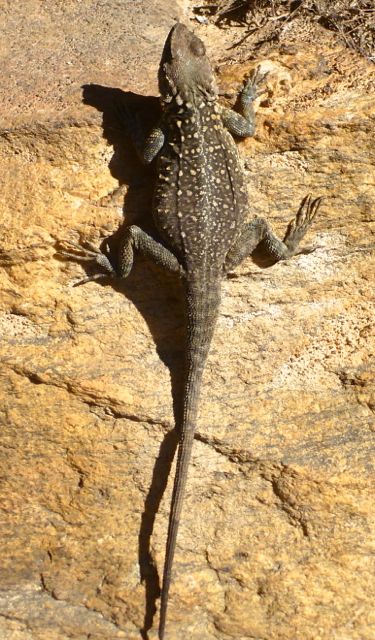
    Several times we saw a small lizard that moves like a snake.

    Kuari day 5-19

    Aside from ants, the most common insect was this cricket (?).

    Kuari day 5-21

    After 6 days, we finally encountered another trekking group doing a 2 day Kuari.

    Kuari day 5-22

    One of the Indian men had worked a year in Alaska!

    Kuari day 5-23

    A dog following them reversed directions and joined us for an evening. It’s not unusual to have dogs follow you in the Himalaya. One once climbed up to perhaps 6500m with us on Everest north.

    The fantastic view from my tent included the elusive & mysterious Nanda Devi, highest mountain entirely in India.

    Nandi Devi

    From here you can gain the Rishi Gorge, a deep canyon, almost impossible to follow. It wasn’t until 1934 that Eric Shipton and H.W. Tilman, with three Sherpa companions, Angtharkay, Pasang, and Kusang, finally discovered a way through into the Sanctuary. Any other route involves difficult passes, the lowest of which is 5180m (16,990 ft).

    Tilman and Noel Odell made the first ascent of 7,816 metres (25,643 ft) Nandi Devi in 1936, the highest summit climbed by man until 1950. On a shoe-string budget. Only seven climbers, no fixed ropes, nor any Sherpa support above 6,200 m (20,300 ft).

    Tenzing Norgay stated that his most difficult peak was Nanda Devi East, the lower summit.

    For religious significance and protection of the its fragile ecosystem, Nanda Devi National Park was declared a UNESCO World Heritage Site in 1988. All access had been banned 1982.

    On the Trail we learned that the Park has been partially opened recently for restricted number of tourists.

    Tempting …

    Our cook outdid himself for out last meal on the Trail.

    Kuari day 5-28

    Pizza. Spring Rolls. French fries …

    And for dessert …

    Kuari day 5-29

    See all high resolution photos from this day.

    day 0 | day 1 | day 2day 3 | day 4 | day 5 | day 6

    Kuari Pass trek – day 4

    by site editor Rick McCharles

    day 0 | day 1 | day 2 | day 3 | day 4 | day 5 | day 6

    Another beautiful morning.

    Kuari day 4

    Another fantastic breakfast.

    breakfast Kuari day 4

    Omelette. Toast. Muesli. Corn flakes. And much more.

    Alf and I are both coffee addicts. We’d have 2-3 mugs to start each day.

    We shared this camp with hundreds of these smelly, entertaining characters.

    sheep - Kuari day 4

    Climbing over the first ridge we saw our titular destination, Kuari Pass.

    Kuari Pass

    On both sides of Kuari we saw no people. The herds were already gone south for the season.

    Kuari day 4-2

    Seasonal herders huts were empty.

    waterfall - Kuari day 4

    This was the biggest waterfall en route.

    waterfall - Kuari day 4-2

    It dropped hundreds of metres in stages.

    I doubt this bridge will EVER be taken out by flood.

    Kuari day 4-3

    I once had a backpack damaged on a pack animal. Straps rubbed a hole in it.

    pack mule - Kuari day 4

    pack mule - Kuari day 4-2

    Happily, our mule drivers were very careful. Sleeping mats were wrapped around our gear.

    There are butterflies everywhere in the Himalaya.

    butterfly - Kuari day 4

    Alf and I thought we might DASH up to the pass for sunset.

    Kuari Pass camp - day 4

    Distances are deceptive. That climb takes 90min!

    Instead we used the afternoon for reading and writing. There’s plenty of time for both on a guided trek. I carried two iPods. And began Games of Thrones.

    Kuari Pass camp - day 4-3

    Alpenglow was amazing this evening.

    Alpenglow - Kuari Pass camp - day 4

    Alpenglow - Kuari Pass camp - day 4-2

    That afternoon I’d tried to get close to an insanely colourful Himalayan Monal.

    IMG_0106

    And we were spied upon by a sentinel on the ridge.

    IMG_0095

    Our cook was sure it was a bharal (Himalayan blue sheep). Our guide wasn’t so sure. Compare with another photo of bharal from nearby Nanda Devi National Park.

    Alpine Ibex? Serow? Goral?

    Leave a comment if you can identify by that profile.

    It was Blue Sheep being pursued by George Schaller and Peter Matthiessen in Nepal 1973. Their adventures documented in one of my favourite books, The Snow Leopard.

    BEST of all, just before dark Alf spotted “Baloo“. A Momma Asian black bear and 3 cubs.

    bears - Kuari day 4

    That photo was taken at 18 times zoom. The zoom was sufficient, but light was fading fast.

    Those are the first bears Alf has seen in the wild. And the first our Guide had seen on this particular trek. A rare sighting.

    See all high resolution photos from this day.

    day 0 | day 1 | day 2 | day 3 | day 4 | day 5 | day 6

    Kuari Pass trek – day 3

    by site editor Rick McCharles

    day 0 | day 1 | day 2 | day 3 | day 4 | day 5 | day 6

    A highlight of this guided trip was the food. Here’s our chef, Kumar, who cooks inside with headlamp.

    Kumar the cook - Kuari day 3

    He’s from Nepal. But has cooked all over the Himalaya, including Ladahk.

    One of the mule drivers cooked up Chapattis in the fire, fluffing them right in the ash.

    chipattis - Kuari day 3

    Another treat was our hot water wash-up every morning.

    Kuari day 3

    We began to get glimpses of snowy peaks.

    Kuari day 3-2

    Some of the most prosperous villages use slate roofing.

    slate roof - Kuari day 3

    This woman was separating seeds from chaff.

    ridding the chaff - Kuari day 3

    Another was separating beans.

    sorting beans - Kuari day 3

    Chilli peppers grow well here. As does seemingly everything.

    chilis - Kuari day 3

    Kuari day 3-4

    Quality of bridge and road construction seems superior to that of Nepal and Tibet.

    Kuari day 3-6

    Kuari day 3-7

    That bridge is maybe 200m high.

    Kuari day 3-8

    The scale of everything in the Himalayas is deceptive.

    electricity does not work - Kuari day 3

    People here want roads and electricity. The power lines are often out-of-service, however.

    To this point, we’d seen less wildlife than I hoped.

    lizards - Kuari day 3

    The trees are grand, however.

    Kuari day 3-9

    Kuari day 3-11

    Kuari day 3-10

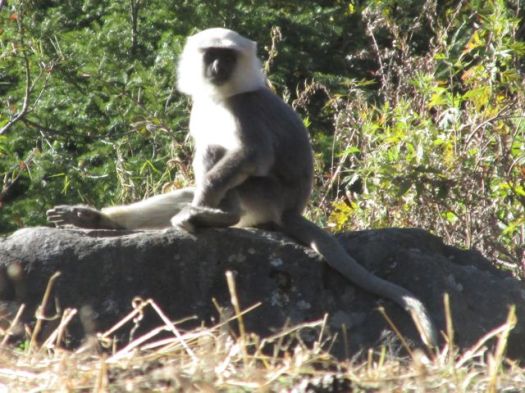
    And we did see one troop of Gray Langur monkeys in the wild. We’d seen hundreds in Rishikesh, of course.

    first monkeys - Kuari day 3

    Here’s a rarer sighting. A house cat.

    house cat - Kuari day 3

    We mostly spent time with farm animals.

    Kuari day 3-15

    Kuari day 3-14

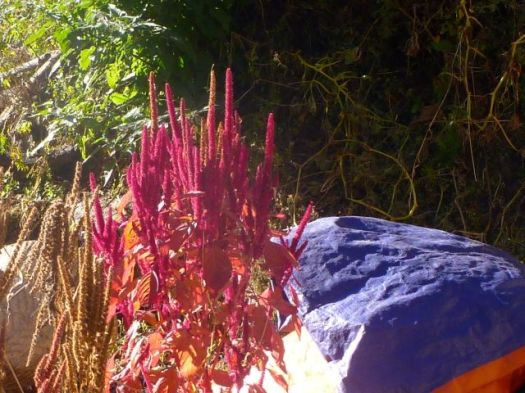
    My favourite of the crops was this gorgeous red grain, just ready for harvest.

    Kuari day 3-13

    Kuari day 3-12

    We again had some rain late afternoon.

    rainbow - Kuari day 3

    Nights were always clear. Stars and Milky Way super sharp until moon rise.

    Kuari day 3-16

    See all high resolution photos from this day.

    day 0 | day 1 | day 2 | day 3 | day 4 | day 5 | day 6