
If you don’t have time to do the entire 220+ mile John Muir Trail, consider this shorter alternative.
40 miles
4 days
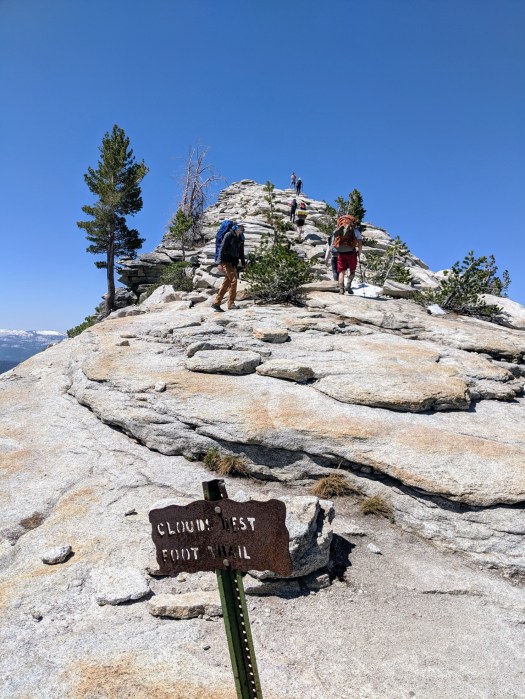
… Along this loop you pass by the beautiful Tenaya Lake, hike over Clouds Rest, take in several great views of Half Dome, and hike through Little Yosemite Valley and the Lost Valley.
The route has a peak elevation of 9,900 feet (atop Clouds Rest) and you climb roughly 9,000 vertical feet over the course of the ~40 mile trek.
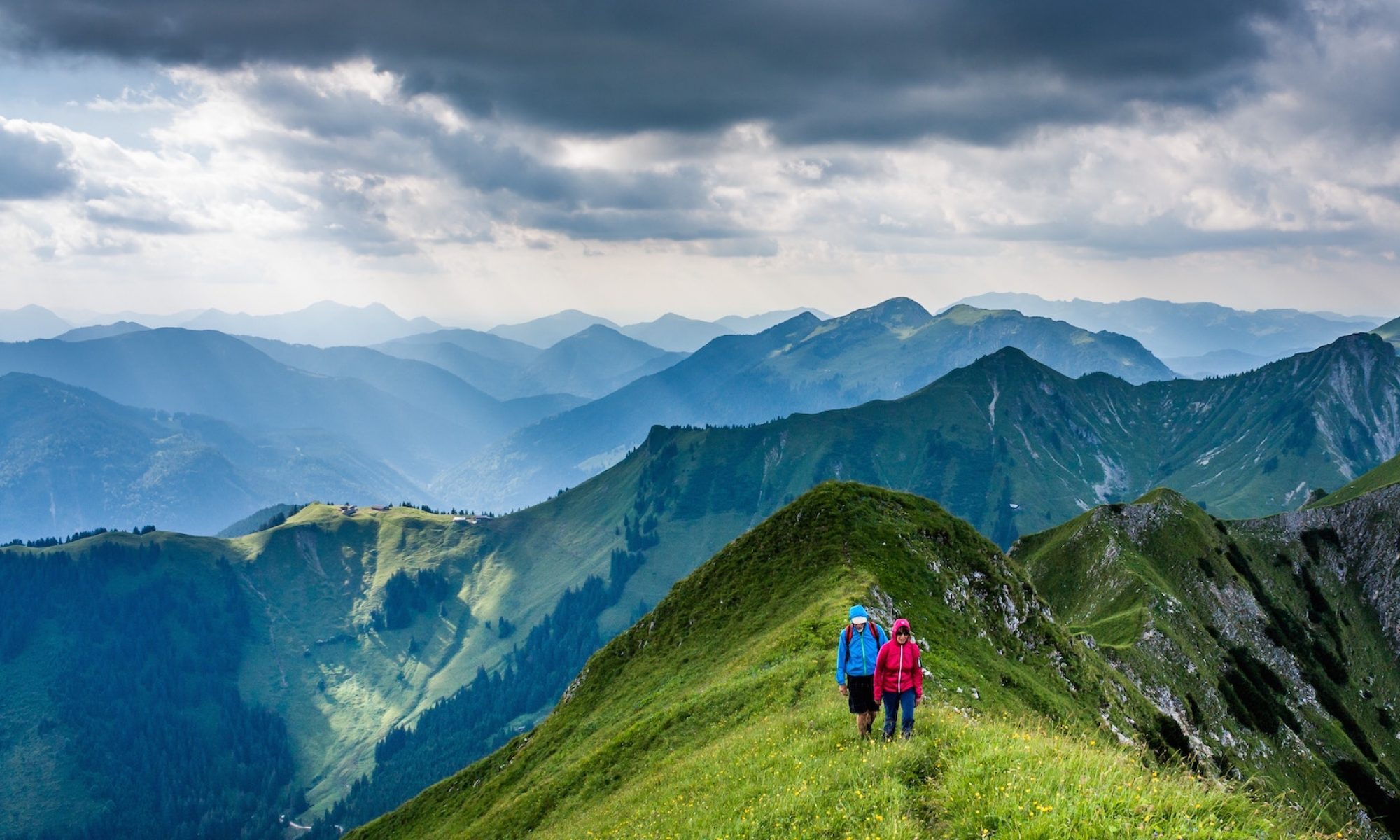
Highlights include epic waterfalls, expansive views of Yosemite Valley and the surrounding granite peaks and domes, alpine lakes, grassy meadows, …
Yoho Lake was the site of the original Alpine Club of Canada camp in 1906.
Early alpinists climbed Mt Wapta (south) and Michaels Peak (north).
Mt Wapta
Returning from our Twin Falls hike, we resupplied at the vehicles parked at the Takakkaw Falls trailhead.
Then started with great views over to Takakkaw , the second highest Falls in Canada.
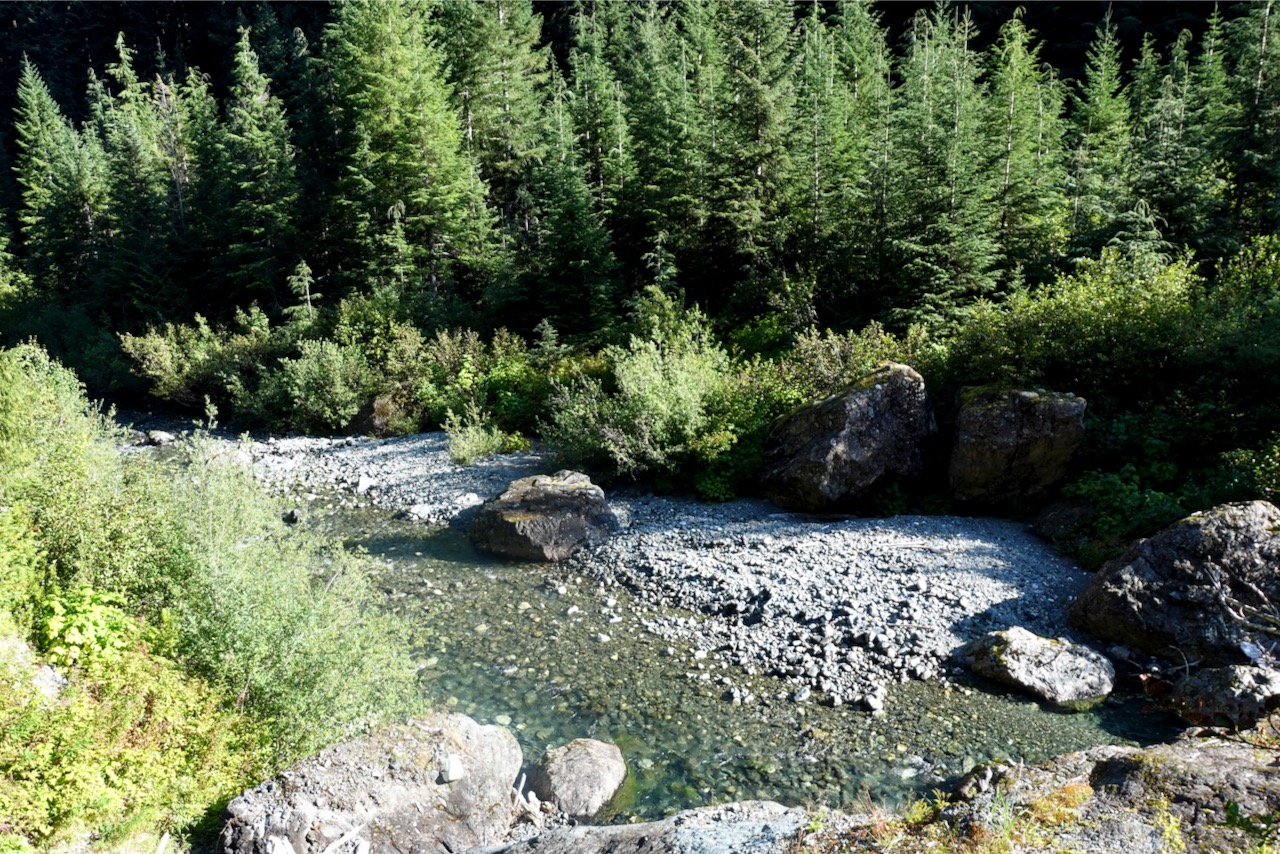
One of our group forgot his sunglasses at the lookout.
ET and I asked some hikers going the other direction to see if they could find them. And it worked! We found them on ET’s vehicle 2 days later.
We climbed steadily up to the lake on a route that many switchbacks.
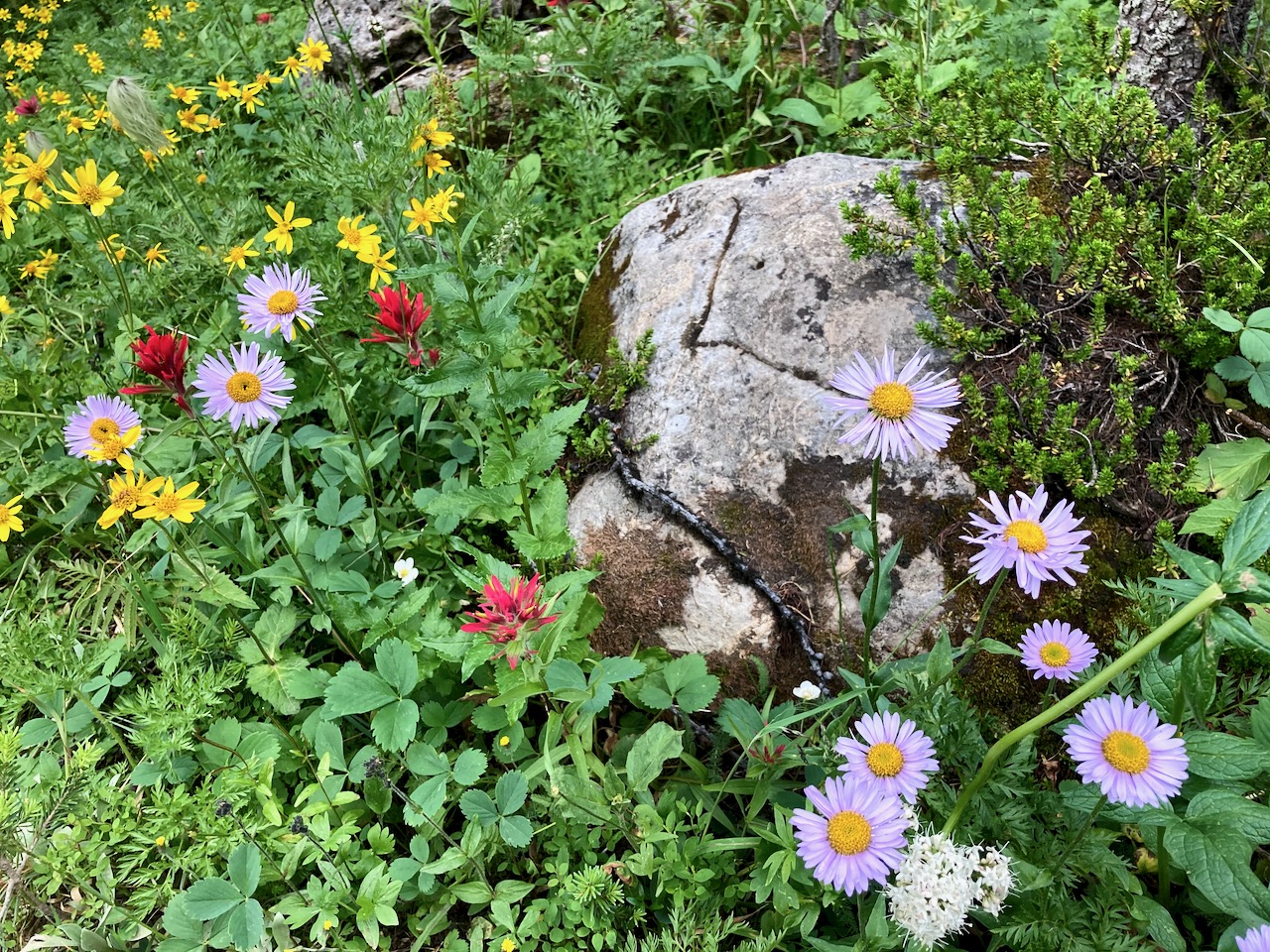
More wildflowers here than on the Twin Falls side.
You catch a glimpse en route of Hidden Lake.
Here’s a first look at Yoho lake.
Yoho lake is deep emerald green, more so than Emerald lake.
You’d have to be CRAZY to swim.
Warren set up a cook tarp to protect from sun and rain.
It’s a peaceful campground.
Next morning we had one deer hang around the tents. I assume he was salt deprived, looking for urine.
We took a day hike to look down on to Emerald lake.
There are some impressive waterfalls en route.
Warren and I decided to extend the walk and circumambulate Emerald lake. (Actually, we had originally planned to return via Burgess Pass trail — but it seemed to be unsigned and closed in 2020.). So we walked around Emerald lake and back the way we came.
The only difficult section was about a half hour of flooded alluvial plain.
Once back in camp we found our group had decided to hike out a day early. Forecast was for big storm.
Rather than camp at the Takakkaw Falls campground, we instead drove to Banff and enjoyed a dry night at the Hidden Ridge resort.
Marc Witkes posting to Inside Outside Magazine on the best trail out of Albuquerque:
And of the many ways to enjoy the Sandias, my favorite is running or hiking up the La Luz trail and taking the Sandia Peak Tramway down.
… The trail begins at 6,559 feet elevation, skirts a residential area for two miles, climbs 800 feet, turns east and descends to the junction of La Luz trail. A “5 mile” sign marks the beginning of a series of 19 switchbacks, many of which are cut through rocky sections made up of layers of shale and limestone. At the Y near the top of the trail, turn right and proceed to the top terminal and High Finance Restaurant (10,378 feet elevation).
While moving up La Luz Trail, you’ll notice dramatically different weather patterns and topographical features. There are four different climatic zones in the Sandias. The Upper Sonoran Zone lies at approximately 5,000 to 7,000 feet elevation, the Transition Zone at 7,000 to 8,000 feet, the Canadian Zone at 8,000 to 10,000 feet and Hudsonian Zone above 10,000 feet. In layman terms, you’ll start in the desert, travel through a wet area and finish in a spectacular alpine setting. Because of these transitional zones, taking off and putting on your jacket, gloves and hat is a common occurrence.
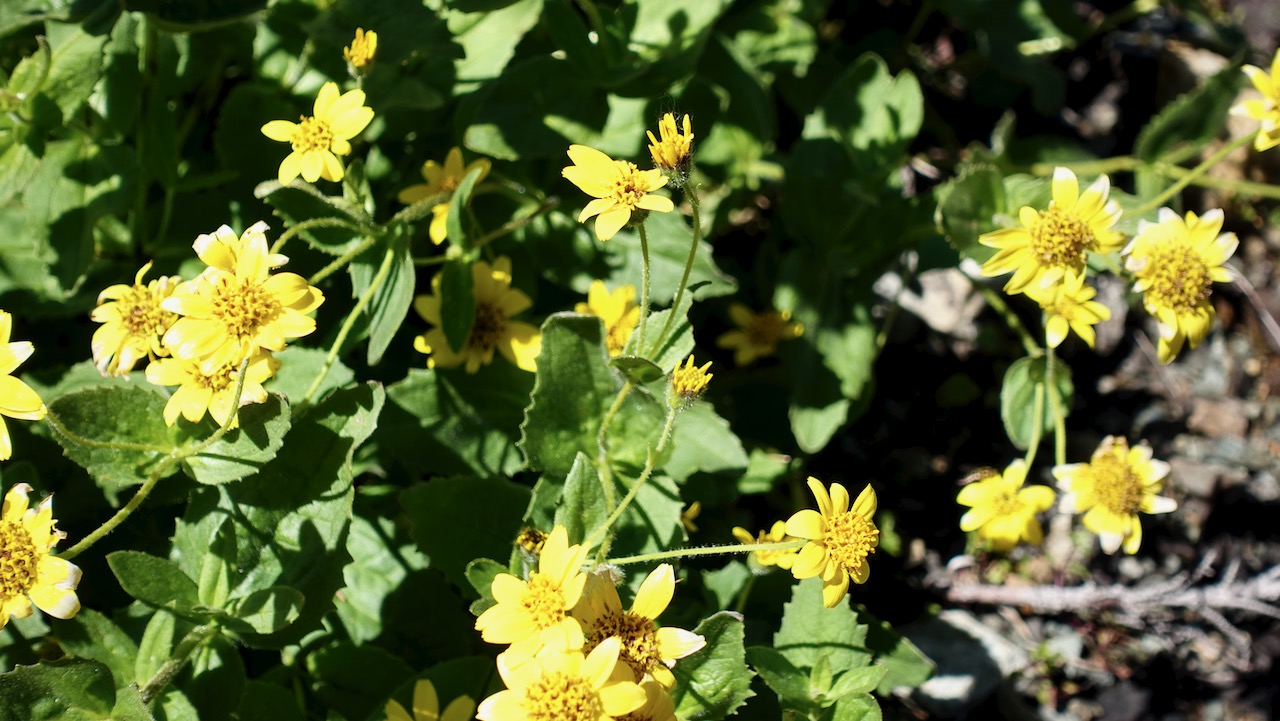
None of this matters that much as you struggle with a shortness of breath while climbing trail sections with a 12-percent grade, but try to pay attention. Juniper, pinion, Gambel and Gray oak, aspen, Douglas and corkback fir, Englemann spruce and limber pine, all quake along the trail. Wildflowers also rage from May to August.
La Luz trail is open year round with the best time to visit in the spring and fall. In summer, temperatures are hot. In winter, you’ll need snowshoes and hiking poles.
The 38-mile Resurrection Pass Trail through the Kenai Mountains is by far the most popular multi-day backcountry route in Southcentral Alaska. Ideal for backpackers and mountain bikers—and a great destination for skiers and snowshoers during snow season—the trail links historic gold mining areas near Hope with a trailhead near Cooper Landing close to the Kenai River.
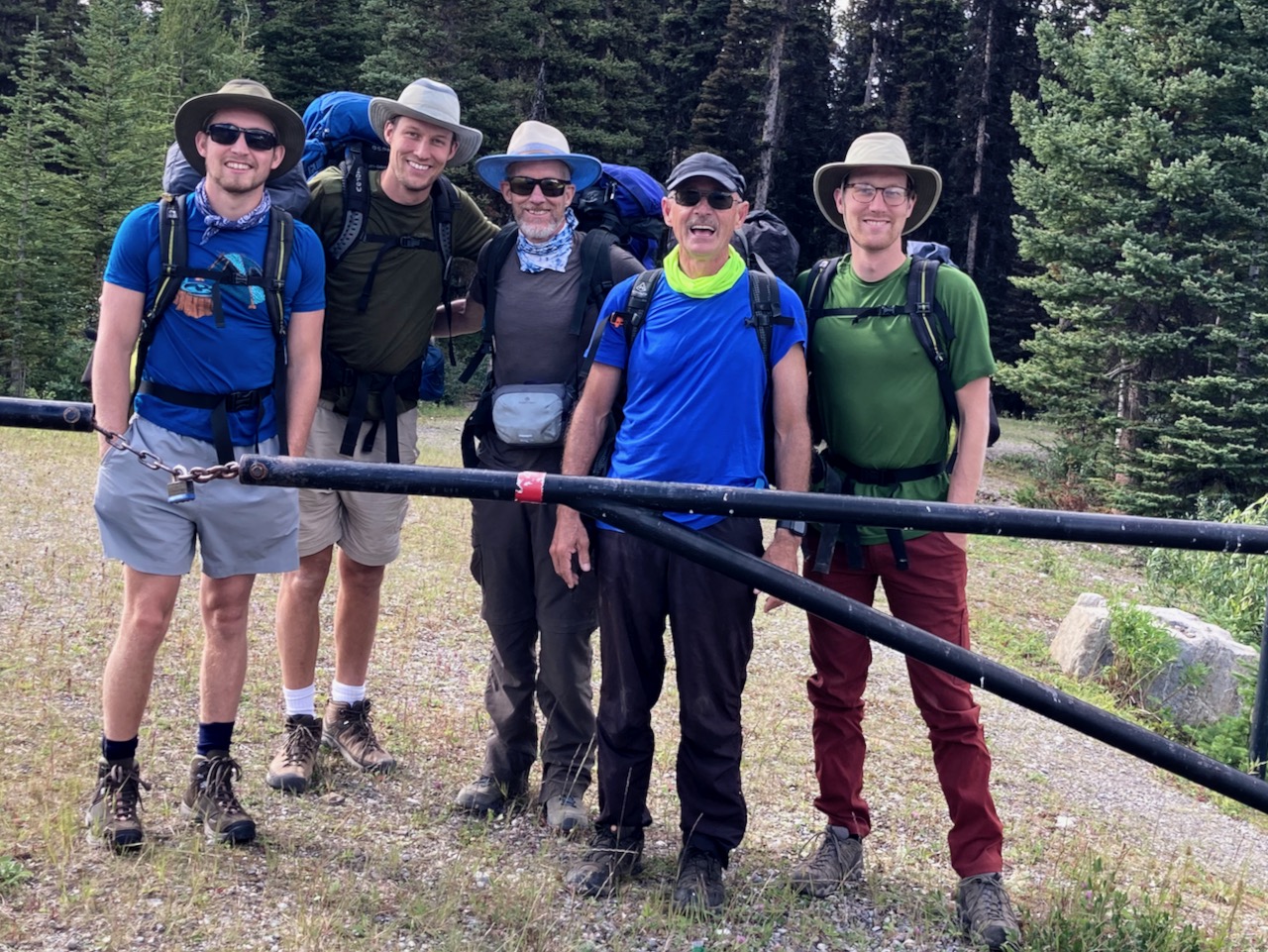
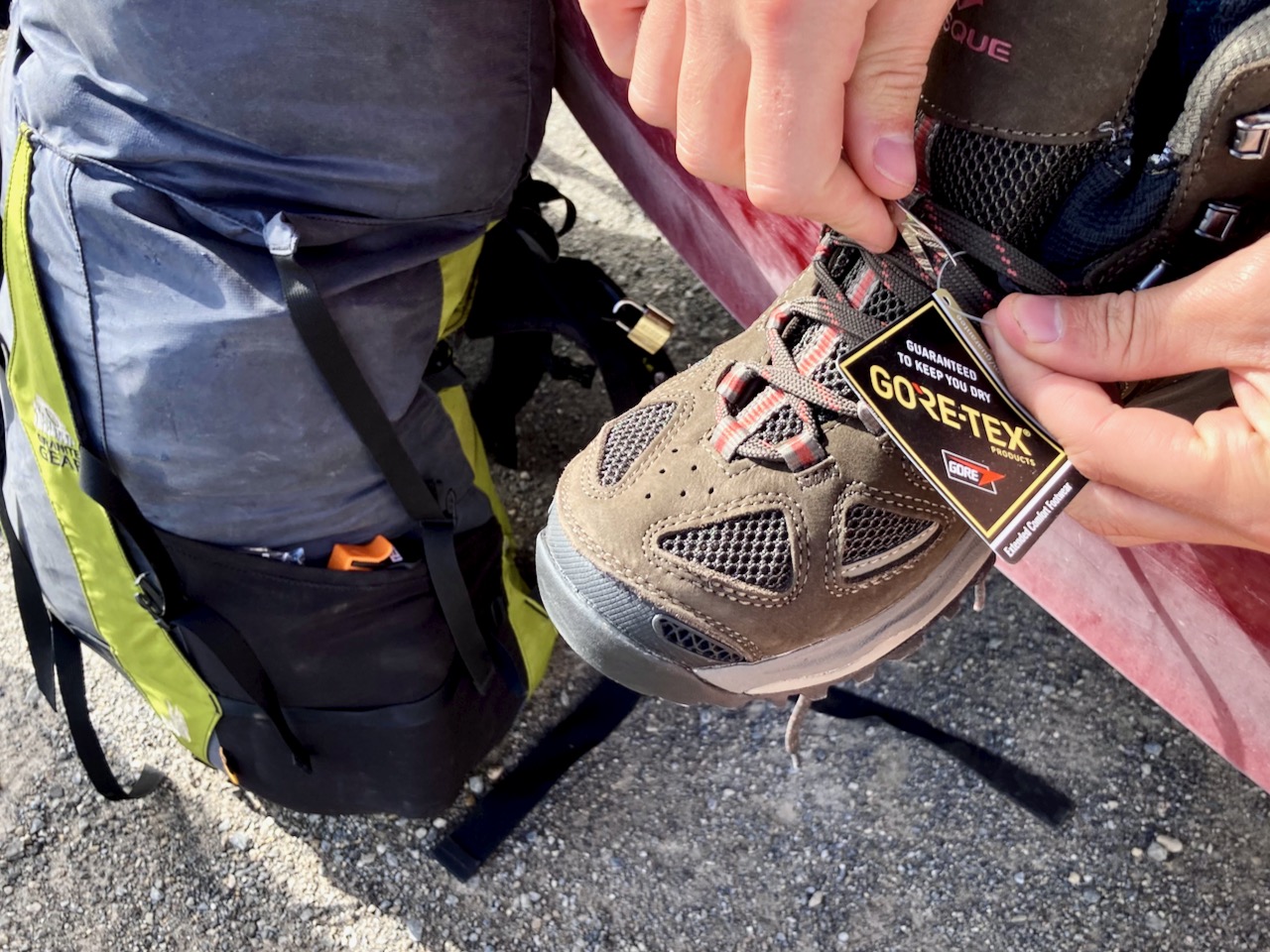
It is a true classic, drawing hundreds of visitors over the entire year. Many Alaskans return annually—often taking at least five days to traverse the route. …
You have two options for accommodations on multi-day trips: rent cabins or carry a tent. …
If you want to hike from one end to the other, you need to set up a shuttle or book a trip on a local trail taxi. …
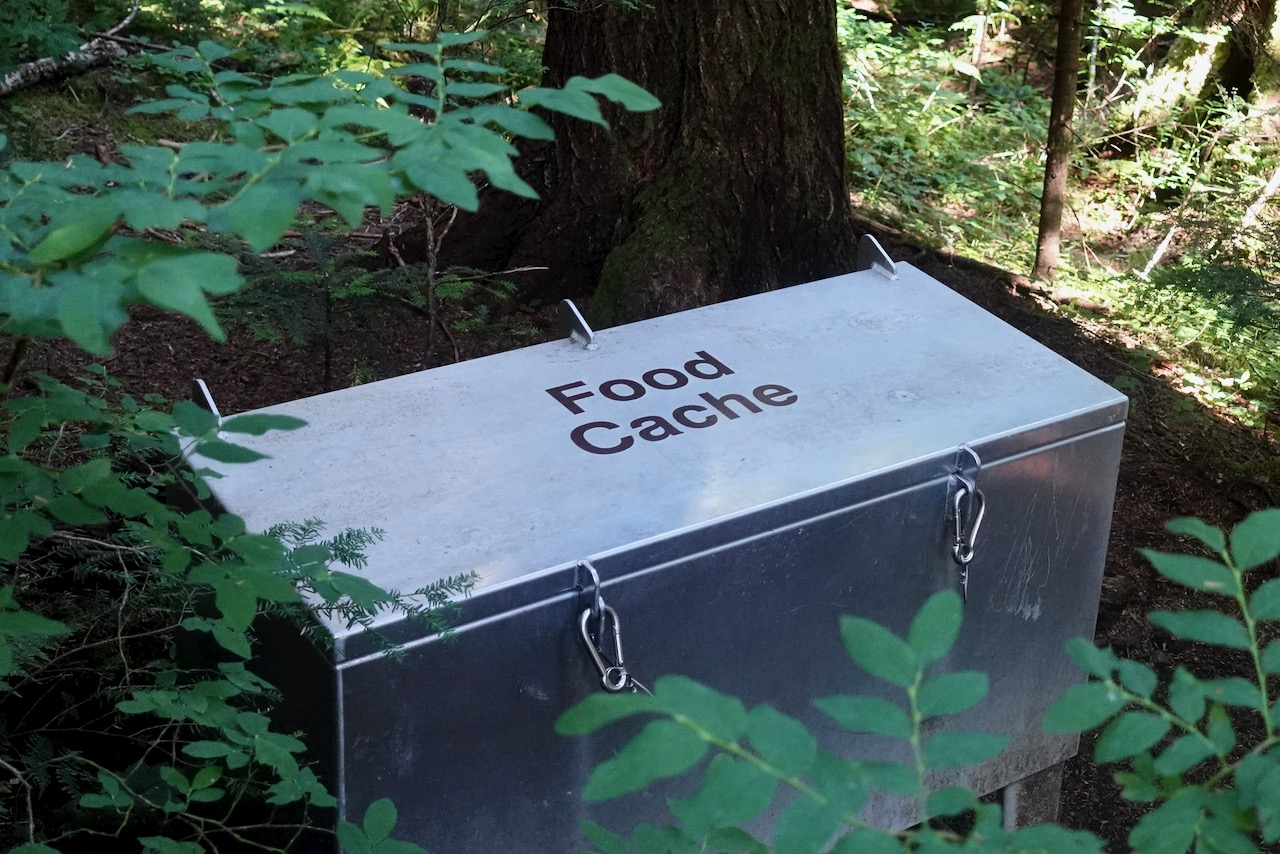
The Kenai Mountains feature prime brown bear habitat, and the forests abound with black bears. So take all the usual precautions—including storing food in bear lockers or portable vaults, keeping a clean camp and carrying bear spray for deterrence. Make noise and pay attention. Hikers regularly report encounters with or catch sight of both species. Having said that, the trail gets regular human traffic and does not have a reputation for unusual bear problems.
Mid-June through early September is the window.
Kraig Adams expanded on the standard route. And put together a video which reveals the massive landscape very well.
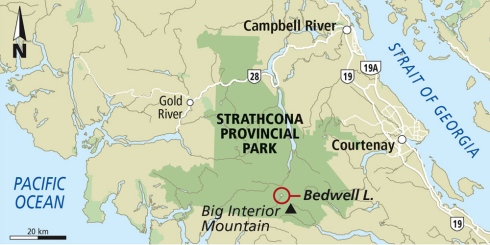
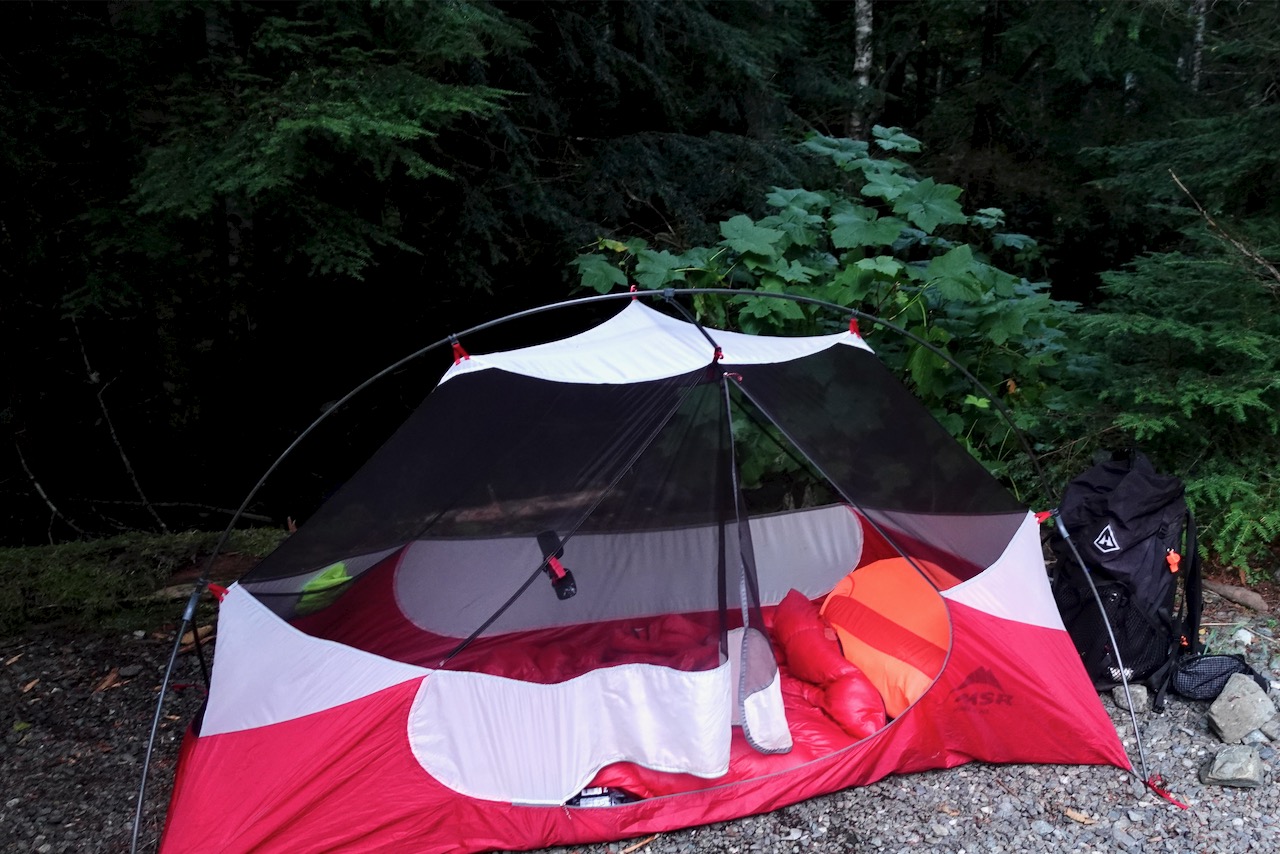
First time to this part of Strathcona Provincial Park, Vancouver Island, I decided to tent at the biggest campground on arrival — Buttle Lake.
And was glad I did.
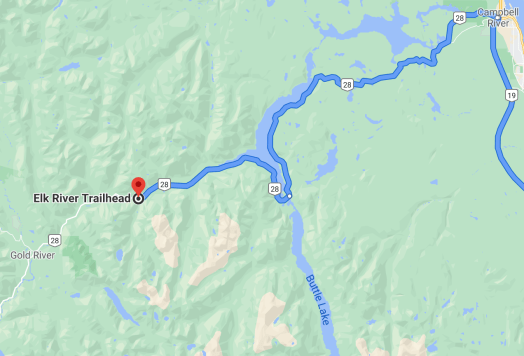
Easy access from Campbell River. I cycled.
Campgrounds had just opened following the COVID-19 shutdown. Their reservation system was still getting going.
I could choose any site not listed on the whiteboard.
There was one other cyclist that night — John, a cabinet maker from Vancouver — who was out-of-work at the moment from his set design job for the TV series Riverdale.
We decided to share a site and campfire.
After setting up the tent, I checked out the many short hikes accessible from camp.
Best was the Beach Access Trail
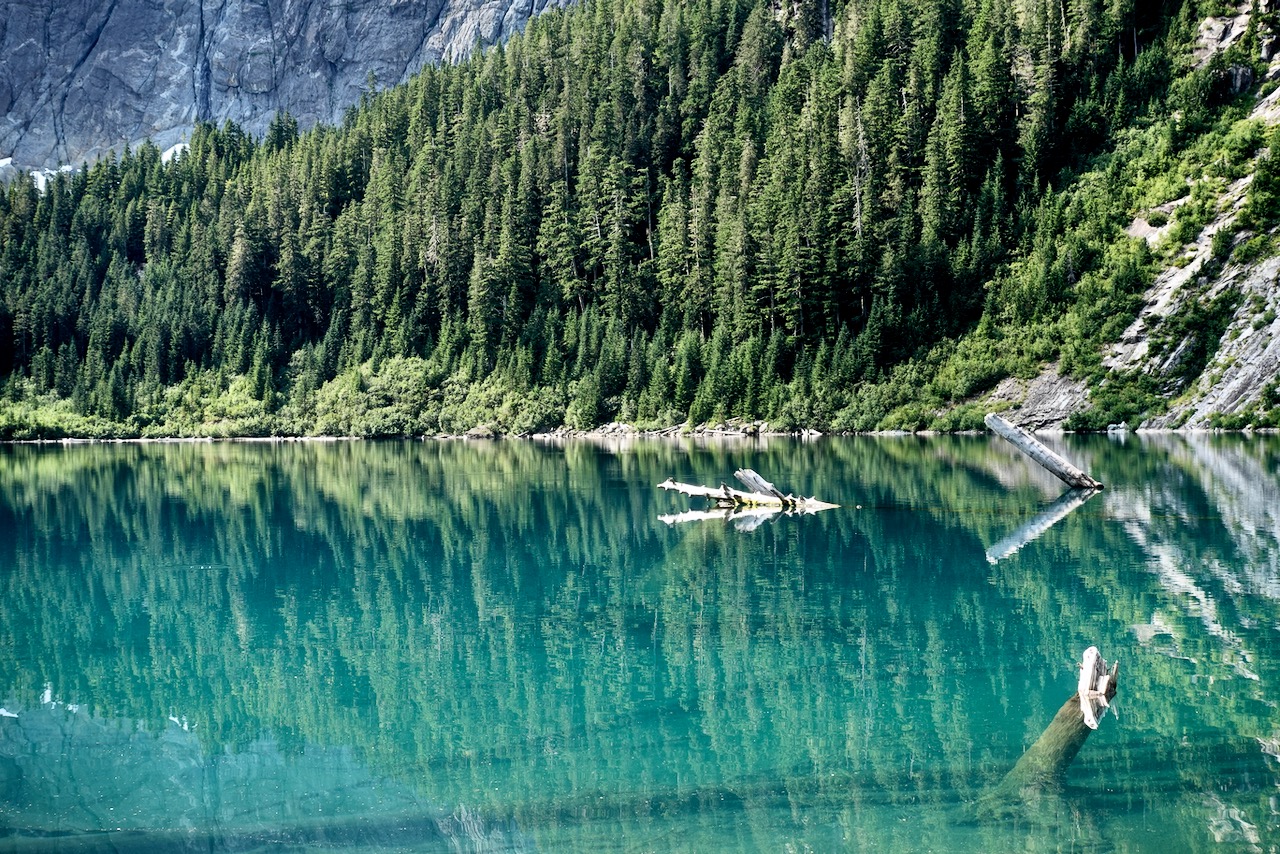
This lake has many drowned tree stumps. Very evocative.
I stumbled upon 5 campsites not shown on any map. Cool.
The Ranger informed me they were Marine Campsites, designated for those fishing and boating. BUT that they were free until June 15th.
John and I booked in for the night of June 14th.
I can hardly recall a more perfect camp.
Buttle, like most high mountain lakes, is prone to high winds due convection created by the sun heating the canyon walls during the day. Fishermen try to get off the lake by eleven.
The other big car campground in this part of the Park is called Ralph River. On paper, it’s similar. But I would recommend you camp at Buttle Lake instead, if you can.
no electricity nor mobile phone service. I carried a solar charger.
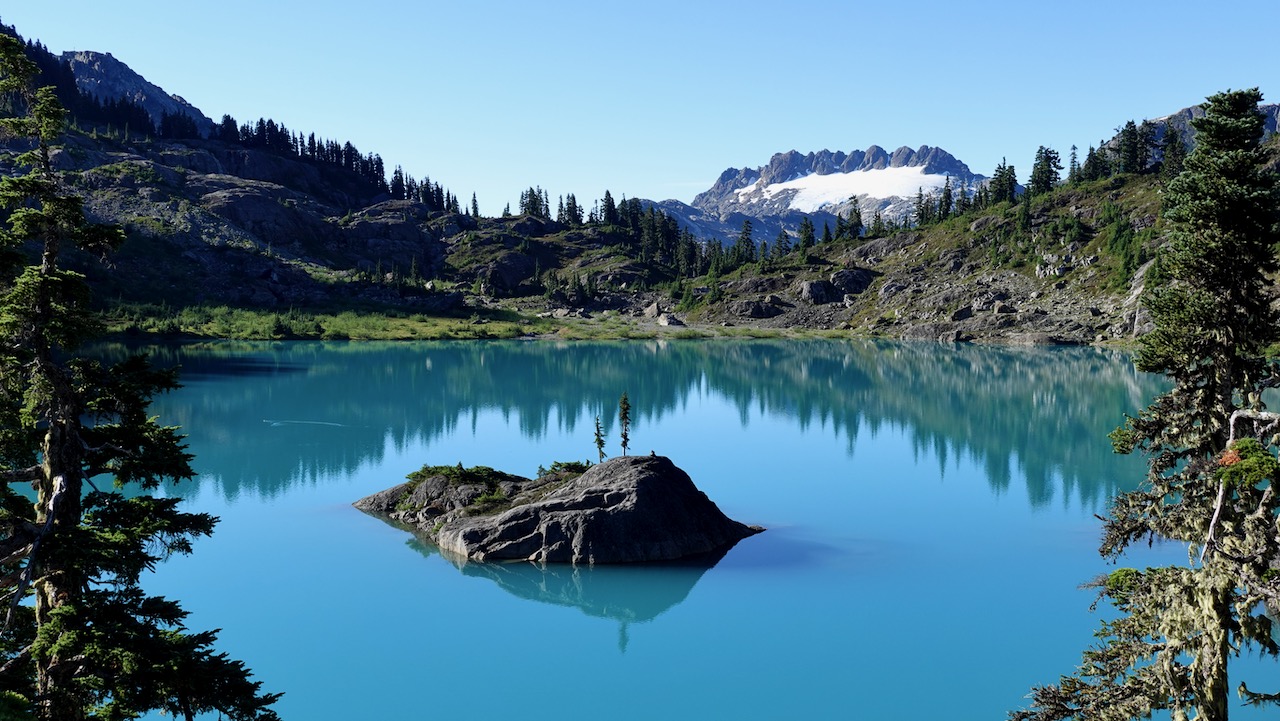
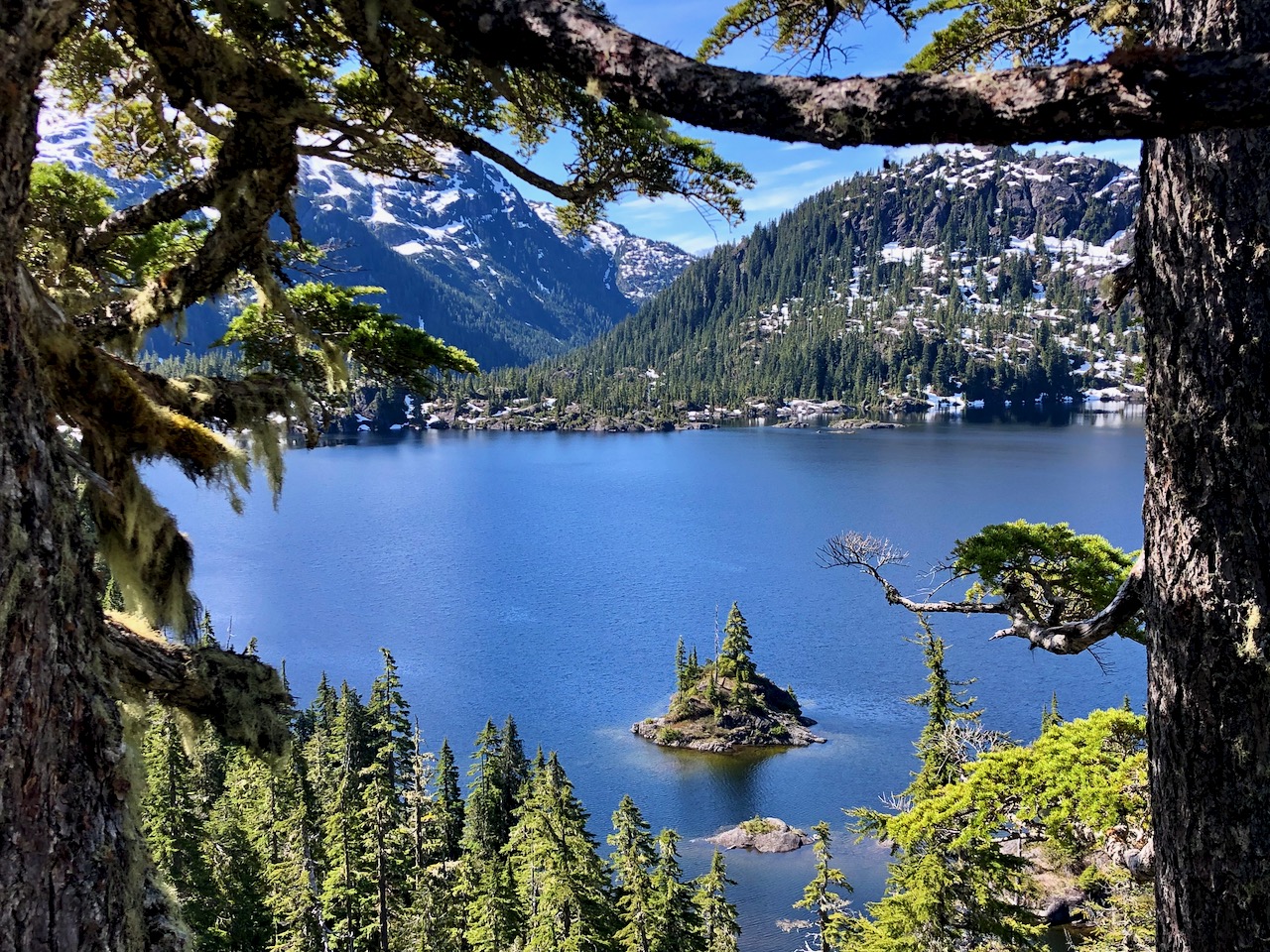
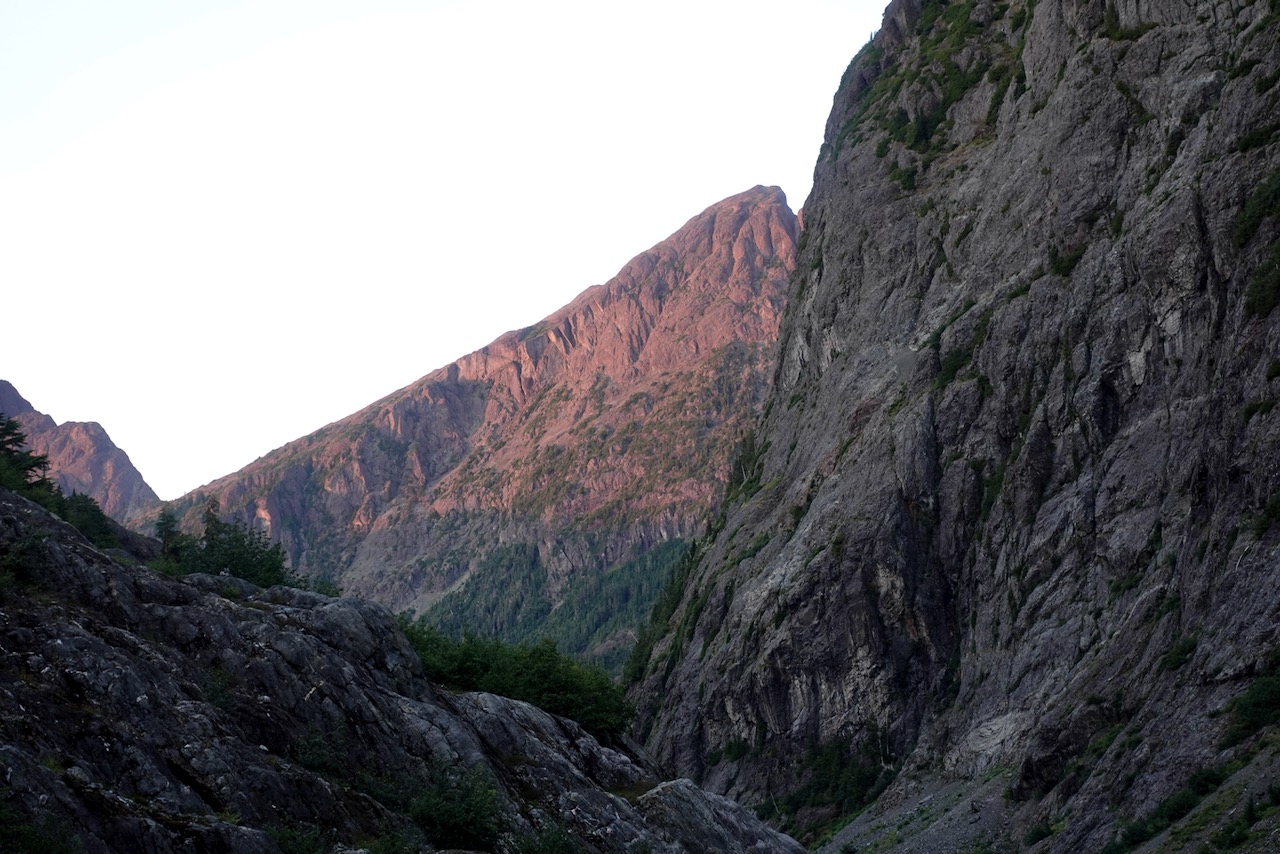
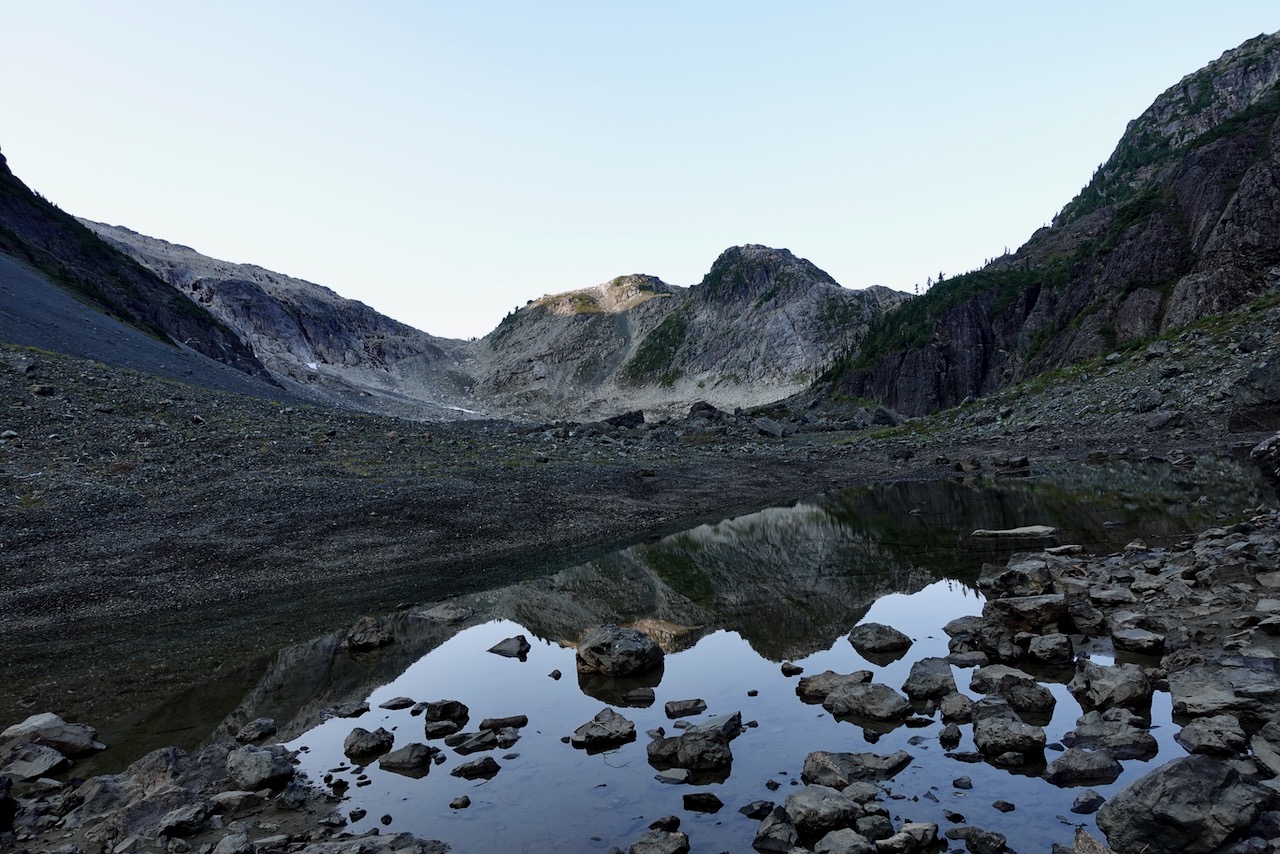
Bedwell Lake lookout
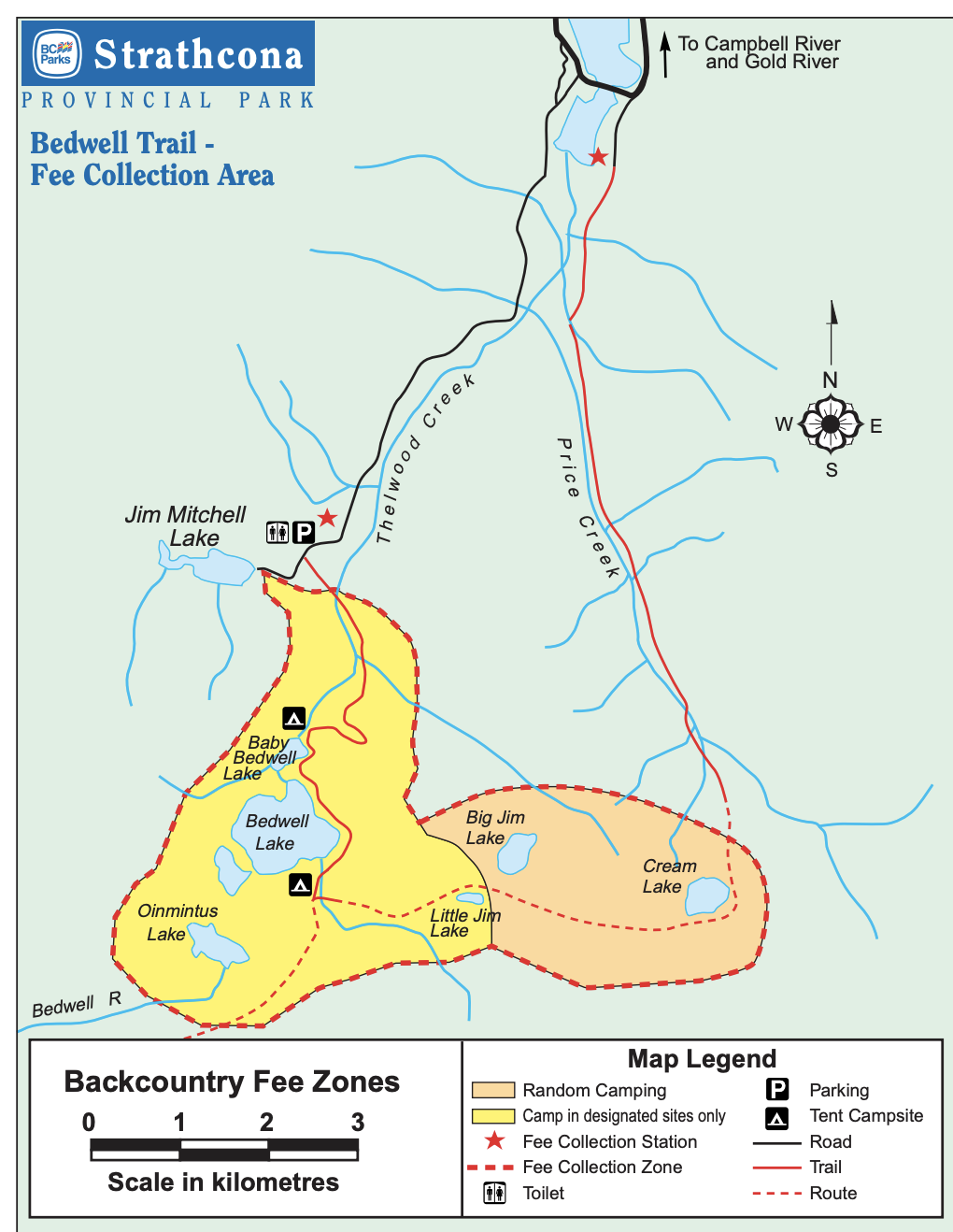
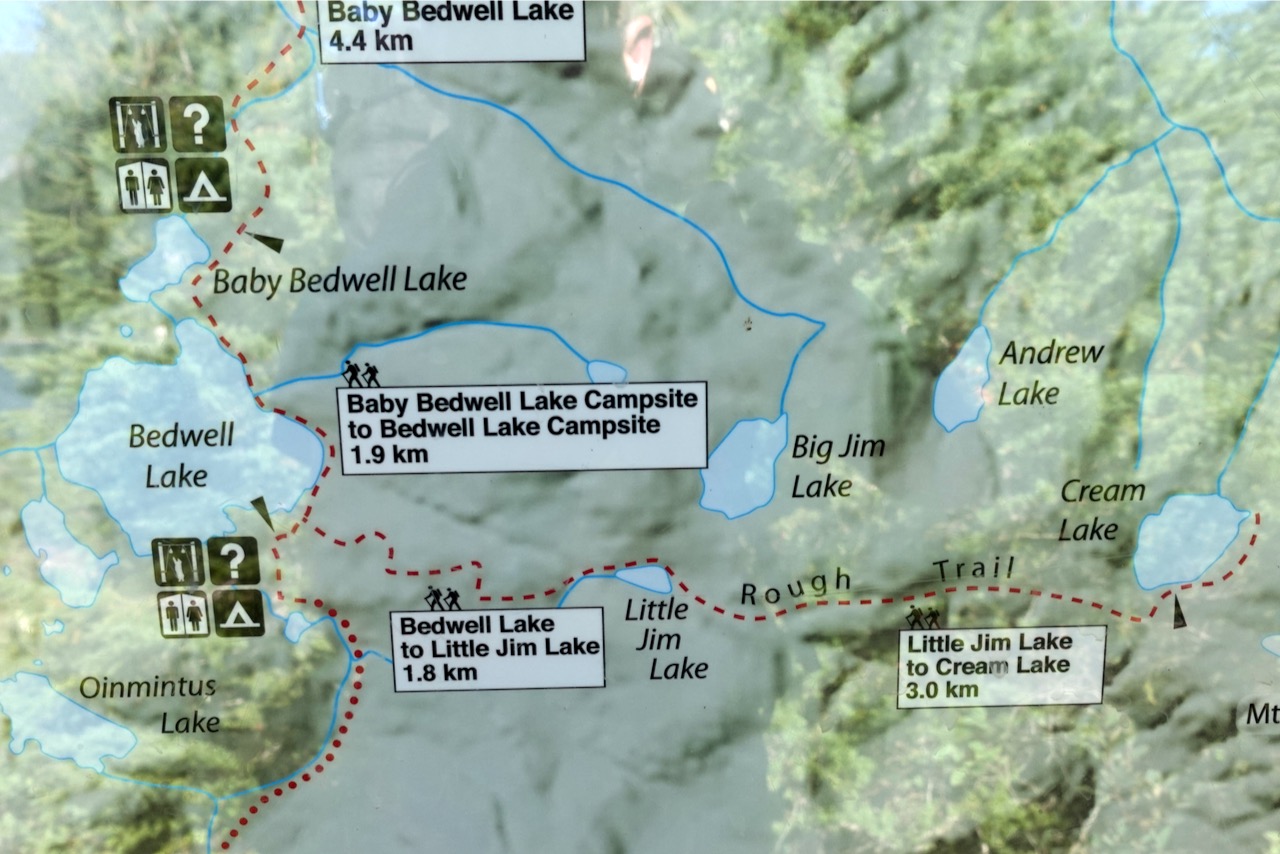
If adventurous, you could continue to longer routes including:
Cream Lake
climbing Big Interior mountain
continue to Mt Myra
continue to Phillips Ridge
exit via Flower Ridge
exit via Price Creek
climbing Mt Tom Taylor
Amazing would be to continue to Bedwell Sound, organizing a water taxi to take you to Tofino.
Good navigation needed on all those options, of course. They are all more difficult than Bedwell.
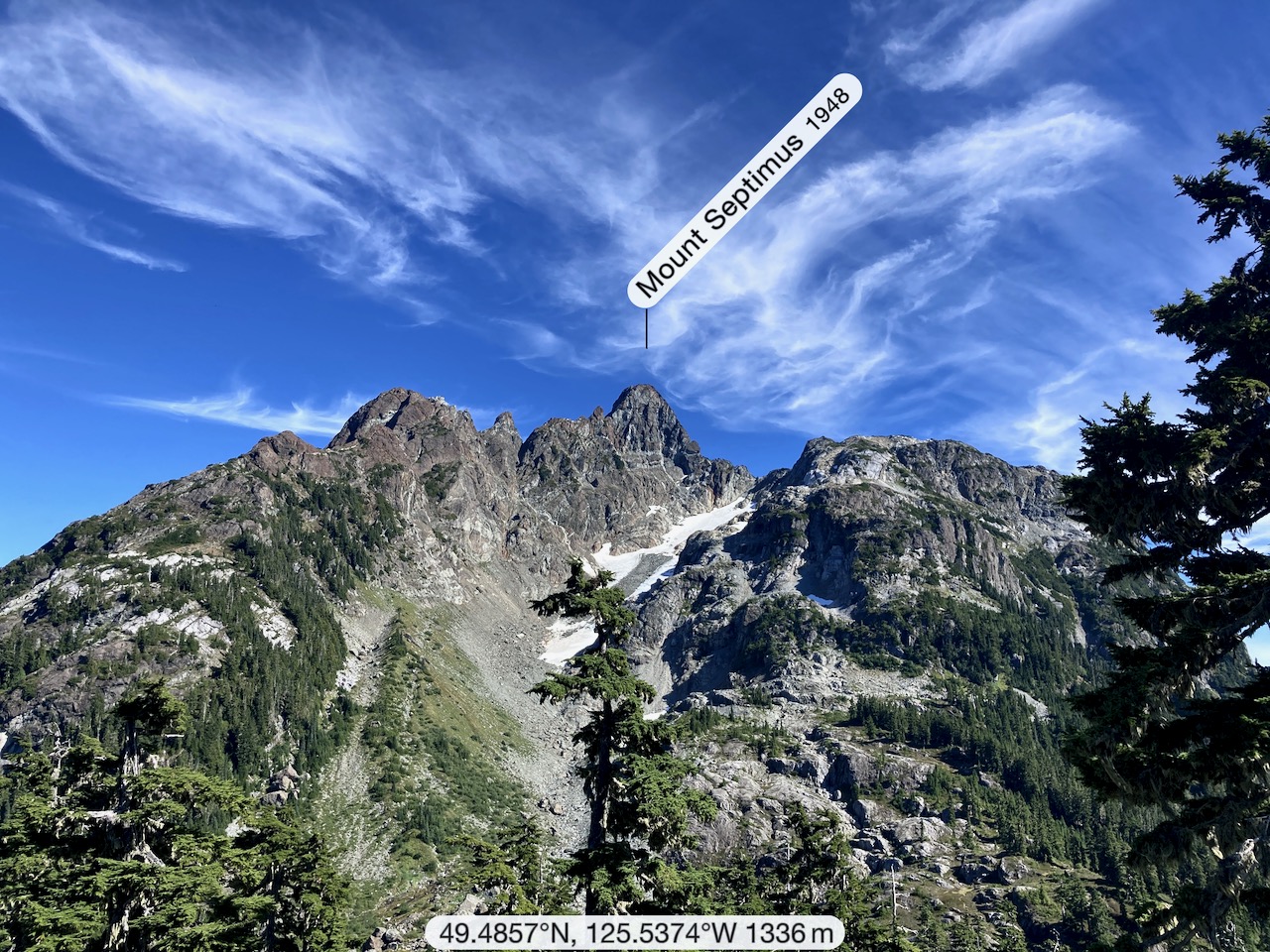
If I had proper snow gear I would have continued on to Cream Lake (at least) where you get views of Nine Peaks, Mt Septimus and (possibly) Della Falls, highest in Canada.
I did talk to one couple who were trying to posthole their way to Cream. And they looked prepared. It would be easier later in the season.
CAUTION – A hiker died here in 2015, Anders Jason Newman. He slipped and fell from height somewhere above the lakes.
Cycled to the trailhead, walking the last 3km as Jim Mitchell Lake road was steep!
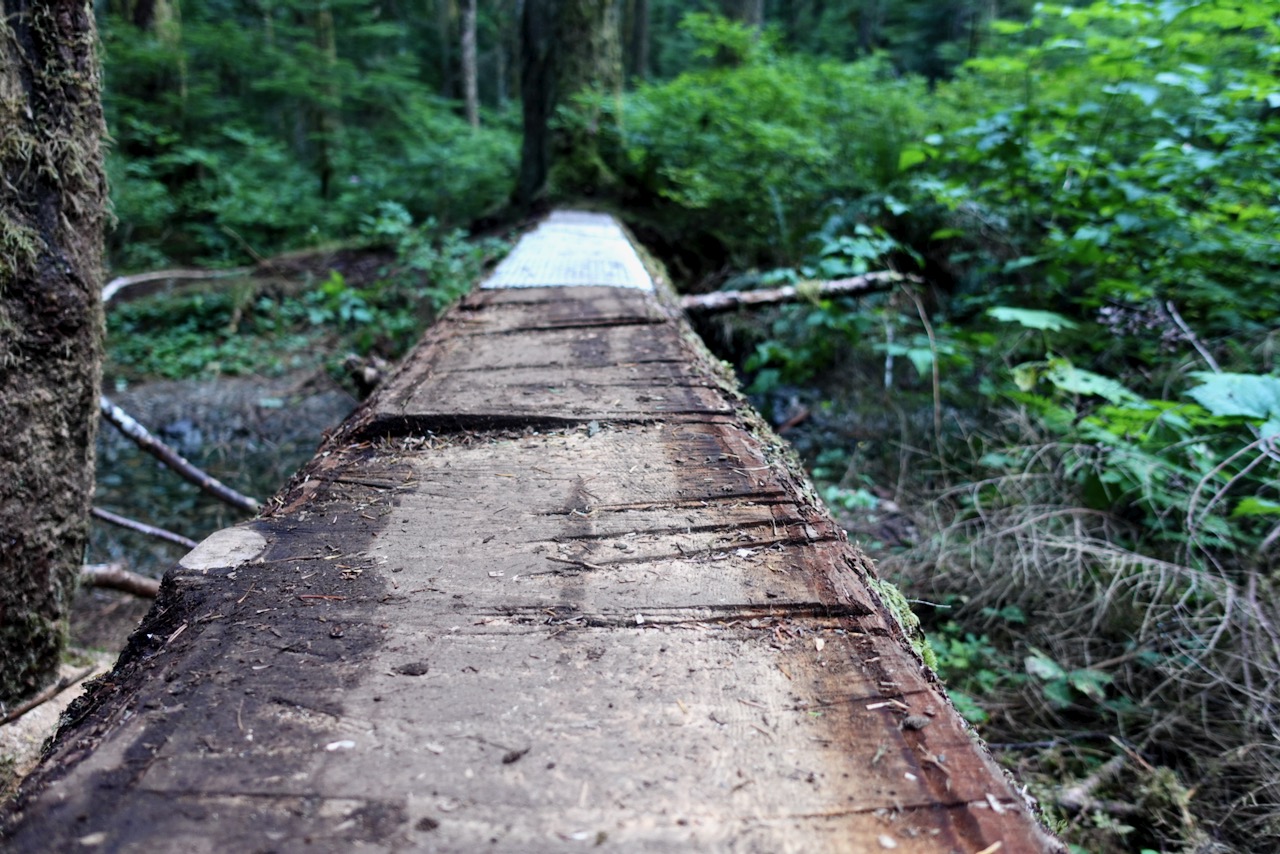
Bedwell is possibly the best maintained trail in Strathcona. So steep and (potentially) wet, numerous anti-erosion measures are necessary: wood bridges, metal bridges, boardwalk, etc.
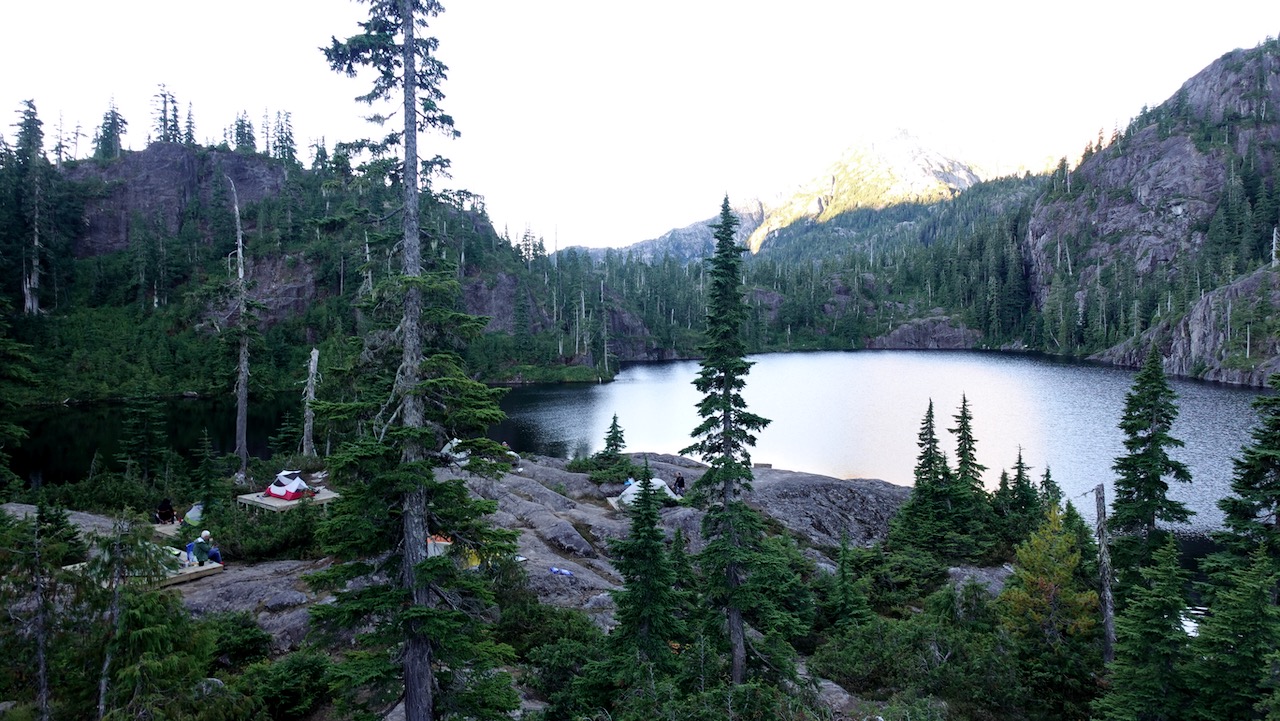
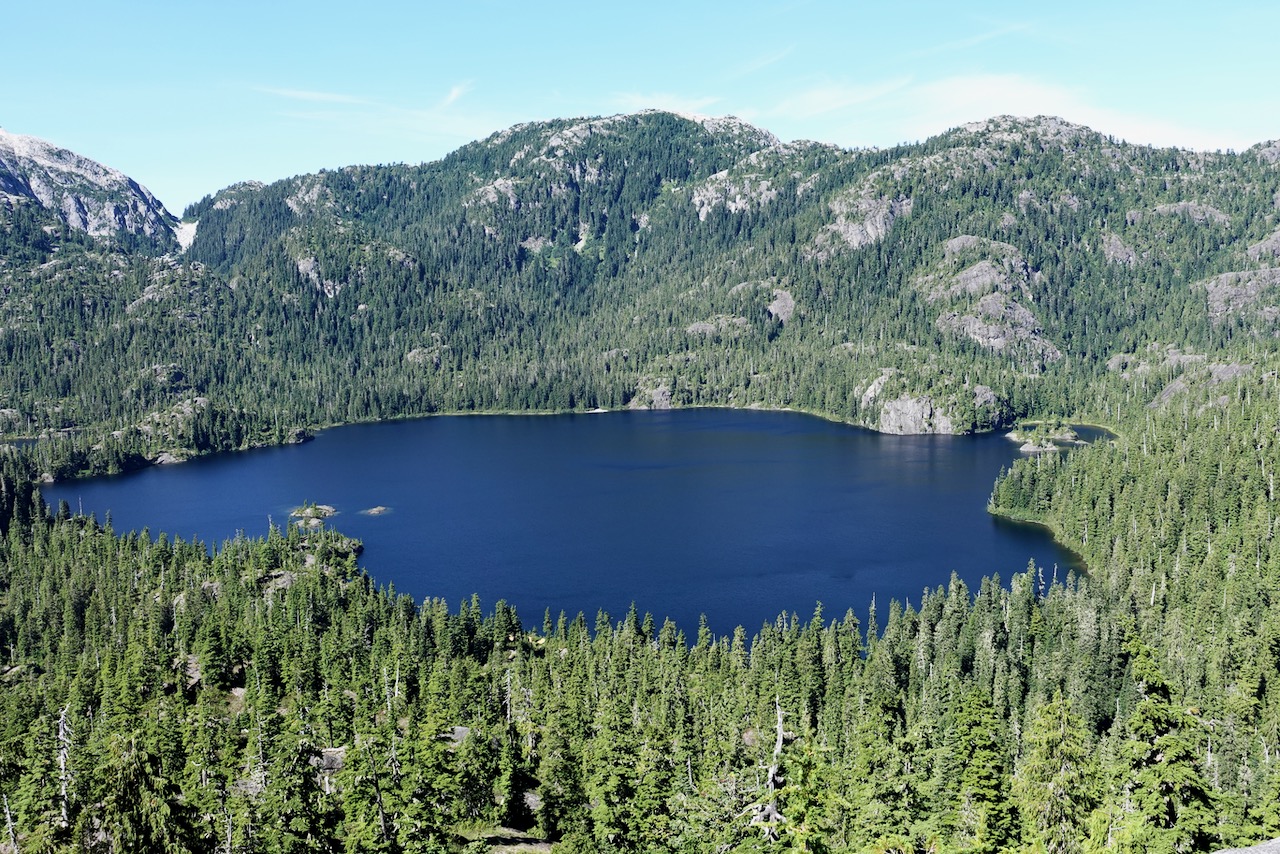
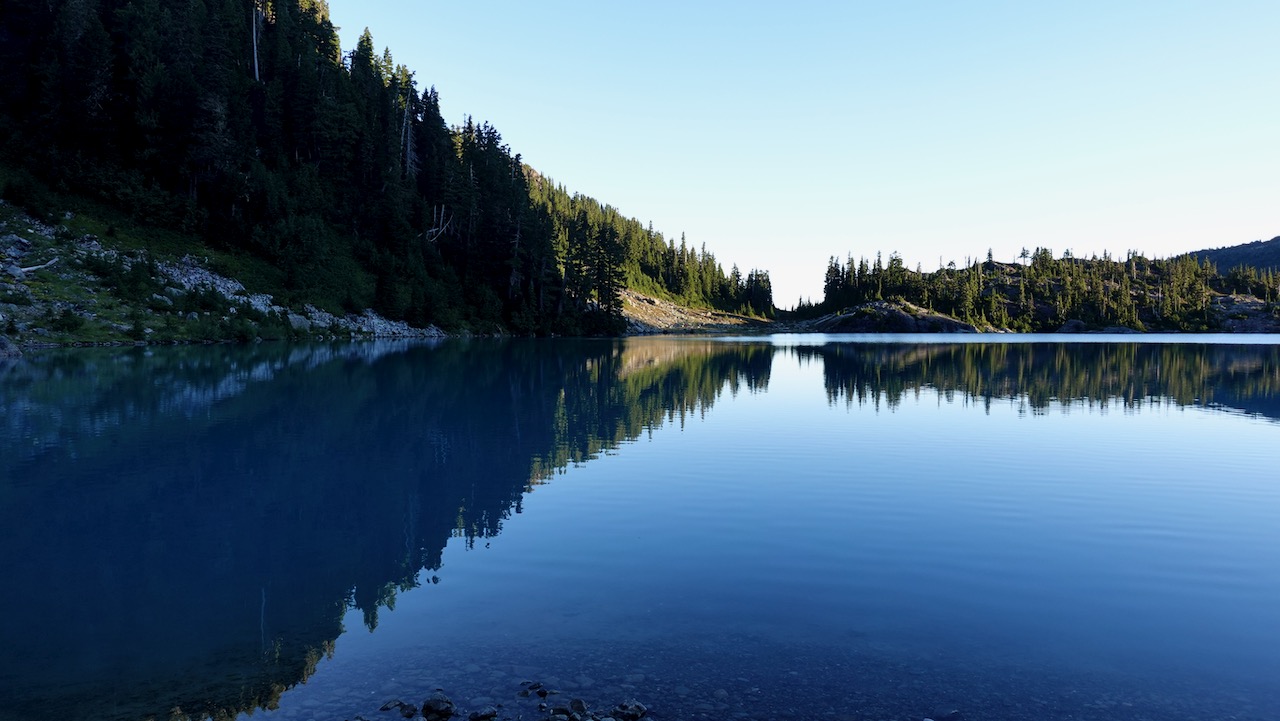
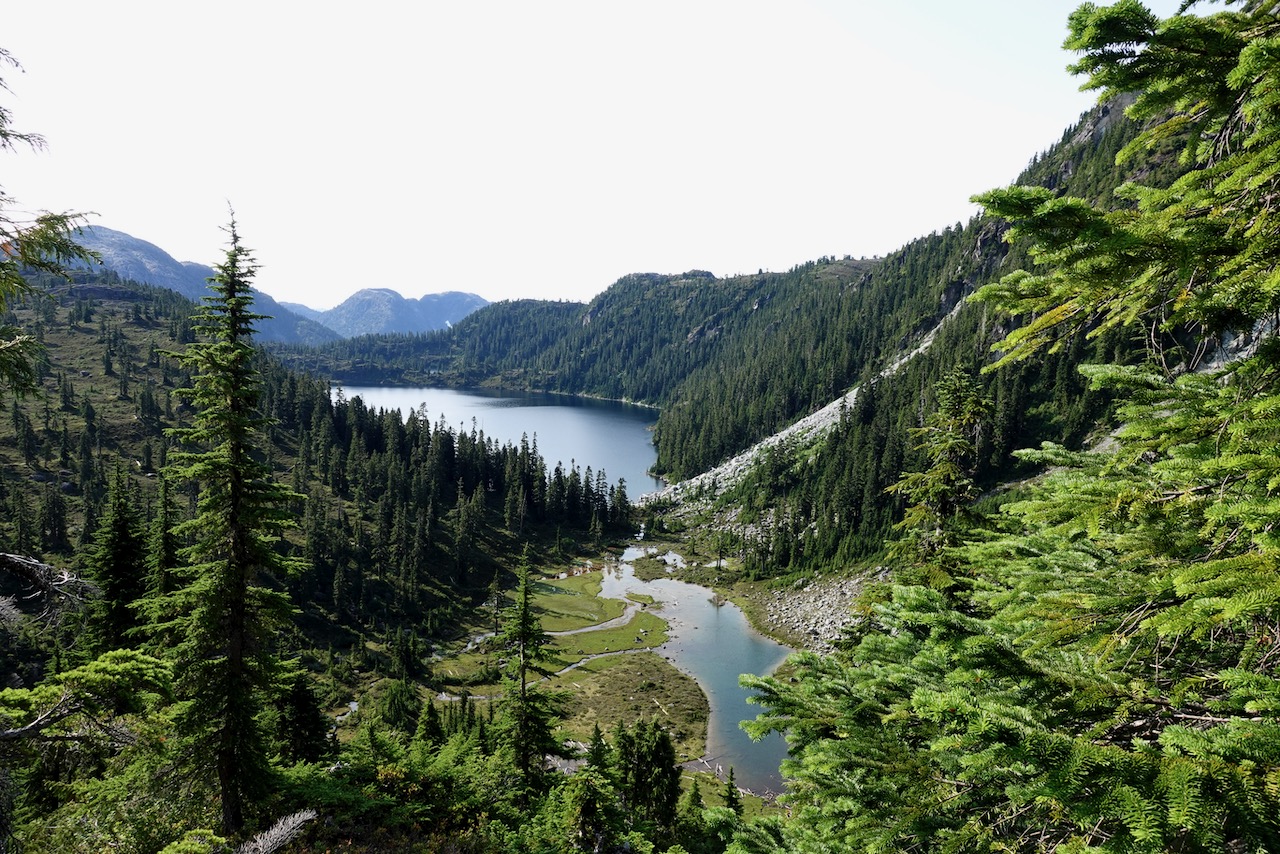
I reached Baby Bedwell lake about 6pm. A gorgeous vista looking over to Mt. Tom Taylor.
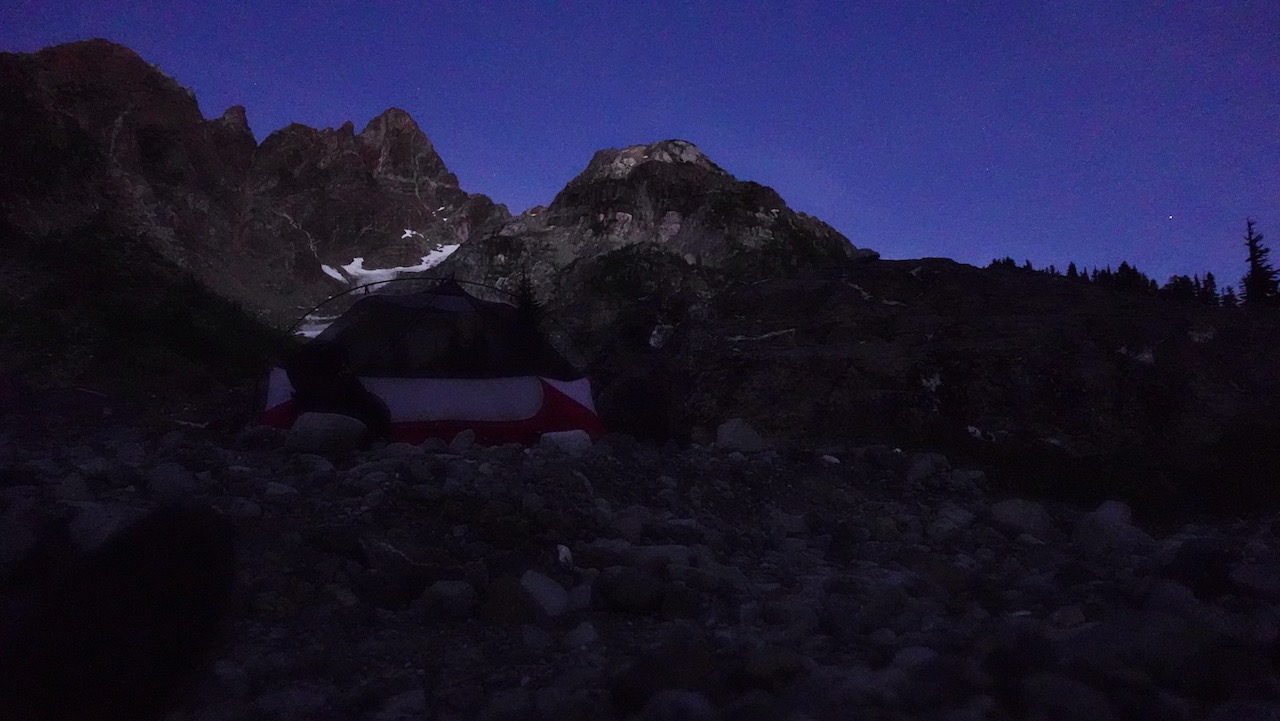
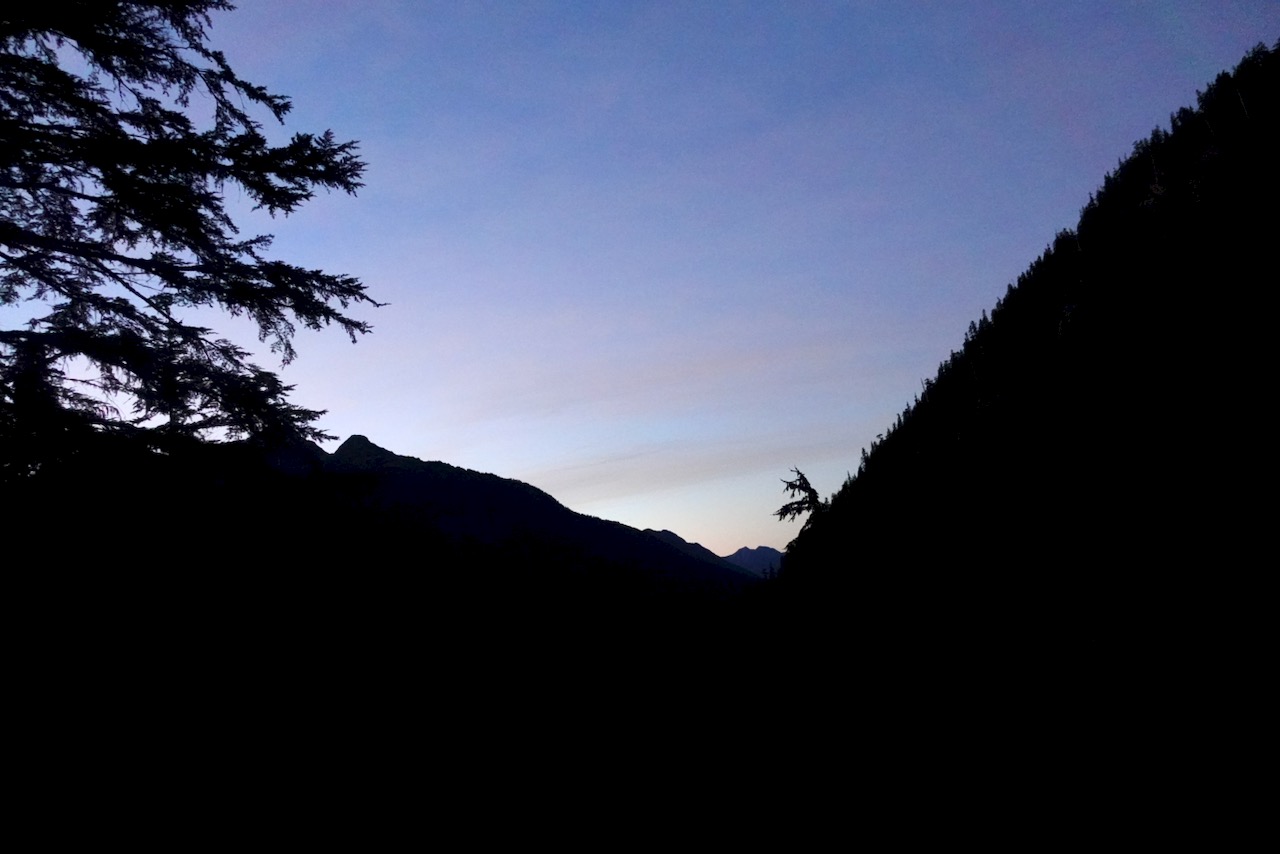
Relaxed. Enjoyed dinner from the rocks watching the fading light.
Next morning perfect weather again. No wind.
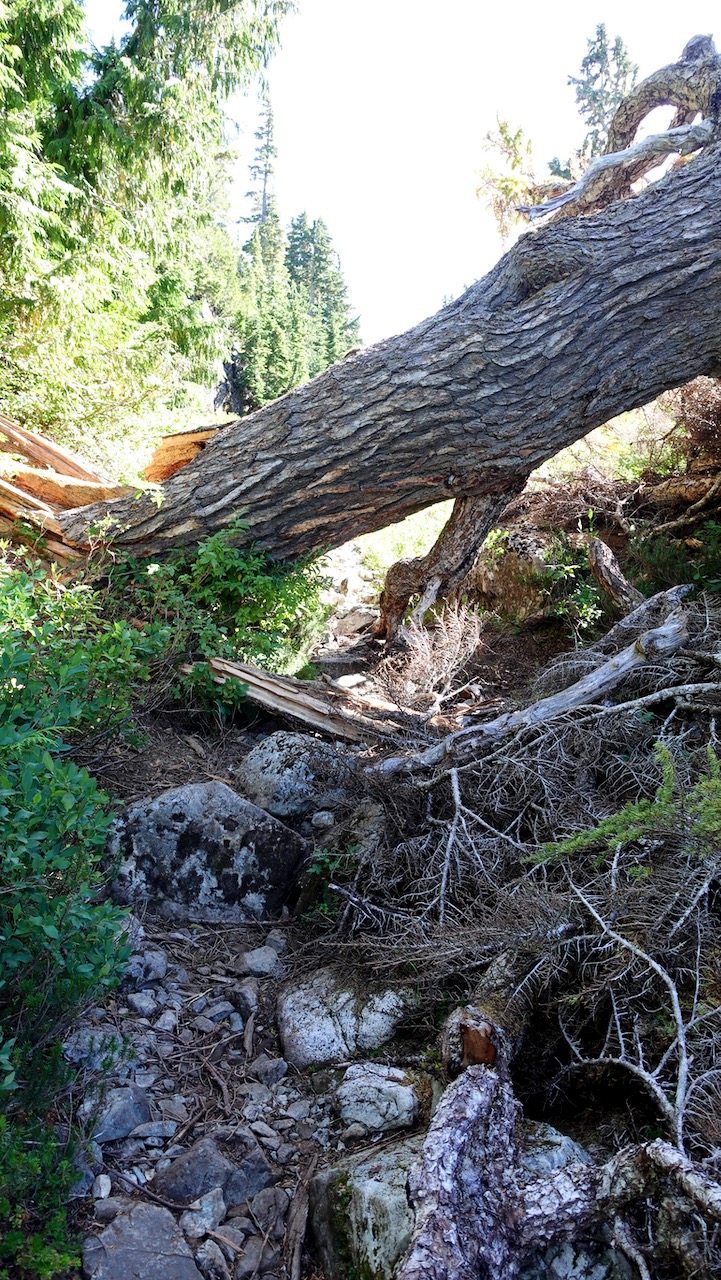
En route to the big lake are a number of steel ladders and one chain assist. It would be very slippery when wet descending in the rain.
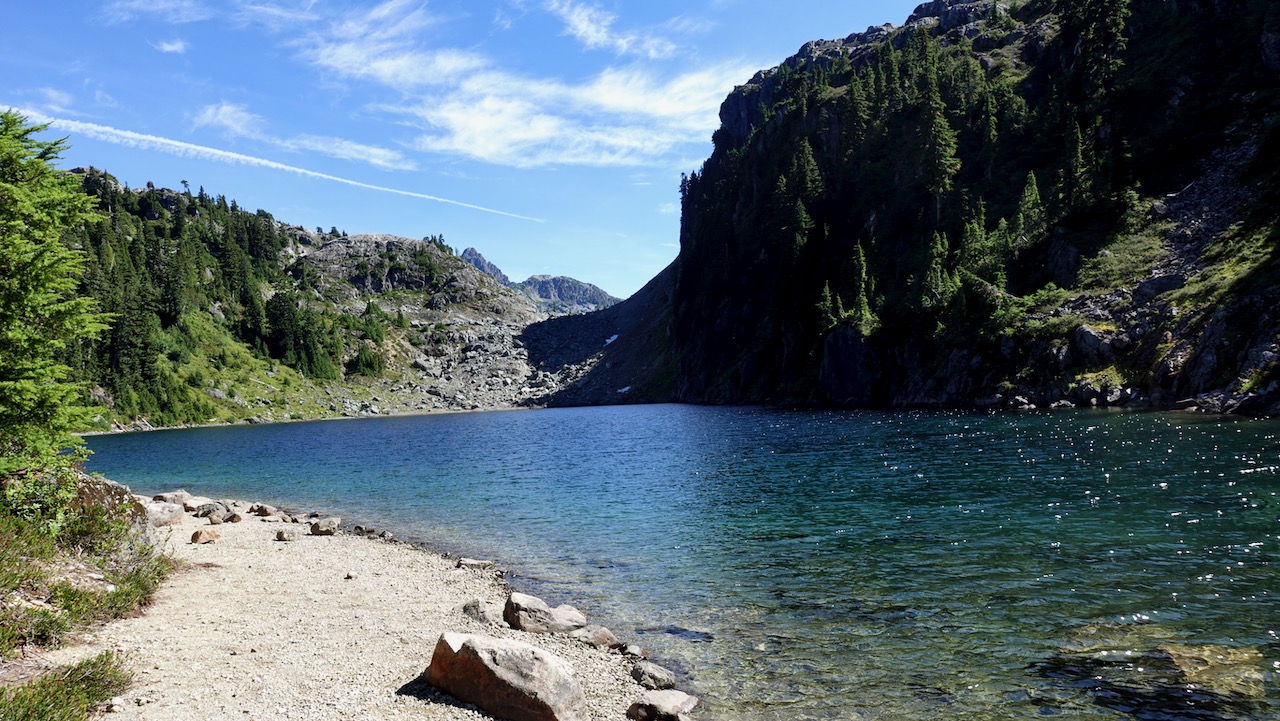
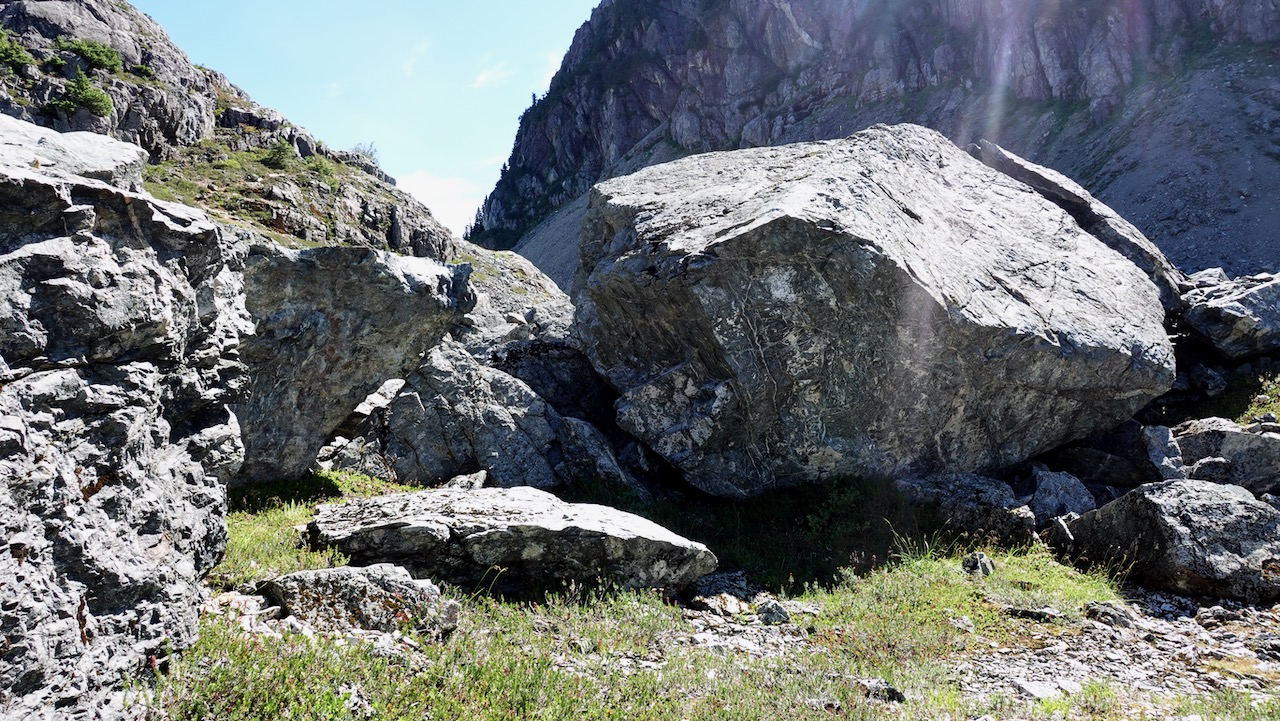
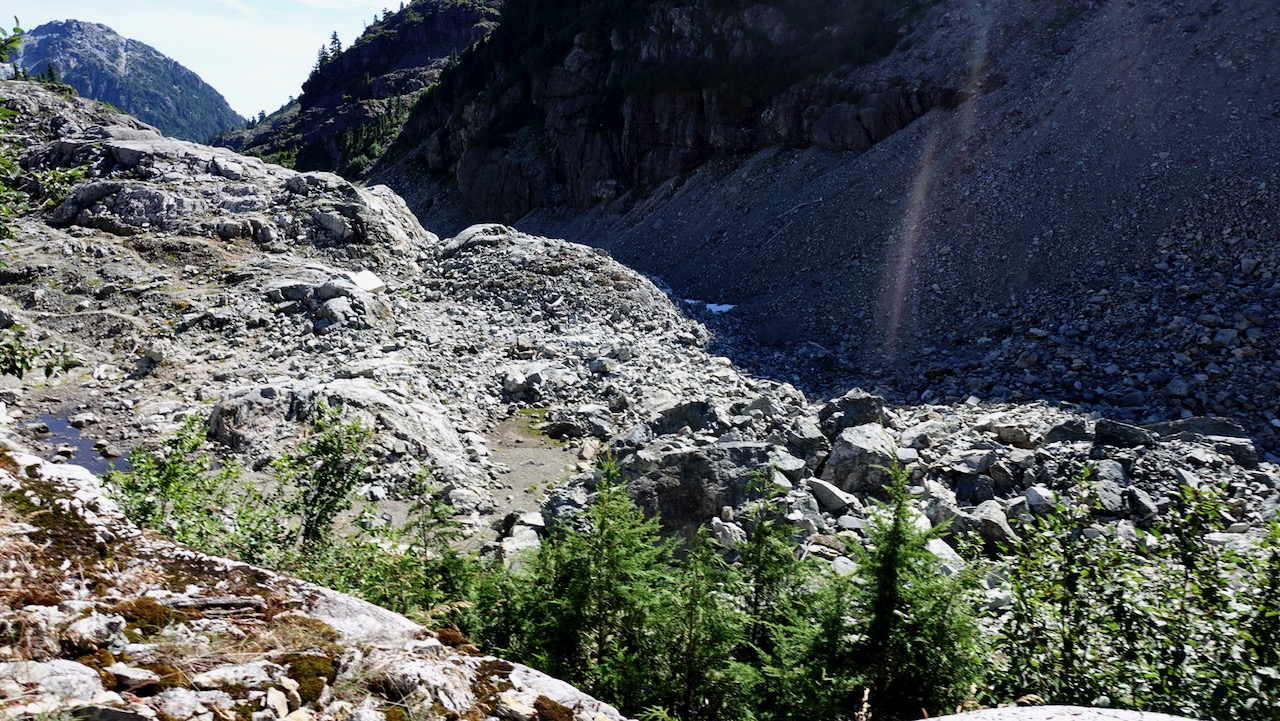
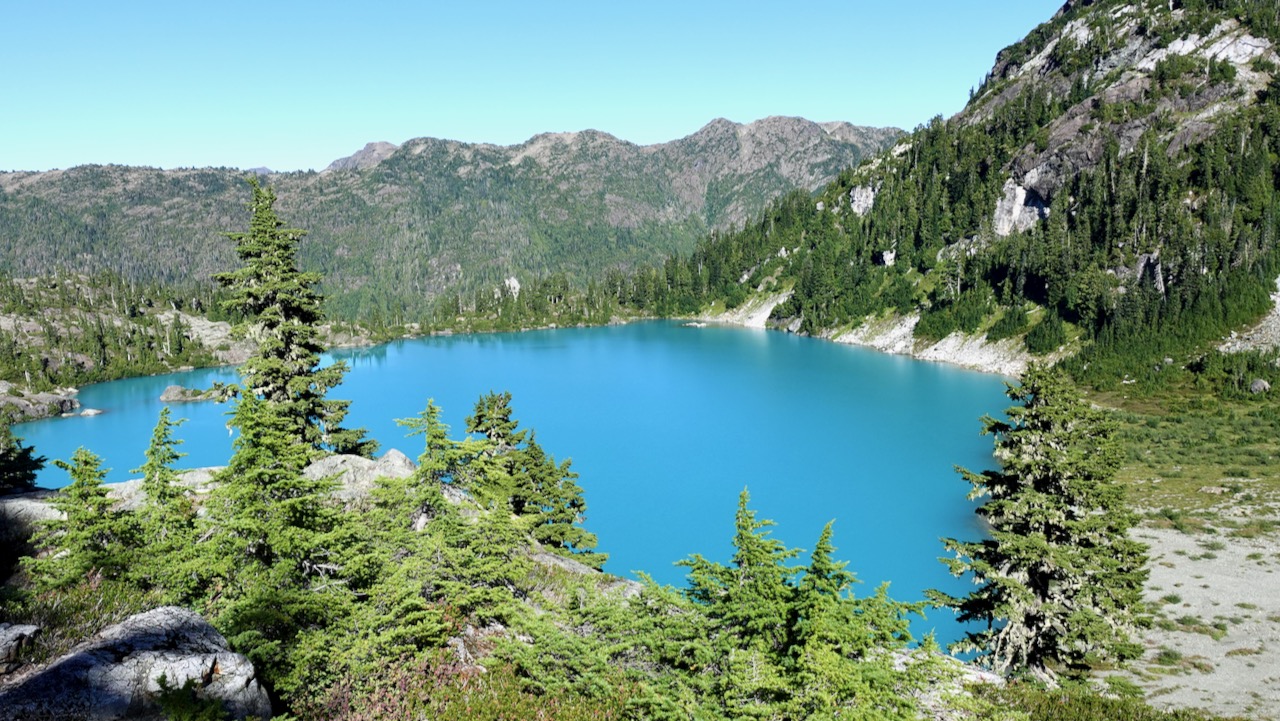
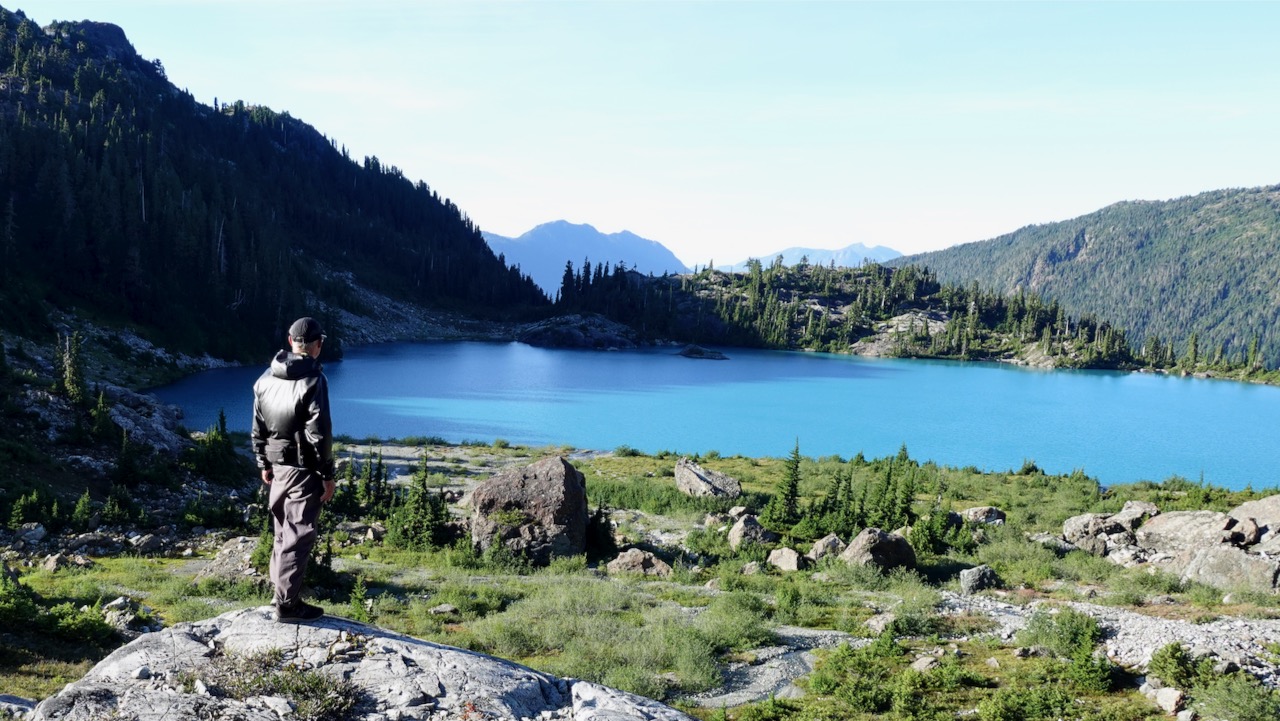
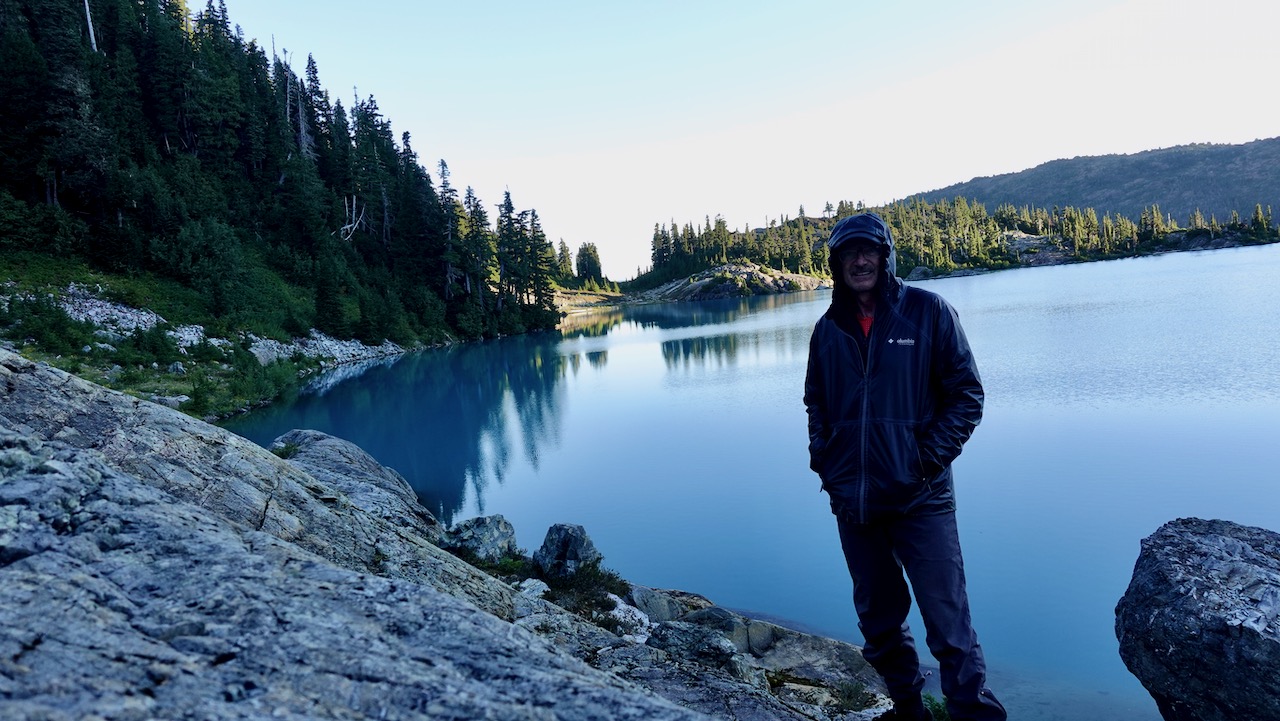
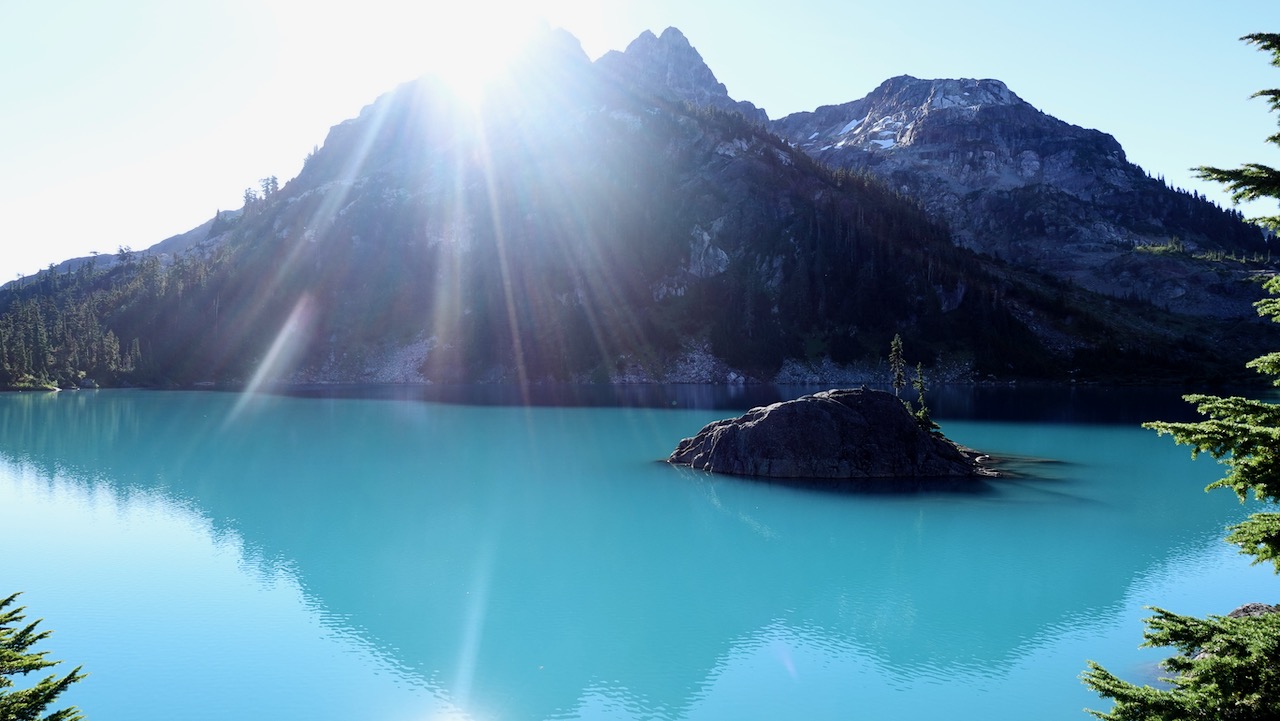
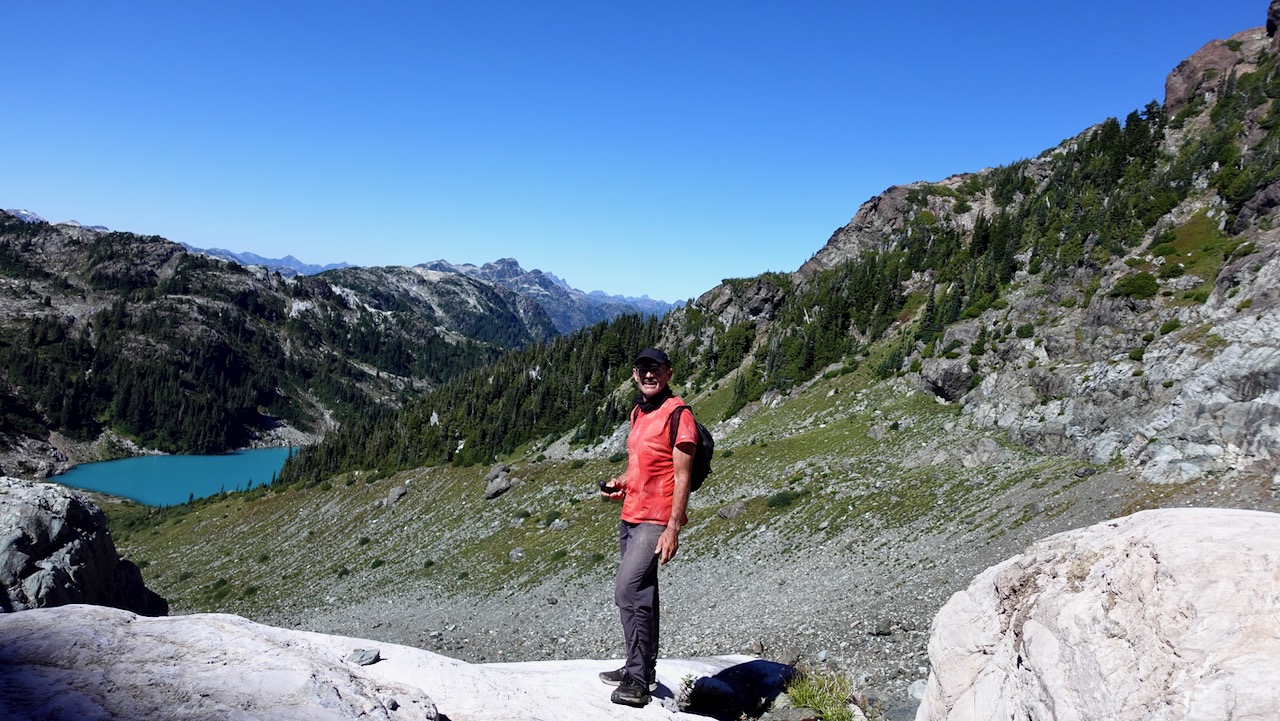
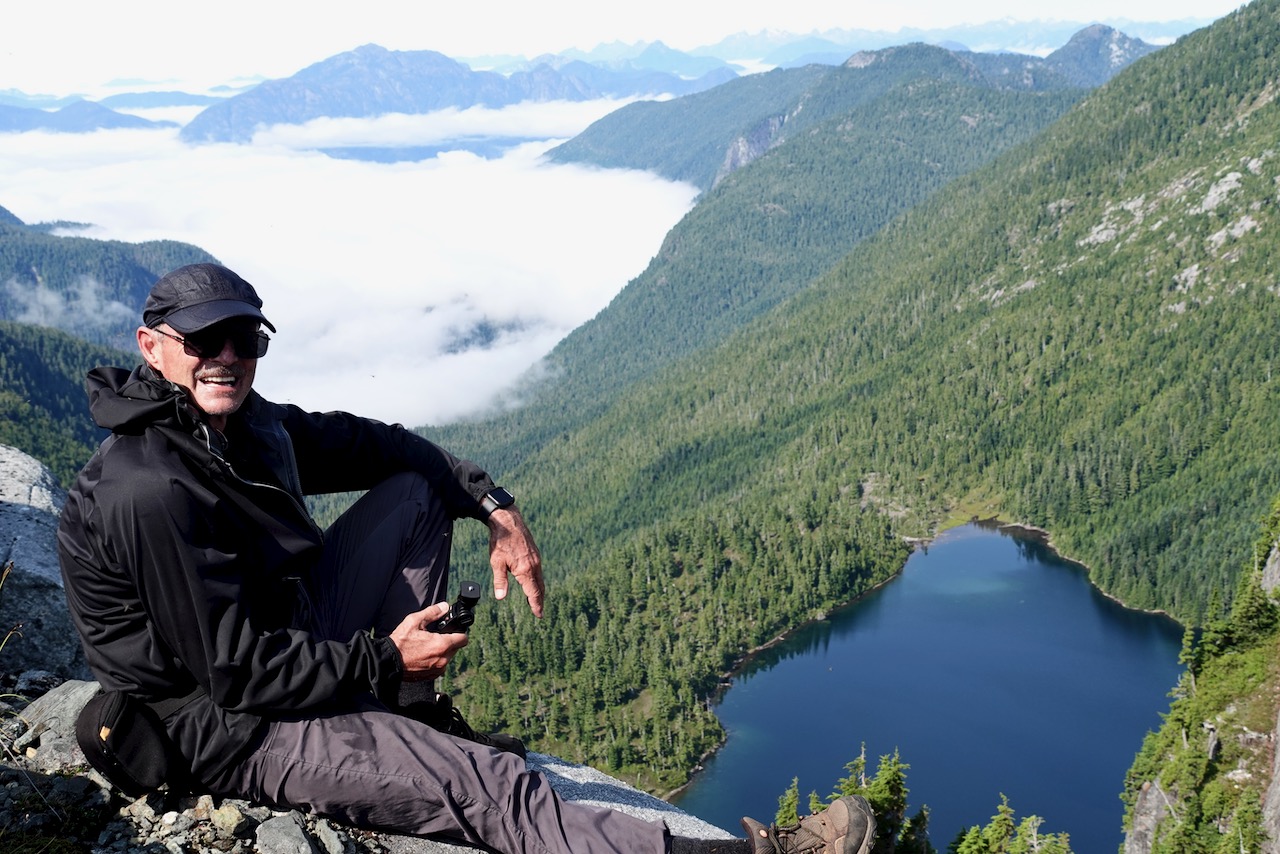
Wow. You arrive well above Bedwell lake with astonishing vistas.
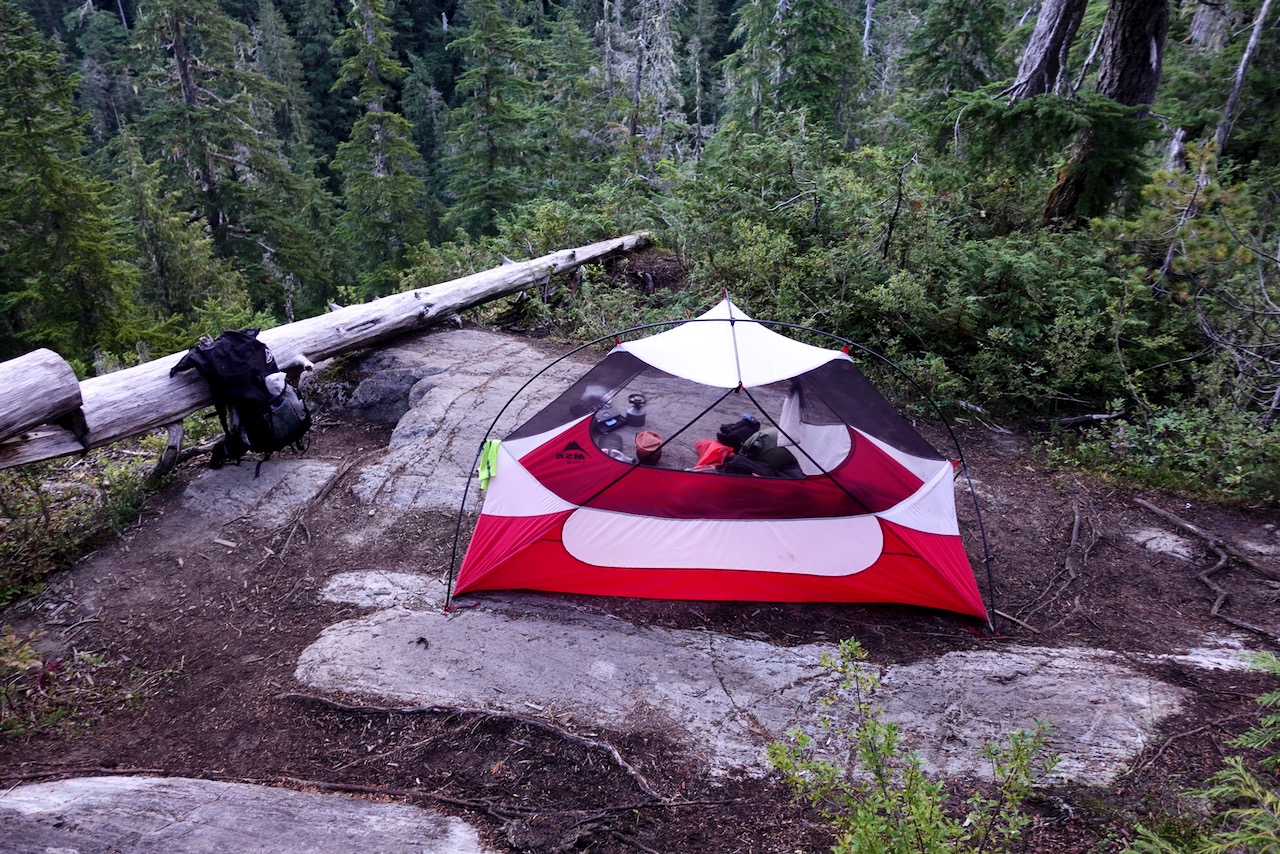
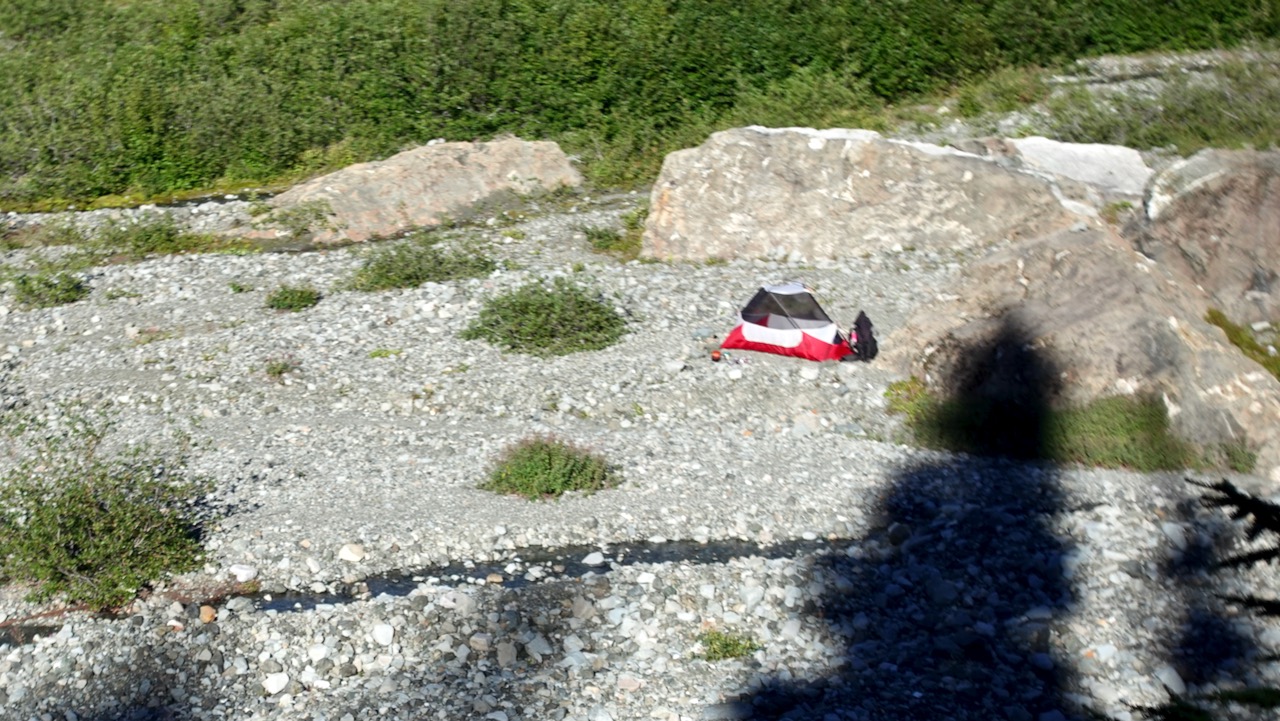
There are tent platforms at both lakes. Personally I prefer those at Baby Bedwell over these at Bedwell.
With good weather, my return back down the same trail seemed easy to me.