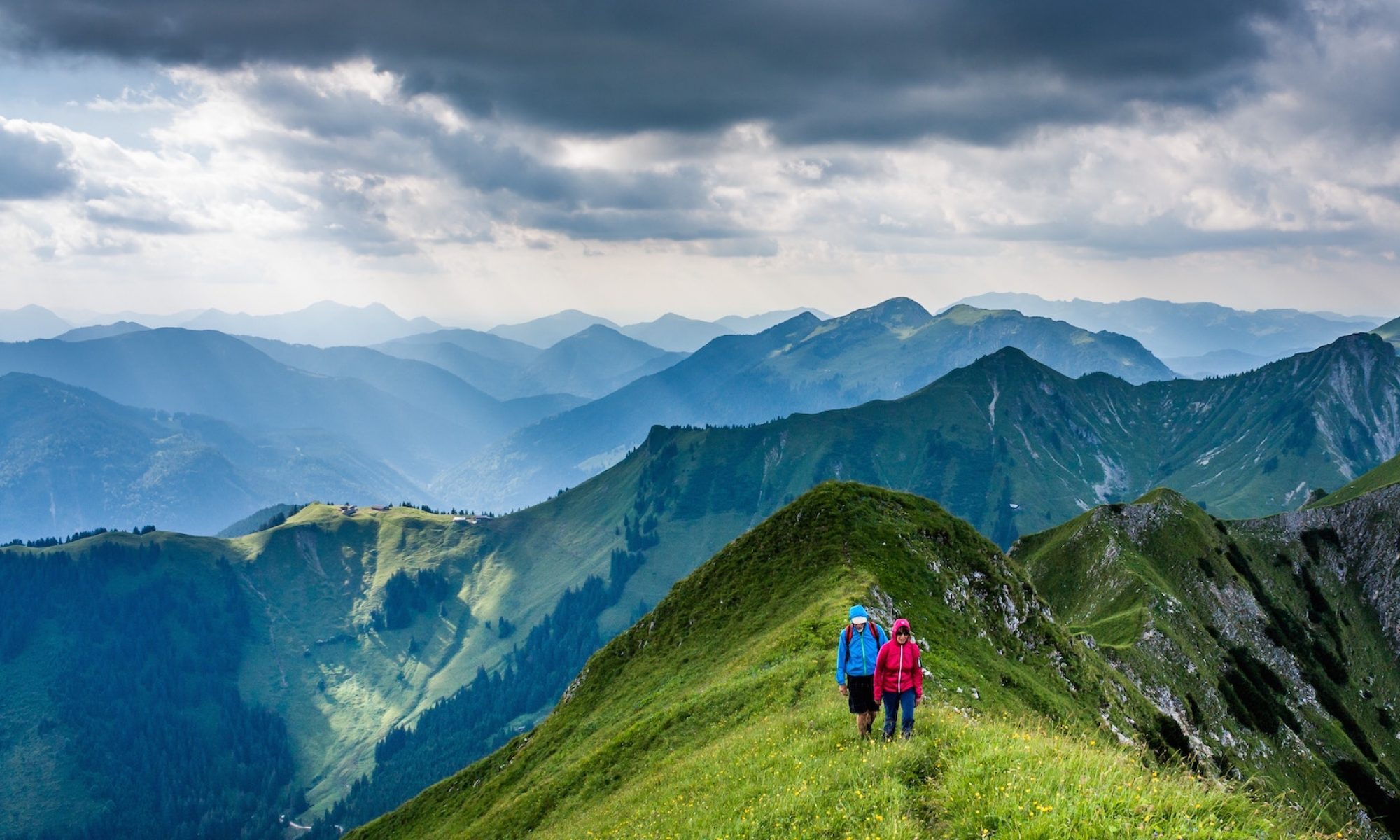

Mike Howarth – Manaslu Circuit

I spent over 2wks with Mike in Nepal, 10 days on the Manaslu Circuit. Along with:

Brion & Betsy – the not so newly weds.
Tasha & Ivan – the Alaskan powerhouses

A few of his photos:

Summit Stones

Nepali girl

Manaslu

Rakshi

Mike’s a true photographer. I’m more of a fauxtographer. 🙂

Here’s Mike’s trip report on our adventure.

see all of Mike’s Manaslu photos on flickr

Mike’s now down in Patagonia, trekking and cycling north towards the equator.

the Nepalese Royal massacre and the mess today

The governance of Nepal has been sorrowful compared with neighbors India and Bhutan.

The Nepalese monarchy persisted 240 years until 2008.

The 1990s saw the beginning of the Nepalese Civil War (1996–2006), a conflict fought between government forces and the insurgent forces of the Communist Party of Nepal (Maoist). The situation for the Nepalese monarchy was further destabilised by the 2001 Nepalese royal massacre, in which Crown Prince Dipendra reportedly shot and killed ten people, including his father King Birendra, and was himself mortally wounded by what was allegedly a self-inflicted gunshot.

As a result of the massacre, King Gyanendra returned to the throne. His imposition of direct rule in 2005 provoked a protest movement unifying the Maoist insurgency and pro-democracy activists. He was eventually forced to restore Nepal’s House of Representatives, which in 2007 adopted an interim constitution greatly restricting the powers of the Nepalese monarchy. Following an election held the next year, the Nepalese Constituent Assembly formally abolished the kingdom in its first session on 28 May 2008, declaring in its place the establishment of the Federal Democratic Republic of Nepal. …


The monarchy had governed poorly, not modernizing. A Republic will, hopefully, be an improvement.

REUTERS-Nepal-Palace-003

The Nepalese Royal Family as seen in this 1989 photo at the Narayanhiti Palace in Kathmandu. The royal members, from left to right, were Crown Prince Dipendra, King Birendra, Prince Nirajan, Queen Aiswarya and Princes Shruti. An eyewitness to Nepal’s palace bloodbath said on June 7, 2001, the late Crown Prince Dipendra staggered and fell occasionally as he drunkenly mowed down most of his family in just over a minute. (Reuters)

The drunken son used 3 different automatic weapons to mow down his family. No doubt American Gundamentalists found a way to defend his access to those weapons.

The Nepalese Constituent Assembly was … formed as a result of the Constituent Assembly election that was held on April 10, 2008 in Nepal. …

The Communist Party of Nepal (Maoist) (CPN (M)) was the largest party in the Constituent Assembly, having won half of the constituency seats and about 30% of proportional representation seats. …

Prachanda … is a Nepali politician and Chairman of the Unified Communist Party of Nepal (Maoist) (UCPNM). He led a guerrilla war against the government and later served as Prime Minister of Nepal from 2008 to 2009. …

Power corrupts. Once Prachanda was in charge he took residence in a 15-room mansion and started living a wealthy lifestyle. …

Top Maoists called him corrupt.

Bottom line. Prachanda and the (Maoist) (CPN (M)) party was no more effective in leadership than the monarchy.

In the Nov. 2013 election Prachanda and his party came a distant 3rd.

The centrist Nepali Congress, the Himalayan nation’s oldest party, established itself as the largest group in the 601-member constituent assembly, winning 196 seats …

Looks like Prachanda is history.

Prachanda

Prachanda escapes bomb blast in western Nepal

What does all this mean for hikers?

Nothing, so far. Certainly there’s no security concern.

I do recall being asked to make a donation to the (Maoist) (CPN (M)) party on Annapurna in 1998. They were very polite. 🙂

BestHike.com – 2013 in review

The WordPress.com stats helper monkeys prepared a 2013 annual report for this blog.

Here’s an excerpt:

The Louvre Museum has 8.5 million visitors per year. This blog was viewed about 140,000 times in 2013. If it were an exhibit at the Louvre Museum, it would take about 6 days for that many people to see it.

Click here to see the complete report.

10 Great City Hikes

Tijuca Forest, Rio de Janeiro
Great Coastal Walk, Sydney
Thames Path, London
Hoerikwaggo Trail, Cape Town
Berlin Wall Trail, Berlin
Seawall, Vancouver
South Mountain Park, Phoenix
Coast to Coast Walk, Auckland
Arthur’s Seat, Edinburgh
Hong Kong Trail, Hong Kong

Lonely Planet – Ten of the world’s best city hikes

Only the Hoerikwaggo Trail and Hong Kong Trail are included on our list of the best hikes in the world.

Rio does look GREAT, however. 🙂

Rio

the NEW Grand Enchantment Trail

The Grand Enchantment Trail is a 730-mile wilderness trekking route across the Southwest U.S., connecting mountains, deserts, canyons, and places of cultural and historic interest.

Beginning in the Sonoran desert near Phoenix Arizona, the route meanders eastward, crossing unique and diverse Sky Island mountain ranges, deep and water-blessed desert canyons, the pine-studded Continental Divide, and toward the southernmost Rocky Mountains, where it descends dramatically to the outskirts of Albuquerque New Mexico.

Meanderthals

map

… About 400 miles of the G.E.T. is hiking trail at this time – nearly 60% of the route. The majority of these miles are part of the US Forest Service’s trail system, and vary in condition from well-maintained and obvious to relict and vague

Longest continuous distance without a paved road crossing: 219 miles

Grand Enchantment Trail

Dientes Circuit, Chile

The Dientes Circuit in Chile is of the best hikes in the world.

It’s also called:

Isla Navarino Circuit
• Circuito Dientes de Navarino
• the teeth of Navarino

Dientes

Leo Turpan via email:

Just got finished with the Dientes trek yesterday. Pretty amazing stuff out there.

Got a bunch of snow, but it made for a beautiful christmas and even more beautiful landscape. …

Getting to Puerto Williams:

Option 1- Boat from Ushuaia (doesn´t leave everyday, need to check departures at Ushuaia dock) $750 Argentinian Pesos, about $115

Option 2- Ferry from Punta Arenas (leaves only once or twice a week, Tranbordadora Austrual Broom, takes 30 hours but is highly recommended) $90,000 Chilean Pesos, $170 US

Option 3- Flight from Punta Arenas (one flight everyday, I think.) $60,000 Chilean, $115 US

Town/Trek Info:

-There is one map of the trek, not professional, but does have contour lines and GPS markers. The map can be purchased from a small camping store near the center of town. The store also stocks some types of gas, knives, tents, sleeping bags, etc. You can also rent a GPS there that has the circuit route already uploaded

-There are two supermarkets in the center of town that stock all the basic food necessities

-Multiple hostels in town, all priced at 10,000 Pesos or more. All have info about trek

-Register for hike at the police station, no rangers or servicemen on this trek

Trek/Logistics:

-31 Km route, 4 days 3 nights recommended, some do it in 5 days but pace is slow

-clockwise direction starting from Puerto Williams; do NOT reverse the route, you will not have a good time.

-A decent amount of trailfinding will need to be done, do not underestimate the mileage, miles are long due to weather, trailfinding, and trail conditions

-The route can be extremely muddy and wet, gaiters and gortex are a good idea

-Can camp virtually anywhere

-Tons of water

-can extend the trek with a connection to the Lago Windhond trek

-2 hour walk back to Puerto Williams on the road once you reach the end of the trail, but Chile is known as an easy place to hitchhike

map


Check out Dientes information page.

Sunshine to Assiniboine

We’ve updated and moved our Sunshine to Assiniboine hike information page. Our favourite hike in the Canadian Rockies.

  • one of our top 10 hikes in the world
  • recommended route 6 days, 5 nights. Shorter is possible.
  • 56km (34.8mi) depending on side trips
  • July to mid-September

We recommend this route as the best hike:

route

There are a number of ways to shorten it, the easiest of which is to helicopter in or out to the Assiniboine Lodge.

Virtual Hiker in 2012 started and finished at Sunshine Meadows. They camped at gorgeous Og Lake.

02_og

Made sidetrips to the Nub and Wonder Pass.

08_nub_peak_3
trip report – Virtual Hiker – Mount Assiniboine Region

Check out our info page – Sunshine to Assiniboine

Murder in the High Himalaya – a review

Popular and a prize winner, I’d been looking forward to listening to this book on my recent trip to the Himalaya.

AudibleMurder in the High Himalaya: Loyalty, Tragedy, and Escape from Tibet (2010)

It’s based around the Nangpa La shooting incident of 2006 near Cho Oyo:

… A group of unarmed Tibetan pilgrims attempting to leave Tibet via the Nangpa La pass were fired upon by Chinese border guards. Kelsang Namtso, a 17-year-old nun, was killed and a number were injured. …

The Chinese government initially denied the charges, but Kelsang’s murder was graphically filmed by a Romanian photographer, who was nearby as part of a climbing expedition.

After Romanian photographer Sergiu Matei smuggled the video out of Tibet, it became headline news around the world, drawing attention to the plight of Tibetans under Chinese rule/occupation. …

A documentary called Tibet: Murder in the Snow, based on this incident, was released in 2008 by 360 Degree Films, an Australian production company, working in collaboration with the BBC. …

It’s an awful story.

There’s no need for the author to demonize the Chinese. Their crime speaks for itself.

Click PLAY or watch a book trailer on YouTube. The video includes the shooting of Kelsang Namtso.

Quickly I lost confidence in first time author, investigative journalist Jonathan Green.

The telling is very cliche. Everything China BAD. Everything Tibetan GOOD.

It was as balanced a portrayal of the situation as the film Seven Years in Tibet. Biased.

He keeps making the statement: “oxygen level is half what it is at sea level“.

Of course the percentage of oxygen in the air does not change significantly with altitude, but absolute O2 content decreases as air pressure decreases.

Is that investigative journalist clear on the difference?

I’m not sure he knows what he’s talking about.

One character in the book when questioned states that Annapurna is in Tibet. It’s entirely within Nepal.

Apparently Jonathan Green spent a lot of time the Himalaya.

It’s not apparent in this book.

This is a disappointing read.