Paine in Chile is one of the best hiking destinations in the world. No question.
But foreigners are endlessly frustrated trying to organize their trip from abroad. Many — including myself — show up on a hope and a prayer trying to make it happen onsite.
Jimmy Butler, shooting guard for the Philadelphia 76ers, was in town a few months ago and decided to hike the Stawamus Chief in Squamish — and it definitely not a slam dunk. …
It’s billed as the most southerly established hike in the world.
HOWEVER the Lago Windhond hike also out of Puerto Williams goes further south. But it’s far less popular.
From Here to Nowhere:
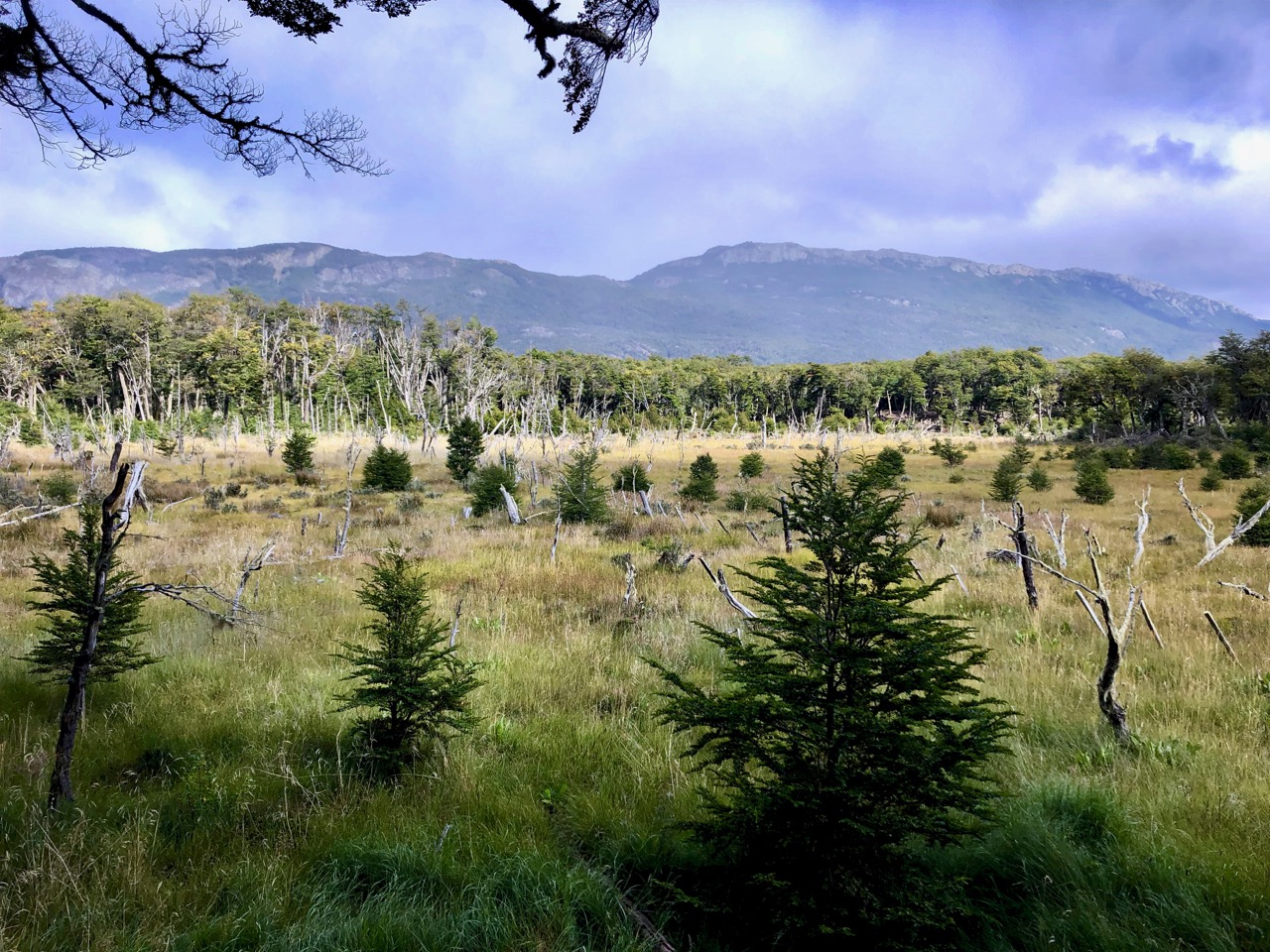
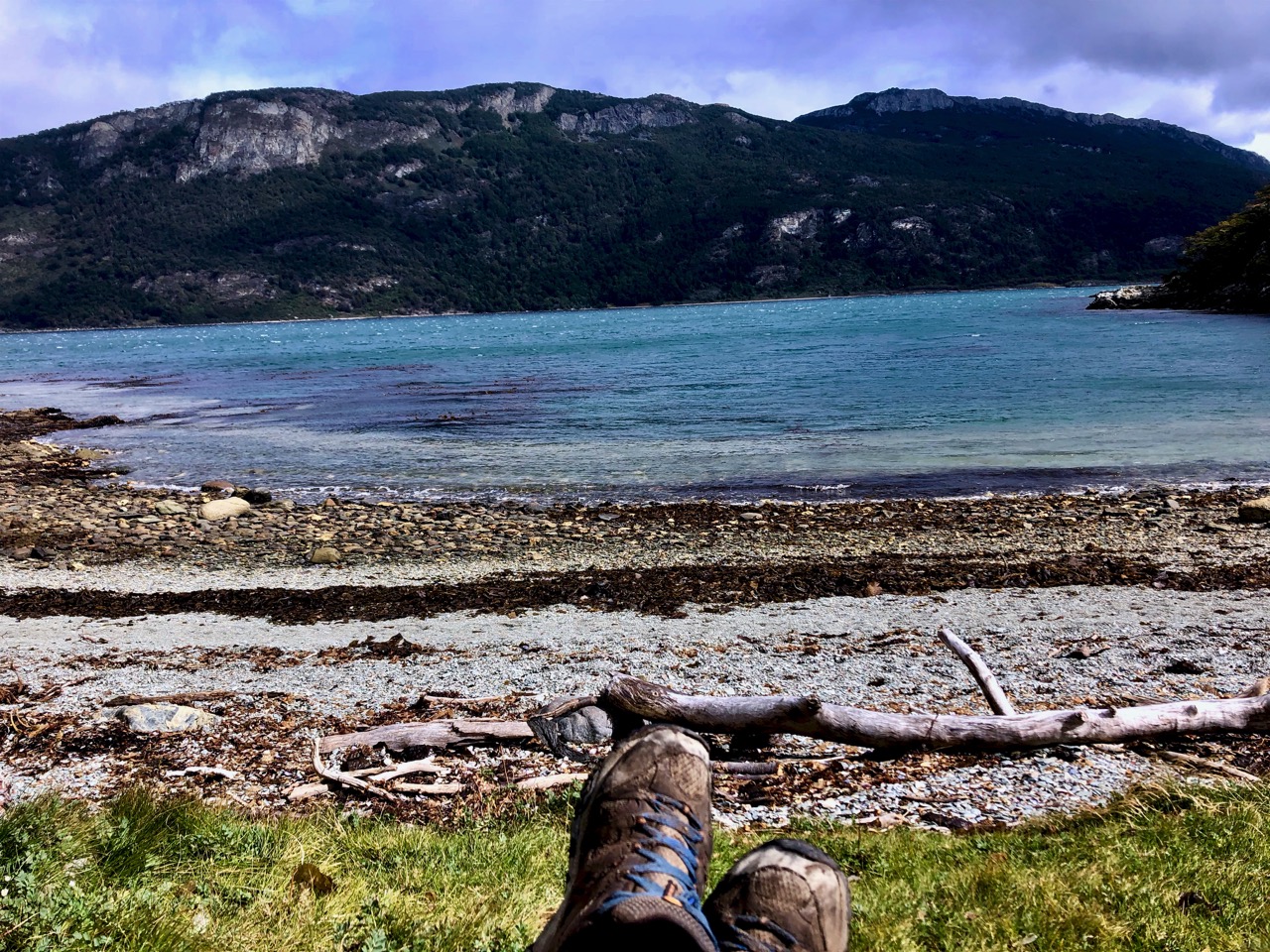
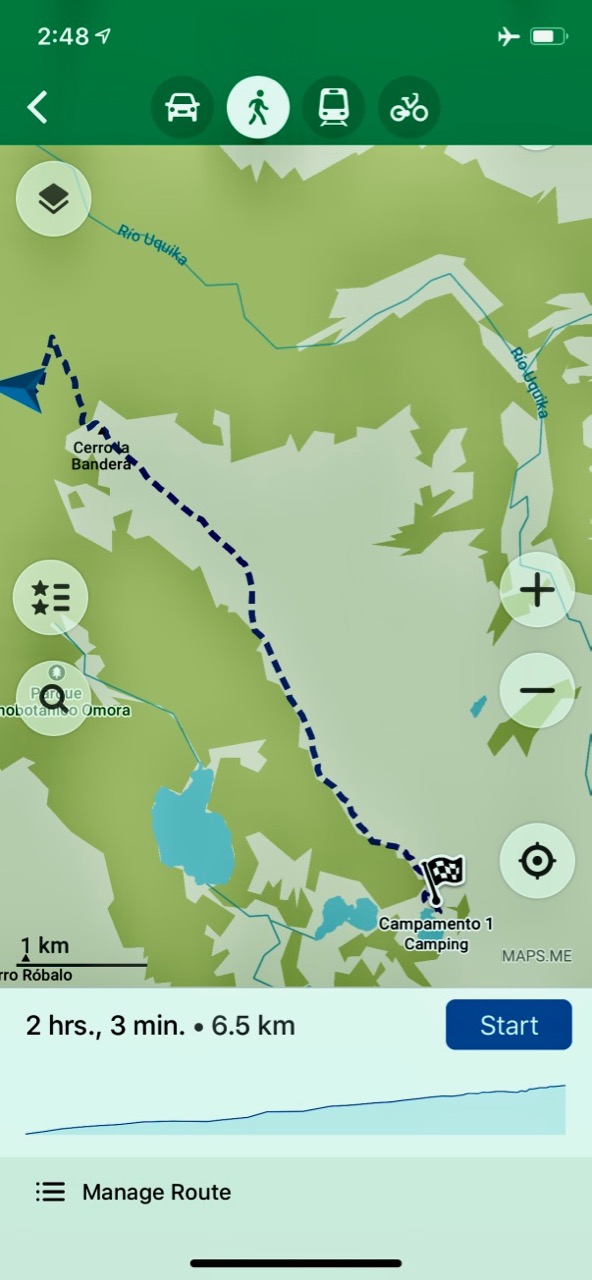
… Now, after failing to reach the Windhond trail from the Dientes Circuit a few days before due to dangerous snow conditions, my plan was to reach the lake via the Rio Ukika valley and, if time permitted, walk around the eastern edge of the lake to truly reach the southern end of Isla Navarino. Beyond that point Cape Horn is the only land before Antarctica. …
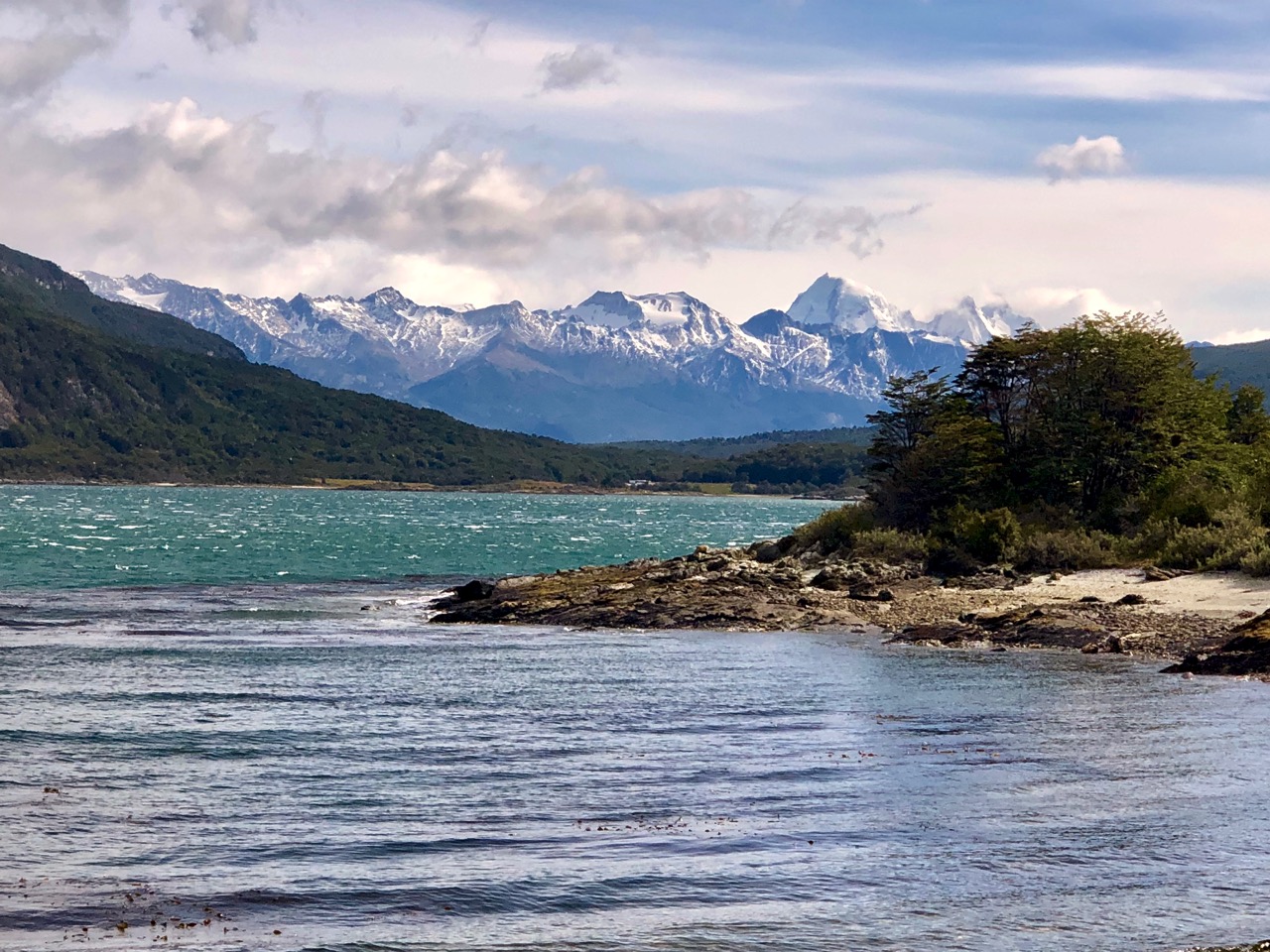
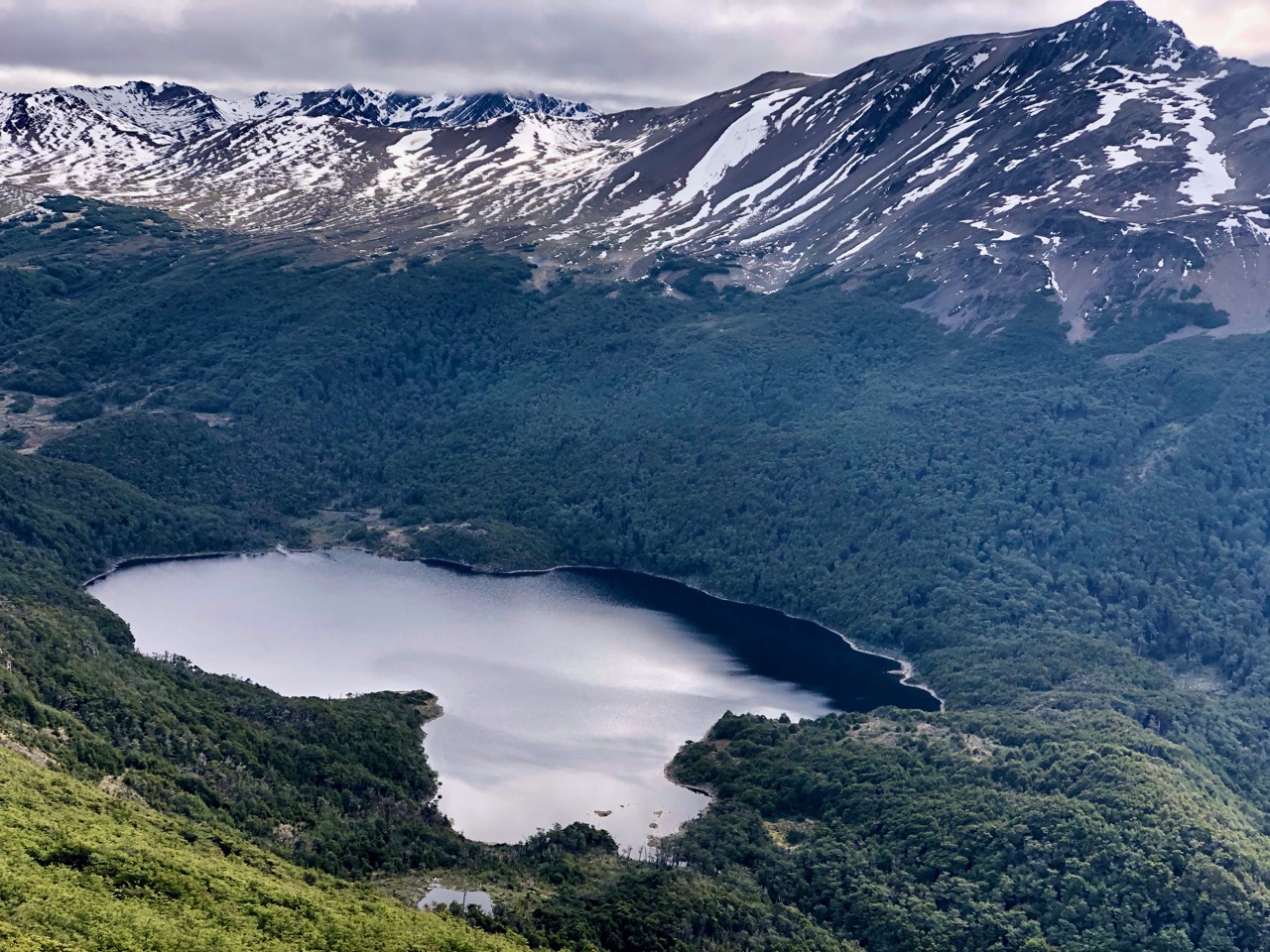
For the first half of the day the Windhond trail follows the Ukika valley, gradually climbing to its head, passing several pretty lakes which are the source of the Rio Ukika, and offering magnificent views of the backs of the mountains I walked along only a few days before on the Dientes Circuit.
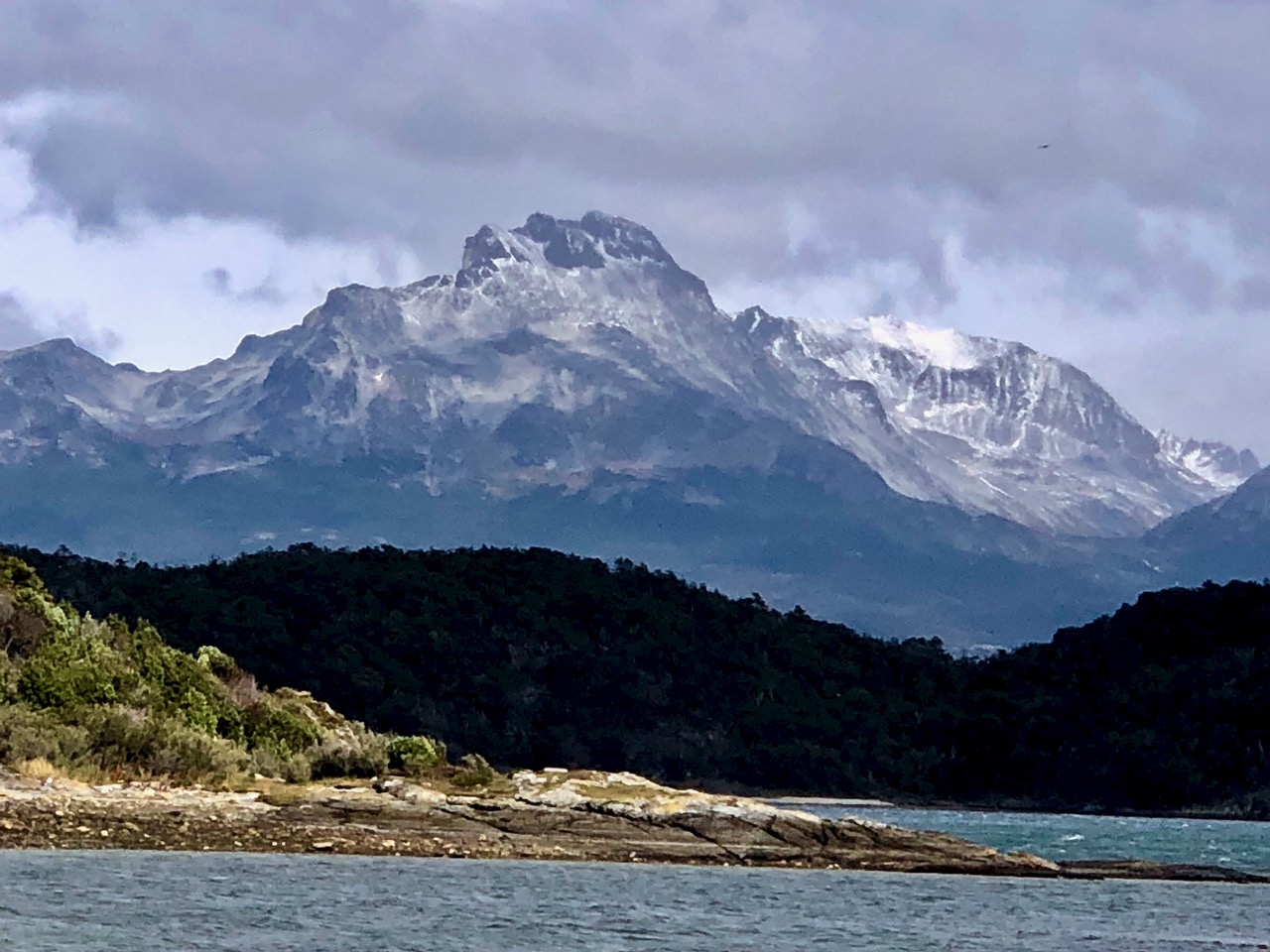
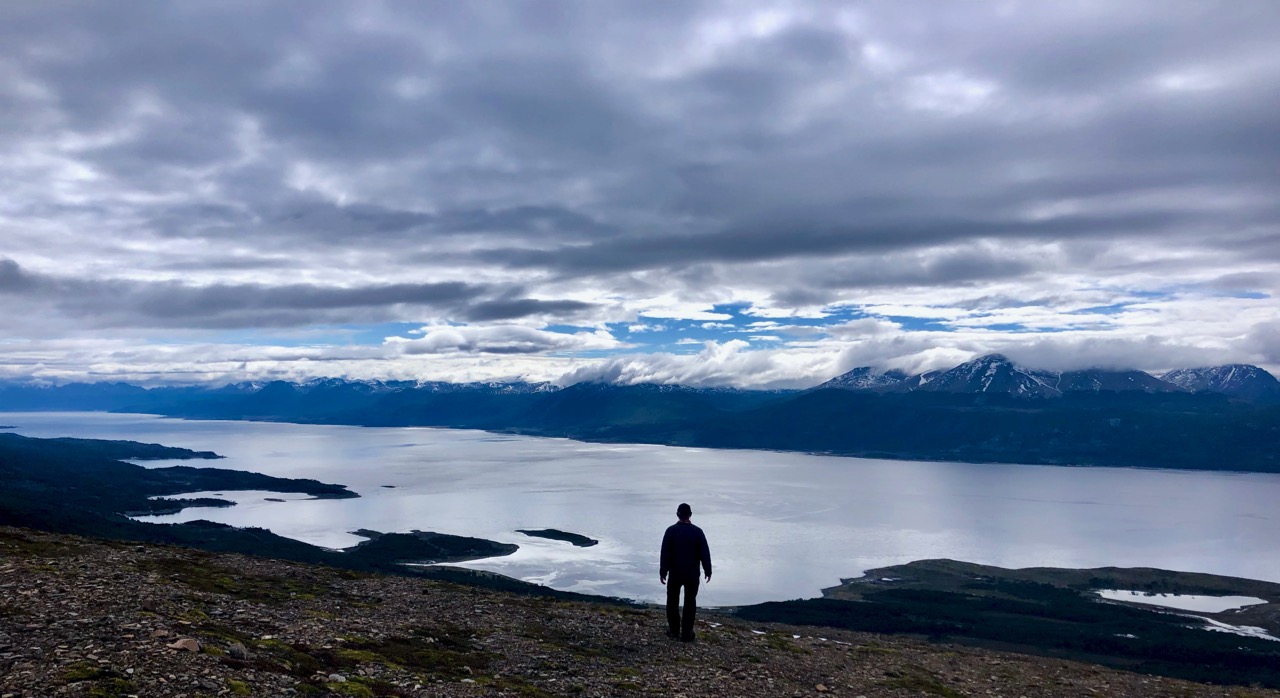
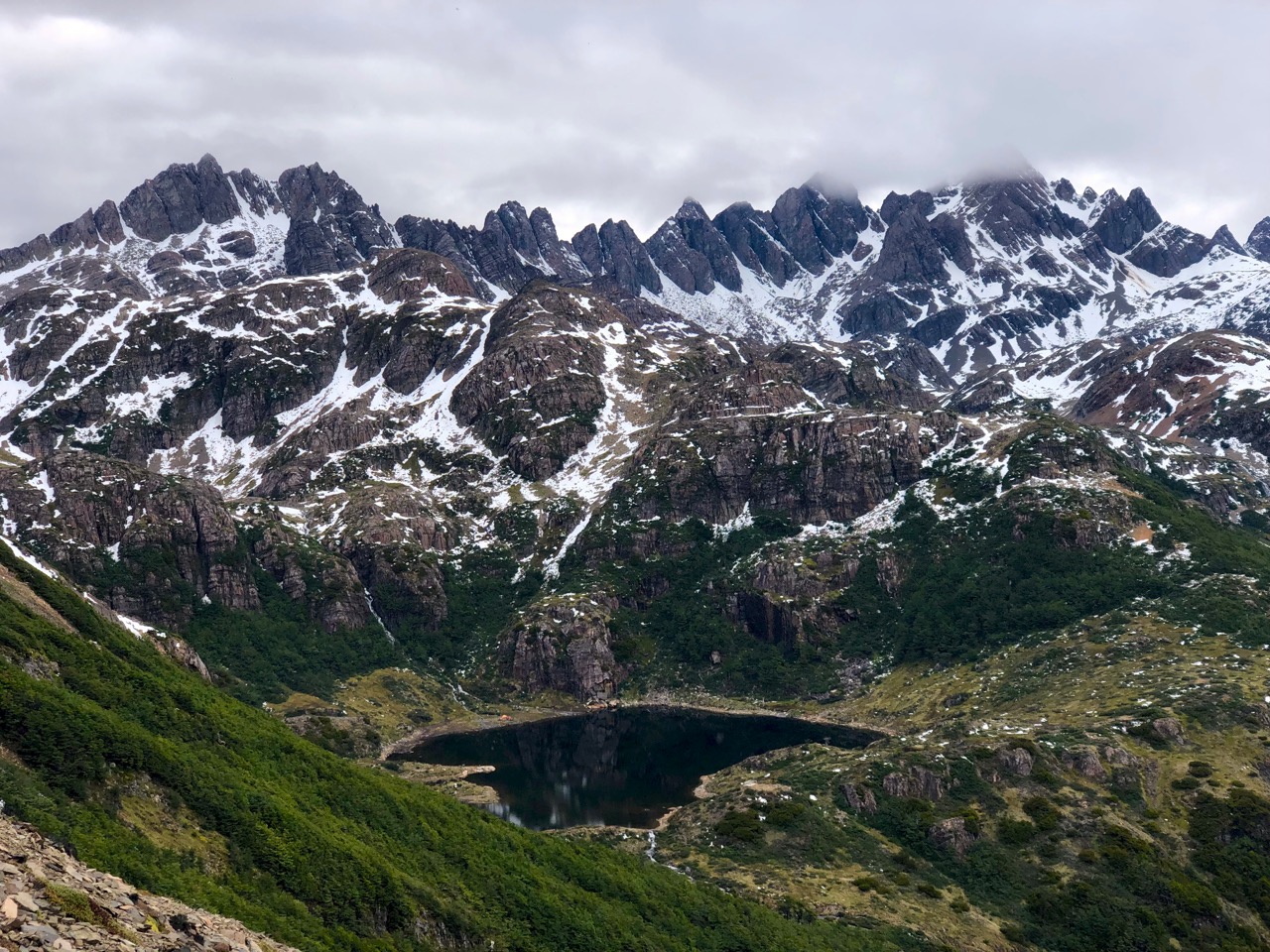
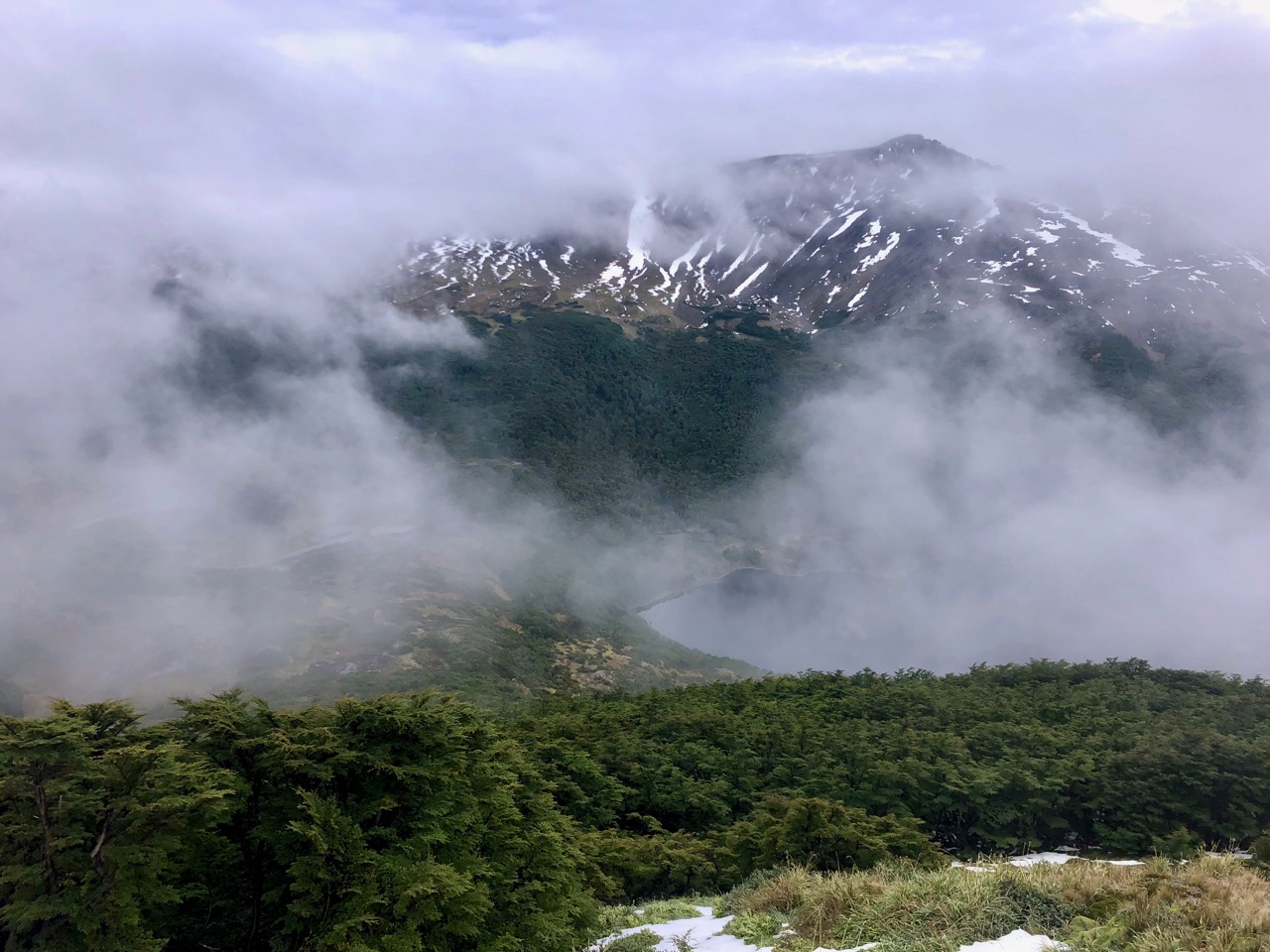
Ahead, the Dientes de Navarino slowly come into view – and to be honest, the views of the mountains were better than those from the Dientes Circuit. …
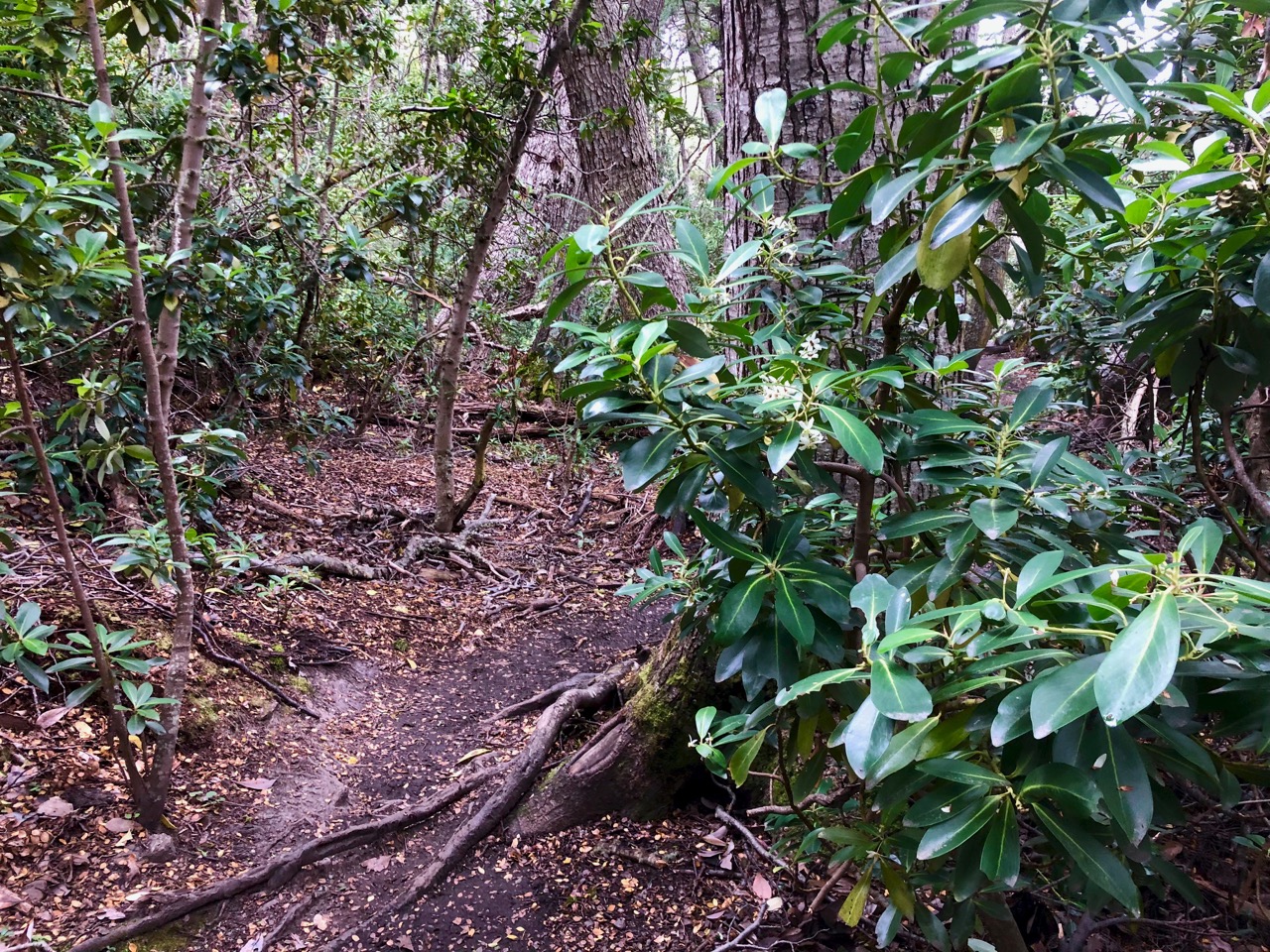
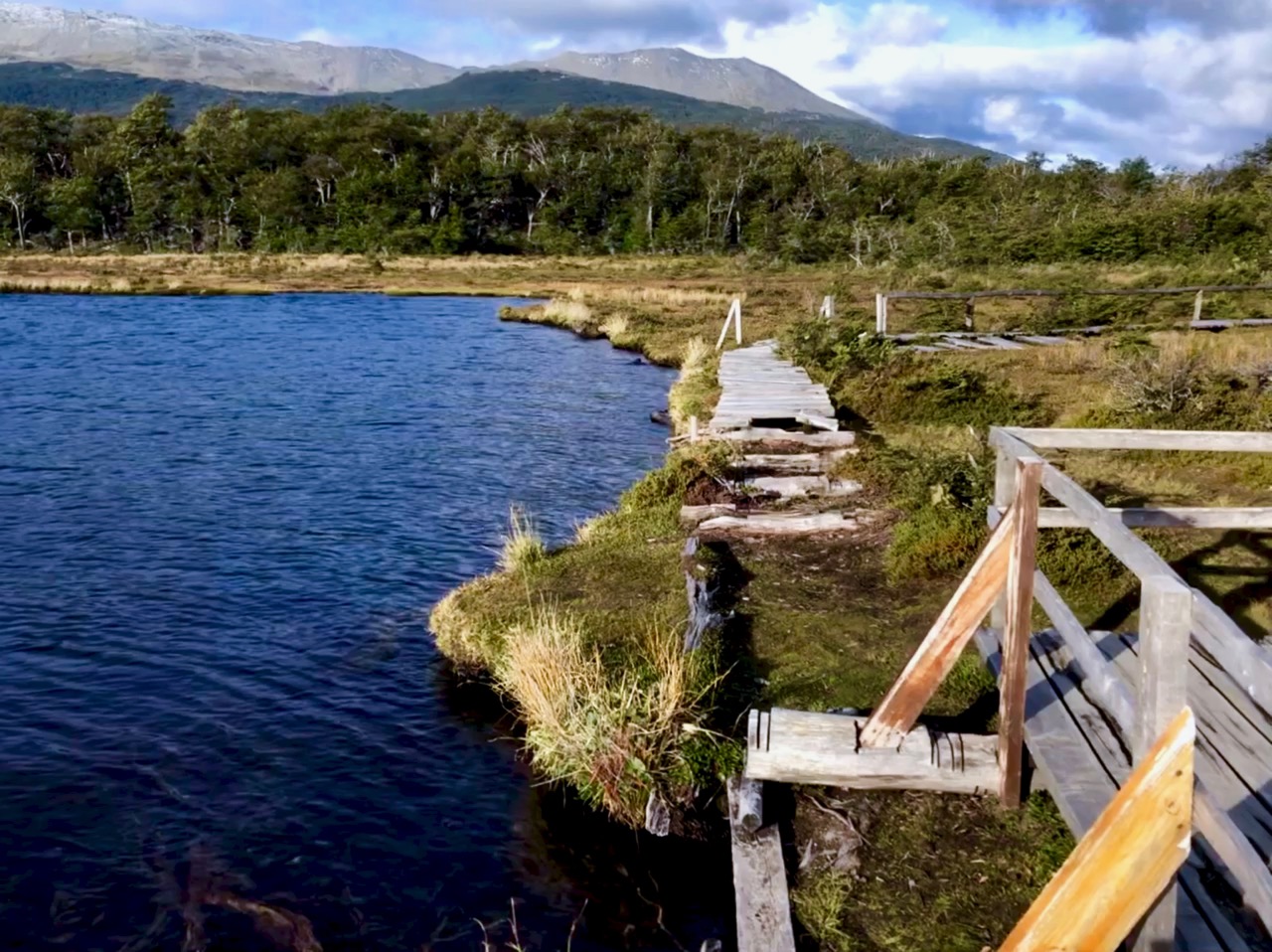
Compared to the Dientes Circuit there was very little elevation change involved, and after my experience on that circuit I decided not to be too fussy about following the path exactly when the markers disappeared because of beaver damage. …
Celebrating girls and women in the outdoors on #InternationalWomansDay.
Alma Wagen was the first female guide to work in Mount Rainier National Park. The bulk of her work as a guide consisted of leading tourists on hikes to nearby glaciers, but she occasionally assisted in leading parties to the mountain’s summit, which she was said to have done “like a master”. …
#InternationalWomansDay#RainierWomen In 1918, Alma Wagen became the first female mtn guide in N. America on Mount Rainier. She once stated "I…found my life’s work right in the National Parks. There were places to climb and I wanted to teach other women the joy of climbing.”-pw pic.twitter.com/aFqUfLXcH1
For the last decade, decorated Navy SEAL, accomplished athlete, and bestselling author Don Mann has been traveling across the country giving motivational talks and in the process inspiring hundreds with the secrets behind his awe-inspiring achievements. …
As an elite Navy SEAL, Mann performed seemingly impossible tasks on a regular basis. Here he details the lessons he learned from his training and shows how the rest of us can apply those teachings to our daily lives in terms of learning to push beyond our internal boundaries and achieve the goals we’ve set for ourselves, both professionally and personally. …
I recommend the audio version of the book because it’s read by Don Mann. That ownership makes his extreme stories come to life for me. When you hear Don’s voice, you knowhe’s the real deal. The kind of guy who could push himself to the point of passing out during extreme exercise. The kind of guy who will not quit.
The book intersperses Don’s life story — hundreds of outdoor races included — with stories of the people who inspired him.
Unlike most parks in Argentina, there is an entrance fee for Tierra del Fuego National Park. It was 480 pesos ($12.50) in 2019. But the ticket is good for 1 or 2 days. And camping is free in the park so two days is the better value.
There’s no inexpensive way to get from Ushuaia to the Park. Most — including me — book a door-to-door shuttle return for 700 pesos. ($18)
On arrival at the Park I asked which of the 4 campgrounds was best. One Ranger told me Laguna Verde, so I had the shuttle drop me there.
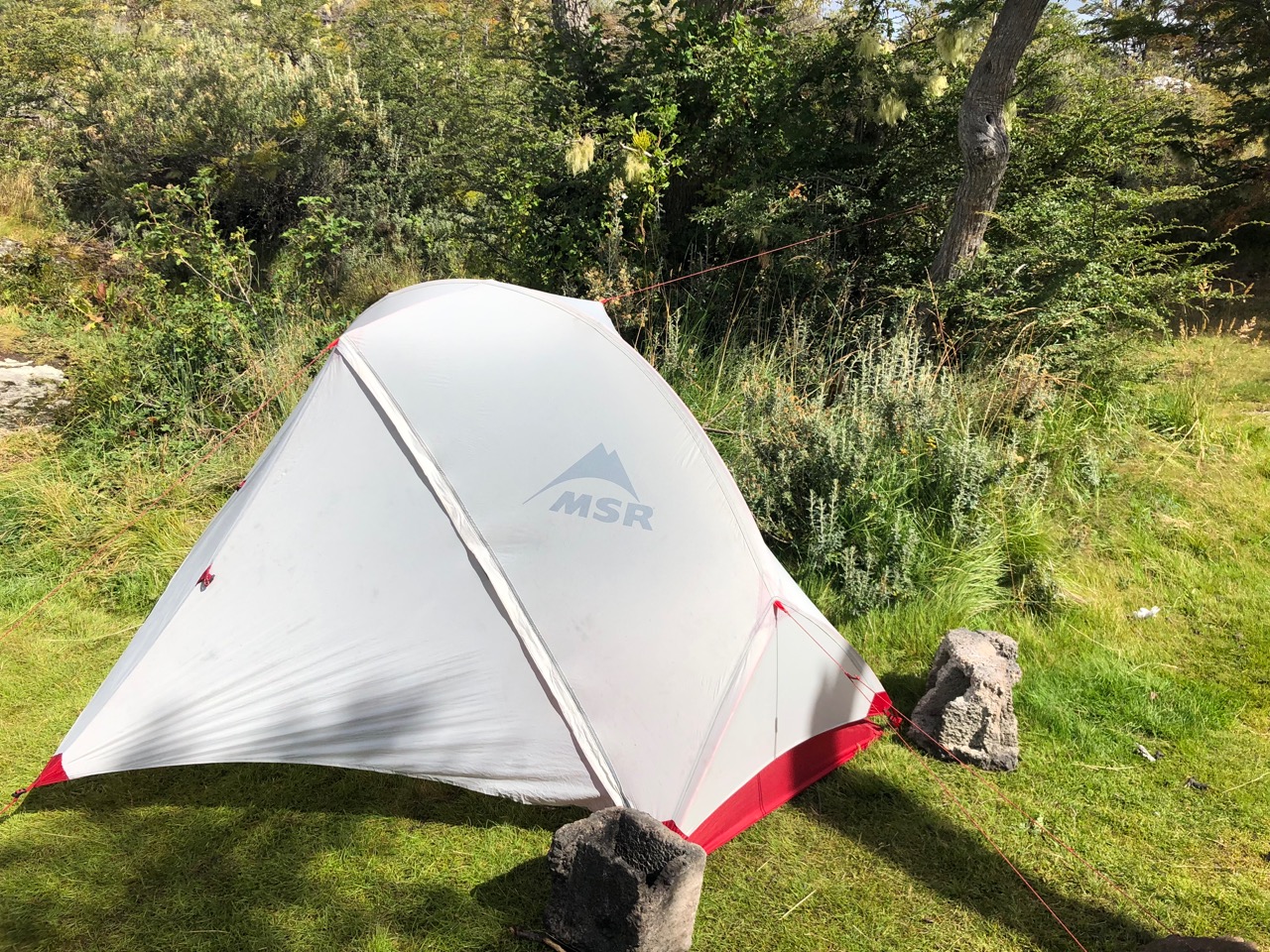
This is Patagonia so I bolted the tent down real good.
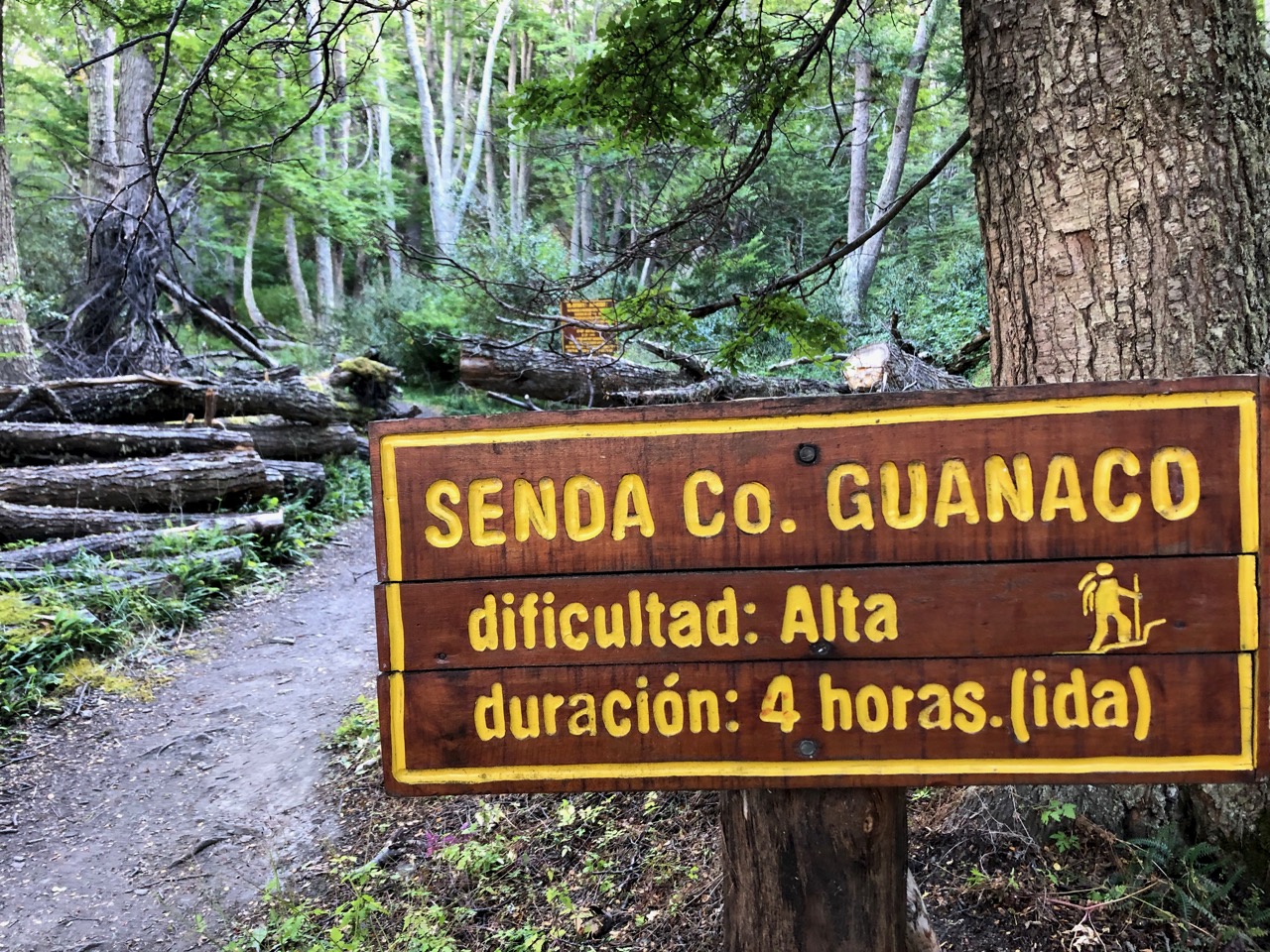
Day 2 I headed over to the nearby Alaskush Visitor Center to register (free) for the Cerro Guanaco trail. You are supposed to register before Noon to be allowed to make the climb.
Guanaco is often closed due to high winds, as well.
It’s 4km one way. An elevation gain of 973m.
To and from the Alaskush Visitor Center and back (to confirm you returned safely) it’s about 15km.
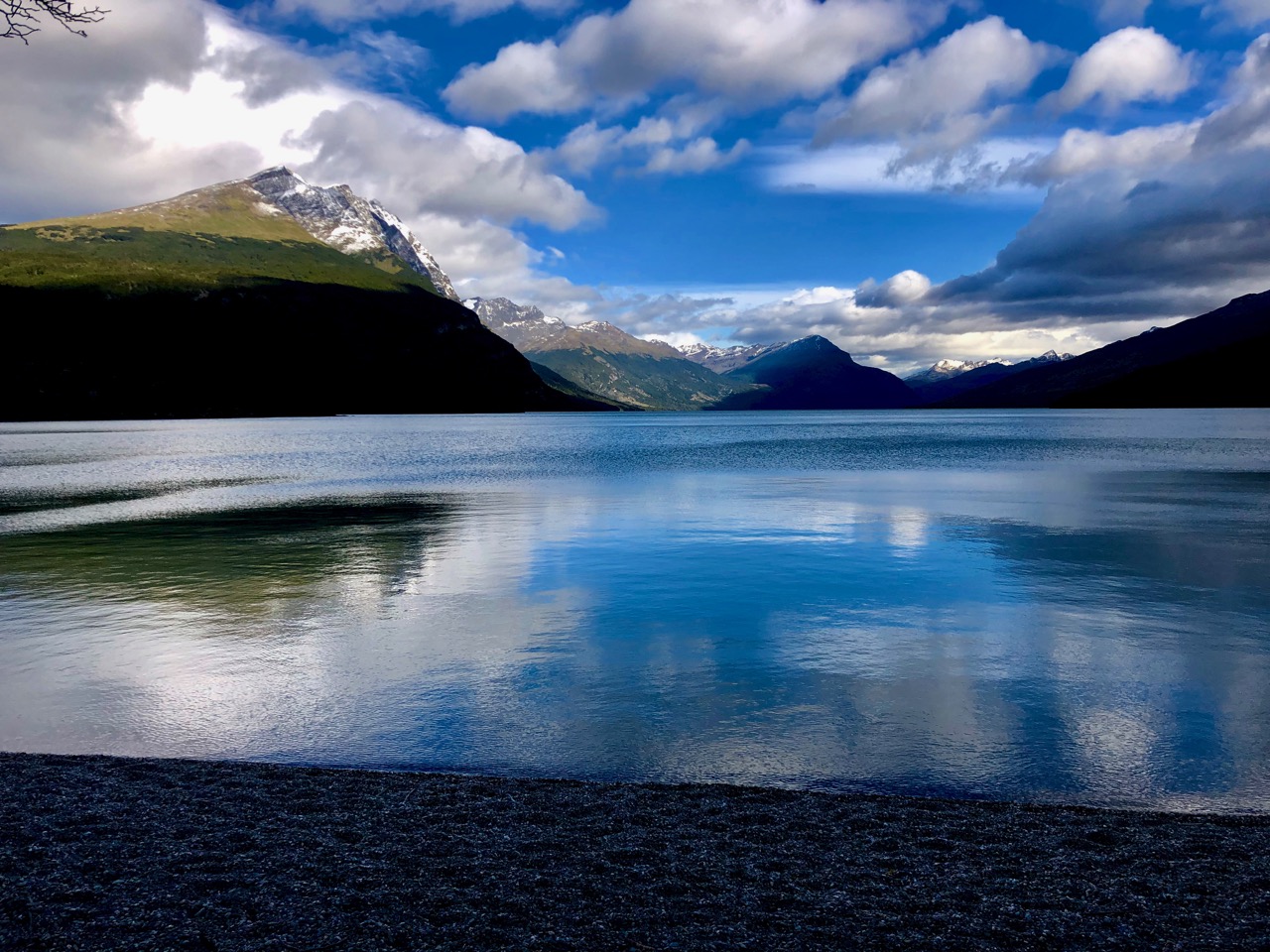
You start along lovely Lake Roca. Perfectly calm the day I was there.
Lago Roca
Signage says it will take you 4 hours to the top. Hiking steadily it’s more likely to be closer to 3 hours.
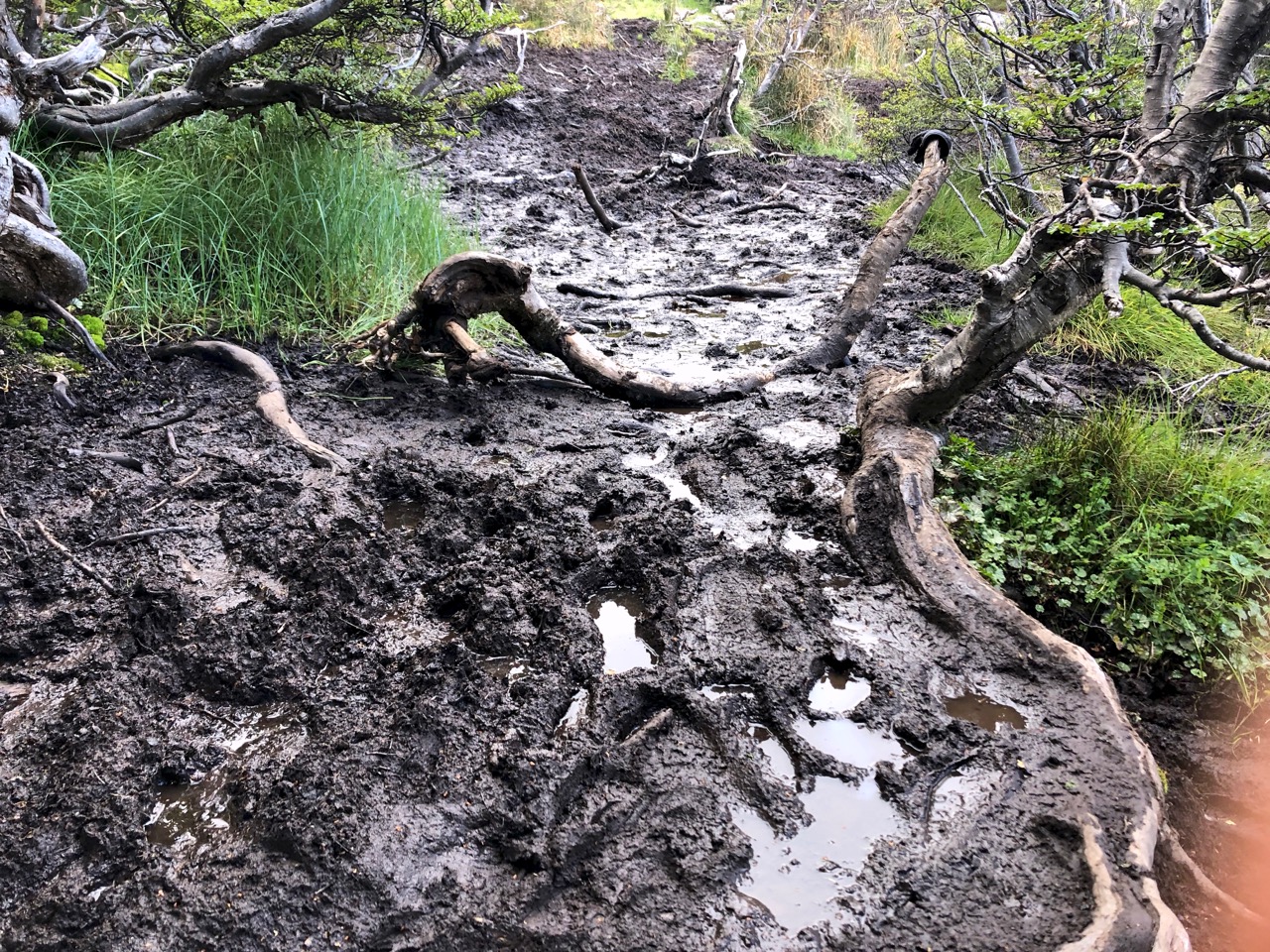
There is some significant MUD at one point.
As usual in South America, I used Maps.me for navigation.
Most hikers stop at one of the designated viewpoints.
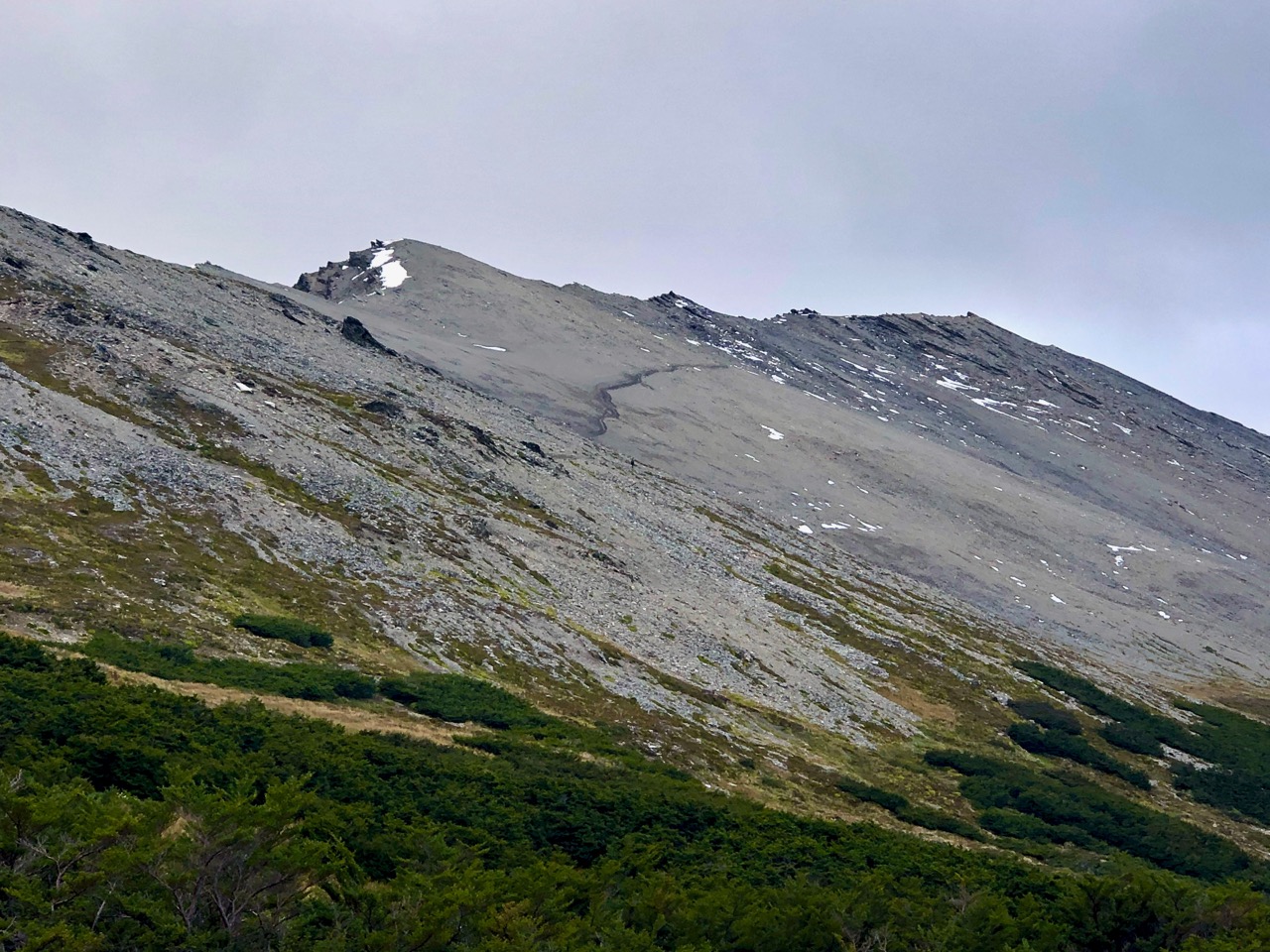
If you’ve got good weather it’s worth pushing up the scree to the top.
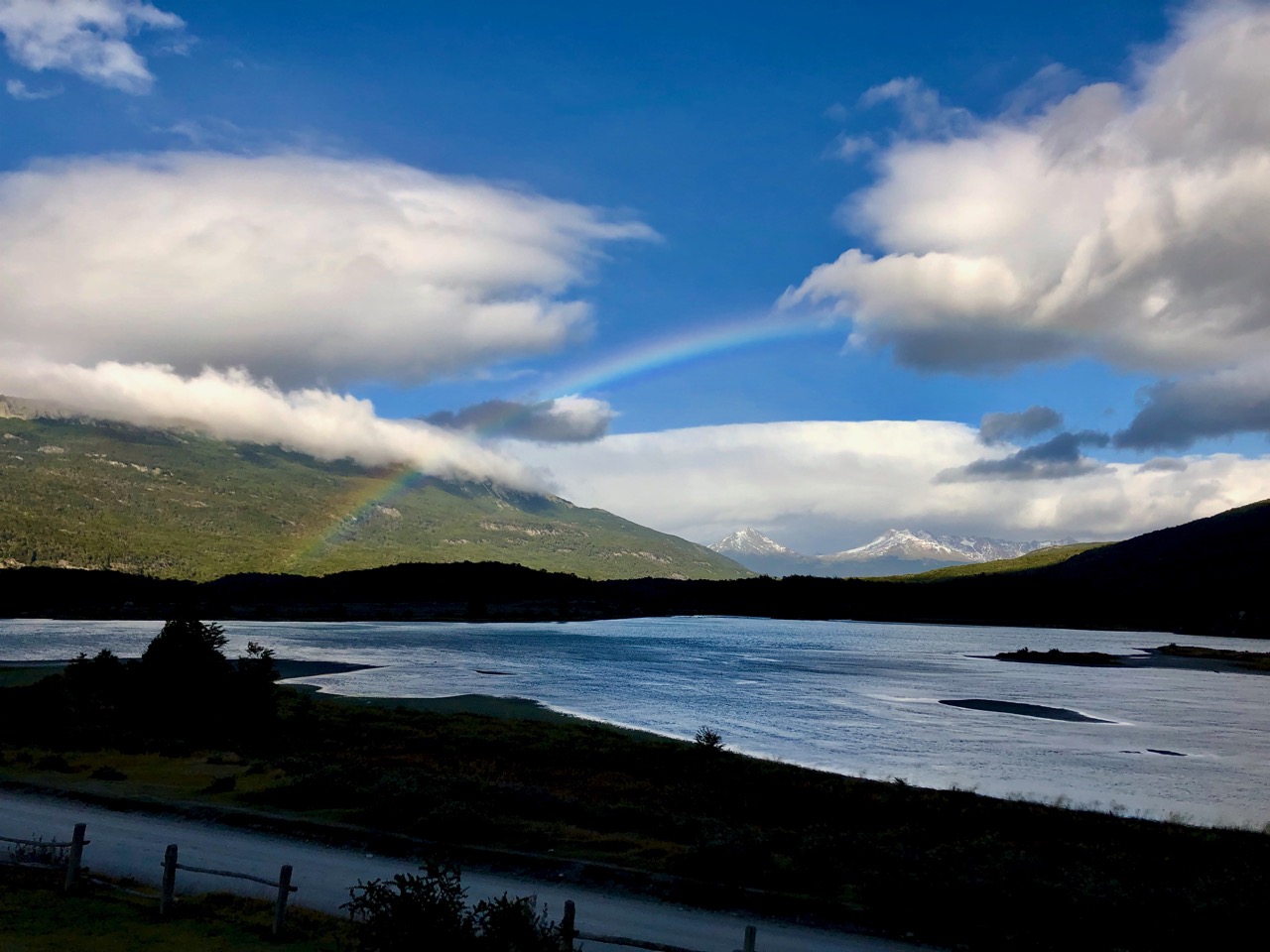
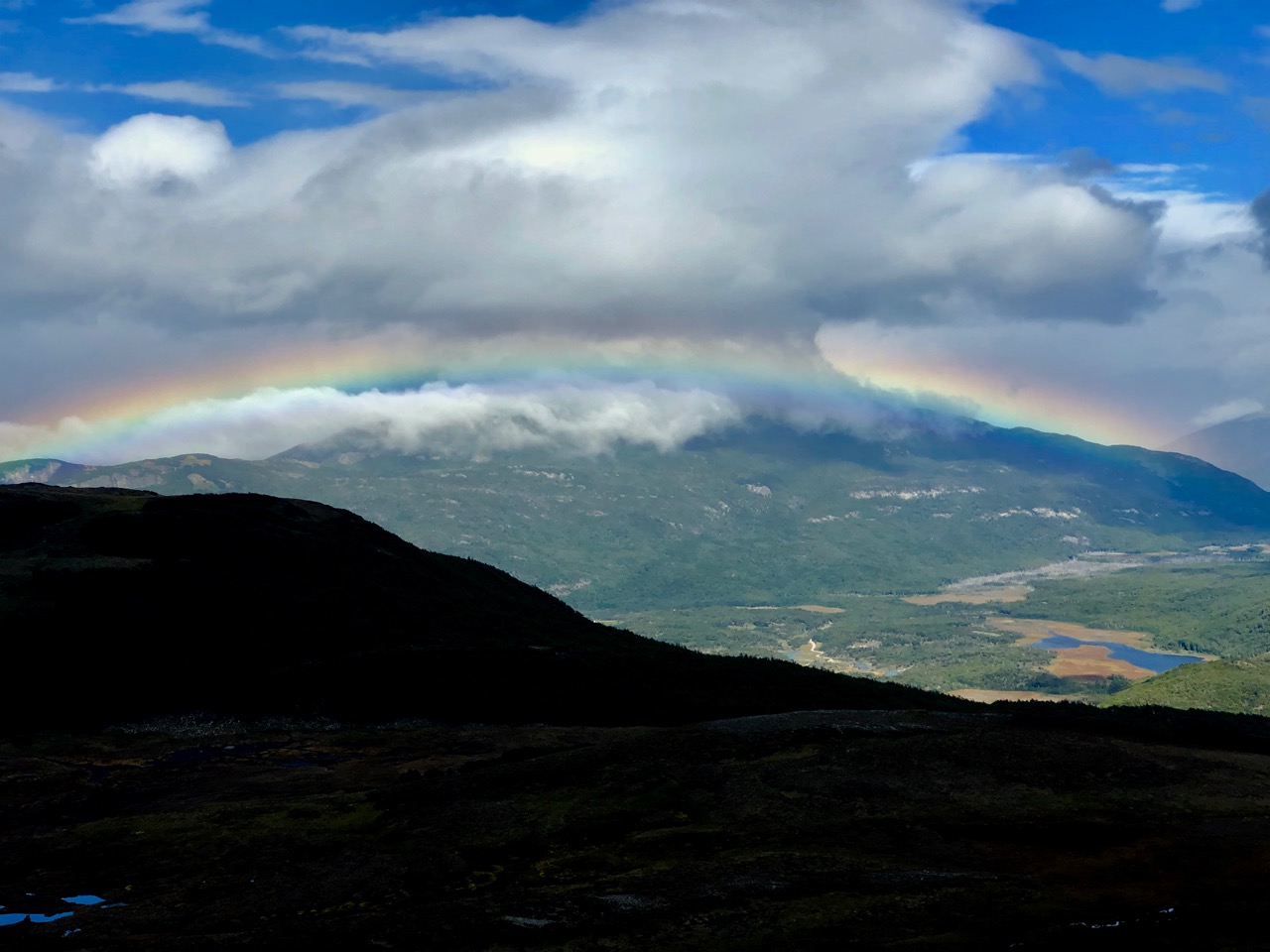
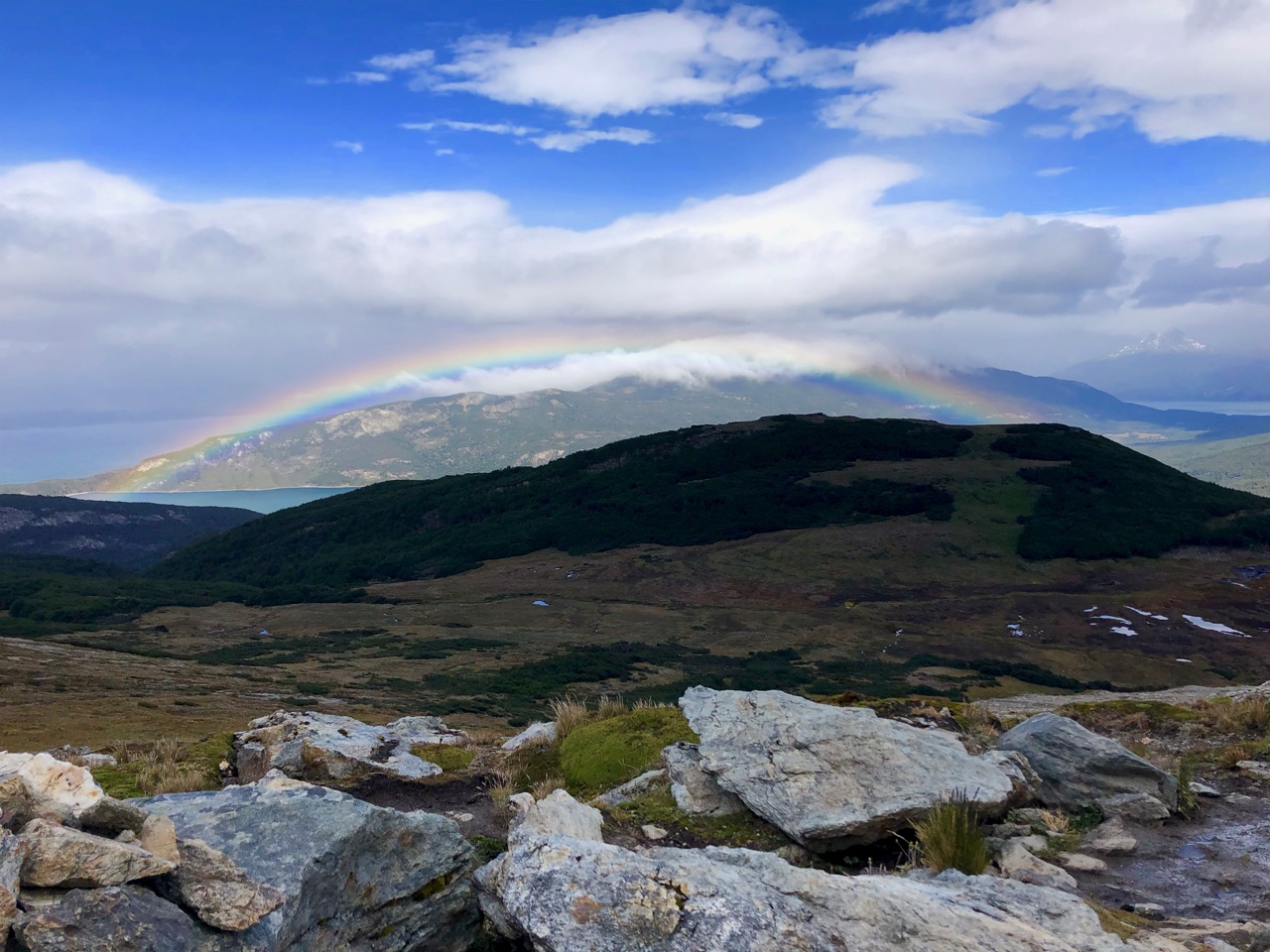
In Patagonia it’s very common to have persistent rainbows. It rains a lot.
Capturing them in a photo is not easy.
There’s Ushuaia in the distance.
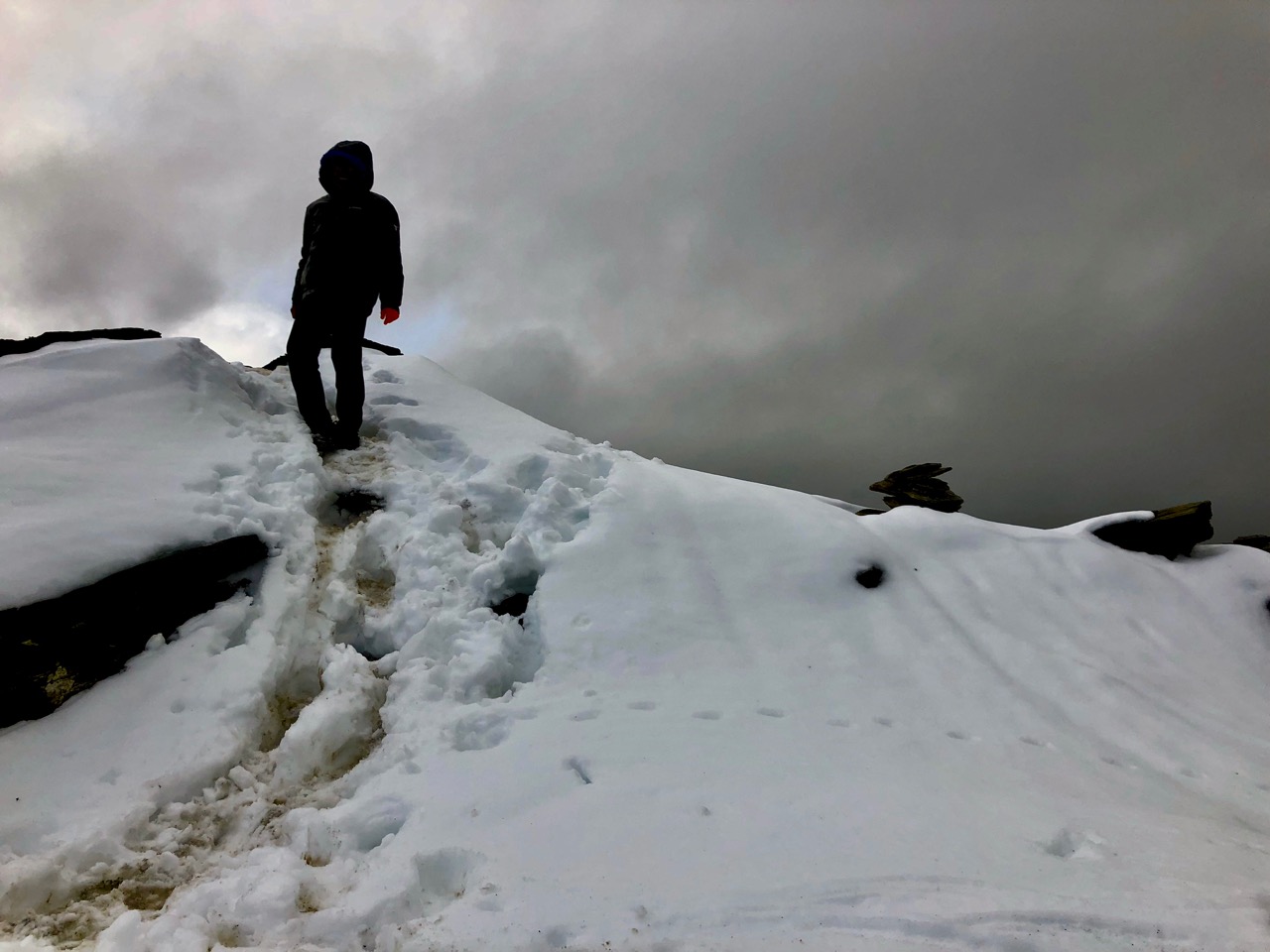
At the very top end of February I scrambled the snowy summit for a dramatic finish.
Great hike. If you get to this park be sure to schedule time for the Guanaco climb.
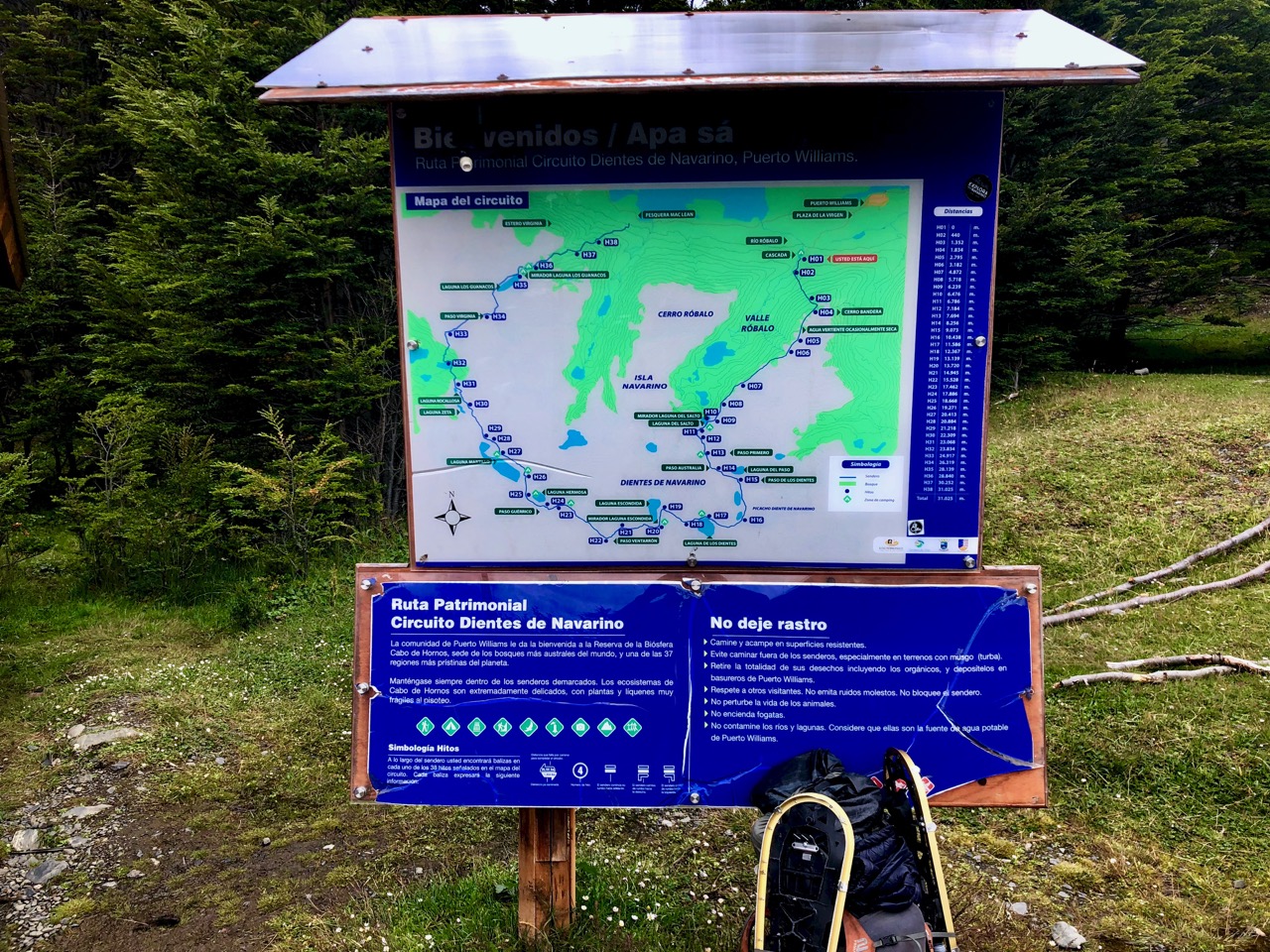
Dientes de Navarino (Teeth of the Navarino) is one of the best hikes in South America. The island of Navarino has the most southerly established trails in the world.
The jumping off point is Puerto Williams.
Most do the 50km over 4 days.
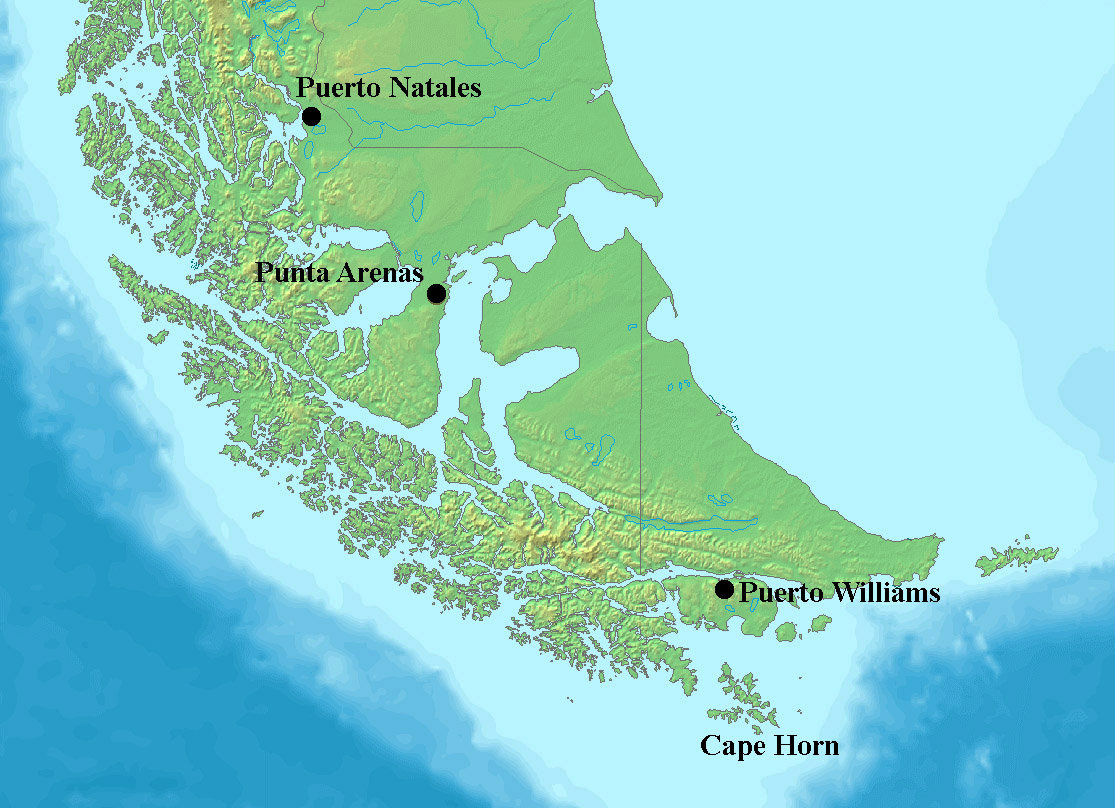
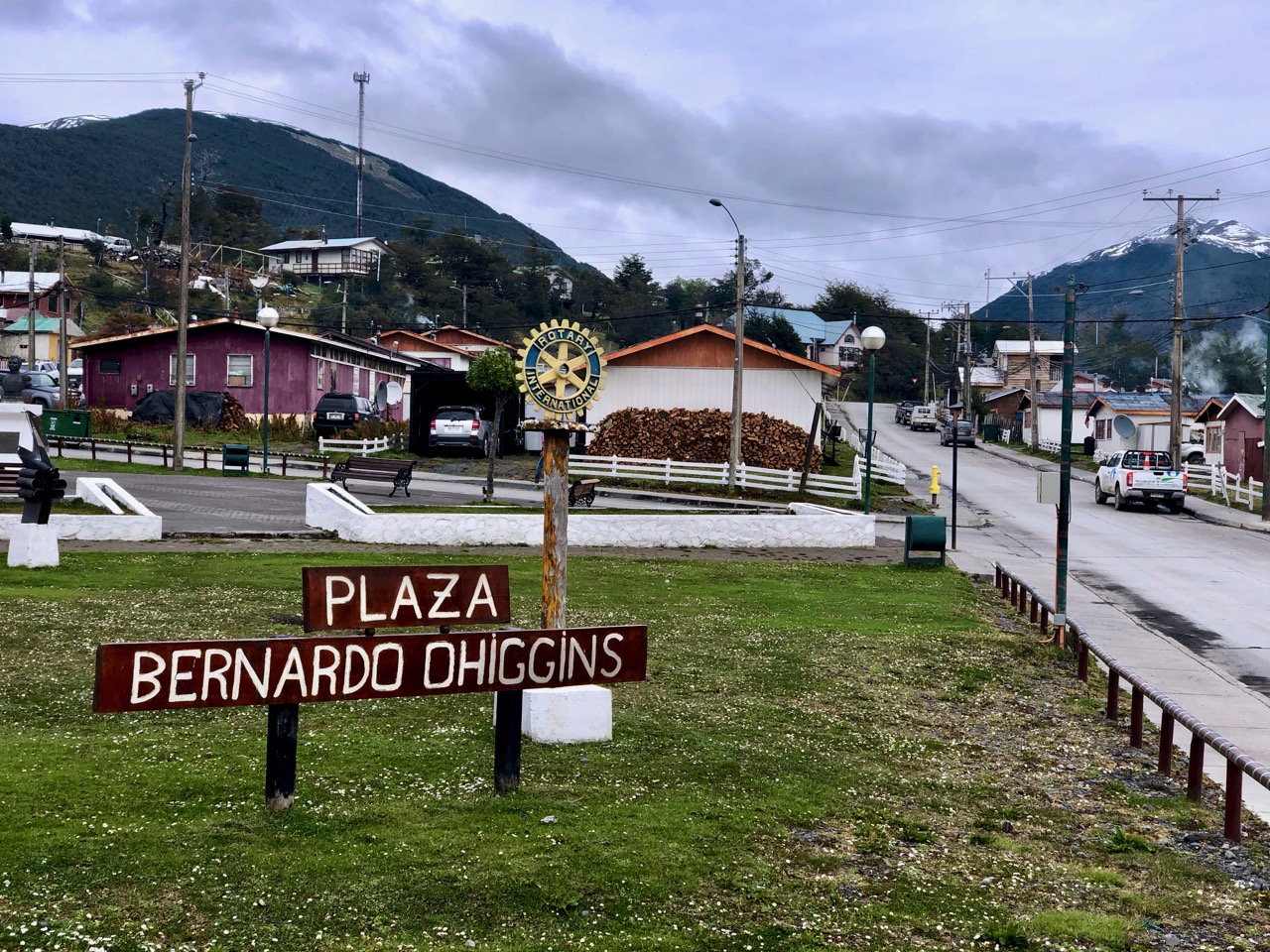
FIRST you need get to the end of the world. That’s Puerto Williams (pop. 2000) on the island of Navarino.
There are three ways:
– flight on small plane from Punta Arenas ($150 one way 2019)
– fast boat from Ushuaia (45min) and shuttle van (45min) about $100 one way 2019
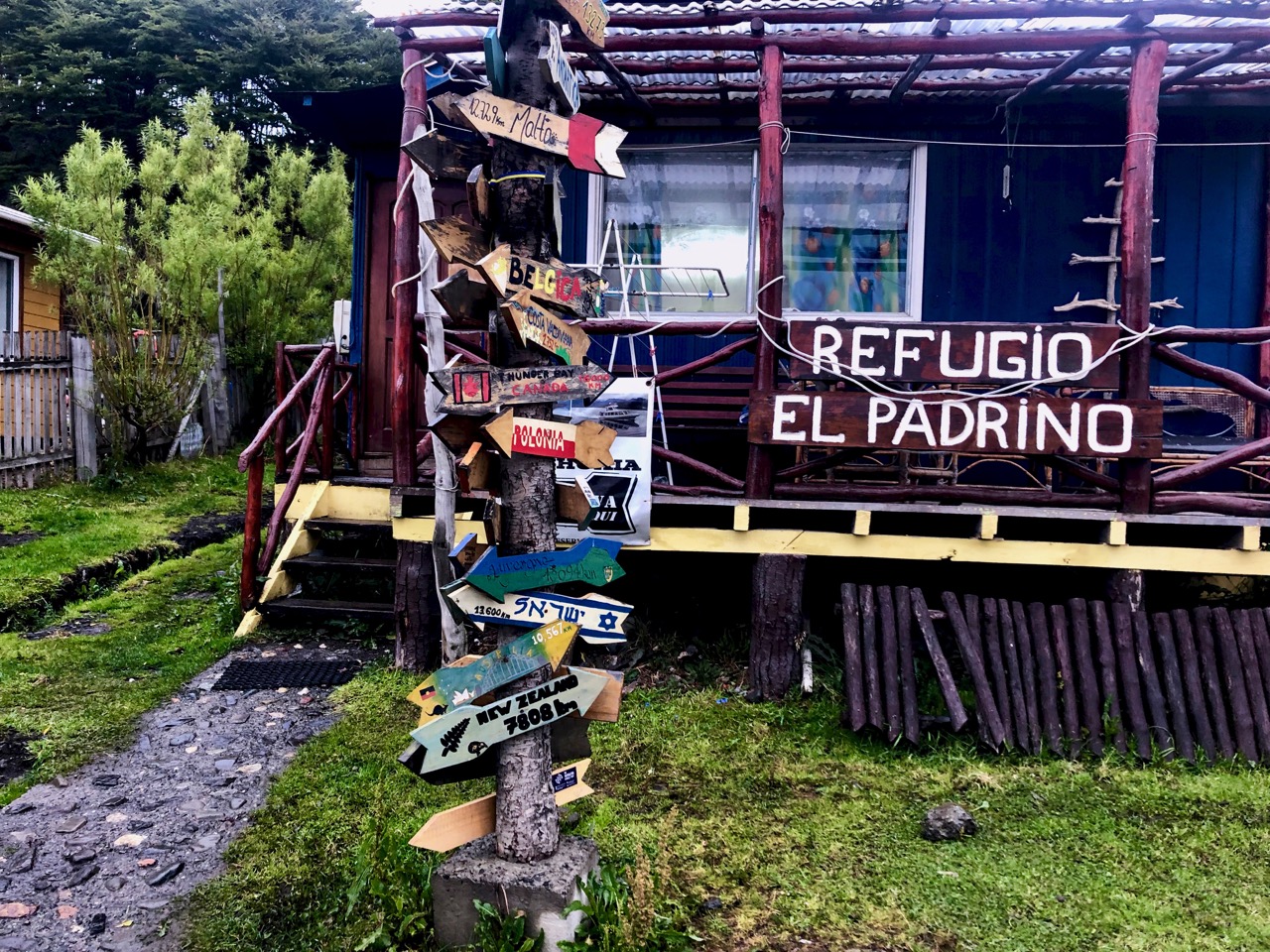
I stayed at the friendly and relaxed El Padrino hostel. Most people there are either coming from or going to a hike. It’s a great place to get maps and up-to-date information.
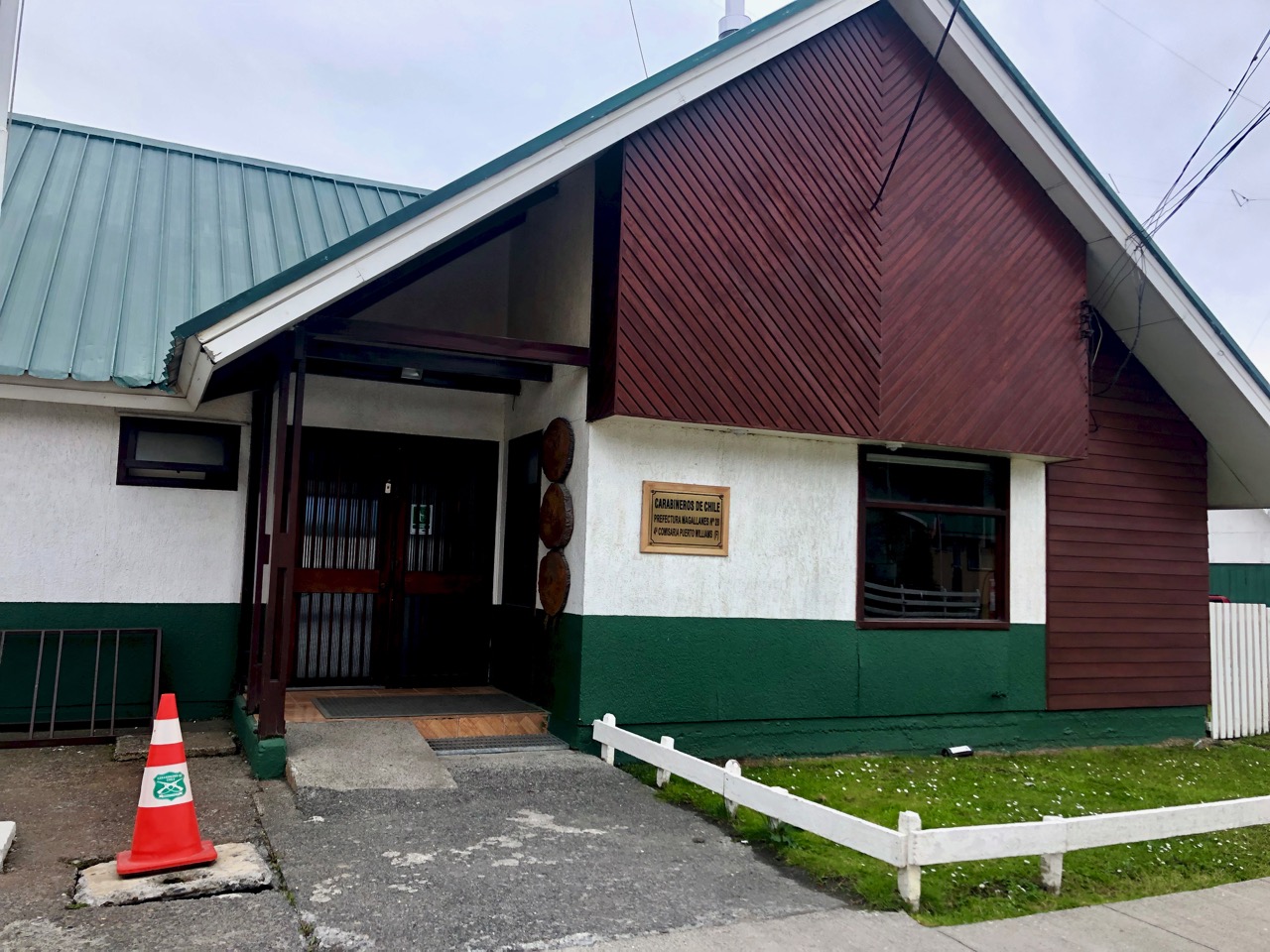
For overnight hiking you are asked to register (free) at the police station. I found it fast and efficient.
The day of my departure some left the hostel at 8am. As is often the case, I was last to get on the trail. I left town at 1pm. It was only 4-6 hours to the first campsite.
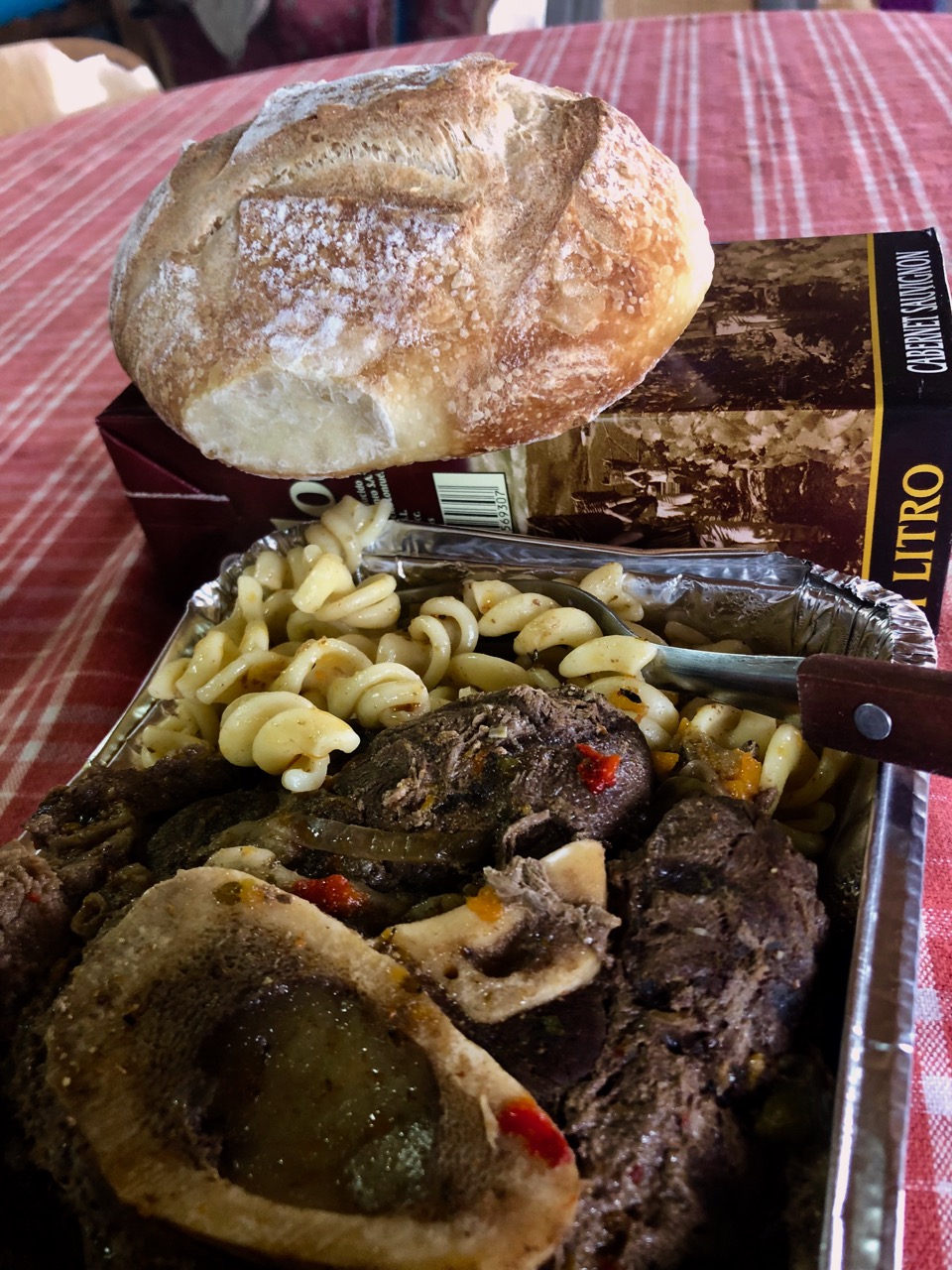
I had a hot un-dehydrated last meal for lunch. 🙂
The first big snowfall of the year was the previous week — the end of February.
Almost everyone that week had turned back after post-holing deep snow. Most trail markers were hidden.
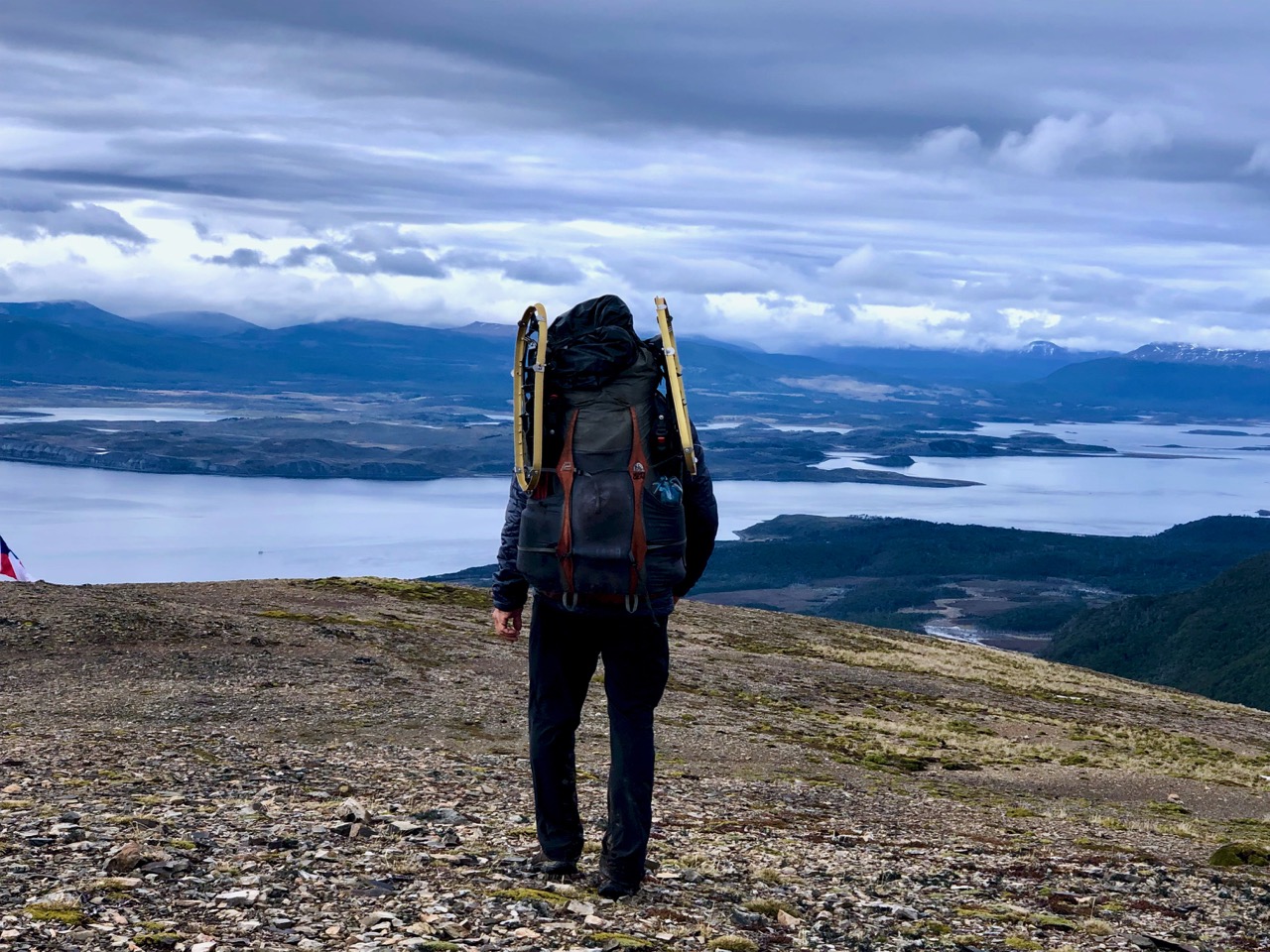
Weather was improving for my departure March 1st. But everyone had rented snowshoes over the past couple of days … just in case.
I’d decided NOT to rent snowshoes hoping enough people were gone ahead of me to put down a trail in the snow.
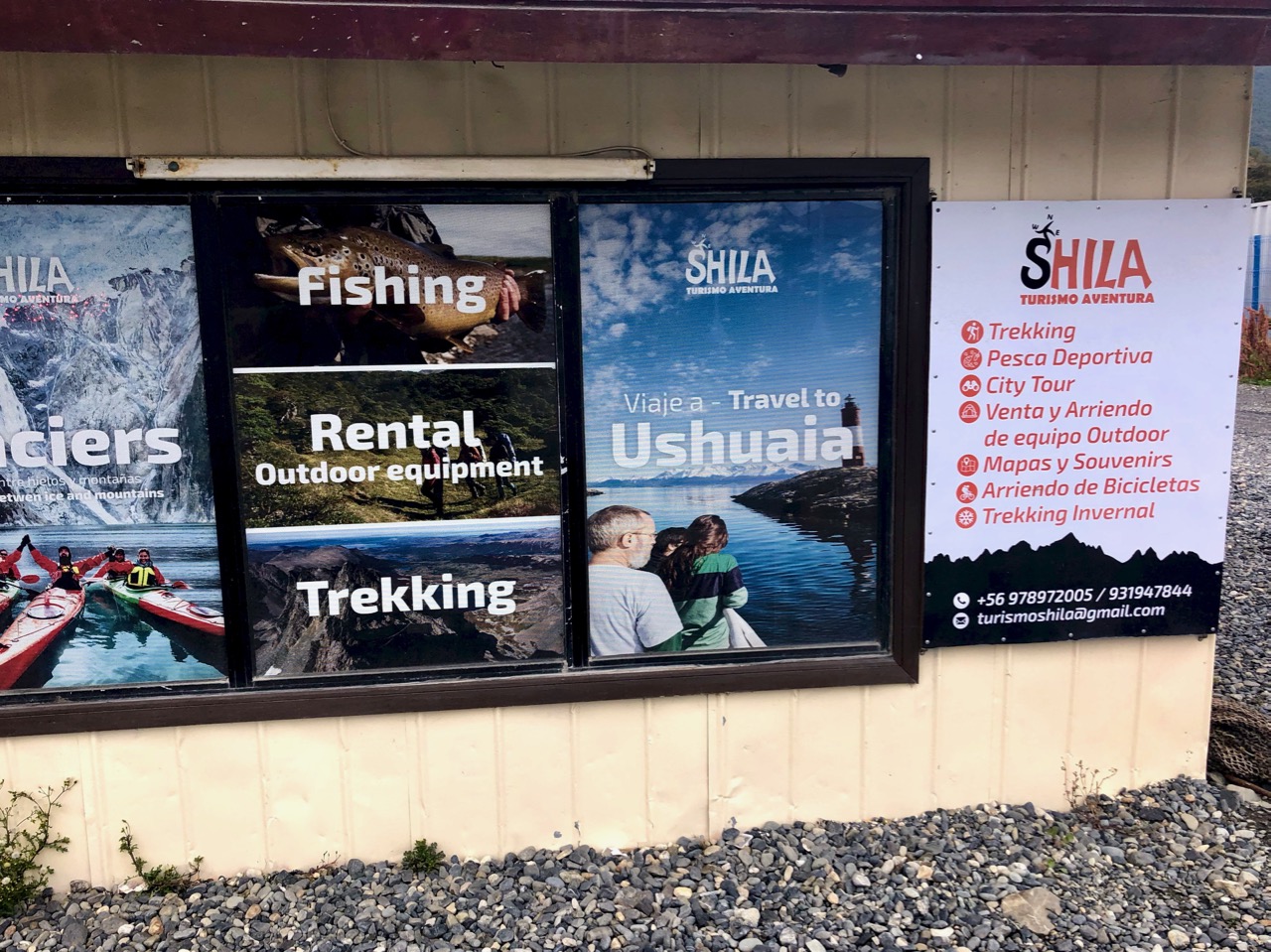
But Shila — the main gear store in town‚ happened to be open (for the first time) as I walked past on the way to the trailhead. I grabbed their last pair. ($3 / day)
Even if I didn’t use them, they would make me look more macho. 😀
It’s a couple of kilometres to the start. Most people walk from town.
Summer on Navarino island is lovely. I can’t imagine how it must be during the very long, dark, cold, wet winter months.
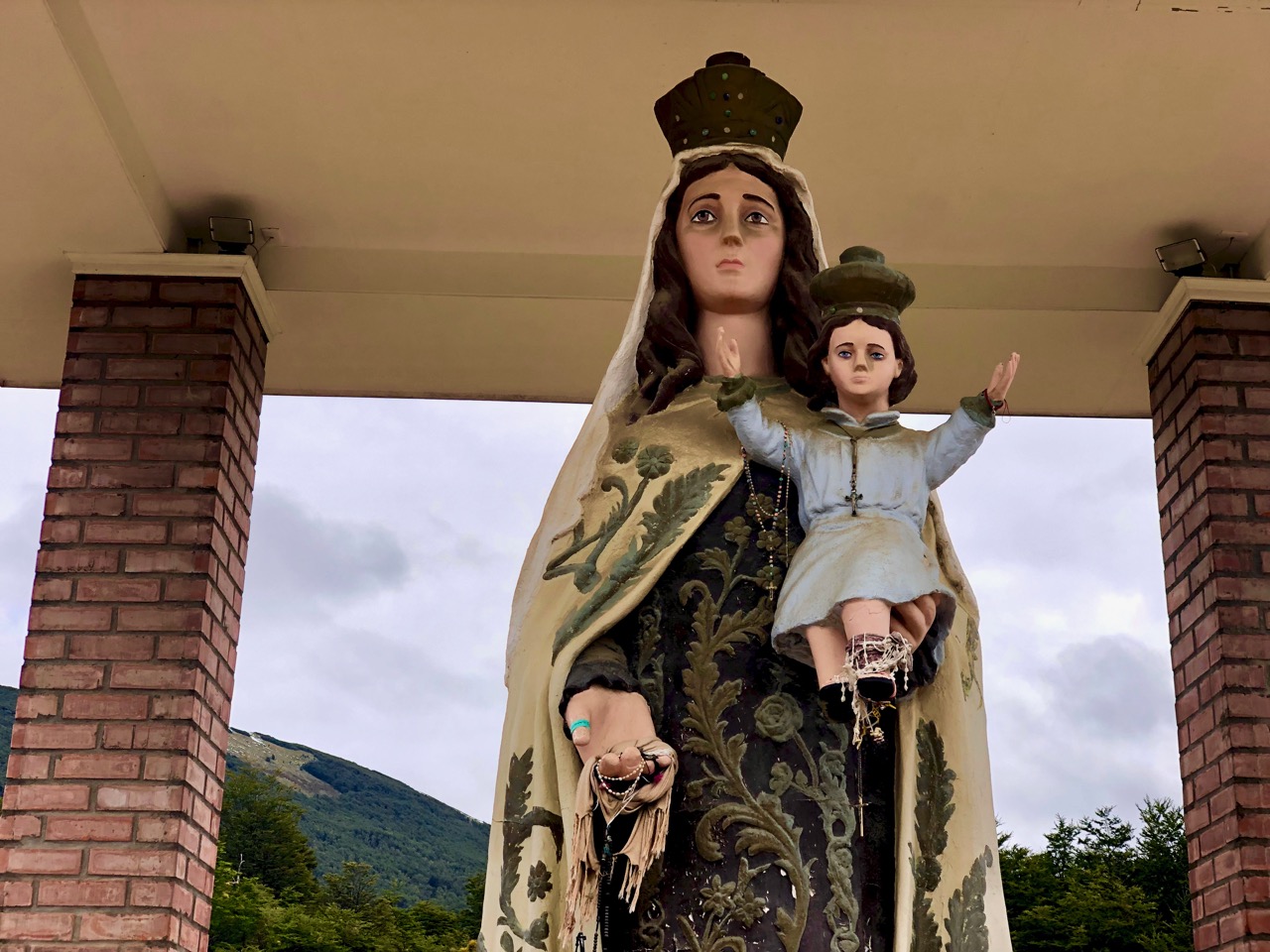
Everyone stops by to give their respects to the Virgin. It couldn’t hurt.
This trail is really well managed. RESPECT to whomever got this organized.
Trailhead
Actually, it was Lonely Planet’s Clem Lindenmayer who popularized it in his 1992 Lonely Planet guidebook Trekking the Patagonian Andes.
Clem died age-47 while hiking in China’s Sichuan Province, I’m sad to recall. I loved his book. It was part of the inspiration that had me start this site.
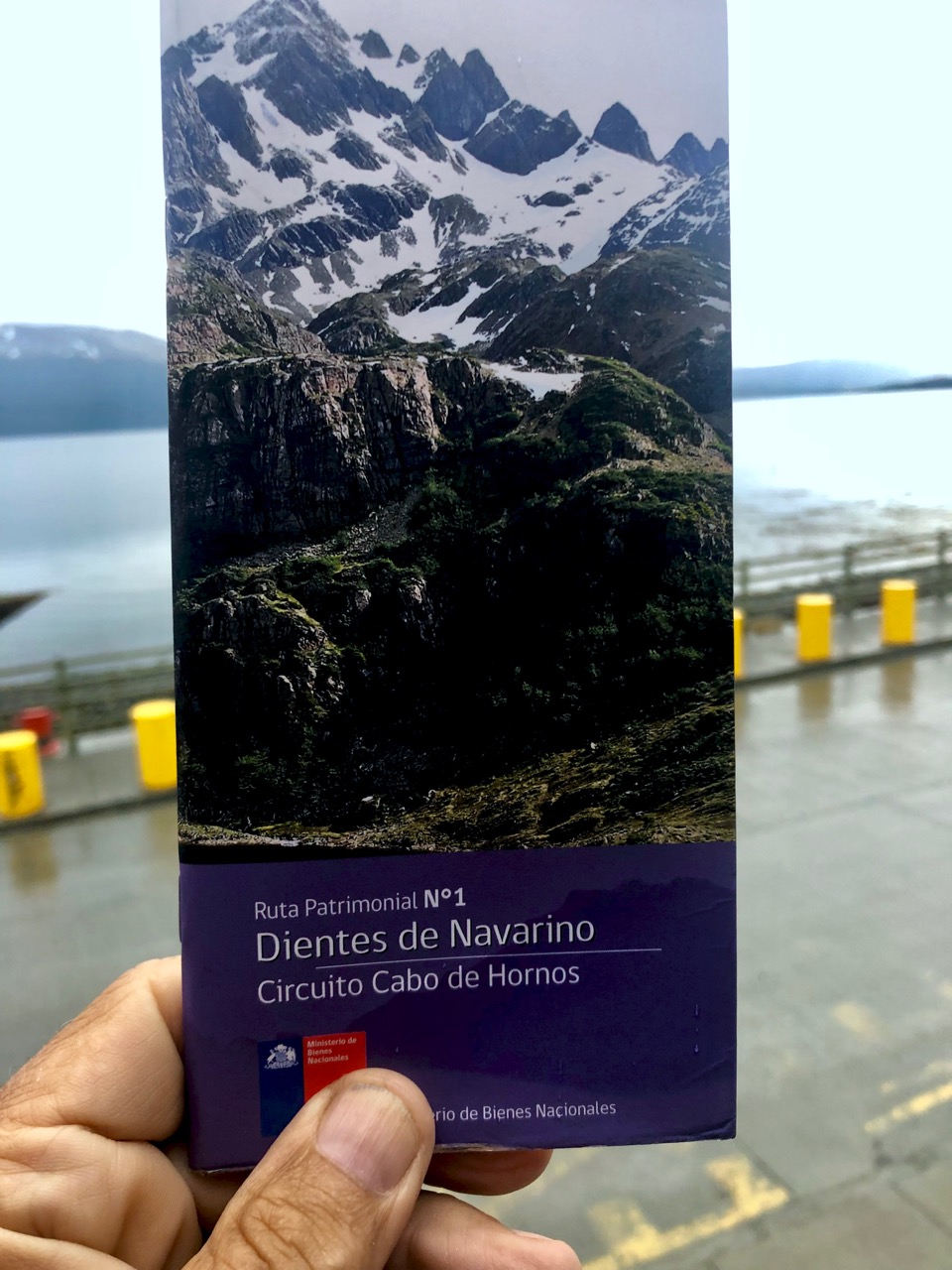
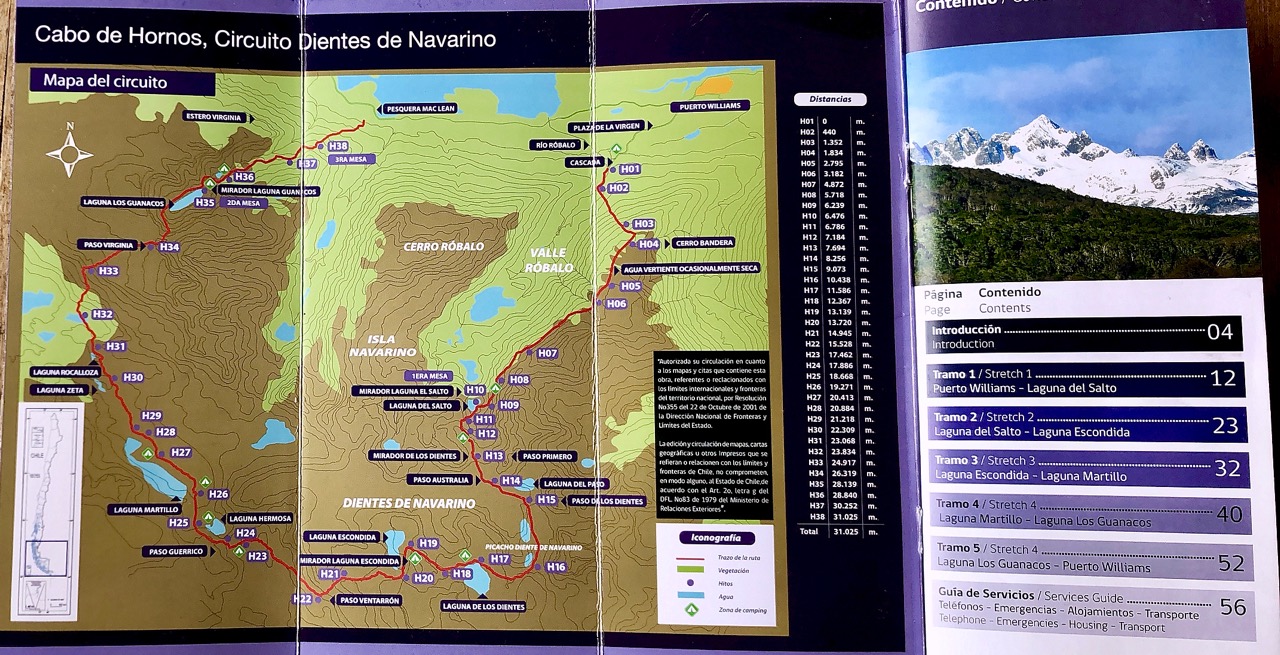
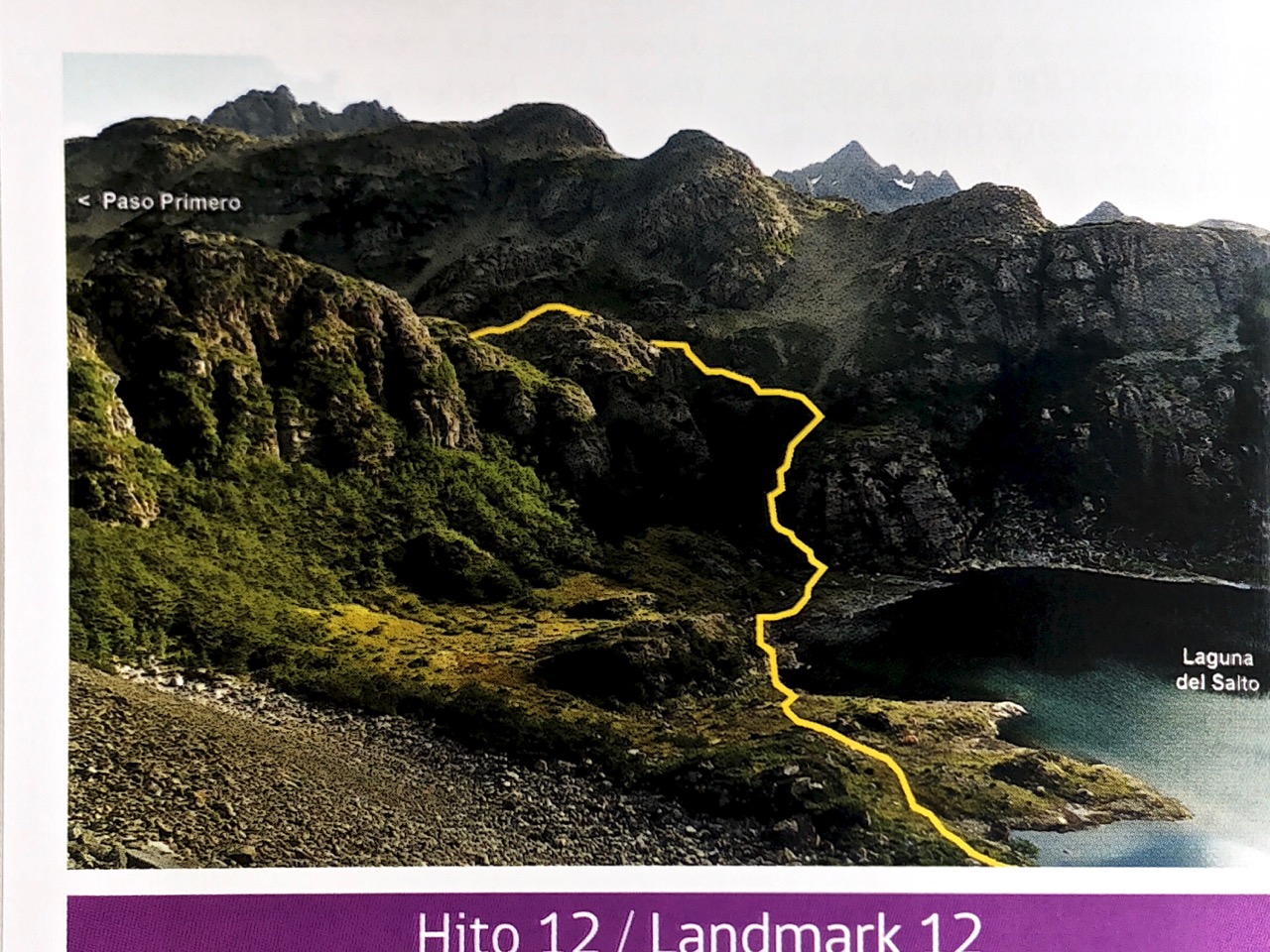
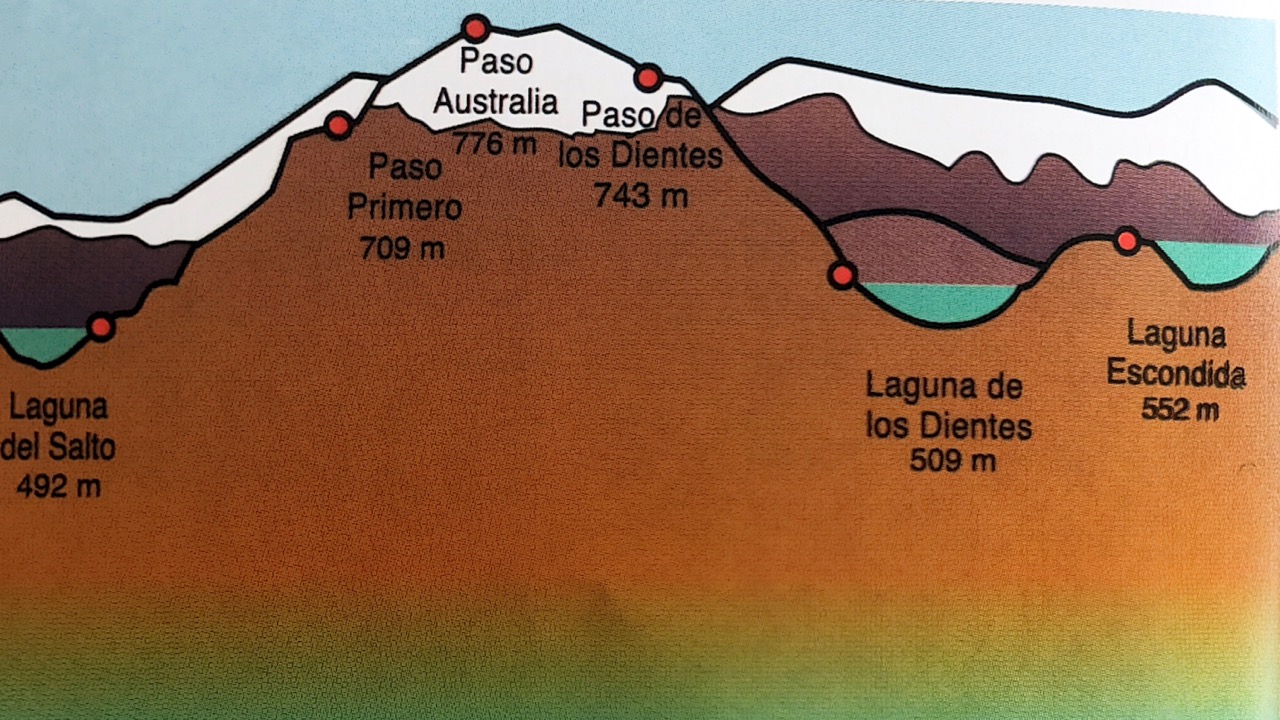
The BEST thing about the Dientes Circuit is this free pamphlet. I can’t recall a better one hiking brochure anywhere else in the world.
In Spanish with English translation, it’s crystal clear. All you need for navigation.
The start is up, up, up through the trees.
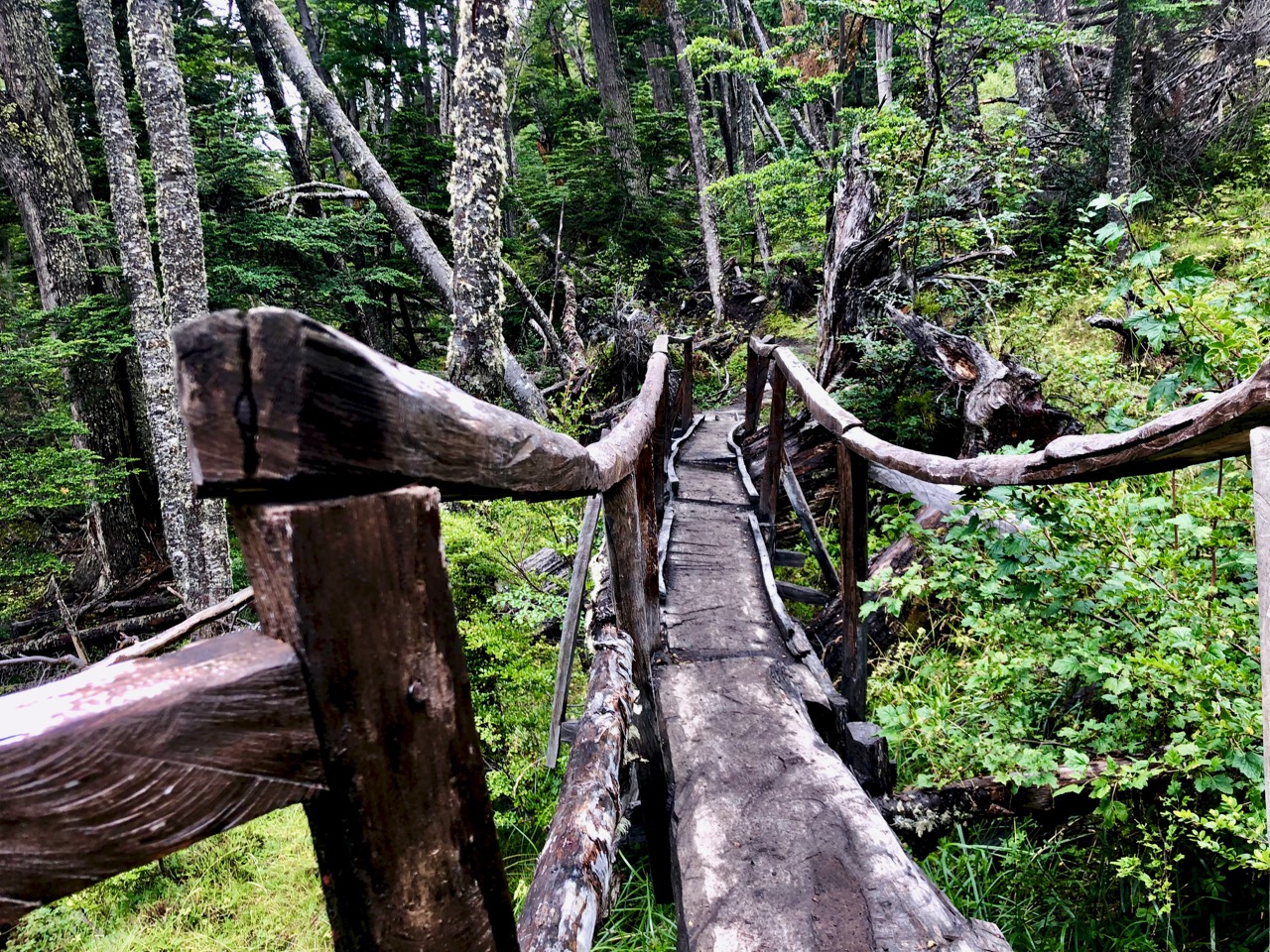
Quite a bit of trail maintenance has been done in this section.
I used Maps.me as a back-up to the pamphlet description.
The start is the most popular dayhike out of Puerto Williams. Up to some viewpoints.
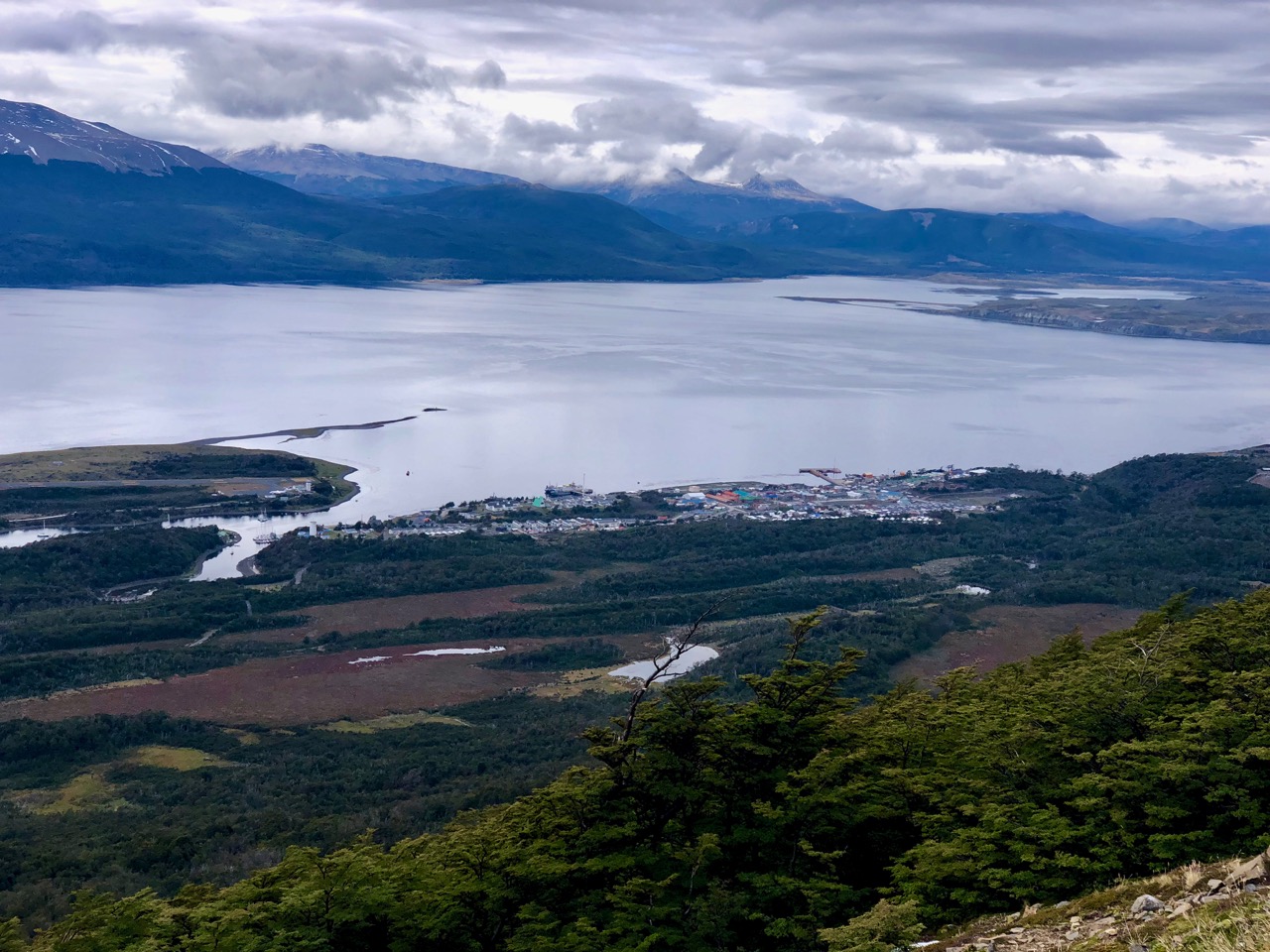
Puerto WilliamsBeagle channel
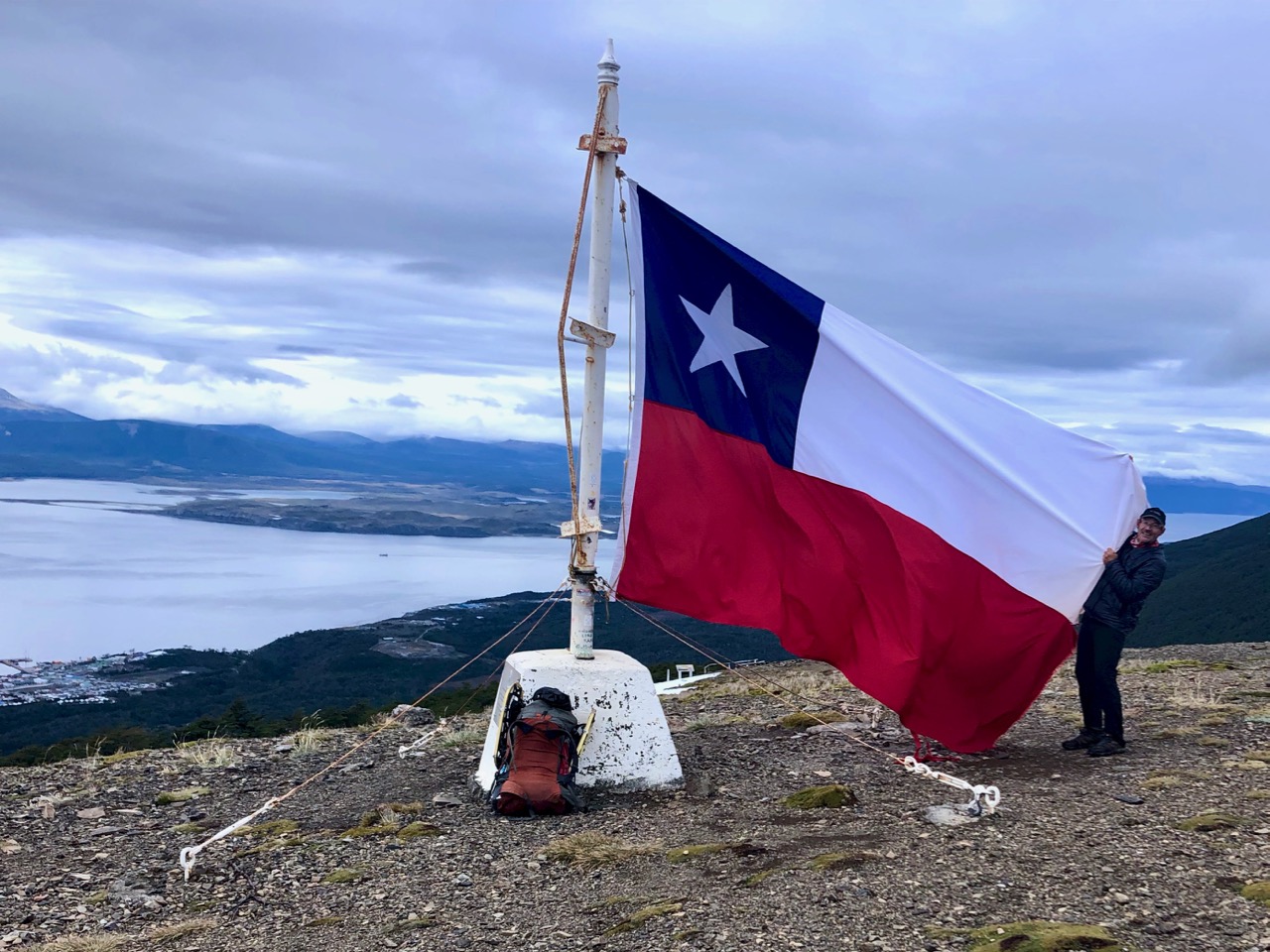
Most day hikers finish at the giant Chilean flag.
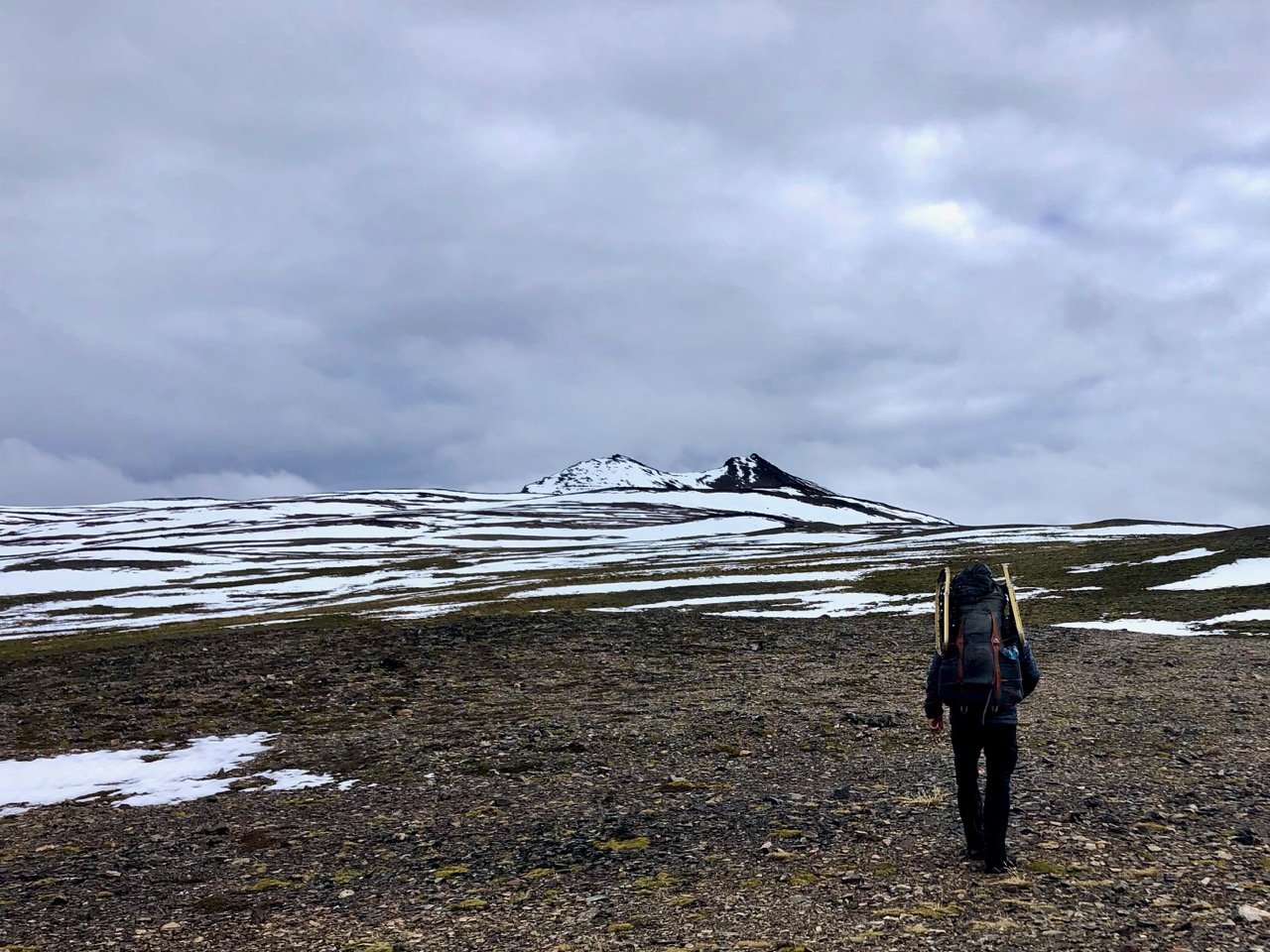
I continued up on the rocky plateau.
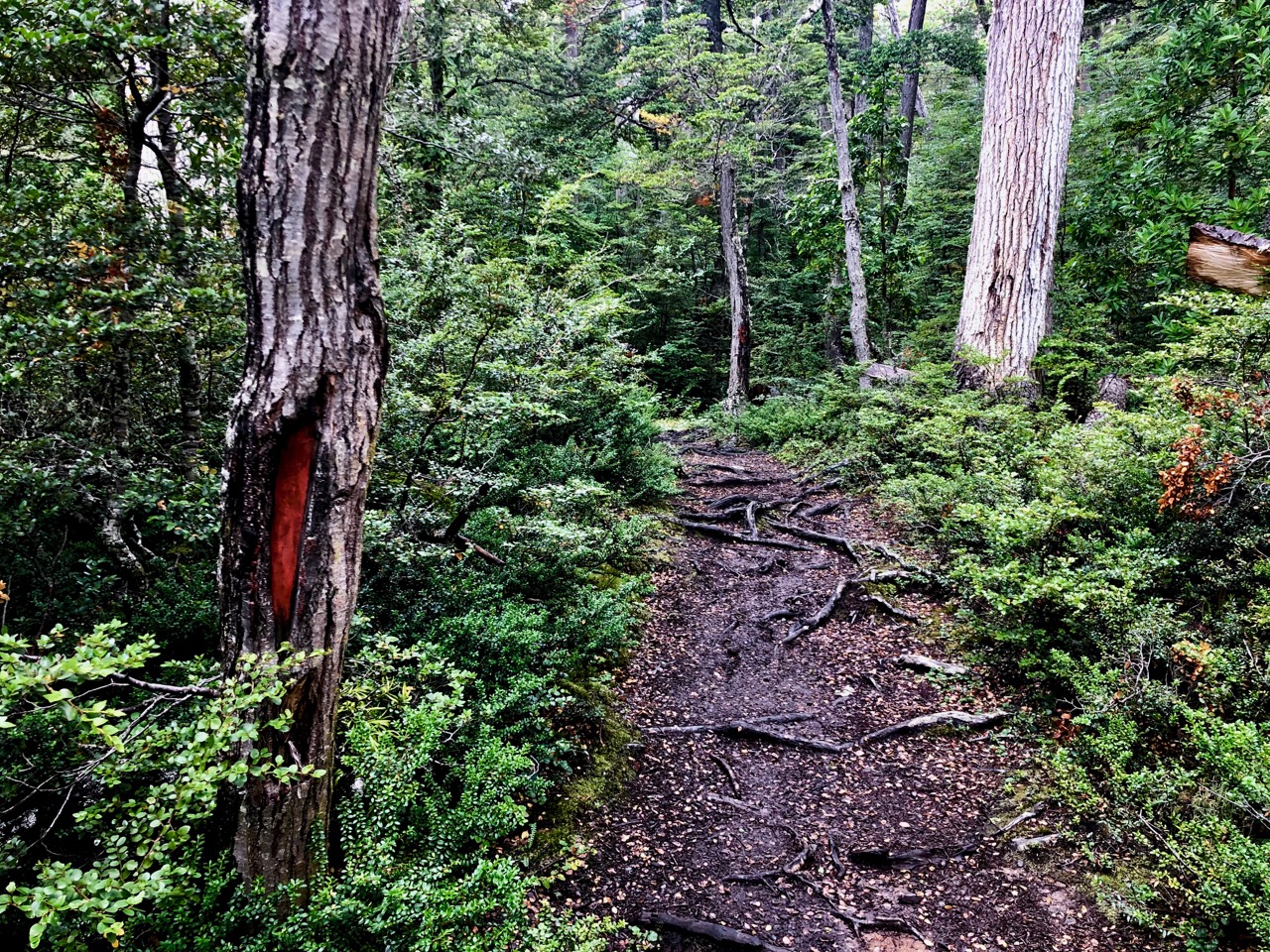
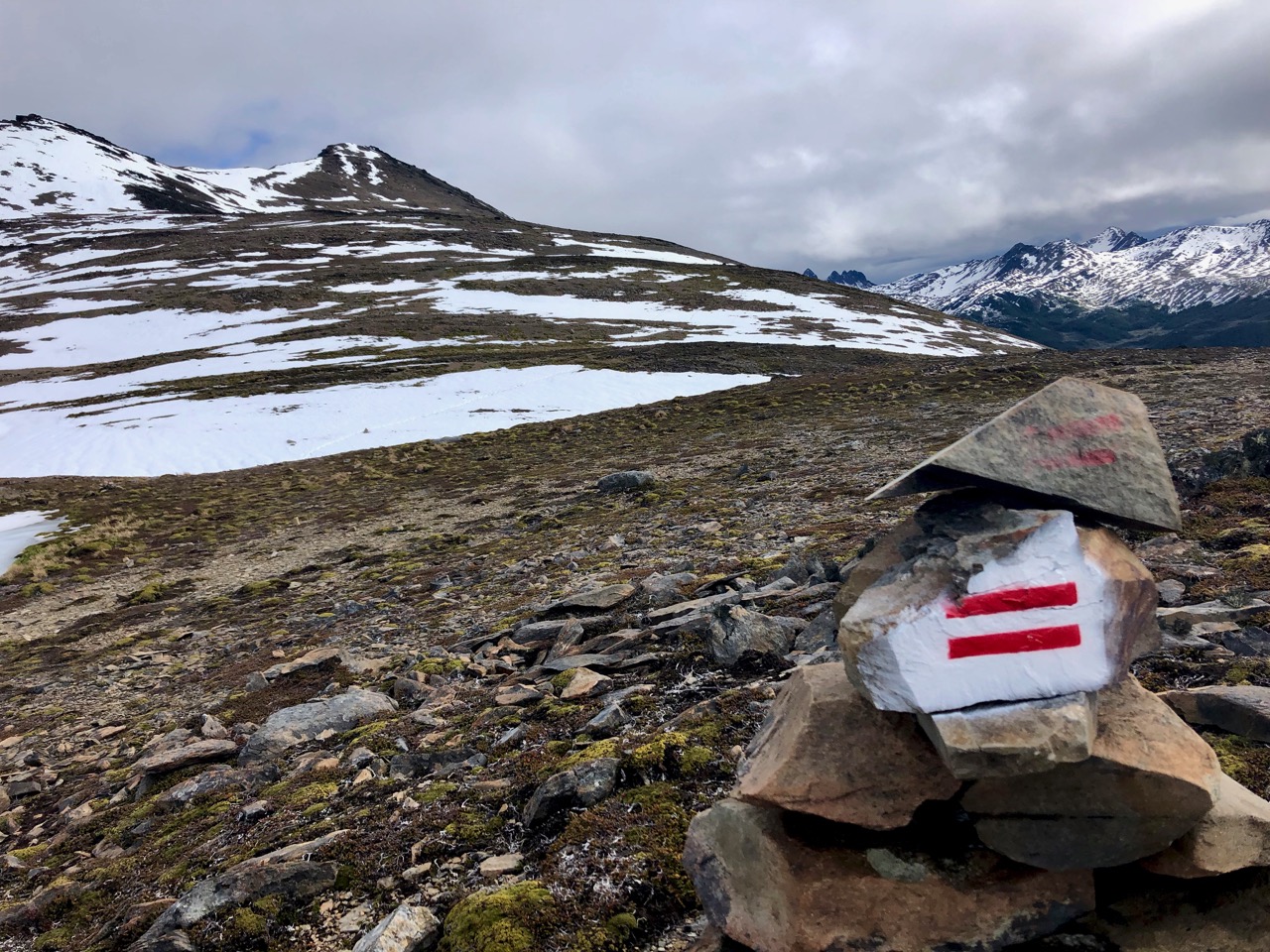
It’s fairly well marked here, as well, though you do have to keep your eyes peeled for cairns. In spots there are multiple trails to get to the same place.
The only real problem is punching through snow or ice and getting your feet wet.
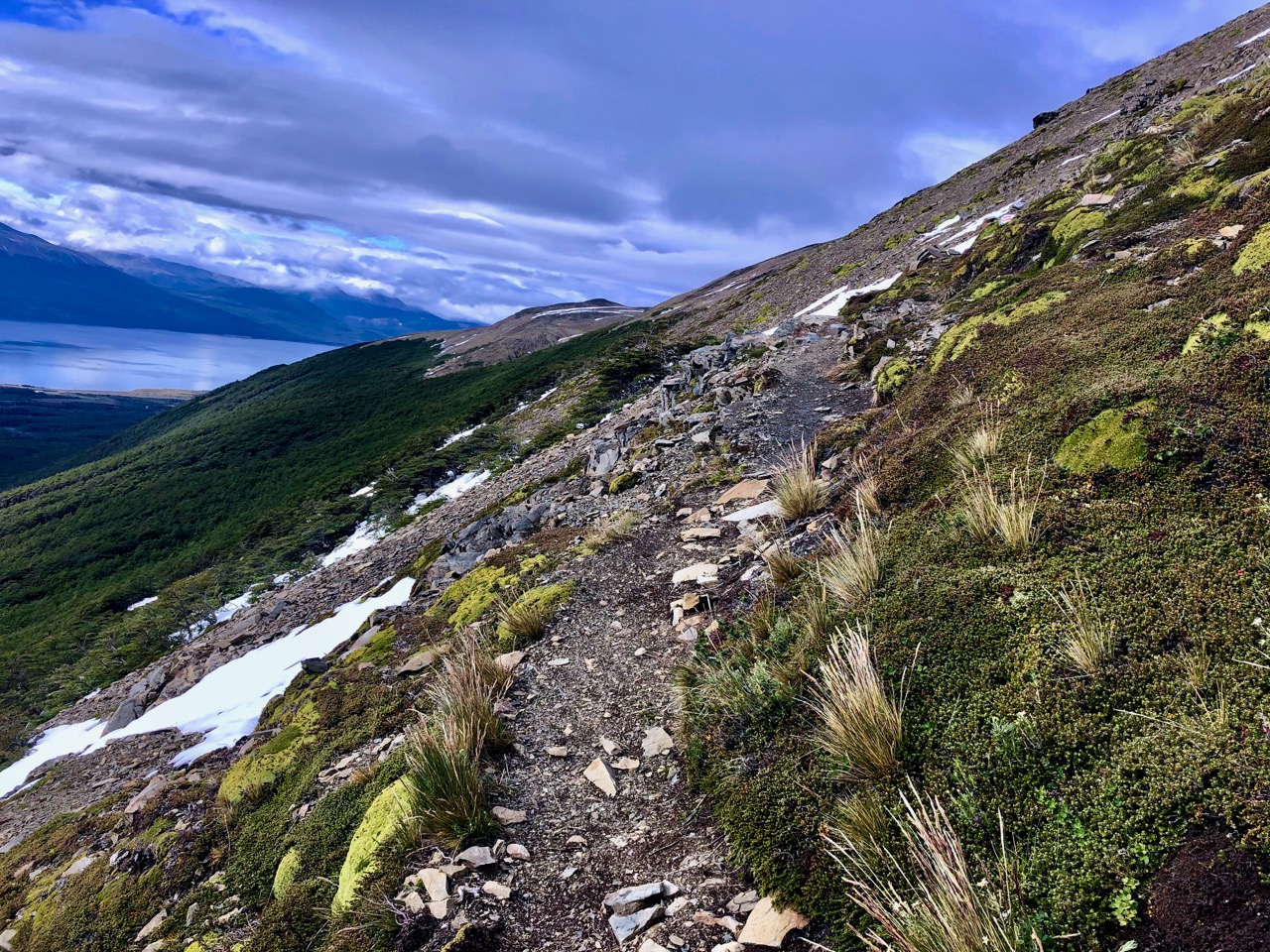
A difficult section is a long traverse along the side of a mountain.
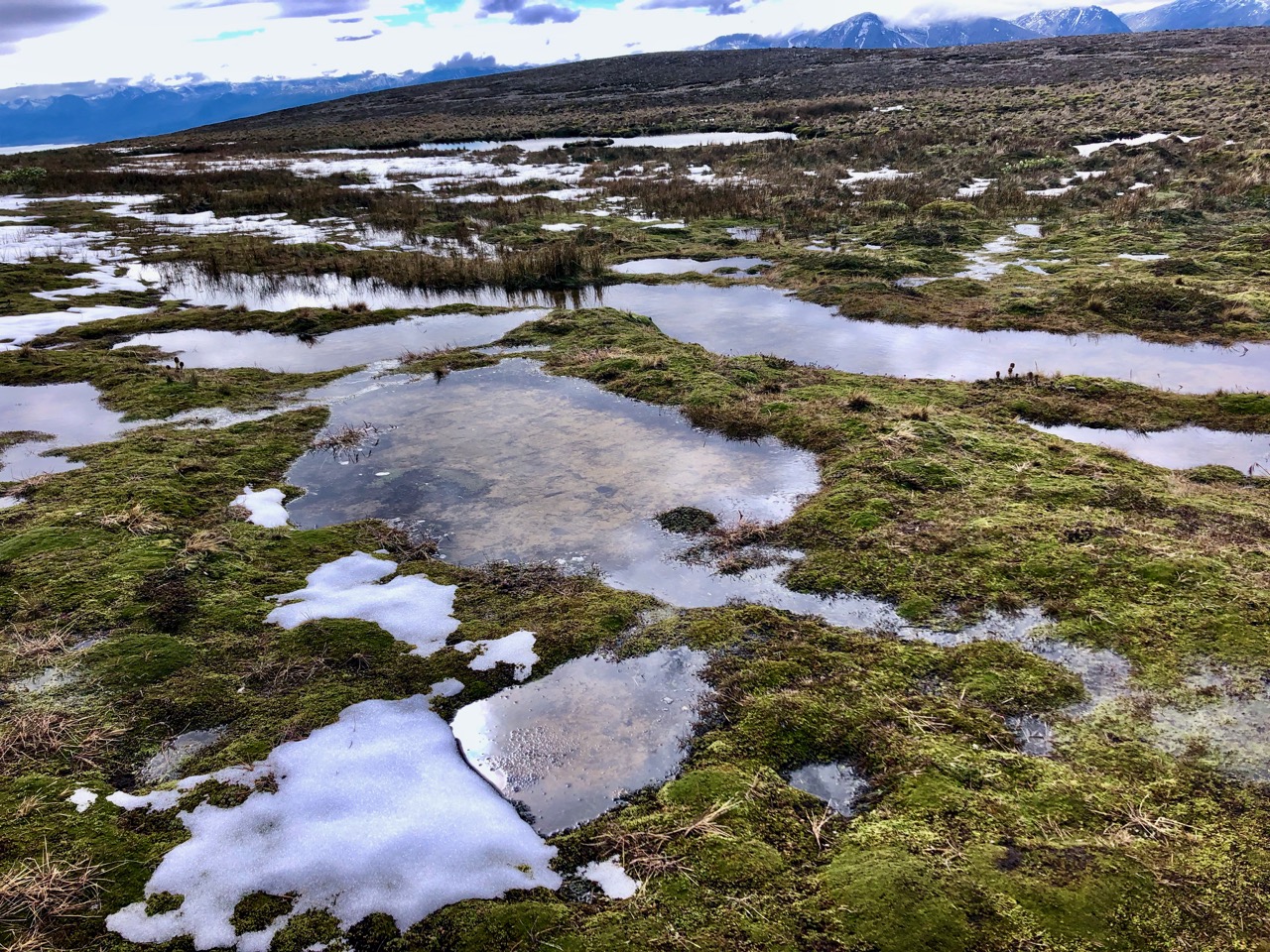
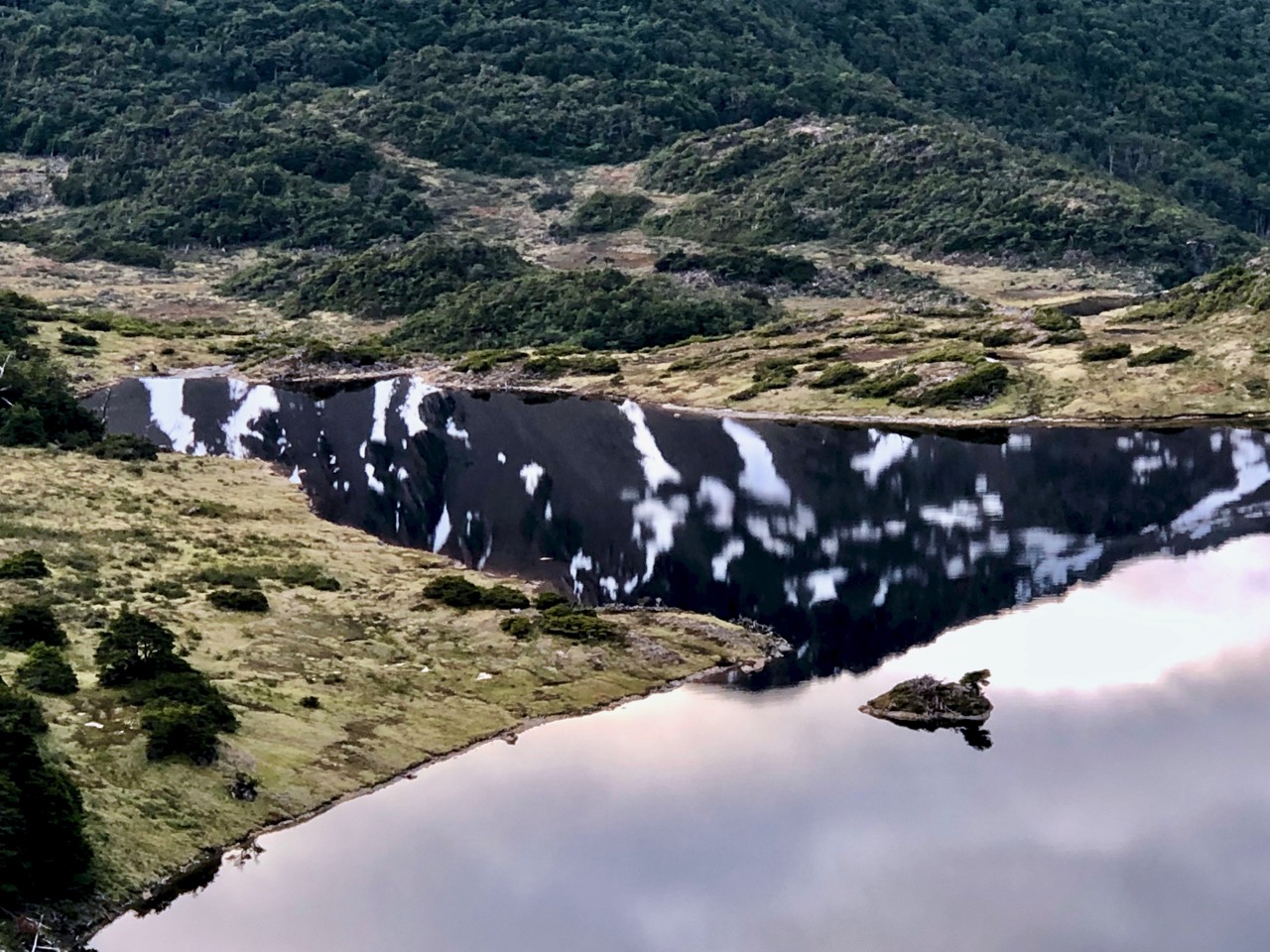
You pass a chain of pretty alpine lakes.
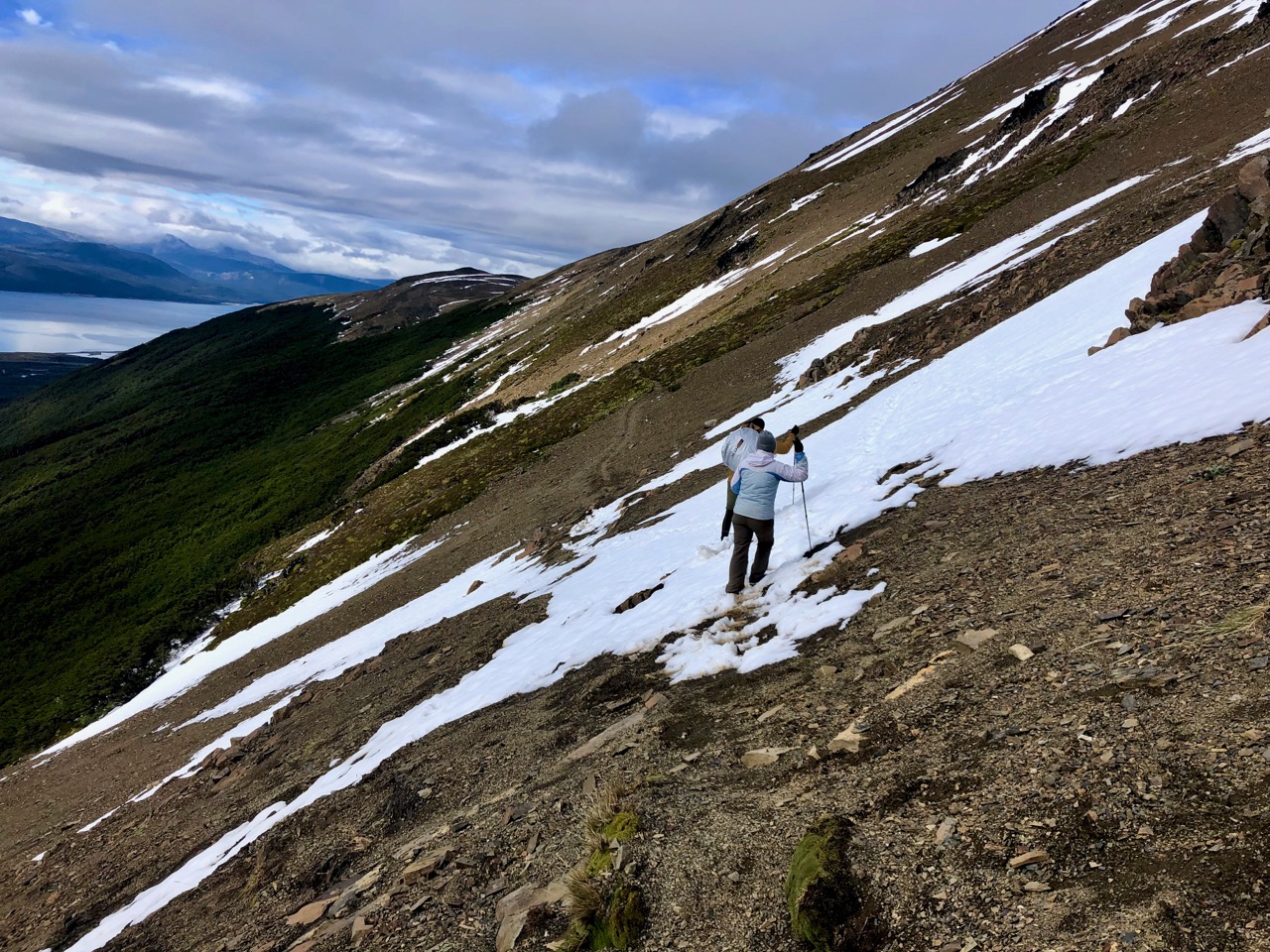
This is the kind of snow I faced on the first day. Easy — but with some exposure. If you slip it would be a long, painful fall.
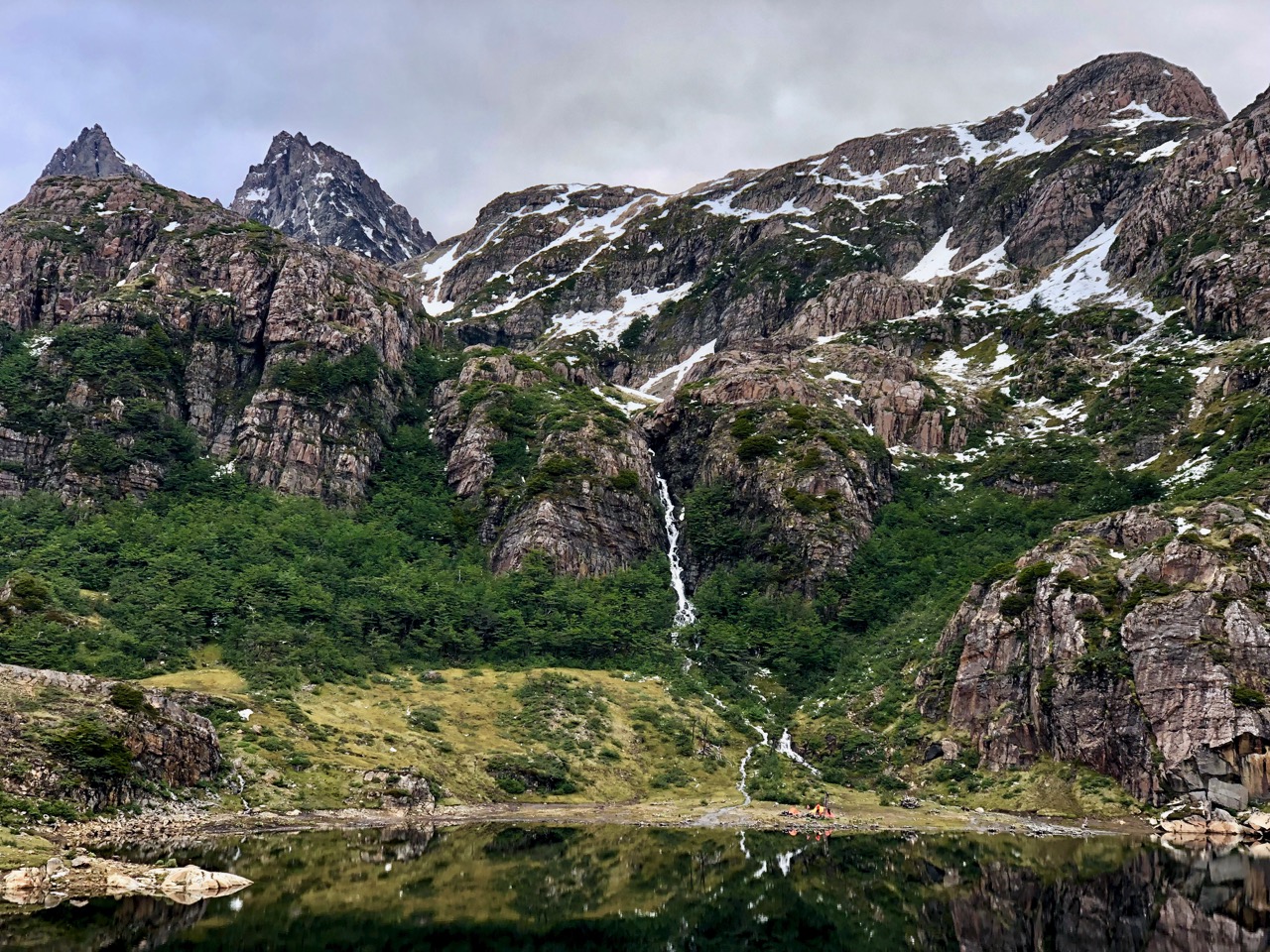
There’s my destination. Under the teeth of Navarino. It’s a steep scramble down.
Laguna del Salto
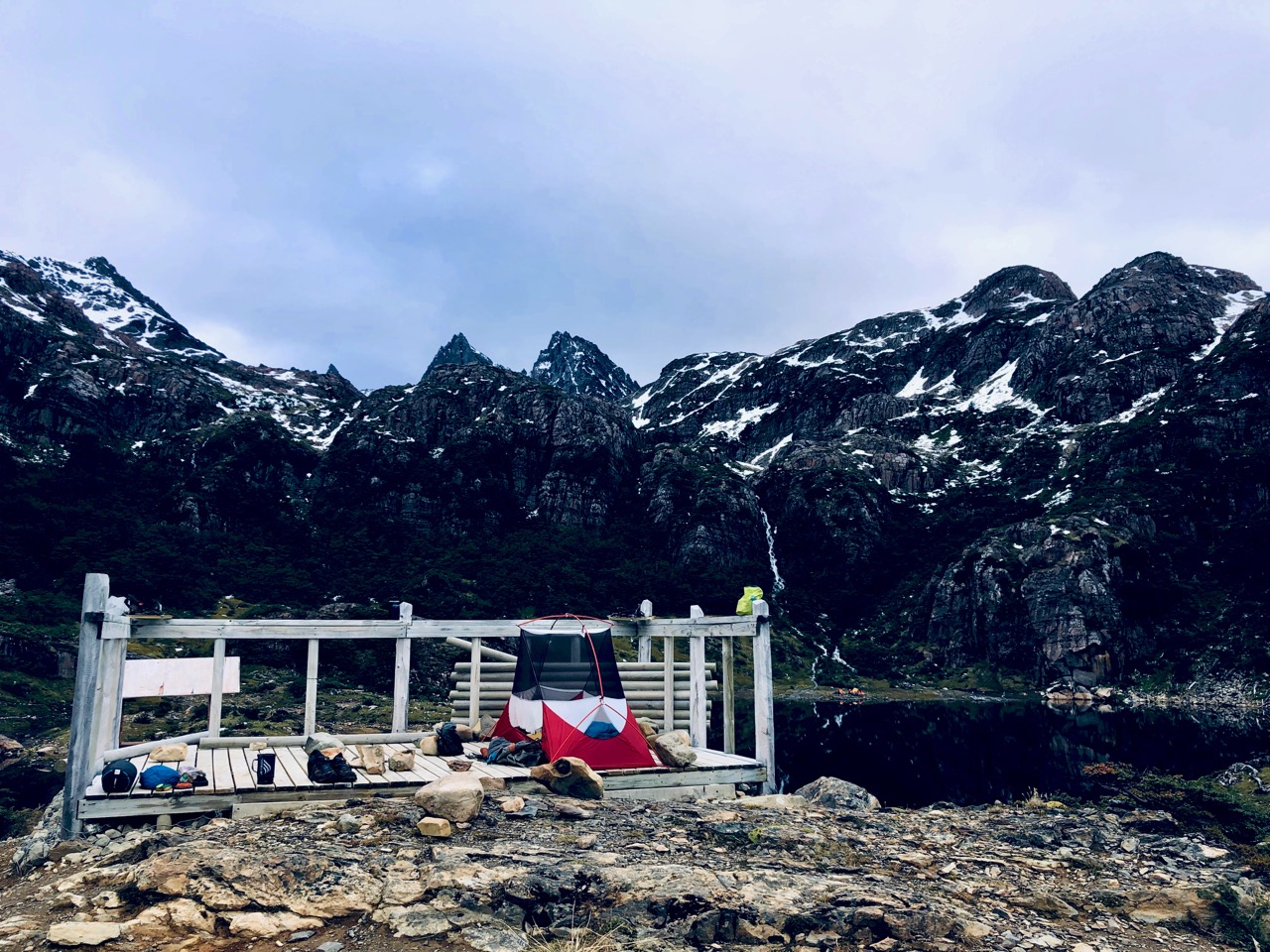
I set up late in the day on the observation platform. Serious hikers sometimes day hike here and back. That would take at least 8 hours.
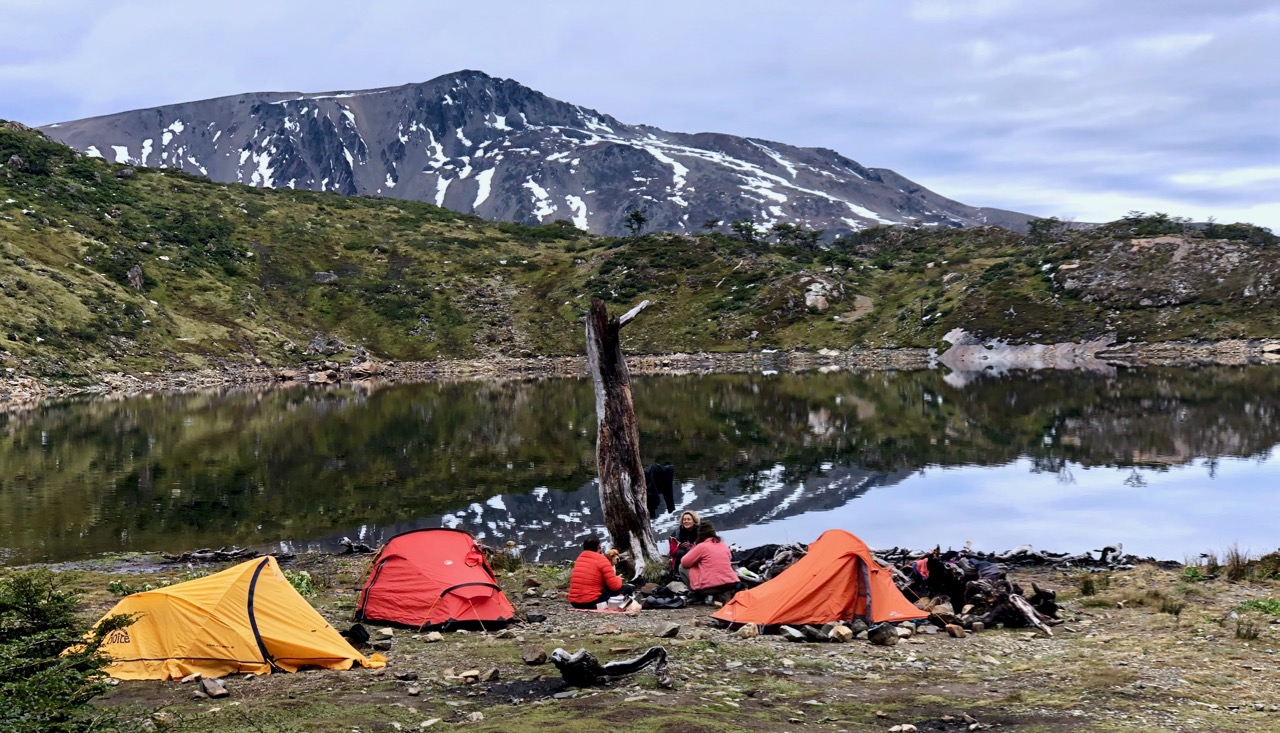
Most people tent over by the waterfall.
It was a gorgeous evening and night. I was optimistic for the weather next day.
Unfortunately clouds were getting denser when I awoke.
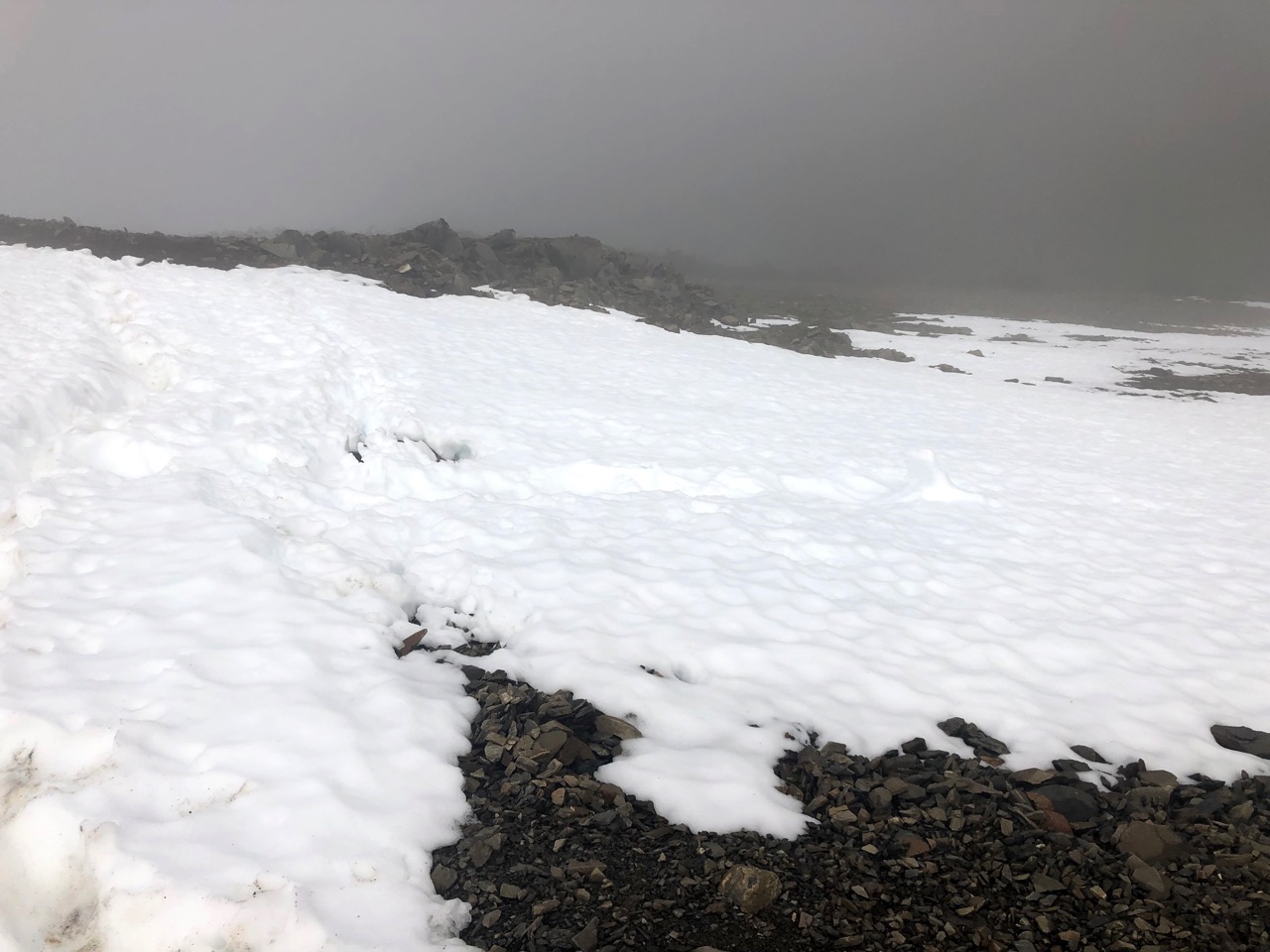
Here’s what I would face day 2 trying to get to Laguna Escondida. Lots of snow.
Potentially no vistas. Potentially a slog in the fog.
I also awoke with a bad stomach ache.
What to do? I had mixed feelings.
In the end I decided to hustle back to Puerto Williams and catch the 4pm ferry. It only runs twice a week in summer.
Back in town it looked to me like the highest peaks were clearing. My odds of getting through the circuit MIGHT have been 70% or more, I believe now.