Here’s the ideal link for anyone considering the CDT. It’s a monster challenge.
A Quick and Dirty CDT Guide

Best hikes, treks, tramps in the world.
Here’s the ideal link for anyone considering the CDT. It’s a monster challenge.
trip report by BestHike editor Rick McCharles
Zoe Agasi and Olivier Van Herck from Netherlands spent 2 months in Ushuaia. For them the best local day hike (of many) was Laguna de los Tempanos and Glacier Vinciguerra.
That was good enough for me.
I walked from my hostel to the trailhead.

Like the north of North America, everyone here has big dogs. Most roam loose. This one probably needed to be chained up.

What I hadn’t realized that morning is that it was 7.3km to the start. I should have taken a taxi.

From there it’s only a steep 5.6km up to Laguna de los Tempanos below the glacier. The sign says 6km.
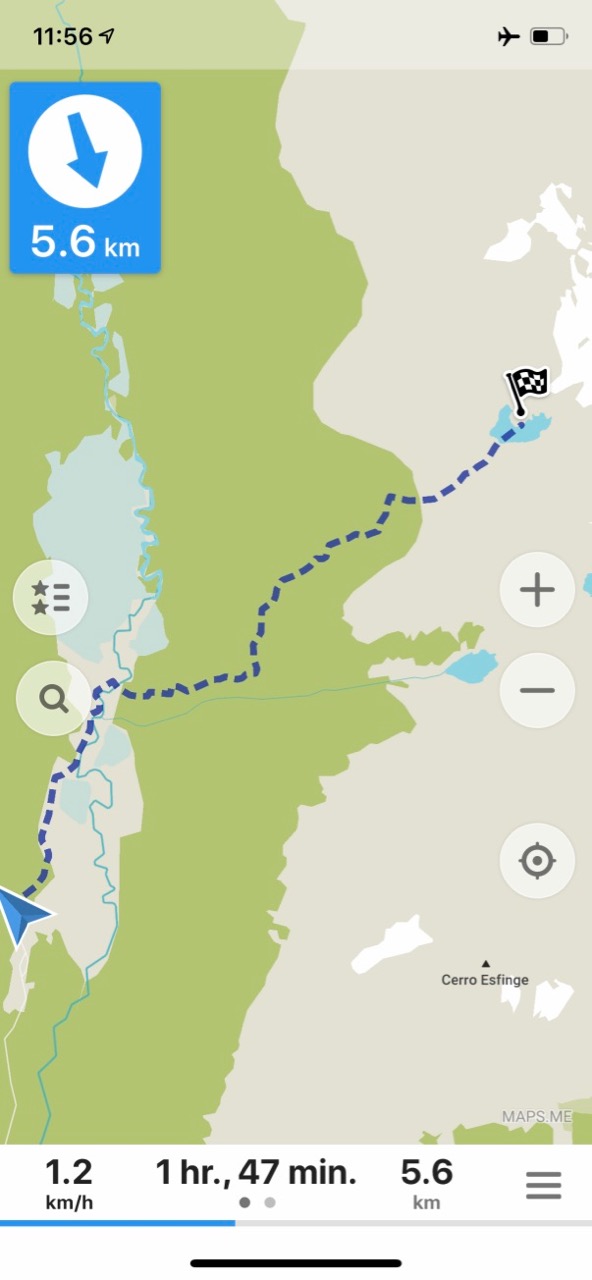
Up there’s where I was headed.
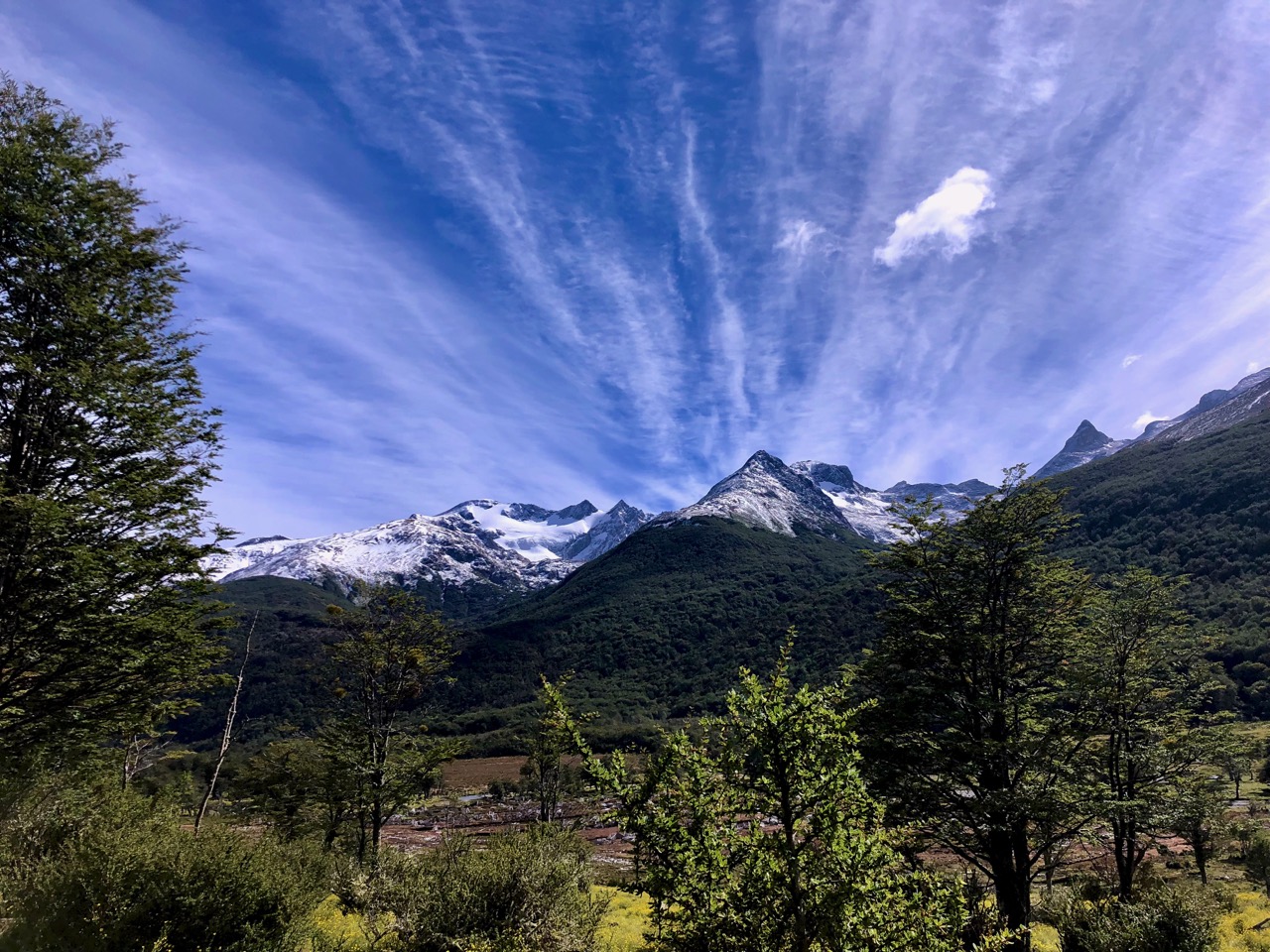
The weather was atypically reasonable today. Very little wind.


Once at the trailhead, navigation is not difficult.

Your feet do get wet on this hike — I wore neoprene booties rather than socks — but at least you don’t have to wade the largest river.

Next is a long, steep section through the trees.

It’s muddy and you need to be agile as a gymnast to negotiate fallen trees. There doesn’t seem to be much trail maintenance.


Near the top you reach an alpine meadow. Then a short climb up a waterfall to the Laguna.
Carlos from Colombia and I walked up together. He’s a Master’s student studying in Argentina currently on his summer holiday.

The glacial lagoon is gorgeous.
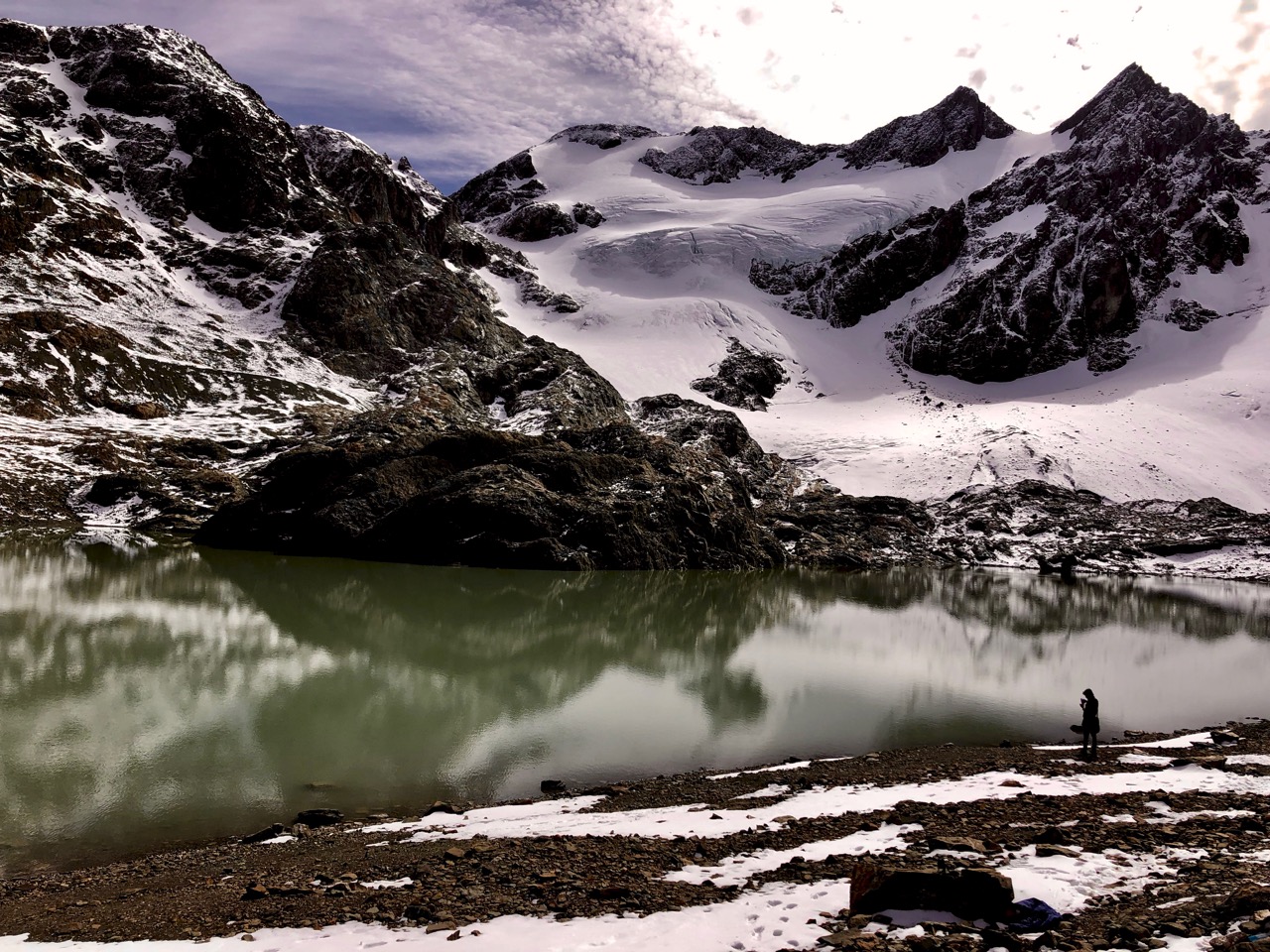
It’s not often the weather is this good. One woman went for a swim!
Like most in the world, this glacier is rapidly receding. ☹️
Looking back at the Beagle Channel.

I highly recommend Laguna de los Tempanos and Glacier Vinciguerra. But only in good weather. It’s tough, as well. I fell once into the mud on the way down.
And organize transport to and from the trailhead. The Los Humedales cafe at the trailhead will call you a cab if you don’t have phone that works in Argentina.

P.S. There are two side trails that I didn’t have time to do:
Laguna Encantada
Laguna del Caminante
The John Muir Trail is one of our top 10 in the world. It ain’t easy.
Overall, the top health problems reported were blisters (57 percent), sleep problems (57 percent), pack strap pain (46 percent), knee/ankle pain (44 percent), and back/hip pain (43 percent).
Another 37 percent reported altitude sickness. Given that the trail is almost entirely above 8,000 feet, and finishes at 14,505 feet at the summit of Mount Whitney, altitude issues are not surprising …
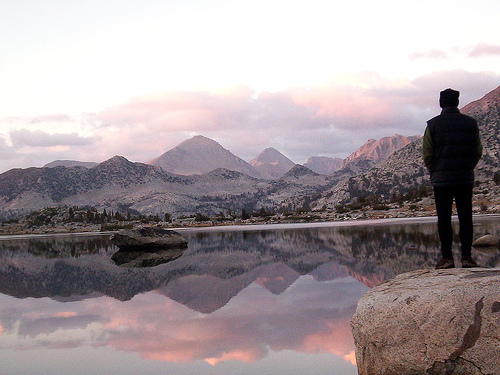
Details:
In 2014, 771 people filled out the survey, all of whom planned a trip of at least five days along the trail—a pretty reasonable sample from the total of roughly 3,500 permits issued that year. A group of researchers led by Susanne Spano of the University of California San Francisco Fresno analyzed the data to look for patterns and insights.
It’s already the most visited attraction in Indiana, but Indiana Dunes National Lakeshore’s recent upgrade to national park status will no doubt push it even further into the apex of natural wonders in the Midwest. …
It hugs 15 miles of Lake Michigan’s shoreline and encompasses 15,000 acres of sand dune ecosystem. …
The park boasts 50 miles of hiking trails. In 2018, 3.6 million people took advantage of the ample outdoor recreation it offers. …
New Zealand is our #1 hiking destination in the world.
Liz — the Young Adventuress — put together a great post on some of her favourites each featuring a video from their Mountain Safety Council .
Click through for details.
Here’s one of those excellent videos.
Click PLAY or watch Ben Lomond Track on YouTube.
trip report by BestHike editor Rick McCharles
The closest viewpoint to El Chaltén is Mirador Torre. With just a couple of hours at dusk I made the dash.

After the ladies departed, I had it all to myself.
Returned to town right at dark.
Details on elchalten.com.
trip report by BestHike editor Rick McCharles
Huemul Route – day 1 | 2 | 3 | 4 | info
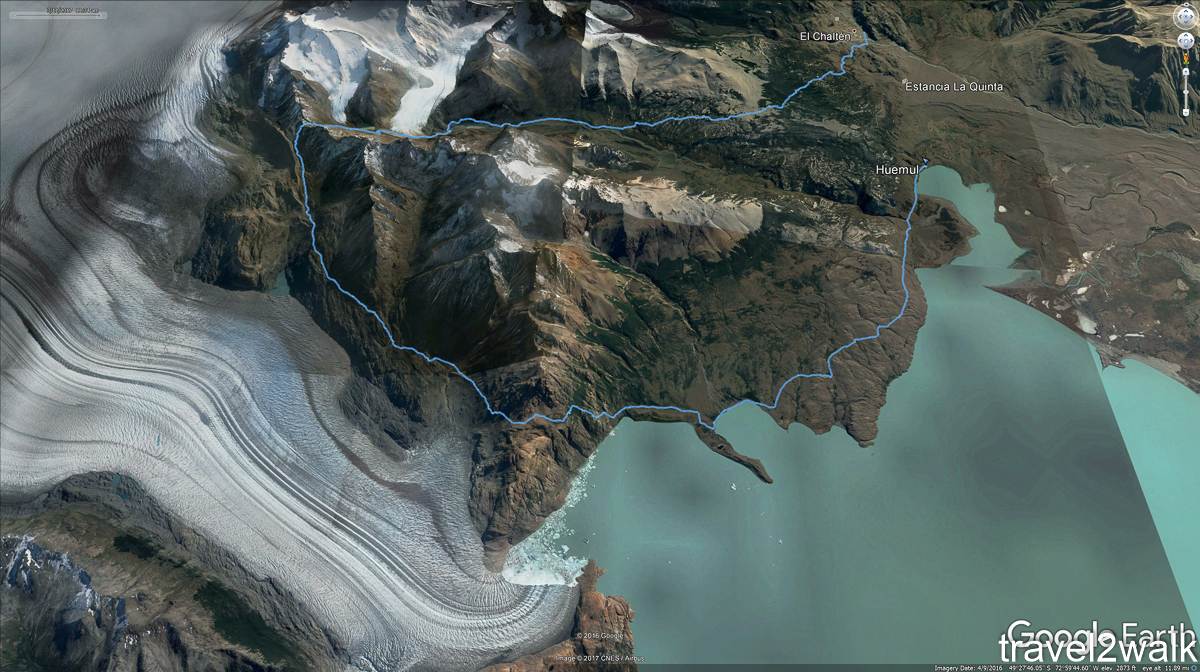
Day 4 was my walkout back to El Chaltén. Everyone hikes counter-clockwise.
Here’s the whole circuit visiting the Southern Patagonian Ice Field.
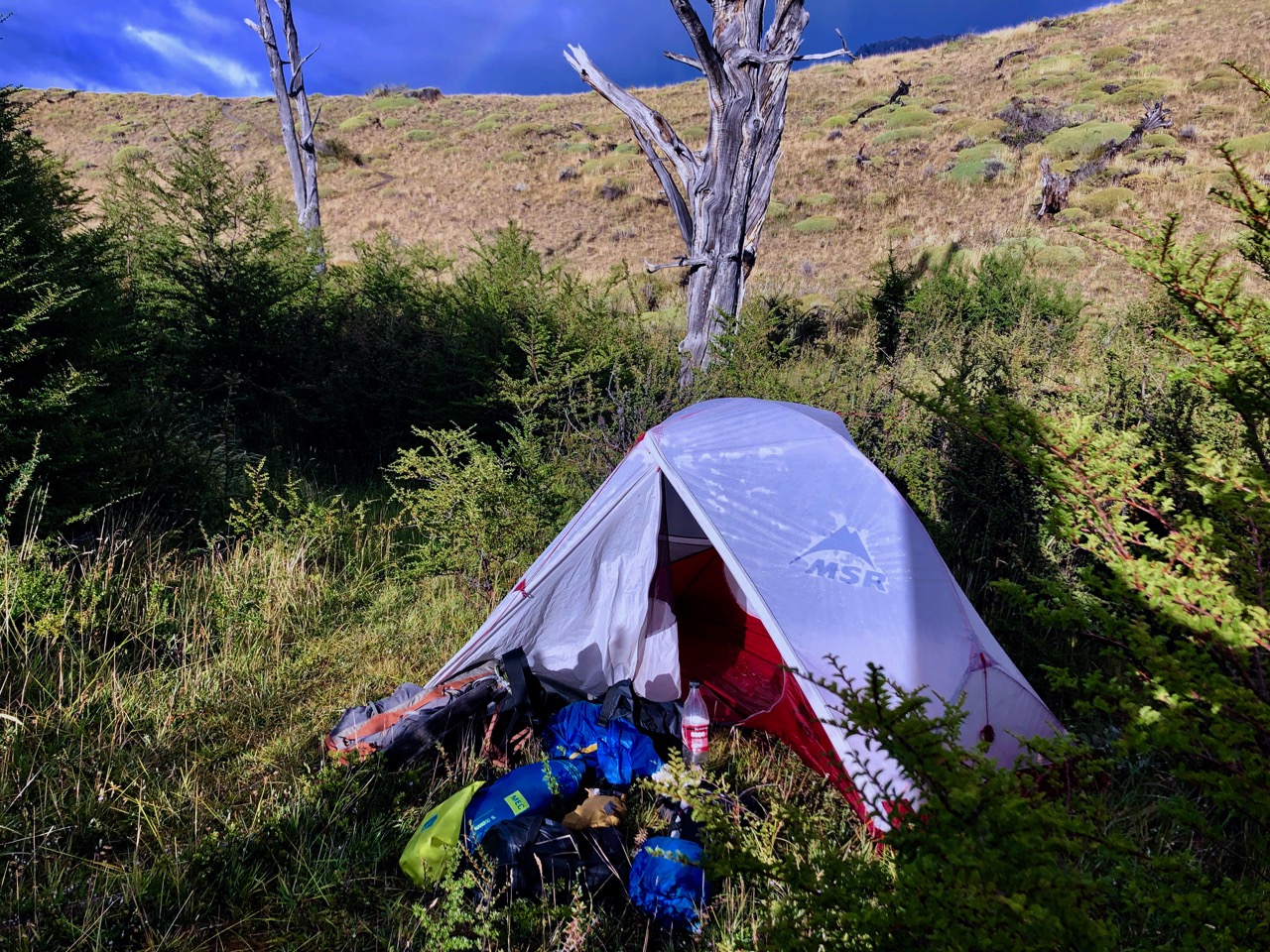
Very atypical for me, I didn’t sleep well.
And it rained on and off through the night.
Happily the sun came out about the time I got out of the tent.
Despite my efforts of the previous day, I’d only saved about an hour by hiking past the designated campground. I could still see the glacier. And there was again a rainbow. 🙂
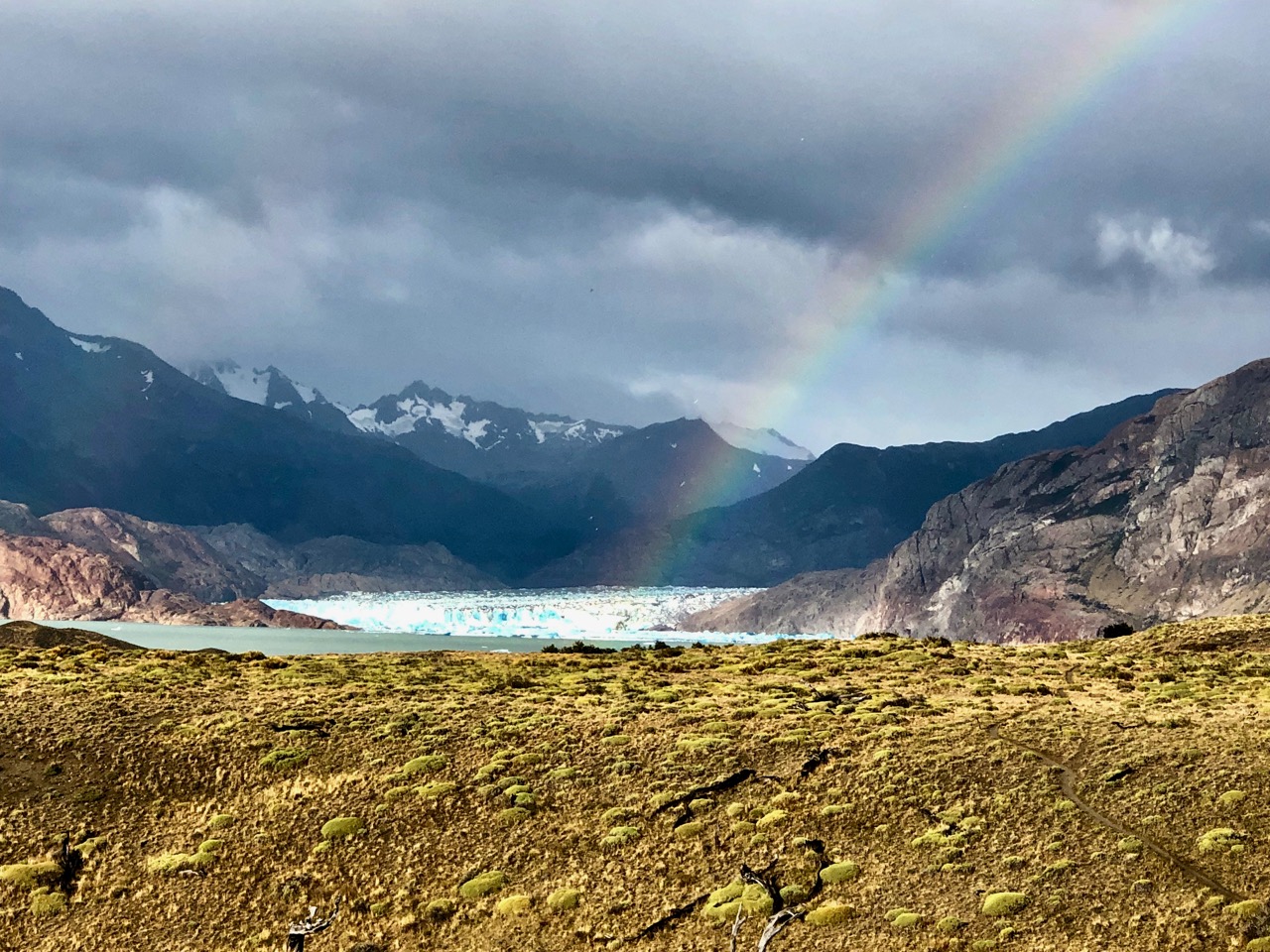
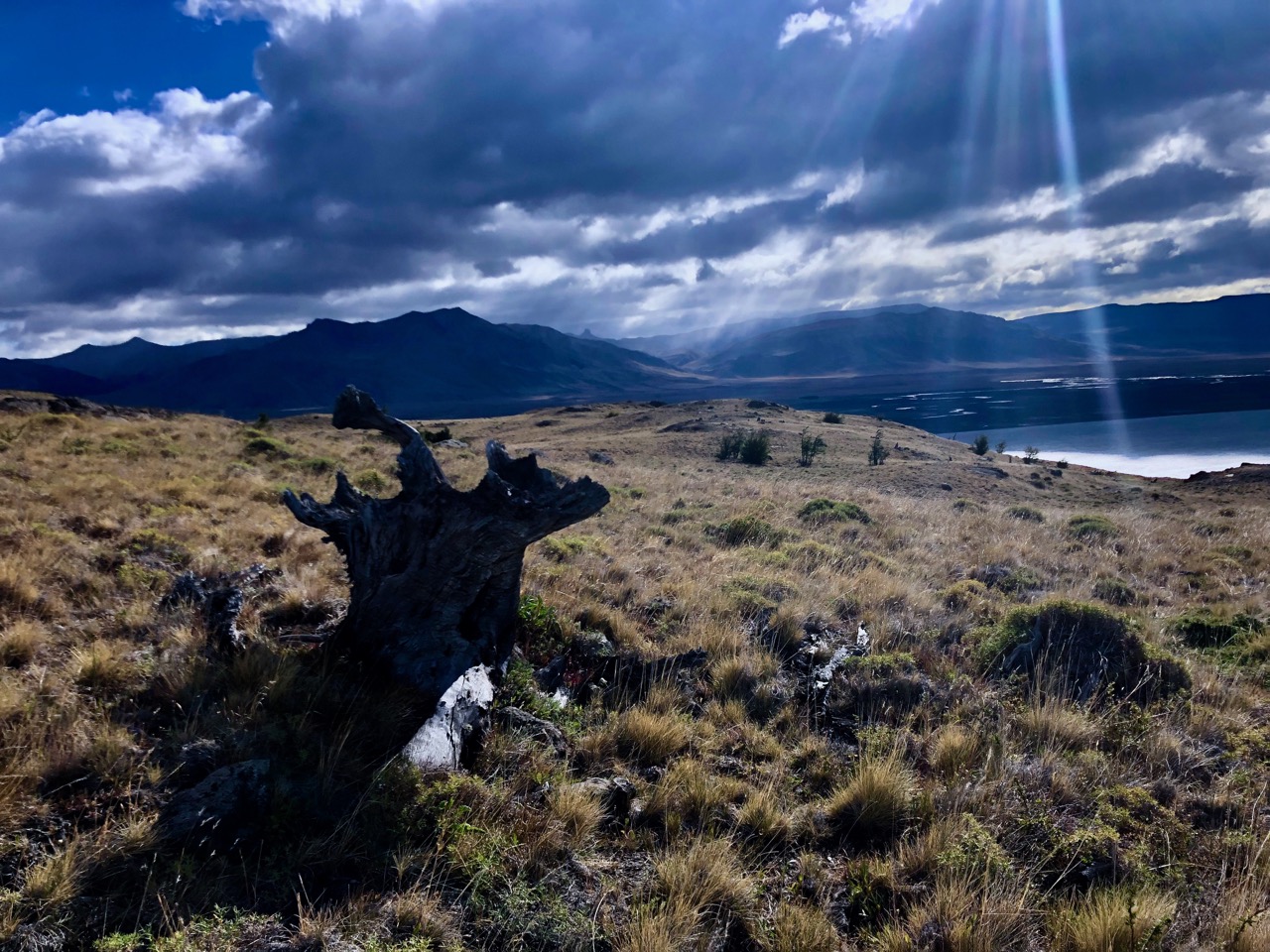
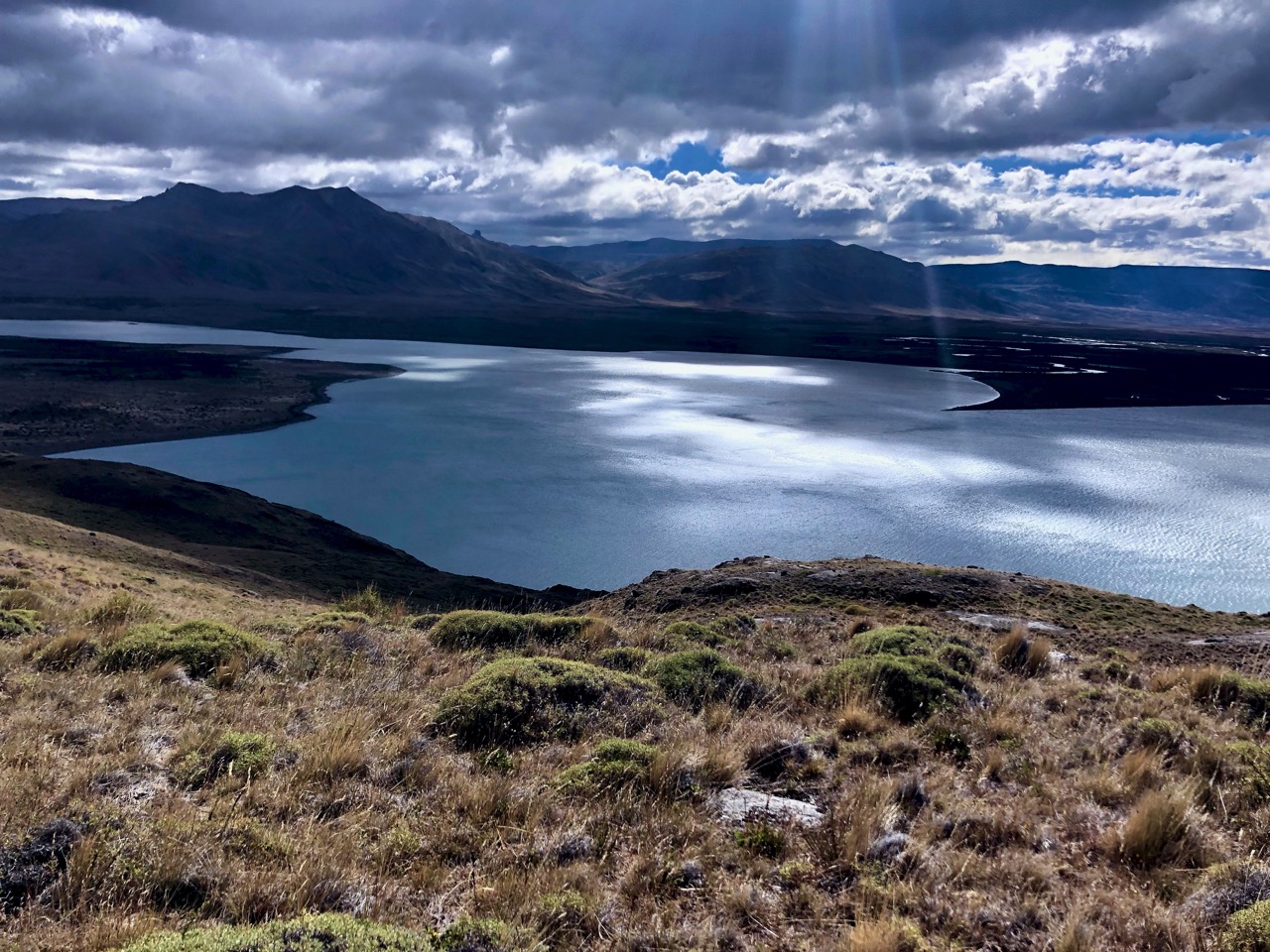
The trail continued in parallel to the Lake Videma shoreline thorough dry grasslands.
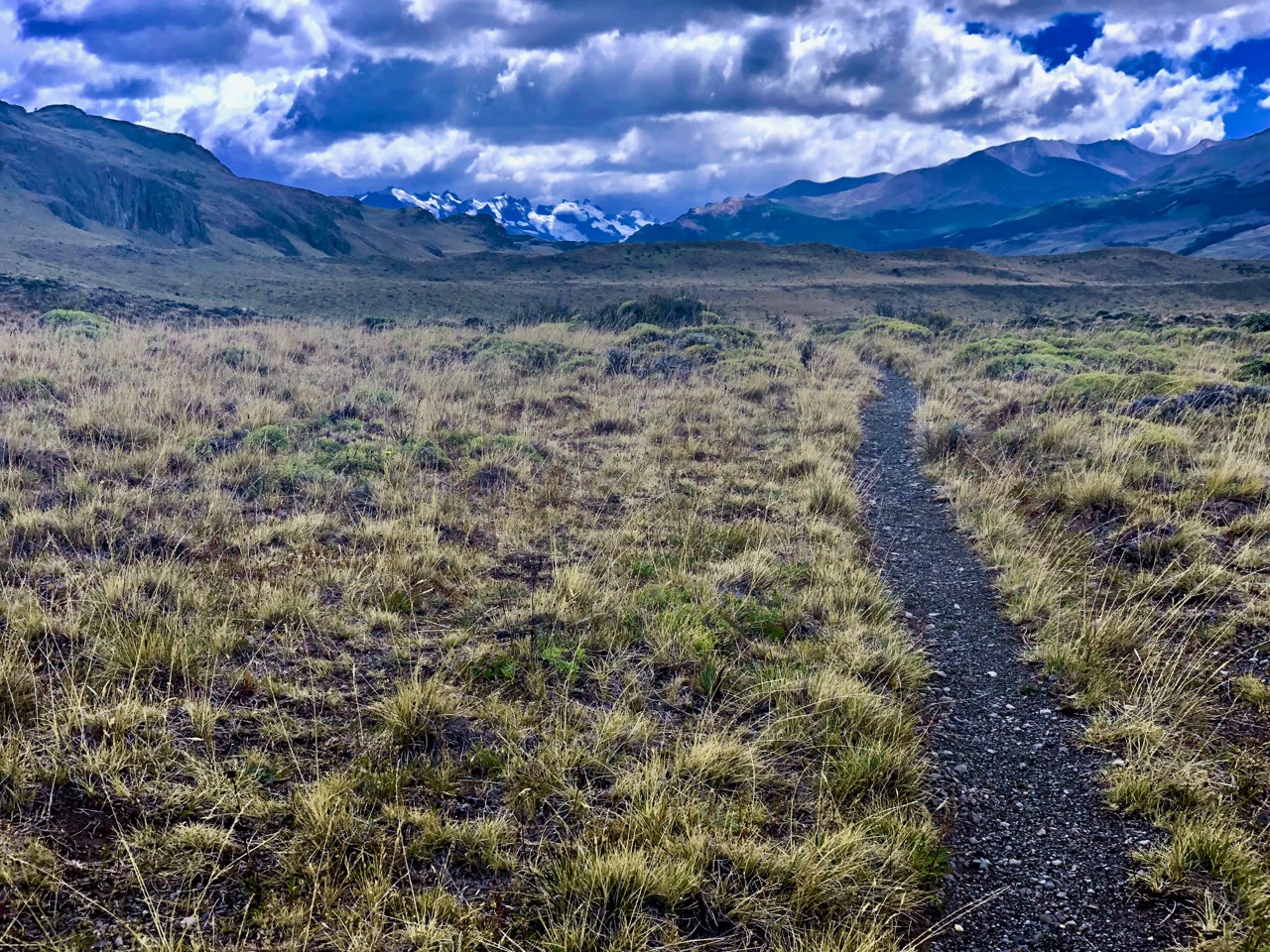
Though still beautiful, this was the least impressive day, I’d say. Not much variety.

The highlight was rabbits more rabbits. And one non-rabbit. He may have been a Patagonian mara.
When I caught a glimpse I assumed it was a plains viscacha, but it was more likely a mara.
I was looking forward to the second Tyrolean Traverse.

Arriving alone, I found the pulley was at this, the far side of the river. 😕 There SHOULD have been a slim rope attached to pull it over to the start on the other side.

What to do?
I knew I could walk to the lake and (probably) wade the river mouth. But figuring a way across was more fun.
My alternatives:
1. Attach my pulley carabiner directly to the cable (rather than the pulley)
2. Use ONLY my steel carabiner (normally a redundant safety system). This is what the guide did once on our first Traverse.
I went with #1 thinking it was the safer option. That worked. But I had to pull myself every inch with friction from the carabiner resisting. It was exhausting.
Here are some guys wading.

From there it was easy to find my way down to the Bahía Del Túnel dock.
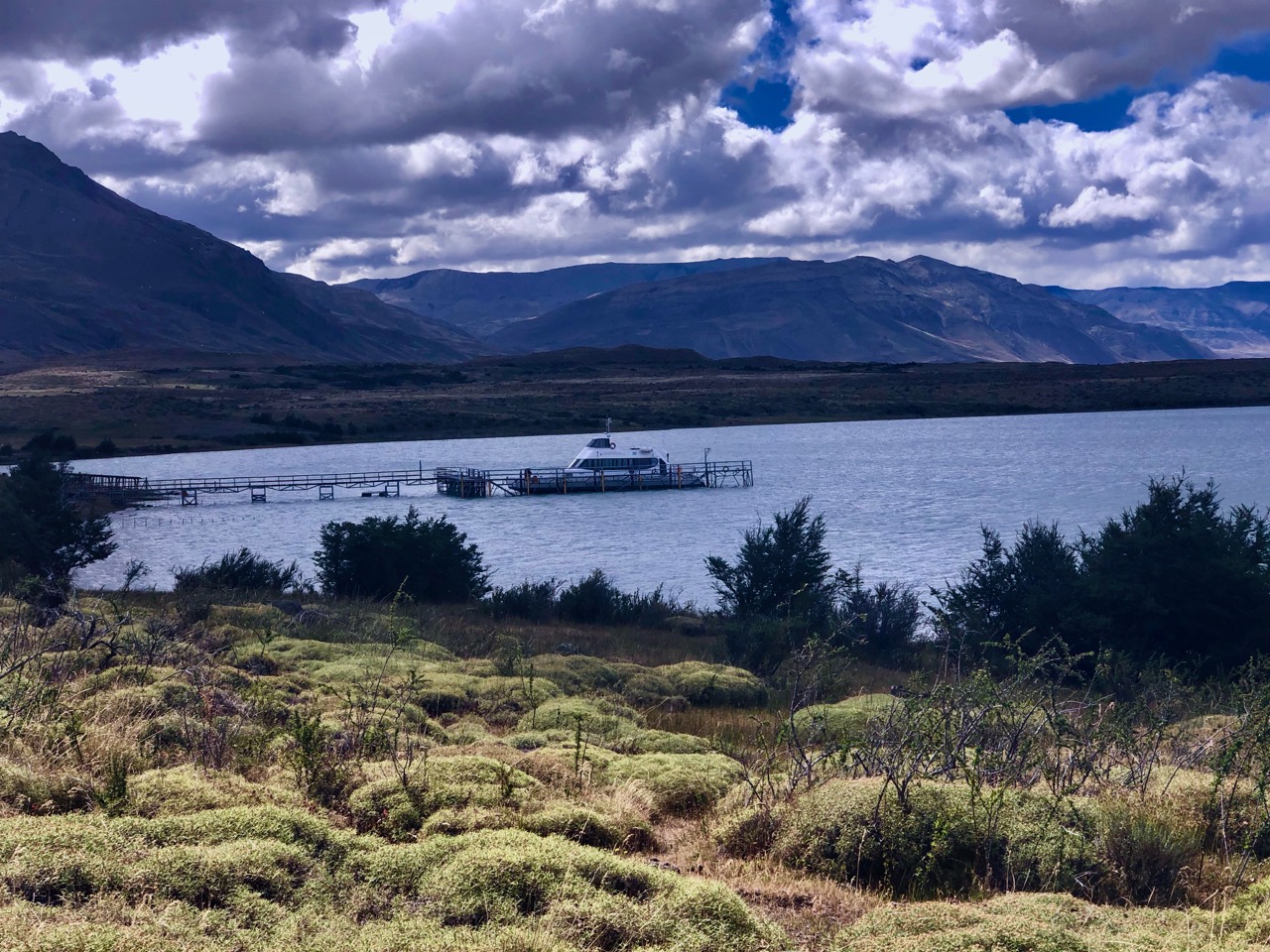
This boat takes tourists to the Videma glacier.
I saw no people. No vehicles. So stayed on the ‘trail’ headed towards a ranch.
Actually, my hiking map showed the trail ending at the dock. Some probably walk the (much longer) road to town.
I could find no trail. Instead I worked my way through more grasslands in the direction of El Chaltén.
Ready to be done, I stumbled on to this calf. It was the second dead cow I’d seen.

When I hit the first fence, being a polite Canadian, I tried to walk around the ranch.
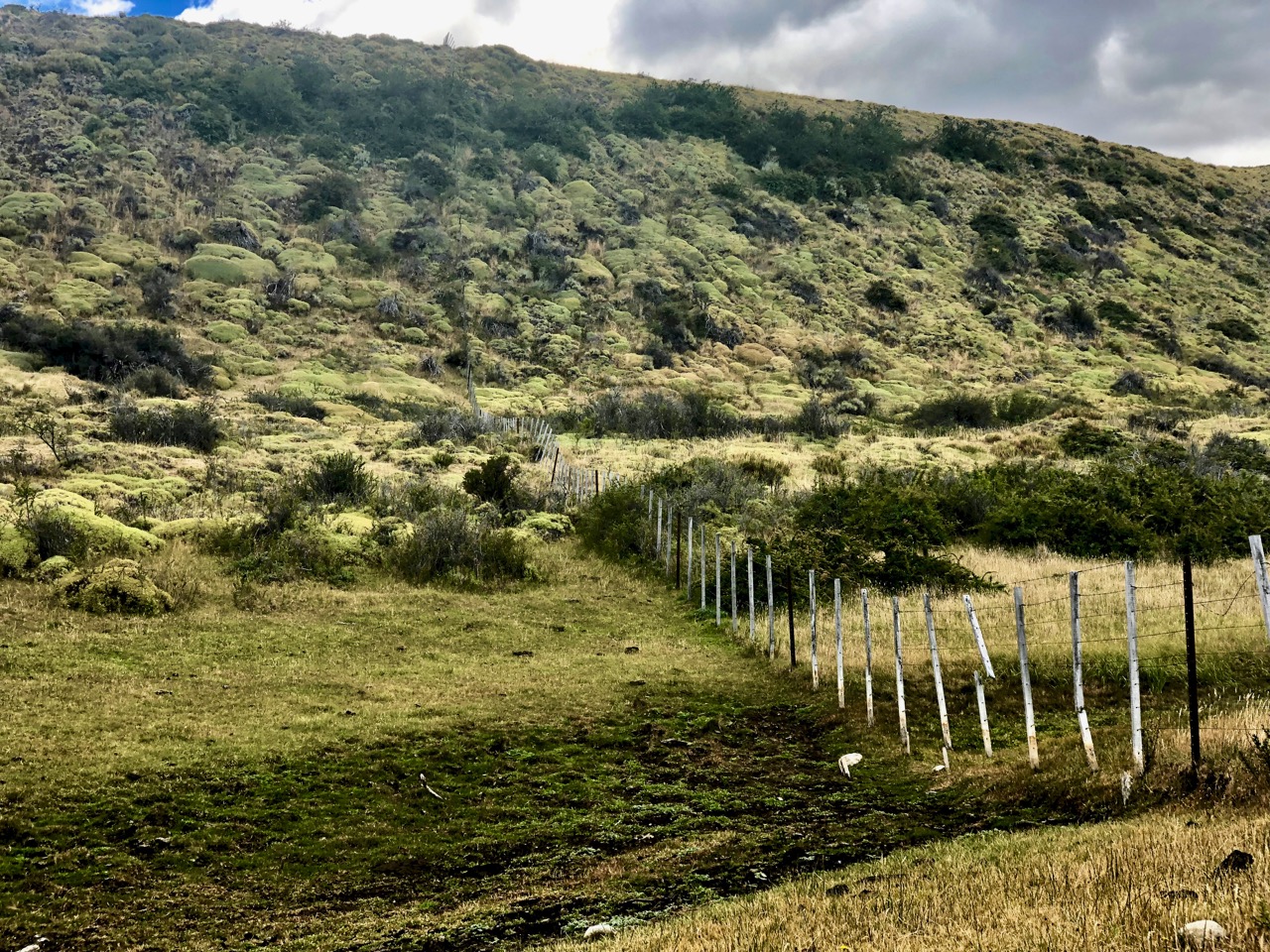
That was a mistake. In the end I hopped about 5 fences and opened one gate. It wasted at least another hour. I should have hopped the first fence and headed directly to the highway.
It was with satisfaction and relief that my final fence hop delivered me to this roadside lookout.
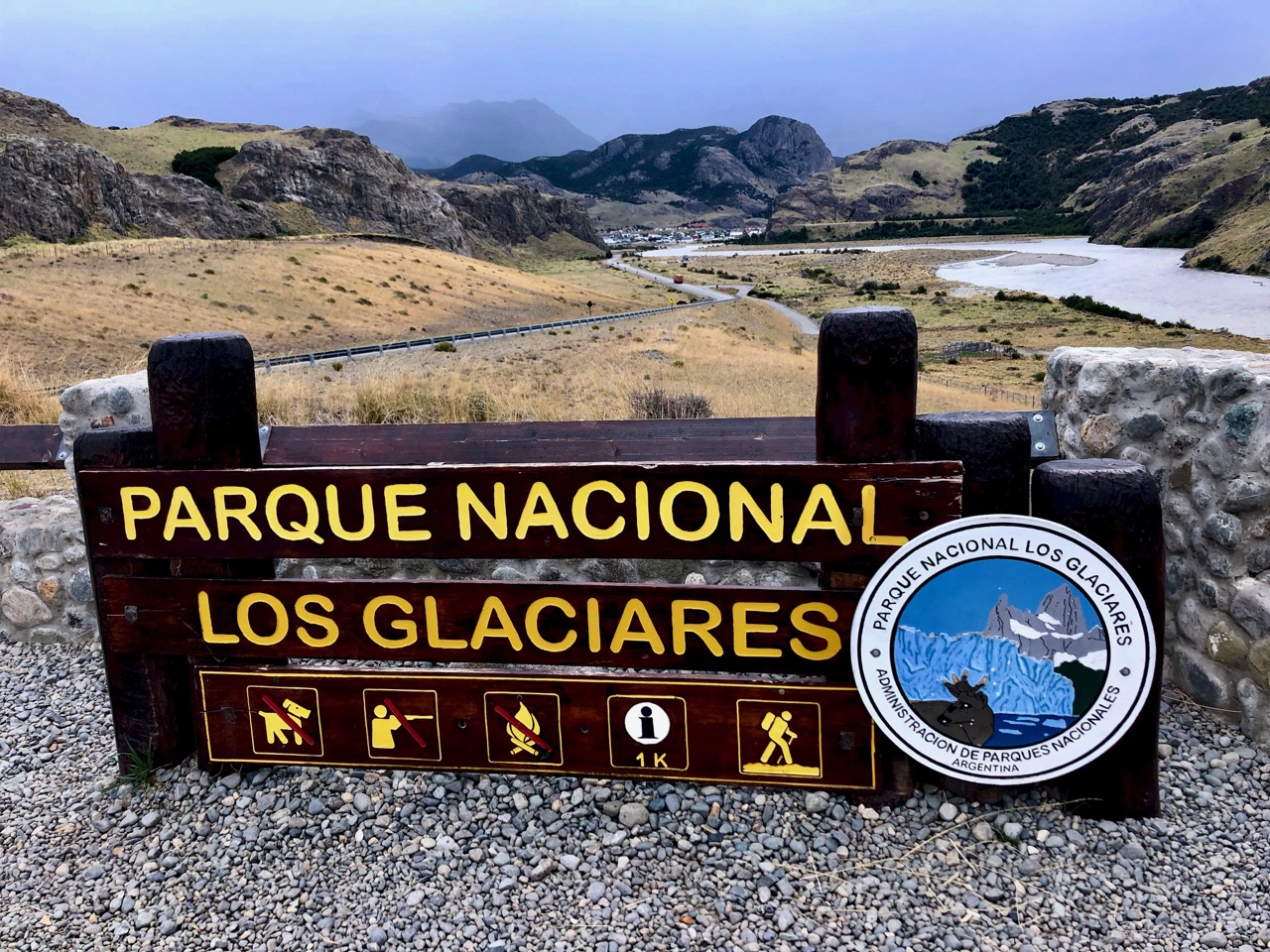
From there was an easy 3km to town on pavement.
I dropped my registration form at the Parks information office. They seemed happy to see I had survived.
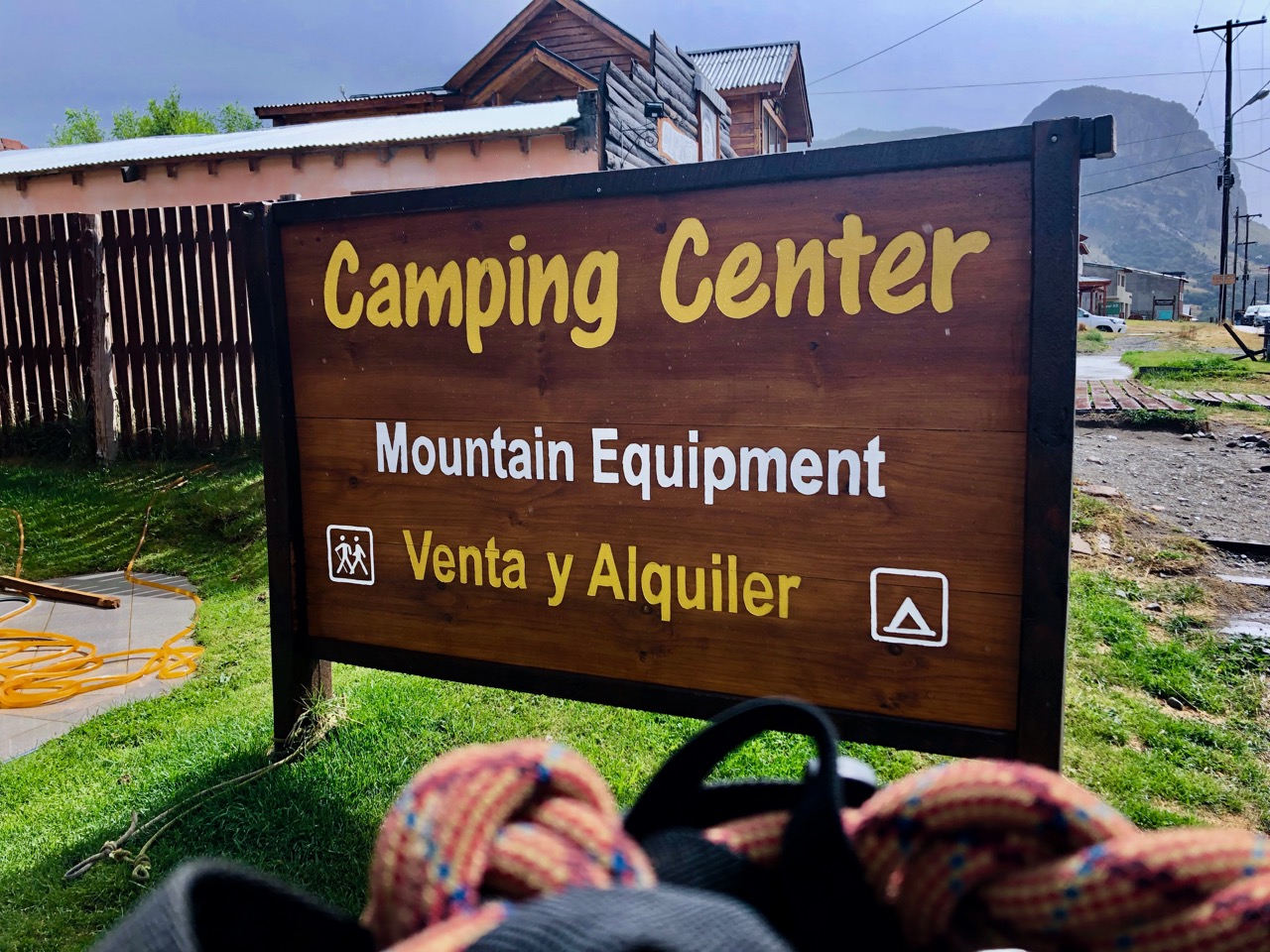
With a big smile on my face I returned my rental Tyrolean Traverse harness to ‘Camping Center’ in town. That was the only gear rental store I could find that doesn’t close for siesta.
It was back to the hostel for a long, hot, long shower. 🙂
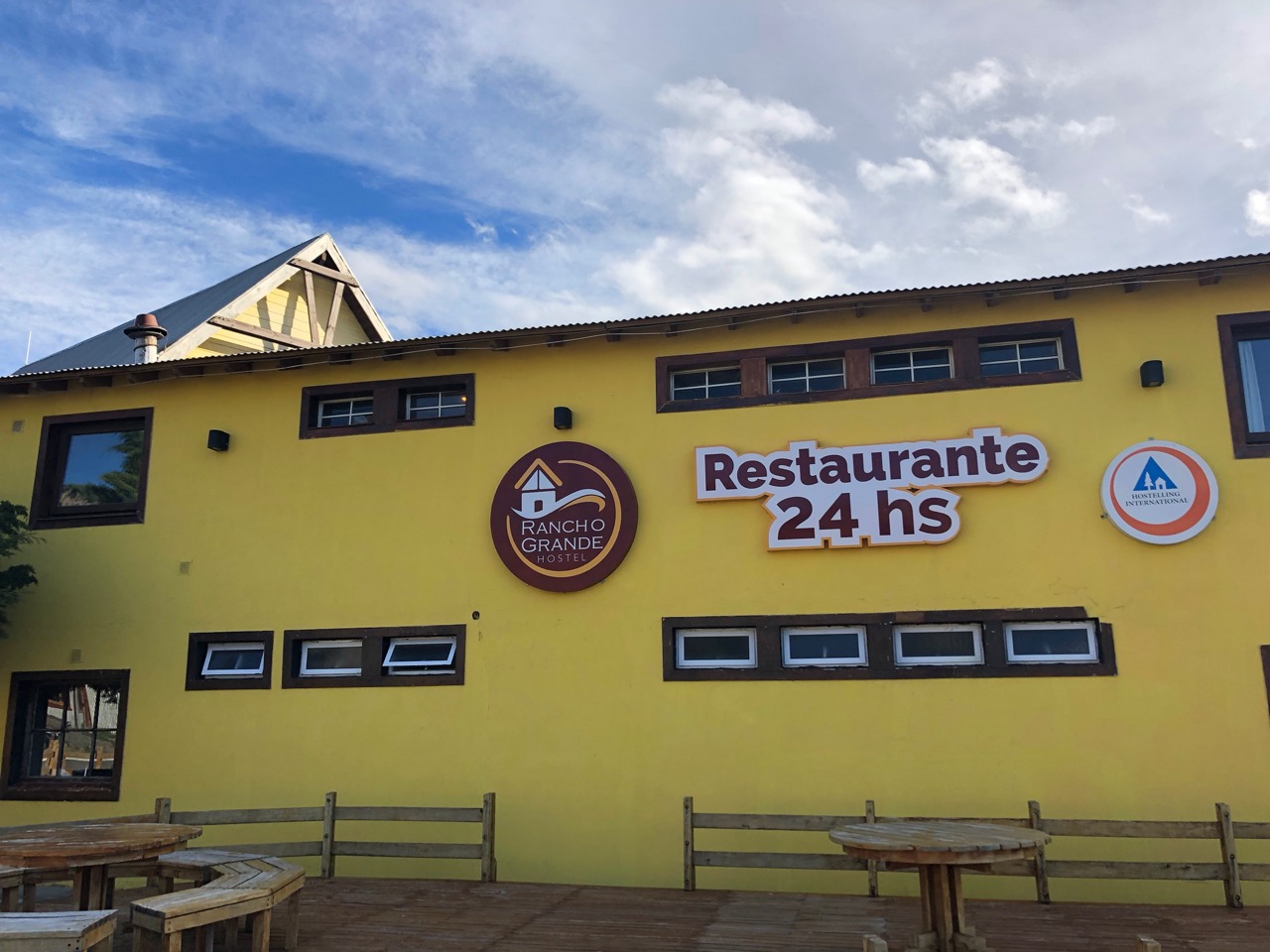
YES my hostel had a 24 hour a day restaurant! It’s popular with the late night partying backpacker crowd.
All I’d consumed this day was coffee. At 6:30pm I splurged on a huge meal. Breaded chicken a lo pobre.

The Huemul Route out of Fitz Roy, Argentina is superb. Some of the best vistas of my life. One of the very best hikes in the world.
____
If you are worried at all about the Traverses … and navigation, consider signing on with a guided group. Chalten Mountain Guides, for example.
related:
For a MUCH BETTER trip report – Travel 2 Walk: El Chaltén – Fitz Roy and Huemul Circuit, March 2017. (They did it again January 2019!)
bookmundi – Argentina 2019 – Huemul Circuit Parque Nacional Los Glaciares of Argentine
If you prefer your trip reports in video format, here are a few to check out.
Click PLAY or watch it on YouTube.
Click PLAY or watch it on YouTube.
Click PLAY or watch it on YouTube.
trip report by BestHike editor Rick McCharles
The Loma del Pliengue Tumbado is a chain of three round rocky summits at 1340m, 1420m and 1550m. In Spanish “Loma” could translate as “Hill”. Pliegue Tumbado being the name of this chain of hills. …
Should you have only one day in El Chaltén, rush there, have a picnic on top and come back with hundreds of pictures. …
The trail starts from the Visitor Center at the entrance of El Chaltén (alt. 400m).
At first, follow the signs indicating “Laguna Toro”.
Then there will be a distinctive sign showing the Loma del Pliengue Tumbado, where the trail splits.
It is an easy ascent on a good trail all the way long.
If you go up to the highest summit at 1550) you will have to hike 1100m (altitude gain), which takes about 3h 30
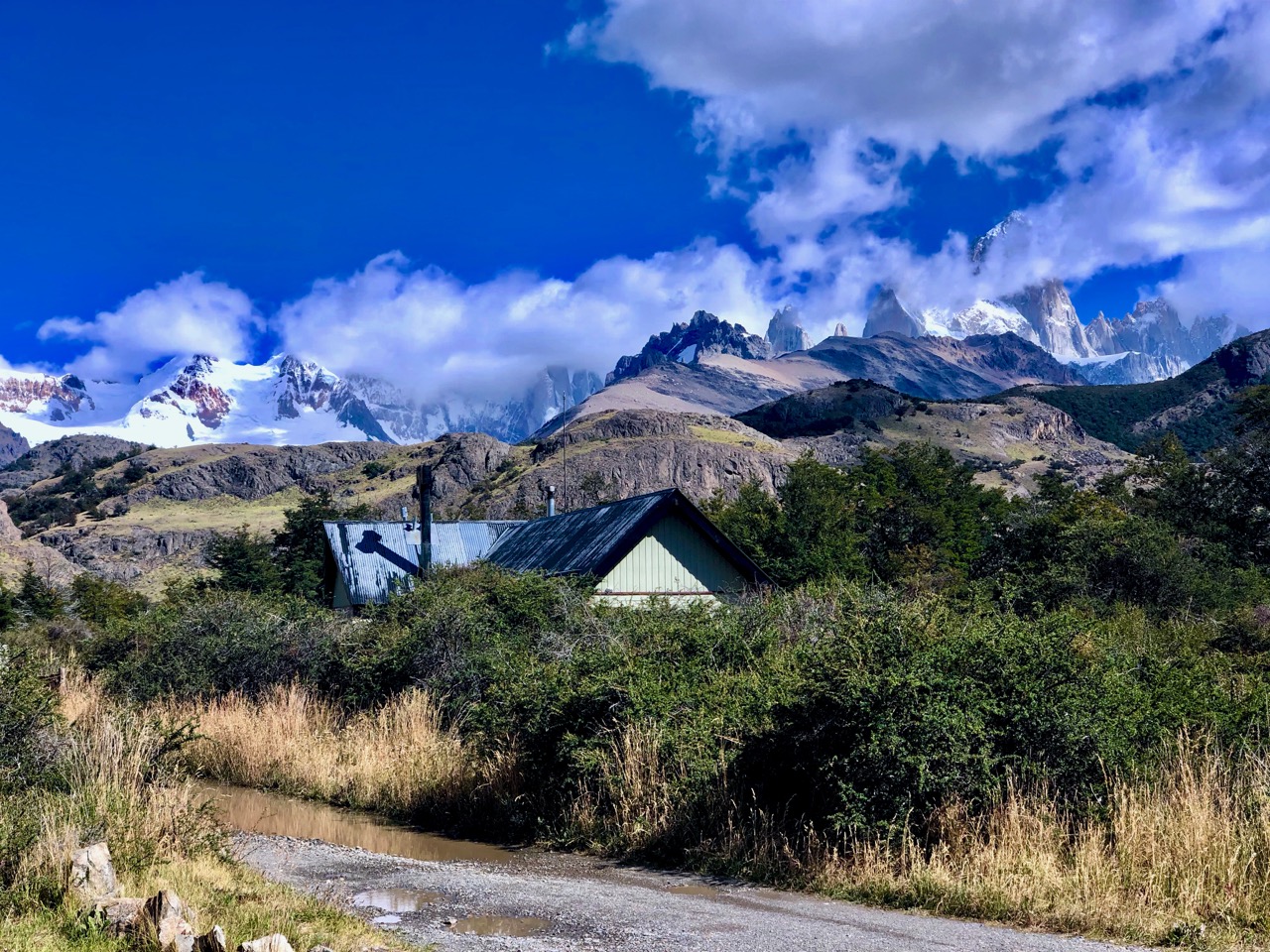
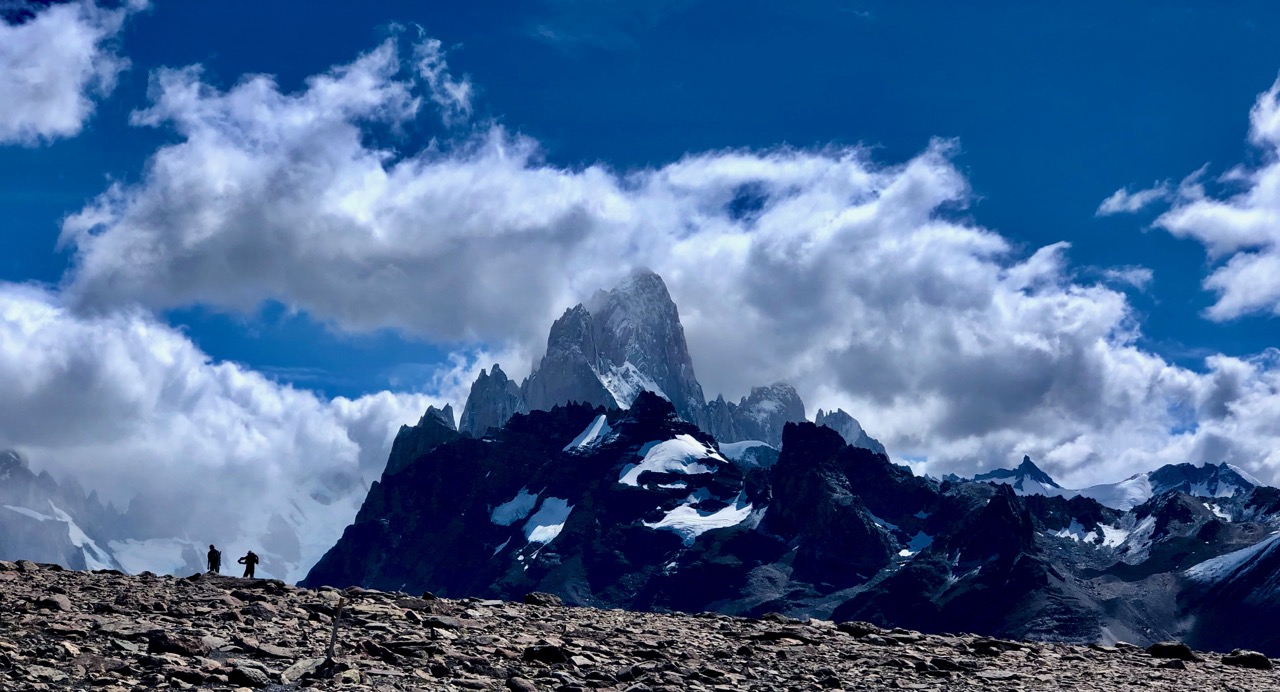
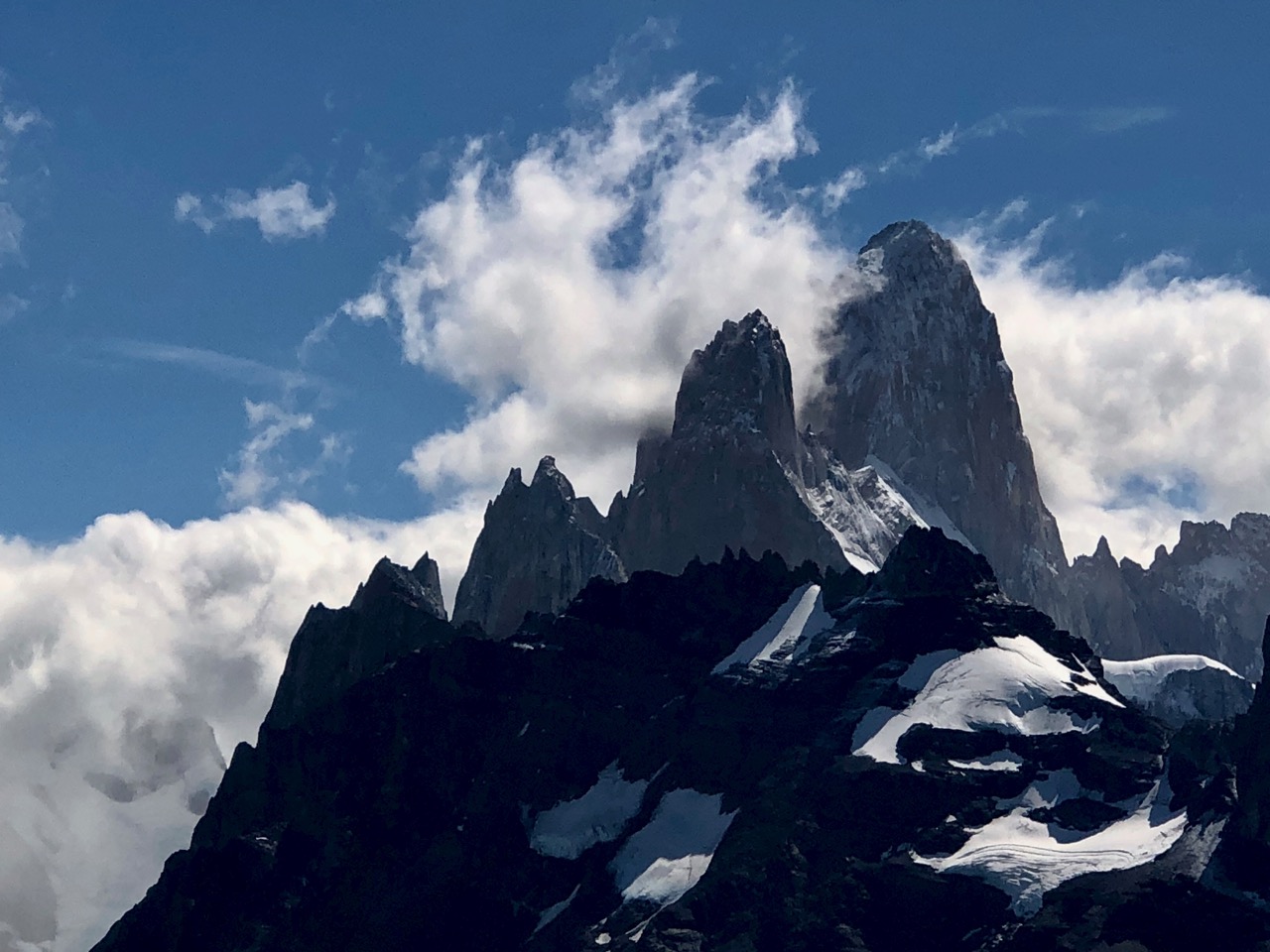
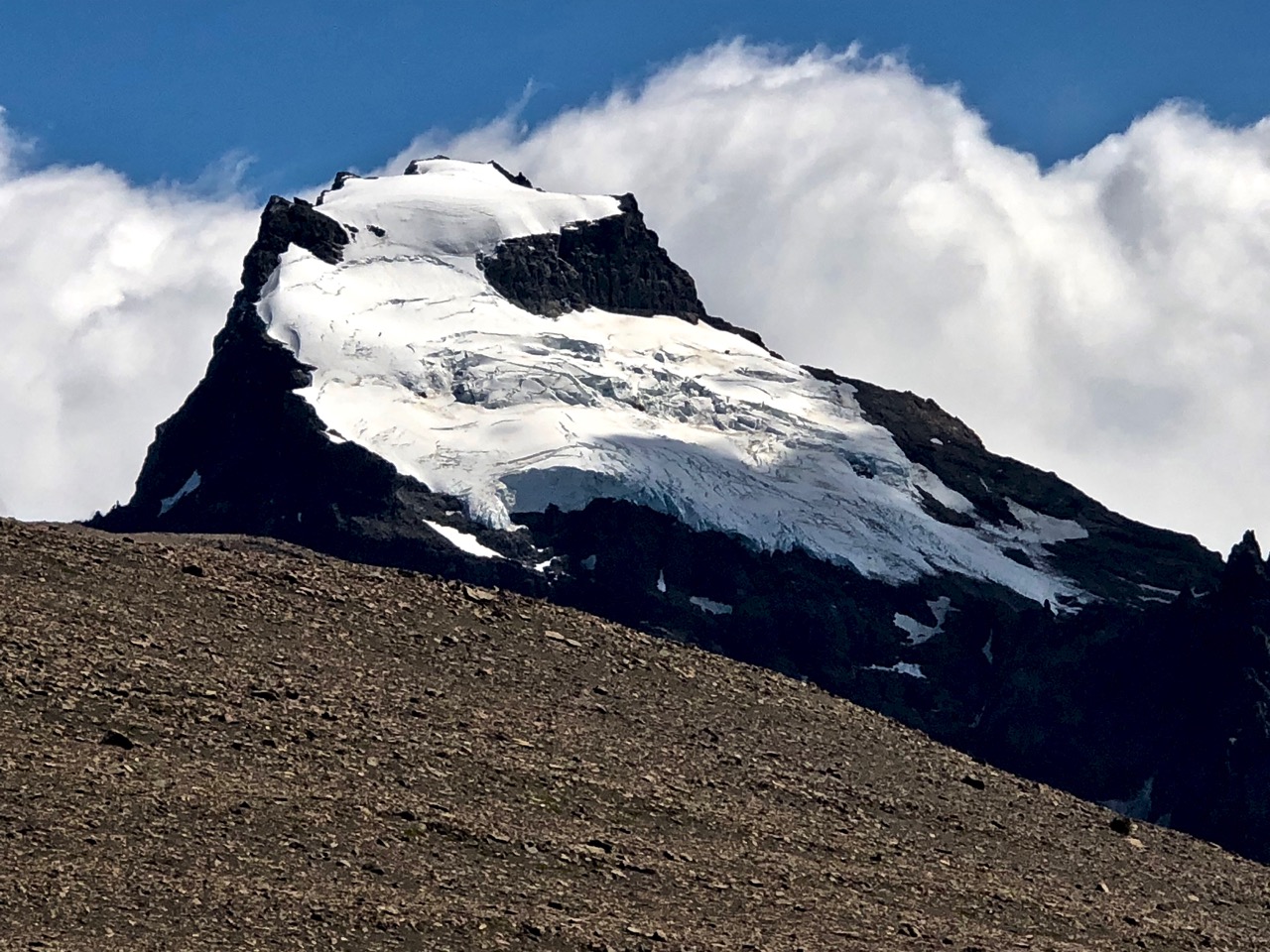
Here are some photos from my day hike. The high peaks hold the clouds. This micro-climate is infamous in Patagonia. It’s deadly for mountain climbers.

trip report by BestHike editor Rick McCharles
Huemul Route – day 1 | 2 | 3 | 4 | info
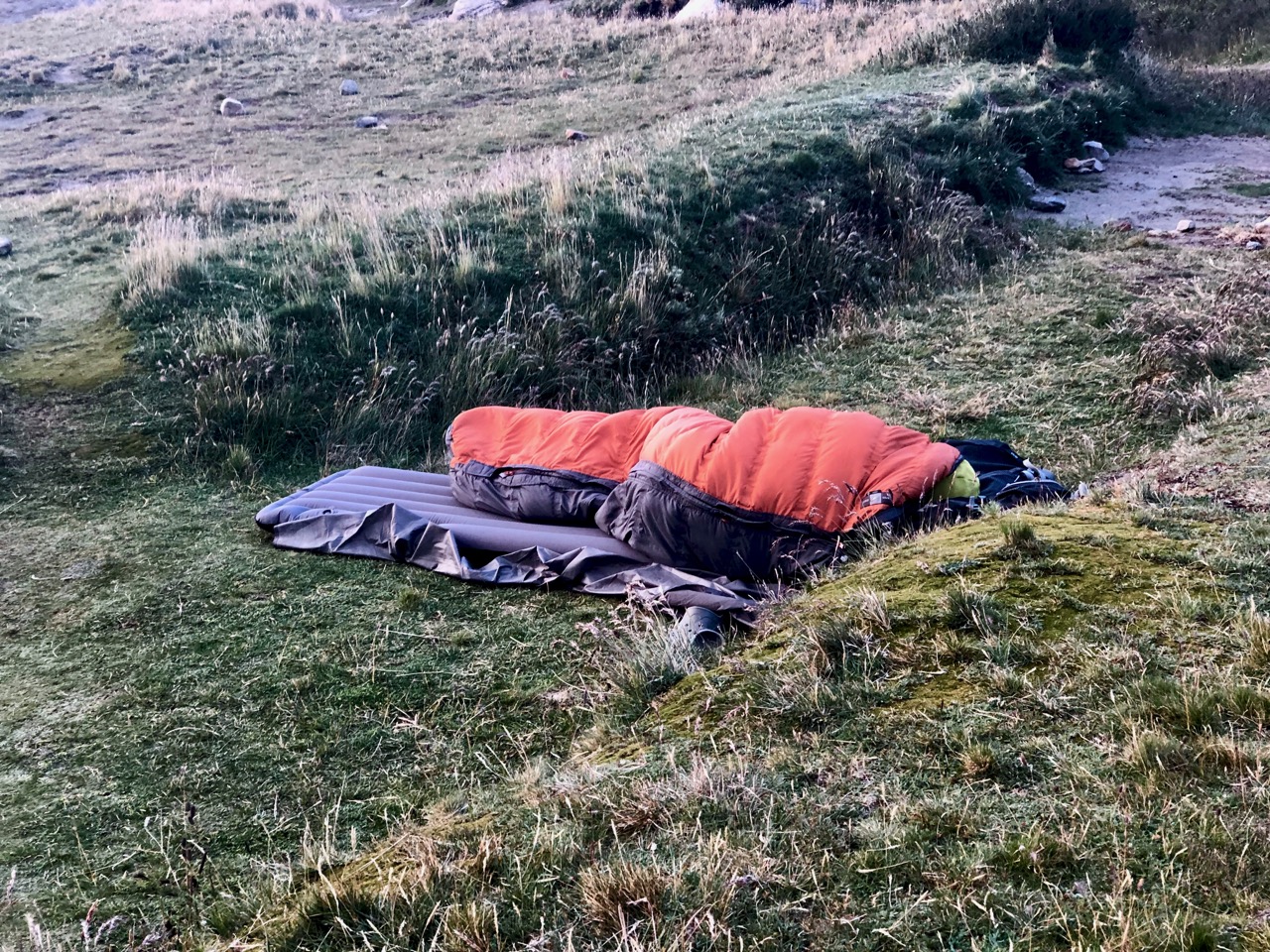
As I’d fallen asleep early (exhausted) at Paso del Viento camp I was up and packed early.
And I was surprised to see someone had arrived solo after dark. In perfect weather, he’d simply crashed.
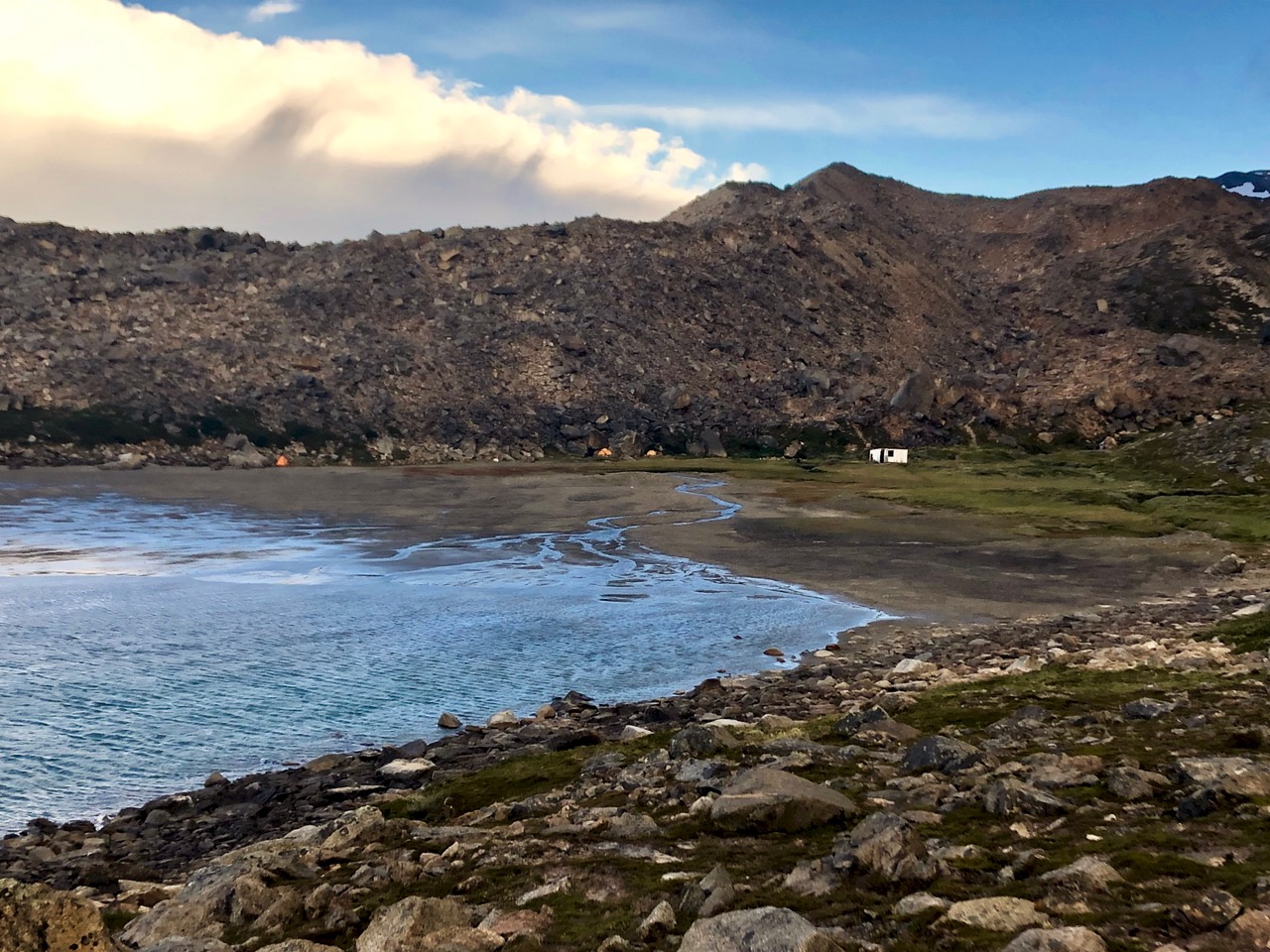
Most of the hardest parts of this hike were behind me. I thought I’d try for a long day, shortening my exit on day 4.
On this hike I listened to the autobiography of high altitude climber / legend Sir Chris Bonington. There’s no motivation to complain about what I was doing in comparison to his many, many extreme adventures!

Again there was no real trail. The route continues alongside the Glaciar Viedma moraine. Magically there was a rainbow most of the morning.
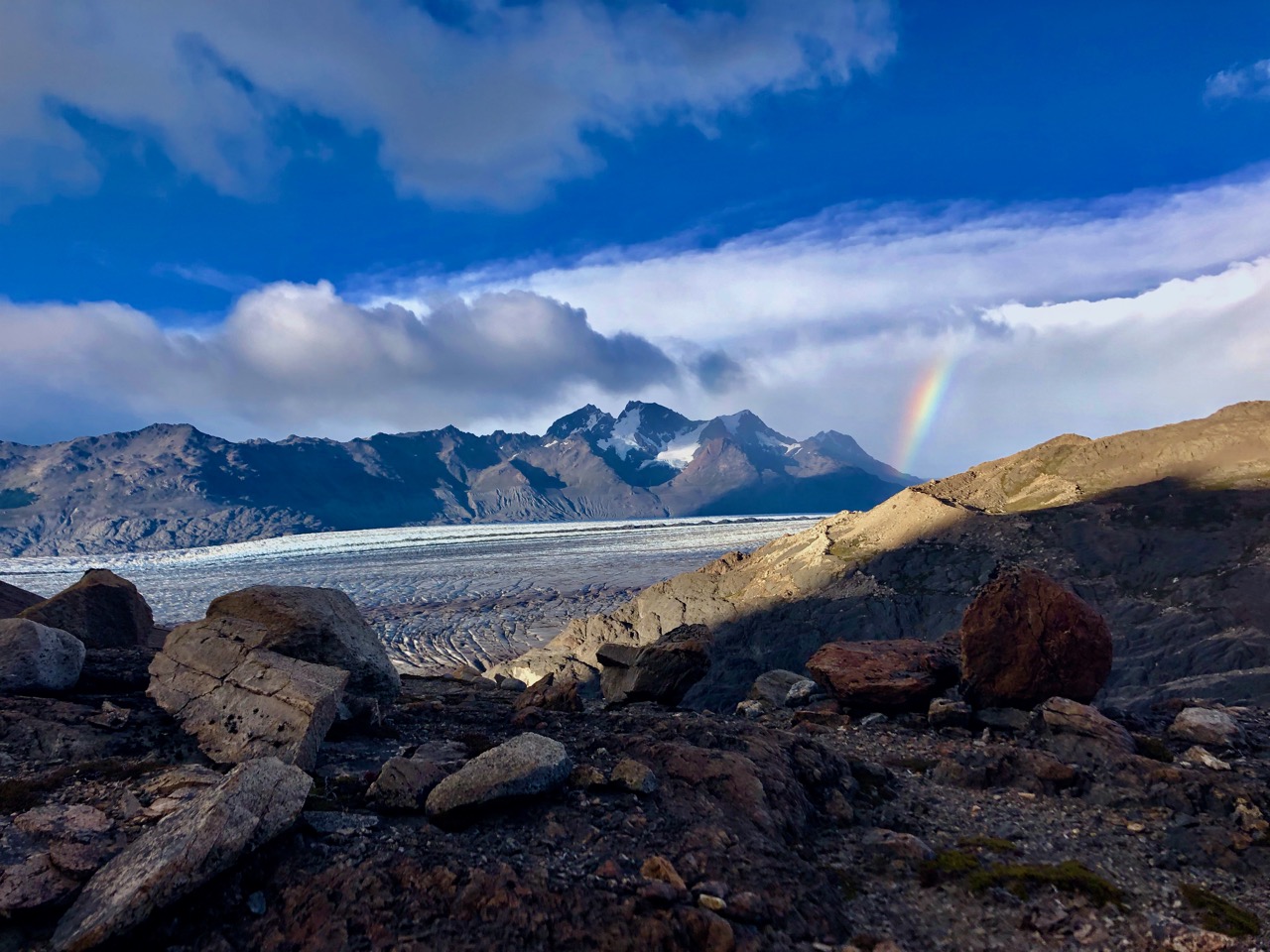
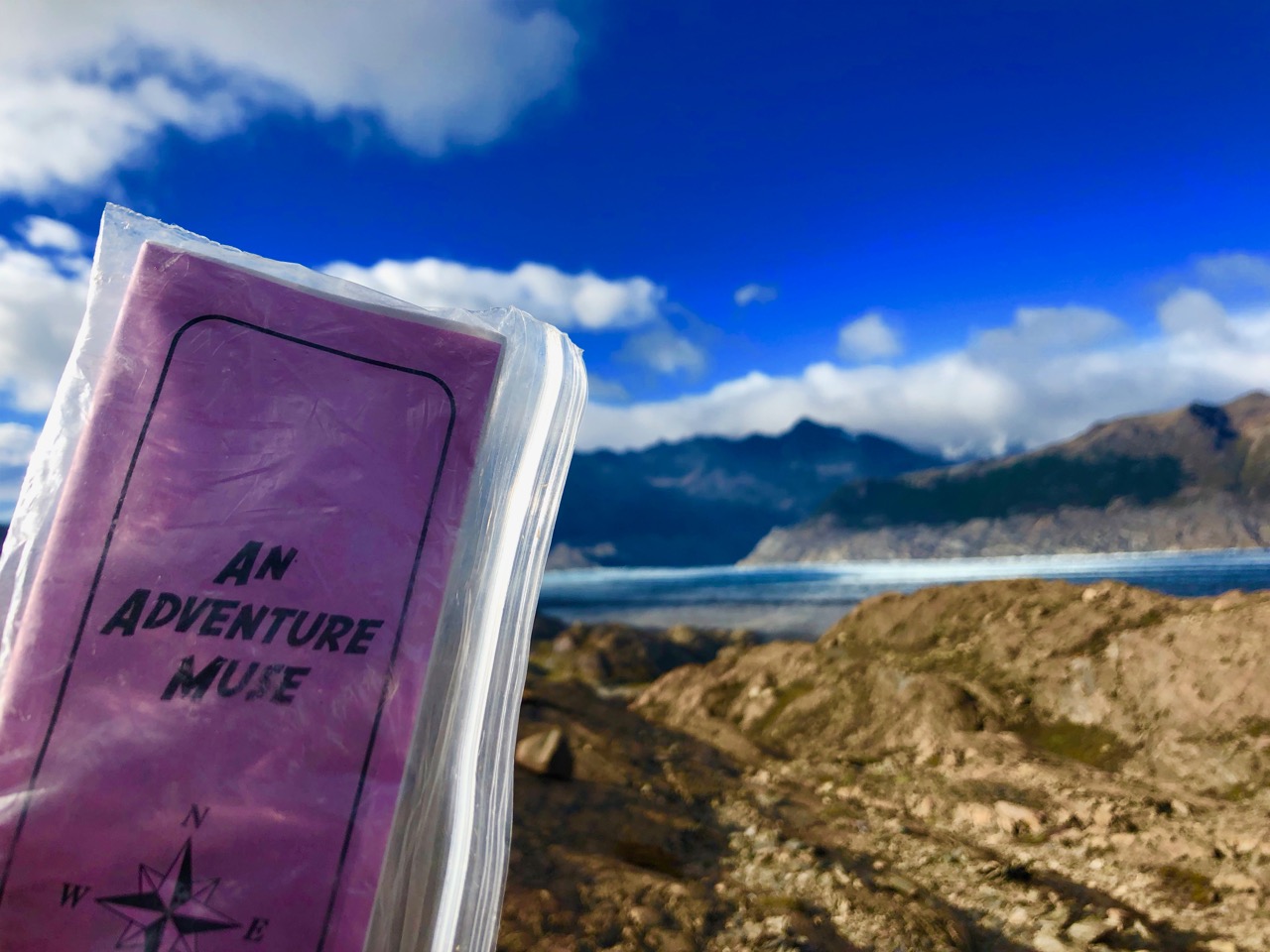
I left a Summit Stone at one conspicuous viewpoint.
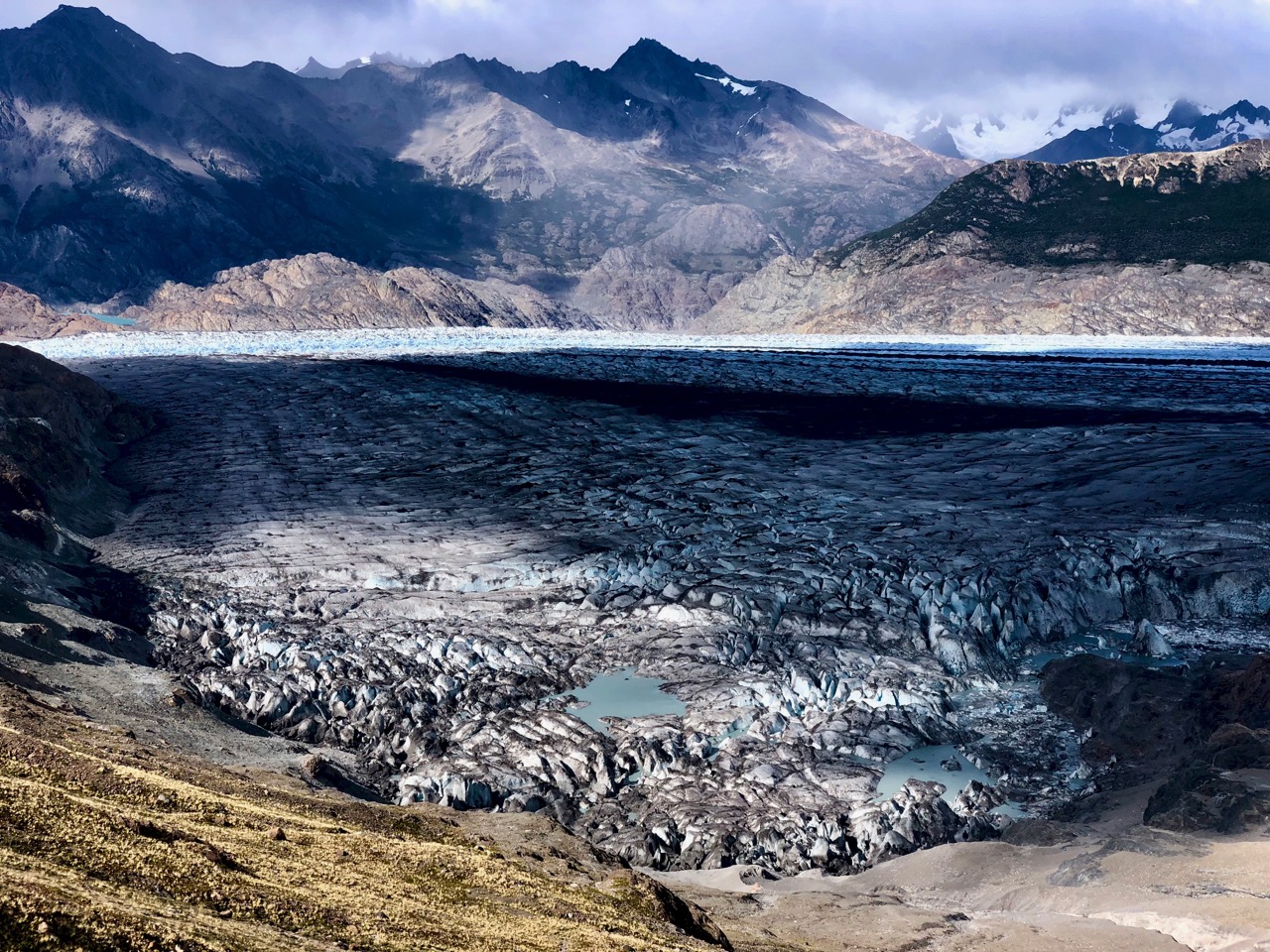
The Viedma glacier is massive and intimidating.
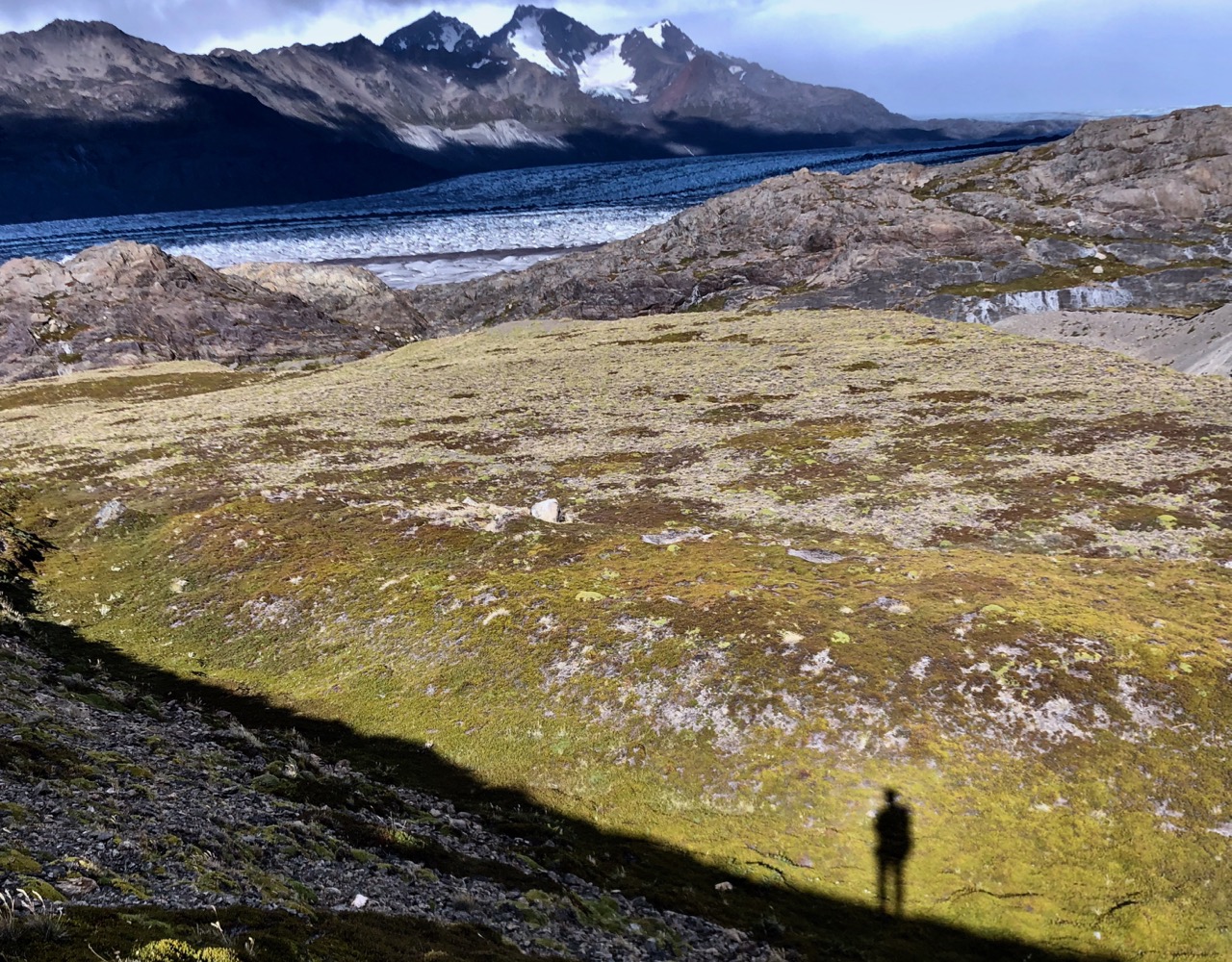
I felt small. And very lucky to be here.
Finally the route took me up and over a high shoulder.
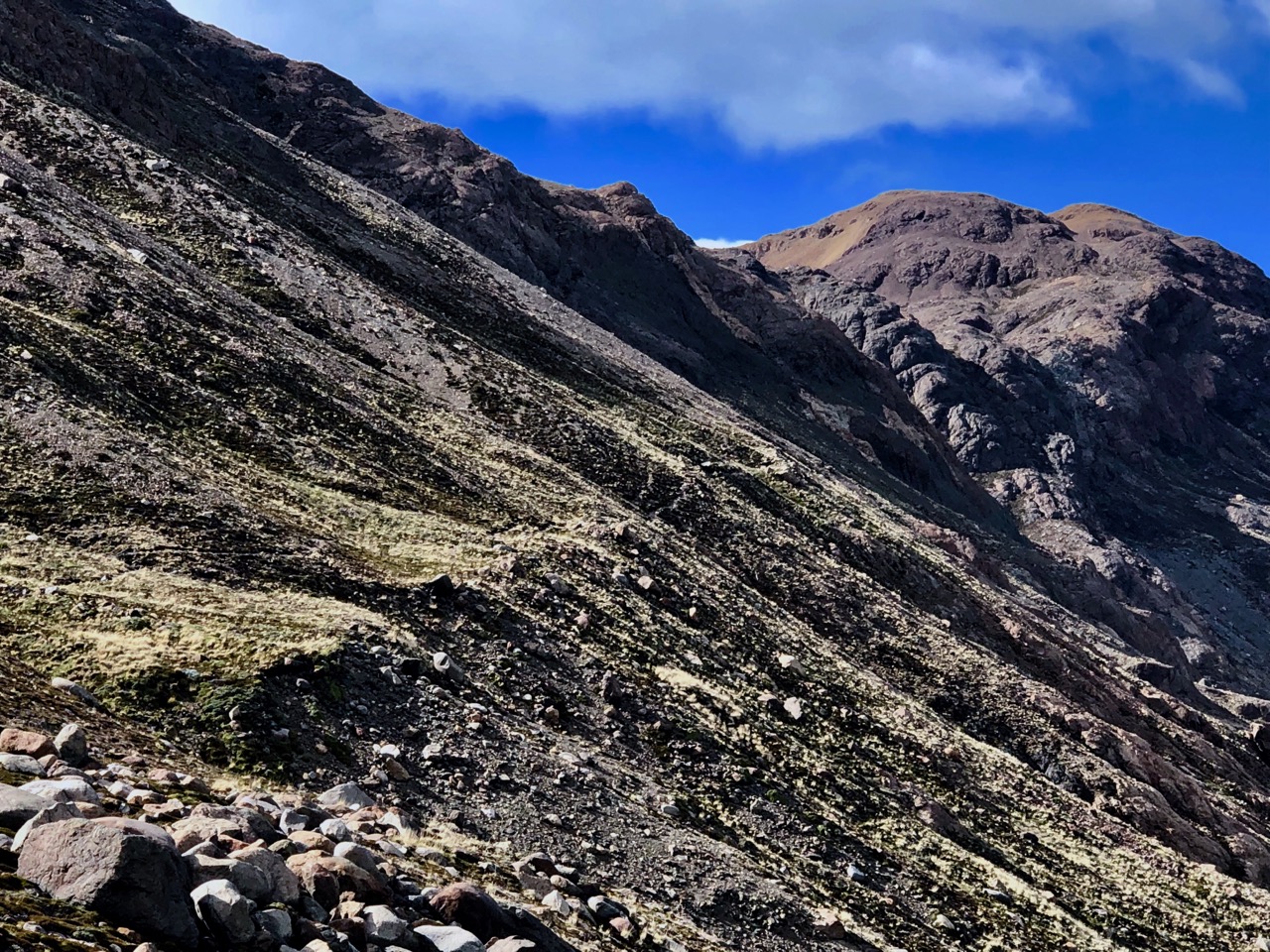
Again it looks easy. It was not.
On the other side was another world. Lake Videma.
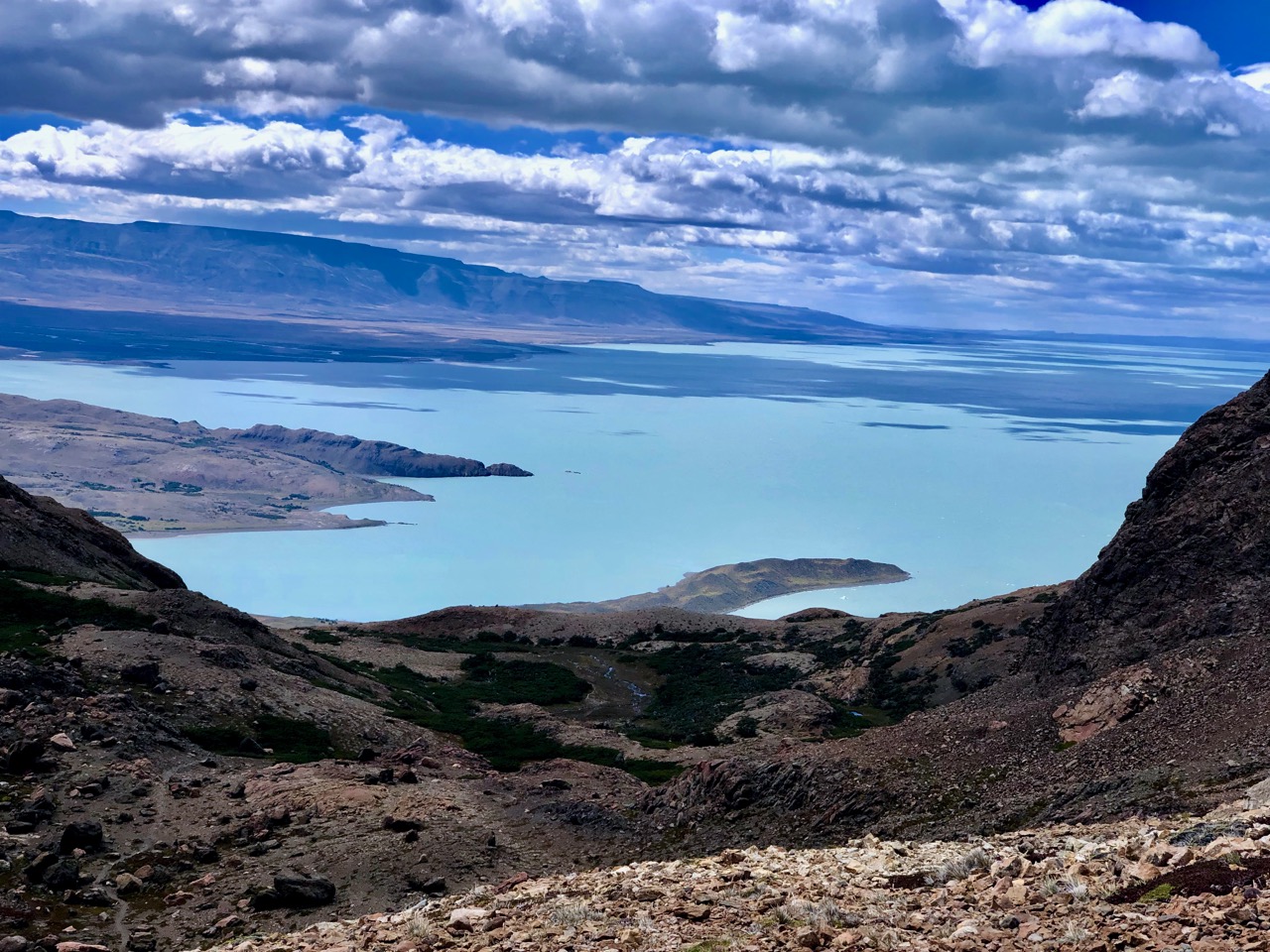
This descent is the most dangerous part of the Huemul. It’s steep and slippery with only one section with assistance. It would be treacherous when wet.
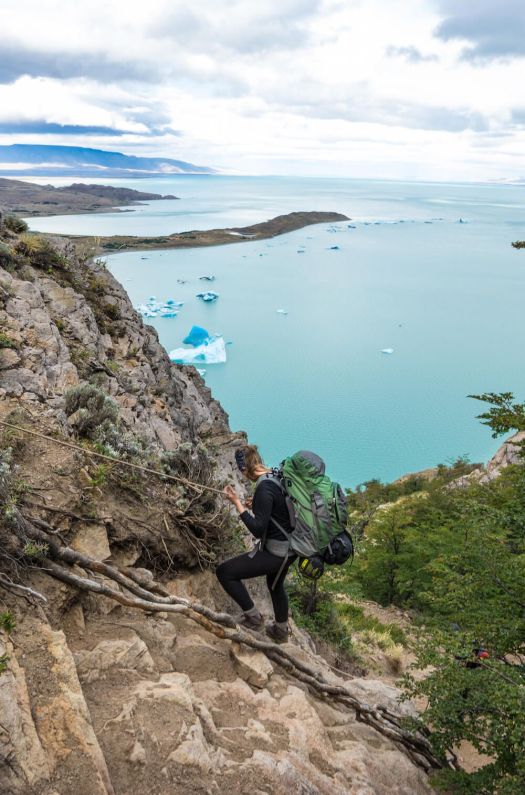
Luckily I was there after several fairly dry days.
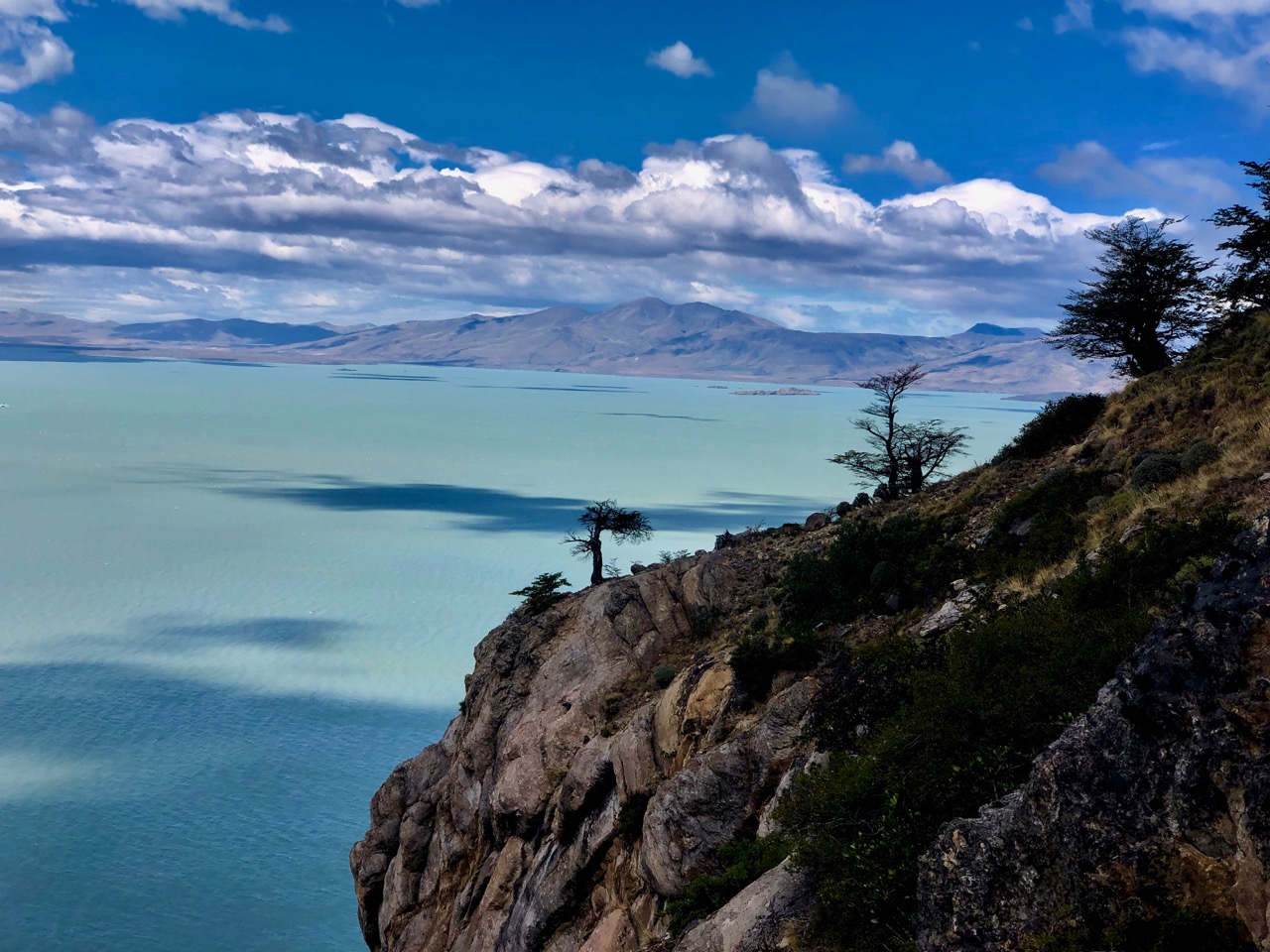
I’ve many times seen icebergs. And loved them every time.
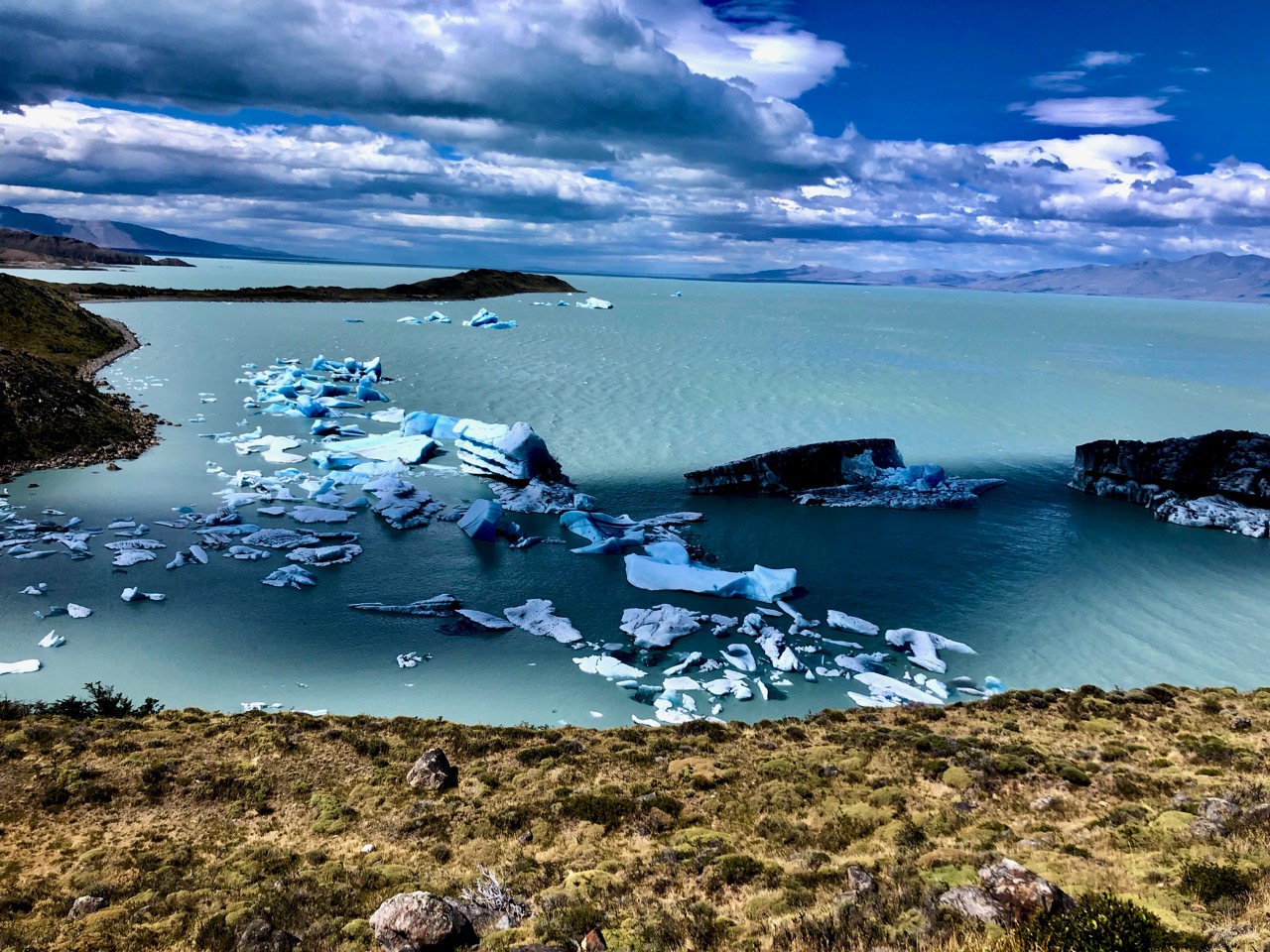
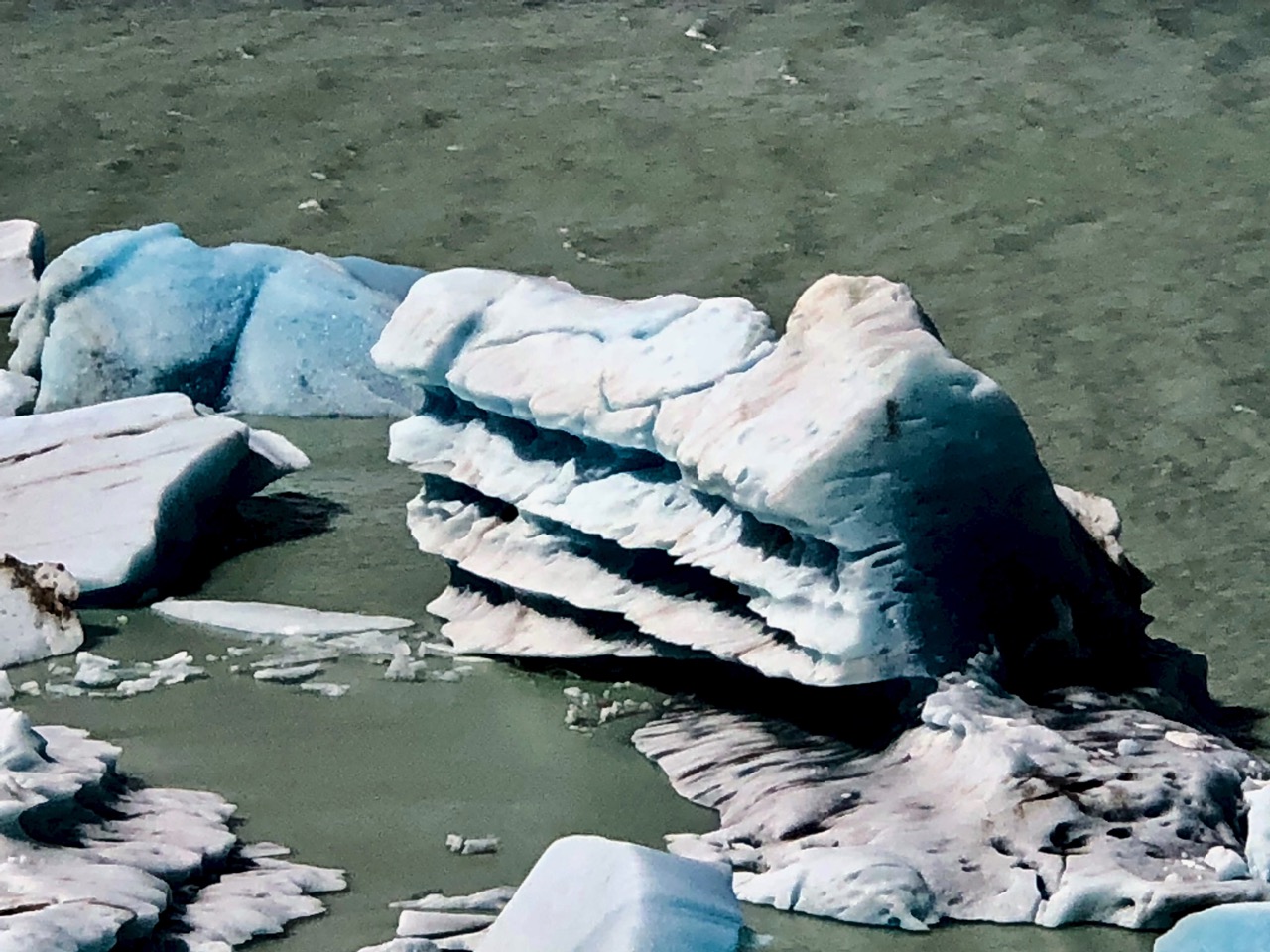
It wasn’t until this point — the Campamento Bahía de Los Témpanos campground — that I was able to see the wall where they had broken off.
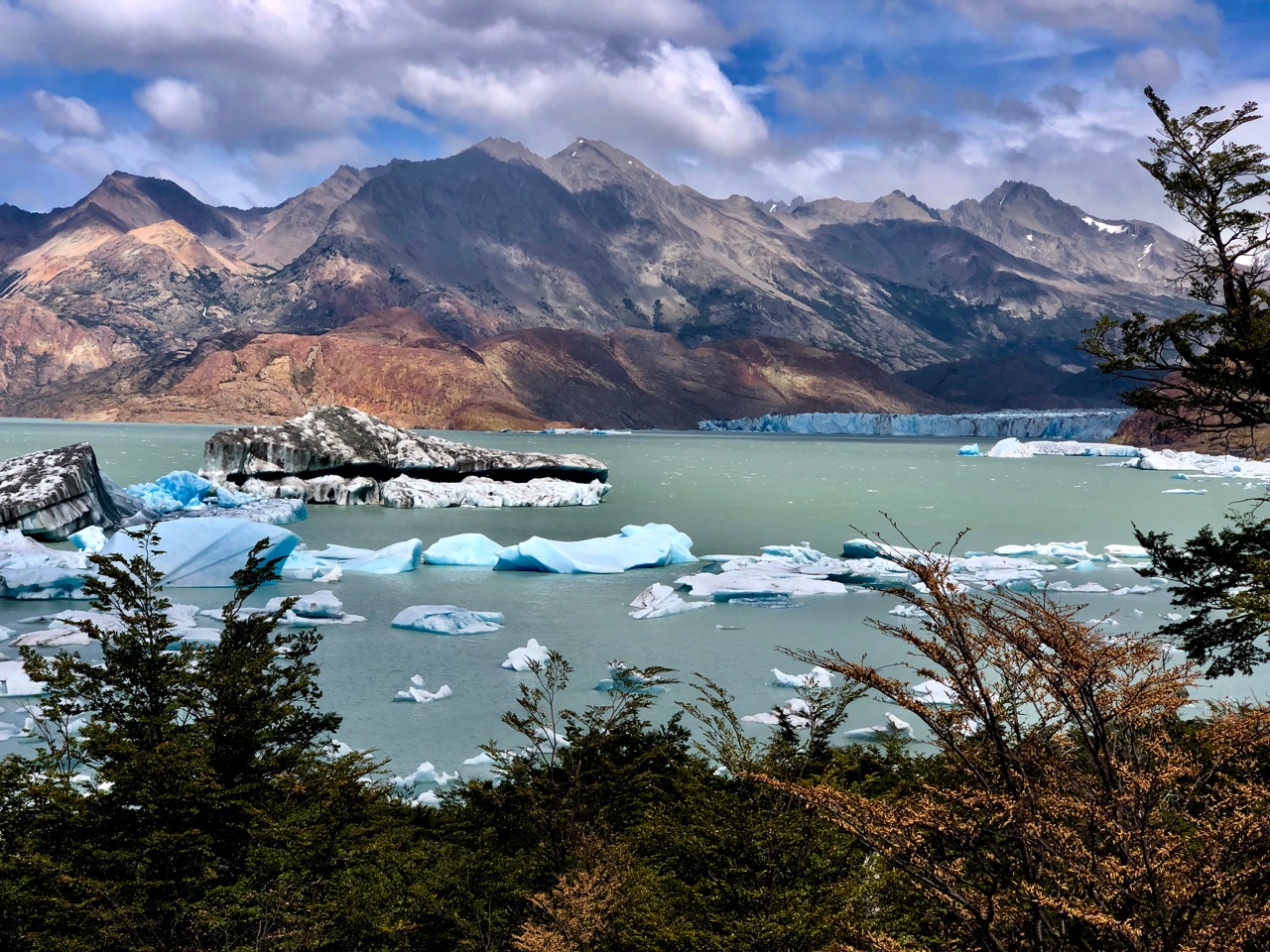
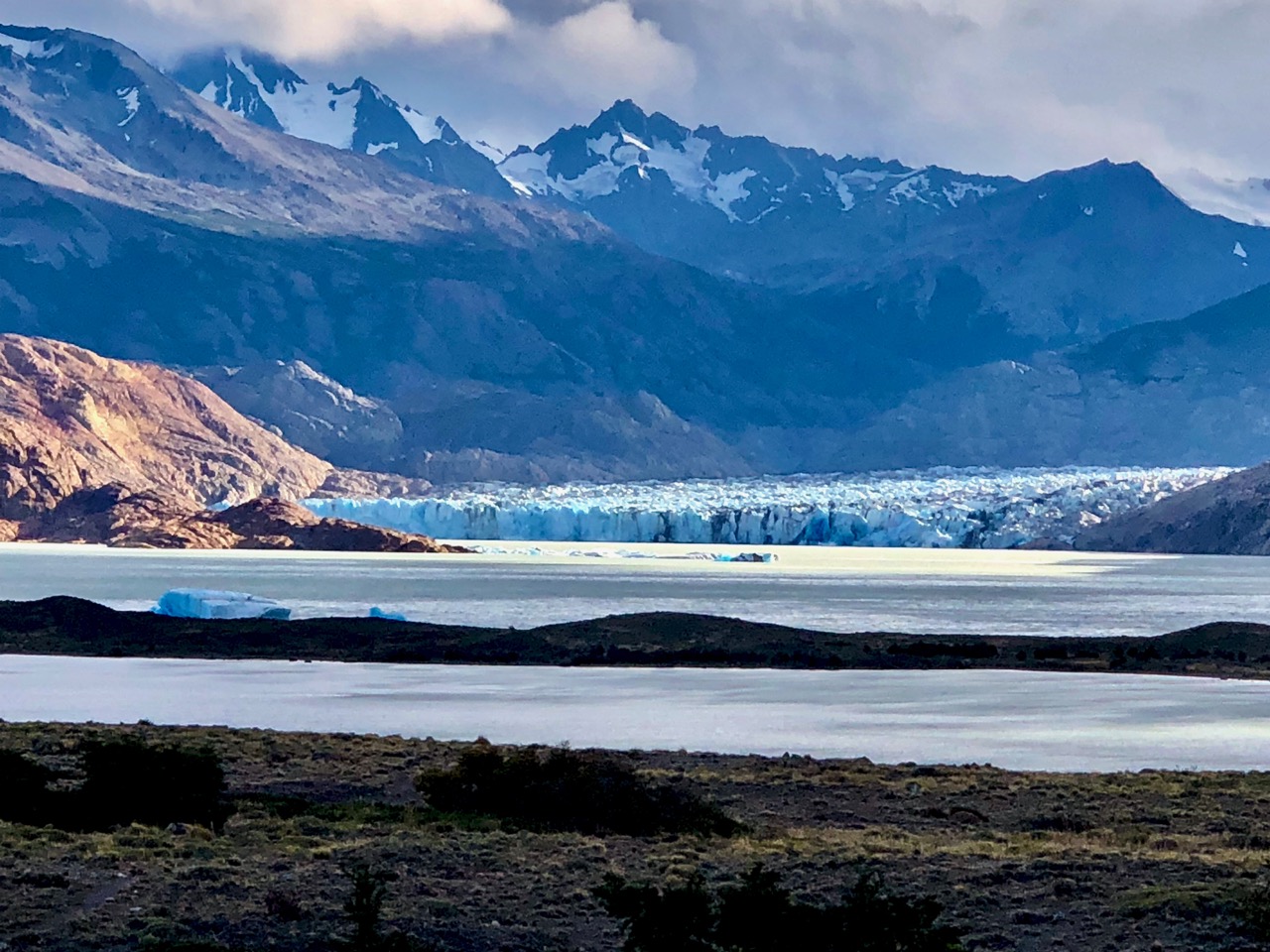
Actually, there are a number of potential campsites widely spread out from there to the old Campamento Bahía de Hornos camp. None I saw were particularly well sheltered from wind.
Travel to Walk had this day at 2140ft ascent and 4420ft descent over 10.7 miles taking them 8.5 hours.
But I carried on planning on another 3 hours or so before stopping.
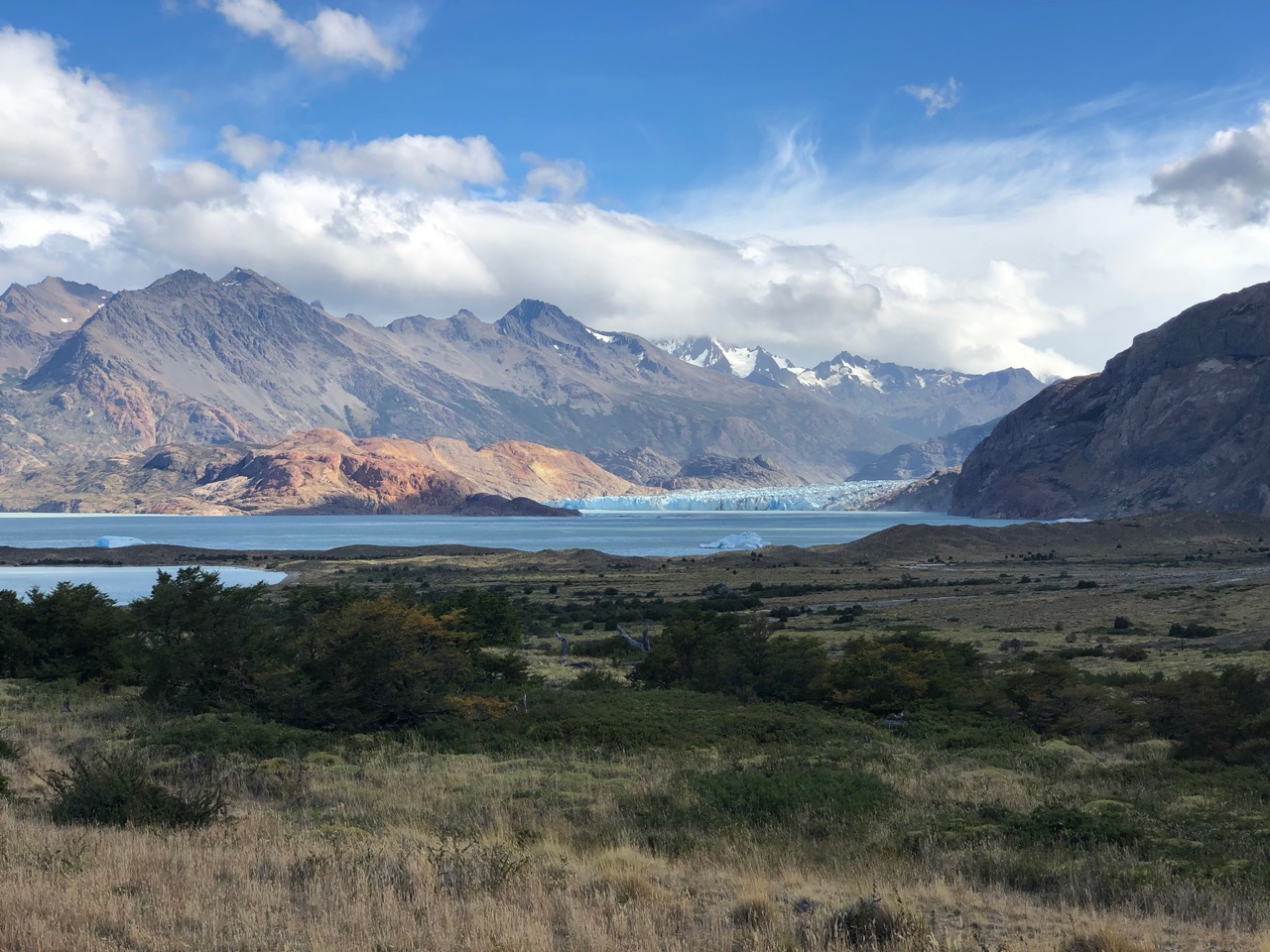
Again there was no real trail. The Maps.me app let me down for the first time in South America. The Fitz Roy section does NOT include the Southern Patagonian Icefield! … Oops. I’d not downloaded that area. … And what was included on Maps.me did not seem very accurate. I did have the recommended 1:60,000 Chalten Outdoor map as well. It wasn’t detailed enough. ☹️
BETTER would be to have a GPS track downloaded, as well.
Certainly I was quickly lost in this wet landscape.
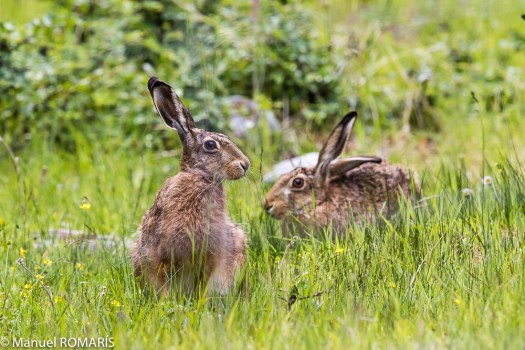
My only company out in these fields were rabbits. Thousands of rabbits. Introduced from Europe, I understand.
Or are they hares?
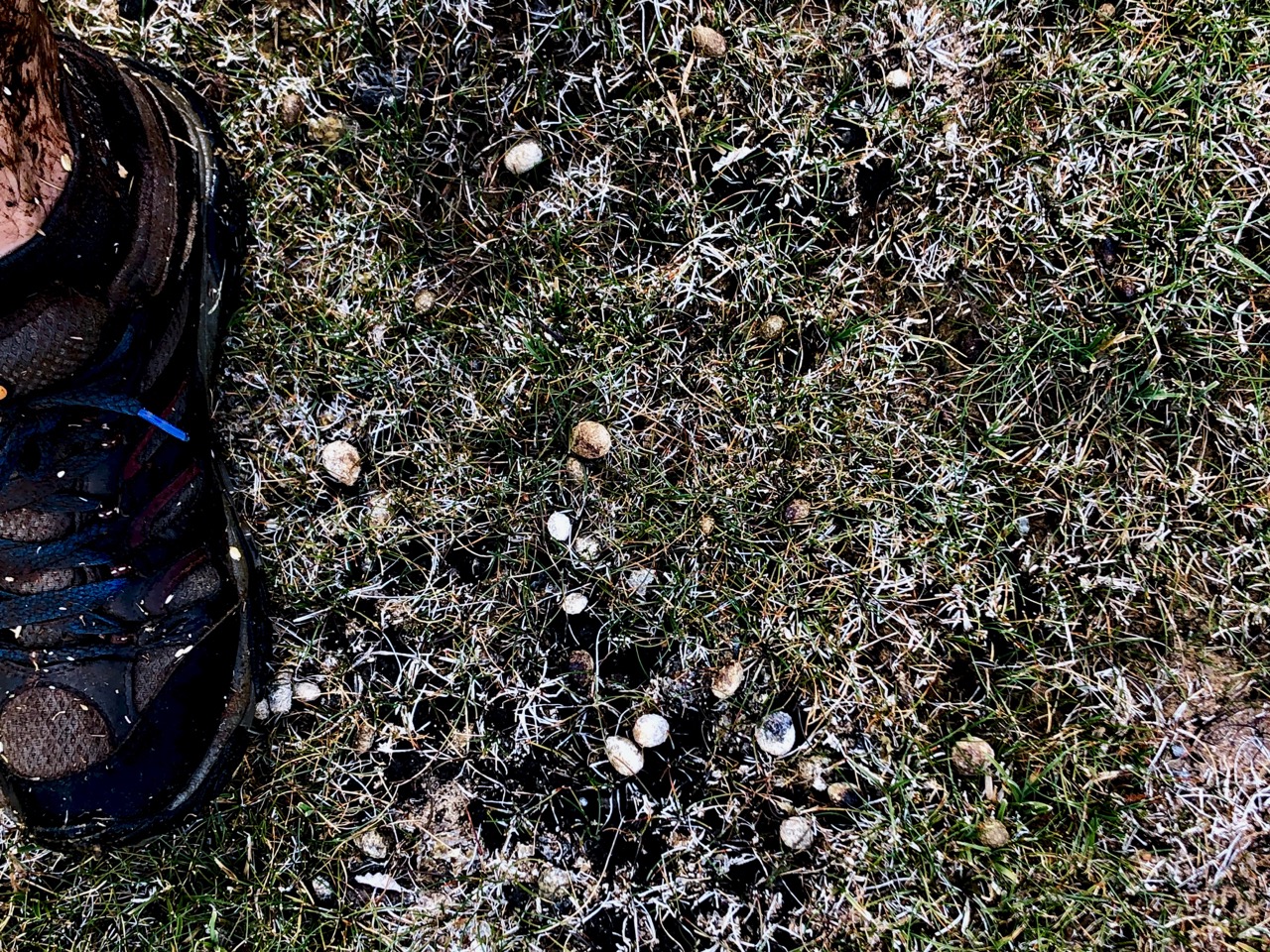
These fields are covered with their droppings.
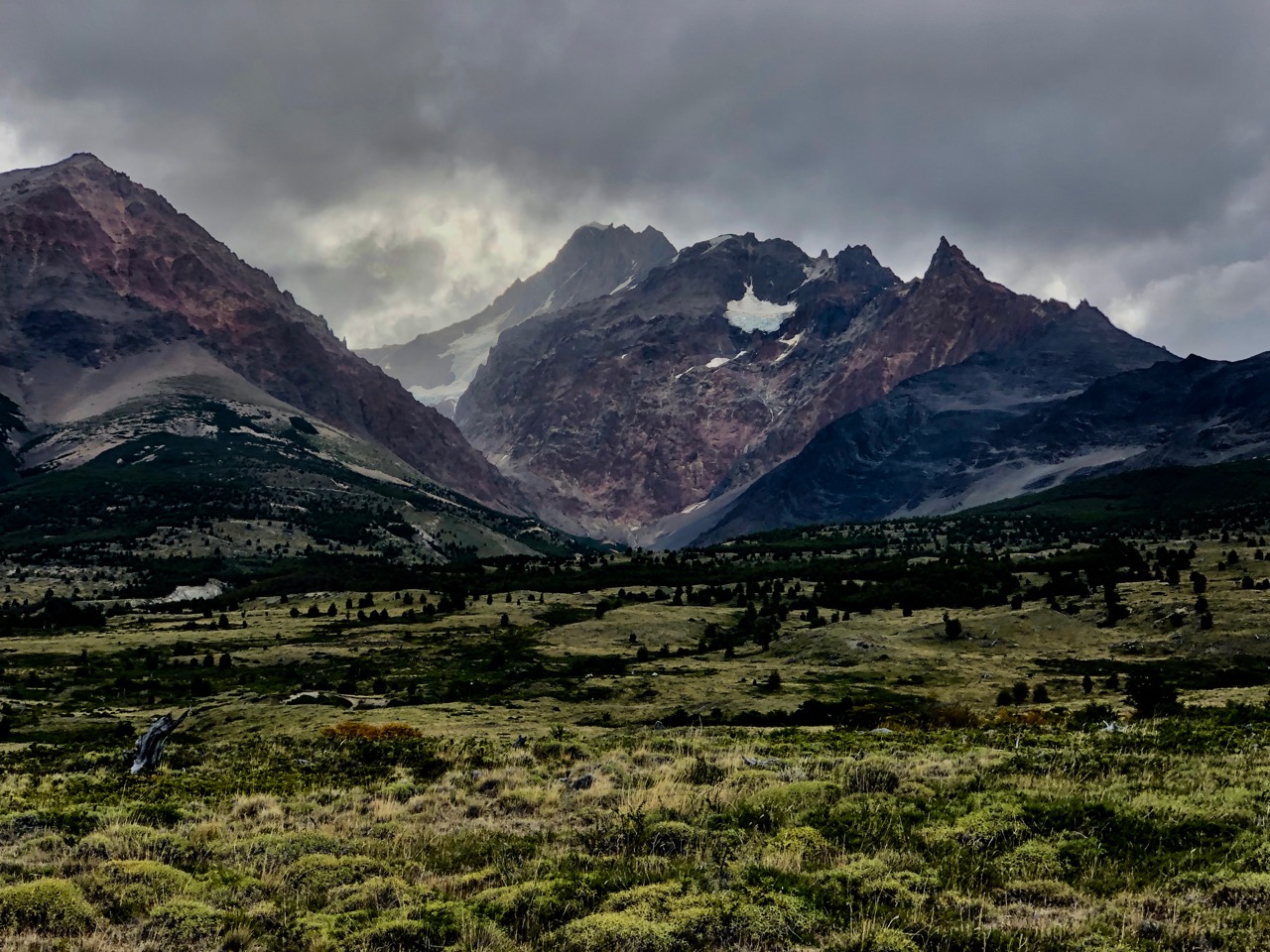
This route is named for the rare and endangered South Andean Huemul deer. Numbers in Argentina were estimated at 350–600 in 2005. Total number may be around 1500.
I did see two Huemul 15-years-ago close to Cerro Castillo in Chile. I was hitchhiking with a local. Shocked, he stopped the vehicle. Though living there his entire life it was the first time he’d seen one.
Lost in the mud, this was my least happy time on the Huemul.
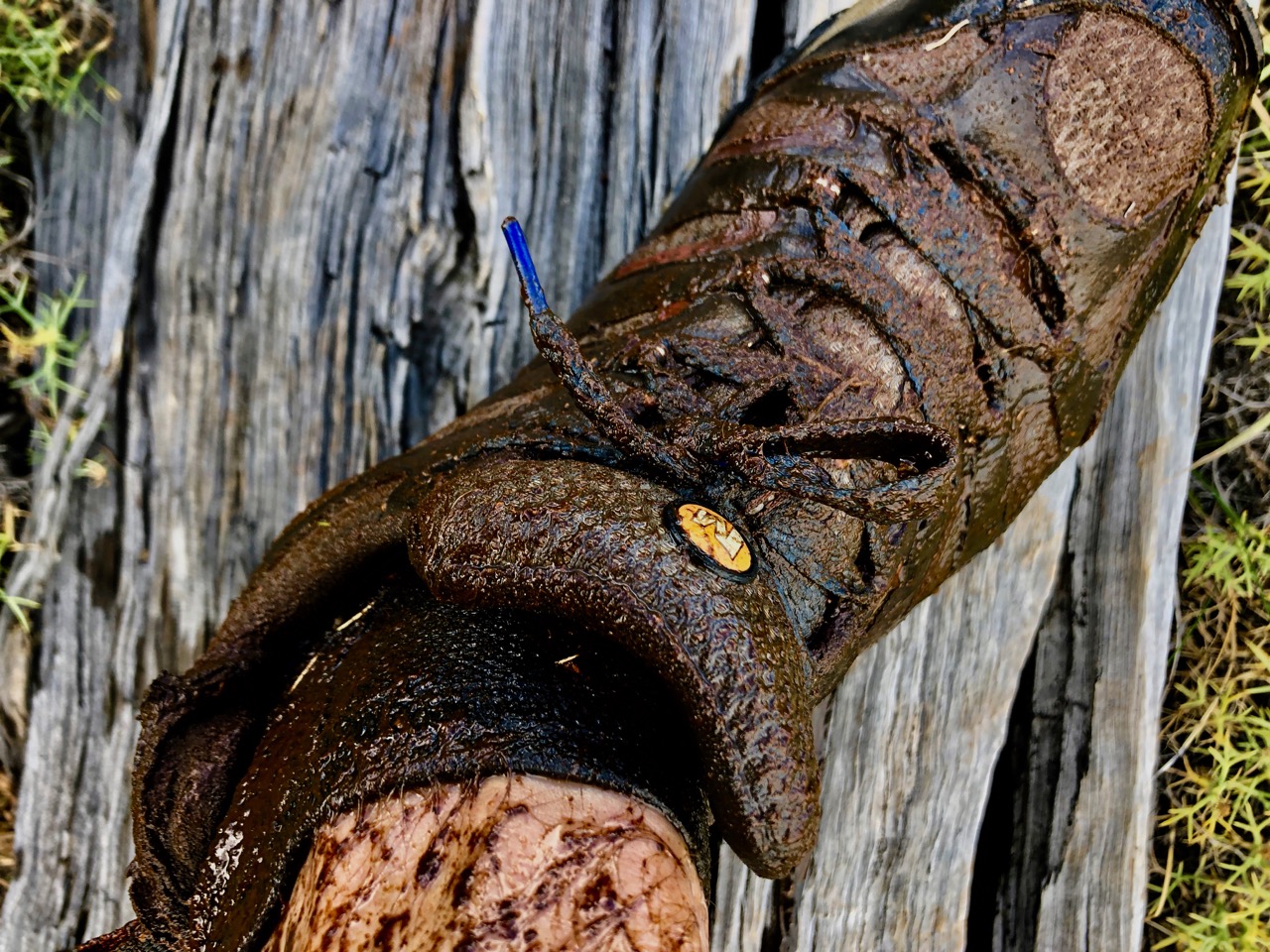
It was windy too, of course, but I quite like wind.
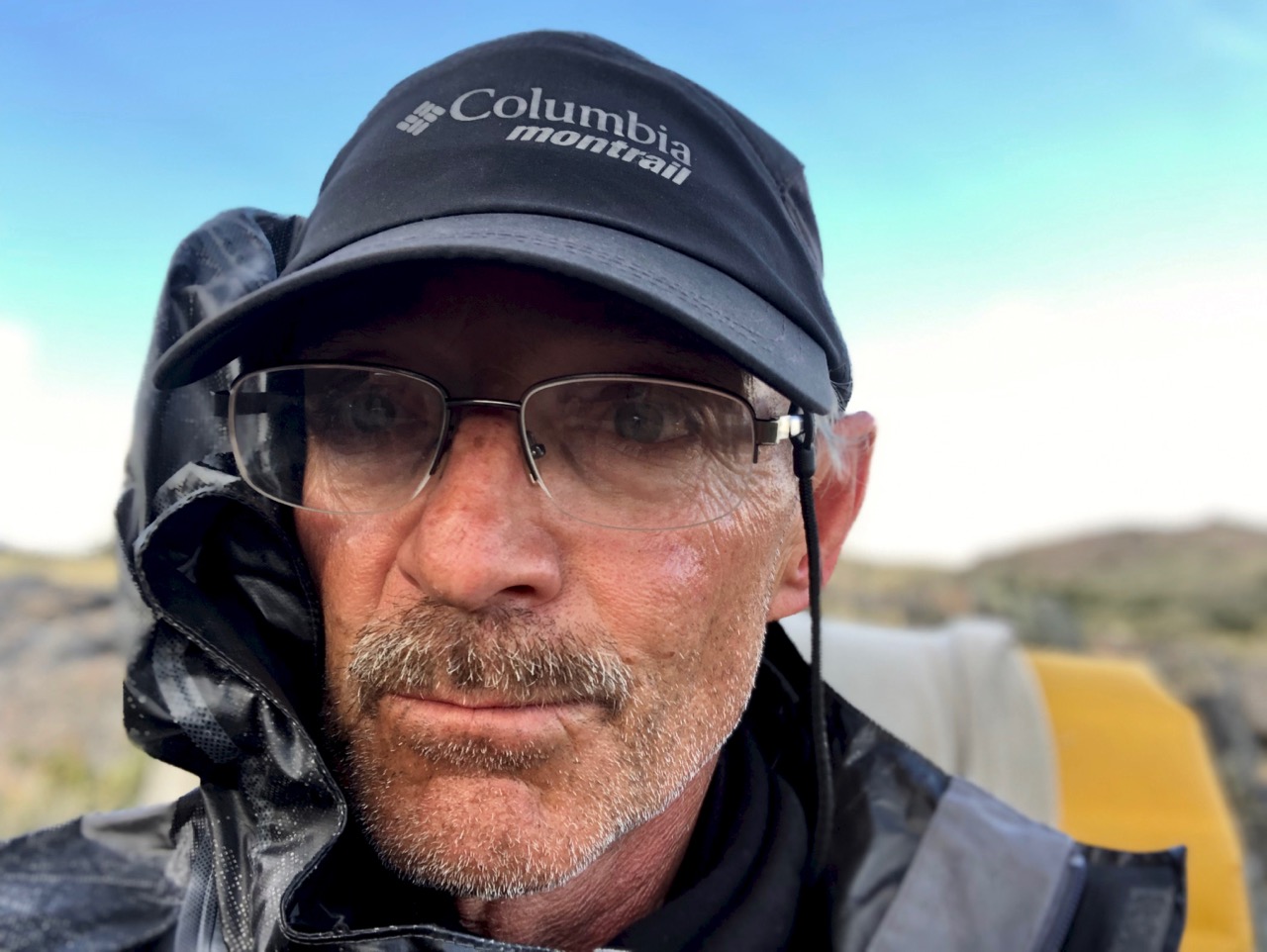
Irked, I stopped taking photos.
After an hour of more I finally found the trail and a half-decent water supply. Most drink from lake Videma on this section.
I set up my tent near that small creek. Very tired.
trip report by BestHike editor Rick McCharles
Huemul Route – day 1 | 2 | 3 | 4 | info
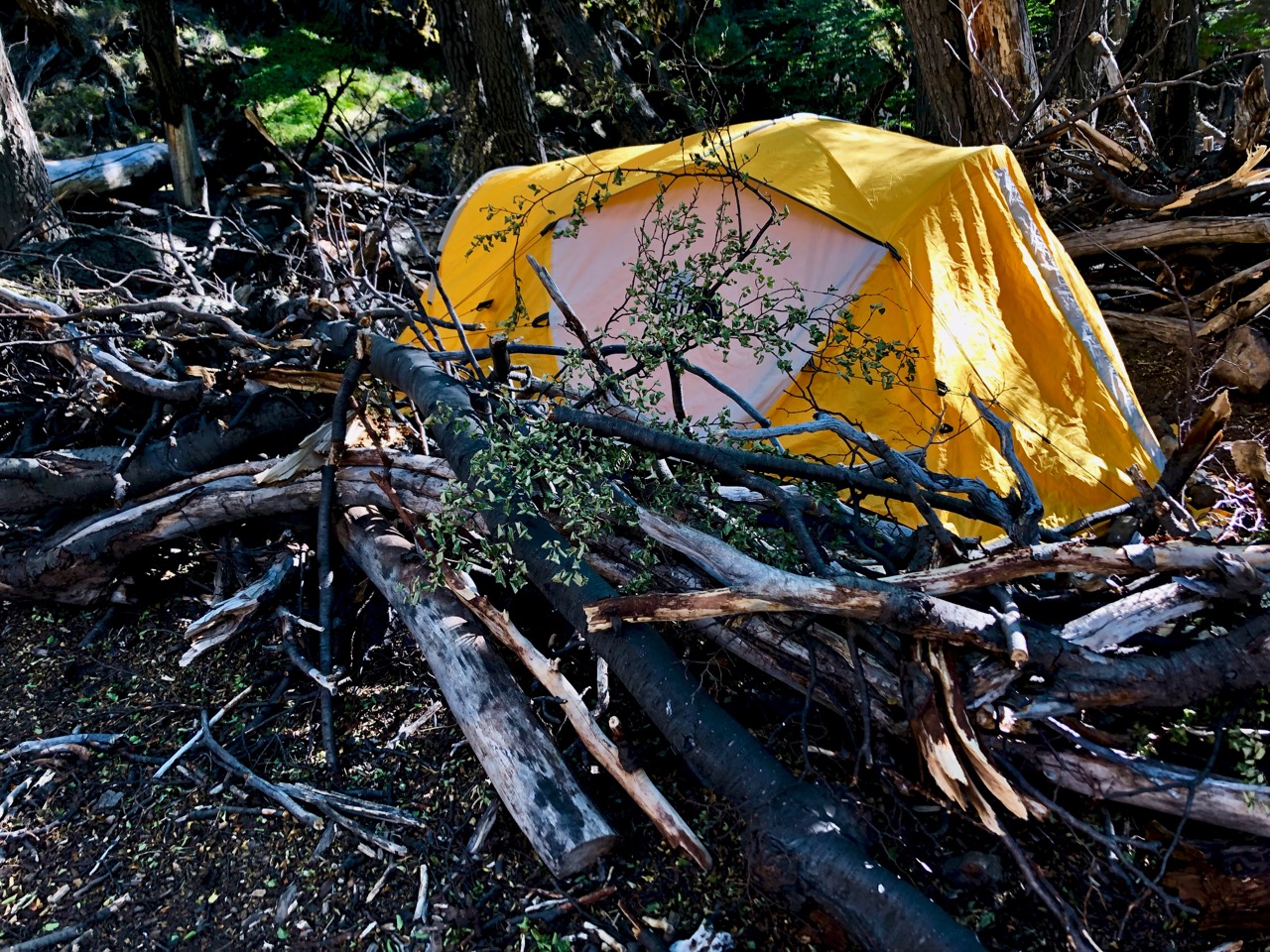
I was up early and continued along the river another hour or so to reach the campground before everyone else had left.
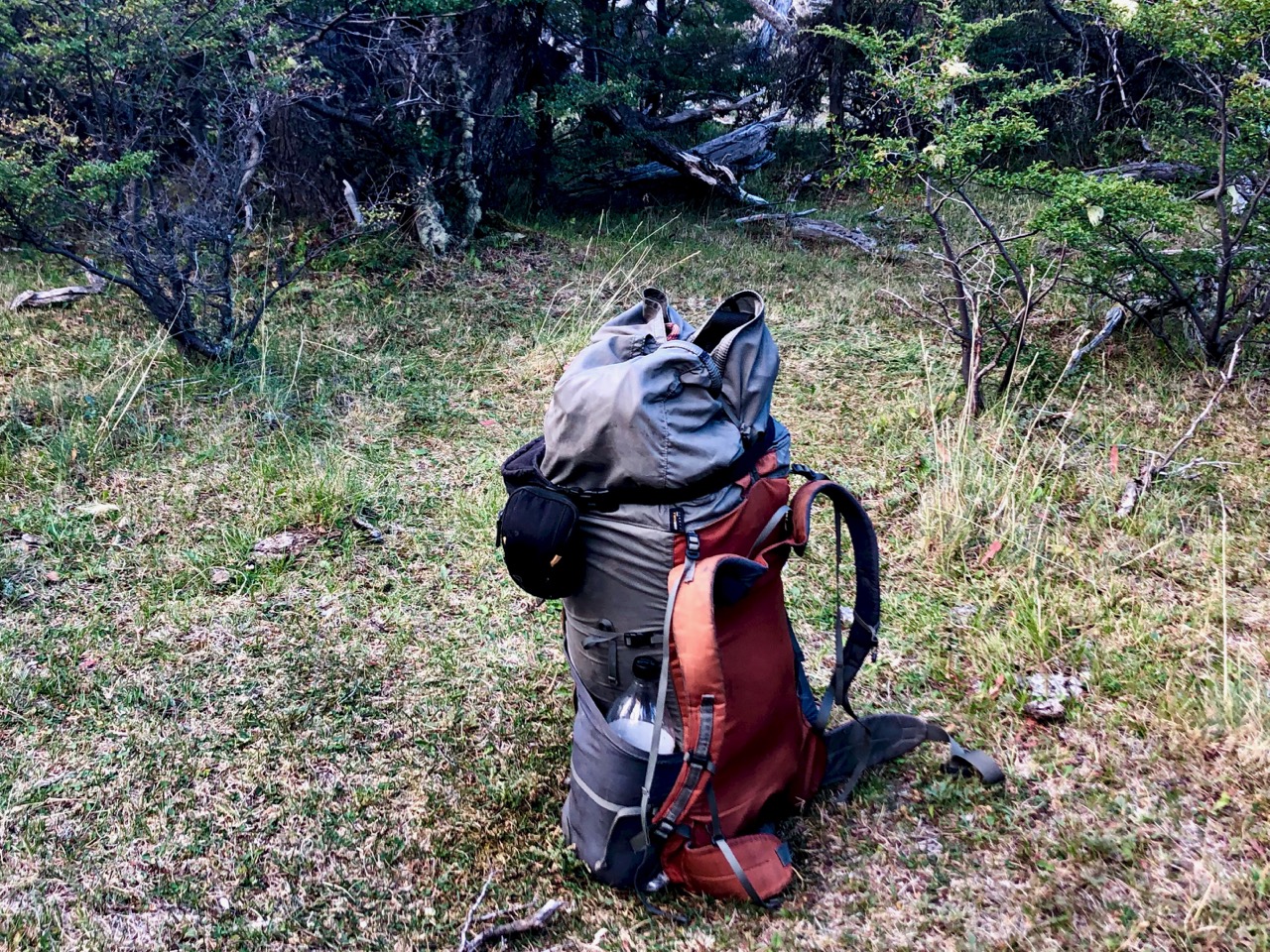
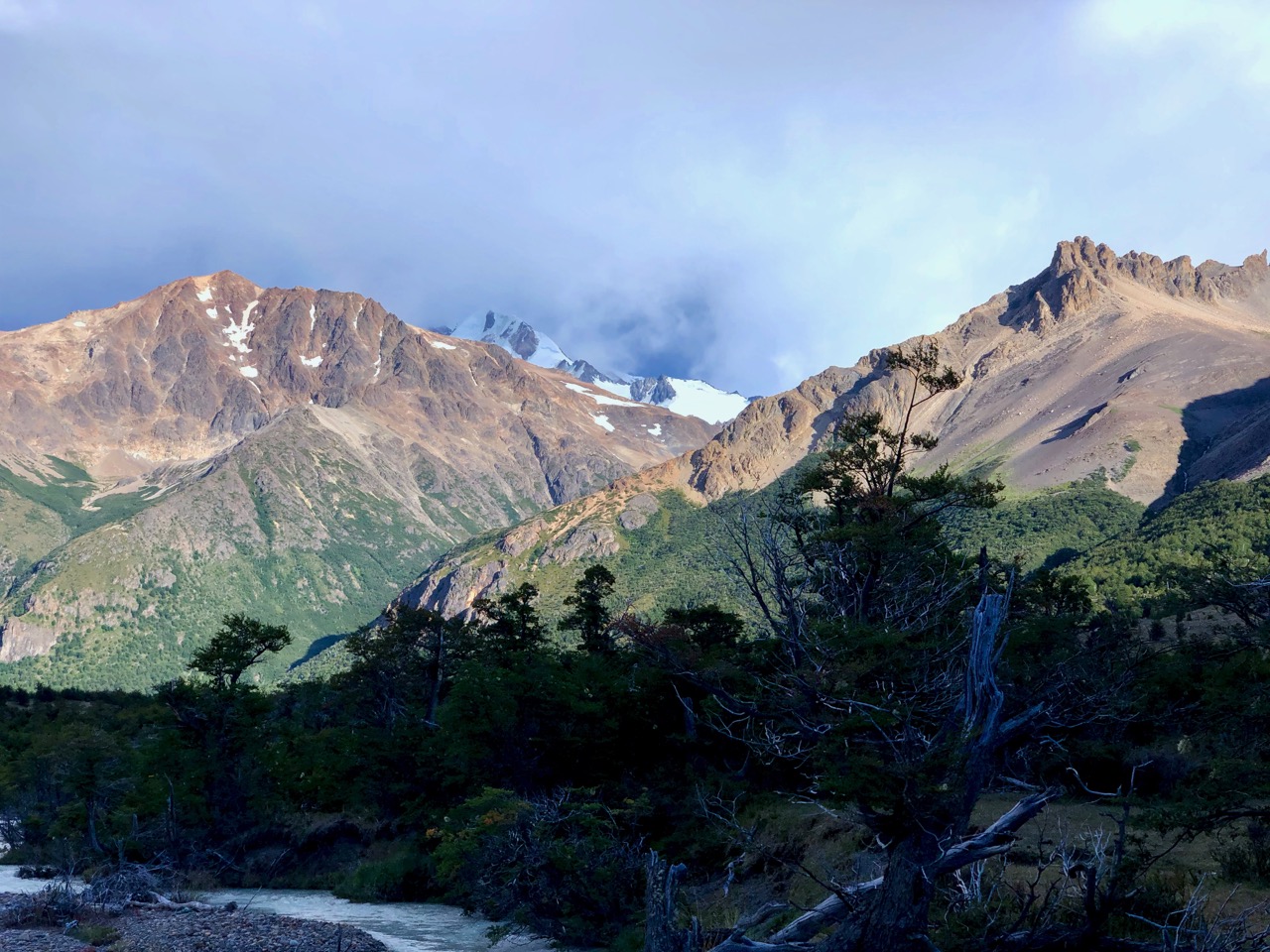
On inspection, I was happy NOT to have slept at my assigned campground. The toilet is hideous, for one thing.
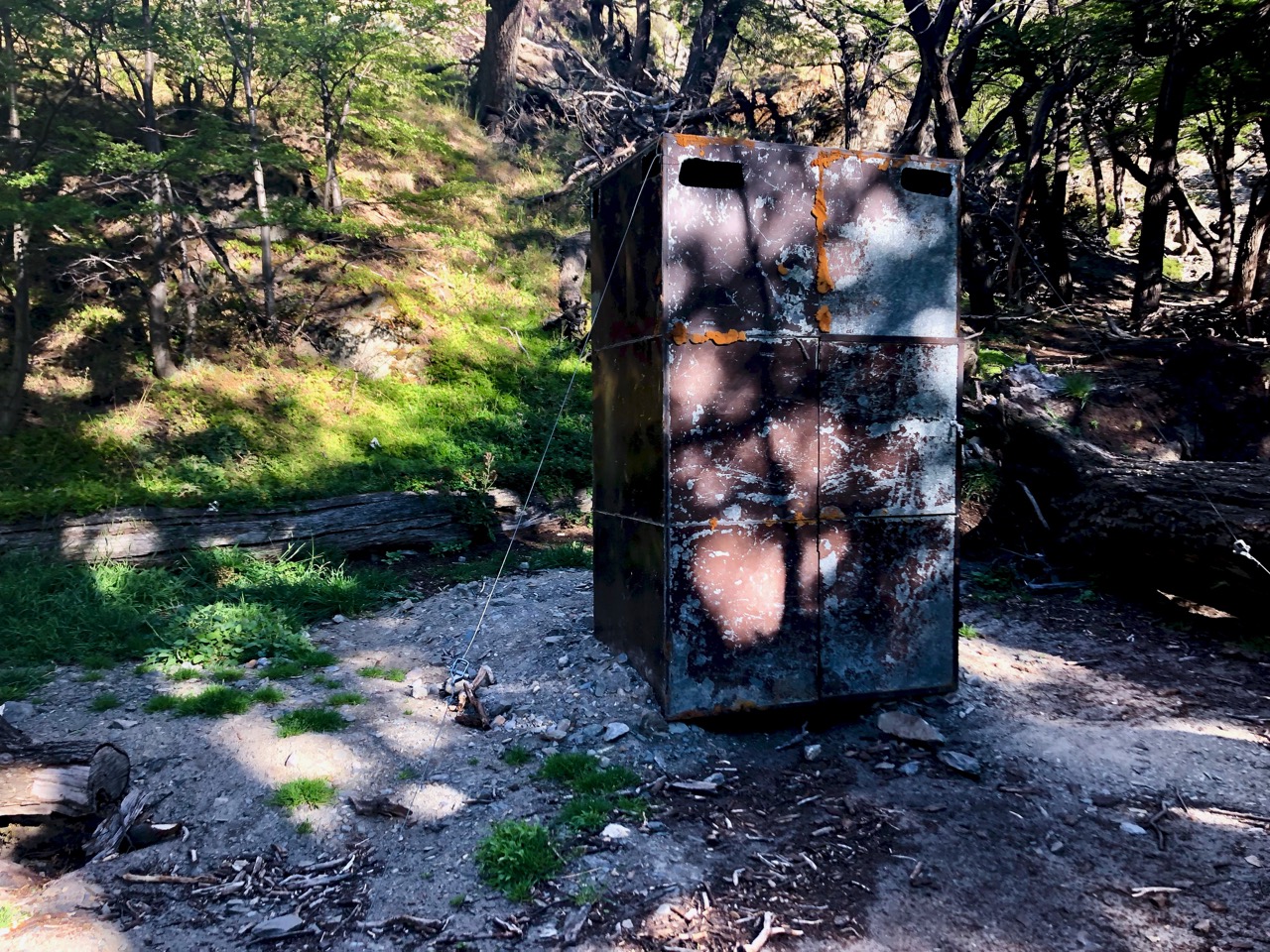
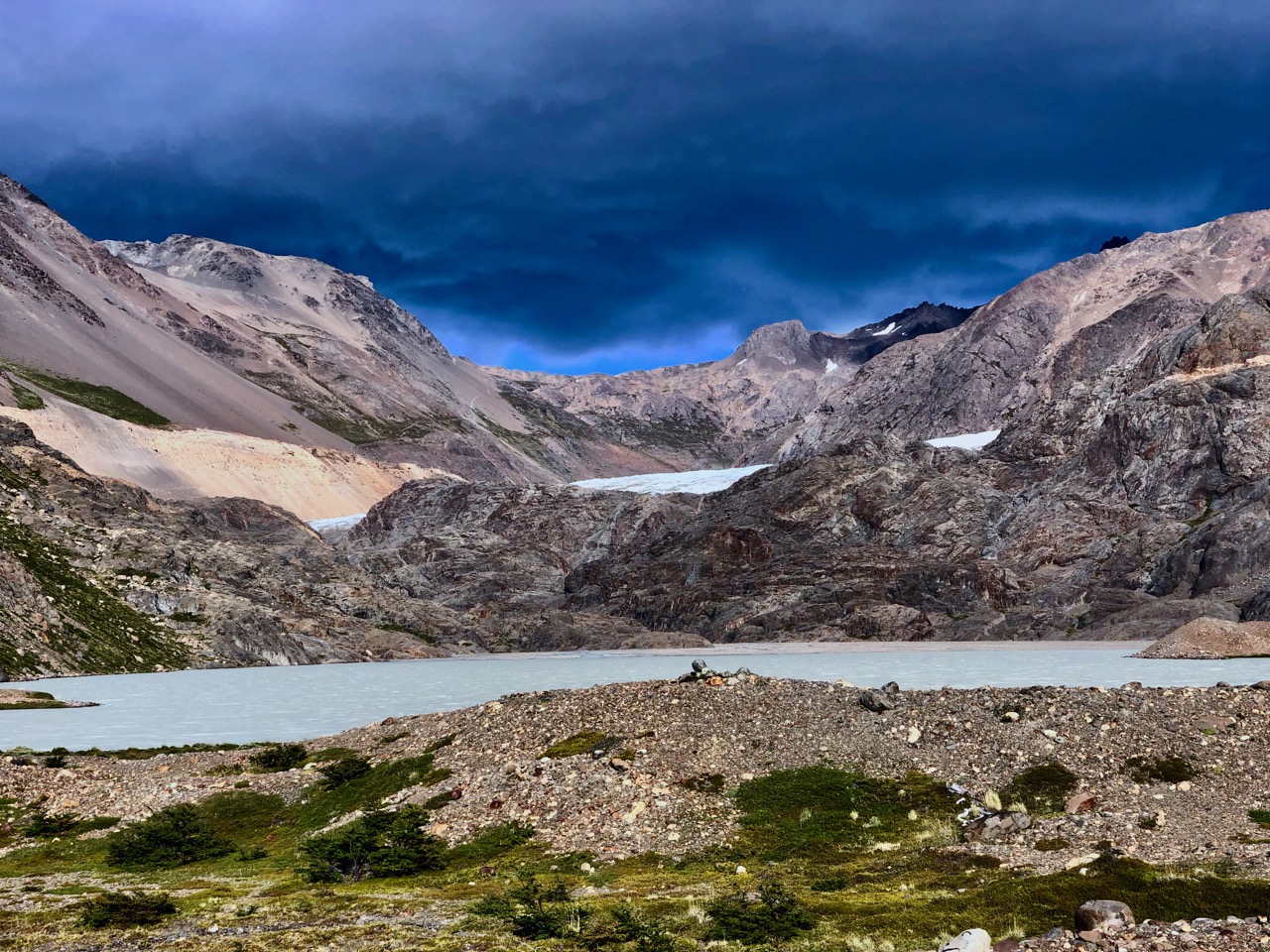
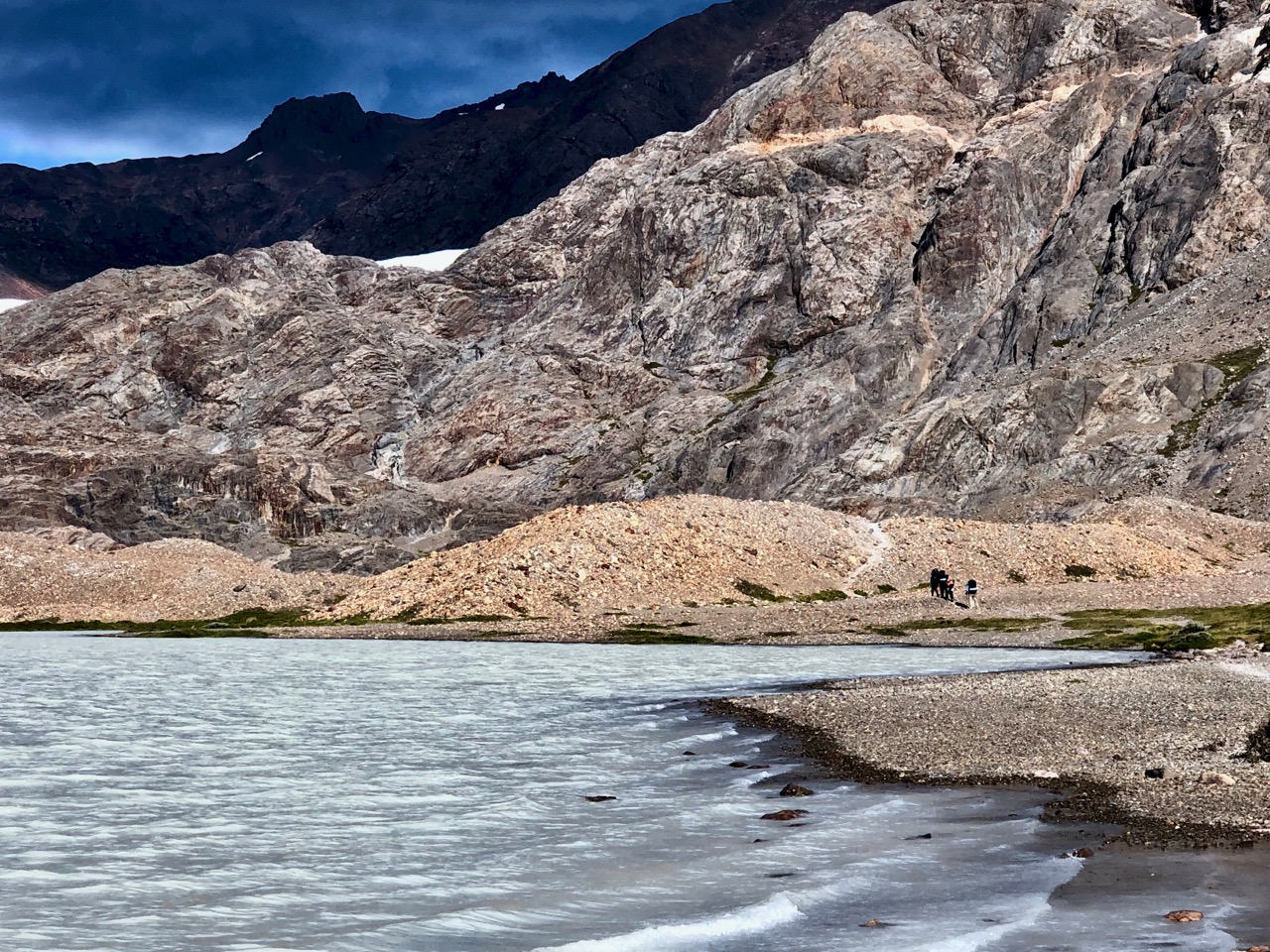
In excellent visibility I could make out the trail heading up and over the pass centre right. In poor visibility it could be difficult to find.
Old and wiserish, I followed a group to the first Tyrolean Traverse.
Then watched carefully as the guide showed his 3 clients how to do it. I hadn’t done one of these in decades.
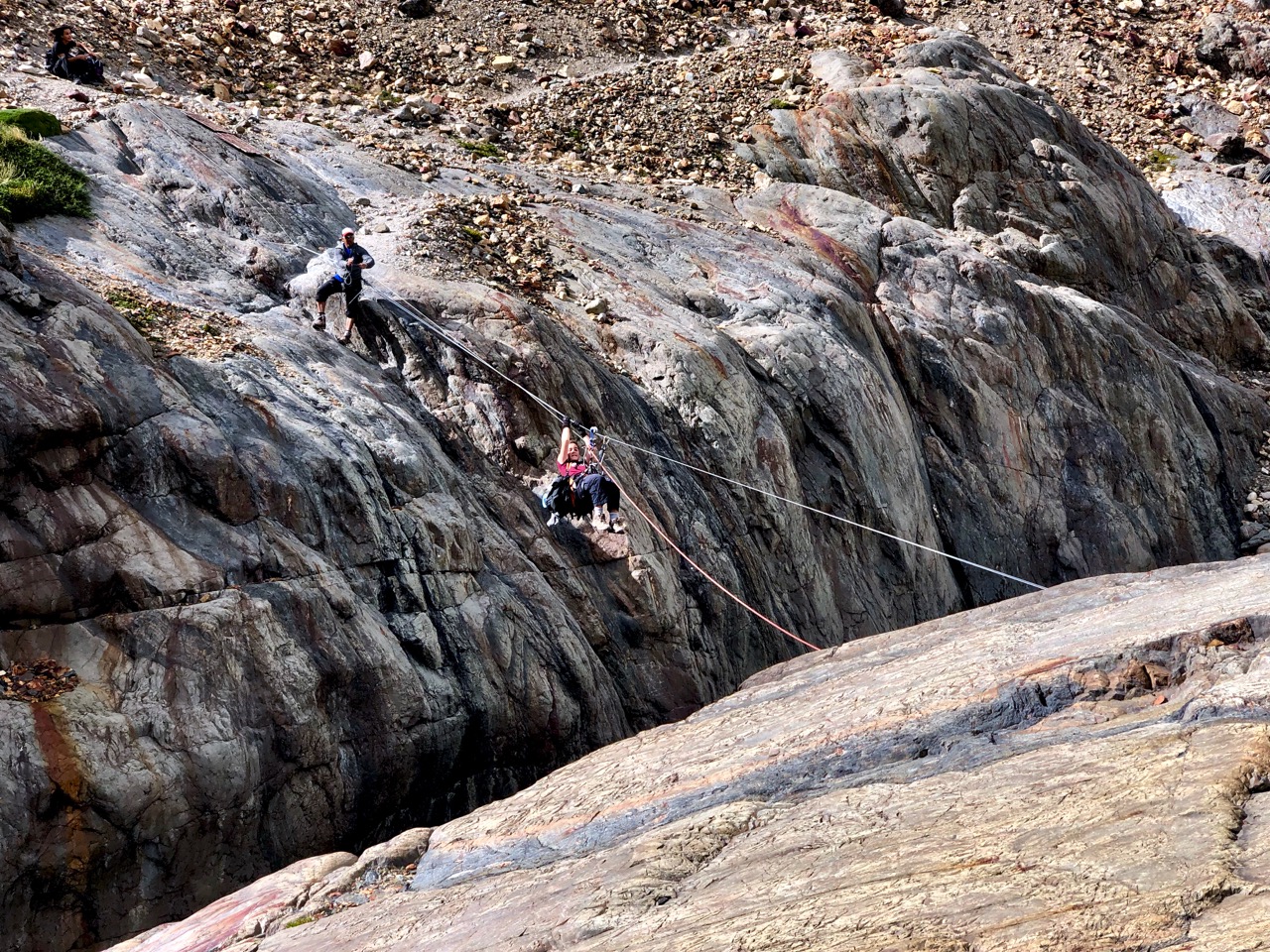
It actually screwed up for this girl. The small rope used to pull back the pulley got tangled. The guide earned his money — and impressed me — by sliding over on the cable using his emergency back-up carabiner … and got her untangled.
It went fairly well for me, though I was very tired by the end.
We wore our packs, but it would probably be smarter to tow the backpack like this guy.

Here’s the gap crossed from above.
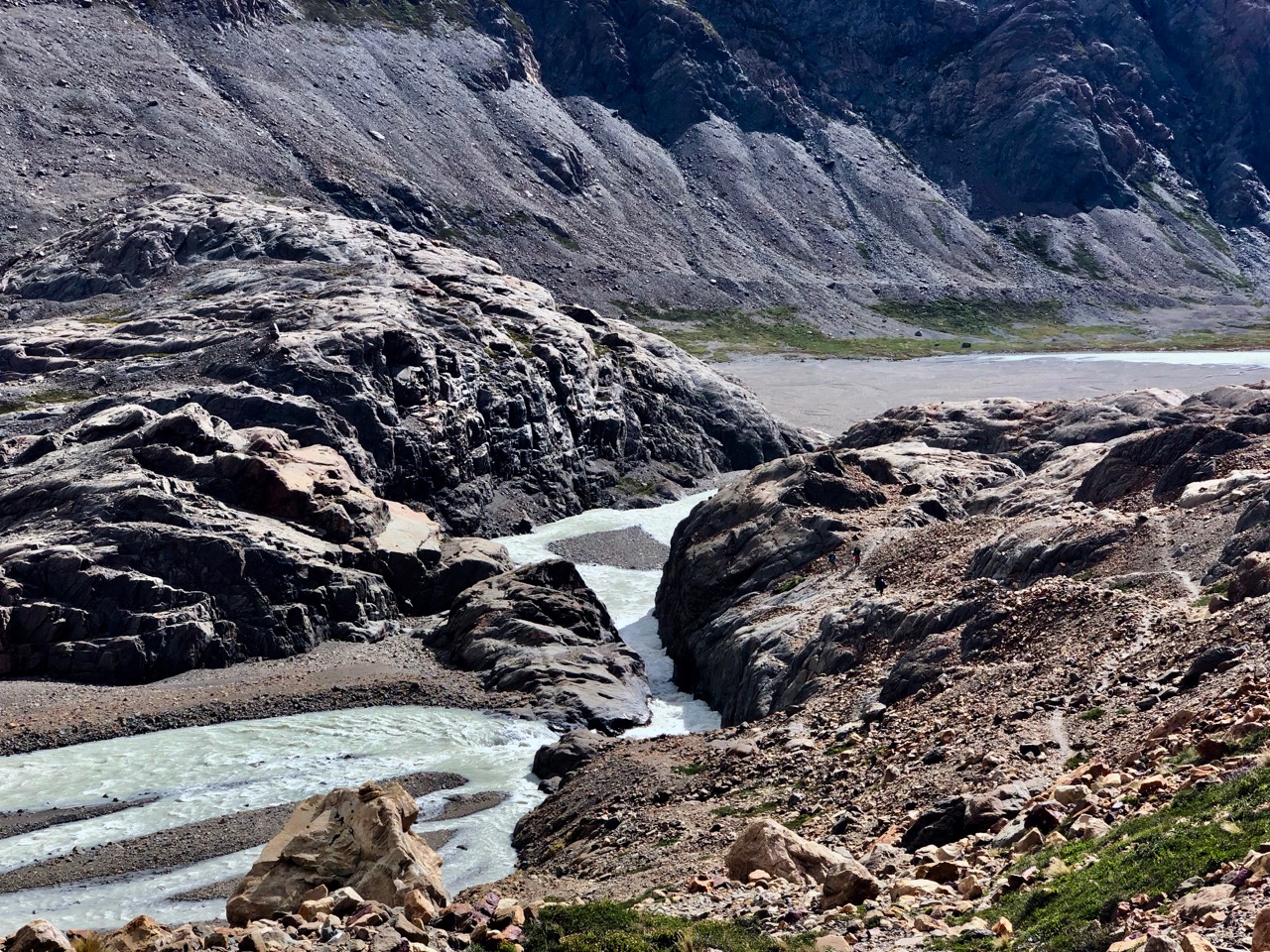
Actually, you can often wade the river instead. AND it looked to me that you could go around the lake to the left avoiding the crossing completely.
From here the views were spectacular. This was easily my favourite day.
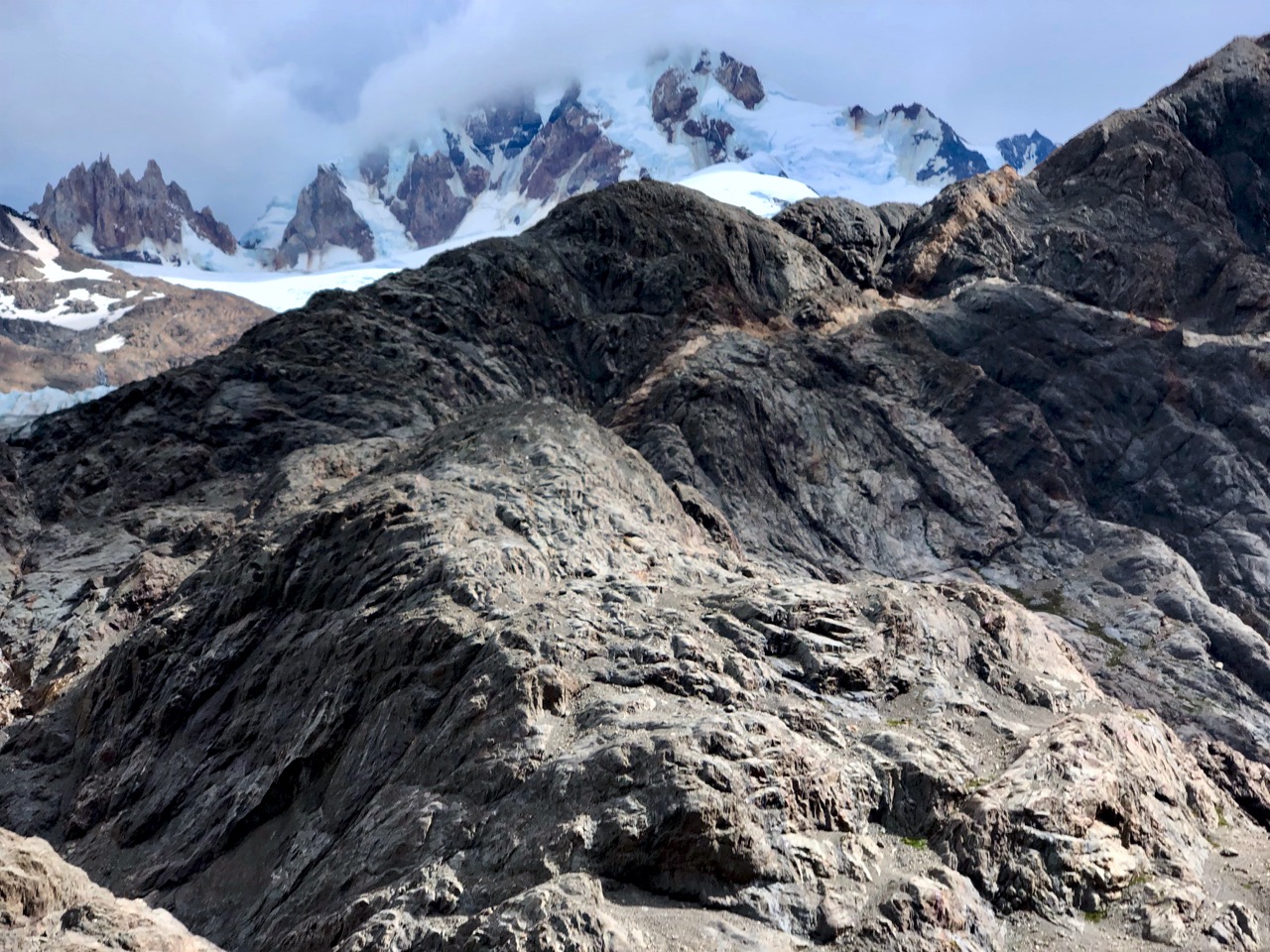
I stayed close to Glacier Río Túnel because it was so cool.
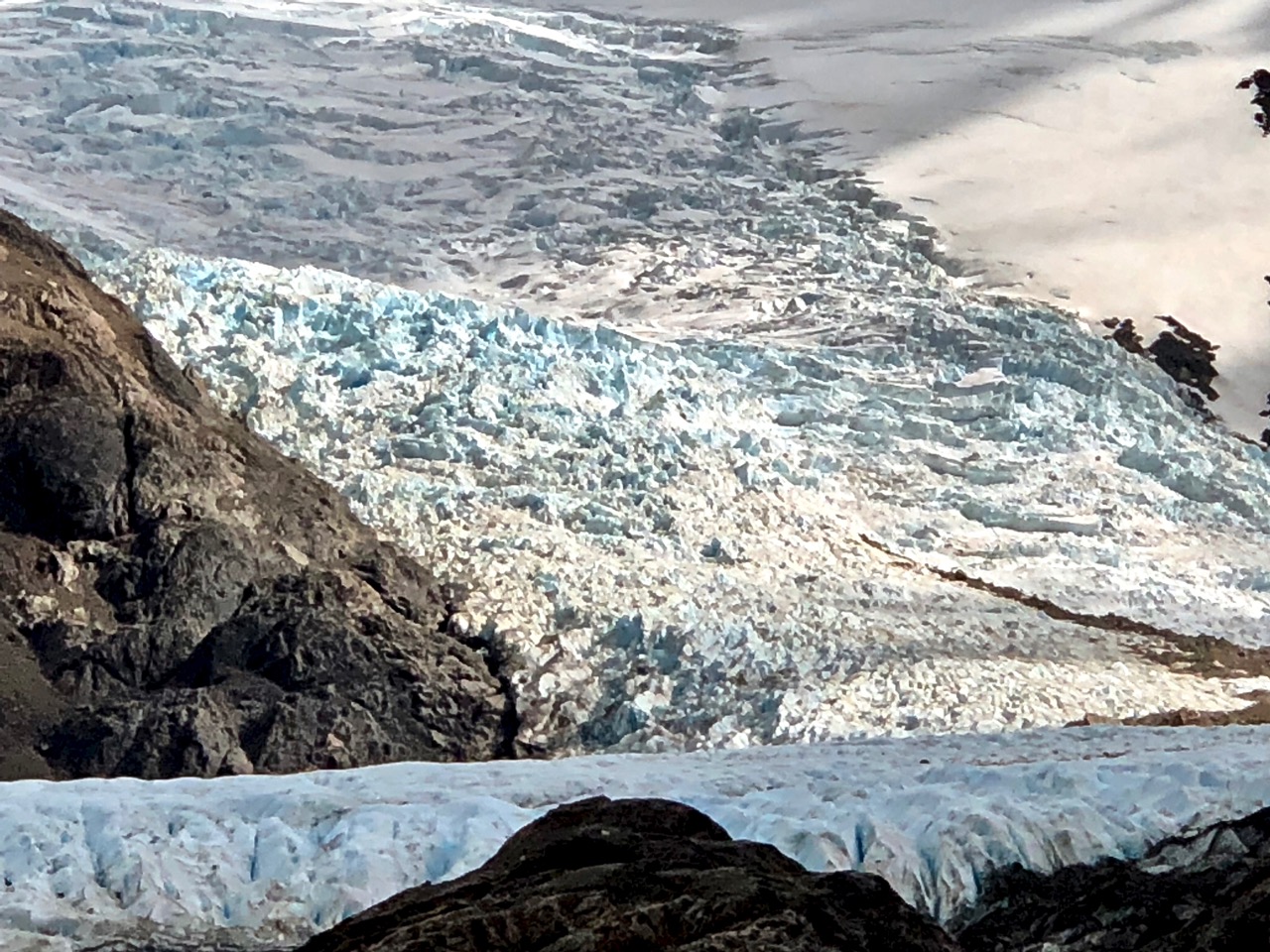
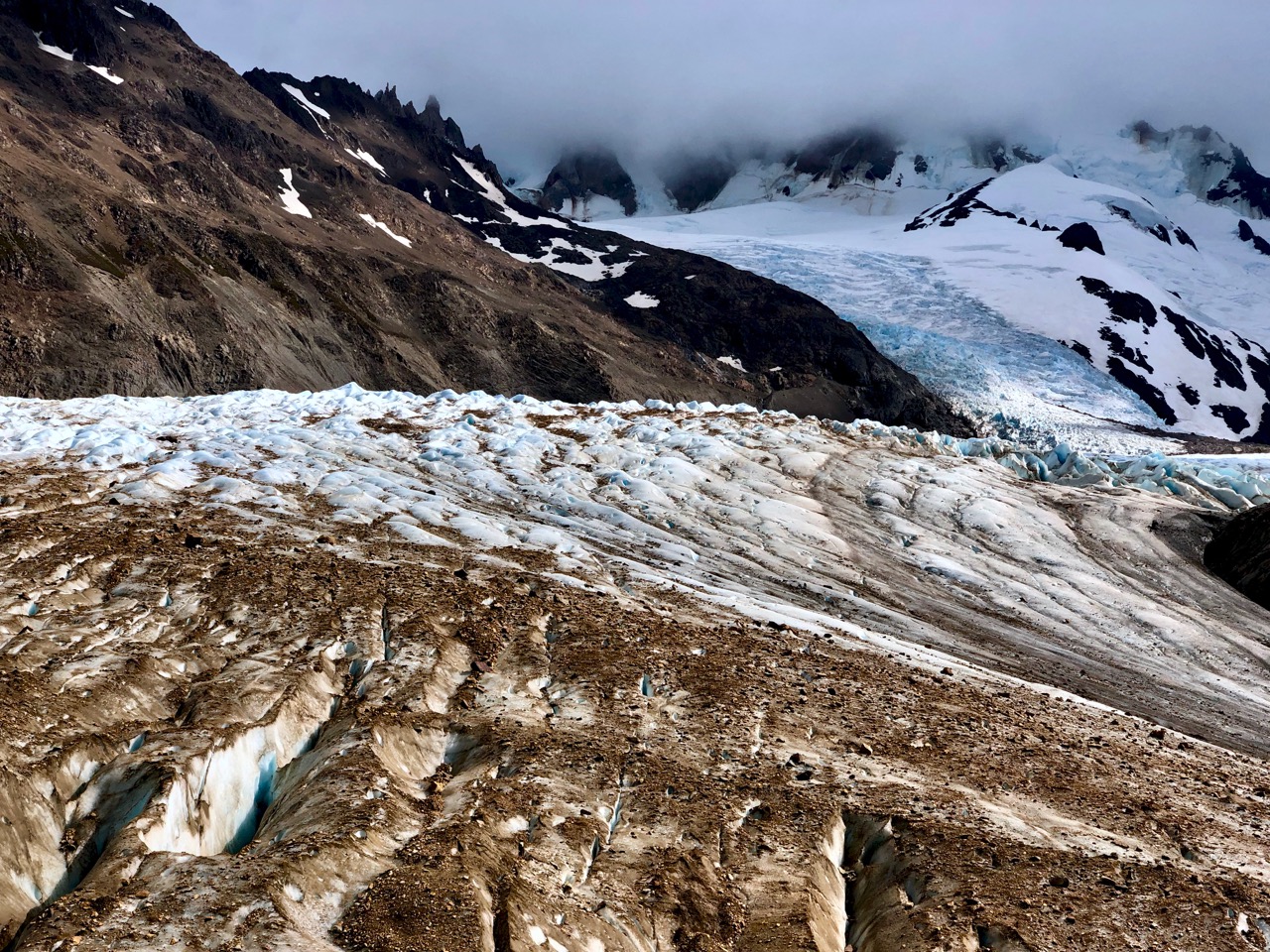
In Patagonia people pay a lot of money to walk glaciers. And have a shot of whisky.
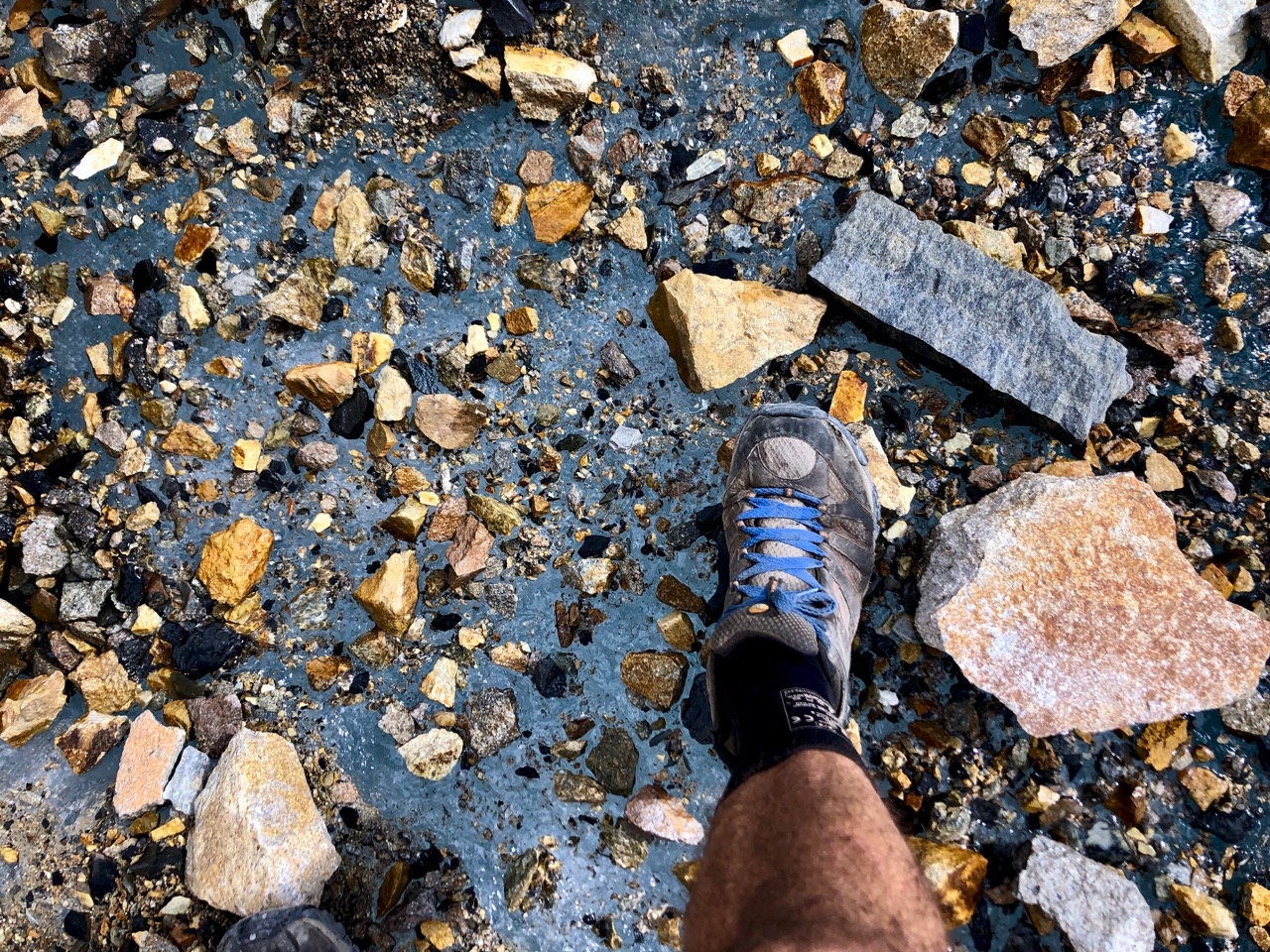
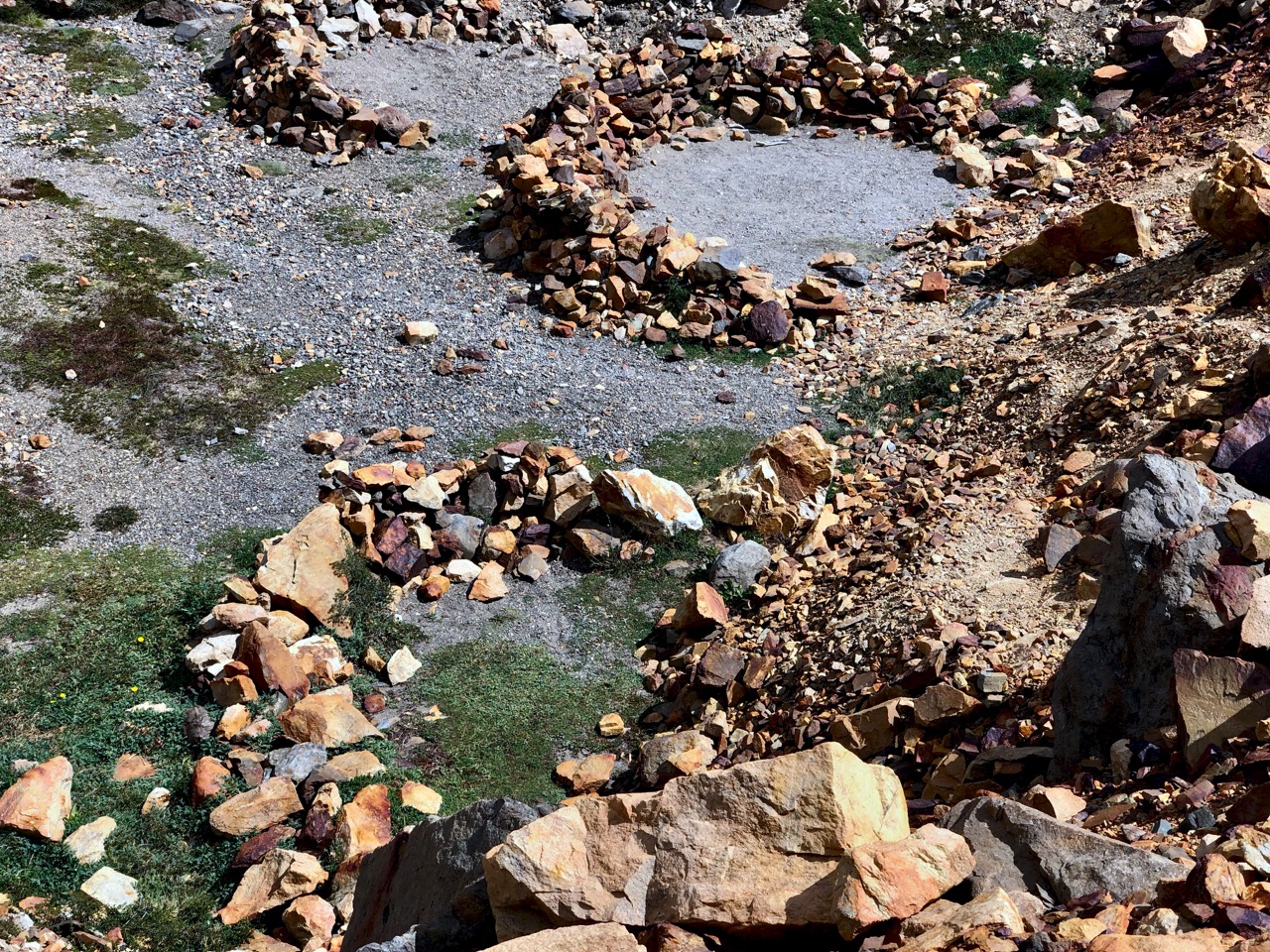
My map showed this campground at the end of Glaciar Río Túnel Inferior. Sounds like it is no longer legal to tent here, however.
The guide had taken his clients up high immediately after the Tyrolean. Eventually I was forced to scramble up the loose moraine scree to catch up.
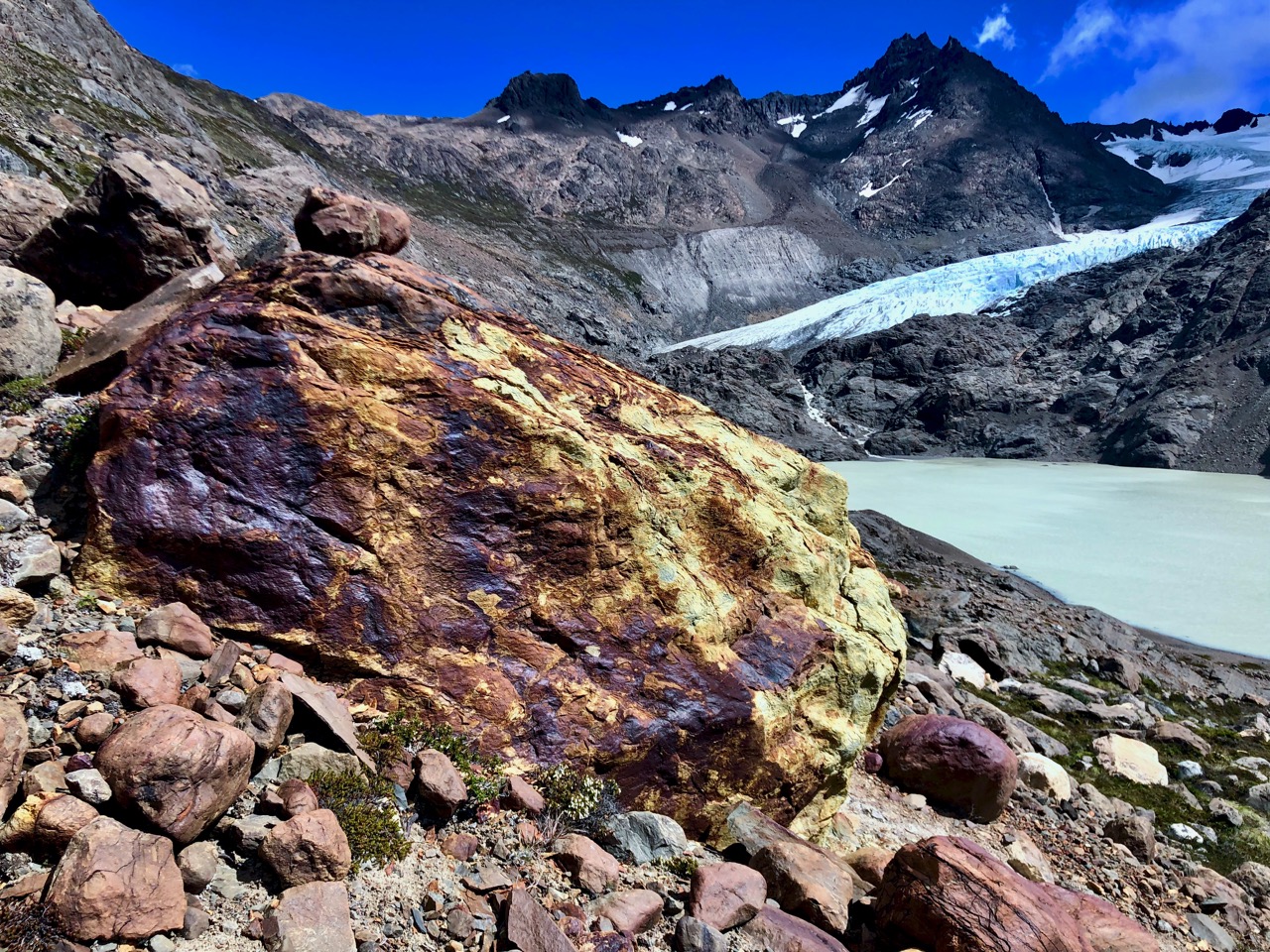
It was work. But with great views.
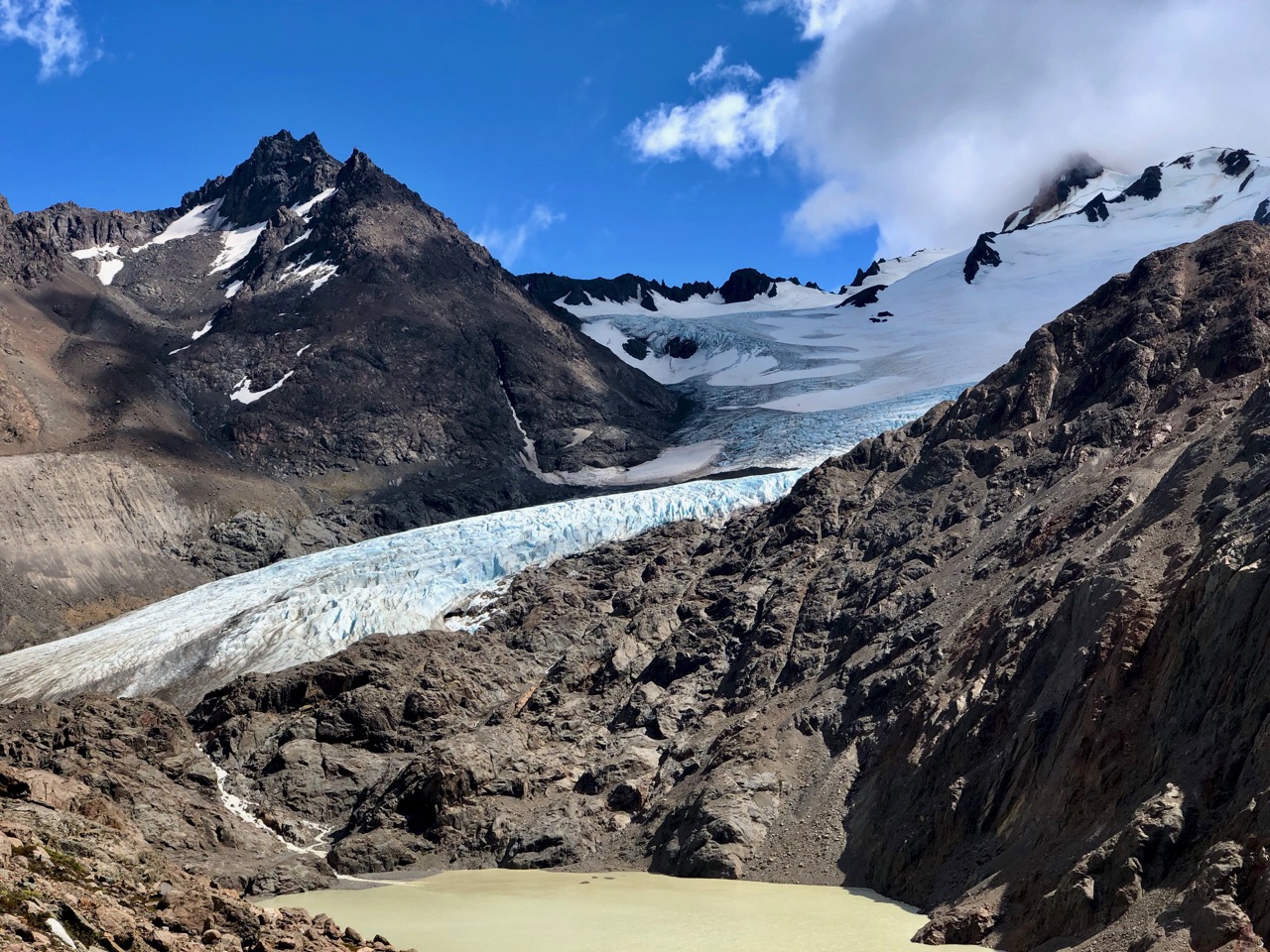
From here in good weather it looked an easy up-and-over.
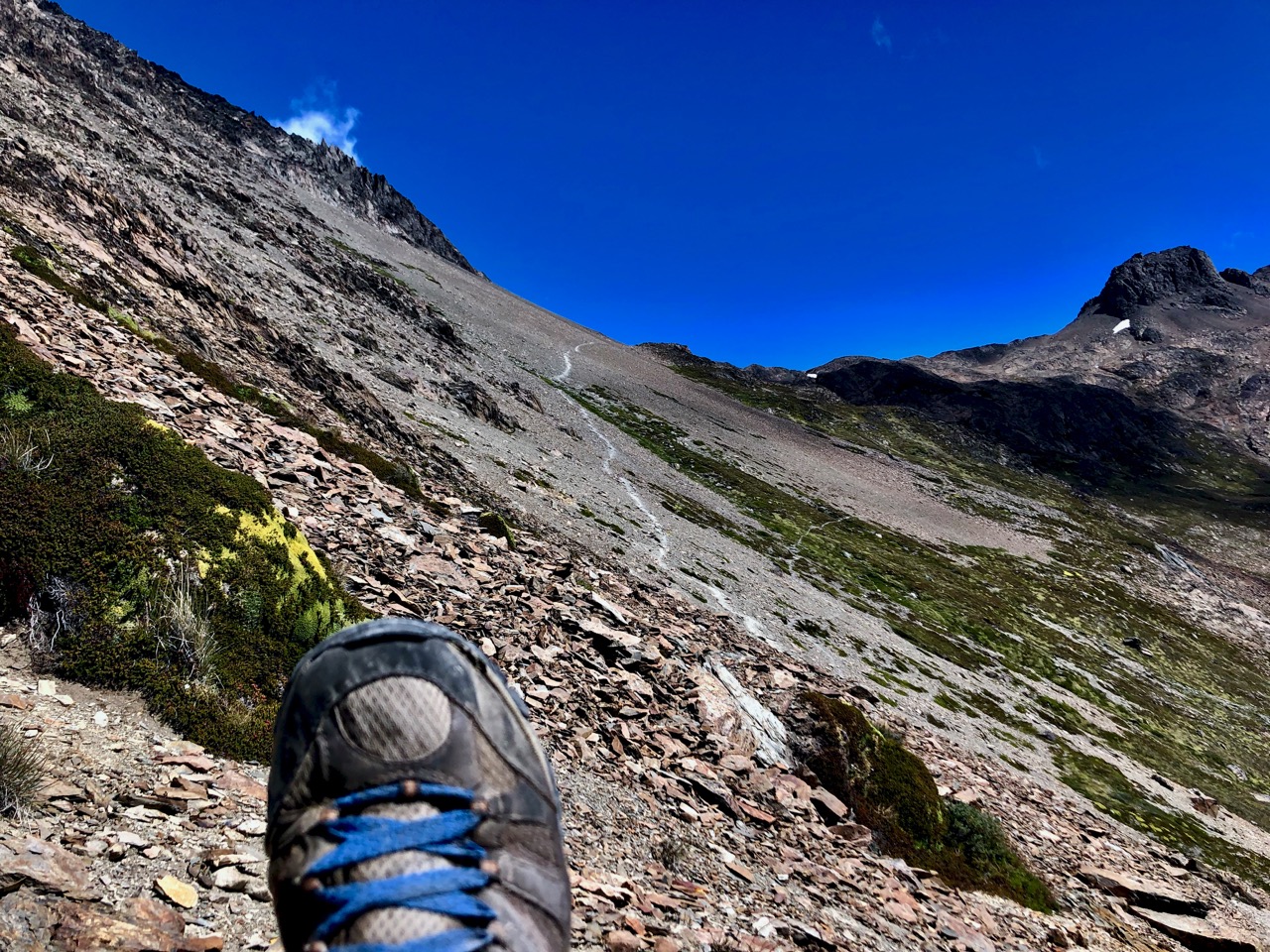
Not so. It seemed to take forever to reach Windy Pass (Paso de Viento).
But the astonishing first vista on to the Southern Patagonian Ice Field was the highlight of the entire hike.
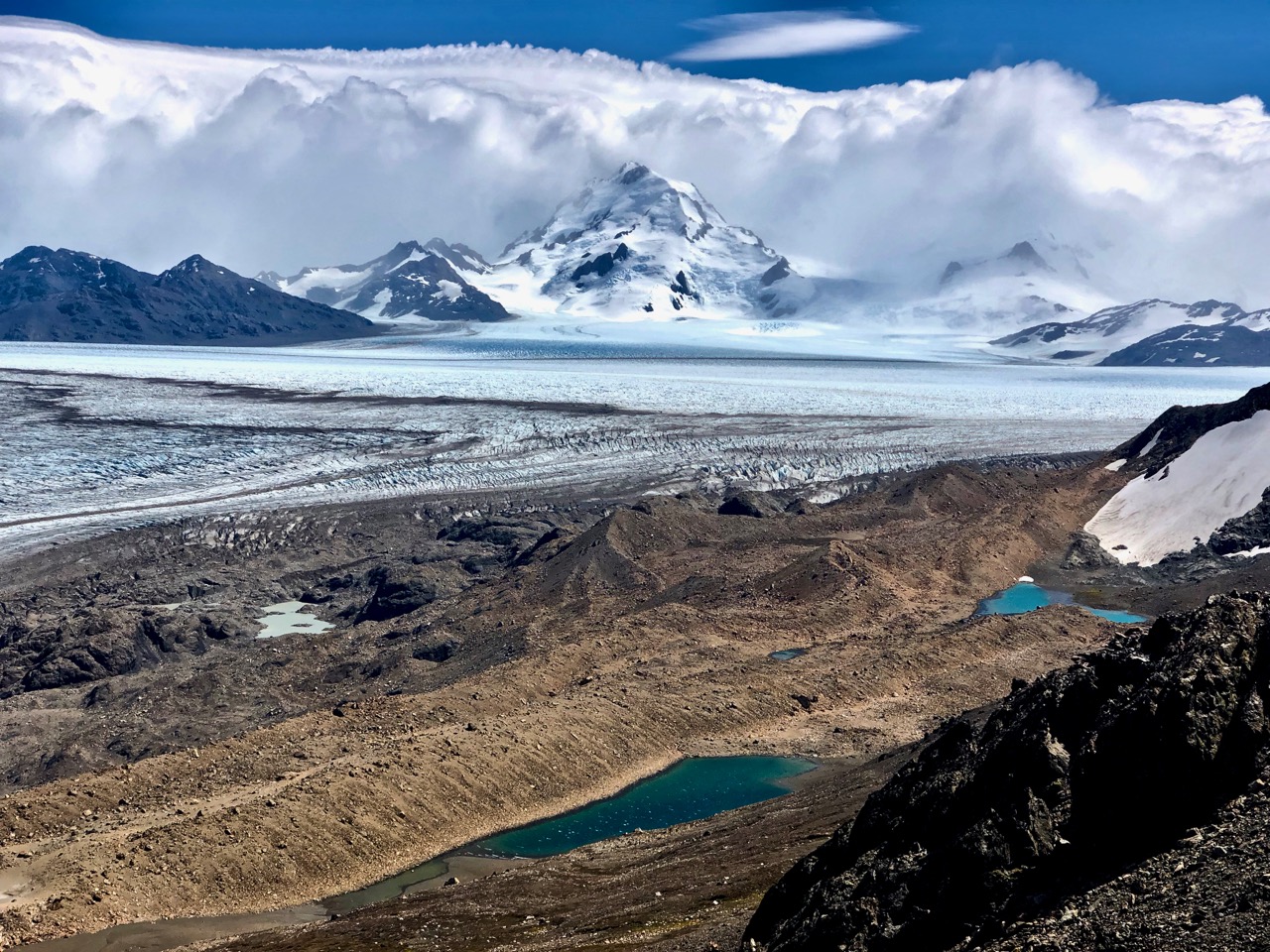
Though a bit windy, I stayed quite a while at the top. I tried to recall any hiking vista that impressed me more. Anywhere.
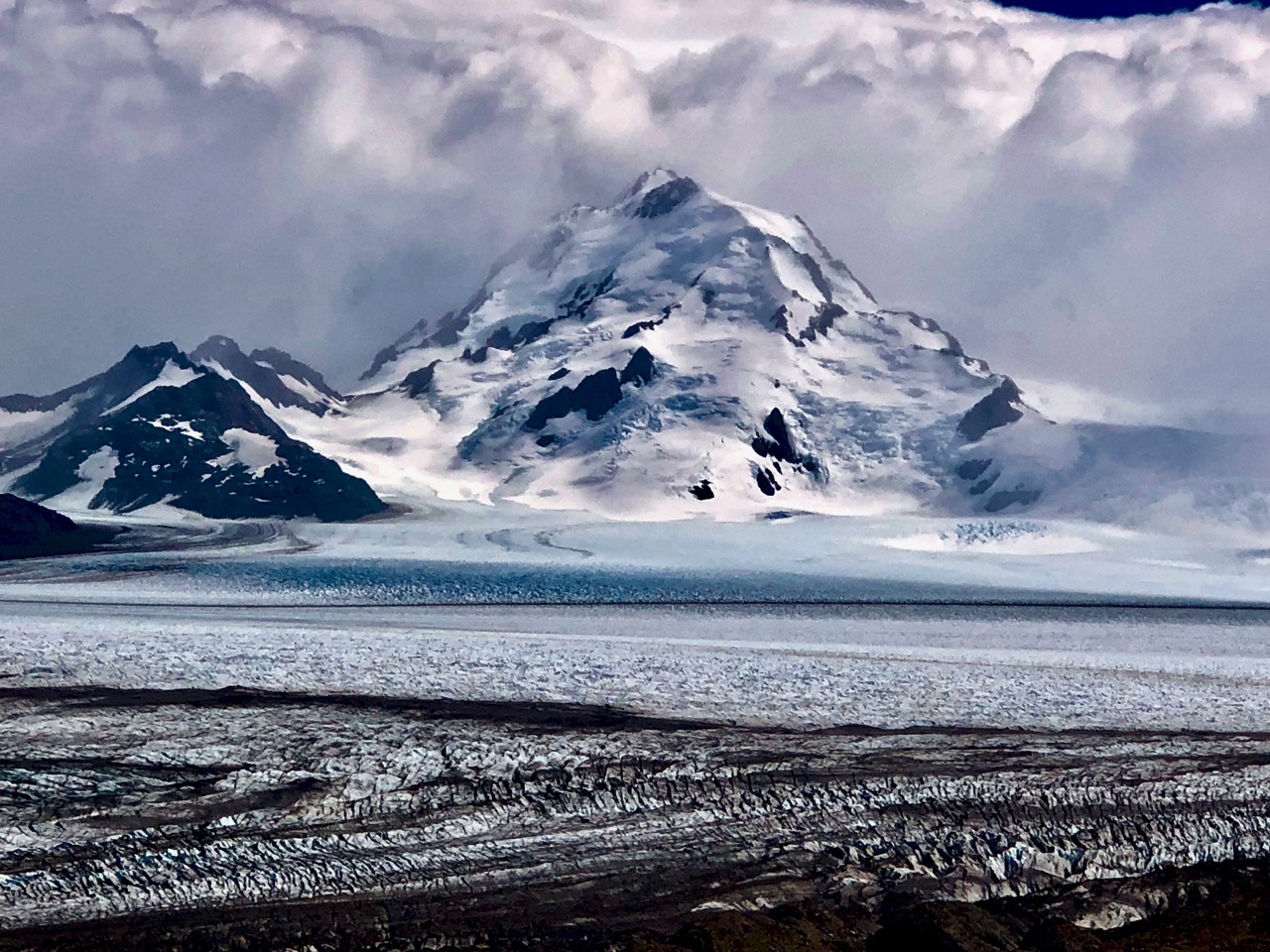
Travel 2 Walk compares this with the Paso John Gardner looking on to Glacier Grey in Paine. I concur that Windy Pass is even more impressive.
From the pass it’s a long but comparatively easy descent down to the moraine wall. There’s no real trail, but you can’t get lost.
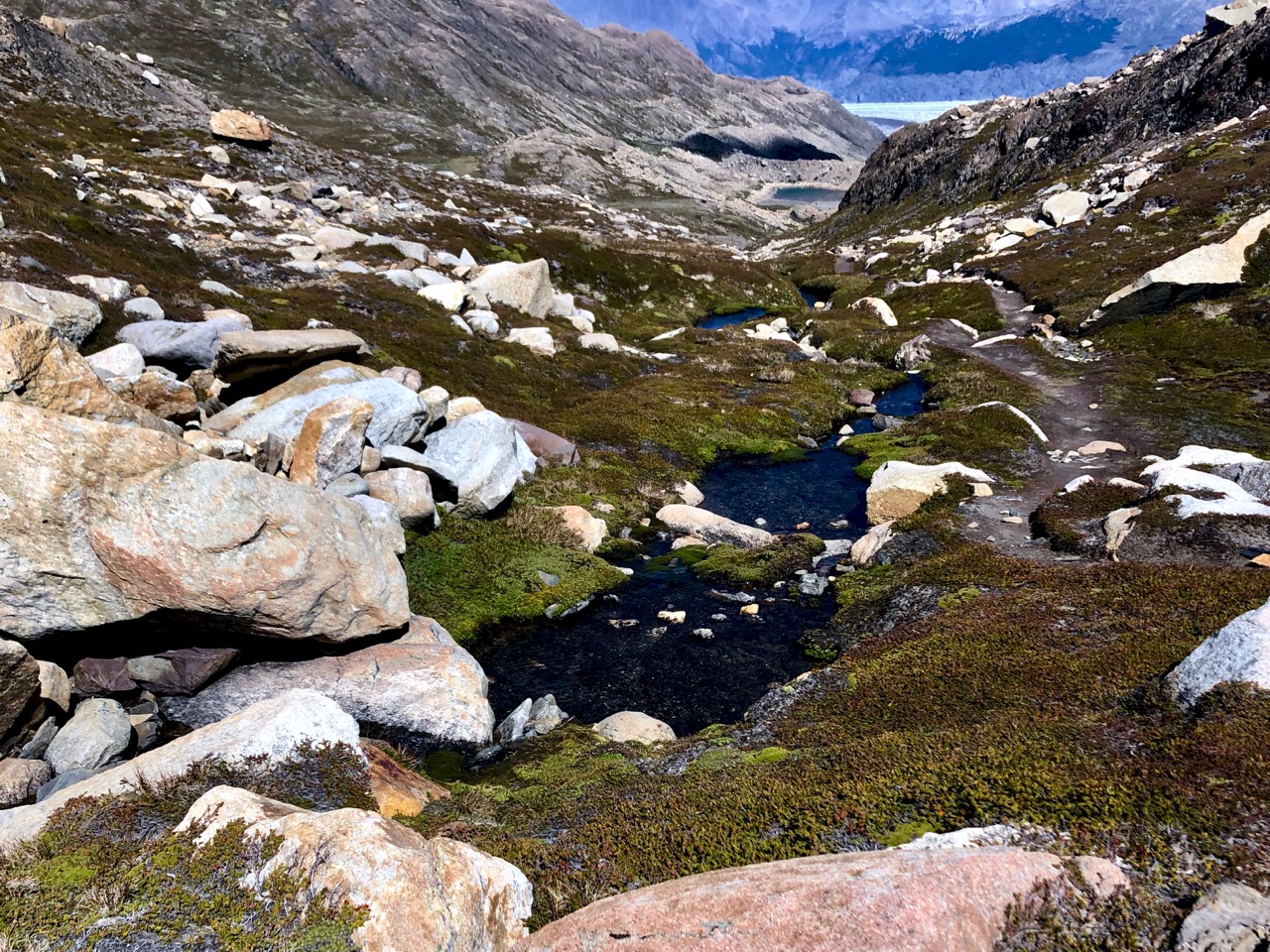
I decided to stay at the assigned bleak Paso del Viento Refuge and Campground as I wasn’t sure I could find better protection from the wind anywhere else.
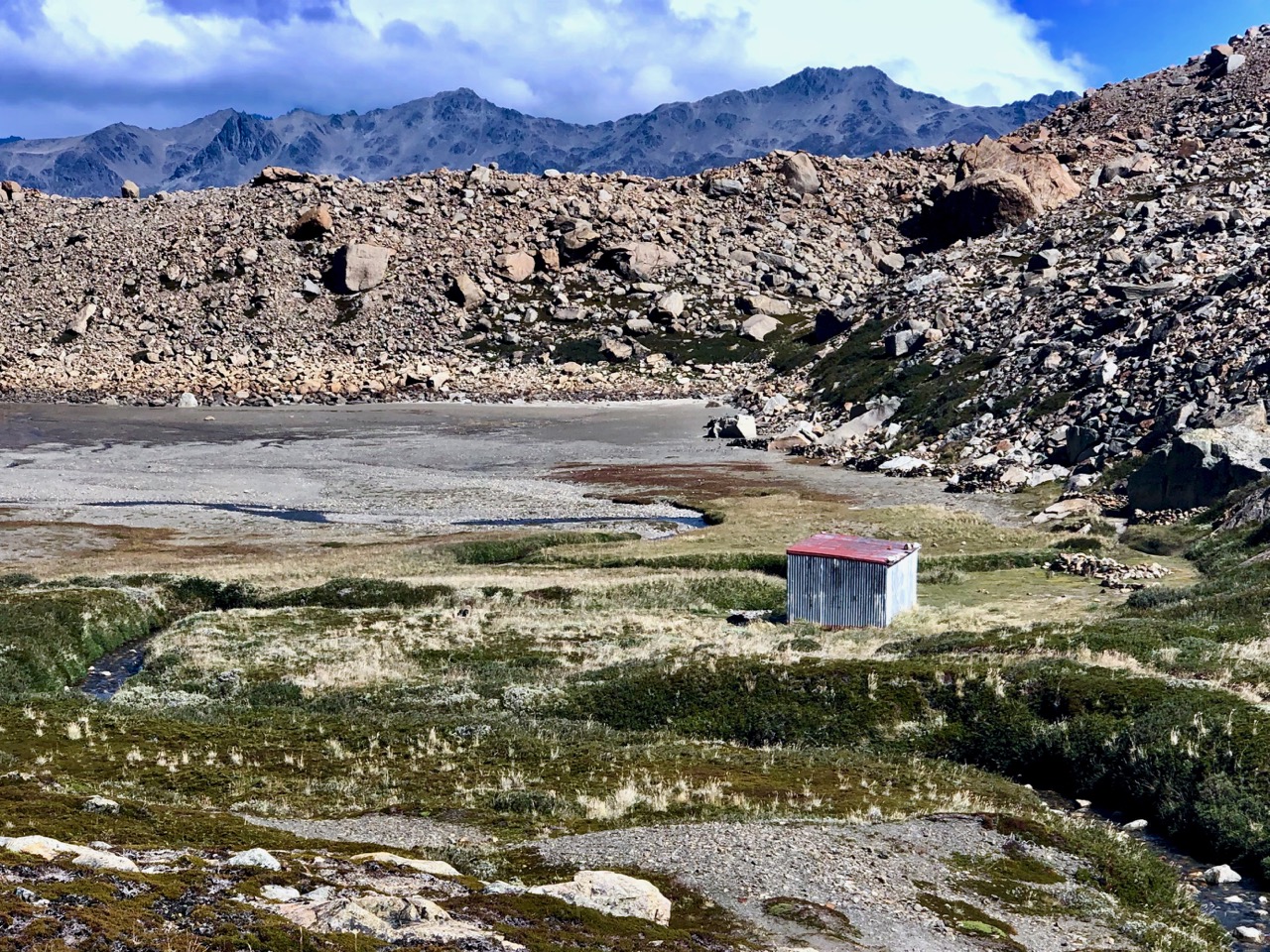
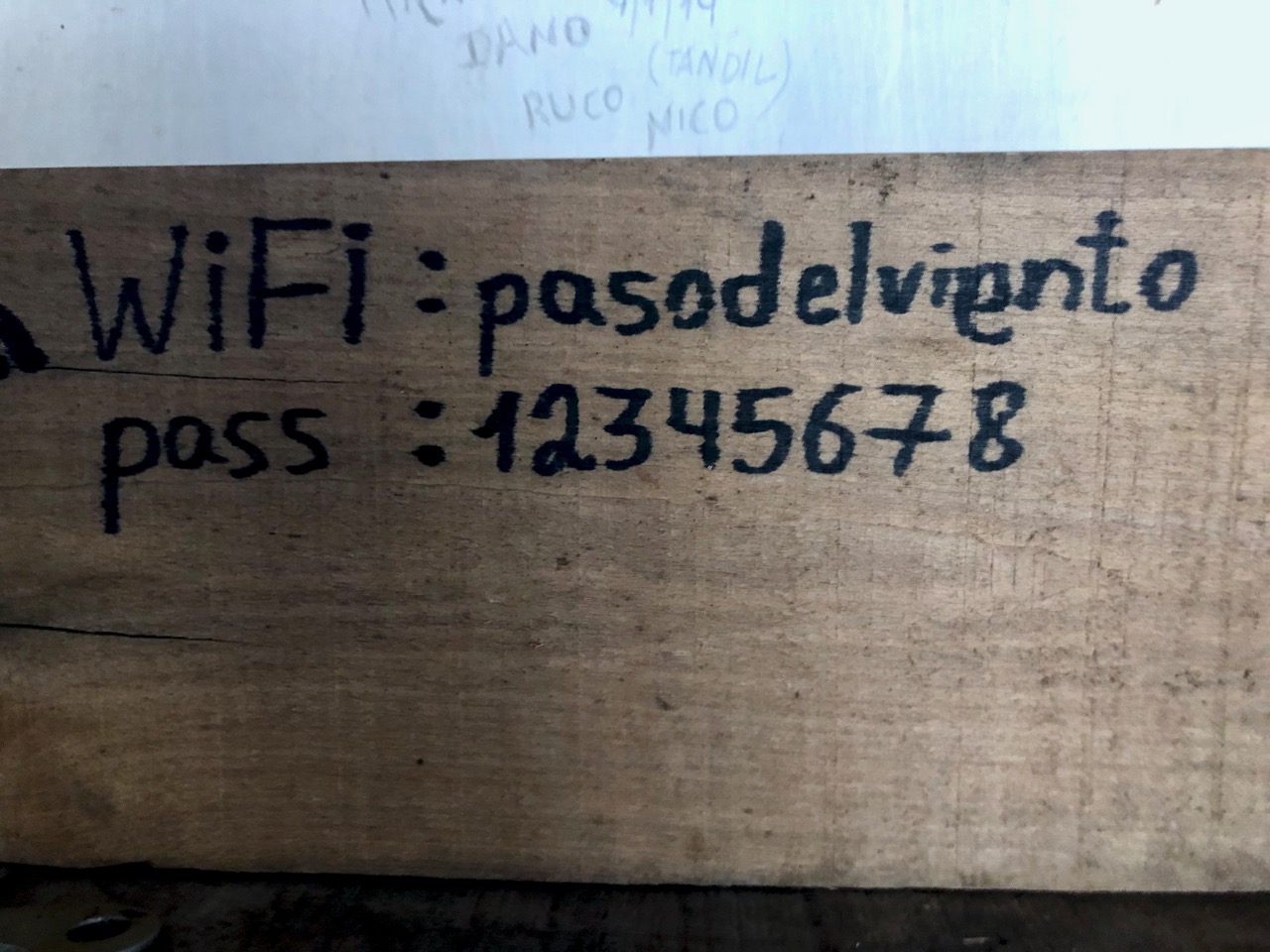
The building is mainly used for cooking / eating. You’d only sleep inside in terrible weather. But it does seem to have wifi. 😀
My biggest problem hiking over the years have been my feet.
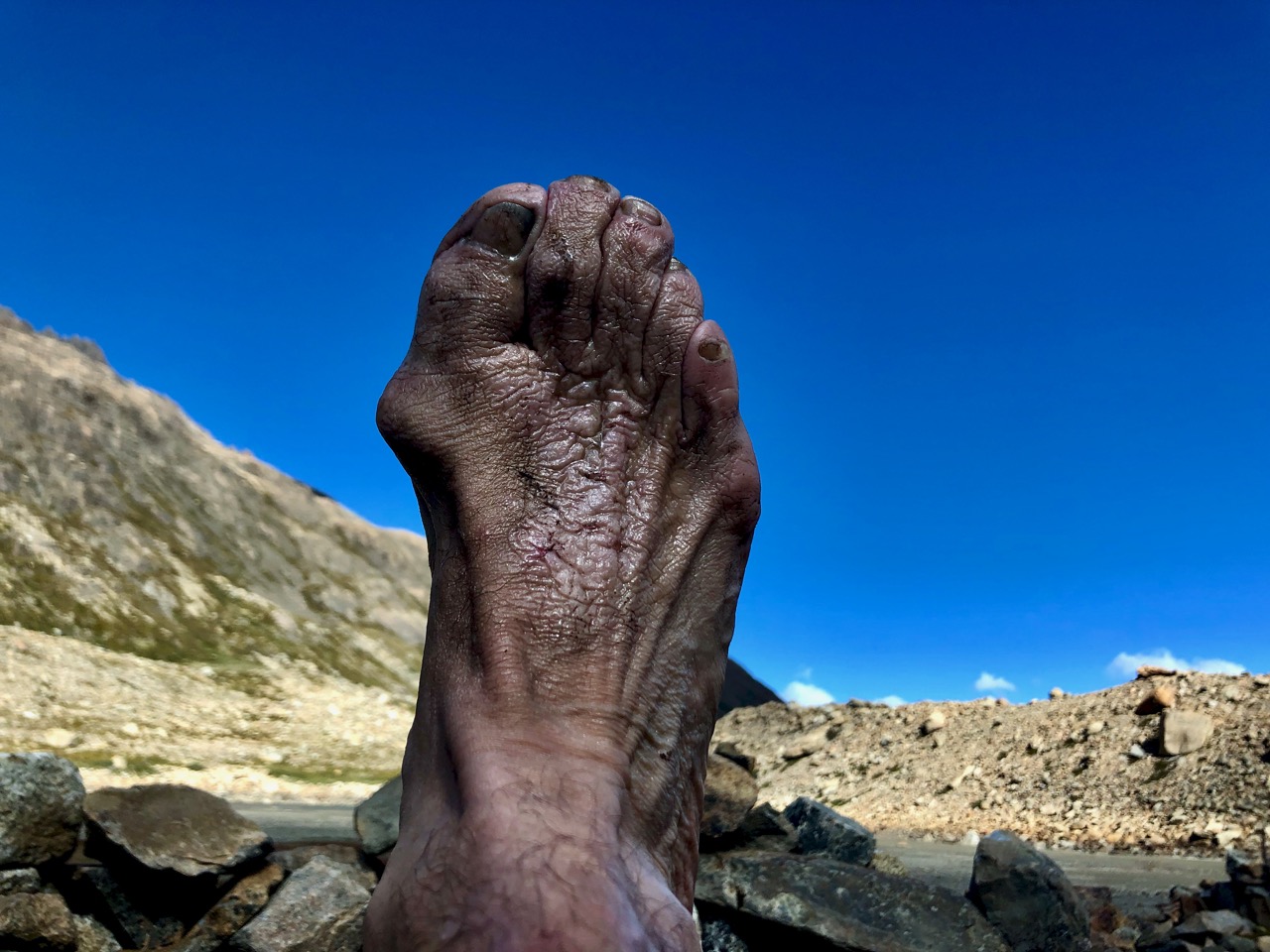
Yet despite appearances, they are almost zero problem for me now. I’ve got them figured out. I wear the over-sized very wide shoes (for the bunions). Apply petroleum jelly each morning. And wear neoprene booties instead of socks on wet trails like these.
Here’s my tent site selected for wind protection.
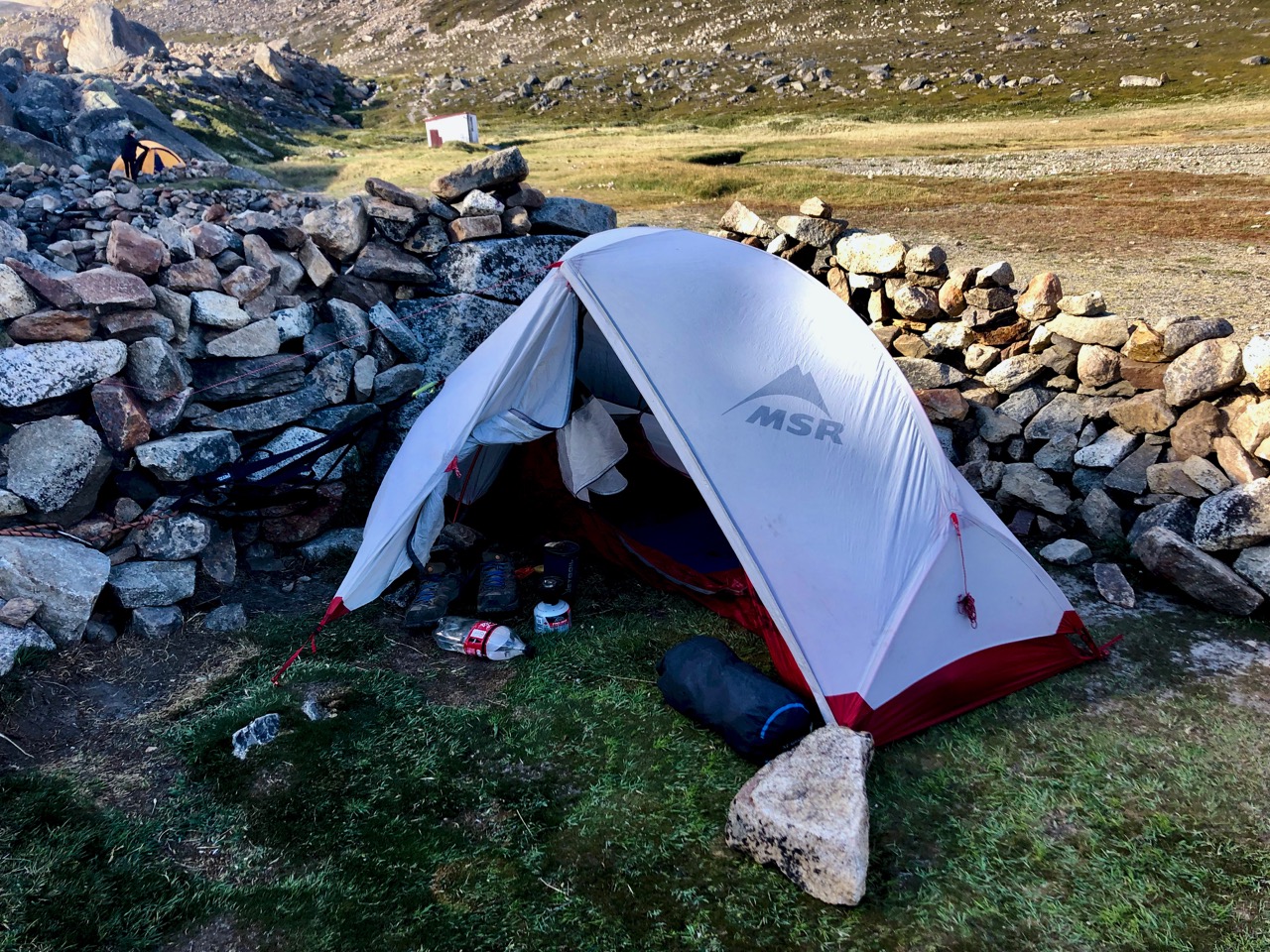
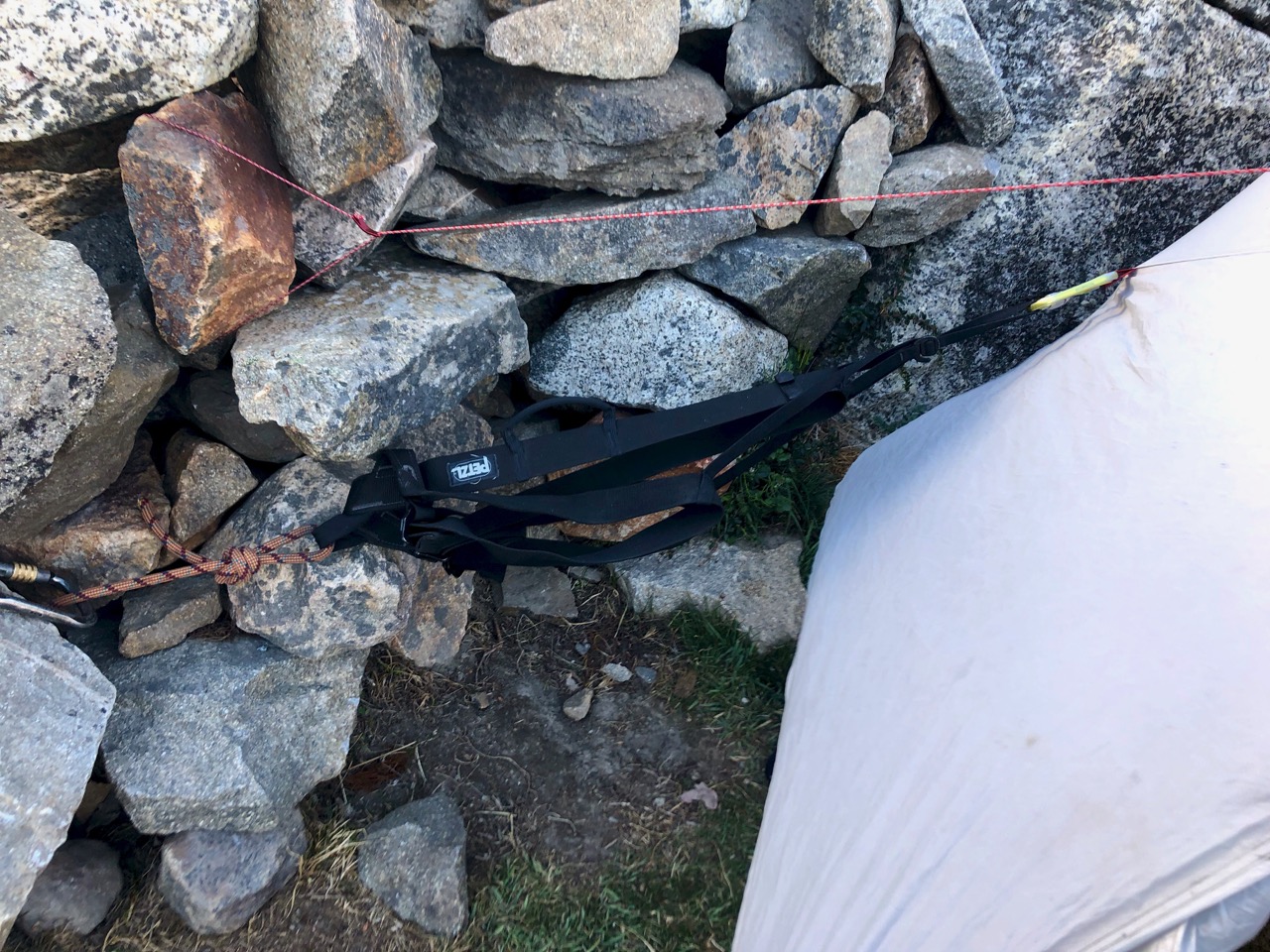
Since I was carrying a climbing harness, I used it as a tie-down, as well.
Travel 2 Walk calculated 3055 ft ascent and 2214 ft descent on the day. Only 7.8 miles, but slow. Tough. And with PLENTY of photo stops.
Tired, I fell asleep by accident after dinner and wine. And therefore kept my food in the tent.
No mice this night.

