Planning for future hikes often means considering the possibility of forest fires.
As global warming increases, we’re likely to have bigger and more dangerous fires. 😕
‘We already see the initial signs of climate change, and fires are part of it,” said Dr. Amber Soja, a biomass burning expert at the National Institute of Aerospace (NIA) in Hampton, Va.
And research suggests that a hotter Earth resulting from global warming will lead to more frequent and larger fires.
The fires release “particulates” — tiny particles that become airborne — and greenhouse gases that warm the planet. …
As publishers of nearly 400 outdoor travel guidebooks, Cicerone Press are a specialist team who love the outdoors and want to inspire and guide you on your next outdoor adventure.
In this episode, hosts Amy Hodkin and Hannah Stevenson introduce themselves and speak to Joe Williams about the history of Cicerone, our team of expert authors and the areas and activities covered in Cicerone guidebooks.
Whether walking, cycling, trekking, scrambling, mountain biking, running or skiing, Cicerone offers guidebooks written, edited and tested by outdoor experts.
Find out more and view our full range of guidebooks on the Cicerone website, www.cicerone.co.uk.
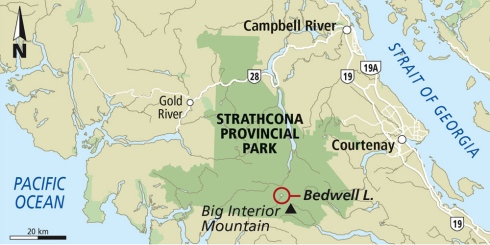
The real experts on this park are Mike Blake and his team at MB Guiding.
If you are looking to organized a guide trip — climbing the Golden Hinde, for example — go with MB Guiding.
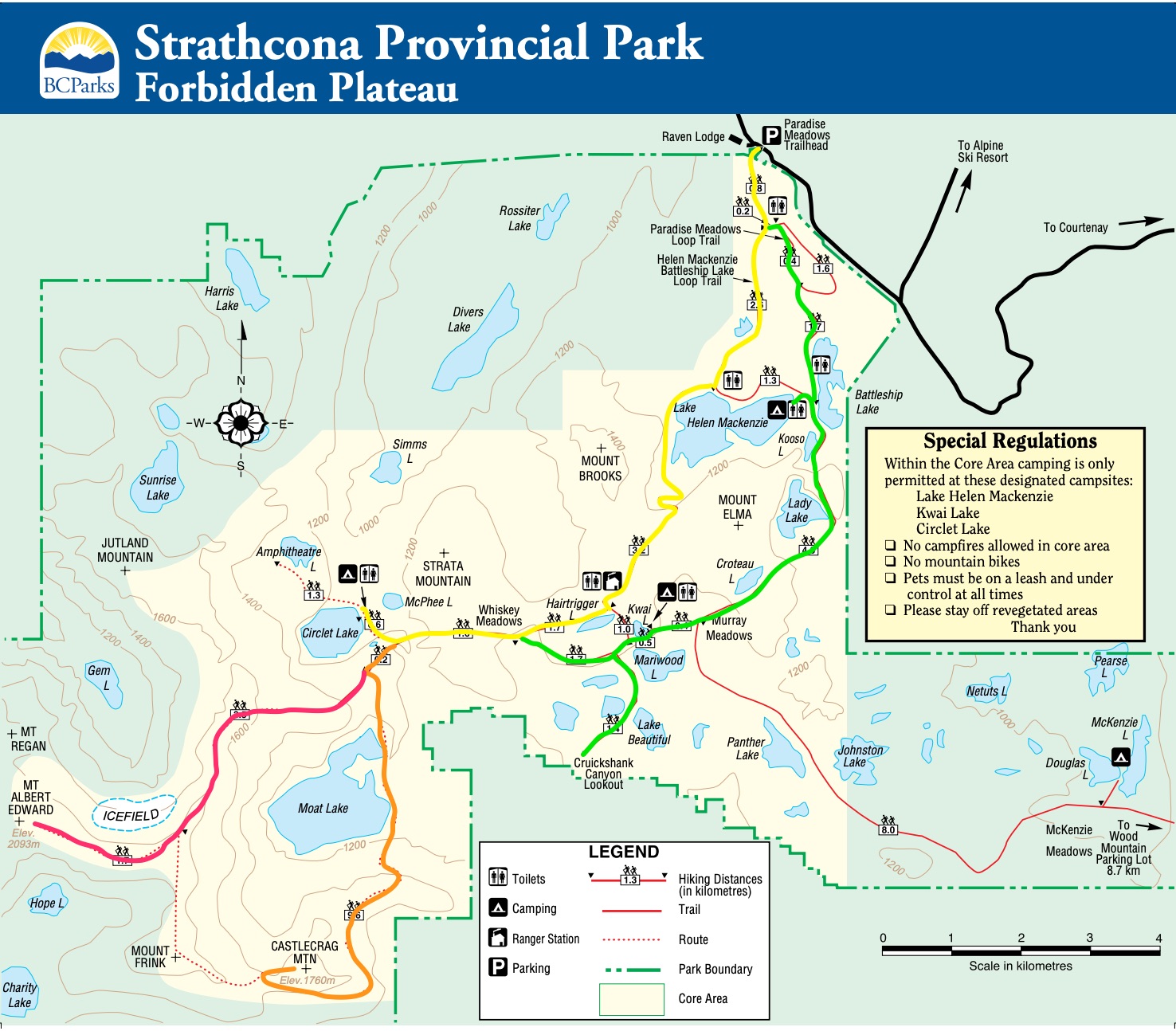
If you’ve never been to Strathcona before, easiest access is via the Paradise Meadows trailhead out of Courtney / Comox which gives easy access to the Forbidden Plateau.
Well signed, well organized, well maintained, there are loops of increasing difficulty depending on your time and the weather.
One loop is wheelchair accessible, for example.
There are trails ideal for kids, as well.
Three campsites on the Forbidden plateau are first-come, first-served. Great value at CAD $10 / person / night.
If you want to tent, I’d recommend you head for the furtherest campsite – Circlet Lake.
The Canadian Government recognizes Della Falls as the tallest officially measured waterfall. That’s certainly not correct. James Bruce Falls in B.C. is much taller by any criteria, for one.
Meg Cuthbert:
Access: Boat access only, from the far end of Grand Central Lake near Port Alberni.
Canoe Distance: The canoe from Scout Beach Recreation Site is about 20 kilometres, the lake is tip-to-tip 35 kilometres long.
Hike Distance: 16 kilometres one-way from the trail head to Della Falls.
Canoe Difficulty: The wind on the lake tends to pick up in the afternoon, so at times the paddle was quite difficult. Be prepared to lock it in.
Hike Difficulty: The hike is a moderate difficulty, mostly due to the pack on your back. The elevation gain over the 16 kilometres is only 350 metres
The real experts on Strathcona Provincial Park are MB Guiding. If you want to hire a guide or get up-to-date information, be sure to check their Della Falls page: