I quite like these.
Especially for mountain biking in winter.
 Especially for dropping the gloves to take a quick photo in the cold.
MEC has a variety of them.
Best hikes, treks, tramps in the world.
I quite like these.
Especially for mountain biking in winter.
Especially for dropping the gloves to take a quick photo in the cold.
MEC has a variety of them.
by site editor Rick McCharles
I “slept-in” until 5:13am.
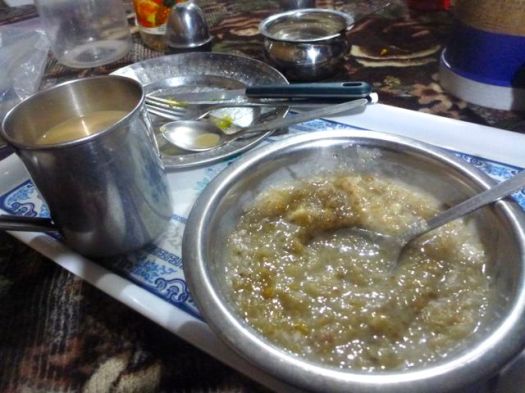
Enjoyed a hot breakfast.
Many had already left, headlights bobbing up the mountain in the dark, worried about wind on the high Pass.
My plan was to leave late. To wait for the sun.

I felt great. Had slept warm on 2 mattresses, with 2 extra blankets provided by the guesthouse.
On Manaslu I felt it was a mistake to start hiking in the dark. This time I’d wait to start until no headlamp was needed.
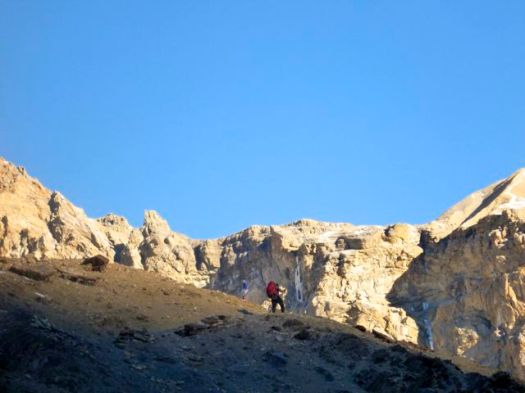
It got bright in no time. I’d heard that Thorung La was higher, but easier than Larkye La on the Manaslu.
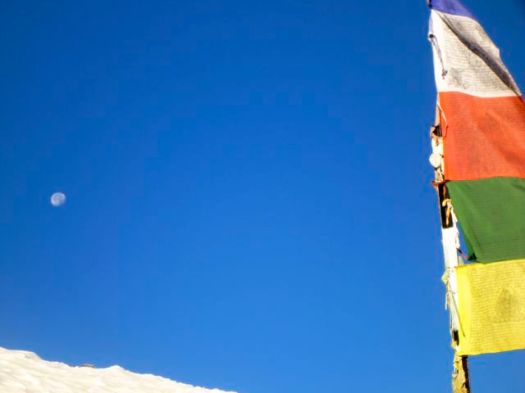
We made good time.
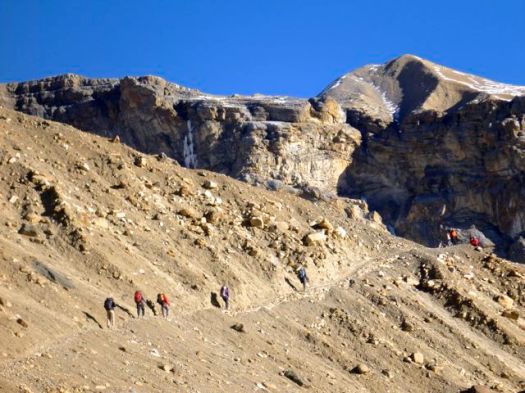
On reaching the snow line, some guides and hikers were worried. For me — a Canadian — this was like walking to school.
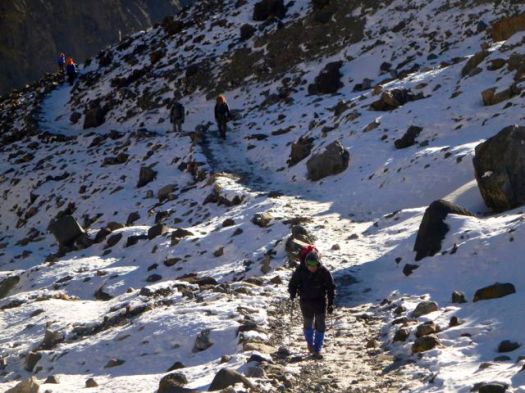

No problem.
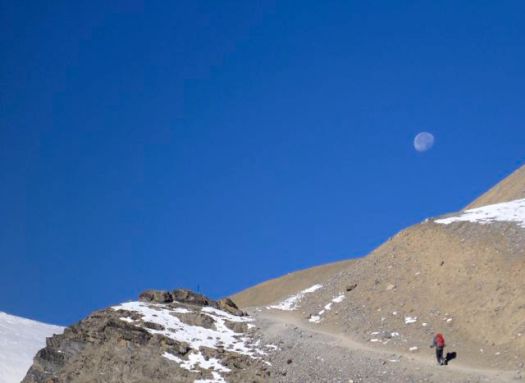
The moon was gorgeous.
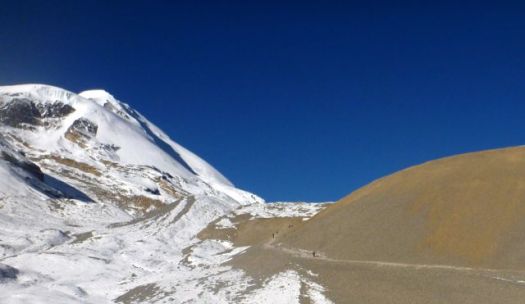
Love this bleak landscape.
It’s a surprisingly long way from Thorong Phedi to the Pass. About 1km in elevation gain.
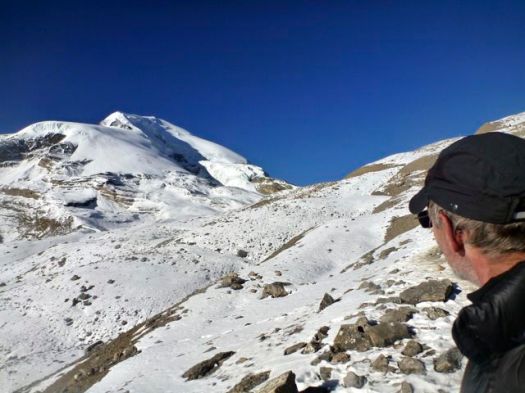
But when the weather is good, you can walk it with your hands in your pocket.

The Annapurna 8,091m (26,545 ft) massif is huge and complex.
… thirteen additional peaks over 7,000 m (22,970 ft) and 16 more over 6,000 m (19,690 ft).This section is a 55 km-long (34 mi-long) …
I couldn’t keep track of which huge mountain I was looking at.
No wind. 🙂
Even the 7000m peaks had no spindrift.
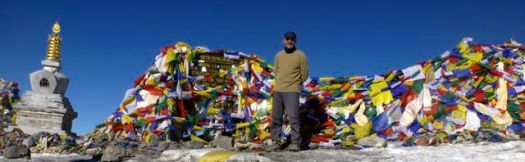
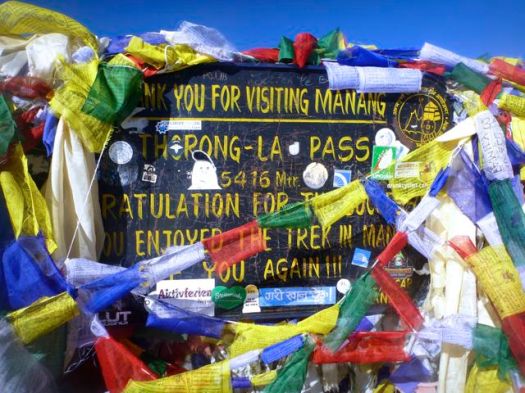
I left a Summit Stone in thanks for safe crossing.

I’d once heard you could scramble a peak (illegally) from Thorung La. But it doesn’t look easy.
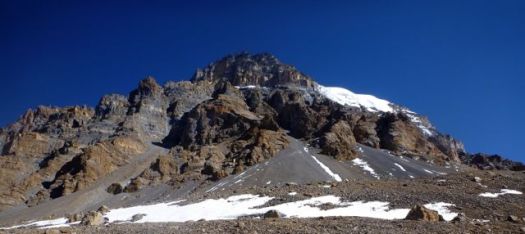
The other side of the Pass looked even simpler than the ascent. It’s longer though. About 1.7km of net vertical lost.
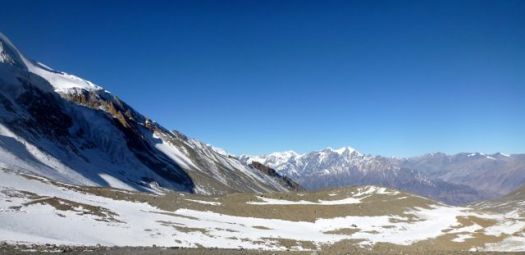
And even more Tibetan plateau. I love these colours.
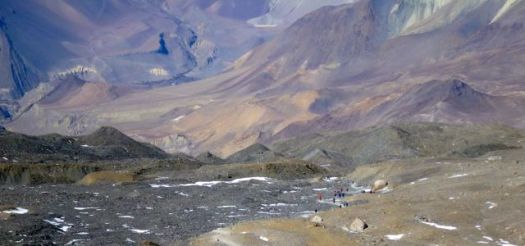
A guide told me this was the “road” under construction climbing up and over Thorung La. We agreed that it was a mistake to take motor vehicles over the top.

Everyone celebrated on reaching a series of small restaurants. For me it was my favourite soup, noodle with egg.

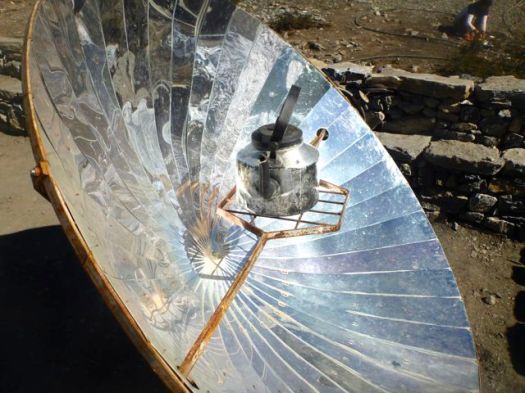
On a sunny day you can melt and even boil water on one of these.
I continued on down to the first town on the other side, bleak Muktinath 3,710m.
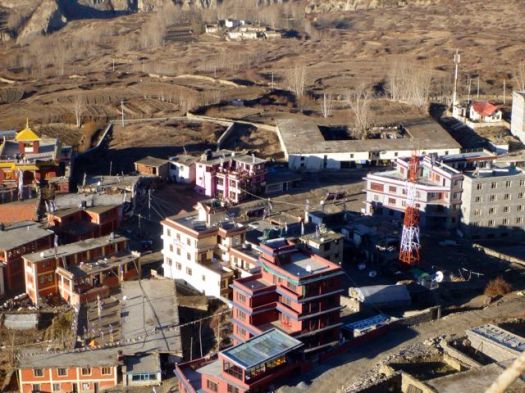
I’d last been here 14yrs ago, the highest I got on this side of Annapurna.
 Muktinath still has no ATM. Some hikers are running out of cash by this point in the trip. Many spend more than they expect on the Circuit.
 Muktinah is an ugly tourist town much worried about the expected decline in Annapurna Circuit trekking. No one is confident that building alternative trails off the road is going to work. Trekkers, in future, might go to Manaslu instead.
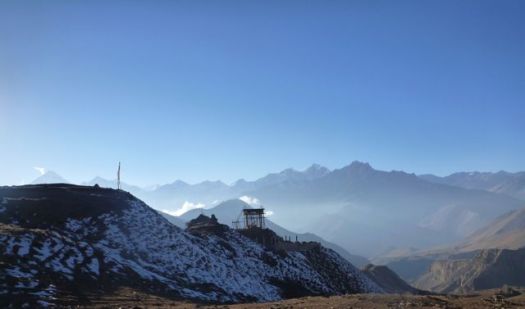
Was that a new water tower under construction?
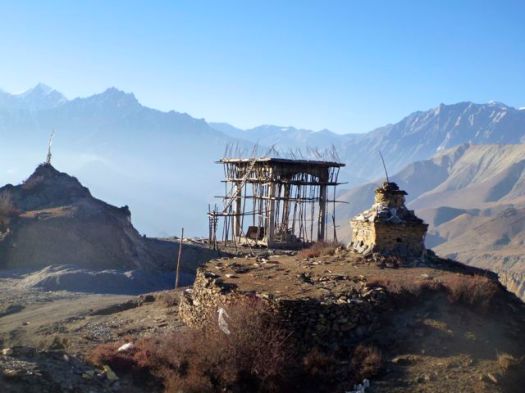
Later I learned they are building a giant Buddha statue. A tourist attraction, amongst other things.
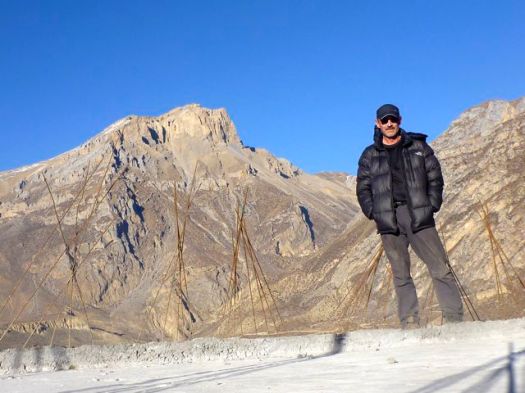
After 15 days continuous hiking, I’d stop here. Ride a mountain bike down the other side.
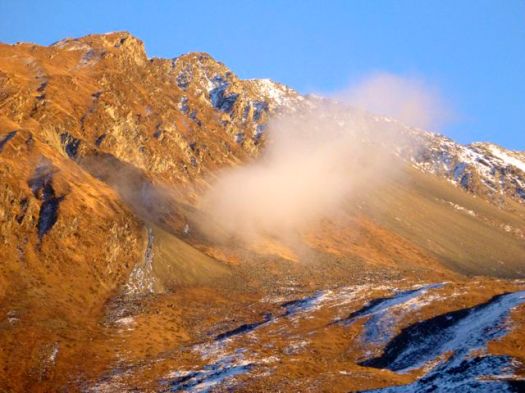
I felt great. It seemed to me that I could easily hike another 15 days. Continue on the Nepali Great Himalaya Trail.

see high resolution photos from this day on flickr
day 1 | day 2 | day 3 | day 4 | day 5 | day 6 | day 7 | info
by site editor Rick McCharles
The high Pass loomed. I was up and packed early, waiting for the restaurant to open at 6am.
Happily, sunlight reaches Manang early.

My stomach felt fine. Weather was fantastic. I spun every prayer wheel in town I could.
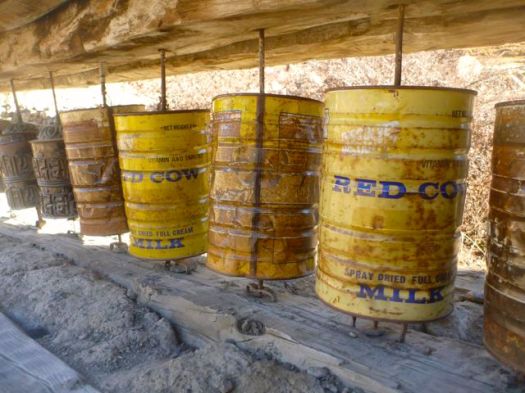
I was going to cross the Thorung La.

I really enjoyed Manang. And would happy to go back any time.
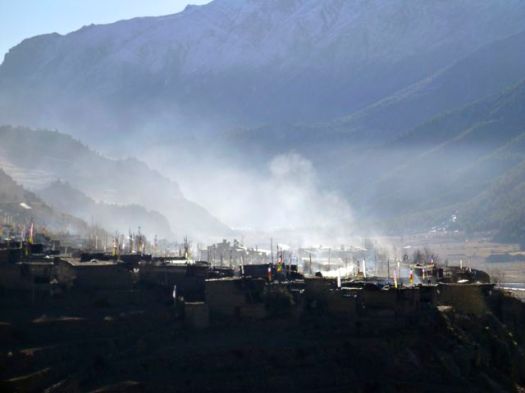
It’s high and dry above Manang. True rain shadow. True Tibetan plateau.
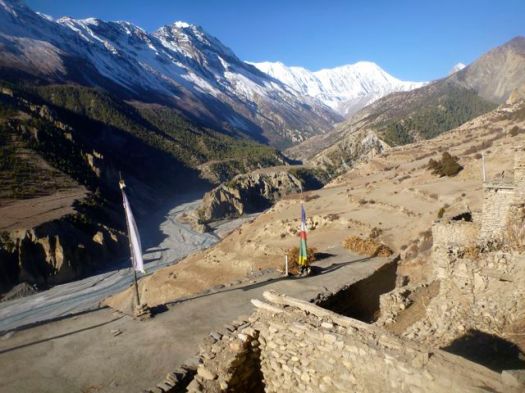
I couldn’t resist stopping for brunch here.

Carbo loading for the Pass.
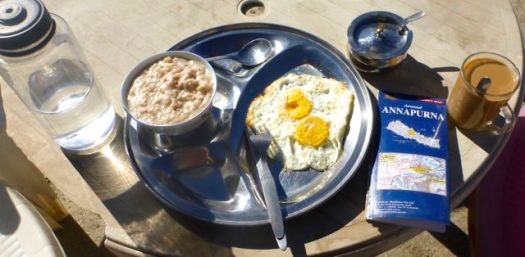
This hiking day was all good.

People had smiles on their faces, happy to be in clear November.
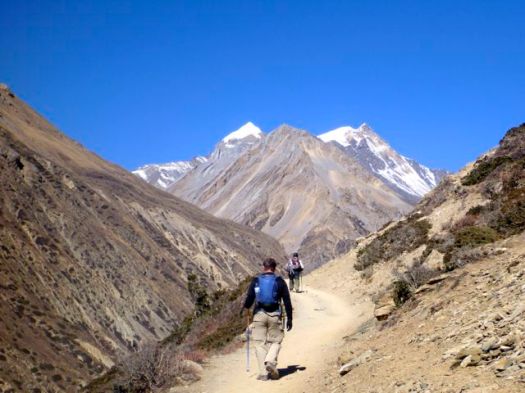
It was looking pretty easy from here. I expected another early arrival in Camp today.
I stopped to take photographs of one unusual Himalayan sight – a burning barrel.
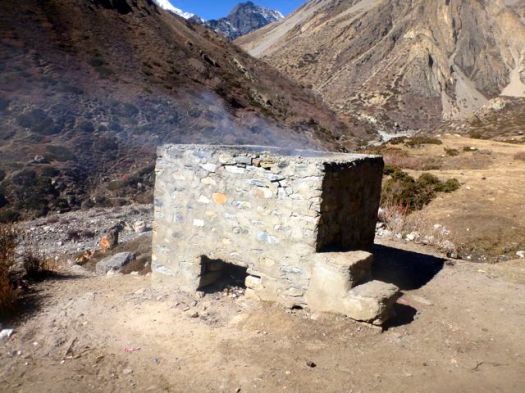
It’s obvious to me that the easiest way to dispose of trash way up here, is to burn it. Instead Nepalis throw it off a cliff. Or into a river. 😦
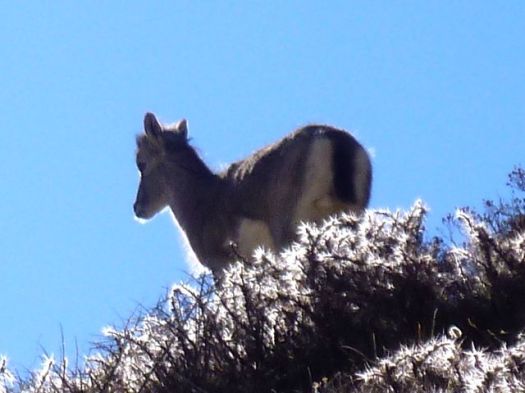
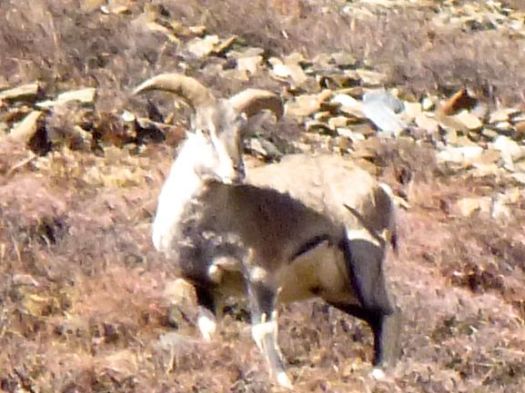
I’m not sure why George Schaller had so much trouble finding Blue Sheep. If they got any closer to me on this Trail, they’d be on my plate. 🙂
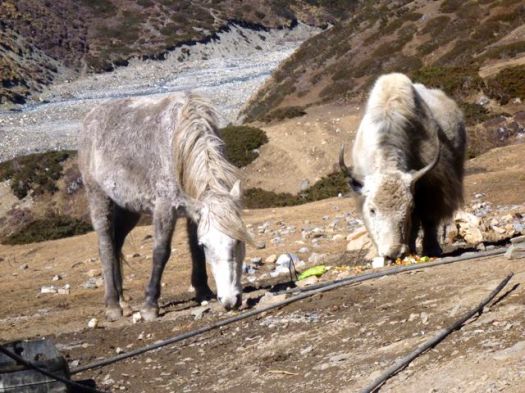
With all this sunshine and mild weather, there were still plenty of Yaks & ponies grazing. Ponies are used for emergency transport of altitude sick hikers.
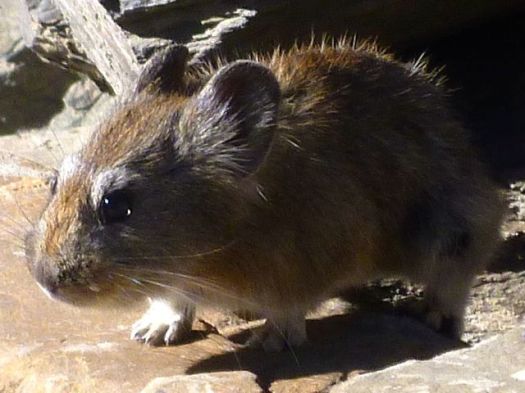
This pika seemed to be looking for a tourist handout.
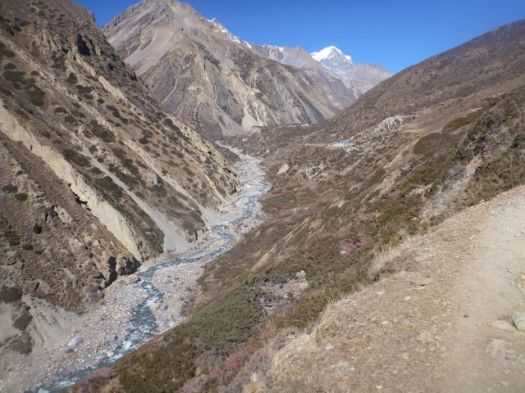
Up and up.
The afternoon was taking far longer than I expected.
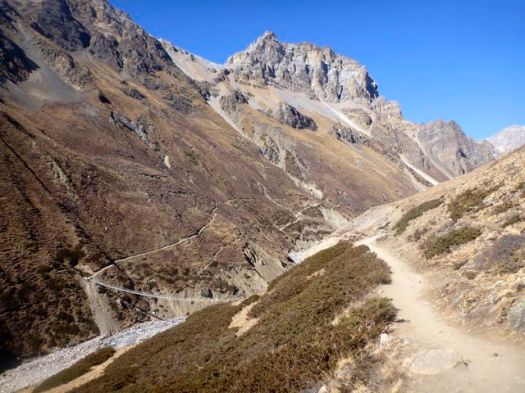
It was almost dark by the time I reached Thorong Phedi 4420m.
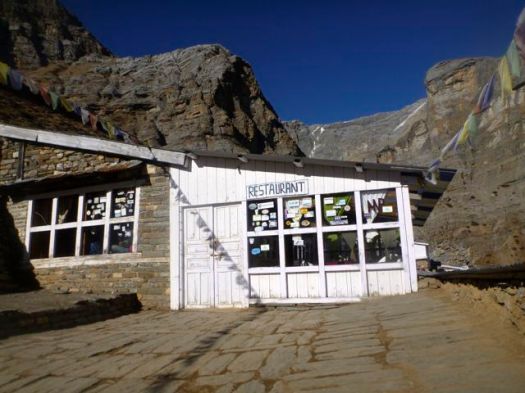
I got the second last available room.
What a location!

Many take an acclimatization hike up towards the Pass after arrival. I was too late. Too tired.
Instead I enjoyed the last rays of the sun.
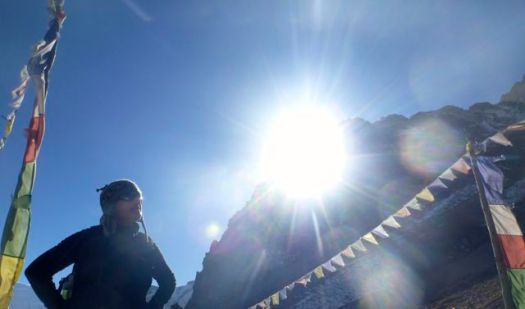
That night was fun. Japanese girls flirted with their porters in the dining hall.
The last hiker to leave the table, I saw a brazen rodent cleaning up scraps from the floor. It’s almost certain that mice get into the food. Standards of hygene are low in the Himalaya, especially in Thorong Phedi.
Safest would be to sleep in a tent. Cook your own food.
You are advised to drink as much as possible at altitude. I did. But that means a number of trips to pee during the night.
And it’s COLD above 4000m.
see high resolution photos from this day on flickr
day 1 | day 2 | day 3 | day 4 | day 5 | day 6 | day 7 | info
by site editor Rick McCharles
Today was the day. We’d cross Larkya La.
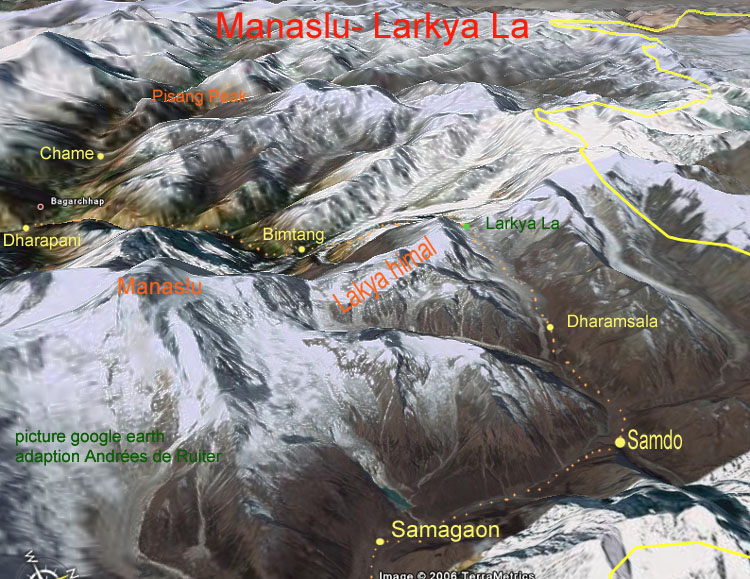
We actually got going nearer to 4am. And it’s plenty cold standing around in the dark.

I was counting on a bright full moon.
Sadly for me, it had set long before 4am.
Finally setting off, we attempted to catch Tasha and Ivan. Breathing was difficult. Vision was worse. I finally had to step out of line to change batteries in my headlamp.
This first 45min was the worst part of the Manaslu Circuit for me, so far. 😦

Whilst moving, you are not cold.
Things got better as the sky lightened.
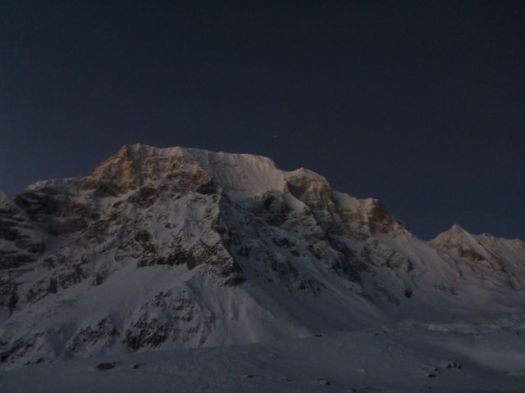
Glorious when the sun finally appeared atop the high peaks.
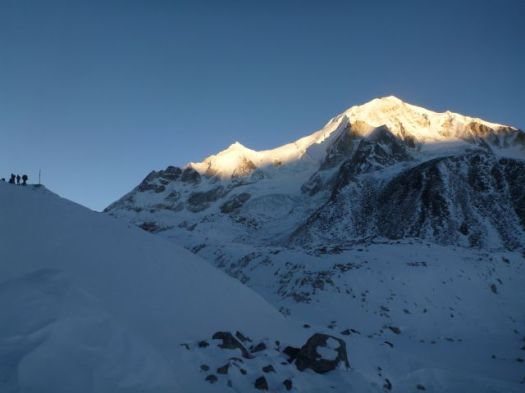
It was good to be alive when sunshine hits you in the face this high up.
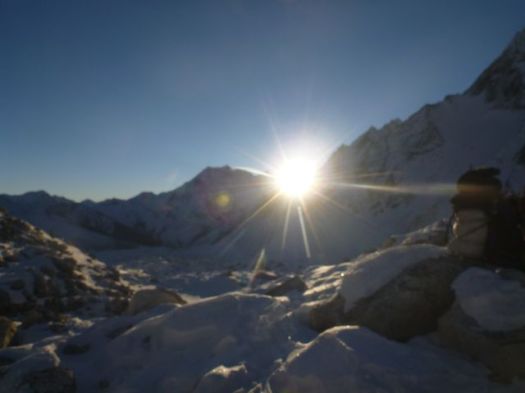
At this point we were completely confident in crossing Larkya. We could relax.

This was like any winter in my Canadian Great White North.
We were surprised how quickly we reached Larkya La 5106m (16,751ft).

We’d started early to avoid severe wind here. Happily, there was very little wind.

I left a Summit Stone in thanks for safe passage.
The descent should be easy.

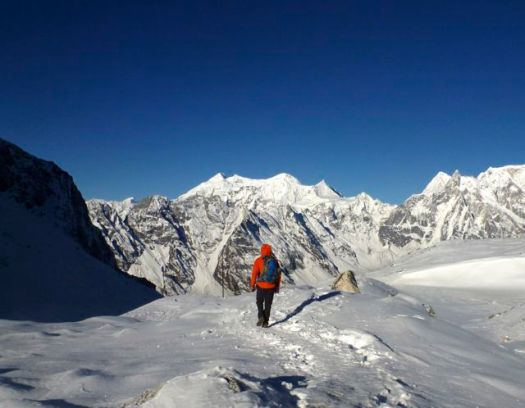
Actually, it was quite challenging on one long, steep section.

Porters, in particular, were slipping and falling. I can see why this Pass could be closed after a snow storm.
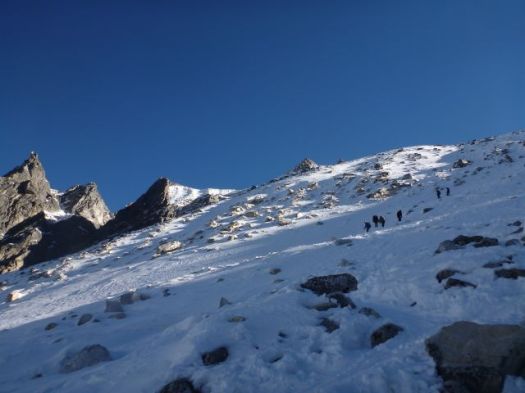
It’s a little more treacherous than it looks.
You skirt the glacier before getting back to reasonable footing.
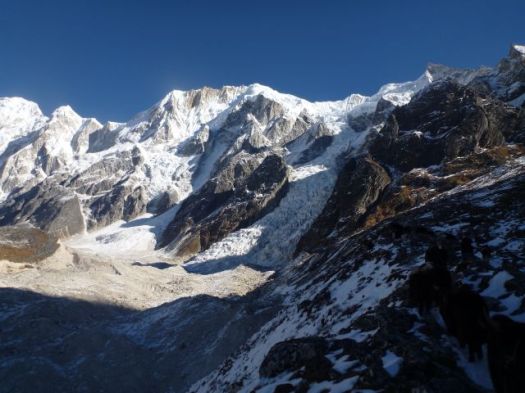
Some make a side trip to visit the glacial lake. We skipped it.

Once finally down down, the trail is easy.
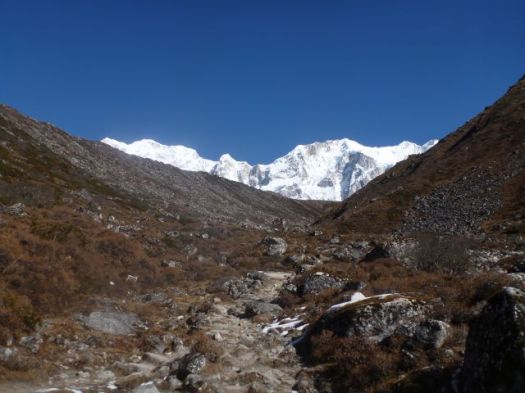
Smiles on our faces, we arrived Bimtang 3720m.
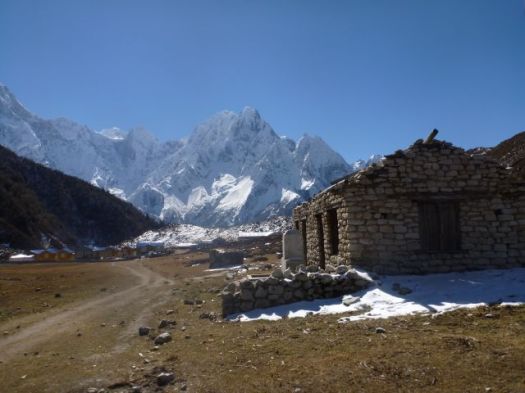 Civilization.

That might be the finest guest house we saw on the Circuit. Private cabins. It was booked, of course. By large groups of French trekkers.
It was early in the day. Mike and I were the 3rd & 4th hikers to arrive. Tasha and Ivan were 1st & 2nd.
It takes most hikers 6-10hrs to make the crossing. Much longer, of course, if you start in Samdo rather than Larkya Phedi.
We took the chance to bathe in the sun. The river was flowing, but water taps at our guest house were frozen.

And do some laundry.

I again walked the moraine ridge above Camp at sunset. But it wasn’t nearly as inspiring as the night before. Things are a bit anticlimactic after crossing the Pass.
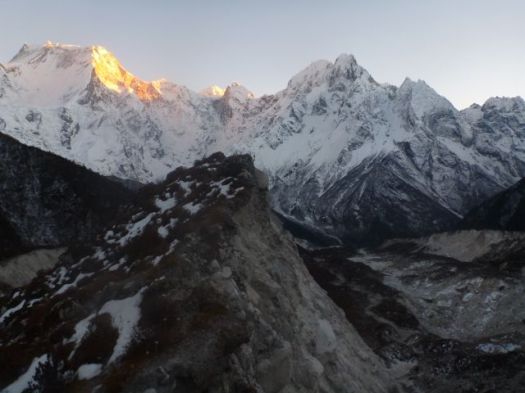
We chatted through dinner. Went to bed early. I slept 11hrs straight through.
Note: One woman had fallen the day before we crossed the Pass. Hit her head. Though continuing immediately, she had a suspected concussion. She was resting in Bintang. Make sure your travel insurance covers hiking at altitude.
see high resolution photos from this day on flickr
day 0 | day 1 | day 2 | day 3 | day 4 | day 5 | day 6 | day 7 | day 8 | day 9 | day 10 | info
by site editor Rick McCharles
We got an early start out of Samo.
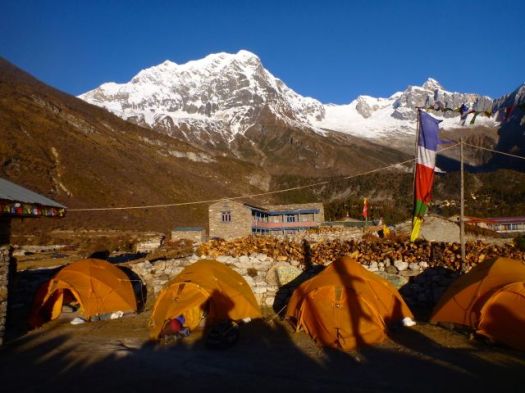
Manaslu was perfect. Cloudless.
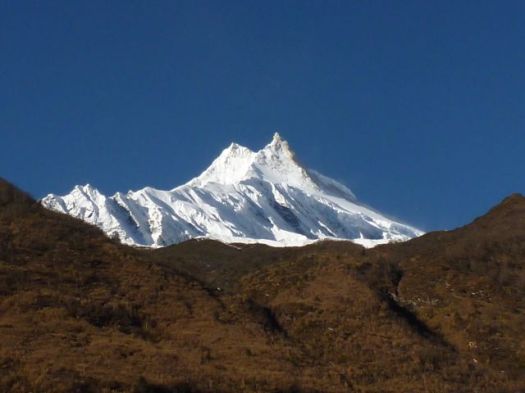
Not even spindrift, rare for an 8000m peak.
This is why you want to trek in November / early December.

Mike and I were happy to have the weather. Wanted to get up and over the Pass as soon as possible. If he were to have to backtrack to the start, he’d miss his flight back to the U.K.

The arid terrain that high up was very Tibetan.
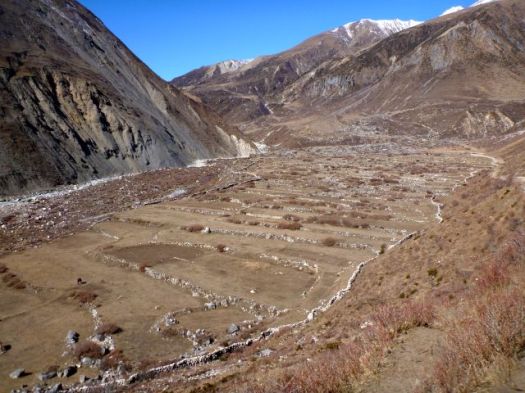
Not much can live in this climate. Yet Yaks thrive.
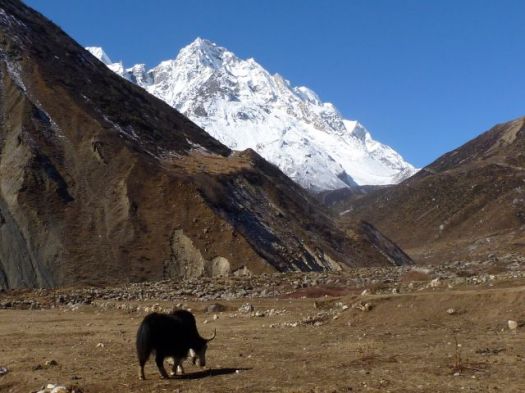
The scenery is fantastic. You hike closer to the big peaks than anywhere else I’ve been in Nepal.


I was one happy hiker.

Some trek from Samo only to Samdo 3690m. Then make a long, long day climbing over the 5106m Larkya Pass.
Sounds crazy to me. But it worked for a German couple we had been hiking with. Their guide doesn’ t like Larkya Phedi 4470m (Dharmsala).

Larkya Phedi is a harsh place. In every way.
It was closed by MCAP in 2011 for being an “illegal structure”. But open since. Open normally until about Dec 15th each season. Food sometimes runs out before that date, however. Some years hikers eat nothing but potatoes before crossing the Pass.
We knew fresh eggs had arrived.
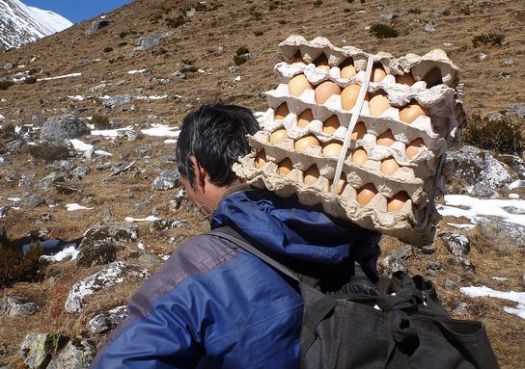
Larkya Phedi is the last place you can sleep with a roof over your head. … On the other hand, there were no beds left when we arrived. When the Pass is closed, it gets very crowded here. 😦
We set up my tent on a snow patch.I wouldn’t be getting much sleep anyway. Wake-up time would be 2am.
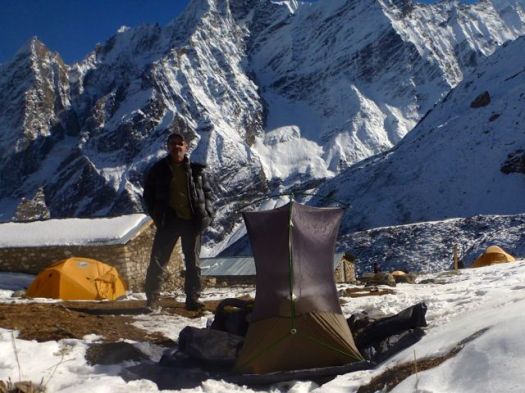
Hikers tried to relax in the sun. Nap if they could.

It got very cold as the sun went down.

Toilets are overflowing with feces. They don’t stink. They are frozen.
Ivan saw one Nepali shit into the stream above Camp. The only source of drinking water. That’s how uneducated some of the porters are. That’s why the water is so dangerous in Nepal.
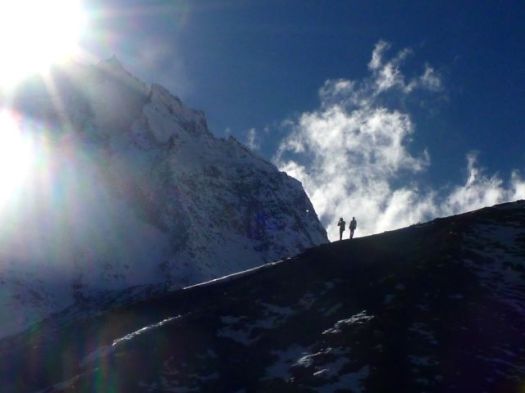
We walked the ridge above Camp for acclimatization. And to stay warm. There were dozens of Blue Sheep up there. Until hikers scared them away.
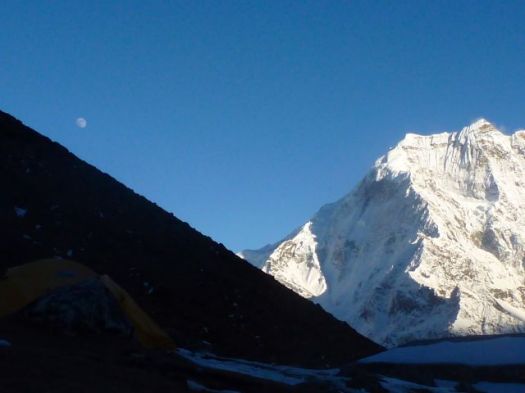
I practiced various speeds walking both uphill and downhill to maintain an optimal temperature. This in anticipation of the Pass, considered much more difficult than Thorung La on Annapurna.

Wandering alone up there until dark, this was the single highlight of the entire trek for me. 🙂
Wonderful.

Mike and I lingered in the dining hall as late as we possibly could. Staying warm. And avoiding our cold tents. Mike and our guide were forced to share a rent a tent as all beds were taken. Porters slept on these tables and benches starting 10pm.
Last minute I ordered hot water for my Nalgene bottle, using it inside my sleeping bag to warm my feet. Temperature dropped to at least -15C. (5F)
It would be a very short night …
see high resolution photos from this day on flickr
day 0 | day 1 | day 2 | day 3 | day 4 | day 5 | day 6 | day 7 | day 8 | day 9 | day 10 | info
by site editor Rick McCharles
This would be the longest day so far. And the most stunning yet.
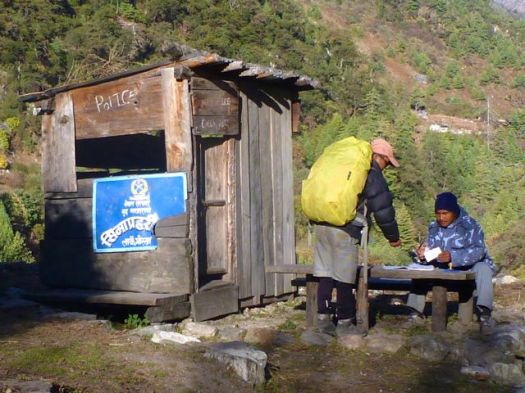
Permit check first thing in the morning.
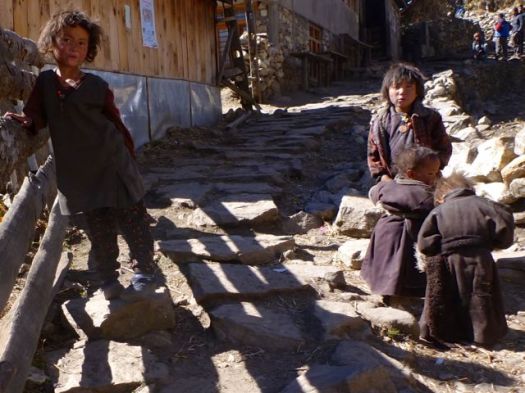
Local people and their landscape grows increasingly Tibetan as you ascend. Each village from here on up had it’s own monastery (Gompa).
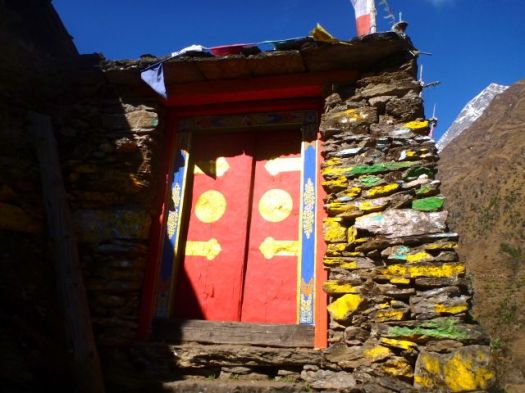
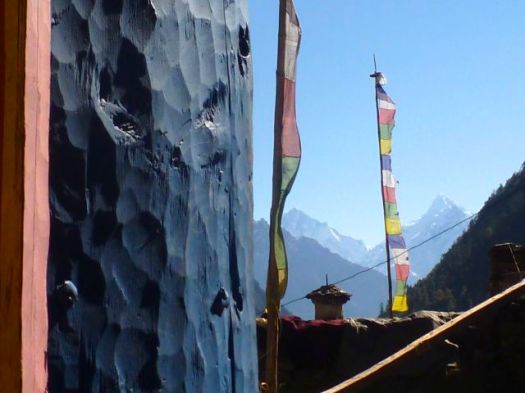
It was well below freezing last night.
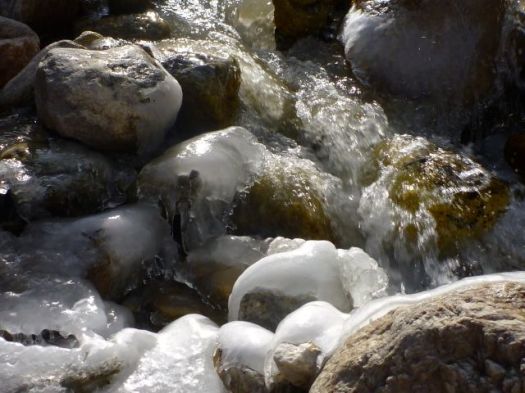
Still, when the sun comes out, hikers strip off their many layers quickly.
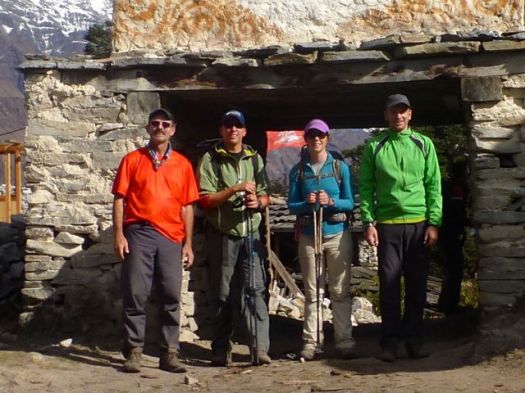
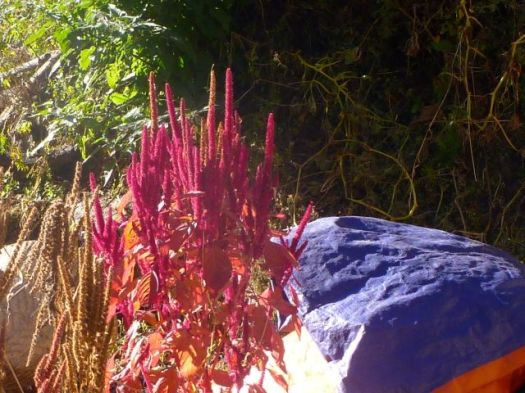
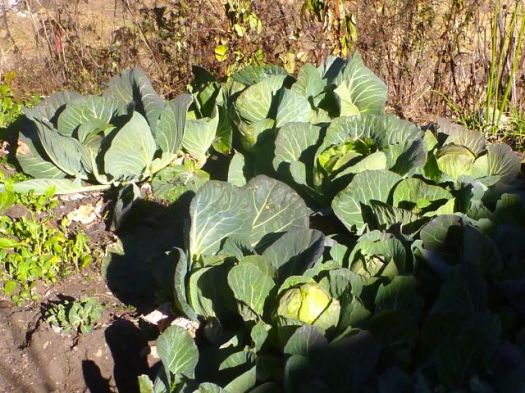
I was astonished at what can still grow at these altitudes.
We stopped at Lho 3180m for lunch. The pack animals tried to join us at the table.
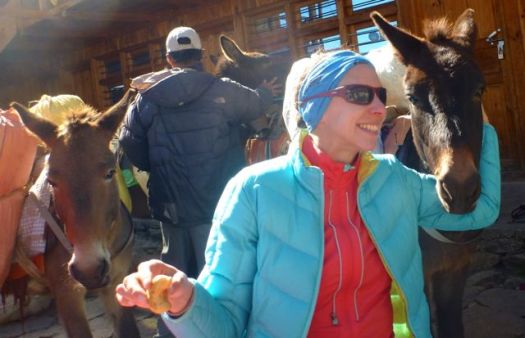
Some stayed at Lho for acclimatization. Tempting.
Lho has the very best views of Manaslu!
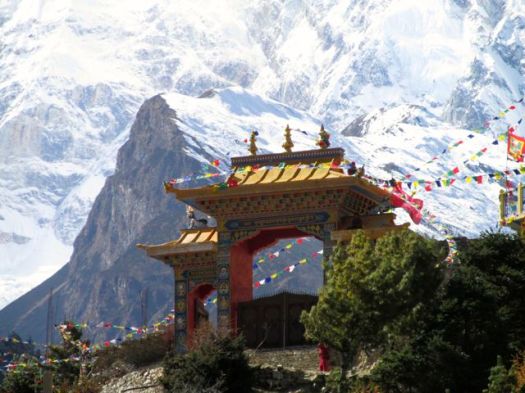
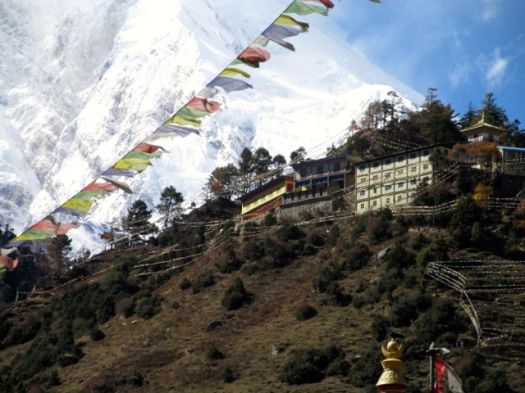
It’s the cover photo for our hiking guidebook.
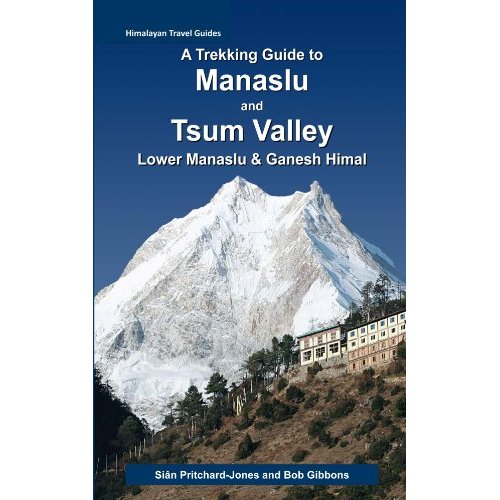
This is why you hike the Himalaya. 🙂
We all felt good here at 3180m, so we pushed on to Sama 3530m.
The afternoon was fantastic, too. Grasslands of the Tibetan plateau support grazing animals nearly all year round.
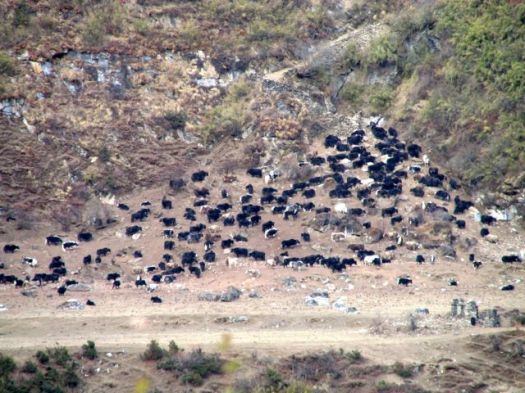
There are plenty of mountain ponies, too. Used for transport.
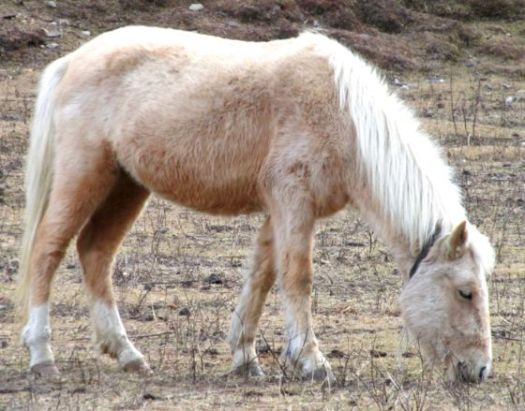
You can rent a pony to carry you up. Or down, if you are feeling altitude sickness.
A doctor on Annapurna told us of a young Japanese hiker who’s guide put him on a pony to carry him over a high Pass there. He died of HACE or HAPE en route. 😦
We unpacked for two nights in Sama. (Samagaon) 3530m This would be our acclimatization rest day.
Sama is a surprisingly big village of about 1000 residents. Big lodges. Well stocked stores. Good restaurants. We even checked email there, the internet having arrived only 3 months prior. (2013)
Speed of the internet was good. But the computers and notebooks available to rent were atrocious. Almost unusable.
Increased tourism is needed in this town, I feel. Check the Samagaun Development Foundation blog.
Rent a tent.
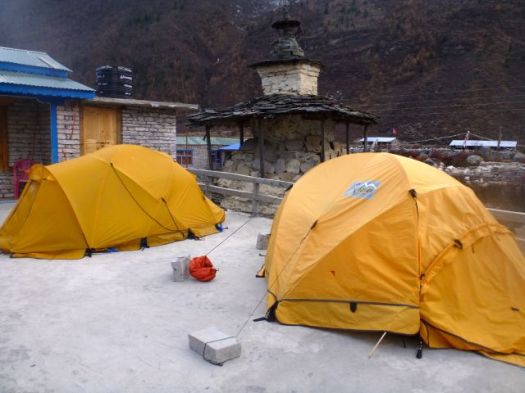
One downside of sleeping indoors rather than in a tent are rodents. In some guest houses you are kept awake by their scurrying. I even saw one in the dining room at 4470m.
see high resolution photos from this day on flickr
day 0 | day 1 | day 2 | day 3 | day 4 | day 5 | day 6 | day 7 | day 8 | day 9 | day 10 | info
by site editor Rick McCharles
day 0 | day 1 | day 2 | day 3 | day 4 | day 5 | day 6
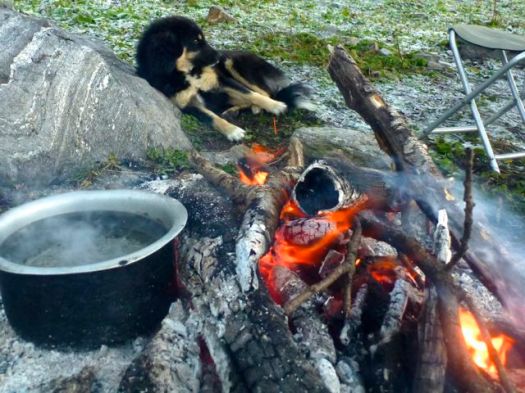
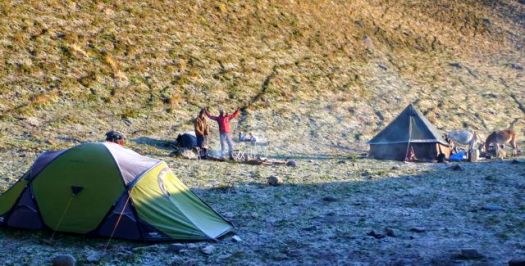
We arose at first light last morning, the coldest yet.
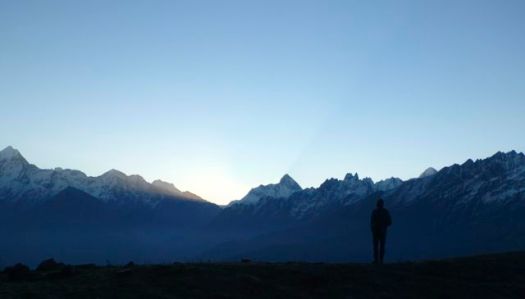
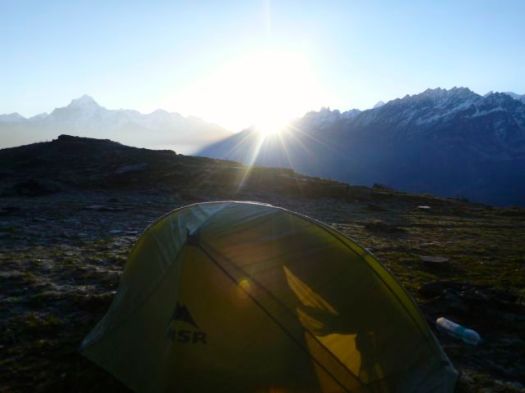
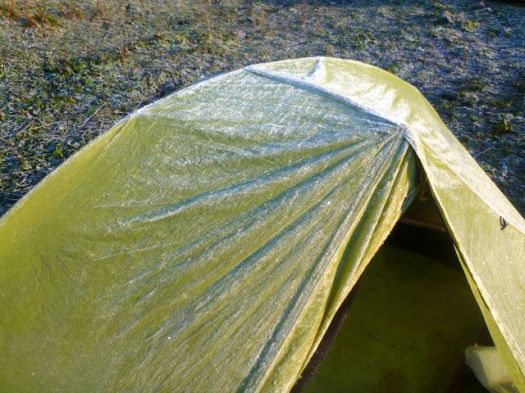
Our adopted dog was quick to the fire.
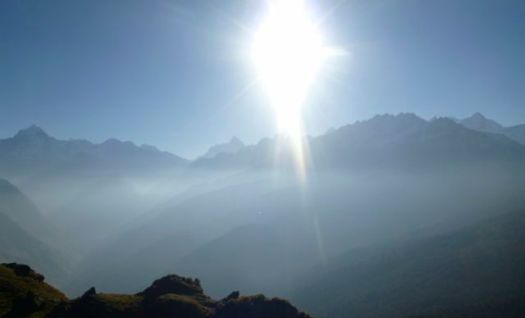
I’d have to rate the day before and the two days after Kuari as about as good as hiking gets.
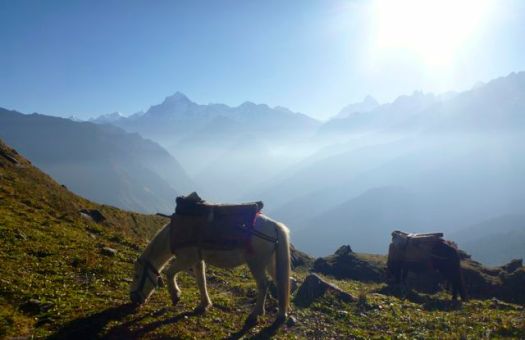
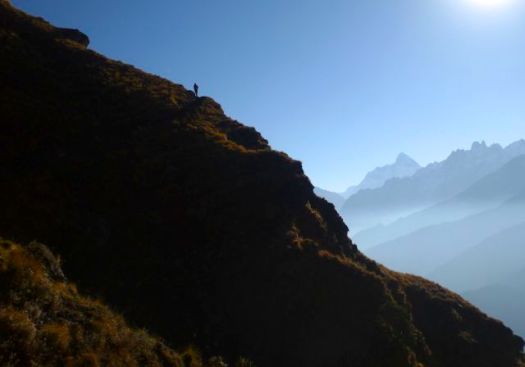
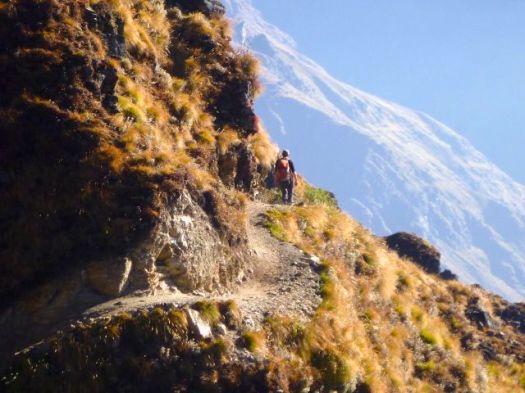
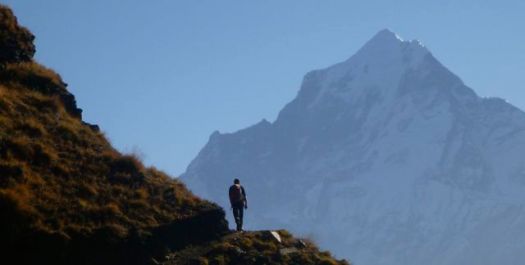
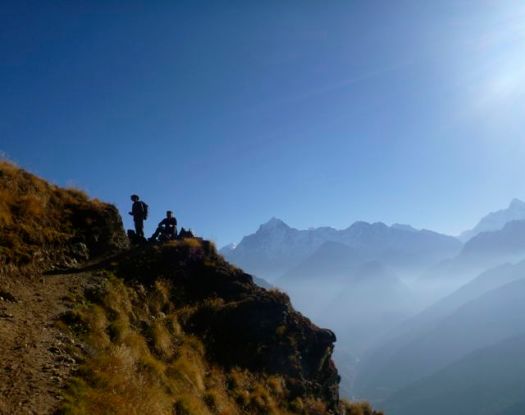
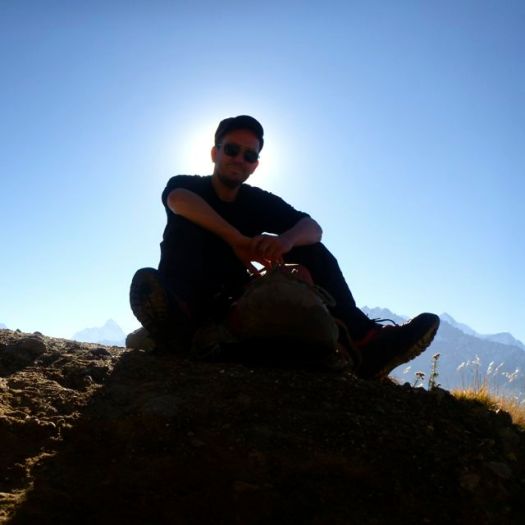
Our guide was happy to get back to mobile phone service. He confirmed out pick-up time.
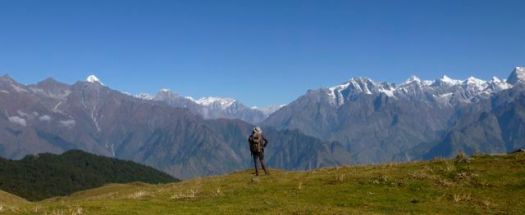
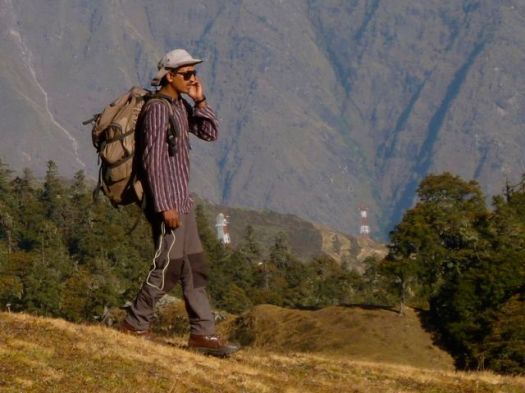
We wandered lazily down through huge alpine meadows. Please that the trek had been a success.
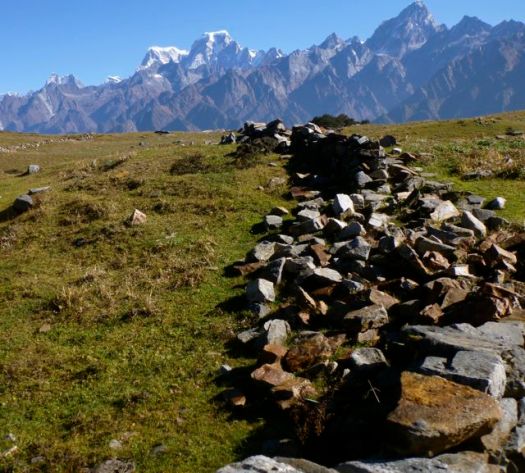
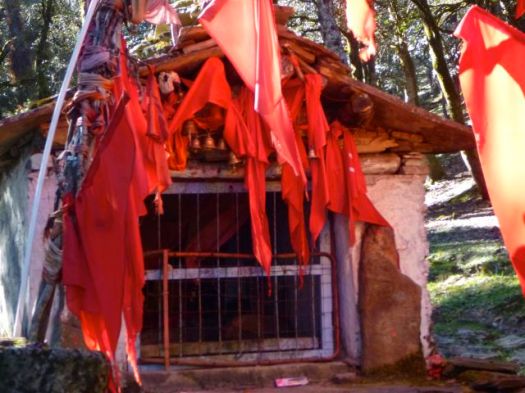
Reaching this Hindu Temple having connection to great epic Ramayana means you’ve almost completed the Kuari.
We finished at the Auli Ski Resort, India’s finest. (Ski Jan-March.) Asia’s longest Cable Car (4km) is a must. The road to get there is deadly. This was one of the hosts of the 1st South Asian Winter Games in 2011.
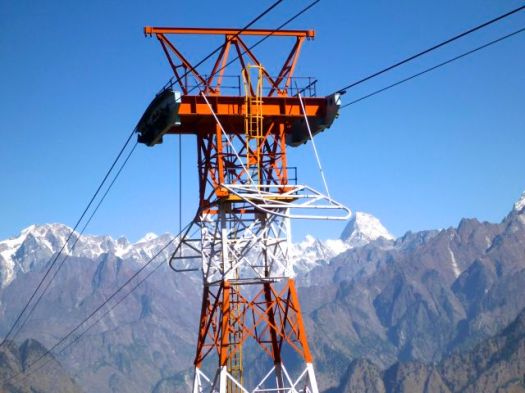
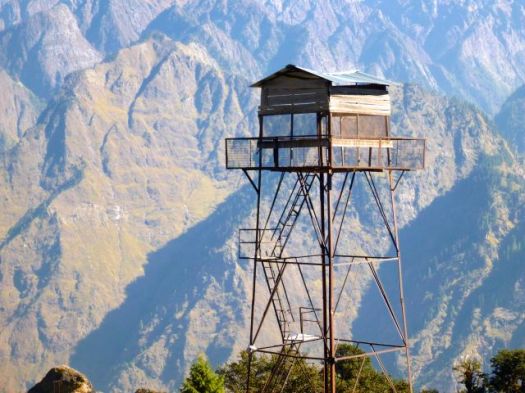
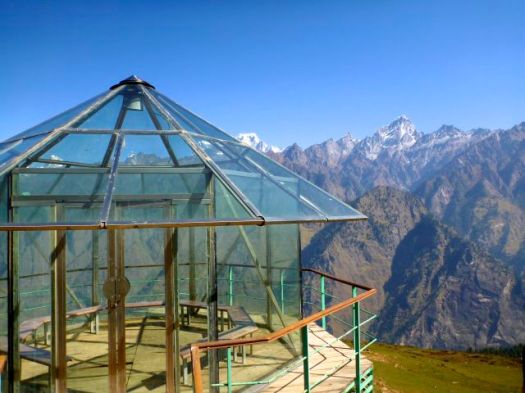
Our driver was waiting just outside the gates. 🙂
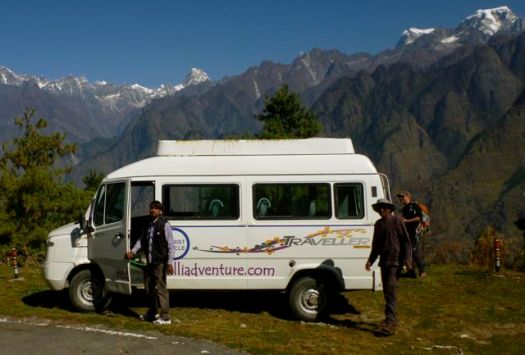
It was 10hrs back to Rishikesh with a hotel stop en route.
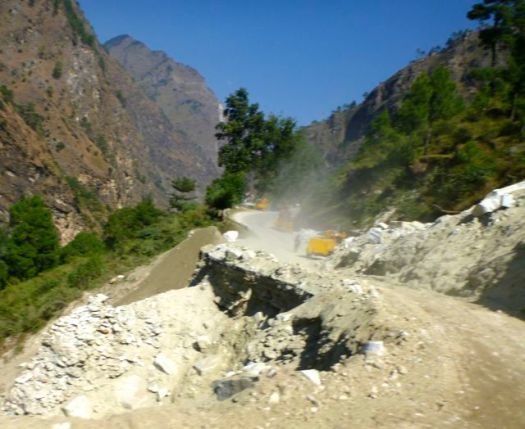
The most dangerous aspect of Himalaya trekking by far is the drive to and from the trailheads. Washouts and landslides are frequent.

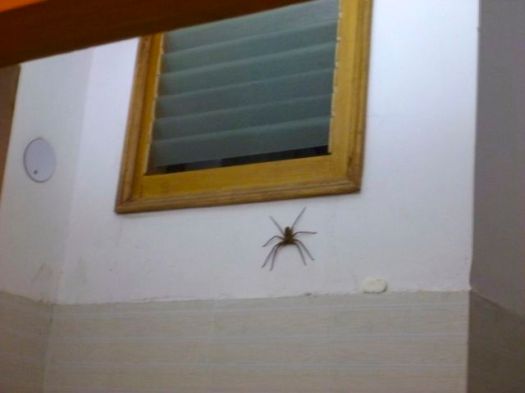
OK. The giant spider we found awaiting us at our (Le Meadows) Hotel room might look even scarier. 🙂
Before the trek I knew about the June flooding, but not exactly how bad it had been. More than 5700 dead. 😦
One of the 4 Holy Hindu mountain temples, nearby Kedarnath, was inundated with water, mud and boulders from landslide. Several died from drowning or being crushed by stampeding pilgrims.
Yet the roads were back to “normal” by October.
See all high resolution photos from this day.
End.
If you might be interested in trekking Kuari yourself, start with our Kuari Trek information page. 🙂
by site editor Rick McCharles
day 0 | day 1 | day 2 | day 3 | day 4 | day 5 | day 6
Packing up next morning I was surprised to find that we’d added 2 more pack animals. They carried feed for our 4 mules.
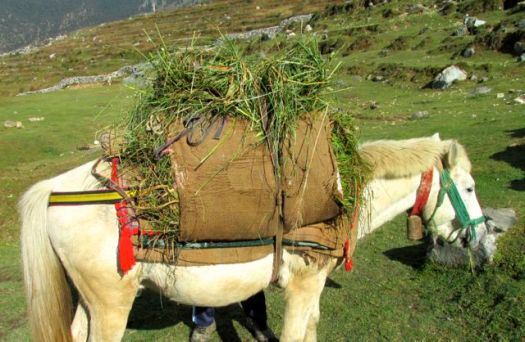
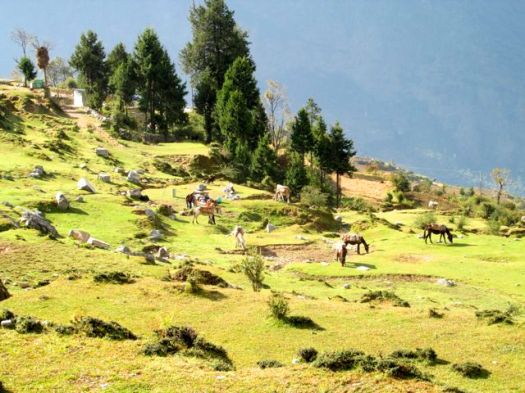
So two helpless “Sahibs” needed an Expedition Team of 4 men (guide, cook, 2 mule drivers). A minimum of 4 beasts. This morning, 6 beasts.
To walk.
Dogs hang about Camps waiting on the compost.
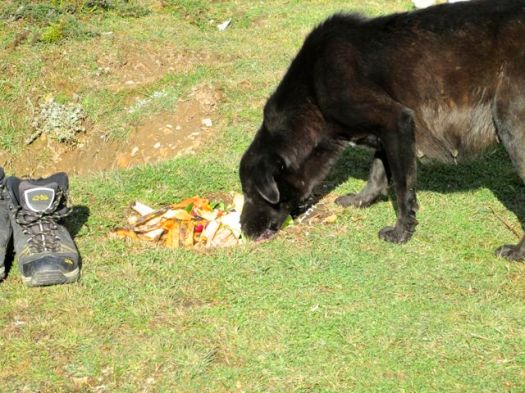
Seems they’ll eat anything except citrus peel and onions.
Up and up.
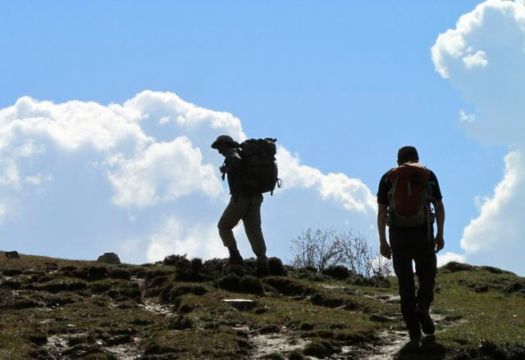
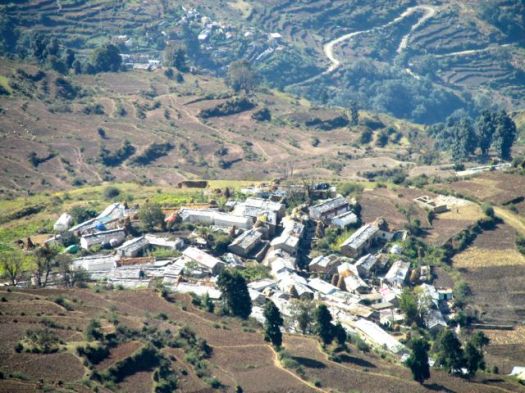
We passed many villages. All seemingly prosperous and well maintained.
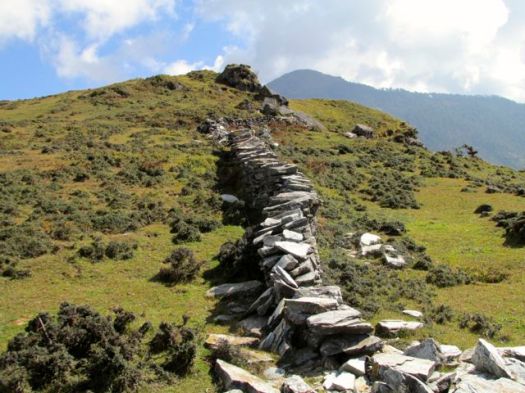
Grazing is critical. Stone fences seem to demarcate who grazes where. But I’m not sure those boundaries are often contested.
We saw a number of the great birds of India.
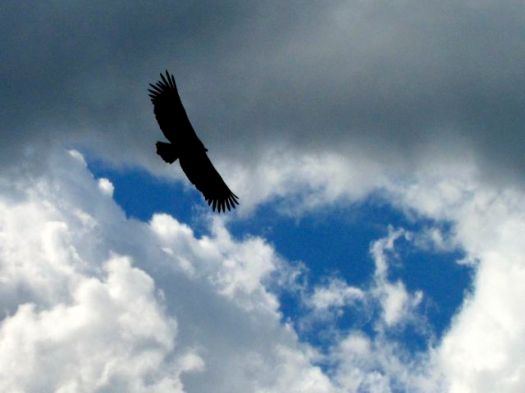
The Bearded Vulture (Lammergeier) soared above and below us for much of the trip.
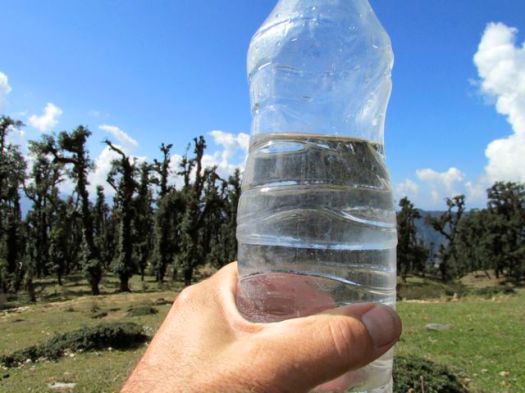
Our guide urged us to drink as much water as possible as we acclimatized to altitude.
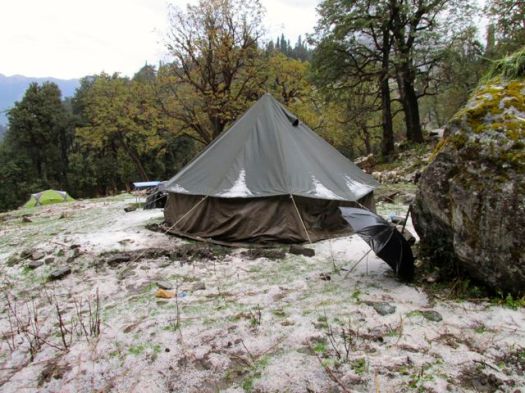
On arrival at our night’s Camp we were surprised by a freak hail storm.
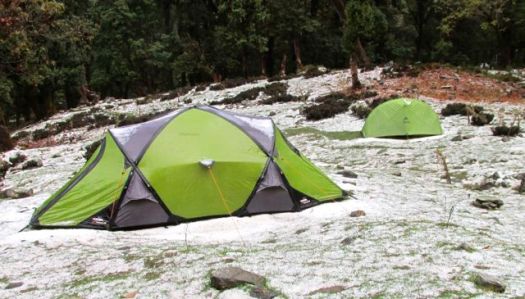
The larger 2-man, 4-season tent was provided by Red Chilli.
But I used my own 1-man tent instead. Alf got the Tent Mahal for himself. 🙂
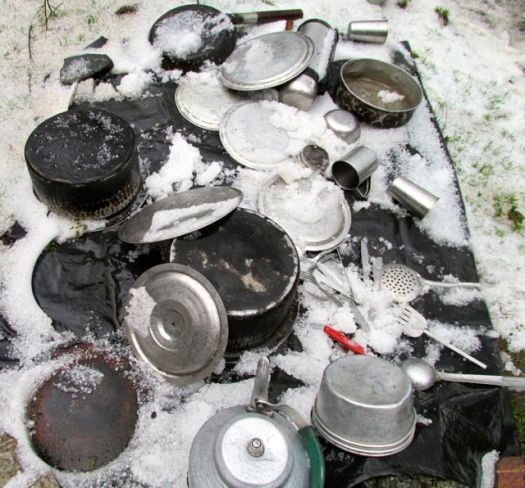
We Sahibs read in our tents while our Team got a fire started with wet wood.
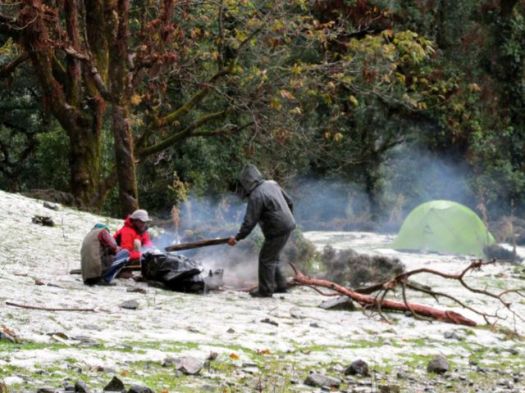
You’ve got to be ready for anything in the Himalaya.
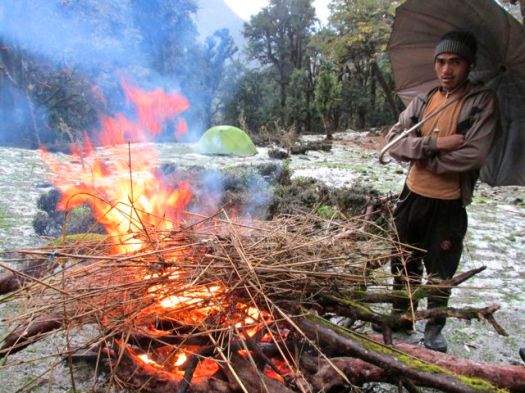
See all high resolution photos from this day.
Kraig Becker:
…The video below is a full episode of that series which happens to be focused on one of my favorite places – the Himalaya. If you have 49 minutes to spare, you’ll get a great look at those mountains and the people that live there, with some of the most breathtaking scenery you’ll find anywhere. So sit back, turn up the volume and enjoy the show. It is one of the greatest on Earth.
Click PLAY or watch it on YouTube.
I’m doing some research for a planned trip to the BIG mountains.
 besthike.com