
Thinking of Étienne Lemieux and Louis-Vincent Lessard today. 😦
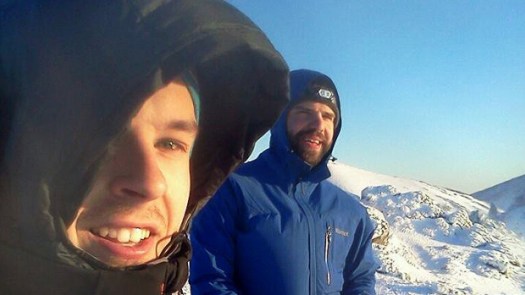
Police in New Zealand believe two bodies found in avalanche debris are Louis-Vincent Lessard and Étienne Lemieux, two Quebec travellers who went missing during an outdoor adventure trip. …
The first body was found over the weekend in a field of avalanche debris about 350 metres below the Kepler track, where the two had planned to go hiking. A second body was discovered Monday at about 10:30 a.m. New Zealand time. …
“The majority of people who walk the Kepler track do it in summer and there’s seldom any snow. Totally different story in winter, when large volumes of snow can fall in that area. Not many people at all walk the Kepler track in winter.” …
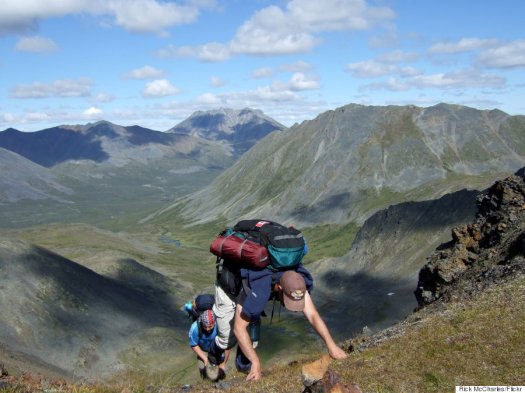
We like the Yukon even better than Alaska for hiking. For one thing, the weather is better.
If you need some inspiration, click through to Zi-Ann Lum Yukon photo essay. 🙂
For the hiker, the Tombstone Mountains are an obvious attraction. It offers a dramatic feast for eyes — a range of wind-whipped granite cathedrals are overshadowed by a towering 500-metre vertical face. In August, the wild terrain changes hues: summer’s green moss fades into vibrant shades of gold and orange, broken up by ripples of crimson and the occasional mountain lake. …
The 2014 Nepal snowstorm disaster had just happened, killing at least 43 people including at least 21 trekkers. That was in Annapurna and Dhaulagiri. 😦
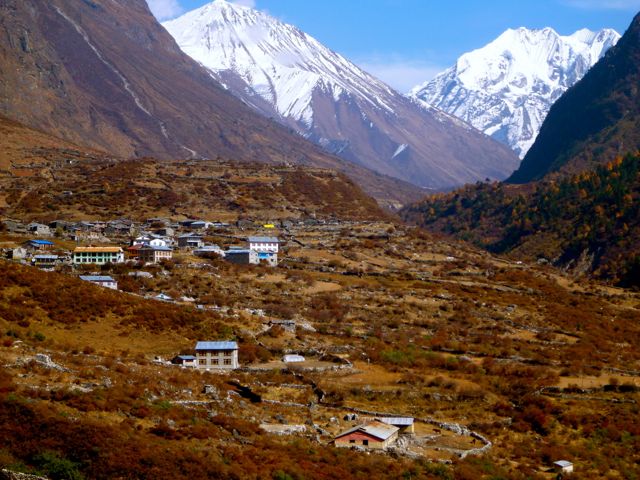
“The village of Langtang was the site of the largest single catastrophe, as the entirety of village was completely buried by an avalanche that came from thousands of feet above on the southern slopes of Langtang Lirung and Langtang II.
Smaller settlements on the outskirts of Langtang, such as Chyamki, Thangsyap, and Mundu were also buried. It is impossible to determine exactly how many people died there, but the estimate is perhaps over 300 people in total.
The handful of survivors, roughly twelve locals and two foreigners, walked down to Ghodatabela below after spending the night of the 25th in a cave – thus there is no one at Langtang itself. This avalanche is perhaps 2-3 kilometers wide …
Above, at Kyangjin Gompa, there were reportedly fewer casualties (perhaps 5-10) yet many injured. …”
I’m planning to volunteer for Dave Adlard’s NEXT expedition race. Social media. Photos. Video.
June 28th – July 4th, 2015.
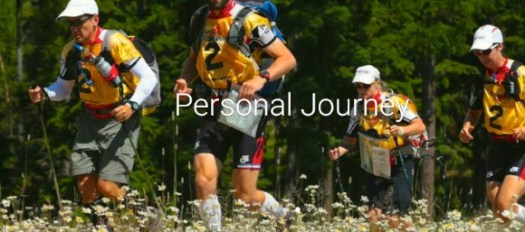
Over almost 7 days, teams will undertake a 340 – 600 km (200 – 350 miles) expedition over some of the most beautiful, epic and challenging terrain on Earth.
Racers will use a map, compass and their own wits to navigate their way over a (mostly) unmarked route by mountain biking, rafting, paddling, trekking, canyoneering, coasteering, glacier travel, orienteering, trail running, fixed ropes, and a few other surprises through the amazing expanse of Alaska’s Kenai peninsula!
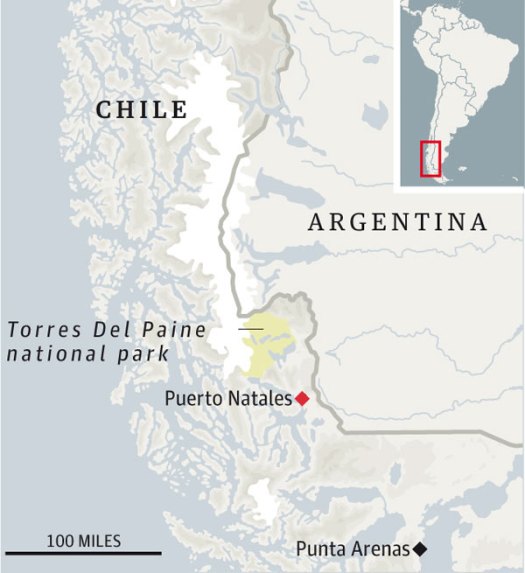
Patagonia off season: winter hiking in Torres del Paine
Tourists flock to the Torres del Paine in the southern summer, but our writer finds hiking there in winter brings a different set of snowy rewards
Andrew Gilchrist:
It’s minus five outside. Not great conditions for roughing it. The previous night, in an unheated, near-deserted refuge covered in snow, we had bedded down in extreme-weather sleeping bags, complete with hoods. But tonight, after a thrilling 20-mile hike through some of the finest scenery on the planet, we are warm, dry and, frankly, ecstatic beneath polar blankets in a chic ecodome that feels more penthouse than campsite. Steam rises from our boots as they dry by the log-burning stove and, through the round windows in the curved ceiling, I can pick out what seems like every star in the southern sky.
“This is sublime,” I think, as I ease myself off my furry headboard and pour another glass of velvety Chilean red. “Where is everyone?” …
Of the two best hikes in Patagonia, which should you trek?
… you can’t decide between El Chalten (Argentina) and Torres del Paine (Chile), the self-proclaimed “trekking capitals” of their respective countries …
The good news is you can’t go wrong. Both options provide incredible access to some of the most spectacular mountain scenery you’ll ever see.
We can’t really recommend one over the other purely based on natural beauty as they are both equally stunning national parks. However, there are definitely distinct differences between the two trekking meccas that may push you toward one or the other. Here are some things to think about based on our experience in both locations that will help you decide (although the best decision is to do both!)
My toughest day in the Himalaya 2014. Up and over the Lauribina Pass 4,610m.
I’d not slept well, getting out of bed 4 times during the night to check the auspicious full moon over sacred Gossankund lake.
In fact, myself and an Israeli guy had hoped to (early morning) follow a guided group up the popular trekking peak called Surya (Sun) 5145m.
He was worried that no guided groups were scheduled. And he was right. Later we learned that there is too much snow and ice at the top. Guides were not going up right now.
First light a chopper landed.
They were evacuating a lady, altitude sick. She looked in rough shape. Could barely walk.
Cost would be something under $10,000. Hopefully paid by insurance.
The chopper crew all rushed to Gosainkund to collect holy water and take selfies. It was this water that Shiva once drank to quench his thirst after having been poisoned.
So … instead of an extra day scrambling Surya, I headed towards the Pass with everyone else.
There are 108 lakes in this area, actually. You pass a series of them on the trail. They should be frozen by now, but are not.
Laurabina Pass 4610m
For some reason I found this day very, very tough. The Pass was fine. But the long descent to Gopte was taxing.
On the bright side, I saw a rarely spotted Red Panda en route. Surprising him on the trail itself, he jumped uphill instantly. Then, happily for me, dashed back across the trail downhill. It’s a tiny beast with a huge, unmistakable tail. Two distinct colours.
But I was a bit of a wreck arriving Gopte 3439m, early in the afternoon.
I went straight to bed in order to prevent chills.
Happily, I awoke just in time for one of the best and strangest sunsets. People compared this sunset with the best they’d ever seen.
My preference is to eat as late as possible. This evening, however, chatting with an adventurous couple from Rocky Mountain House, I waited too long. The kitchen shut down about 8pm.
I begged a chance to join in the Dal Baht feed with the porters and guides, only the second time I’ve ever got the chance to eat with them. It’s not done in the Himalaya. 🙂