trek to Choquequirao, Peru

Hal Amen:

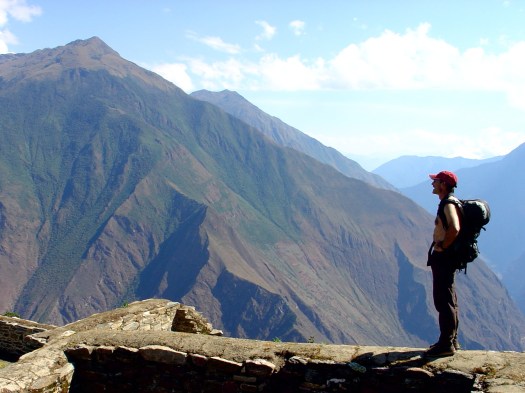
RESTORATION OF this small Incan city only began in the ’90s. The first visitors had to cross the Apurímac River via a rope bridge to reach it.

During a typical afternoon at Machu Picchu, you’ll be one among 2,500. At Choquequirao, you might see six or seven other visitors.

While the ruins currently sit under the radar, they won’t stay there forever. The regional government is investing $50 million into a cable car project that could get you to this site in 15 minutes intead of the current four-day trek. As early as 2016, there might be around 3,000 people visiting choquequirao per day. Consider yourself warned — get there now. …

DISCOVER YOUR OWN MACHU PICCHU: CHOQUEQUIRAO, PERU

The photo Hal used to top his article is besthike editor Rick McCharles from 2005.

Rick McCharles Choquequirao

history of Yosemite climbing

VALLEY UPRISING is the much-anticipated documentary from Sender Films about the epic history of climbing in Yosemite National Park and the counterculture roots of outdoor sports.

Narrated by Peter Sarsgaard, the film features digitally-animated archival photography, spectacular climbing footage and interviews with Yosemite greats — from pioneers like Yvon Chouinard, Royal Robbins, Lynn Hill and John Long to cutting edge modern athletes like Dean Potter and Alex Honnold. Valley Uprising tells the story of the bold men and women who broke with convention and redefined the limits of human possibility in America’s legendary national park.

Click PLAY or watch the trailer on YouTube.

To be released Fall 2014.

(via Hiking in Finland)

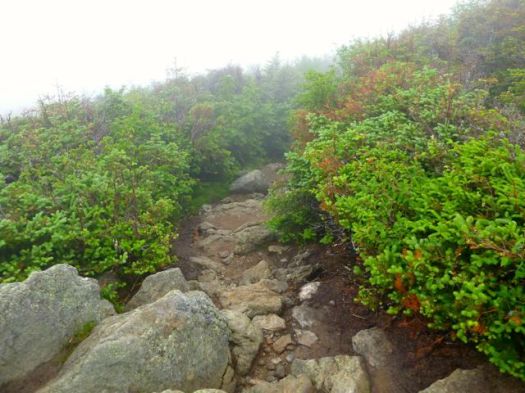
hiking Mt Washington, New Hampshire

trip report by site editor Rick McCharles
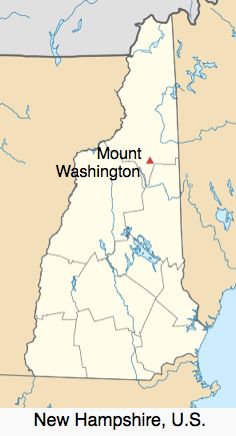
Mt Washington mapBecause the Presidential Range is in the pathway of several major storm tracks, Mount Washington is known to have a severe combination of wind and cold. The average annual temperature is 27.1°F, the summit temperature has never risen above 72°F, and the mountain holds the world-record for a wind speed of 231 mph, recorded on the summit in 1934.

(Barrow Island, Australia, October 4, 1996 had big wind. Gusts might have even been higher speeds.)

Hurricane-force wind, dense fog, driving rain, and snow occur even during the summer months, and sudden and extreme weather variations are common. Although hazardous conditions do not occur daily, it is important to be aware of the weather before you begin your hike.

outdoors.org

Known as the most dangerous small mountain in the world … (over) 137+ fatalities have occurred since 1849.

Most due to hypothermia.

This mountain is accessible to many poorly prepared and inexperienced hikers. About 50,000 people a year climb the mountain.

Having done very little advance research, I arrived at the excellent Appalachian Mountain Club Pinkham Notch Visitor Center on Route 16. Dozens of hikers lounged around, starting or finishing trips. This is the main trailhead for Washington. The 2 most popular trails start here: Tuckerman Ravine Trail and the Lion Head Trail.

Helpful ladies at the information desk convinced me to climb (next day) the less crowded Jewell route from the west side.

Of the major, direct trails, Jewell is the longest, but probably the least difficult in terms of terrain, with moderate grades throughout.

It reaches treeline at about 3.0 miles, and climbs rockily to the Gulfside Trail at 3.7 miles (5400 feet). This route then follows the Gulfside Trail (passing by the Westside Trail and the Great Gulf Trail) and meets the Crawford Path just below the summit of Mount Washington (6288 feet) which it reaches at 5.1 miles (3900 feet of elevation gain).

mountwashington.org

Here’s a chart comparing the different routes to the summit.

I decided to tent at Fourth Iron walk-in campground ($8 / night) …
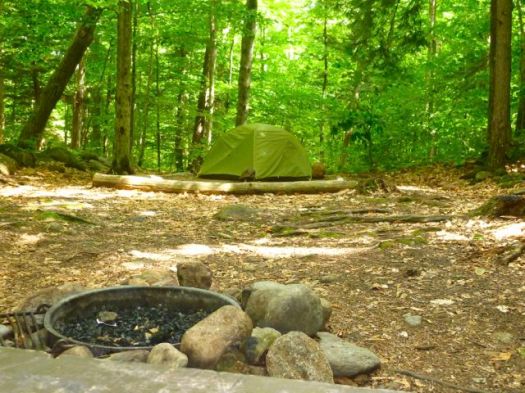
P1290895… and hang out at the nearby gorgeous, historic Mount Washington Alpine Resort.

Omni_Mount_Washington_Hotel1-T1

It was pouring rain the morning of the 4th of July. I decided to sleep in.

That meant I didn’t reach the trailhead until about 11am, still uncertain about whether to hike in the rain.

“Worst weather in the world.”

One Jewell trailhead starts just in front of this train station.

P1290904

Turned out I quite enjoyed the first 3hrs of the walk. In the rain.

I placed a Summit Stone at one of the tall stone cairns on the way up.

P1290909 P1290910

Through the fog I heard one of the railway cars, assuming I was approaching the top.

P1290919

False summit, it turned out. The train was on its way up.

Finally, getting tired, I reached the summit. Celebrating George Washington on the 4th of July.

P1290917The top of the mountain is crowded with suitcase tourists who have arrived by road or train.

Though I tried to resist, it was too tempting NOT to descend by Cog Railway, despite the $46 one way ticket price.

My train brakeman agreed that Jewell was the easiest and best route. That’s the trail he’s going to hike with his his 12yr-old son.

If you hike from Jewell, it’s worth checking out the free museum. The history of the Cog railway is fascinating.

P1290928

P1290929

Though most do Washington as a day hike, it is possible to overnight in some locations on the mountain. Tenting on the summit is illegal, however.
Kiss Or Kill: Confessions of a Serial Climber

Just finished reading one of the weirdest and wildest outdoors books.

Not sure whether his prose pieces are the insane ramblings of an arrogant egomaniac. Or genius insight.

KISS OR KILL

Sit back and join the ride with this collection of edge-of-your-seat climbing stories by Mark Twight aka Dr. Doom. “Somewhere out there somebody understands these words and knows they matter. They were written in blood, learned by heart.” –Mark Twight
– BANFF award-winner

Extreme climber. Extreme writer. Extreme personality. No matter what he’s doing, Mark Twight takes a definite, and often controversial, stand. Anyone who knows climbing knows Twight’s name, and anyone who knows Twight’s name will want to read this book. Each story is told in Twight’s taut, in-your-face style. Brand-new epilogues bring each piece full circle , providing updated information and fresh, hindsight perspectives.

Amazon

Twight
about Mark Twight

Born on November 2, 1961 in Yosemite National Park, California, Mark Twight rose to prominence in the world Alpine mountaineering community in the late 1980s and early 1990s with a well-documented series of difficult, dangerous alpine climbs in various ranges around the world.

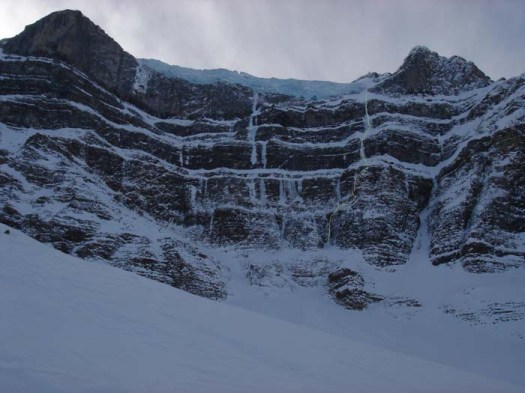
He made the first ascent of “The Reality Bath” on the White Pyramid with Randy Rackliff, which is unrepeated and described by Canadian Rockies guidebook author, Albi Sole as “so dangerous as to be of little value except to those suicidally inclined.”

… Twight was nominated for the Piolet d’Or twice during his career, in 1993 for “Beyond Good and Evil” and 1995 for “Deprivation”.

Reality Bath is somewhere centre on this wall

Publishers Weekly:

From Chamonix to the Himalayas to Peak Communism in the Pamirs, extreme climbing has been Twight’s response to “stupidity and mediocrity” and at times it is even “a tool to forestall suicide.”

Following Extreme Alpinism, this volume collects more than 12 years of Twight’s extreme outdoor journalism for such magazines as Climbing, Outside and Men’s Journal.

Punk rock lyrics pepper these essays, providing context and form for his rage, cynicism and obsessive, masculine drive.

Avalanches, rotten ice, the deaths of fellow climbers, the rescue of others, dwindling food supplies, lost tents at 18,000 feet Twight survives mortal dangers and tragedies, writing, “No matter what I did, the suffering I experienced did not satisfy me. I had to have more.”

Twight’s in-your-face style is both his strength and his weakness fans of Henry Rollins or Charles Bukowski may find a sport nut analogue in Twight. Deeply personal, arrogant, grandiose, thrilling and unapologetic, this record of his 15-year career will gratify and repel extreme athletes, their admirers and their detractors.

Andrew Pleavin
Andrew Pleavin

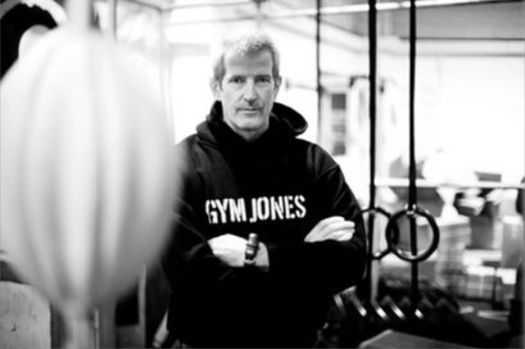
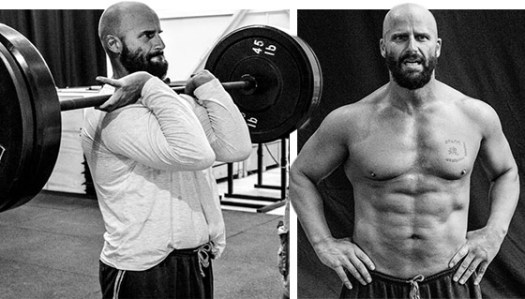
Mark Twight is the founder of Gym Jones, where he trains athletes, military personnel, and others for whom fitness goes beyond appearance. At Gym Jones Twight and fellow trainers and coaches work with everyone from NFL players to MMA fighters, Brazilian Jiu-Jitsu competitors (a half-dozen Pedro Sauer black belts work and train there), bike racers, rock and mountain climbers, and a variety of ultra-endurance athletes. …

In 2005 Twight trained the cast and stunt crew for the movie 300. … The training was difficult, Twight pulled no punches, refusing to differentiate between actors, stuntmen, or athletes. After being told the details of a day’s workout Andrew Pleavin said, “It feels like you just killed my dog.”

One training regimen that his crew underwent in the movie came to be known as the 300 Workout, spawning many variations by other fitness personalities and trainers.

Fanie Botha Trail, South Africa

Lunny:

A wonderful hike – well maintained, easy to follow, varied, great facilities and they even gave me the best possible weather without a drop of rain in the middle of the rainy season but the most remarkable thing was I didn’t see ONE other person on the entire trail…?

Luny

115km of hiking

3 days and 3 nights

Over 2500m of elevation gain …

Mix of mountains, rain forest, waterfalls, pools, ridges, creeks, pine plantations, long grasses and more!

Starting/end point: the town of Sabie (few hundred kms from Jo’burg and Pretoria in NE South Africa) …

Smorgasbord of South African Beauty – Fanie Botha Hiking Trail

Luny posted a good map.

click to see large version

Starting points are either at the Ceylon Hut (on Ceylon Plantation), or the President Burger Hut (at Mac Mac Forest Retreat), or the Graskop Hut (near the town of Graskop) and parking is available at these points only.

It’s easy to section hike the Fanie Botha, especially with those big loops.

South African Hikes:

Maritzbos two day trail, total distance 17.1 km

Maritzbos circular three night trail, total distance 30.1 km

Bonnet/Mac Mac Pools two day trail, total distance 39 km

Hartbeesvlakte two night trail, total distance 30.1 km

Mount Moodie/y four night trail, total distance 58.8 or 49.5 km

Fanie Botha five night trail, total distance 71.8 or 62.5 km

Go magazine has a terrific trip article by Anim van Wyk and photographer Lawrette McFarlane:

Opened in 1973, the Fanie Botha Hiking Trail between Sabie and Graskop is the first formally designated trail in the country. …

Be careful on the bridge over the Mac-Mac River in the rain – it’s very slippery.

bridge

You hike past the spectacular Mac-Mac Falls – a national monument – on Day 5.

mac-mac

Who was Fanie Botha?

In the 1960s, one Paul van Zyl did a master’s degree on the Appalachian Trail in the United States of America – a trail that stretches over 3500 km in the east of the country. On his return to South Africa he convinced Fanie Botha, then minister of forestry, that hiking trails were a way to make better use of plantations.

Botha’s plan was to develop one long trail from the Soutpansberg all along the escarpment to the Cederberg in the Western Cape. This dream was never realised.

On 11 and 12 May 1973, about 30 hikers hiked the 45 km from the Lone Creek Falls over Mount Anderson to the Mac-Mac Falls, where Botha then officially opened the trail.

Botha promulgated legislation for the national hiking trail system and enabled the establishment of the National Hiking Trail Council in 1975. He could be called “the father of hiking” in South Africa.

There are four huts on the trail:

Ceylon Hut. This was the name of one of the first plantations in the former Transvaal.

Maritzbos Hut. It’s named after the Maritz family to which this piece of land once belonged. They felled trees to make supports for mine shafts.

Stables Hut. It used to be a mule stable. Mules are still used to drag out felled trees.

President Burgers Hut. It’s named after the president of the ZAR between 1872 and 1877.

The grand old man of Mpumalanga

If you want to sleep in the huts, contact Komatiland ECOTourism, Komatiland Booking office, Nelspruit:

Telephone: (013) 754 2724
Fax: (012) 481 3622
Email: ecotour@klf.co.za

related – Philip Jacobson VIDEO highlights

Victoria Falls, Zambia

While it is neither the highest nor the widest waterfall in the world, it is classified as the largest, based on its width of 1,708 metres (5,604 ft) and height of 108 metres (354 ft), resulting in the world’s largest sheet of falling water.

… In height and width Victoria Falls is rivalled only by Argentina and Brazil’s Iguazu Falls. …

The spray from the falls typically rises to a height of over 400 metres (1,300 ft), and sometimes even twice as high, and is visible from up to 48 km (30 mi) away. …

Though a jerk and inept leader, David Livingstone was one of the first Westerners to make a transcontinental journey across Africa. And might have been the first non-African to see Victoria Falls.

statue near the Falls

Although Livingstone is known as “Africa’s greatest missionary,” he is only recorded as having converted one African. That might be to his credit, actually. 🙂

New York Herald reporter Henry Stanley could not convince Livingstone to leave. The great explorer died of malaria and dysentery.

IMG_1856

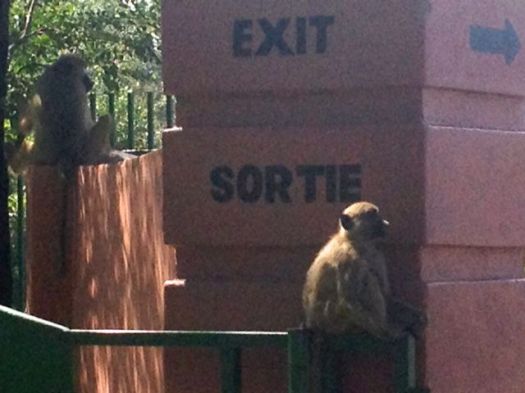
The baboons look bored. But I was thrilled to finally reach Victoria Falls, one of the great tourist destinations of the world.

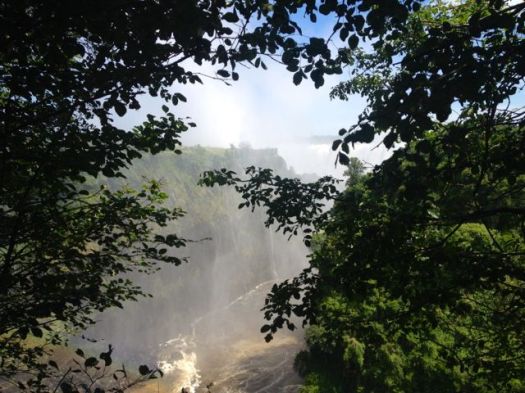
From the Zambia side, you get an unbelievable distant photo vantage.

IMG_1826

First Gorge, from Zambian side

IMG_1824

Walking the Knife-Edge Bridge during high water is something like walking through the waterfall. It’s not always easy to see the Falls.

IMG_1847

Drenched anyway, I made the wet descent to the river on the Boiling Pot trail.

IMG_1863

IMG_1862

That day I didn’t see anyone bungie jumping from the Victoria Falls bridge. But I hear it’s awesome. (VIDEO)

My photos don’t do this natural wonder of the world justice. Nobody leaves disappointed. Victoria Falls are magical.

Click PLAY or watch a video on YouTube.

I’d love to return, just to visit from the Zimbabwe side.

IMG_1816

visiting Lesotho

trip report by site editor Rick McCharles

The landlocked mountain kingdom of Lesotho is an enclave completely surrounded by South Africa.

LESOTHO

Population just over two million, about 40% of the population lives below the international poverty line of US $1.25 a day. It’s one of the poorest nations on Earth.

The easiest way to hike Lesotho is by guided day tour ($50) out of Amphitheater Backpackers in the northern Drakensberg.

Our first stop was at Mafika-Lisiu school, the only one for many miles. Amphitheater Backpackers built a classroom.

One of the teachers joined us as an assistant guide. Local information, first hand.

IMG_0160

This teacher has been waiting nearly 2yrs for a visa that would allow him to visit South Africa as a tourist.

Lesotho once had the opportunity to join South Africa, but the leaders — considered very corrupt — declined.

Many families here are self-sufficient, not much using currency. Maize is the primary crop. 75% of the population is rural.

IMG_0166

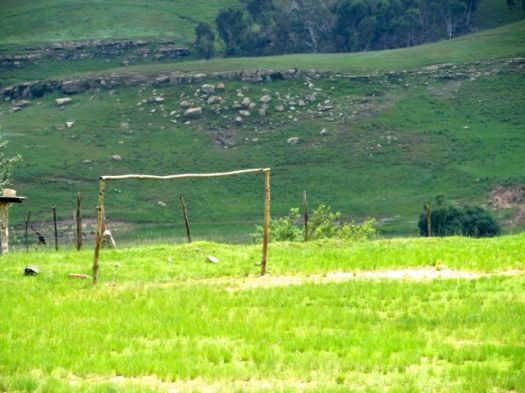
No electricity. No formal shops. The school does have a football field.

IMG_0159

From the school we hiked up to see some of the famous cave paintings.

IMG_0176

Sadly, many had been defaced.

Again we saw plentiful bird life, but no wildlife. This was the wildest creature en route.

IMG_0174

From the caves our group had the option to extend the hike up on to a ridge.

IMG_0181

Hans loved the tranquility of the valley.

IMG_0184

There are “roads” in Lesotho, but most are awful.

IMG_0186

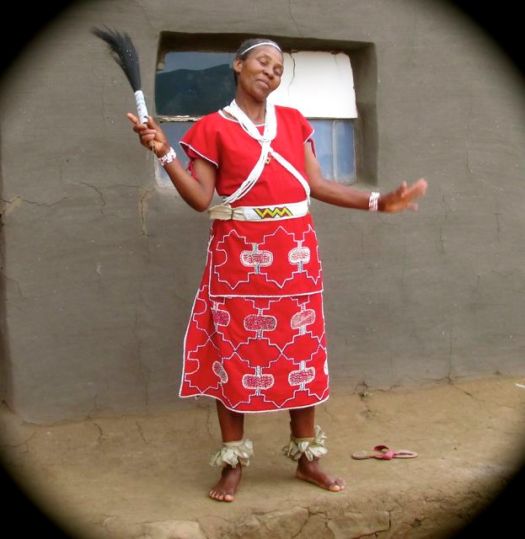
Hans signed on for the tour because he wanted to see a traditional African healer.

IMG_0194

She’s entirely self-taught. Her healing ability is a “gift” first revealed in dreams.

Here is her home.

IMG_0196

I’m a skeptic of natural medicine. But most people in Lesotho do not have the money nor transportation to make the long trip to a clinic or hospital. She is all they’ve got.

Her bedside manner is excellent. Warm and charismatic.

IMG_0197

One tidbit we learned is that the traditional round houses with thatched roofs are slowly being phased out. Thatch is expensive in 2014. And must be replaced regularly.

Children here do not have much. The healer married at age-20 and had had 8 children.

Kids seem to roam about unattended by parents. They are raised (and disciplined) by the village.

IMG_0198

AIDS infects about ⅓ of the population. But we heard nothing of that on the tour.

Theft of animals is the most worrisome “crime” in Lesotho. Though the kids are ignored, valuable stock animals are watched closely.

IMG_0204

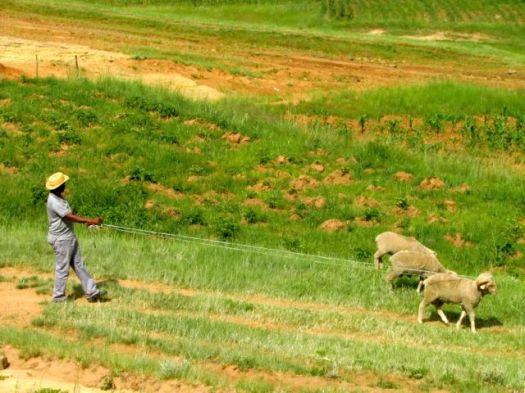
One local man was trying to chase down a young cow while we were there. 🙂

more photos


Full disclosure: I had been booked on a serious 8hr mountain climb for this day. But opted out, switching to the Lesotho cultural tour instead. After only one day in the summer sun, I was too sunburned to risk a tough climb.

Everest Estate disaster

by site editor Rick McCharles

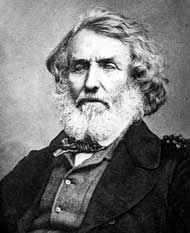
Colonel Sir George Everest (July 4, 1790 — December 1, 1866) was a Welsh surveyor and geographer, and the Surveyor General of India from 1830 through 1843.

GeorgeEverestEverest was largely responsible for completing the Great Trigonometric Survey of India along the meridian arc from southern India extending north to Nepal, a distance of about 2,400 kilometres (1,500 mi). …

Many consider the Trigonometric Survey one of the greatest accomplishments of man.

He was a “humourless individual having the knack of putting everyone’s back up. But since he was a genius, his antisocial habits have been glossed over.”

– Trekking Holidays in India

He did not want Chomolungma to be named for himself. George might never have seen Everest. And had no interest in it. After all, he was Surveyor General of India. The world’s highest peak is on the Tibet / Nepal border.

Sir George Everest’s House and Laboratory, also known as the Park Estate, is situated about 6 kilometres (4 mi) from the Mall in Mussoorie.


… The house is situated in a place from where one can catch the panoramic view of Doon Valley on one side and a panoramic view of the Aglar River valley and the snowbound Himalayan ranges on the other.

The house is under the jurisdiction of the Archeological Survey of India and has been long neglected. …


… The floor is littered with bricks, stones and cow dung. The house is also used as shelter from rain and snow by the cows, goats and horses from the nearby village. Its walls are covered with graffiti, which are mostly declarations of love. …

wikipedia

Day hiking (part of the Benog Tibba Circuit) to visit his former Estate, I bumped into a Christian evangelist, Ray Eicher, whose family have lived in India for generations. He set me in the right direction, in a couple of ways.

Everest Estate, Mussoorie-4

Everest Estate, Mussoorie

Everest Estate, Mussoorie-2

Everest Estate, Mussoorie-3

more of my photos

more Everest Estate photos

This kind of neglect of historical monuments is typical in India. My evangelist friend, who lives nearby, is sorely disappointed.

The historic Clock Tower in Mussoorie was recently torn down. At this point, plans to rebuild are stalled.

P.S.

…. Sir George Everest’s surname is pronounced … Eve-rest with “Eve” pronounced as in the woman’s name. …