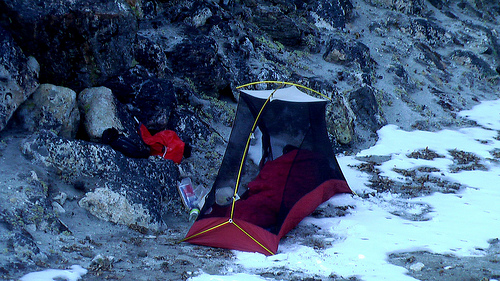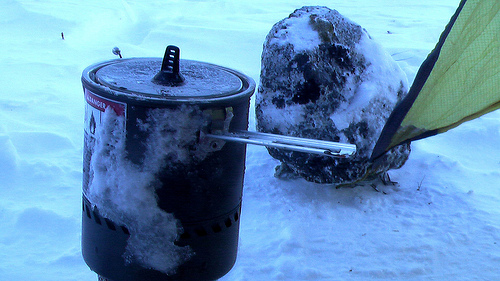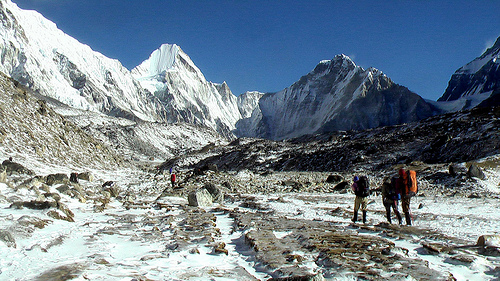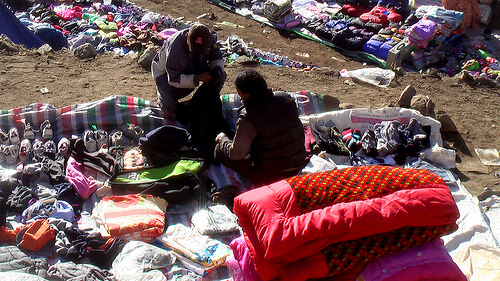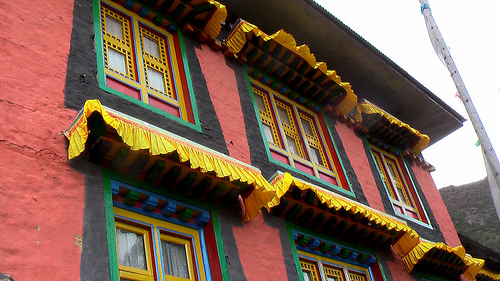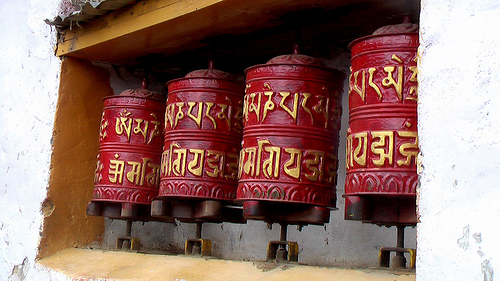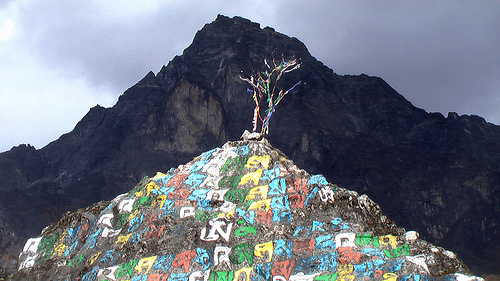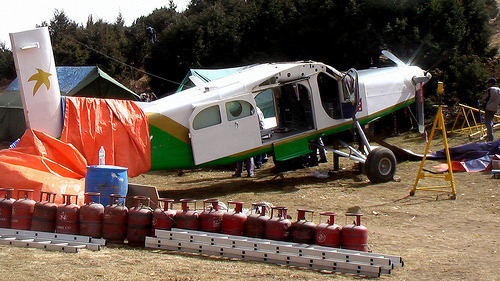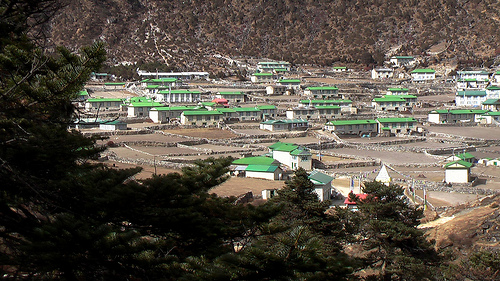
Any hiker carrying their trash back from the Himalaya to Kathmandu is making a mistake. The capital of Nepal has a worse trash disposal system than either Namche Bazaar or Lukla, in the mountains.
Should we carry trash all the back to our home nation? … Think of the carbon footprint.
As far as I’m concerned, in Nepal it’s best to burn paper in the mountains. Shatter glass into a remote waterfall. Bury metal under a pile of stones.
I did the same in the Andes.
This all contradicts the dictates of the Nepali National Parks.
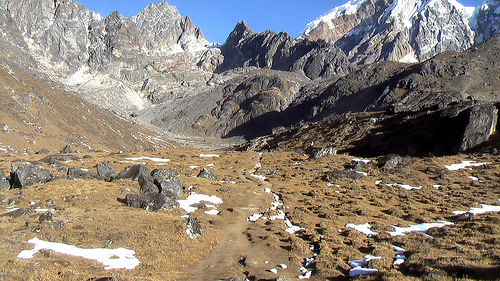
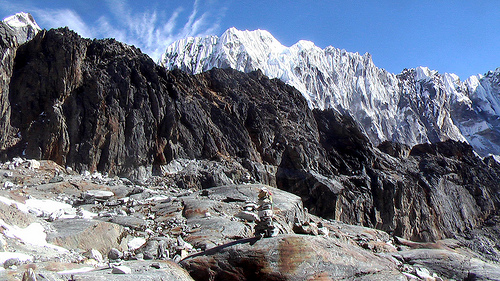
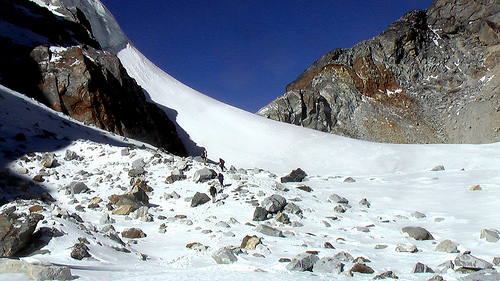
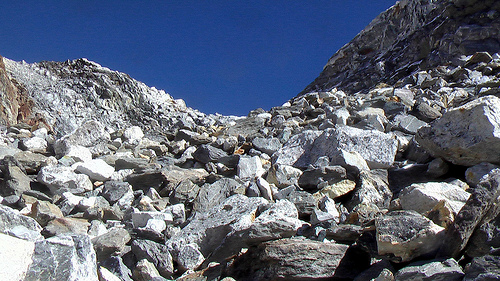
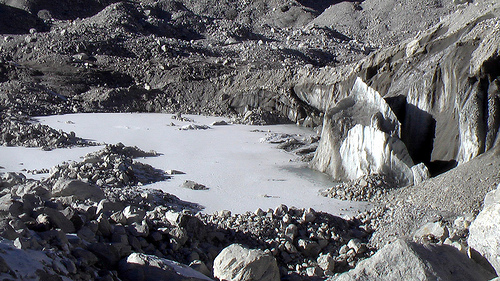
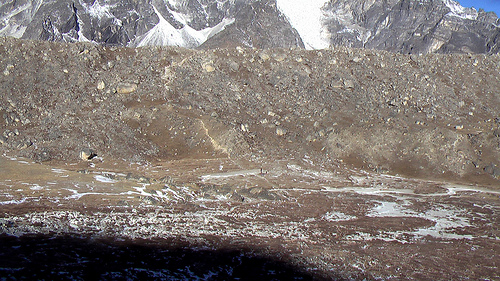
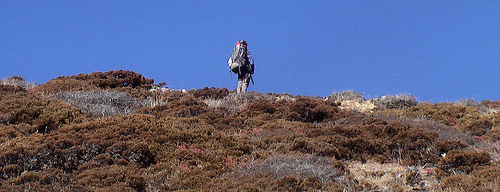
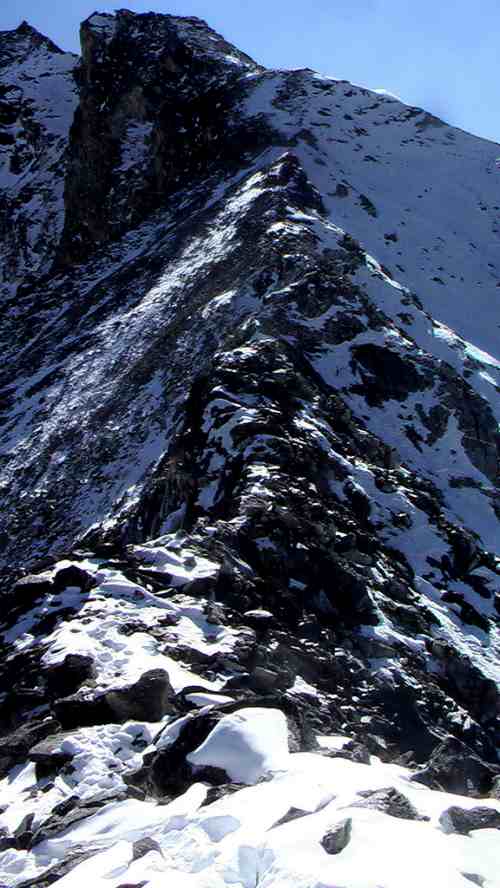
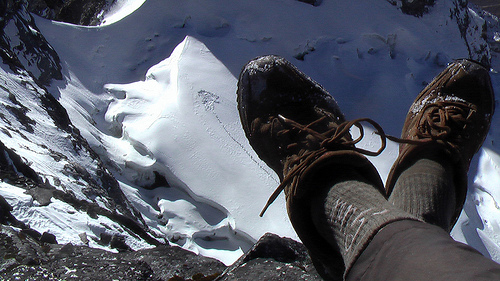
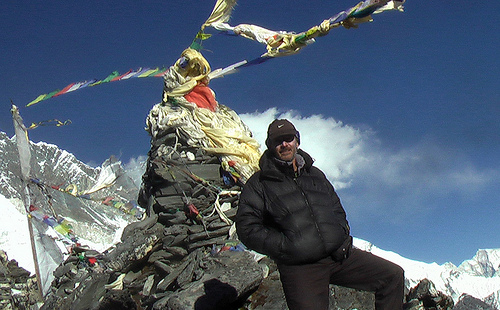
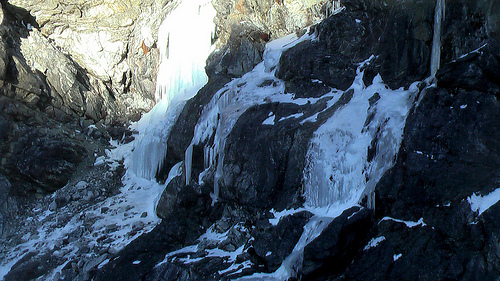
I’ll try for the most difficult of the “established” treks in the Everest region.
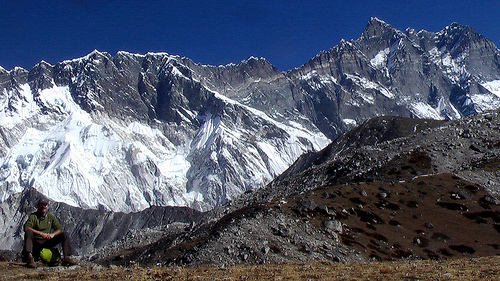
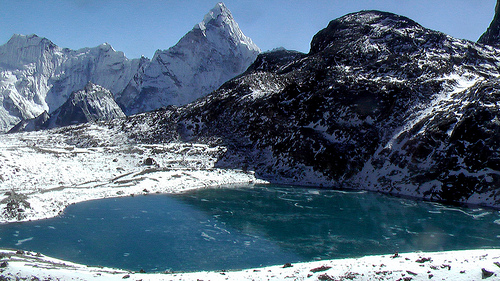
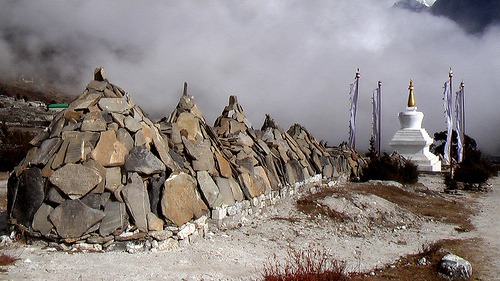
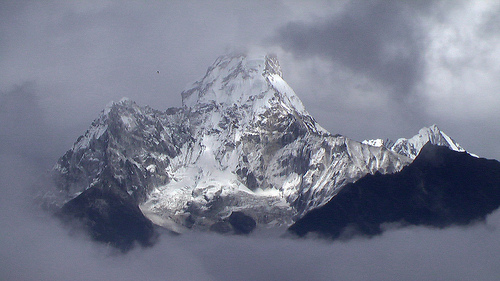
To the seekers of adventure and authenticicity, this is an ultimate trek, that will take you throught the famous three passes of Everest , namely the Renjo La pass, the Cho La pass and the Kongma La pass. It is a trek with unparalled alpine beauty and without doubt the grandest mountain scenery on the world.The highlights of the trek include the Sherpa village of Khumjung, the pristine Gokyo lake, the breathtaking scenery fron the all these passes and the vist to Everest base camp. Unlike other treks in Everest region , this trek makes a loop , hence no tracing back of the route. The good thing about this trek is despite having to cross three passes , you do not require any technical climbing and any person with good fitness and previous trekking experience can complete the trek successfully. …
The main attraction are the so called “Seven Sacred Pools“, a name invented by some overzealous tourism marketer. In reality, the ʻOheʻo Gulch has dozens of pools and a number of waterfalls, a few very welcoming of swimmers.
Welcoming if you’re not scared off the warning signs posted everywhere.
I spent only a few minutes at the pools, instead quickly beginning the climb up Pipiwai Trail. I knew it would be fantastic as Trailspotting calls it their “favorite hike on Maui”:
Distance: 4 miles
Type: Out & Back
Difficulty: Medium
Elevation gain: 900ft (from 200 – 1,200ft)
Beginning at the rugged and remote eastern Maui coastline follow the Pipiwai stream inland and you’ll soon be surrounded by dense jungle, heading towards a series of waterfalls each increasingly more impressive than the last. En route you’ll cross bridges and streams, and negotiate an unforgettable boardwalk journey through a dense bamboo forest that towers so far above your head that daylight struggles to reach you. And since the Hawaiian islands are some of the wettest places on earth, you’re sure to be impressed with the towering 400 foot wall of water at the end of the trail that is Waimoku Falls. …
Actually, this kind of bamboo is one of those dread invasive species. But it’s an invasive species I love. I’m an invasive species, myself.
You’ll be warned about mosquitos. I never saw even one during 2wks on Maui in October.
Pipiwai gets better and better the closer you get to Waimoku Falls.
Click that last photo to see a larger version of a true Hawaiian paradise.
The other highlight of this hike for me was tenting at Kipahulu Campground right at the trailhead.
I spent two nights. It’s free after you pay for your National Parks pass. Authorities are frantically improving the visitor center right now. I expect the primitive campground will be improved, as well.
Walking the shoreline here is highly recommended. A half mile stretch is called the KAHAKAI TRAIL.
See all my photos from Pipiwai, one of the very best hikes in the world.
I’d never before heard of an attack on humans by coyotes, never mind a death.
This tragedy in Cape Breton, Nova Scotia, Canada.
… Up-and-coming singer-songwriter Taylor Mitchell was “an old soul” despite her young age …
… Mitchell, hiking alone on the Skyline Trail, was attacked by coyotes Tuesday afternoon. According to park officials, other hikers nearby managed to scare off the animals and call 911. The singer was hospitalized in Cheticamp and later airlifted to Halifax, where she died at the QEII Health Sciences Centre. …
One article stated that the “eastern coyote that lives in the Cape Breton park has interbred with wolves and is somewhat larger than its western ancestors”.
Hiking or Tramping is covered. But not Abseiling, Caving, Mountaineering or Rock Climbing.
The quote for me for 7wks is about US$200 anywhere in the world, including the USA:
A summary of the benefits are set out below. Please read the policy wording carefully for full details and age limits of any accompanying children.
Emergency Medical & Dental Coverage CAD $1,000,000
Following an injury or illness during your trip your policy covers reasonable and customary costs for Medical, in-hospital, road ambulance and other treatment administered by a registered medical practitioner or paramedic.
Medical Transportation CAD $500,000
If you require transportation to an appropriate medical facility to treat your injury or illness or to return you to your province or territory of residence, your policy will cover the reasonable and necessary transportation costs when pre-approved and arranged by World Access Canada.
Baggage Coverage CAD $2,500
You are covered for accidental theft or damage to your luggage/personal belongings. Coverage is limited to $500 per item. Exclusions apply, including items left unattended in a motor vehicle.
Sporting Equipment Coverage CAD $2,500
This policy provides coverage should your sporting equipment become lost by the Common Carrier, or damaged, or stolen provided you have taken all reasonable measures to protect, save and recover your property at all times. Coverage is secondary to any coverage provided by the Common Carrier.
Trip Cancellation CAD $1,000
Trip Cancellation coverage reimburses you for the non-refundable portion of your pre-paid trip costs if you cancel your transportation/accommodation arrangements prior to your departure as a result of a covered reason.
Trip Interruption CAD $5,000
Trip Interruption coverage reimburses you for covered losses you incur for trips that are interrupted or delayed after your departure date.
Travel Accident Coverage CAD $10,000
This policy provides coverage should you suffer loss of life as the direct result of an injury while travelling as a ticketed passenger on a licensed Common Carrier.
Leave a comment if you have an opinion on this policy and price. Or if you know of better.
Trip Report – Picos de Europa Circuit – by site editor Rick McCharles
By morning I had no water. Looking up, my prospects for H2O did not look good.
Though my guidebook said I could find water in two places in the next few hours, I was not confident. This late in the season I might need to climb up high enough to melt snow.
I passed one trickle. Then – finally – saw a sign that I might find a spring.
Before I found the man-made spigot, I was approached by an exhausted looking Spanish mountain climber. He and his partner had gotten lost the previous day near the summit. And were forced to bivouac overnight. They had just gotten back to their tent.
He showed me the water source (about 1hr to fill a 1 litre bottle) and gave me detailed advice on how not to get lost on the next section.
Very quickly I was lost. His advice was all wrong.
Having climbed far too high, I arrived at another of the mountaineering base camps. Instead of retreating, however, I waited for a climber who was descending rapidly from the summit.
lost but elated
It was Constant, an adventurer from France. He was just as lost as I, … but had a vague idea of how to exit the base camp. And a wonderfully relaxed world view. His topo map did us no good at all. You need a topo and a GPS in these mountains.
I followed him directly to “civilization”.
Because of the water supply, I decided to camp (for once) close to the Vegarredonada refugio.
Here’s the bizarre old refugio, no longer used.
Everyone takes an obligatory 7.5km side trip to the old, old refugio at Mirador de Ordiales, guarded by this calf when I visited.
Here is Pedro Pidal’s (1870-1933) final resting place. He founded this, the first National Park in Spain and was named Commissioner General of National Parks.
…. Eight years after his death, his final wish – to be buried at this natural balcony – was fullfilled at last. Engraved in a nearlby rock are words he wrote:
Lover of the Picos, I would love to live, die and eternally rest here in Ordiales. In the enchanted kingdom of the chamois and the eagles.
I left a Summit Stone with Pedro, placing it carefully between the stones close to the ground.
Somehow Pedro grabbed it from my fingers, pulling it deep into a crack. I guess he wants to keep it for himself.
My view of the famous vista was obscured. Again. By cloud.
My last night in the wonderful Picos de Europa.
I was truly sorry to leave these mountains. This is a brilliant hike, one of the very best in the world.
Ascending back into the trees, I was shocked to see the leaves changing. This was the first time it had dawned on me that my summer of hiking Europe was ending. This was to be my last.
Sept. 12th
There were many more Chamois on this section of trail, the largest herds I’d yet seen.
Though I had still not found a water supply, I finally set up the tent in a pretty spot well above the Picos mist.
Trip Report – Picos de Europa Circuit – by site editor Rick McCharles
This was the most photogenic day. Amazing.
I started by climbing up from Bulnes La Villa through high pasture land towards the central summits.
I was looking forward to the iconic peak of the Picos, Naranjo de Bulnes.
It’s a world class climbing destination, obviously. But I was more surprised by the normally shy Chamois that hang about the Vega d’Urriellu refugio (1953m) as if they are domesticated.
A cable assisted scramble takes you up and over Torre de los Horcados Rojos.
At the top, this weird silver igloo draws your eye. What the heck is it?
That’s Cabaña Veronica (2325m), once an American aircraft carrier cannon mount. Three hikers can sleep in it.
The most difficult part of the entire Circuit for me was the section from Veronica to Refugio Collado Jermoso. Here’s the high, bleak terrain. There are cairns at the start. But soon you’ll be guessing wildly, route finding and scrambling for a couple of hours. Convinced that you are hopelessly off route.
A GPS is essential. …
Somehow I made it. As did a dozen other hikers that day. Many, I noted, arrived late to the refugio.
This was my favourite sunset of the entire summer.
I set up the tent in a marvelous spot, very high with grand vistas in every direction.
Fedak linked to an interesting post on the Fixing Your Feet (FYF) blog:
… I talk about moleskin because it has been around for so long. For years it was the standard hot spot and blister patching tool. In the next edition of FYF, I will make reference to moleskin as a product, which has seen better days.
Here are three reasons why:
Moleskin doesn’t stick
Moleskin doesn’t conform to the curves of the foot
Moleskin is too thick