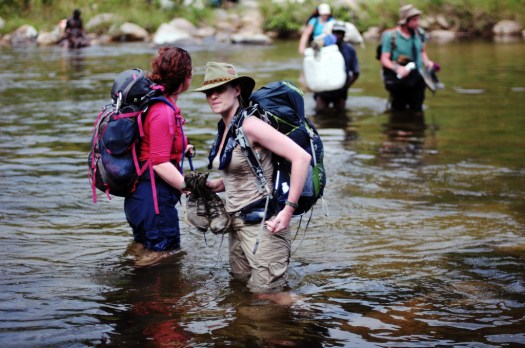
A clickbait title if ever there was one. It’s worth it, in this case. 🙂
Click PLAY or watch it on YouTube.
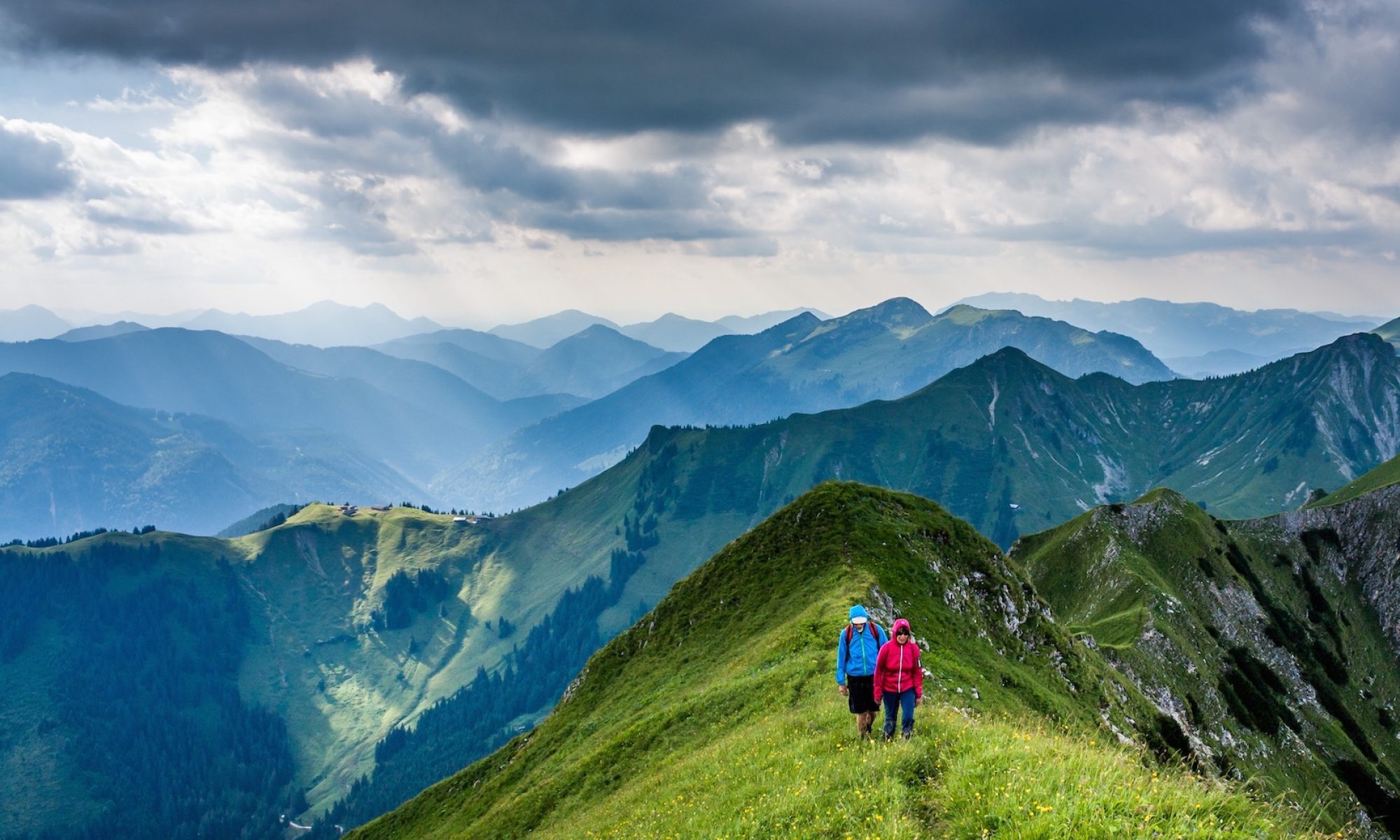

Best hikes, treks, tramps in the world.
A clickbait title if ever there was one. It’s worth it, in this case. 🙂
Click PLAY or watch it on YouTube.
The plan is simple – to be a part of the world’s first group to walk across the northern part of the island from east to west, entirely on foot, a distance of almost 400 km, in the seemingly impossible timeframe of three weeks. …
Days pass by as we trek west. We camp in rural villages – usually on patchy football fields where, night after night, hundreds of curious children and adults alike surround us, amazed at the presence of a ‘Vaza’, a white ghost – the Malagasy term for westerners. They haven’t seen many before. In fact, in this part of Madagascar, away from the tourist trail in the south, the last foreigners that have entered the foothills of the Tsaratanana were the French army in the late 1940s and occasional mineral prospectors in the 1970s. …
At exactly the half way point of the journey, after almost two hundred kilometers of uphill slogging, we reach the summit of Maromokotro, Madagascar’s highest mountain. …
read more – Adventure Travel: Madagascar
(via Hiking in Finland)
Trip report by site editor Rick McCharles.
Easy day. Only 12km to finish the Giant’s Cup Trail at Bushman’s Nek Hut.
I departed Swiman hut late.
Glorious. Glorious.
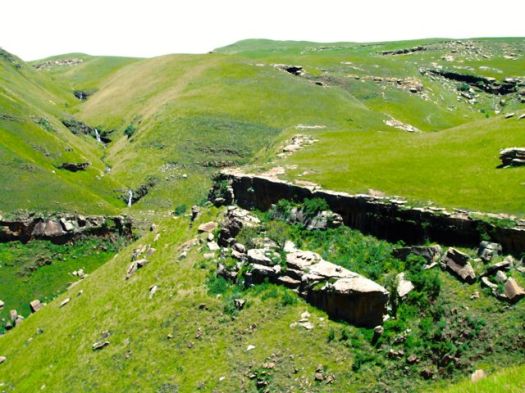
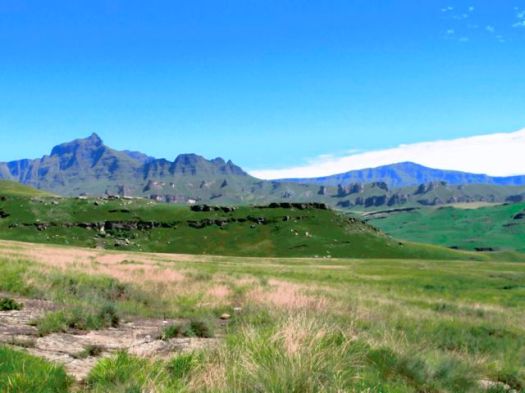
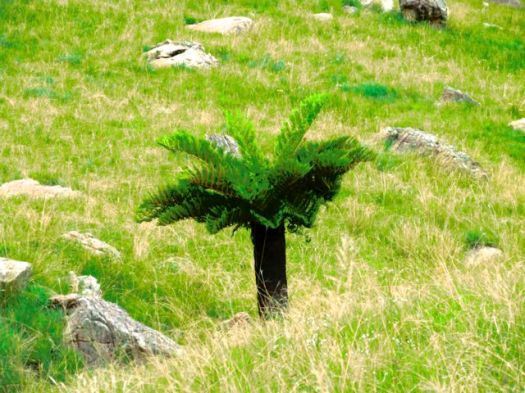
Skies were clear. The landscape empty aside from me. And THIS GUY.
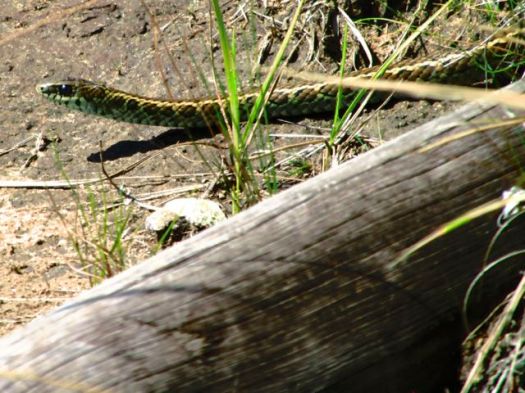
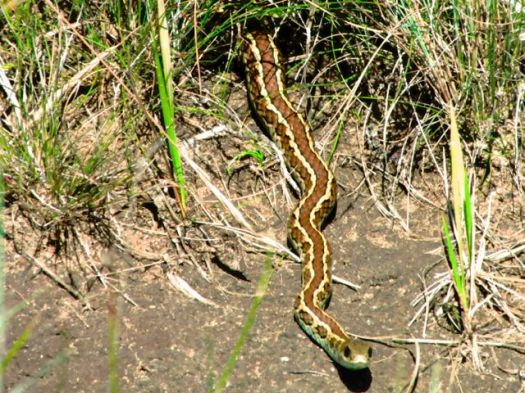
I later did some research … but couldn’t confirm the species. Leave a comment if you know.
Again, each time I got saw some significant shade, I cooled off.
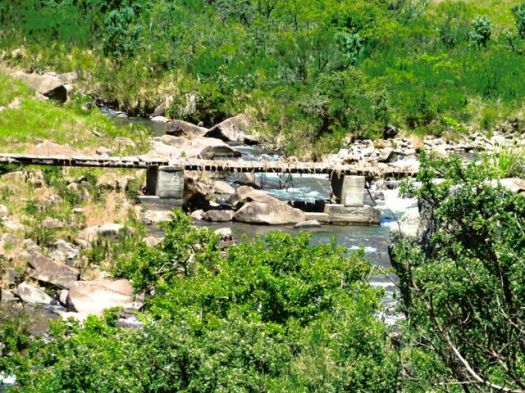
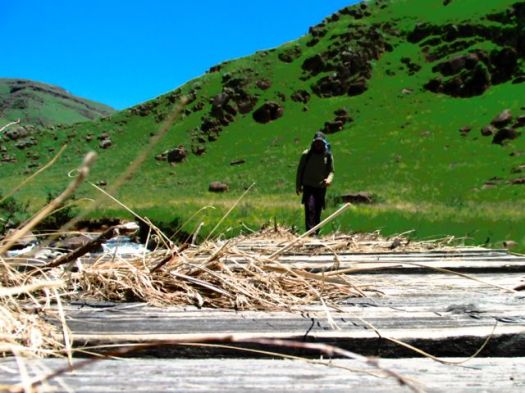
This crude wooden bridge had obviously flooded recently.
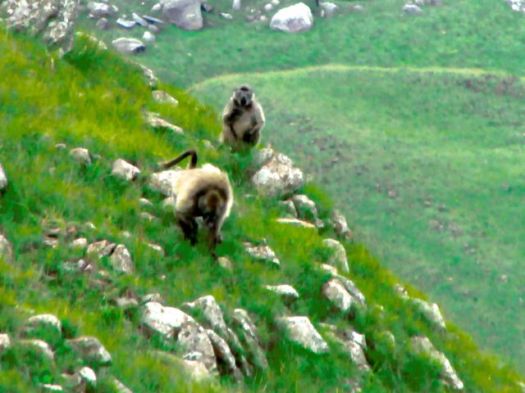
BABOONS!
This afternoon I saw 4-5 different troops of Baboons in the distance.
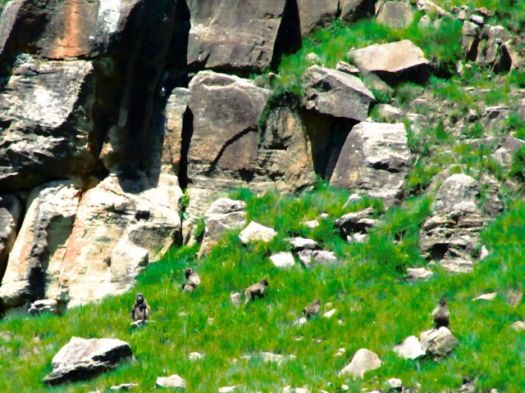
This was my best photo.
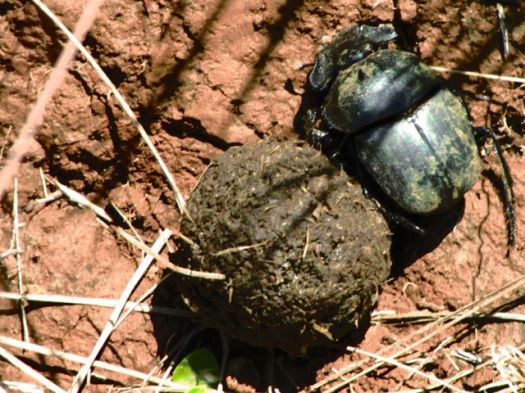
DUNG BEETLE! … Actually, there are plenty of Dung beetles on this trail.
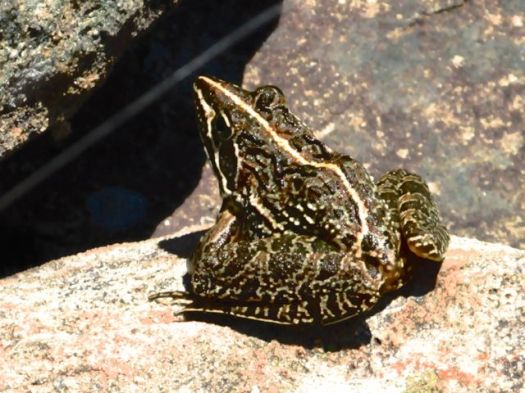
Frog.
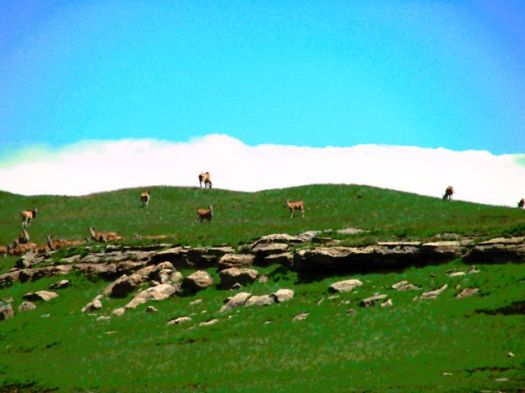
I had great views of a big herd of Eland.
And again saw grey rhebok.
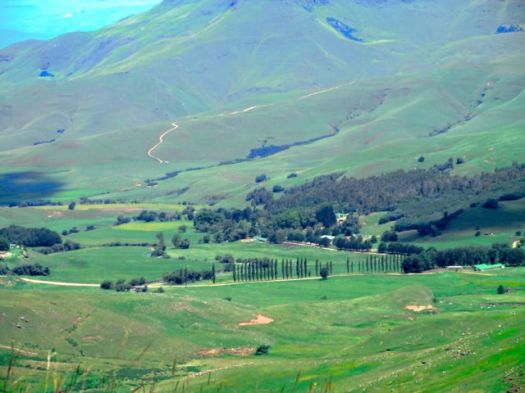
South Africa is a hot, dry country. But there’s no shortage of water in the Drakensberg during the rainy season.
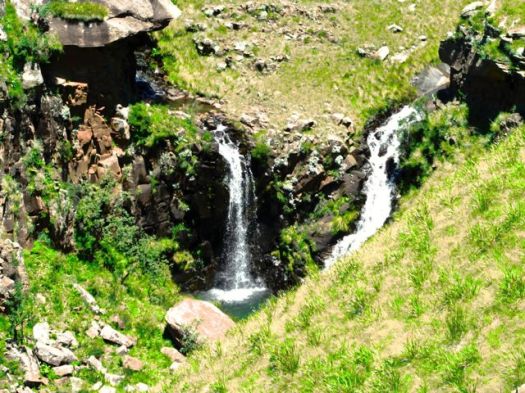
Civilization.
I’d held on to a Summit Stone for the entire trip, waiting on some “highlight” of the Giant’s Cups Trail.
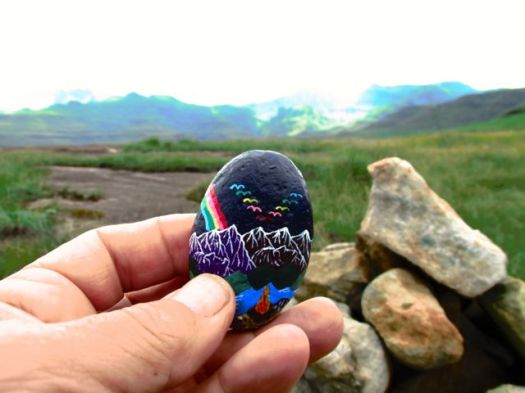 But there was no one highlight. The Giant’s Cup is all good. I left this one in the final cairn before dropping down to Bushman’s Nek.
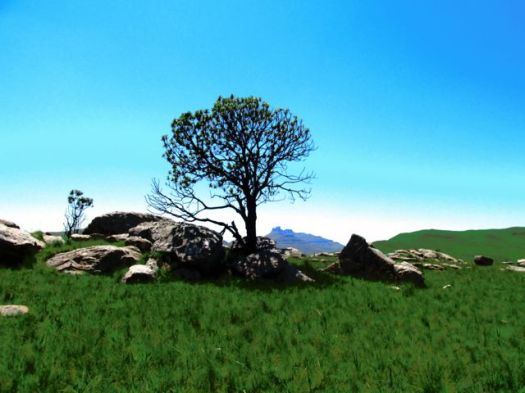
I saw a sign pointing to Bushman’s Nek hut, but ignored it as the trail looked faint.
Instead I stayed on the trail more trodden.
Turned out that took me to the KZN Wildlife office. I had to backtrack about 1km in the rain.
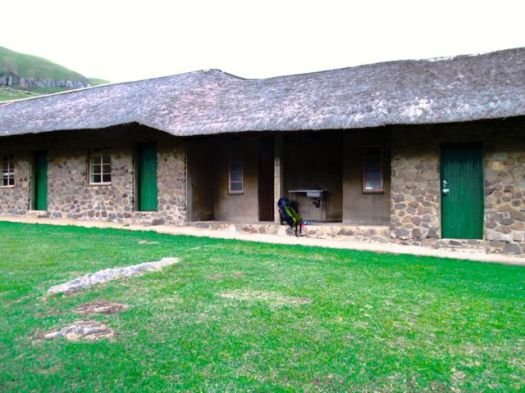
Alone again. Bushman’s Nek hut is in a very pretty location.
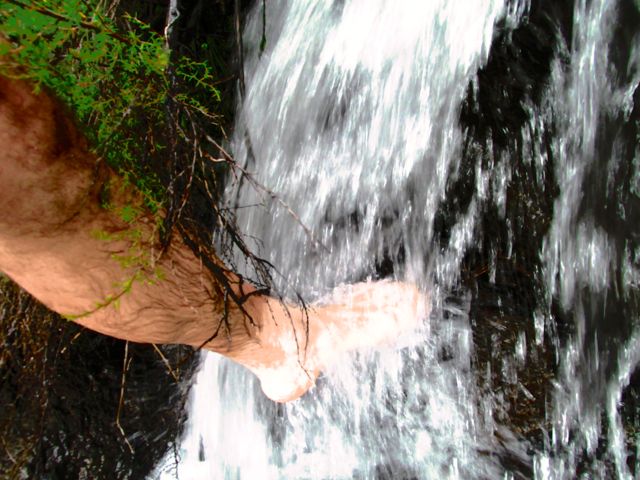
It was nice to wash my dusty, hot feed in the nearby waterfall.
Rather than sleep under a roof, I again set up my tent under cover. And watched the night fall.
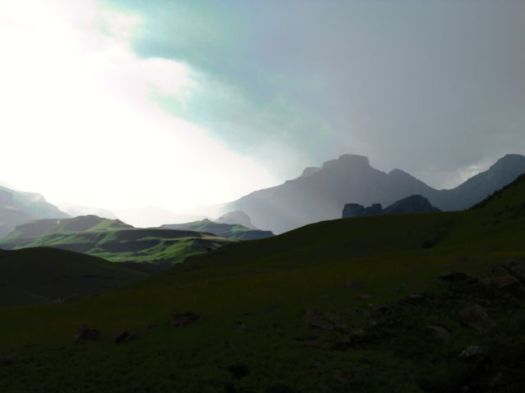
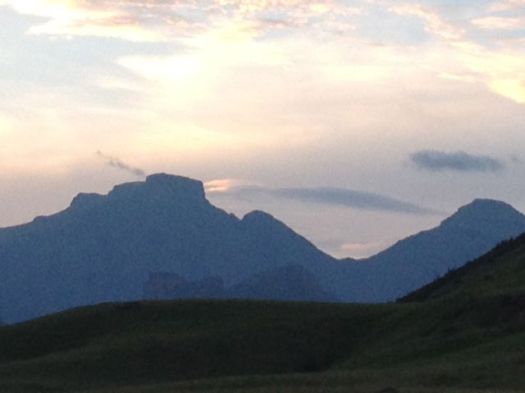
more photos from this day
___
Logistics
Next morning the KZN Wildlife office called a bush taxi from a local hotel. It took me to Underberg town for about $50 (expensive).
I was there for about 4hrs waiting for the mini-bus to Pietermaritzburg to fill. Though tourists are often advised not to take the local transport, in Underberg they are fairly used to shuttling hikers out from the Giant’s Cup.
You might consider starting at Bushman’s Nek and hiking to Sani Backpackers or Sani Pass Hotel. Travel logistics would be easier and cheaper if you don’t have your own vehicle.
If you wanted to hire a guide, I’d recommend booking through Drakensberg Adventures.
related:
• EKZ’s Giant’s Cup Trail page
• my hiking guidebook – Cicerone Walking in the Drakensberg
Trip report by site editor Rick McCharles.
Between low clouds, the morning dawned blue, sunny, HOT.
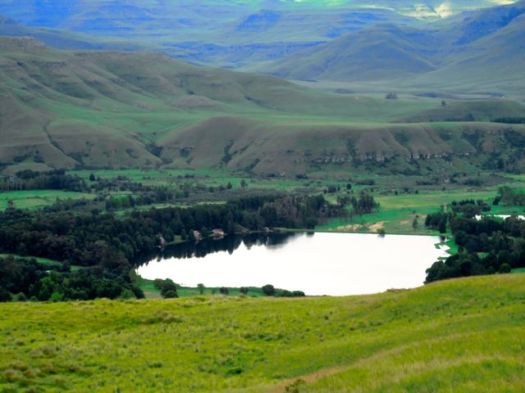
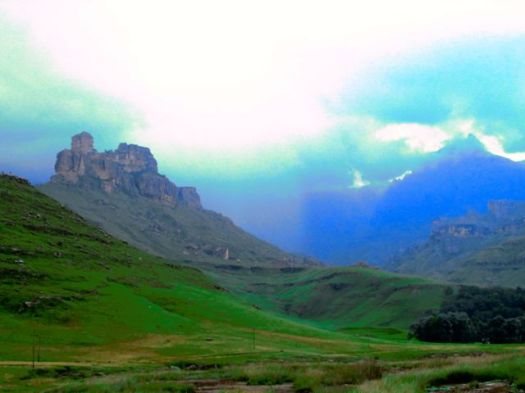
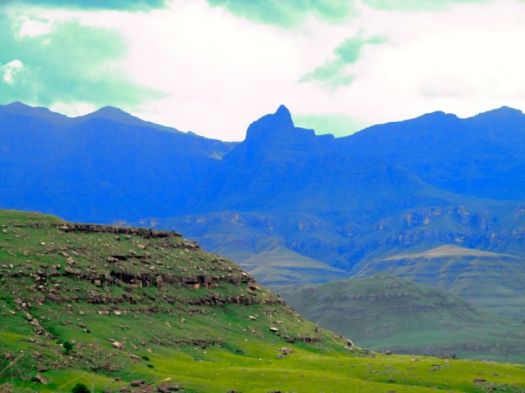
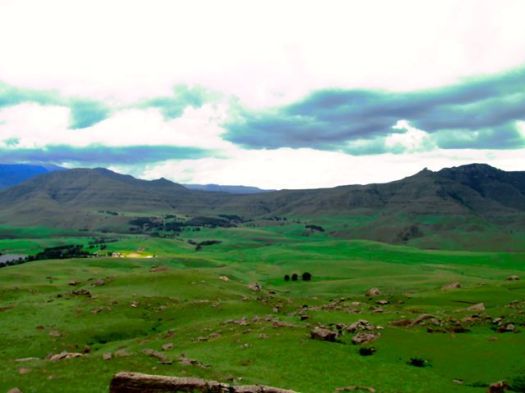
This was the prettiest of the three days.
This day I again saw a “wild dog” with one or two young ones. Unfortunately I wasn’t quick enough to zoom the camera in time.
Locals told me they were most likely hyena.
I covered up from the strong sun.
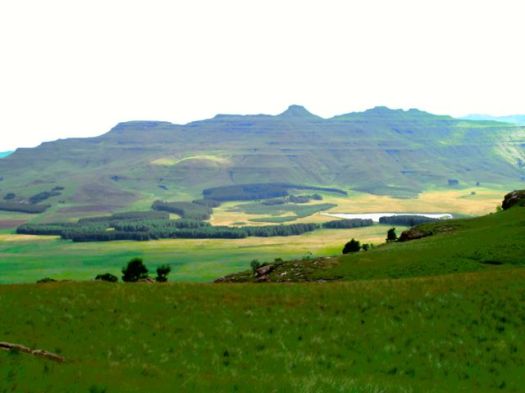
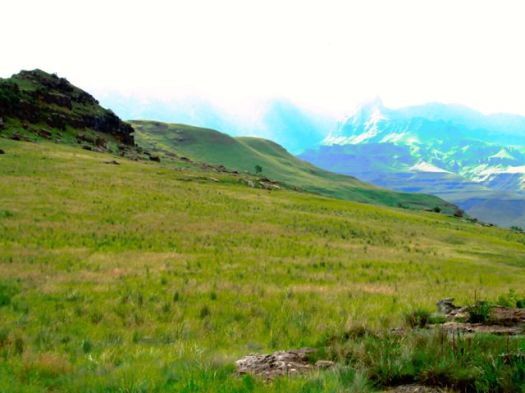
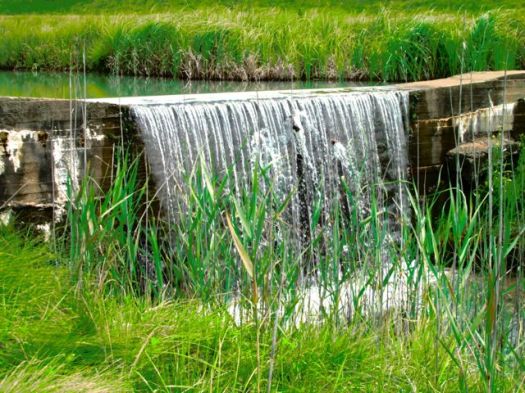
Arriving Winterhoek hut under the trees.
Hikers are advised to lock everything up against baboon and eland.
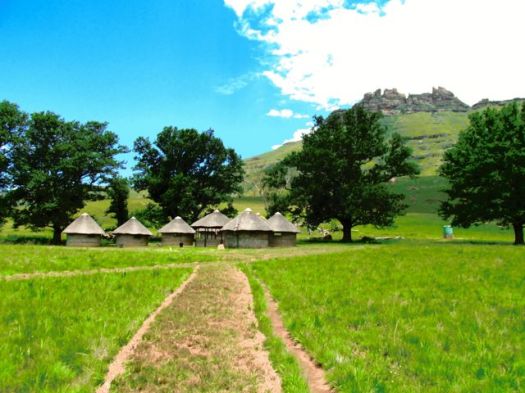
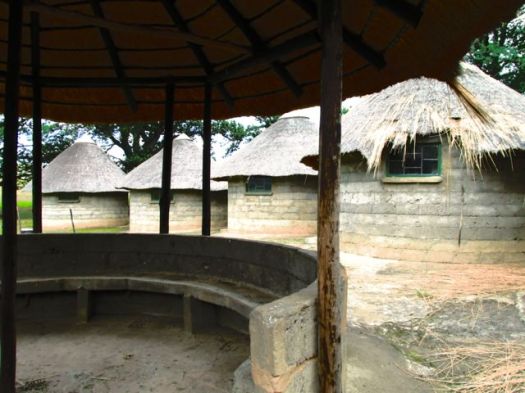
I had lunch here, in the shade.
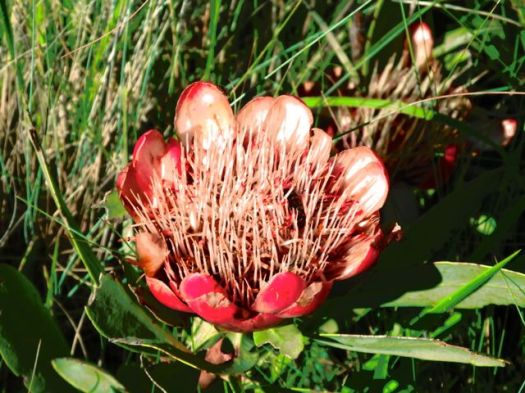
My biggest problem on the Giant’s Cup was the strong January sun. Locals thought I was crazy to be hiking in the hot, rainy season. I rested at as many shady spots as possible.
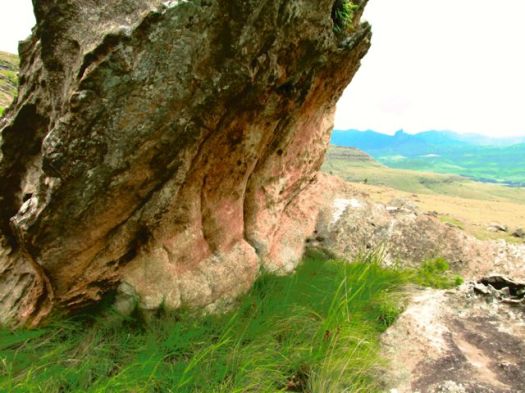
I was surprised not to see more Dassie. This was one of the few I spotted.
Late afternoon I slapped at something biting me under my pants. Turned out I’d killed a tic, the first that had ever bitten me. Contrary to common wisdom, I’d kicked it. After that I was quite ‘tic vigilant’. They can carry disease.
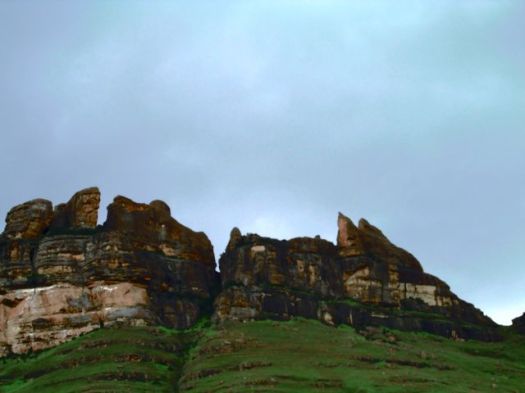
I arrived Swiman hut at dusk, quite exhausted. Too exhausted to set up my tent, I crashed into a bunk. After I enjoyed a HOT SHOWER.
Again I was the only hiker in the hut that night.
I did see a caretaker next morning on my way out.
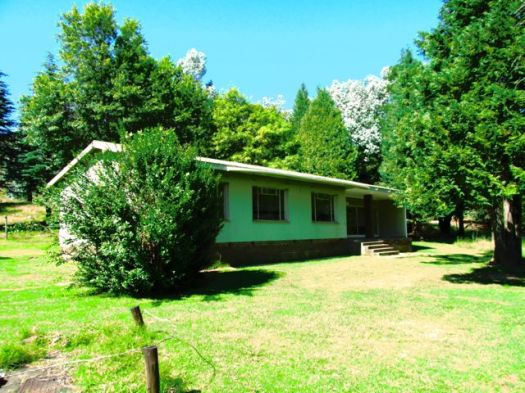
more photos from this day
Trip report by site editor Rick McCharles.
One of Lonely Planet’s South Africa’s top five multiday hikes:
The Drakensberg Mountains, rising to 3482m (11,423ft) on the Lesotho border, are one of Africa’s greatest hiking destinations.
Numerous day and overnight walks crisscross this World Heritage Site …
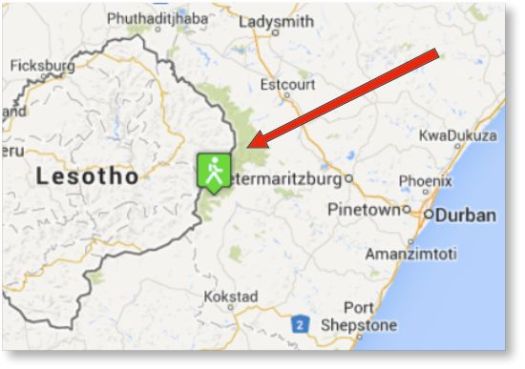
Closest major city is Durban.
The famous path starts in appropriately grand fashion at the foot of Sani Pass, South Africa’s highest mountain pass. Passing through the Drakensberg foothills, the trail takes in the Bathplug Cave with San rock art, streams and pools for swimming and breathtaking mountain scenery.
The Giant’s Cup (3256m/10,682ft), from which the trail gets its name, overlooks the Cobham Nature Reserve’s shimmering expanses of grassland, upland lakes, rivers jumping with trout and slopes carpeted with pink proteas. At the southern tip of the Drakensberg, the Garden Castle Nature Reserve is overlooked by sandstone buttresses, caves and the 3051m (10,009ft) Rhino Peak.
The trail ends at Bushman’s Nek Pass, where you can continue into Lesotho on foot or horseback, or unlace your boots in nearby Underberg or Himeville.
The basic 30-person sleeping huts have bunk beds with mattresses, and waking among cairns and circling eagles is an uplifting wilderness experience. With daily distances ranging between 9km (5.6mi) and 13km (8mi), it’s not a strenuous hike and can be managed by younger walkers.
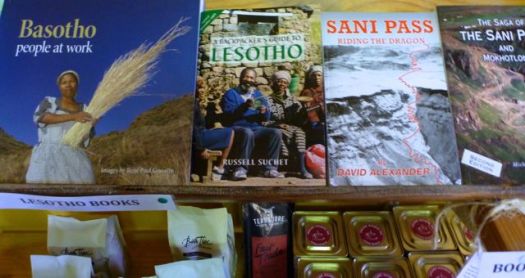
Russell Suchet, author of A Backpackers Guide to Lesotho, is owner of Sani Backpackers where I started.

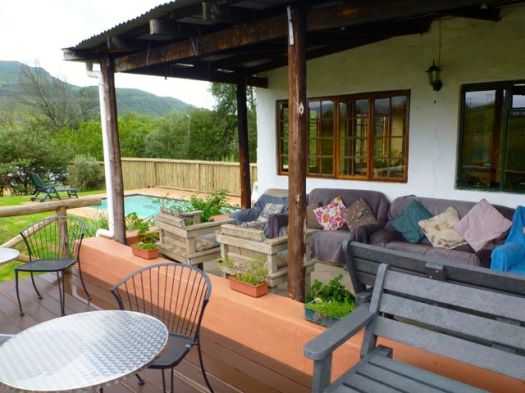
Russell and staff agreed that the Giant’s Cup was relatively “tame” for someone of my experience. With a tent.
But I loved it anyway. 🙂
Inexperienced in the Drakensberg, I took every precaution. I purchased maps #5 and #6 ($5ea at Sani Backpackers). And picked up the free “Giant’s Cup Trail Visitor’s Guide” trail description at the KZN Wildlife office at Pholela Hut.
Hiking alone, it would have been nice to have a phone in case of emergencies. There is mobile service on most of the route. But I hadn’t bothered to pick up a SIM card for my Canadian phone. 😦
I paid about $8 / night to stay in the huts — even though I carried a tent.
Happy to support the KZN trail system, I wanted the OPTION to stay in the huts if necessary. If it poured rain, for example. It pours rain nearly every afternoon in January.
I carried too much food, adding home made cheese from Sani Backpackers.
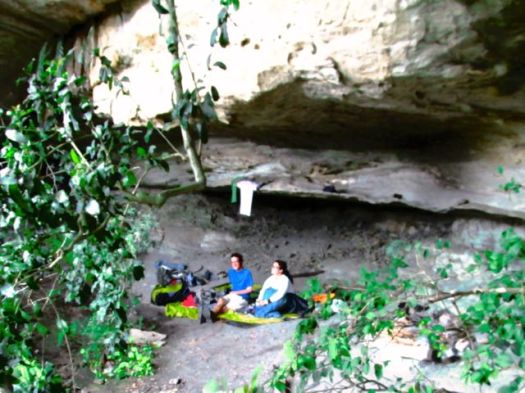
I skipped the first 5km as I’d done it the previous day. Here are a few photos starting at Gxalingenwa Cave.
These two ‘mericans had camped 2 nights in the overhang under a waterfall. Later I learned that you are not actually allowed to camp in that particular “cave”.
Officially, the Giant’s Cup starts on the Sani Pass Road at Ezemvelo KZM Wildlife field ranger outpost at 2847m. I started instead by walking out the door of Sani Backpackers climbing up to intersect the route.
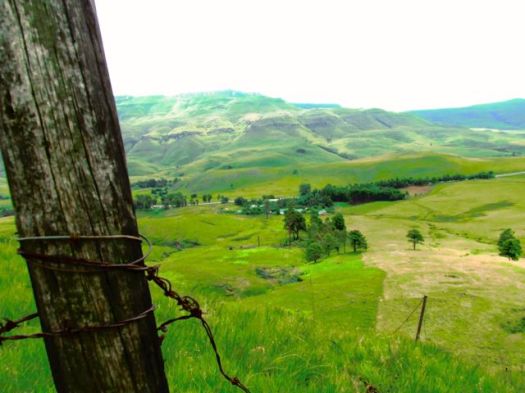
That’s the Backpacker’s as seen from the parkland area fence.
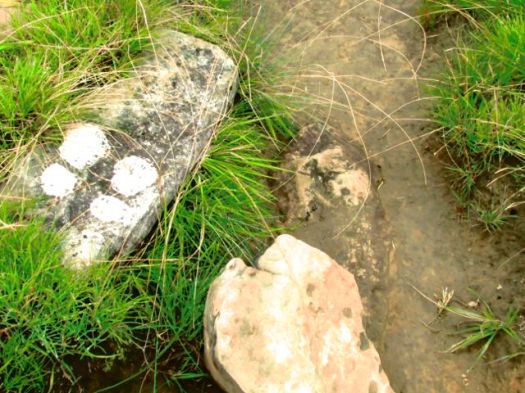
The trail is super well marked. You follow white footprints.
Some locals feel there is too much signage.
I missed paying for my trip & filling out the Mountain Rescue Register at the start. Russell advised me to — instead — do the paperwork at the KZN Wildlife Office near Pholela Hut. I arrived there about 1:30pm.
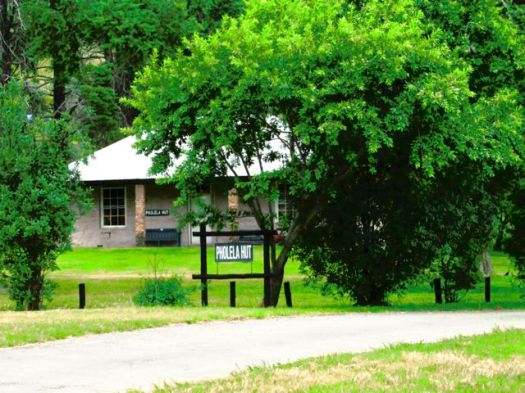
Pholela Hut is a converted farmhouse offering 30 bunk beds in 4 rooms. Cold showers. Empty.
I carried on to the next hut.
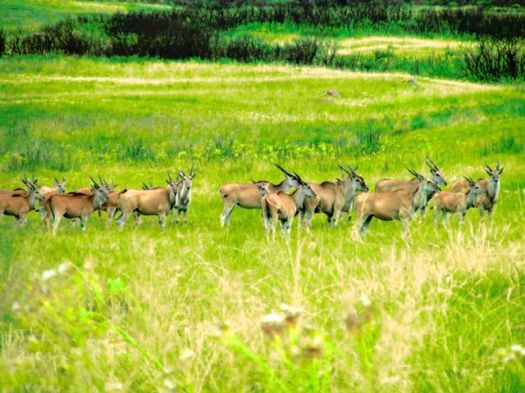
Close to Pholela I saw my first herd of Eland.
Close to that herd I caught a glimpse of an African dog. Most likely a jackal.
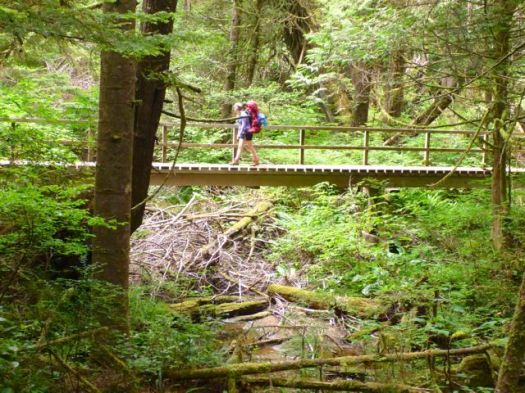
The bridges on this trail are not impressive.
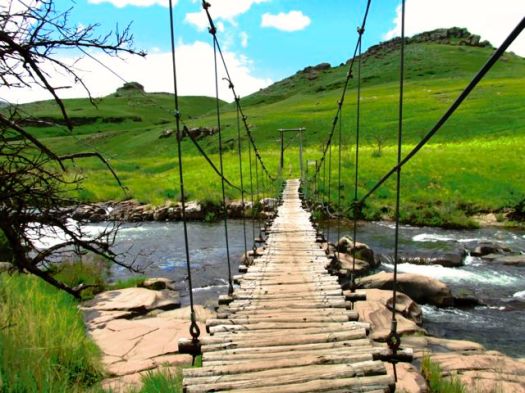
On the other hand, there’s no need to treat water in the Drakensberg.
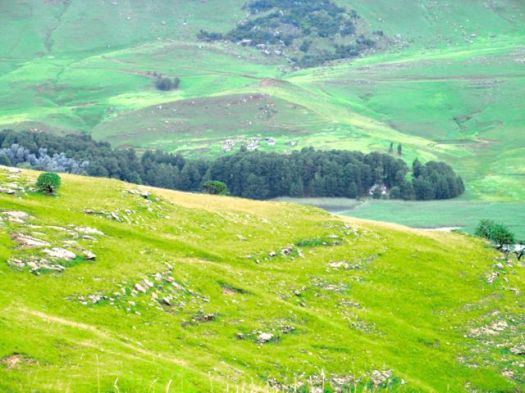
Green. Peaceful. Pretty.
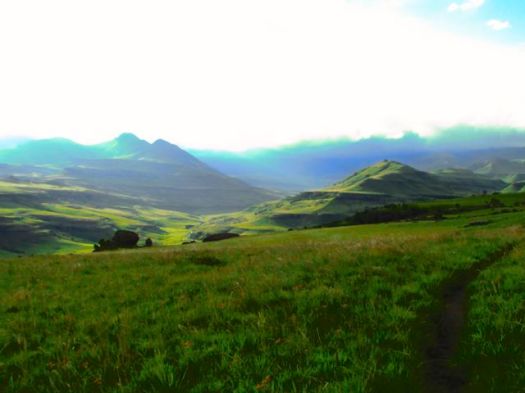
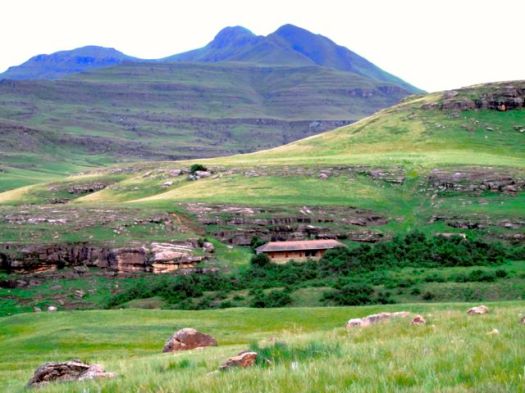
I arrived Mzimkhulwana Hut late and tired.
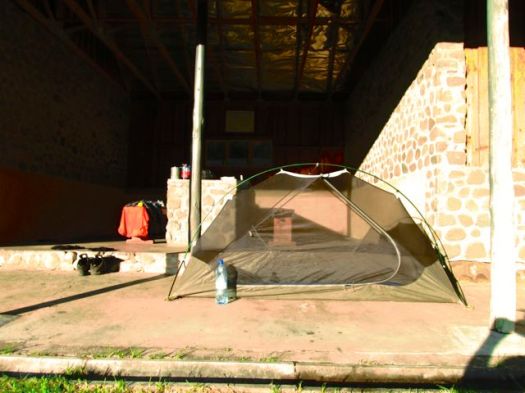
Rather than sleep indoors, I set up my tent under protection.
Alone, I hid my passport, money and credit cards. Just in case some sneak thief arrived in the night. It was a bit spooky.
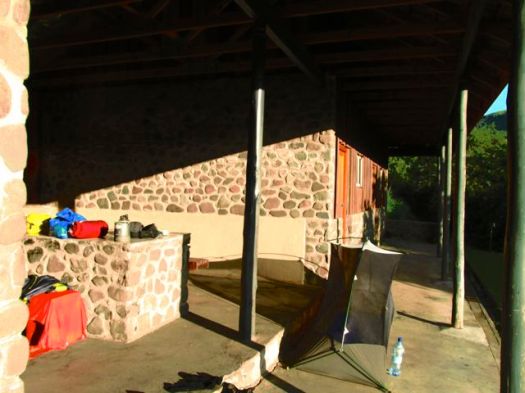
Sipped wine. Ate my local cheese. Watched the night fall. Went to sleep early.
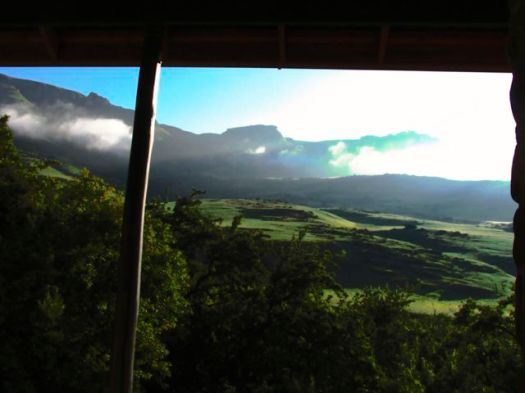
more photos from this day
We were up early, taking advantage of the cool of the morning.
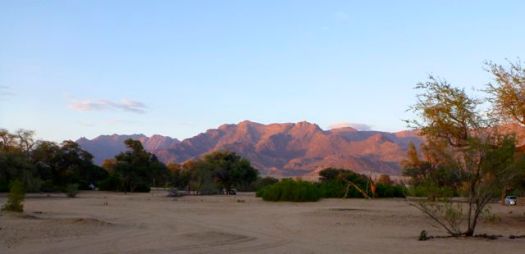
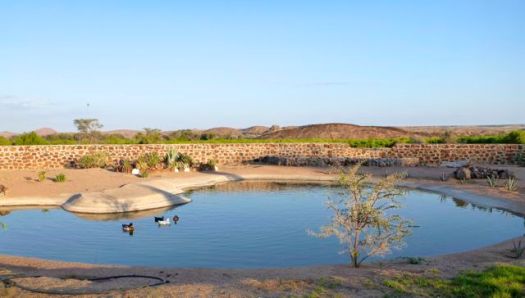
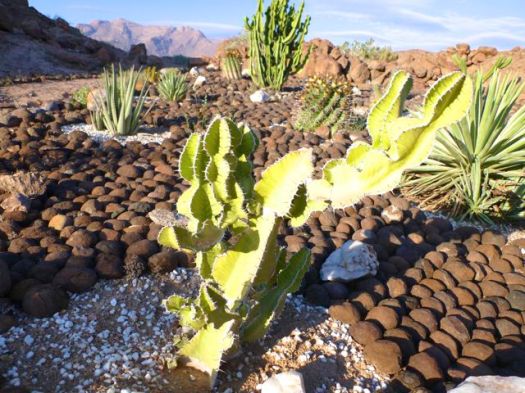
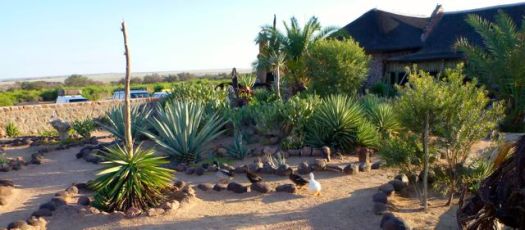
A desert garden at the White Lady Lodge.
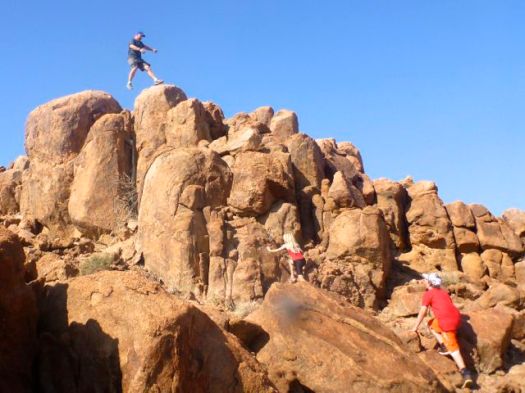
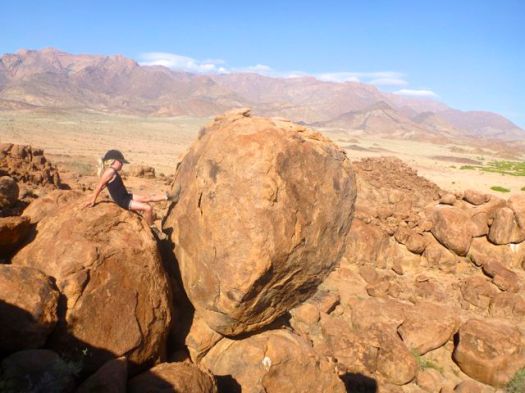
After breakfast we made a second “mountain climb” with the kids. 🙂
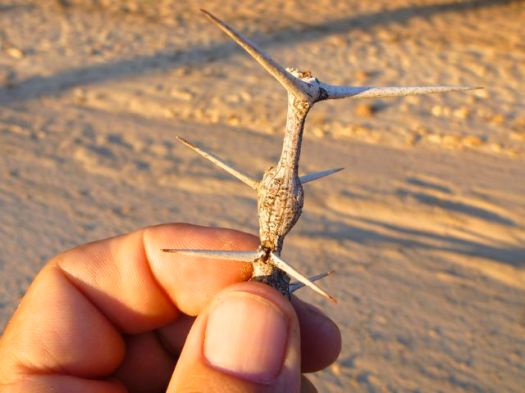
The biggest “danger” of Namibian camping so far as I could tell were these deadly acacia thorns. I stepped on one. It went right through my shoe.
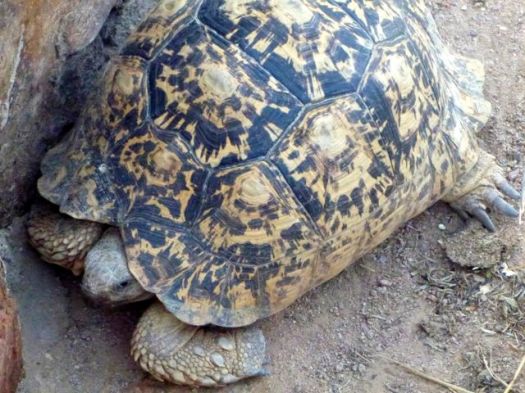
We saw black-backed jackals lurking around the cooking fires a couple of times. And these locals.
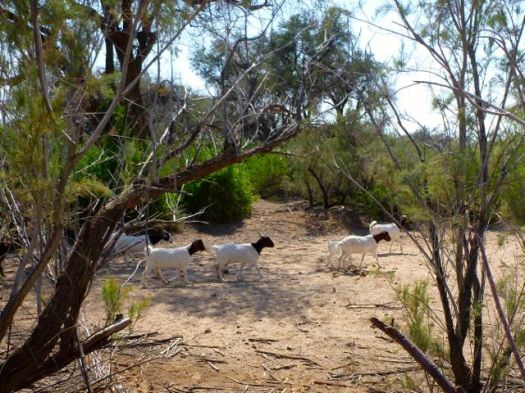
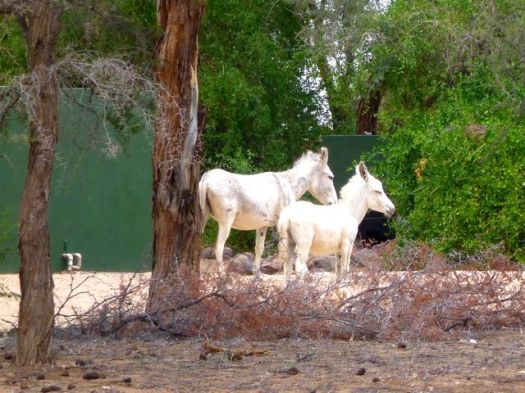
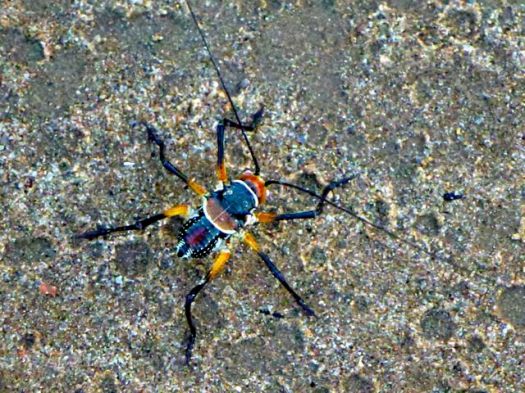
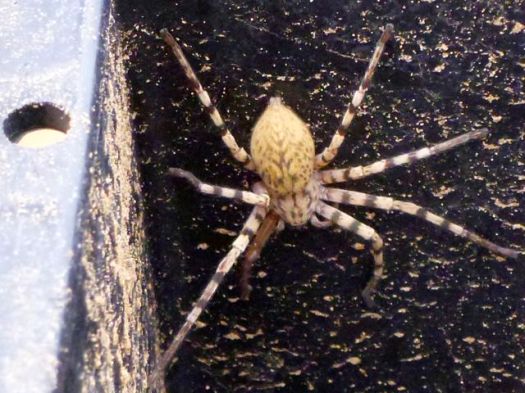
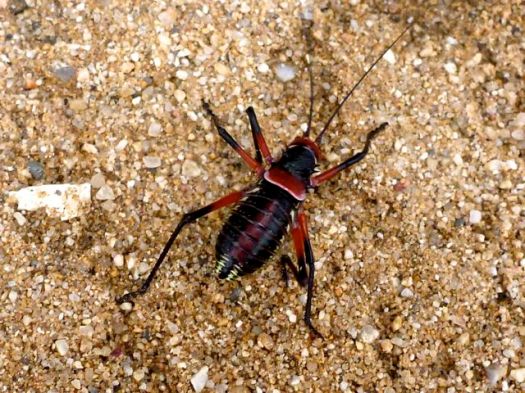
You must be TOUGH to survive this desert climate.
It had not rained at the White Lady lodge in 3 years — but it poured on us. Desert tents are not particularly waterproof.
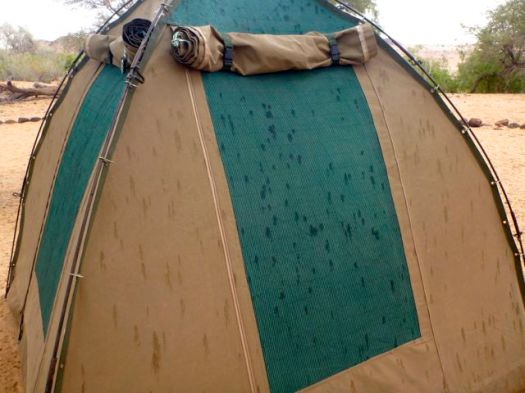
Our not particularly waterproof bedding was soaked. 😦
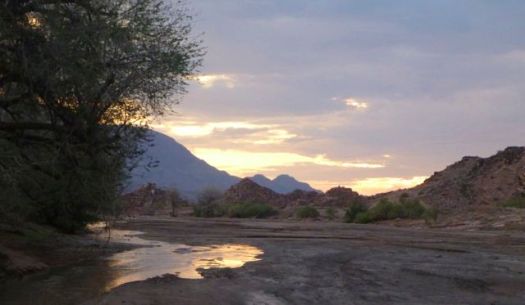
The Ugab River rarely runs.
Here’s the river bed before the rain.
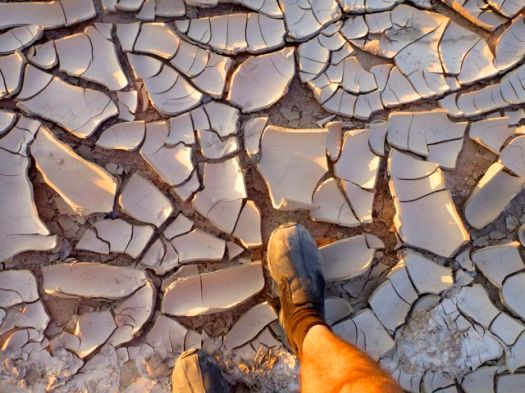
And after.
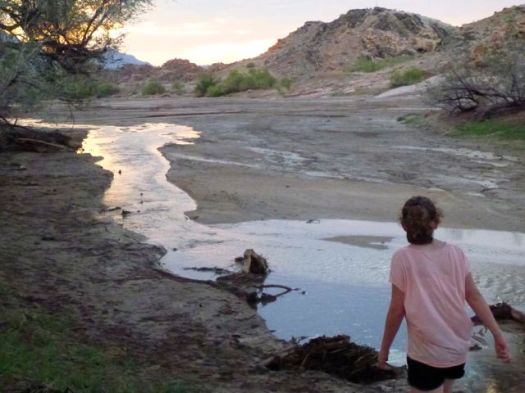
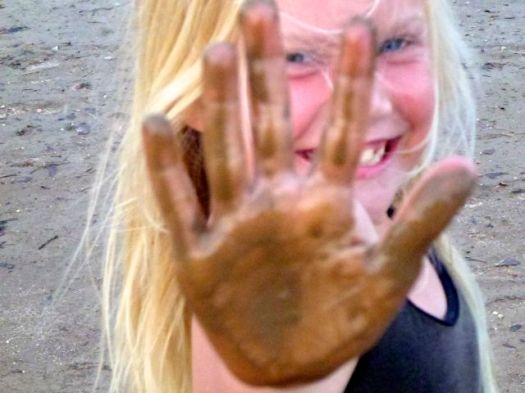
Playing in mud is a big novelty for Namibian kids.
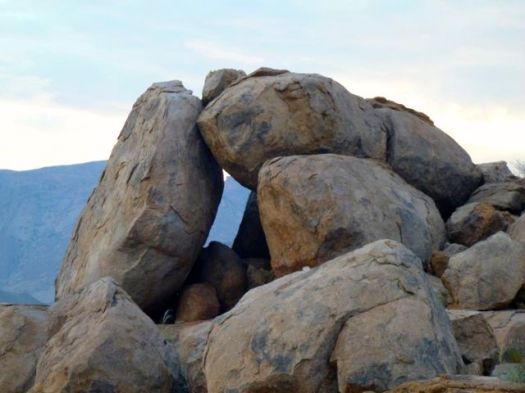
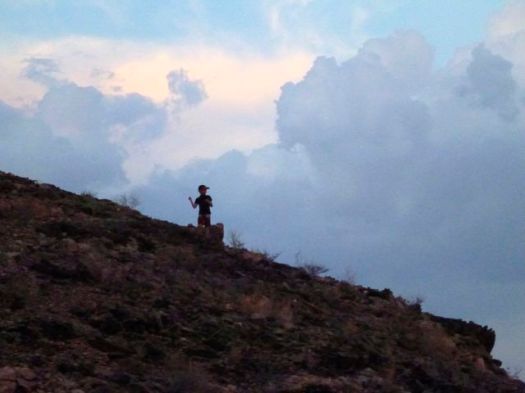
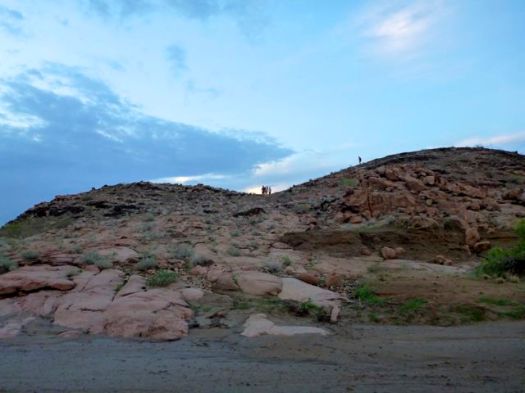
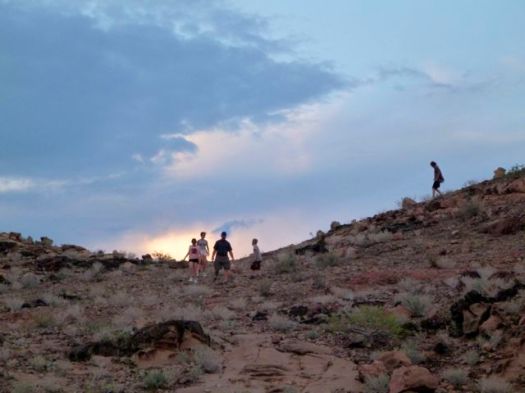
We climbed yet another hillock.
And it was back to camp for another gigantic barbecue.
Ugab Wilderness Campground opened 2001. I can recommend it. Particularly if you want a base camp for climbing Brandburg and/or hiking Messum crater.
see ALL my photos from this long weekend trip
Trip report by site editor Rick McCharles.
day 0 | day 1 | day 2 | day 3 | day 4 | day 5 | day 6 | info page
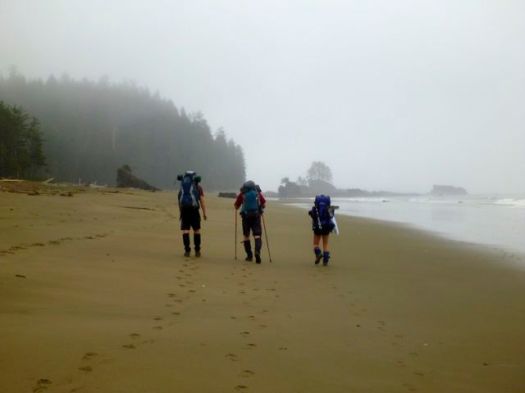
Another misty morning on the West Coast Trail.
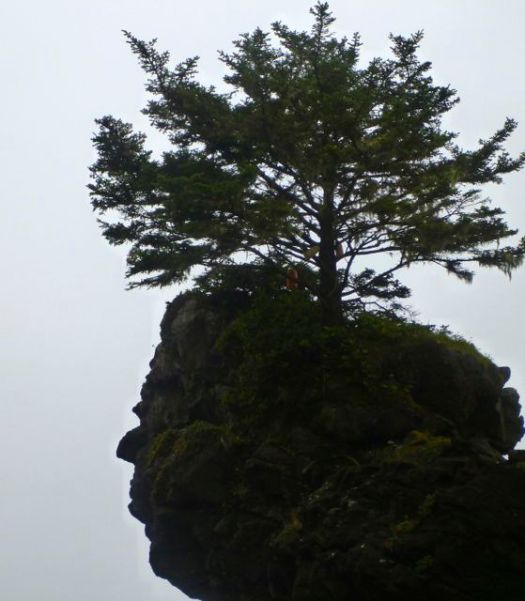
Look! That head has a tree growing out of it. 🙂
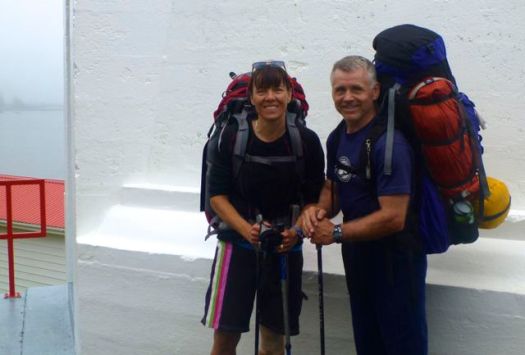
Happy hikers at the Carmanah Point Light Station.

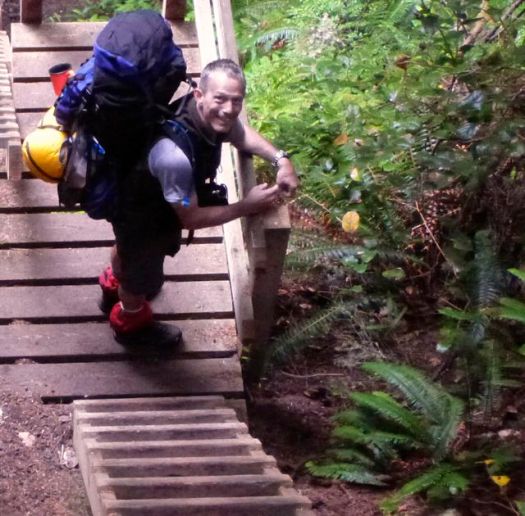
Warren’s happy too. He knows Chez Monique’s is close.
This was the 4th time over the past 14yrs that I’ve enjoyed this Beach restaurant. This time I took the opportunity to hang out with the Quebecois founder. Still feisty after all these years.
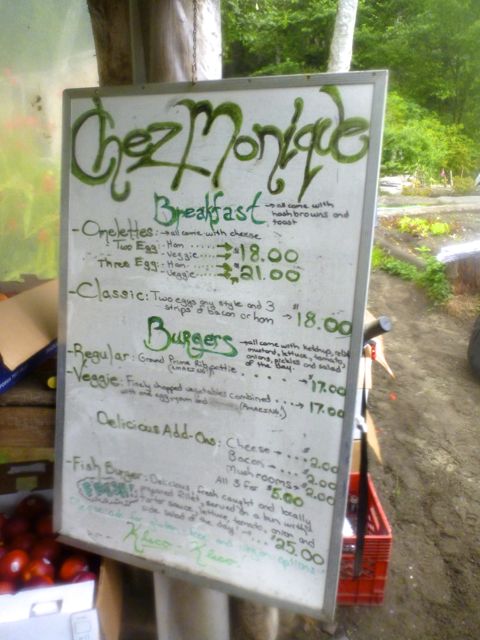

I learned of a new service. The restaurant will transfer 40 pounds of your food by boat for $35. You pick up that package when you get to Chez Monique’s. I’m not sure who to contact to arrange that transfer, however.
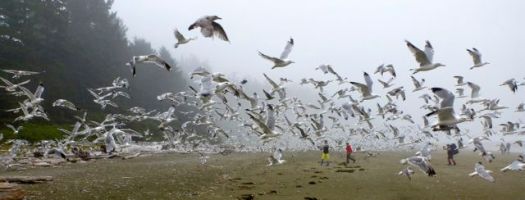
One of our best moments was hiking through tens of thousands of gulls.
Of our 11 hikers, only 4 were brave enough to scramble the river inland to see the Canada’s tallest tree, the Carmanah Giant, at 95.836 m (314 ft). It’s the tallest Sitka Spruce in the world, too.

A fair bit of boulder hopping was required to keep our feet dry.

I left a Summit Stone in tribute.
Another day, more superb and varied hiking.


Some of our group reached Camp via the inland route. Some took the shore.
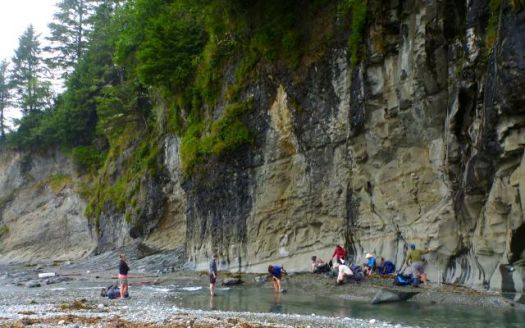
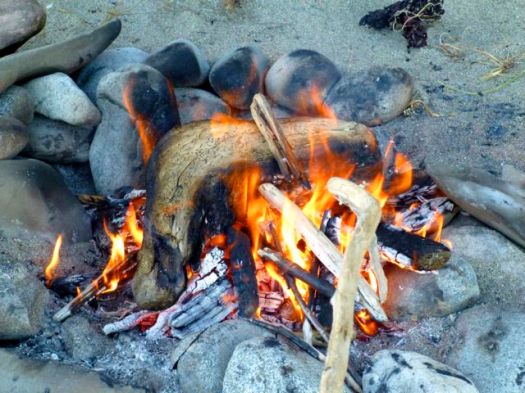
One of the great joys of coastal hiking is the evening fire.

It’s not always easy to find dry wood, however.

more photos from this day
day 0 | day 1 | day 2 | day 3 | day 4 | day 5 | day 6 | info page
Trip report by site editor Rick McCharles.
day 0 | day 1 | day 2 | day 3 | day 4 | day 5 | day 6 | info page
By luck I met my friends at the store in Bamfield, buying last minute provisions. Everyone but myself had arrived by JUAN DE FUCA EXPRESS Water Taxi. (about $135 / person one way in 2013)
They’ll be hiking back to their vehicles in Port Renfrew.

Still clean. Still fresh. But with HEAVY packs. 🙂
It’s not easy to get permits for a group this large. (The maximum group size is 10.) But we somehow managed it, booking by phone the very first minute that reservations are taken.

Famously — this is supposed to be the EASY end of the WCT. Yet Sandy found this the toughest day of all.
Sandy’s catch phrase for our adventure, day-by-day, was from Big Bang Theory:
What fresh Hell is this?
Day 1 was not all that “easy”. New ladders have been added at the Bamfield end.

Still — there are some gorgeous attractions.

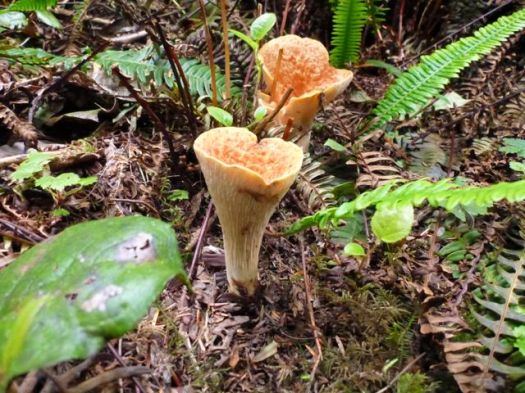
When it’s not raining, temperate rain forests are intriguing. So many odd mushrooms, for example.


Trying NOT to accidentally step on huge Banana slugs is a challenge.

At this end, many of the biggest old growth trees have been logged.

How are the toilets, you may ask?
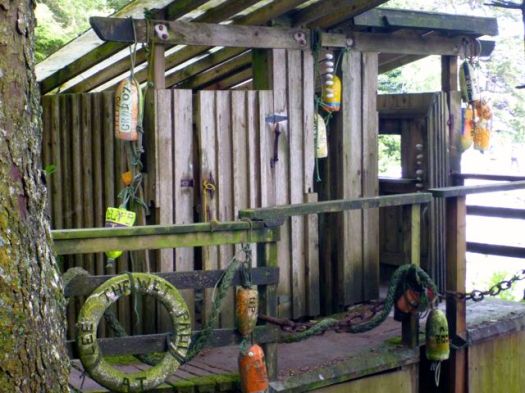
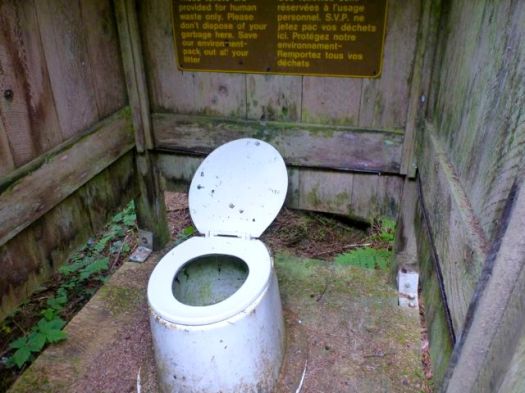
Not as good as on my past trips. Avoid them if you can. Sit in the woods, instead. 🙂
How is the mud?

Not as bad as on past trips. 2013 was a very dry season.
As always, the safest strategy is to plod right through the middle. This is one trek where waterproof footwear and gators are recommended.
Most of our group was from flat, FLAT Saskatchewan. Tidal pools are a big attraction.
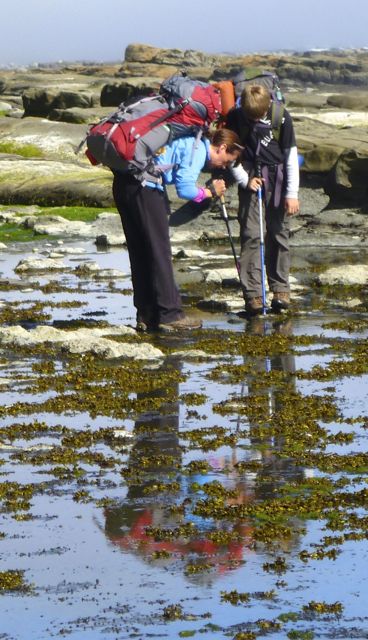
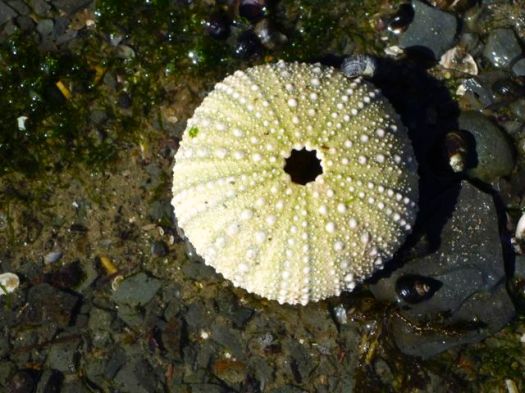
All week our timing with the tides was perfect. Hiking the coast when tides are low, weather dry, makes the WCT far, far easier.

On my other trips we camped at Michigan. Trying to avoid the crowds, we kept going to Tsocowis Creek. We found it fairly crowded.


What’s this weird toilet-paper-look-a-like kelp?

For the first time on the WCT (for me), we had a bear lockers at every campsite.

A perfect start to the West Coast Trail. 🙂
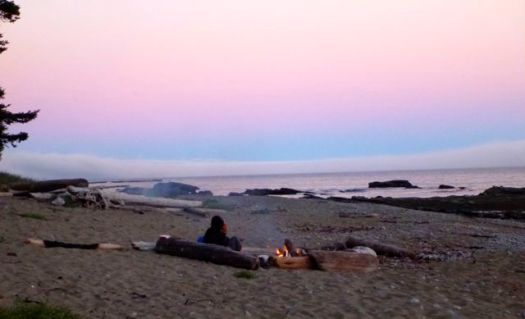
… Except that my headlamp failed. New batteries were dead. 😦
Warren advised to put a piece of plastic between the batteries and the contact while in transit. Next time.
more photos from this day
day 0 | day 1 | day 2 | day 3 | day 4 | day 5 | day 6 | info page
Trip report by site editor Rick McCharles.
Within 36hrs of landing in JoBurg I found myself atop the Amphitheater cliffs looking down at one of the highest waterfalls in the world.

How did I get here?
It’s easy.
Catch the Baz Bus to Amphitheater backpackers in the northern Drakensberg.
While checking into the hostel, sign up for their most popular guided hike. It’s offered about every 2nd day for about $50 all inclusive.
7:30am departure.

Here’s our guide “Sim” parking one of the hiker shuttle vans at Sentinel car park 2,500m (8,200 ft). This is the only official day hiking trail leading to the top of the Drakensberg escarpment.


Yep. That’s the Sentinel. You cannot climb it without ropes. We’ll skirt the base.
The trail zigzags up towards the big peak. Then traverses right.


Entirely above the treeline, we did not see much in the way of wildlife. Aside from lizards, of course.

It was an easy start with perfect weather.
One short ladder on the ascent.

The crux of the hike is up this gorge.
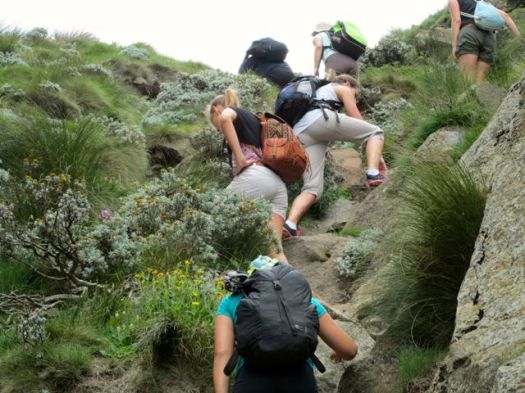
It’s a 300m scramble. Not too difficult overall.
Atop the Amphitheater cliffs, we stopped for lunch. Our guides were disappointed that clouds obscured the fantastic views.
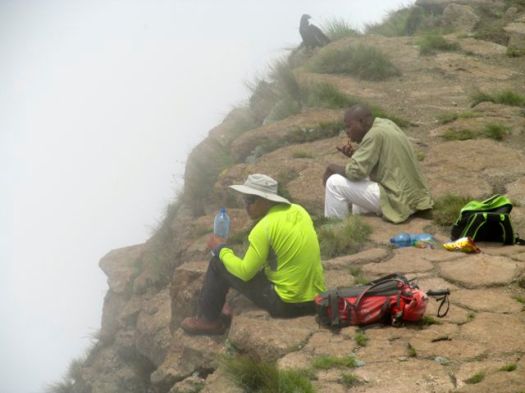
Note the big birds that stopped for lunch with us.

20min further is the top of Tugela Falls.
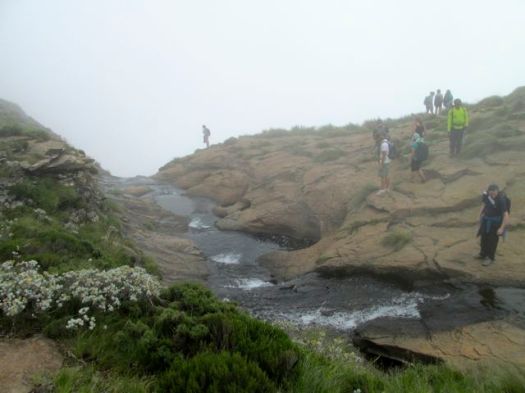

The water is quite warm. … I’m told.
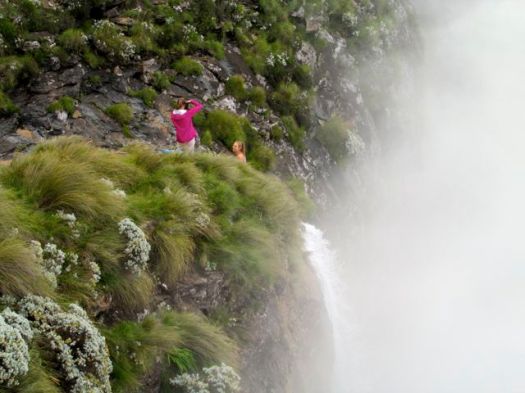
Our guide told us that one hiker fell from here on a winter trek. Slipped on the ice.
Finally I called on the old Gods and new to dissipate the clouds.
Everything opened up. And we were shocked to see where we’d been standing so casually.

It’s about 1km down.
The Amphitheatre is widely regarded as one of the most impressive cliff faces on earth, over 5km (3.1mi) in length.

Surprisingly, these cliffs are not much used for BASE jumping and the ilk. Apparently winds are not favourable here.
One girl from Finland had been to Roraima via Venezuela. She said there were definitely similarities with the top of the Tupuis there …

… But many differences too.
The standard route is a Lollypop loop. Rather than backtracking we descended via long ladders.


From the bottom, it was another cliff traverse to regain our original trail.

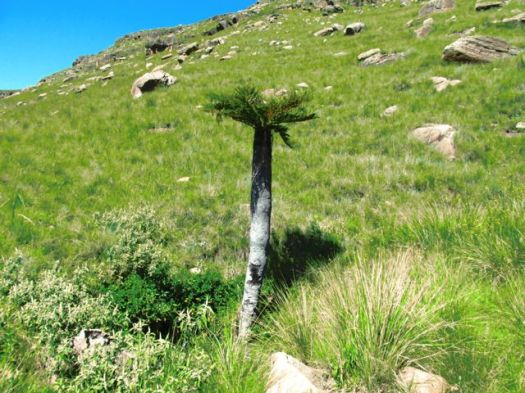
The vegetation in South Africa is different than what I’m used to. The most interesting plant is this … Pineapple something.
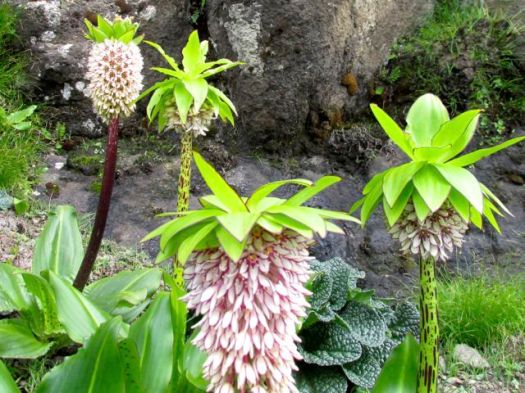

One intensely scenic day. We all left happy.
This New Yorker was on the last 4 days of 2 years of traveling.

Back at the car park we enjoyed a gymnastics performance.

And saw one sleepy snake close to where we parked the vans.
more pics from this trek
I didn’t delete many photos as most up there in the Bergs were cool. 🙂
related – Controversy Between Tugela Falls and Angel Falls as World’s Tallest Waterfall
by site editor Rick McCharles
Already tired of tiny, potentially unsanitary tea house bedrooms, I’d slept in my tent the previous night.
Yep. As I’ve done on my previous Himalayan tea house treks, I carried a tent. Only 2lbs (Hubba) … I like having the back-up plan.
I slept in my tent until 1:20am when guides woke me in a panic. At the next guesthouse campsite, a thief had cut through a tent and stolen a backpack. It contained a Passport, camera and plenty of cash. Everyone insisted that I must move indoors. For my own safety. 😦
 Ascending next morning, the valley looked to be narrowing further.
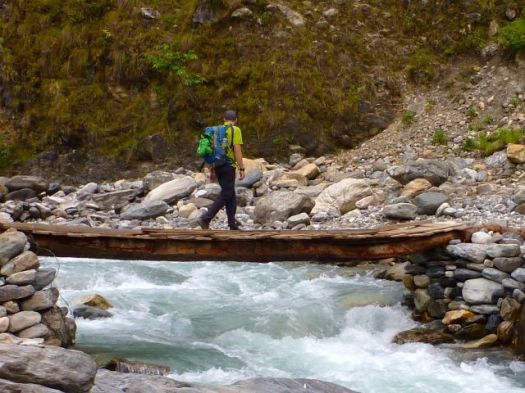

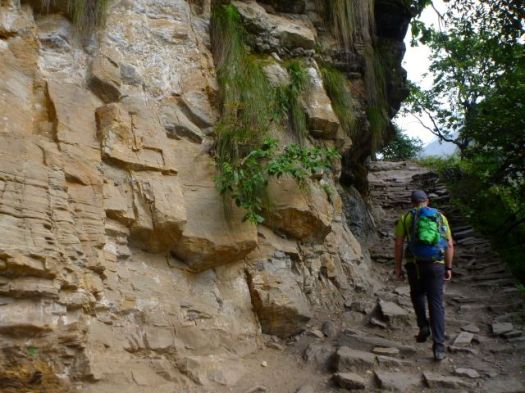
There are people everywhere in this valley. Here Brion was looking for a public toilet. The “blue door”, he was told.

That one wasn’t bad. But as a general rule I’d recommend you avoid Nepali toilets. It’s more sanitary to sit in the woods. … Assuming you can find a good spot.
This was cute. Kids blocking off their home from pack animals.

Here’s some fencing trying to keep out hungry beasts.

Harvested crops are usually stored up high out of reach.

Tradition here is to use ladders to get up and down.

I had the standard Himalayan meal for lunch.
Dal bhat consists of steamed rice and a cooked lentil soup called dal. Potatoes on the side they call “curry”. The spiciest component they call “pickle” (achar). Often greens are included as they were this time.
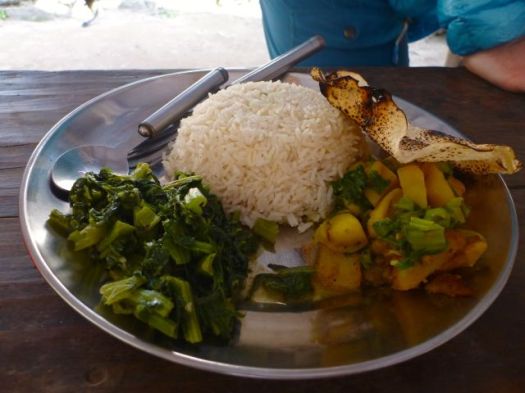
Porters and guides can rarely be persuaded to eat anything else. It’s dal baht 3 meals a day. They always eat separately and after their clients. In fact, one of the highest priority jobs for any guide is to act as your waiter. They do everything they can to keep you happy and healthy on the Trail.
Pretty pretty.


Steep gorges like this are prone to washout.

Winter loomed. Every home had enough wood stockpiled.
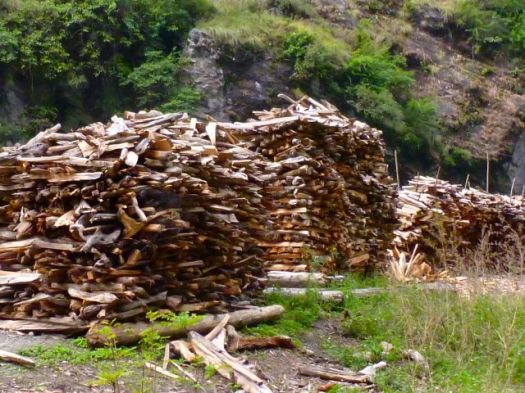

Compared with Everest and Annapurna, there are far more waterfalls on Manaslu.

Impressive too are the many beautiful butterflies.

Everyone is anticipating this adventure to boom over the next few years. We saw many, many guest houses under construction.

We were surprised to get some rain. It should be bone dry in November. … We didn’t realize at the time that this same day it was snowing up on the high Pass.


We slept in Jagat 1410m, a pretty village.
see high resolution photos from this day on flickr
day 0 | day 1 | day 2 | day 3 | day 4 | day 5 | day 6 | day 7 | day 8 | day 9 | day 10 | info