Raising awareness of the loss of wildlife and wild lands across Africa.
Chaz Powell, Emilie Gorse and Justin True walked the length of the Mangoky River in Madagascar, covering some 800 km (497 miles) in the process. …

Best hikes, treks, tramps in the world.
Raising awareness of the loss of wildlife and wild lands across Africa.
Chaz Powell, Emilie Gorse and Justin True walked the length of the Mangoky River in Madagascar, covering some 800 km (497 miles) in the process. …
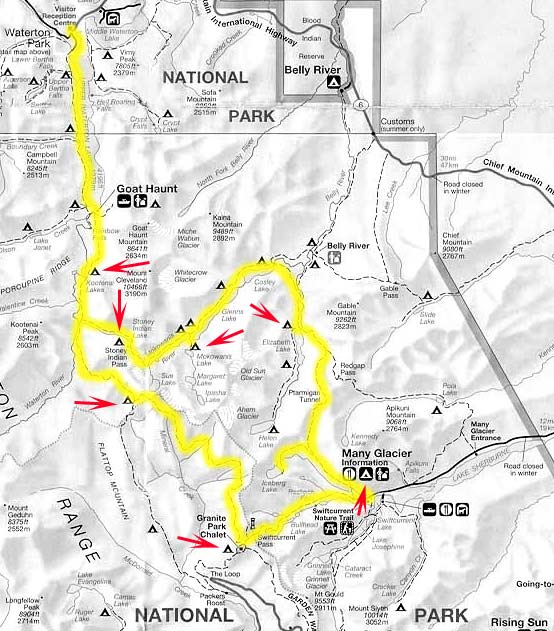
Glacier North Circle in Glacier National Park is one of our top 10 hikes in the world.

Our recommended route connects to Waterton National Park across the border with Canada.
backpackers-review has a variation:
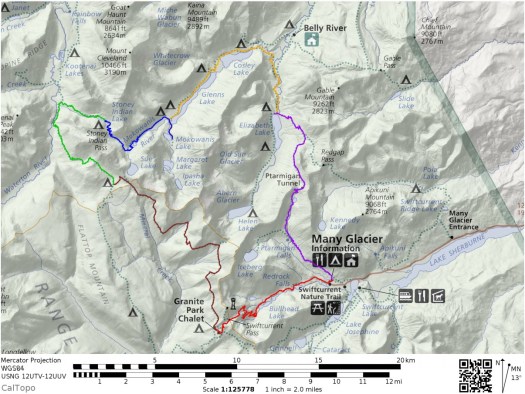
They started near the Many Glacier Ranger Station where they picked up the required wilderness permit.
It’s highly likely you’ll see bears on this adventure.
Click through for an excellent, detailed trip report:
Trip report by BestHike editor Rick McCharles.
My favourite destination in Vegas is Red Rock Canyon.
It was Alistair Humphreys who first got me thinking about microadventures.
… short, simple, local, cheap – yet still fun, exciting, challenging, refreshing and rewarding. …
Visiting friends in west Vegas it was only about 10 miles to the Red Rock Canyon Visitor Center on excellent dedicated cycling lanes.
I cycled from their house short of the Conservation Area, turning one street early into the Calico Basin (no fees).


You can access similar gorgeous wilderness while avoiding crowds, parking hassles and entrance fee.
For the first time ever I cycled out onto the Kraft Mountain trails.
It was busy with locals climbing the Kraft Boulders.
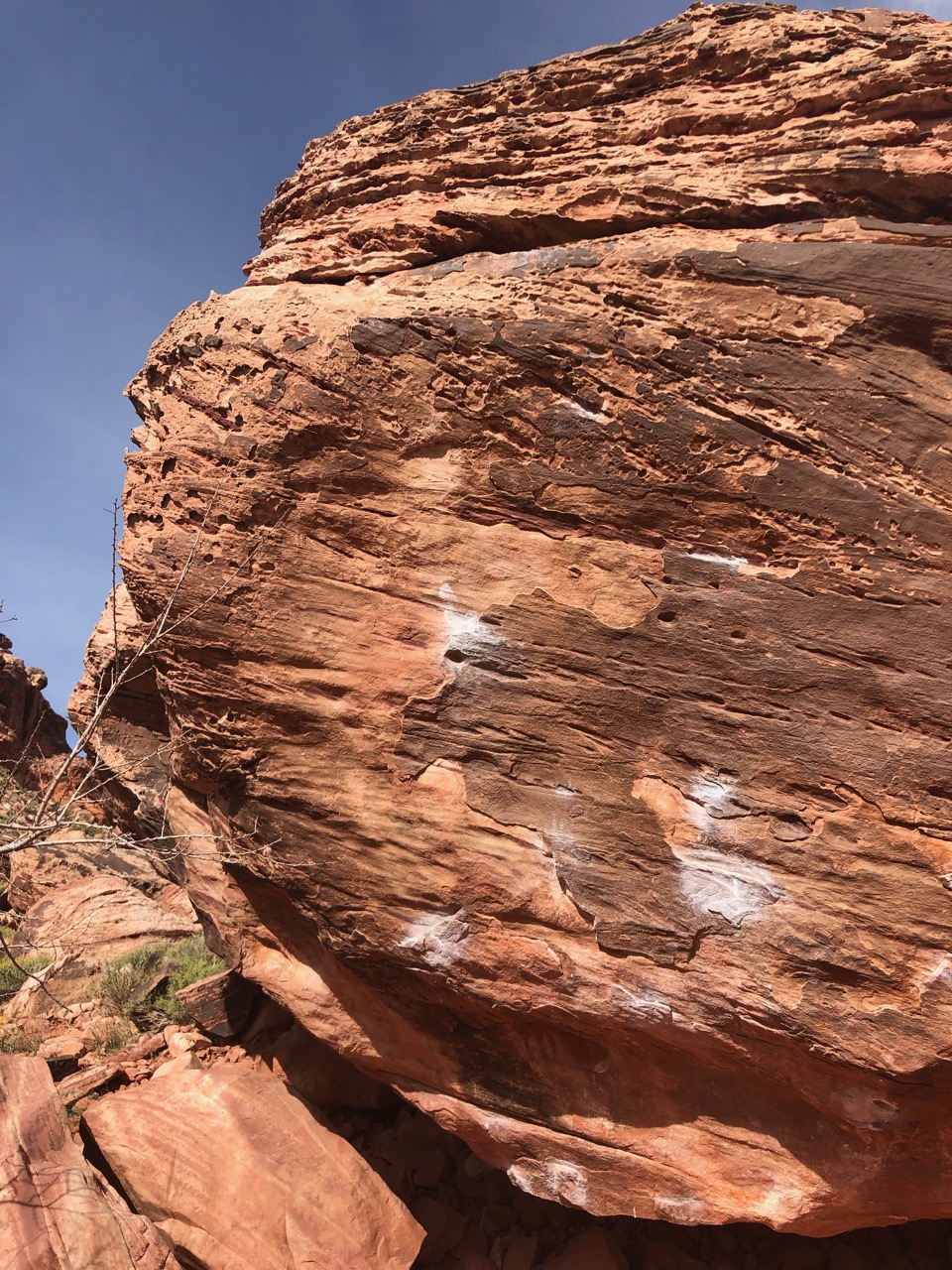
Aside from April wildflowers, it was typical Nevada desert.

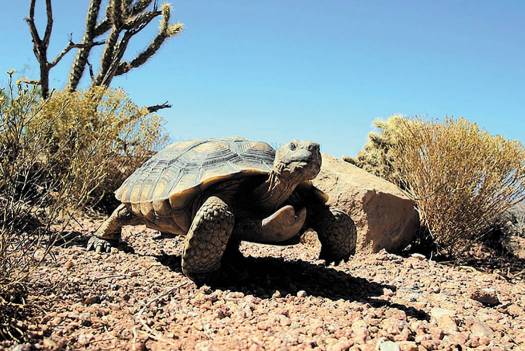
I did see one large desert tortoise, Nevada’s State Reptile.
At dusk I set up my tent in a quiet, hidden spot.
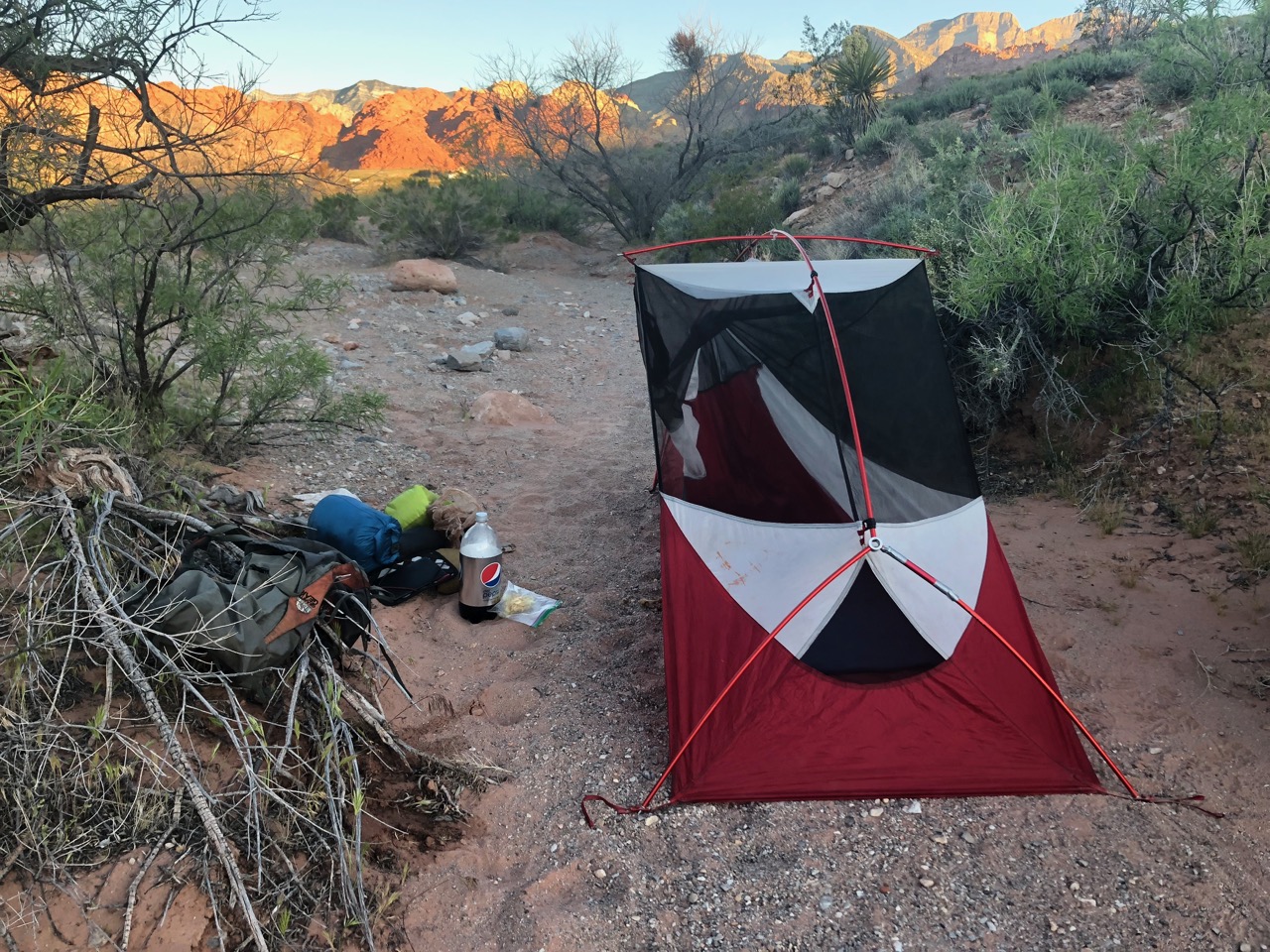
Next morning starting at 5am I began hearing voices.
As it turned out I’d accidentally set-up close to an unmarked but popular local trail.
Oops.
He got into hiking in his 20s, but it was trekking and scrambling in little know wilderness on four continents visited on his five-year-long H.M.S. Beagle voyage between 1831 and 1836 that cement him as one of the most worldly hikers in history.
“Mount Darwin” is the highest peak in Tierra del Fuego. On February 12, 1834, Captain FitzRoy named a mountain after him on his birthday. …

Darwin walked mainly to discover plants and animals unique to those regions.
I learned all this by reading his travelogue Voyage of the Beagle.
By the way, the famous phrase “survival of the fittest” comes from Herbert Spencer’s 1864 publication, “Principles of Biology.” The term is largely thought to have been coined by Darwin regarding his thoughts on evolution; however, this is a wrong assumption.
AKA Thousand Palms Oasis Preserve.
Trip report by BestHike editor Rick McCharles
I’d wild camped up high overlooking Palm Springs.
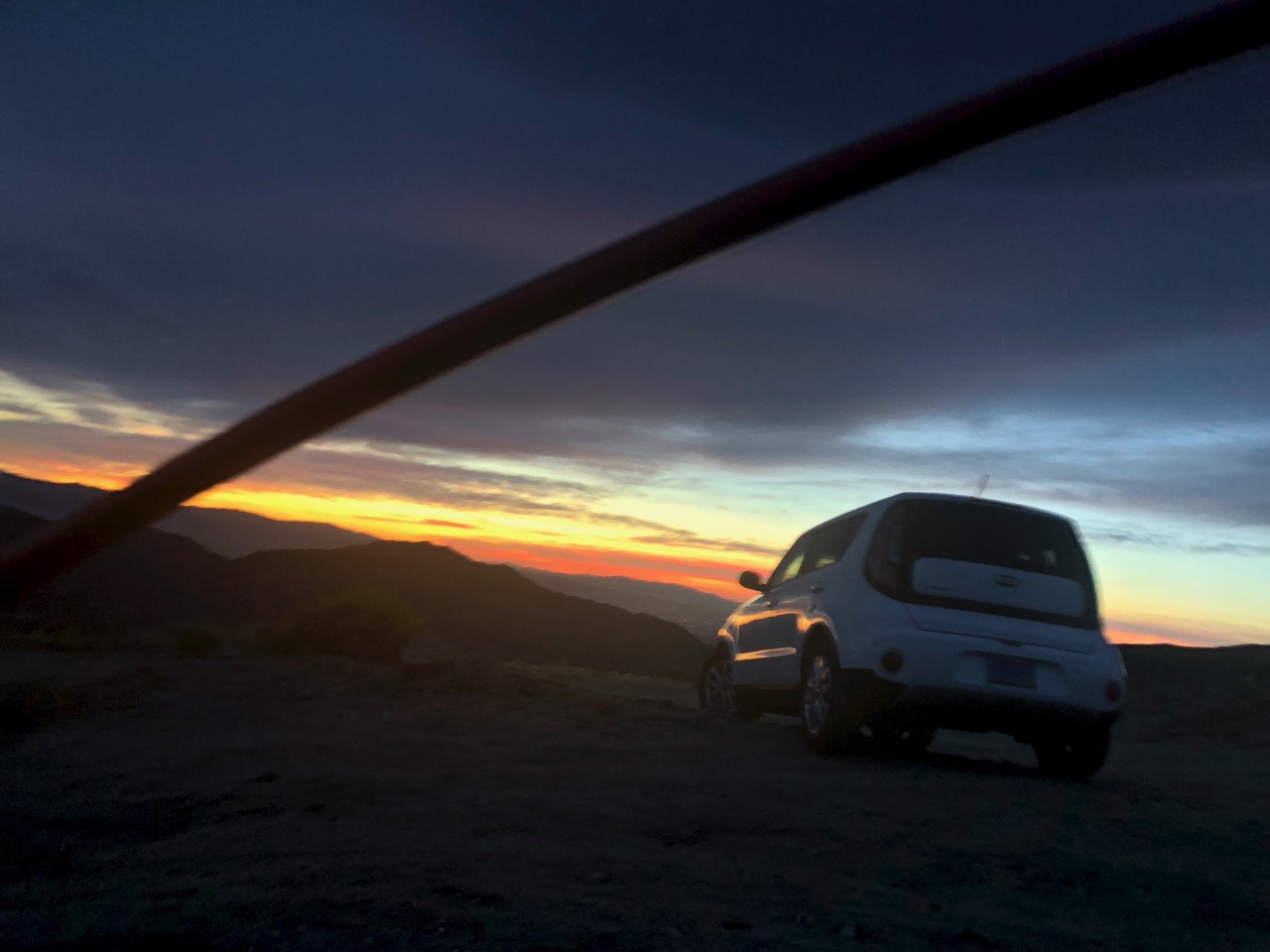
Next morning I headed for Coachella Valley Preserve before it got too hot.
Entrance by donation. Owned and well-managed by The Nature Conservancy, Bureau of Land Management, Wildlife Service, California Department of Fish & Game and California Department of Parks & Recreation

On the San Andreas fault-line, underground springs force water up to the surface.
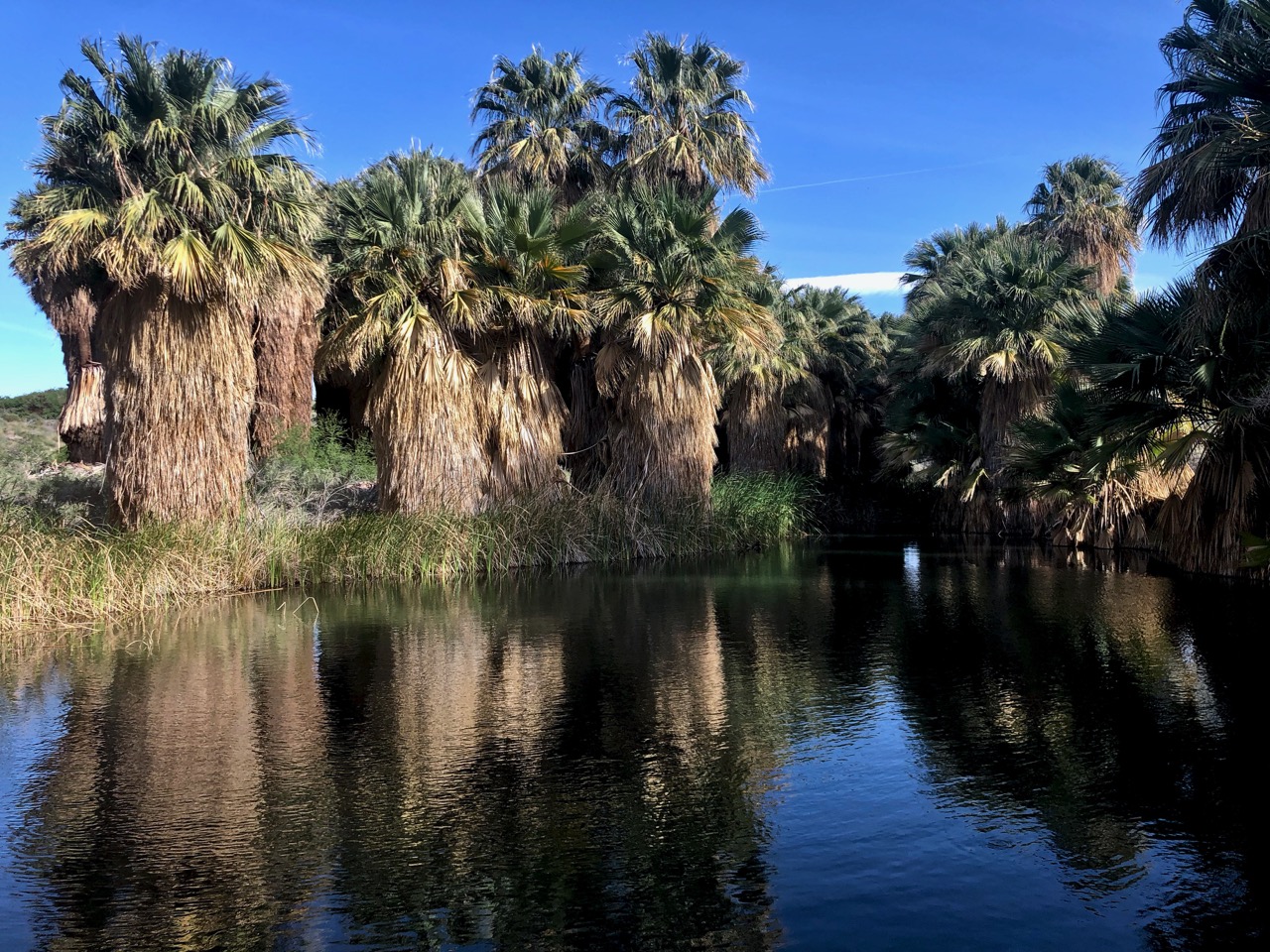
Most visitors walk about 2 miles round-trip on the McCallum Trail to McCallum Grove.


It’s an interpretive walk with plant species identified.
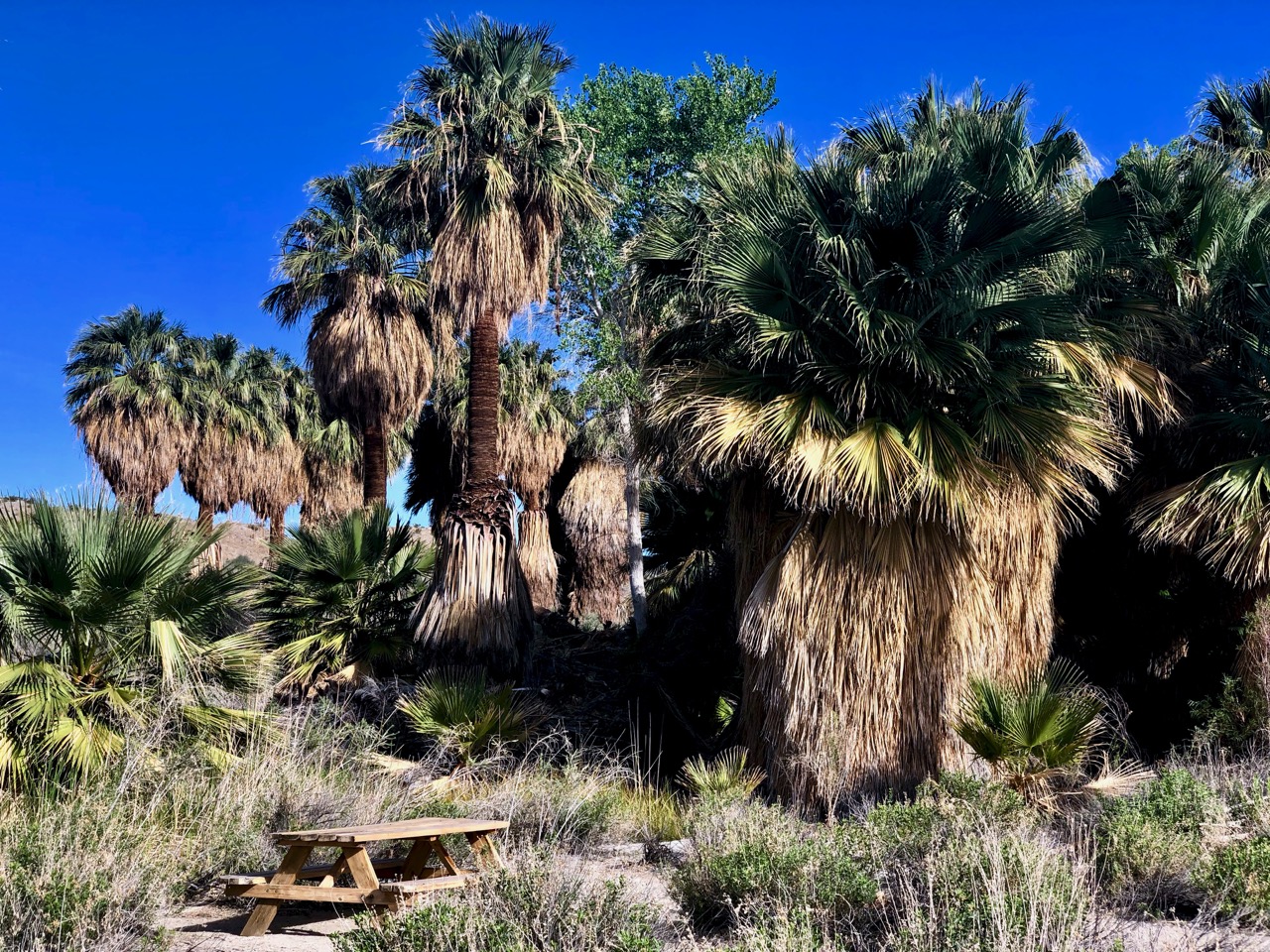

I was told the Preserve was recently closed due to flooding — and wildlife quickly returned.
McCallum is closed, as well, during the heat of the summer (May 1 – Oct 1).
There are actually 28 miles of trails (easy to moderate) and I continued out into the desert out into Moon Country.
Almost immediately I ran into the first rattlesnake of my life.
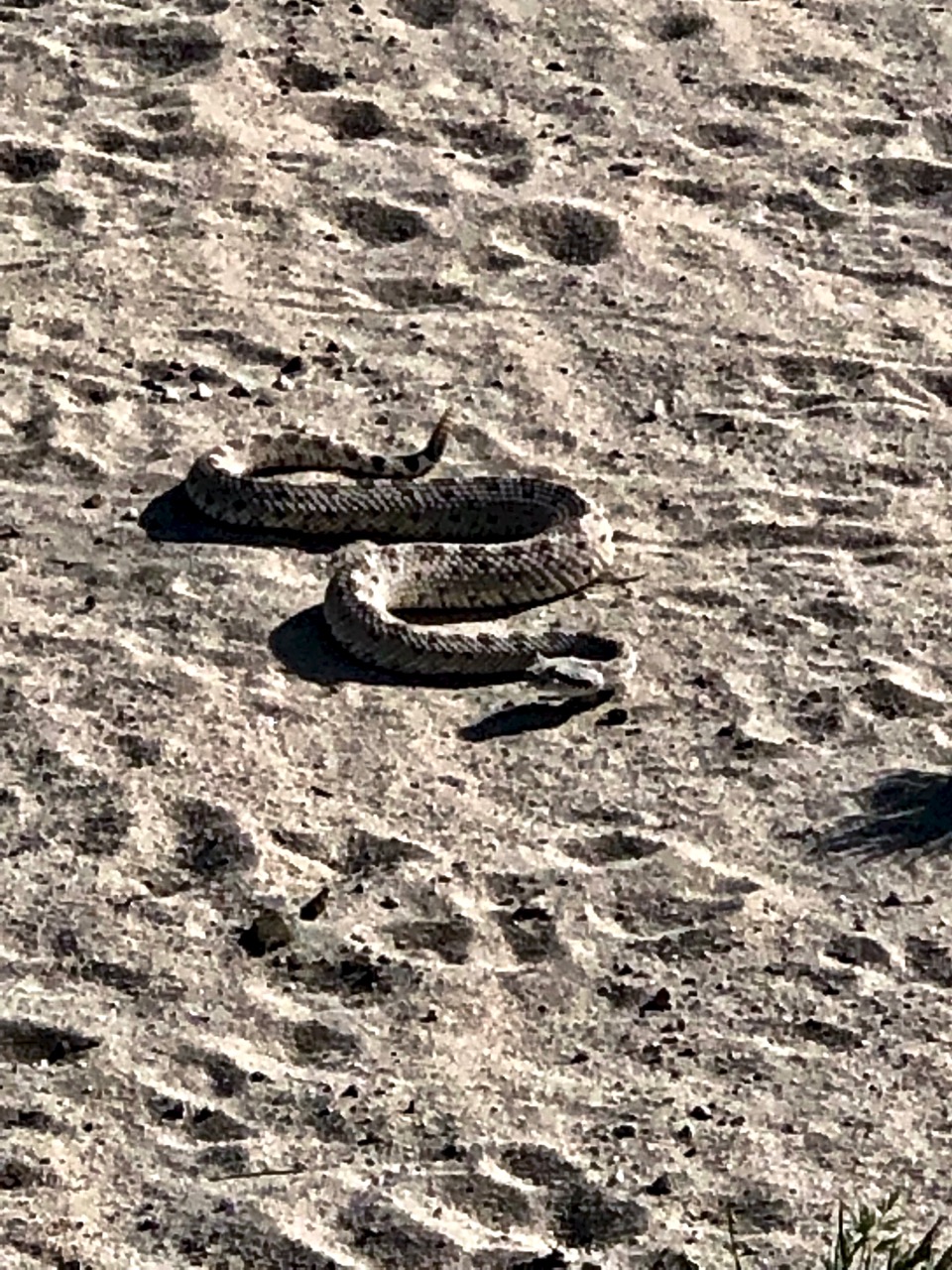
There are plenty of lizards to keep them fed.
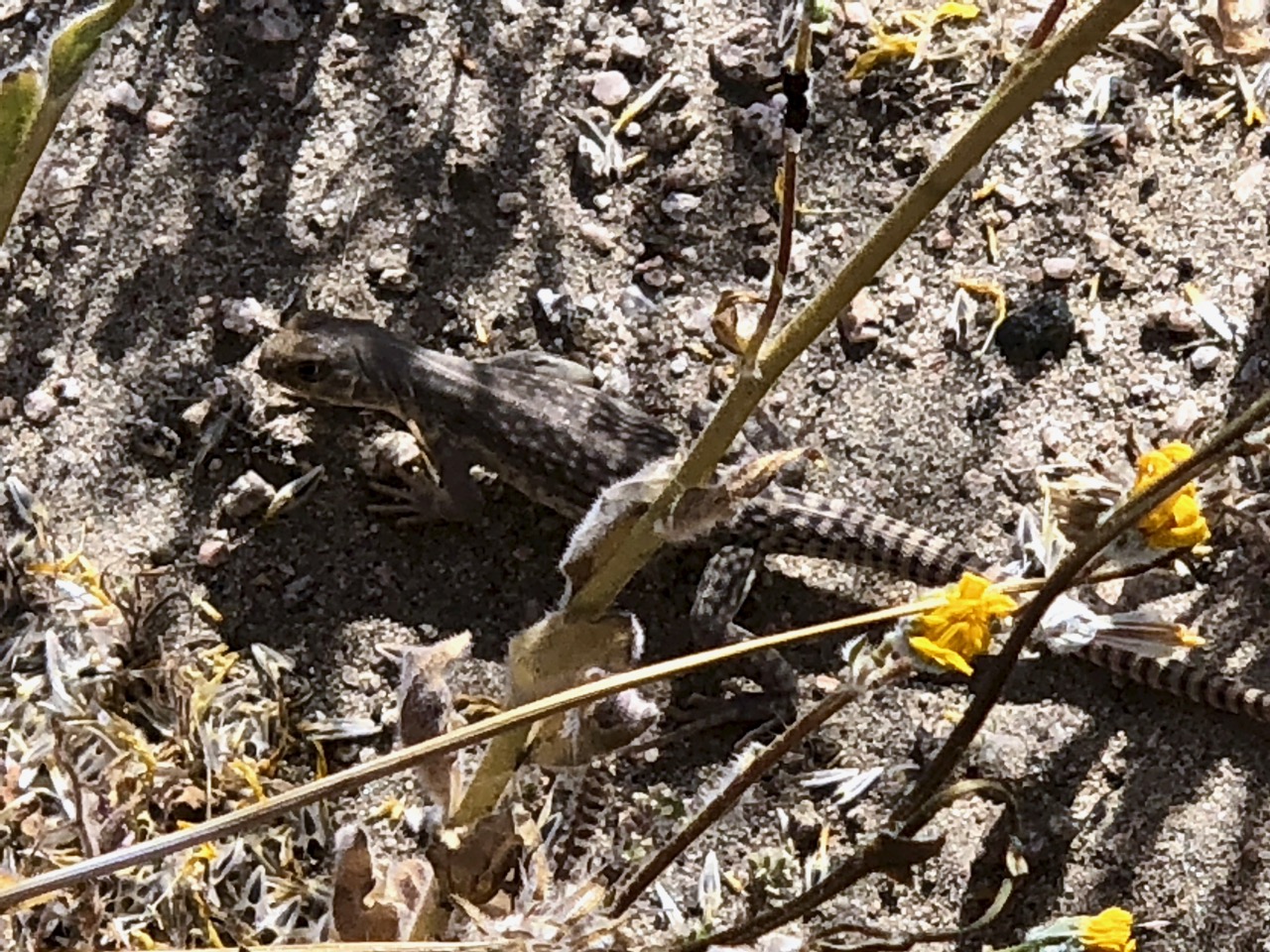
It was April — wildflower season — and I was lucky enough to see some.

I saw no other hikers climbing up into a dry wash. Most stick to the 2 mile loop.

If you get to Palm Springs, California, I highly recommend a visit.
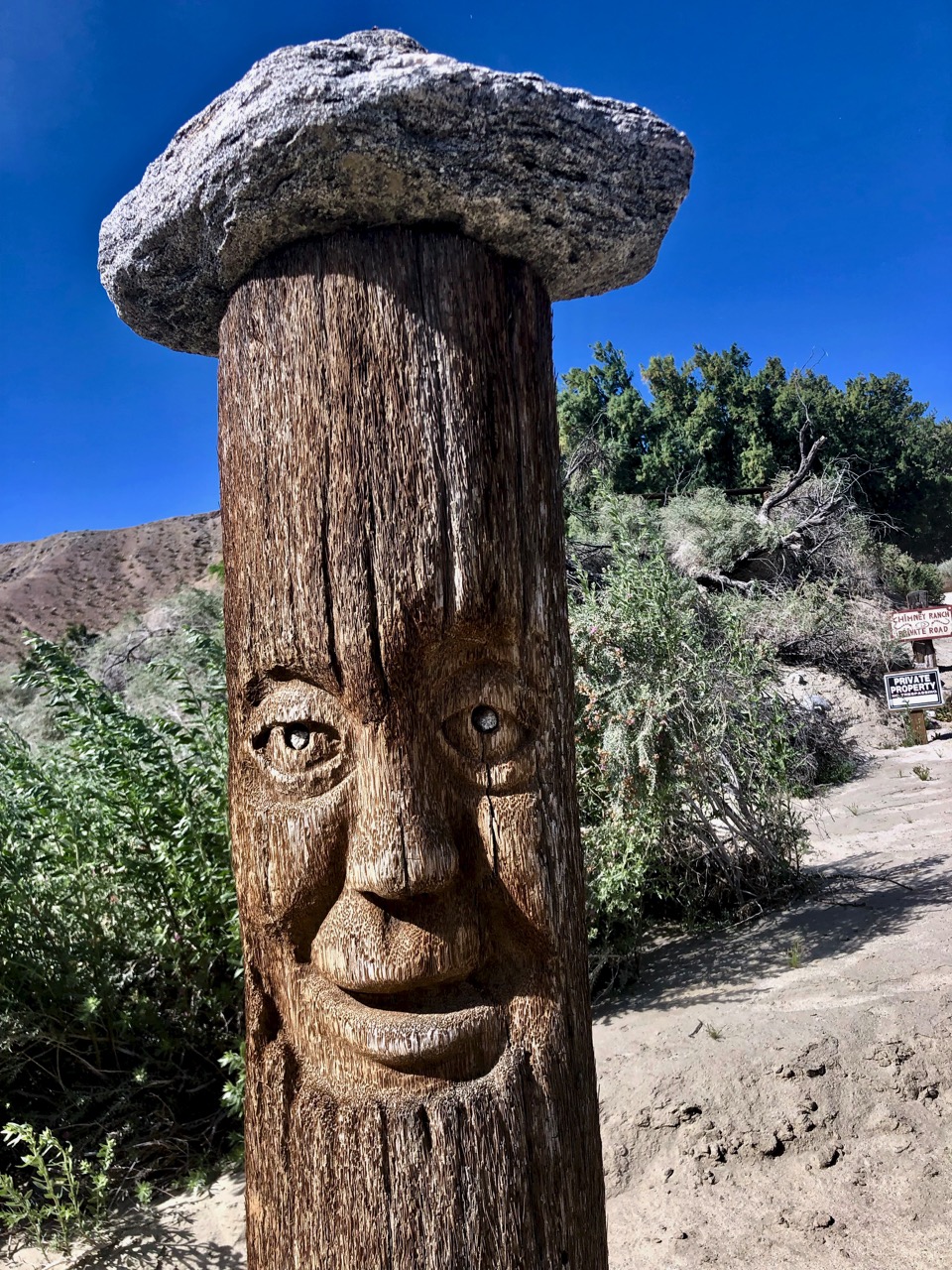
Official site – CoachellaValleyPreserve.org
Trip report by BestHike editor Rick McCharles
Another fantastic campsite. Great weather again.
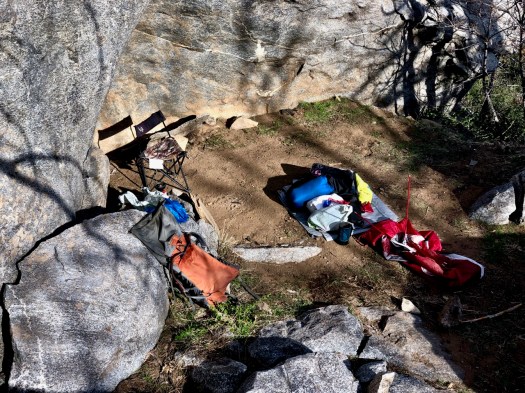
Here are views looking up from my tent.
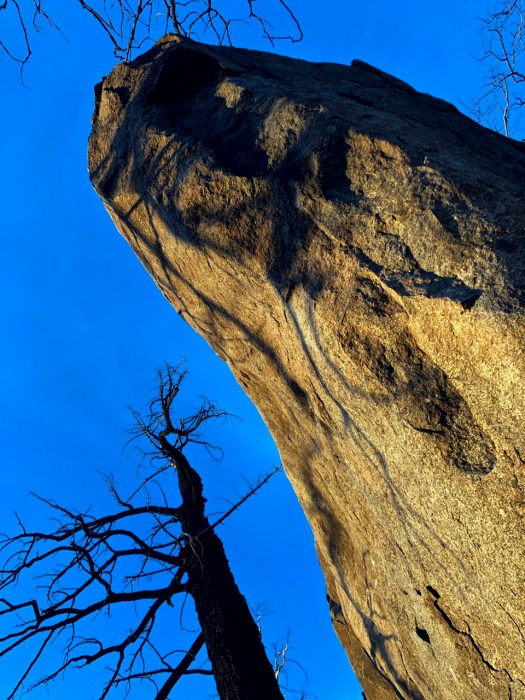
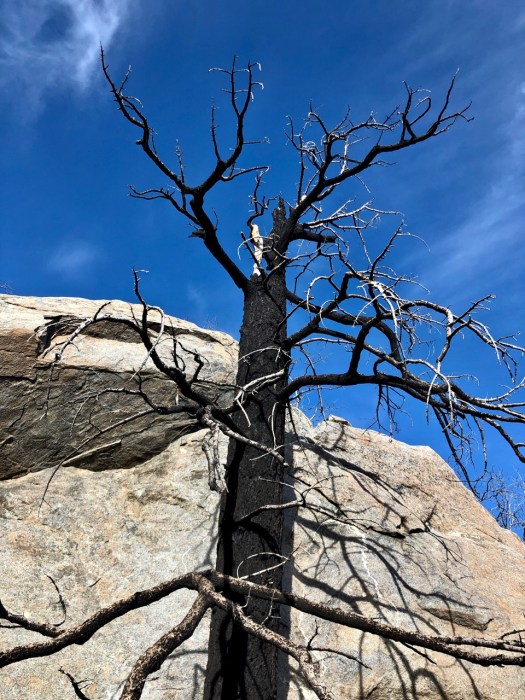
Majestic.
I’d been steadily descending from the snowy heights. Vegetation now changing rapidly.
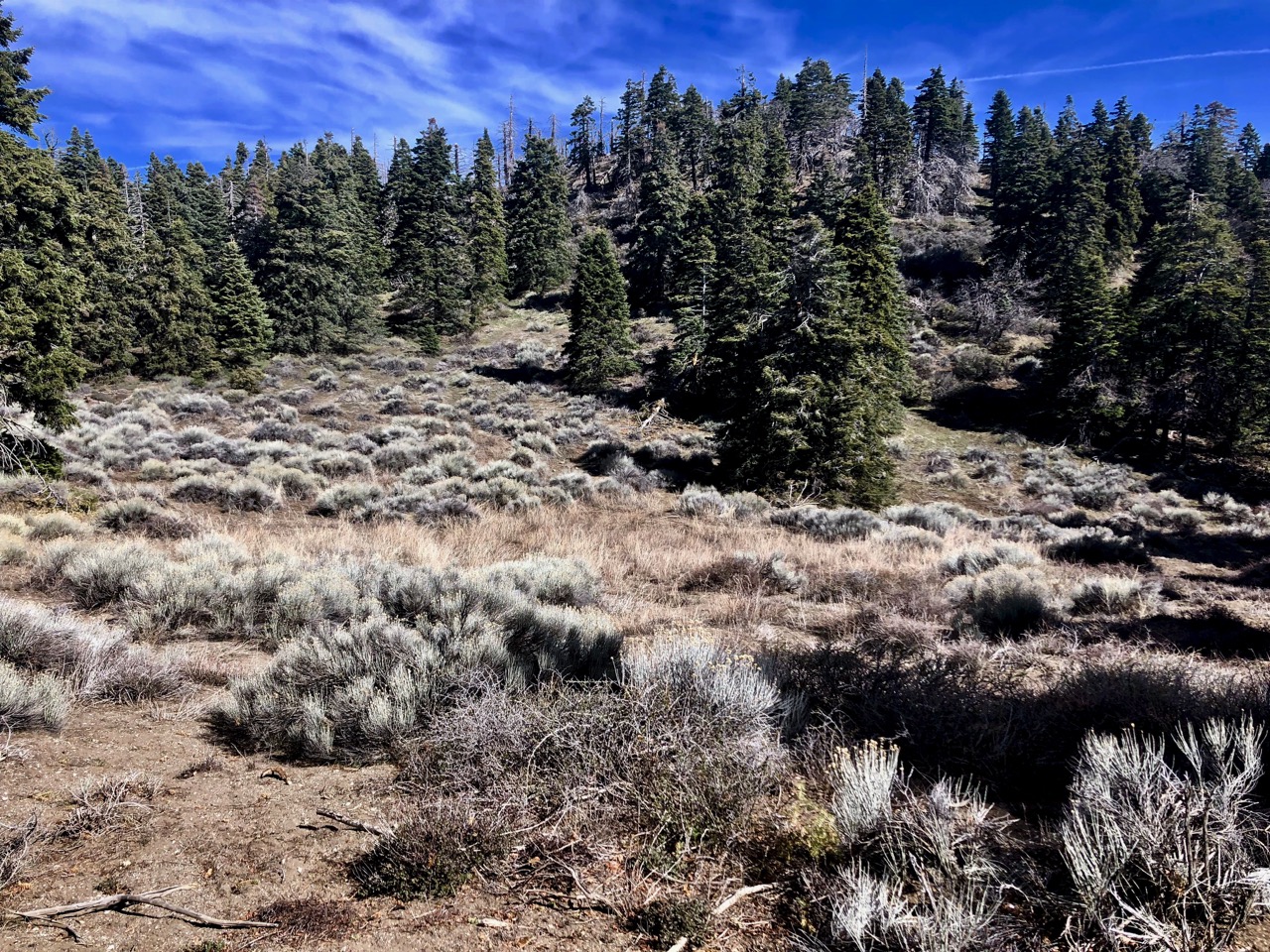
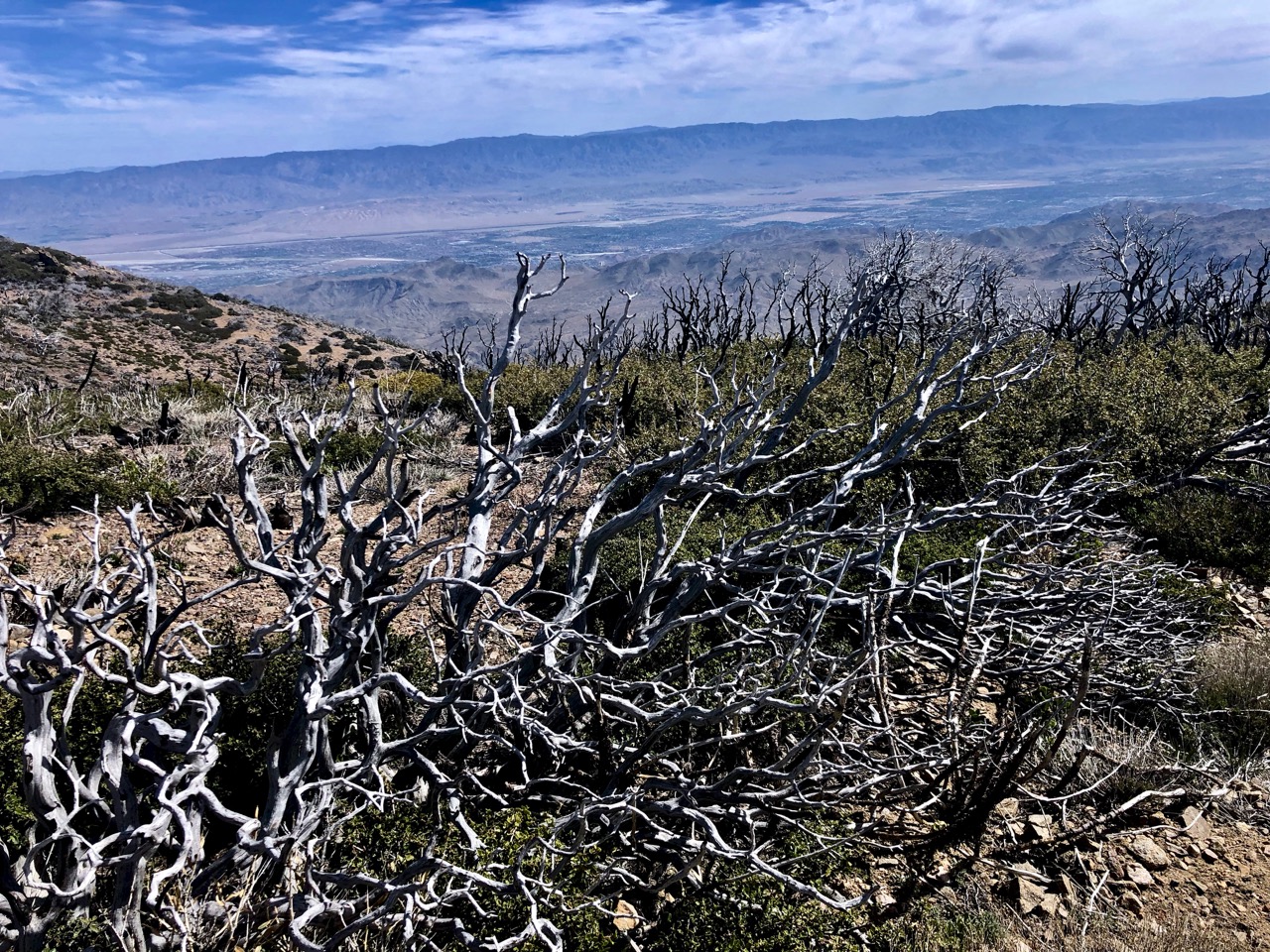
My only health worry was hot foot. Would I get blisters?
Just in case I took off the shoes every hour or two.
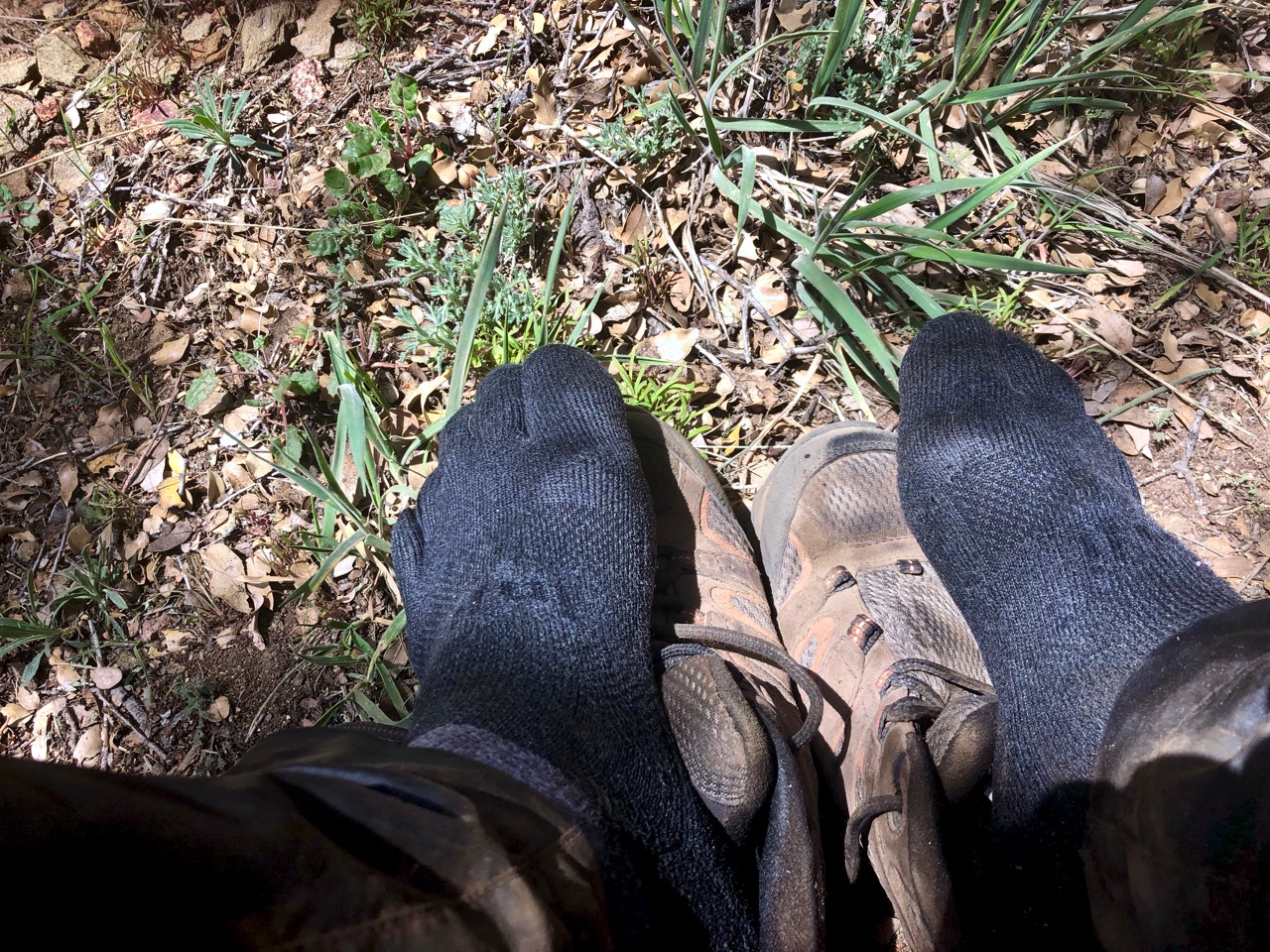
I’ve used the same pack for many a year – the super light frameless Granite Gear Virga 2.
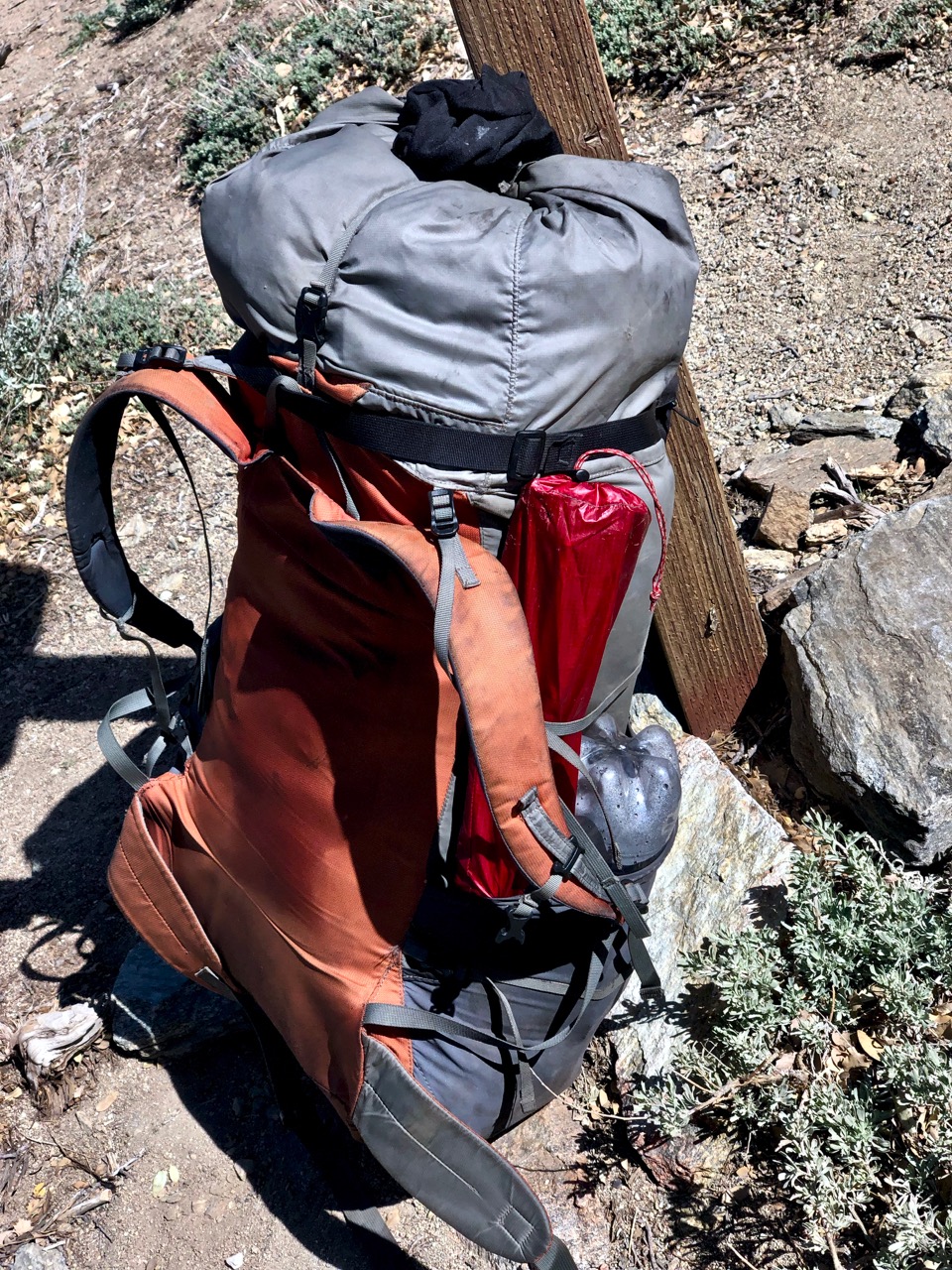
The similar Granite Gear Crown2 is the 5th most popular on the PCT. My next pack will be a Hyperlite, the 3rd most popular. It’s heavier but near waterproof. And more durable, I reckon.
Cactus.
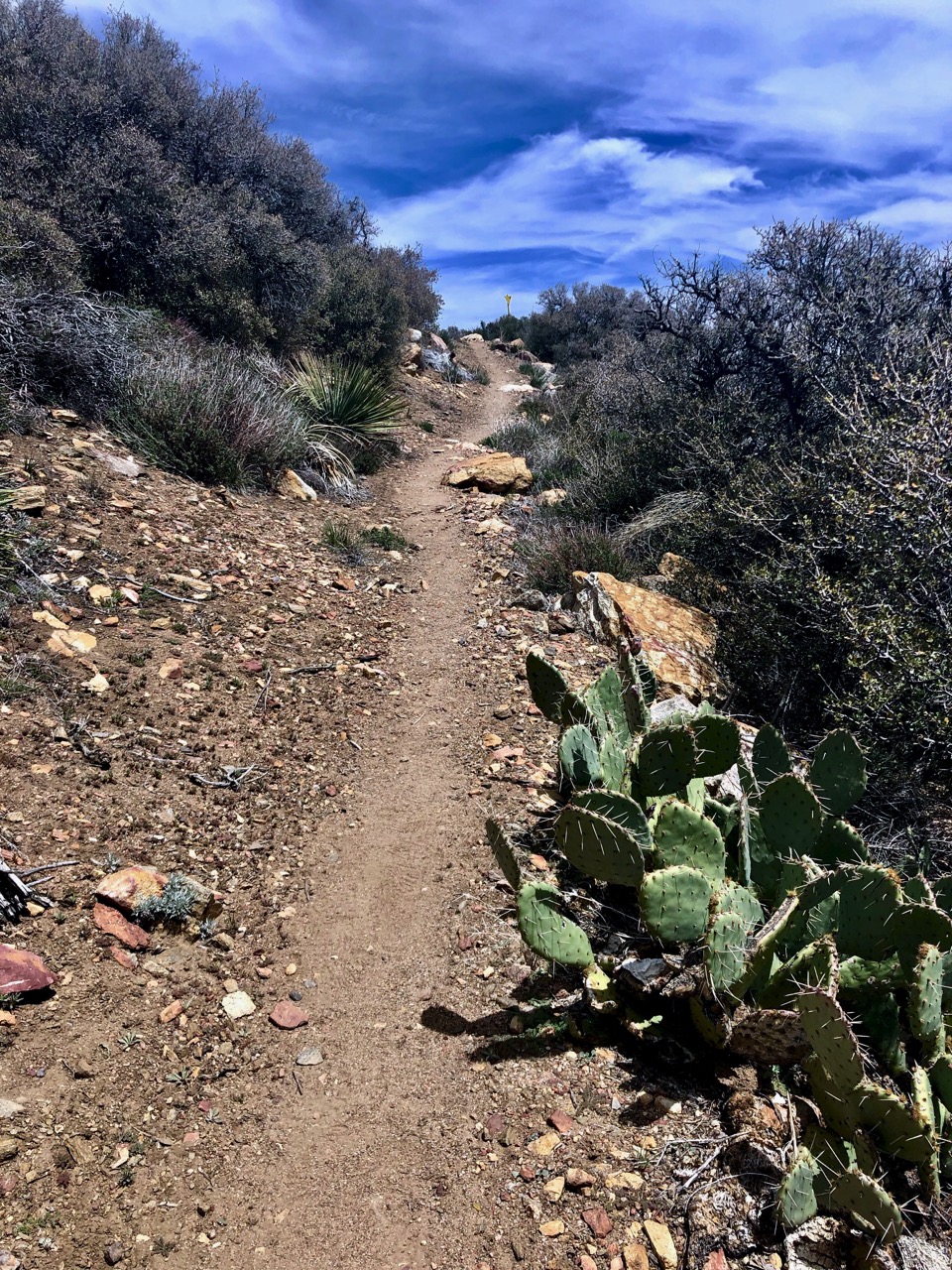
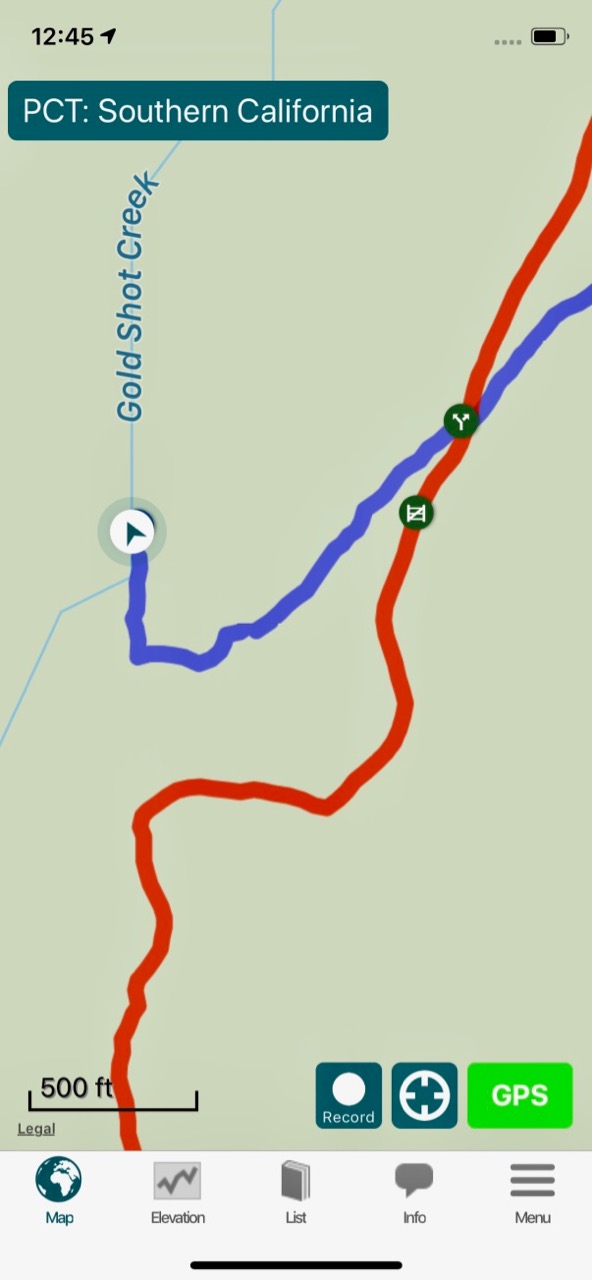
Here’s one of the main reason people buy the Guthook app — to find off-trail water in the desert.
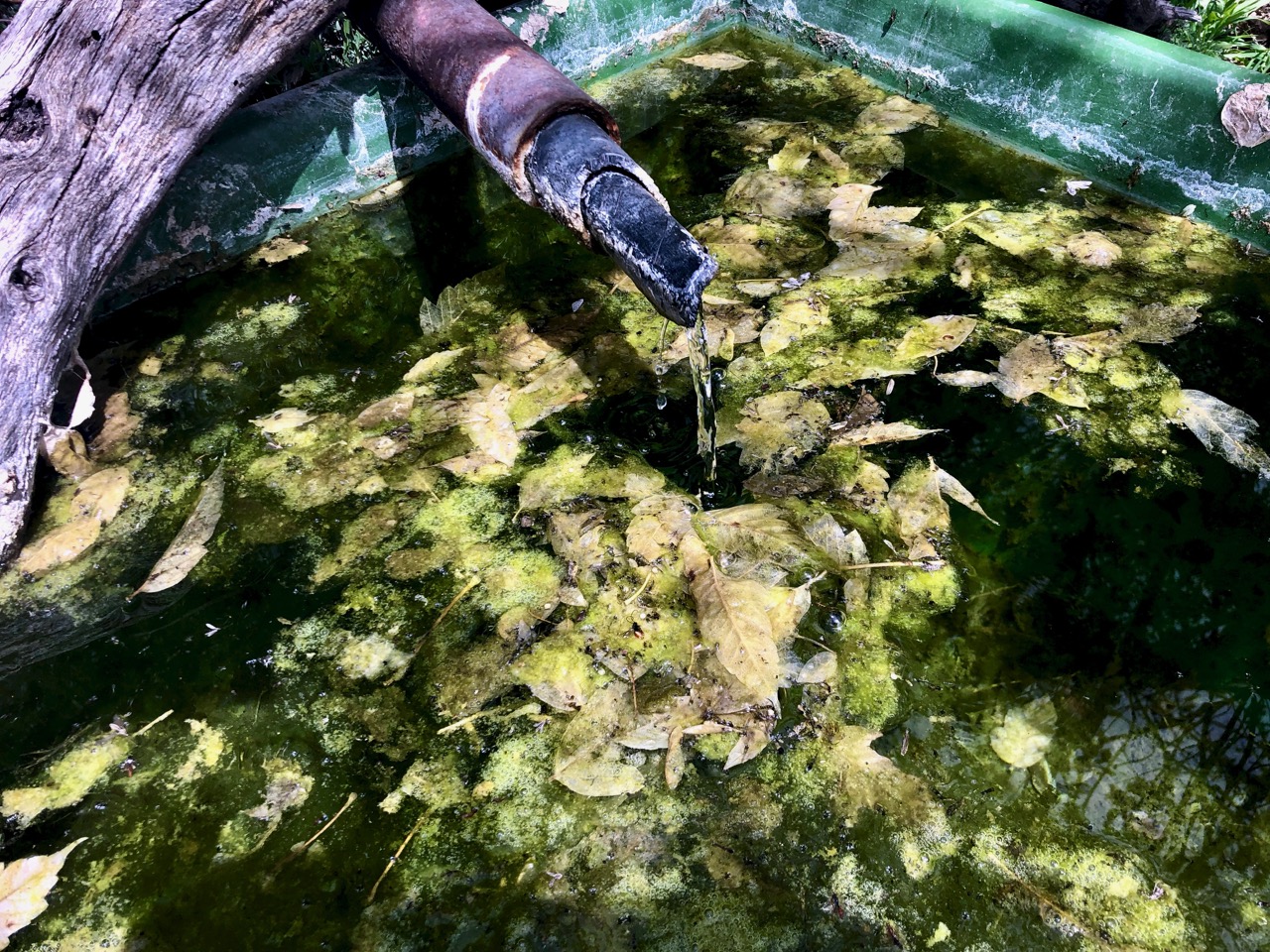
Though I treated this pipe water, it did look and smell great in April.
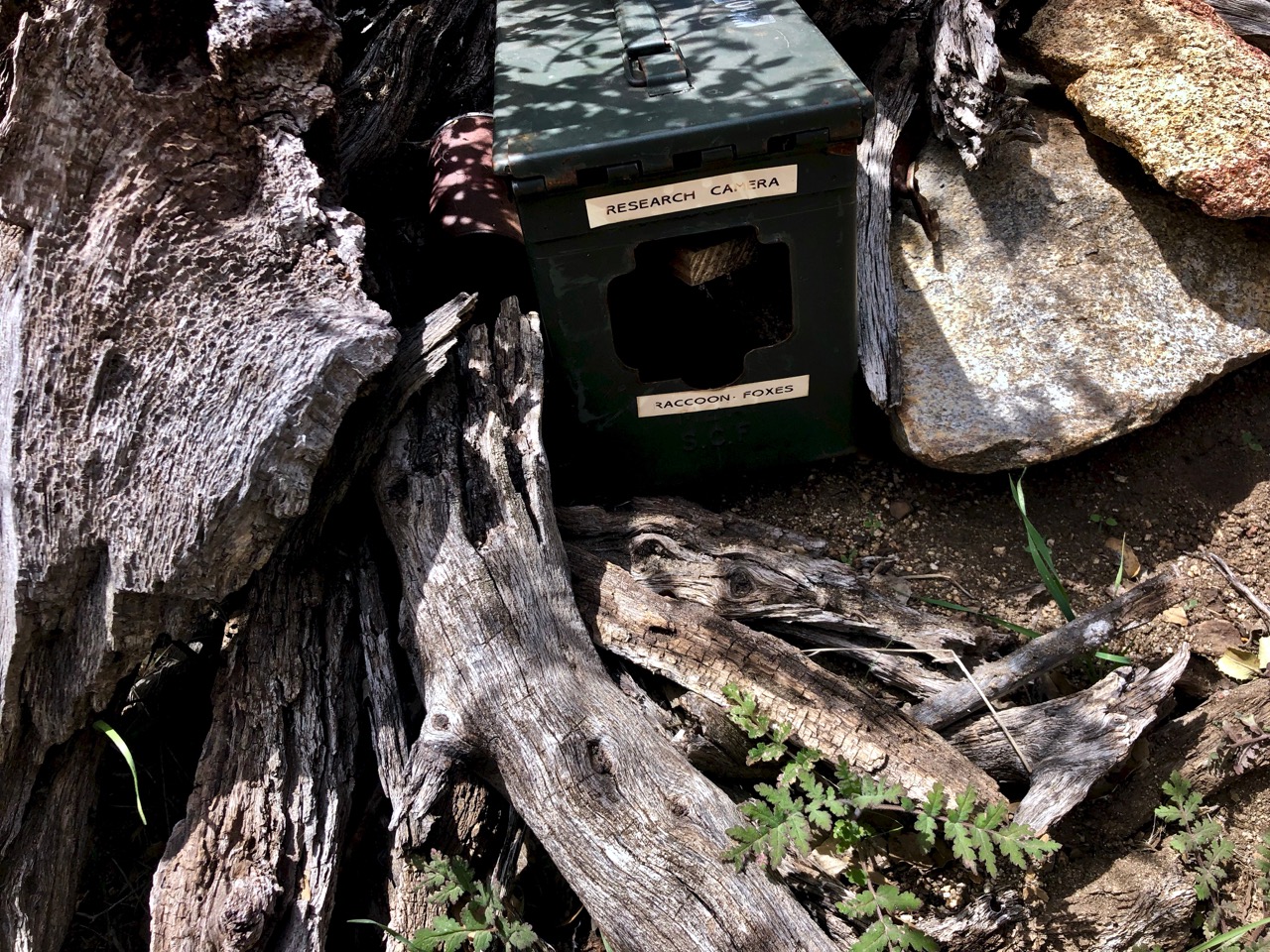
Water is scarce. Researchers use watering holes to check on the health of mammals in the area.
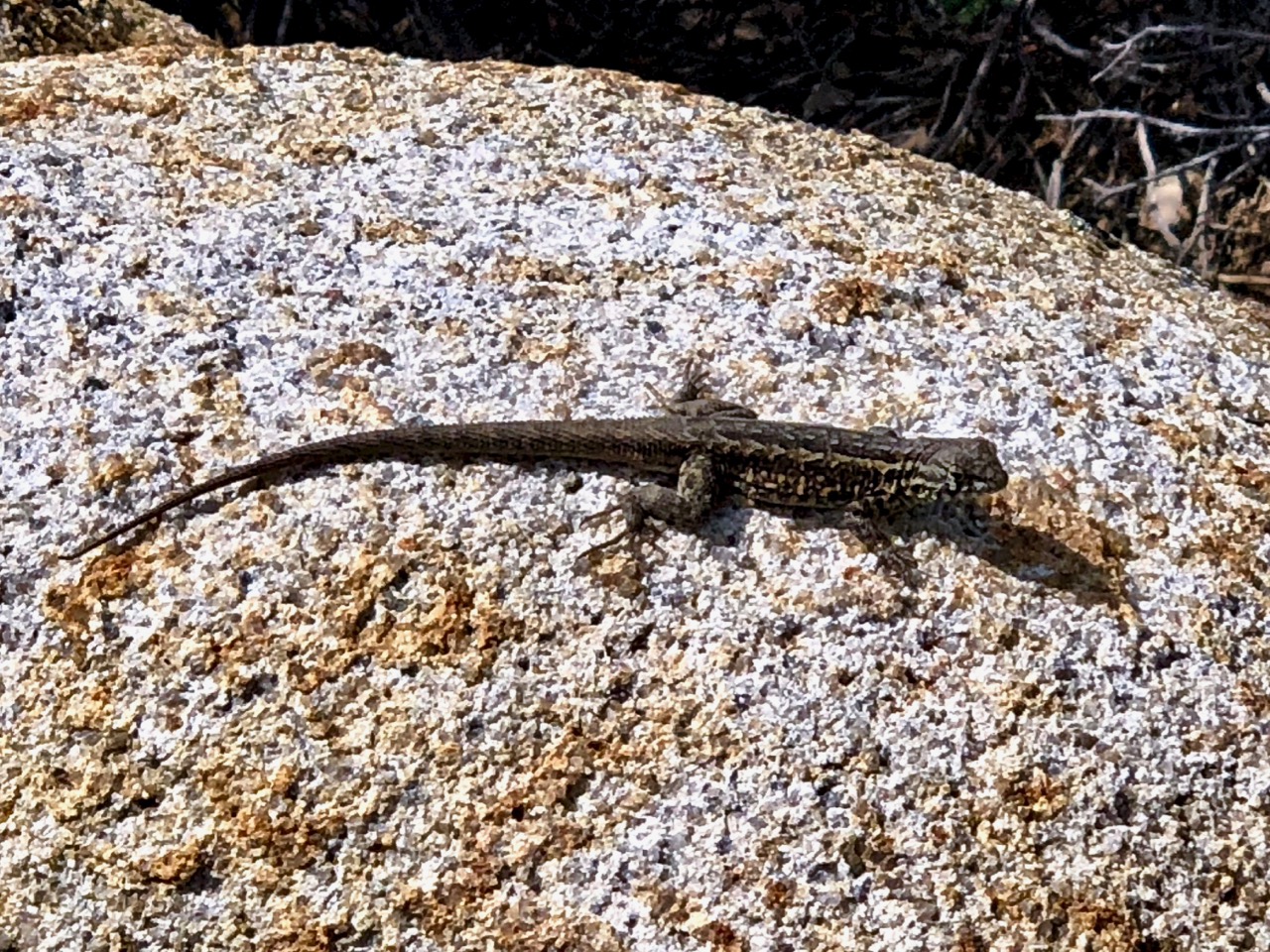
Successful in the desert are birds, snakes and lizards.
Down, down.
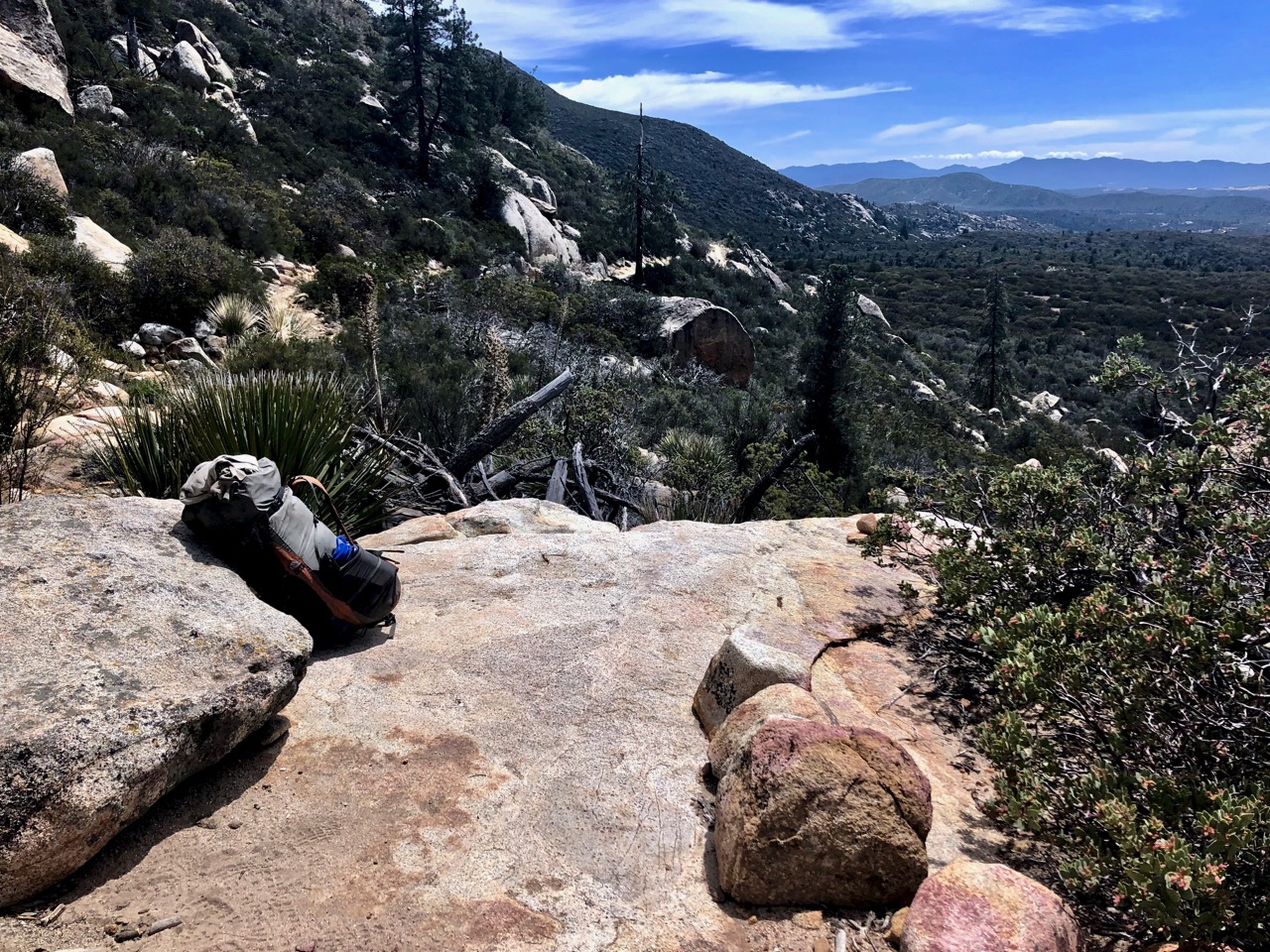
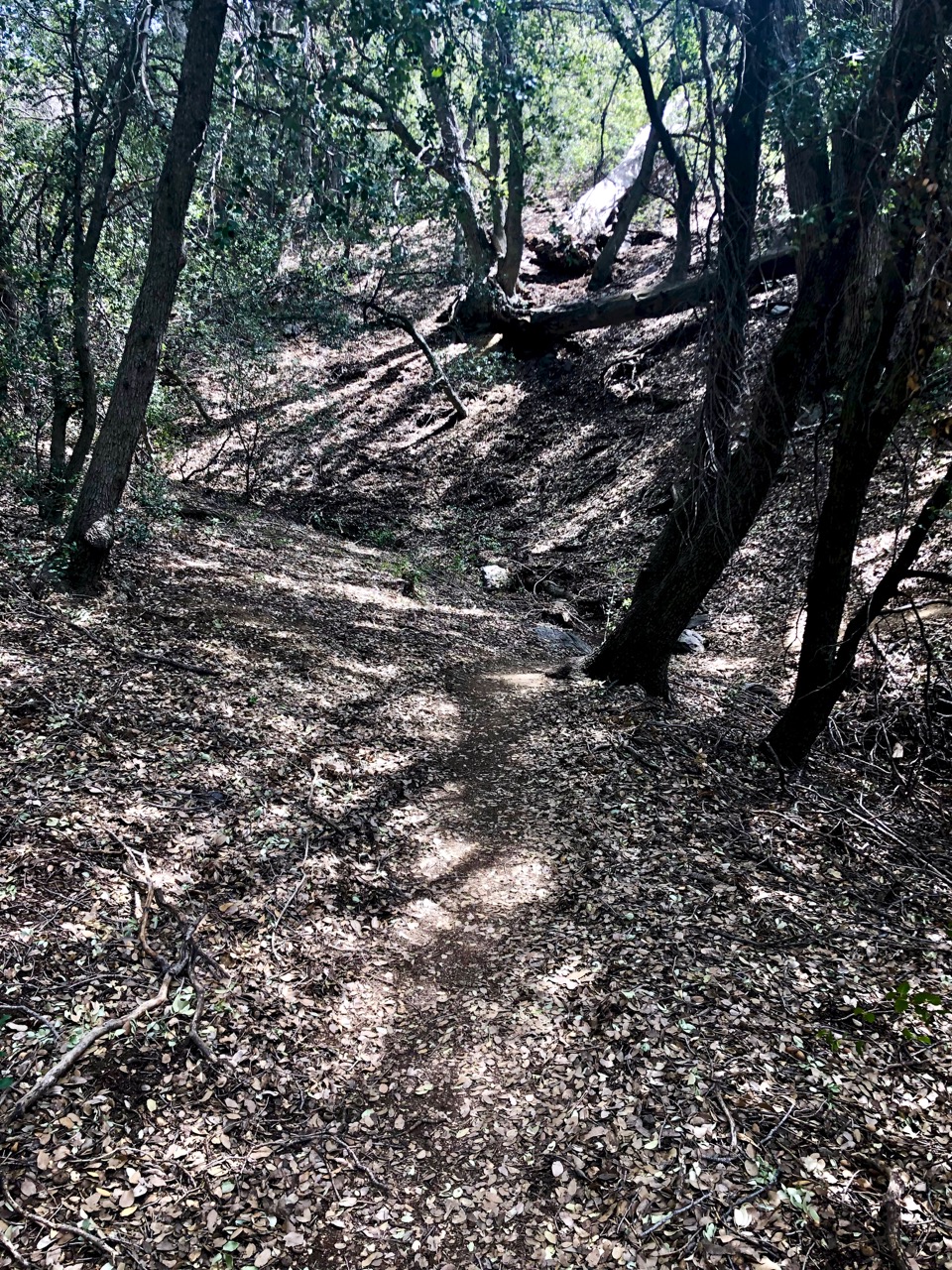
Into the trees.
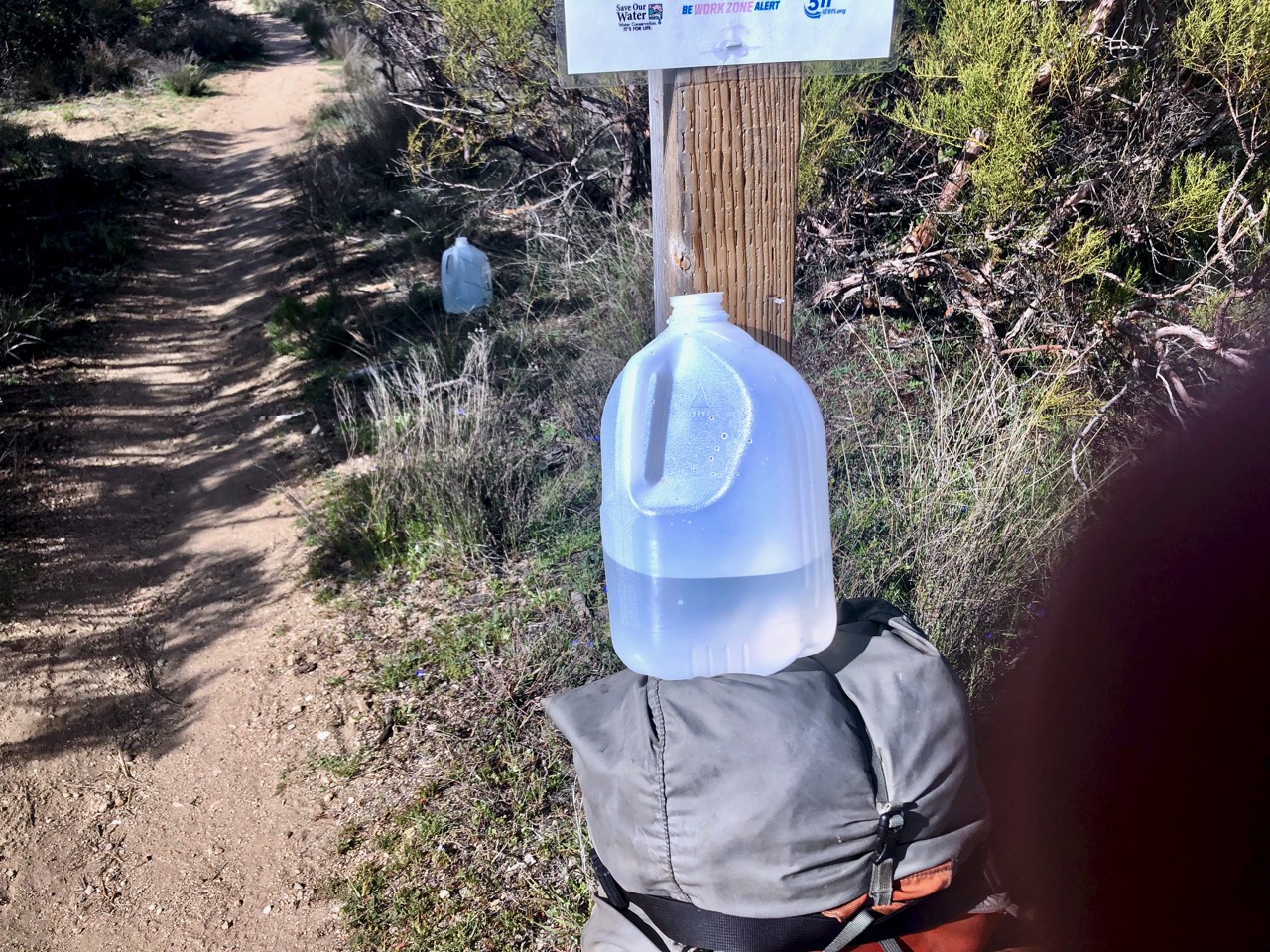
Here’s where PCT hikers often get their water. GIFTS from Trail Angels.
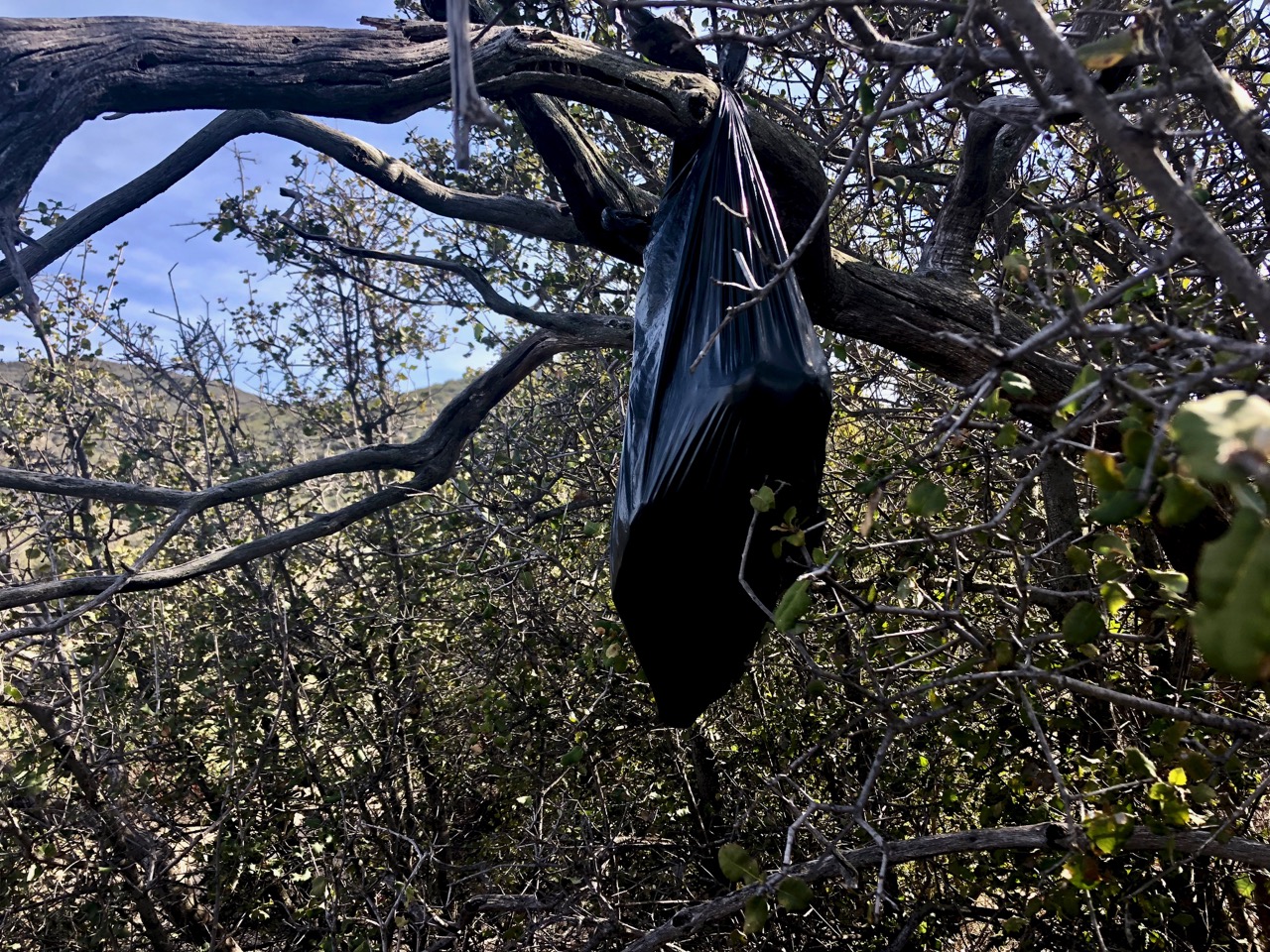
I finally reached the first road. Would the mini-resupply I’d hung in a tree still be there?
YES!
I had enough food for the final 40 miles to Warner Springs. Yet I diverted one mile down the highway to famed Paradise Cafe.
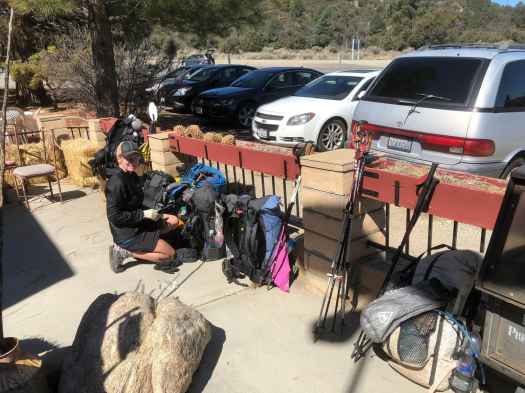
My camp fuel was running low. I didn’t think I could make it two more days.
Unfortunately Paradise does not sell camp fuel. I returned to the trail hoping my Jetboil Flash would run on fumes.
Back on the PCT, I made it another couple of miles.
It looked like wind and rain so I set up my broken tent high enough in the wash to avoid flash flood.
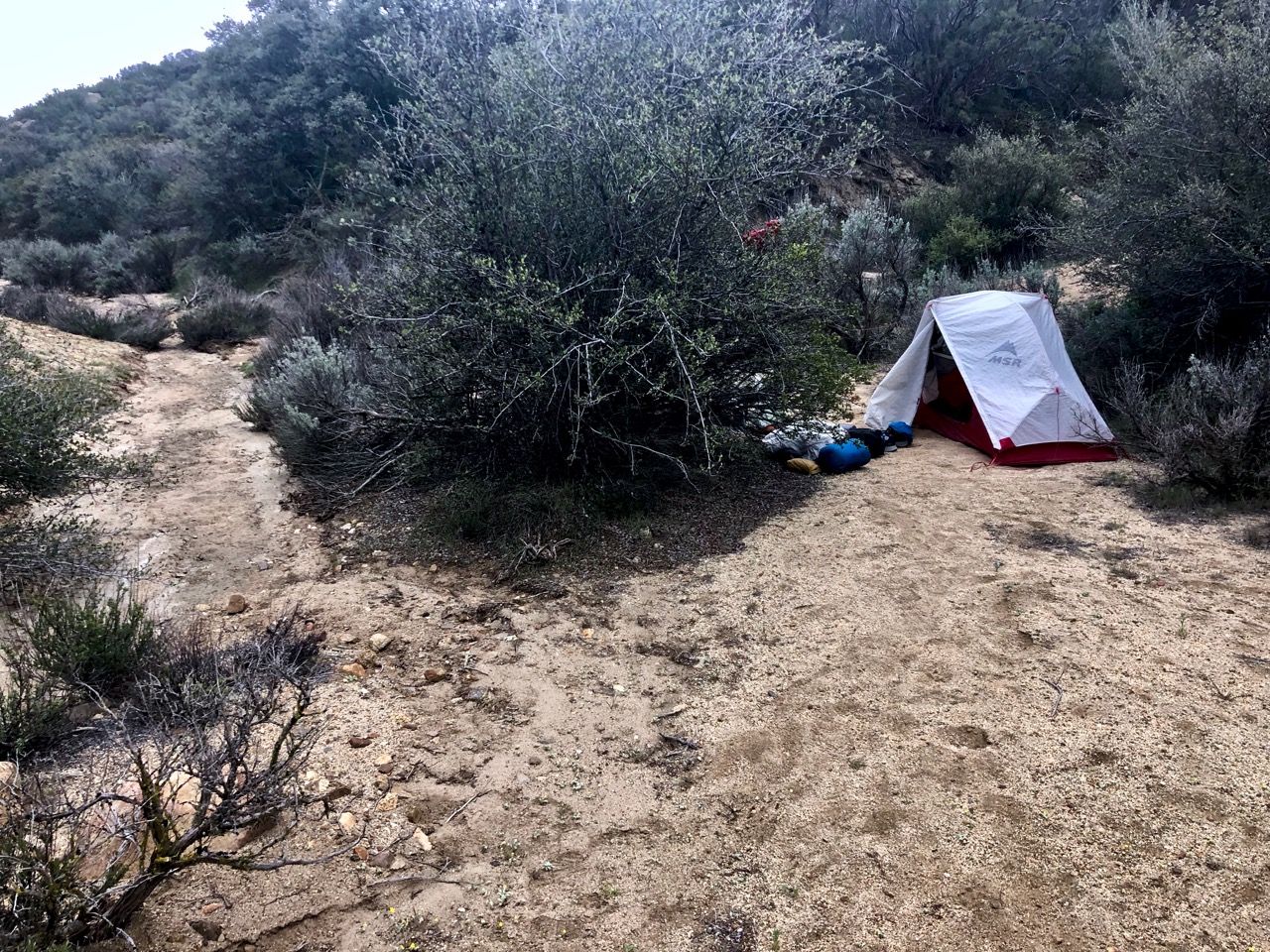
As I feared, my stove fuel ran out before I could boil water for dinner. 😞
___ day 7
Weather forecast for today was for rain and very big winds. Not good.
I started south. Stopped. Then turned around and headed back towards Paradise.
Skipping the next 40 miles meant missing most of the desert wildflower bloom. Too bad.
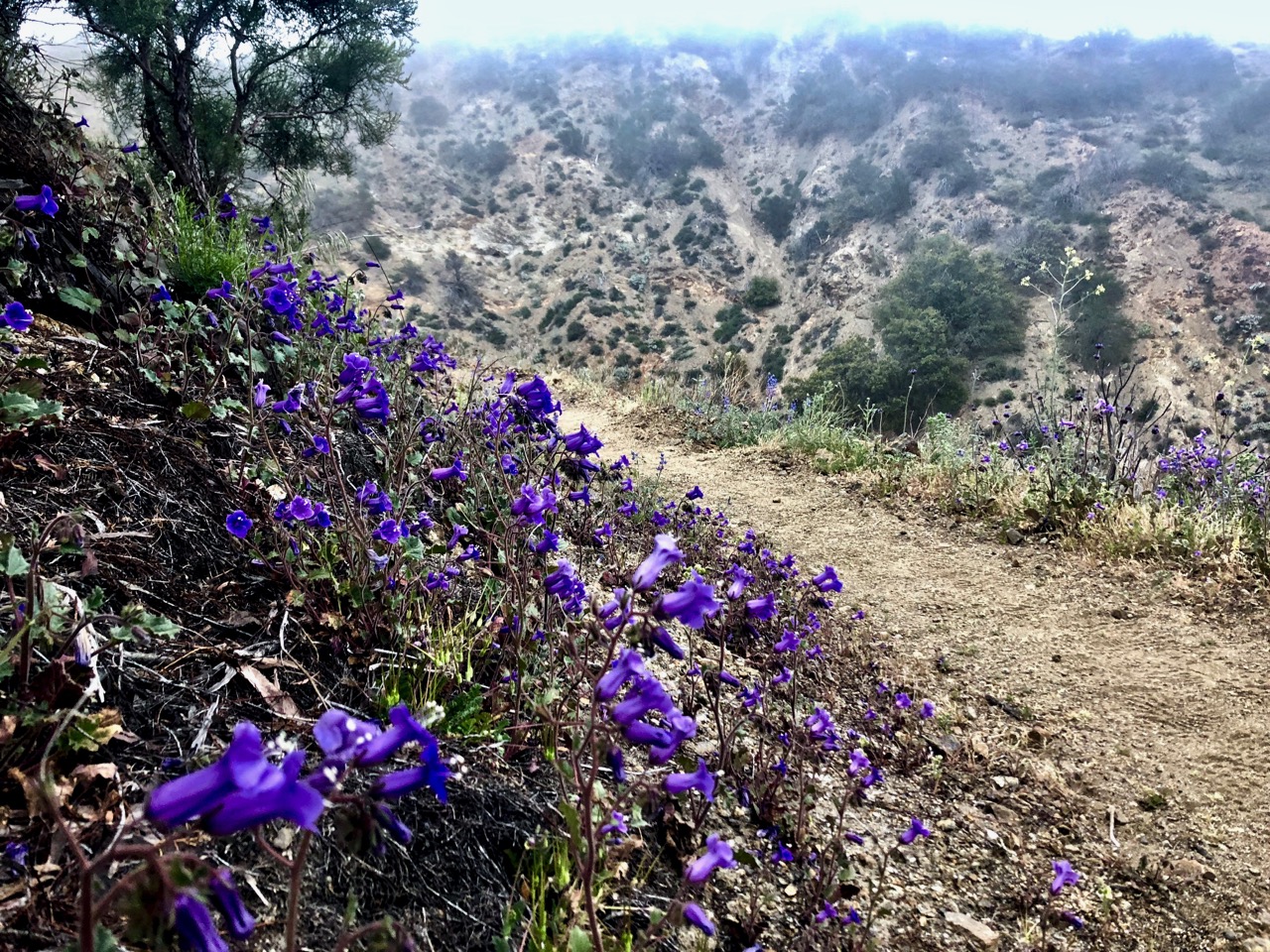
Three reasons for quitting on my intended route:
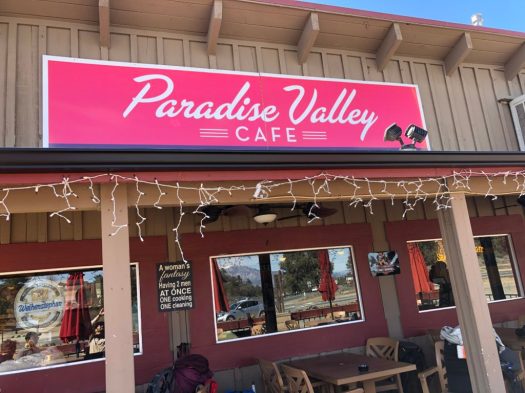
The restaurant was packed. As usual.
I ended up seated with a tourist couple from Philly. As they were headed for Palm Springs I offered to pay for breakfast in exchange for a lift to town.

My PCT week was over. After breakfast.

Despite glitches — I really enjoyed hiking southbound on the PCT during peak season. The highlight was seeing hundreds and speaking with dozens of normal people whom — for one reason or another — wanted to try to hike from Mexico to Canada.
They are inspiring.
trip report by BestHike editor Rick McCharles
Huemul Route – day 1 | 2 | 3 | 4 | info
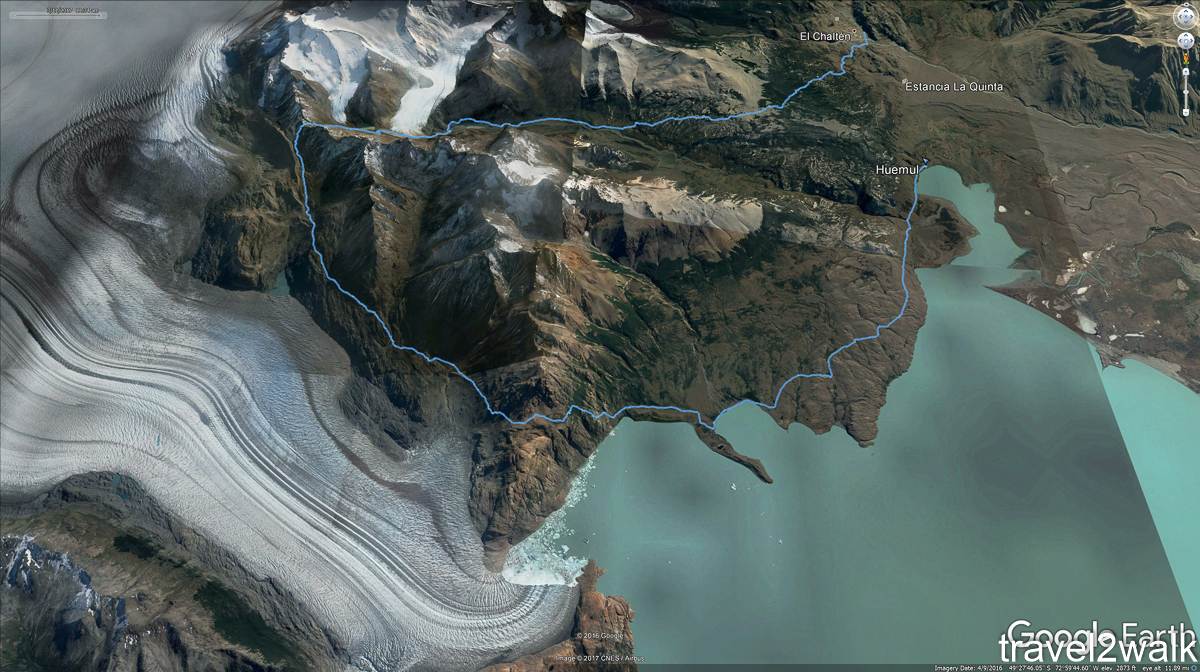
Day 4 was my walkout back to El Chaltén. Everyone hikes counter-clockwise.
Here’s the whole circuit visiting the Southern Patagonian Ice Field.
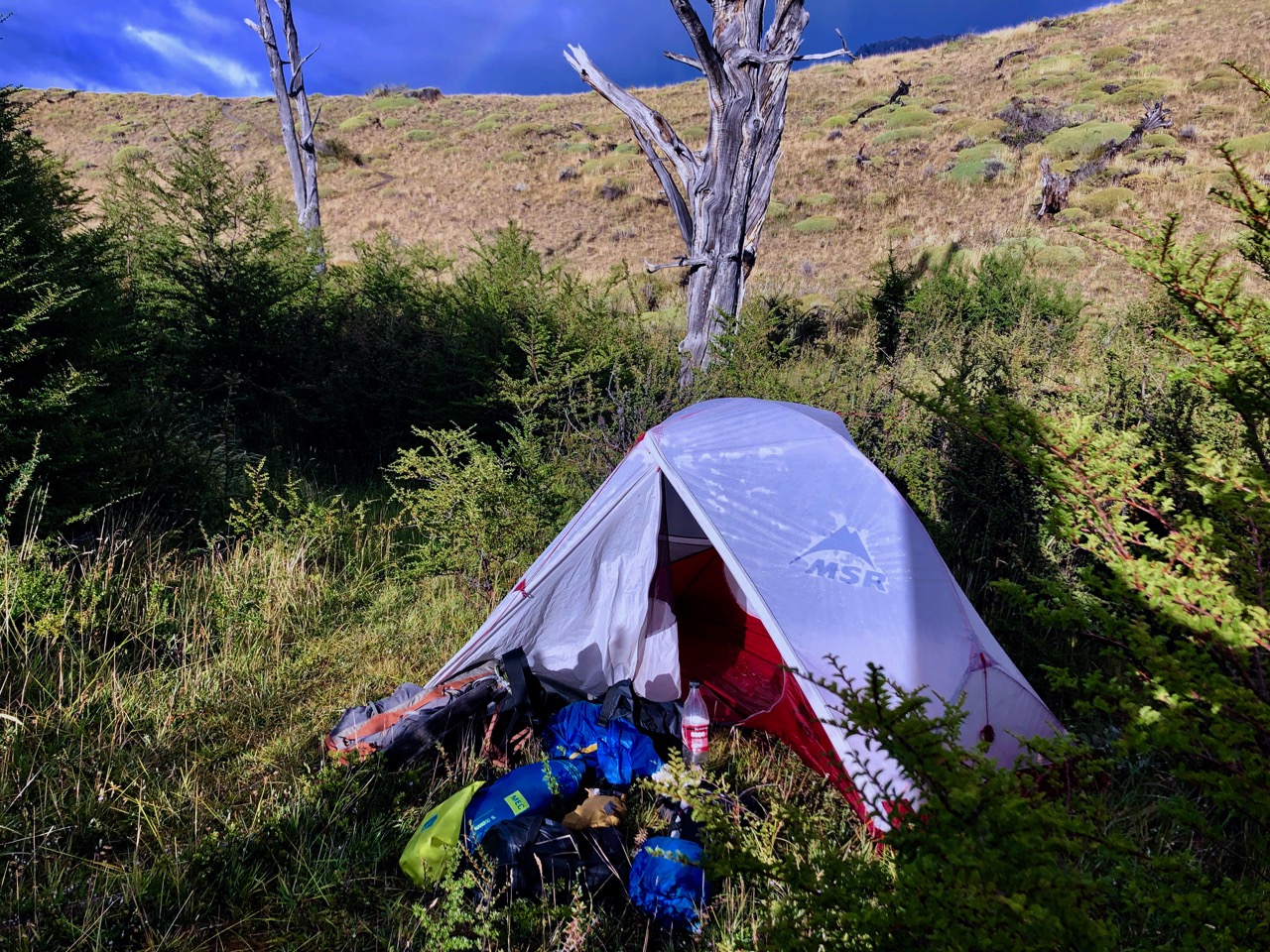
Very atypical for me, I didn’t sleep well.
And it rained on and off through the night.
Happily the sun came out about the time I got out of the tent.
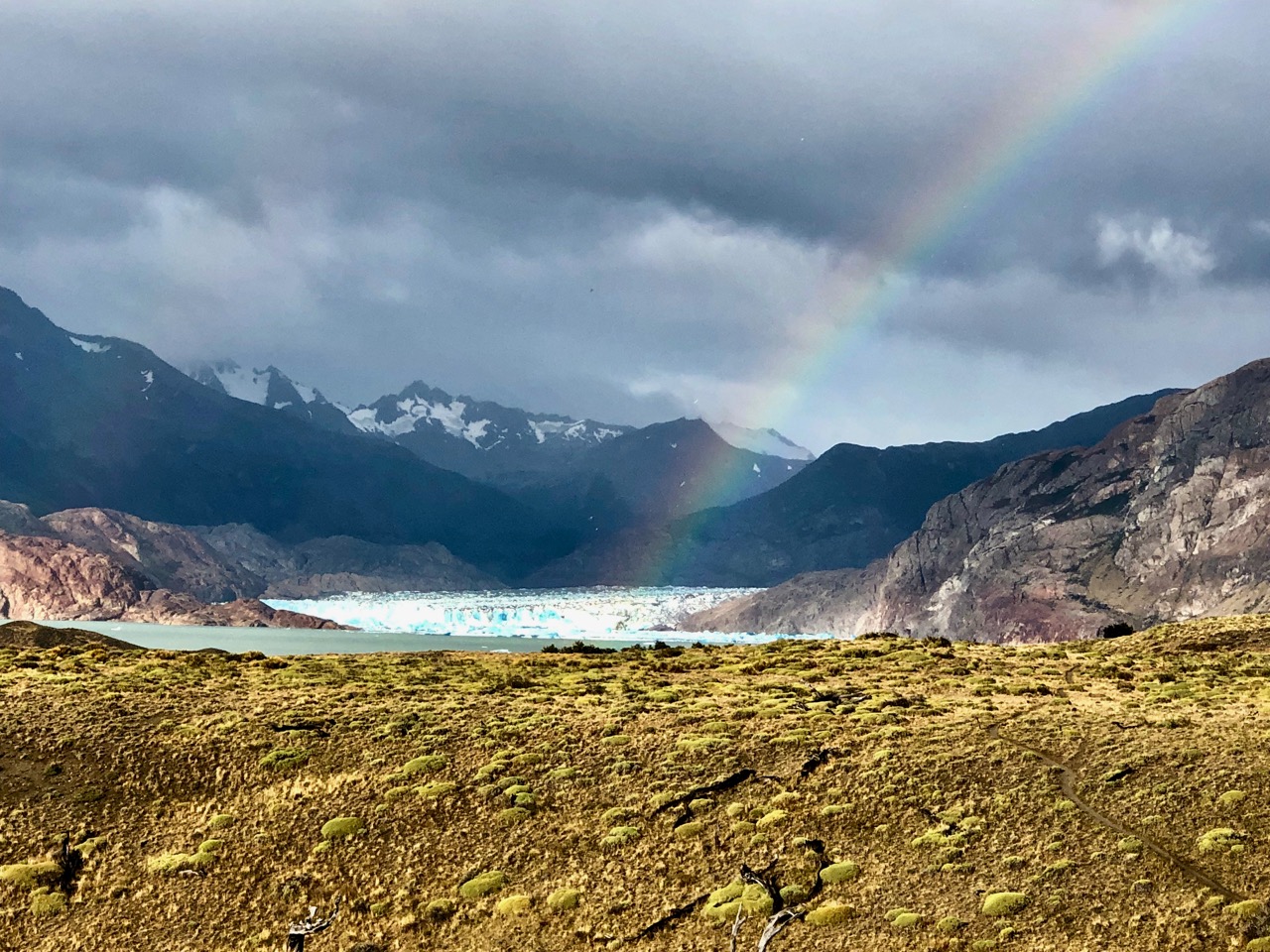
Despite my efforts of the previous day, I’d only saved about an hour by hiking past the designated campground. I could still see the glacier. And there was again a rainbow. 🙂
The trail continued in parallel to the Lake Videma shoreline thorough dry grasslands.
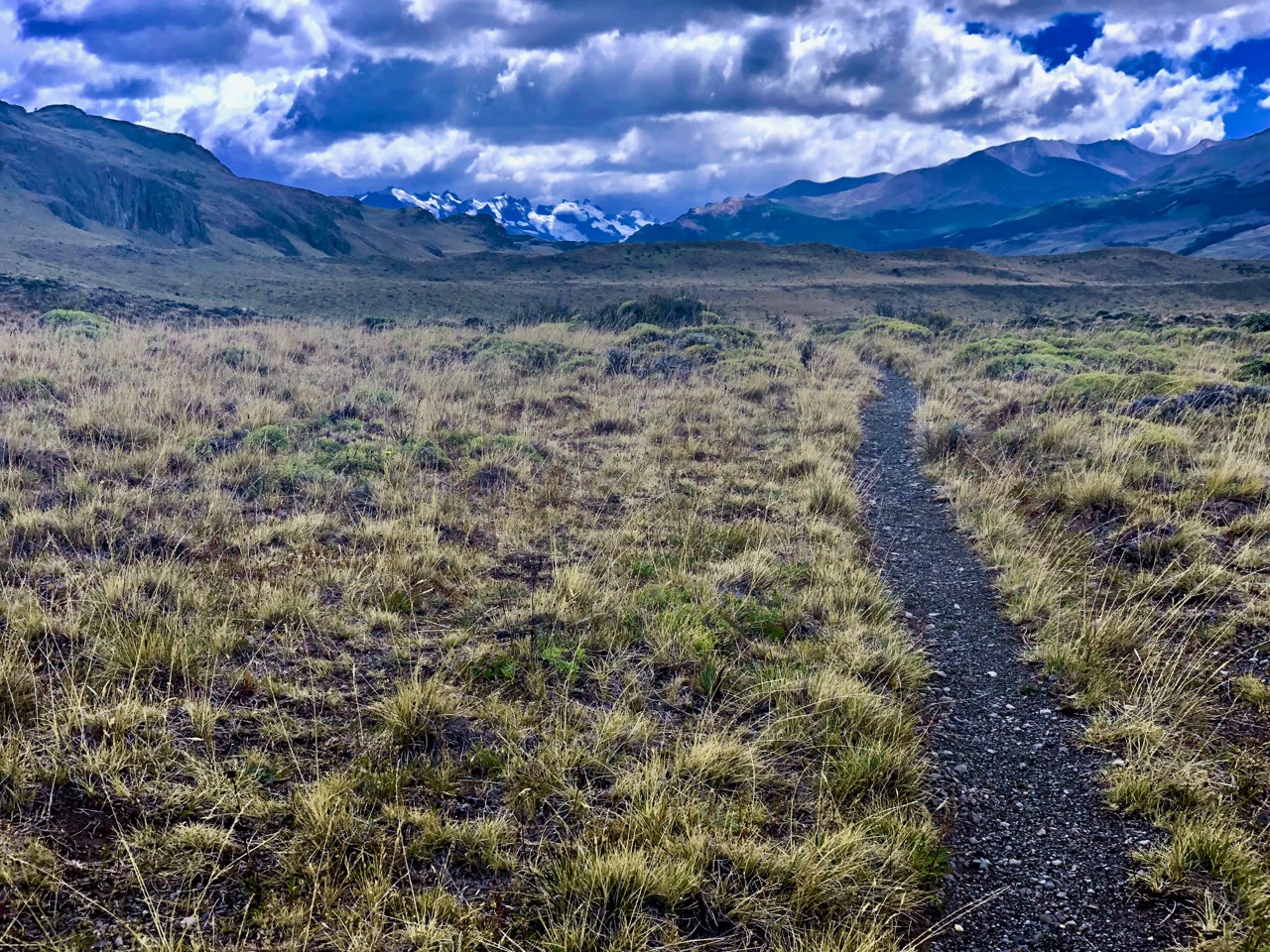
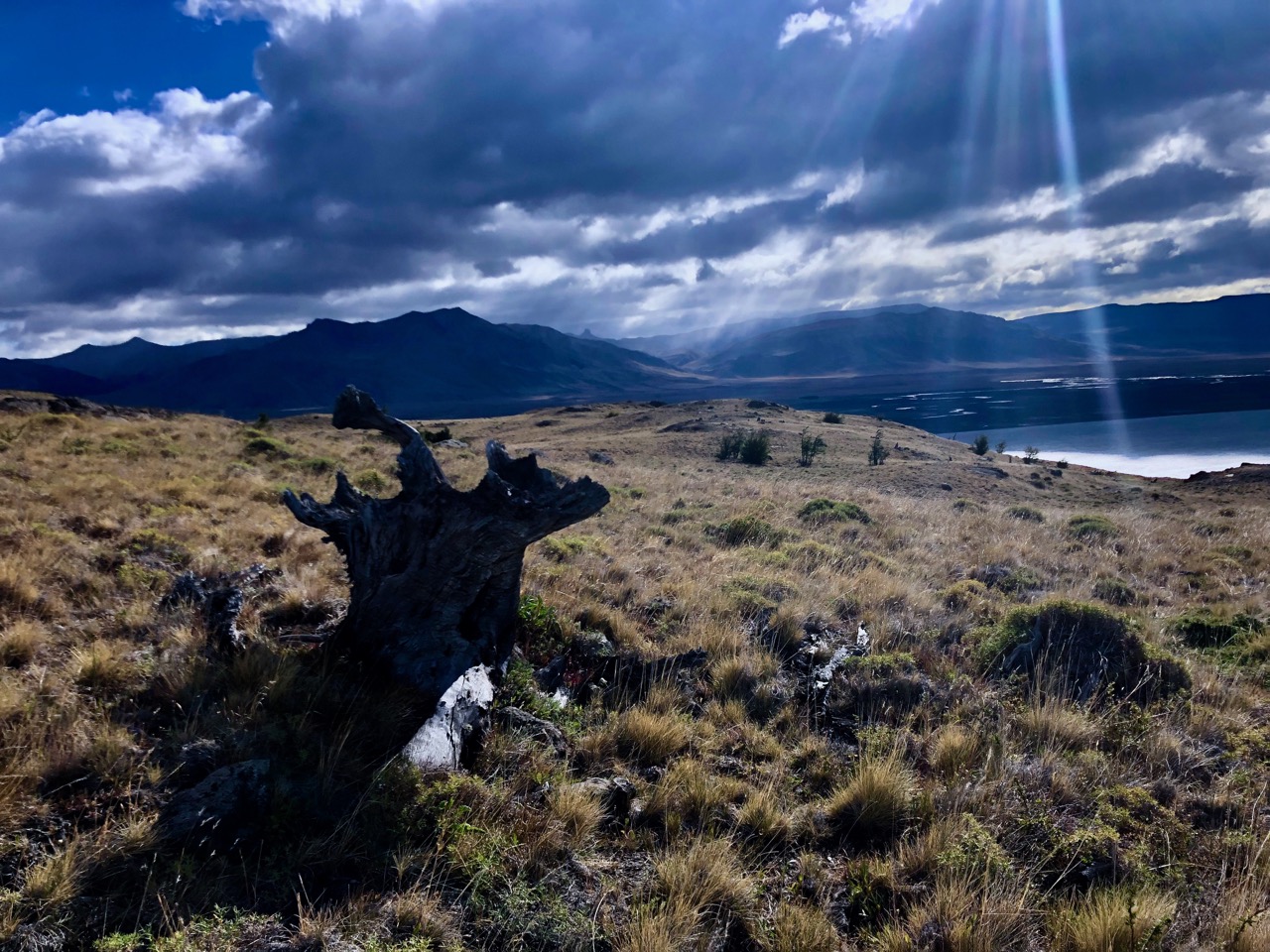
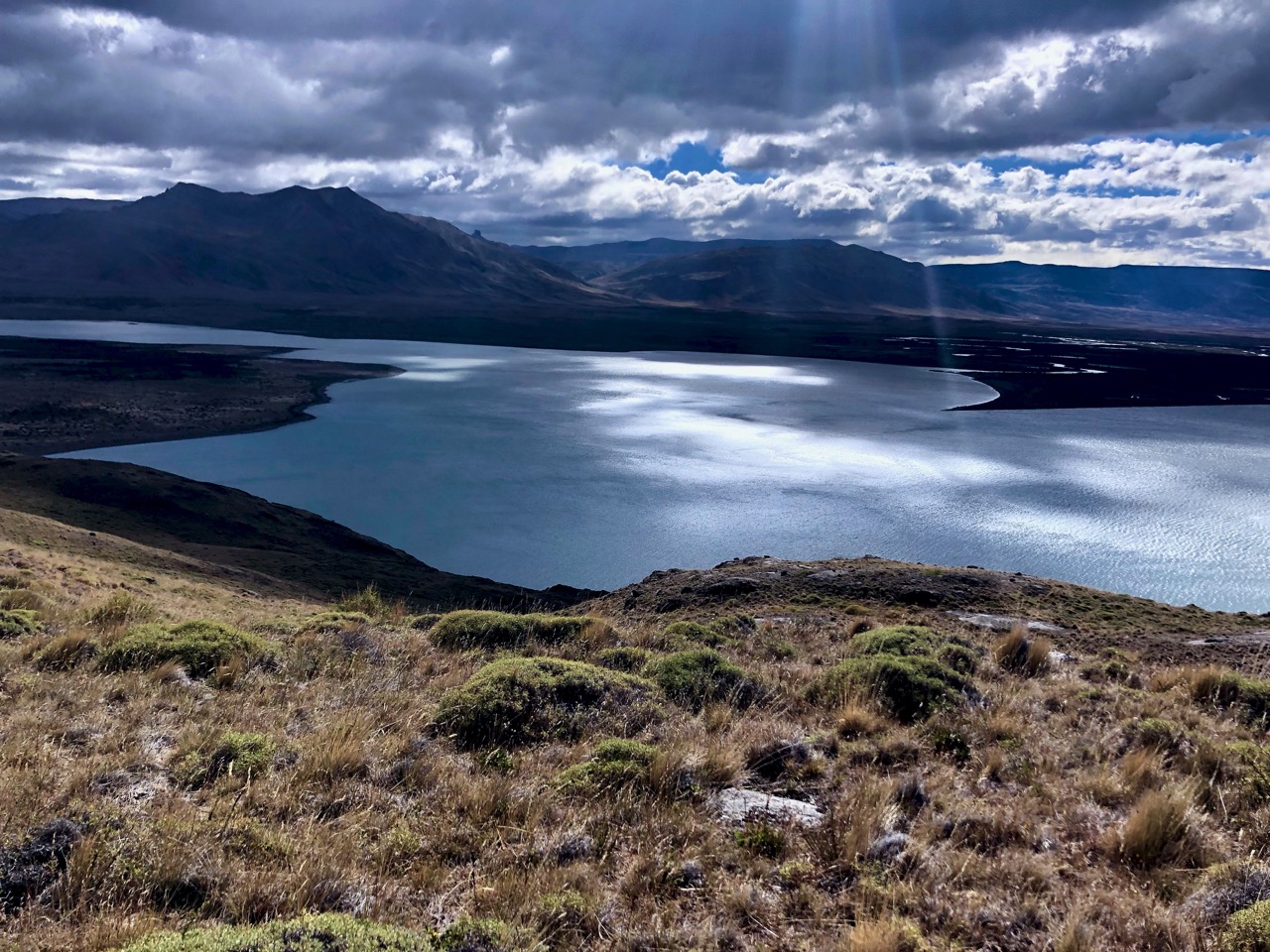
Though still beautiful, this was the least impressive day, I’d say. Not much variety.

The highlight was rabbits more rabbits. And one non-rabbit. He may have been a Patagonian mara.
When I caught a glimpse I assumed it was a plains viscacha, but it was more likely a mara.
I was looking forward to the second Tyrolean Traverse.

Arriving alone, I found the pulley was at this, the far side of the river. 😕 There SHOULD have been a slim rope attached to pull it over to the start on the other side.

What to do?
I knew I could walk to the lake and (probably) wade the river mouth. But figuring a way across was more fun.
My alternatives:
1. Attach my pulley carabiner directly to the cable (rather than the pulley)
2. Use ONLY my steel carabiner (normally a redundant safety system). This is what the guide did once on our first Traverse.
I went with #1 thinking it was the safer option. That worked. But I had to pull myself every inch with friction from the carabiner resisting. It was exhausting.
Here are some guys wading.

From there it was easy to find my way down to the Bahía Del Túnel dock.
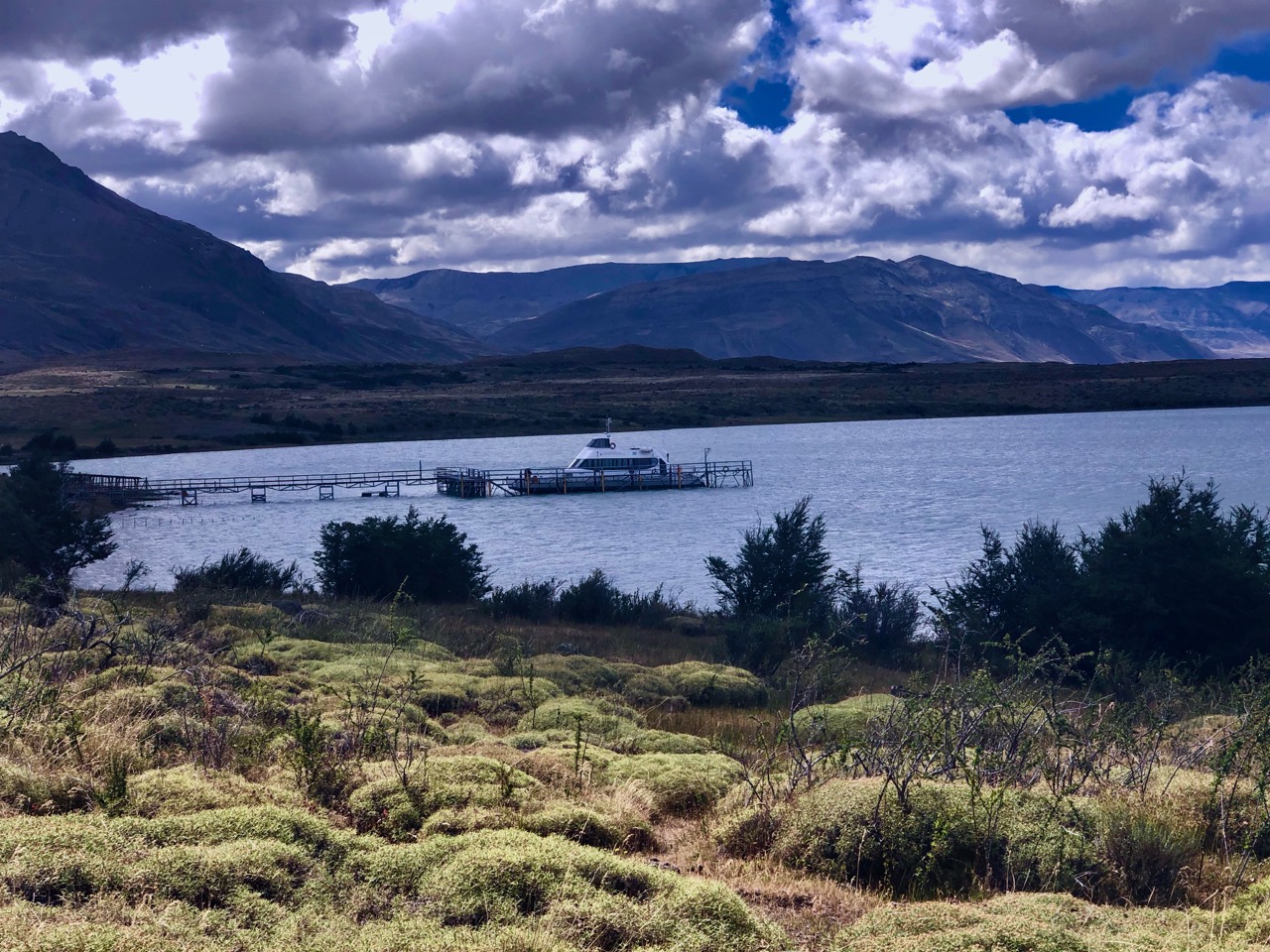
This boat takes tourists to the Videma glacier.
I saw no people. No vehicles. So stayed on the ‘trail’ headed towards a ranch.
Actually, my hiking map showed the trail ending at the dock. Some probably walk the (much longer) road to town.
I could find no trail. Instead I worked my way through more grasslands in the direction of El Chaltén.
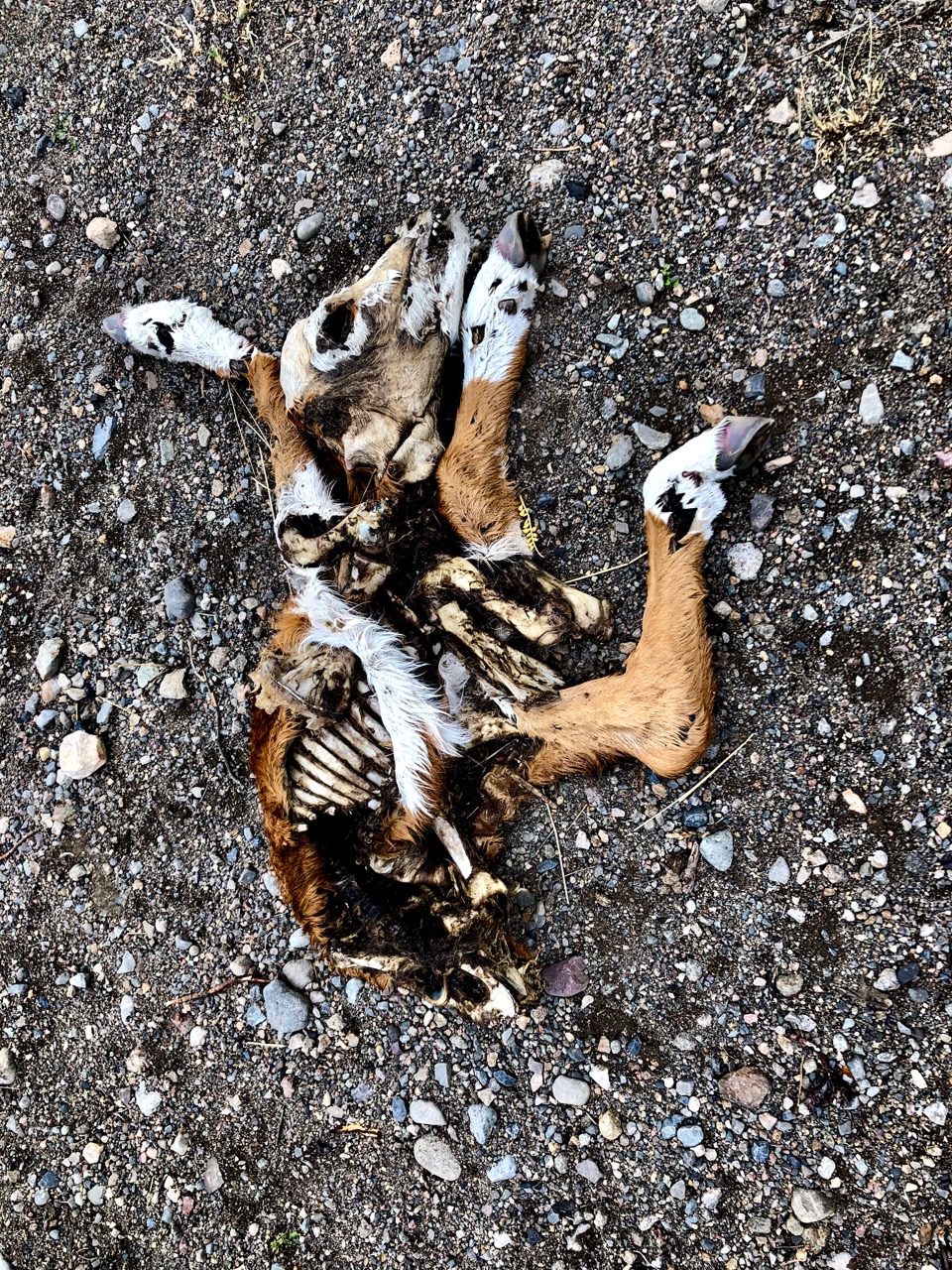
Ready to be done, I stumbled on to this calf. It was the second dead cow I’d seen.
When I hit the first fence, being a polite Canadian, I tried to walk around the ranch.
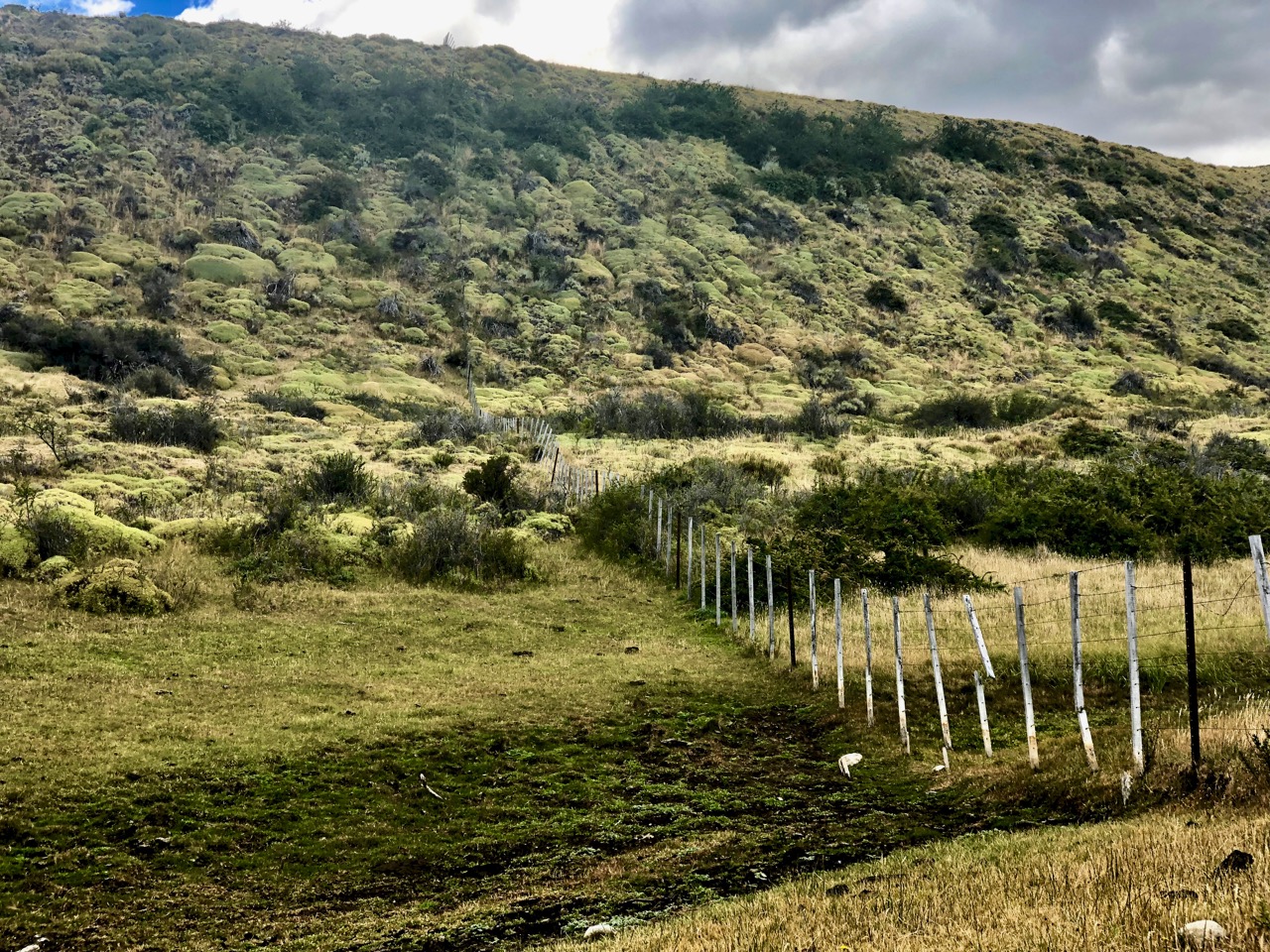
That was a mistake. In the end I hopped about 5 fences and opened one gate. It wasted at least another hour. I should have hopped the first fence and headed directly to the highway.
It was with satisfaction and relief that my final fence hop delivered me to this roadside lookout.
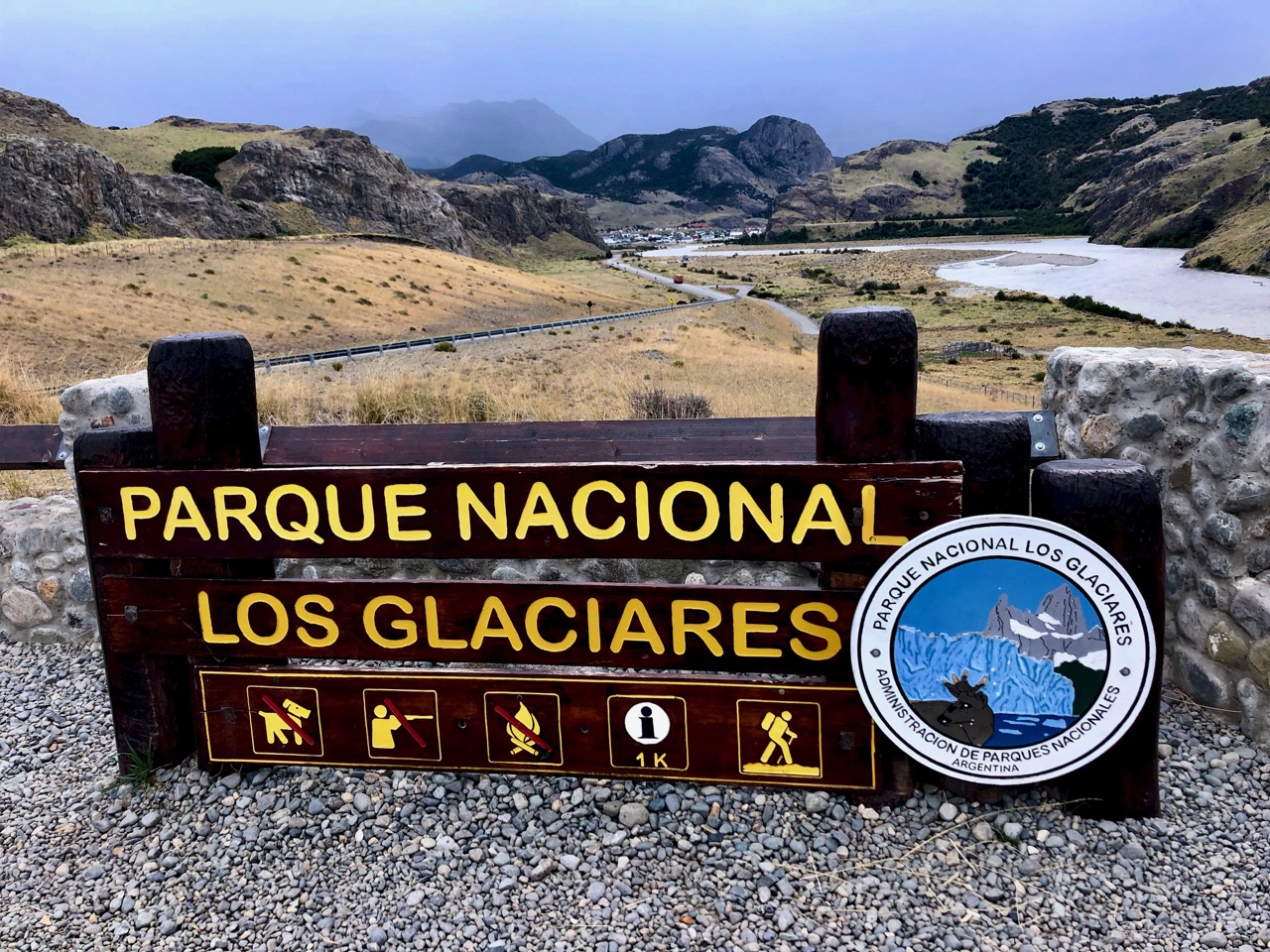
From there was an easy 3km to town on pavement.
I dropped my registration form at the Parks information office. They seemed happy to see I had survived.
With a big smile on my face I returned my rental Tyrolean Traverse harness to ‘Camping Center’ in town. That was the only gear rental store I could find that doesn’t close for siesta.
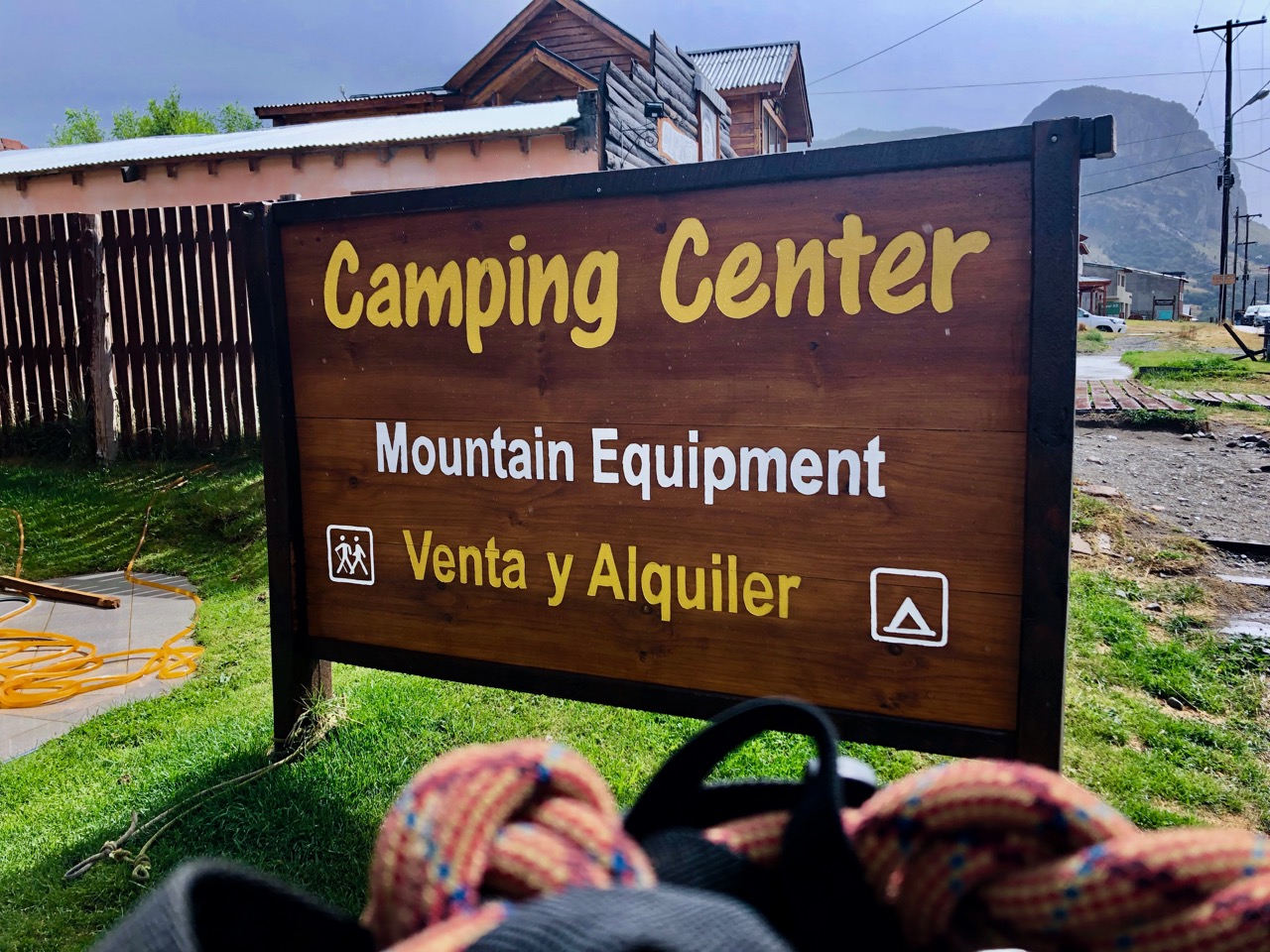
It was back to the hostel for a long, hot, long shower. 🙂
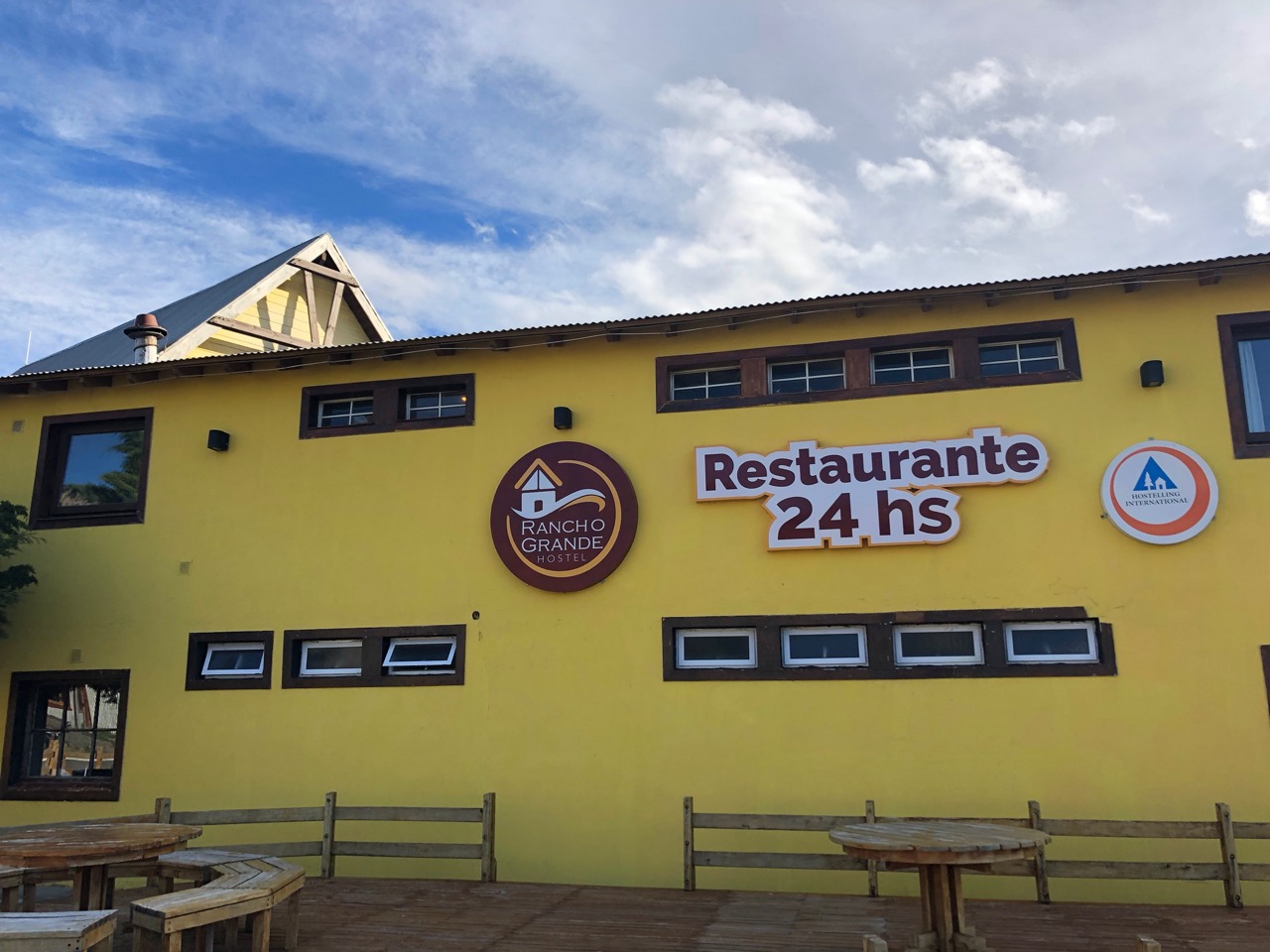
YES my hostel had a 24 hour a day restaurant! It’s popular with the late night partying backpacker crowd.
All I’d consumed this day was coffee. At 6:30pm I splurged on a huge meal. Breaded chicken a lo pobre.

The Huemul Route out of Fitz Roy, Argentina is superb. Some of the best vistas of my life. One of the very best hikes in the world.
____
If you are worried at all about the Traverses … and navigation, consider signing on with a guided group. Chalten Mountain Guides, for example.
related:
For a MUCH BETTER trip report – Travel 2 Walk: El Chaltén – Fitz Roy and Huemul Circuit, March 2017. (They did it again January 2019!)
bookmundi – Argentina 2019 – Huemul Circuit Parque Nacional Los Glaciares of Argentine
If you prefer your trip reports in video format, here are a few to check out.
Click PLAY or watch it on YouTube.
Click PLAY or watch it on YouTube.
Click PLAY or watch it on YouTube.
Watch a video by Mitch Stevens, editor of the Southwest Discoveries site and Sierra Club hiking leader, writer and photographer.
Click PLAY or watch it on YouTube.
Ready to explore the canyons, culture, and deserts of the Southwest? …
Patagonia National Park was announced January 2018 as part of the fantastic new Route of Parks (Ruta de los Parques) chain of 17 national parks in Chile.
Three conservation areas were combined to create it. Cows and other grazing animals removed. Native wildlife such as guanacos, ñandús, pumas, Andean condors, and huemuls reintroduced.

Patagonia National Park will soon be the best hiking destination on the Carretera Austral after nearby Cerro Castillo. You should hike both on the same trip.
There are already a number of high quality day hikes out of 3 established campgrounds in Patagonia National Park including:

I’m MORE excited about future long hikes traversing the park.
The Park has one overnight hike called the Aviles to Jeinimeni trail 50 km (31 miles) one way.
As of February 2019 there is no hiker shuttle to and from the trailheads. You have to organize that on your own. ☹️ It’s a hassle.
Even better is the route put together by (Adventure) Alan Dixon and Alison Simon they called the Patagonia National Park trek.
They saw condors, flamingos, armadillos and even had a puma walk through their camp at night.
Their very detailed trip report includes a map set of the trek in geospatial PDF, GPS files, hiking distances & times; detailed, day-by-day route descriptions, camping locations, elevation profiles and more.
Read every word of their trip report.
Cochrane town is a few hours easy access south of Coyhaique. The closest public transport access to the National Park.
trip report by site editor Rick McCharles
Distance: 2,5 km. loop
Difficulty: easy
Darwin’s frog is native to the forest streams of Chile and Argentina.

The most striking feature of this frog is the tadpoles’ development inside the vocal sac of the male.
Sadly it’s endangered in 2019 due to habitat loss and amphibian disease.
It’s tiny. You’d never be able to find one in this park. Or anywhere.
Darwin’s Frog relies on camaflague and tricks.
Click PLAY or watch it on YouTube.
This hike is an interpretive trail showing the damage done to the temperate rain forest by farming. AND how Pumalín is allowing nature to return it to rain forest.
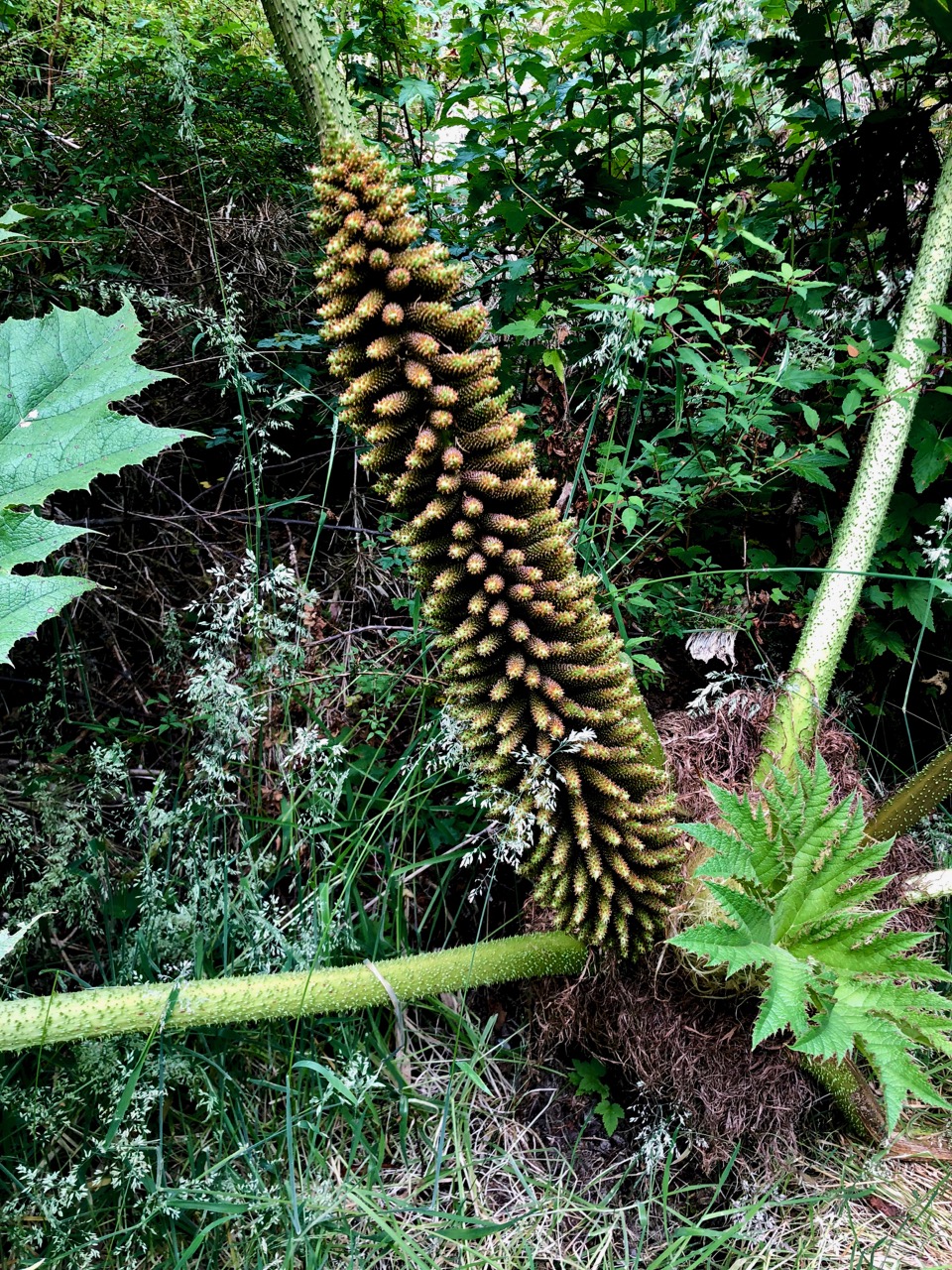

At the information kiosk at the park gates you can sign out waterproof cards explaining each species, guiding you through the circuit.

If you get anywhere near El Amarillo, Patagonia, be sure to do this short walk. There are other longer hikes nearby in Pumalín, as well.
 besthike.com