That’s what I assumed after seeing the American Senate vote on this:
Amendment SA 838 was introduced to allow states to take over, transfer and sell public, federal lands, including National Forests, wildlife refuges, and wilderness areas.
The vote was purely symbolic — budget amendments carry no weight of law. But senators use the opportunity to bring attention to favored political issues and compel colleagues to take a stance on major debates.
For outdoors enthusiasts, it is a wake-up call. There are many interests trying to get their hands on your public lands, and our elected officials may be willing to sell. …
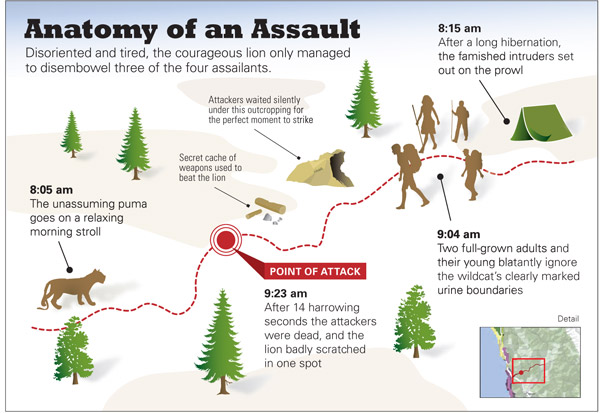
Forget about bears, mountain lions, and murderers –
The last (and only) recorded death from a wild bear in California, Oregon, or Washington? A four-year old girl in 1974. The last hiker killed by a mountain lion on the PCT? Never. The last time a person was murdered on the PCT? Also, never.
4. GIARDIA
5. THE SUN & DEHYDRATION
6. POISONOUS PLANTS
7. BUTT CHAFE
8. BICYCLISTS
9. MOSQUITOS
10. CARS
11. UNLEASHED DOGS
12. MAN-MADE HAZARDS (Asbestos, high voltage cables, and unexploded military ordinances are just a few …)
13. THE BOOGIE MAN (psychological distress)
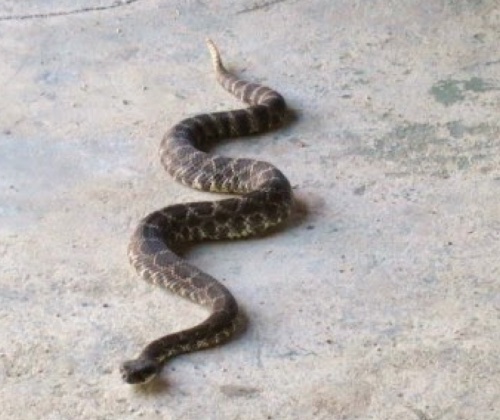
14. SNAKES
15. COWS
16. SNOW
17. POOP
To link three mega-reserves, namely the Garden Route National Park, The Baviaanskloof Mega Reserve and the Addo Elephant National Park by means of natural corridors to protect and restore the integrity of bio-diversity and eco-system functioning. …
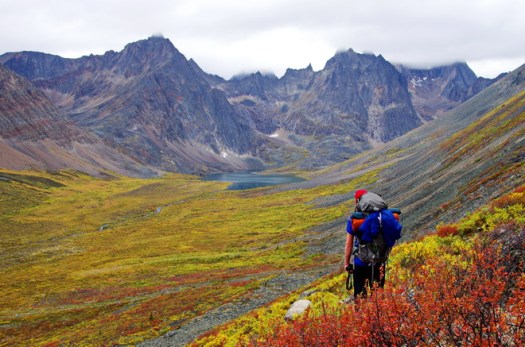
If you’re looking for world-class mountain scenery, in an area that doesn’t get a lot of attention, then head to the Tombstone Mountain Range in the Yukon Territory. Starting at KM 58.5 on the Dempster Highway, the three to five day backpacking trip takes you first to Grizzly Lake, and then to Divide and Talus Lakes. It’s a wild, desolate, truly memorable landscape. …
The landscape though, is extraordinary – and I can safely say like nowhere else you’ve seen.
Try to arrange your trip for late August when the boreal forest and alpine meadows combine to deliver a rainbow of fall colours. But go prepared for cold temperatures and snow. I had both. …
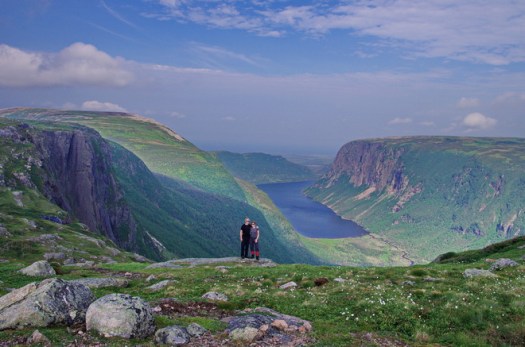
Gros Morne is a member of the Long Range Mountains, an outlying range of the Appalachian Mountains, stretching the length of the island’s west coast. …
Hiking the trails is a popular activity at Gros Morne. There are about 20 marked day trip trails, exploring coastal and interior areas of the park. …
The interior of the park can also be accessed, notably through the multi-day Long Range Traverse between Western Brook Pond and Gros Morne Mountain. …
Leigh McAdam:
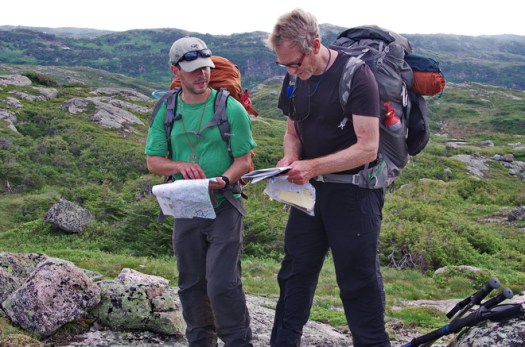
Before you even get a whiff of the Long Range Traverse, the premier backpacking trail on Canada’s east coast, you must pass a serious navigation test and get a full orientation by staff at the Gros Morne National Park Visitor Center.
The navigation test is nothing to sneeze at. You must understand declination and know how to take a compass bearing from the map. Although you can take along a GPS, and it might help in foggy situations, it’s your map and compass skills that are of utmost importance. It’s the only place in Canada that I am aware of that requires you to pass a navigation test. I guess what happened in the past, is too many backpackers set out, only to get lost – as there is no marked trail – and ended up needing a rescue.
Construction began on the trail in 1963 and the area was designated as a National Recreation Trail in 1982. There is a self-guided interpretive tour along the 3.3-mile (5.3 km) trail.
Summit of Mineral Ridge, 2,400ft (730m). Elevation gain is 600ft (180m).
We hiked it January 3rd after a snowstorm. With a 5yr-old. Late in the afternoon, slipping and sliding back to the trailhead in the dark.
A bit more adventurous than usual. 🙂
Here’s a more typical lake view from the ridge.
americantrails.org
Each winter from November through February a migrating population of up to 150 bald eagles visit the area to feed on spawning Kokanee salmon. An interpretive viewing program is offered annually from Christmas through New Years during peak migration.
A new BBC film, Snow Wolf Family and Me, explores the lives and habits of arctic wolves, revealing the family secrets of one of our most feared predators.
Ellesmere Island is one of the most remote and beautiful places on Earth. This is the only place in the world where wolves are naive to man and have no fear. It allowed wildlife cameraman Gordon Buchanan and scientists an unparalleled opportunity to form bonds with a wild wolf family, revealing the remarkable story of their relationships and behaviour.
Snow Wolf Family and Me will be broadcast on 29th and 30th December 2014 at 21:00 on BBC Two.
Meeting a wild wolf pack
We were up before the dawn, wanting our best chance of success climbing Mt Bwahit.
Our guards had slept outside beside the tents, despite the cold.
The day before our arrival a young Swiss couple had had their daypack stolen. Cameras, money … passports. 😦
It happens all over the world. It happens here, but not very often. Best guess was that one of the mule drivers had grabbed it. Might have been a young shepard boy, though they are chased out of Camp right quick.
I had my valuables strapped to my waist in a passport case, as always.
Our guide had said that our best chance to see Walia Ibex would be this morning. We weren’t disappointed. We saw a number up on a ridge. And later down by the road. They are not shy.
… only about 500 individuals survived in the mountains of Ethiopia, concentrated in the Semien Mountains, largely due to past poaching and habitat depletion. If the population were to increase, the surrounding mountain habitat would be sufficient enough to sustain only 2,000 ibex. The adult walia ibex’s only known wild predator is the hyena. …
I was still feeling weak though I had not lost my dinner from the previous evening.
I’d not slept much. Happily, as we climbed, I seemed to get stronger.
Though we ascended about 800m in less than 3 hours, it wasn’t all that cold. The sun helps for sure. We added and removed layers frequently.
Disappointingly, the road winds up close to the top of the mountain. At times we walked it.
There’s not much traffic, of course. Clouds rolled up the escarpment early. We’d need to reach the top before the clouds did.
We were very surprised to see snow on the top.
This is one of the few spots in Africa where snow falls regularly.
Nadine found snow in Africa
Mt Bwahit (4430m) is the third highest mountain in Ethiopia and the 13th or 14th highest in Africa.
This is as far as we got following the escarpment. But the road continues to Mekane Berhan, 10km past the Park.
In fact you can keep going 17 days all the way to Lalibela, if you like.
Nadine turns back. She’ll be reunited with her husband later in the afternoon.
Neither Nadine or I felt many altitude symptoms. Lucky. She gave some medication, on the trail, to one of the other hikers who was feeling rotten.
Obama is wildly popular in Africa though most distrust the American government.
We saw many more baboons on the descent. We’d left too early to see them on the way up.
The decent was quick. Psychologically, I was ready to go. The Simien a success.
In most high mountains lammergeier (bearded vulture) stay far away from me. But here they float right over your tent. After many attempts, this was the best photo I got. They have up to nearly 10ft (2.83 m) wingspan.
Here’s Josh’s best photo.
In Ethiopia, they’ve become more tolerant of people, now common near trash piles on the outskirts of small villages and towns.
We saw wild chickens on the way down, too. Nur told us that when he was a shepard, age-5 to age-10, he loved to try to catch one for dinner.
Heading out, I risked eating lunch.
Nadine was the one of the few hikers who completed ALL the original planned itinerary. But she was ready to head back to Gondor.
It’s a long, bumpy ride back to the Park gates. The roads are bad even in a Toyota Landcruiser.
The closest good hospital is in Dabark. If you crash like this 😦 … they have an ambulance. Another ambulance, I mean.
Rich tourists from the highest lodge in Africa take a short day hike to see baboons. Or do a tourist ride. Meh.
We tipped around 10% of our tour cost, aside for the cooks who got almost nothing. If the clients get sick, the cooks didn’t do the job.
I suggested to Mohammad, a super guy, that he and the other cooks put a big bottle of alcohol gel on the dining tables. Every time. And to ask cooks and assistants to use it non-stop while preparing food for foreigners.
About half of the hikers I spoke with had stomach problems. Clearly the cook house is not sanitary enough. Cooks work together. If one has dirty hands, it’s possible that all the food will be infected.
When we arrived at the Four Sisters restaurant in Gondar that evening, to celebrate, there was a large bottle of alcohol gel on the table. But don’t expect to see one on a Simien trek any time soon. Inertia is great in Africa.
I’ll suggest to future hikers that they consider bringing their own stove, cook their own food.
Thanks to Nur and Halie, childhood buddies, who are still working together. Nur Hassan is Coordinator for SimienMountainsTour.com. I’ll be recommending them.
Our cost was $1000 for 3 people for 4 days, all inclusive. The lowest price I heard quoted was $250 each for 7 people in one group.
But the sky was blue. People keen to get an early start. This would be the best day of the trek.
I love these high altitude grassy plateaus.
Vegetation changes significantly with altitude. Giant lobelias dominate the landscape from here on in.
Nadine likes what our guide called Everlast, too. This high altitude plant blooms year round.
The heart of the mountains. The central viewpoint of the Simien traverse.
It’s a bit of a scramble.
It’s from here that some see similarities with the Grand Canyon. Our trip organizer, Nur, joked that Simien is more of a Green Canyon.
In fact, only South Africa’s Drakensberg were formed in the same manner. That’s the best comparison.
Spanish Moss. Old Man’s Beard.
When it’s dry, the trails are easy walking.
There’s always an EMERGENCY horse waiting. Many fall victim to symptoms of altitude sickness. There are always people selling knickknacks. Their starting price for bartering is usually $8. For anything.
We stopped for lunch at yet another fantastic cliffside viewpoint.
The cold encouraged us to get moving again. This is 4000m (13,000+ft).
I love best the sections of trail walking the escarpment cliff edge.
The drop is typically 600 – 800m. There is one trail up from the lowlands, using ladders. Park Rangers use it.
One of the great treats of a guided hike is having hot drinks ready on arrival.
These are our mule drivers.
We had hardly seen them as they and their beasts are not welcome at Camp. They were astonished and thrilled with a combined $15 tip. This is likely the only hiking trip they’ll get in a year. There are thousands of horses in the Simien, all waiting their turn to carry tents, stoves and sleeping bags.
At every campsite in the world there’s some camp thief looking to eat your lunch. In the Simien, it’s the thick-billed raven.
Atypically, the clouds rolled in.
I felt there was still zero chance of rain. It’s the dry season.
At 5:30pm we headed over to the cliff edge. Waiting.
At 6:10pm the baboons headed for the cliff.
Geladas sleep, when they can, on steep slopes for protection from predators, quite near the Ibex. Baboons have excellent hearing. Ibex excellent vision. Either/or may detect a lurking predator above.
I tried to stay up later around the campfire. But it was too smokey.