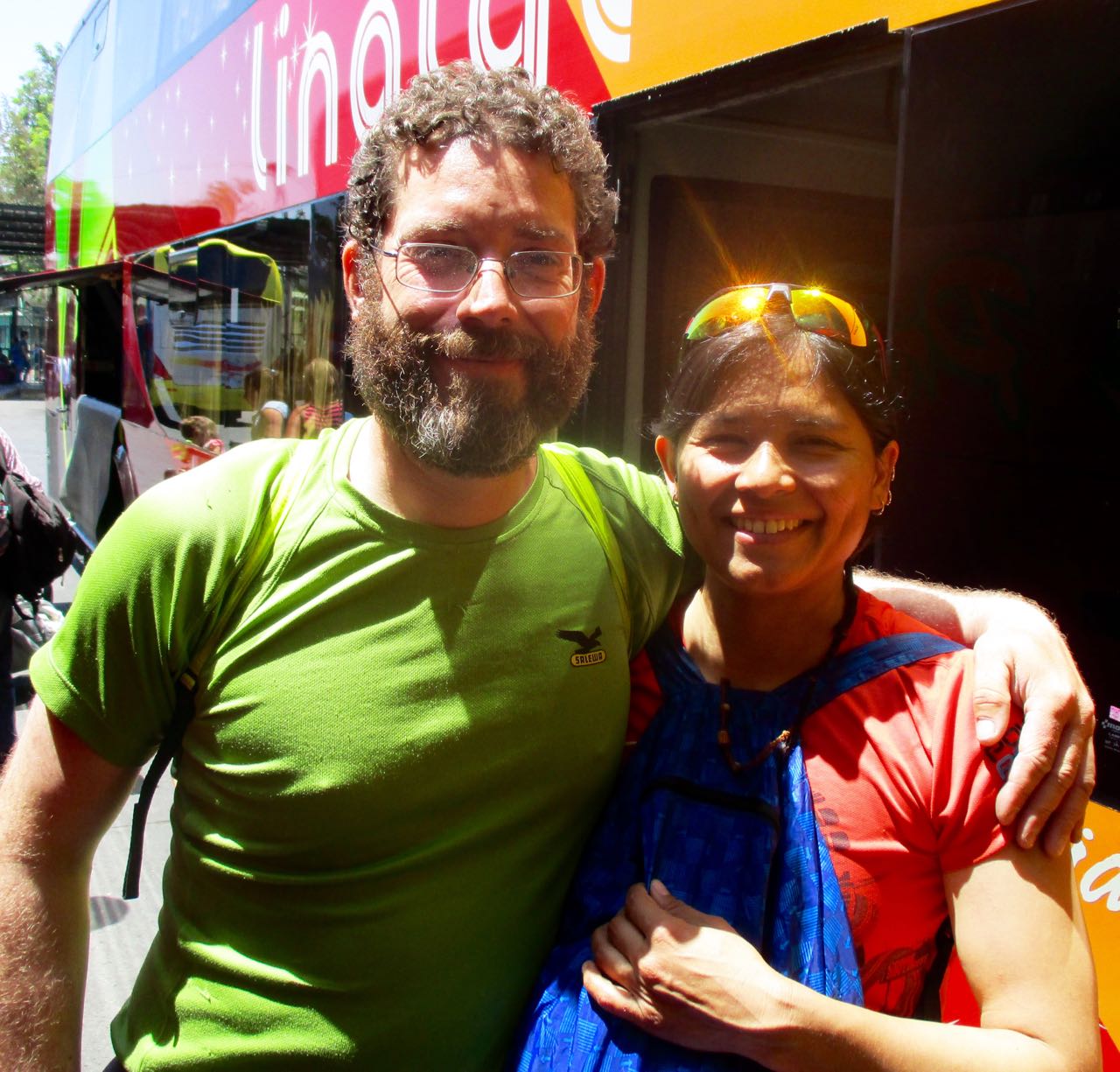
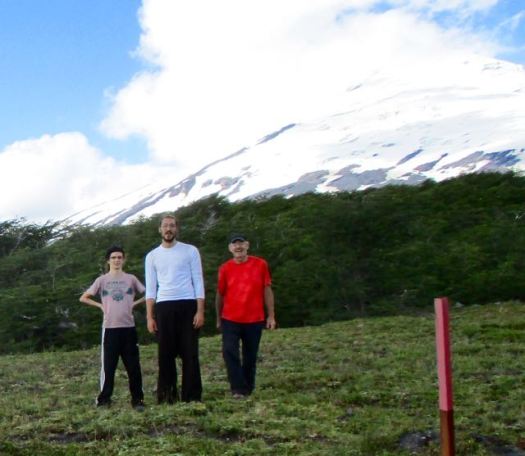
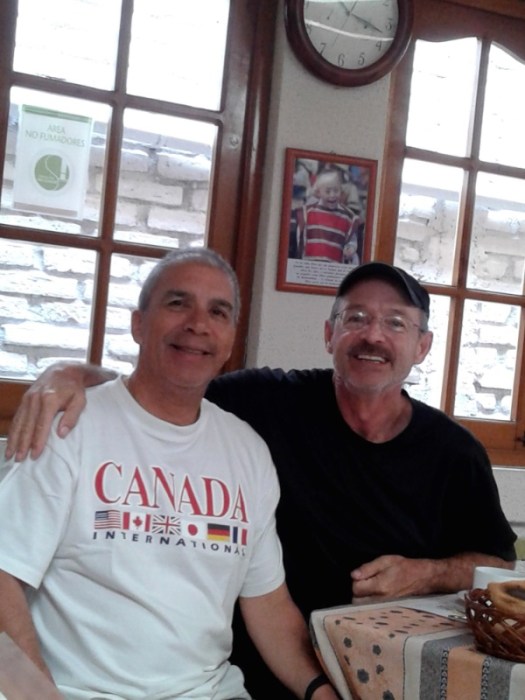
My last day in Chile I was lucky enough to meet up with Jan Dudeck and his partner at the Santiago bus station.
We carbo-loaded on ice cream while I got a personal update on what happened on this their 3rd season on the long distance hike. Carrying an Alpacka packraft on sections.
Once back in Europe, Jan will be updating the wikiexplora page with new data. New alternative routes.
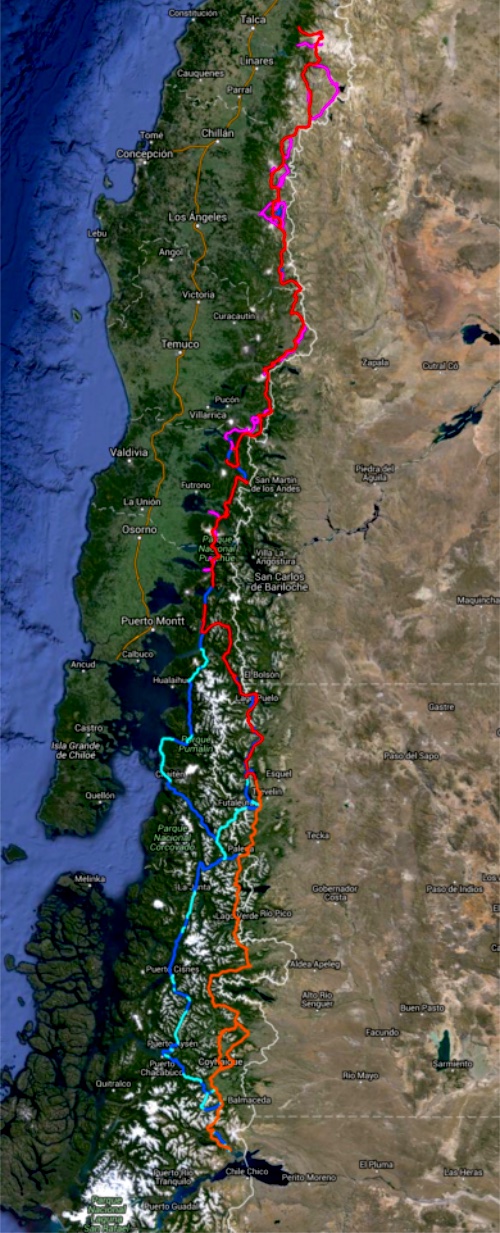
The Greater Patagonian is not an official trail but rather 1500km or more of connected best routes in Chile and Argentina. You’ll be lost for sure unless you have KMZ and GPX files downloaded from wikiexplora.
As they research possible new options Jan actually starts with cached Google Earth images. Then looks for the faint trails he sees there to mark waypoints on their GPS. They don’t bother carrying heavy topo maps.
I tried and failed on section 1 of the Greater Patagonian in January. But am very tempted to go back next Jan/Feb to try other sections.
We debated whether or not to sidetrip to the Palguín hotsprings. Lonely Planet claimed it was 3.5km by road one way. That would mean 7km total IF we couldn’t find a ride with a vehicle.
The walk was actually about 8km one way. AND the one hotspring we paid for was not particularly hot. I did enjoy the menu of the day, however.
A first for me – burnt sugar cubes.
Happily we were able to get a ride back from the hotsprings to the trail, paying a staff person a few dollars for the lift.
Our first hassle on this trip. Burrs. 😦 It’s difficult to avoid them at lower altitude.
In fact, the Traverse is two hikes separated by the road walk we took yesterday. Theres no real reason to walk them connected. The start of the second half is here.
It was a steep climb to get back up to the Traverse.
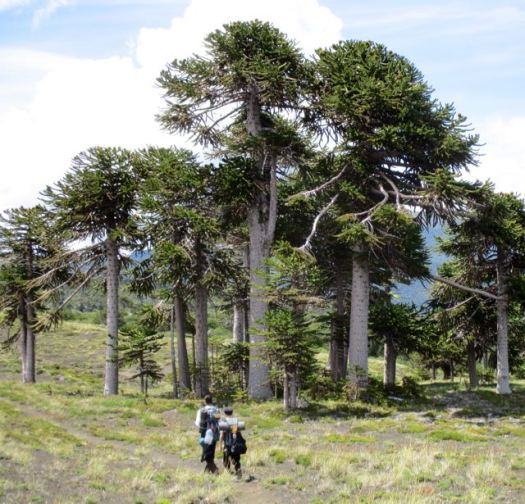
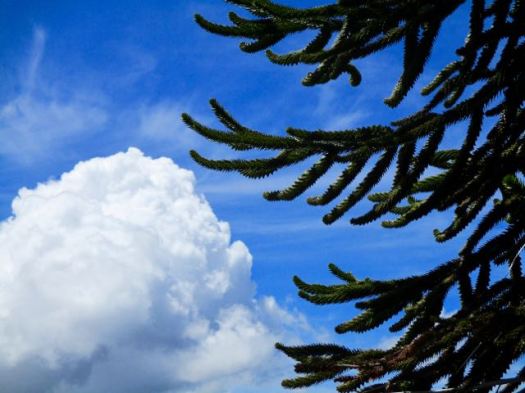
The Monkey Puzzles kept me moving.
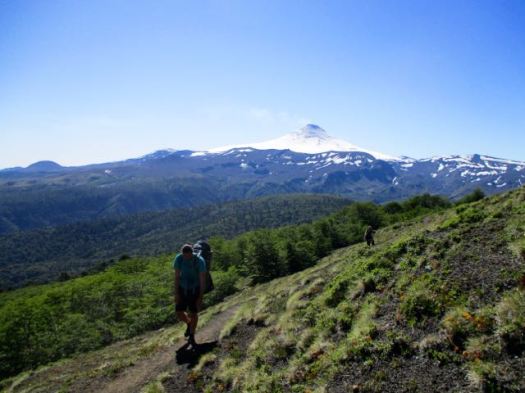
We were steadily leaving Villarrica behind.
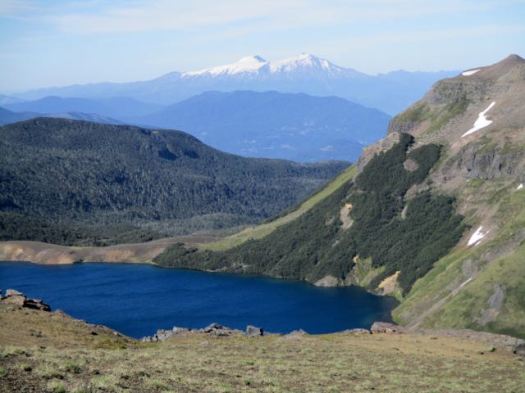
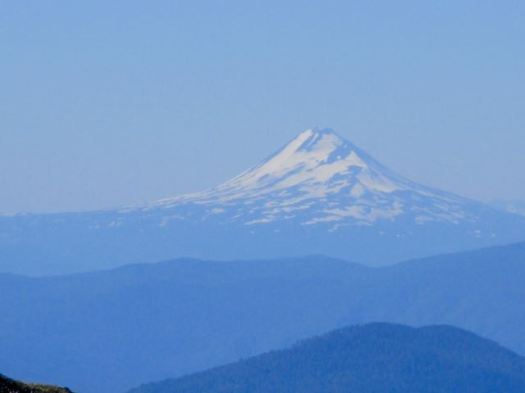
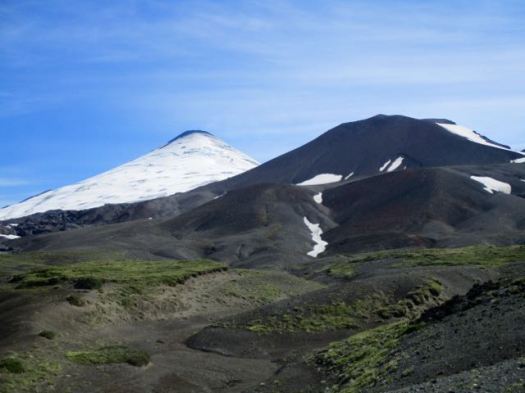
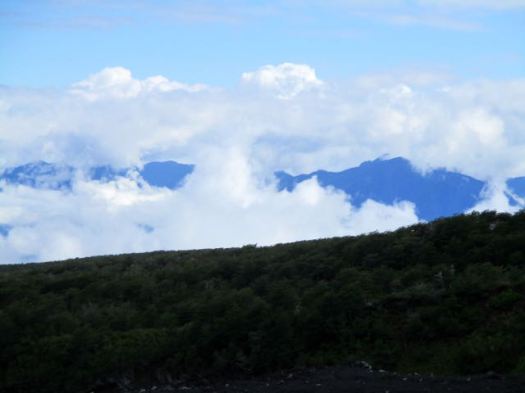
Here’s one of the highlights – Mirador los Volcanes. We could see at least 6 from one spot.
What you don’t see in the photos are hordes of horseflies (called tabanos here) even up at that high altitude in the wind. Later we learned that south central Chile doesn’t have many mosquitos, but they do have horseflies in January. I’ve never seen them so aggressive.
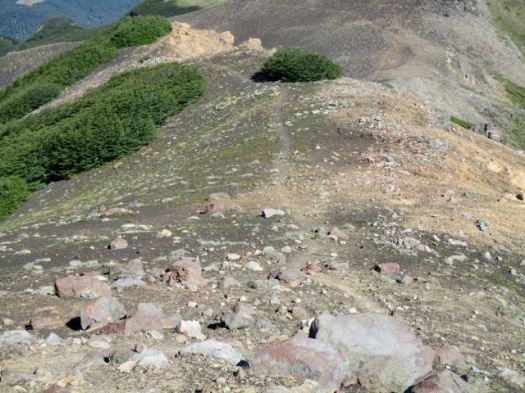
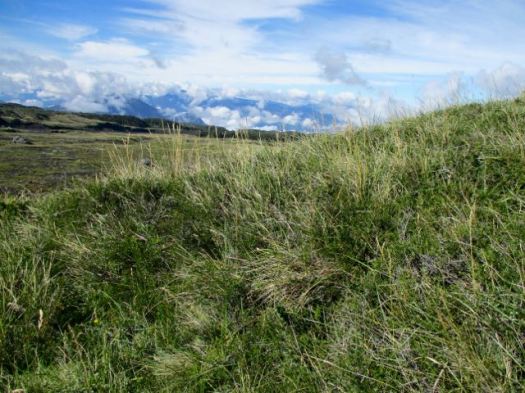
From the Mirador it’s a long, interesting ridge walk.
We walked quickly, swatting flies.
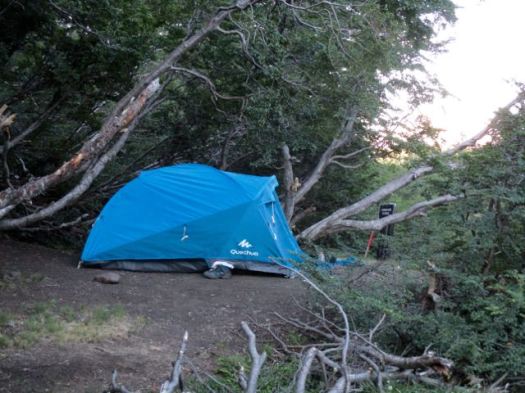
When we finally reached the Lonely Planet recommended camp all we could do was jump into our tents to hide out until dark. The flies were that bad.
From Pucón we decided to take a taxi up to the Park gates. Much easier than hitchhiking.
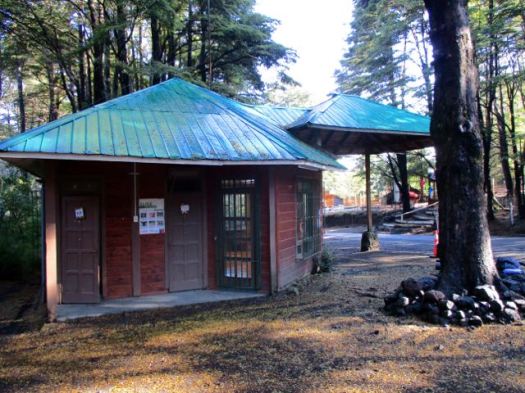
The Ranger opened the Villarrica National Park office for us. He’d formerly worked in a Canadian National Park. I chatted with his wife who’s from my hometown, Calgary.
CONAF charges an entrance fee of Ch$5000 to Chileans or Ch$7000 ($10) to foreigners (2016) for using the “Villarrica Traverse”.
Happily we were able to hitchhike the final 17km up to the (ugly in summer) ski resort, the official start of the Traverse.
Slightly overcast (as it often is in the morning in Chile) we quickly headed off into the great blue yonder.
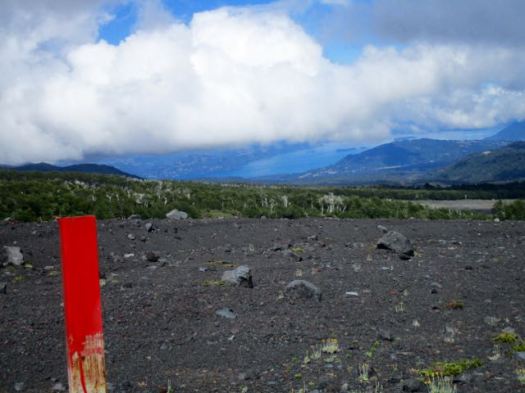
At this point we were literally traversing the volcano. The landscape bleak and blasted. I’d met Victor and Pedro, 2 Brazilian music students, while hiking further north. They decided to join up with me for this BIG and HIGH walk.
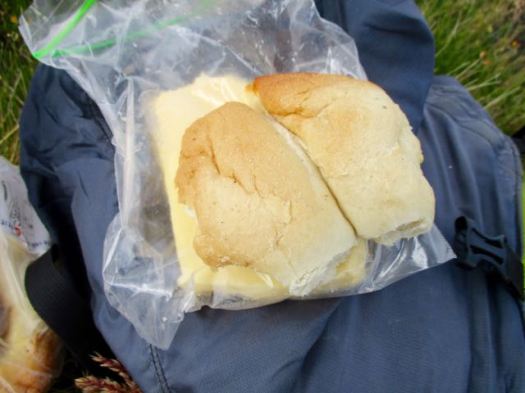
My lunch for the first few days was cheddar and buns.
Navigation is very easy on this adventure. Follow the stakes. 🙂
Sadly I still managed to get us lost for perhaps 90 minutes. 😦 When we finally found our way back to the correct route we moved and replaced stakes so nobody else would make my mistake.
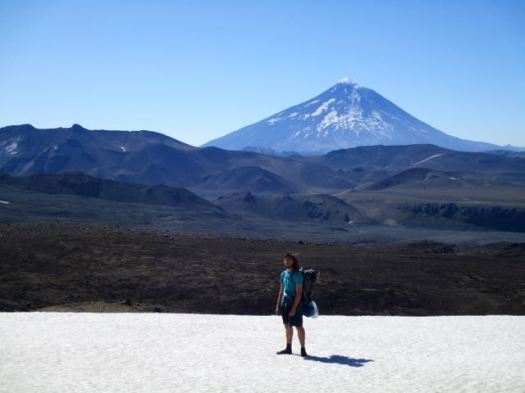
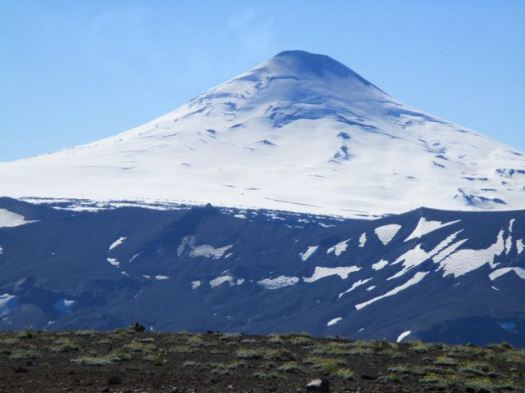
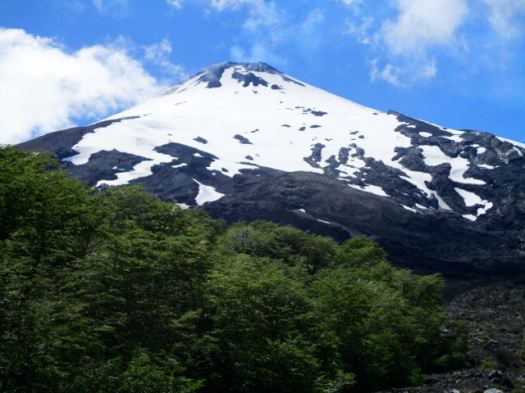
Finally the clouds blew off and we got our first good close-up look at Villarrica 2847m. It’s the most climbed volcano in Chile.
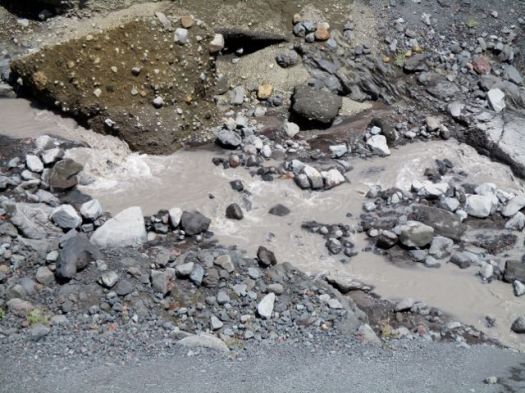
Water is a concern. Anything close to the volcano is dirty with ash.
Whenever you find clean water, load up.
Still, water is life. Vegetation regrows only with water.
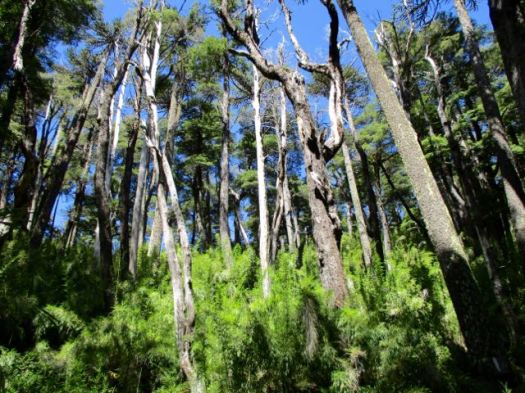
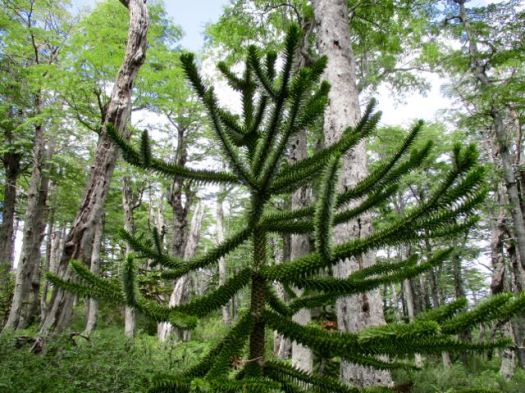
The Monkey Puzzle treesare a great highlight of this hike. They are the national tree of Chile.
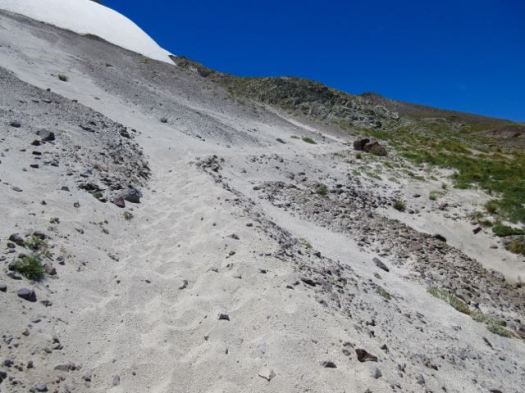
Footing is often difficult in volcanic scoria. Don’t fall.
With so much exposure to the sun, it was always a relief to reach shade.
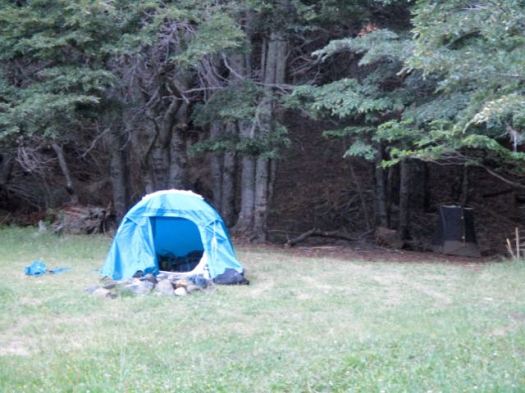
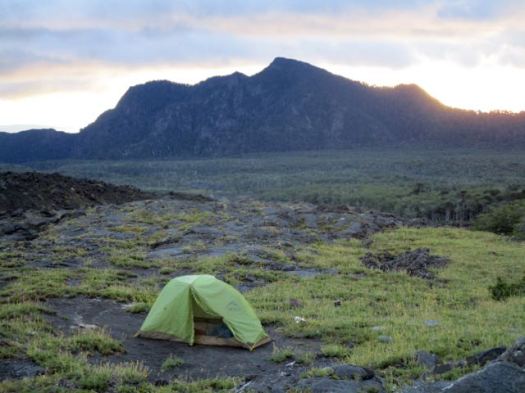
We camped at the spot recommended by Lonely Planet. Can’t complain about the view. 🙂
Victor, Pedro, Rick
I didn’t like the water, however, so walked back to a tarn for perhaps 30 minutes. We did treat a lot of water on this hike.
I had a long way to go today. But it was mostly downhill.
Back past Laguna Ánimas, busier than when I had camped here.
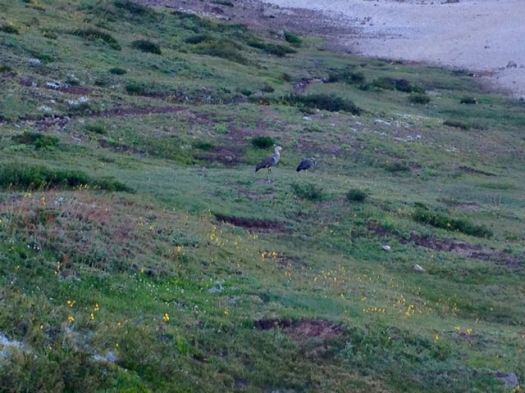
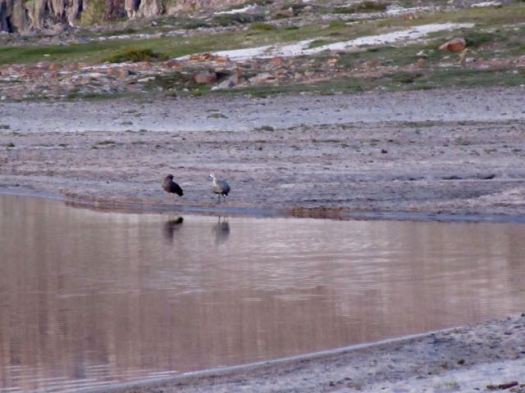
Two large water birds seem to spend their nights here.
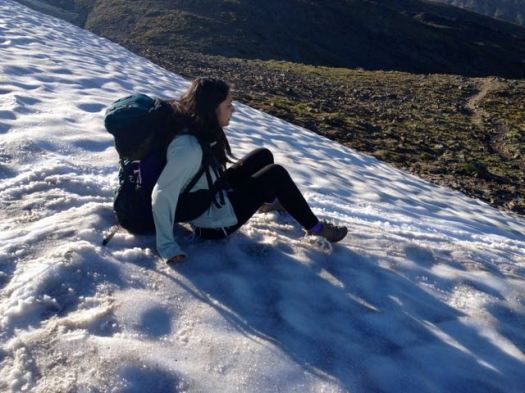
The easy way to descend snow fields.
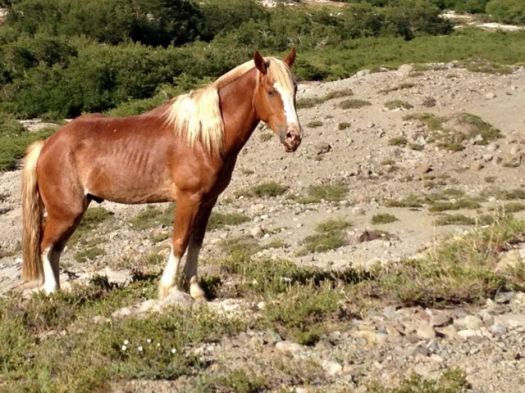
Though I’m afraid of riding horses, Chile is ideal country for cowboys.
Back to the green. And some shade.
Impressive Bolsón was packed. This great weather had inspired more folks from Santiago to takes some time off work.
This day I did see two large hares, the only indigenous mammals I found.
Surprisingly I saw no sign of snakes or scorpions. Or rodents. My principle companions were tens of thousands of these guys.
On the trail the only language I heard was Spanish. Foreign hikers do not seem to get here much. It’s another Chilean secret. 🙂
Catching the Parque Inglés bus back to Molina, a tranquil town of about 40,000. I (eventually) found an inexpensive and interesting place to stay in the small town. With a BIG swimming pool.
Hostería Suichi (Suisse + Chile) run by Robert, a (now jaded) Swiss expat.
Robert gave me good information. And cooked up a beef soup typical of the region for me.
In the evening I ate ice cream and hung out in the plaza. As everyone does.
On the street late night I bumped into a Chilean couple on holiday who ended up staying at the Hostería. Next morning we had breakfast together in the popular restaurant. 🙂
Meeting new people is one of the great highlights of travel.
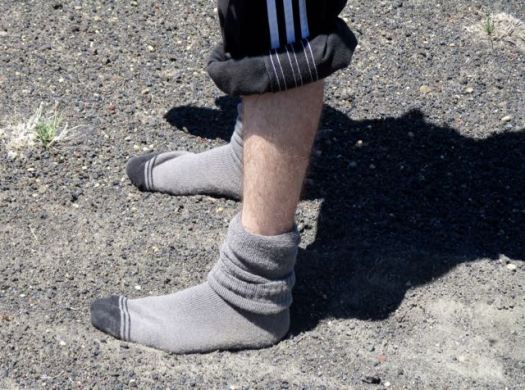
Sunburn was my biggest worry at this point. I had plenty of No-Ad Sport Sunscreen slathered on, but this sun is unrelenting. I was wearing socks on my hands as they were most burnt, so far.
I made one last climb up to the “corner” of the valley to see if it looped back over a pass in the direction I wanted to go …
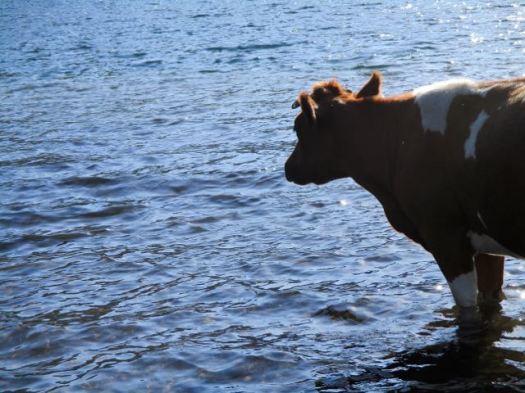
The cows thought I was crazy.
I was crazy. Odds were slim that it would work. I turned back here.
It was a relief, actually, to finally know where I was going.
River crossings are a big issue here. There are no bridges. Happily this was the most difficult I crossed. Not bad.
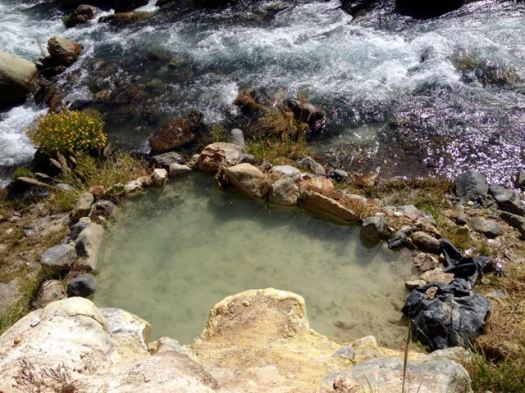
Descending to the hot springs, the group had already vacated. I had the place to myself. 🙂
One last look back up my side valley.
Mid-day I took the shade and studied Spanish for 90 minutes or so. Then resumed my high traverse of the massif.
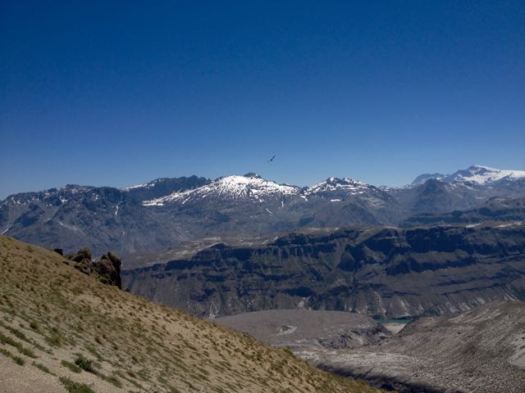
Today the two condors came to check me out.
I was clinging to life yet. 🙂
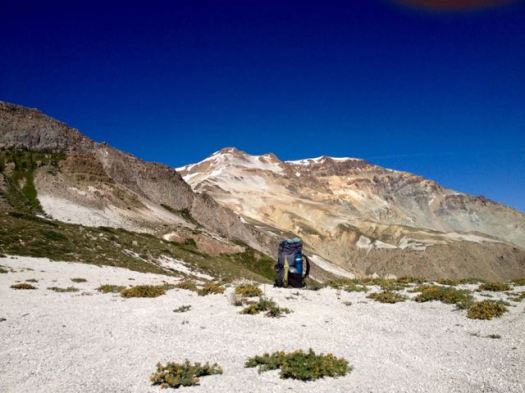
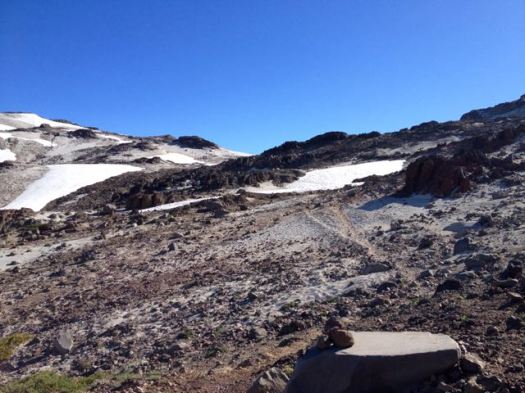
People curse slogging through ash. Personally, I like it. Very soft on the feet. The best screeing surface possible.
I was surprised to come across 4 Chilean hikers in the afternoon. They had put up the tents and got directions from me to the hot springs. Two had just been married. This was part of the honeymoon. Both were just about to move to Montreal for work. Small world.
One of the guys asked me if I knew the way back to the Pass. Of course I did. I’d just come from that direction.
How could I get lost? 🙂
I got lost. 😦
Things truly do look completely different when walking the opposite direction.
My good camera had broken, the telescoping lens mechanism wrecked. 😦 I wasn’t in much of a mood to take photos in any case. 😦
My audio book – Red Rising by Pierce Brown – kept me going.
I was first diverted for about 2 hours. Then about 30 minutes. (Several times I considered backtracking to the honeymoon party tents. I could have walked out with them next morning.)
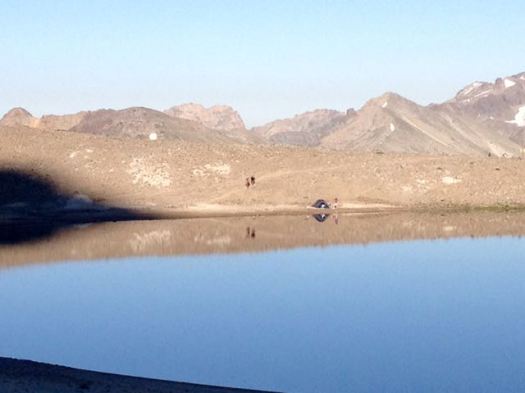
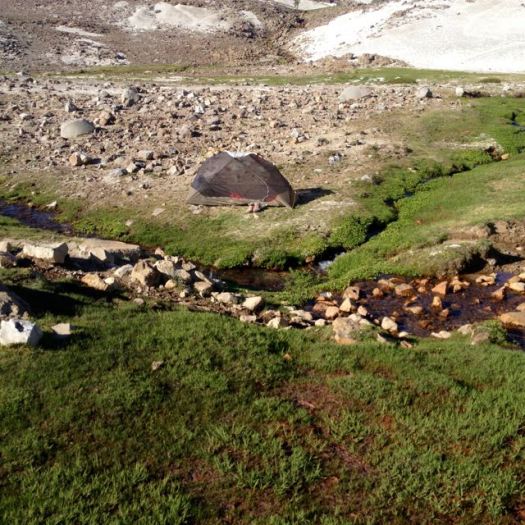
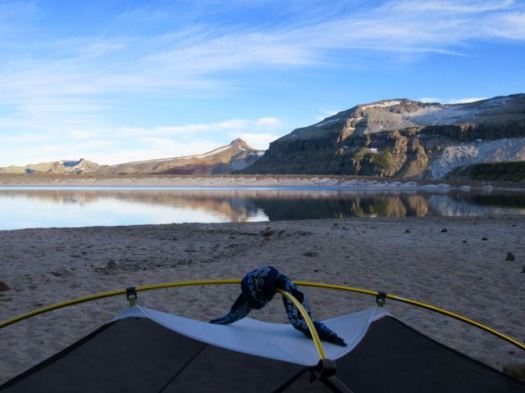
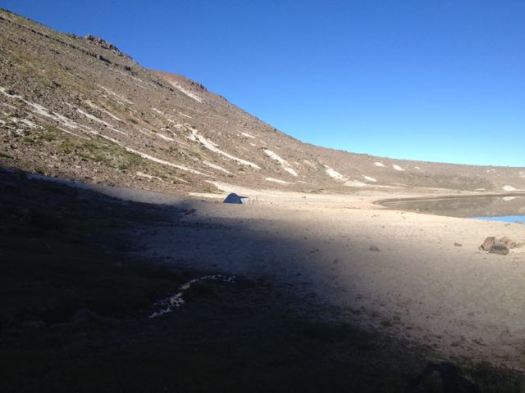
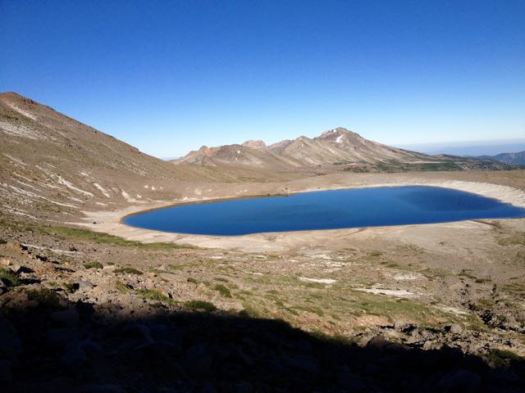
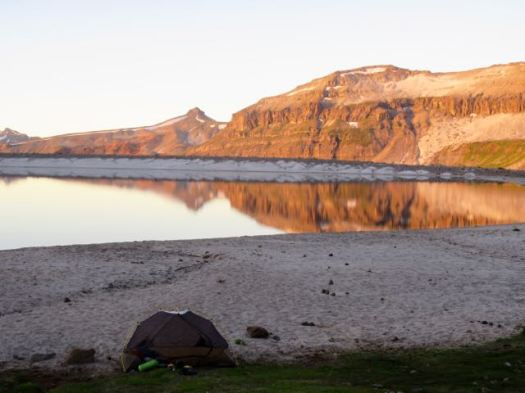
But – finally – I found the way back to Ánimas. I set up my tent above the lake at this junction of alpine meadow and desert. My best campsite.
It would be an excellent idea to enjoy the massive and impressive Mt. Decapitated vista from here. And turn back.
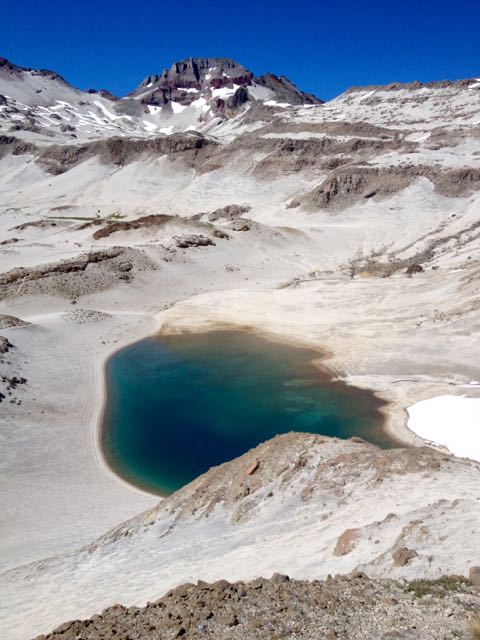
Laguna Mondaca
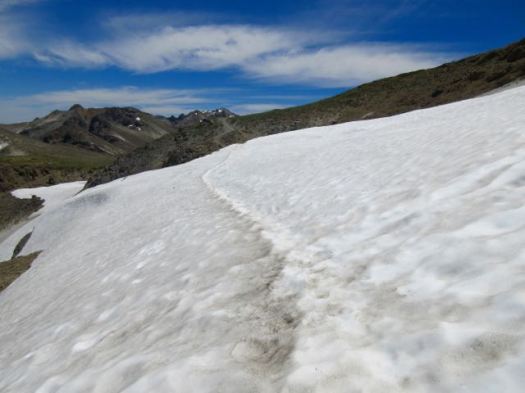
I dropped down to the other side crossing this field of snow and ash.
Laguna Mondaca looked too great a descent for me. I’d really rather not drop down that far and have to climb back up.
A high traverse trail on the right looked much more tempting. Quickly I decided to stay as high as I could. Returning by the same route if that trail didn’t loop around back to Valle de Indio.
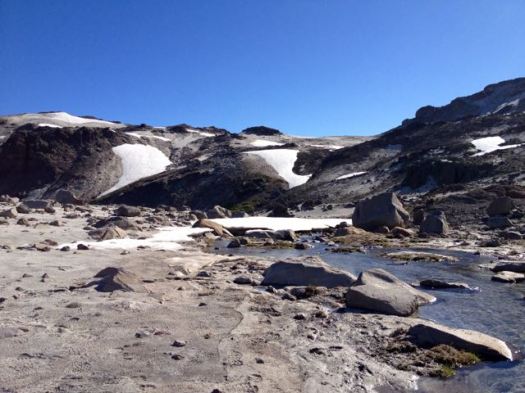
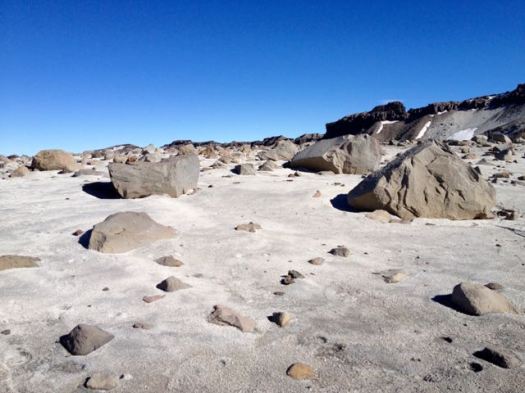
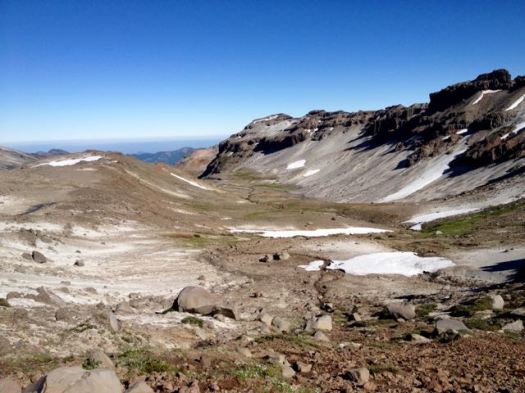
I LOVE this kind of brutal & extreme landscape.
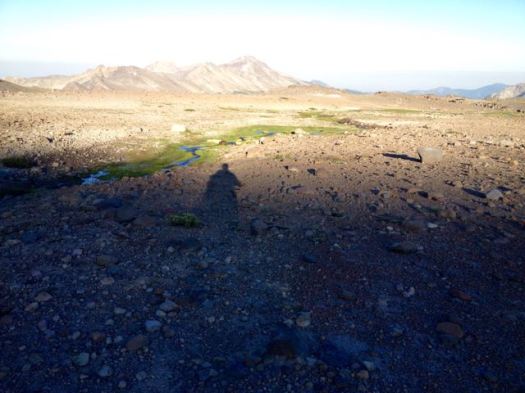
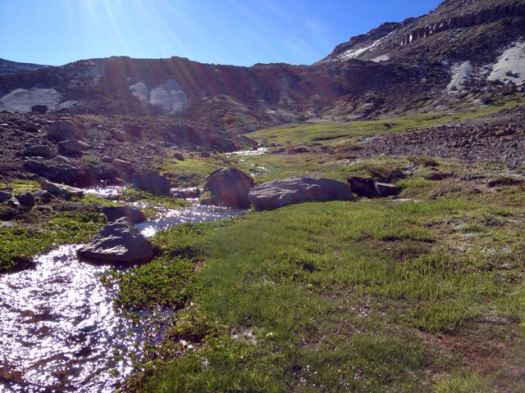
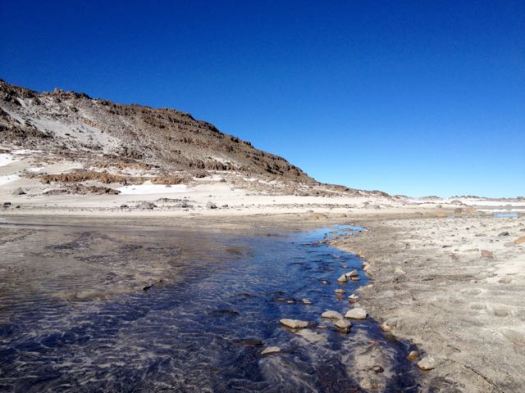
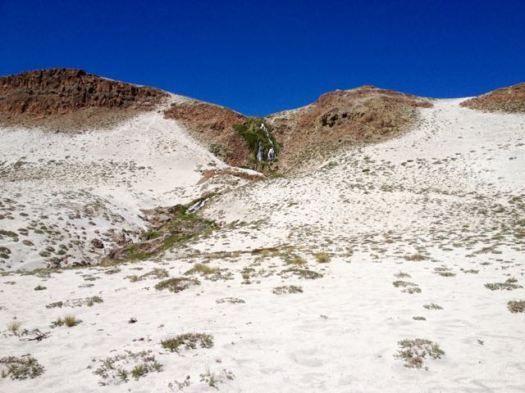
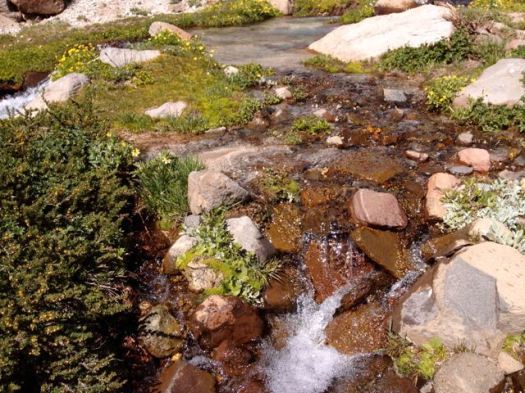
Surprisingly, it’s quite easy to find water here.
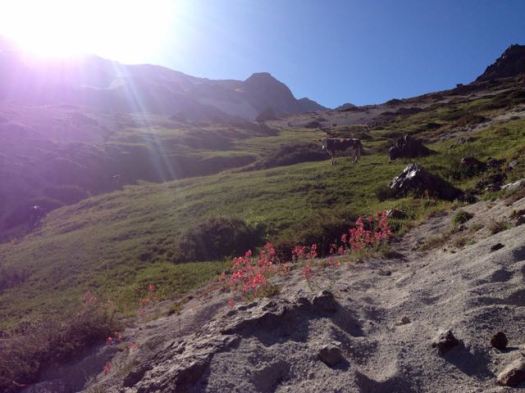
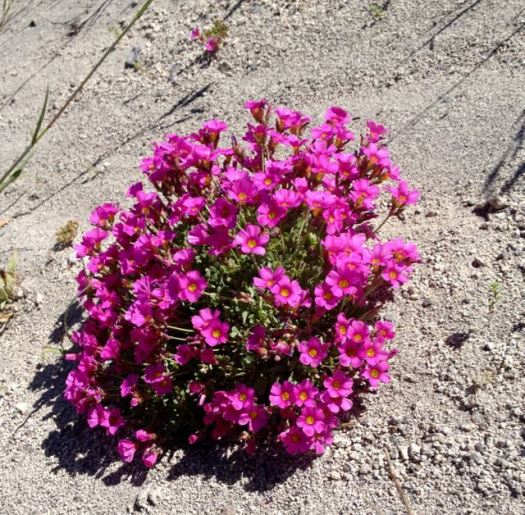
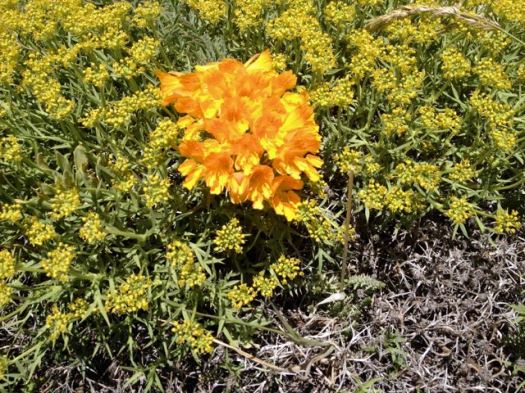
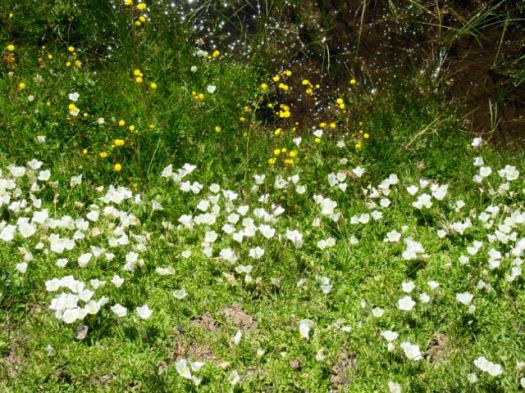
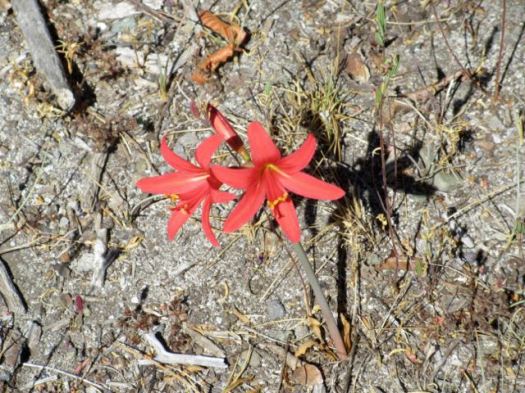
Wildflowers were still thriving in January.
The unofficial trail was excellent. I stayed as high as I could.
Laguna Mondaca
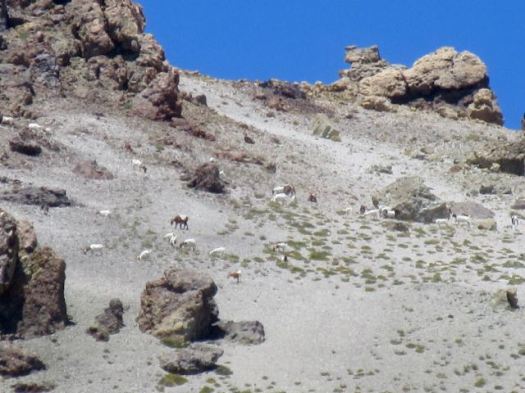
Though I could see for miles in every direction, I’d seen no wild mammals at yet. Goats were grazing very high up, circled by two very interested condors.
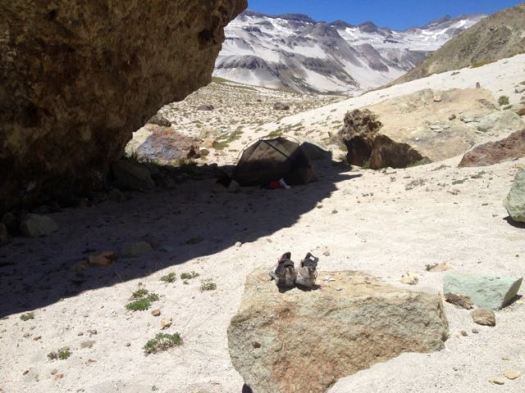
I tried to find some shade to take a siesta mid-day. This was one of the best.
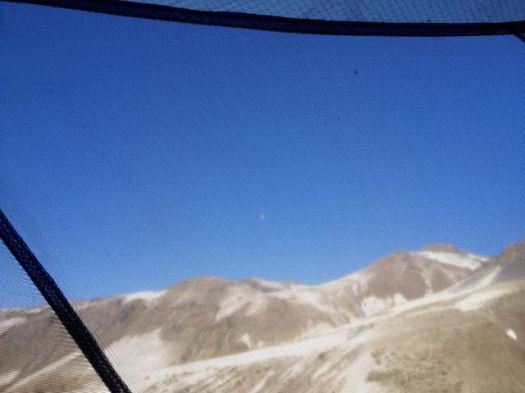
I set up the tent to keep flies and wasps away.
This was a long but comparatively easy day, mostly gradually downhill. I decided to enter a side valley hoping it would loop back to where I started. (My GPS did not work and I had no map, so this was wild speculation.)
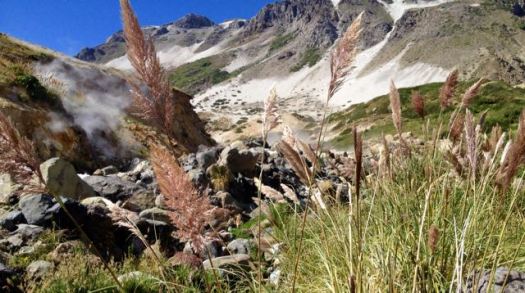
Entering the valley I smelled sulphur. I’d stumbled on to one of the many natural hot springs in the area. But a horse group was already camped there. I decided to wait until next day to have my bath.
I set up high and out-of-sight since there were cattle and people in this valley.
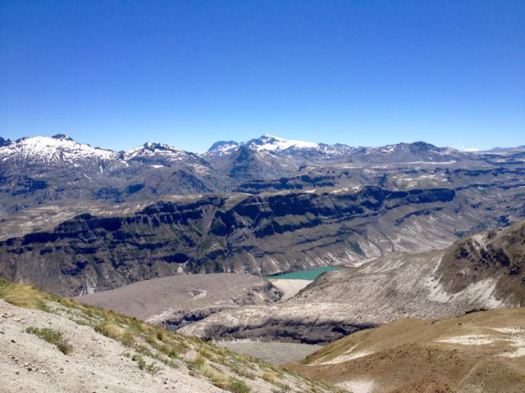
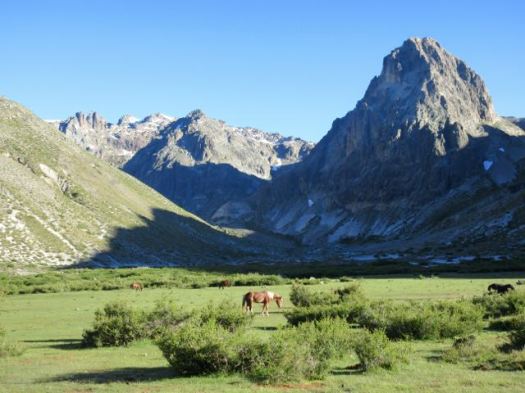
There’s a reason Bolsón is so popular. It’s a pretty alpine meadow, a green oasis on the edge of a volcanic wasteland.
Most who make it this far stop and day hike from here.
But I was determined to see – if not climb – Mt Decapitated. I’d have to get past that spiky peak in the distance to do so.
On the other hand, I took it easy today ascending steeply up to the next obvious campsite. Past that the next recommend camp is Laguna Mondaca, too far for me with full pack, I was thinking.
The trail is clearly signed up to Valle de Indio, another lush alpine meadow. It’s gets more volcanic after this point.
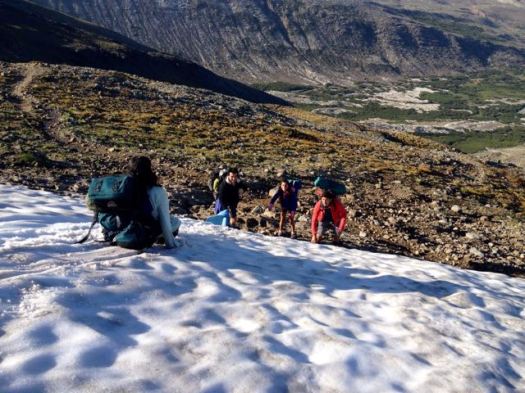
Despite the heat and intense sun, snow crossings were frequent. Early season would require an ice axe.
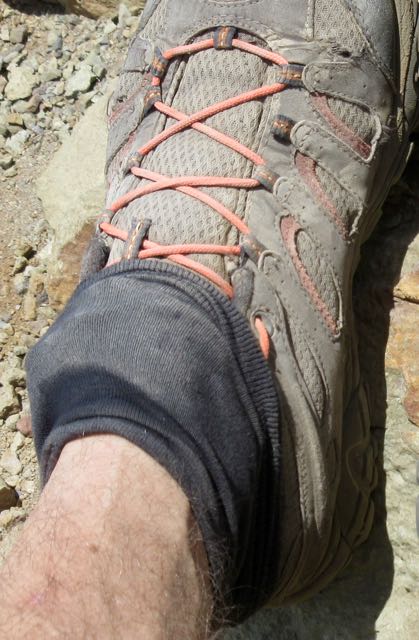
Footing is either bad up here. Or volcanic ash. I used the “instagator” system with my socks.
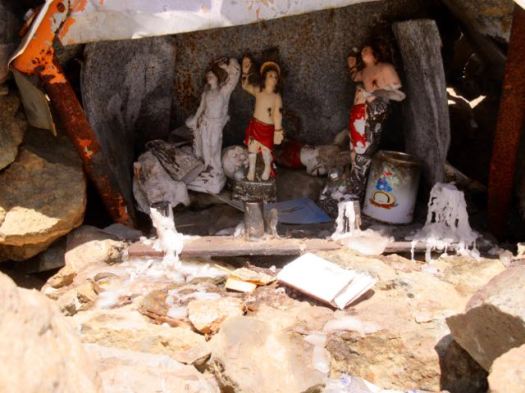
In South America you can expect to see at least one religious pilgrimage site every day.
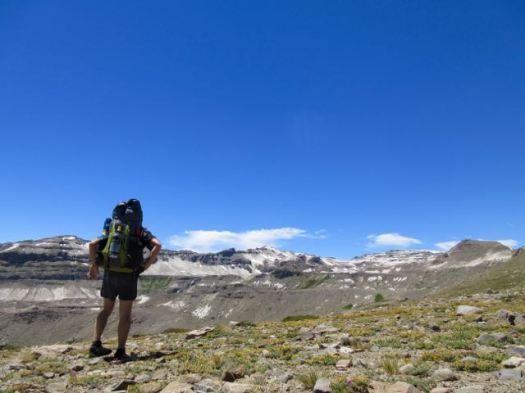
The higher I climbed, the better I liked it.
I arrived Ánimas before 3pm. With at least 5 hours of sunlight left, I was tempted to risk it and climb higher.
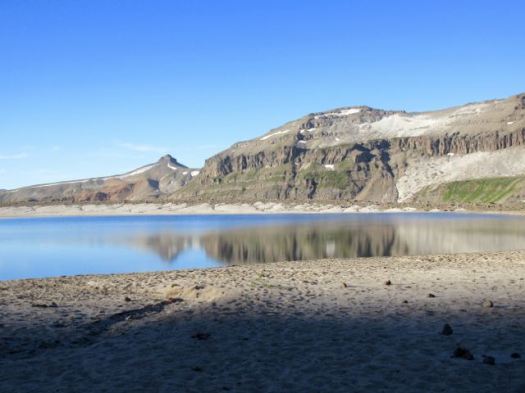
Instead I cooled my heels. Listened to my Coffee Break Spanish lessons. Walked the perimeter of the tarn.
Not many carry tents up here from Bolsón, but there were a few groups with me at the lake.
Just above my tent is the trail I’ll take in the morning.
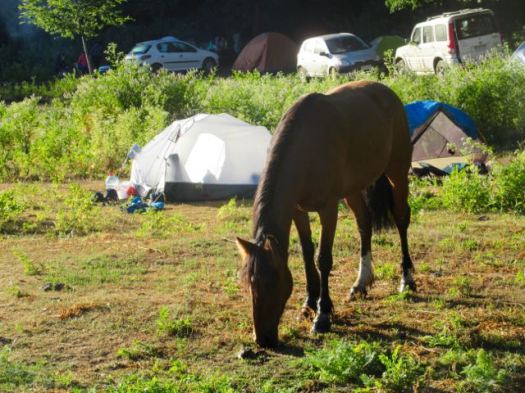
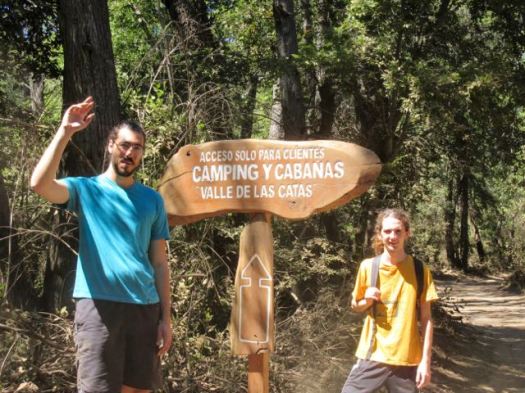
High season on a mid-summer weekend, Valle las Catas campground was full.
We were in no rush. Enjoyed the morning.
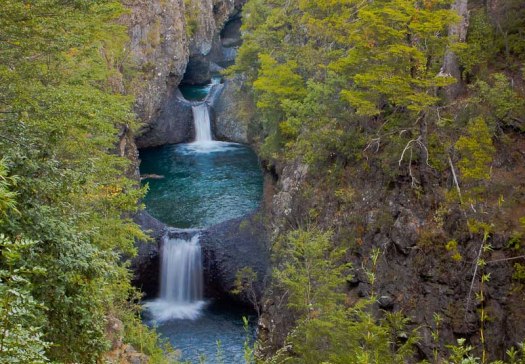
Sendero Los Cipreses (Cypresss Trail) is free entrance from Valle las Catas campground leading to the Siete Tazas (7 cups). Pedro, Victor and myself did the famous tourist attraction as a day hike.
… seven consecutive natural pools with their respective waterfalls along Claro River. These waterfalls range from 1 to 10.5 metres. There are also two high waterfalls called El Velo de Novia (The Bridal Veil) and La Leona (The Lioness), with single vertical drops of 40 and 20 metres respectively. …
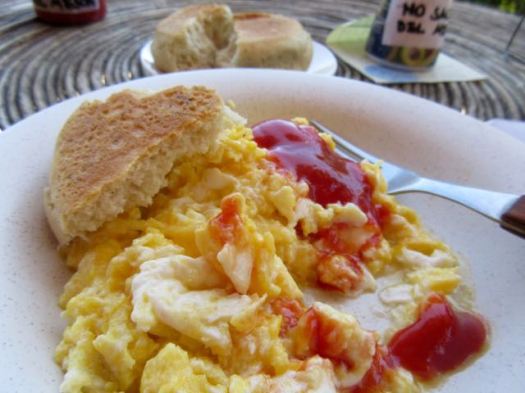
On return to the campground I enjoyed one last restaurant meal – 4 eggs.
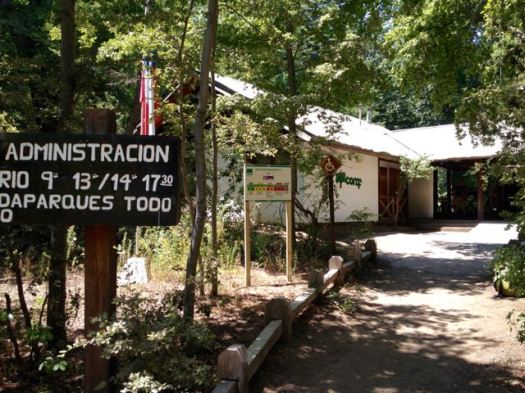
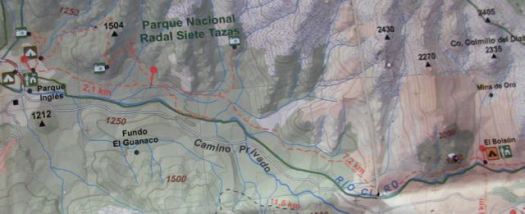
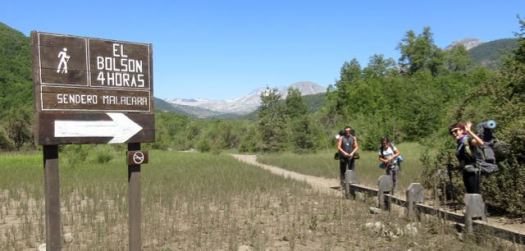
By far the most popular back country campground in the area is El Bolsón. I planned an afternoon start. Tried to get organized at the Ranger station.
In fact it was 4pm before I reached the trailhead.
Christian and his family had been there before. I followed them from the Park office and we stayed together for much of the 12km. All uphill.
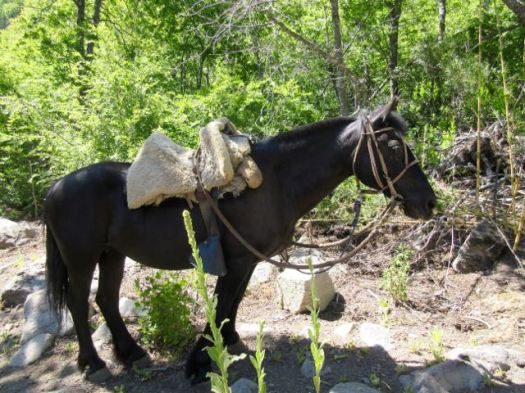
Many groups ride horses up here. Or take pack animals.
Very pretty.
On the steepest section, I dropped my heavy load and went back to carry the 10yr-olds pack for about one km. However, when we finally got to Bolsón, she looked less tired that I did.
The sun going down, I set up my tent in a gorgeous spot. And went to sleep.