
Terrible terrible news. I’m still bewildered, angry and in denial.
Lifelong friends, Rob and Mark Glaser, were killed in an avalanche on Saturday, January 15, 2011 in the area of Burstall Pass, Peter Lougheed Provincial Park, Kananaskis Country, Alberta.
Here’s the official notice:
The families of Mark and Rob Glaser are in deep shock at the news of their tragic passing. Both were loving husbands and fathers and will be greatly missed by their families and legions of friends. Both were seasoned back country hikers and skiers who shared a deep passion for the outdoors.
Mark lived in Calgary and was in the oil and gas industry for over 25 years including senior management positions in recent years. Rob lived in Bragg Creek and was a captain in the Calgary Fire Department.
The family respectfully requests privacy at this time. Please direct all media contacts through Ed Glaser (brother) at 403-470-3904.
Phone Ed or contact me. I’ll post updates here.
Mark Glaser
On this trip a few years ago Mark and Rob trained me in snow rescue techniques.
Rob was a firefighter, expert in all things backcountry. They had left their avalanche beacons in the car making family speculate that this ski was intended to be simply a short warm-up.
Saskatchewan Glacier
Over 30 years (1978–2007), avalanches have been responsible for 329 deaths in Canada, with a recent rate of 14 deaths per year. …
Avalanche accounts for over 90% of outdoor recreation deaths, most of those in Alberta or B.C.
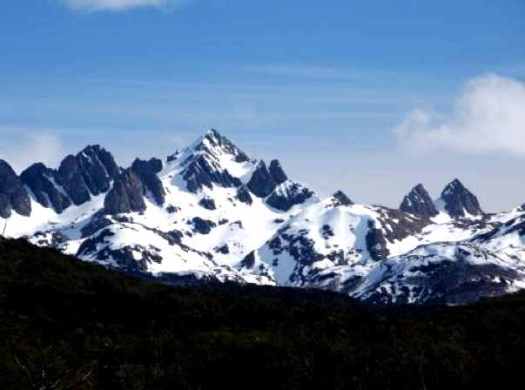
Kachina Peak is a picturesque mountain located in the Wheeler Wilderness Area of the Sangre de Cristo Range. It is best known as the summit of Taos Ski Valley.
This peak is most often climbed during ski season when powder seekers can hike from the top of lift # 5 via Highline Ridge.
This peak is not crowded during hiking season due to it’s close proximity to Wheeler Peak. The ski area makes Kachina Peak easily accessible, but above timberline this mountain becomes quite challenging. The route along the ski area boundary is class 3+ climbing to the summit. …
Lake Fork Peak (left) and Kachina Peak (right) from Bull of the Woods Trail Oct, 2004 - vinnypapa
The Pacific Crest Trail … follows the highest portion of the Sierra Nevada and Cascade Range, which parallel the Pacific Ocean by 100 to 150 miles (160 to 240 km). The Pacific Crest Trail is 2,650 miles (4,260 km) long …
In 1970, Eric Ryback, a 17-year-old student, was credited as the first thru-hiker on the trail and his 1971 book The High Adventure of Eric Ryback: Canada to Mexico on Foot focused public attention on the PCT.
Wilderness Press, publisher of guide books “The Pacific Crest Trail: Volume One and Volume Two”, raised in those books specific doubts about Ryback’s claim and produced evidence that he accepted rides for some of the journey. Ryback and Chronicle Publishers sued Wilderness Press but the suits were dropped in 1974.
The first person confirmed to have thru-hiked the entire PCT, as well as the first person to hike from south to north, was Richard Watson, who completed the trail on September 1, 1972.
The first woman was Mary Carstens, who completed the journey later in 1972 …
Here’s one of Jed’s earlier treks, the famed Milford Track. He couldn’t get a spot for an independent hike … so signed on for one a guided adventure. … A guided adventure being the kind where you have hot chocolate waiting at the hut. And hot showers.
It’s a fixed itinerary:
Day 1: Lake Te Anau to Glade House
Day 2: Glade House to Pompolona Lodge
Day 3: Pompolona Lodge to Quintin Lodge
Day 4: Quintin Lodge to Sandfly Point
Back in 2002 Jed was a “rookie” hiker with new untested gear. He writes his impressions at that time:
… It begins with a boat-ride from lake Te Anau to a drop-off point, from which one must traverse wetlands, temperate rainforest, suspension bridges, and an alpine pass, before finishing some 53km later, at Sandfly Point, on the edge of Milford Sound. Because of the delicate nature of the ecosystem and the inherent danger to the hikers (for some portions of the trail are routinely submersed under the very heavy rain and others traverse avalanche fields … 56 in all!) …
After arriving at Sandfly Point, weary, bitten, yet still elated, we boarded a ferry that took us to Mitre Lodge, where we had rooms, a hot meal, plenty of wine, and a dry pair of clothes waiting for us.
And although the hike was nominally finished for me, I knew that it was just a beginning: an introduction to the world of trekking that had already infected me with a desire to explore other regions of the planet. With this in mind I carefully catalogued the gear that worked well for me, and that which needed to be remedied before my next hike …
After decades of hiking some of the world’s great trails, über-adventurer Brandon Wilson heard about the Via Alpina, paths running the length of the Alps across eight countries. Besides offering immersion into Alpine life and wilderness, it’d be the ultimate physical challenge. It meant climbing nearly 700,000 feet from valley to peak—over 111 days and more than 1200 miles.
Intrigued, he imagined it was a sort-of European Appalachian Trail, only with better wine.
Brandon and his wife in 2009 did 111 days across 8 countries.
UPDATE: “Over the Top & Back Again: Hiking X the Alps” received the 2010 Book of the Year Bronze Award (travel essay category) from ForeWord Reviews at the American Library Association conference in New Orleans.
For everyone who has gone digital, it has also just been released on Amazon Kindle (lighter to pack that way!).
He did the classic Hiker’s Haute Route … without cheating.
… This route begins in the Mecca of mountaineering in Europe (or at least the mountaineering tourist capital): Chamonix, France. It then winds its way across eleven alpine passes, through over 180km of grueling terrain, nearly 12km of elevation gain, and two weeks of excruciating effort to a stunning conclusion at the other Mecca of mountaineering in Europe: Zermatt, Switzerland.
The route passes many of the 4000-meter peaks in Europe, including Mont Blanc, the Matterhorn, and the Grand Combin. It meanders amongst alpine lakes and Swiss chalets. It sneaks beneath, above, around, and even across (provided you have the gear) glaciers. While under its charm you will spend nights in villages or alpine huts. You will encounter hordes of walkers on some days, and scarcely a soul on others. Beauty, solitude, nature, physical challenge, stunning vistas, depressingly steep paths, marmots, thunderstorms, and crystal clear alpine air – this route has all the hallmarks of a world-class trek. …
… Val des Dix may have had the most gorgeous scenery in the entire hike. I could hardly ask for a better birthday present. …
… Most people think that hiking is about getting to some place – for me it is the opposite. It gives you an opportunity to rid your mind of the day-to-day worries of life. And, when your body is numb from exhaustion, your muscles dripping in lactic acid, and your joints jarred into a relenting submission, your mind achieves a remarkable clarity. So hiking, for me, becomes the ideal means of achieving the clarity required for enlightened thinking. …
Guys like me hang out there half the day reading trip reports and hearing the buzz on what’s happening on different trails as members stop by. It’s very welcoming.