I’ve not yet used a Milestone Guidebook, but they are getting some good press.
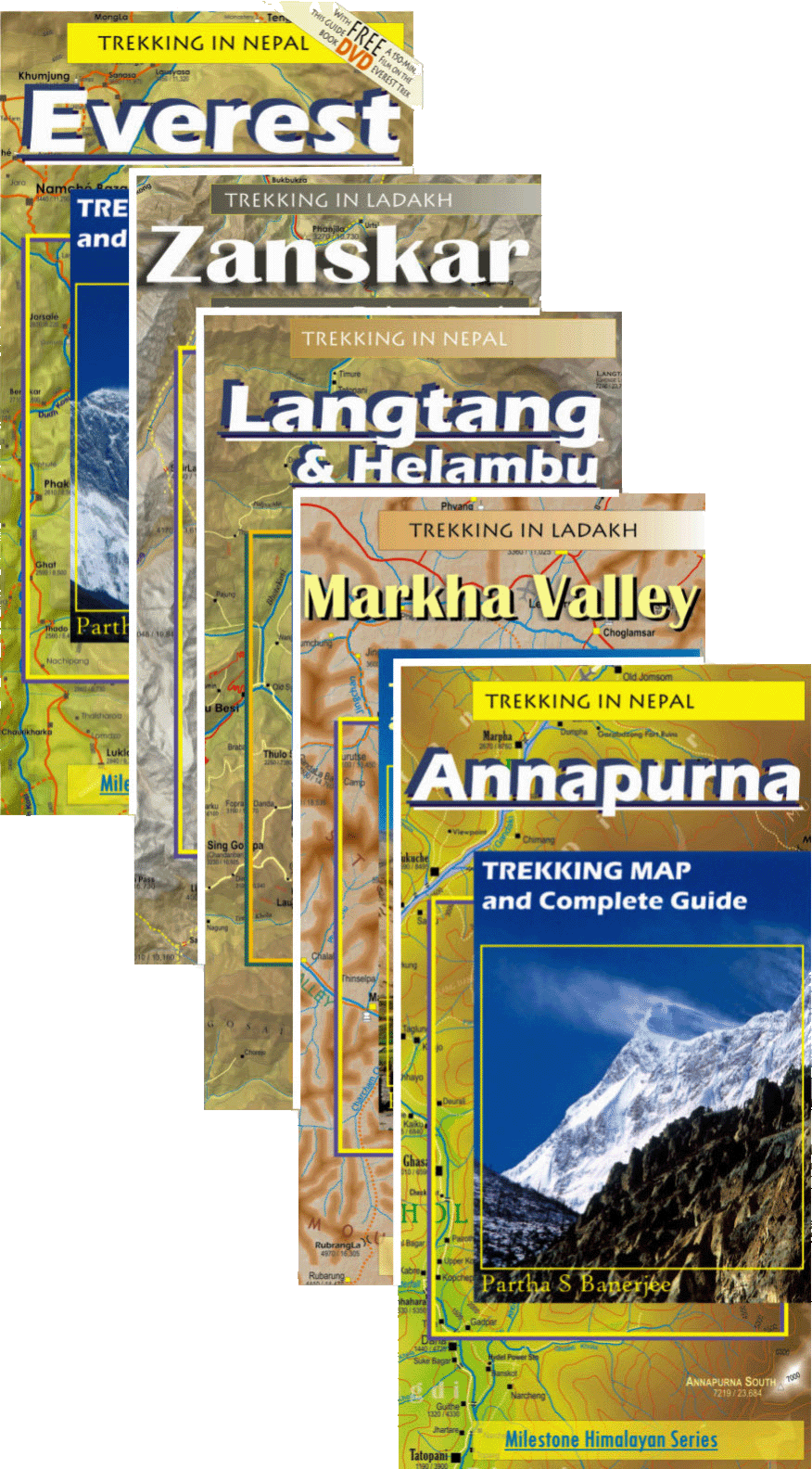
Check them out for yourselves at milestoneguides.com

Best hikes, treks, tramps in the world.
I’ve not yet used a Milestone Guidebook, but they are getting some good press.
Check them out for yourselves at milestoneguides.com
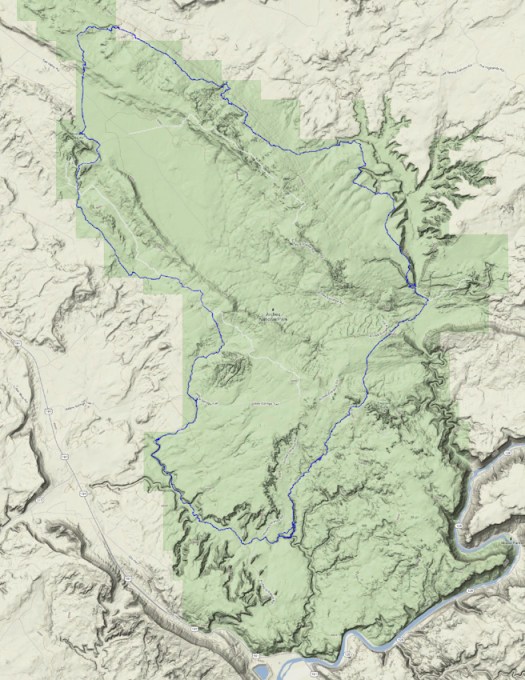
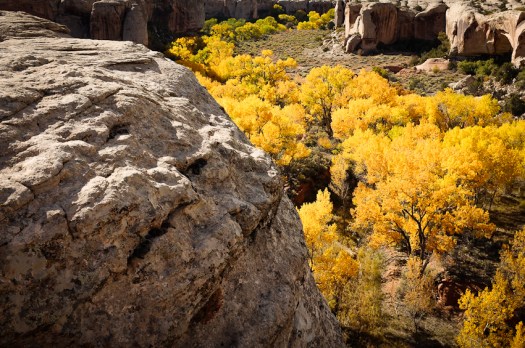
… Getting a back-country permit at Arches is strange. They come just shy of discouraging backpacking and it was apparent that they don’t have many people asking for permits. This is likely due to the small size of the park, lack of water, and lots of absolutely pristine soil crusts (they require that you have camp set up by dusk so you don’t risk walking on soils after dark).
I started the trip at Wolfe Ranch and headed north up Salt Creek. I knew generally what route I wanted to take but had zero beta so knew there would be some adjusting on the fly. The first route change happened pretty much immediately. I had planned on going up Salt Creek and doing some exploring in Lost Creek Canyon, but the canyon above Freshwater Spring looked pretty interesting from the bottom so I decided to head up that way. …
read more on Out. Living.
Fantastic photos.
I assume I saw that linked from Hiking in Finland. Where else?
The 300ft spiral staircase has been installed on the wall of the Taihang Mountains in Linzhou to offer the thrill of mountaineering without the danger.
But senior climbers beware – you have to be under 60 to be allowed on the staircase.

Thanks Sherry.
I’m Cheryl McCormick and my trail name is Clinker.
My project will be a compilation of photographs and haiku poetry, all created while backpacking solo, 2,187 miles from Georgia to Maine on the Appalachian Trail.
Once I return, the National Center for Nature Photography has agreed to a gallery exhibit of both my photographs and haiku poetry, documenting this endeavor in a creative fashion. I am launching this project on my 63rd birthday, April 5, 2013. …
Clinker is looking for $10,000 to pull off this adventure.
41 backers have pledged $3,853 as of my post.
Good luck Clinker. Yours’ is the first kickstarter hiking project I’ve seen.
Our Hiking Trip: Zion National Park, Bryce Canyon National Park, North and South Coyote Buttes, Grand Staircase Escalante National Monument, Horseshoe Bend Overlook, Lower Antelope Canyon
Click PLAY or watch it on YouTube.
Thanks Tom.
Bad news.
… a new study of nearly 9,000 U.S. children found that almost half of preschool-age kids are not getting outside at least once a day with their parents.
Girls were even less likely to be taken outside than boys, and some families reported not taking their young children outside more than a few times a month. The findings are in Archives of Pediatric & Adolescent Medicine. [Pooja S. Tandon, Chuan Zhou and Dimitri A. Christakis, Frequency of Parent-Supervised Outdoor Play of US Preschool-Aged Children]
Scientific American – Kids Fail To Get Outdoors
Children Spend 56 Days A Year Playing Videogames And Watching TV!
I’ve been following Photodiary of a Nomad for years.
This couple have documented 6200km+ of walks and over 12000 photos.
Summer 2012 they started on the Pacific Coast, worked their way through the Rockies, and finished amongst the magnificent colours of the eastern forests in autumn:
Prologue
West Coast Trail (Gordon River to Walbran Creek)
West Coast Trail (Walbran Creek to Pachena Bay)
Vancouver Urban Fringe Walk
Skyline Trail – Jasper National Park
The Icefields Parkway
Assiniboine Day-Walks
Assiniboine-Sunshine Meadows Trail
Banff National Park (Two Teahouses and Larch Valley Hikes)
Yoho National Park (Iceline Trail and Lake O’Hara Circuit)
A Tale of Two Cities (Montreal and Quebec City)
Mont Tremblant by foot and canoe
La Mauricie National Park
Saguenay Fiord Trail
Hopewell Rocks (Big Tide in the Bay of Fundy)
Cape Breton Highlands National Park
Wanderings in New Brunswick
Not all of those trip reports are live yet. They are still being uploaded.
They walked our #1 hike in the world, the West Coast Trail.
Their words — never before spoken — about the WCT:
… The clear morning skies were becoming a bit monotonous, as dawn arrived with a pink glow on the eastern horizon. …
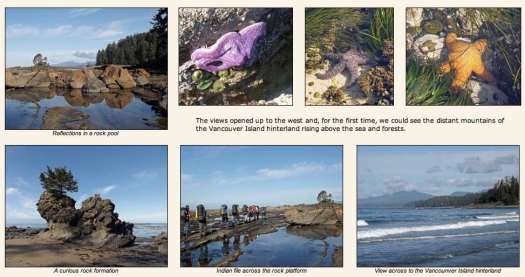
That’s a great trip report for anyone planning for the West Coast of Vancouver Island. In fact, I’m hoping to get back again summer 2013. 🙂
related – some of their best photos from past trips around the world
Wow. This looks to be a breakthrough in outdoor film editing.
What drives us to overcome challenge? How do we justify risk? What forces are at the core of a mountain addiction? Unique athlete segments over a multitude of … sport genres
… never seen before moments. Explore how we begin our perception of self, construct the foundations of confidence, and are ultimately led up the path of self-actualization.
As Buddha once said, “The mind is everything. What you think you become.” …
Presented by The North Face – COMING FALL 2013
Click PLAY or watch it on Vimeo.
Click PLAY or watch it on YouTube.
Thanks Dave.
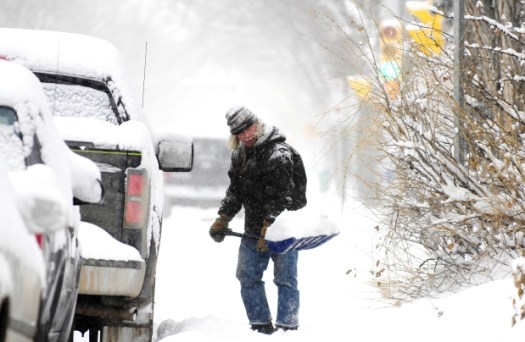
Here’s a Canuck exploring a snow drift, trying to find his vehicle. 🙂
Normal Prairie weather ahead: The Weather Network