day 2 – Otter Trail, South Africa

Trip report by site editor Rick McCharles

day 0 | 1 | 2 | 3 | 4 | 5 | info page

Day 2 = 7.9km (± 4 hours) – Ngubu huts to Scott huts

stairs

Easy day. No rush.

I stopped often to read and contemplate.

Rick

At one conspicuous rocky outlier — the Skilderkrans Quartz Promontory — I left a Summit Stone.

summit stone

This place is remote.

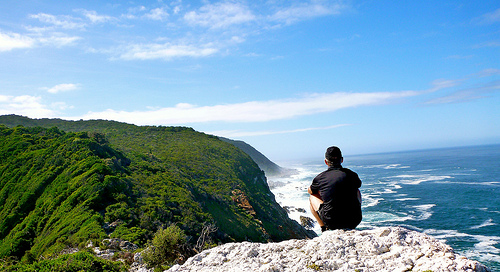
Looking back.
looking back

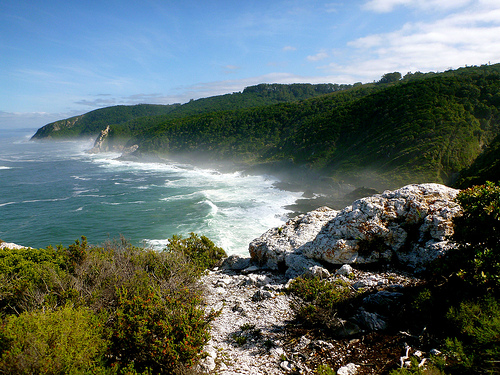
Looking ahead.
looking ahead

You’d swear you were alone on a lonely coast.

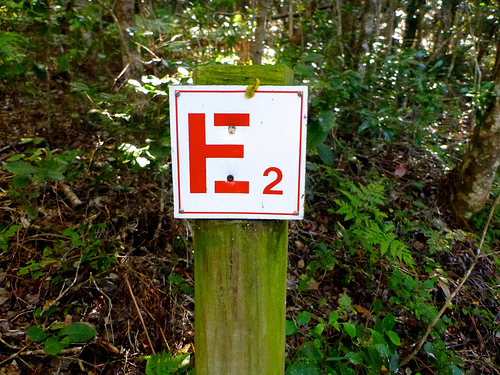
Yet there are emergency escape routes all along the Otter marked E for Evacuation.

escape route

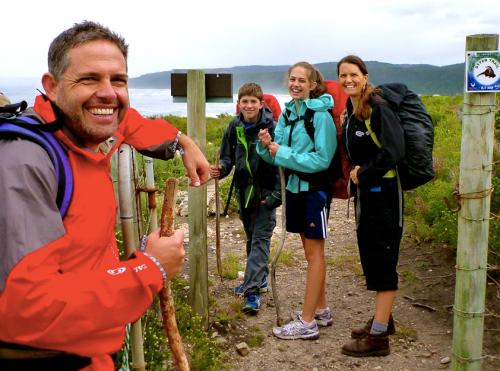
I caught up with the Marques family stopped for lunch and a swim.

lunch

Like so many similar coastal hikes, the water is stained with tannin.

water tannin

That’s not dangerous to drink. But it does have an interesting flavour. 🙂

At one time, the trail was much better signed for distance.

Otter KM signage

Many of those have gone missing over the years.

I’ve got this trip tagged jungle.

jungle

In many parts it’s impassable without following human or game trails. Dense fynbos is the natural shrubland or heathland vegetation unique to this part of the world.

This ocean is cold and choppy. That didn’t stop Scott.

swimming in ocean

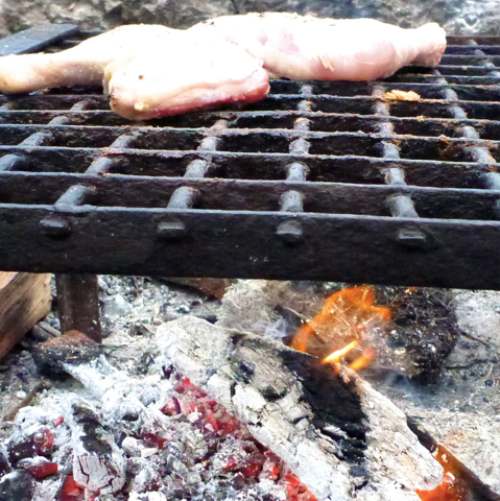
The family had barbecue once again. I shared some of their chicken. And ate my usual meal — smashed potatoes.

mashed spuds

more of my photos from day 2

Sadly, I missed stopping at Bloubaai beach, the recommended lunch spot. I
a detour off the main trail.

beach

on to day 3

Tell it on the Mountain – PCT

I’m at ADZPCTKO. The kick off party for the Pacific Crest Trail.

Pretty inspiring. 🙂

Check the new PCT movie.

Follow a half dozen of the 300 or so hikers who attempt a Pacific Crest Trail thru-hike every year. Armed with cameras, they give us an insider’s view into what it takes to spend half a year living in the wild.

Click PLAY or watch a sneak peek on YouTube.

Available for purchase on Tellitonthemountain.com and Amazon.

I’m doing research for a future PCT adventure. Likely just the California section.

day 1 – Otter Trail, South Africa

Trip report by site editor Rick McCharles

day 0 | 1 | 2 | 3 | 4 | 5 | info page

Day 1 = 4.8km (± 2 hours) – Storms River reception to Ngubu huts

No rush day 1.

I relaxed in the morning. And enjoyed 2 MORE restaurant meals at Storms River Mouth Restcamp, making the obligatory day hike to the Suspension Bridges.

You must register for the Otter at the Park entry gates, not down at the campground — as I had hoped. Carrying my hiking pack, I started rolling the rest of my luggage UP the steep hill to the Park office.

Not one vehicle stopped to offer me a lift. (Best not try to hitchhike in South Africa.)

I did spot a bushbuck crossing the highway. Then a large troop of baboons, the first I’d ever seen in the wild.
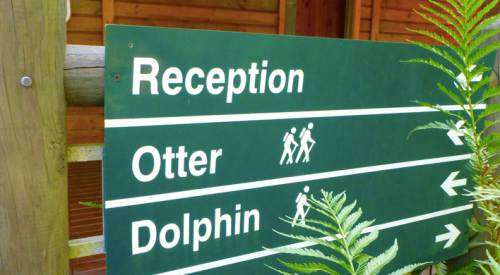
Reception

Happily the Registration folks let me store my excess luggage for the 4 nights I’d be on the Trail. …

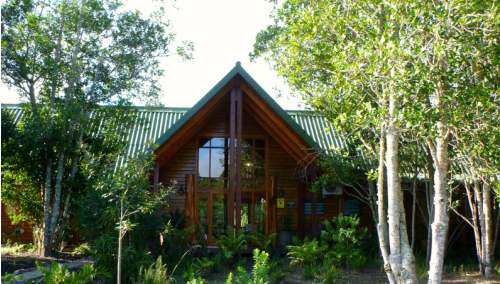
reception building

Registration is quick and efficient. The safety video has been out of order some months, so was not required for me.

Each hiker is given a poor map with trail description, suggestions, bird list, etc. Most critical on that one page document is instruction on how to most safely cross the Lottering and Bloukrans rivers.

You are also given tide tables (essential) for the dates of travel.
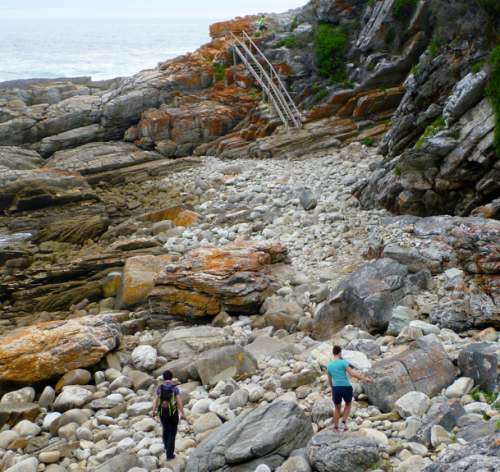
COASTAL BOULDERS

Start of the Otter, you share the trail and coastline with (many) day hikers.

Requires some boulder hopping with heavy pack.

This trail, 50-years-old in 2013, is rugged but very well maintained. There’s plenty of help. Steps. Bridges. Even a few ropes.

You can’t get lost. Follow the clawless otter.
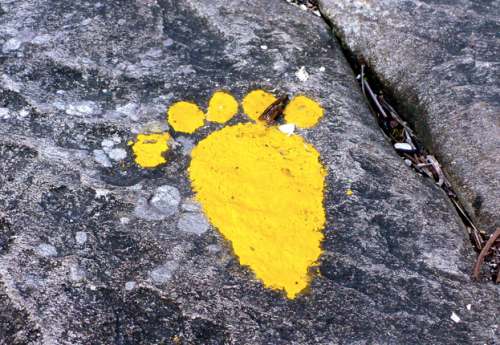
clawless otter

Water is plentiful.

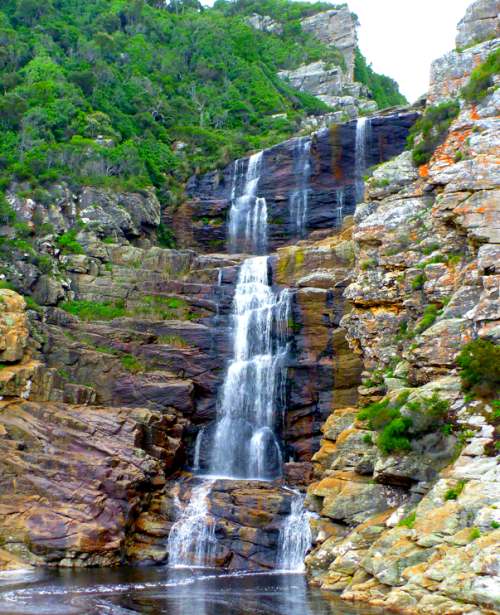
WATERFALL

You are advised to treat all water. I did. Many locals don’t bother.

It took no time at all to reach the first camp. I was pleased to meet Steven and Kimberley, Scott and Claire Marques from Zimbabwe.

Marques

Rod and Jess, holidaying from the States, were the other 2 hikers starting same day. They had seen this Puff Adder sunning on the rocks.

puff adder

Rod had grown up in this region. He’d never seen larger.

It’s not uncommon to see snakes on the Otter Trail. And throughout South Africa. For more information, ask at registration.

hut night 1

There are two huts, toilet and cold shower at all 4 camps, each mandatory stops. Each of the two huts has 6 bunk beds with firm mattresses. Hikers must provide their own blankets/pillows/sleeping bags etc.

Happily the Marques family got their own hut. Rod and Jess got their own hut. And I tented under the mesh, protected by a roof in the dining hut. Normally tenting is not allowed, but my set-up certainly did no damage to the environment.

tent night 1

Of 12 spots available, only 7 hikers arrived to start. Many folks book a year in advance. There are no refunds. And its not allowed to replace those who don’t arrive.

A permit for the Otter is the most difficult in South Africa. It’s a shame they haven’t modernized registration procedures to get more folks on to the adventure.

A few tent sites should be added to each camp, too.

chicken

The one thing that unites ALL South Africans is murdering and cooking up animals out of doors.

The word braai (plural braais) is Afrikaans for “barbecue” or “grill”. I carried in frozen chicken.

Sanparks keeps a supply of wood dry underneath the huts. In fact, they were delivering wood fresh each day when we were there.

Two mooching genets made an appearance at dusk. Seems they’ve been gifted — or stolen — grilled meat in the past.

Lightning quick at dusk, we couldn’t get photos. They were gorgeous, though, with both stripes and splotches.

Here’s what they look like.

genet

Finishing the wine I’d carried in, it was an early night. Dark at 6:30pm, the Southern Cross and Milky Way were stunning.

We were all asleep by 8pm. The only sound the crash of huge waves.

ocean waves

more of my photos from day 1

on to day 2
day 0 – Otter Trail, South Africa

Trip report by site editor Rick McCharles

day 0 | 1 | 2 | 3 | 4 | 5 | info page

Rather than take the more expensive Baz Bus, I bought a ticket on one of the several available coaches traveling Cape Town to Port Elizabeth. There are many every day.

Bus Cape Town

Competition keeps quality high, prices low for long distance bus travel. I paid about $32 for the 8 hour trip.

Bus stop

From the bus stop on the highway, however, there’s no public transportation to the National Park. Asking at Tourist Information, I quickly found a driver willing to take me the last 18km for 150 Rand ($17).

Perhaps I should have taken the Baz Bus after all. It would have delivered me closer to the Park gates. And picked me up end-of-hike at a hostel in Nature’s Valley.

Many had recommended staying the night prior to departure at the trailhead Storms River Mouth Restcamp. I tented.

Campground

It’s one of the best campgrounds I’ve ever seen. (reviews)

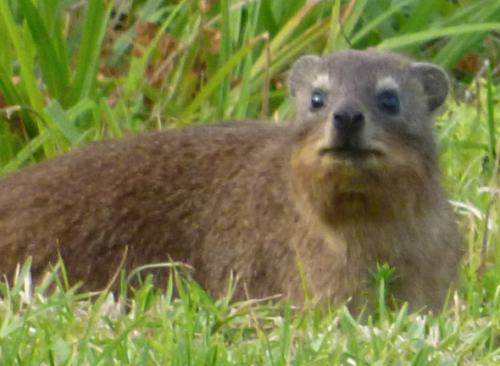
There might be more Rock Hyrax (“Dassie”) than people

Dassie

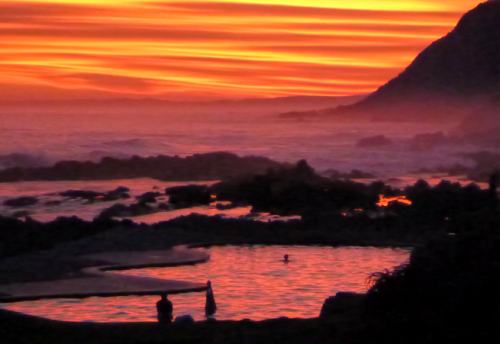
The sunset was definitely as magical as I’ve EVER seen.

sunset

After a rib feast and South African wine at dinner, I couldn’t have been more excited to start the Otter Trail next day.

ribs

Restaurants are comparatively inexpensive in South Africa.

My original high res photos from day 0.

on to day 1

Suspension Bridge, Lookout Trail, South Africa

by site editor Rick McCharles

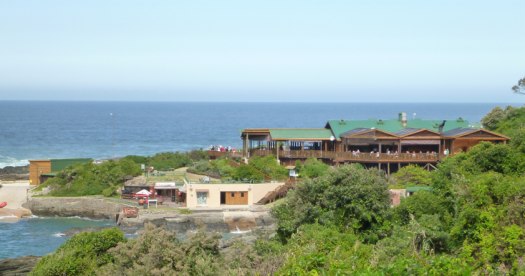
Storms River Mouth Rest Camp, one of the best campgrounds I’ve ever seen, is the trailhead of two multi-day hikes: Otter Trail and new Dolphin Trail.

Almost every visitor — including me — does a Mouth Trail day hike out past the restaurant. It’s the start of the Dolphin.

restaurant

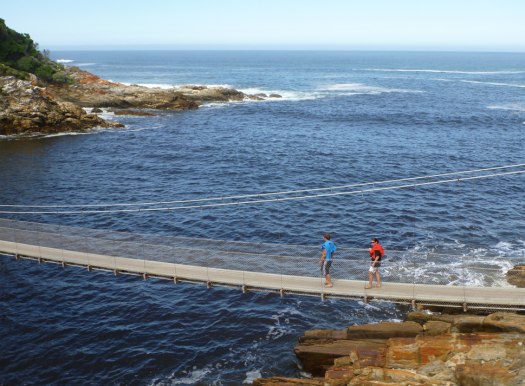
The Suspension Bridge and Lookout Trail is an easy stroll that leads along the western side of the river mouth, past the Strandloper Cave to the suspension bridge (aka “Mouth Trail“) across the Storms River.

suspension bridge

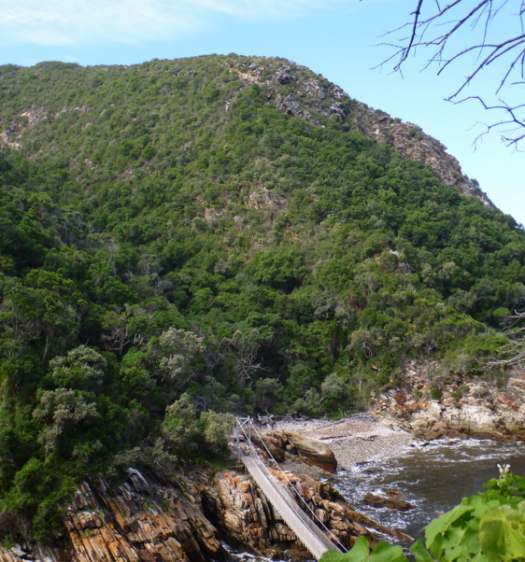
On the other side of the main bridge there is a short but very steep climb to a lookout point (aka “Viewpoint Trail“).

lookout

See the rest of my photos on flickr.

I ate three delicious meals at that restaurant, by the way. Free WiFi.

The Tsitsikamma National Park is a protected area on the Garden Route, Western Cape and Eastern Cape, South Africa.

… On 6 March 2009 it was amalgamated with the Wilderness National Park and various other areas of land to form the Garden Route National Park. …

4 bat-eared fox

Our guide at Addo Elephant National Park, South Africa, had only seen this reclusive animal once before over the past 7 years.

It’s not typical behaviour for them to appear so brashly at at water hole middle of the day.

Click PLAY or watch my video on YouTube.

The bat-eared fox is a canid of the African savanna, named for its large ears. …

… also referred to as big-eared fox, black-eared fox, cape fox, and Delalande’s fox …

… an insectivore that uses its large ears to locate its prey. 80–90% of their diet is harvester termites. When this particular species of termite is not available bat-eared foxes feed on other species of termites and have also been observed consuming ants, beetles, crickets, grasshoppers, millipedes, moths, scorpions, spiders, and rarely birds, small mammals, and reptiles. The insects they eat fulfill the majority of their water intake needs. …

… the bat-eared fox has a reversal in parental roles with the male taking on the majority of the parental care behavior. Females gestate for 60–70 days and give birth to litters consisting of 1 to 6 pups. Beyond lactation, which lasts 14 to 15 weeks, males take over grooming, defending, huddling, chaperoning, and carrying the young between den sites. …

Walkopedia Magazine – Spring 2013

William and Alexandra Mackesy posted the Spring 2013 edition of Walkopedia Magazine online.

Highlights from their excellent website, Walkopedia:

  • Mustang, Nepal – the world’s second best walk?
  • Icon: Pavilion, Tai Shan, China
  • Walkopedia favourite: Pindos Mountains and Vikos Gorge, Greece
  • Photo essay: Route of the Volcanoes, La Palma, Canary Islands
  • Trailblazer guides
  • The world’s best camp tucker
  • New on Walkopedia

    Scotland, Cairngorms, UK
    Glacier National Park, USA

  • Check it out – Spring 2013 edition of Walkopedia Magazine

    walkopedia