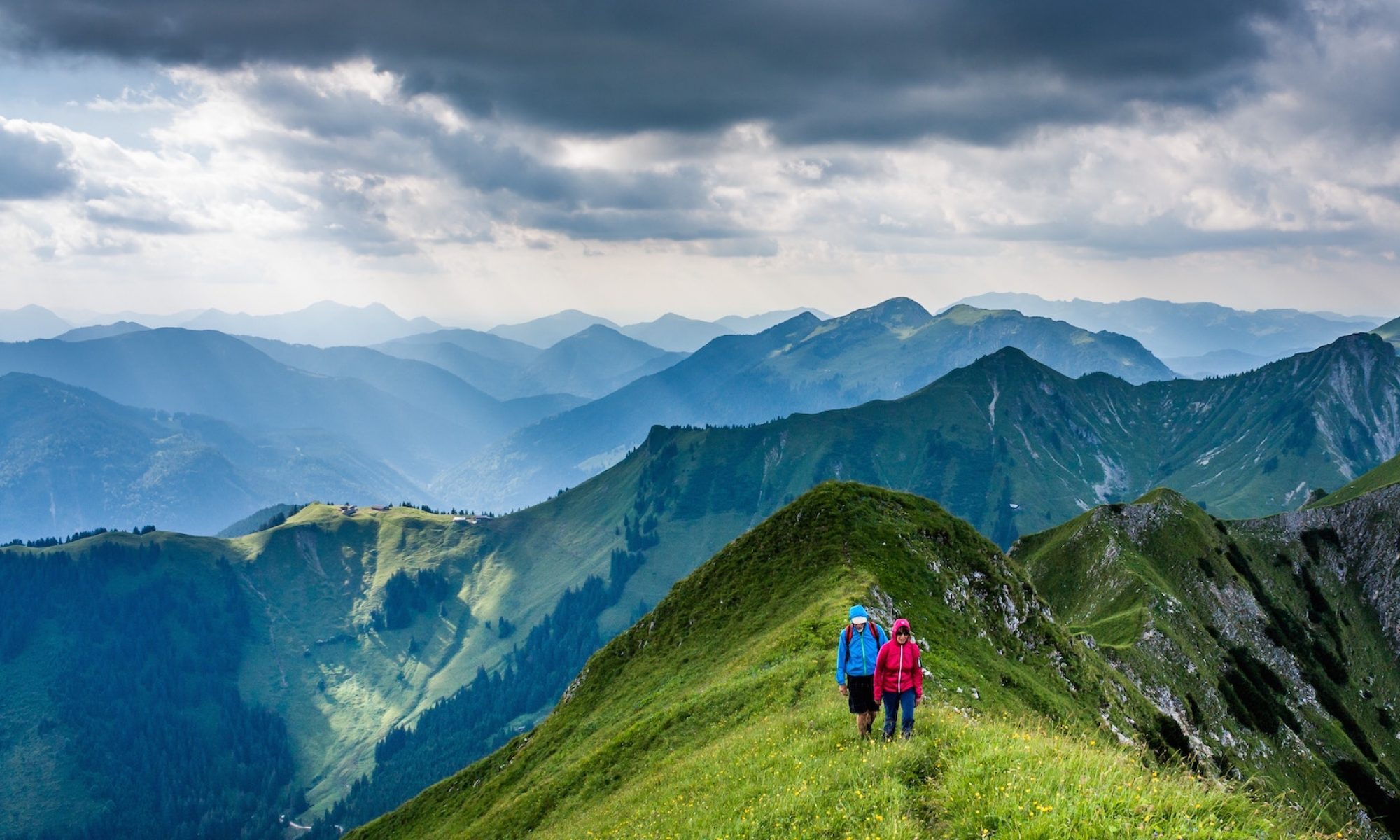
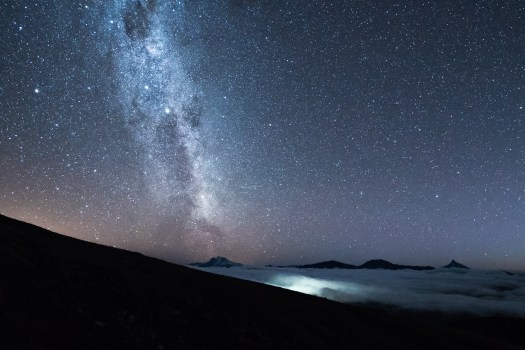
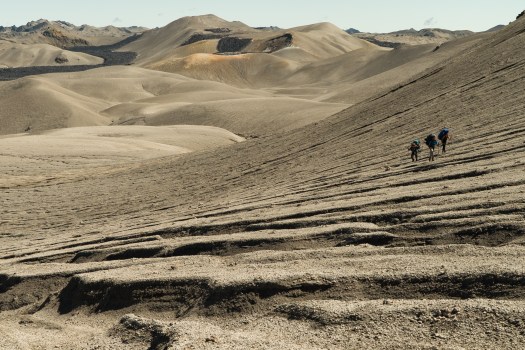
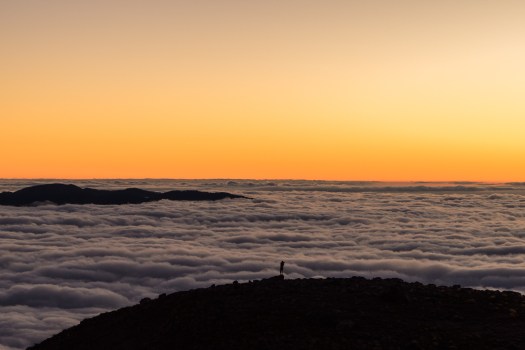
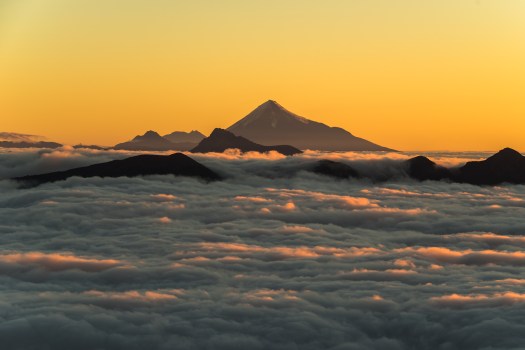
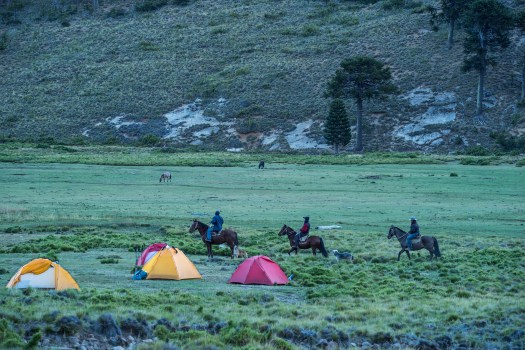
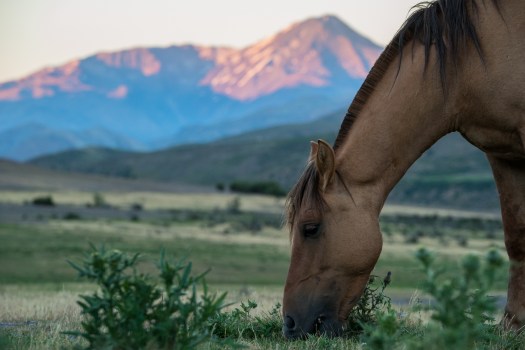
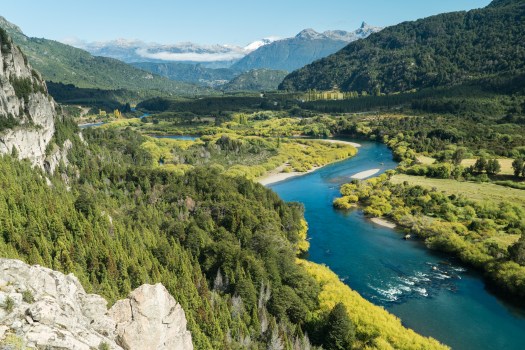
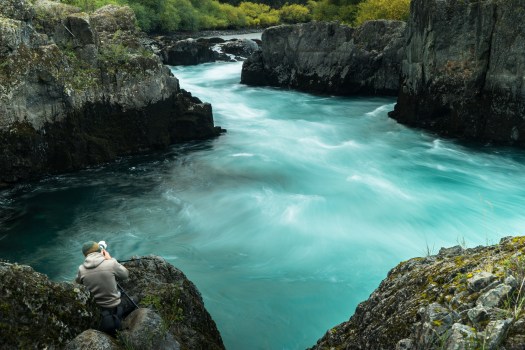
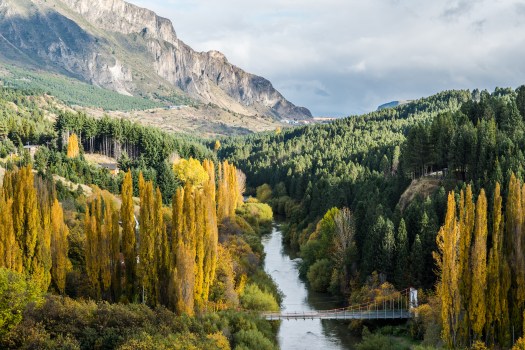
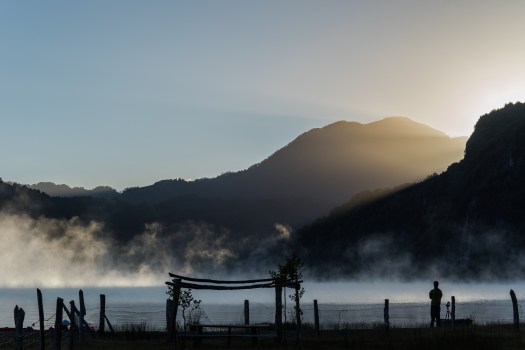
The Greater Patagonian Trail (GPT) is 1,300 miles long and counting. It is a growing network of backroads and rutted trails stitched together to form an enormous route across South America, and almost nobody knows about it.
That’s because it’s been built quietly, the entire route put together by one couple who hope to share a love of hiking with the world.
I was up at 3:30am to check out of my hostel in Xela and walk over to Quetzaltrekkers through dark streets.
4:45am rendezvous. Our group of 10 included two guides, hikers from Canada, the States, England, Switzerland and Germany.
At 5:15am we climbed into a pick-up to get to the hectic Minerva bus depot. We were first to get seats on the chicken bus.
Arriving about 7:30am, we ate a good breakfast at a San Marcos bus station comedor.
Next was an even more crowded bus to Tuichan. By around 10:00am we started up.
Quetzaltrekkers have no employees. Everyone is a volunteer.
Volunteer guide, Jordan, from Canada.Volunteer guide, Rachael, from the USA.
All proceeds go to a children’s charity.
Being a volcano, I feared it would be an unrelenting slog at the same angle. Happily there is a fair bit of variation in the trail – though it is unrelentingly UP.
A highlight are the Hartweg’s pine, a very high altitude species
Spooky in the clouds.
Finally arriving at “base camp” after 4-5 hours, we enjoyed a healthy lunch of local fare.
That was 1000m elevation gain over 4km. Sleeping at about 4000m (13100ft), there’s a real risk of altitude sickness.
Everyone slept in provided 4 person tents aside from Jordan (who slept in a hammock) and myself who brought my own gear.
We all crashed for siesta, knowing we wouldn’t get much sleep tonight.
We’d planned to climb up to Tajumulco’s second summit, Cerro Concepcion, for sunset. But afternoon rains had come. We stayed in our tents.
By 6:30pm the rain had stopped. We had dinner and hot drinks, hoping the morning would be clear. This was the second trip for one girl – her first summit clouded over.
A brazen mouse ran around the cook area.
___ My alarm went off at 3:30am. I’d not slept particularly well.
Though we had clear skies and near a full moon, it was dark. My borrowed headlamp died quickly. I followed the lead guide closely to take advantage of her lamp.
The final 200m is a scramble. Gloves are useful for grabbing stone in the dark.
It went well. All 10 of us at the top before dawn. We huddled in our sleeping bags.
Dawn at 5:30am was gorgeous.
Everyone – at this point – was super happy they had joined the trip.
We stayed on top as long as we could handle the cold wind.
Rick the highest man in Central America
There are views to Mexico. And many other volcanos.
This is volcano shadow.
We descended by a different route, first circumambulating the crater.
Quickly into grassland, we started to get hungry.
The water was boiling for breakfast by the time we got back to camp.
This very popular hike is – sadly – quite littered and vandalized. Instead of leaving my Summit Stone at the summit, I left it in one of the excellent climbing trees at camp. 🙂
No rush. We dried the tents, the sun already very hot at 8am.
I was impressed with the toilets provided. Happily there are very few insects this high up.
The descent was relaxed. Our climb already a success.
It’s slippery, however. We had numerous falls on the way down. This could be treacherous in the rain.
One highlight was seeing the eruption of another volcano – Santiaguito. It’s a near daily occurrence. In fact I’d climbed up another volcano, Santa María, to see that eruption on another hike, 10 years earlier.
The National flower of Guatemala, Lycaste skinneri, are everywhere. Another highlight.
About Noon we got back to the road. The peak was already clouding up. No doubt it would rain again late afternoon.
We were hungry again for a big lunch at this village restaurant. Most had the fried chicken. And Gallo beer.
We reversed our route. First a bus back to San Marcos. Our driver parked close to our next so they could throw our packs roof-to-roof. (I’d never seen this before.)
In Xela we again climbed into a pick-up truck to return to Quetzaltrekkers by about 4:30pm
A shower. Some rest. To celebrate some of us got together for street tacos and cheap beer at the Plaza Central.
Tajumulco is highly recommended, so long as you have clear skies in the morning. You can do it on your own, but finding all right buses may be a hassle.
This is a relatively unknown trek in British Columbia, maybe receiving around 30 visitors each season.
Every day of the trek is different from the other, passing through mountain valleys of incredible orange and red mineralizations to volcanic plateaus littered with cinder cones and fine sandy pumice.
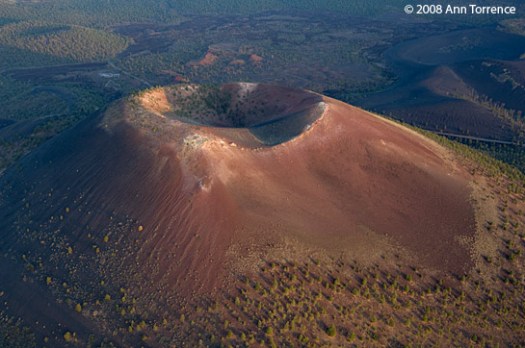
Mt. Edziza and the Spectrum range are located in the Mt. Edziza Provincial Park in the Tahltan First Nation territory of northern British Columbia, 35 km. west (by air) of Highway 37 at Tatogga Lake. From the air, you can see where the lava poured across the plateau and down through the trees to the lakes and creeks below. Normally, trekkers undertake one section at a time – either a 5-day trip along the Edziza plateau or a 5-day trip through the Spectrum range. For either one of these 5-day treks, most people fly out from Mowdade lake which is roughly the dividing line between the Edziza and Spectrum regions.
… Bisected by the equator and set between Peninsular Malaysia and the Philippines, Borneo is the third-largest island on Earth. Three countries share this landmass — Indonesia, Brunei and Malaysia …
I’ve joined a G Adventures group for their 10-day Borneo-Sabah Adventure. With wildlife-seeking along the Kinabatagan River, a visit to an orang-utan preserve and touring Turtle Islands National Park on the horizon (see sidebar), I’m now primed for the premier alpine hike in this storied region of Asia — a setting that’s still very much a frontier, yet on the cusp of tourism greatness. …
Kinabalu is climbed in two legs — the first is a 1,270-vertical-metre ascent to Laban Rata, a guesthouse at 3,270 metres …
We debated whether or not to sidetrip to the Palguín hotsprings. Lonely Planet claimed it was 3.5km by road one way. That would mean 7km total IF we couldn’t find a ride with a vehicle.
The walk was actually about 8km one way. AND the one hotspring we paid for was not particularly hot. I did enjoy the menu of the day, however.
A first for me – burnt sugar cubes.
Happily we were able to get a ride back from the hotsprings to the trail, paying a staff person a few dollars for the lift.
Our first hassle on this trip. Burrs. 😦 It’s difficult to avoid them at lower altitude.
In fact, the Traverse is two hikes separated by the road walk we took yesterday. Theres no real reason to walk them connected. The start of the second half is here.
It was a steep climb to get back up to the Traverse.
The Monkey Puzzles kept me moving.
We were steadily leaving Villarrica behind.
Here’s one of the highlights – Mirador los Volcanes. We could see at least 6 from one spot.
What you don’t see in the photos are hordes of horseflies (called tabanos here) even up at that high altitude in the wind. Later we learned that south central Chile doesn’t have many mosquitos, but they do have horseflies in January. I’ve never seen them so aggressive.
From the Mirador it’s a long, interesting ridge walk.
We walked quickly, swatting flies.
When we finally reached the Lonely Planet recommended camp all we could do was jump into our tents to hide out until dark. The flies were that bad.