Living in Mexico’s Sierra Madre mountain range, the Raramuri Indians are some of the best long distance runners in the world, but how far can they run in the face of problems like environmental damage, loss of native lands, and the drug war? An American ultra marathon runner known as Caballo Blanco is fighting to help the Raramuri preserve their culture and tradition of long distance running. The Copper Canyon Ultra Marathon is the result.
On the insistence of my Adventure Racing buddy, Dave Adlard, I bought a book.
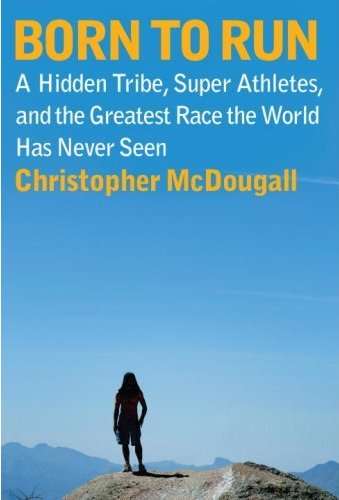
Born to Run: A Hidden Tribe, Superathletes, and the Greatest Race the World Has Never Seen
A fantastic read, even for non-runners. The author, Christopher McDougall, (video) is a master story teller. I was gripped by this true life story.
Full of incredible characters, amazing athletic achievements, cutting-edge science, and, most of all, pure inspiration, Born to Run is an epic adventure that began with one simple question: Why does my foot hurt? In search of an answer, Christopher McDougall sets off to find a tribe of the world’s greatest distance runners and learn their secrets, and in the process shows us that everything we thought we knew about running is wrong. …
Christopher Mcdougall reminds me of Jon Krakauer, another magazine scribe turned author.
Born to Run is as engaging as anything by Krakauer.
The culminating Greatest Race the World Has Never Seen is set in Mexico’s Copper Canyon. I visited as a tourist in 1999. Fantastic.
I’ve long planned to return for some serious hiking there. Unfortunately, as the book describes vividly, it’s very dangerous today as the Canyons are home to big marijuana plantations. You might get shot.
… My brother Alan died of Leukaemia back in 1969. Ever since then I have harboured the idea of doing something amazing to raise funds for research into a cure for this cruel disease. …
I’m happy to have survived. And fairly happy with my time of 1hr 12min, or so.
Since I’d not done any distance “running” since June, I placed myself at the very back of the pack for the start. That way I’d not suffer the indignity of little girls passing me en route. (The winner of the 2008 5km Women’s division was 13yrs-old.)
For the first 4km I took it very easy, unsure whether or not I’d hit some kind of 8km “wall”. Like most at the back of the pack, I walked some of the steeper sections when I felt walking would be as fast as a slow jog.
At about the half way point I started to feel GREAT and began to push the stride length. Started passing lots of people.
The XTERRA course trails are infamous for loose volcanic rock. But I found this one fairly tame. No chance of a sprained ankle, even on the steeper descents. There was a fair bit of elevation but no huge hills.
In my ignorance I didn’t know that the last mile or so was along the ocean. Soft sand and jagged rock. Heat, humidity and sand sucks your energy. I passed almost no one on my “kick” though I felt strong.
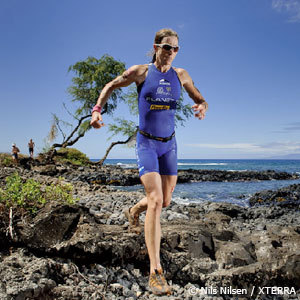
Though billed as something of a fun run, there are some very serious runners. Mike Tobin, past winner of the XTERRA triathlon, was slumming it in the 10km. And he only came 3rd!
I just attended a clinic with some of the favourites: Julie Dibens, Melanie McQuaid, Nico Lebrun and Conrad Stoltz. Yesterday I listened to Shonny Vanlandingham and Josiah Middaugh. Inspiring!
I started at midnight. For the first trip I decided to go up the Mountaineers Route. Despite going from Portal to summit (and much of the way back) in the dark I made good time. It helps that I know the route well. I reached the summit at 3:43am (3 hrs 40 mins from the Portal). I was alone on the summit and the hut was empty. I returned to the Portal a little after sunrise at 6:54am for a total roundtrip time of 6 hrs 51 mins.
This quick time had me briefly wondering whether a 3rd summit would be possible. That dillusion was thoroughly dispelled on my 2nd trip up. For the 2nd trip I decided to go for the Main Trail. I took a half hour break before starting. As much as I knew I needed to eat I couldn’t manage to get much down. I started up the Main Trail at 7:22am.
As I closed in on Trail Camp I began to slow noticeably. Both the MT and MR are hard on the calves (too many steps). Going up the switchbacks my speed slowed further. I past a few other hikers but only just barely. By the time I reached Trail Crest my calves were done. From Trail Crest to summit was agonizingly slow and my calves kept wanting to cramp up. For some reason I kept thinking about my first time up Whitney almost exactly 7 years ago. I reached the summit for the 2nd time at 1:11pm. I was thoroughly depleted. Time from Portal to summit was a less than stellar 5 hrs 49 mins. Roundtrip time was 9 hrs 33 mins.
I regained strength on the way down. I did some running but for the most part just took a fast pace. My priority now was to get down in time for a burger at the Portal. I knew this would probably be my last Portal burger for the year so I was well motivated. I reached the the Portal at 4:53pm. …
Although the 2nd summit was a bit harder than I expected both trips together took less than 17 hours combined. This marked my 28th and 29th Whitney summits.
Laura Jones, a reporter from the U.K., hiked a 10 day tour:
… the lovely thing about the TMB is that the drama of those awesome panoramas of glaciers and mountain peaks are interspersed with walking green valleys filled with Alpine flowers, twisty turney streams, chalky blue mountain lakes – and if you’re lucky marmosettes.
The changing scenery that accompanies the ascents and descents kept me hooked.
There were whole days where we didn’t see another soul as we walked ridges running alongside racks of glaciers.
Other days we passed through hamlets, villages and towns and then really appreciated being back in civilisation:
Champex, Courmayer and La Fouly were particularly lovely. …
Fjällräven, a Swedish company specialising in outdoor clothing, sponsors an annual hiking race.
Hiking race?
I’ve never heard of this concept before. And 2000+ partipants attended this year!
The competition element is downplayed, however. It’s not in the same category as most other trail races. In this event, you must carry a pack. And sleep in a tent. Most people do it for FUN.
photographer: Kikki Brink
Under the RULES, it seems littering is the biggest breach – immediate disqualification! (I do like that.)
Participants walk from Nikkaluokta 110km to Abisko. (This is the first section of the famed Kungsleden trail. Of the 2000 racers, some no doubt continue to the end of that 440km (270mi) through hike.)
Medals are awarded: Gold if you finish in less than 72hrs, Silver less than 96hrs, Bronze under 120hrs.
The greatest backcountry boozer I’ve hiked with is Kelly Mock, then living in Whitehorse, Yukon. It was Kelly that carried a “Bubba” (mini keg of beer) over the Golden Staircase to Happy Camp on the famed Chilkoot Trail in Alaska.
Arriving on the solstice, Kelly bought a round for the house at Happy.
He’s been one-upped.
Michael Popov carried 20lbs of beer up 4,000′ of Mt. Whitney, the highest peak in the continental USA. He was doing some kind of loco carbo loading / altitude acclimatization for his record breaking unsupported John Muir Trail run. (4 days, 5 hours and 25 minutes from Mount Whitney to Yosemite Valley)
Incidentally, Aaron Sorensen will be starting June 28th an attempt on the Unsupported Record on the Lake Tahoe Rim Trail. No one has claimed this record yet. Aaron is looking at 55-60hrs for the 168 miles.
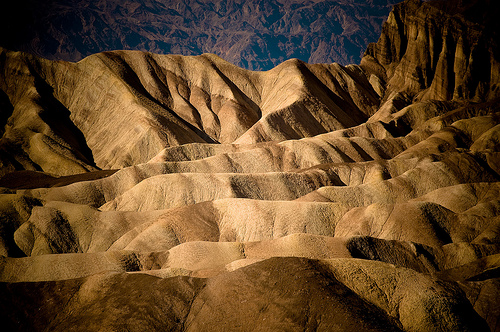
My favourite vista in Death Valley is one of the most popular.
As well as being a curious film by Antonioni (1970), Zabriskie Point is an elevated overlook of a colorful, undulating landscape of gullies and mud hills at the edge of the Funeral Mountains, a few miles from the edge of Death Valley …

 … My brother Alan died of Leukaemia back in 1969. Ever since then I have harboured the idea of doing something amazing to raise funds for research into a cure for this cruel disease. …


 besthike.com