Nick Stoyanov posted an overview on Backpacker Verse:
… Altogether, the Appalachian Trail is about 2,200 miles (or 3,500 kilometers).
… it passes through 14 states: Maine, New Hampshire, Vermont, Massachusetts, Connecticut, New York, New Jersey, Pennsylvania, Maryland, West Virginia, Virginia, Tennessee, North Carolina, Georgia …
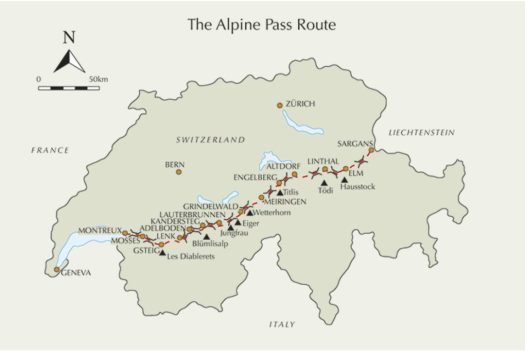
… a 340 kilometre (211 miles) hiking trail that spans the breadth of Switzerland. Starting in Sargans on the border with Liechtenstein, it passes up and over sixteen mountain passes before reaching its western terminus at Montreux, situated on Lake Geneva.
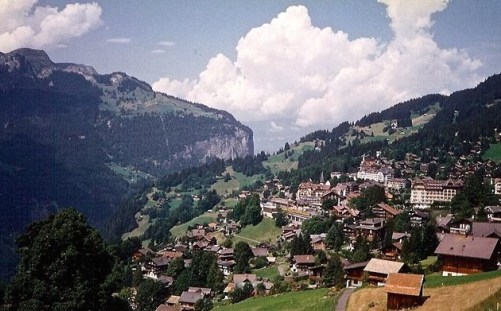
I completed the Alpine Pass Route in August, 1997. Nineteen years and many hiking miles later, it remains one of my favourite European trails. A memorable combination of gorgeous mountain scenery, picturesque villages, great hospitality and some very cool side trips …
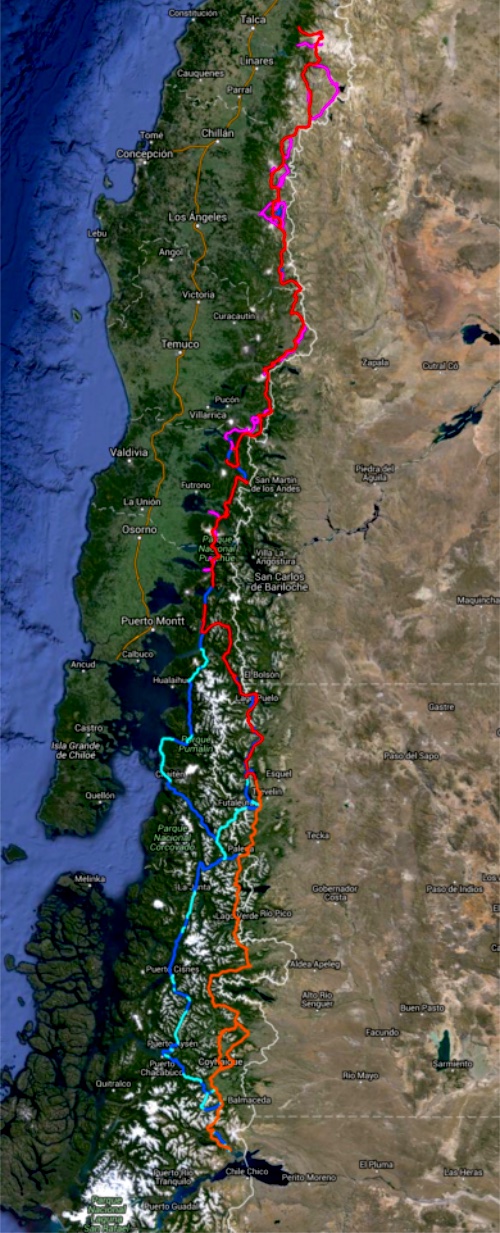
The Greater Patagonian Trail (GPT) is 1,300 miles long and counting. It is a growing network of backroads and rutted trails stitched together to form an enormous route across South America, and almost nobody knows about it.
That’s because it’s been built quietly, the entire route put together by one couple who hope to share a love of hiking with the world.
He wore size 13 boots. Despite a job as draftsman in the big city, he was happiest out on the trail. When Paul was 42, doctors diagnosed his mom with Parkinson’s. He nursed her for four years until her death. By that time, his father developed Alzheimer’s. The gaps between hiking trips grew longer and longer. By the time his father passed in 2011, Paul had two heart attacks. His love for the outdoors never diminished.
Even as his body failed him, Paul started to pack for the trip he’d dreamed of completing—all 2,190 miles of the Appalachian Trail. At night, he’d recount to his wife, M’Lynn, all he’d learned in his research. His heart no longer allowed him to walk much further than the end of his block, but his soul was ready to go. Next to a full backpack, he left his three polished sets of hiking boots. Last July, Paul passed away. He was 53.
As M’Lynn moved through the stages of grief, it came time to tidy up Paul’s gear for a trip he wouldn’t take. She had an idea—one last gift to the man she loved. She needed help. Could we and our greater outdoor community get these boots out on the trail?
‘Unbounded’ is an adventure-travel documentary following an unaided crew of four hailing from different corners of the globe as they hike and pack-raft roughly 1,500 km through the Patagonia region of South America.
The expedition will take place from mid-December to mid-April, documenting the extreme and unique conditions in Patagonia and the surrounding area.
The crew will base their trip along the “Greater Patagonian Trail” and make they’re way to Patagonia National Park. The film will focus on discovering the indescribable factors of Patagonia, learning the history and culture of the people living in the area, and bringing to light the incredible beauty of the region – all in an effort to help raise awareness of the need to preserve this untamed, but delicate area.
A significant portion of the film’s proceeds will go towards Conservacion Patagonica to help protect and maintain this incredibly vast and beautiful landscape.
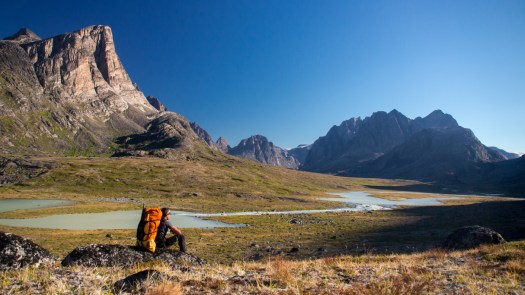
Willem Vandoorne has done a number of the world’s most difficult long hikes. He’s just back from Greenland.
… which was without any doubt the most beautiful I have ever made and which has impressed and touched me deeply. The feeling which I had during those weeks in the wilderness is hard to explain. As I struggled through boulderfields and moraine, watched the sun set from mountain with views unknown to human gaze, and slalommed along countless muskoxen, I no longer felt like a spectator of any kind in this vast wilderness, but was an integral part of it, obeying to the same rules and laws of nature as any animal out there.
My trip was blessed with sensational weather conditions – during the first 4 weeks of the trip I had only a few overcast days with some rain and a few mornings with sea fog – all the rest was just blue skies and warm temperatures. I hiked over 80% of the distance in t-shirt …
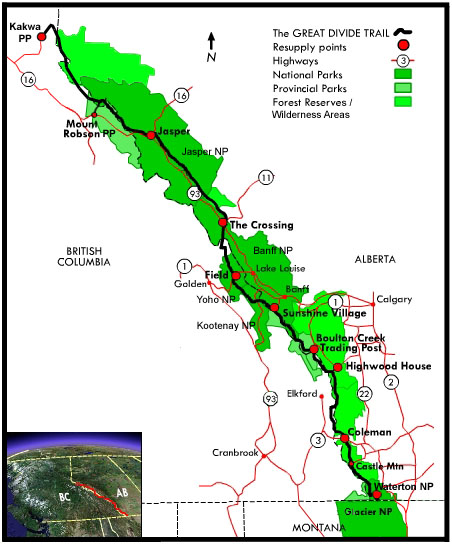
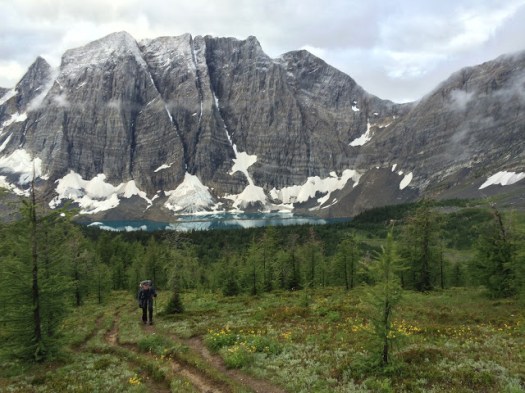
The Great Divide Trail (GDT), is a wilderness hiking trail in the Canadian Rockies. The trail closely follows the Great Divide between Alberta and British Columbia, crossing the divide no fewer than 30 times.
It begins in Waterton Lakes National Park at the Canada-US border (where it connects with the Continental Divide Trail) and ends in Kakwa Provincial Park north of Jasper National Park. The Great Divide Trail is 1,200 km long …
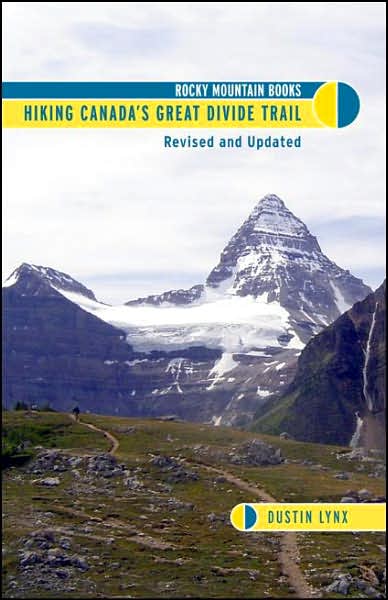
Fewer than 20 people a year thru hike the GDT. If you might be interested, try to get a copy of the only guidebook.