adventurer rewarded for stupidity?


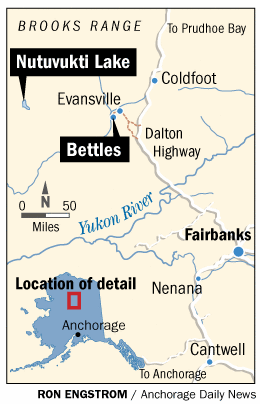
map-of-brooks-rangeDavid Roberts was air rescued in Alaska this past summer at a cost of over $90,000.

Though he had a lot of experience with arctic wilderness in Saskatchewan, the media is reporting that he was totally unprepared, and a “goofy guy”.

Roberts, a 54-year-old Australian, was trying to walk almost 100 miles across the Brooks Range wilderness when he set off a long-distance distress call on Friday. He’d been out there alone for two months.

He hauled a 140-pound sled full of supplies behind him, he said. A persistent stomach bug left him dehydrated while frequent, stabbing pains pierced his cold feet.

He traveled fewer than 40 miles in two months — far less than he’d expected.

Alaskans have little patience for seemingly ill-prepared adventurers, and news of the rescue prompted comparisons to another explorer who trekked into the wilderness 16 years ago — Chris McCandless. McCandless starved to death after trying to survive on his own for more than three months near Denali National Park.

Roberts didn’t know who would have to pay for his rescue when he made the decision to get help, he said. “I didn’t presume that somebody else was going to pick up the tab on that.” …

Anchorage Daily News – Adventurer’s wilderness trek ends with air rescue, free hotel

Roberts will not be billed for the rescue costs.

Israeli hikers lost, again

Israeli hikers are the most adventurous of all, in my experience.

That’s why I’ve so often joined up with them on treks around the world.

Unfortunately, they often get themselves in trouble. Like these two who decided to leave their group and strike out on their own for an easier itinerary:

hikers

Happy ending: Romi Givon (21) and Tal Bar (21), the two Israeli hikers who went missing for two days in the Villarrica National Park in Chile were found safe and sound on Tuesday afternoon, according to Tami Bar, Tal’s mother.

Ran Givon, Romi’s father, along with an Israeli rescue team, was scheduled to fly to Chile in the evening to assist in the search.

The 138,600 acre Villarrica volcano is dominated by the Villarrica volcano, which towers at an altitude of 9,338 feet and in considered most active volcano in South America. The weather in the area is notoriously fickle, and is characterized by heavy rain, fog and low temperatures. …

YnetNews

The story of Omri Kidron did not end happily.

When I hiked the Huayhuash Circuit in Peru, two Israelis were shot resisting bandits. At least one died of his wounds.

Please, please be careful out there.

is that a cougar in your back yard?

I lived in the Canadian prairies for years. Every once-in-a-while a cougar would be sighted. They can travel long distances along river valleys.

mbcougar.jpgTwo this year have been conclusively confirmed far outside their current range. This one was captured by a cottage surveillance camera.

An extremely rare sighting of a cougar has been confirmed in the Lac du Bonnet area of Manitoba. …

CBC

Cougars have seen me in the wild many times. But I’ve never spotted any of them. They are very elusive.

Here’s is the “normal” range:

cougar-range.jpg

Pumas (Puma concolor), also called cougars or mountain lions, are large wild cats, … mainly tan-coloured, and can be up to 1.85 metres long.

Wikipedia

every McKinley hike a horror story

I visited Denali in Alaska last year.

But it was too miserably overcast to hike far.

Has anyone ever had a GOOD hike there?

This trip report by Hank Leukart on Without Baggage is typical of others I’ve read:

… the best place to cross a braided river like the McKinley is at its widest point, when the river’s water spreads across many channels (or braids). The individual channels are shallower and slower moving than at river’s narrowest point, where all of the braids are combined into a dangerous, freezing, fast-moving current. Using our topographical map and compass to guide us, we walked to the river’s widest point and began crossing.

Each braid was harder than the previous; at first the water only reached our shins, but in later braids it reached our knees, our waists, and eventually, about halfway through our crossing, it reached our chests. Silt made the water opaque, so we painstakingly searched for the best place to cross each braid by throwing rocks into the water to test depth as we slogged through a labyrinth of rock bars between braids. We used all of the crossing techniques we knew (facing upstream, walking sideways, using walking sticks, and stabilizing against each other), but the crossing became progressively more difficult as the river became deeper and we became colder and wetter (water at 36 degrees Fahrenheit without a dry suit is unbearable for any length of time).

Eventually, we became trapped on a small rock bar with very little space to move up or down stream. We knew (by throwing rocks) that the next braid was at least as deep as the last, but there wasn’t much we could do to change the situation without crossing braids in reverse and moving backward, so we decided to try crossing the next channel from our current position. As we stepped in, the water reached above our waist, but we knew it would be passable. Then, we took a second step and discovered that the river-bottom had a sheer drop-off.

In an instant, water was above our heads and we were floating downstream at 20 miles per hour in 36-degree water with 45-pound backpacks strapped to our backs.

As I looked into my brother’s eyes, I could see that he thought we were going to die, and I telepathically agreed. I thought to myself, “This is how those stupid people you read about in newspapers die in the wilderness.”

mckinley.jpg

Did they drown?

Or was it another Alaskan sufferfest? Off route? Running out of food?

Click through to find out – Accepting Wet Feet.

The photography is terrific.

bear2.jpg
link

related post: hiking in Alaska … disappointing
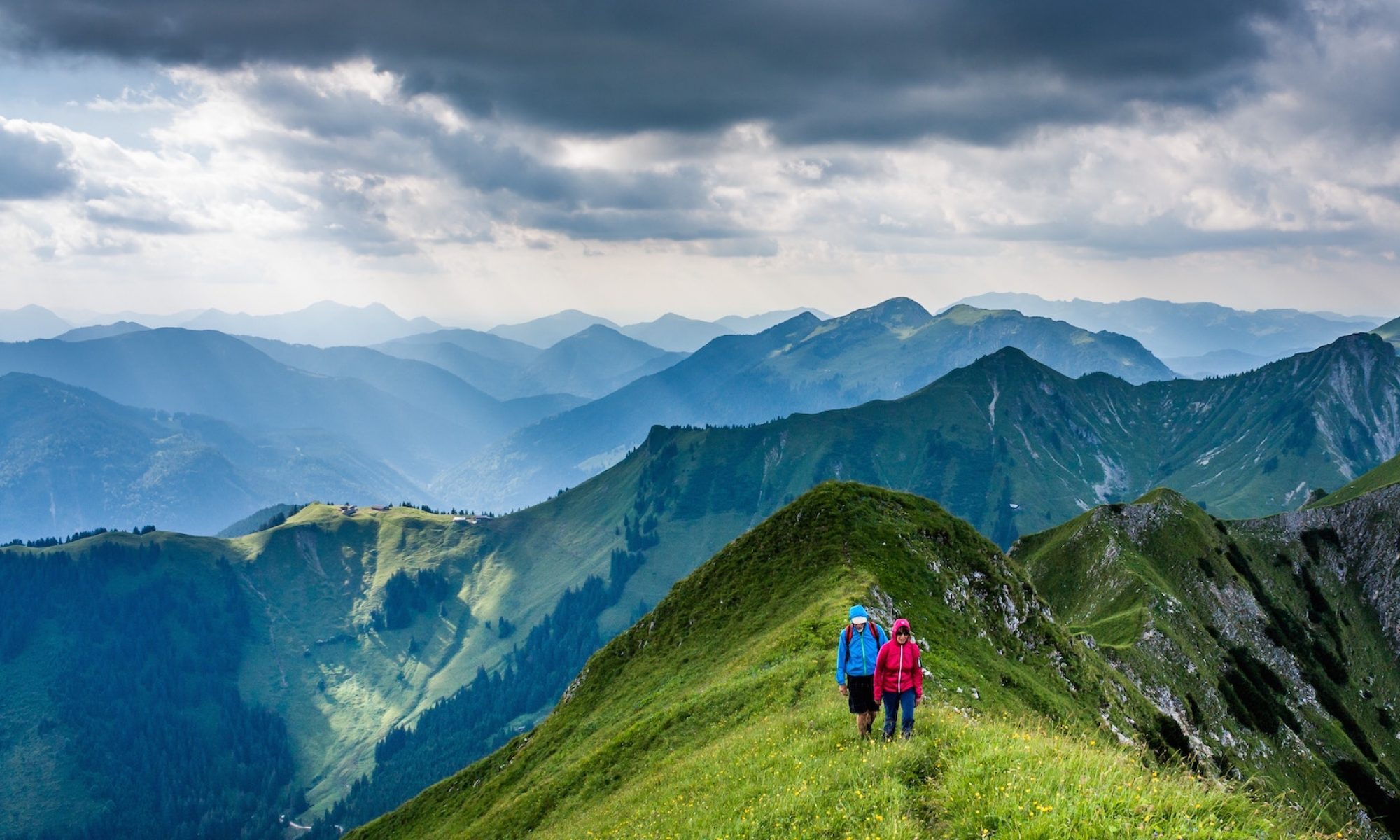
another Inca Trail alternative – Moonstone Trek

First off, this adventure does not have you hiking into Machu Picchu.

It finishes 7mi away in (amazing) Ollantaytambo. From there you take the train to Aguas Calientes. Then the bus up to the ruins.

machu-picchu.jpg
larger version – flickr – FranUlloa

On the other hand, it does look pretty good compared with the over-popular, problematic Inca Trail.

It passes through seldom-visited Andean villages, Inca and pre-Inca ruins and heads onto a beautiful altiplano plateau surrounded by glaciated peaks. Most groups won’t encounter any other tourists for the entire trek and the combination of stunning mountain scenery and wildlife, fascinating relics and real isolation is truly rewarding. …

Supported by horses rather than porters. It’s claimed to be a little tougher than the standard Inca Trail, as “it goes higher and covers slightly more distance”.

moonstone-altitude-chart.jpg

Exodus Guide Tours – Moonstone Trek

lamas.jpg
larger version – flickr – FranUlloa

(via The Adventure Blog)

The best alternative is still Choquequirao to Machu Picchu.

scrambling Annapurna Base Camp, NEPAL

My old hiking buddy from South America 2004, Canadian Grant Assenheimer, just climbed down from the high Himalayas. He was on a “holiday” between assignments for Doctors Without Borders.

From Grant’s email:

Just got back from ABC and had a fantastic time. The ‘scare’ tactics used by the tour companies almost had me convinced that I should take a guide but it is TOTALLY NOT NECESSARY. Pass the word! Even if you are only moderately fit, you can easily do any of the teahouse trekking without a guide or porter.

grant.jpg
larger version – flickr

My favorite day was a scramble up from the Annapurna Base Camp (ABC). Although most people stop at ABC, I rounded up a couple of New Yorkers and the 3 of us did this great day trip UP to the base camp for Tent Peak, one of the smaller ‘trekking peaks’ in the area. We started at 4100 m, went down and crossed the stone-covered glacier and then climbed to 4800 m via a steep morrain, icy river through a narrow gorge and finally a bit of a slog through steep high-altitude grassy slopes. This gave us GREAT views of the Annapurna Range, Machapuchre and some other ‘lesser’ 5 and 6 thousand meter peaks. The way UP was a bit challenging (ie. GREAT) because we didn’t see the PATH until we were already pretty much at the top. Lets just say that the way down was MUCH easier and didn’t involve navigating that icy river in that steep canyon or the 60 degree grassy slopes…

I also read Annapurna by Herzog during the hike. Wow. All I can say is that the Nepal of today is NOTHING like the Himalayas of the early mountaineers. I mean, they actually walked in from India. No apple pie or internet cafe waiting at 4000 m for them. What a story.

I started in Phedi, walked to ABC and then came out via Gorenpani and Poon hill. Truly spectacular and worth putting up with everyone else for the views. Definitely NOT a wilderness experience but if you go in without expecting one, its a great time.

nepal.jpg
larger version – flickr

Thanks Grant.

The Base Camp is the best side trip off the famed Annapurna Circuit.

superb West Coast Trail trip report

Photographer Hank Leukart penned one of the best trip reports I’ve yet seen on our #1 hike in the world

WEST COAST TRAIL, Vancouver Island, British Columbia — After our extraordinary Alaskan backpacking experience this past August, my brother and I had become addicted. For months following the excursion, we daydreamed, researched, and gushed about the possibilities for our next adventure. We considered a number of tempting options, including a Grand Canyon rim-to-rim-to-rim hike, a journey along the pristine Lost Coast of California, and even a long trek through remote Patagonia. But then, we read about the Graveyard of the Pacific. …

… When we arrived at the trailhead, Parks Canada gave us and the rest of the “West Coast Trail Class of June 2, 2008” a short presentation about the hike’s dangers. We were warned to use tide tables to time our coastal hiking and avoid being trapped by dangerous swells; we learned that if a helicopter flew overhead dropping tsunami warnings in bottles (seriously!), we would need to immediately drop our backpacks and sprint up towering ladder networks to avoid being swallowed by the sea; we were told to use the cable cars whenever possible to perform river crossings, which made us laugh due to “our extensive river crossing experience”; and we were urged, once again, never to run from a bear (or a wolf or a cougar).

After the park ranger sufficiently scared us, she sold us our trail permits. We donned our 50-pound backpacks (we were arguably overprepared for this trip, with more than two extra days of food and of course, the requisite board games we always take on backpacking trips) and stepped onto the ferry that took us to the beginning of our adventure. …

west-coast-trail.jpg

read the rest on Without BaggageBrothers tackle dangerous surge channels on the West Coast Trail.

The annotated photos are spectacular!

West Coast Trail: Days 1 – 3 Photography.
West Coast Trail: Days 4 – 5 Photography.
West Coast Trail: Days 6 – 8 Photography.

wct.jpg

Congratulations to Hank and his brother. That was some adventure!

I instantly subscribed to Without Baggage. And recommend you do too.

Survivorman – publish, not perish

… how do you like that headline, Tom?

From the sun-scorched sands of the Kalahari to the snake-infested jungles of the Amazon, Les Stroud has survived it all. Now, the creator, producer, and host of the hit television show Survivorman shares his field-tested expertise and gives you a no-nonsense look at the real world of survival. …

Survivorman.ca

Now he’s an author. I’m adding his new book to my Christmas wish list:

Essential Skills and Tactics to Get You Out of Anywhere - Alive

Survive!: Essential Skills and Tactics to Get You Out of Anywhere – Alive

I’ll add my thanks to the many others who love the reality TV show that Les Stroud did SOLO for three season. That’s impressive.

The first two seasons are available on DVD:

  • Survivorman
  • Survivorman: Collection 2
  • (via The Smoky Mountain Hiking Blog)

    America’s 10 Most Dangerous Hikes

    New on Backpacker:

    From a slippery Sierra catwalk to a treacherous Hawaiian paradise, we name the country’s 10 most hazardous hikes.

    The Maze, UT

    Bright Angel Trail, Grand Canyon, AZ

    Barr Trail, Pikes Peak, CO

    Mt. Washington, NH

    Muir Snowfield, Mt. Rainier, WA

    Huckleberry Mtn., Apgar Range, MT

    Kalalau Trail, Kauai, HI

    Buckskin Gulch, UT

    Abrams Falls, Great Smoky Mtns., TN

    Mist Trail, Half Dome, CA

    America’s 10 Most Dangerous Hikes

    Buckskin Gulch looked very dangerous, I thought, when I took a sidetrip hike part way in from Paria Canyon. No one has yet died there, though.

    The Maze really appeals to me. But rather than do the long, difficult drive to get there … I’m thinking of rafting across the river from the Needles. (I’m not sure that’s actually allowed.)

    cany_map.jpg

    The Maze is huge and sprawling. It would be difficult to see many of the rarely visited arches in one trip.

    tibbett.jpg
    Tibbett Arch – NaturalArches.org

    most hazardous walk to school

    The world’s remotest school

    Children in a remote part of China face a hazardous walk to school – because it is halfway up a sheer cliff.

    1449797.jpg

    The school in Gulu village, Sichuan province, lies halfway up a mountain and climbing up from the base takes five hours.

    The elementary school has only one teacher who has been there for 26 years, reports the West China City Daily.

    Villagers say going to school is very dangerous for the children, since the path is only 1ft 4ins wide at the narrowest point and has a sheer drop on one side.

    Walking along the narrow, zigzagging path also makes the children feel dizzy, they say.

    1449798.jpg

    The school has five concrete buildings and a playground with a basketball hoop made of two wooden poles and a broken blackboard.

    However, the children are allowed to only pat the balls, as if they throw them and they go over the edge of the cliff, it would take half a day to retrieve them.

    Shen Qijun, 45, the teacher, has threatened to quit several times, but each time the villagers plead with him to stay as there would be nobody else to teach their children. …

    Ananova

    (via Dark Roasted Blend)

    Check, too, their “Most Dangerous Roads in the World” Series.