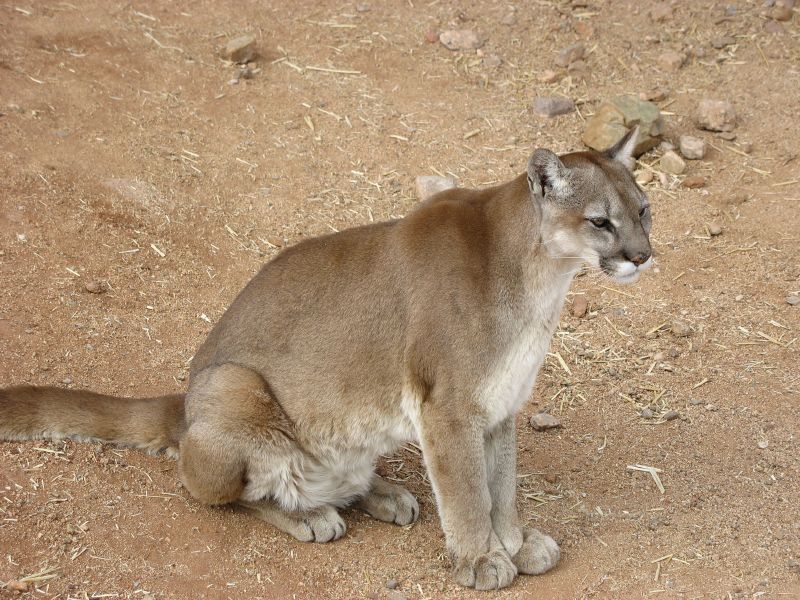
Mountain lions are much less dangerous to hikers in North America than snake bites, lightning strikes and even bee stings.
But plenty of people have been freaked out by a recent viral video.
“The encounter might have been avoided altogether, but once it happened, the runner did a lot of things right,” says Denise Peterson, a Utah resident and region coordinator with the Mountain Lion Foundation.
“But individuals and the media are getting a lot of things wrong …
26-year-old Kyle Burgess has told reporters that he was running on a trail in Provo’s Slate Canyon when he saw kittens on the gravel path ahead of him. Thinking they might be bobcat kittens, he started recording video on his phone. When the mother lion appeared, he immediately knew he had made a dangerous mistake.
In the six minutes that follow, the video shows Burgess doing many things correctly: he backed away slowly, continued facing the lion, spoke loudly and firmly, and didn’t try to run away.
The lion followed him for several minutes, occasionally hissing and lunging. “She clearly did not view him as prey,” says Debra Chase, CEO of the Mountain Lion Foundation.
“The behavior was meant to chase him away, which it did very well. The mother lion was reacting to a perceived threat to her young.” …
The NU 25’s main limitations are its short battery life (in our testing, the NU’s burn time was much shorter than listed) and the fact that it’s hard to keep the light from shining in your camping partner’s eyes due to its wide beam pattern.
1. Why choose trail running shoes over boots for three-season conditions?
2. When are boots preferable to trail runners?
3. “Wearing Your Fears” – Examining the commonly-held belief that boots provide a greater degree of protection for your ankles than low-cut footwear while backpacking.
4. “A Piece in the Puzzle“ – Why your choice in footwear should be considered an integral piece of an overall lightweight backpacking strategy.
5. A list of 15 of the top trail running shoes in today’s market.
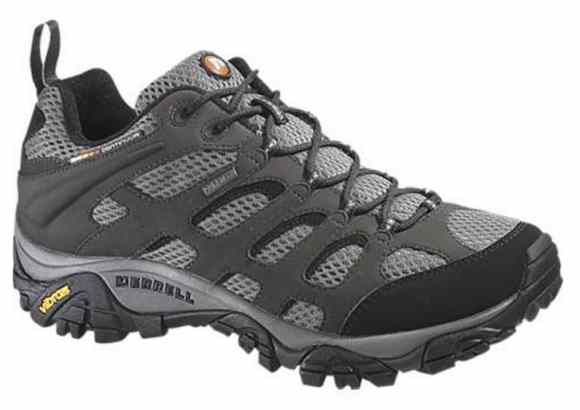
I’ve tried most everything over the years, ending up with something in-between runners and boots – approach shoes — most often Merrell Moab2 Ventilators. Normally without a Gortex layer.
I go with Merrell as they are available online in very wide sizes. I have bunions.
I go with trail shoes as I like the durability.
Cam finds he can get about 800 mi (1,287 km) out of a good approach shoe; as opposed to trail runners which normally need to be retired after 500 mi (805 km).
I’m loath to suffer stubbed toes so prefer footwear with good protection up front.
Like Cam, I wear low-cutfootwear as my ankles are healthy and I’m agile enough not to bash into rocks.
For something VERY rugged — K2 Base Camp, for example — I would take high tops or boots.
The downside of approach shoes is weight. And the smell.
After a hike where my shoes get wet I need bake them in the sun. For days.
Trump and the Republican Party have been ruthless for 4-years selling out public land to rich supporters and corporations. The Environmental Protection Agency has weakened regulations.
For example, a Judge removed Trump public lands chief —a former oil industry attorney — who’d been working in that position illegally.
Patagonia has just released The Fight for America’s Public Lands.
A feature-length documentary about America’s system of public lands and the fight to protect them.
Despite support from voters across the political spectrum, our public lands face unprecedented threats from extractive industries and the politicians in their pockets.
Part love letter, part political exposé, Public Trust investigates how we arrived at this precarious moment through three heated conflicts—a national monument in the Utah desert, a mine in the Boundary Waters and oil drilling in the Arctic National Wildlife Refuge—and makes a case for their continued protection.
I did Markha Valley independently. But for Kuari Pass I finally signed on with a guided trek.
The hiking infrastructure in India is not well developed. Getting to and from trailheads often a headache. Next time I go to India I’ll likely sign on for trips guided by IndiaHikes.
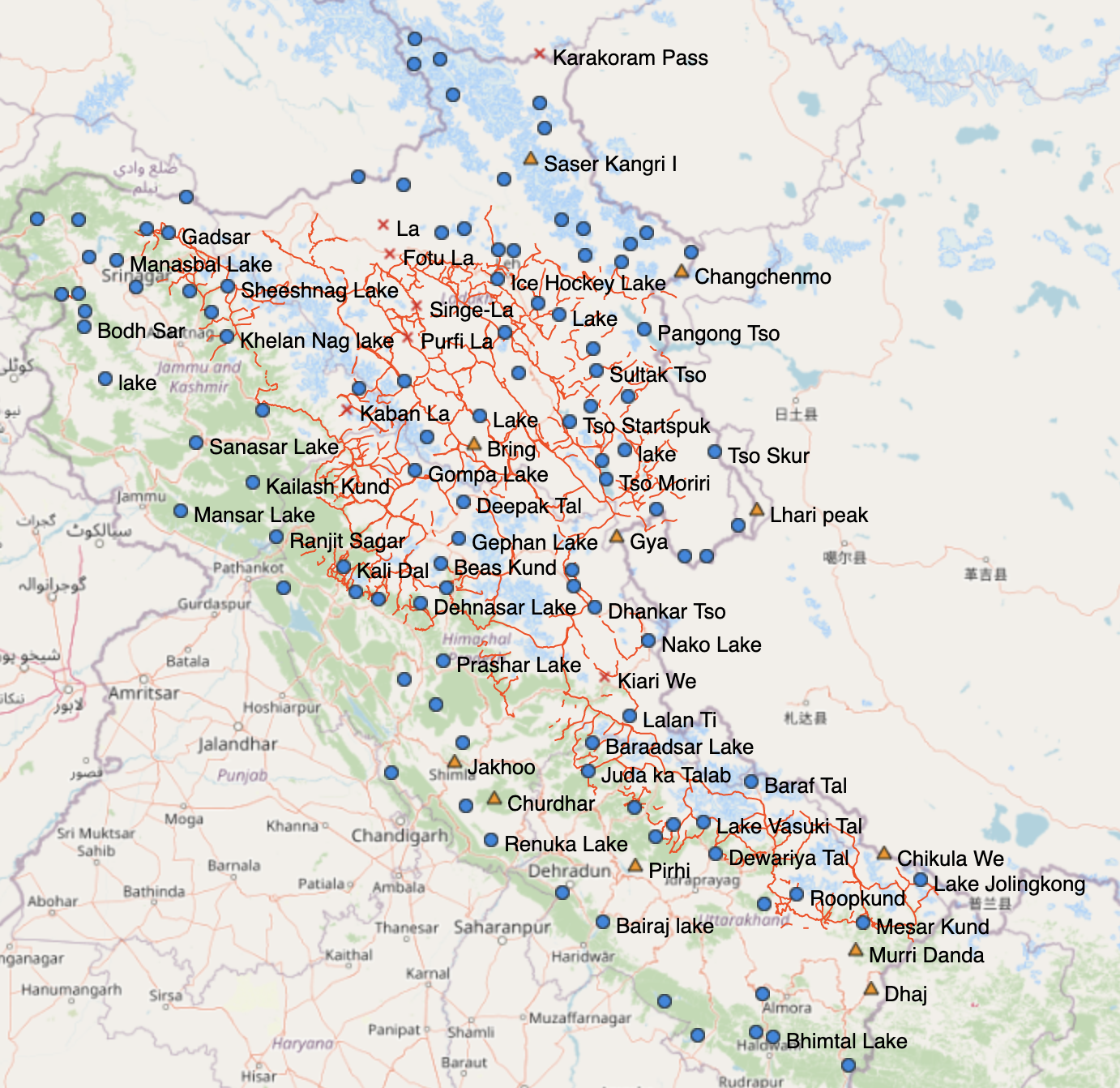
So far, he has pulled together over 1,000 trails across Uttarakhand, Himachal Pradesh, Ladakh and Jammu and Kashmir.
It shows 600 passes, 700 high-altitude lakes and more than 10,000 reference points. …
It allows hikers to see elevation profiles and download GPS logs onto their phones rather than having to carry multiple, less detailed paper maps.
“The map has more trails than anyone could ever cover in a lifetime,” he says.
“It took me months to plan a long traverse across the Himalaya. With this new digital map, you have all the information in a single place.” …
Everything is open sourced, so can be accessed with any Open Street Maps viewer or mobile app (for free). Other hikers can add information to it and help the resource grow. …
Hoping to climb Golden Hinde, the highest mountain on Vancouver Island 2,195 m (7,201 ft). September should have drier trails. Fewer bugs. … Hopefully.
Many try and fail to get to this summit. It’s a scramble up snow or rock at the top.
The mountain took its name from Sir Francis Drake‘s ship, the Golden Hind, named by an early fur-trading captain who was reminded of Drake’s ship as sunset hit the mountain
My plan is to hike the 47km Golden Hinde Traverse on the Elk River trail through to Myra Falls. I’ll only attempt the summit as a detour if conditions, health, time and weather permit. No pressure. 🙂
Cost for a guided climb is about CAD $1500 for 5 days.
The 38-mile Resurrection Pass Trail through the Kenai Mountains is by far the most popular multi-day backcountry route in Southcentral Alaska. Ideal for backpackers and mountain bikers—and a great destination for skiers and snowshoers during snow season—the trail links historic gold mining areas near Hope with a trailhead near Cooper Landing close to the Kenai River.
It is a true classic, drawing hundreds of visitors over the entire year. Many Alaskans return annually—often taking at least five days to traverse the route. …
You have two options for accommodations on multi-day trips: rent cabins or carry a tent. …
If you want to hike from one end to the other, you need to set up a shuttle or book a trip on a local trail taxi. …
The Kenai Mountains feature prime brown bear habitat, and the forests abound with black bears. So take all the usual precautions—including storing food in bear lockers or portable vaults, keeping a clean camp and carrying bear spray for deterrence. Make noise and pay attention. Hikers regularly report encounters with or catch sight of both species. Having said that, the trail gets regular human traffic and does not have a reputation for unusual bear problems.
Mid-June through early September is the window.
Kraig Adams expanded on the standard route. And put together a video which reveals the massive landscape very well.