

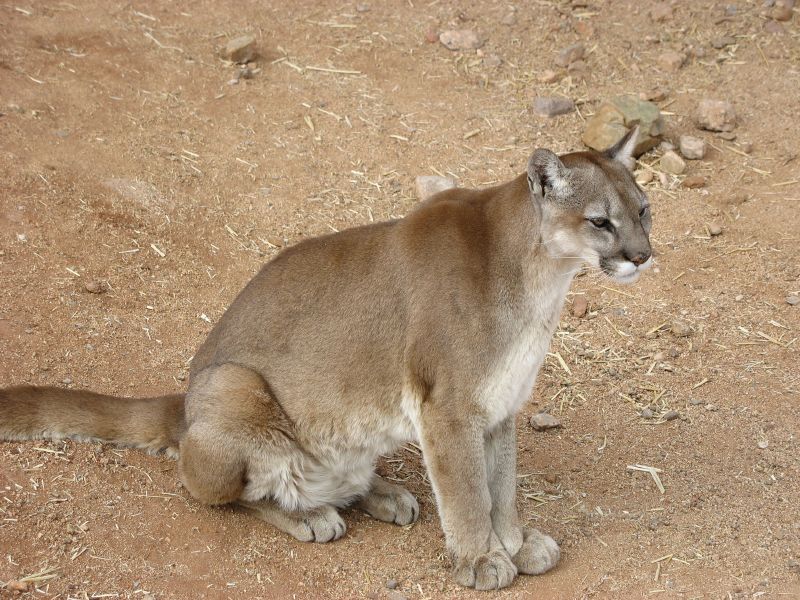
Mountain lions are much less dangerous to hikers in North America than snake bites, lightning strikes and even bee stings.
But plenty of people have been freaked out by a recent viral video.
“The encounter might have been avoided altogether, but once it happened, the runner did a lot of things right,” says Denise Peterson, a Utah resident and region coordinator with the Mountain Lion Foundation.
“But individuals and the media are getting a lot of things wrong …
26-year-old Kyle Burgess has told reporters that he was running on a trail in Provo’s Slate Canyon when he saw kittens on the gravel path ahead of him. Thinking they might be bobcat kittens, he started recording video on his phone. When the mother lion appeared, he immediately knew he had made a dangerous mistake.
In the six minutes that follow, the video shows Burgess doing many things correctly: he backed away slowly, continued facing the lion, spoke loudly and firmly, and didn’t try to run away.
The lion followed him for several minutes, occasionally hissing and lunging. “She clearly did not view him as prey,” says Debra Chase, CEO of the Mountain Lion Foundation.
“The behavior was meant to chase him away, which it did very well. The mother lion was reacting to a perceived threat to her young.” …
Mountain Lion Foundation Issues Plea for Proper Reporting on Utah Encounter


















 besthike.com