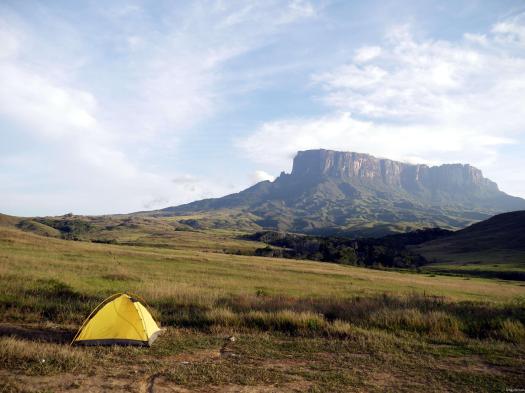
Mount Roraima is the highest of the many Table Mountains (tepuis) scattered over the grasslands of The Grand Sabana. The strange rock formations, quarts fields that look like a diamond encrusted fairy land, insect eating plants and many high waterfalls gives the whole area unreal feel and have been an inspiration to writers and movie makers. It is thought to have inspired Arthur Cone Doyle’s book ‘The Lost World’, published in 1912 …
Tours are normally 6 to 8 days, taking three days to reach the top, then one to three days exploring the top and it takes two more days to come down the same trail. You cannot hike this route independent since a guide is compulsory. There are many companies in Santa Elena that offers all-inclusive tours; you can also try to find an independent guide to lead your trek. …
I was up at 3:30am to check out of my hostel in Xela and walk over to Quetzaltrekkers through dark streets.
4:45am rendezvous. Our group of 10 included two guides, hikers from Canada, the States, England, Switzerland and Germany.
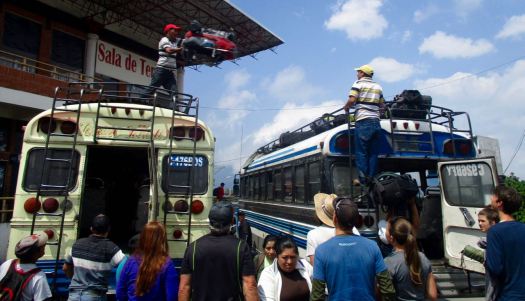
At 5:15am we climbed into a pick-up to get to the hectic Minerva bus depot. We were first to get seats on the chicken bus.
Arriving about 7:30am, we ate a good breakfast at a San Marcos bus station comedor.
Next was an even more crowded bus to Tuichan. By around 10:00am we started up.
Quetzaltrekkers have no employees. Everyone is a volunteer.
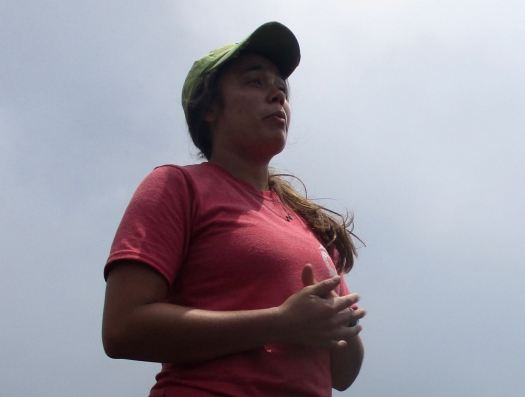
Volunteer guide, Jordan, from Canada.Volunteer guide, Rachael, from the USA.
All proceeds go to a children’s charity.
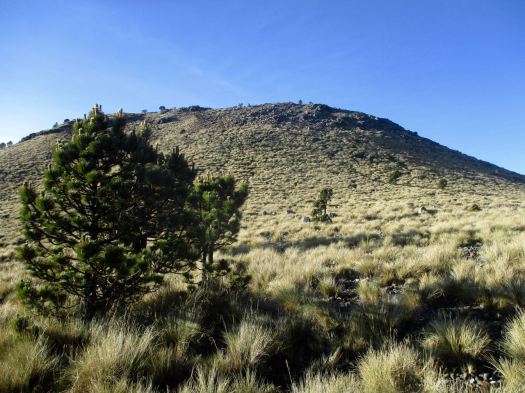
Being a volcano, I feared it would be an unrelenting slog at the same angle. Happily there is a fair bit of variation in the trail – though it is unrelentingly UP.
A highlight are the Hartweg’s pine, a very high altitude species
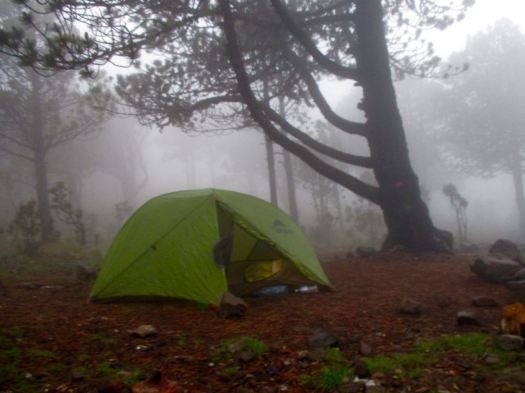
Spooky in the clouds.
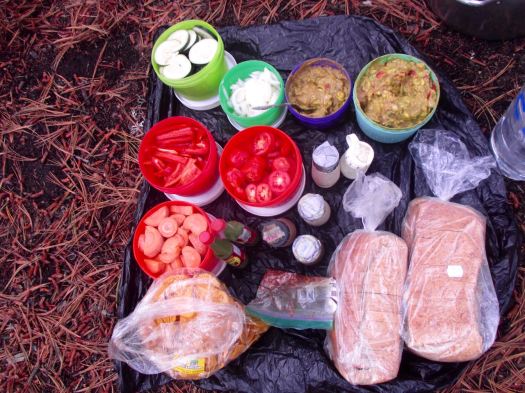
Finally arriving at “base camp” after 4-5 hours, we enjoyed a healthy lunch of local fare.
That was 1000m elevation gain over 4km. Sleeping at about 4000m (13100ft), there’s a real risk of altitude sickness.
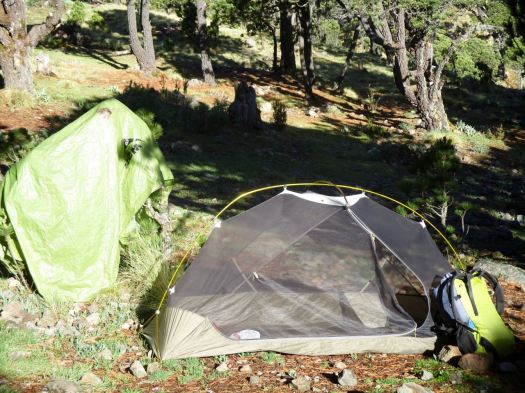
Everyone slept in provided 4 person tents aside from Jordan (who slept in a hammock) and myself who brought my own gear.
We all crashed for siesta, knowing we wouldn’t get much sleep tonight.
We’d planned to climb up to Tajumulco’s second summit, Cerro Concepcion, for sunset. But afternoon rains had come. We stayed in our tents.
By 6:30pm the rain had stopped. We had dinner and hot drinks, hoping the morning would be clear. This was the second trip for one girl – her first summit clouded over.
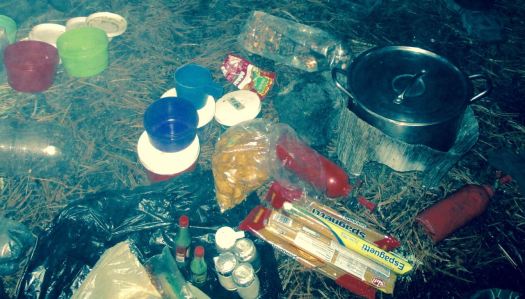
A brazen mouse ran around the cook area.
___ My alarm went off at 3:30am. I’d not slept particularly well.
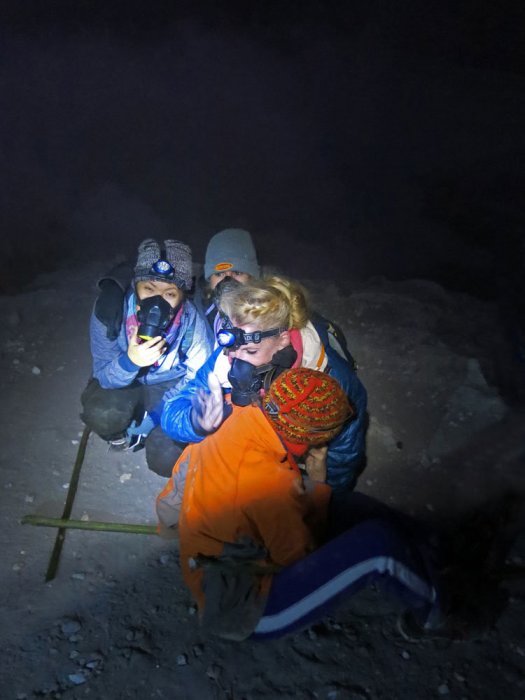
Though we had clear skies and near a full moon, it was dark. My borrowed headlamp died quickly. I followed the lead guide closely to take advantage of her lamp.
The final 200m is a scramble. Gloves are useful for grabbing stone in the dark.
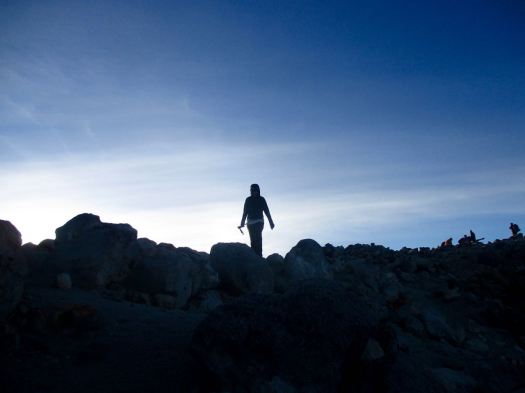
It went well. All 10 of us at the top before dawn. We huddled in our sleeping bags.
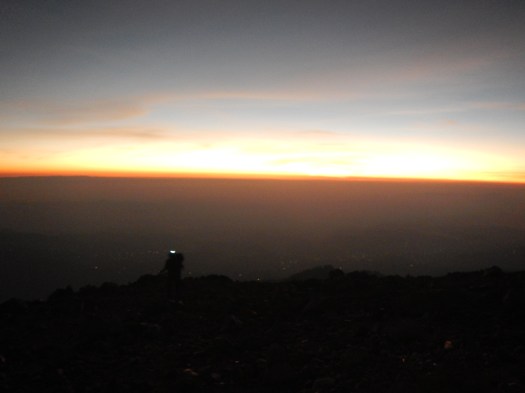
Dawn at 5:30am was gorgeous.
Everyone – at this point – was super happy they had joined the trip.
We stayed on top as long as we could handle the cold wind.
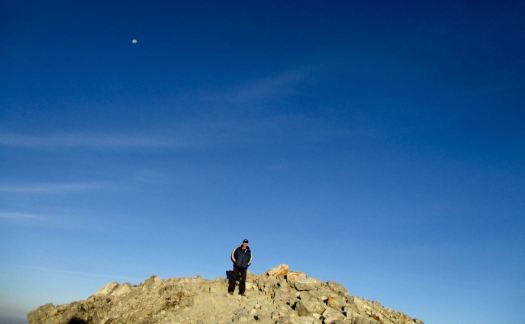
Rick the highest man in Central America
There are views to Mexico. And many other volcanos.
This is volcano shadow.
We descended by a different route, first circumambulating the crater.
Quickly into grassland, we started to get hungry.
The water was boiling for breakfast by the time we got back to camp.
This very popular hike is – sadly – quite littered and vandalized. Instead of leaving my Summit Stone at the summit, I left it in one of the excellent climbing trees at camp. 🙂
No rush. We dried the tents, the sun already very hot at 8am.
I was impressed with the toilets provided. Happily there are very few insects this high up.
The descent was relaxed. Our climb already a success.
It’s slippery, however. We had numerous falls on the way down. This could be treacherous in the rain.
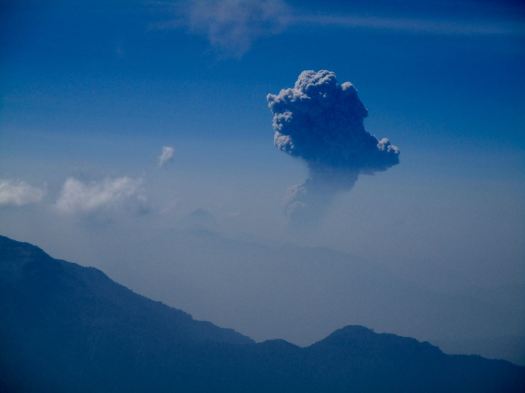
One highlight was seeing the eruption of another volcano – Santiaguito. It’s a near daily occurrence. In fact I’d climbed up another volcano, Santa María, to see that eruption on another hike, 10 years earlier.
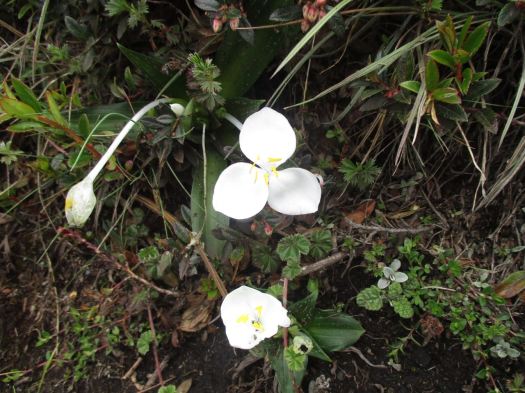
The National flower of Guatemala, Lycaste skinneri, are everywhere. Another highlight.
About Noon we got back to the road. The peak was already clouding up. No doubt it would rain again late afternoon.
We were hungry again for a big lunch at this village restaurant. Most had the fried chicken. And Gallo beer.
We reversed our route. First a bus back to San Marcos. Our driver parked close to our next so they could throw our packs roof-to-roof. (I’d never seen this before.)
In Xela we again climbed into a pick-up truck to return to Quetzaltrekkers by about 4:30pm
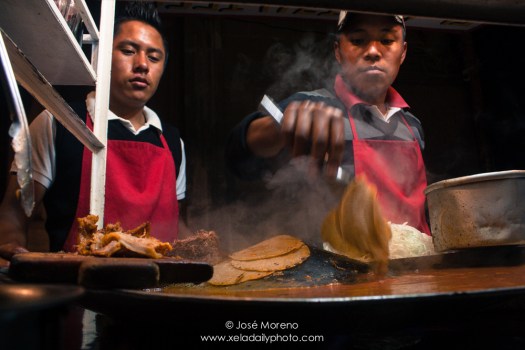
A shower. Some rest. To celebrate some of us got together for street tacos and cheap beer at the Plaza Central.
Tajumulco is highly recommended, so long as you have clear skies in the morning. You can do it on your own, but finding all right buses may be a hassle.
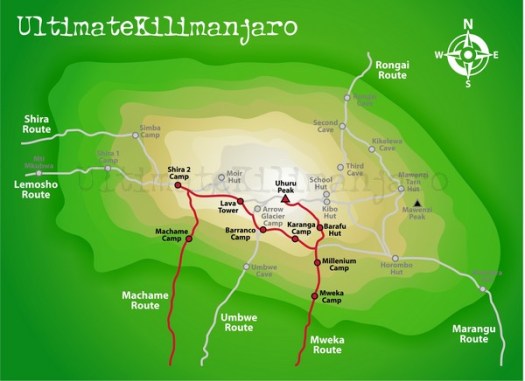
The Machame route is probably the most popular route these days and is also called “the whiskey route”. This route is steeper than the Marangu and Rongai routes and physically more demanding and for that reason better suited for the more determined and fitter climbers (view a map of Machame). …
Santa Marta, the oldest city in Colombia (1525), is pretty & undeveloped. Backpackers love this place. Cobble-stoned houses, overhanging balconies, churches and military fortresses. Kids, dogs, pool halls, power failures and loud music.
It is the jumping off point for the Lost City trek.
I was psyched.
Six-day return treks to the ruins of La Ciudad Perdida are only allowed through a government agency. Guides arrange transport, food and accommodation — essential because the area is a significant marijuana and coca-growing region.
I, like the other backpackers in Santa Marta, was nervous about making the trip.
A selling point, however, was that hikers of all nationalities were allowed to trek except Americans — they make too attractive kidnap victims.
Our guide was most famous and experienced having made the trip over 500 times since the Lost City had been rediscovered in 1976.
I carried my tent on the trek, much to the consternation of my old guide. He insisted we sleep in hammocks in the South American tradition.
… Bisected by the equator and set between Peninsular Malaysia and the Philippines, Borneo is the third-largest island on Earth. Three countries share this landmass — Indonesia, Brunei and Malaysia …
I’ve joined a G Adventures group for their 10-day Borneo-Sabah Adventure. With wildlife-seeking along the Kinabatagan River, a visit to an orang-utan preserve and touring Turtle Islands National Park on the horizon (see sidebar), I’m now primed for the premier alpine hike in this storied region of Asia — a setting that’s still very much a frontier, yet on the cusp of tourism greatness. …
Kinabalu is climbed in two legs — the first is a 1,270-vertical-metre ascent to Laban Rata, a guesthouse at 3,270 metres …
However, as the trail improved in the area, by middle of November (2015), this number already went up to more than 5000. And to date, based on statistics, approximately 40 trekkers enter the Jaget point on a daily basis. …
The Dogon Escarpment is an amazing geographical feature in Mali.
… it’s pretty much obligatory to do it with a guide on a ‘trek’. …
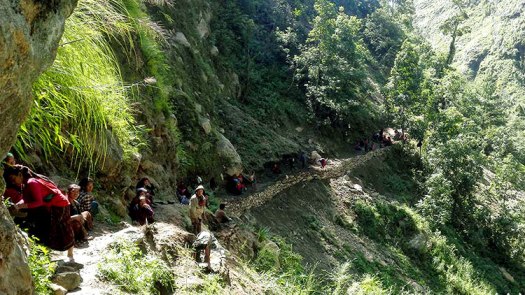
Most of the hiking in Dogon Country is on flat, sandy ground. There is a climb up the 500 metre escarpment (probably) but apart from that the terrain is unlikely to challenge any one. One walks from small town to small town, where you can see traditional life going on without a HUGE change from the outside world. The towns don’t have electricity for example, and you won’t see many vehicles. …


















 Six-day return treks to the ruins of La Ciudad Perdida are only allowed through a government agency. Guides arrange transport, food and accommodation — essential because the area is a significant marijuana and coca-growing region.
 Our guide was most famous and experienced having made the trip over 500 times since the Lost City had been rediscovered in 1976.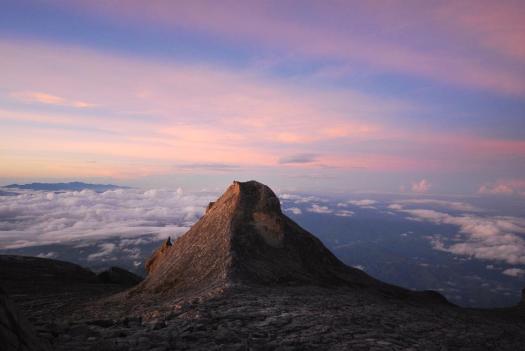


 besthike.com