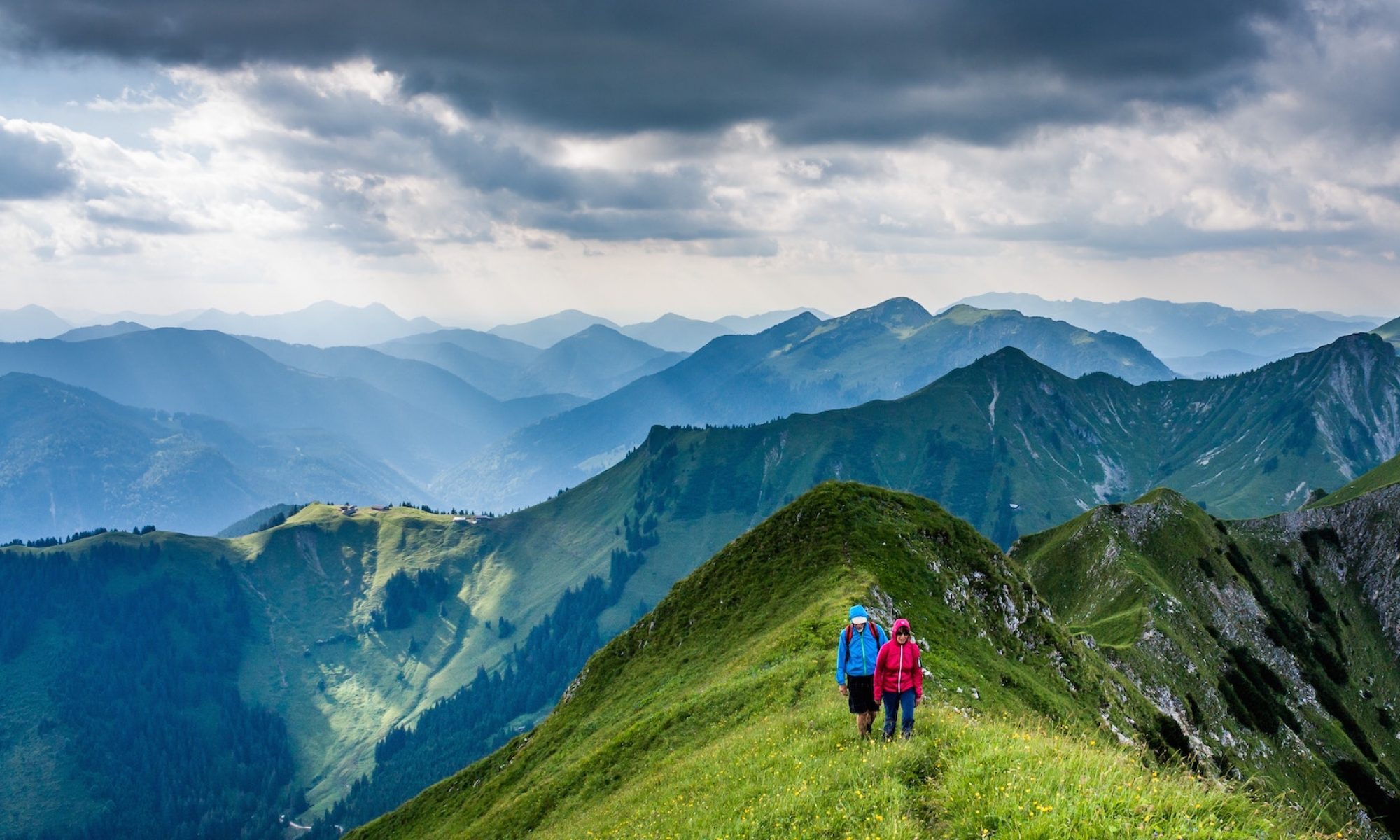

Decline of Mountain Equipment Co-op
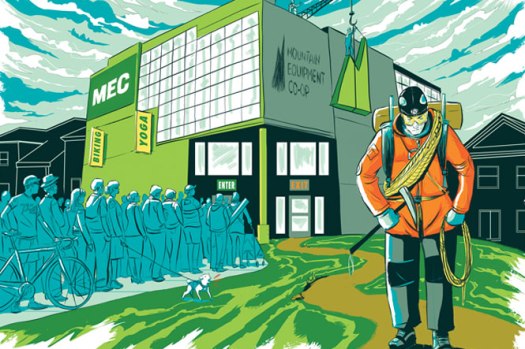
Canada’s Mountain Equipment Co-op has offered the best shopping for hikers for decades. I’d argue it’s still the best hiking shop in the world.
But anyone in one of their stores in 2015 would concur it’s not as good as it once was. The staff is much younger and less experienced in the wild than in the past. Prices are higher. There’s too high a percentage of yuppie, urban crap on the shelves.
Outdoor gear for city folks who have no intention of going to any mountains. Click through to Canadian Business magazine for a history of the change through to 2013.
MEC without the Mountain
Outdoors retailer goes mainstream
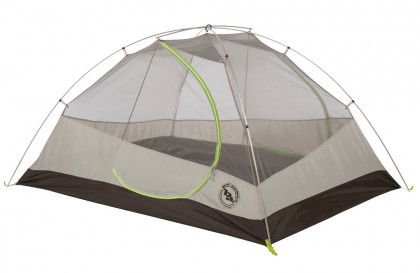
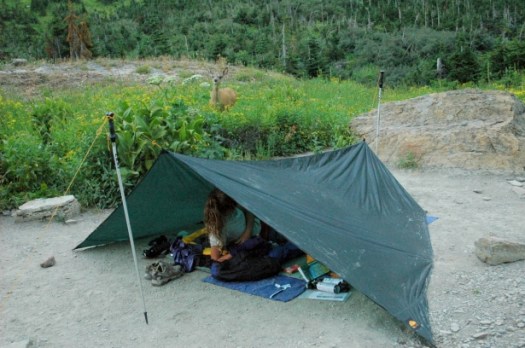
recommended tent – Big Agnes Blacktail 3
The Blacktail 3 is a three-season, three-person tent, which means it can comfortably accommodate up to three people in the spring, summer, and fall, but could falter in severe winter weather.
Although other tents performed better in specific areas of our tests, they couldn’t match the Blacktail 3’s consistently high marks in every category. …
See it on Amazon.
The Blacktail 3 does not come with the newfangled built-in mtnGLO lighting system. But it can be added for an additional $40.
Walking Scotland: Top 5 walking routes
Justina Rimkeviciute submitted this guest post on behalf of Shoetique, a U.K. based company offering a wide range of footwear.
From the country’s glistening lochs to its history-soaked coastlines and sky-scraping mountains, Scotland is truly a rambler’s paradise. With so many natural beauty spots to explore, it can be difficult to know which of the many walking trails to follow.
To help you on your way, Shoetique has created this useful guide to the very best walks in Scotland, so you can effortlessly plan your next walking holiday.
South Loch Ness Trail
Loch Ness has become something of a tourist destination, with people travelling far and wide to try and spot the legendary Nessie. For a more relaxing experience, follow the South Loch Ness Trail.
The route is quite lengthy at 28 miles in total, so you may want to tackle it in sections depending on how long you’ll be in the area for. The elevated route begins at Loch Tarff and provides ramblers with exceptional views of Loch Ness as they make their way towards Torbreck.
It’s not just the majestic scenery you’ll be able to take in during the route though. You’ll see everything from the remains of an Iron Age fort to the Thomas Telford pier.
Where to stop:
Towards the end of your ramble, you’ll pass through the village of Dores. Situated on the shores of the Loch, The Dores Inn is the perfect place to enjoy a refreshing drink and a home cooked meal as you look over the glass-like waters.
What boots?
Due to the steep inclines that feature along this route, it’s really important that you choose a pair of walking boots with a sturdy grip and padding around the ankles for extra support.
Find out more:
You can find out more details about the route here.
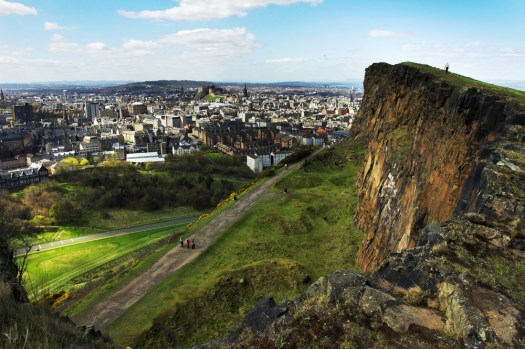
Arthur’s Seat
When most people think of Edinburgh, they think of a bustling Scottish city — and they’d be right! Yet many people are unaware of the hill walking opportunities the urban area has to offer.
Arthur’s Seat is a dormant volcano in Holyrood Park. While the route may be rocky and rough, it makes a great trail for walkers who want to enjoy spectacular views across Edinburgh’s city centre at the top. If you’re not cut out for the terrain, you can still take in the picturesque park from ground level.
Where to stop:
Because of Holyrood Park’s close proximity to the city centre, walkers are spoilt for choice when it comes to refreshment breaks. A popular choice is The Sheep Heid Inn. Located on the edge of the park, the homely pub is the perfect place to warm up.
Walking the route in the summer? Pack a picnic and dine alfresco in the park.
What boots?
Protecting the foot is key if you’re going to succeed on this route’s terrain. Opt for cushioned soles to protect against uneven rocks and stones, and a waterproof upper to tackle the occasionally boggy conditions.
Find out more:
More information about the route can be found at WalkHighlands. To learn more about Holyrood Park, click here.
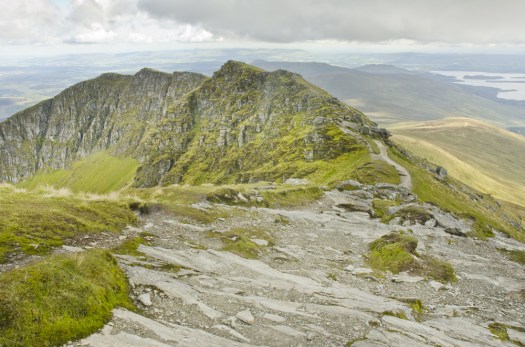
Ben Lomond
Standing at 3194ft above sea level, Ben Lomond is perhaps one of the most outstanding mountains in the Scottish Highlands, offering panoramic views over Loch Lomond and the surrounding areas.
Starting in Rowardennan, the route takes walkers through wooded spaces over steep pathways towards the summit. From there, you can admire the amazing views as you slowly descend the trail. With a moderate to hard rating, the steep sections of this walk will put even experienced walkers to the test.
Where to stop:
The Rowardennan Hotel is located at the base of Ben Lomond, making it an ideal stop-off as you descend from the mountain. If the weather permits, take your tipple outside to the beer garden and truly soak up the views of the magnificent Loch Lomond and surrounding mountains.
What boots?
As Ben Lomond is a mountain, you’ll need professional equipment to ensure your safety. Cushion, support and stability are all factors you should look for when it comes to boots, while you’ll also need base layers and waterproof clothing for the trek.
Find out more:
For more information about this route, visit Walking Britain.
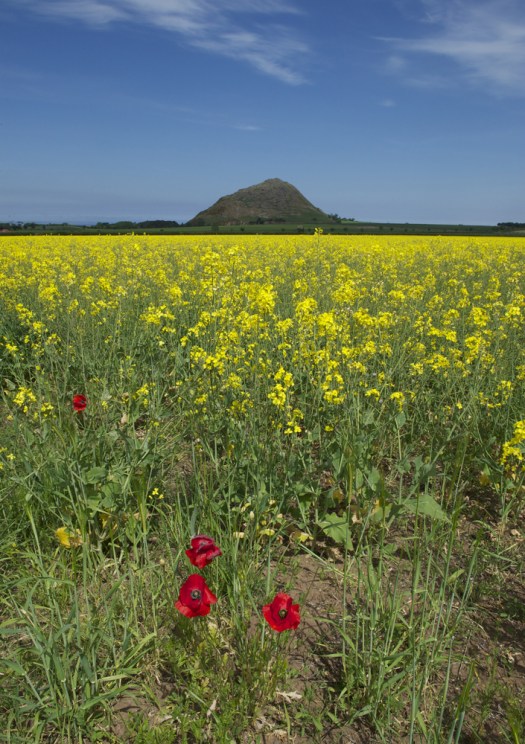
The John Muir Way
At 134 miles in total, The John Muir Way should be split across a few trips due to its sheer length. Running from Helensburgh to Dunbar, the route has been split into sections for those who do not have the seven to ten days required to walk the full way.
While nature dazzles throughout the walk, it is particularly spectacular from North Berwick to Dunbar. Over the 15-mile stretch, you’ll climb Berwick Law to enjoy spectacular views over East Lothian and the Forth, explore the picture-perfect surroundings of the John Muir Country Park and wonder at the imposing Tantallon Castle.
Where to stop:
You’ll find plenty of perfect picnic spots along the route as well as many pubs and eateries too. Once you’ve reached Dunbar Harbour, pay a visit to The Volunteer Arms for some freshly caught seafood.
What boots?
The length of the route means you’ll encounter a variety of terrains during your trip. Because of this, it’s best to choose a pair of all-purpose walking boots, with a thick tread, cushioned soles and support around the ankles.
Find out more:
There’s plenty of other sections of the route that are worthy of a ramble. You can find out full details of the route on the official John Muir Way site.
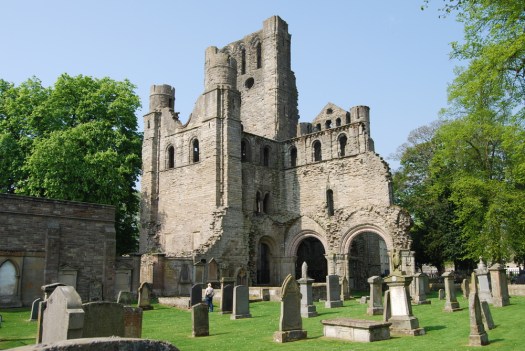
The Borders Abbeys Way
The Borders Abbeys Way is a circular route in the centre of the Scottish Borders. Comprising of 64.5 miles in total, the walk has been divided into five sections so you can tackle it piece by piece. With an easy to medium terrain throughout, it’s worth trying to tackle the full route at some point, especially the 12-mile stretch from Kelso to Jedburgh.
During this section, you’ll take in the pretty sights as you work your way along the river bank. Look out for the many picture-perfect stone bridges and make sure you pack your camera to take a photo of the Abbey of Jedburgh ruins as your walk comes to a close.
Where to stop:
Treat yourself at the end of your walk at the Clock Tower Bistro and Bar, in Jedburgh. Offering a selection of wines, cocktails and fine foods, it’s the perfect place to indulge after a long ramble through Scotland’s outstanding scenery.
What boots?
From Kelso to Jedburgh, the terrain remains relatively flat. Select a pair of walking boots with cushioned soles to ensure you are comfortable throughout the duration of your route.
Find out more:
You can learn more about the route by visiting The Borders Abbeys Way official site.
Visit Shoetique today to discover an incredible selection of outdoor footwear for your next adventure.
“stupid light” hiking
Andrew Skurka :
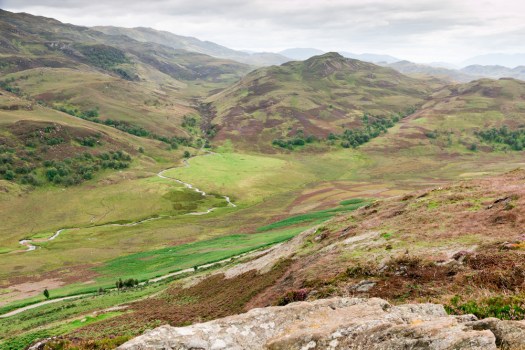
Ten- or fifteen-thousand miles ago I believed fervently that “light is right” and “lighter is better.” I proudly considered myself a “lightweight,” “ultralight” or “super ultralight” backpacker, and I believed that the weight of my pack was linearly correlated with the quality of my experience — the lighter my pack got, the better the hiking became.
But in my blind pursuit to shed weight, I made decisions that compromised my efficiency, thus negatively impacting my trips. In other words, in an effort to “go light” I ended up going “stupid light.” (Special thanks to Phil Barton and Pat Starich for sharing this expression with me.)
I went “stupid light” by:
Not taking gear and supplies that were necessary given the conditions, and …
Taking gear and supplies that were too light.read more – “Stupid light”: Why light is not necessarily right, and why lighter is not necessarily better
camping stoves compared
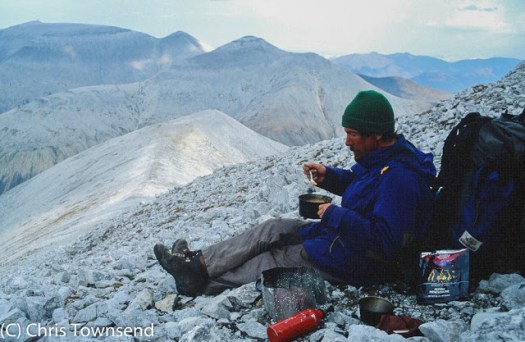
Chris Townsend was the first hiking guru I read.
He’s used dozens of different stoves in the wild, comparing them in a long opinion piece:
… lighting a stove. Some come with Piezo igniters – in my experience these break after a while. I’d never rely on just one type of lighter anyway. I always carry at least two – a fire steel and a lighter and/or matches. …
Choosing a stove is as much about choosing the fuel as choosing a burner. The availability of fuel, how long a given amount lasts and how well it works in different conditions are all factors to take into consideration. …
The main fuels are butane/propane, white gas (Coleman Fuel and similar), and methylated spirits (meths)/alcohol. Less commonly used are petrol/gasoline, paraffin/kerosene, diesel, solid fuel and wood. Some stoves are multi-fuel, which can be a big advantage. The heat output from butane/propane, white gas, petrol and paraffin is similar but meths/alcohol is much less powerful so more fuel has to be carried. …
STOVES FOR WILD CAMPING
Click through his advice.
Google robot goes hiking
Boston Dynamics ATLAS robot walking over debris and in a forest. Commentary by Professor Marc Raibert, co-founder of Boston Dynamics Inc.
Click PLAY or watch it on YouTube.
I, for one, welcome our new Robot hiking overlords. 🙂
Editors’ Choice Awards 2015: Jetboil MiniMo
I did a lousy job packing for 2 weeks in the Colorado Rockies. In fact, I accidentally left behind at home my beloved MSR Reactor stove. 😦
I made a stop at REI to purchase a second Reactor – but they were out of stock. The best alternative available was the MiniMo.
Click PLAY or watch it on YouTube.
The MiniMo upends what we thought we knew about “personal cook systems,” the integrated stove/pot design that Jetboil pioneered in 2004. Like its predecessors, the MiniMo has lightning-fast boil times (it averaged 2 minutes and 21 seconds for 20 ounces at room temp in our controlled test) and efficient fuel consumption (expect about 9 liters of boiled water for a 3.5-ounce fuel canister). But, unlike all its predecessors, it can actually simmer …
I disliked my original Jetboil finding it dangerous. If something boiled over (as it often does) it was difficult to remove pot from flame. And your hand was scalded if you tried to turn off the flame.
But I have to admit, the MiniMo is a huge improvement. Almost as good as the Reactor.
It’s compact with many nifty features.
Outside’s Gear Guy reviewed it – What’s the Best Lightweight Backpacking Stove?
I wonder how long the auto-igniter will continue to work. Piezo ignition has problems above 8,000 feet.
It’s not easy to use a lighter on the MiniMo.
And it truly is lousy in the wind.
But as of now I’ll pack the MiniMo in preference to my old Reactor. Let’s see how long that lasts. 🙂
related – Adventure Tested: Jetboil MiniMo Backpacking Stove
my hiking gear 2015
by besthike editor Rick McCharles
I’ve not changed my system much over the past 10yrs. Here’s how it works.
Click PLAY or watch it on YouTube. (Packing my pack. 2009)
That up-to-50litre pack (.54kg | 1lbs 3oz), a Granite Gear Virga, was named by the Gear Junkie in 2007 on the list of Greatest Gear of 5 Years.
Using a therm-a-rest as a backpack “frame” was first suggested to me by Kraig Becker, of The Adventure Blog and Gadling.


I’m just packing for the Sunshine Coast Trail starting next week. Five days minimum. Probably more. But with chances to resupply.
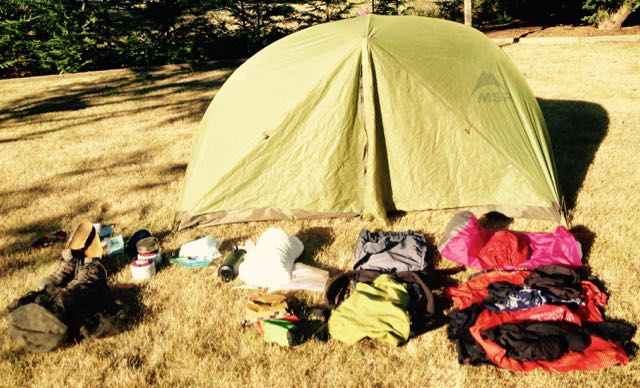
Sleeping system: MSR Hubba tent, down sleeping bag, silk sleeping bag liner, 3/4 length therm-a-rest, dry bag stuff sack “pillow”, headlamp.
Outdoor clothes: unlined long pants, wicking t-shirt, Gortex jacket, long brim baseball cap. Two pairs of long socks. Two pairs of quick dry underwear. Two bandanas. One Buff. Well tested approach shoes.
Camp clothes: Wool t-shirt. Fleece. Crocs. Tent socks.
Food: Large bear bag, spoon, stove, extra fuel canister. (Start with 5 days grub. Mostly coffee, candy, instant mashed potatoes, instant soup, tuna in a bag.)
Drink: Water bottle, 2 litre soft drink bottle, purification tablets.
Entertainment. Paperback, plenty of audio books on iPhone.
Photography. Camera, extra AA batteries, MacBook Air with power adapter.
Toiletries: Toilet paper, lighter, disinfectant gel, Camp Suds.
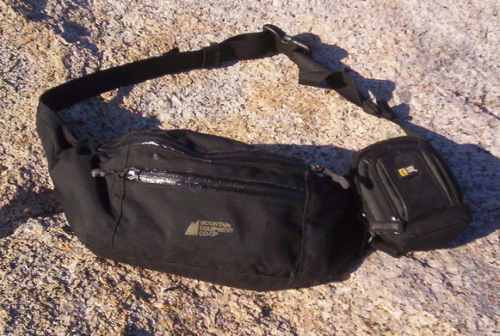
Personal items in hip pack: Cash, sun screen, note pad, pen, asperin, mini-toothpaste, mini-toothbrush, mobile phone, etc.
related – my gear 2007 – besthike editor
female hygiene: a backcountry guide
 Men. You know nothing. 🙂
Forward this article by Trinity Ludwig to ladies in your hiking group. Trinity completed an 11-month 1,785-mile trek the length of South America. And knows what she’s talking about.
Female hygiene: a backcountry guide and tips
 besthike.com