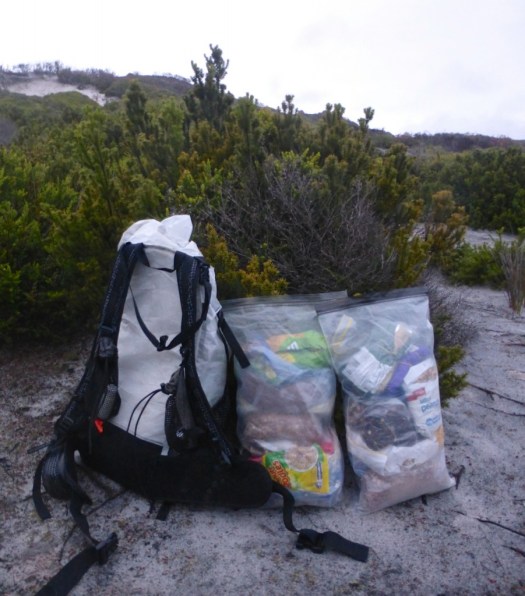
Personally I don’t mind carrying a Bear Canister and most often use an Ursack. It’s been a good long time since I last threw a rock over a tree limb. 🙂
CHELSEA and JOSEPH did not want to stay in Alpine Huts. They tented the entire route. Nine days.
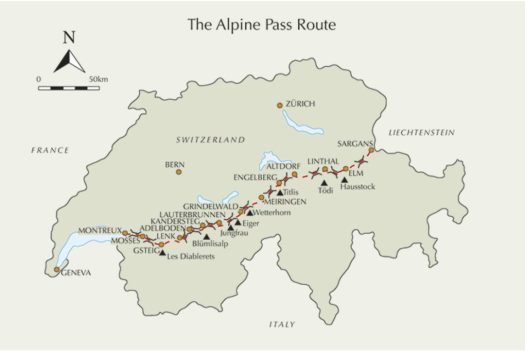
From Chamonix to Zermatt, from Mont Blanc to the Matterhorn, how could you go wrong with a hike like this! The Walker’s Haute Route is an absolutely stunning trail that offers what I would consider to be the classic Alps experience: beautiful mountain hamlets, green flower-rich valleys, gorgeous snow-capped peaks and almost constant access to great food and drink. …
In many European countries, wild (not in a designated campsite) camping is illegal and the number of legitimate campsites are few and far between.
In addition, other trip reports for the WHR were claiming that tenting the whole way was impossible due to the terrain and/or that all camping in Switzerland was illegal. Looking a bit closer though it became clear that while wild camping in Switzerland is highly discouraged, it is not “illegal” in all places. You are generally allowed to camp high , but should avoid camping outside of designated sites in the valleys as each canton and town has different laws and can impose a fine for wild camping.
Armed with this information we decided to go ahead with our plan and hike the trail with our tent. We hope this guide will help others who are looking to do the same. …
You should pretty much always have a map when you go hiking (and know how to use it), but the maps for this trail were just stupid expensive and big. Instead, we relied solely on the Kindle version of the Kev Reynolds guide, Chamonix-Zermatt: The Walker’s Haute Route. While we disliked Kev by the end of the hike for his nonchalant writing style, he did manage to get us to Zermatt without major incident or getting lost. …
recommended to carry a tent as a back-up. There are many scenarios which might cause you not to reach the next hut on any given day.
I caught the 10am ferry from Comox, Vancouver Island to Powell River.
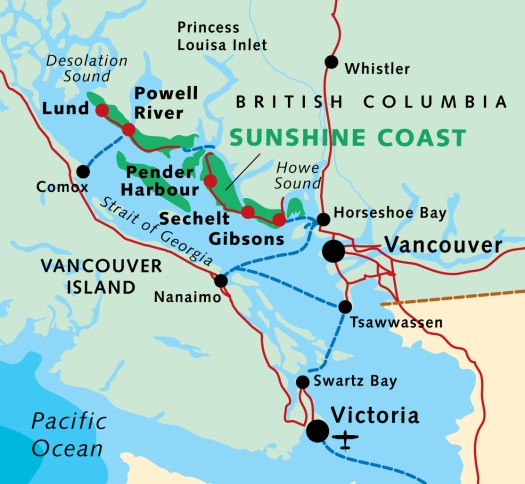
My plan was to do the big central section. About 90km.
July 2015 we’d hired a boat to drop us at the northern trailhead Sarah Point. But quit the hike at Manzanita Hut after only 2 days. Driven out by mosquitos and wasps.
Could have taken a local bus to a trailhead, but instead walked from the ferry about 5km through town to Mowat Bay.
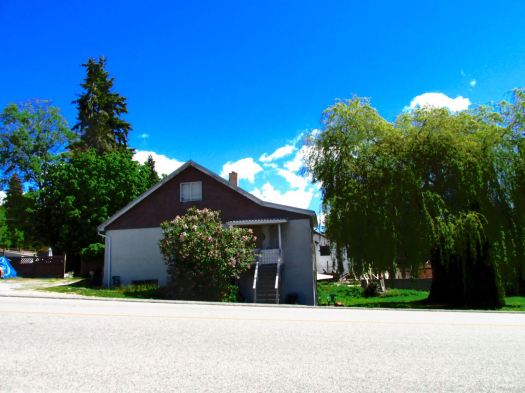
Here’s pretty Cranberry Lake in Powell River town.
Lovely day to start a hike. 🙂
Mowat Bay is close to sea level. It’s uphill from here.
Alder loves to overgrow the relatively little used trails. Blow downs are more frequent than are volunteers with chain saws. It’s rugged and challenging hiking. But pretty.
I ended up paying $5 to camp on Anthony Island. I slept in my tent.
A Danish couple took the hut.
They made dough from flour. Then wrapped it around a green branch to cook over the open fire. A Danish tradition, I understand. Burnt on the outside, raw on the inside. 🙂
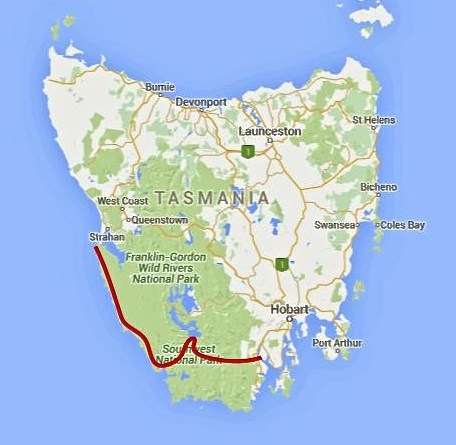
Between February 27 and March 22 of this year, I completed a traverse of the southwestern region of the state. One of the wildest, most pristine backcountry areas on the planet, it was a hike I had dreamed of doing for almost two decades. …
200 miles (322 km) approx. …
Time: 24 days
Daily Average: 8 miles (13 km) approx. This included one rest/resupply day. Hiking, scrambling, bushwhacking, climbing, paddling, crawling, swimming, rock hopping…………yep……..the terrain really was that challenging …
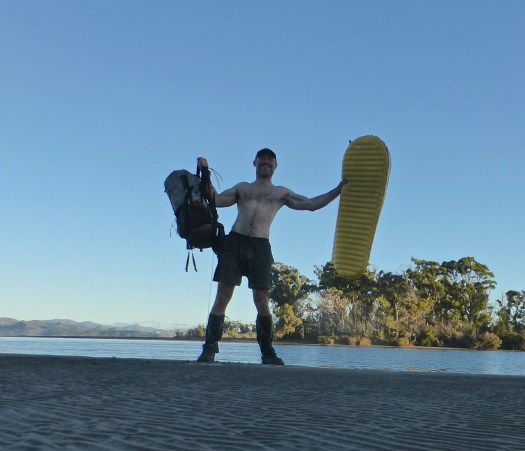
Celebrating after paddling the 150 metres crossing between Piners and Settlement Points on my Thermarest NeoAir. My backpack floated behind, attached with some guyline to my right leg.
After freezing for 3 nights on the Sierra Nevada Traverse, the nearby Mediterranean coast of Spain appealed.
Cabo de Gata-Níjar Natural Park is Andalucia‘s largest coastal protected area, a wild and isolated landscape with some of Europe’s most original geological features. It is the only region in Europe with a true hot desert climate.
The eponymous mountain range of the Sierra del Cabo de Gata with its highest peak El Fraile is Spain’s largest volcanic rock formation with sharp peaks and crags in red/ochre-hues. It falls steeply to the Mediterranean Sea creating jagged 100-metre (330 ft) high cliffs, which are riven by gullies leading to hidden coves with white sandy beaches, some of the most beautiful in Andalucia. …
I departed Granada by bus at noon. And was sitting down in Cabo de Gata town for Calamari by 4pm.
Cabo de Gata is a popular beach town in “summer”. But by mid-October it looks like this.
Mine was the only open restaurant. I need to wait for siesta to finish so I could buy 6 litres of liquid (mostly Coke Zero) to start the walk. Happily, the tiny supermarket opened at 5pm.
Lonely Planet Hiking in Spain describes a 52km coastal walk from Cabo de Gata to Aqua Amarga. I planned to start. And continue as long as I wanted. Bus transport back from Aqua Amarga is a problem. 😦
Passing retirees enjoying the sun, first stop is the Cabo de Gata tower.
Turns out there is a series of these ruins up and down the coast.
Between the village of San Miguel and the Cabo de Gata point are salt flats. This is an important stopping point for migrating flamingoes and other birds.
saltbird sanctuary
In the distance loomed this impressive church.
The beaches were near empty. Only one fisherman on this one.
It was a steep climb up and over to reach the Cabo de Gata light station.
The rugged geology is impressive.
Many tourists drive out to enjoy the views at dusk.
The only other person left standing in the dark with me was a young German who had rented an apartment in San José for a week. We walked together past the road block, back towards his place.
Together we found this tent spot. Quiet. Peaceful. And much warmer than 3000m in the Sierra Nevada.
___
Here’s a glimpse looking back to where I’d come from. Next morning.
I’d been looking forward to tramping a series of pocket beaches.
If the tides are right, you can scramble between most of them. This was a highlight of the trip.
This time of year you’ll see nude and topless sunbathers at pretty much every near deserted beach.
And artists. 🙂
There’s San José (Almeria) in the distance. The centre of Parque Natural de Cabo de Gata.
I’ve seen cows (Sri Lanka), kangaroos (Australia) and goats (Spain) on beaches. Never once understanding why they would want to be there.
This is a desert. There’s very little water.
This windmill marks the start of town.
I could spend a week or two in San José. It’s lovely. Population about 1000. Plus tourists. And there are very few tourists in October despite daily highs around 28C.
An ideal idyl for cyclists, hikers, artists and photographers, I’d say. Lawrence of Arabia and the Clint Eastwood spaghetti Westerns used this location.
The campground was (surprisingly) closed. On a whim I checked the Aloha Hotel, recommended by Lonely Planet. When they offered me a pool view room for only 40EU, I couldn’t resist. After all … “recovery is an important component of every successful hike”. Plus wine. 🙂
In the afternoon I continued my hike – without backpack – up into the hills beyond San José. Here’s a glimpse back to town.
It’s rough and arid.
But with gorgeous coastal views.
I enjoyed chatting with a very tan elderly couple from GBR before finally stopping at this ruin.
After 2 days rain delay, the morning dawned lovely in Leh.
First stop was the outdoor bakery near the main Mosque.
I picked up 10 flat bread for less than $1. My hiking lunches. With peanut butter. 🙂
At the NEW Bus Station I found the (unmarked) 8am bus to Alchi, about 70km away. It was packed.
Alchi Monastery or Alchi Gompa … is said to be the oldest and most famous. …
The monastery complex was built, according to local tradition, by the great translator Guru Rinchen Zangpo between 958 and 1055. However, inscriptions in the preserved monuments ascribe it to a Tibetan noble called Kal-dan Shes-rab later in the 11th century …
The artistic and spiritual details of both Buddhism and the Hindu kings of that time in Kashmir are reflected in the wall paintings … These are some of the oldest surviving paintings in Ladakh. …
I made the Kora. Let’s hope my hike goes well.
My last meal.
The Italian woman who joined me at the tiny restaurant in Alchi square was hospitalized in Leh the day before. Altitude sickness. She was given 2 shots and 3 different pills!
The restaurant owner pointed me in the right direction at 11am. Wandering though local fields.
I was at an altitude of 3,100m (10,200ft). And needed to climb at least 2km vertical!
Here’s the one and only lizard I saw on the trip. He stayed behind in the sun.
It’s an easy start. Winding up a Himalayan valley.
Still, I was worried. I’d need to cross a huge, difficult pass, about the same height as I could see on the other side of the Indus valley.
Higher and higher.
Up a side valley I spotted Blue Sheep. Here’s the herd at 32x zoom.
That oasis across the Indus is the famed Buddhist temple Likir.
I set up my tent at the last possible site, the highest shepard shelter. My guidebook called it Stakspi La Base Camp. It was 3:30pm.
In the bright Tibetan sunlight, the autumn colours were lovely.
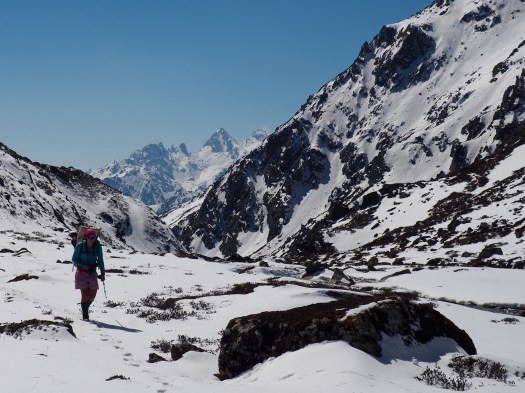
My goal for tomorrow is climbing up and over this 5000m+ wall.
These curious (and common) ground birds dropped by. Are they Chukar partridge?
Sergei packs up his small cycling tent.
We were surprised when a Tibetan woman appeared asking for 150 rupees each. It had seemed the campsite (dirty and without a toilet) was closed for the season. Apparently not.
Official campsites seem to cost 600 Indian rupees in 2015. Unofficial ones 150 Indian rupee. Both overpriced compared with homestays, we felt. (900 rupees including 3 meals)
UP and off.
I tried to keep up with Sergei. It wasn’t easy. Especially since I had been exhausted the day before keeping pace.
On the other hand, we were fairly compatible. Both keen and very independent hikers.
I found the dry Markha valley gorgeous. Sergei missed trees.
River crossings were actually a relief. Heat emergency is a real risk here.
I changed footwear. Sergei plunged through.
We’d anticipated Markha village 3806m to be somehow more impressive than the other villages. But it was very quiet. Harvest was in progress. Everyone in the fields.
So we continued.
Horses are the most popular pack animal here. Followed by donkeys.
I didn’t once see a Yak or Yak hybrid used.
The geology here is stunning.
Sergei is an alpinist, having summited Lenin Peak. He was interested in these formations.
Though there are many impressive stupas and monasteries, it seems Ladakh does not have many monks.
This particular monastery does impress, however. Umlung Gompa 3890m, impossibly situated.
The parachute camp was closed. So we carried on.
Seabuckthorn berries are everywhere. Used for jam and other local products.
Higher and drier.
We considered stopping near Hankar 3990m. But Sergei likes to walk until dusk. So he can set up his tent in the dark (for free) and not be hassled by passing locals. Everyone who walks past asks for 150 ruppee, even a monk … though the monk actually seemed to have “receipts” in his robes for the camping fee.
Exhausted and with sore feet, I finally put down my tent in the official camping at Thachungtse 4250m.
Sergei, lacking firewood to cook his dinner, decided to stay as well and use my gas stove.