
bears disappearing in Europe?

I only recently grasped the fact there are bears in the European Alps.

Now I learn they are disappearing:

bear.pngWhat — or who — is behind the mysterious disappearance of 20-25 Austrian bears? While that number may seem small, it in fact represents four fifths of the bear population that makes its living in the forests of Lower Austria and Styria. The disappearances, which started occurring in the late 90s, have caused sufficient consternation among local residents and environmentalists to lead to an investigation by the Austrian police.

Christoph Waldner of WWF attributes their disappearance to one of three reasons: natural mortality, migration or hunting — which is illegal because of the bears’ endangered status. To Waldner, it seems pretty clear that hunters are to blame for the bears’ disappearance. …

Treehugger

bears in Europe?

And moose?

Where have I been hiking all my life?

From Laplandica.com:

I followed the incident with my binoculars. The bear was getting closer and closer as they both came downhill and closer to the river bank and brush across from me. As the moose entered into the brush, the bear was right behind her. The brush slowed the moose down giving the bear the advantage of the situation. And, more suddenly than one would expect, I watched the bear jump up from behind onto the moose and, holding hard onto her back loins with his paws and claws, tackled and dragged the moose down into the bushes. Both disappeared.

I saw a lot of rustling in the bushes, but everything went very quickly and soon these stopped moving. For a long time I sat there and waited, watching for any movement, but there was none. As I watched, I realized how swiftly the chase, and then the kill, happened. I was awed with how fast the bear could run and the strength and power he had when pulling the moose down to kill it. And, to have sat there alone and be a witness to the whole event was something I felt almost blessed with. …

Laplandica » Unexpected things can happen in Laponia…

Ah, of course. In the NORTH. That’s real wilderness.

Next, in a flash of Google magic, Philip Bethge’s article appeared on the reintroduction of bears to the Alps:

The brown bear is returning to the mountains of Central Europe, thanks to resettlement projects in Italy, Austria and France. Biologists celebrate the animals’ return as a success in endangered species protection. But the general population has mixed feelings about welcoming back the predator.

bear-in-alps.jpg

Brown Bears in the Alps: The Great Bear Comeback – SPIEGEL ONLINE

They have a long way to go …

Brown bears were once found throughout Europe and even inhabited the British Isles until the 10th century (Curry Lindahl 1972, Servheen 1990). Populations in Europe have been severely reduced and habitat has been fragmented by human modification.

europe.gif

GrizzlyBear.org

new danger in the woods: Electric Bear Fence

Does Rocky Thompson make this stuff up?

(This can’t be for real.)

On his blog:

… Try to remember there’s an electrified fence right outside your tent when you get up in the middle of the night to take a piss. If a can of Bear Spray doesn’t offer the protection you’re looking for, then you might try lugging some fencing and batteries into the backcountry. The Bear Shock outfit weighs 3.7 pounds with batteries, and stretches around a 30 x 30ft area.

The website claims the batteries will last five weeks and blast someone with 6000 volts of electricity if touched. I say “someone” and not “some bear” since it’s much more likely you’ll walk into it than anything else.

Backcountry.com: The Goat » Blog Archive » Portable Electric Bear Fence to Encircle Your Campsite

electric-bear-fence.jpg

more photos – Bear Shock

rare lynx photographed in Yellowstone

In decades of hiking, I’ve only seen lynx footprints. This might be the closest I ever get.

Fred Paulsen, a Xanterra Parks and Resorts employee, took this photo of a lynx near Beryl Springs in late November in Yellowstone National Park. It’s one of two, or perhaps three, photos of a lynx ever taken in Yellowstone.

lynx.jpg

… Colorado Division of Wildlife officials said it’s probably one of the 218 collared lynx from Canada released in southwestern Colorado between 1999 and 2006 as part of a reintroduction program. …

BillingsGazette.com :: Rare lynx photographed in Yellowstone

(via GOAT)

Alaska Brooks Range Traverse

Alaska wilderness guru Buck Nelson in 2006 made an incredible solo journey. Maximum pack weight was about 43 pounds.

He’s made a 90min documentary of that adventure.

My trip started June 18 at the border of the Yukon Territory and ended September 2nd at the ocean near Kotzebue.

alaska_map.jpg

The final mileage of my trip worked out to be an estimated 1,050 miles. 600 of those miles I covered while backpacking, with about 450 more miles covered on the Noatak River.

I made countless crossings of small streams. The vast majority of these crossings were in very shallow water where I just waded across quickly in my lightweight Goretex lined boots, which usually kept my feet dry. For slightly deeper water, I “bloused” my rain pants tightly around the tops of my boots with rubber bands and crossed the shallowest spots as quickly as possible. This was also quite successful, depending on how deep the water was and how fast I crossed. At other times I just had to get wet and waded rivers thigh deep or more. On the Alatna, I made a raft for the crossing.

I had grizzlies run towards me at least three times. In each case they ran as soon as they smelled me. (Presumably, they thought I was a caribou or moose at first.) I had bears walk into my camp at “night” about three more times. Again, each time they ran when they smelled me. I didn’t lose any sleep due to grizzly bear concerns.

The mosquitoes were thick at times, but my long-sleeved shirt and pants were both mosquito proof, and along with repellant as necessary it wasn’t too bad. A lot of the time when it was breezy or cool there were few or no mosquitos around.

The toughest unexpected part of the trip was perhaps the unusual amount of rain during the summer of 2006. The toughest part of the hike that I’d anticipated was the rough walking along many stretches.

I followed river and creek drainages that ran east-west along the Continental Divide as much as possible.

Alaska Brooks Range Traverse

A video preview featuring many of the animals encountered:

Alone Across Alaska from bucktrack.com on Vimeo.

Alone Across Alaska: 1,000 Miles of Wilderness – (DVD) $24.95

(via American Hiking Society)

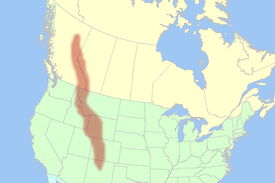
#3 best hiking region in the world is the …

Rockies

Spectacular vistas, frequent wildlife encounters, the best wild flowers we’ve ever seen. Hot springs, quaint mountain towns, perhaps the best long distance hikes on the planet.

There are options to scramble ridges and peaks virtually everywhere.

“You can’t lose in the Rockies.”

… so says frequent contributor Rob Glaser who has hiked here all his life.

rockies.jpgTrails are safe and well managed. The infrastructure excellent. (In fact, it’s hard to imagine there are two regions in the world we rate better.)
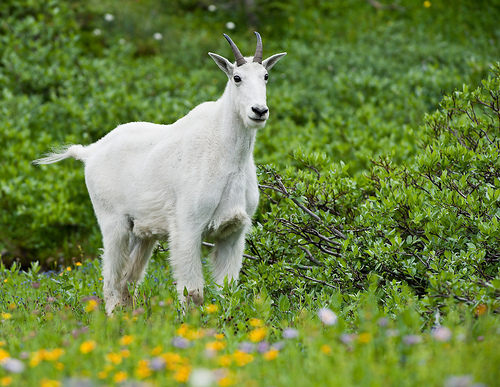
The weather and conditions are variable to say the least, but in many parts of the Rockies Aug-Sept are the best months. A very short window! On the other hand, if you ski or board, you’ll never lack for adventure in the Rocky Mountains.

More information on our new Rockies information page.

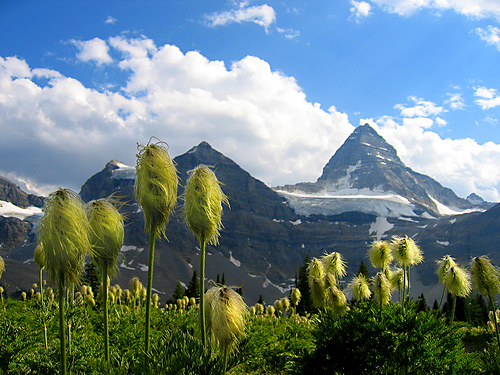
Our favourite trip in the Canadian Rockies is Sunshine to Assiniboine, our #5 hike in the world.

Anemones and Assiniboine, Alberta, Canada

Our Assiniboine Information page.

Just a short drive away is our favourite trail in the USA Rockies, Glacier North Circle, our #6 hike in the world. One of the best places in the world to see wildlife.

Our North Circle Information page.

Leave a comment if you have your own favourite hike in the Rockies.

Life and Teaching of the Masters of the Far North

Istvan Hernadi has travelled over 30,000 kilometers in Northern BC, Yukon, NWT and Alaska during the last 3 years to the most remote and desolate places of the Far North in search of the Masters, in order to meet them and to learn their teachings.

He sought out mountains, trails, rivers and lakes for hiking, biking, and paddling his small Alpacka packraft. He met strange characters during his wild adventures, people who live amazing lives in these remote places.

photos – flickr

the author’s blog

Istvan’s even published a book of photos:

masters.jpg

Life and Teaching of the Masters of the Far North – $20

#8 best hiking region in the world is …

Australia

We love Australia. Who doesn’t? What’s not to like? It’s paradise Down Under.

What an exotic treat to have kangaroos and wallabies hanging about your campsite!

“Stunning rocky headlands and perfect beaches, lush rainforests, sun-sharpened deserts and the muted beauty of the bush — taking to the trail in Australia offers a kaleidoscope of colours, terrains and adventures for walkers of all levels.” – LP

You have such a wealth of choices: the Blue Mountains (NSW), Whitsunday Islands (QLD), dense subtropical rainforest in Lamington National Park (QLD), Larapinta Trail (NT) out of Alice Springs, wild Kakadu National Park (NT), the rugged Cape-to-Cape (WA) or pretty Wine Glass Bay in Freycinet National Park (TAS).

Those are just a few! Our favourite Aussie hiking guru John Chapman helps you choose by clicking on the map:

More information on our new Australia information page.

Our favourite hike in Australia is The Overland Track in Tasmania.

View from the Labyrinth – flickr – Andrew Purdam

See our Overland Track Information page.

Photo Contest Winners – National Wildlife Magazine

In case you missed seeing these photos linked via Two-Heel Drive, here’s another shout out.

THE SUBMISSIONS to the 37th annual photo contest were remarkable, not only for sheer volume—nearly 16,000 images—but for geographic breadth. Our winning photographers hail from Texas, California, New York and Tennessee, among other states, but also from India, Poland and the United Kingdom.

One of the winning pics by Carol Goldstein

danali.jpg
Reflection Lake in Alaska’s Denali National Park

Photo Contest Winners – National Wildlife Magazine

I finally got to Denali this past summer, but — as usual — the highest peak in North America was clouded over during my visit. So I must return.