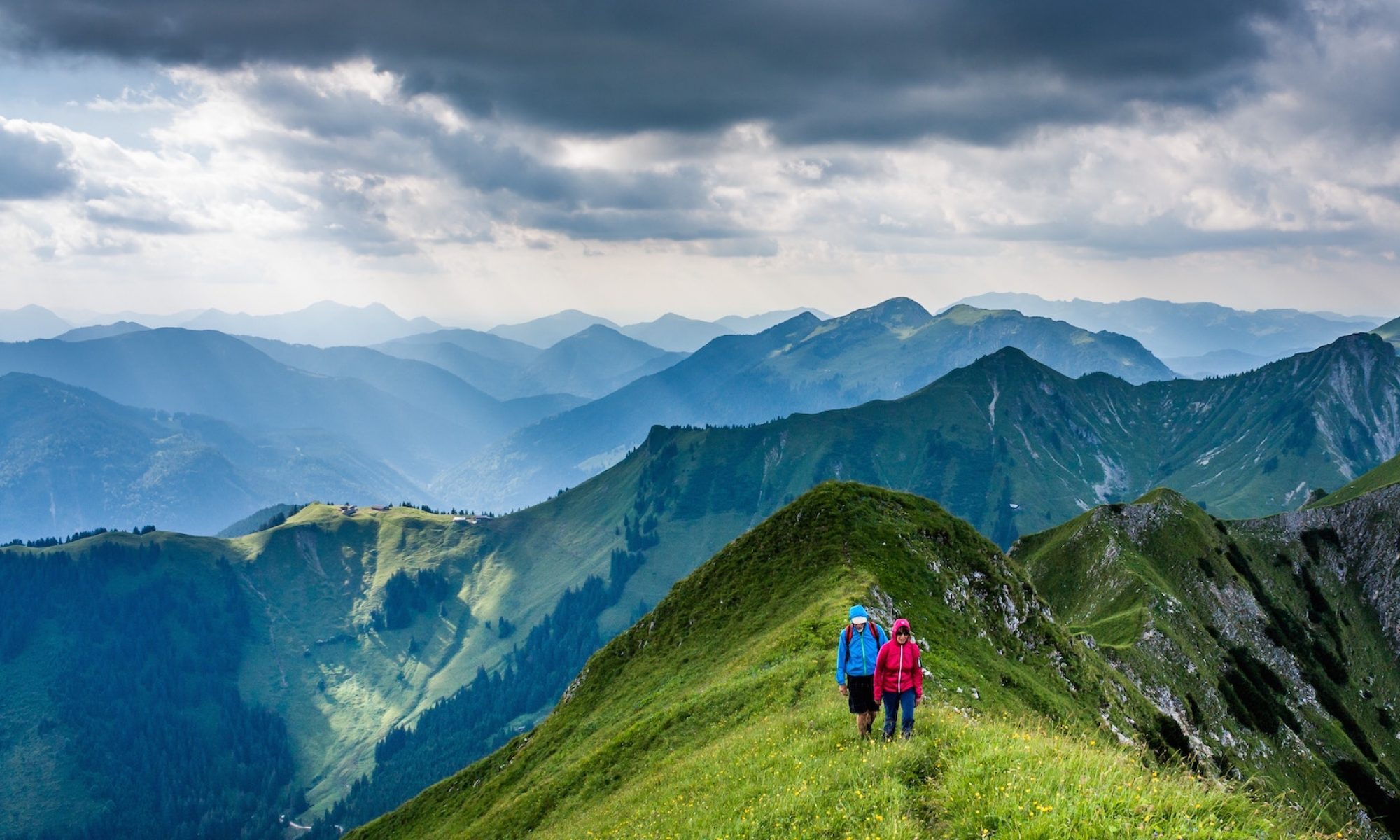
meeting a bear on the Juan de Fuca Trail

In preparation for the longer West Coast Trail on Vancouver Island, Matt made a 2-day dash on the adjacent Juan de Fuca Marine Trail. That’s 47km (29mi) of tough hiking.

One part of his trip report struck home:

…on the trail around 9:00. Sombrio River was quite low, so I opted to wade through it rather than trek up to the suspension bridge. The sun was shining, so I wasn’t too worried about wet feet. After a bit more beach walking, my spidey-sense was tingling. In a field of grey boulders, I saw one furry black boulder that looked out of place. Sure enough, a small bear was eating something, probably a dead seal. Luckily, the tide was out, so I was able to give him a wide berth. I had a chat with him on the way past, and we came to an understanding. I wouldn’t eat his dead seal, and he wouldn’t eat me.

bear-juan-de-fuca.jpg
larger photo

read the entire trip report with more photos

On my only hike on the JdF I had an encounter, as well. A small black bear decided to climb a tall tree in the middle of the campground. I was the only camper.

A quick exit was prudent.

There are a lot of bears in that part of the world.

I just subscribed to Matt’s blog: Take a Load Off – Lightweight Backpacking

bear visits U.S. Senior Open Golf

The Broadmoor’s East Course was quite a bear Friday.

Difficult pin placements and faster, drier greens flustered the field and only five golfers managed to shoot below par, including Fred Funk, whose 1-under 69 gave him the lead at the halfway point of the U.S. Senior Open in Colorado Springs, Colo. …

Stealing the show, however, was a black bear that ambled out of the mountains in the morning and crossed the 13th fairway before checking out spectators outside the ropes.

Nobody was harmed, and neither was the bear.

“(Jack) Nicklaus isn’t here, so I guess that’s a substitute,” cracked Funk. …

golf-bear.jpg

Associated Press

Llama trekking in the Alps

Mellow mountain walking. But be careful not to get a stream of llama spit in the eye while on a narrow trail.

The Eagle Way is a 1,480km trail through some of Europe’s most heart-stoppingly glorious scenery: distant clutches of chalets and spires engulfed by manicured, velvety meadows, verdant hillsides veined with tumbling glacial brooks and iridescent bursts of midsummer Alpine flora. And above it all a rearing backdrop of jagged, piebald peaks, among them Austria’s highest, the mighty Grossglockner. The sky was huge and blue, the air as crisp as apple strudel; it could not have been more Sound of Music. High on the hill with a lonely Guy-herd. …

read the article – Stick your neck out, Llama trekking in the Tyrol may sound like a joke but it’s seriously good fun, says Tim Moore -The Guardian

lamatimmoorex4.jpg
Tim and his new friend go for a stroll in the Alps. Photograph: Jan Erik Burger

Dolomiten Lama Trekking … dolomitenlama@aon.at) runs three day llama treks with half-board accommodation in mountain huts from €240pp for a group of seven minimum. Day trips from €38pp.

walk up, ride down – Mt Washington, B.C.

I had a great half day on Vancouver Island. (Not at the much more famous Mt Washington in New Hampshire.)

Mt Washington is the home of the excellent Mount Washington Alpine Resort. It’s 25km from the Comox Valley, close to good hostels in Courtenay.

In summer the chair lift carries hikers and bikers. The view from the top is awesome.

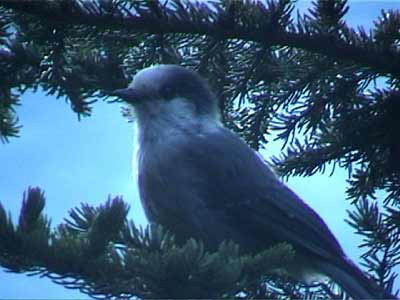
The real highlight are the cheeky ‘Whiskey Jacks’ (Gray Jays) who happily alight on your hand, hoping for crumbs. (Don’t feed them.)

If you climb the mountain (45min) you can ride down for free. Otherwise, a trip is a reasonable $15.

Highly recommended.

more photos – flickr

Nearby is Paradise Meadows Trailhead, the best jumping off point for hiking the Forbidden Plateau. This is also the most popular trailhead of all in massive Strathcona Provincial Park.

bear attacks trail runner

An incident in the Canadian Rockies opens once again the debate on whether to “play dead” when being attacked by a bear.

A trail runner attacked and bitten up to eight times by a black bear near Lake Louise serves as a chilling reminder of the dangers the public face at this time of year when sharing space with wildlife in the mountain parks. …

D’hamers, a Belgian who has been living and working in the Lake Louise area for more than a year, was no stranger to the 10-kilometre Great Divide Trail, regularly running on the decommissioned stretch of road.

She was running alone on the closed stretch of Highway 1A between Lake Louise Drive and the Trans-Canada Highway when she came face-to-face with the animal around 6 p.m.

The 23-year-old initially began backing up, but when the bear followed her for about 100 metres, she decided instead to lay face down on the ground, according to Morrison.

The attack is unusual, he said, with the last bear mauling in the Lake Louise area taking place in 1995.

The plan to play dead backfired as the bear continued to approach her, sniffing and licking the back of her legs and eventually biting her multiple times on her upper legs and back.

“The young lady showed considerable wherewithal in that she realized her strategy wasn’t working early in the game,” Morrison said. “Playing dead is not recommended in most situations.”

D’hamers jumped back to her feet, yelling aggressively at the bear and continuing to back away. After nearly 30 minutes of D’hamers reversing, yelling and waving her arms, the bear finally retreated. D’hamers continued the final few kilometres back to the main road, where she flagged down a Parks Canada warden. …

Calgary Herald

(via A Trail Runner’s Blog)

bear.jpg
larger original – flickr – jvh33

inspired by mountain goats

Olivia was inspired to post after seeing a great photo of mountain goats:

While hiking the San Juan mountains in Colorado, we spotted a small herd of mountain goats. …

We arrived at our campsite, wriggled our happy bare toes and snacked on cliff bars. Then the goats came. They didn’t hunch in the bushes inspecting us, they just came right over and surrounded us. We were excited that we got to see them so close up. Until they wouldn’t go away. We figured out what they wanted when Jack peed next to a bush. The goats wanted our urine! The crazy critters! They followed us around waiting for us to relieve ourselves, sometimes quite impatiently. Then they licked it up. Must’ve been the salt in it. Shrug.

I can’t tell you how disconcerting it is to pee while surrounded by three goats huffing and stomping impatiently.

read the entire post on Backpack Reviews

In Canada we are often followed by Mule Deer for the same reason. Once salt starved, they get very demanding of human urine.

goat.jpg
Going-to-the-Sun Road in Glacier National Park, Montana – original – flickr – SqueakyMarmot

goats.jpg
Glacier National Park, Montana – original – flickr – jessicafm

hike Isle Royale National Park, Michigan

Brian recommends an adventure I’ve never heard about.

Even getting there is a bit daunting:

Isle Royale is different than most national parks in that it requires real planning and preparation to visit. The park, actually an archipelago of 200 islands, is quite remote. Just getting to one of its three ports of departure — Houghton, Michigan, Copper Harbor, Michigan, or Grand Harbor, Minnesota — requires some planning. Once visitors arrive in their chosen port town, they take a passenger ferry or a seaplane (from Houghton only) to the narrow, 45-mile-long island. …

GORP

The Greenstone Ridge is the longest and most popular of Isle Royale’s “long” trails. The trail runs along the spine of the island, spanning some 40 miles from the northeast at Lookout Louise to the southwest at Windigo. “The Greenstone,” as it is called by hikers, winds through forests of maple and birch, past swamps and bogs, and up 1,394-foot Mount Desor, the highest point on the island. …

GORP – Onto the Greenstone Ridge

atop-mt-desor-on-isle-royal-np-overlooking-lake-superior.jpg
atop Desor – photo from Johnny Molloy’s trip report

Moose are one of Isle Royale’s main attractions. The “infamous blackflies and mosquitoes” the main reason to stay home.

Chile hates Canadian beaver

pw_map.gifReading trip reports from the famous Dientes Circuit in Chilean Patagonia, you hear horror stories of environmental devastation.

Here’s how it happened.

… In a classic example of ecological shortsightedness, the problem began when fifty North American beavers (Castor canadensis) were introduced by the Argentine government during the 1940s in the hopes of establishing a fur industry. Since then however, without natural predators to trim their numbers, the beaver population has now exploded to 100,000 – invading almost 16 million hectares of unique, native forest.

– it looks like bulldozers steamed through,” says ecologist Josh Donlan, director of Advanced Conservation Strategies, a non-profit based in Driggs, Idaho. …

beaver-damage.jpg

original photo
– flickr

Treehugger – Plans to “Totally Eradicate” Tierra del Fuego’s Invasive Beavers

The “final solution”.