That’s what I assumed after seeing the American Senate vote on this:
Amendment SA 838 was introduced to allow states to take over, transfer and sell public, federal lands, including National Forests, wildlife refuges, and wilderness areas.
The vote was purely symbolic — budget amendments carry no weight of law. But senators use the opportunity to bring attention to favored political issues and compel colleagues to take a stance on major debates.
For outdoors enthusiasts, it is a wake-up call. There are many interests trying to get their hands on your public lands, and our elected officials may be willing to sell. …
I like to – when I can – face uphill. Hang on to a log or my backpack for balance. And dig the hole AFTER the deed. Eventually pushing dirt and faeces into the hole.
If possible, I cover the grave with the biggest, flattest rock I can find.
Since 1998, the Ascent for Alzheimer’s has seen over 180 committed Canadians go on a journey to hike to the summit of Mt. Kilimanjaro. These dedicated participants fundraise to contribute to research for a cure and to help ensure that those impacted by dementia have access to support services and education resources. …
To link three mega-reserves, namely the Garden Route National Park, The Baviaanskloof Mega Reserve and the Addo Elephant National Park by means of natural corridors to protect and restore the integrity of bio-diversity and eco-system functioning. …
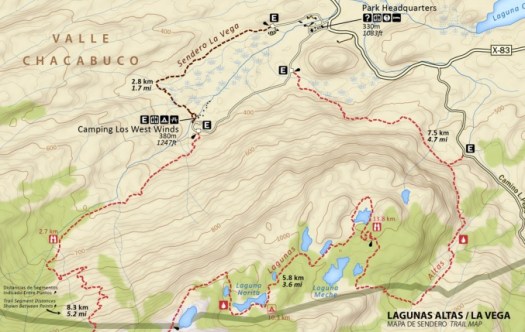
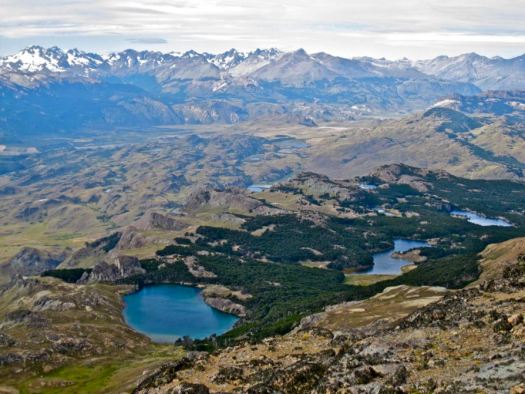
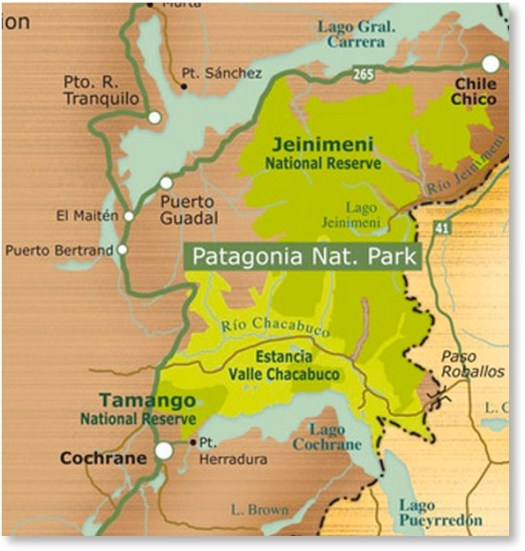
Lagunas Altas, the first major trail constructed at the future Patagonia National Park, offer a challenging day hike or overnight. The 23-km route offers spectacular views in all directions, from the Northern Patagonian Ice Field to the Jeinimeni Mountains. …
The easiest way to reach the park is to fly to Balmaceda Airport (Coyaique); LAN (www.lan.com) and SKY (www.skyairline.cl) both operate flights to Balmaceda from Santiago and Puerto Montt. Buses also arrive in Coyhaique from points north.
To reach the park from Balmaceda or Coyhaique, drive or take a bus south on the Carretera Austral (route 7). You can rent a car at the Balmaceda airport or in Coyhaique, or catch a bus south in Coyhaique. Three bus companies offer service south from Coyhaique: Buses Don Carlos, Acuario 13, and Buses Sao Paulo. Between the three companies, there’s usually one bus leaving every morning during the high season, around 9 am. Tickets cost ~$20 USD. …
I thought I knew much about the history of Antarctic exploration. Yet I learned much, much more after reading this book.
The incredible story of Australia’s most famous polar explorer and the giants from the heroic age of polar exploration.
Douglas Mawson, born in 1882 and knighted in 1914, was Australia’s greatest Antarctic explorer. This is the incredible account of an expedition he led on December 2, 1911, from Hobart, to explore the virgin frozen coastline below, 2000 miles of which had never felt the tread of a human foot.
… he headed east on an extraordinary sledging trek with his companions, Belgrave Ninnis and Dr Xavier Mertz. After five weeks, tragedy struck—Ninnis was swallowed whole by a snow-covered crevasse, and Mawson and Mertz realized it was too dangerous to go on. Dwindling supplies forced them to kill their dogs to feed the other dogs, at first, and then themselves. Hunger, sickness, and despair eventually got the better of Ninnis, and he succumbed to madness and then to death.
Mawson found himself all alone, 160 miles from safety, with next to no food. This staggering tale of his survival, against all odds, also masterfully interweaves the stories of the other giants from the heroic age of polar exploration, to bring the jaw-dropping events of this bygone era dazzlingly back to life. …
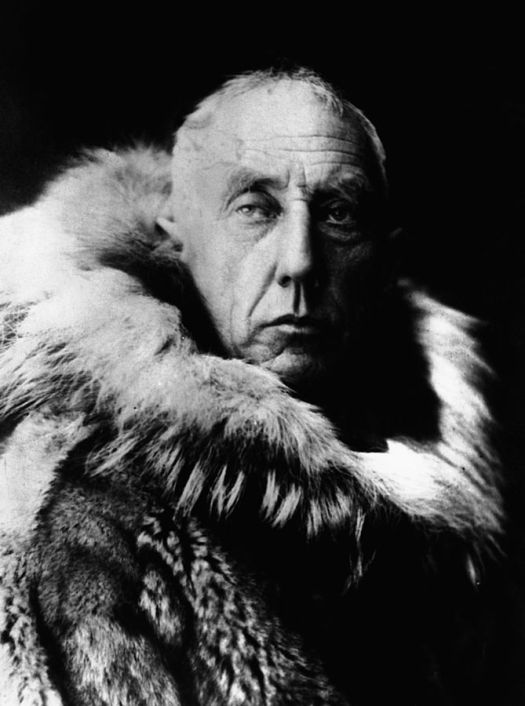
If you guessed the last man, you were right. Roald Amundsen not only led his party safely to the South Pole, ahead of Scott, but he managed to gain weight on the adventure.
In 1926, Amundsen was the first expedition leader to be recognized without dispute as having reached the North Pole. He is also known as the first to traverse the Northwest Passage (1903–06). He disappeared in June 1928 while taking part in a rescue mission.
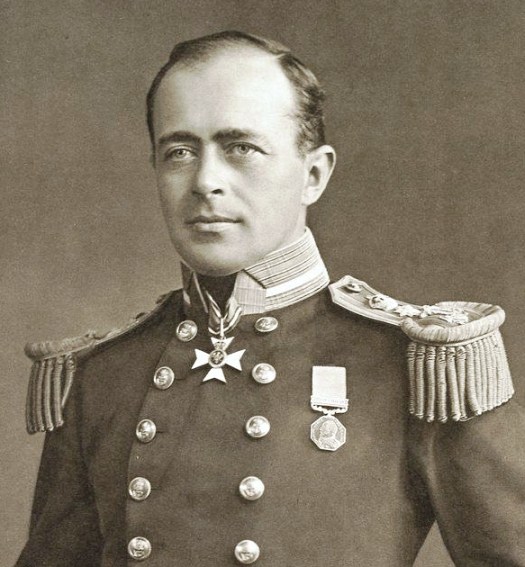
Robert Falcon Scott
Scott led a party of five which reached the South Pole on 17 January 1912, only to find that they had been preceded by Roald Amundsen‘s Norwegianexpedition. On their return journey, Scott and his four comrades all died from a combination of exhaustion, starvation and extreme cold.
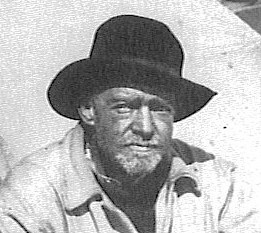
Douglas Mawson
Mawson turned down an invitation to join Robert Falcon Scott’s Terra Nova Expedition in 1910; Australian geologist Griffith Taylor went with Scott instead. Mawson chose to lead his own expedition, the Australasian Antarctic Expedition, to King George V Land and Adelie Land, the sector of the Antarctic continent immediately south of Australia, which at the time was almost entirely unexplored. The objectives were to carry out geographical exploration and scientific studies, including a visit to the South Magnetic Pole. …
There was a quick deterioration in the men’s physical condition during this journey. …
It was unknown at the time that Huskyliver contains extremely high levels of vitamin A. It was also not known that such levels of vitamin A could cause liver damage to humans. …
(Mertz and Ninnis died.) Mawson continued the final 100 miles alone. During his return trip to the Main Base he fell through the lid of a crevasse, and was saved only by his sledge wedging itself into the ice above him. He was forced to climb out using the harness attaching him to the sled. .
When Mawson finally made it back to Cape Denison, the ship Aurora had left only a few hours before. …
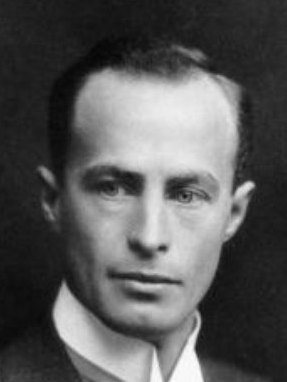
Ernest Shackleton
After the race to the South Pole ended in December 1911 with Roald Amundsen‘s conquest, Shackleton turned his attention to what he said was the one remaining great object of Antarctic journeying: the crossing of the continent from sea to sea, via the pole. To this end he made preparations for what became the Imperial Trans-Antarctic Expedition, 1914–17. Disaster struck this expedition when its ship, Endurance, became trapped in pack ice and was slowly crushed before the shore parties could be landed. There followed a sequence of exploits, and an ultimate escape with no loss of human life, that would eventually assure Shackleton’s heroic status, although this was not immediately evident. …
Two filmmakers, Jennifer Jordan and Jeff Roads, are working on a documentary that delves back into the Greg Mortenson story. Their film is called 3000 Cups of Tea (see trailer below), and it is nearing completion. They say they have a very different side of the story to tell, and that their experience with Central Asia Institute, and Mortenson’s work, does not resemble what 60 Minutes reported. They have visited many of the schools that were the result of Greg’s work, and they say that aside from a few that aren’t up and running, most of them are serving the purpose that their founder intended. …






 besthike.com