Stephen Mather – National Parks hero

Stephen Mather (1867–1930) was manic-depressive, self-made American millionaire who took it upon himself to build the National Parks system.

… Beginning in 1913, when Mather wrote to the Secretary of the Interior, Franklin K. Lane, and deplored the state of the parks, he began building support for better management of the system by the federal government. In 1915, Lane appointed Mather as his assistant to work on the parks issues …

In fact, Lane told him that if he didn’t like the parks, to come to Washington and fix them himself.

Mather did, originally agreeing to stay only 1yr.

It became his life’s work.

Though he’s celebrated in every Park, I only learned of Mather in The National Parks: America’s Best Idea by Dayton Duncan and Ken Burns.

That’s the book, not the DVDs.

GR20 Trek Corsica – day 6

trip report by besthike editor Rick McCharles

» day 1 | day 2 | day 3 | cirque | day 4 | day 5 | day 6 | day 7 | advice |

Friday, July 1st, 2011

Good morning GR20.

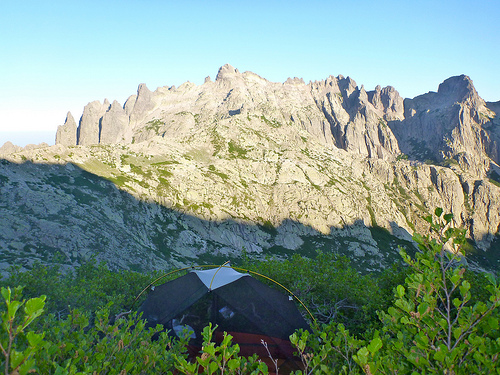
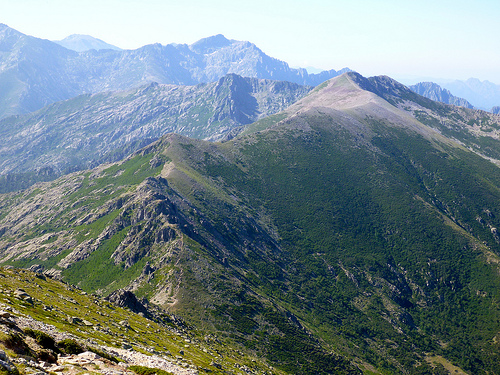
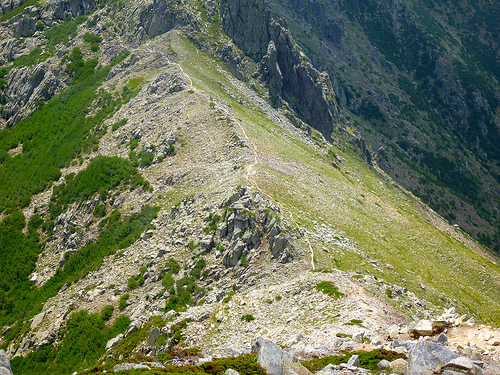
Another perfect day. I’m loving the view from this ridge.

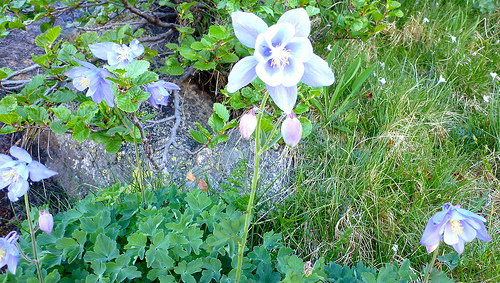
Up at elevation, the wild flowers were even better than down in the valley.

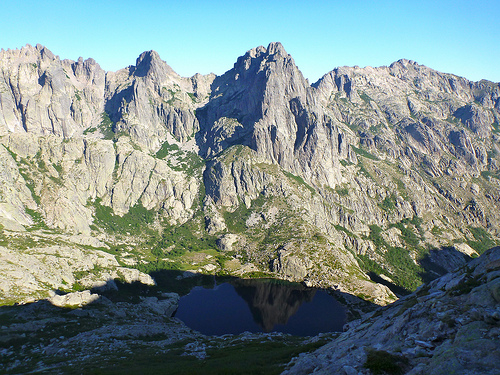
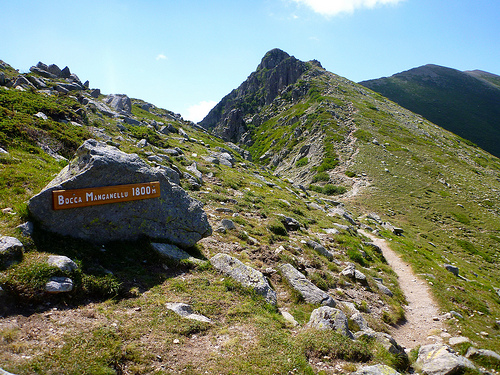
From the pass — Bocca Muzella — I could see the trail climbing the ridge across the valley. Sweet.

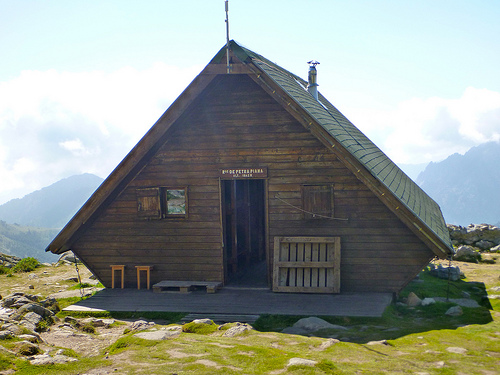
After scrambling down to Refuge Petra Piana, hikers asked where I had slept. … And were were envious.

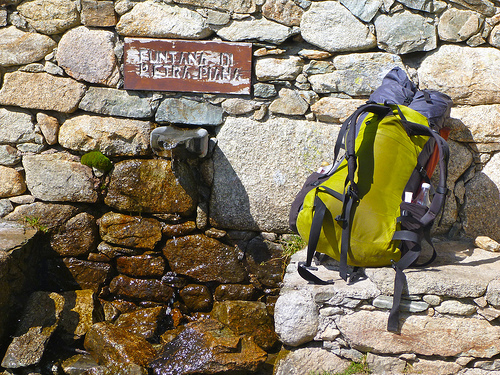
The water source there was highly appreciated.

From here it’s a high, dry ridge walk. This is what the GR20 is all about.

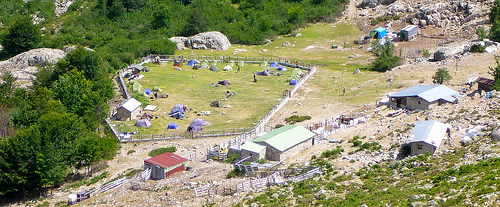
I liked the looks of the pig proofed tent area. So decided to stop earlier than any other day.

That’s Refuge de L’Onda. The first campsite where I wasn’t totally exhausted on arrival.

… By this point I had resolved to hike only one more day, catching the train at Vizzavona. That would be enough GR20 for me.

See more annotated photos from day 6.

_____

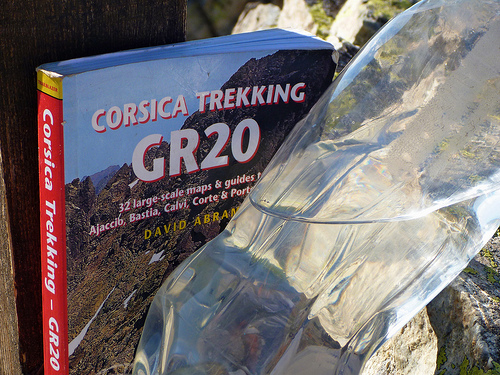
Shout out for David Abram’s guidebook. Normally I hate cartoon not-to-scale maps, but the ones in this book are excellent. Very descriptive.

Darkwoods, British Columbia

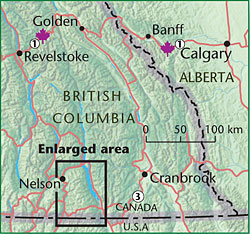
My family had a summer home in Crawford Bay, near Nelson B.C. for 30yrs … yet I had had never heard of Darkwoods before Jane handed me a copy of Canadian Geographic magazine, an article written by author Bruce Kirkby:

… larger than Waterton Lakes National Park, 15 separate watersheds, more than 50 alpine lakes, peaks soaring above 2,400 metres, ancient old growth, prime caribou and grizzly habitat …

Saving the Darkwoods

The biggest private conservation land deal in Canadian history reveals a story of German royalty, rugged wilderness, pioneering forestry and a shroud of privacy

It’s a fascinating read.

For decades I’ve hiked and boated nearby, never once wondering what’s on that part of the map. There is an awful lot of wilderness in the Kootenays. Even a tract that large can be overlooked by locals.

The owner has sold the property to the National Conservancy of Canada who are striving to protect the most valuable wilderness sections, while still allowing limited logging and hunting.

Roosevelt hunted here in 1888, coincidentally.

confirmed – hiking in Japan

by best hike editor Rick McCharles

I fly to Tokyo September 22nd and have up to 2 months in Japan.

I’ve already got Lonely Planet Japan as a travel guidebook. But I’m thinking of buying Lonely Planet Hiking in Japan as a PDF. ($17.49)

I can do that via LonelyPlanet.com

In that way I don’t need to carry another heavy book. And I can SEARCH for and follow the guidebook on my iTouch.

Will this work?

Are the maps readable as PDF files?

Backpacker – America’s best kept secret hikes

Backpacker Magazine:

The only thing better than enjoying the life-list scenery in the country’s premier national parks? Getting that same scenery, minus the crowds.

EAGLES NEST WILDERNESS, CO
LINVILLE GORGE WILDERNESS, NC
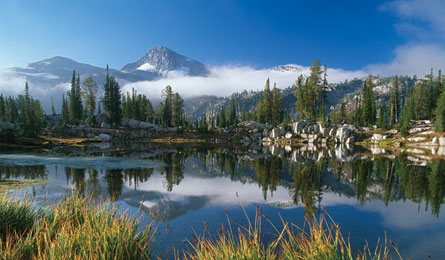
EAGLE CAP WILDERNESS, OR
WHITE CLOUD MOUNTAINS, ID
LAKE CHELAN-SAWTOOTH WILDERNESS, WA
JOHN MUIR WILDERNESS, CA

Sunshine Lake, Eagle Cap Wilderness

Sierra Crest Route, California

Ben Egan sends a link to an Adventure I’ve not heard of before. It parallels these two great hikes:

John Muir Trail, 211 miles (340 km), our #2 hike in the world.

Sierra High Route, 195 miles (314 km), is similar, but higher and harder.

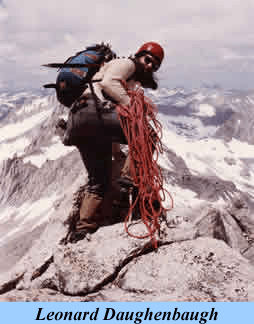
Now check out the Sierra Crest Route as documented by Leonard Daughenbaugh.

If the John Muir Trail is for the masses, Roper’s Sierra High Route is more of a mountaineer’s journey. Your Sierra Crest Route takes it to the next level.

—Bob Rockwell, Author and Sierra Mountaineer

I was definitely impressed with the concept and the research.

—Steve Roper, Author and Sierra Mountaineer

read more

The goal is to stay within a mile of the actual Sierra Crest, most often within a half mile.

Be clear. The SCR is not a “hike”:

Leonard Daughenbaugh:

Since the Crest Route is designed to be a mountaineering rather than a rock climbing route, the last requirement is that there be no individual move on the route that is technically more difficult than class 3.

Based on my evaluations, and, where available, ratings in various climbing and mountaineering guidebooks, all moves on the Route meet this requirement. There are, however, two crossings, “Jones Pass” and “Jones Traverse,” that, because of their exposure and route finding difficulties, travelers might feel are more difficult than class 3. …

Sounds great. But the Sierra High Route already is difficult enough for me.

If you are interested, the only place to get more information is SierraCrestRoute.org.

Venables – Higher Than the Eagle Soars: A Path to Everest

Stephen Venables is one high altitude mountaineer you’ve heard about, since he didn’t die young.

I really enjoyed his 2008 career retrospective – Higher Than the Eagle Soars: A Path to Everest.

It won Best Book — Mountain Literature at the 2007 Banff Mountain Book Festival.

In 1988, Venables became the first Briton to ascend the summit of Mount Everest without bottled oxygen. His ascent, as far as the South Col, was by a new route up the Kangshung Face from Tibet, with just three other climbers, Americans Robert Anderson and Ed Webster, and Canadian Paul Teare.

All four reached the South Col but Teare decided to descend from here, concerned about incipient altitude sickness. The other three continued up the final section of the normal 1953 route, but Anderson and Webster were forced to turn back at the South Summit.

Meanwhile Venables reached the summit alone, at 3.40 pm.[1] Descending late in the day, he decided to bivouac in the open at about 8,600 metres, rather than risk a fall by continuing in the dark. Anderson and Webster spent the night slightly lower in an abandoned Japanese tent. In the morning all three were reunited and continued down to their own tents on the South Col. It took them a further three days to complete an epic retreat down the Kangshung Face. All three climbers suffered some frostbite, with Webster affected worst. …

Venables is a fine writer. A better writer than climber if his autobiography is to be believed.

An early letter of recommendation from one Dr. Buxton:

Dear Sirs,

Stephen Venables shows little aptitude for academic work, so he might as well spend the summer climbing.

He recently injured himself falling off a cliff in Bristol, so I should imagine that some alpine training would be a very good idea.

Yours sincerely,

John Buxton

His life story is one of one underfunded, under-planned, over-enthusiastic misadventure after another. I’m very happy to be a hiker, not a climber after reading the life & death tale of Kangshung.

Venables as a young man hung out at Snell’s Field in Chamonix while his American contemporaries were living on a shoestring budget at Camp 4 in Yosemite.

Nepal – Bringing Progress to PARADISE

The publisher sent me a review copy. Here’s my REVIEW.

In October 2008, climbing expedition leader and attorney, Jeffrey Rasley, led a trek to a village in a remote valley in the Solu region of Nepal named Basa. His group of three adventurers was only the third group of white people ever seen in this village of subsistence farmers. What he found was a people thoroughly unaffected by Western consumer-culture values. They had no running water, electricity, or anything that moves on wheels. Each family lived in a beautiful, hand-chiseled stone house with a flower garden. Beyond what they already had, it seemed all they wanted was education for the children. He helped them finish a school building already in progress, and then they asked for help getting electricity to their village.

Bringing Progress to Paradise describes Rasley’s transformation from adventurer to committed philanthropist.

… offers Rasley’s critical reflection on the tangled relationship between tourists and locals in “exotic” locales and the effect of Western values on some of the most remote locations on earth.

Rasley presents a thoughtful, honest account of his moral struggle with the dilemma. That struggle is framed in the story of a one week guided fund-raising trip to the village in Oct. 2008.

By books end, I’m no more decided than the author on whether or not their good works are a net gain for the village. It has proceeded, in any case. The school was renovated by 2009, two new teachers hired and budget in place for 3yrs. The composting toilet had been delivered (but not installed).

Next step … Electricity and Internet.

As an independent hiker, the plot of the book is a cautionary tale of the many things that can go wrong on a guided Himalayan trek. (In fact, everyone who considers signing on with a group should be required to read this book first.)

The highlight of the trek for me was Chapter 21 – Basa Magnetism. One of the trekkers, Karen, had an intense day, physically and spiritually. It got me thinking about my own tough days in the mountains.

I recommend it. And recommend trading it in a mountain hostel for another outdoor adventure book. 🙂

details on Red Wheel – Bringing Progress to Paradise
What I Got from Giving to a Mountain Village in Nepal

Jeff Rasley
$15.95
238 pages
October 1, 2010

Jeff answers the question: Is Nepal A Safe Place To Visit?
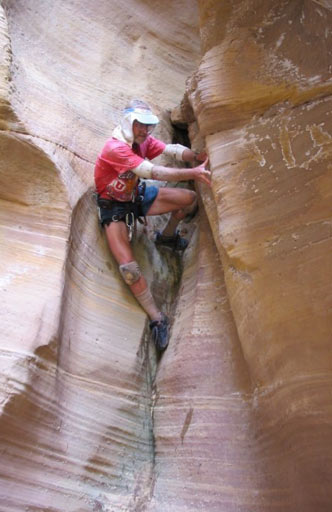
Canyon Hiking Guide to the Colorado Plateau

Buzz recommends this guidebook, though it’s not been revised since 1999. The author’s been called controversial.

This is a canyon hiking guide to the Colorado Plateau, which covers the southeastern half of Utah, the northern half of Arizona, the western 1/5 of Colorado, and a small part of NW New Mexico. …

Amazon

Michael R. Kelsey

… on June 9, 1970 he put a pack on his back and started traveling. Since then he has seen 223 countries, republics, islands, or island groups. When not traveling the world he is seeking out and exploring the canyon countries of the Southwest’s Colorado Plateau. All his wanderings have resulted in a very successful series of 16 self-published books. …

Michael R. Kelsey

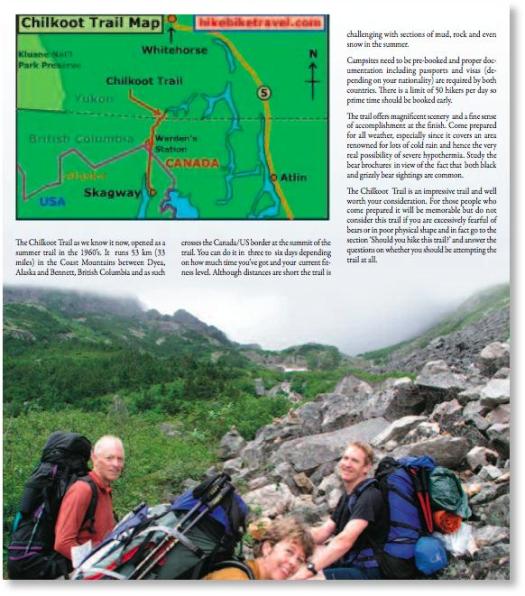
Chilkoot Trail eGuide

The Chilkoot Trail, which begins on tidewater in Alaska and climbs up over mountains in British Columbia, presents a unique backpacking opportunity, as this is a trail rich with history.

It was the main trail used in the famous Klondike Gold Rush of the late 1800′s, one of the biggest rushes the world has ever seen.

An international crowd of literally tens of thousands, fueled by dreams of riches, used the Chilkoot Trail to chase the gold in the Yukon. Most suffered incredible hardship, many never even made it and only a few got rich. Today on the trail you’ll find plenty of reminders of their epic journey.

sample page ...

Download a FREE Trail eGuide from the Hike Bike Travel Free Adventure Guides page. There are plenty more just like this one.

They download as .ZIP files that then need to be opened as PDFs.