Kiss Or Kill: Confessions of a Serial Climber

Just finished reading one of the weirdest and wildest outdoors books.

Not sure whether his prose pieces are the insane ramblings of an arrogant egomaniac. Or genius insight.

KISS OR KILL

Sit back and join the ride with this collection of edge-of-your-seat climbing stories by Mark Twight aka Dr. Doom. “Somewhere out there somebody understands these words and knows they matter. They were written in blood, learned by heart.” –Mark Twight
– BANFF award-winner

Extreme climber. Extreme writer. Extreme personality. No matter what he’s doing, Mark Twight takes a definite, and often controversial, stand. Anyone who knows climbing knows Twight’s name, and anyone who knows Twight’s name will want to read this book. Each story is told in Twight’s taut, in-your-face style. Brand-new epilogues bring each piece full circle , providing updated information and fresh, hindsight perspectives.
Amazon

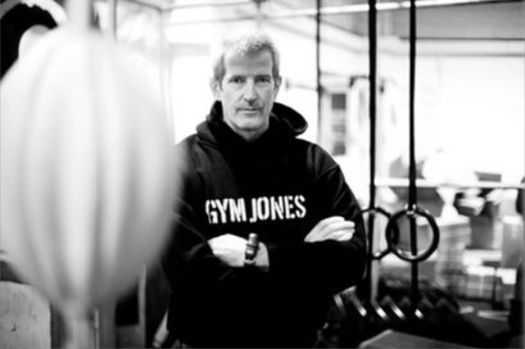
Twight
about Mark Twight

Born on November 2, 1961 in Yosemite National Park, California, Mark Twight rose to prominence in the world Alpine mountaineering community in the late 1980s and early 1990s with a well-documented series of difficult, dangerous alpine climbs in various ranges around the world.

He made the first ascent of “The Reality Bath” on the White Pyramid with Randy Rackliff, which is unrepeated and described by Canadian Rockies guidebook author, Albi Sole as “so dangerous as to be of little value except to those suicidally inclined.”

… Twight was nominated for the Piolet d’Or twice during his career, in 1993 for “Beyond Good and Evil” and 1995 for “Deprivation”.
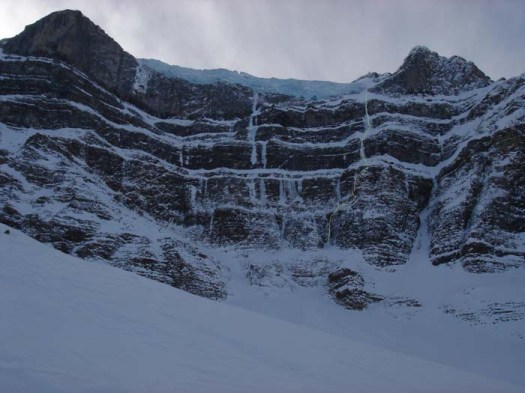
Reality Bath is somewhere centre on this wall

Publishers Weekly:

From Chamonix to the Himalayas to Peak Communism in the Pamirs, extreme climbing has been Twight’s response to “stupidity and mediocrity” and at times it is even “a tool to forestall suicide.”

Following Extreme Alpinism, this volume collects more than 12 years of Twight’s extreme outdoor journalism for such magazines as Climbing, Outside and Men’s Journal.

Punk rock lyrics pepper these essays, providing context and form for his rage, cynicism and obsessive, masculine drive.

Avalanches, rotten ice, the deaths of fellow climbers, the rescue of others, dwindling food supplies, lost tents at 18,000 feet Twight survives mortal dangers and tragedies, writing, “No matter what I did, the suffering I experienced did not satisfy me. I had to have more.”

Twight’s in-your-face style is both his strength and his weakness fans of Henry Rollins or Charles Bukowski may find a sport nut analogue in Twight. Deeply personal, arrogant, grandiose, thrilling and unapologetic, this record of his 15-year career will gratify and repel extreme athletes, their admirers and their detractors.
Andrew Pleavin
Andrew Pleavin

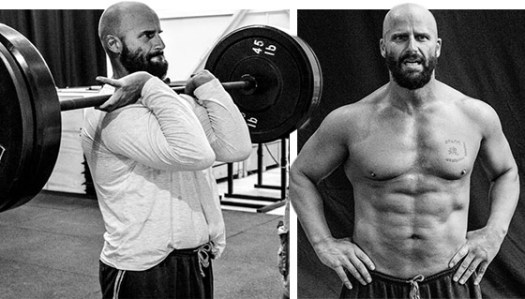
Mark Twight is the founder of Gym Jones, where he trains athletes, military personnel, and others for whom fitness goes beyond appearance. At Gym Jones Twight and fellow trainers and coaches work with everyone from NFL players to MMA fighters, Brazilian Jiu-Jitsu competitors (a half-dozen Pedro Sauer black belts work and train there), bike racers, rock and mountain climbers, and a variety of ultra-endurance athletes. …

In 2005 Twight trained the cast and stunt crew for the movie 300. … The training was difficult, Twight pulled no punches, refusing to differentiate between actors, stuntmen, or athletes. After being told the details of a day’s workout Andrew Pleavin said, “It feels like you just killed my dog.”

One training regimen that his crew underwent in the movie came to be known as the 300 Workout, spawning many variations by other fitness personalities and trainers.

RIP Peter Matthiessen.

The Snow Leopard (1978) is one of my favourite books. I’ve just downloaded the audio version to read, once again, when I return to the Himalaya in November. It’s an account of his two-month search for the snow leopard with naturalist George Schaller in the Dolpo region of Tibet.

Peter

Although he saw himself primarily as a novelist, Peter Matthiessen, who has died of leukaemia aged 86, became best known for his non-fiction writing, a phenomenon he once described as “being pushed so far into a pigeonhole I now doubt I will ever get out”. Indeed, Matthiessen’s non-fiction earned him an important place among conservationists worldwide. His writing encompassed nature and travel, and its spiritual insights about nature, man, and himself, turned him into a sort of new-age guru. Even the careful craftsmanship of his fiction reflected an approach to writing that echoed the Zen Buddhism he practised. …

Michael Carlson
The Guardian

The best overview of his life I read on OutsideIn the Spirit of Peter Matthiessen

Great American Hikes

Philip Werner edits the excellent Section Hiker blog.

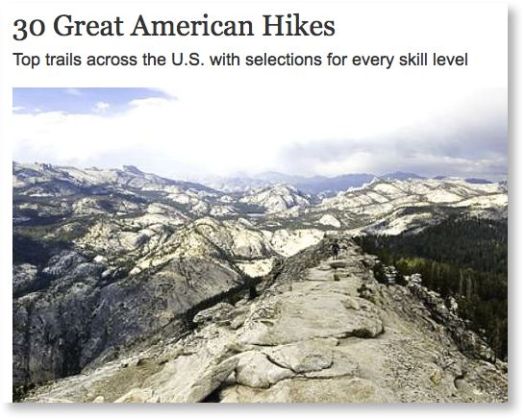
He and I were asked to list “Great American Hikes”.

I recommended:

John Muir Trail, California

Glacier North Circle, Montana

Here’s the final list:

Active Times – 30 Great American Hikes

30 HIKES

It’s an odd list, actually. My guess is that they felt obliged to include something from different parts of the USA.

Fact is, most of the Great Hikes are in the West.

It’s worth clicking through, however. There are some gems on the list.

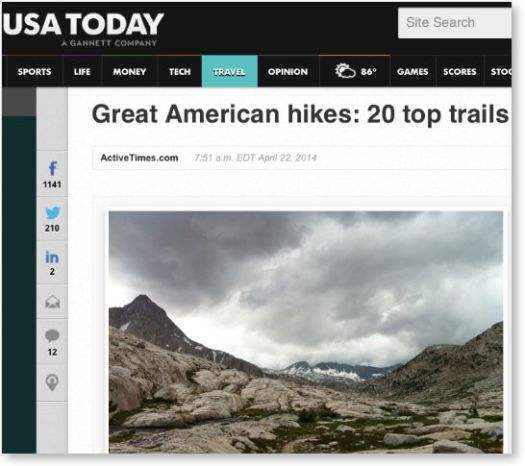
That article was reprinted by USA Today. The number of hikes dropped from 30, to 20

USA today hikes

15 seconds of fame. 🙂

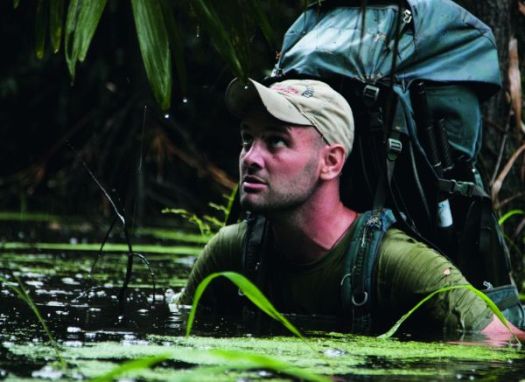
the man who walked the Amazon

Ed Stafford (born 26 December 1975) is an English explorer and former British Army captain. He holds the Guinness World Record for being the first human ever to walk the length of the Amazon River. …

Stafford was announced as one of National Geographic Adventurers of the Year 2010 and then in March 2011 he was awarded European Adventurer of the Year in a ceremony in Stockholm, Sweden. …

ed

Amazon – Walking the Amazon: 860 Days. One Step at a Time.

Click PLAY or watch his TED Talk on YouTube.

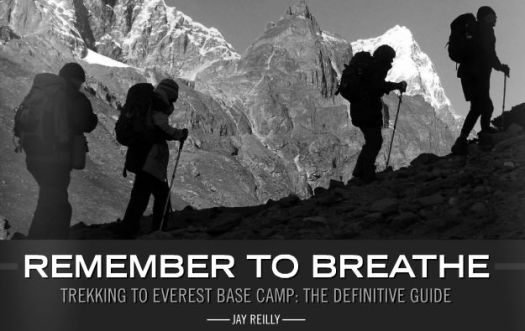
new eBook – trek Everest Base Camp

In collaboration with Frank and Sue Wall, Jay Reilly announces a new eBook. Jay lived in Nepal for 6 years, a professional trekking and mountain guide:

Remember To Breathe

It includes a comprehensive guide to frequently asked questions, the best time of the year to go, your health and required first aid supplies, training to get prepared for the trek, equipment you’ll need and where to find it, and comprehensive track notes.

This 70 plus page downloadable PDF eBook is written with the first time visitor to Nepal in mind. It is packed with inside knowledge and tips to help you plan and execute your trip.

Best still – as it is a downloadable eBook you can have it today (with no need for delivery fees) It’s just $A15.99.

Our Hiking Blog – How to trek to Everest Base Camp – a independent guide book

That’s the best link for details on the book.

Remember to Breathe

Click to see a sample.

I have a review copy. It looks great.

In 2014 I prefer eBooks to hard copies. On my laptop, eBooks are a dream — so easy to search.

On my phone, on the trail, it’s a little more challenging to find exactly what I want, when I want it.

Having trekked to Everest Base Camp a few years ago, carrying two heavy guidebooks, I wish I’d had this resource instead.

One point of confusion in the book:

“The TIMS Card can only be issued by a trekking agency that is registered with TAAN (Trekking Agents Association Nepal)

Along with the TIMS Card, you are required to take a Nepalese “guide” with you. The cost of this should be about 1200 NRP per day for the guide. This includes his food. Be sure to negotiate this before you pay any money.”

Only 6 months ago you could purchase a TIMS card for yourself at the Tourism Board office in Kathmandu. It was not necessary to have a guide to go to Everest.

Has something changed?

Jay’s reply:

Nothing has changed, you can still get a TIMS Card at the Ministry for Tourism if you wish. It’s a different card than the one issued by trek agents, that registers you as an ‘independant’ trekker, not requiring a guide. However-not all the check post guys know this and to them you are a trekker without a guide, and in their eyes, doing something wrong. I’ve heard of people being turned back even though they have the Ministry issued TIMS. Buyer beware…

The guide suggests Rabies shots. I’ve not encountered many trekkers who have had them. Cyclists generally do, as they are at far greater risk of being nipped at by guard dogs.

Jay:

Regarding rabies, I never personally got the vaccination, but some doctors recommend people do. Bottom line-consult a doctor and make your descisions based upon professional medical advice.

I’m planning on Nepal again Oct/Nov 2014.

Giant’s Cup Trail, Drakensberg – day 3

Trip report by site editor Rick McCharles.

day 1 | day 2 | day 3

Easy day. Only 12km to finish the Giant’s Cup Trail at Bushman’s Nek Hut.

I departed Swiman hut late.

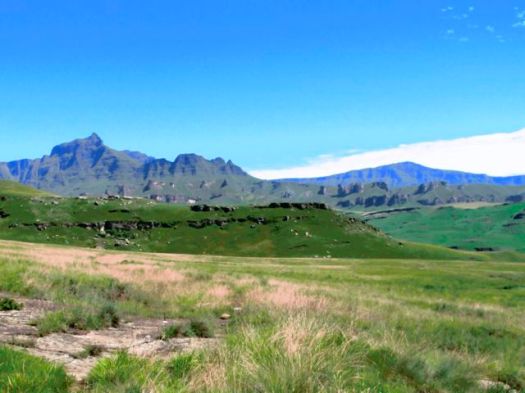
Glorious. Glorious.

IMG_0362

IMG_0338

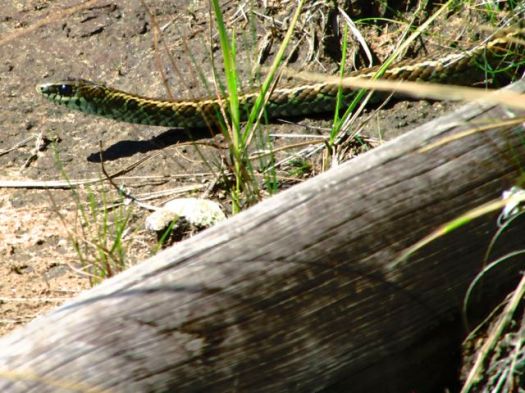
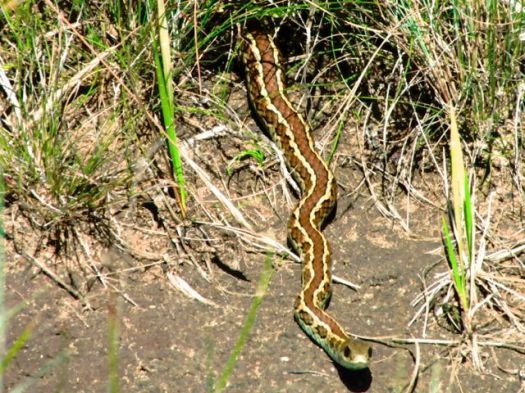
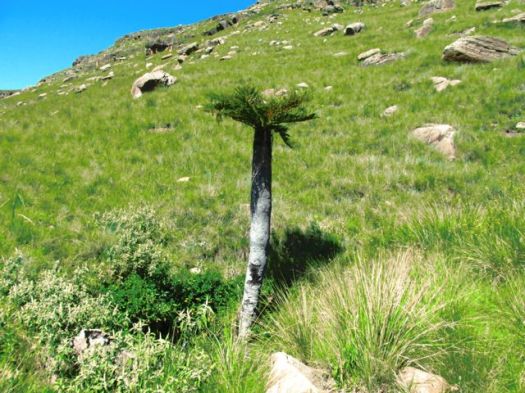
Skies were clear. The landscape empty aside from me. And THIS GUY.

IMG_0340 IMG_0342

I later did some research … but couldn’t confirm the species. Leave a comment if you know.

Again, each time I got saw some significant shade, I cooled off.

IMG_0346

IMG_0345

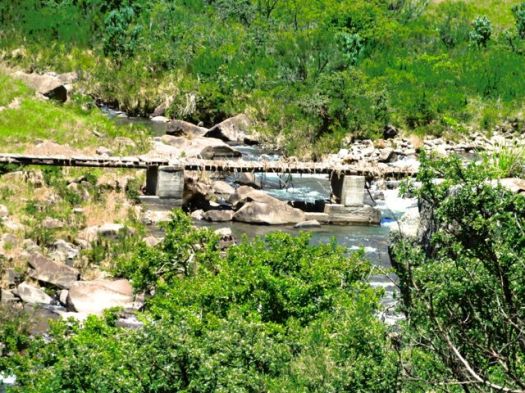
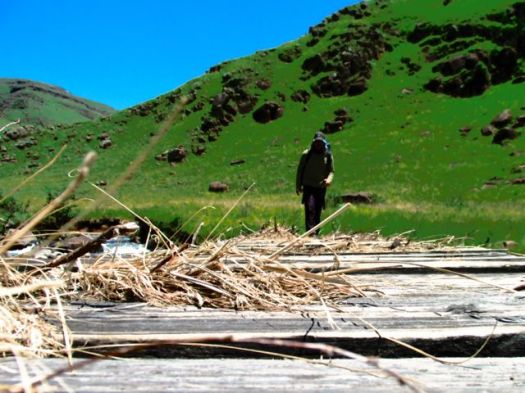
This crude wooden bridge had obviously flooded recently.

IMG_0354

IMG_0355

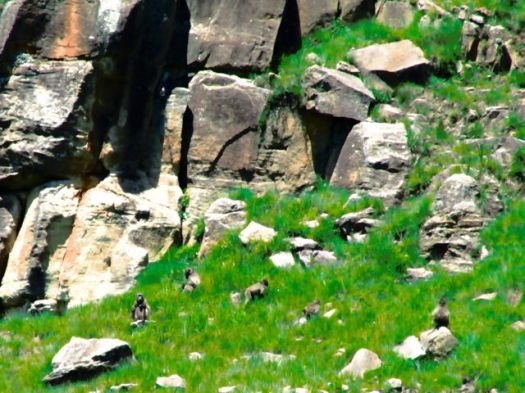
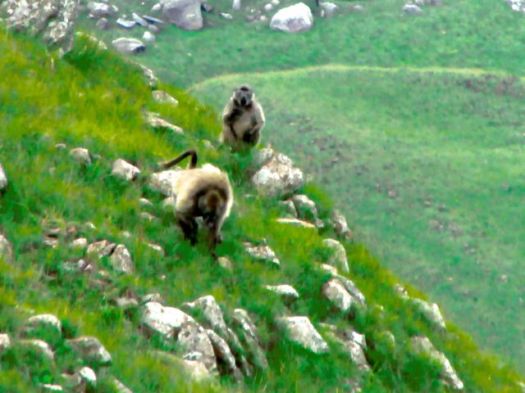
BABOONS!

This afternoon I saw 4-5 different troops of Baboons in the distance.

IMG_0348

This was my best photo.

IMG_0375

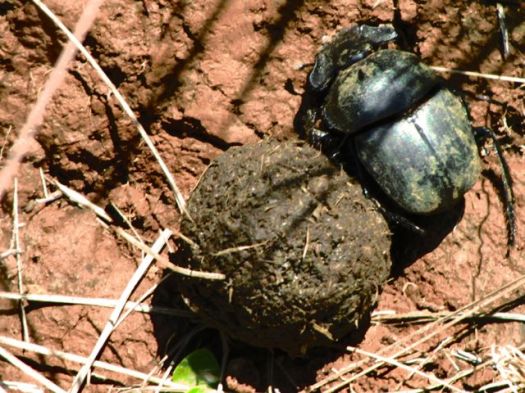
DUNG BEETLE!      … Actually, there are plenty of Dung beetles on this trail.

IMG_0359

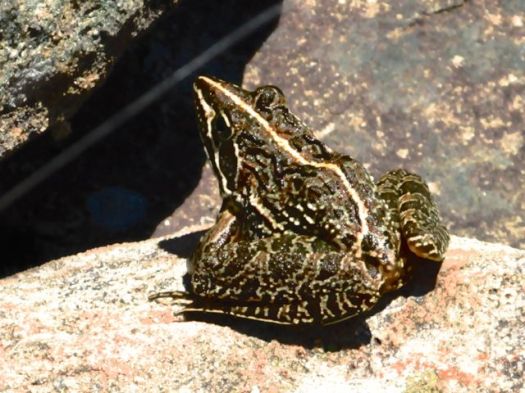
Frog.

IMG_0368

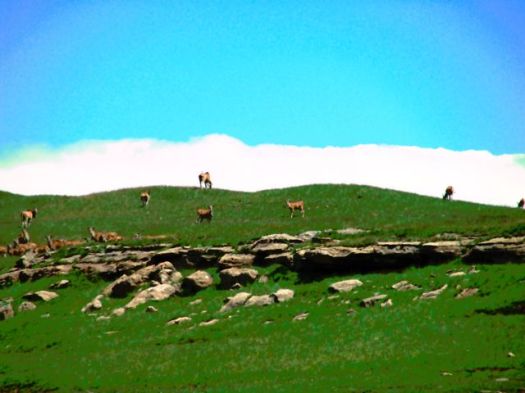
I had great views of a big herd of Eland.

IMG_0369

And again saw grey rhebok.

South Africa is a hot, dry country. But there’s no shortage of water in the Drakensberg during the rainy season.

IMG_0364

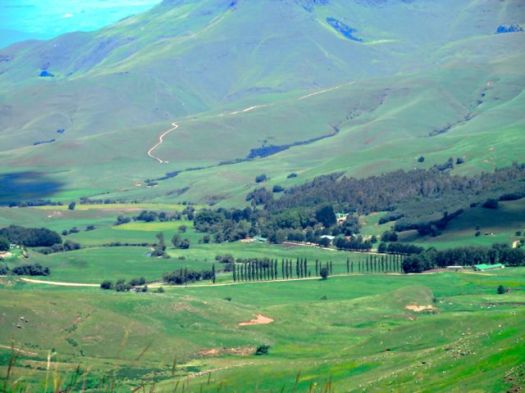
Civilization.

IMG_0373

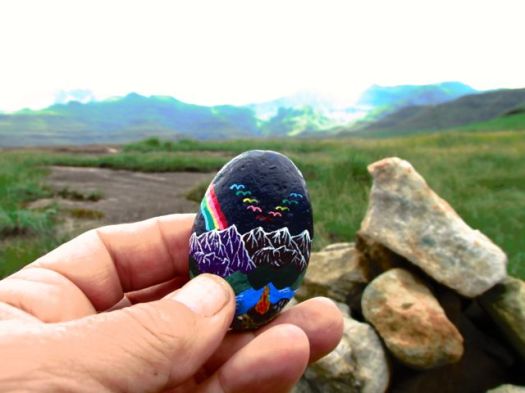
I’d held on to a Summit Stone for the entire trip, waiting on some “highlight” of the Giant’s Cups Trail.

IMG_0376 But there was no one highlight. The Giant’s Cup is all good. I left this one in the final cairn before dropping down to Bushman’s Nek.
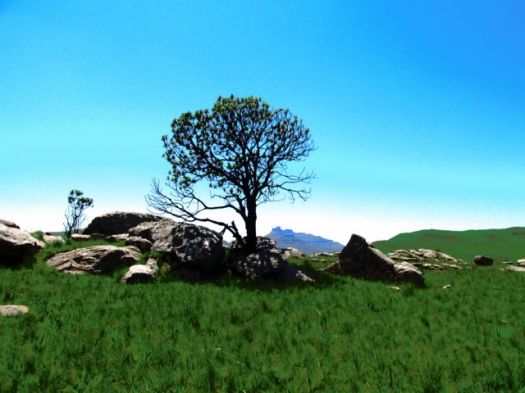
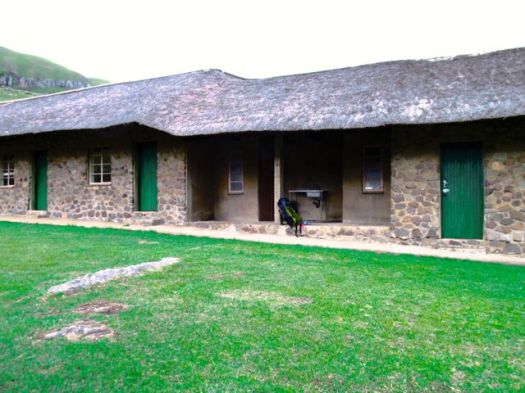
IMG_0349
I saw a sign pointing to Bushman’s Nek hut, but ignored it as the trail looked faint.

Instead I stayed on the trail more trodden.

Turned out that took me to the KZN Wildlife office. I had to backtrack about 1km in the rain.

Alone again. Bushman’s Nek hut is in a very pretty location.

IMG_0379

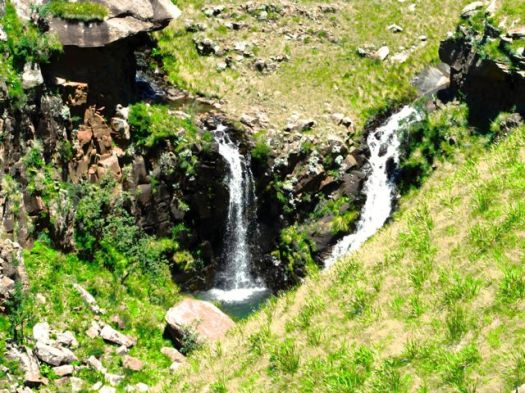
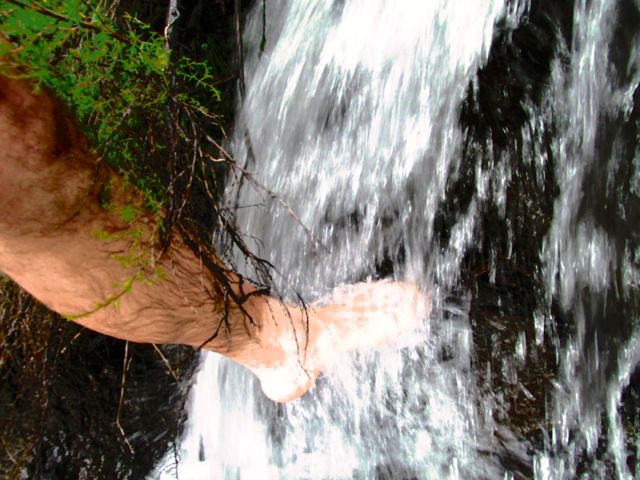
It was nice to wash my dusty, hot feed in the nearby waterfall.

IMG_0382

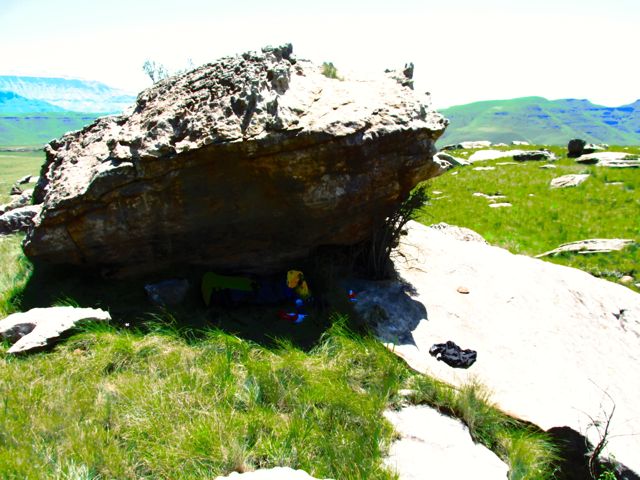
Rather than sleep under a roof, I again set up my tent under cover. And watched the night fall.

IMG_0383

IMG_1373

more photos from this day
___
Logistics

Next morning the KZN Wildlife office called a bush taxi from a local hotel. It took me to Underberg town for about $50 (expensive).

I was there for about 4hrs waiting for the mini-bus to Pietermaritzburg to fill. Though tourists are often advised not to take the local transport, in Underberg they are fairly used to shuttling hikers out from the Giant’s Cup.

You might consider starting at Bushman’s Nek and hiking to Sani Backpackers or Sani Pass Hotel. Travel logistics would be easier and cheaper if you don’t have your own vehicle.

If you wanted to hire a guide, I’d recommend booking through Drakensberg Adventures.

related:

Drakensberg Tourism

Giant’s Cup Trail Run 2014

• EKZ’s Giant’s Cup Trail page

• my hiking guidebook – Cicerone Walking in the Drakensberg

day 1 | day 2 | day 3

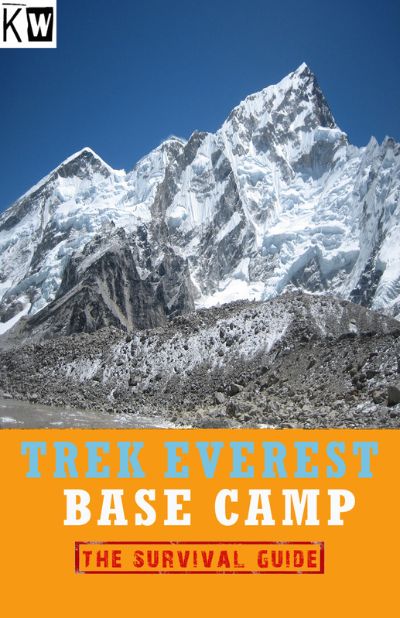
Trek Everest Base Camp: The Ultimate Preparation & Survival Guide

Jason Weise author.

trek base camp

Jason was frustrated organizing his own trek, unable to find all the information he wanted in one place. The book took him over a year to write, research and has been professionally edited.

Cost is only $9.50 in PDF format. Carry it on any portable electronic device.

details – trekbasecampeverest.com

Kili’s Machame-Mweka route

Bob Foulkes:

I signed up, raised some money from incredulous friends, some of whom thought it cheaper to give than to have me committed, and started training.

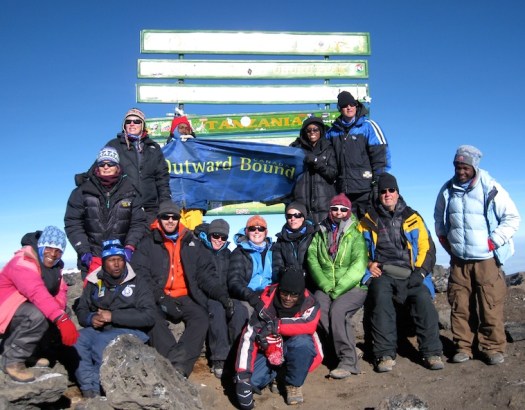
On January 13, 2014, in my 65th year, I joined the group in Amsterdam for the flight to Moshie to start the trek to summit Mount Kilimanjaro. We are 13, 10 women and 3 men, ages varying from mid twenties to mid sixties. We’ve raised almost $100,000 for Outward Bound and have paid our own way here.

Summiting Kilimanjaro is simple but not easy. …

At 5895 meters (19, 340 feet), it is Africa’s tallest peak. It demands a high level of fitness; six to eight hour days of high altitude trekking is demanding. Our well trodden trail, the longer Machame-Mweka route covers 55 kilometers that takes us up a flank of the summit and then traverses slowly across the width of the mountain to the final camp above 4800 meters; from which we strike out for the summit. The longer route allows more time for acclimatization, improving our chances of summiting. …

read more – Climbing to the top of Africa – Part 1

Kili

Bob’s book will be available soon — Off the Couch and Out the Door.

researching the Drakensberg

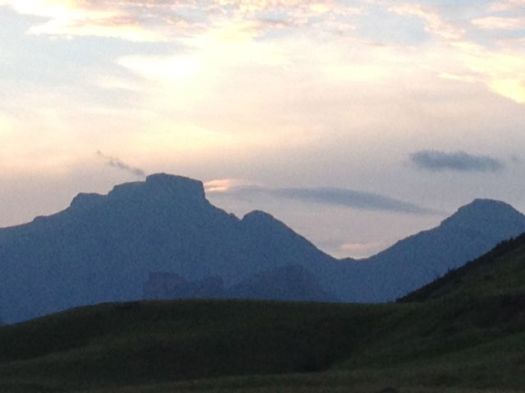
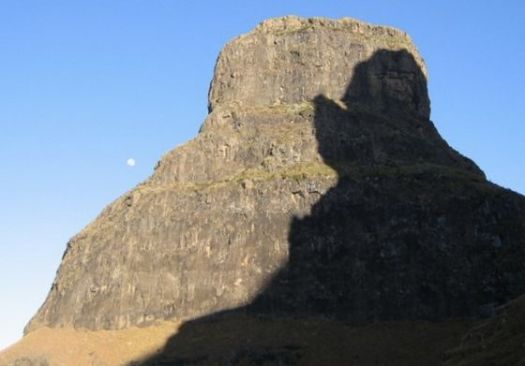
I’m off to South Africa. By the weekend you’ll find me at Amphitheatre Backpackers in the northern ‘berg.

Drakensberg

My only guidebook, so far, is Cicerone Walking in the Drakensberg by Jeff Williams.

That hostel provides a hiker’s shuttle to Royal Natal National Park.

The Bell

Leave a comment if you have advice on best hikes in the Drakensberg.

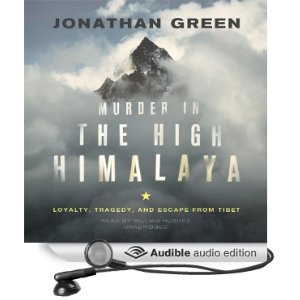
Murder in the High Himalaya – a review

Popular and a prize winner, I’d been looking forward to listening to this book on my recent trip to the Himalaya.

AudibleMurder in the High Himalaya: Loyalty, Tragedy, and Escape from Tibet (2010)

It’s based around the Nangpa La shooting incident of 2006 near Cho Oyo:

… A group of unarmed Tibetan pilgrims attempting to leave Tibet via the Nangpa La pass were fired upon by Chinese border guards. Kelsang Namtso, a 17-year-old nun, was killed and a number were injured. …

The Chinese government initially denied the charges, but Kelsang’s murder was graphically filmed by a Romanian photographer, who was nearby as part of a climbing expedition.

After Romanian photographer Sergiu Matei smuggled the video out of Tibet, it became headline news around the world, drawing attention to the plight of Tibetans under Chinese rule/occupation. …

A documentary called Tibet: Murder in the Snow, based on this incident, was released in 2008 by 360 Degree Films, an Australian production company, working in collaboration with the BBC. …

It’s an awful story.

There’s no need for the author to demonize the Chinese. Their crime speaks for itself.

Click PLAY or watch a book trailer on YouTube. The video includes the shooting of Kelsang Namtso.

Quickly I lost confidence in first time author, investigative journalist Jonathan Green.

The telling is very cliche. Everything China BAD. Everything Tibetan GOOD.

It was as balanced a portrayal of the situation as the film Seven Years in Tibet. Biased.

He keeps making the statement: “oxygen level is half what it is at sea level“.

Of course the percentage of oxygen in the air does not change significantly with altitude, but absolute O2 content decreases as air pressure decreases.

Is that investigative journalist clear on the difference?

I’m not sure he knows what he’s talking about.

One character in the book when questioned states that Annapurna is in Tibet. It’s entirely within Nepal.

Apparently Jonathan Green spent a lot of time the Himalaya.

It’s not apparent in this book.

This is a disappointing read.