
Morocco’s Toubkal Circuit – day 2

Trip report by BestHike editor Rick McCharles.

day 1 | 2 | 3 | 4 | 5 | info | video

I woke at dawn. Shared a couple of cups of coffee with Aziz.

Then told him I might return if I couldn’t find the route.

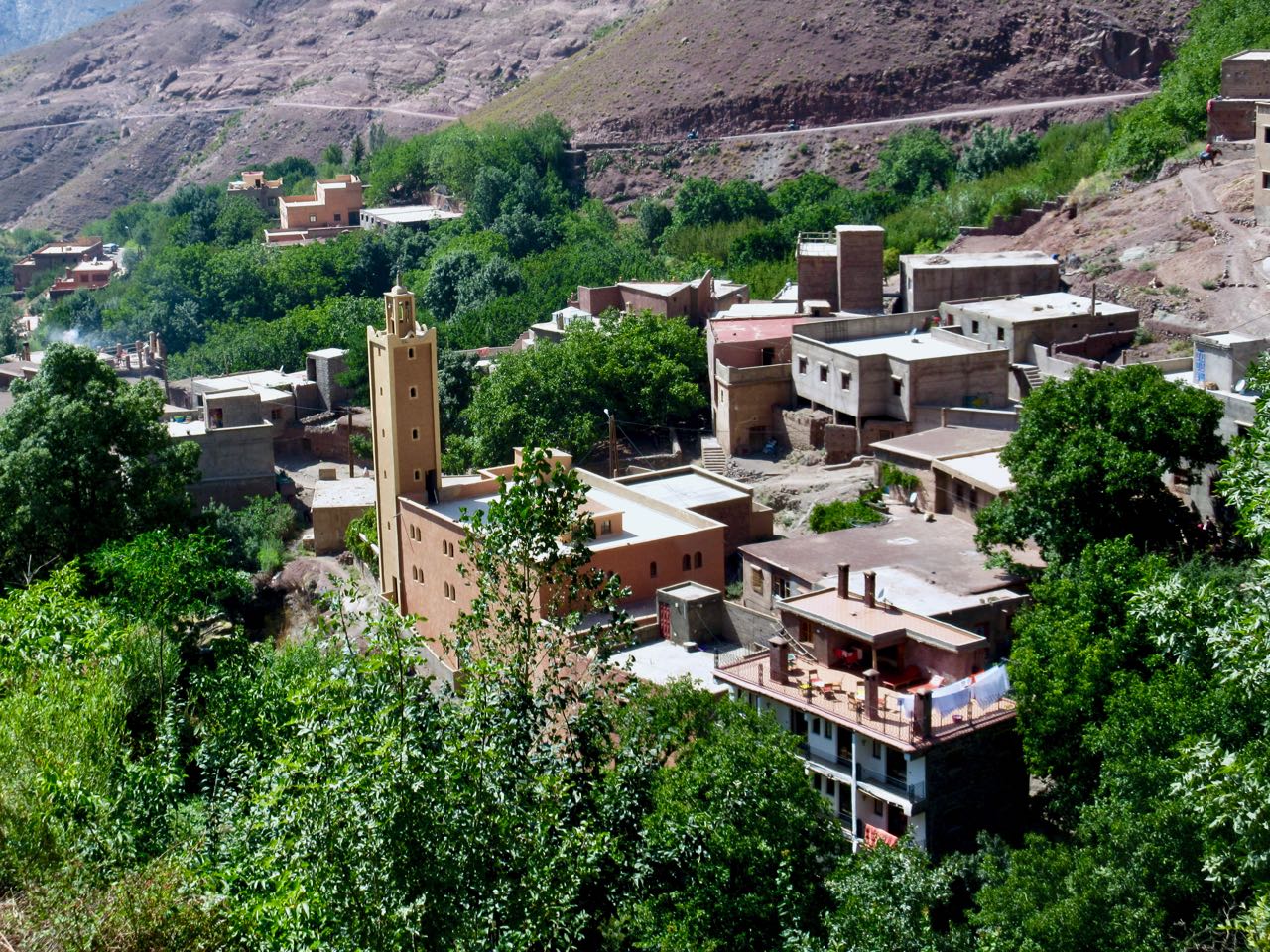
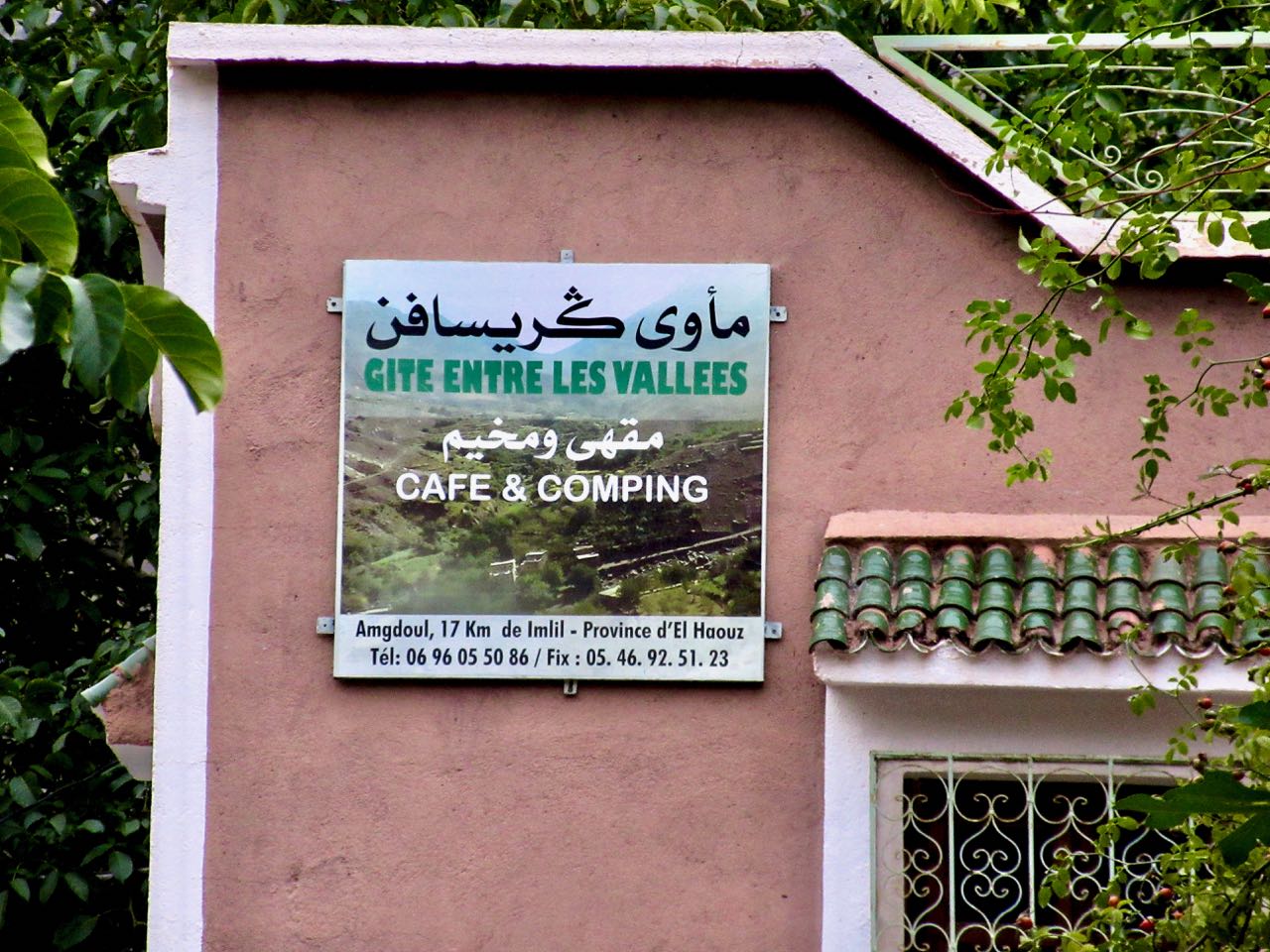
I climbed back up to the paved road surprised to find this hotel.
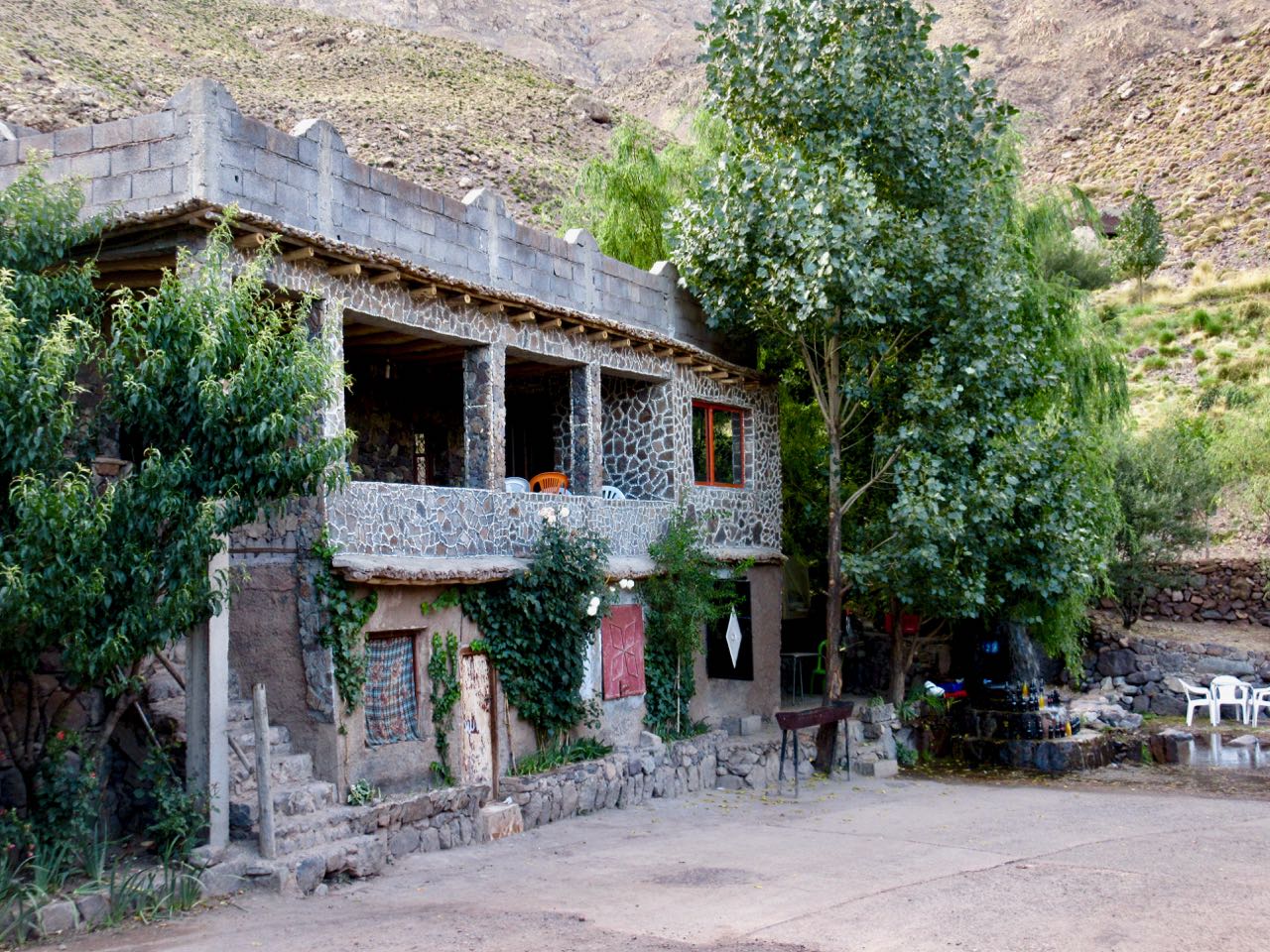
If I was to do the circuit again I’d hire a cab in Imlil to deliver me here on the paved road. Begin the hike next morning.

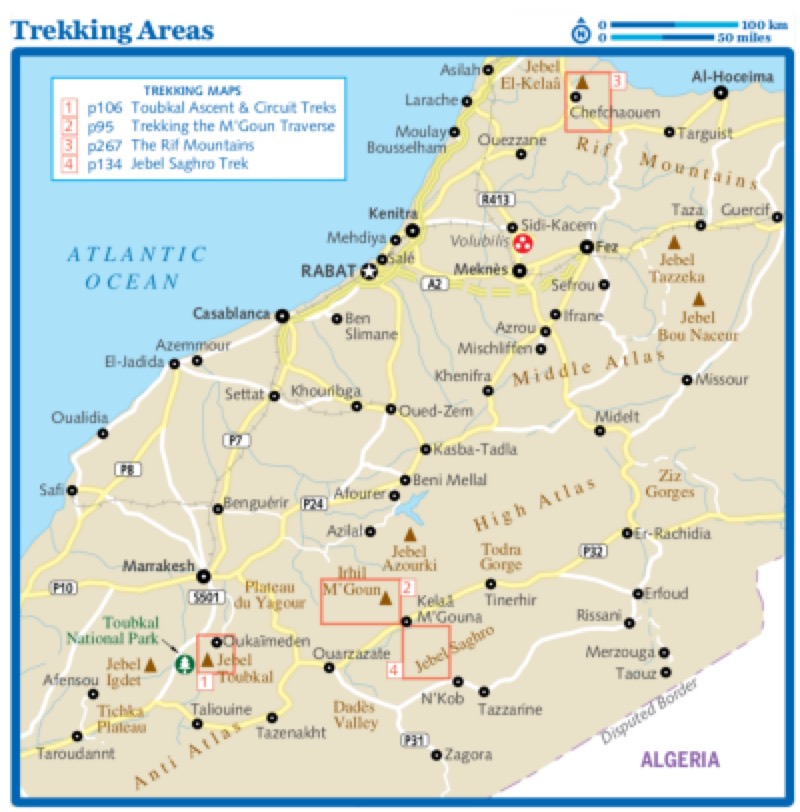
I still had no idea where to start the climb up to Tizi Likemt (3550m), the first high pass.

Happily I saw a brightly coloured people walking down the highway in my direction. It was an Israeli couple who had just finished the circuit the opposite direction.

Waiting on them was the smartest thing I did all week. They told me the entire circuit is available on Maps.me. I had downloaded it in advance. My navigation problems were solved.

Maps.me saves the day again.

I’m sure they thought I looked too energetic. Over-confident.
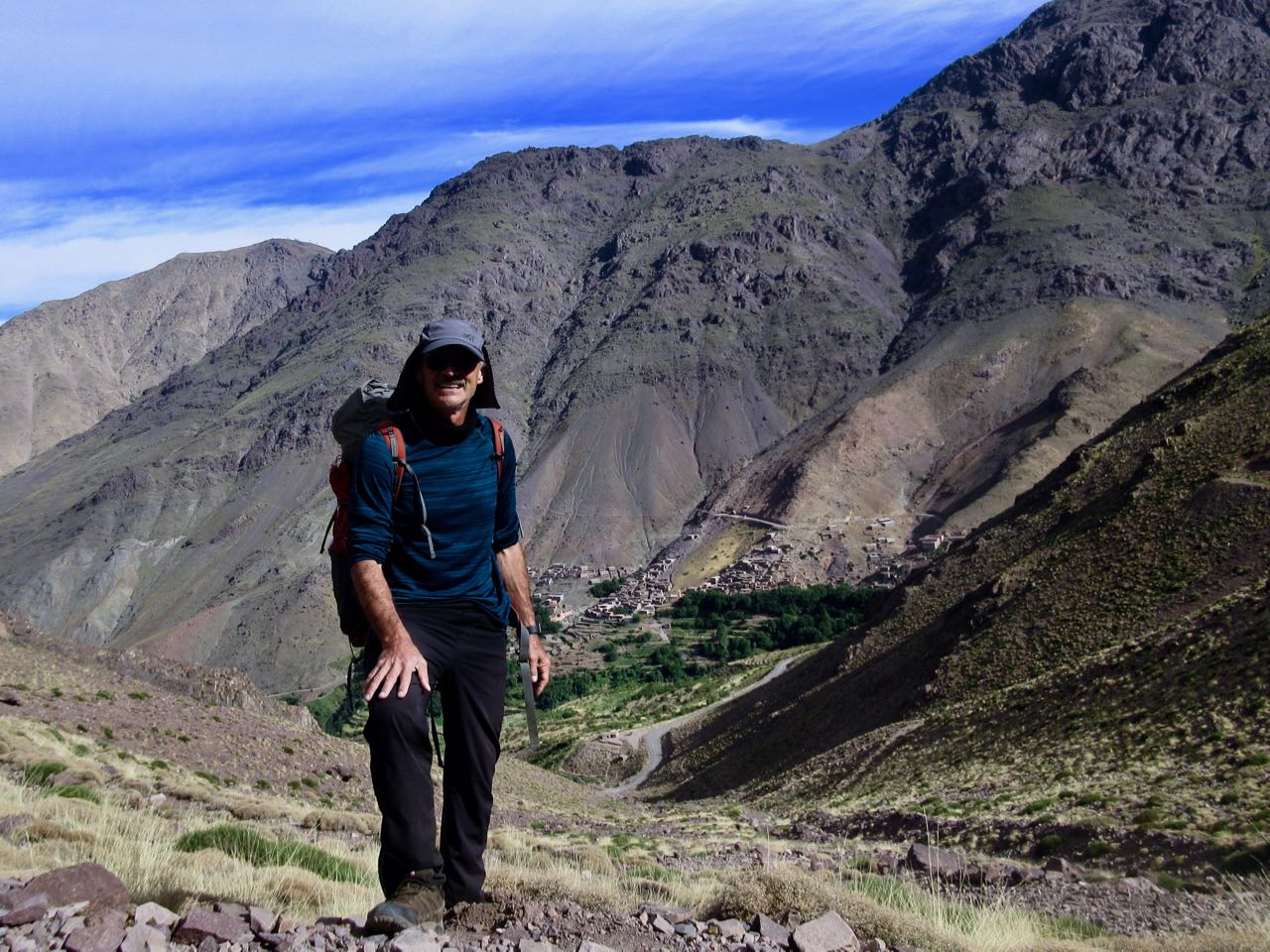
I was raring to go.

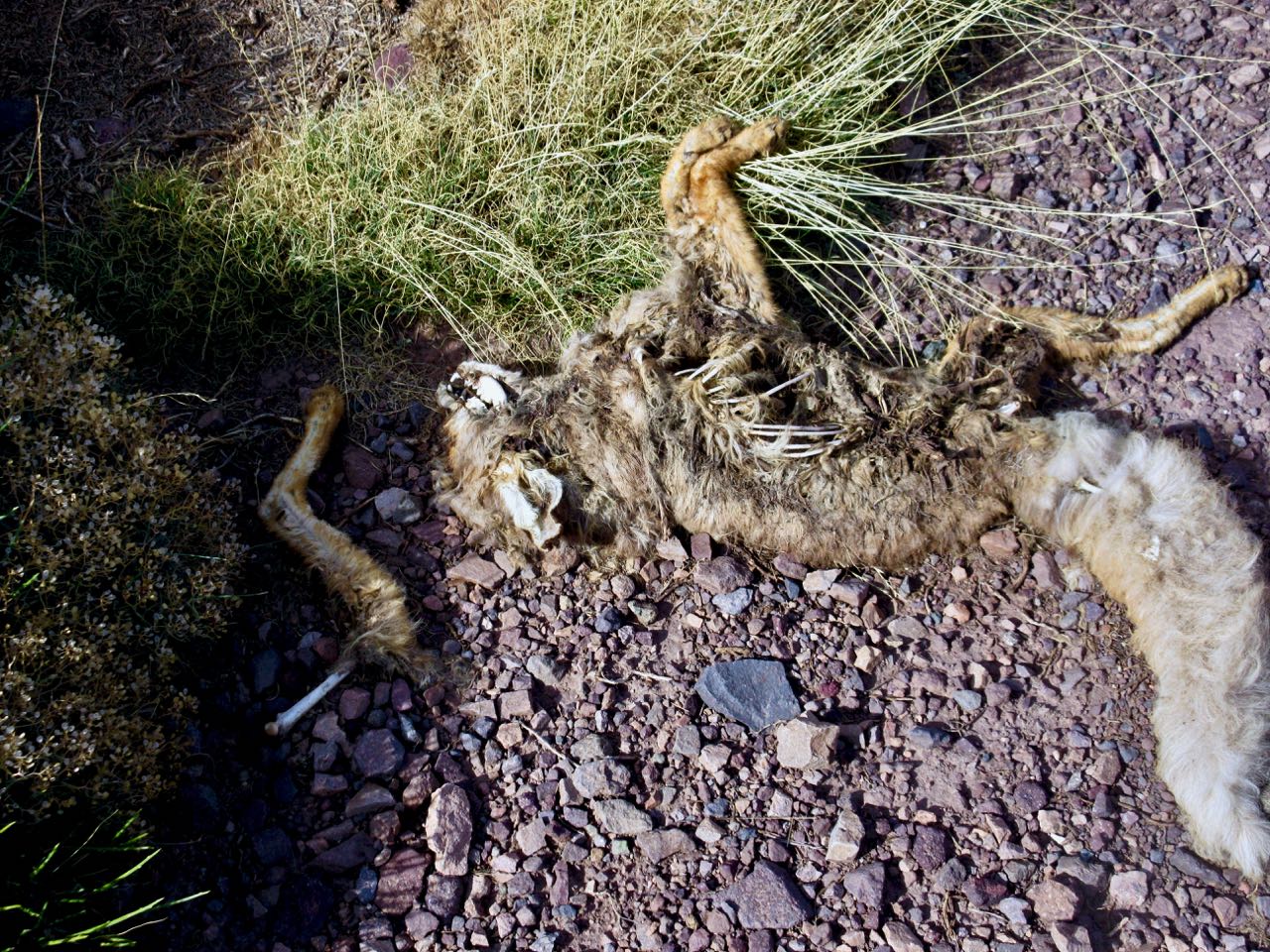
On the other hand, this poor carnivore might have been a bad omen.
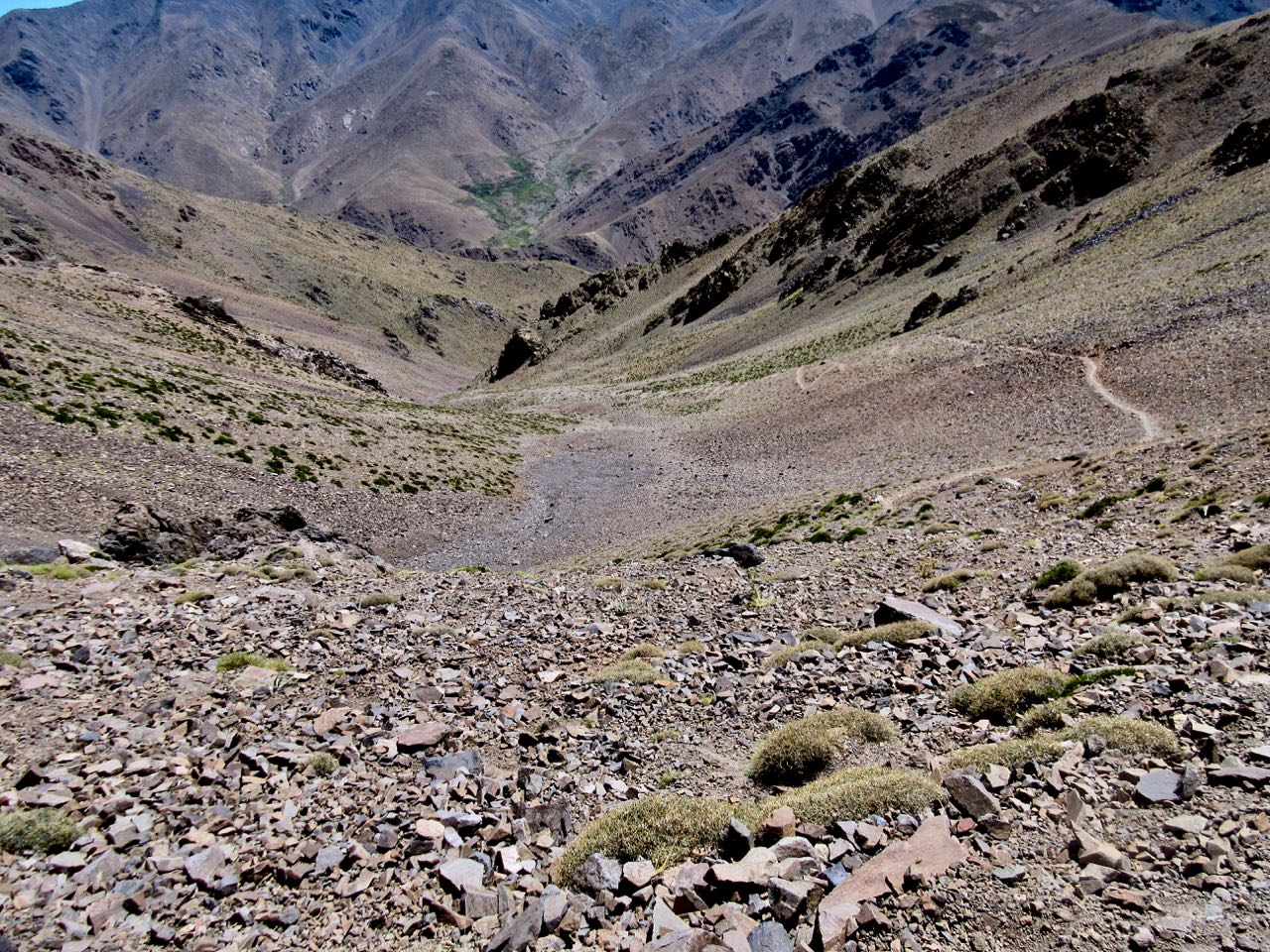
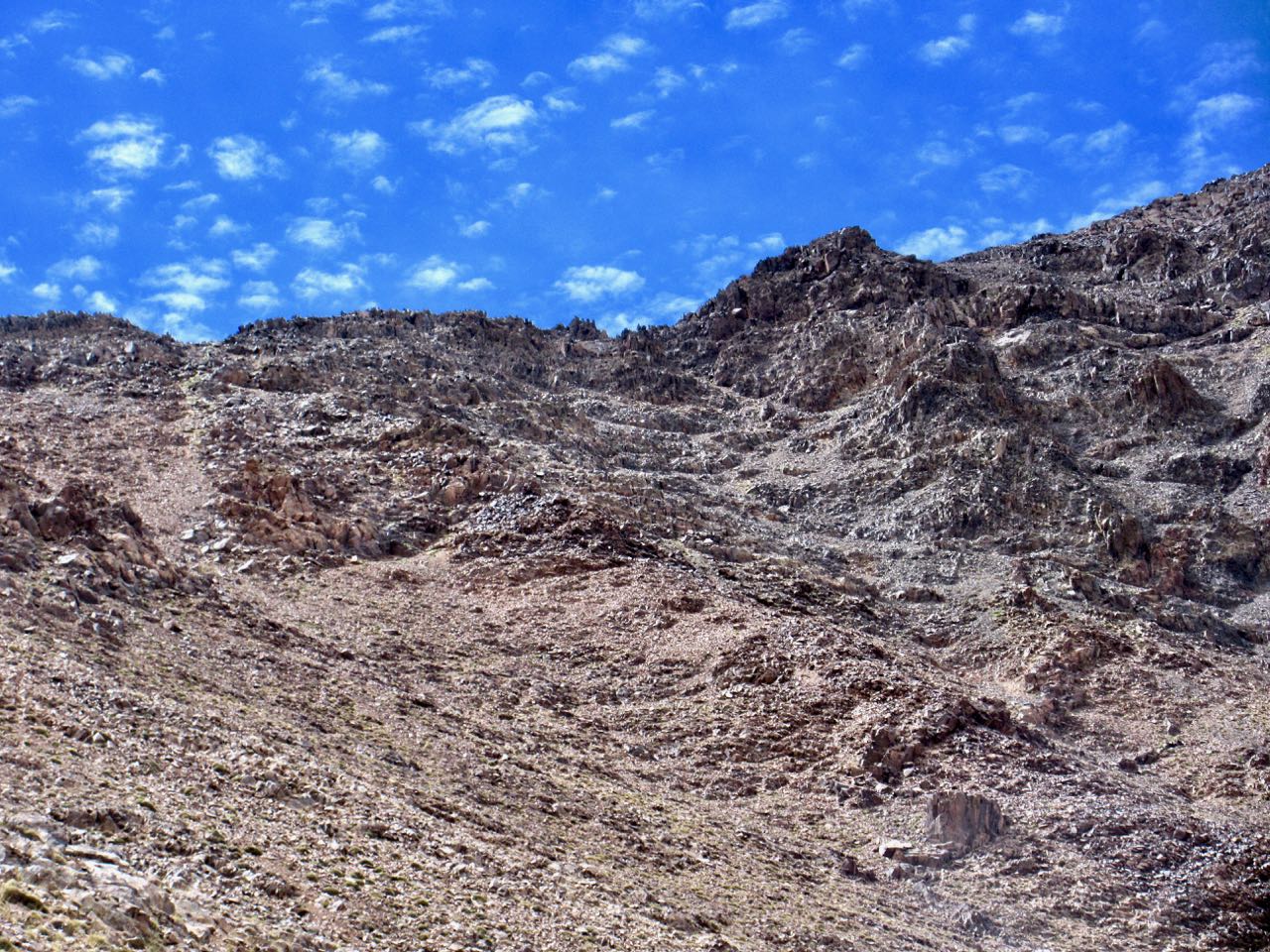
The climb was very long. And not all that thrilling.
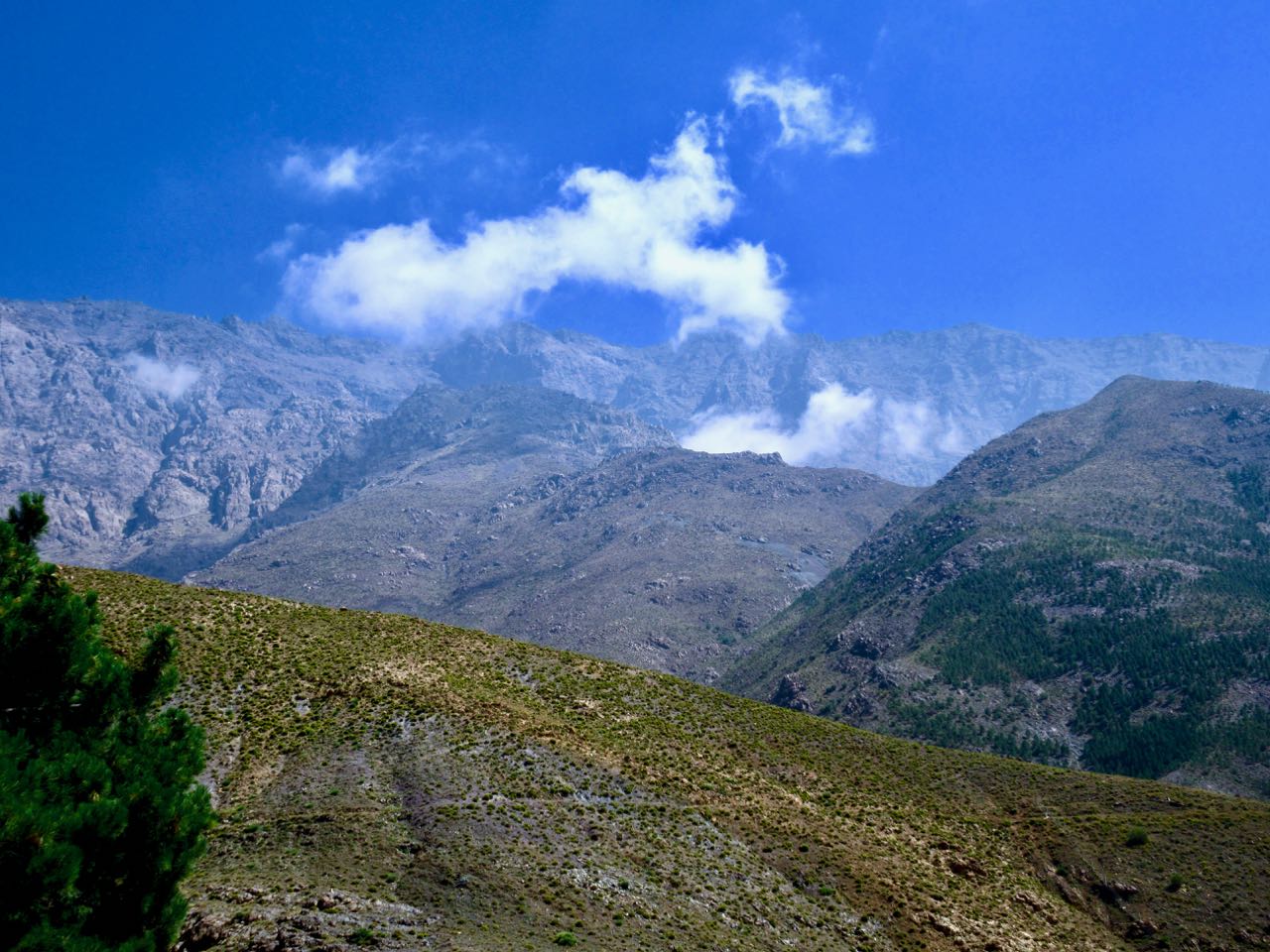
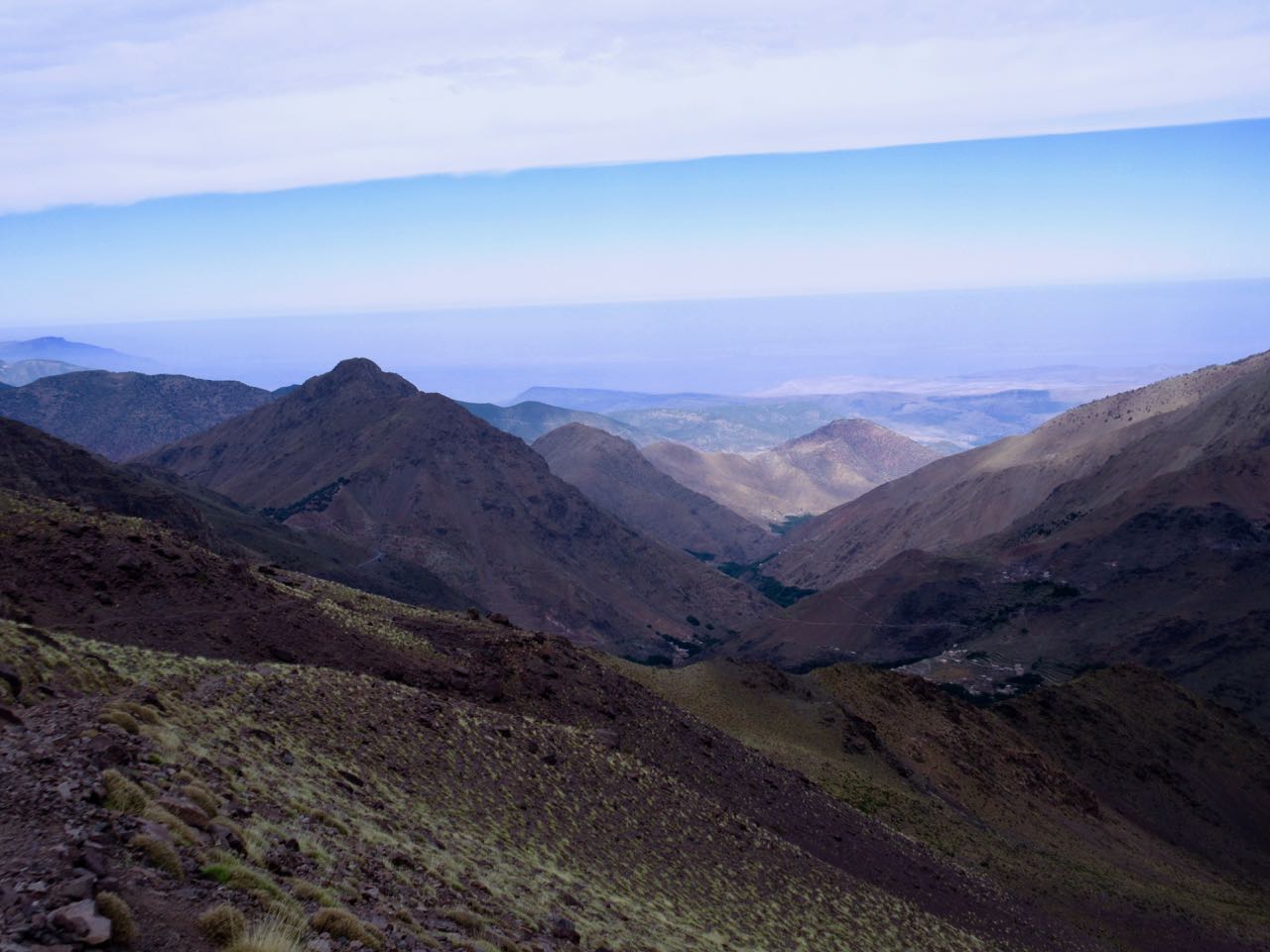
Looking backward …
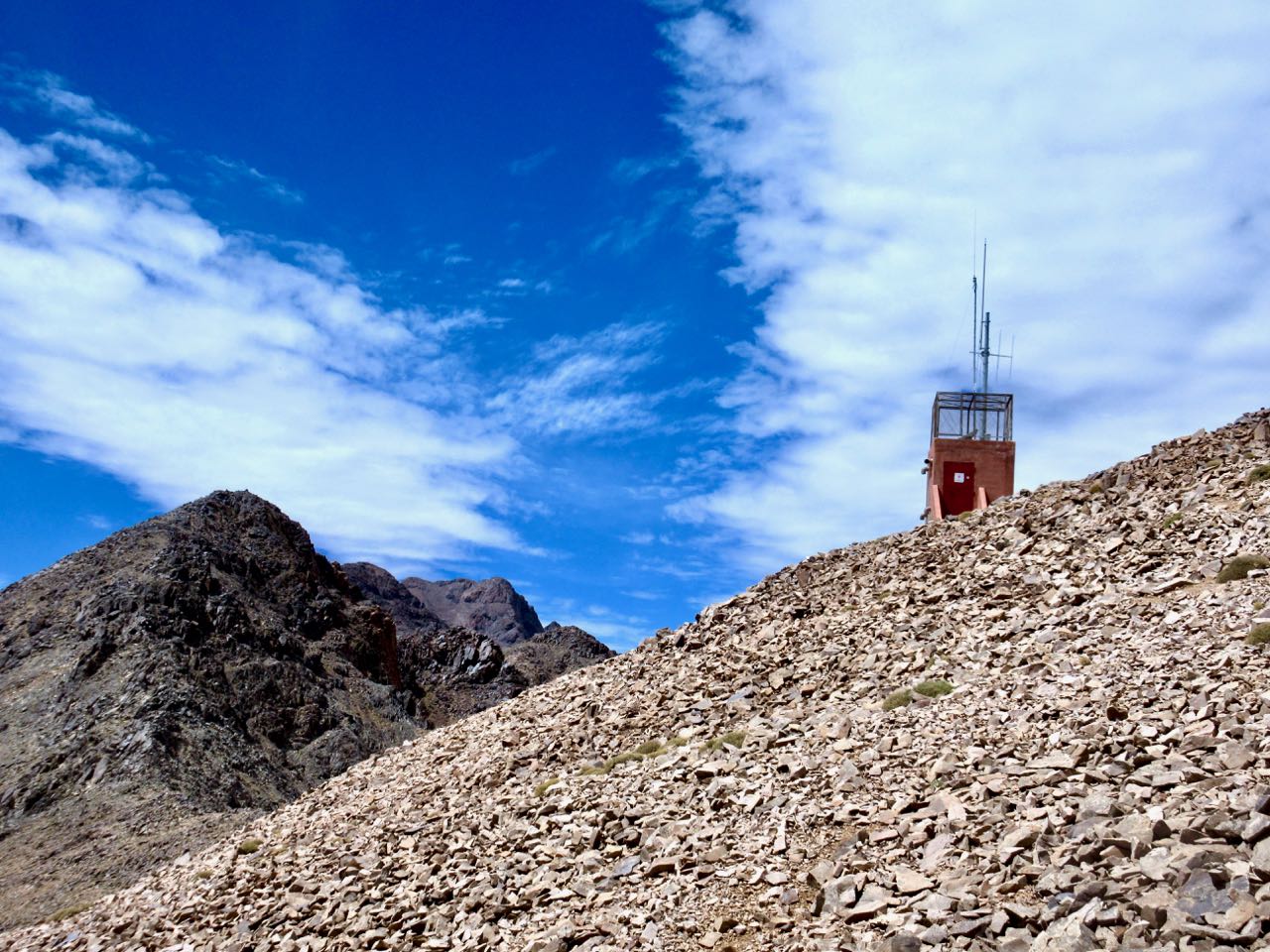
There’s a Japanese donated weather station at the pass, but you can’t see it from the side I climbed.
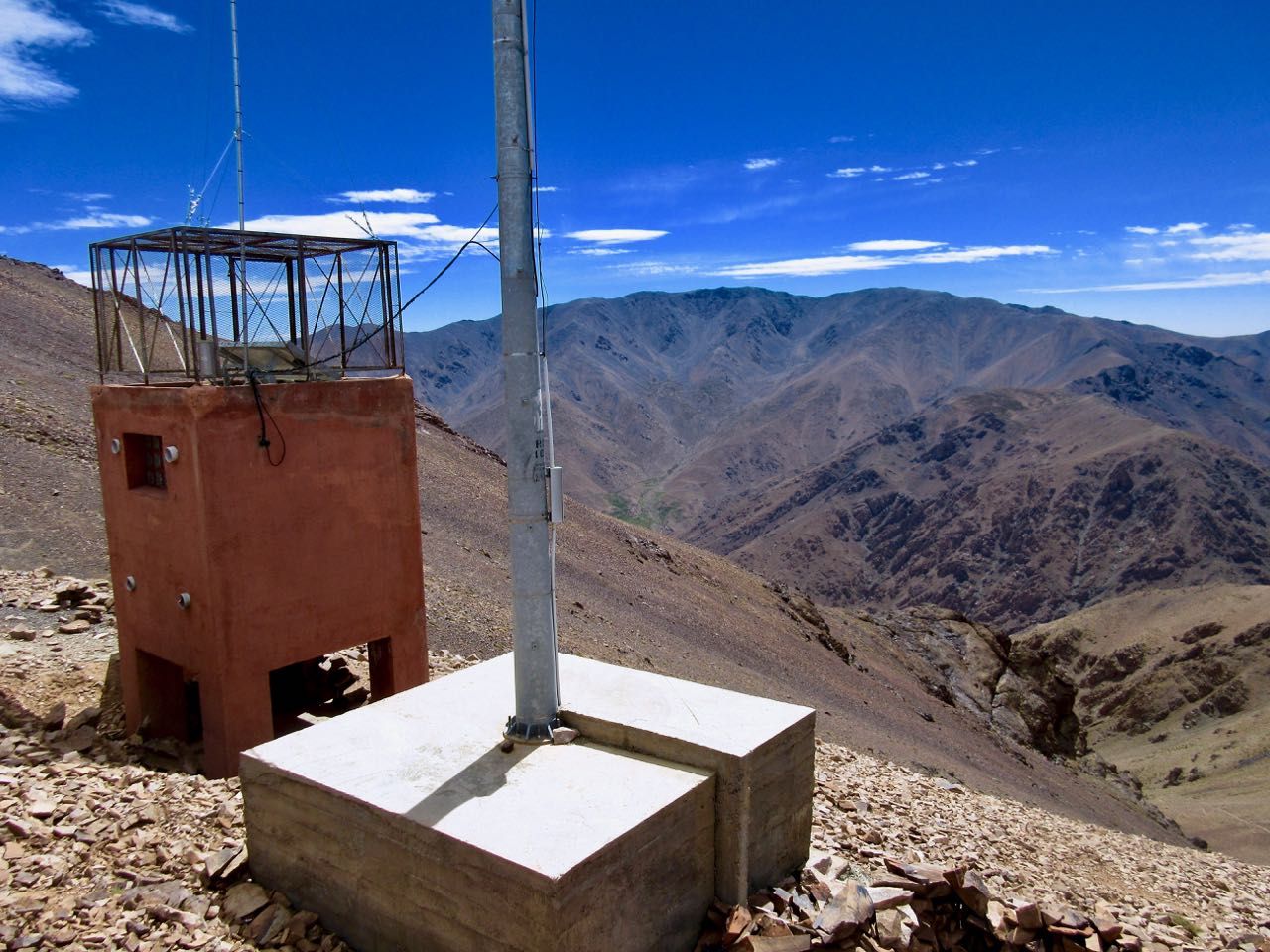
It was hot and sunny. No water.
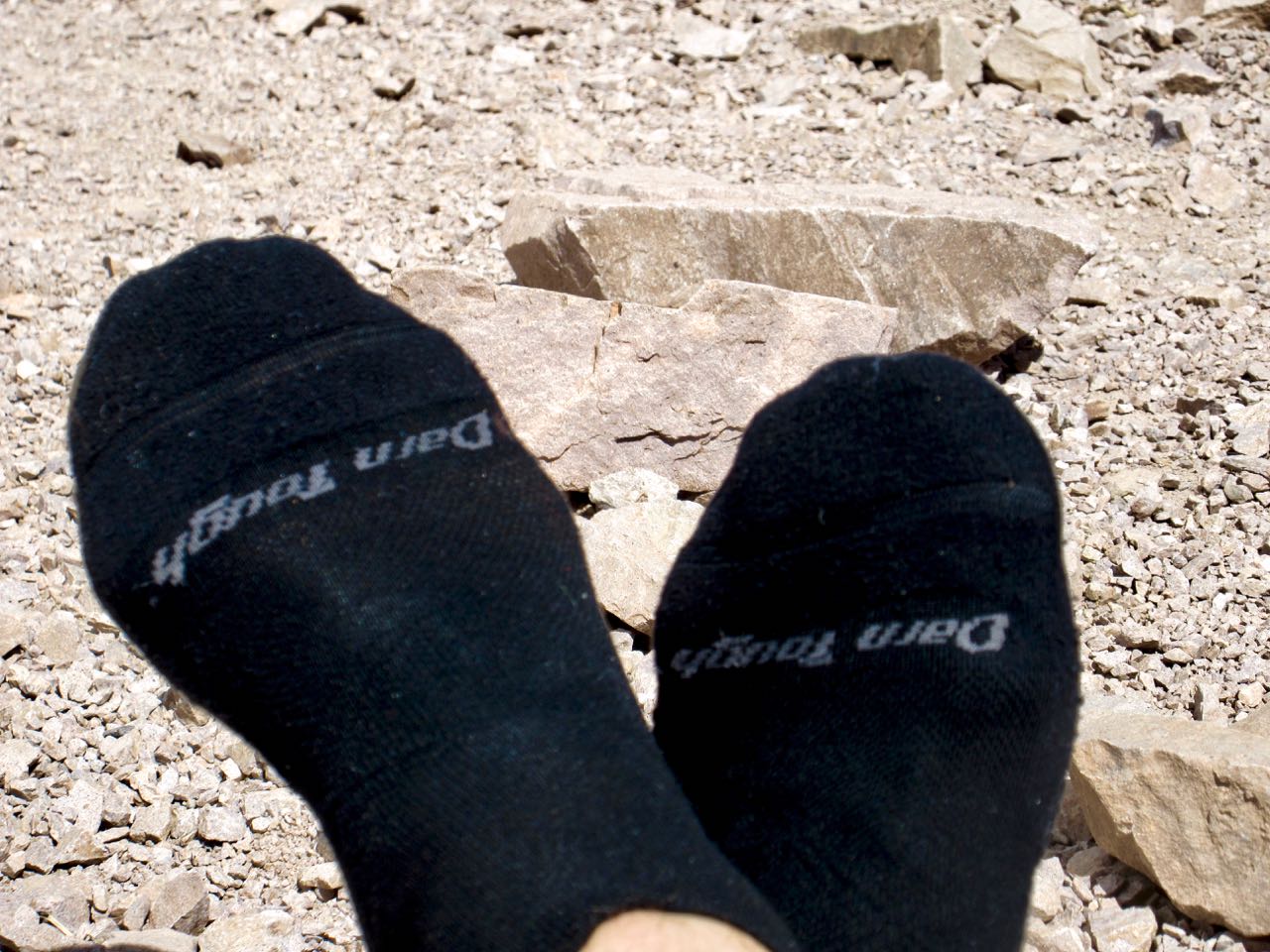
My Darn Toughs did all 5 days of the hiking. I switched to camp socks / shoes each evening.

It was a long, hot descent as well.
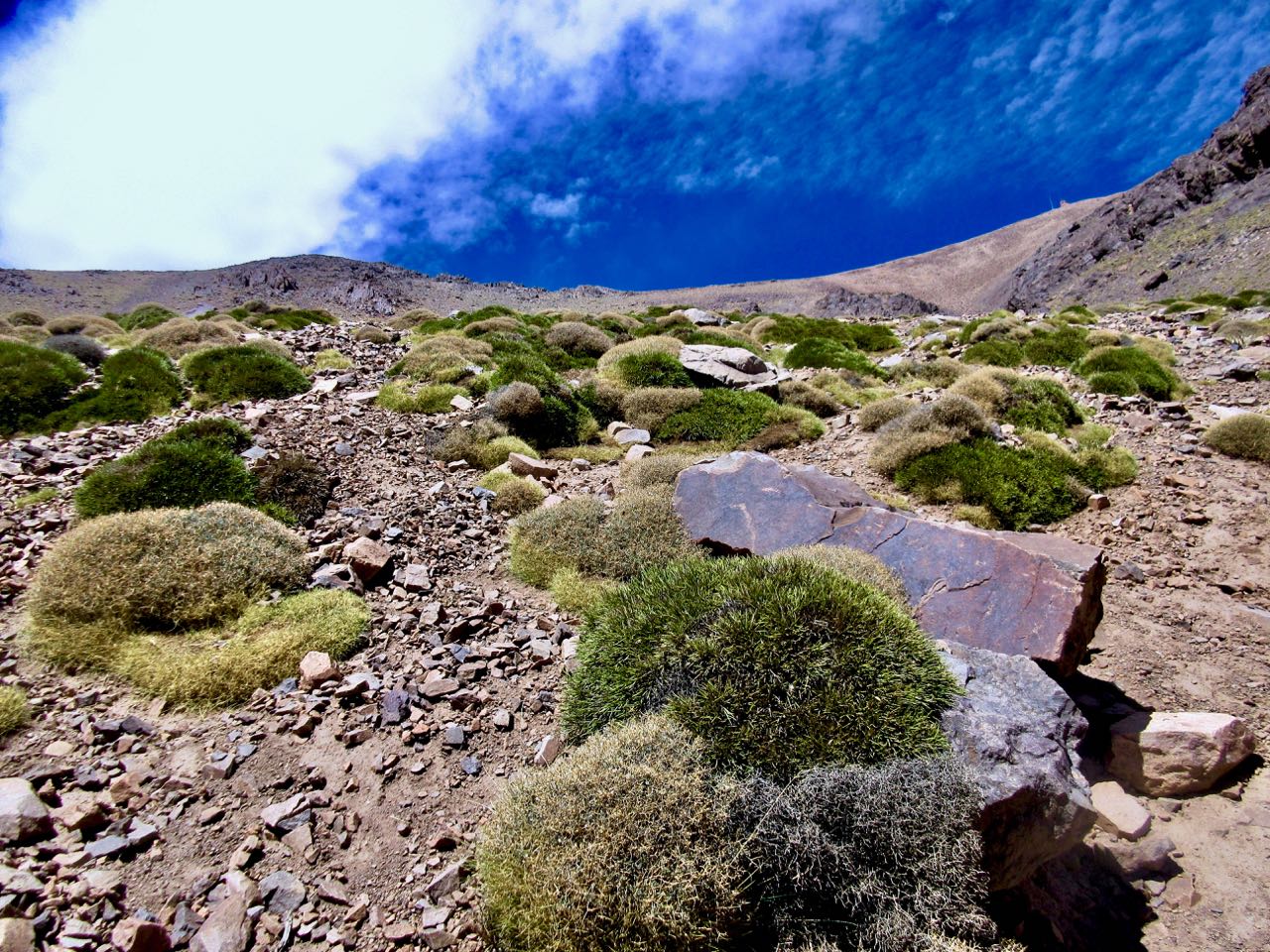
In fact, a pass this high first day is stupid. That’s not smart acclimatization. On the way down I resolve to NOT recommend these first 2 days to future hikers.

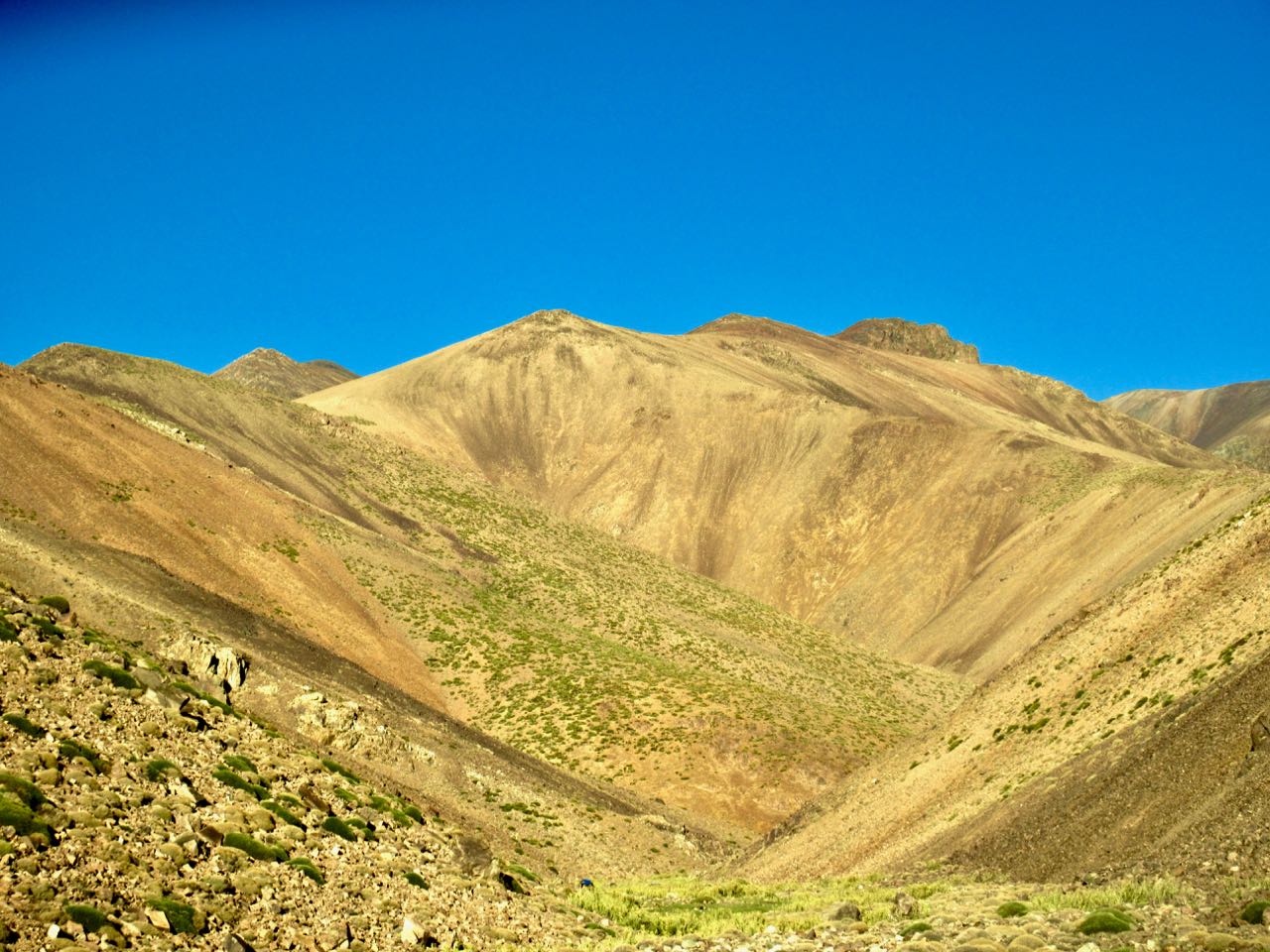
Here’s the first water I’d seen in hours. All water sources should be treated in these mountains unless you see it coming out of the mountain with your own eyes.
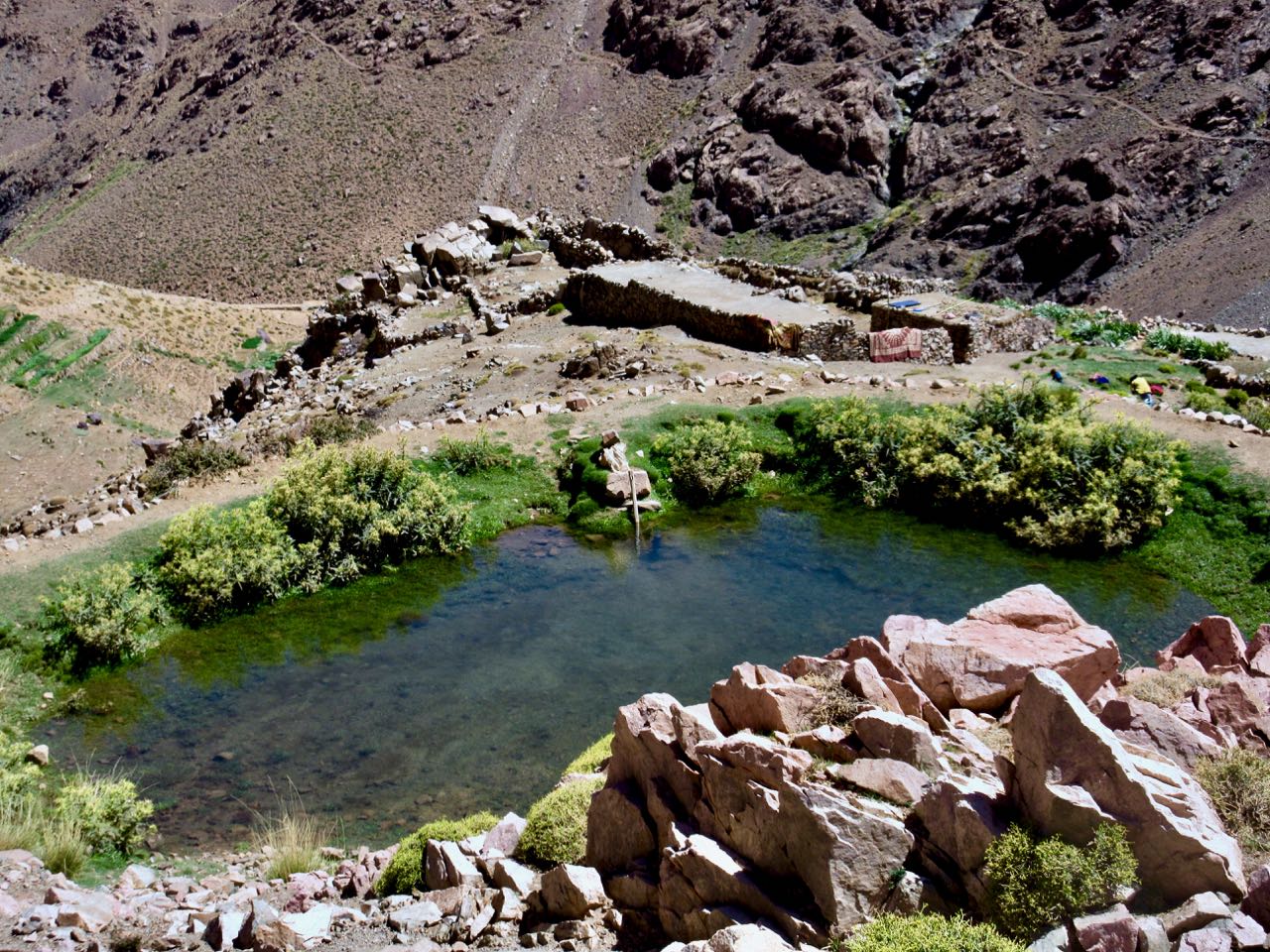
I was happy to reach the river. A German group had already claimed the best spot.
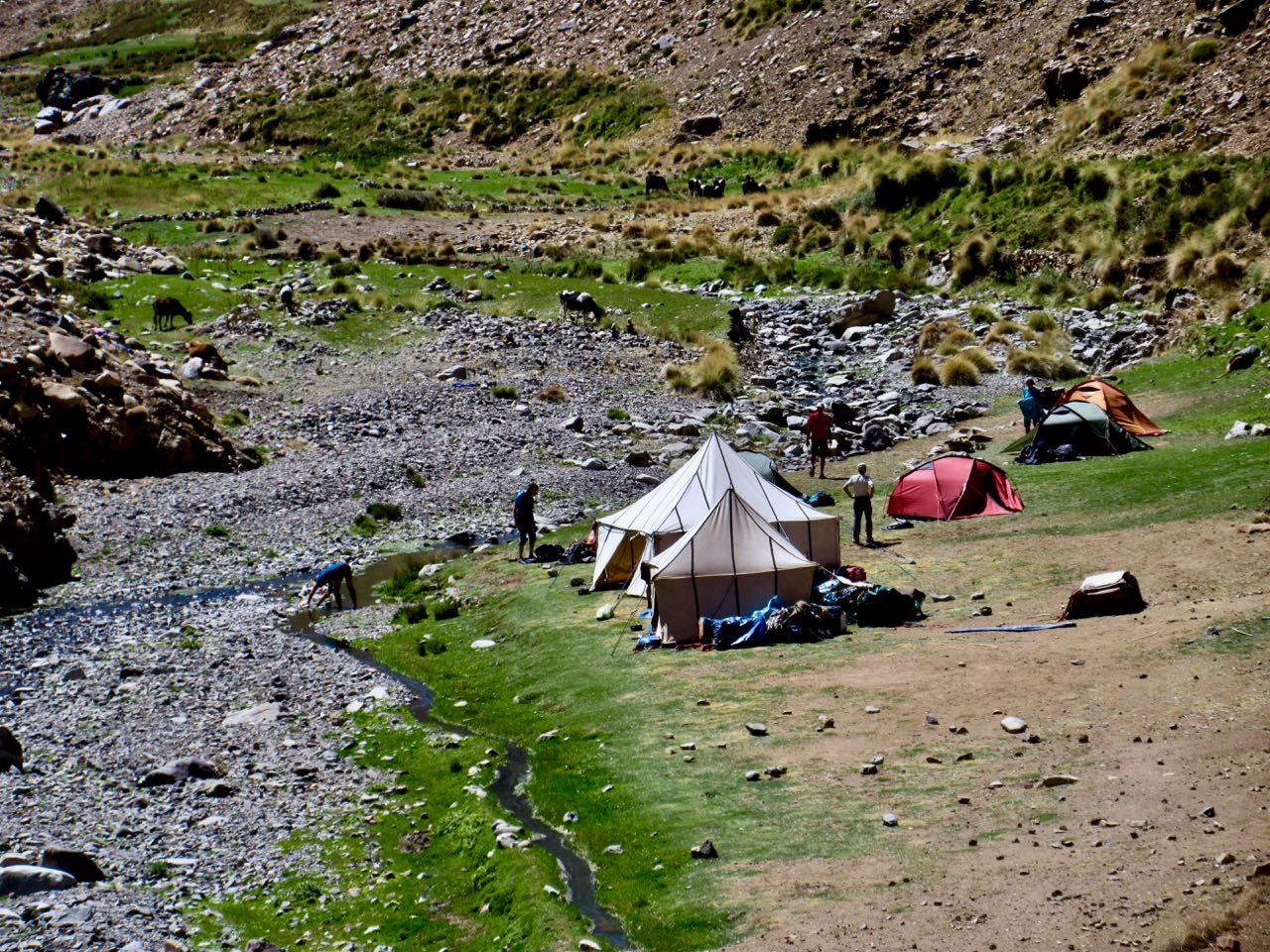
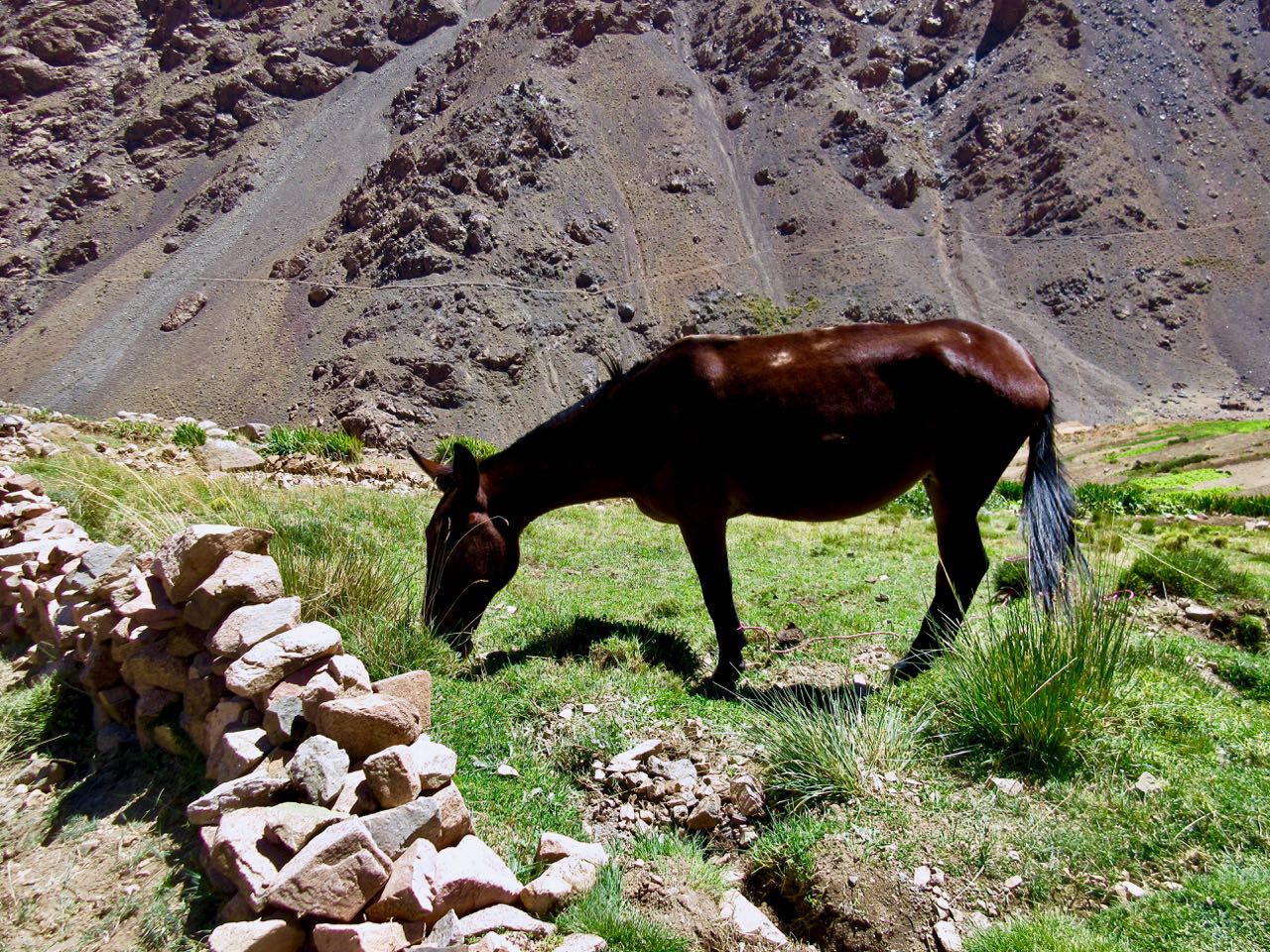
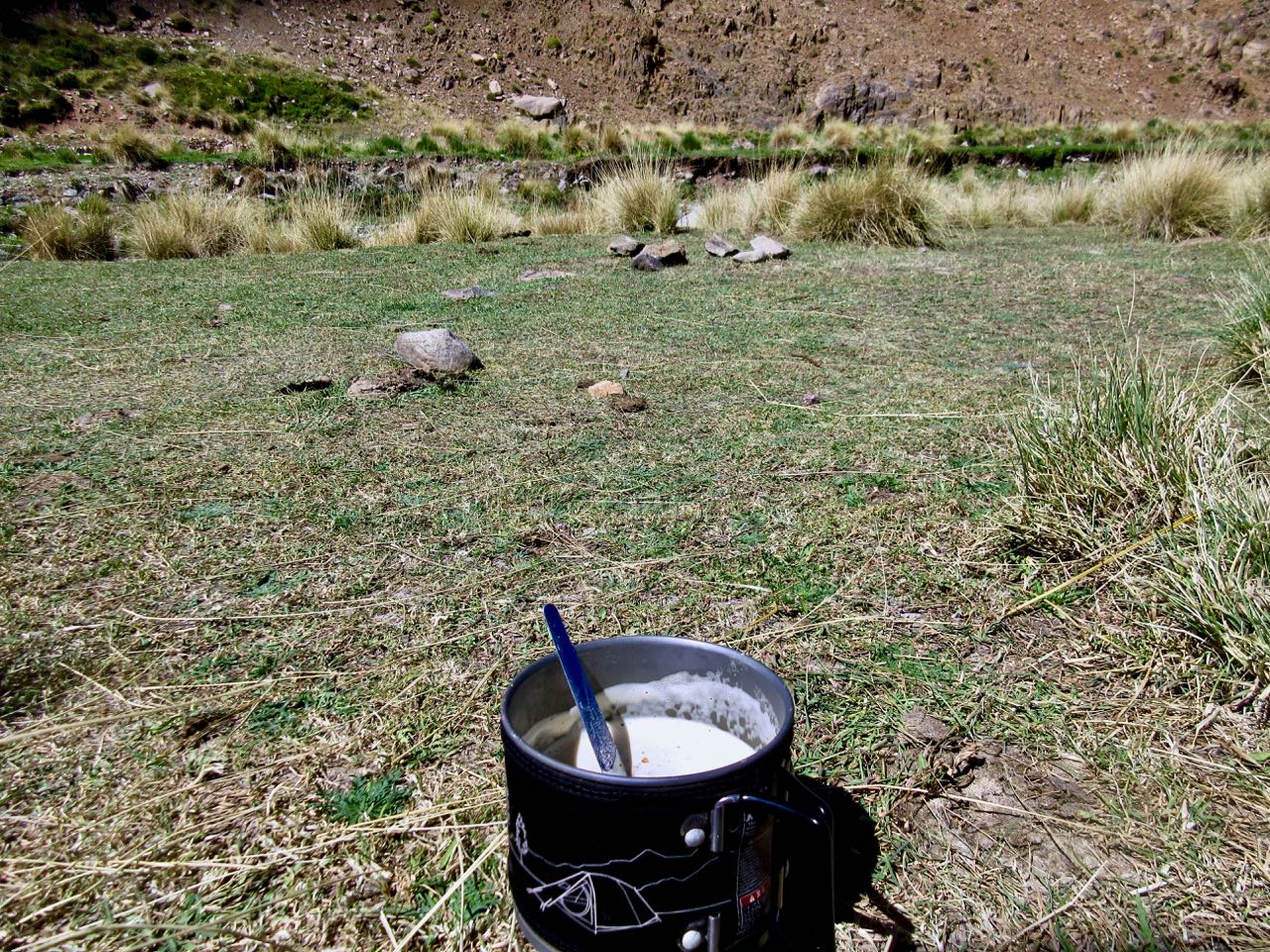
Further along I enjoyed a couple of pots of coffee.
This is a summer grazing settlement. Animals and their keepers will head down soon when snow threatens.

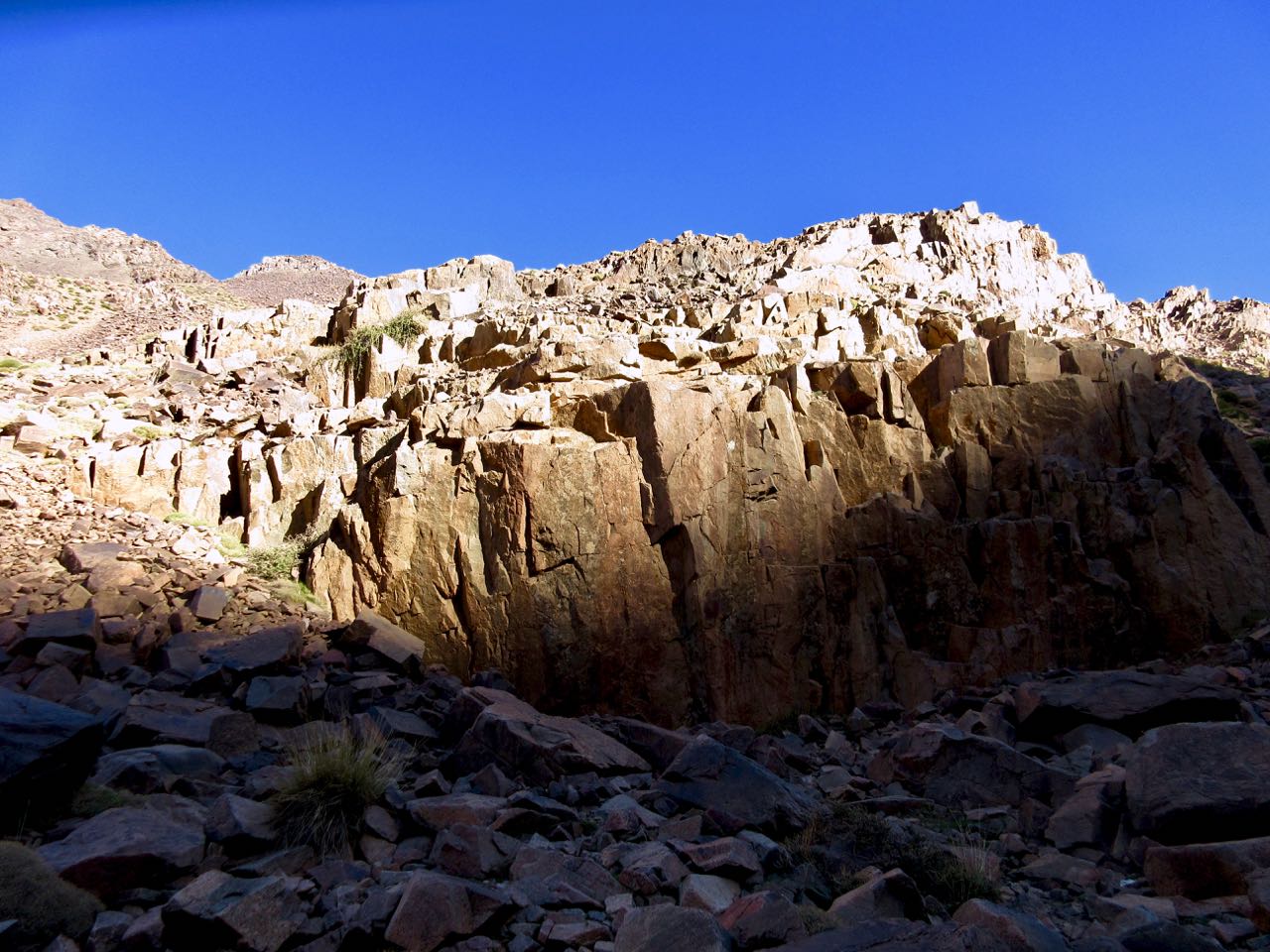
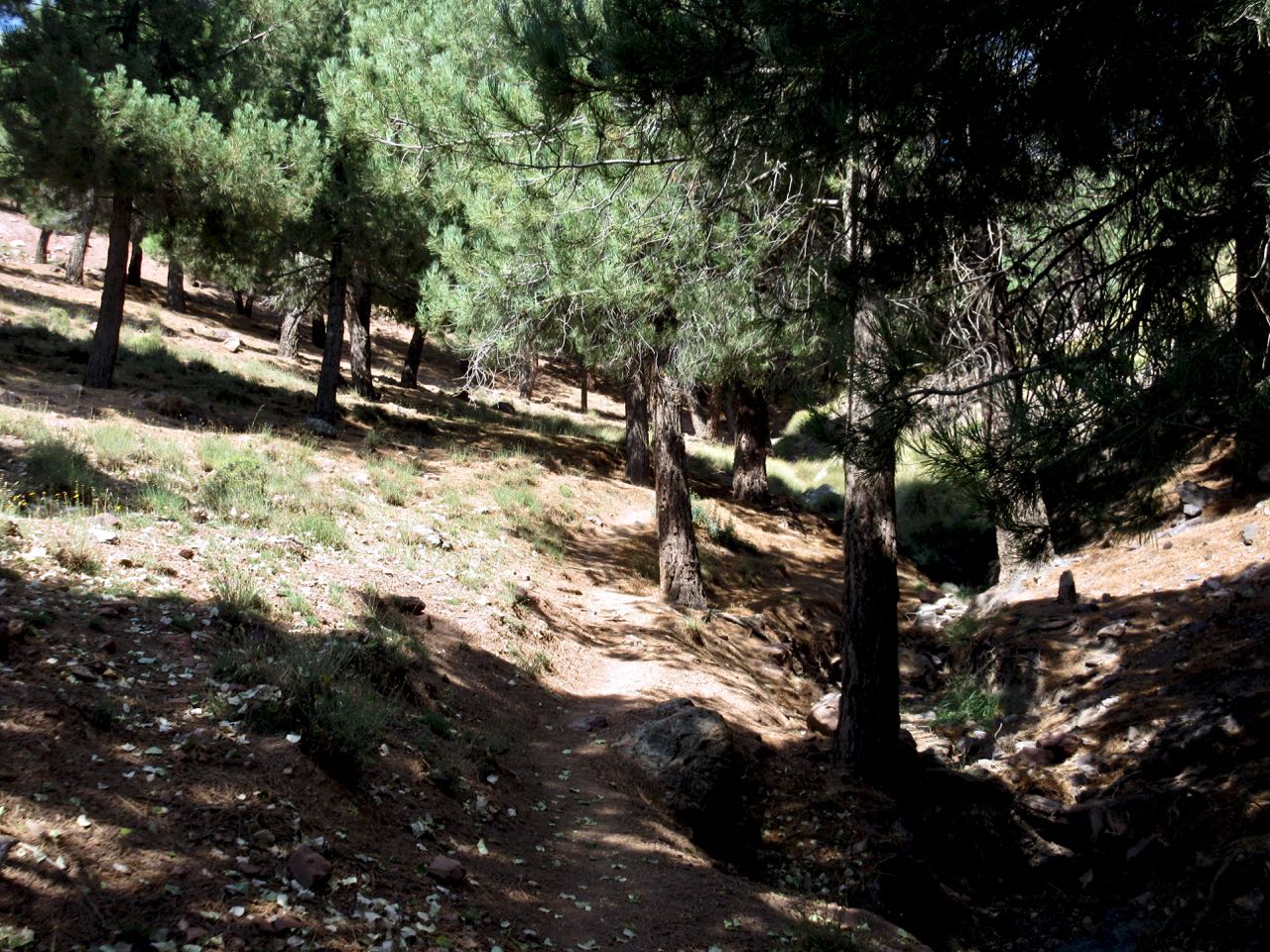
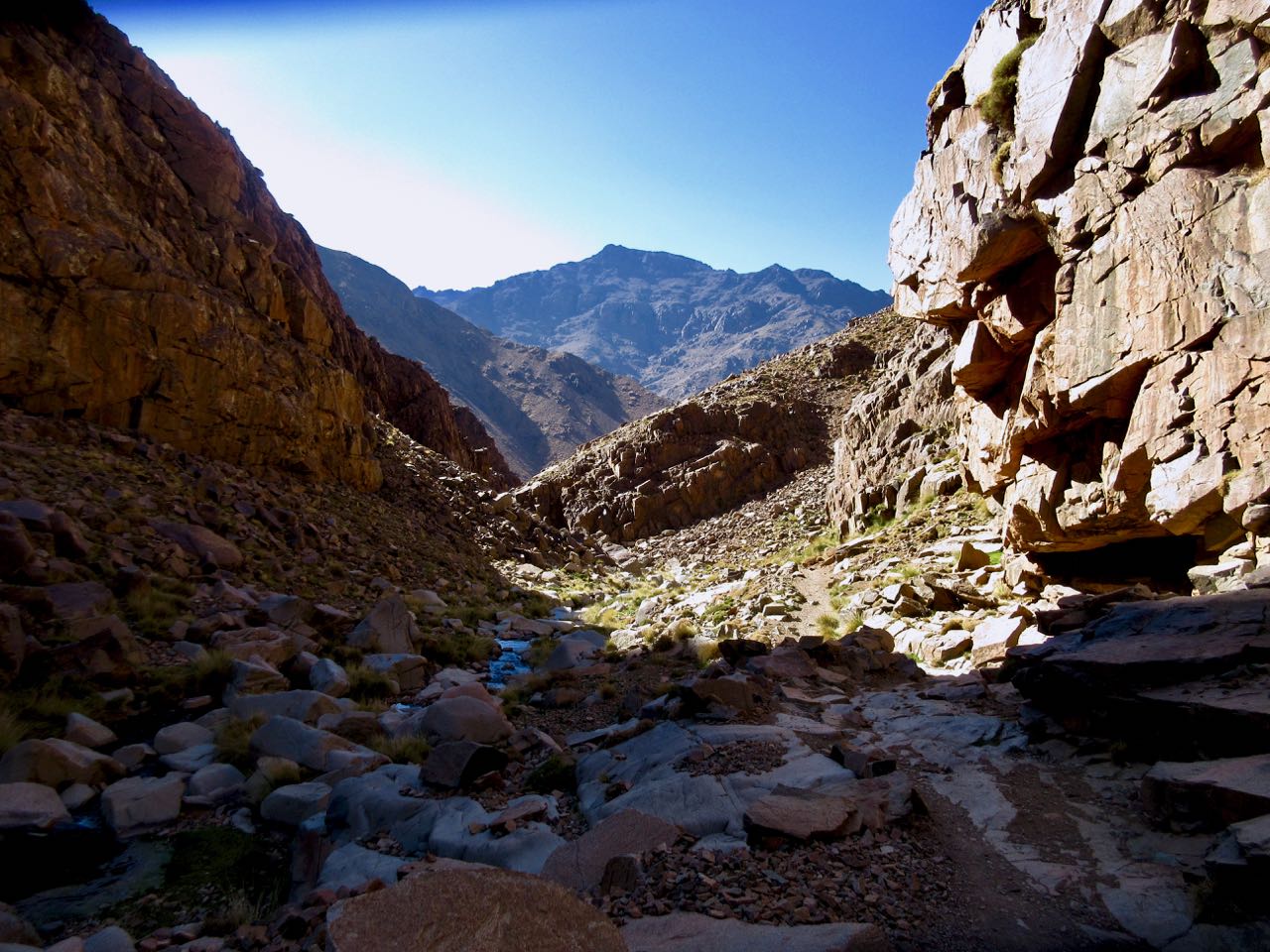
The next section climbing through a gorge was very entertaining. One of my favourite bits.
I finally camped at an open area on another creek near yet another guided hiking group.
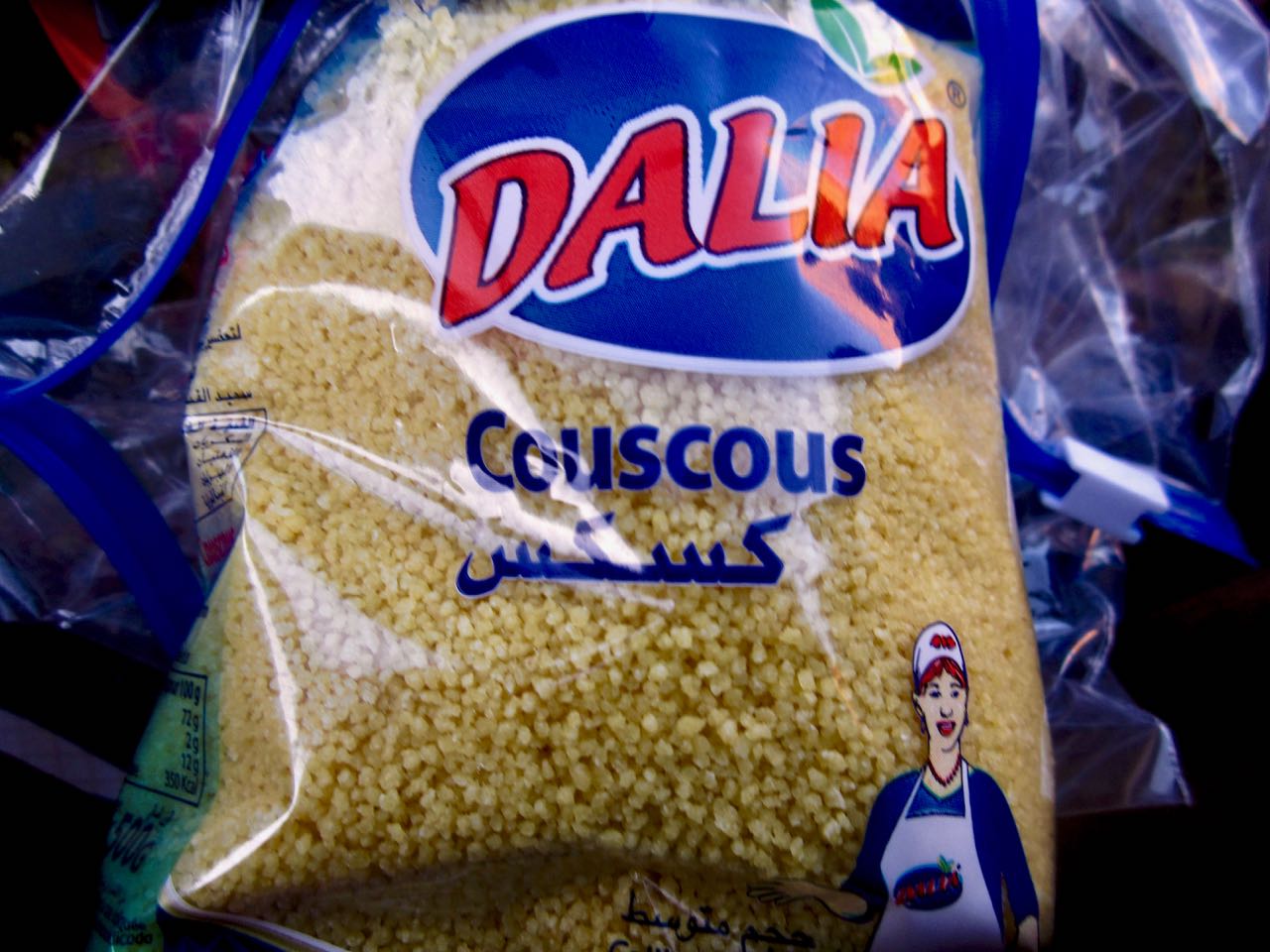
Dinner in the dark was coucous, soup, raisins and peanuts. For Morocco I switched from my usual instant mashed potatoes base to couscous.
day 1 | 2 | 3 | 4 | 5 | info | video 

Morocco’s Toubkal Circuit – day 1

Trip report by BestHike editor Rick McCharles.

day 1 | 2 | 3 | 4 | 5 | info | video

Toubkal is by far the most popular and important trekking destination in Morocco for serious hikers.

It’s easily accessible from Marrakesh.

Lonely Planet

Unhappily I couldn’t find either camping fuel nor english language hiking guidebook for Toubkal in Marrakesh.

Lonely Planet said there were good gear shops in the trailhead town of Imlil (1740m).

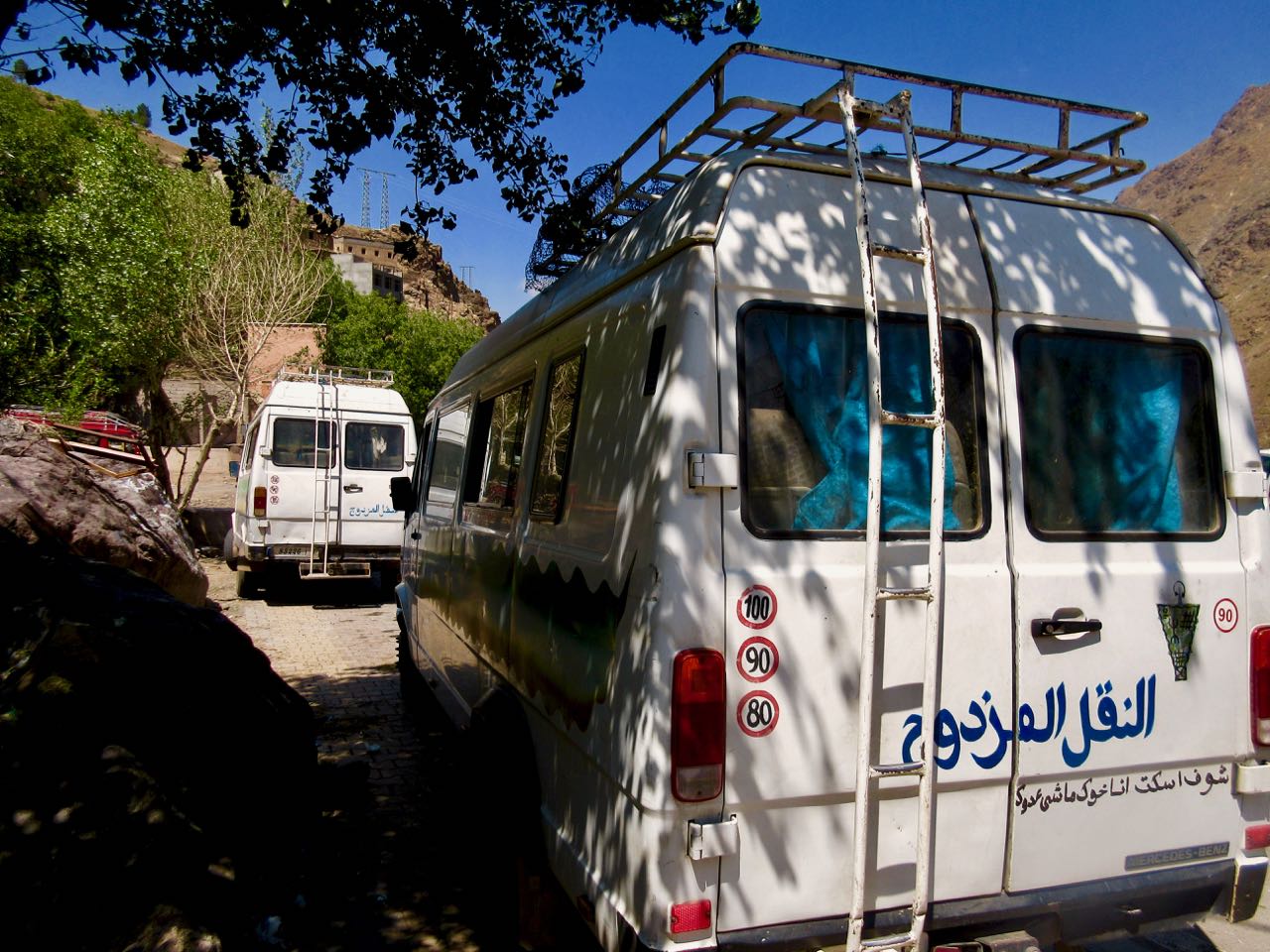
My hostel in Marrakesh told me where to find the shared cabs to Imlil. But that turned out to be my greatest navigational challenge. Shared taxis sprawl across several streets. A tout finally took me to the right one.

In 2018 locals paid 35 Dirham to get the 64km to Imlil. Foreigners 50 Dirham. ($5.40) Cost seemed to be non-negotiable.

Vans don’t leave until full … plus 3-5 more people.

It’s less than 2 hours from the hot city to the much cooler High Atlas mountains.

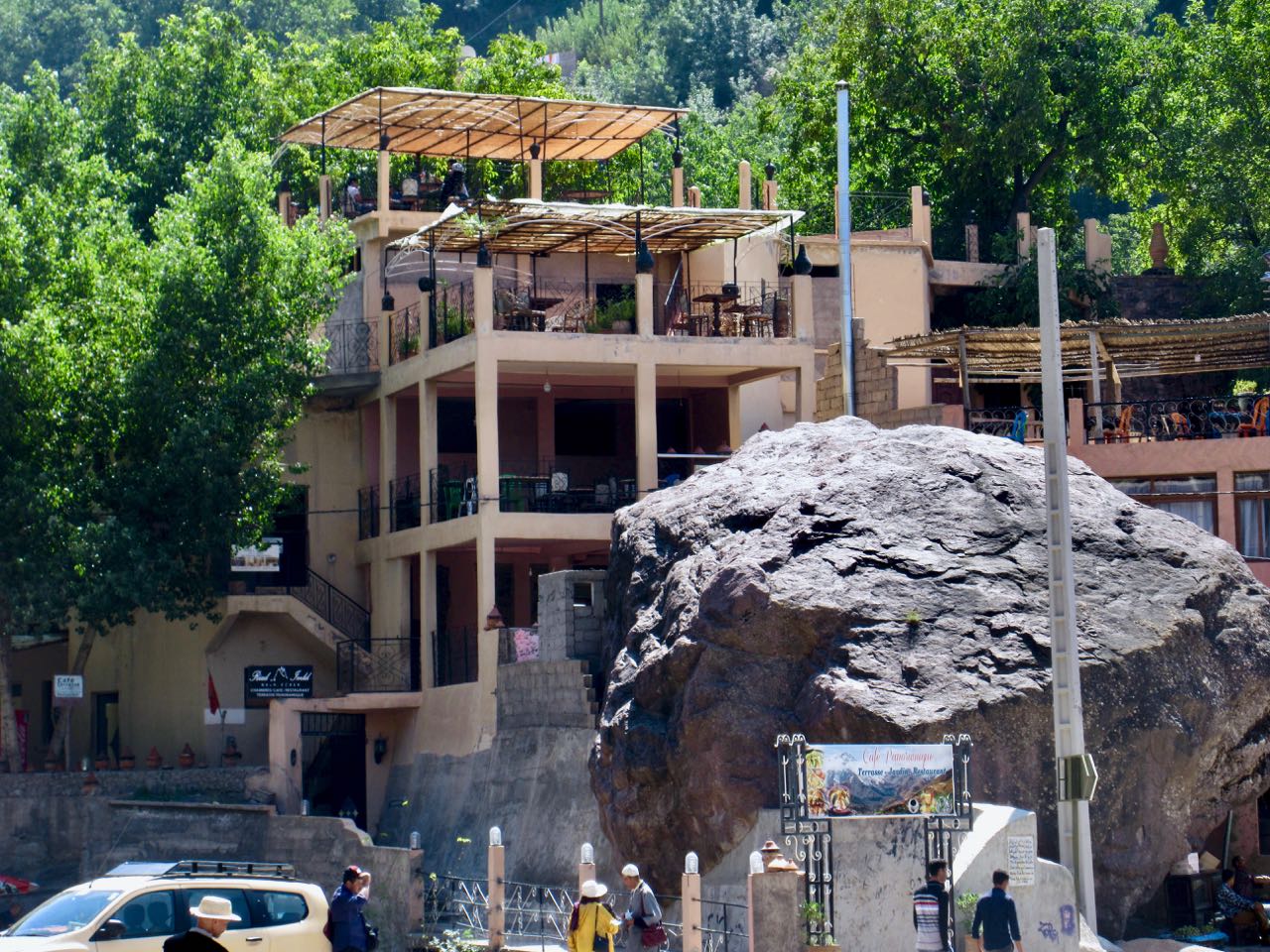
Imlil is an impressive and popular tourist town.

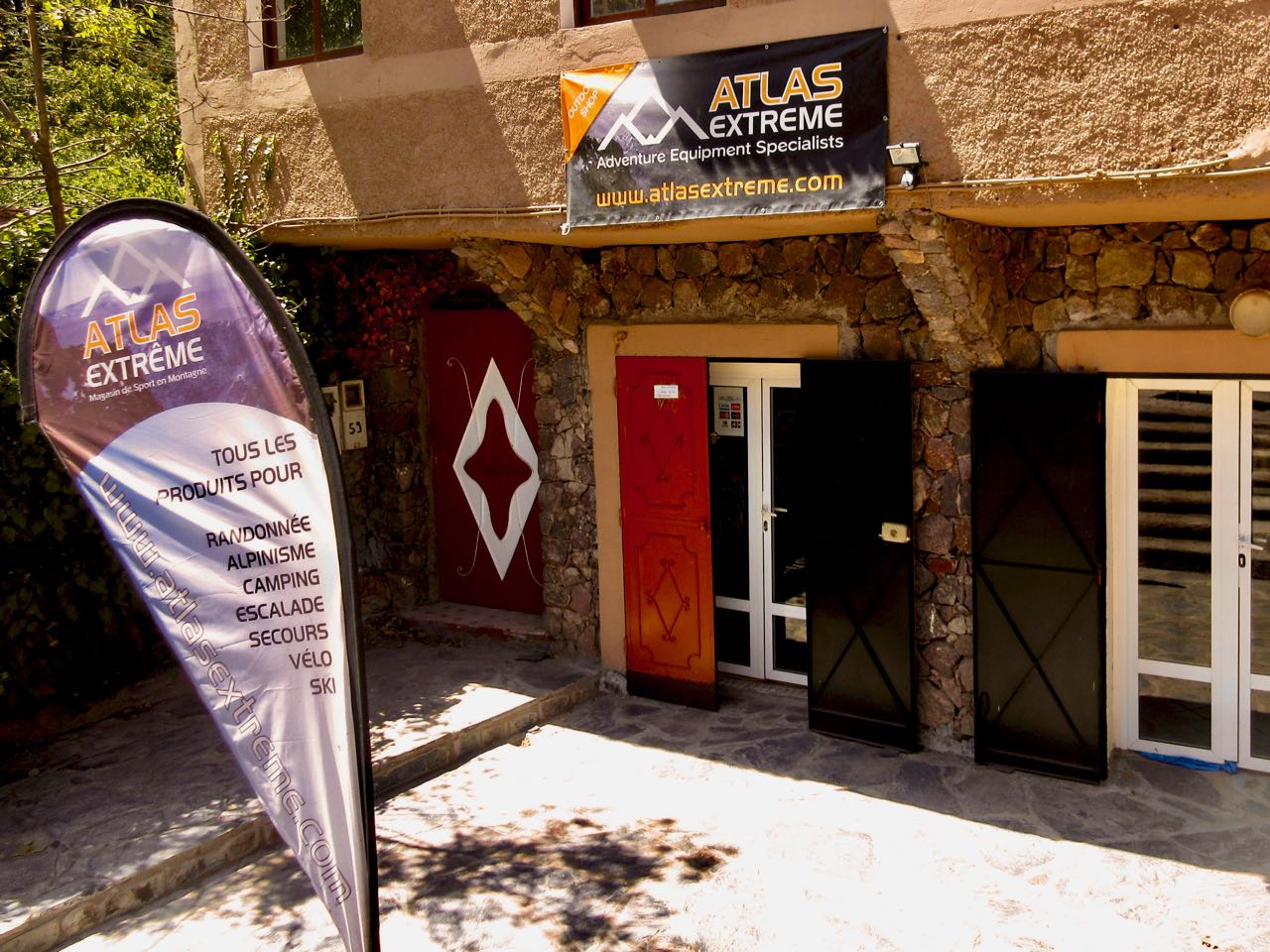
Unfortunately the best gear shop in town — Atlas Extreme — was closed when I arrive. For an hour? A day? A Week? None of the neighbours seemed to know.

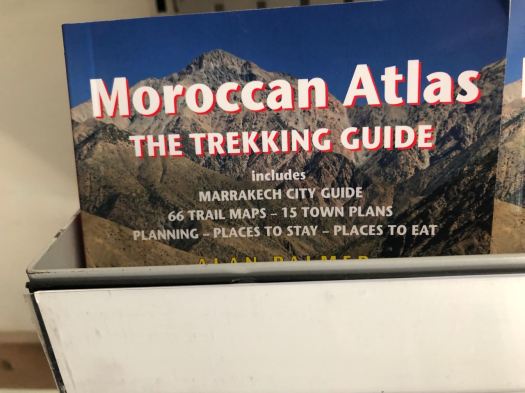
I’d wanted this guidebook for the trip. But Trailblazer doesn’t sell a digital version. I needed a paper copy.

IMG_1063

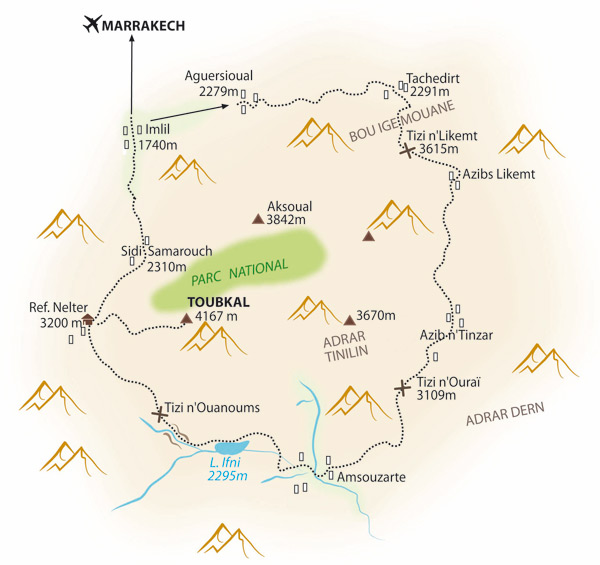
I managed to get some used stove fuel and the map of the region instead at a tiny stall. The map ($10 plus) was fairly useless. It doesn’t show the circuit route. I did have the 5 page Lonely Planet description on my phone. And I did have little maps like this.

Toubkal circuit

Not wanting to wait around, I got off on to the “trail” as quickly as possible.

departing Imlil

It was a hot, sunny day. I saw very few water sources.

Why was I walking on a paved road?

Only one stretch took me off-road and up through a village.

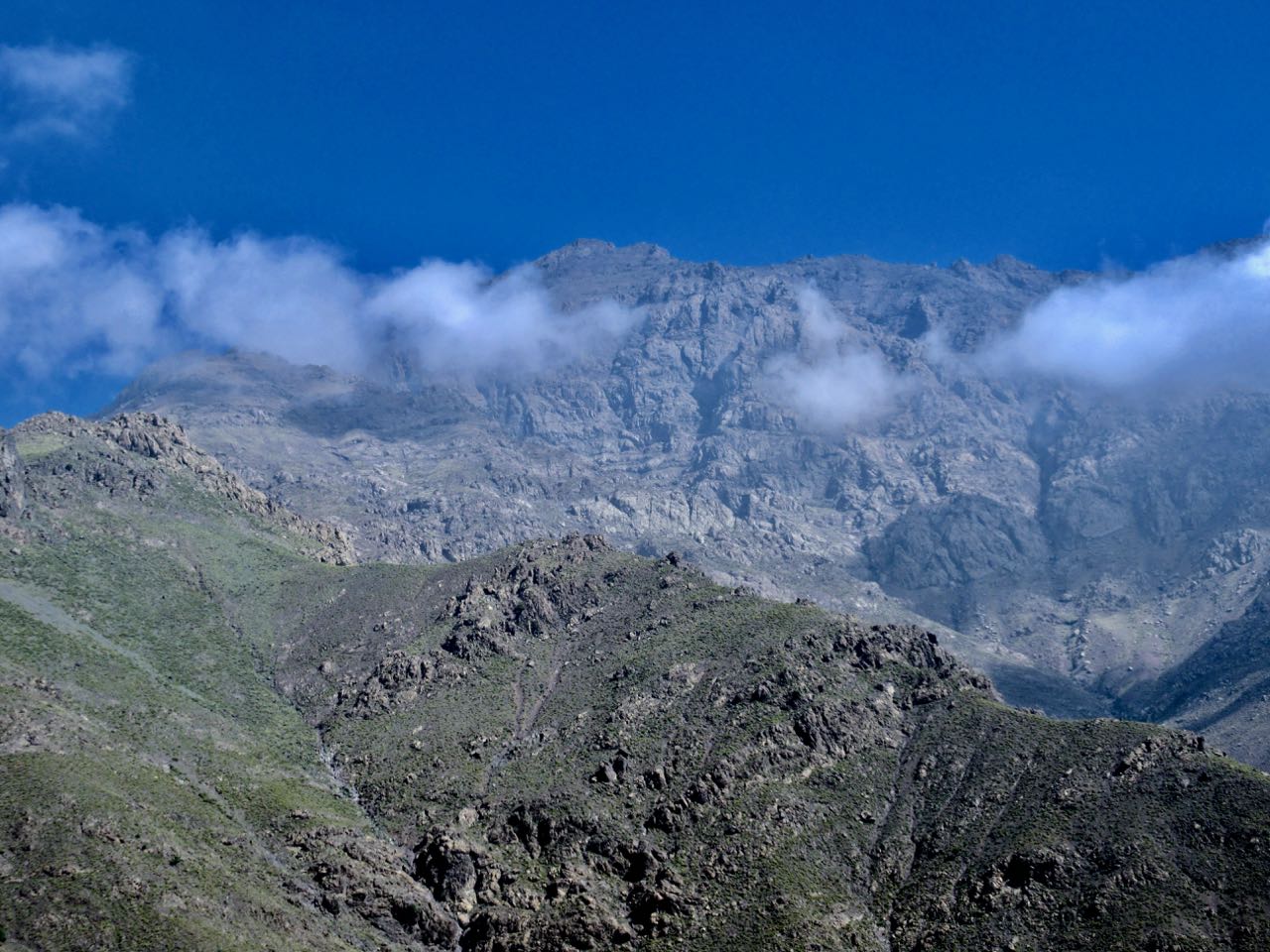
These mountains are massive.

I looked forwards to getting away from the heat.

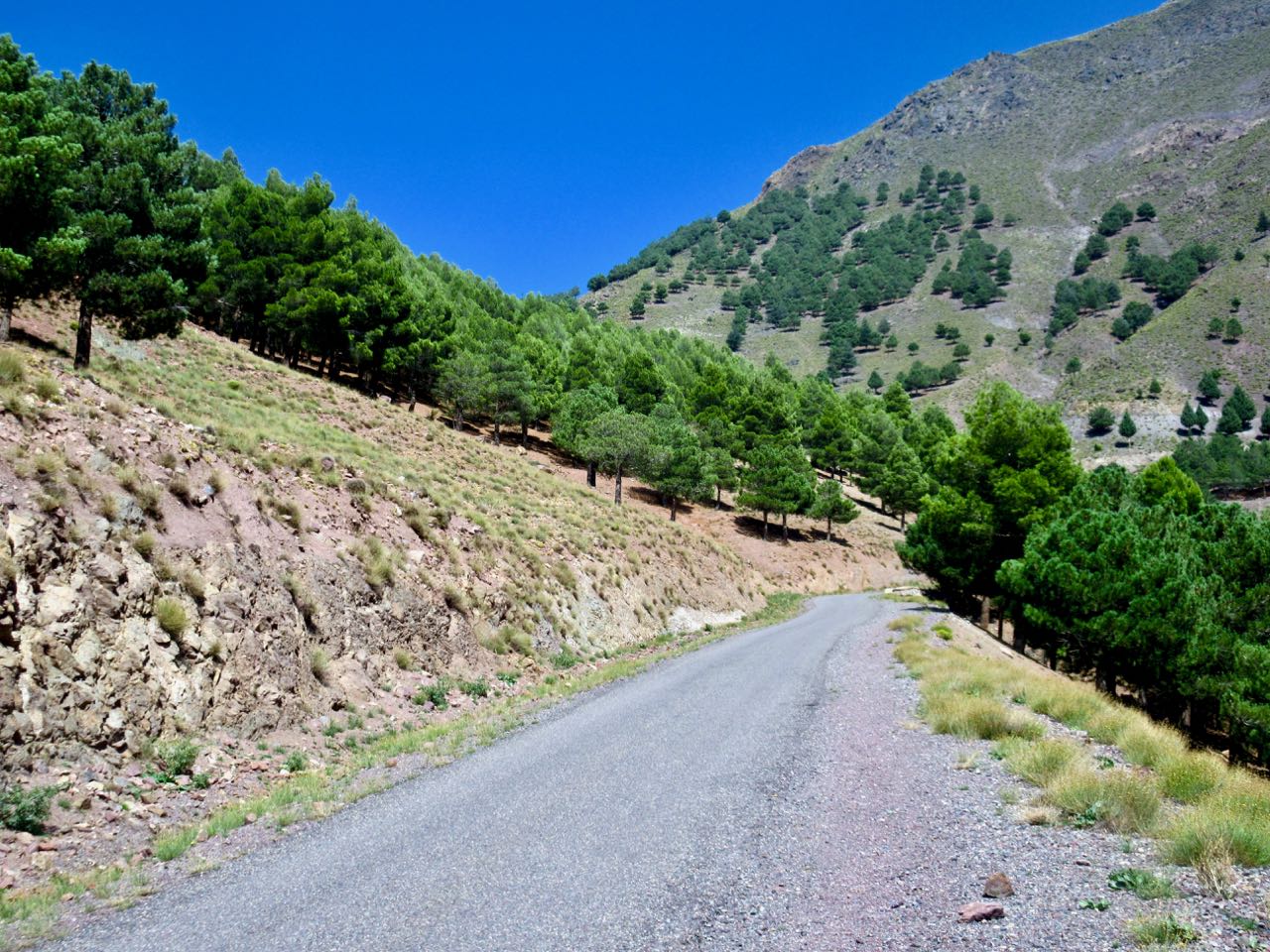
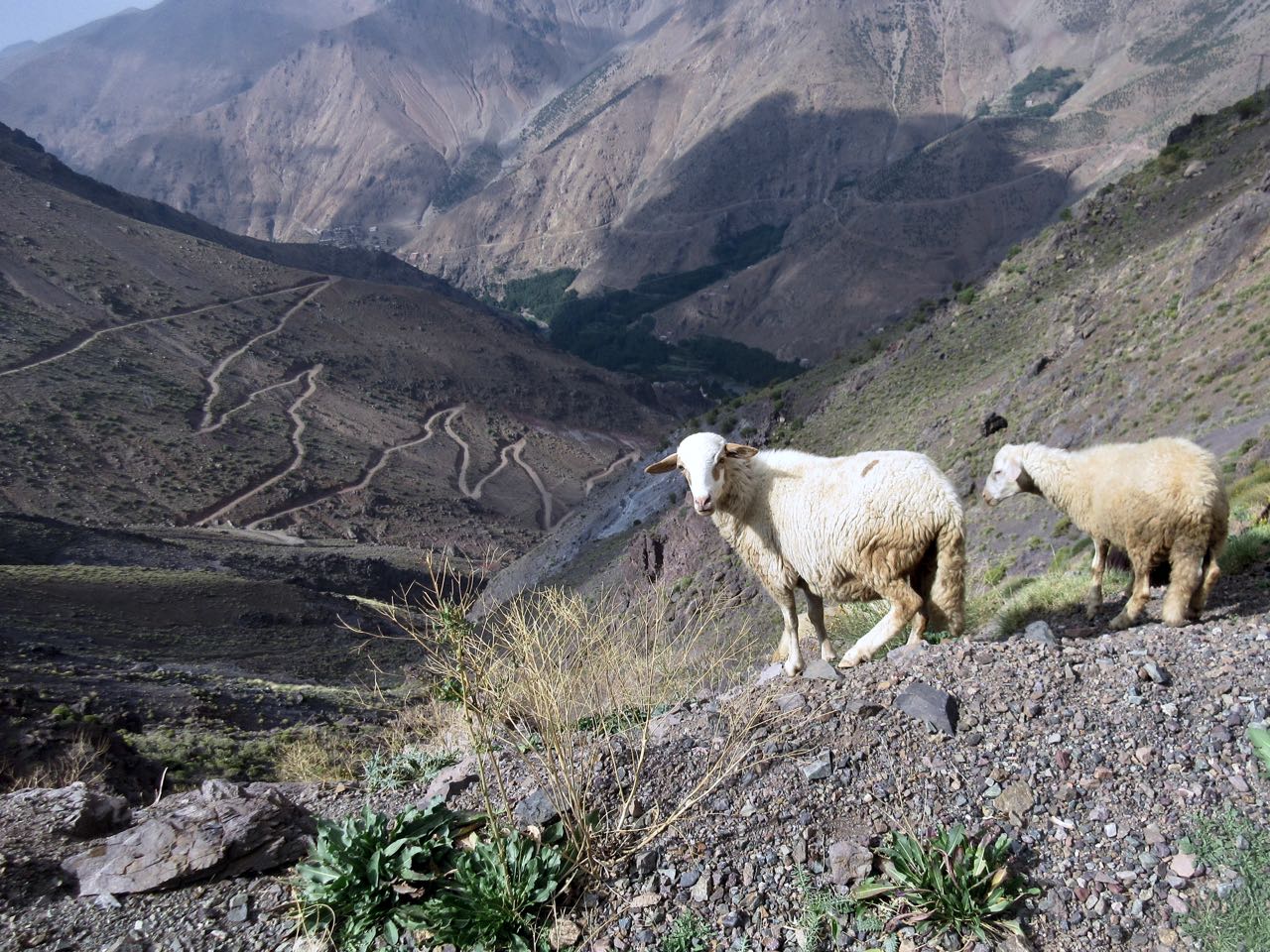
On this excellent road I saw very few vehicles. A lot of sheep.

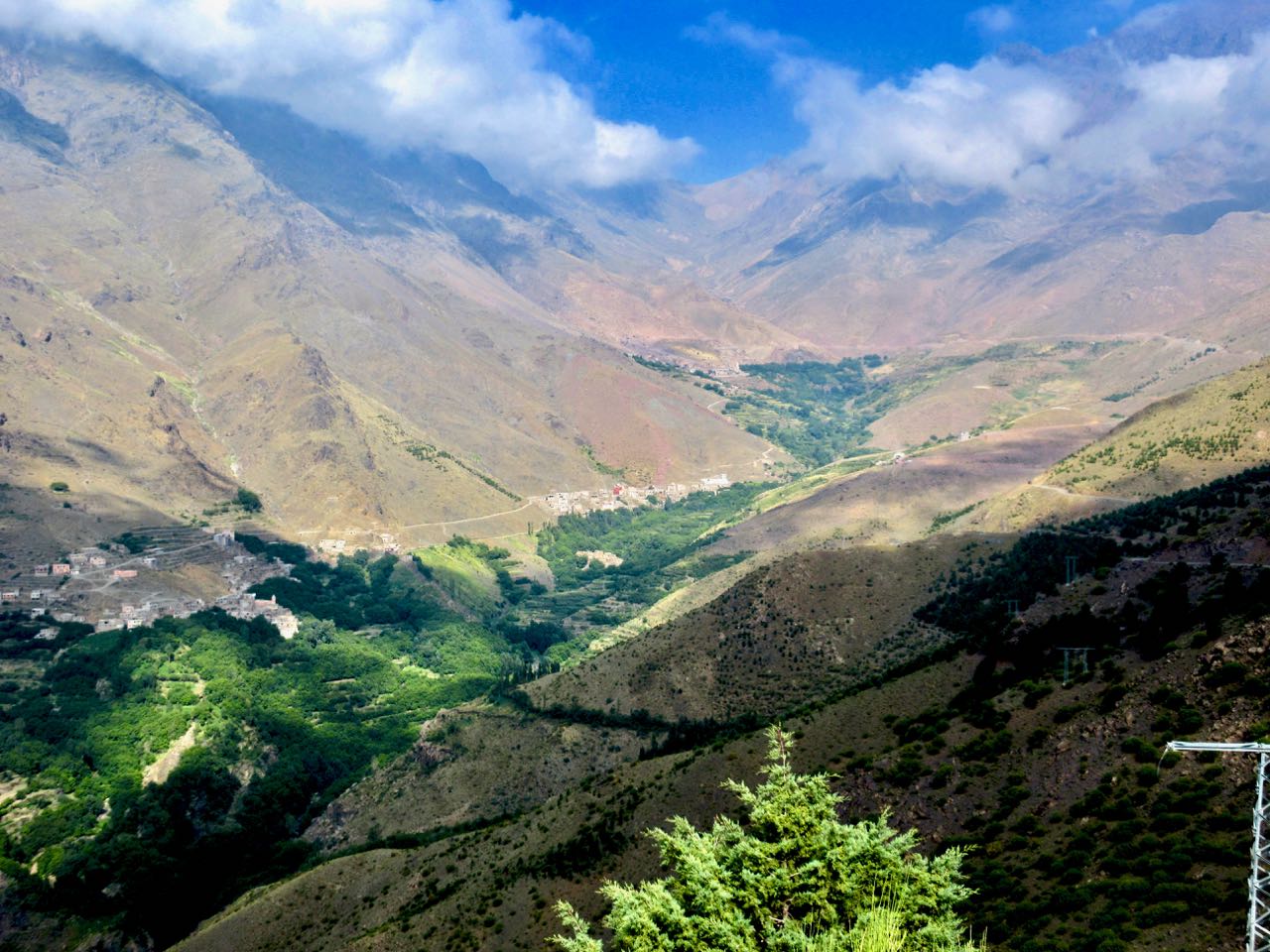
I walked up this valley past Berber villages Talate n’Chaoute, Tamguist and Ouaneskra.

Many locals ran out to greet me urging I stay in their homes or camp in their yards. I was unimpressed by most explaining that I planned to hike until 7pm.

Finally I passed a young man with a Canada cap. Stopping to chat with that group I met a guesthouse manager named Aziz. I liked him instantly. Everyone who passed by had a friendly word with him. Popular and charismatic.

I decided to “comp” at Gite Entre Les Vallees. Aziz was surprised I didn’t want instead to sleep in any of the 13 empty beds he had inside.

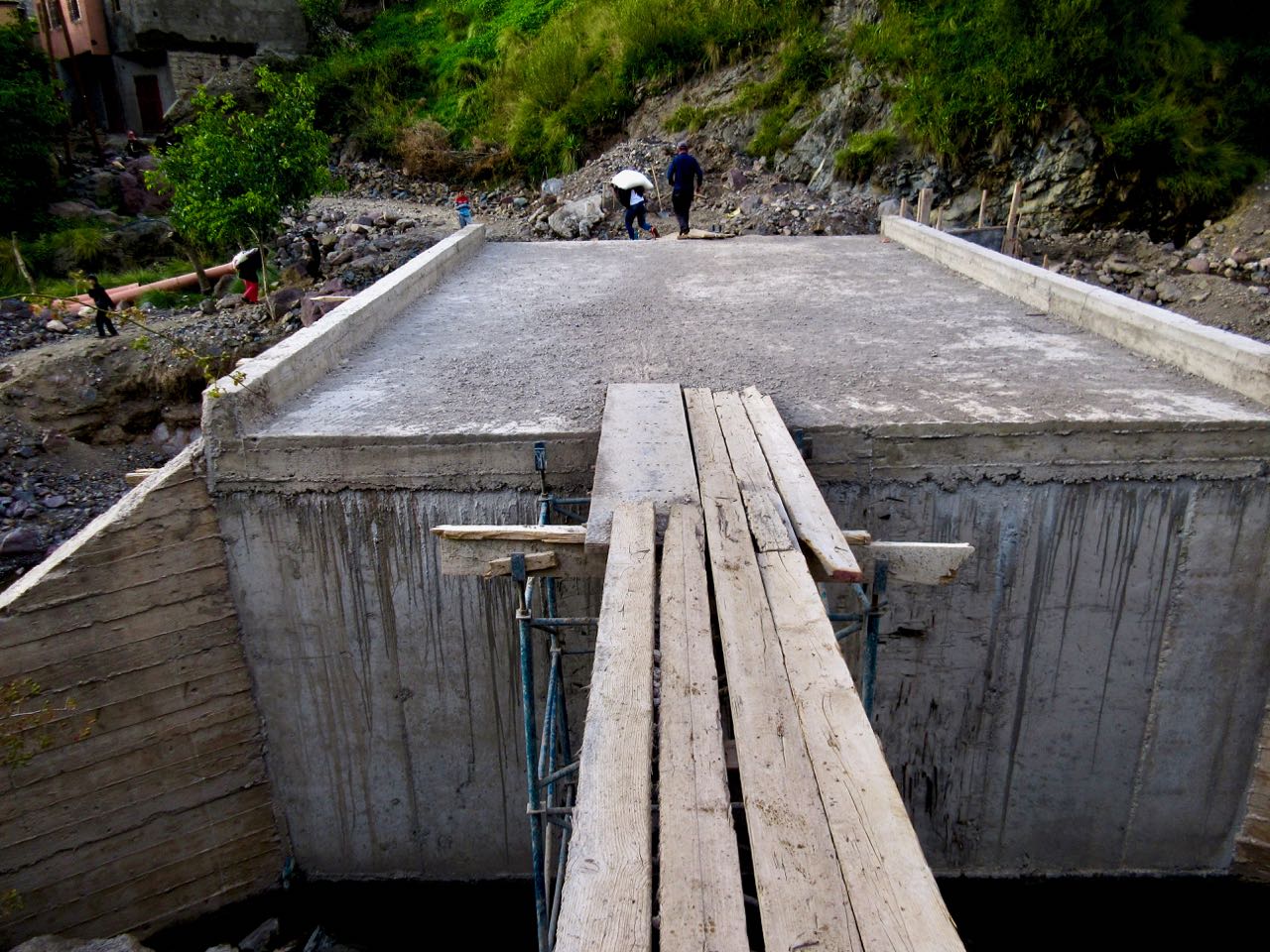
His location is ideal. A new bridge is being built across the river right next door. Soon he’ll have all the traffic.

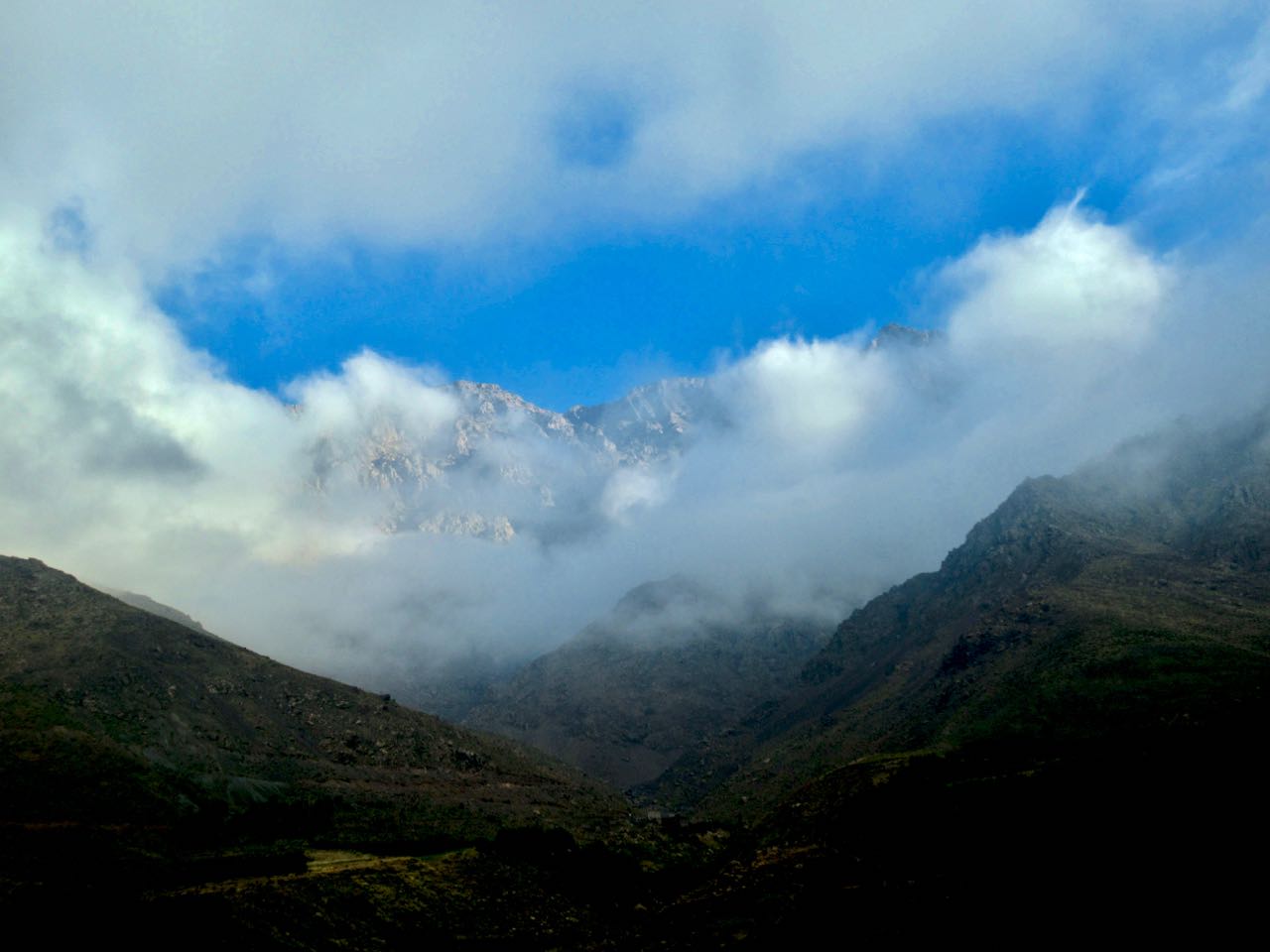
Before dinner I went for a walk on the other side of the valley to try to see my route for the next day. It looked intimidating.

I still had no idea which of those passes was the one I’d need to cross.

I did meet some French hikers who’d come up with a rent-a-car to climb a peak on this side of the valley. Acclimatization. It was over 3000m.

The first time I went to take a photo of a Berber woman in the fields she called up to me NO PHOTOS. I respected that injunction for the rest of the trip.

day 1 | 2 | 3 | 4 | 5 | info | video

Ladakhi Women’s Travel Company

This Women-Run Guide Service is Changing Himalayan Trekking in India

Back in 2009, Thinlas Chorol set up the Ladakhi Women’s Travel Company, which has the distinction of being Ladakh’s first travel company completely owned and operated by women. It is also known for promoting ecotourism. …

… With the encouragement she received at SECMOL (Students Education and Culture Movement of Ladakh, an organization that helps educate children from remote regions of Ladakh) and the support of her American English teacher, Thinlas went on to gain some commendable professional expertise.

She attended a mountaineering course at the Nehru Institute of Mountaineering (Uttarkashi) and spent a semester at the National Outdoor Leadership School (NOLS) in Ranikhet, Uttarakhand, where she picked up wilderness and leadership skills. …

Since then, many Ladakhi women have approached her to train them as trekking guides and, today, the company has 8 guides, 4 trainees and 20 employees in all. …

Ladakh’s First and Only All-Women Travel Company and the Woman Who Started it All

Ladakhi Womens Travel Co

official website – ladakhiwomenstravel.com

new app – Trekking in Nepal

If interested download both the app and checkout the web page:

HoneyguideApps.com

The app offers offline support for both guided and independent trekkers.


Guest post by Ashish Shrestha:

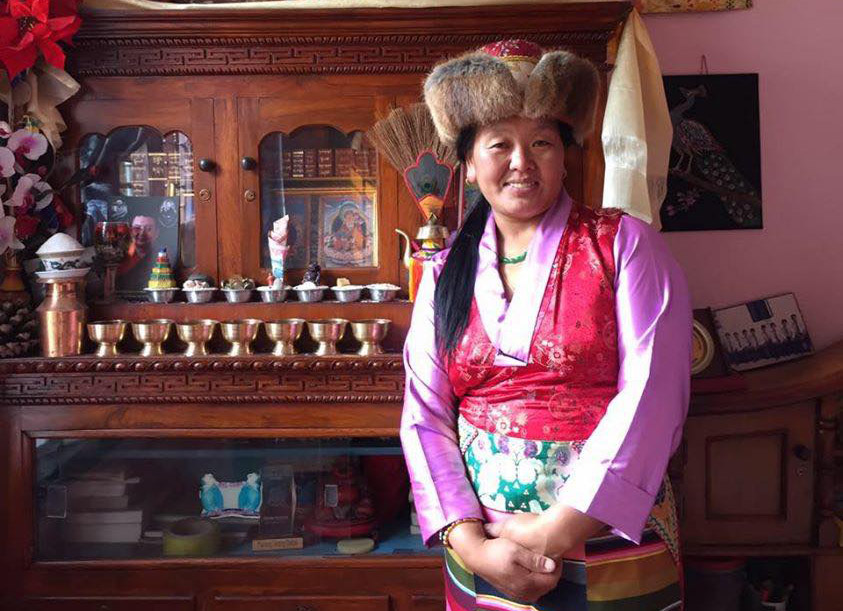
Phuraphuti Sherpa runs the homely Namaste Lodge at Monjo, one of the many small villages that trekkers pass through on their way to Everest Base Camp.

The number of trekkers is close to fifty thousand per year, but only a handful know the fact that Phuraputi also runs a small kitchen garden and serves organic vegetables to her guests.

As she says, “I run a small lodge but I make sure every trekkers leave happily when they go. I even grow my own vegetables and serve organic food. I hope that now even small lodges like mine get equal opportunity to be noticed!

In traditional dress for the photo.

She is one of the 80 lodges in the Everest Region that has signed up for HoneyGuide, an online community that connects mountain lovers with people who depend on the mountains for their livelihood.

The inspiration behind HoneyGuide is to:

  1. Make sure that porters, guides, and lodges get paid equitably and get business transparently.
  2. Make sure that trekkers get enough options and information to run a trek the way they see fit: from going independent without any bookings to a fully guided trek.

To these ends, HoneyGuide is:

  1. A Trek Planning Tool with:
    1. Comprehensive and Up to date information on Everest Base Camp Trek
    2. Complete Checklist for planning a trek in Nepal
    3. Health and Safety Advice for Trekking in Nepal
  2. A Trek Booking Tool with:
    1. Transparent Trek Booking starting with minimum services and options to add on extra services. See Gokyo Lakes and Gokyo Ri Trek.
    2. Capacity to Book Flights, Lodges, and Guides separately. Email addresses and Phone Numbers are also available to aid communication.
    3. Reviews and Ratings to ensure that lodges, and guides get business not based on kickbacks, but hard work and good service.
  3. A Trek Companion that:
    1. Introduces you to the Attractions, Mountains, Birds, Flowers, and Cultural Sightings of the villages you will pass through. See Namche for example.
    2. Breakdown of what you can expect on each Day of your trek. For example see Day 8 of the Everest Base Camp Trek.
    3. Provides all of the above in an offline Mobile App “Trekking in Nepal”. Here are the download links for Android and iOS devices.

(The iOS app is not free right now. Contact Dakshina with the Referral Code BestHike, and we will send you a promo code for iOS devices.)

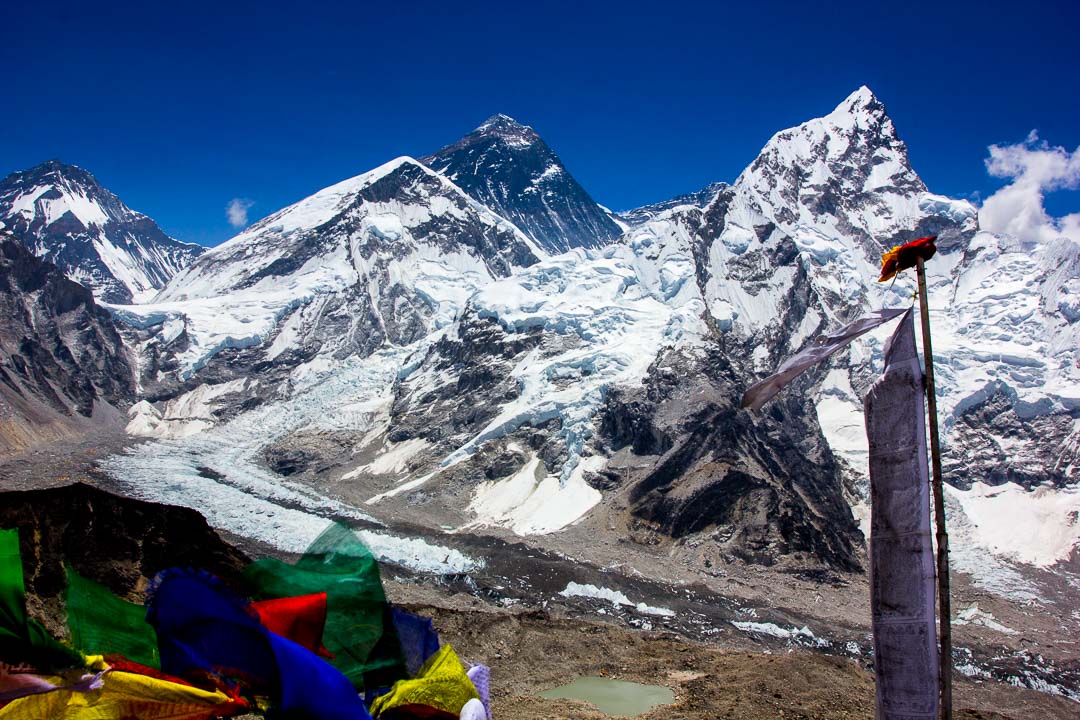
Everest View from Kala Pathar. PC: Tenzing Hillary Everest Marathon.

Author Information.

Ashish Shrestha from Kathmandu grew up surrounded by lofty peaks and early developed a love for mountains. He’s a co-founder of the project 

The HoneyGuide Team.


Harder Ridge, Switzerland – best day hike on Earth?

Trip report by BestHike editor Rick McCharles.

  • dangerous
  • 10 hours
  • at least 18km on sharply defined ridge
  • should absolutely never be attempted when wet
  • plenty of exposure on both sides
  • frequent scrambling required
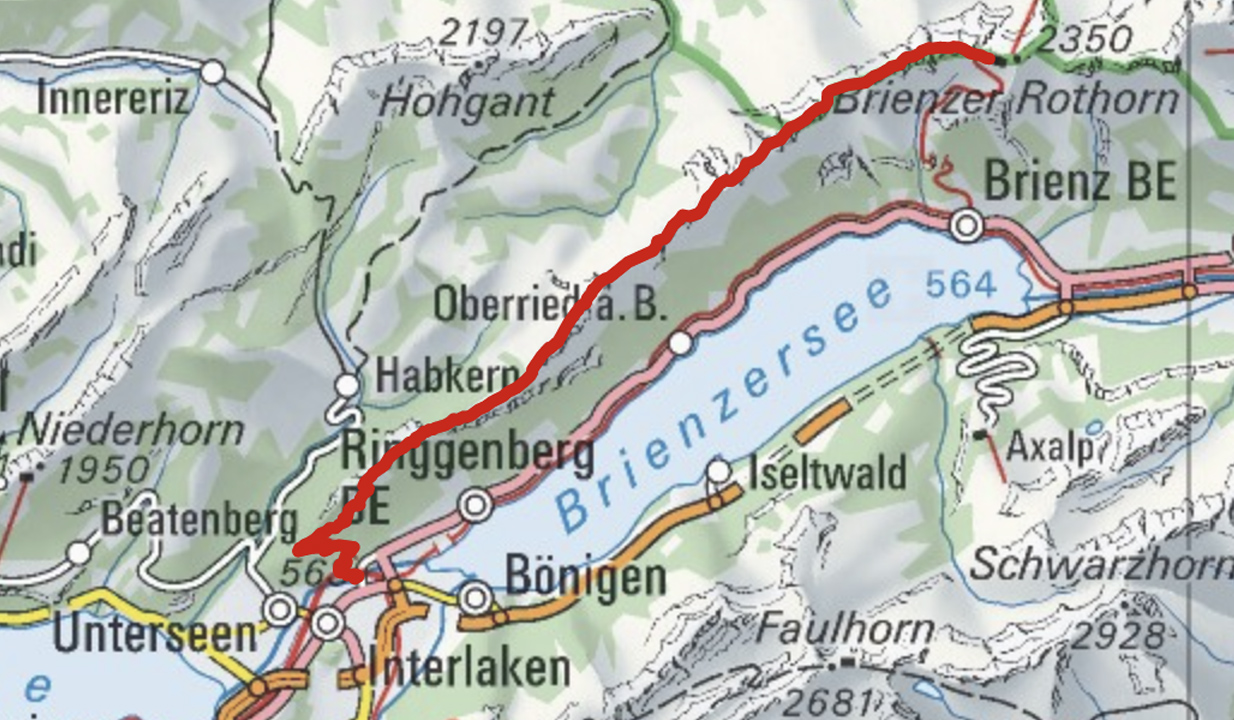
  • Brienz to Interlaken with rail assistance getting up to and descending from the ridge

Don’t hike the other direction. Logistics are easier starting in Brienz. And it’s safer as the last 2 hours (when your legs are tired) is on easier trails. 

I got up early in Interlaken, ready for my free hostel breakfast starting 7am.

Every half hour a train runs from Interlaken to Brienz for 8.20 francs (2018).

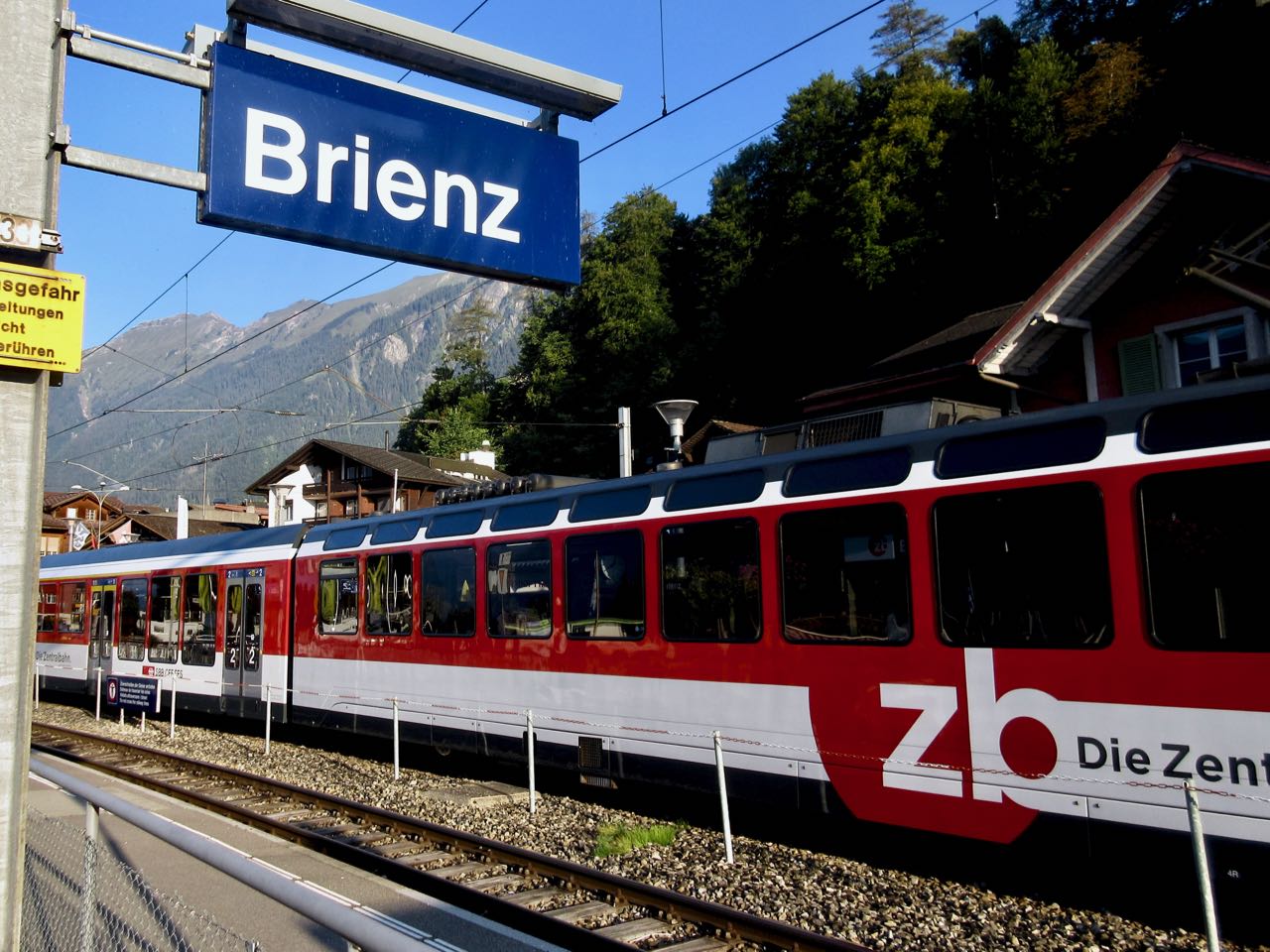
Happily I made the first steam train 8:36am — from Brienz to Brienzer Rothorn Station. It’s been making this run since 1891.

Price is reduced to 28 francs for the first train (2018) to encourage folks to get as early a start as possible on their hike.

At 9km / hour it takes an hour to get to the top of the ridge 2351m.

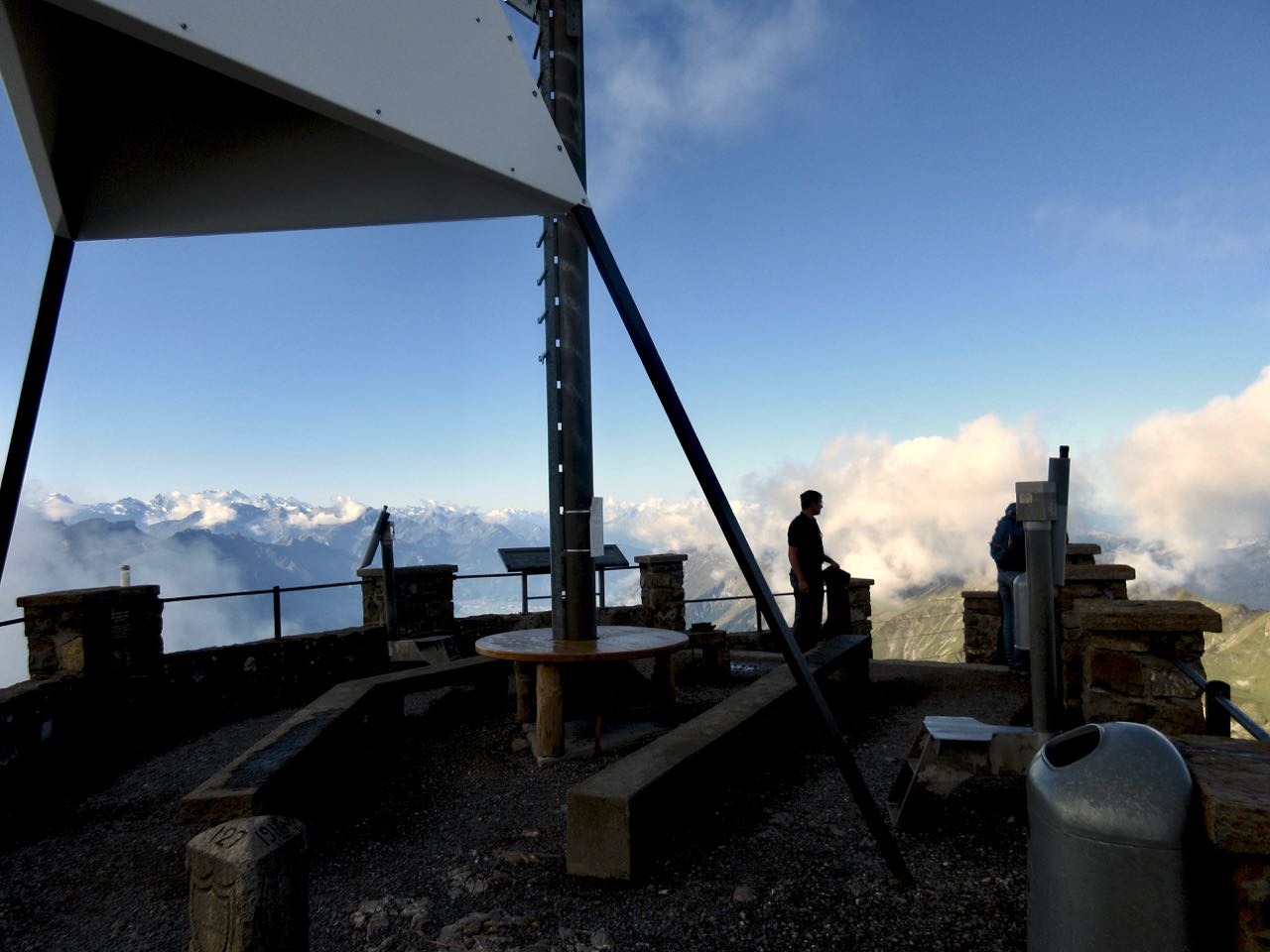
If clear, you can enjoy distant views over to Jungfrau highest peaks; the Eiger, Mönch, Jungfrau, Schreckhorn, Finsteraarhorn.

I climbed up to the viewpoint. This is as far as most tourists hike.

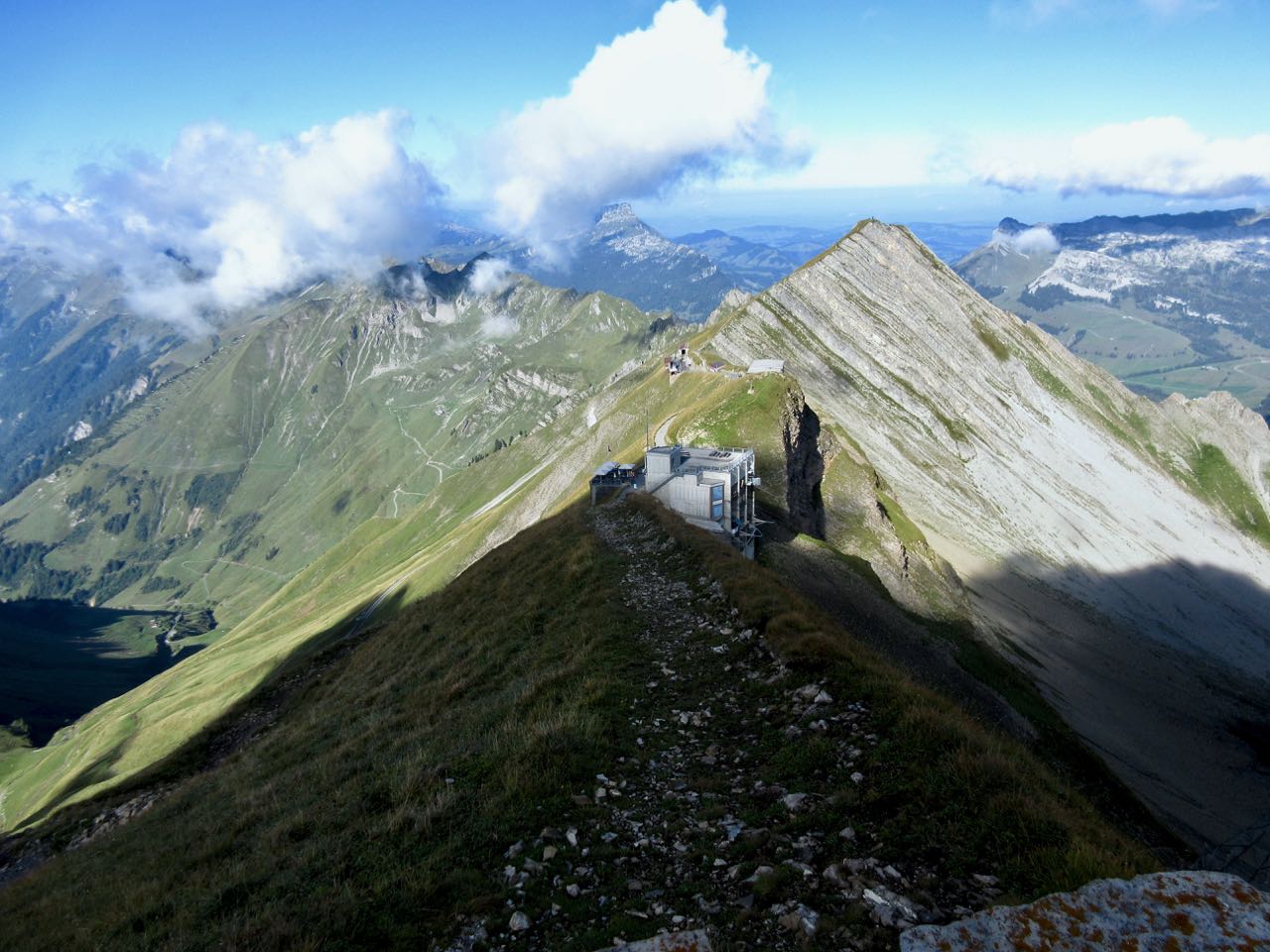
Looking down on Brienzer Rothorn Station.

At 10am I started to walk back to Interlaken. I would have about 11.5 hours to make the last teleferico down from Harder Kulm Restaurant. Otherwise I’d have to walk down in the dark.

You can’t really get lost. Follow the ridge no matter what.

The weather was perfect.

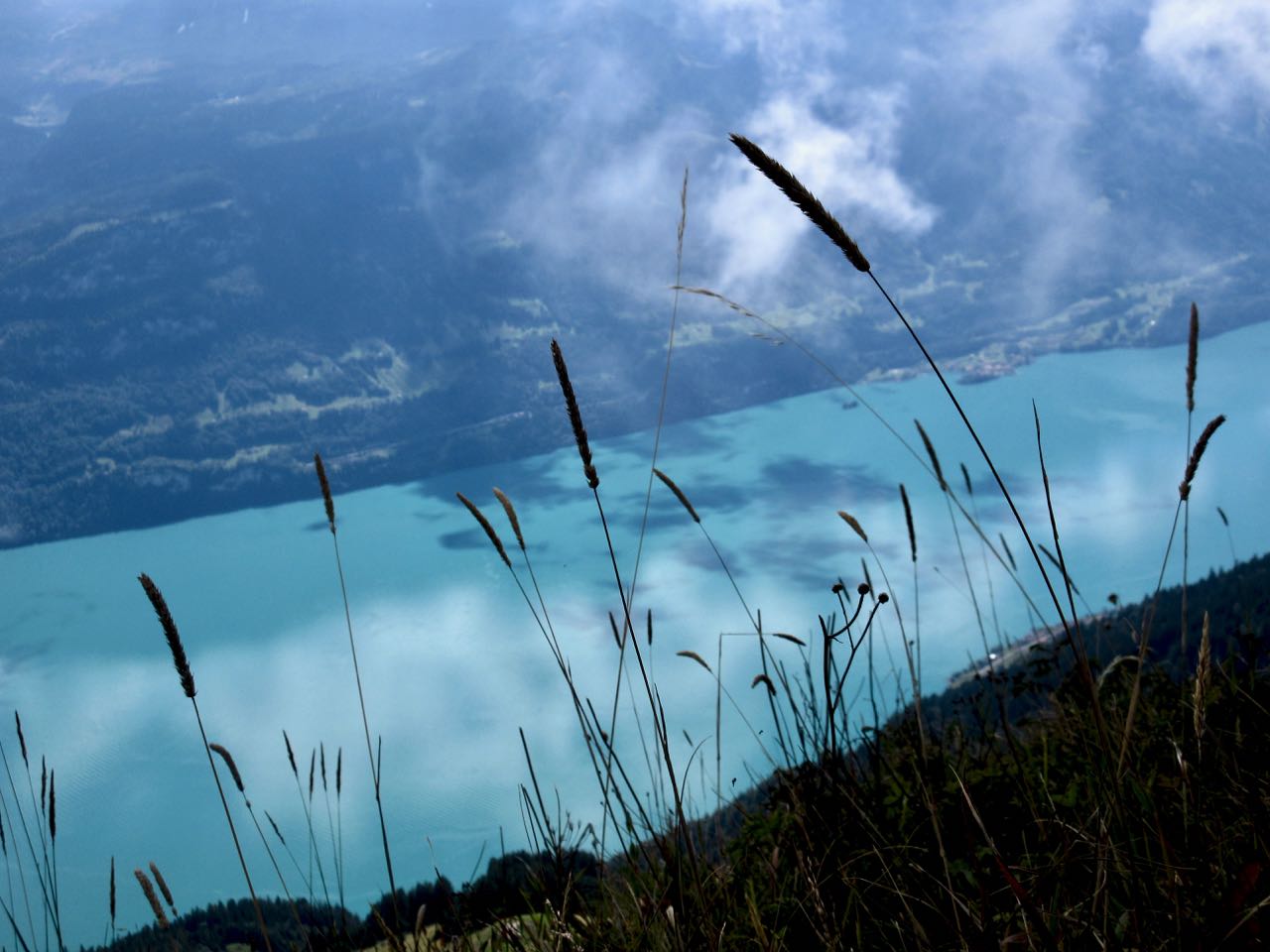
You have Brienz lake on one side …

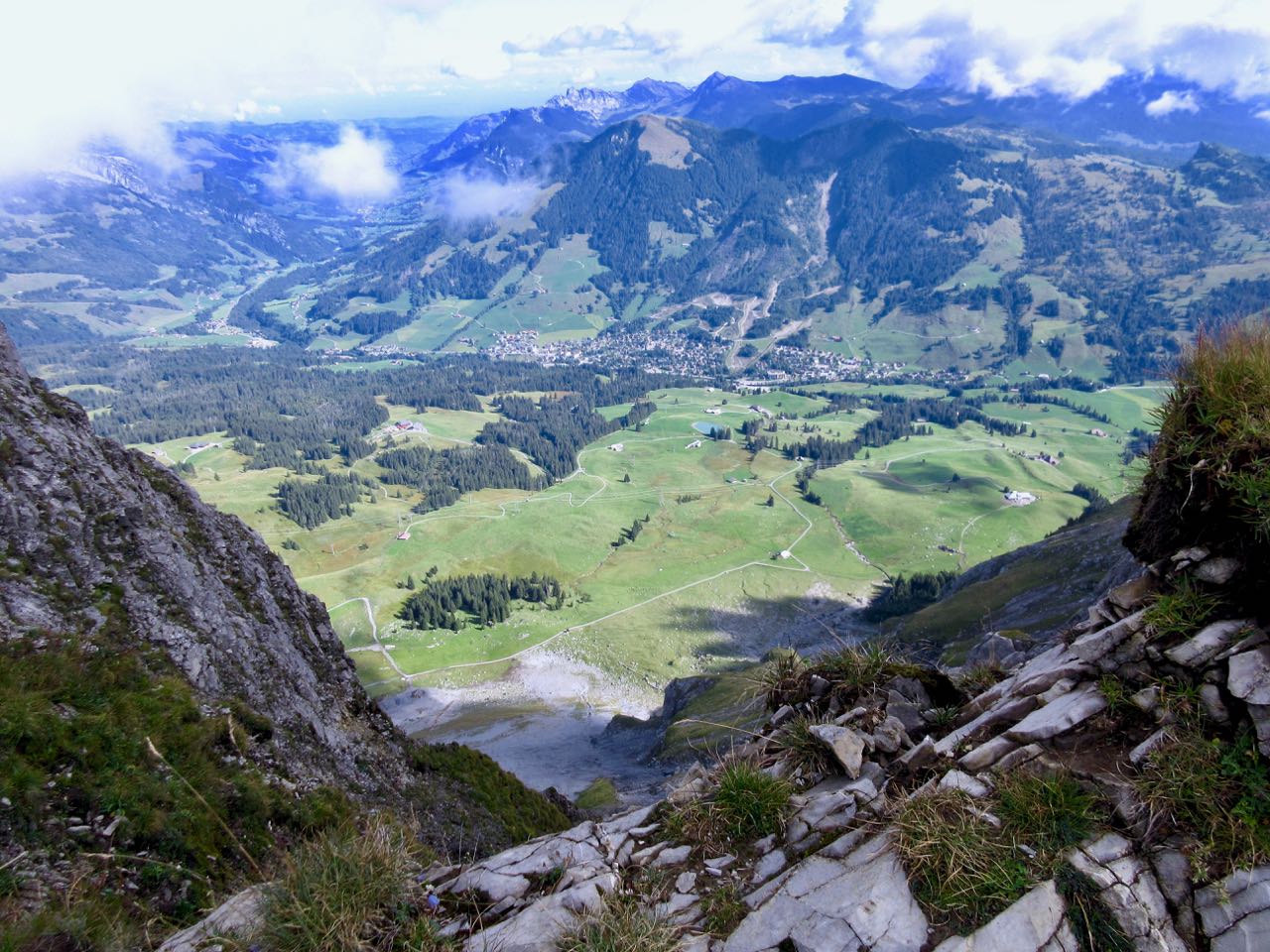
… and Swiss foothills on the other.

I loved it instantly.

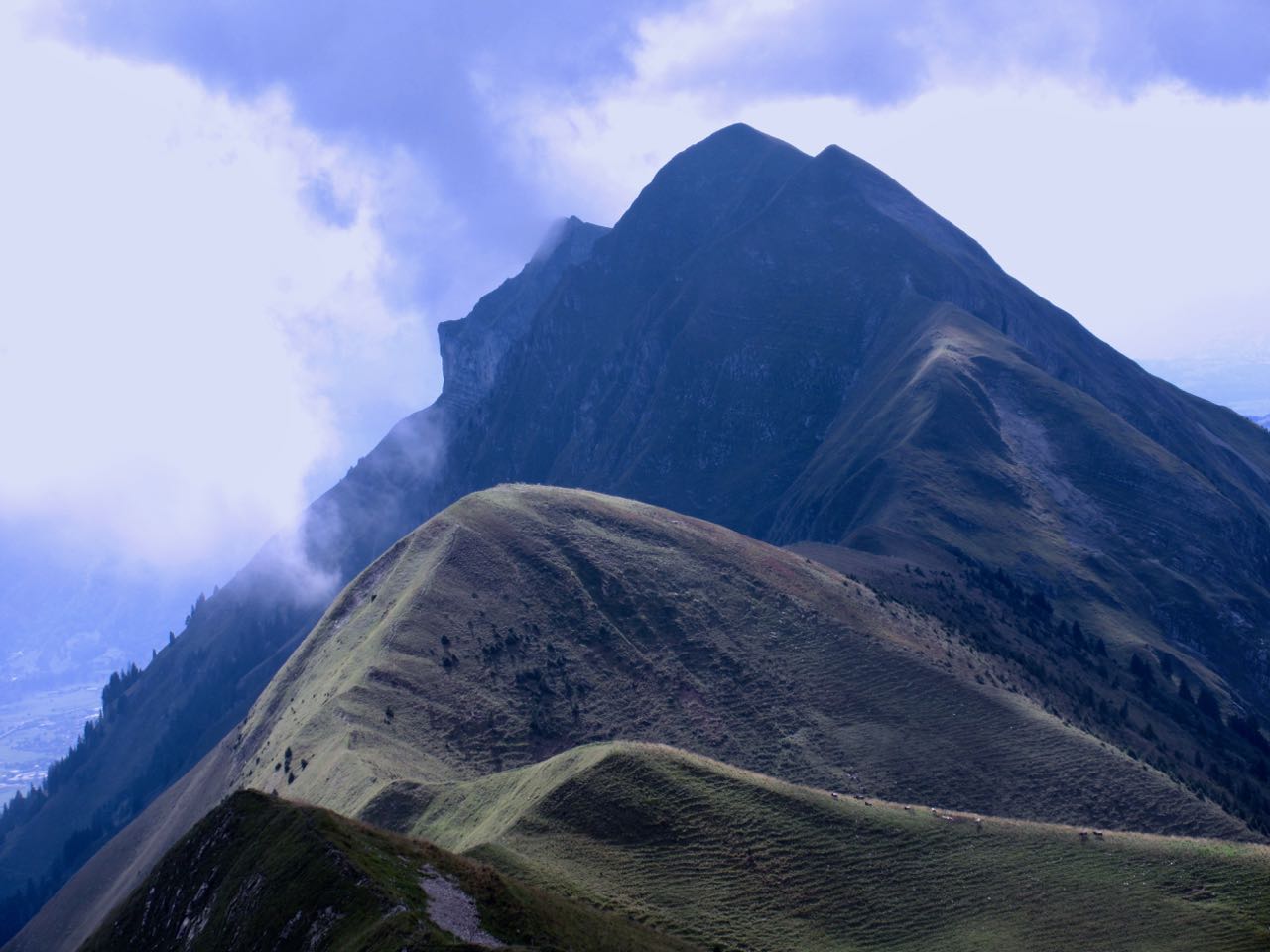
Most of the time the ridge is not all that intimidating.

It often looks worse than it turns out to be.

I’d heard everyone who comes up here sees ibex. … Are these ibex?

This adventure is more popular with trail runners than with hikers as they can easily make it in less than 10 hours.

I took very few breaks. Other than checking the GPS on my phone, I had no idea whether I was moving quickly enough to finish in time.

Each time I’d climb a high point on the ridge, even higher points would come into view.

I don’t think I saw another person over the first 5 hours.

Sadly I seemed to be a lot closer to Brienz than Interlaken.

There are sections with stairs, cable and chain assistance. These would be most useful when down climbing in wet conditions.

Hmm … I might finally be past half way.

I tried to quicken my pace on the easiest sections.

There are many more day hikers on the Interlaken end of the ridge. They assured me I’d make it on time.

Interlaken

The last 2 hours stays on the ridge, but you are mostly in the trees. It was the least interesting section … but I was pleased to have less exposure as my legs got tired.

Here it is at last. Harder Kulm Restaurant.

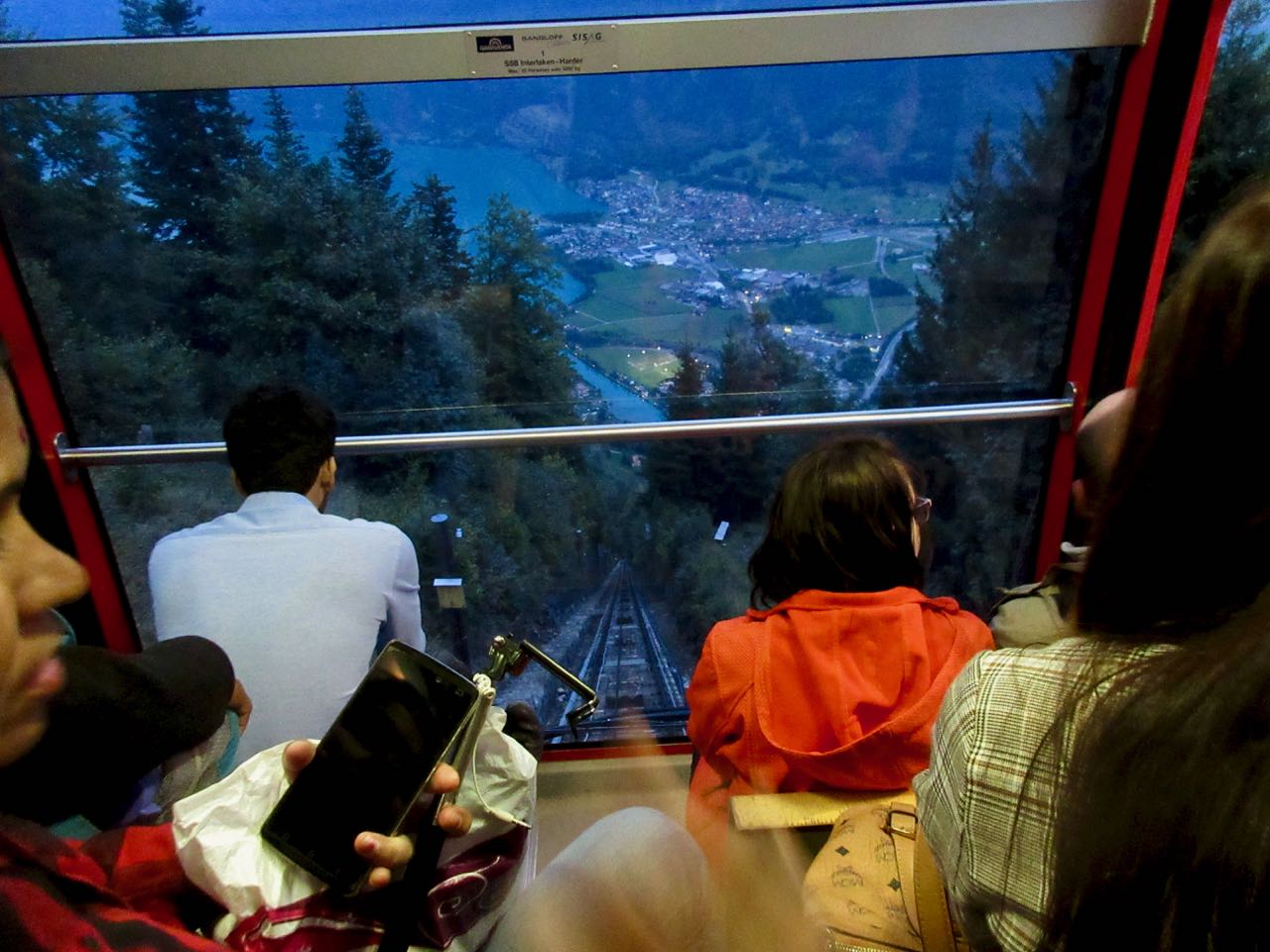
The last funicular descends at 9:10pm. If it’s busy they may run until 9:40pm.

I gladly paid 16 francs and found the short trip down very interesting.

It was dark by the time we arrived Interlaken.

And I was quite dehydrated. I’d brought only 1.5 litres with me. I could have used about 3 litres.

When I got back to the hostel I announced it was the best day hike of my life.

Click PLAY or see if I look happy on YouTube.

Norway’s Lofoten Islands – hike Fløya & Devil’s Gate

Trip report by BestHike editor Rick McCharles.

My last hike in Norway was terrific.

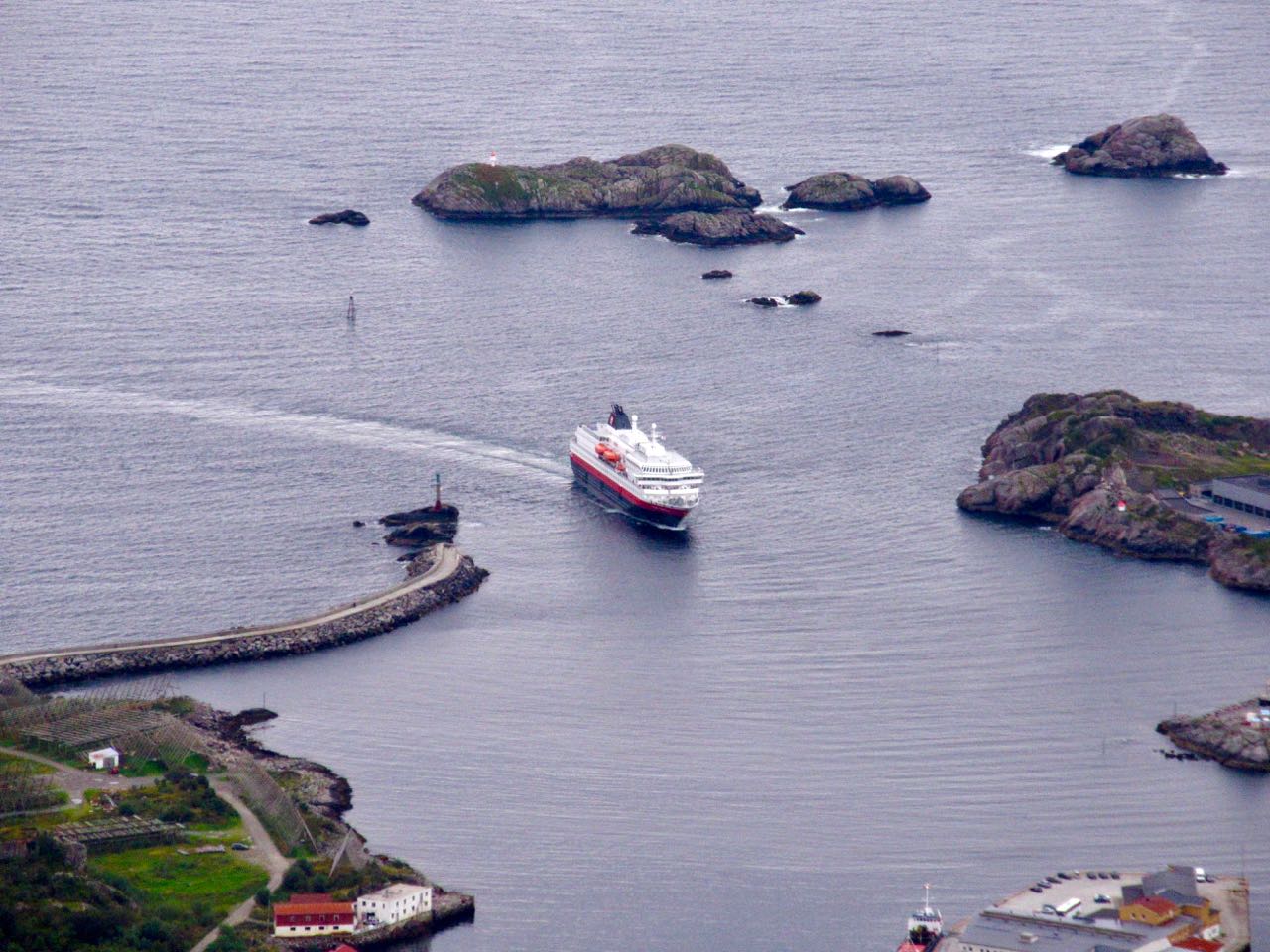
The evening before my 6:30am ferry departing Lofoten Islands I did the famous hike out of Svolvær, the fast ferry port.

From the wharf it’s about a half hour walk to the trailhead.

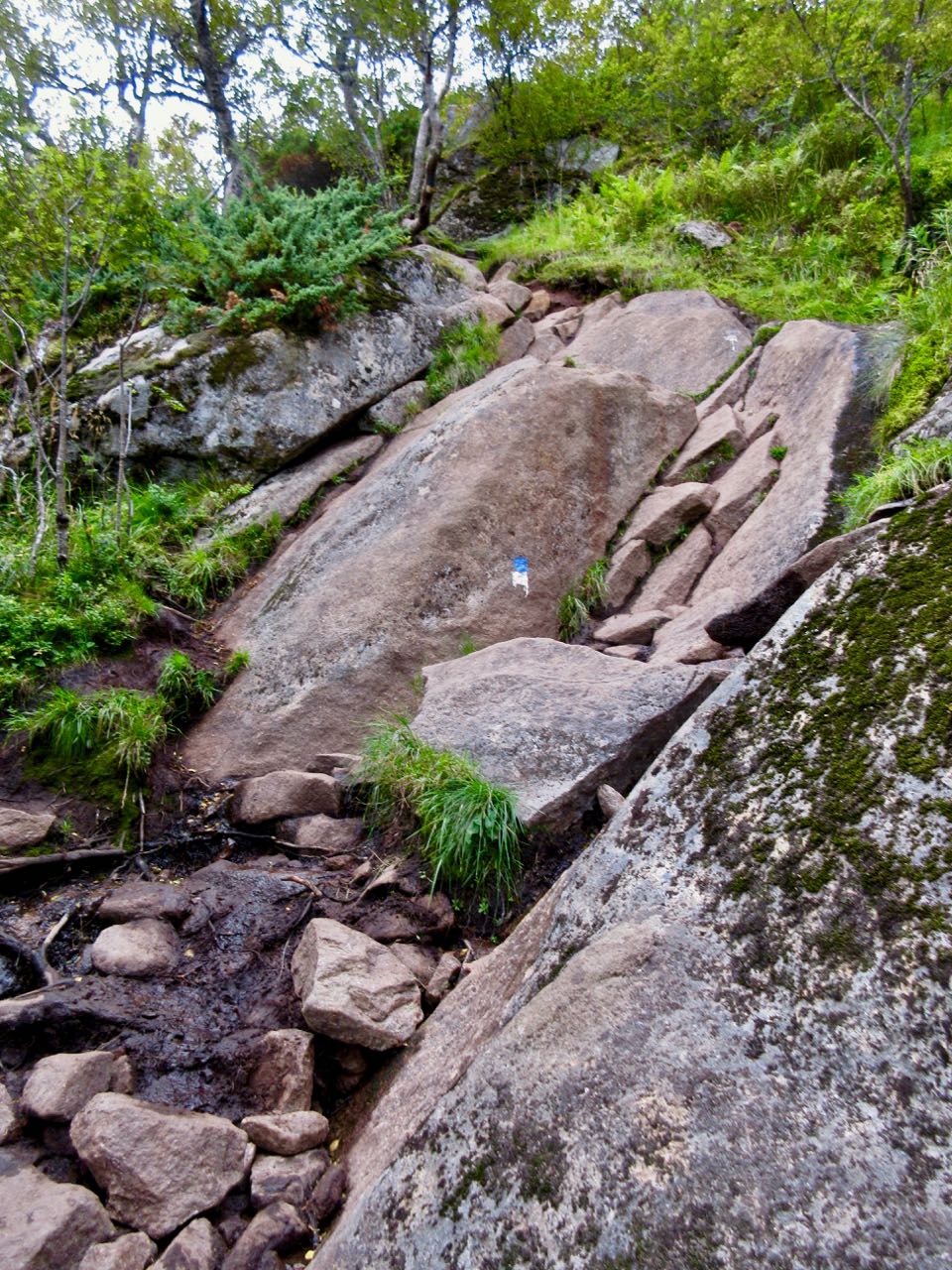
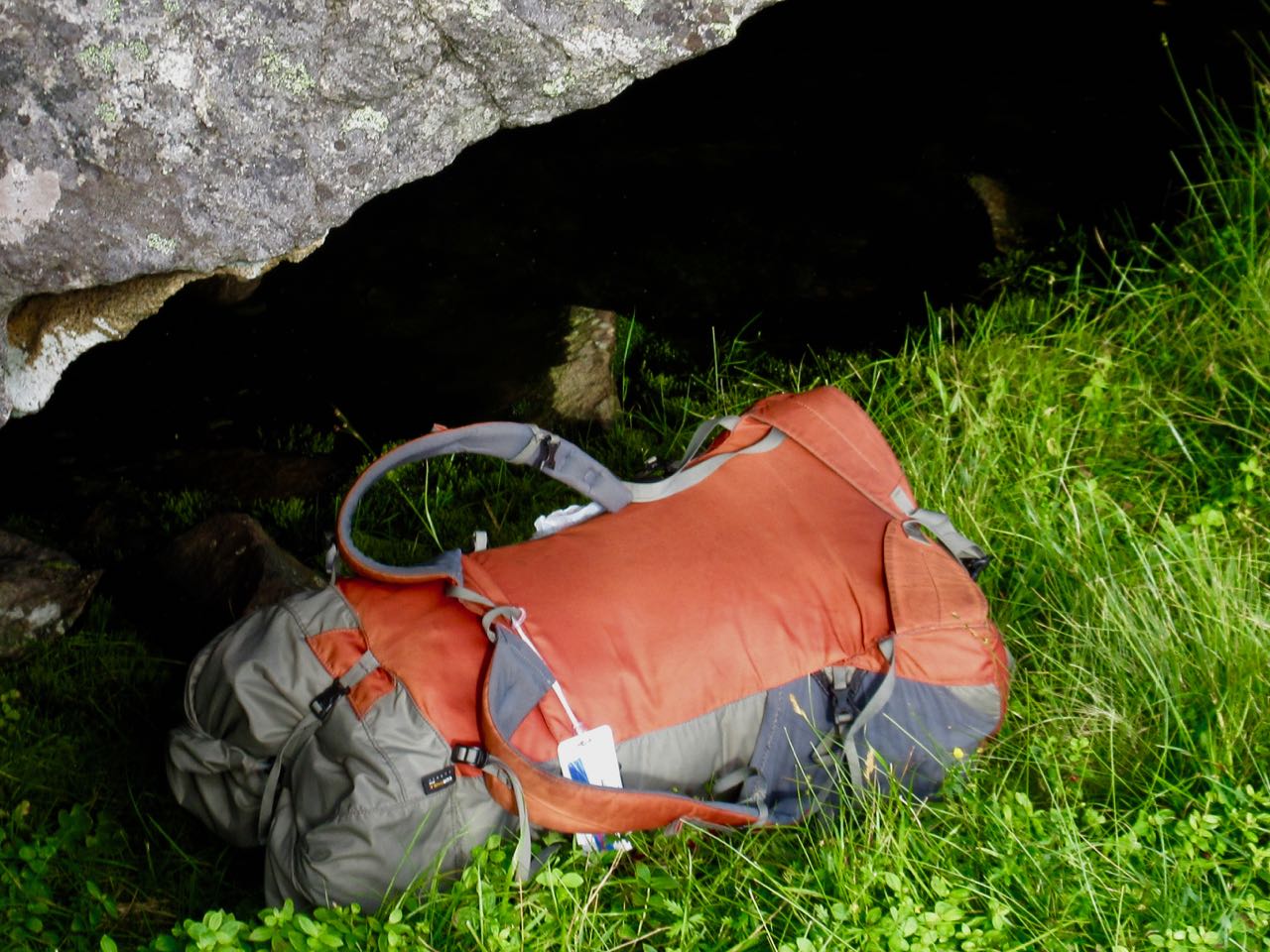
I hid my pack where I wanted to tent and started up the steep scramble. For a change the most difficult part is right at the bottom.

There’s chain and rope assistance at some points.

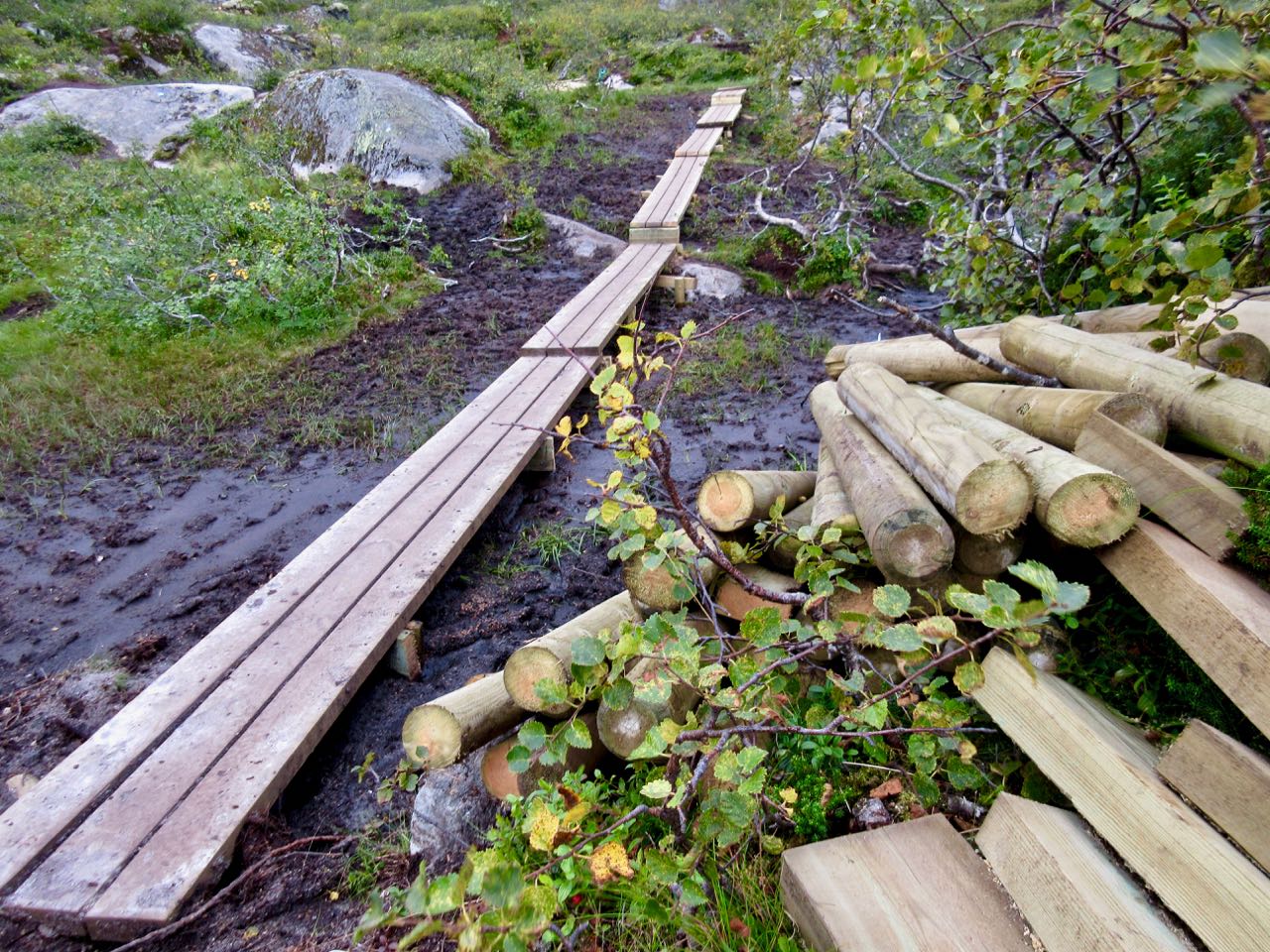
The muddiest sections have new boardwalk. That helped.

As much as possible I stayed on stone.

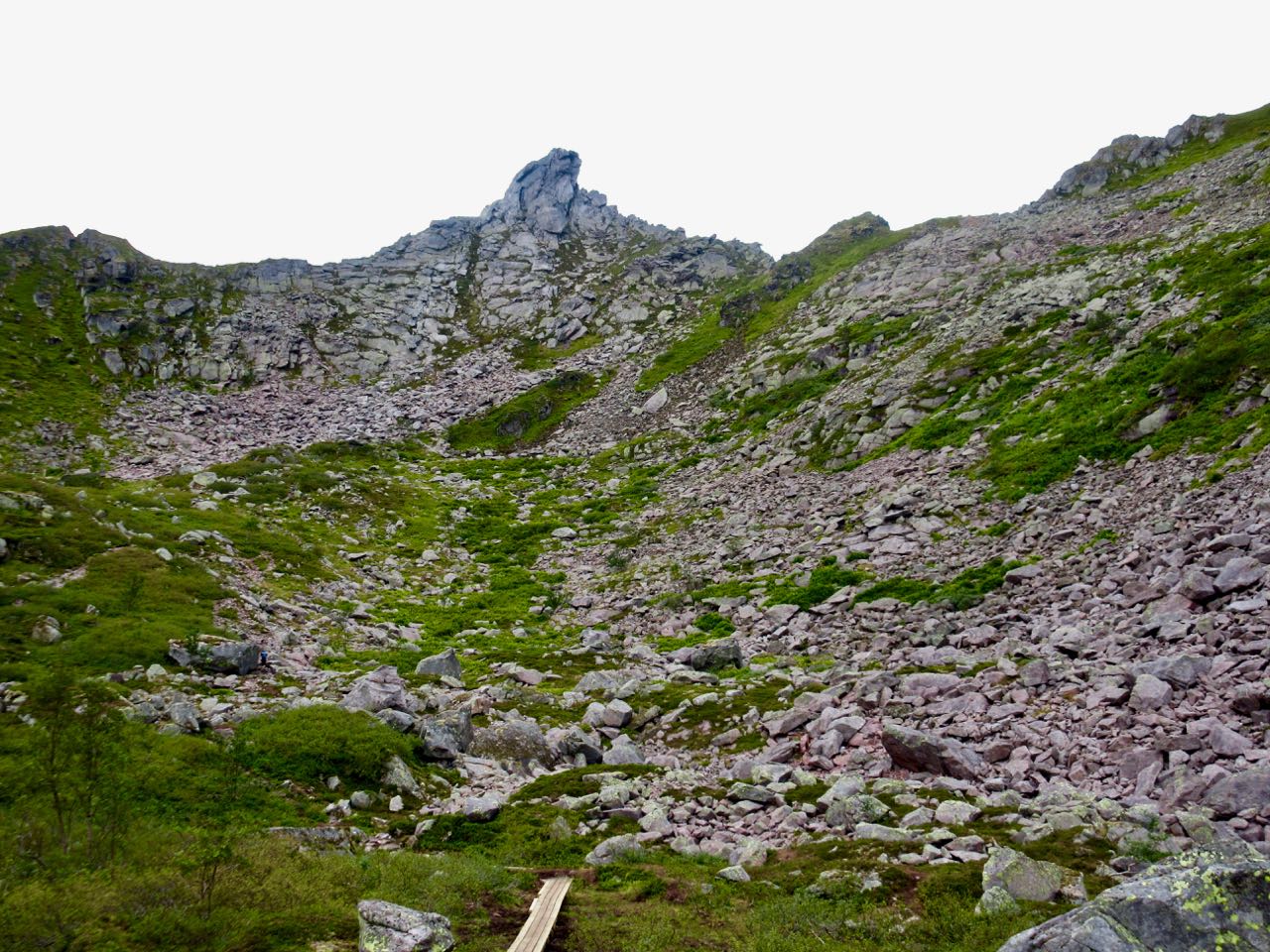
Pretty views all the way up.

From below I saw people scrambling the ridge.

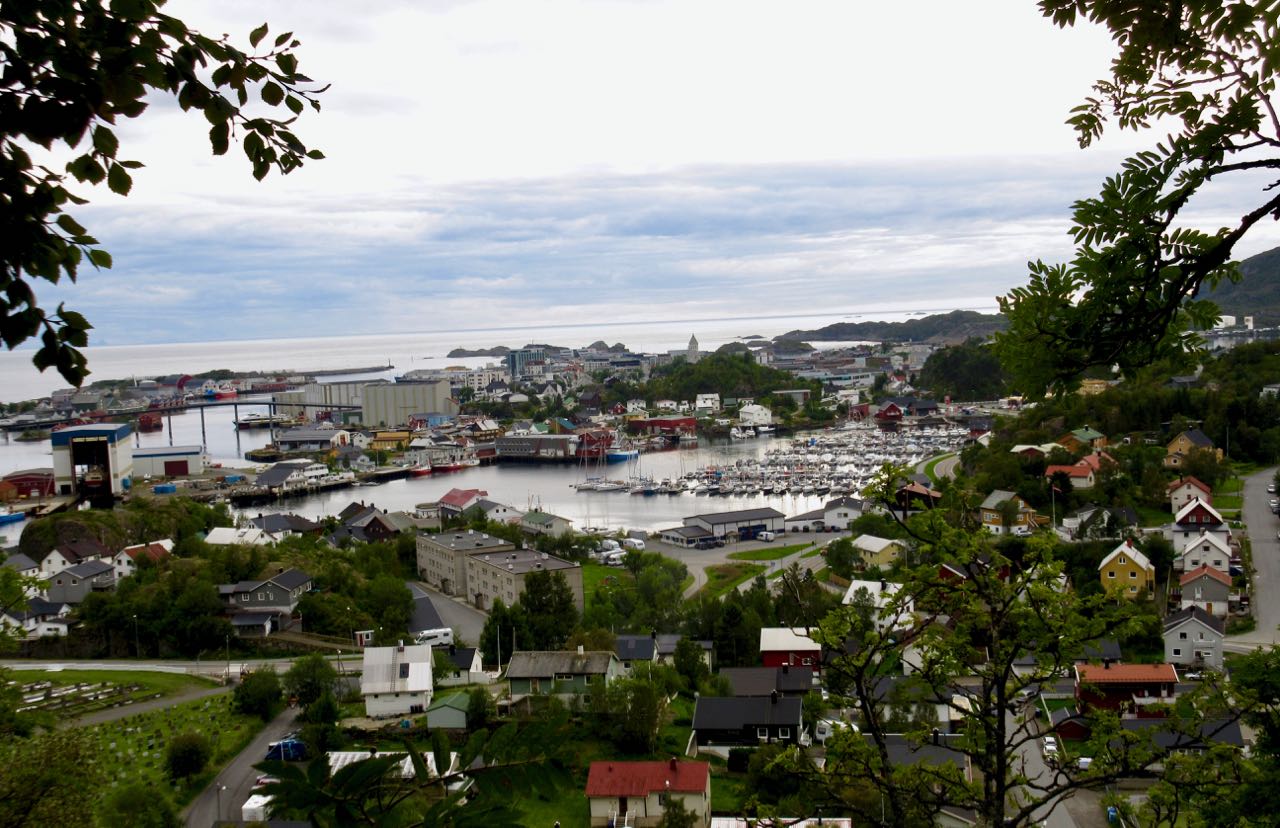
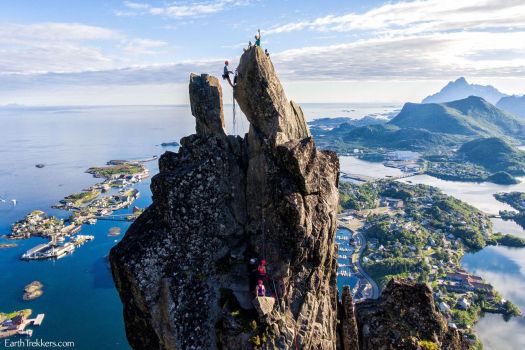
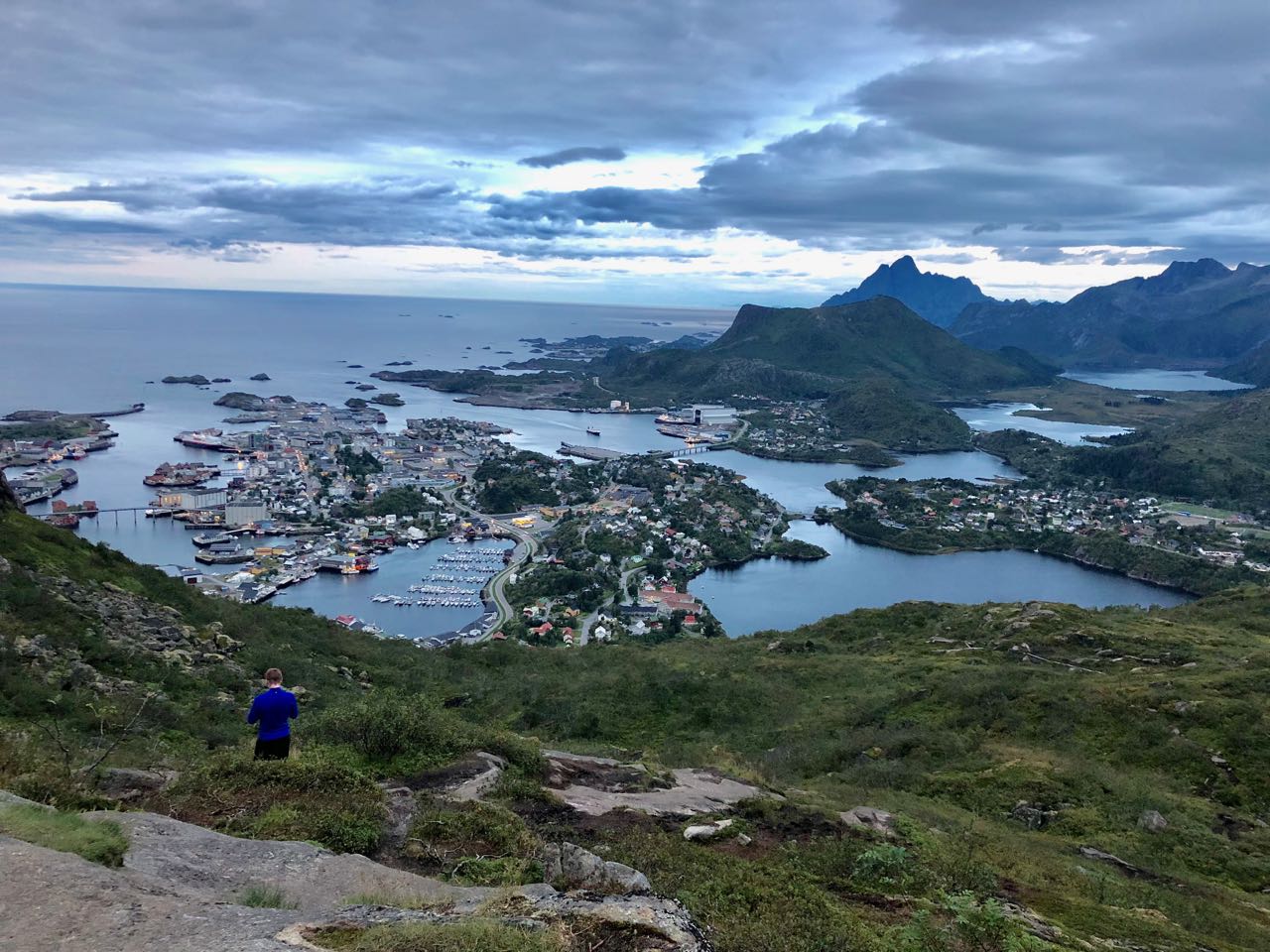
I ended up climbing to the top of Fløya first. An amazing vista down over the town of Svolvær and Vestfjorden.

Down below is the famous climbing spire called the Goat. (Svolvaergeita)

To get to Djevelporten (Devil’s Gate) I had to descend quite far and climb back up again.

Late in the evening I had it to myself.

Click PLAY or watch it on YouTube.

In no rush I descended back to my tent stopping often to enjoy my final hiking vistas of gorgeous Lofoten.

Norway’s Lofoten Islands – Reinebringen alternative Topp 730

Trip report by BestHike editor Rick McCharles.

The most famous hike on the Lofoten Islands — Reinebringen — was closed for the 3rd season in a row.

Happily, my guide book (2017) by Kristin Olsen recommended an alternative.

There’s a longer, muddier route to hike up to the coffin above Reine.

From there you can walk the ridge and scramble up to two different peaks, one unnamed but called on some maps Topp 730.

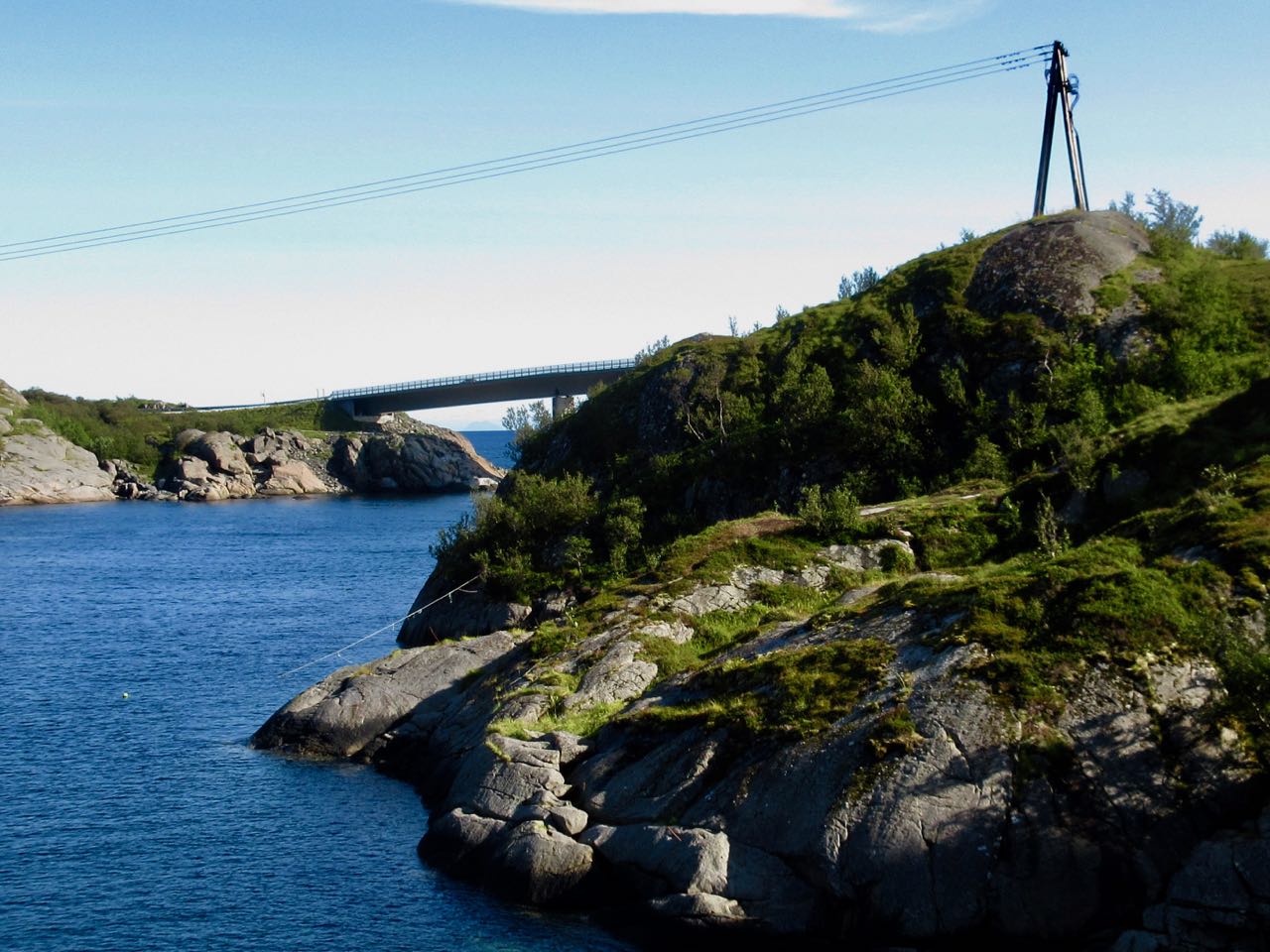
Best would be to have your own kayak or raft to get to the end of Djupfjorden. I didn’t … so had to walk the muddy shoreline from the bridge.

I camped near this point on my return, atop a huge flat boulder.

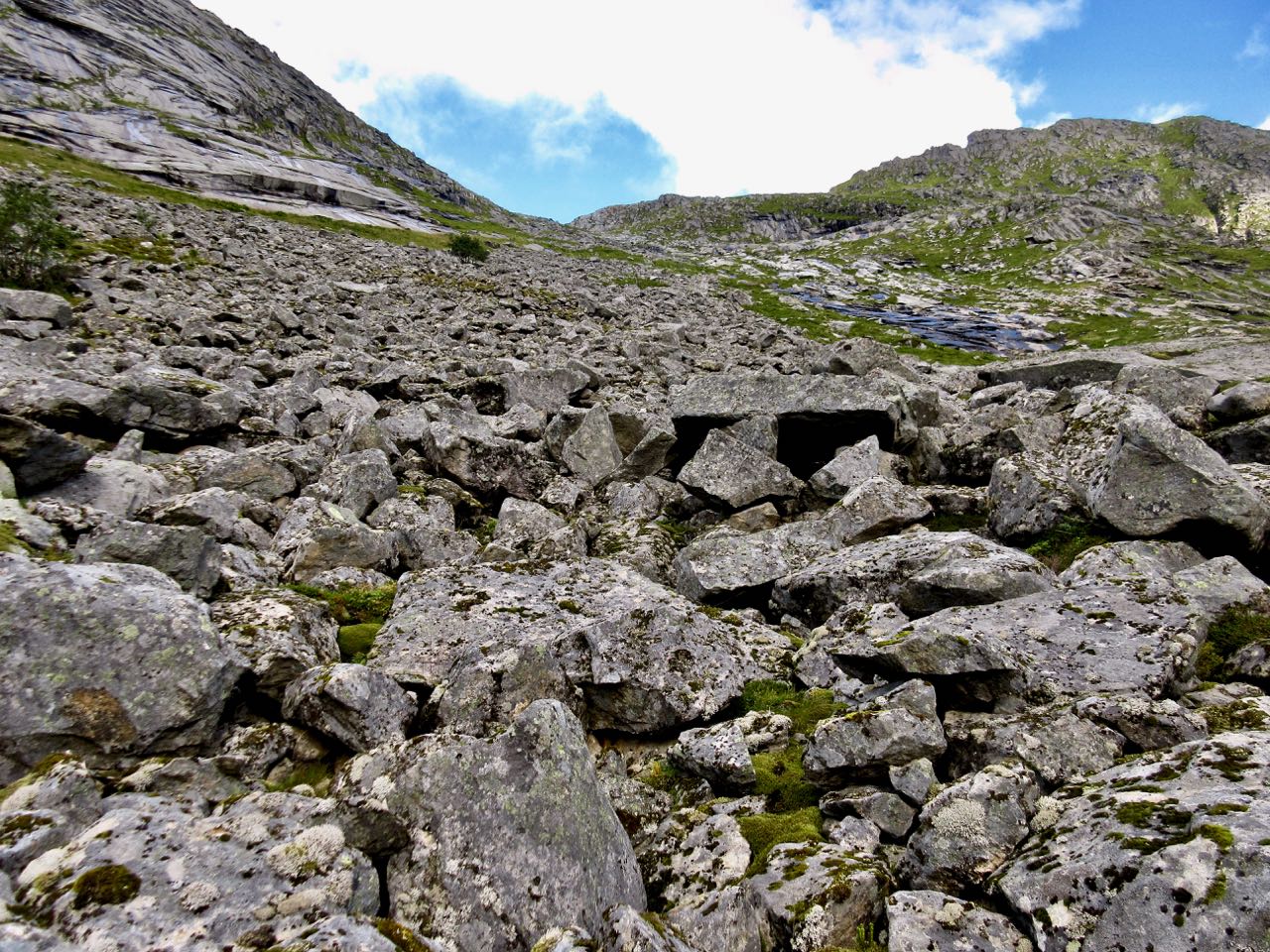
I’d been warned this section was worst. It was.

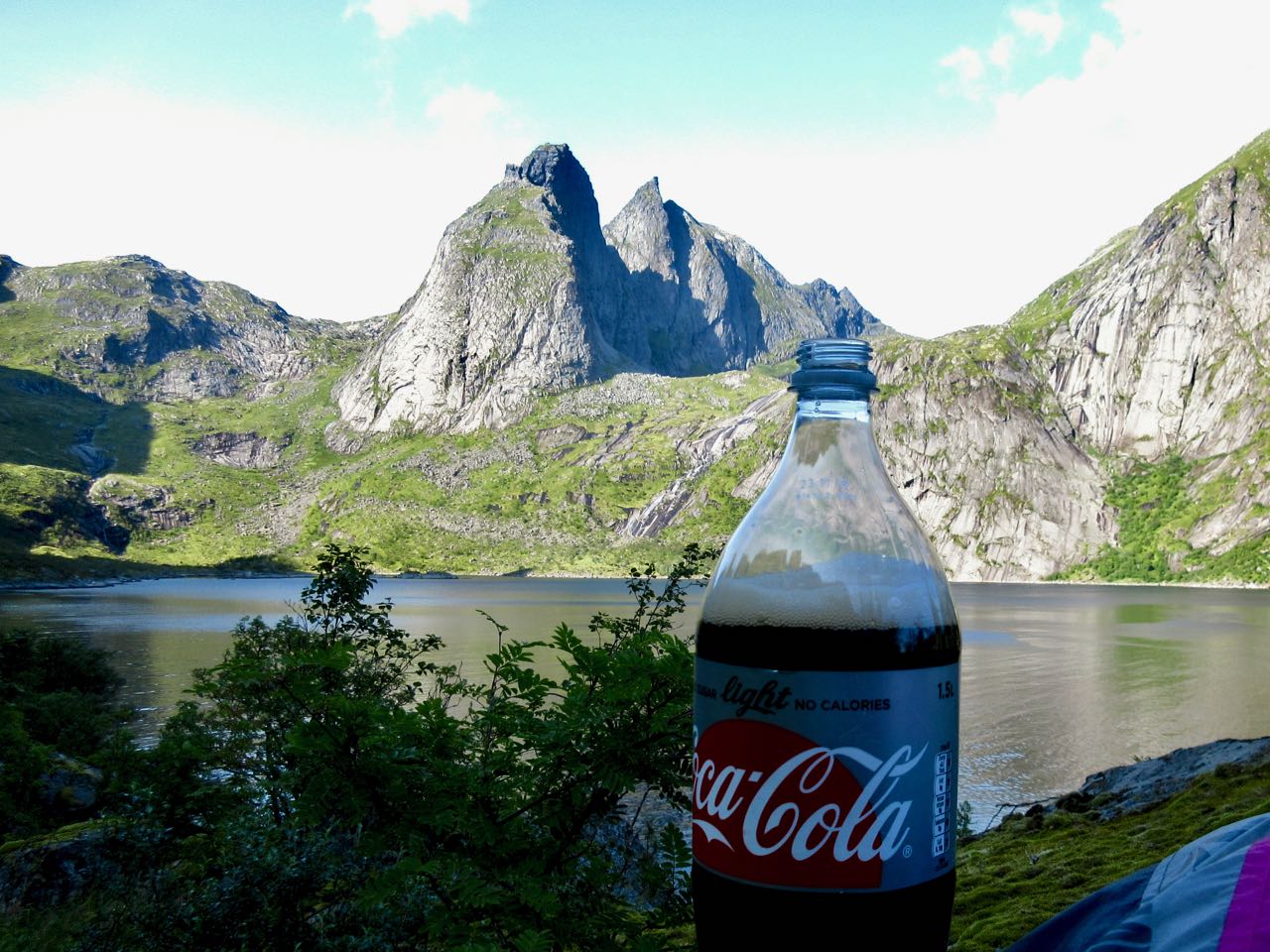
But the elixir of life kept me going.

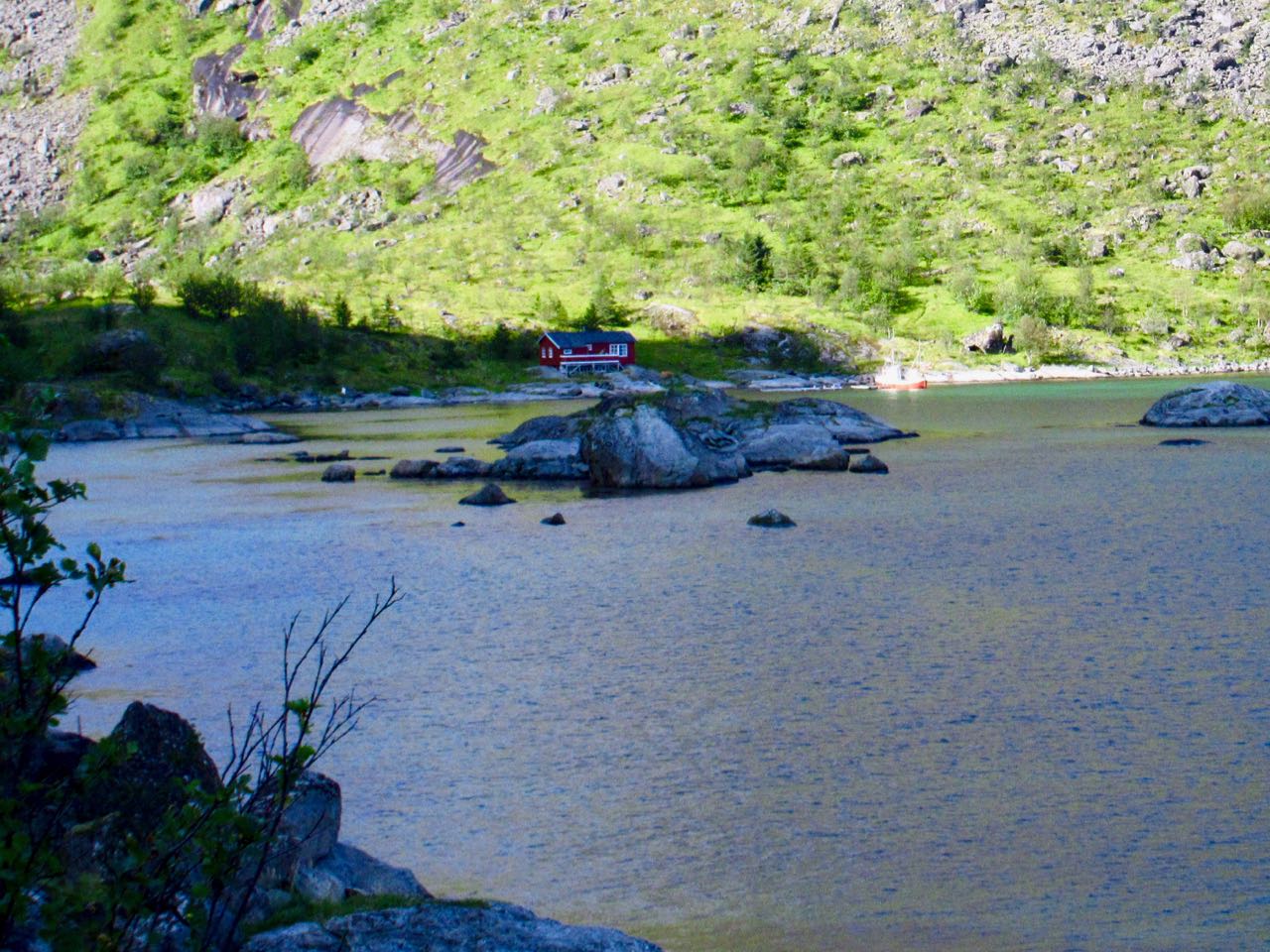
Goal #1 was the red cabin at the end of the fjord.

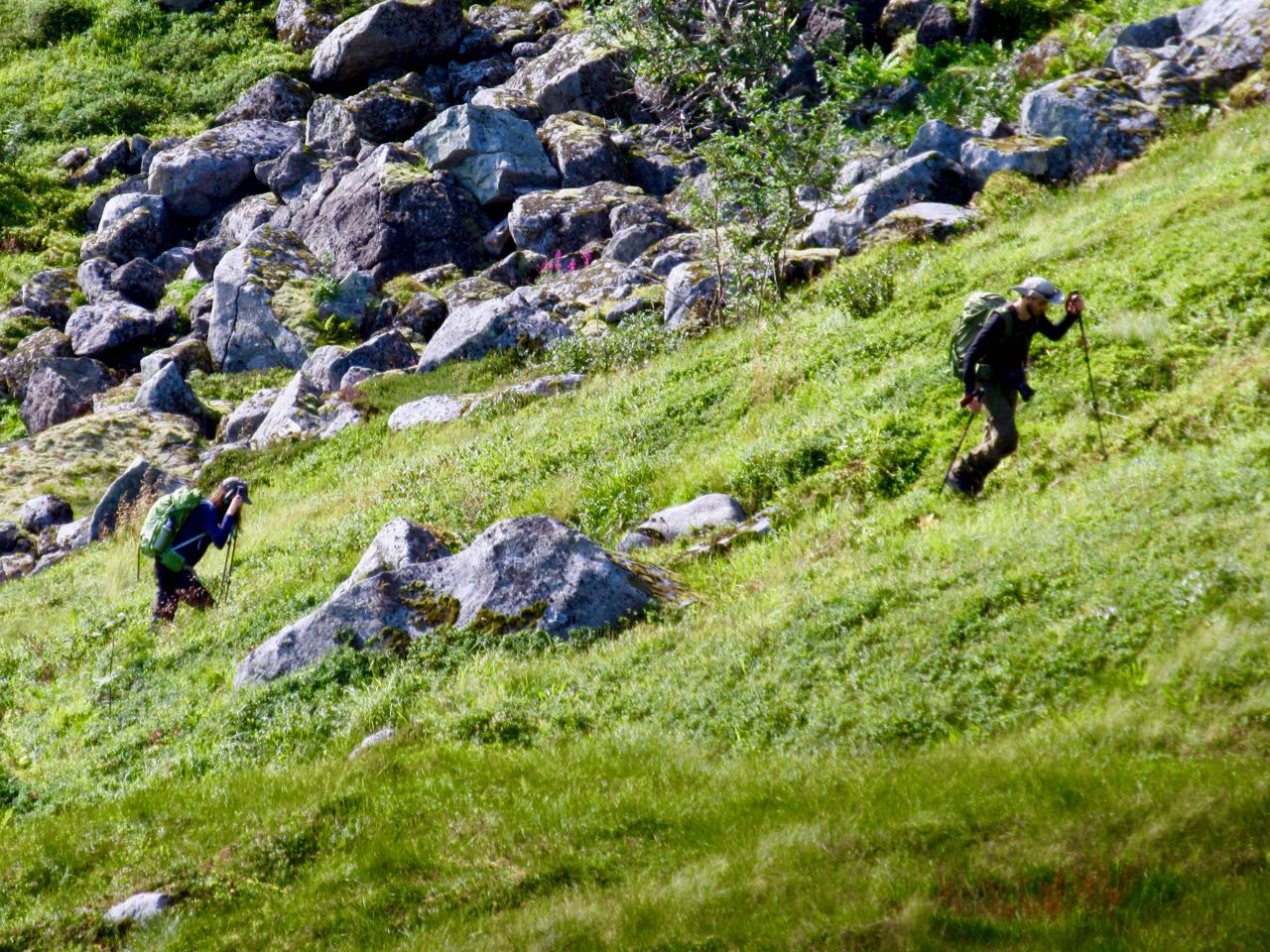
From there you scramble as best you can to the top of the waterfall. No trail. I was with a French couple at this point.

It was a pleasure to reach the lake and easier scrambling.

It was another beautiful day well above the Arctic Circle.

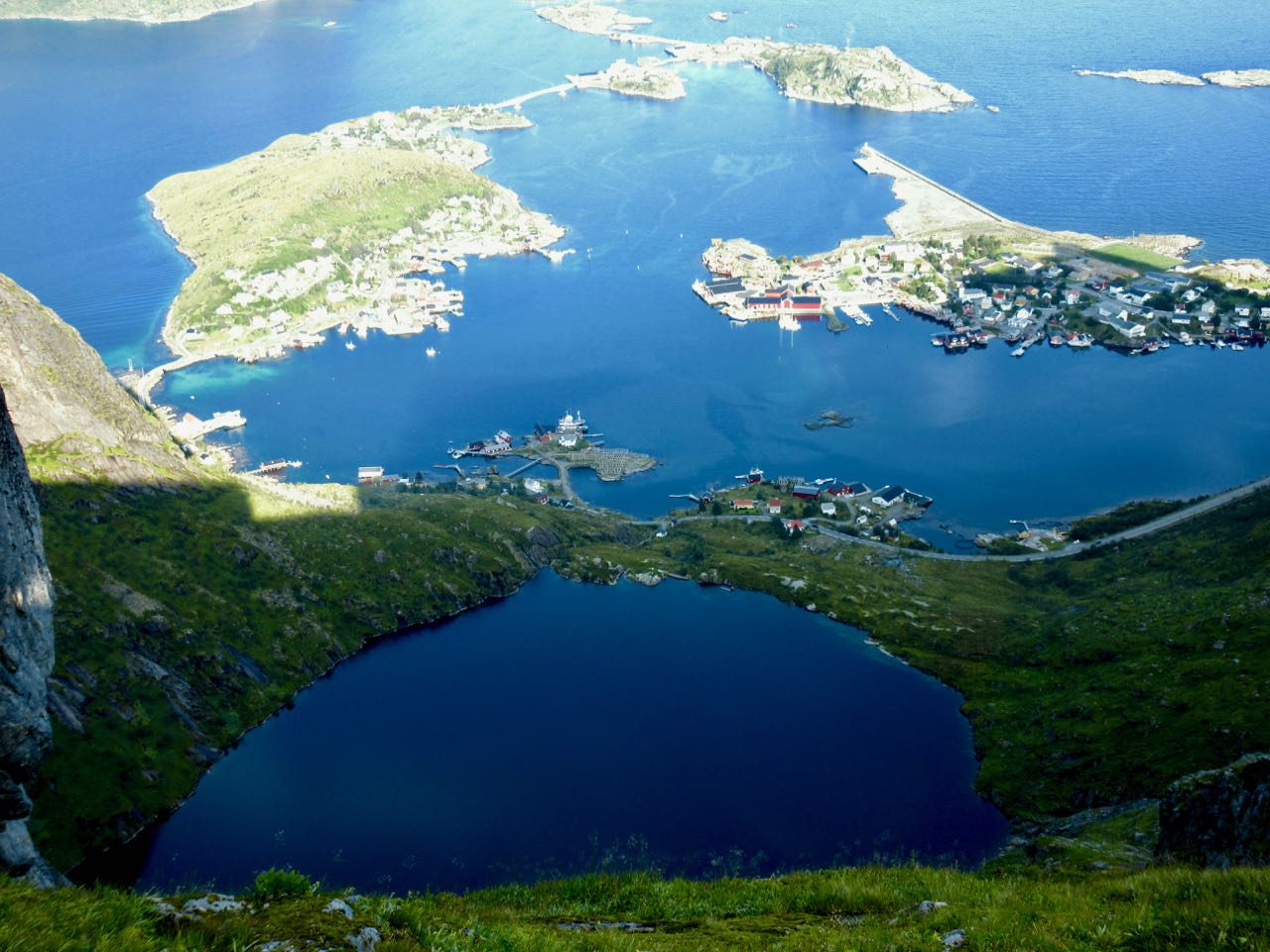
I was super happy to reach the coffin. Gorgeous views.

There’s no real reason to go on.

But everyone up there, including me, went scrambling the cliff edge.

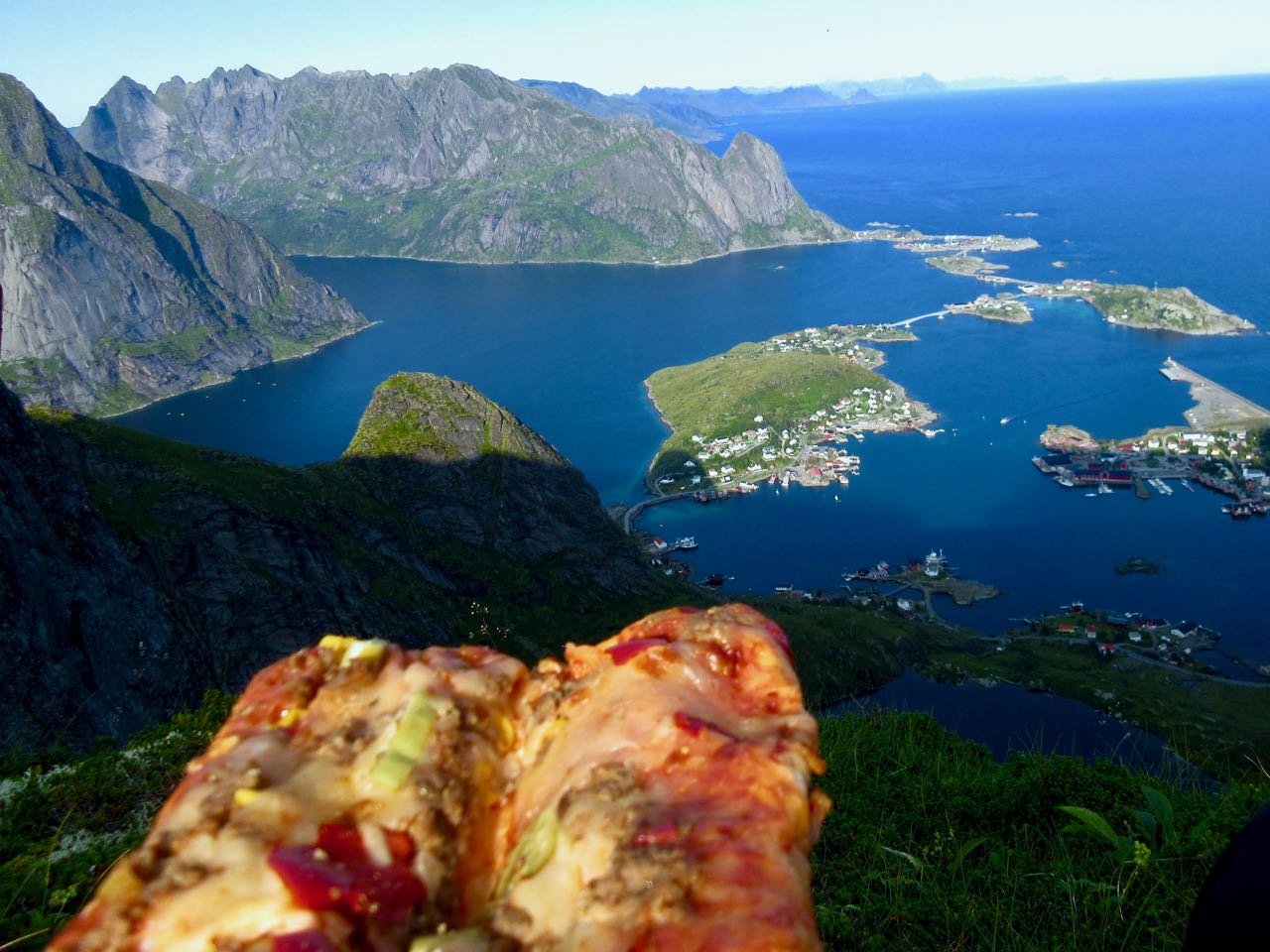
Finally I sat down to enjoy the vista and my Mexican pizza.

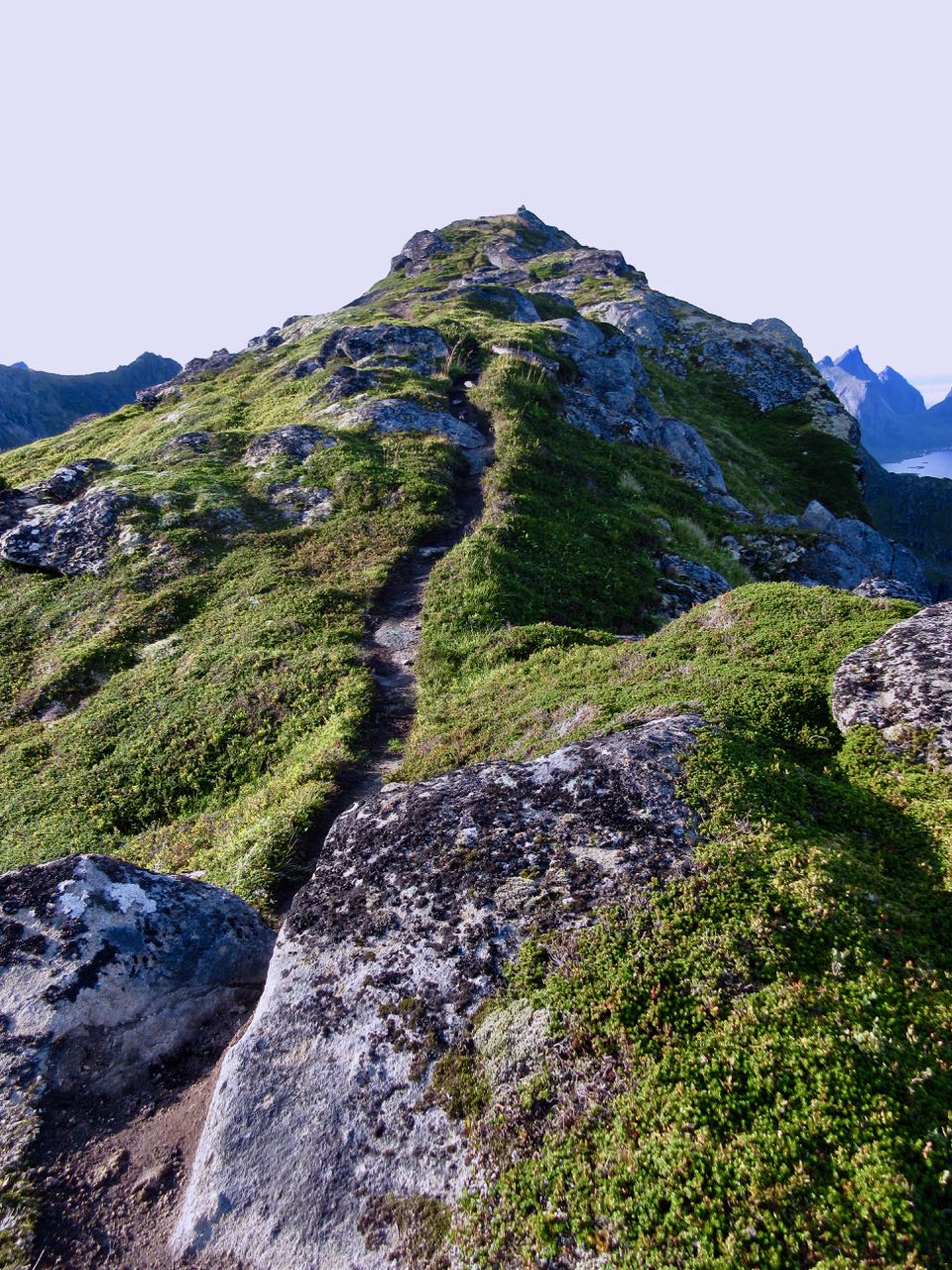
Everyone but me headed up left to this peak. An easy walk-up.

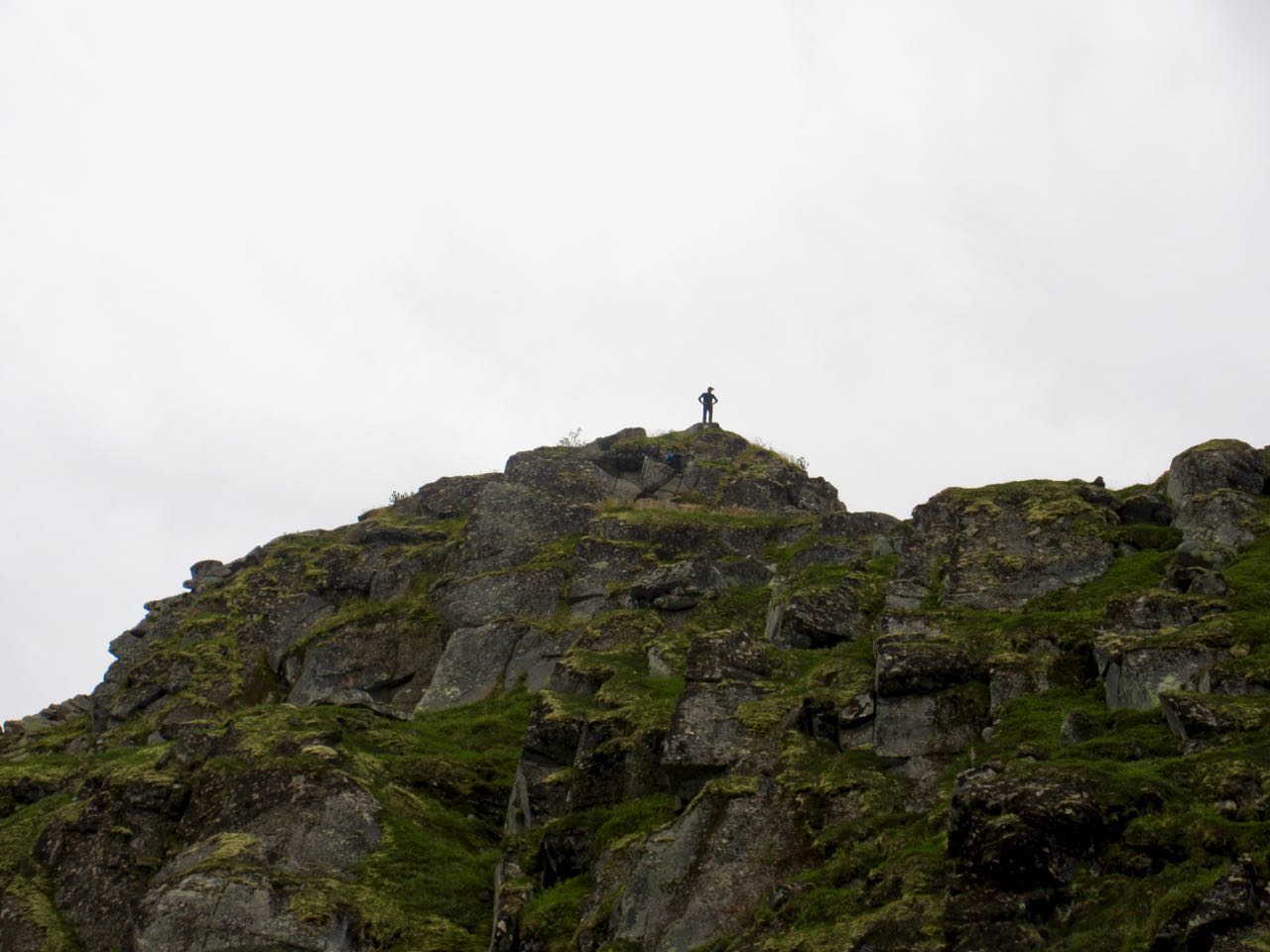
I went instead for the steeper scramble to my right of the coffin.

Though there was some exposure, it was a blast.

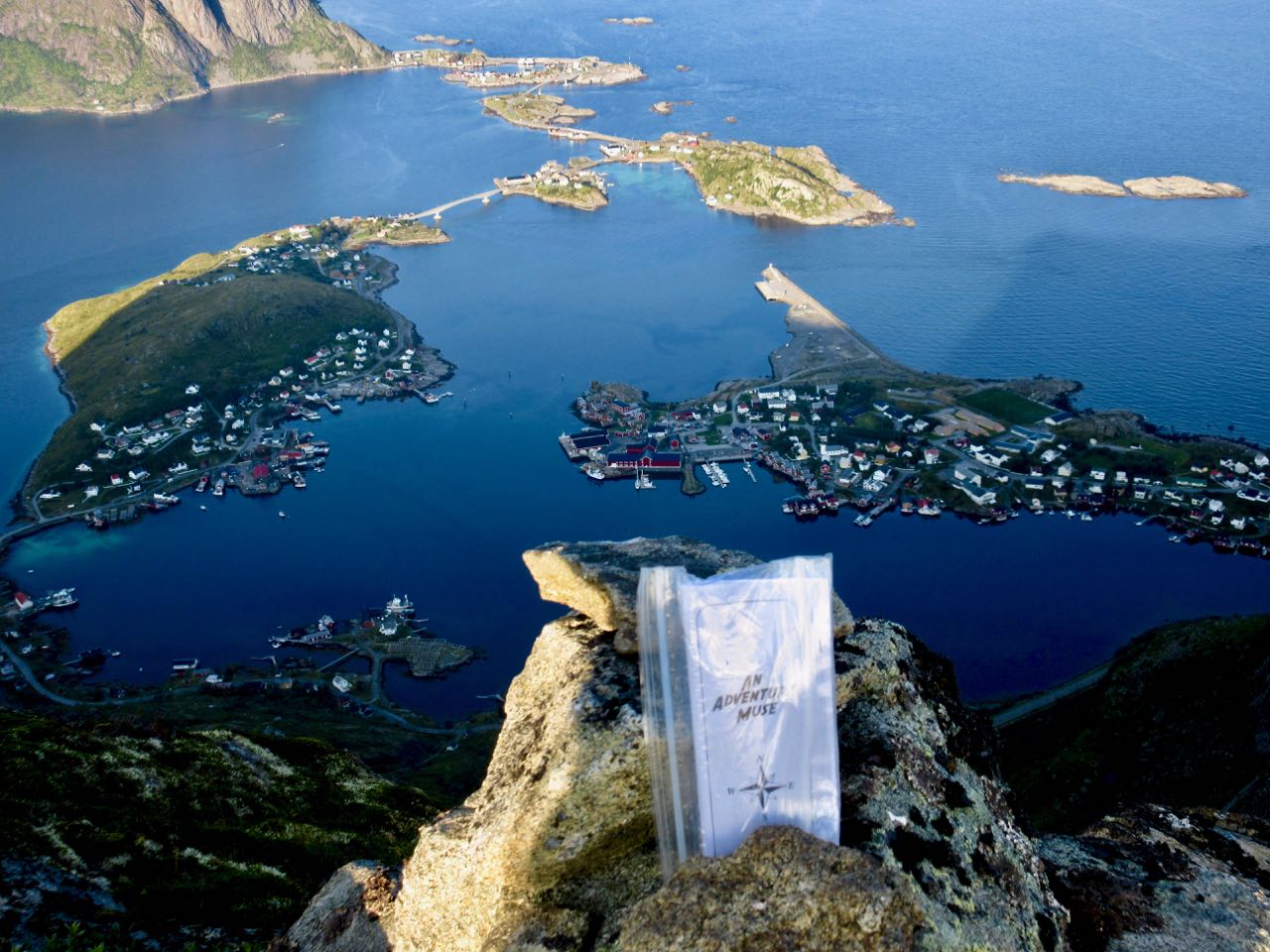
I left a Summit Stone.

A local hiker who had been there before looped down on the closed old Reinebringen trail, avoiding the Nepali construction team.

When I saw them working far below I finally turned back, not wanting to risk rock fall.

What a fantastic hiking day.

This is why I made the long trip to the remote Lofoten Islands.

Norway’s Lofoten Islands – hike Helvetestind (Hell’s peak) & Bunes beach

Trip report by BestHike editor Rick McCharles.

My first hike in stunning Lofoten above the Arctic Circle was a great one — Bunes beach.

The weather atypically gorgeous in Reine.

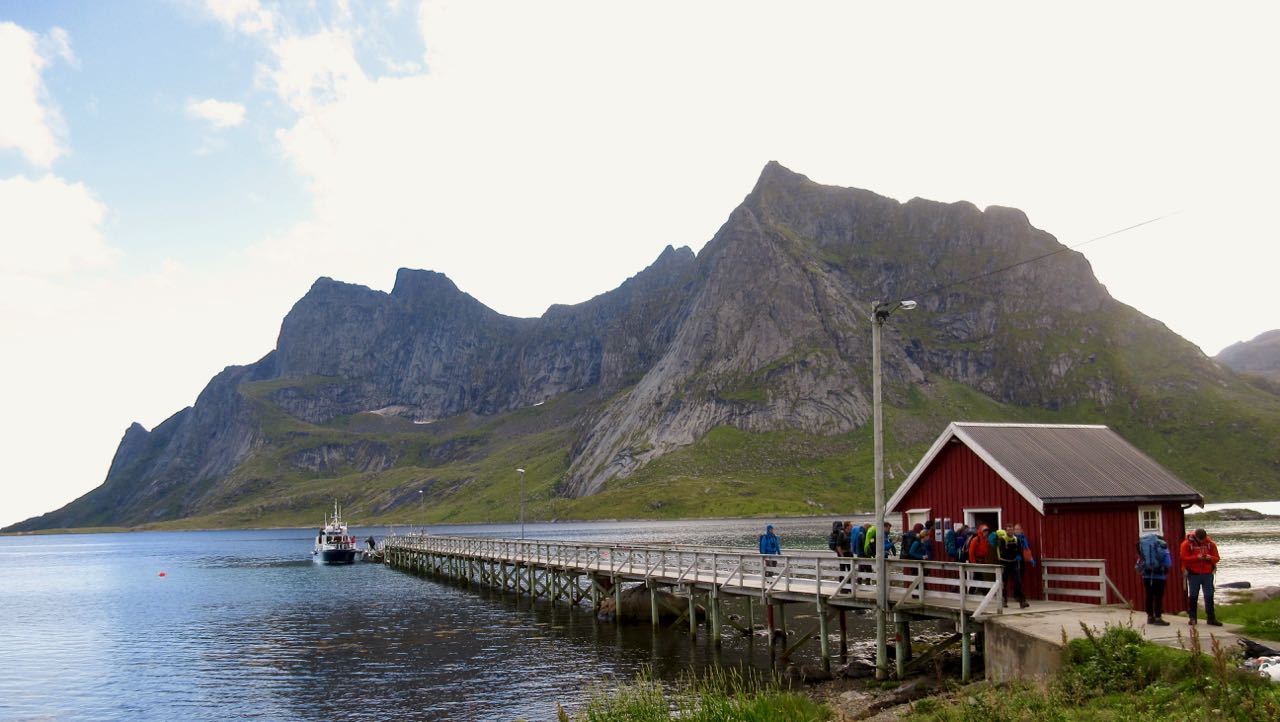
From here you catch a ferry to the end of the Bunesfjorden.

A Norwegian hiker told me he had this beach to himself on a sunny July day 9-years-ago. No more. It’s super popular in 2018. Our boat was packed.

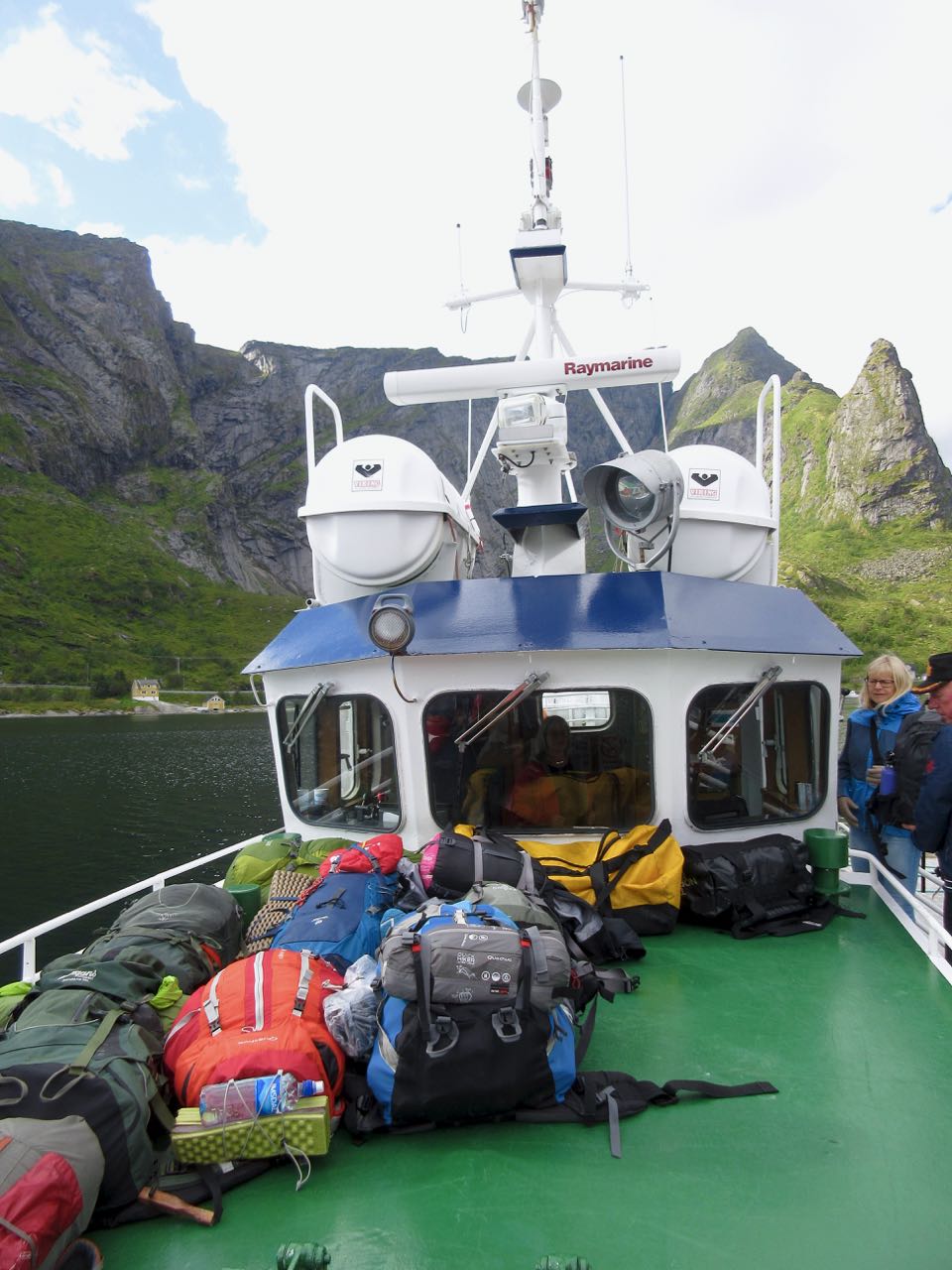
Half the passengers were stuck like sardines in a can below deck. The other half sat up top. Yep … I was front and centre savouring the scenery.

The ferry was at least as good as the hike itself.

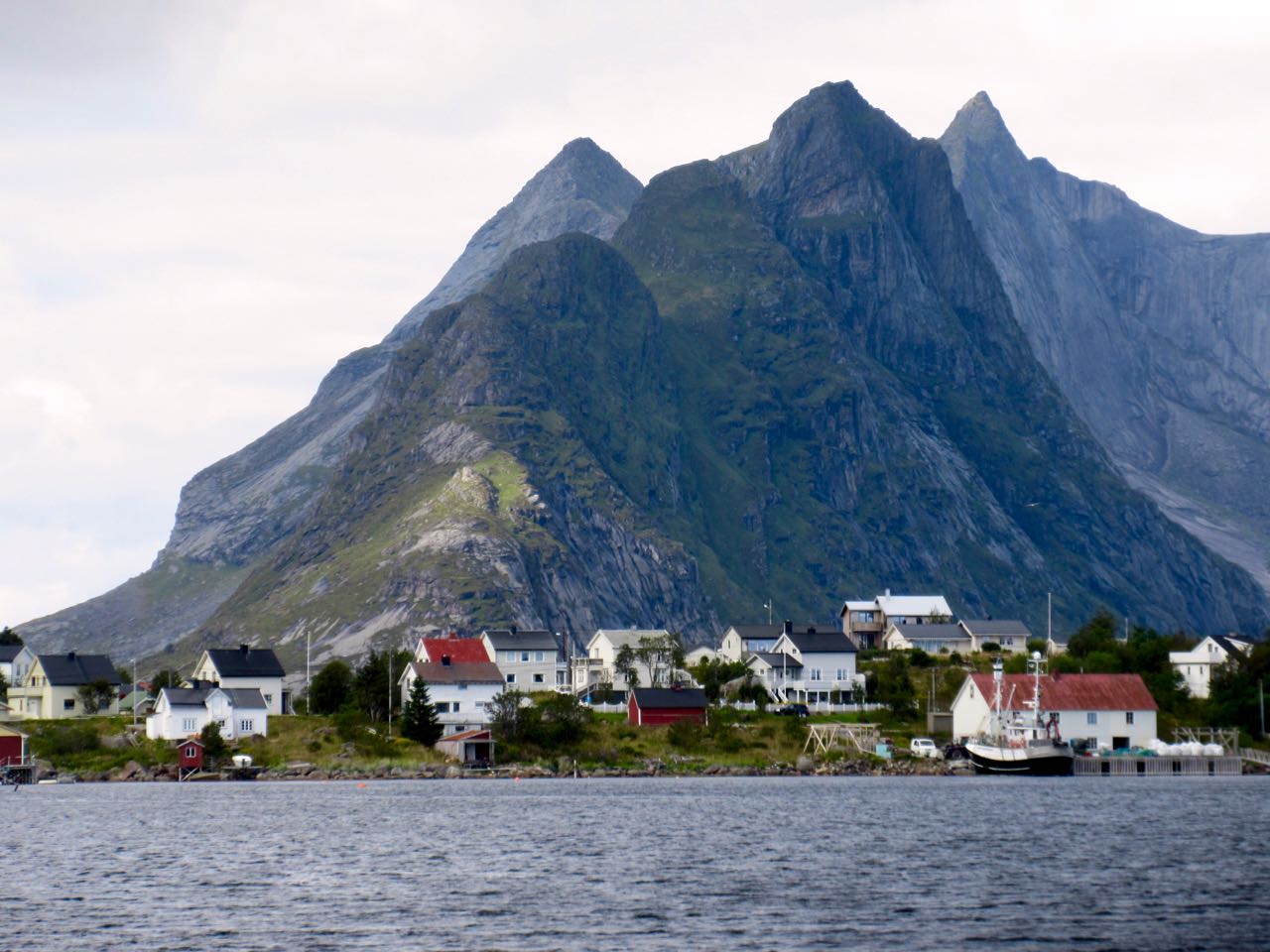
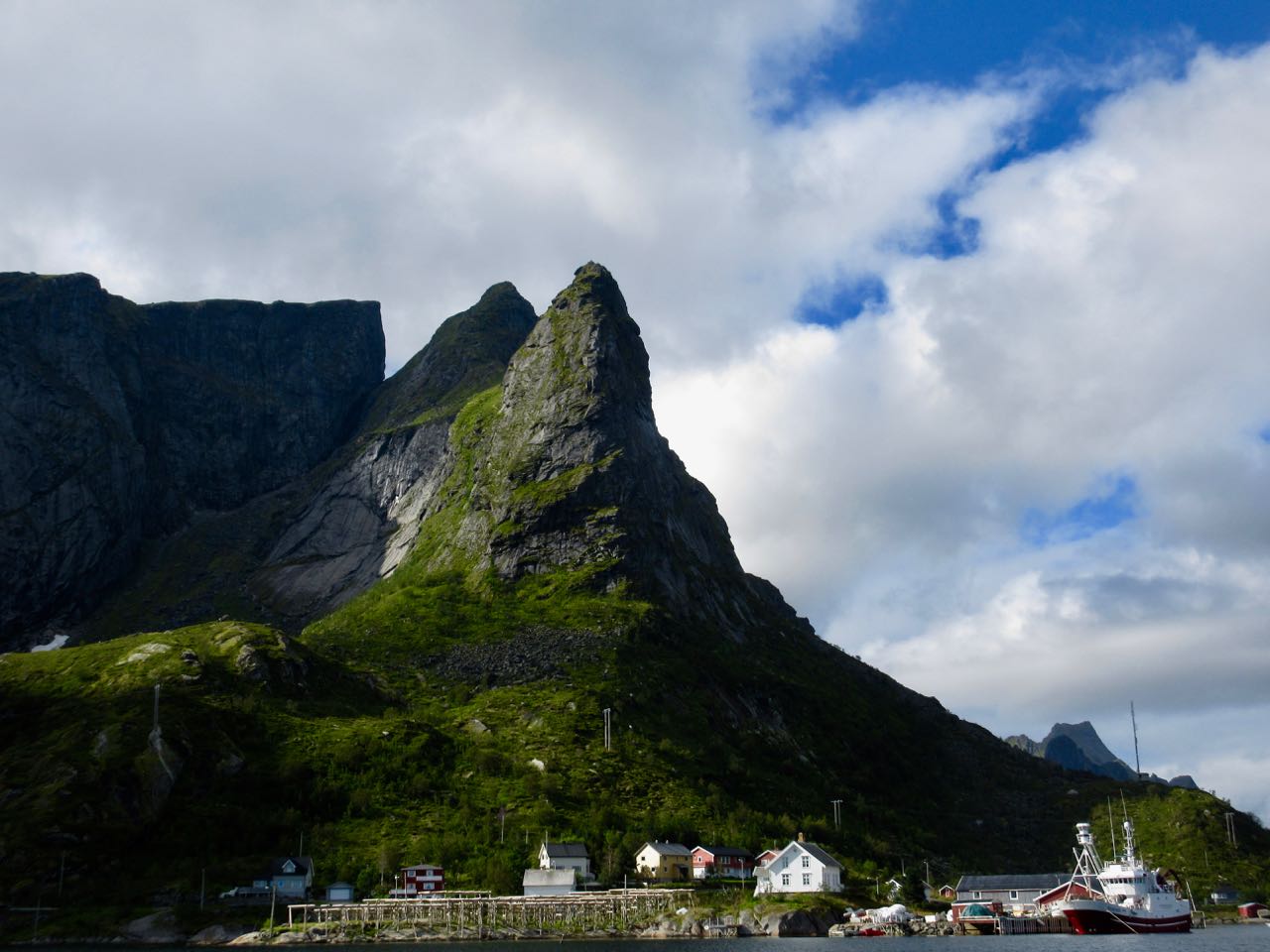
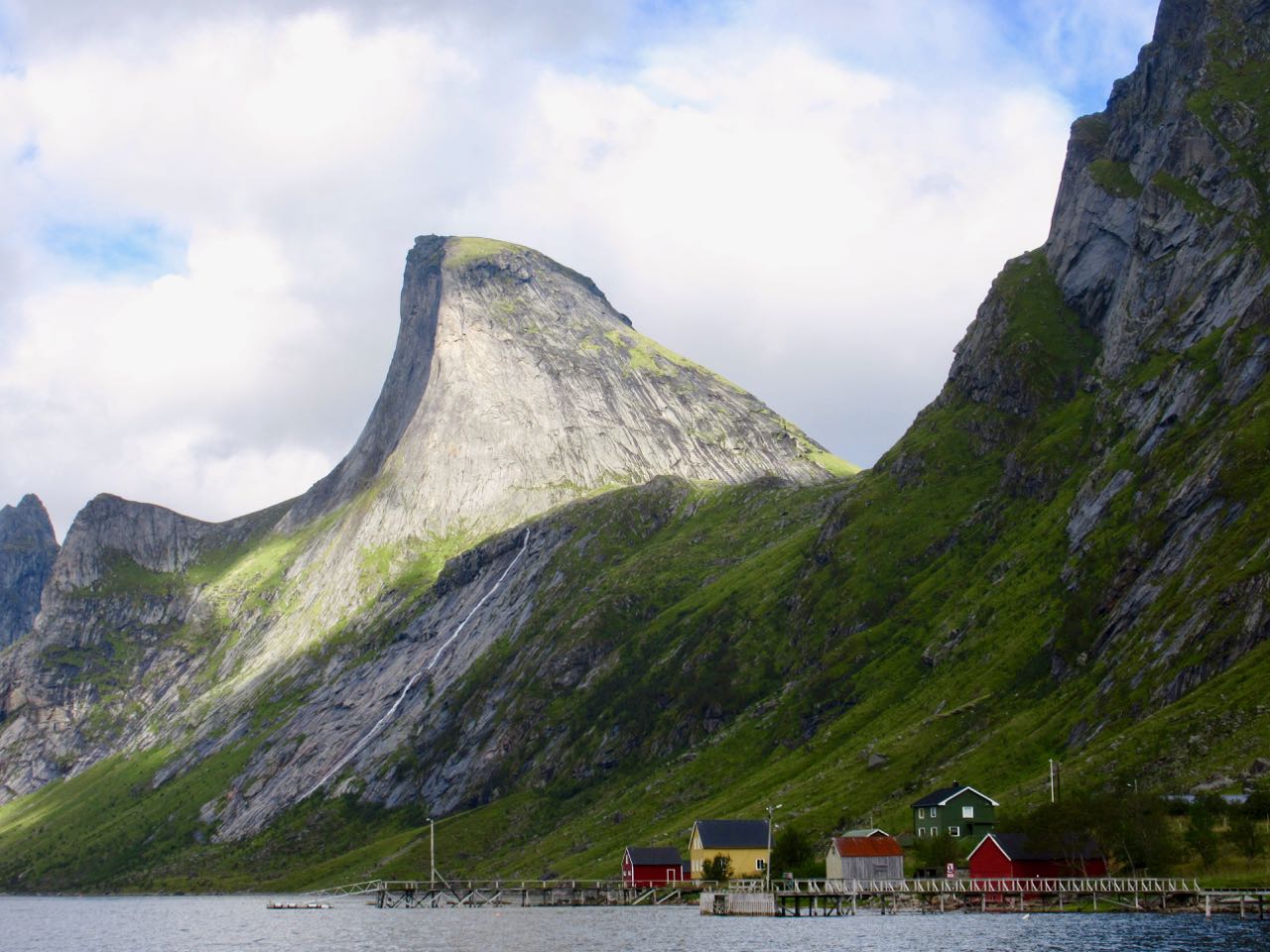
I’ve seen some amazing mountains. Dolomites. Yukon. Patagonia. But I can’t recall seeing so many astonishing peaks anywhere else. They were carved by huge, powerful glaciers.

Of two or three potential trailheads, most hikers alight at Vinstad.

Most dashed straight up the old carriage road to the beach to set up their tents.

I stopped, instead, at the pass for lunch.

Stashed the pack …

… then headed up Hell’s peak.

Actually it was easier than it looks.

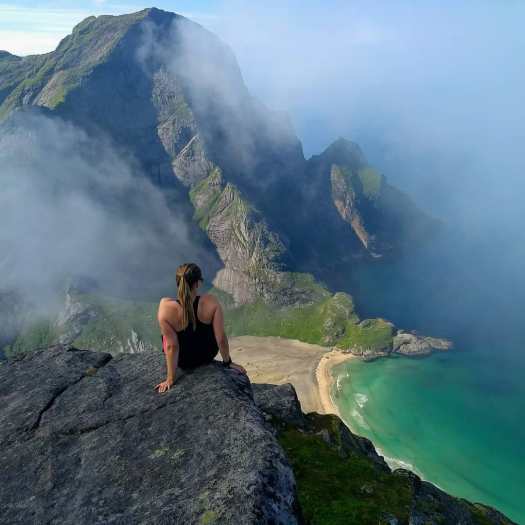
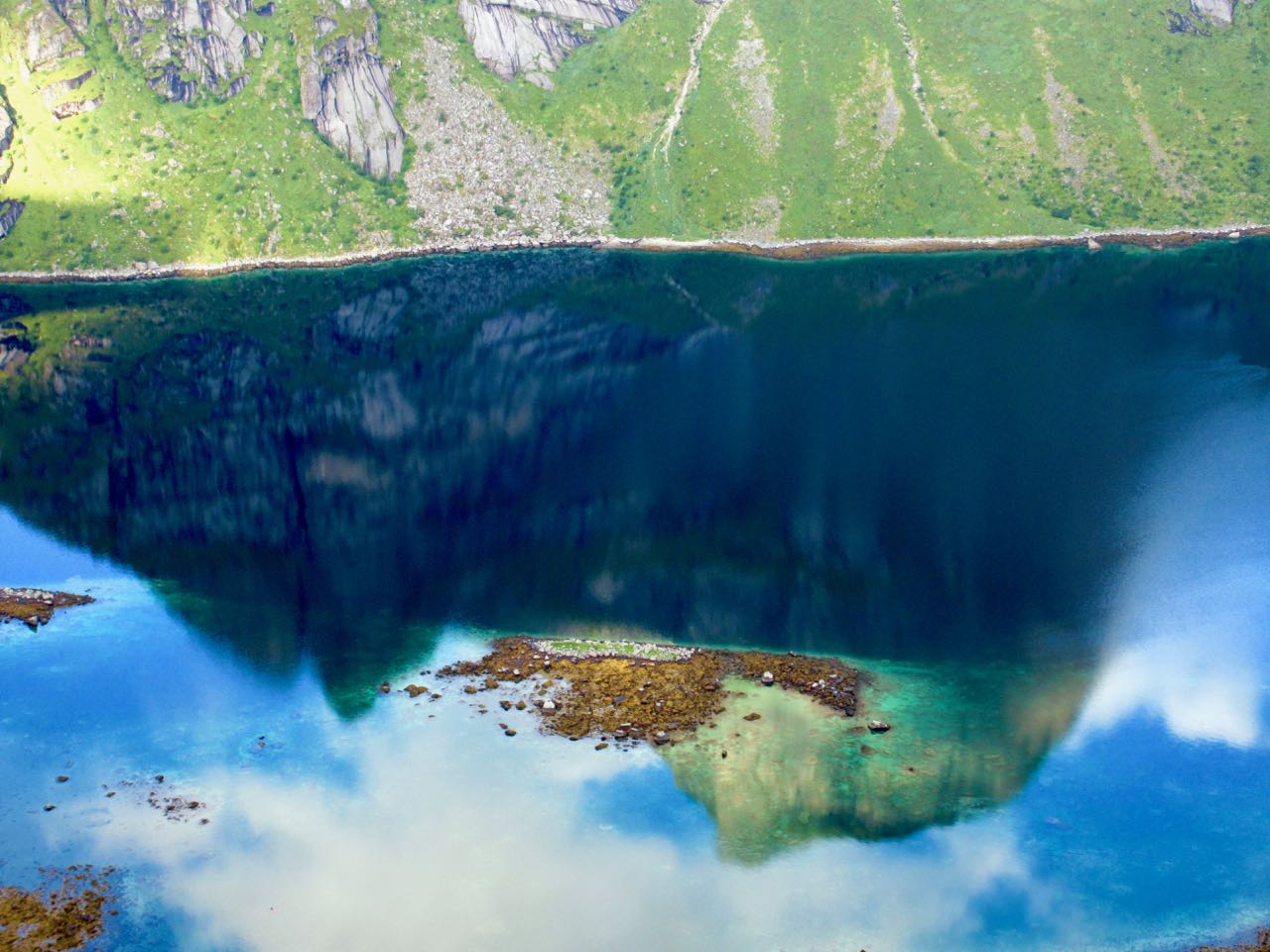
This is Helvetestind (Hell’s peak) 602MASL (metres above sea level). That’s the beach below.

You can see Reine looking back down the fjord.

I took my time coming down.

Lofoten is gorgeous in so many ways.

Bunes beach is huge. I dropped my pack and went exploring while I still had sunlight.

Everyone sets-up under this huge wall.

Next morning I was first up and gone. I sat up on the pass enjoying my coffee in the sun while it was still shady down on the beach.

As a result I got back to Vinstad early.

People live here. I went exploring.

Homes are literally cabled to the ground to keep them from flying away during strong winter storms.

While waiting on the ferry a packraft stopped by. The German adventurer was going to try an off-trail climb for the second day in a row.

Less crowded, everyone got to stay up top on the return.

Reine is beautiful. A good kayaking fjord.

Reine is the best base town on the Lofoten Islands for me. You can do 3-4 great hikes like this from here.

hike Besseggen Ridge, Norway

Trip report by BestHike editor Rick McCharles.

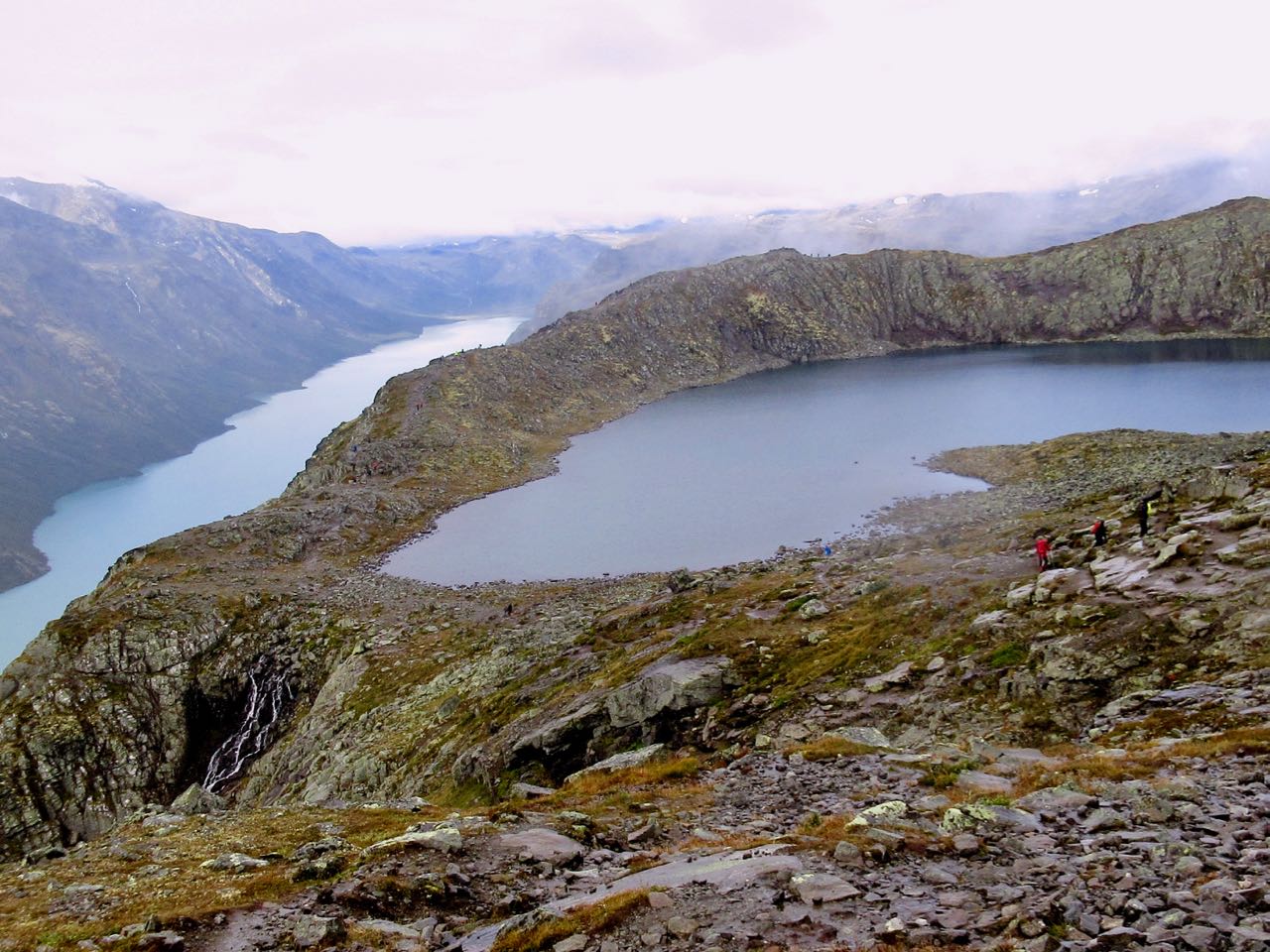
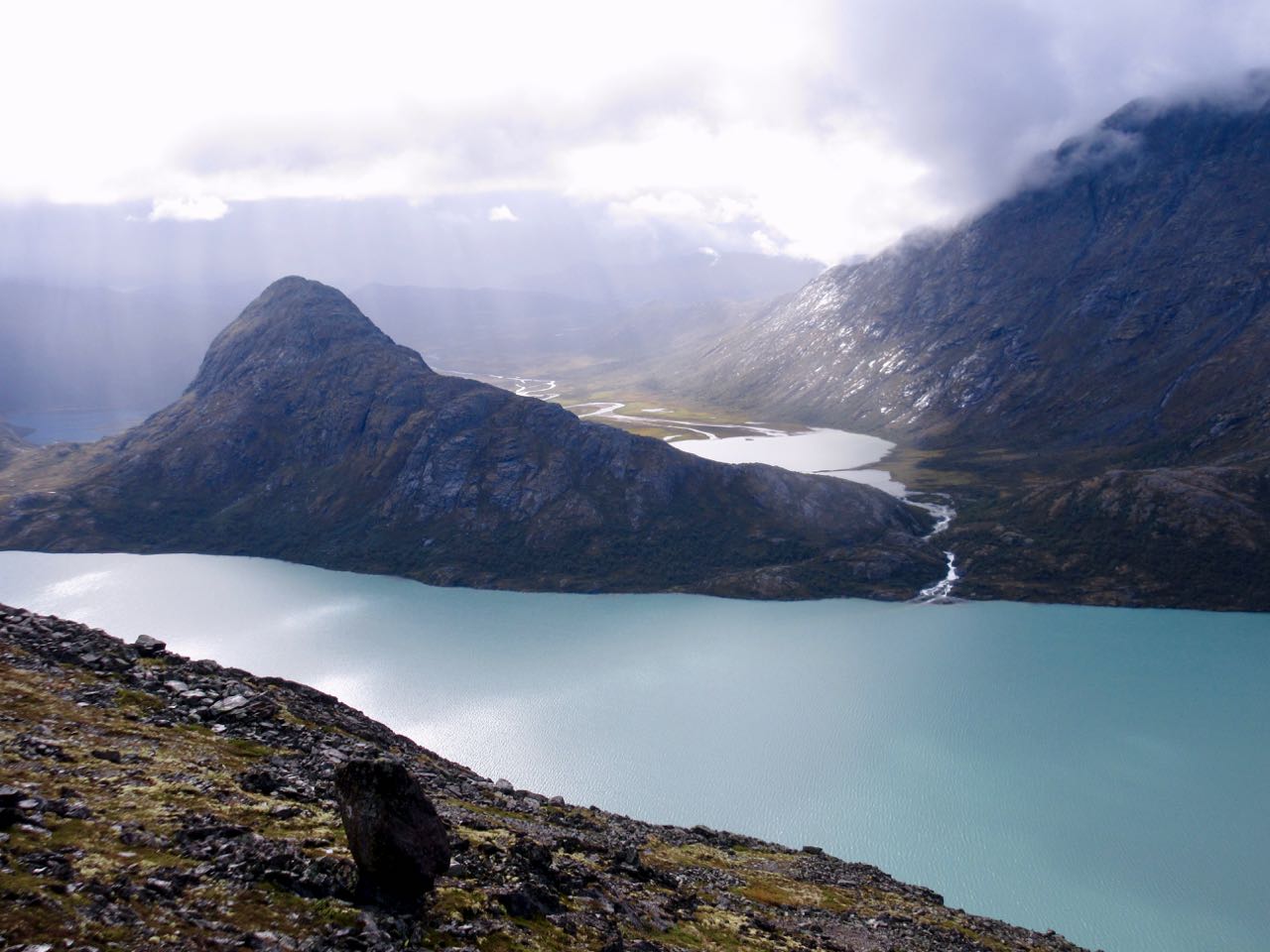
Besseggen, or Besseggi … in Jotunheimen, is a thrilling ridge walk with alpine lakes on either side. You look down on lakes Gjende and Bessvatnet.

  • 13.3km (8.25mi)
  • 6-9 hours
  • 950m elevation gain

Click PLAY or get a quick glimpse of how it goes on YouTube.

Besseggen is a loop with a ferry section.

You walk between Memurubu and Gjendesheim. Both offer lodges and camping. Independent hikers tend to camp outside the official campground area at either. That’s free.

I camped for free.

The vast majority bus in or park at Gjendesheim. Then take the Besseggen Boat. There’s no real reason to book in advance online.

You can hike the other direction but the down climbs are slightly more dangerous that way.

This is Norway’s most exciting National Park: Jotunheimen the “Home of the Giants“.

Camping free at Memurubu.

Besseggen is recommended from the end of June to mid-September. During those months more than 30,000 hikers make the adventure. You won’t be lonely in high season.

Many bring dogs on leash.

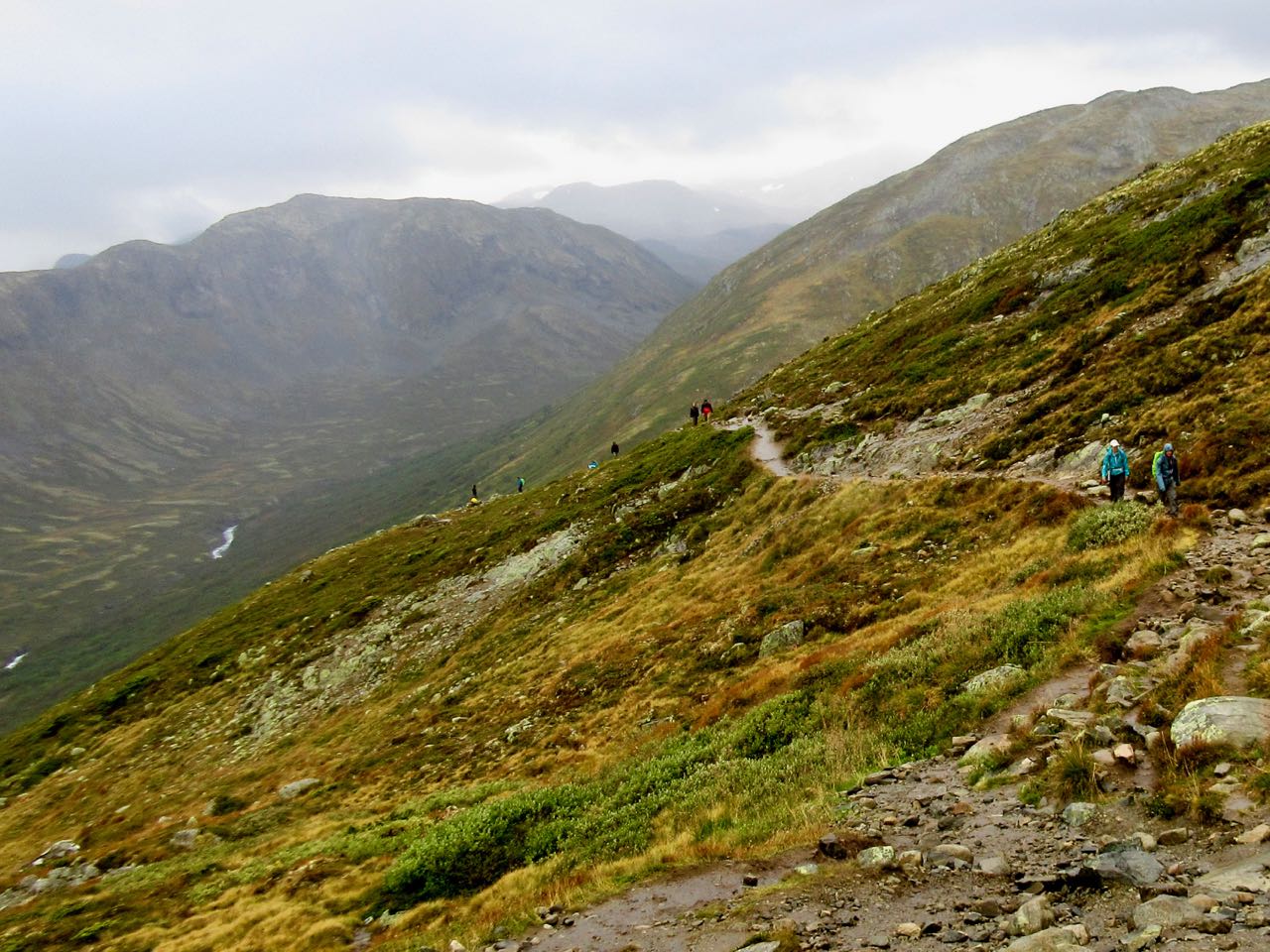
The route is well signed. You won’t get lost.

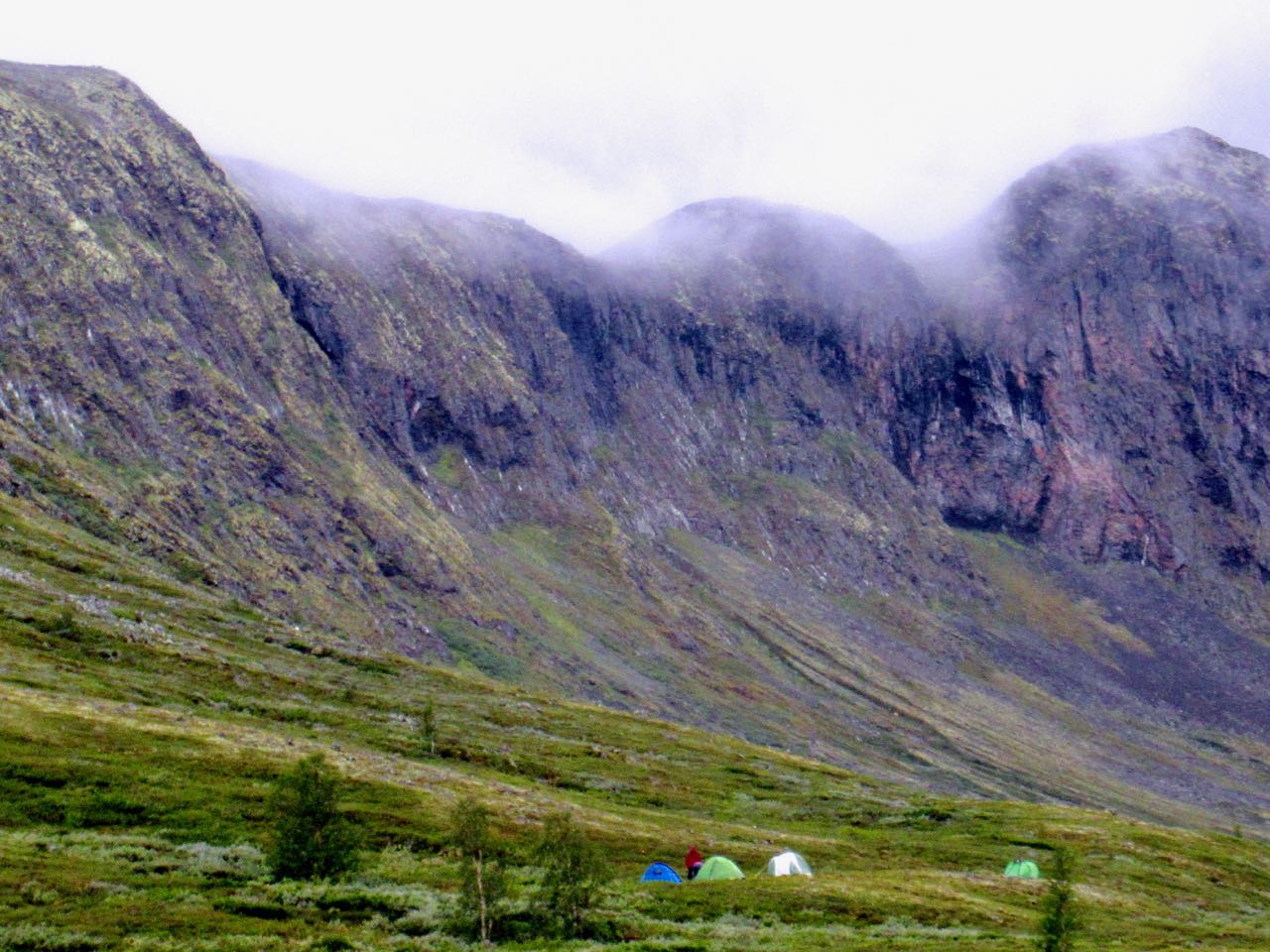
The morning I was there it was foggy on the long slog up.

One you get up on the ridge views are awesome.

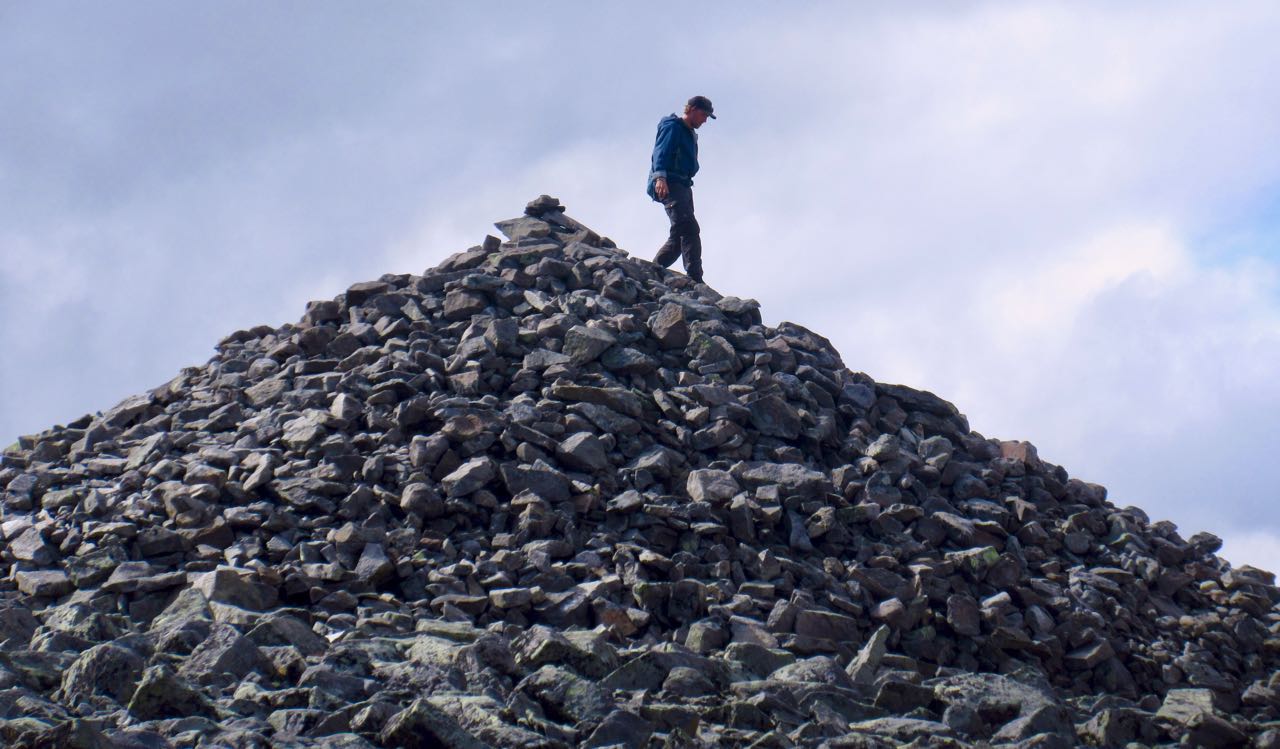
I left a Summit Stone at one of the cairns.

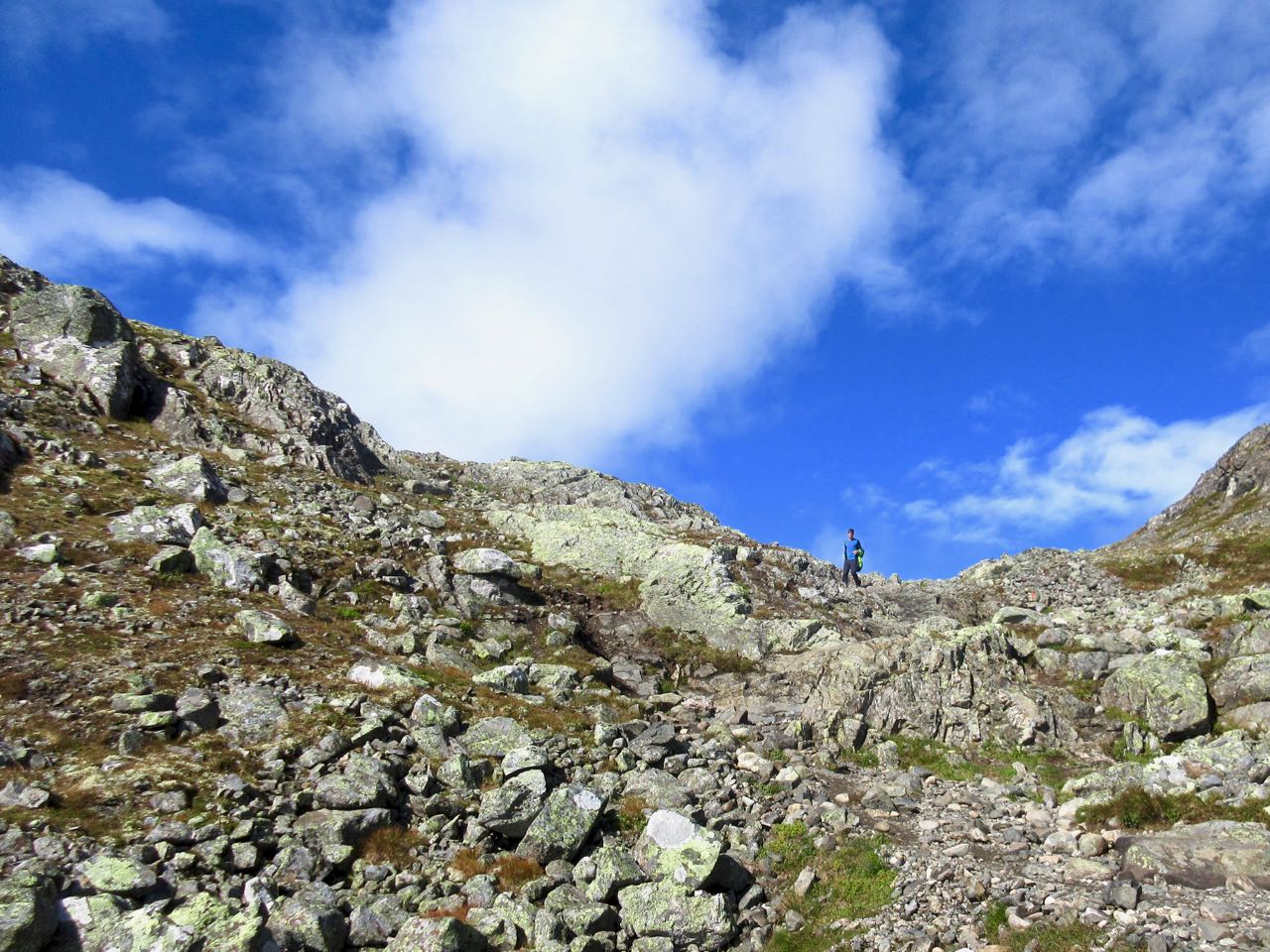
Footing is rocky but offers traction everywhere except steep, wet down climbs. Those are dangerous.

As promised, the weather cleared. I love this kind of bleak beauty.

Looking back at the long lake. It’s turquoise due to rock flour.

The last 4km back to the start are sometimes flat and easy, sometimes challenging scramble. There is a chain assist at one point.

Besseggen is definitely one of the best day hikes in the world. I’ll never forget it.

Click PLAY or watch some SAFETY tips on YouTube.

Finally, Click PLAY or watch on YouTube some highlights of my own hike.

related – Visit Norway – BESSEGGEN RIDGE IN JOTUNHEIMEN