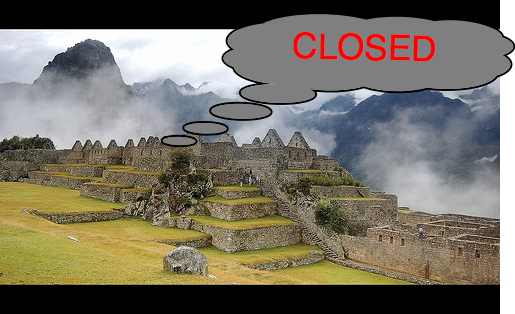
… the Instituto Nacional de Cultura (INC), the agency controlling the Inca Trail, has informed them that no one will be able to operate treks on the Inca Trail to Machu Picchu in March of this year due to the recent flooding.
INC will refund all permits purchased for trekking the Inca Trail in March. …
Peter Potterfield was searching for the best hike in Montana:
The state is so rich in extraordinary wilderness that it’s actually hard to choose: Glacier or Yellowstone? The Bitterroots? The Bob Marshall Wilderness? One can hardly go wrong, but I was determined to find something special. For expert input, I asked fellow writer Mike Harrelson, a gung-ho climber and skier based in Bozeman, to help me decide. He was up for the challenge and after a few weeks of research called me with the verdict.
“We’re going to do a traverse of the Beartooths,” he said, “right down to the northern boundary of Yellowstone.
Potterfield’s trip report sounds great: “outrageous wildflower gardens”, a scramble of 11,480ft Mt. Dewey, the Fossil Lake plateau, fly-fishing for Cutthroat trout”, …
Bozeman is the gateway to Yellowstone country, but for the Beartooths, Billings is a viable option for staging. The drive to East Rosebud Lake will take approximately three hours from either city. For information on conditions and regulations in the Absaroka Beartooth Wilderness, contact the Ranger District in Big Timber, Montana, 406-932-5155. or the Custer National Forest, 406-657-6200.
For a one way hike, you’ll need to stash one car at the Clarks Fork Trailhead near Cooke City before driving to the trailhead at East Rosebud Lake, or arrange a pick up. At the end of the hike, when you walk out of the Beartooths out to the trailhead on Highway 212, lodging options await a few miles to the west in Cooke City.
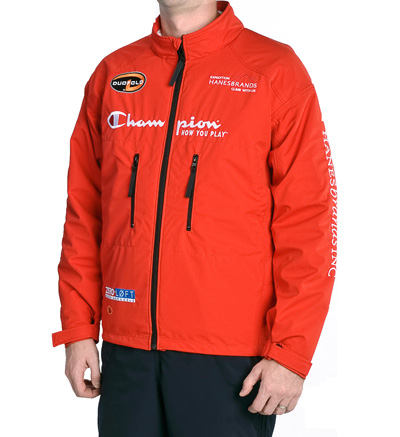
Would you wear this jacket to summit the world’s highest peak?
That’s what climber Jamie Clarke from my town, Calgary, Canada plans to do this Spring. He’s working with Champion Athletic Wear on a new technology that has “the potential to change the entire outdoor apparel industry.”
A big boast.
Jamie has tested the apparel and outerwear on Mount Pumori in Nepal.
This spring, Expedition Hanesbrands heads to Mount Everest. With good weather, hard climbing — and nanotechnology on their backs — Clarke and his crew are counting on the Supersuit to help them make it to the top.
It’s super-insulating Zero-Loft Aerogel, more than 99 percent air, according to the company. The claim by Champion is that it’s four times as warm as goose down.
Details on Jamie’s Everest ascent is posted on ClimbeEverestWithUs – The Team
Tourism Newfoundland and Labrador launched another ad in its already very successful ad campaign. This latest ad features Torngat Mountains National Park in northern Nunatsiavut. …
… The park, 9,700 sq.km, is probably one of the most difficult parks in Canada to reach. Even the parks in Nunavut are easier to get to. It’s not only the remoteness, but especially the weather and ferocious winds that make getting here an adventure in itself.
If the weather is good, then the park is about 1 hours’ flying or up to two days by fishing boat north of Nain, Labrador’s northernmost community. There are no scheduled flights or boats to the park, and once you arrive, there are no facilities.
Safety is a real concern, as polar bears roam throughout the park. Since only Inuit are allowed to carry arms, visitors should always be accompanied by an Inuit guide. A good idea in any case, as the area is also infamous for its quickly changing weather and strong “ghost” winds that can appear out of nowhere. …
One of the great hikes of the world is a well kept secret. So says the trekking guidebook author Peter Potterfield:
… I wouldn’t go so far as to say a veil of secrecy protects these mountains, but it’s clear those who know the range best tend to keep their secrets close. Unlike mountains such as the Tetons, where topography and heavy visitation make them more of an open book, this compact range of steep mountains, twisting valleys, and hidden alpine basins lends itself to exploration and discovery. The fact is, finding the most interesting corners of the range can take persistence, and time.
“I call it ‘quiet pioneering’,” said Kirk Bachman, the founder and long time owner of Sawtooth Mountain Guides. “There truly is a unique ethos here in the Sawtooths. You could describe it as a certain reticence, or reserve, on the part of the climbers and backpackers who come here. They are quiet about where they’ve been. There’s a reluctance to share with the world their favorite places because here, the way to learn about these mountains is to go see for yourself.” …
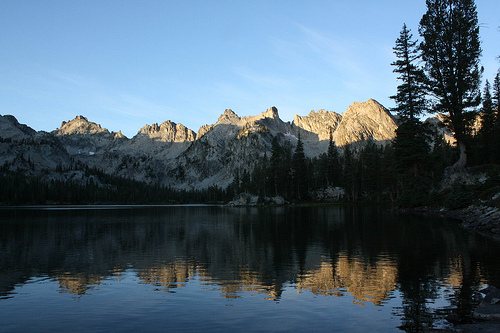
read Peter’s trip report on Great Outdoors – Sawtooth Traverse – A trek across the mountains of Idaho’s Sawtooth Wilderness
Unfortunately, Twain and ex-husband Mutt Lang separated shortly after. But it seems they are committed to the hiking trail. In fact, Mutt has purchased more land.
Yet another reason to return to New Zealand for hiking. I’m thinking … 2011.
UPDATE: Maple Kiwi of Love in a Tent heard rumours the couple were not all that happy about the Track. They are famously private people. … But that it was a condition of them purchasing the land.
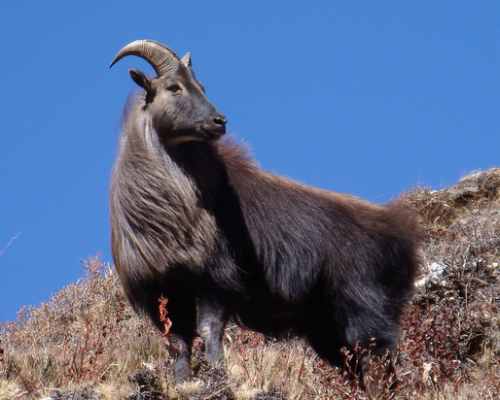
I was disappointed not to see this beautiful animal in Nepal on my recent Everest trek.
The Himalayan Tahr (Hemitragus jemlahicus) (or Himalayan Thar) is a large ungulate related to the wild goat. Its native habitat is in the rugged wooded hills and mountain slopes of the Himalaya from Central Asia in northern Kashmir to China. …
… Adult Himalayan Tahrs range from 135 to 180 kg (300 to 400 lb) in weight, 120 to 170 cm in length, and 60 to 90 cm in height. They are herbivores, subsisting on grass, shrubs, and trees. …
Feral Himalayan Tahr are an introduced species in the South Island of New Zealand, with herds forming in the Southern Alps. In large numbers tahr are regarded as a pest because their browsing has an impact on native vegetation. Tahr hunting is a recreational sport and commercial activity. It has also been introduced to New Mexico, California, South Africa, and Ontario.
• The Walker’s Haute Route
• Chamonix-Zermatt Haute Route
• “High Route”
• Mt Blanc to the Matterhorn
• Chamonix to Zermatt
It’s official. The Haute Route in the Alps replaces the Tour de Mont Blanc at the #9 position in our list of the top 10 hikes in the world. The TMB is awesome, … but too crowded.
Long live the Haute Route!
“the greatest collection of 4000m peaks in the alps!”
Why we love it:
the best hike in Europe!
Alpine charm: valleys, lakes, glaciers
great food, history, culture
from Mont Blanc, the highest peak in Europe (4810m, 15,781ft)
… to the Matterhorn, the most beautiful peak in the alps
staying in huts, and eating your meals there, you can hike with a very light pack
see ibex and chamois in the wild
finishes with the 2-day Europaweg – a true high-level path opened in recent years (and sometimes closed due to avalanche)
some mountaineers use this trek for altitude acclimatization, climbing Mt. Blanc, the Matterhorn or, best, Weisshorn, after they finish
Considerations:
Rain is highly likely. It can even snow on high passes any day of the year.
mid-July through August accommodation may be full
mountain huts can be crowded & noisy (we prefer tenting, to be truthful)
in 2009 cost was around $70 for bed, bedding, breakfast and an evening meal
iron ladders bolted into the mountain en route, though there is a way to bypass them
cable-cars and chair-lifts are cheating, but you certainly may want to use them to shorten some hiking days
German is the main language of the Haute Route though French is useful too. Anglophones may struggle.
High on my list of future hiking destinations is the Indian Himalaya.
Good news on Gadling:
Adventure travelers were given even more incentive to travel to India recently when it was announced that the government would begin allowing access to previously restricted areas in the remote Jammu and Kashmir provinces. …
Backpackers will find plenty to love in this remote and stunningly beautiful region as well. High altitude passes and trails that have previously been off limits are now open to foreign travelers, including a route that leads to the village of Turtuk in the Nubra Valley. …
The author’s favourite trek is Markha Valley in Ladakh. I’d like to do some of the recently opened region on the same trip.
If interested, be sure you get the most recent edition. It’s great to see Lonely Planet updating their excellent trekking guidebooks.
I may even buy, for the first time, the PDF version. You can “Pick & Mix“, buying only the chapters you need. I’d put those on my iTouch for the trek rather than carrying paper.
The PDF version has free samples including the Table of Treks (PDF).
Now … when will independent hiking be allowed in Bhutan?
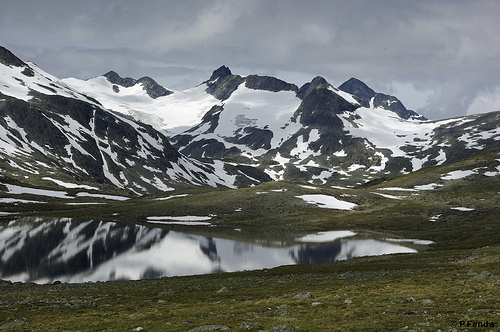
Jotunheimen (English: The Home of the Giants) is a mountainous area of roughly 3,500 km² in Southern Norway. Jotunheimen is a part of the long Scandinavian Mountains range. The 29 highest mountains in Norway are in Jotunheimen, including the very highest – Galdhøpiggen (2469 m). …
The Jotunheimen area contains the Jotunheimen National Park, ….
Jotunheimen is very popular among hikers and climbers, and the Norwegian Mountain Touring Association maintains a number mountain lodges in the area, as well as marked trails between the lodges and to some of the peaks. …
Hikers normally stay in cabins. Some of the popular trails out of Bessheim:
traildatabase.org - click for larger version
What about nearby Rondane?
Rondane National Park
… Rondane is a typical high mountain area, with large plateaus and a total of ten peaks above 2,000 m (6,560 ft). The highest point is Rondeslottet (“The Rondane Castle”) at an altitude of 2,178 m (7,146 ft). The lowest point is just below the tree line, which is approximately 1,000 to 1,100 m (about 3,300 to 3,600 ft) above sea level. The climate is mild but relatively arid.
Apart from the White Birch trees of the lower areas, the soil and rocks are covered by heather and lichen, since they lack nutrients. The largest mountains are almost entirely barren; above 1,500 m (5,000 ft) nothing but the hardiest lichens grow on the bare stones. …
It would be convenient to hike both these National Parks on one trip.