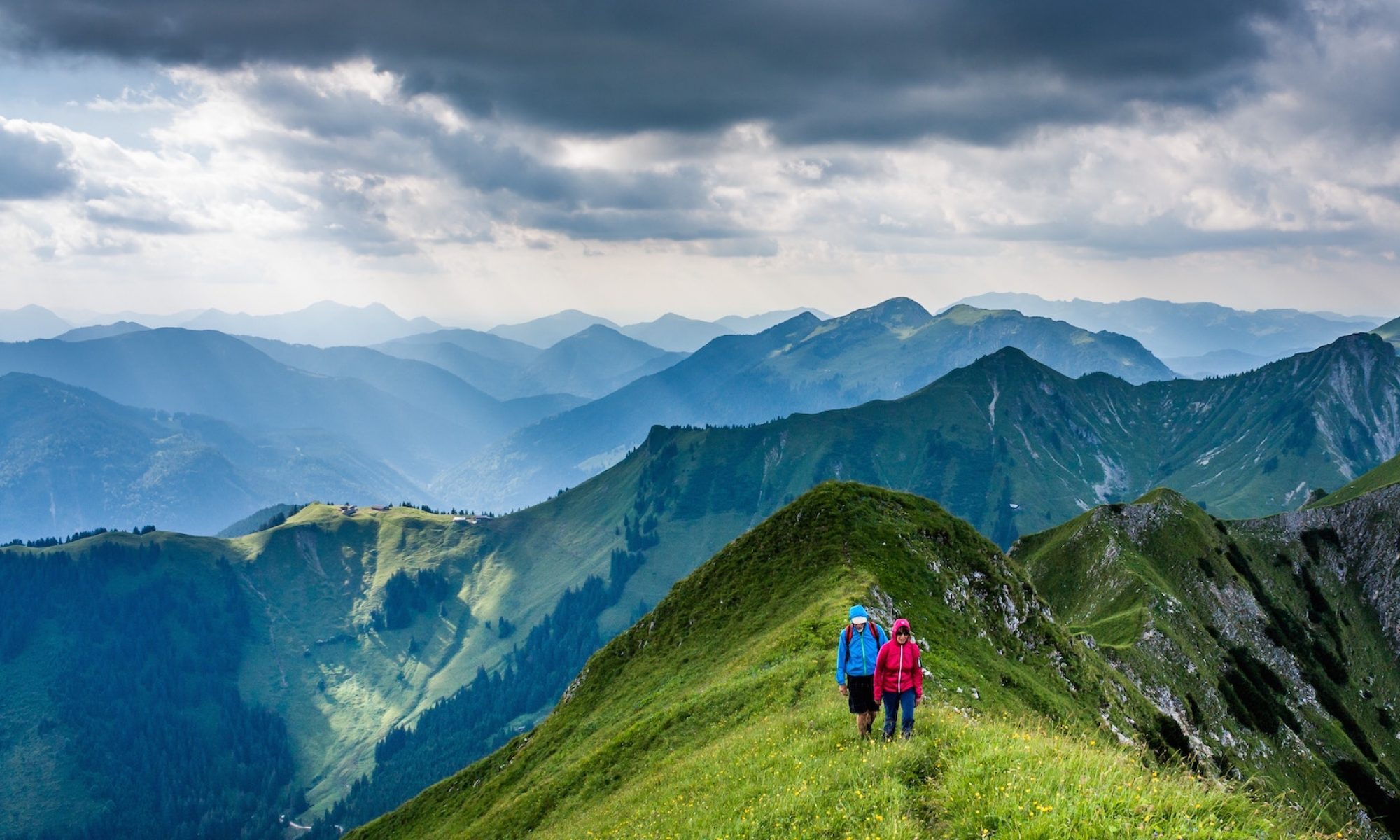

Will be offline Nov. 11-28 trekking the Everest region of Nepal.
dental tourism for hikers
“dental tourism for hikers”
… I doubt anyone has ever strung those 4 words together.
In Nepal for trekking, I had a crown come loose.
Google results for “dentist Kathmandu tourist” were not all that helpful.
Still, I contacted 3 dentists by email looking for an appointment in the following two days.
Dental Spa gave me the most specific response, including expected prices. (US$20 if it was a simple recementing.) I like their website best, too. It had testimonials from other tourists and looked very good based on the photos.
In fact, they have a Dental Tourism page.

Dental Spa fit me in immediately. I had the crown attached and some additional cosmetic work fixing two chips.
That got me thinking, … hikers looking for an excuse to come to Nepal should schedule dental work months in advance. IF you can save on overpriced dentists in your own country, it will help subsidize your adventure in the world’s highest peaks.
Here’s my testimonial:
In Nepal for trekking I needed some dental work done fast. I was very happy with Dental Spa and the work they did on my teeth, short notice. There was no language barrier. The dentist speaks excellent English. I would recommend this office to any and all visiting the Himalayan kingdom.
Rick McCharles, Canada, editor BestHike.com
my new Mammut sleeping bag
It looks somewhat like this one, the Ajungilak Sphere Spring. US$445 on the Marmot website.

My cost … US$76.
I bought it at the best department store in Kathmandu, BhatBhateni Super Store.
When I asked the clerk if it was “made in Nepal“, not in Romania as it claimed on the label, he vigorously denied it was a fake.
Certainly it looks real … though some of the labels are missing. … I’m fairly sure it’s a knock-off. North Farce we formerly called items like this.
I’ll test it on my upcoming trek.
goofy ExPed Wallcreeper sleeping thing
UPDATE: In the end I decided not to buy it. Too heavy. Too bulky when worn as a coat. … I’d really like something half as heavy, half as warm.
=== Original post:
Who would buy one of these things?

… I think I’m just about to.
I am looking at one right now. US$190.
I’ll use it as an extra layer with my fearfully thin and worn down bag.
Three Passes of Everest
by site editor Rick McCharles
I’ll try for the most difficult of the “established” treks in the Everest region.
To the seekers of adventure and authenticicity, this is an ultimate trek, that will take you throught the famous three passes of Everest , namely the Renjo La pass, the Cho La pass and the Kongma La pass. It is a trek with unparalled alpine beauty and without doubt the grandest mountain scenery on the world.The highlights of the trek include the Sherpa village of Khumjung, the pristine Gokyo lake, the breathtaking scenery fron the all these passes and the vist to Everest base camp. Unlike other treks in Everest region , this trek makes a loop , hence no tracing back of the route. The good thing about this trek is despite having to cross three passes , you do not require any technical climbing and any person with good fitness and previous trekking experience can complete the trek successfully. …
details of a guided trek
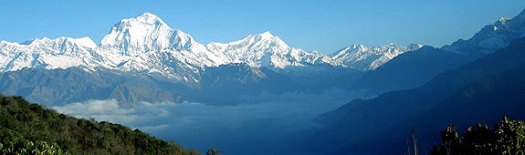
I’ll be hiking independently, looking for other independents to hike with en route.
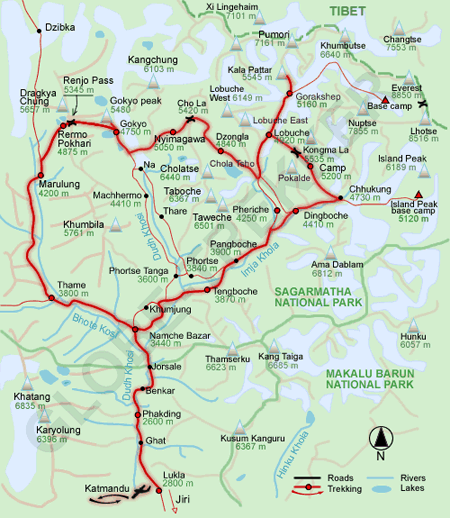
Tea houses are available everywhere, aside from long sections over the 3 passes.
Very few internet cafes are available up that high.
Iao Valley Crucifix hike, Maui
I did an overgrown and little known hike on Maui. It’s one of the ways to get high up the steep walls of the Iao Valley.
The goal is this crucifix erected and maintained by High School students.
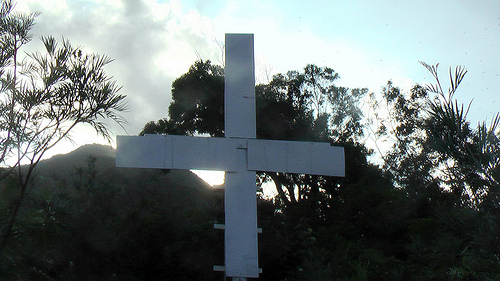
This trip report I put up merely to document how to get to the cross as there are no other reports online.
Ask locals in Wailuku town to tell you the correct telephone pole marking the start of the trail to the Cross.
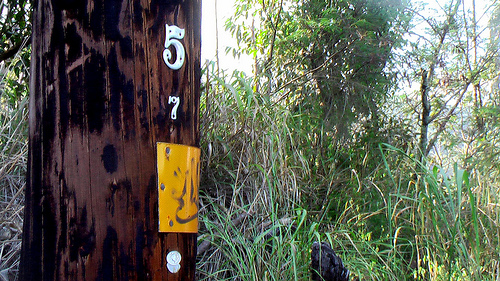
IF you find the right pole, the ascent is pretty straightforward.

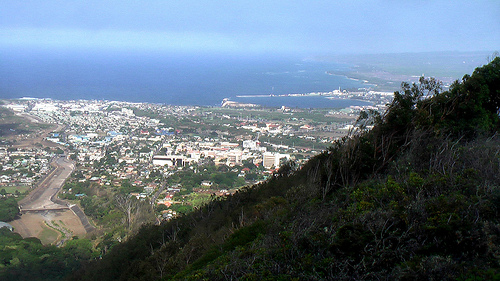
The highlight, for me, were views back towards town.
What I had hoped to like better were the vistas down into the wonderful Iao Valley.
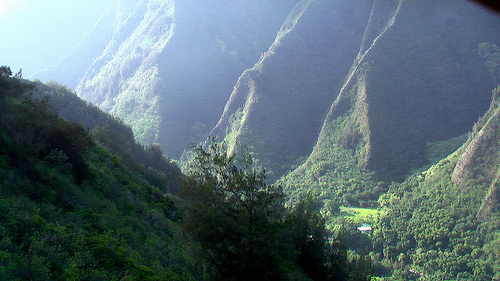
Unfortunately I never really got high enough for the best valley vista. The trail above the Crucifix quickly disintegrates. Long pants are recommended for this walk.
I’m not even sure hikers are officially allowed to hike here in the West Maui Forest Reserve.
It’s not one of the best hikes on Maui.
where to hike in Nepal?
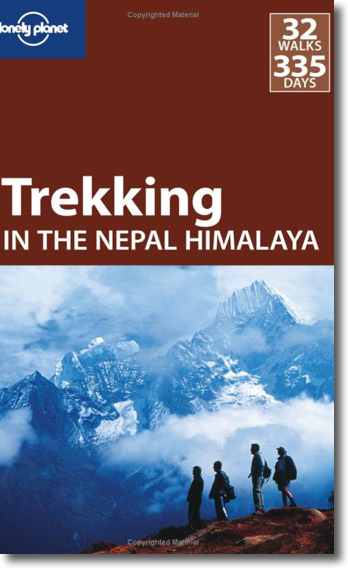
Just browsing the new Lonely Planet Trekking in the Nepal Himalaya (August 2009).
Enjoy the high passes, breathtaking landscapes and exhilarations of trekking in Nepal with Lonely Planet. Whether you want to make a tilt at Everest Base Camp, reach remote Tibetan villages or circuit sacred lakes, this guide lets you light out for the roof of the world.
I’d love to do something near Kachenjunga. But I’m leaning towards the Everest region. Independent trekking. Likely I’ll carry my tent just in case I want to go off the teahouse trails.
Leave a comment if you’ve a recommendation. I’ve at least 2wks of hiking days.
Keanae Arboretum, Maui
I’m a sucker for great trees. Botanical gardens.
But I skipped the Garden of Eden ($5 entry) instead walking the nearby Keanae Arboretum (free).
Around half-mile beyond mile marker 16 on the Hana Highway …
The Ke‘anae Arboretum lies alongside the Pi‘ina‘au Stream on leveled terraces built hundreds of years ago by Hawaiians for growing taro, a mainstay of their diet. A 0.6 mile paved walkway takes visitors through timber, fruit, and ornamental trees from tropical regions around the world, many of which are marked with name plates. Inside the arboretum you can find some 150 varieties of tropical plants (including taro). This is a great location to see some indigenous flowers and the painted bark eucalyptus trees.
An upper section of the arboretum features plants cultivated by the Hawaiians for food and other uses. This arboretum appears to have undergone a major renovation as of our last visit. The renovation included an expansion on the previous path that now leads into beautiful small taro fields not previously located in the arboretum.
There are no facilities or amenities at this stop. Expect to spend 30 minutes to an hour here.

The Aussie Gum trees were my favourites.

up the Kaupo Trail, Maui
Trip report by site editor Rick McCharles.
I did an unpopular route listed in Maui Trails by Kathy Morey, but not in any other hiking guidebook.
She calls this the “Kaupo to Halekala Park Boundary“, an awkward moniker it seemed to me.
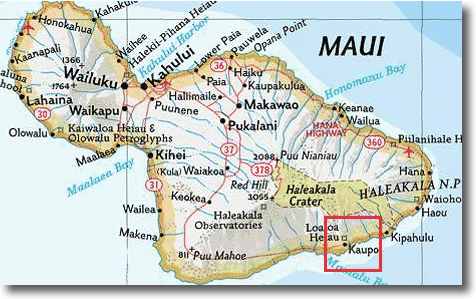
A far more common use of this trail is as the Kaupo Gap exit from the volcanic crater above. I was walking it backwards, uphill rather than downhill.
On the bright side, it’s well signed.
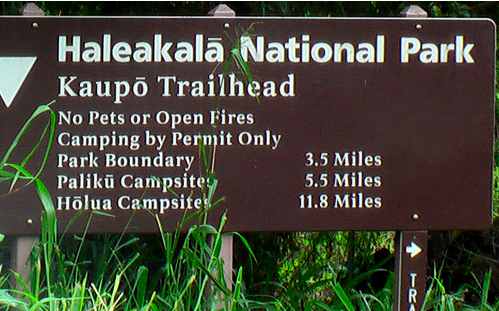
I suspect many hikers in the past arrived at remote Kaupō Ranch in rough shape from the 6000ft+ descent.
From GORP:
… Kaupo Trail can be an experience in misery: blistered feet, tortured knees, intense sun or torrential rain, and no available drinking water. The steep, rocky terrain in Kaupo Gap makes it essential that you be in good physical condition. Weak knees, bad backs, and new boots are not compatible with this trail. …
Actually, crossing a working cattle ranch was interesting.
Wild pigs are a bit of a pest. I saw many.
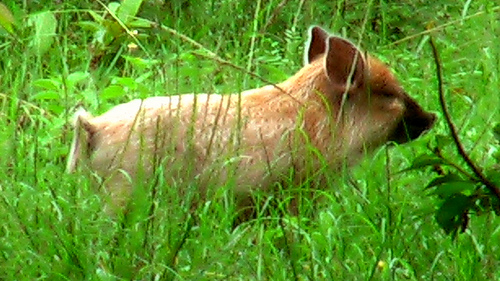
Here’s a working trap, set to capture the bacon.
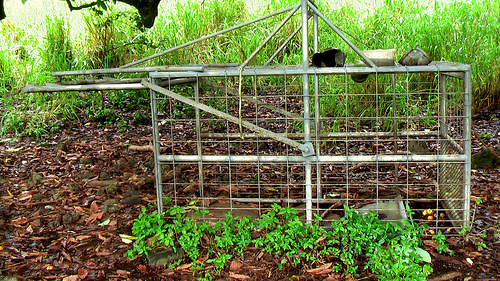
I stepped on over ripe avocados.
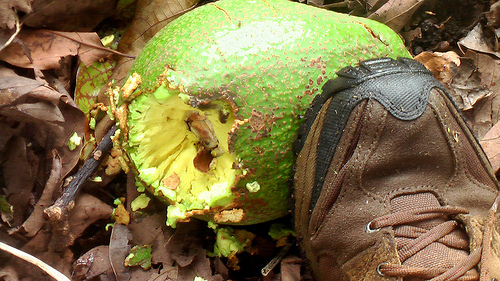
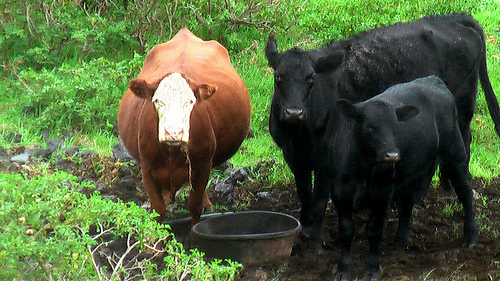
There were no signs any other hikers had ever been on this trail. Only myself, a few farm hands, and these onlookers.
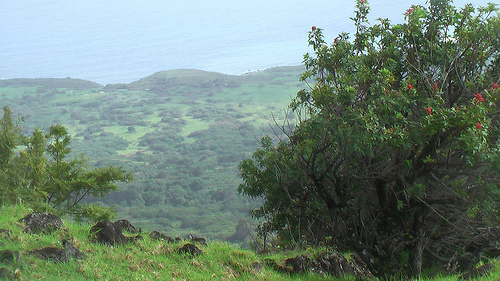
Views back to the wild Kahikinui coast were nice.
But for me the biggest attraction of this walk was that it felt an authentic Hawaiian experience, not a standard tourist cattle trail.
I recommend it.
See the rest of my Kaupo to Halekala Park Boundary pics.
confirmed – BestHike to Nepal
I post this from the airport in Dubai.
Departing Nov. 3rd from Maui, I don’t arrive into Kathmandu until Dec. 6th. … And I don’t cross the international date line as I decided to fly the long way around the world. Perhaps 60hrs in transit. (I’m at 32hrs, so far.)
… Don’t ask.
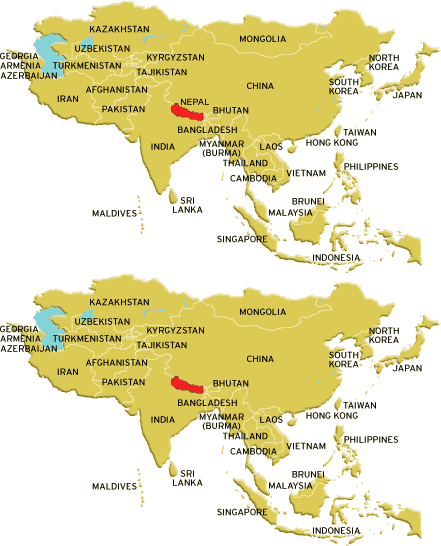
I’ll have about 3wks during prime trekking season in the Himalayas.

