If Drumpf becomes President, I’m going to update my survival gear. Prepare for the end of the world. 🙂
This proposed Cache Belt looks great.
Click PLAY or watch it on YouTube.
via GearJunkie – Survival Situation? Check Your Belt

Best hikes, treks, tramps in the world.
If Drumpf becomes President, I’m going to update my survival gear. Prepare for the end of the world. 🙂
This proposed Cache Belt looks great.
Click PLAY or watch it on YouTube.
via GearJunkie – Survival Situation? Check Your Belt
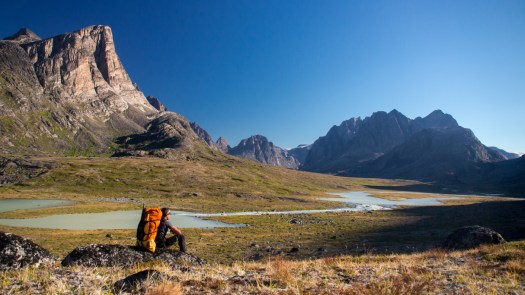
Willem Vandoorne has done a number of the world’s most difficult long hikes. He’s just back from Greenland.
… which was without any doubt the most beautiful I have ever made and which has impressed and touched me deeply. The feeling which I had during those weeks in the wilderness is hard to explain. As I struggled through boulderfields and moraine, watched the sun set from mountain with views unknown to human gaze, and slalommed along countless muskoxen, I no longer felt like a spectator of any kind in this vast wilderness, but was an integral part of it, obeying to the same rules and laws of nature as any animal out there.
My trip was blessed with sensational weather conditions – during the first 4 weeks of the trip I had only a few overcast days with some rain and a few mornings with sea fog – all the rest was just blue skies and warm temperatures. I hiked over 80% of the distance in t-shirt …

 🙂 Yet again we are proud to have this website listed amongst the best on the web.
Basis Gear:
What makes an inspirational blogger? Rather than using sophisticated metrics, we rather keep it simple. … These adventurers are not only passionate about it, they are also dedicated to providing the best experience to their followers.
The Haʻikū Stairs, also known as the Stairway to Heaven or Haʻikū Ladder, is a steep hiking trail on the island of Oʻahu, Hawaii. The total 3,922 steps span along Oahu’s Ko’olau mountain range. …
The City and County of Honolulu has stated that there is currently no plan to open the stairs for public use, citing liability concerns …
Dozens of people, however, routinely hike up the stairs every day …
Andy Beth Miller hiked it.

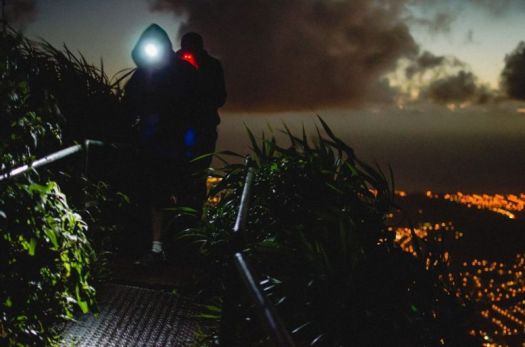
trip report – Hiking Oahu’s Forbidden Stairway to Heaven

Mountain IQ:
We … created a shortlist of the top 50 adventure travel blogs ranked predominately by their Alexa score, however, we also took into account their Page and Domain Authority as defined by MOZ.
AWESOME TRAVEL BLOGS YOU NEED TO READ!
Of the 50 top sites four — including BestHike.com — are dedicated to hiking.
Needless to say some of our favourite hiking sites are NOT in the top 50 by popularity. But we’ve got them listed in the navigation column under BLOGS. 🙂
Click PLAY or watch it on YouTube.
Personally I don’t mind carrying a Bear Canister and most often use an Ursack. It’s been a good long time since I last threw a rock over a tree limb. 🙂
(via thebackpacker.tv)
CHELSEA and JOSEPH did not want to stay in Alpine Huts. They tented the entire route. Nine days.
From Chamonix to Zermatt, from Mont Blanc to the Matterhorn, how could you go wrong with a hike like this! The Walker’s Haute Route is an absolutely stunning trail that offers what I would consider to be the classic Alps experience: beautiful mountain hamlets, green flower-rich valleys, gorgeous snow-capped peaks and almost constant access to great food and drink. …
In many European countries, wild (not in a designated campsite) camping is illegal and the number of legitimate campsites are few and far between.
In addition, other trip reports for the WHR were claiming that tenting the whole way was impossible due to the terrain and/or that all camping in Switzerland was illegal. Looking a bit closer though it became clear that while wild camping in Switzerland is highly discouraged, it is not “illegal” in all places. You are generally allowed to camp high , but should avoid camping outside of designated sites in the valleys as each canton and town has different laws and can impose a fine for wild camping.
Armed with this information we decided to go ahead with our plan and hike the trail with our tent. We hope this guide will help others who are looking to do the same. …
You should pretty much always have a map when you go hiking (and know how to use it), but the maps for this trail were just stupid expensive and big. Instead, we relied solely on the Kindle version of the Kev Reynolds guide, Chamonix-Zermatt: The Walker’s Haute Route. While we disliked Kev by the end of the hike for his nonchalant writing style, he did manage to get us to Zermatt without major incident or getting lost. …
The Walker’s Haute Route: Unguided, Unmapped and with a Tent


We’ve updated our Haute Route information page with this excellent trip report.
Snow Leopards. Red Pandas. Epic Adventure near Kanchenjunga.
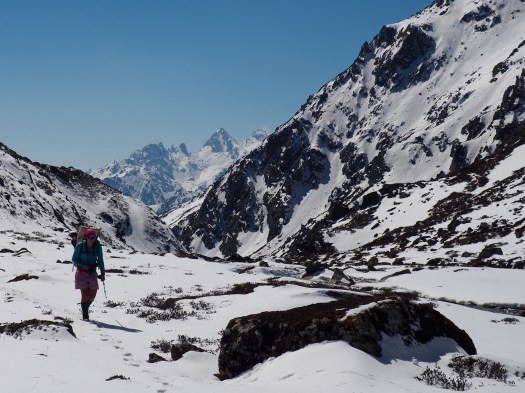
Click PLAY or watch it on Vimeo.
Dulkara Martig’s trip report – Chasing Snow Leopards in Nepal
As selected by Road Bike Hub.
Most of the blogs chosen feature adventure cycling. Best Hike was included as we’ve recently been promoting Cycle Hiking. Biking as far as possible, hiking the rest of the way. 🙂
Check the list for yourself – Top Blogs That Explore Outdoor Adventure