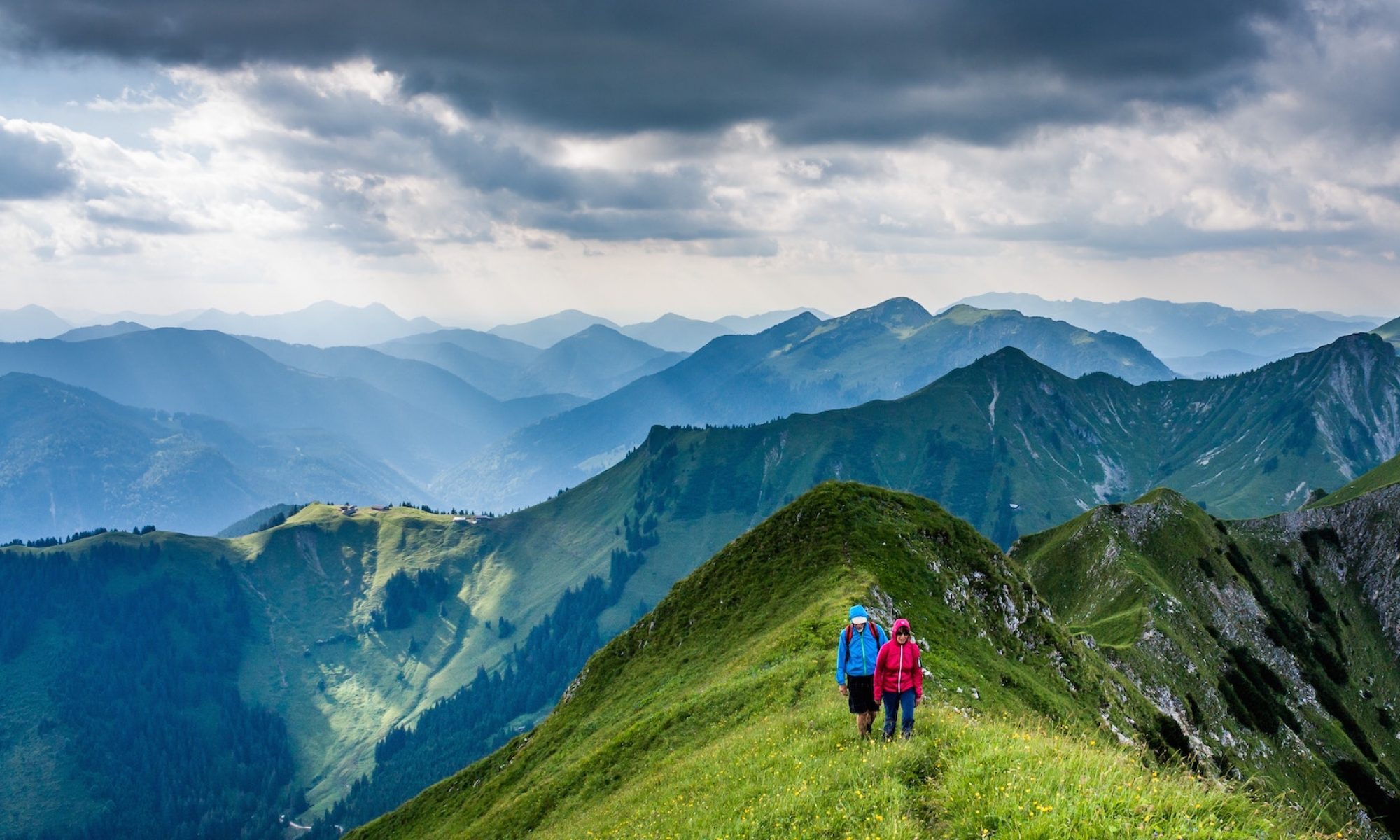
fishing the backcountry

Saturday’s hike into the backcountry forced me to ask myself why I don’t do this more often. …

Saturday morning found me loading my pack with a deflated float tube and enough gear to add 32 pounds to my already considerable tonnage. I was clearly looking at some work.

The hike in along the Pacific Crest Trail was payback enough; stunning views from both sides of the ridgeline, fall colors, and few signs of humanity (this last is hardly surprising – there are far easier places to catch brookies around here).

The Seven Lakes basin is small and heartbreakingly pretty, and making it even more attractive were the brook trout who ate my small wet flies within minutes of my arrival.

Backcountry Brookies: Fly Fishing Seven Lakes Basin

sevendoublebrookie.jpg
Tom Chandler – Trout Underground

grand slam of American hiking

Ken Powers and his wife Marcia have done all four: Appalachian, Pacific Crest, Continental Divide and — a weak fourth — the American Discovery Trail.

TrailMap-small.jpg
larger version

Having done none of the four myself, I was interested in their answer to this question:

Which trail is the hardest, best, prettiest, most fun?

This is a difficult question to answer. The Appalachian Trail is usually considered the hardest because of it greater (and steeper) elevation gains.

But many things on the AT seem easier because of its proximity to civilization. Sometimes it is too easy to go off-trail to get pizza and ice cream.

Best, prettiest, and most fun becomes a subjective question. We usually say the Pacific Crest Trail is the prettiest. It seemed to have the most views per mile. But the Continental Divide Trail also had great views and was our greatest accomplishment. The constant focus on navigating the CDT was an additional challenge.

The western portion of the ADT also has incredible views. The red rock areas of Utah are incredibly beautiful, but bring your own water.

We felt the Appalachian Trail was a more social trail. There were many more hikers and the frequent shelters became a gathering place for hikers every night. The trail passes through hardwood forests for most of the trail. The views are limited by the constant cover of leaves. Our AT hike was very different than hiking in the western states.

FAQs

(via Two-Heel Drive)

Aconcagua in Argentina – highest peak outside Asia

Aconcagua is known mainly as one of the Seven Summits, a trekking peak for climbers. But we are recommending hiking in the region rather than climbing the peak.

This gets you up close and personal to the mountain without the danger of climbing to 6962m (22,841ft). And Aconcagua is dangerous due to altitude and volatile weather.

There are dozens of climbing companies which provide guides and pack animals. However, hikers with high altitude experience could do Aconcagua independently, carrying their own packs.

Aconcagua
larger version of this photo – William Marler on SummitPost

confirmed – Tibetan refugees shot by Chinese army

I was hoping this terrible story would be disproved. Several of the outdoors blogs have been reporting on the rumour.

But a Romanian cameraman got video which seems conclusive. And hundreds of Western climbers and Sherpas witnessed at least one killing.

When I travelled in Tibet in 1997 I often dealt with Chinese military officials, often when I was trekking illegally. They treated myself and most other Western tourists with the greatest respect. Almost always young, the soldiers came to remote Tibet to try to better their lives.

Sadly, it seems Chinese policy is to shoot those fleeing over the mountains. (It’s very easy to cross undetected, by the way. I met Tibetans in India who commuted back and forth regularly in caravans.)

Xeni Jardin who just returned from Tibet has the best summary to date with the important links:

Boing Boing: Tibetan refugees shot by PRC forces, witnesses silenced: video

The secretive Chinese government must face the music this time. There is no chance this story will now be ignored by the traditional Western media once proven.

Maoist rebels still taxing Everest trekkers

Besthikes recommends you trek to the highest mountain on Earth via the Dingri to Everest Base Camp route in Tibet. The views of Chomolangma are far superior than those on the far more popular normal route out of Kathmandu, Nepal.

Many outdoor adventure blogs are quoting a German Press Agency report that Mt. Everest trekkers starting in Kathmandu are still being asking for a US$35 “donation” each from Maoist rebels. This despite that extortion being banned under the terms of the ceasefire agreement. There are hassles in Tibet too, but not extortion by armed gunmen.

… the Maoists collected the money from the tourists at Manjo, the main entry point to the Everest region.

… “Tourists pay 1,000 rupees (about 14 dollars) to the Everest National Park. In addition, they have to pay aircraft boarding taxes at Kathmandu airport. Tourists are being taxed at every point

… About 3,500 trekkers visit Everest in each of the three tourist seasons, making it the most popular trekking route in the Himalayan kingdom.

The Raw Story | Maoists intensify extortion from trekkers in the Everest region

109023-Mt-Everest-view-from-the-Monastery-0.jpg
photo from superb trip report by edMichel

UPDATE: Terrible breaking story in the region: China tries to gag climbers who saw Tibet killings (via GetOutdoors)