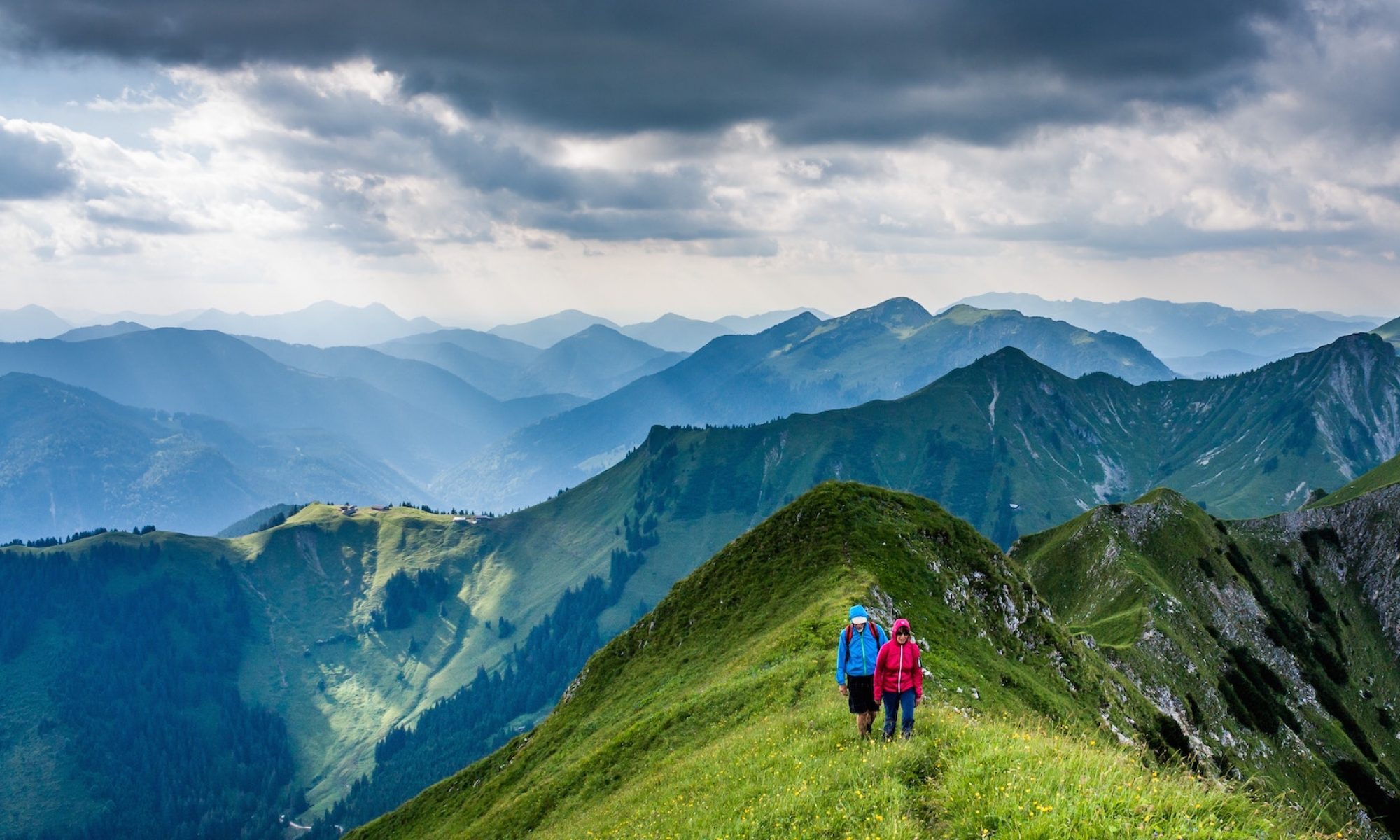
Sanctuary River and Anderson Pass Loop, Alaska

I plan to travel to Alaska in August. Number one on my MUST HIKE list is Chena Dome Trail.

But this one recommended by National Geographic looks intriguing. Especially because there is not much information about it on the internet.

Hiking Denali’s Empty Quarter

To secure a permit for Denali’s vast backcountry, hikers must choose between 87 separate divisions, wait out temporary closures due to bear sightings and river floodings, and nab a pass just one day in advance (you often have to wait 3 days – editor) with no reservations accepted (www.nps.gov/dena).

Consider it minor bureaucratic penance for a chance at wilderness heaven. To choose a route—a challenge in its own right in a 6.1-million-acre (2.5-million-hectare) wildland without trails—pick up the classic Backcountry Companion: Backcountry companion: Denali National Park & Preserve, Alaska at the permit office near the park entrance or online ($9; www.earthsonglodge.com).

Opt for the Sanctuary River and Anderson Pass Loop, a weeklong trek that starts when you step off the backpackers’ bus at Sanctuary River on Sheldon’s beloved north slope.

The winding route teeter-totters across both sides of the Alaska Range through Foggy Pass and Easy Pass before ending at the headwaters of the West Fork of Glacier Creek.

You’ll spot grizzly tracks, tufts of wool from Dall sheep, and alder thickets bulldozed by moose, all the while keeping your eyes wide open for the mountain to make an appearance through the clouds.

Need to Know: Old-timer’s guide to bear identification: If it climbs the tree to kill you, it’s a black bear. If it knocks the tree over first, then kills you, it’s a griz.

Alaska – Alaska Range – National Geographic Adventure Magazine

(via The Adventure Blog)

alpenglow.jpg
Alpenglow magazine (HTML version)

hiking Isla del Sol, Bolivia

Eu-Jin Goh had the same reaction as I did when he visited Isla del Sol on Lake Titicaca, Bolivia.

He wished he’d stayed an additional day on the island.

del-sol.jpg
larger original

We took the boat to the southern end of Isla del Sol and walked up the stairs to Yumani. In Yumani, we stayed in Inti Kala, which is at the northern end of the village (at the time it was the last hostal). We dropped our bags and then walked to the northern end of the island to the Chincana ruins and then hiked back around sunset.

The trail running North-South is one of the best day hikes we’ve done; it follows the ridgeline closely and spectacular views abound on both sides. We had a really relaxing time on Isla del Sol and wished that we had planned to stay an additional day on the island. Isla del Sol is also great for acclimitization because its extensive hiking trails are around 4000 meters.

eu-jin.jpg
larger original – by Serene Koh

Isla del Sol, Bolivia – gorgeous photos and trip report by Eu-Jin Goh

Everything you need to know to get there is on our Isla del Sol information page.

hike the Devil’s Garden in Utah

The most famous attraction in Arches National Park is Delicate Arch.

But the best hike, I feel, is Devil’s Garden – Primitive Loop. That’s 7.2mi (11.5km) plus extra sidetrips.

The feature attraction is possibly the longest and certainly the most “impossible” arch in the world.

landscape-arch.jpg

It seems Landscape Arch could fall anytime. (Several pieces have dropped since 1991 and the trail under the arch has been closed.)

Anyone can make the easy day hike to walk to Landscape Arch and back. Confident hikers should continue at least as far as Double O Arch. (Some like the sidetrip to Dark Angel tower, some do not.)

And best of all is to add the Primitive Loop rather than backtrack.

devils-garden.gif
larger map on Climb-Utah.com

It might take as long as 5hrs to do everything adding off-trail rock scrambles above some of the arches.

I returned via Primitive Loop. But reversing direction would have been even better, I think, saving the arches for last. Start at first light when animals are active and the trail still cool.

Primitive Loop is well named. I managed to get lost once or twice. It is challenging. And gorgeous. In some ways this is the best part of the walk.

Be sure to carry a map and desert survival gear. You don’t want to end up like Aron Ralston.

The excellent Utah.com site posted a video: Hike the Devil’s Garden.

day hike to Delicate Arch, Utah

EVERYONE in Utah knows Delicate Arch in Arches National Park. It’s on the licence plates.

The Olympic torch relay for the 2002 Winter Olympics passed through the arch.

Yet many do not visit, intimidated by the rugged 3mi (4.8km) return trail.

The start of the walk is ugly. I was wondering if it was going to be a colossal let down.

But the trek improves considerably when you hit steep slickrock. And again when you reach a rock ledge path.

… The arch comes into view suddenly around a corner in the trail and frames the La Sal Mountains to the southeast. The immediate area around the Arch offers views of the southern expanse of the park, and has unguarded cliffs plunging one hundred feet or more.

Delicate Arch – Wikipedia

delicate-arch.jpg

Fantastic!

The location looks like a set built for the old Startrek TV series.

I had the arch to myself late in the afternoon and was tempted to free climb it. Unfortunately that plan had been ruined by Dean Potter accused in 2006 of letting his team fix protection from a top rope draped over the formation, possibly damaging the structure. (Potter denies the charge.)

On the return I bypassed the cattle trail and took instead to the rocky ridge that runs parallel. A nice loop.

Delicate Arch is one of the best hikes in the world, not to be missed by anyone passing through Moab.

Oh, and climbing arches is now strictly forbidden.

more Delicate Arch photos on flickr.

why The Adventure Blogger went to Kilimanjaro

Having never been there, I was envious reading Kraig Becker’s Kili trip reports on his Adventure Blogger site.

Now he’s been interviewed on The Outdoor Weblog:

Honestly, I’ve been thinking about this trip for four years now. I saw an IMAX film by David Breashears on Kilimanjaro and I was fascinated with the thought of trekking and climbing the mountain. I think I went home and started researching it right after seeing the movie.
The Outdoor Weblog: The Outdoor Enthusiast Next Door: Kraig Becker (Part 2)

Kraig and guides Peter and Zawadi at the Lava Tower:

p1010110_jpg.jpg
photo by Colm Donohoe

My turn is coming. One day. …

I want to try for a double: Mt. Meru followed by Kilimanjaro.

check out Four Corners, USA

fourcorners-us.jpgThe Four Corners is the wild convergence of Arizona, Colorado, New Mexico and Utah.

It’s mostly Indian land.

Last year I hiked out of Page, Arizona. This year Moab, Utah.

In Utah, the best site I’ve found on hiking is Utah.com — concise, well organized, easy-to-read.

If you’ve never been to the Four Corners, the best reference is Moon Handbooks Four Corners

Including Navajo and Hopi Country, Moab, and Lake Powell (Moon Handbooks)

I’m a Lonely Planet guidebook fanatic. But, for some parts of the world, Moon is better.

In the Moon guide, check their Suggested Reading section on Hiking. This will help you narrow the many choices of hiking guidebooks available.

There are dozens of good hiking guidebooks for the region. But no GREAT ones. At least none I’ve found yet. (And I write from Moab Public Library.)

Almost inevitably you’ll end up as I did with one of the Falcon Hiking Guides: Exploring Canyonlands and Arches National Parks by Schneider.

I’ll head first for Arches:

Taking its name from the hundreds of naturally formed sandstone arches scattered here, Arches National Park is the most feature-packed of southern Utah’s national parks.

Ranging in size from around three feet to nearly 300 feet in span, the arches are the result of erosion over millions of years, the same agent that formed the thousands of brilliantly colored spires, pinnacles, and canyons that cover southeast Utah.

Piñon pines and junipers add a splash of green to the red and brown backdrop, but mostly what you see are red stone and blue sky—lots and lots of both.

arches-map.jpg

Road Trip USA

first Hayduke Trail thru hike

Steve Sergeant of Wildebeat.net pointed me to a very professional trip report posted by Brian Frankle on his ULA (Ultralight Adventure) website.

Perhaps Hayduke is not so dangerous after all.

This was the first ever thru hike of the 800mi+ route. Brian seems to have handled it with ease. (Of course he is an accomplished long distance hiker.)

bdfmug.jpg

I tackled the Hayduke Trail in typical long-distance hiker fashion: frequent re-supplies, higher daily mileages, and with a focus towards lightweight equipment.

This presented some challenges and resulted in a longer distance hiked than the described route, but I think this strategy is critical to implement if you plan to tackle this rugged and demanding route… especially so in the context of thru-hiking the Hayduke.

ULA – Hayduke Trail 2005

Brian’s trip report (including resupply points).

Just last night in Moab, Utah I met a hiker setting out for just a short section of the Hayduke.

He was worried. Worried about water supply. Worried about getting lost.

Light Backpacking says abandon Swiss Army Knife

Sacrilege! They say:

I have two beautiful Swiss Army Knives and love them.

BUT they weigh four ounces each and I don’t need all the extras they offer.

So I purchased for 99 cents a small knife with plastic handle I found in a clear plastic bin on the counter of my local hardware store. It was put there to be an impulse buy. But it’s been a trusty little friend, weighing a half ounce. Great for cutting cheese, salami, or cord.

LightBackpacking.com Make Your Backpack Light in 2007 – One of the “Ten Essentials”

Personally, I can’t bear to leave behind my Swiss Champ.

In fact, I may upgrade to the Wenger Giant Collector’s Swiss Army Knife. (Let’s see a bear try to swallow this.)

16999e.jpg

Practical Travel Gear

Parks Canada Fees are too high

Many entrance fees went up April 1st for Canadian National Parks.

How do the prices for Banff National Park, Alberta compare with the National Parks near you?

park-fees.gif
(screen shot)

The best value for hikers, we feel, is the annual Family / Group pass. An entire vehicle of hikers gets into 27 participating National Parks for C$123.80 (US$110.21).

We think fees are already too high. That Parks Canada is not accountable enough for how the money is spent. Here’s the rationale:

Entry and service fees are charged at most national parks and national historic sites, where revenues are kept to support visitor services and facilities. This means that every time you visit a park or site you are investing in its future — and in a legacy for future generations.

Parks Canada – Banff National Park of Canada – Fees

In the past hikers have illegally swapped around “Family” passes from vehicle to vehicle as needed for each trip. This practice will increase as costs go up.

Get Outdoors even discussed illegal buying and selling of Park passes. (Especially those left behind in rental cars.)

With every politician and corporation on the green bandwagon, why can’t Parks Canada come up with some big donations?

Leave a comment if you have an opinion.