Just picked up my tickets. Here are my major events, so far:
Of course there’s much more happening in Banff this weekend …
The official website is quite confusing. An easier way to follow the action is on their events calendar.
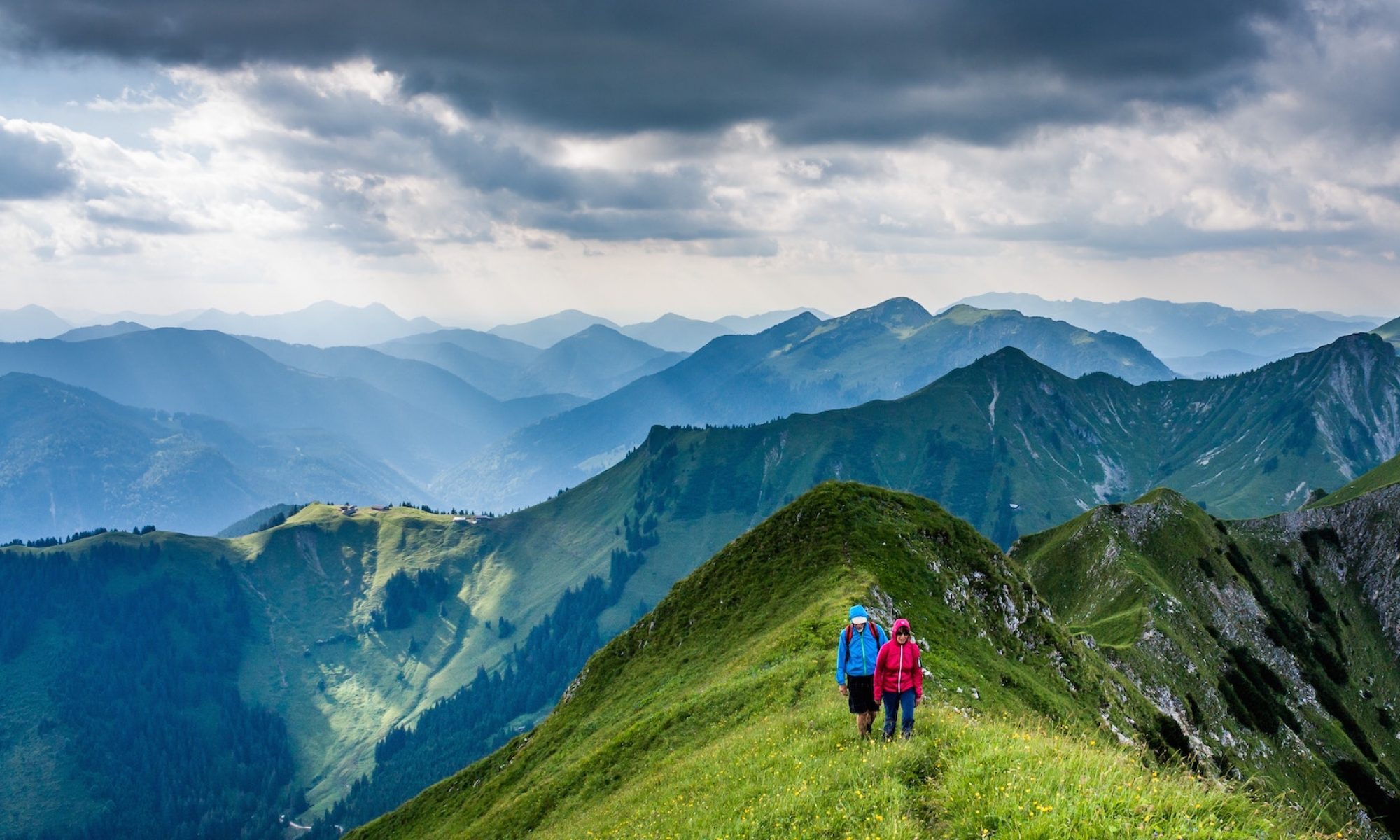

Best hikes, treks, tramps in the world.
Just picked up my tickets. Here are my major events, so far:
Of course there’s much more happening in Banff this weekend …
The official website is quite confusing. An easier way to follow the action is on their events calendar.
As those left coast hikers are oft to remind us, “California is the center of the outdoor universe.”
But God will smite the Californicaters …
We nearly lost Tom Mangan of Two-Heel Drive on Monday.
From his personal blog, at work — The San Jose Mercury News:
… First words out of my mouth: “Looks like we’re going into Page One.” Not that anybody had to be told.
The quake rattled the newsroom long enough and hard enough to send our news-detection meters into the red. At first we had no idea how bad things were: we could’ve been just down the road from a minor earthquake, or a hundred miles from one that flattened a small city.
Fortunately, it was the former: a magnitude 5.6 quake on the Calaveras Fault, within a mile of where we used to live in the hills east of town. …
Willow Glen resident Catherine Kilkenny gets under a table during an earthquake on October 30, 2007 in San Jose. Earthquake was a 5.6 magnitude, with the epicenter located 5 miles NNE of Alum Rock, 7 miles east of Milpitas. It was the strongest Bay Area earthquake since Loma Prieta in 1989. (Richard Koci-Hernandez / Mercury News)
 I made it. Posting via wireless internet from the modern Hostel International.
Walking up the mountain on Deer Street I saw … deer. That’s truth in advertising.
This is my first time to attend perhaps the World’s most famous outdoor film festival.
Over the next 5 days I will be live blogging from Banff. (But the $300 dinner with Ed Vistiers Viesturs, Peter Hillary and that lot is out of my price range.)
Rick McCharles, editor
Banff Centre – Mountain Culture
The NY Times posted the best on-line multimedia presentation of a trek I’ve ever seen.
It makes author Tom Bissell’s Kili adventure come to life. (Tom did make it to Uhuru Peak … but could not remember the “triumph” afterwards.)
Some screenshots of the graphics:


Tom Bissell’s account of his painful and exhausting climb to the summit of Mount Kilimanjaro.
Check it out: Climbing Kilimanjaro – The New York Times
(via Jeffrey Hunter on the American Hiking Society’s Southeast Trail Program blog)
We’ve linked to both the trip report and the graphics from our Kilimanjaro information page.
Ever since I looked down the forbidden valley from Kagbeni while trekking the Annapurna Circuit, I’ve wanted to hike Lo Mustang in Nepal. Sadly, no independent hiking is allowed.
Kagbeni at 2810 m, spectacularly situated atop a cliff overlooking the confluence of the Kali Gandaki and the Jhong Khola rivers, is the last village in Lower Mustang and guards the entrance into Upper Mustang, visible across the Kali Gandaki riverbed. It is the northernmost village that can be visited without a permit to continue on to Mustang.

Northwards into Upper Mustang – larger photo on flickr – Claudia
Footprint Tours is one of the few companies who offer trekking trips:
… Until 1992 less than a dozen foreigners had been to Mustang. Now, in an effort to protect this culture, access is limited with less than 800 trekkers making the journey each year. The requirement to pay high restricted-area fees, travel with an organised group and take a Liaison Officer, together with difficult access continue to make the Kingdom of Lo an uncommon destination. …
A trek to the Himalayan kingdom of Mustang in the restricted regions of Nepal
That same site has a nice overview of Himalayan trekking for those who have never been:
In 1965 Colonel Jimmy Roberts introduced the world to trekking. As a former Gurkha Officer and Military Attaché at the British Embassy in Kathmandu he had spent years of his life walking the hills of Nepal. His idea, revolutionary for the time, was to provide tents together with Sherpas, to guide and cook.
This made Nepal and the Himalaya available to a wide community and was an immediate success.
Nowadays the formula is well established; groups travel through the hills, walking for five to six hours each day with all their equipment carried by porters or yaks; good quality meals are provided along with warm sleeping bags and comfortable tents; the trekker carries a personal pack with camera, day clothing and snacks. …
photo – Jimmy Roberts in 1996 a year before his death.
read more – What is Trekking?
At this rate, I may need to wait until independent hiking is allowed.
I cannot find much information on-line regarding the Aurland Trail in Norway.
I understand 30,000 hikers a year walk sections between Vassbygdi, Geiteryggen and further toward Hallingdal on an old East – West trail.
 I enjoyed a well written trip report by Kathleen Hill Zichy. Part of her Travels with Wally series. (Wally is a Kiwi hiking guide.)
The hikes were spectacular and strenuous. Wally provided encouragement and a bit of light-hearted humor in an accent both charming and perplexing. Certain expressions had to be repeated several times before I could decipher them. He frequently powered out on the trail and then looped back to find the rest of us. As I was the least experienced hiker, Wally was elected by his co-leaders to the position of my guardian. He did so in a gentle and unobtrusive way that did not mark me as a quivering novice but gave me a little boost in confidence when I was facing a major drop-off or was lagging behind on the downhill.
I had never seen so much rock. We scrambled, stumbled, mumbled, crawled, held on by our fingernails as we slid over cliffs on the British Route, desperately clutching the famous cable-and hoping fervently that our insurance was paid up. At the bottom of the cliff after that hair-raising slide, we were greeted by a small party of Norwegian hikers. An older woman in that group with hair pulled back and greying at the temples asked me what I thought of my descent down the cable. “There’s nothing like that in Manhattan,” I replied. “We usually take the elevator.”
“This is the toughest hiking trail in all of Norway,” she informed me. Her statement was confirmed within minutes when we encountered a man with his head wrapped in bloody bandages, being led to the end of the trail by two fellow backpackers. …
Unfortunately, the natural environment there has been much affected by hydroelectric development:
… the great waterfalls in the Aurlandsdalen have been silenced. The standing waves, spray and mist from the rapids and waterfalls has been substantially reduced. Due to diversion through tunnels, the water level in the river gorges is drastically reduced; dams restrain the thundering inferno that filled the gorges before the development. There are impacts beyond the loss of scenic beauty as well. The Aurlandselvi river is no longer one of the finest salmon rivers in Norway. Farmers no longer drive cattle, pigs and goats to spend the summer at Østerbø and Stemberdalen. The pack horses, formerly a common sight in the valley, as Jon Fimreite and Knut Sønnerheim among others transported provisions and supplies to Steinbergdalshytta and Østerbø, have become part of history.
Aurlandsdalen has become like the most of the other valleys, characterized by traffic, tourists and gradual urbanisation. Only the remote Nesbø-Vassbygdi region remains mostly undisturbed, if one ignores the strong reduction in the water flow in the Aurlandselvi and the visible stretch of highway between Berdalstunnellen (Berdal tunnel) and Nesbøtunnellen (Nesbø tunnel) visible in the hillside from the path at Heimrebø.
Power development and environmental impacts – Wikipedia
There are plenty of pretty pictures tagged Aurland on flickr. Here’s my favourite:

Aurland downtown – larger original on flickr – Tom (Aurland resident)
related post – WOW – Aurland Lookout, Norway
I’d love to get to Afghanistan for hiking.
This article from the Time’s Online says it’s only for the very adventurous at this point:
Afghanistan is bursting with potential as a future tourist destination. Its mountains could rival Nepal as a trekking destination, while Silk Road cities like Herat with their brightly tiled mosques are the match of more celebrated rivals like Samarkand or Isfahan. The jewelled lakes of Band-e Amir are itching to have feet dipped in them. Nomads lead their camel caravans past the broken remains of tanks. The promise is there, and Afghans and travellers alike are just waiting for the right moment to finally return.
…
Of course the late, great Eric Newby went in dangerous times. One of my favourite hiking books:

A Short Walk in the Hindu Kush – Amazon
My first reaction to “rock musicians on Everest” … ah, another media stunt.

Yet they look entirely serious. Very well organized.
Perhaps this will help the Nepalese trekking industry too, which is again threatened by Maoist rebels.
They are getting big-time media attention: USA Today, MSNBC Music, SKY News, BBC and more.
… our most momentous climb and concert benefiting The Nepal Cancer Relief Society (NCRS). Cancer survivors and co founders of the Love Hope Strength Foundation (LHSF) Mike Peters and James Chippendale will lead 40 musicians, cancer survivors and mountaineers to Base Camp to perform an acoustic concert to help the Bhaktapur Cancer Hospital build the infrastructure of its clinic, NCRS, by providing them with much needed equipment and funding. In a country where the Avg. annual income is $300 a year our donation and support is going a long way to save lives NOW.
… The entire journey will be captured by a documentary team headed by Alex Coletti (the acclaimed producer of MTV’s ‘Unplugged’ series). The taping will include the training, kickoff events, trek and base camp acoustic set. …
And we can even apply to join their trekking support team for future Love Hope Strength events like this.

trekking route – map

(via Bloglines)
Somehow I stumbled on to some photos by Todd Saunders (one of the architects) and they really took me by surprise. This unique destination opened 2006 and I had not heard of it until now.
At first glance I thought this was the Grand Canyon Skywalk we’ve written about before, but this is much cooler, I think.
It’s the Aurland Lookout in Aurland, Norway. True Scandinavian design — think IKEA tourism, with a dash of Tony Hawk thrown in.
The design makes it seem as if you can fall right off if you continue walking to the end, but in reality a sheet of plate glass protects would-be daredevils from sliding off the edge into the woods.
Amazing Views of Norway at the Aurland Lookout – Gadling – Justin Glow – more photos


 besthike.com