All of these books are great and recommended. But I have a gut feeling this was not one of the best years ever for outdoor adventure books. Most of the winners are predictable.
The best bet at being a new “classic” is this extensively researched investigation into the 1967 Mt. McKinley expedition. Only five of the 12-man team survived.
I saw Wielicki present during the Book Festival. And just now he launched the Banff Mountain Film Festival.
He’s old school. Tough. Thinks nothing of losing the odd finger or toe. Says you must learn to enjoy suffering to be a real climber. (That’s why I’m a hiker.)
The Polish climbers are the world’s best (most would say, craziest) at Himalayan Winter Ascents.
A contemporary of Reinhold Messner, Wielicki’s controversial. And very entertaining.
Polish mountaineer Krzysztof Wielicki’s accomplishments place him among the world’s greatest mountaineers. In more than three decades of climbing, he has concentrated his efforts on difficult new routes and Himalayan winter climbs.
Wielicki became the fifth person in the world to climb all fourteen 8000 metre peaks and the manner in which he accomplished this astonished the climbing community: almost half of them were solo expeditions and Everest, Lhotse, and Kangchenjunga were first winter ascents. He has since led two Polish winter expeditions including an attempt of K2 via the North Pillar in 2003 and of Nanga Parbat via the Schell Route in 2007.
Wielicki and the interviewer finished off most of a bottle of “Rescue Drink” (Vodka) during the performance where he screened some never before seen footage of classic winter climbs. (The “official photographers” rarely ever made it even to Base Camp.)
Just walked out of Ed’s presentation. His is the first book (of many) from the Banff Mountain Book Festival I’ll be buying. (As an audio book, actually, on Audible.com)
Viesturs decided to write his autobiography after finishing the 14 8000m peaks, on Annapurna.
Growing up in the flatlands of Rockford, Illinois, where the highest objects on the horizon were water towers, Viesturs became interested in climbing only after reading and being captivated by Annapurna, French climber Maurice Herzog’s famous account of the 1950 first ascent of an 8,000-meter peak. “What I liked was that these guys had a goal and they just wouldn’t give up. They spent months and months finding the mountain; then they climbed it. So simple, so basic. I’m a very goal-oriented person, and I like things that take a tremendous effort and time to accomplish,†explains Viesturs.
When taking on these remarkable feats, Viesturs prefers to experience the mountain without reducing it to his level — climbing without the aid of supplemental oxygen. On May 12, 2005, he realized an 18-year goal to climb all 14 of the world’s 8000-metre peaks under these conditions. He is one of only a handful of international climbers to complete this goal, and the only American in history to climb the world’s six highest peaks without supplemental oxygen.
Viesturs’s success can be directly linked to his technique. He is known for his sensible approach to dangerous undertakings, and remains true to his motto, “Getting to the top is optional. Getting down is mandatory.†With the belief that the mountain determines his success, Viesturs will turn around if the conditions do not meet his exacting standards, as he did in 1988, 180 metres from the top of Everest.
Viesturs has documented his journeys in Himalayan Quest: Ed Viesturs on the 8,000-Meter Giants, co-written with Peter Potterfield, and in his autobiography No Shortcuts to the Top: Climbing the World’s 14 Highest Peaks, co-written with David Roberts and released in 2006.
At the Banff Mountain Book Festival we were treated to one of the most amazing slideshows I’ve ever seen.
Ian McAllister gave an overview of his life story vis-a-vis bears and wolves.
He’s very angry about big game trophy hunting. (And Ian’s a hunter who kills deer to feed his family.) There’s no reason to tag bear or wolf.
Ian McAllister is a nature photographer, writer, and conservationist who has dedicated his life to exploring the remote wilds of the British Columbia coast. Born in Vancouver, his exploration and adventures in the province’s rugged West Coast began at a young age, and inspired in him a passion for conservation which led him to become one of Canada’s leading advocates for rainforest protection.
With a keen interest in wildlife behaviour, ecology, and sailing, McAllister has spent much of the last 20 years travelling along the north coastline of British Columbia, observing the behaviour of coastal wolves and grizzly bears. For the last 17 years, McAllister has lived in the heart of the Great Bear Rainforest, one of the last places on earth where wolves live relatively undisturbed by humans. In his latest book, The Last Wild Wolves, he documents the behaviour of two packs, one in the extreme outer coastal islands and another farther inland.
McAllister’s first book, The Great Bear Rainforest (1997), was instrumental in helping Greenpeace, the Sierra Club, Ian and Karen McAllister’s Raincoast Preservation Society, and other environmental groups to successfully lobby British Columbia’s provincial government to impose a moratorium on grizzly bear hunting and to designate a large portion of the province’s mainland coast as parkland in 2001.
McAllister is a founding member of the Raincoast Conservation Society, and his images have appeared in numerous publications including International Wildlife, BBC Wildlife, Audubon, Sierra, and Beautiful British Columbia. Also a filmmaker, his footage has been used by National Geographic TV, Discovery Channel, and the BBC.
The athletes (including climbers Steph Davis, Nancy Hansen, Araceli Segarra, and Kira Salak) debated whether even appearing on a “Women’s Panel” was somehow offensive. Part of the problem.
They debated whether “first female ascent” was a backhanded compliment. Or valid.
None had primary role models as young women. They had to be very independent. Trail breakers.
We still have a long way to go until we achieve parity.
The cyberhobo tipped me to an unprecedented feat on the CDT:
Francis Tapon has finished the first documented yo-yo (through-hike in both directions, in one season) of the Continental Divide Trail, with Garret The Onion finishing soon after. Congrats to them both for an amazing and inspiring feat!
At the 2007 Banff Mountain Book Festival John Harlin III (the son) gave us the background for his new book, The Eiger Obsession: Facing the Mountain that Killed My Father.
It’s a moving story. John was very emotional while telling it.
In 1966, when John Harlin II set out to climb a new route straight up the North Face of the Eiger, he was 30 years old, with a wife and two young children. Six hundred metres from the top, Harlin’s rope broke and he fell 1200 metres to his death. His son, John Harlin III, who was only nine years old at the time, and who had completed his first alpine climb at the age of seven, vowed to his mother that he would never climb another mountain. However, his passion for the mountains led him to break that vow.
Throughout his life John Harlin has honed his skills as an adventurer, editor, and writer. He has made first telemark and ski descents, has climbed new routes and made first river descents in Peru, Bolivia, Tibet, Alaska, Canada, the U.S. and the Alps. He is the author of a series of guidebooks, The Climber’s Guide to North America, and has worked as the editor of Backpacker and Summit magazines.
In 2005, Harlin decided to return to the Alps and face the Eiger. Like his father, he left behind a nine-year old child when he went to climb the 1800-metre wall. His book, The The Eiger Obsession: Facing the Mountain that Killed My Father, is a memoir of his family and his lifelong obsession with the Eiger, culminating with the thrilling account of his ascent.
Harlin is now editor of the prestigious American Alpine Journal, a frequent contributor to numerous publications including Outside magazine, and appears as the main character in the latest IMAX film, The Alps: Large Format, a film about his emotional quest to climb the mountain where his father died. Harlin lives in Oregon with his wife Adele and daughter Siena.
This is an unforgettable story about fathers and sons, climbers and mountains, and dreamers who dare to challenge the earth. The Eiger Obsession is more than just the story of one man’s climb, it’s a memoir of loss, survival and choosing to face your biggest fears head-on.
Note to self: In future, arrive 15min late for festivals to avoid the predictable, boring introductory speeches.
The opening act at the Banff 2007 Mountain Book Festival was quite entertaining, and refreshingly open-minded for an environmentalist. This is no Al Gore clone.
David de Rothschild
Adventure Ecology
Britain’s David de Rothschild has traversed Antarctica, has set a new record for the fastest crossing of the Greenland icecap, and has reached the North Pole. He is both an adventurer and an environmentalist, and at 29, he is the head of Adventure Ecology, an expedition group he founded to raise awareness about environmental issues and climate change.
Following a 2004 Antarctica expedition, de Rothschild came to the realization that he could create a deeper understanding of the natural world through incorporating education as the main vein running through his adventures. “I spent three months surrounded by one of the world’s most astonishing and fragile ecosystems, and it had a profound effect on my outlook and on those with whom I shared my experience.”
In 2005 he launched Adventure Ecology, and now uses his adventures to captivate, to inspire, and to share information about the environment. Adventure Ecology’s goal is to create a greater connection with the natural world through a series of high-profile expeditions. The associated website features videos and information from live expeditions, as well as blogs and interactive games that act as a gateway for children to learn about global environmental issues. The focus on children is deliberate. “There’s a native Indian proverb that says we don’t inherit the Earth, we borrow it from our children,” says de Rothschild. “Curiosity is a great driver of change. But in protecting our children, we’ve also made it very hard for them to go out and experience nature. That’s something our website can address.”
The first mission in the series, “Top of the World”, began in March 2006. With a four-member team, de Rothschild traversed the Arctic Ocean from Russia to Canada. Mission 2 is called “Adventures in Waste” and will include a series of expeditions in 2007 and 2008 with scientists, artists, and filmmakers to some of the world’s most environmentally troubled areas — from the site of an oil spill in Ecuador to heavily polluted areas in China’s Henan province. The series will culminate with a sailing trip from Hawaii to California, raising awareness of the little-known fact that the largest accumulation of garbage in the world can be found in the Pacific Ocean. “We’ll sail a boat made entirely from recycled bottles to document the massive problem of ocean trash.”
De Rothschild was selected as one of National Geographic’s Emerging Explorers for 2007, and as one of the Young Global Leaders by the World Economic Forum. He has written educational books for children, created a naturopathic/ecological education centre in New Zealand, and founded “Sculpt the Future”, a charitable organization working with environmentally disadvantaged communities.
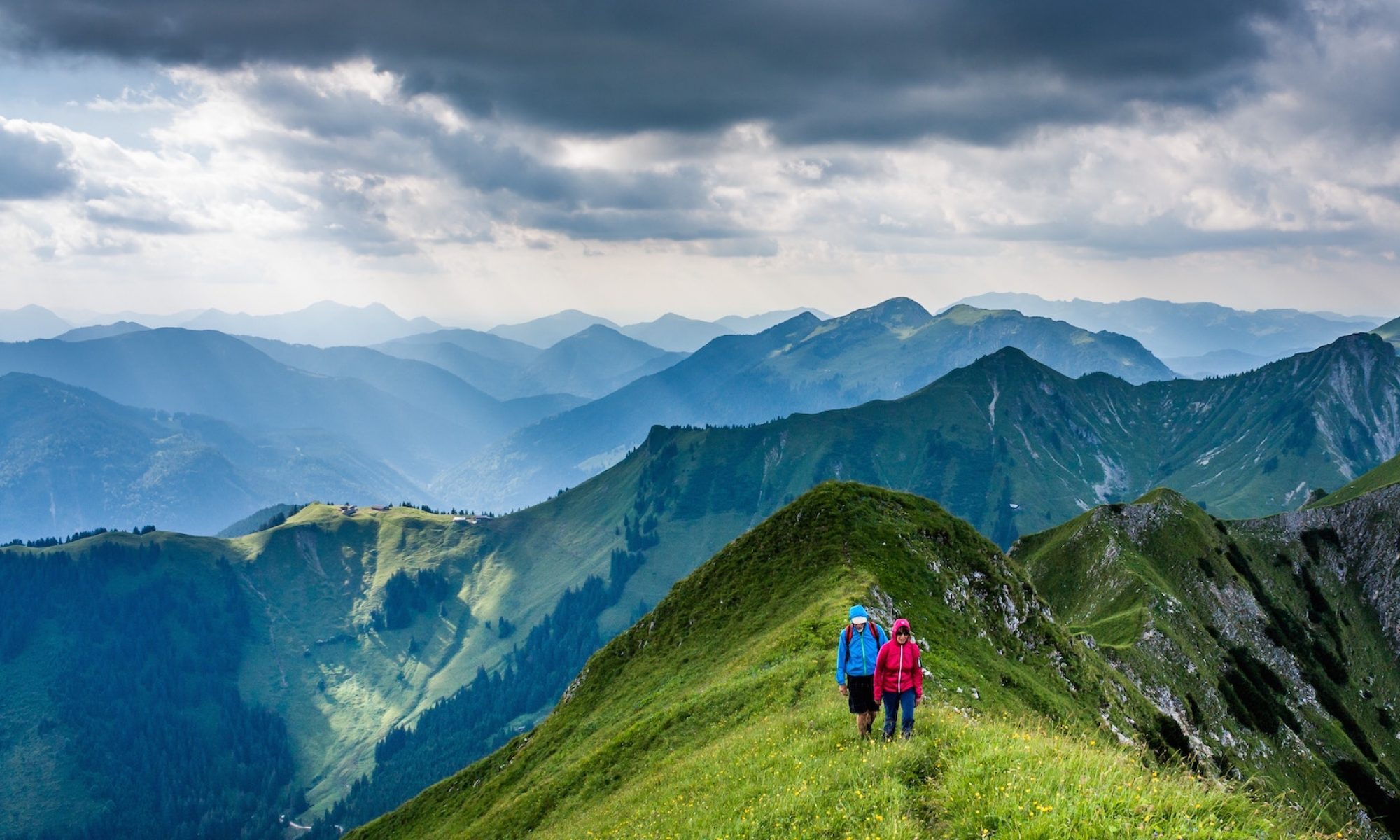


 Polish mountaineer Krzysztof Wielicki’s accomplishments place him among the world’s greatest mountaineers. In more than three decades of climbing, he has concentrated his efforts on difficult new routes and Himalayan winter climbs.


 In 2005, Harlin decided to return to the Alps and face the Eiger. Like his father, he left behind a nine-year old child when he went to climb the 1800-metre wall. His book, The

 besthike.com