… According to Topeak, the Bikamper ‘is a personal shelter that utilizes a 26″ mountain or 700c road front wheel in place of tent poles.’ The tent and the fly fold down into tiny 10.2″ x 5.5″ pack, weighing in at 3.59 lbs. …
The The Mozmonkey Blog is planning for summer 2009, as well:
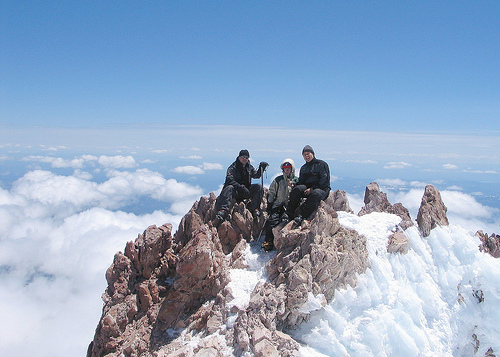
… Typically the climb and decent will take two days, although, some people do it in one.
Day 1 starts with a 4 – 6 hour hike from the parking lot up to Helen Lake (which is really just a glacier) where you setup base camp. The rest of the day is spent admiring the view, making food (yay, dehydrated meals!) and preparing your day pack for the next morning.
The summit ascent begins somewhere between 12 AM – 3 AM the next morning. You’ll want to start super early while the snow is still firm and solid and get to red banks before the sun starts making it soft and slushy.
When you reach the summit stop to enjoy the view, regain your energy and prepare for the best part of the journey — glissading down the mountain! This literally means you will sit on your butt in the groove created by the people before you and slide down the entire mountain; stopping briefly at base camp to collect the rest of your gear. Not to worry, you will have an ice axe with you as a safety device that will help you regulate your speed down the mountain.
So that’s it, 2 days to get to the top and and 3 – 4 hours down. …
Adventurer Mike Pudlo hikes through White Sands National Monument in Alamogordo, New Mexico without getting lost. See several highlights and learn why White Sands is well, white.
If you trek in South America, you spend a lot of time at the SAE clubhouses in Cuzco and Lima, Peru.
Hikers and mountain climbers rendezvous there to organize trips.
I’m a Facebook friend of the Lima Clubhouse. They offer many special events for international travelers. For example:
Wednesday, January 14, 2009
Location: Lima Clubhouse
Interested in trekking, but have no idea how, where, when, with whom to start? Join us on January 14th for “Trekking in Peru 101”. SAE Lima Clubhouse hosts trekking expert, Virgilio Marmanillo, to answer all your questions and concerns. Virigilio has been guiding trekking and adventure tourism travelers for over 10 years in Peru. He’s an expert in the Salkantay, Inka and Choquehuanca trails.
Stop by and learn tips from a pro, find out what you need for your route, and maybe even start prepping for a trekking adventure!
Maple Kiwi just completed the adventur during the New Zealand summer:
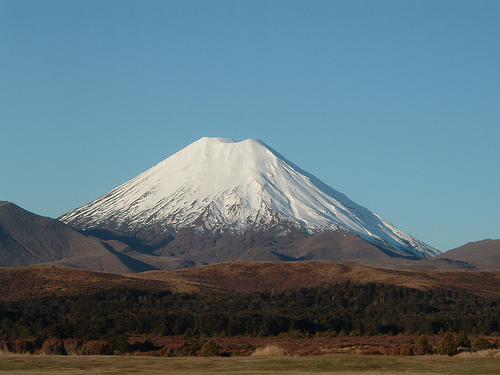
… As you may deduce from the name, the track loops around Mt Ruapehu, an active volcano in the centre of New Zealand’s North Island. Ruapehu hasn’t had any serious indigestion since 1996, but knowing what bubbles beneath does add a bit of excitement to the tramp.
I’m not sure what possessed us to do a six-day tramp after nothing more than day hikes all spring. Luckily we made it through without too much pain.
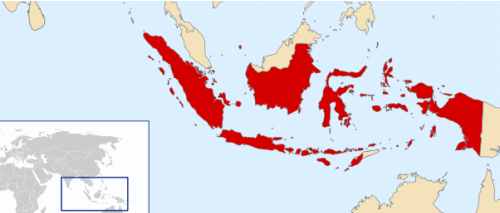
The editor has since 1994 hiked up more than 20 volcano’s peaks around Indonesia archipelago, mostly in Java Island. And now has set up this blog to share his knowledge.
Indonesia
He recommends:
SUMATRA ISLAND
1) Volcano Kerinci
2) Volcano Tujuh
3) Volcano Sibayak
JAVA ISLAND
1) Volcano Merapi
2) Volcano Bromo-Semeru-Ijen
LOMBOK ISLAND
Volcano Rinjani
BALI ISLAND
Volcano Agung
… Others interested volcanoes in Indonesia are Tambora and Krakatau. Tambora was recorded as volcano which has biggest eruption in the history of world volcano eruption. Now, Tambora is already quite and frequently visited by volcano trekkers to admire it’s natural uniqueness, that impossible to be witnessed in others places. …
J.P. recommends a new volume by Ben Gadd called “The Canadian Hiker’s and Backpacker’s Handbook” (publisher, Whitecap, 2008).
The book is slanted towards Canadian terrain and weather, so the gear and other recommendations are for those types of conditions. As a result super lightweight backpacking options aren’t emphasized in this book. Gear and hiking decision making is based with hypothermia- risky weather condtions always being a factor in much of Canada.
Sadly I did not make it out to the New Year’s Eve adventure party hosted by Dave and Lisa Adlard, in Idaho.
Many of my Adventure Racing Team were there. The outdoor activities were extreme due to the record snow fall in 2008.
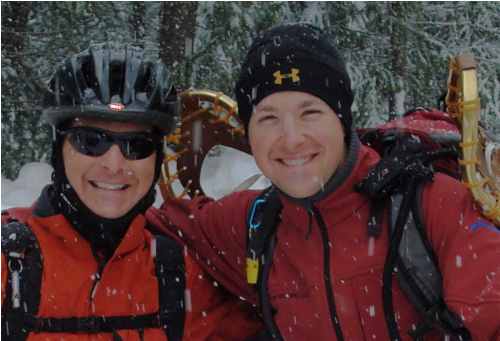
… It was very interesting to snowshoe along trails that we run and bike so often during the rest of the year: your normal landmarks are muted, and distances are thrown off, but the snow makes everything look like a real winter wonderland!
At the edge of the park, we decided to make our way to Scout rocks, which we had been to countless times on foot, but never in four to five feet of snow! We were warned that if we continued, there were no more directional signs, and no groomed trails, which suited us perfectly, and off we went.
The trail, if you can call it that, is mostly uphill to the rocks for about 3/4 of a mile, and the fact that we were walking was more than made up for the fact that the snow laden branches were now at face level.
Once we got to the base of the rocks, we started our way up the near vertical cliff, covered in feet of snow, with crevasses, roots, and boulders hidden underneath! It was awesome! …
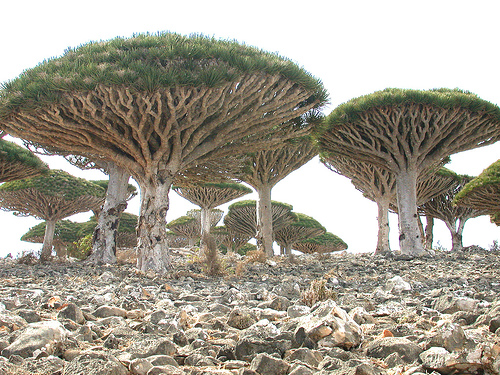
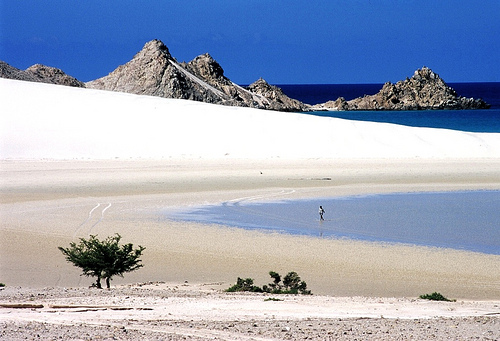
… Socotra is considered the “jewel” of biodiversity in the Arabian sea. The long geological isolation of the Socotra archipelago and its fierce heat and drought have combined to create a unique and spectacular endemic flora (which may, therefore, be vulnerable to introduced species such as goats and to climate change). Surveys have revealed that more than a third of the 800 or so plant species of Socotra are found nowhere else. Botanists rank the flora of Socotra among the ten most endangered island flora in the world. The archipelago is a site of global importance for biodiversity conservation and a possible center for ecotourism. …
The island was recognised by the United Nations Educational, Scientific and Cultural Organization (UNESCO) as a world natural heritage site in July 2008. …


 Wednesday, January 14, 2009



 we’ve recommended hundreds of times in the past.