According to Lonely Planet Best in Travel Readers’ Choice Awards.
… ‘Incredibly friendly, amazingly beautiful and one hell of a good time. Bars followed by geothermal hot springs.’
‘Iceland is the place to be in 2012 to see incredible displays of nature! The country of Iceland is currently experiencing two “maximum cycles”: One to do with increased volcano activity and another to do with the increased aurora activity for 2012.’ …
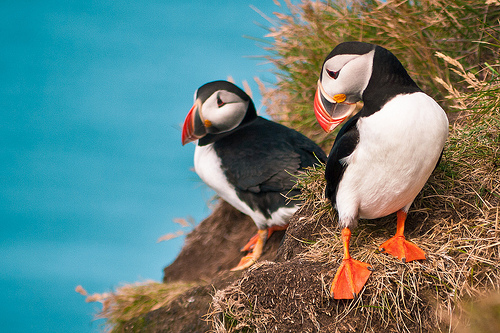
… ‘The wonders and creativity of nature at its best – untouched by humans…to this point. Geothermally heated pools to refresh the soul, literally seeing the rift valley between the American and European geological plates, visiting glaciers, seeing a real volcano, walking on terrain that cannot be seen anywhere else in the world…AND who wouldn’t want to see a puffin!!’ …
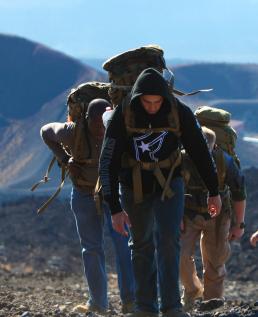
… On the morning of Oct. 25, about 20 Marines with Special Purpose Marine Air Ground Task Force 12 scaled its slopes.
… SCTT-2 is one of four specialized Marine teams in Italy as part of a newly formed unit tasked with mentoring African militaries dealing with regional terror threats. Their time spent in between missions, leaders have stressed, doesn’t have to go to waste.
The hike was designed to teach the Marines a lesson in the rigors of operating in a mountainous environment. …
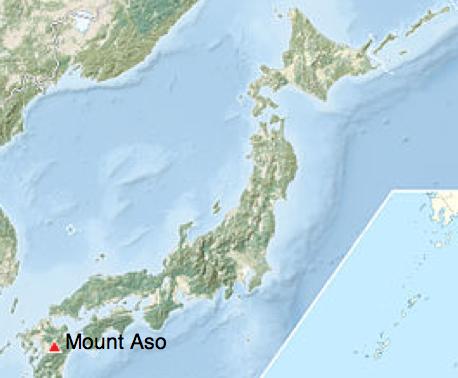
Mount Aso (阿蘇山 Aso-san) is the largest active volcano in Japan, and is among the largest in the world.
It stands in Aso Kujū National Park in Kumamoto Prefecture, on the island of Kyūshū.
Its peak is 1592 m above sea level. Aso has one of the largest caldera in the world (25 km north-south and 18 km east-west). The caldera has a circumference of around 120 km (75 mi), although sources vary on the exact distance. …
Aso is one of the best hikes in Japan. So — as expected — I wasn’t able to hike it.
It seemed we were well organized for this one, up early and arriving by rent-a-car before the tour buses.
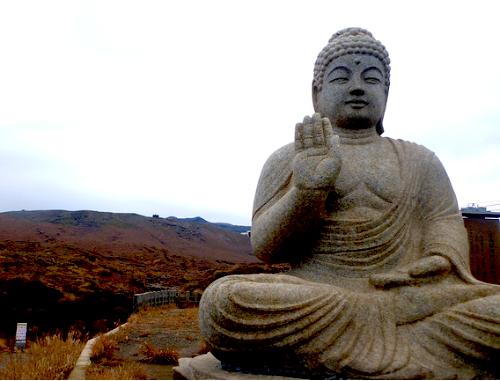
Yet the Buddha said we could not continue up the mountain. Trails were closed due to Sulphur Dioxide emissions.
I briefly considered going off trail. But the stink really was choking.
… And, in fact, I understand the trails and ropeway are often closed for this reason.
More bad luck for me on this trip.
Here’s the scoop on how to actually walk that destination – Hiking in Japan blog – Mt. Aso (阿蘇山)
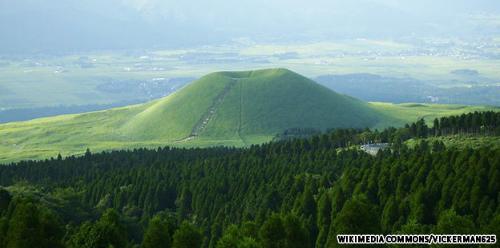
The most iconic image is this unusual feature, the ‘rice mound’.
The Reverend Walter Weston (25 December 1860 – 27 March 1940), was an English clergyman, missionary, and mountaineer. …
Weston and Edward Bramwell Clarke are the westerners identified with the emergence of mountain climbing as a new sport in Japan. By the end of Weston’s life, some British climbers referred to him as ‘the father of mountaineering in Japan’.
In 1937, Emperor Hirohito conferred on him the Japanese Order of the Sacred Treasures (fourth class) and the Japanese Alpine Club erected a bronze tablet in his honour at Kamikochi in the Japanese Alps. …
… He published Mountaineering and Exploring in the Japanese Alps (1896). As a writer and lecturer he continued to introduce Japan to an overseas audience. He gave universal currency to the term Japanese Alps, though it was first used before he came to Japan. …
Walter Weston statue - Mount Ena Park
He’s honoured at an annual festival in Kamikochi the first Sunday in June.
… For the last 40 years, men have held the Appalachian Trail record. In the last 20, it’s been confined to an elite club of ultra runners who typically covered the requisite 30 to 50 miles per day in an 11- to 13-hour period.
Conventional wisdom suggested that breaking the record would mean running faster with the same strategy. And a new record holder would most certainly be male.
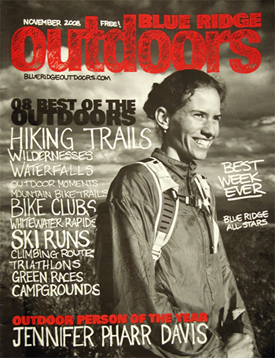
Pharr Davis, 28, took the standard strategy and turned it upside down. Moving from north to south, she covered the trail’s 2,181 miles by hiking for 16 hours a day beginning at 4:45 in the morning and walking well into darkness. To stick to an average pace of 47 miles a day, she slept on the trail or at road crossings to eliminate needless commute times to and from the trail. Her husband, Brew Davis, served as the support crew.
Pharr Davis trained by hiking rather than running—and the novel approach worked.
…
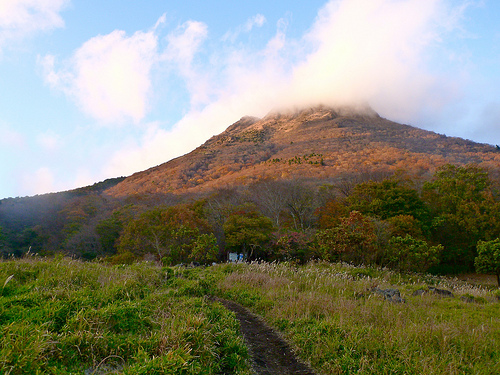
Mount Yufu (由布岳 Yufudake) is a 1,583.3 m (5,195 ft) volcano, located on the border of Yufu and Beppu, Ōita, Japan.
15km
Yufu is one of the hikes recommended in Lonely Planet Hiking in Japan.
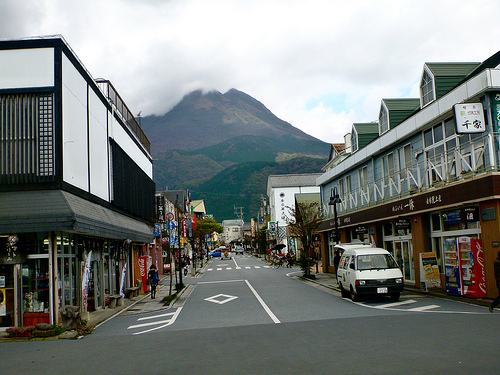
I chose it as access is easy by public transport. In fact, when you get off the train in Yufuin, you know exactly where you’re going.
Or not. I spent perhaps 90min from that point before finding the actual trailhead. This is typically the end of the Yufu-dake hike, not the start.
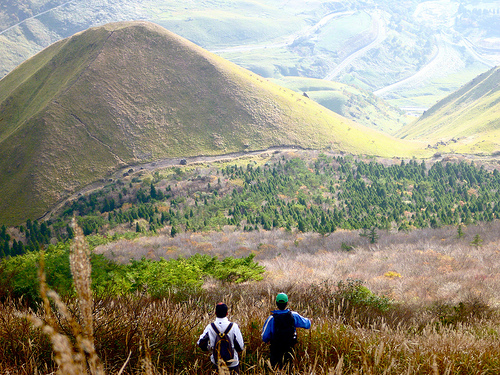
Once on the trail, it’s a fun and easy ascent … for a volcano. This far south, there are still some Autumn colours.
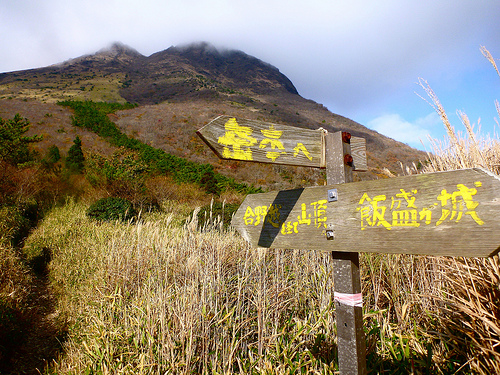
all signage is in Japanese
This far south, too, there are still plenty of hikers in November. Most were headed the opposite direction.
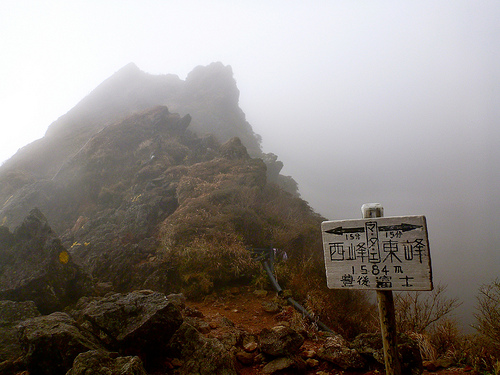
Decision time. Which of the twin peaks should I climb?
I took the one closest to Yufuin, Nishi-mine (1548m). It’s slightly higher and harder.
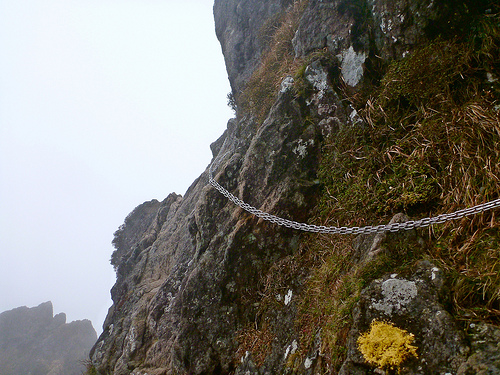
In fact, it turned out to be quite a scramble. This point of exposure in particular convinced a couple of men to turn back and try the other.
Finally, I saw a hiker atop Nishi-mine.
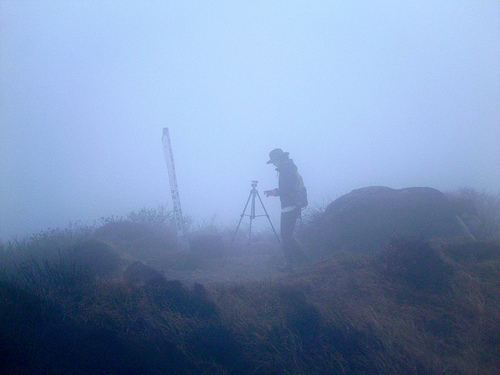
He cleared out when I arrived. As did the clouds.
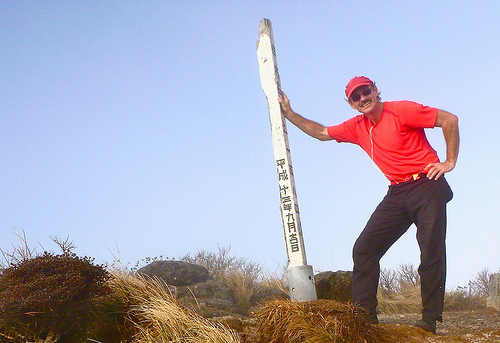
Fairly late in the day by this point, I left a Summit Stone, and hustled down to the nearer Yufu-tozan-guchi trailhead where I could catch a bus in either direction.
It was 45min before one arrived. A gentleman was tenting there, well prepared to do the hike next morning. We were both reeking of shōchū by the time the bus pulled up.
The Yufuin railway station has a hotsprings foot bath for waiting passengers. I couldn’t resist.
Yufuin is a hotsprings resort town, in fact, quite famous. I recommend it. I stayed at a great hostel in Beppu, though, another hot springs resort.
If you love hot springs, southern Japan is the place to go.
Scenes taken from Tenerife, more than 2,000 meters above sea level and over a year to capture all possible shades, clouds, stars, colors from a unique landscape and from one of the best skies on the planet.
First in a series of videos nocturnal and crepuscular Time Lapse taken in the Canary Islands trying to capture the beauty of each island.
To capture the natural movement of the earth, stars, clouds, sun and moon TimeLapse technique was used, Dolly vertical and horizontal rails, spindles with horizontal and vertical movements. HDR data collection.





 besthike.com