Inspiring.
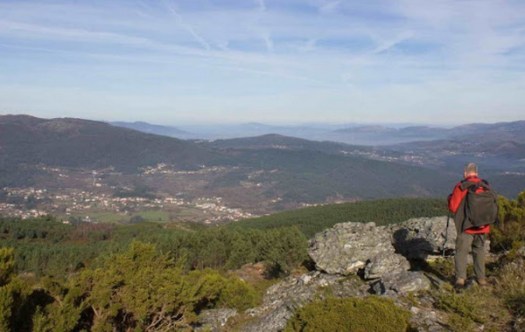
I hiked White Mountain, California with Bob in 2007.
Click PLAY or watch the trailer on Vimeo.
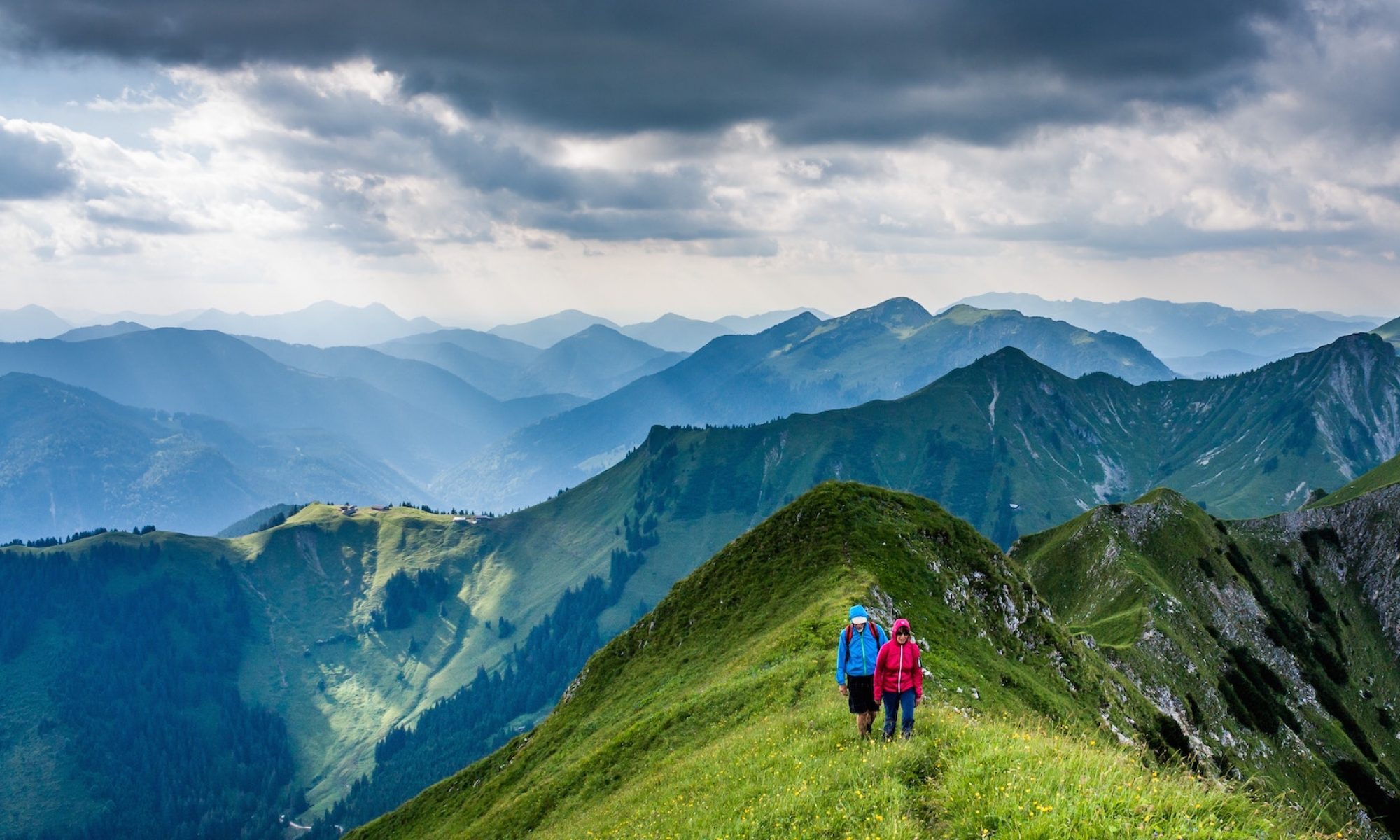

Best hikes, treks, tramps in the world.
Inspiring.
I hiked White Mountain, California with Bob in 2007.
Click PLAY or watch the trailer on Vimeo.
In the Himalayas it’s common to see shafts of sunlight projecting up from behind the high peaks.
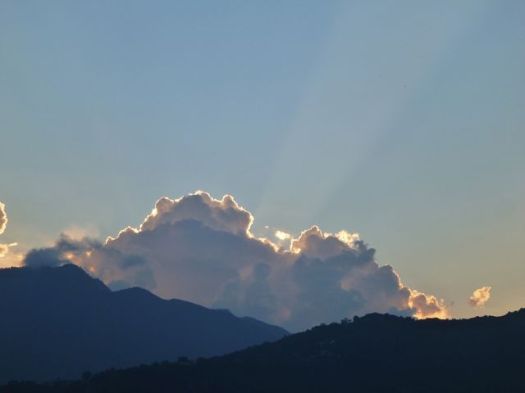
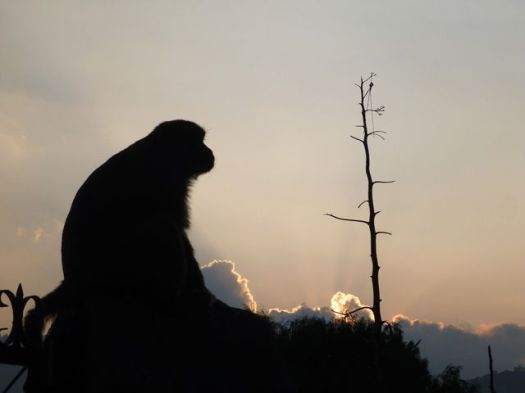
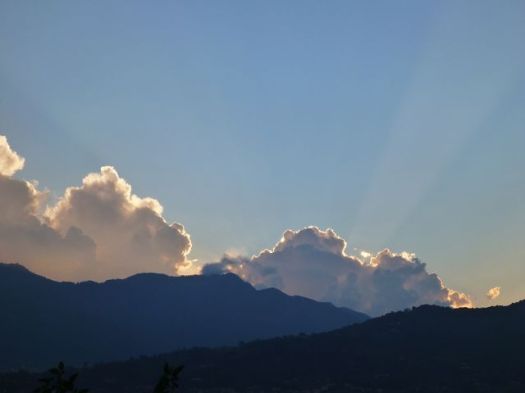
Is there a name for that phenomenon?
It’s something like beams of light penetrating a dark cathedral.
Those I shot at the Monkey Temple in Kathmandu. More photos.
Rota Vicentina is a long distance path along the SW coast of Portugal, between the city of Santiago do Cacém and the Cape of St. Vincent, totalling 350 km to walk along one of the most beautiful and best preserved coast lines of southern Europe. …
It’s easy to section hike. Easy to hike independently. Or sign on with a guide.
The official website is excellent – RotaVincentina.com
Click PLAY or watch a beautiful promo edit on YouTube.
Shout out for this Nepali company.

Tashi Sherpa, President:
Sherpa Adventure Gear was inspired by sheer chance in 2003. Back then, my family and I owned an import clothing business. In May of that year, while walking down the streets of Manhattan, a magazine issue commemorating the 50th.anniversary of the first ascent of Everest caught my eye.
The craggy lines of the familiar face staring at me from the cover belonged to none other than my Uncle, Ang Gyalzen Sherpa. I was amazed to discover that he was one of the original Sherpa on Sir Edmund Hillary’s celebrated expedition in 1953.
…I felt a powerful urge to share the Sherpa story with a wider audience. So I created Sherpa Adventure Gear and began making outdoor clothing and gear. Then I started sponsoring the best high altitude climbers in the world to test our products –the Sherpas themselves.
Click PLAY or watch their promo video on YouTube.
official website Sherpa Adventure Gear
I shopped all the real gear – and North Farce – available in Thamel. And ended up refreshing my wardrobe most at Sherpa. The shop is not in the tourist ghetto, rather a 10 minute walk at Lal Durbar Marg next to Jai Nepal Cinema.
For my 6th trip to Nepal, where should I hike?
Dolpo? Mustang? Kanchenjunga?
So far I’m leaning towards Makalu. You can fly to the start, avoiding horrendous overland travel. 🙂
Known for its rural farming villages and a diversity of flora and fauna, the area receives few trekkers due to its relative inaccessibility.
OVERVIEW
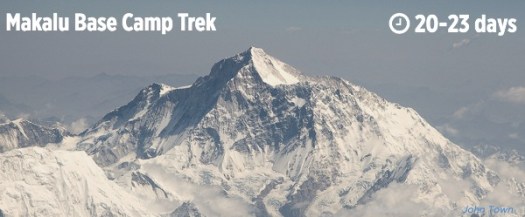
Starting at 400m in Tumlingtar along the banks of the Arun River, you’ll need strong legs to carry you for an elevation gain of 5120m to reach Makalu Base Camp. A rustic teahouse trek (don’t expect deep-fried snickers bars), you’ll find yourself at the foot of Mt. Makalau (8485m), the world’s 5th highest mountain, with Lhotse (8,516m), Everest (8,850m), Baruntse (7,220m) and Chamlang (7,319m) not far off.
It is a culturally rich perspective on Nepal best suited for people who have been trekking in Nepal before.
related – 2012 trip report by sathya
If you love Port and Portuguese wine, consider a week long guided hiking tour through famed Douro valley.
The pitch:
This fantastic program will get you to one of the most beautiful places in Portugal, de Douro region. From Porto to the Douro slopes you’ll take train journeys who lead you to amazing vineyard terraces scenery, today UNESCO heritage site.
While hiking thru the vineyards, you’ll have the chance to taste some of these wines, world class wine!!! Return in a cruise descending to the river mouth at Porto and, finish the trip at the famous cellars of the port Wine.
» UNESCO World Heritage Sites
» One very good time to taste wines from the Douro region.
___
I’ve hiked nearby Peneda-Gerês National Park. Combining a wine walk with this National park on one trip would be idea. Click through for more information.
The Great Himalaya Trail is a proposed trail of more than 4500 km stretching the length of the Greater Himalaya range from Nanga Parbat in Jammu & Kashmir to Namche Barwa in Tibet thus passing through Kashmir, India, Nepal, Bhutan and Tibet. When completed, it will be the longest and highest alpine walking track in the world …
It will never be “completed”. There are many GHT routes, higher and lower. They can be hiked continuously or by section.
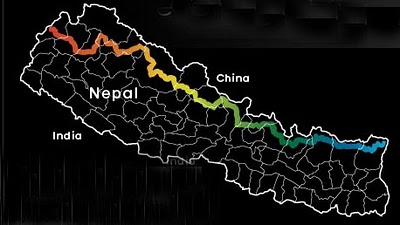
Check out two main websites, both pretty good:
The second mostly covers GHT Nepal.
The guidebook I’m researching is from Trailblazer – Nepal Trekking & the Great Himalaya Trail 2011 by Robin Boustead.
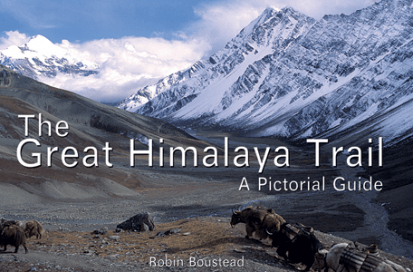
He’s got a coffee table book, as well, that I’ve never seen – The Great Himalaya Trail.
Stuart Bilby solo’d the Nepal GHT Nepal in 127 days in 2014, an incredible accomplishment. No cars, buses, planes, donkeys or yaks for transport. Stuart lost 19kg body weight. Actually, the first half he did with Lisa Lee-Johnson.
Linda Bezemer published a (much more reasonable) GHT Low Route electronic guidebook which you could use with an iPad on the trail. 1550km broken into 11 sections.
Seth, Kathleen and John did a 2014 east-west GHT Nepal traverse.
But my favourite is Gerda Pouler’s account of her 2012 very personal adventure – Great Himalaya Trail: 1,700 Kilometres Across the Roof of the World [Kindle Edition].
… This path is perhaps the ultimate walk.In 2012, Himalaya veteran Gerda Pauler set out to walk the length of the trail to raise awareness of autism in Nepal.
Travelling across the country with open eyes and ears, ascending high passes, visiting isolated villages and drinking tea with the locals allowed her to see and hear things many of us might never hear, never experience — and never know.Beautifully written like many great travel books and with a foreword by Sir Chris Bonington, this is so much more than a travel diary — it is a collection of stories from the very heart of Nepal and its people. From Tibetan tea and local beer to corrupt politicians and child marriage; cold nights and monsoon rain to incredible views and searing heat; and from angry yaks and giant spiders to Mr Bean and Jack Nicholson…
home page – gerdapauler.info
We’ve added a information page for those who might want to do Gosainkund and Helambu in the future.
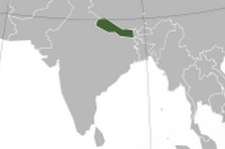
World → Asia → Nepal → Gosainkund & Helambu
Ridge walk with sacred lakes, high Laurabina pass and Shivapuri National Park.
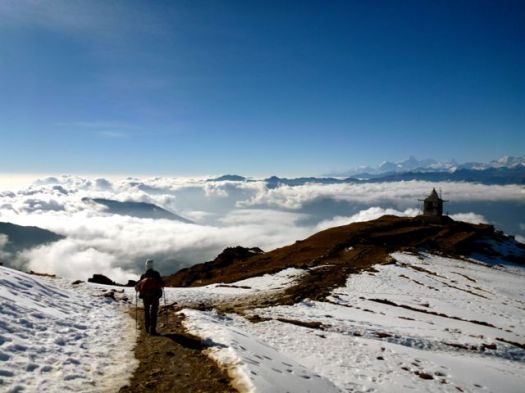
Click PLAY or watch David Vanneste’s solo, independent highlights Feb 2014 on YouTube. Off season. Lots of snow. A lovely edit.
Gosainkund and Helambu information page
.
Having just completed 14 days on the popular Langtang, Gosainkund and Helambu Nepal route, We’ve added a Langtang trek information page for those who might want to do Langtang in the future.
World → Asia → Nepal → Langtang
4000m+ valley north of Kathmandu, parallel to the Tibet border.
Plenty of challenging side trips up high.
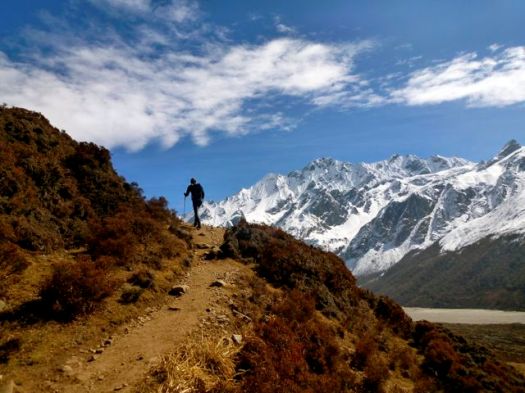
minimum 100km (60mi) return
Langtang trek information page
It’s always available from the pulldown menu under ASIA.