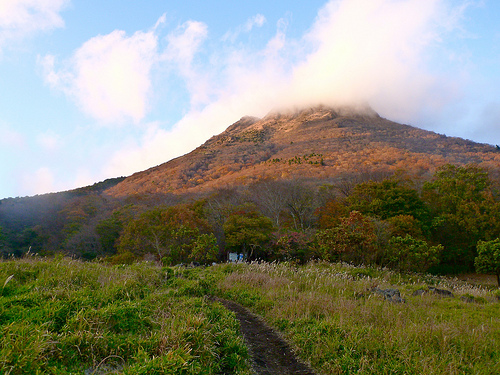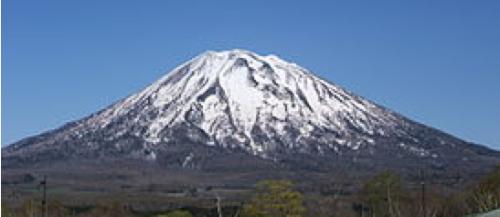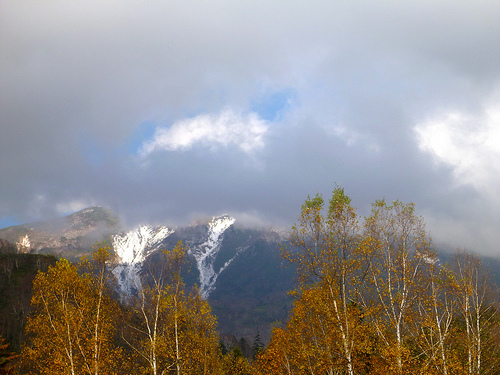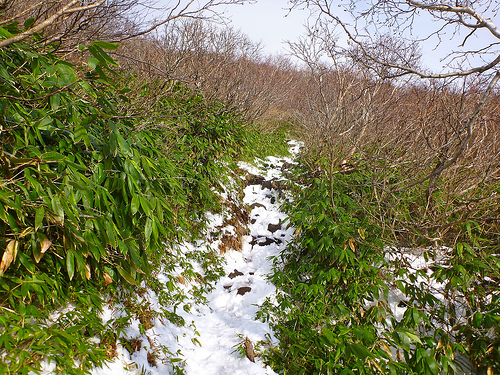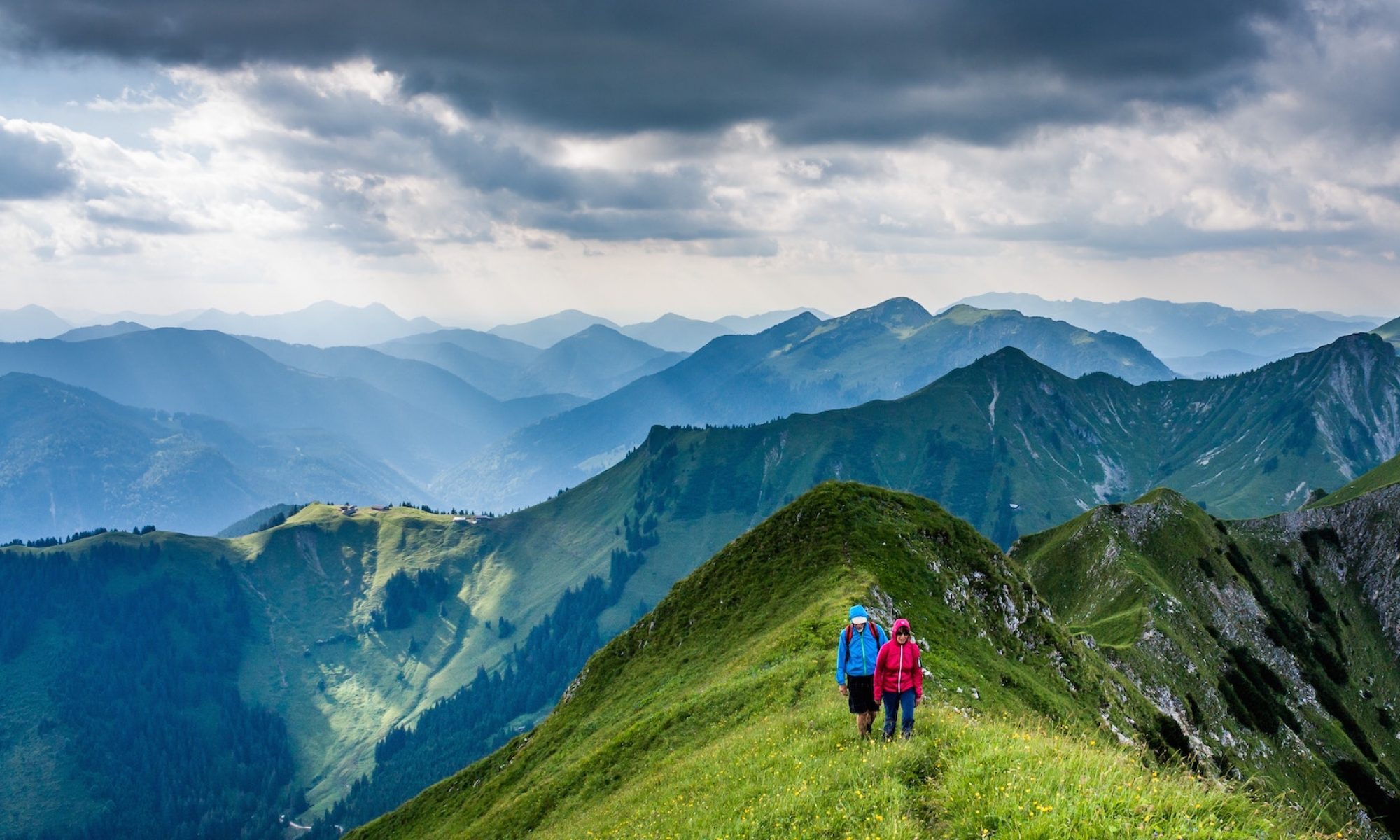

flushed off Mt Asahi, Japan

trip report by BestHike editor Rick McCharles

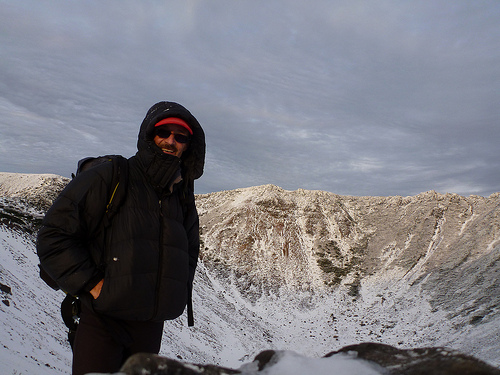
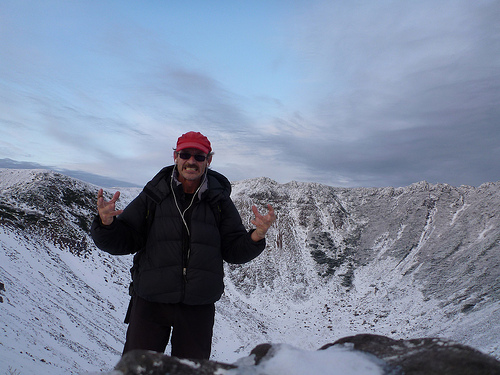
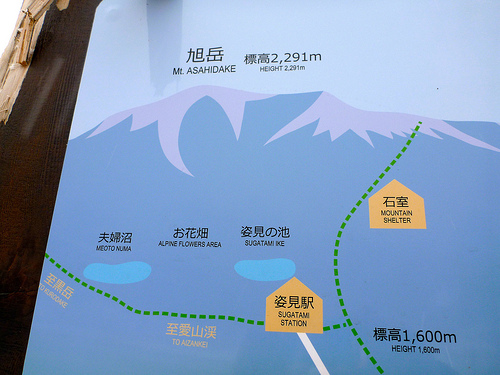
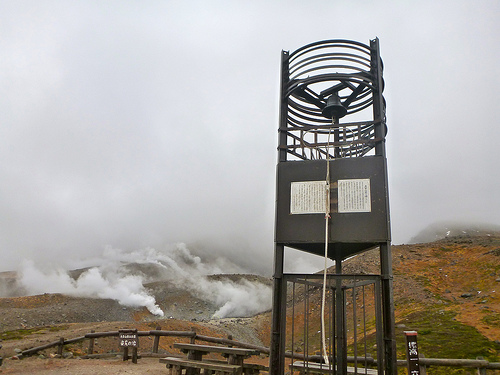
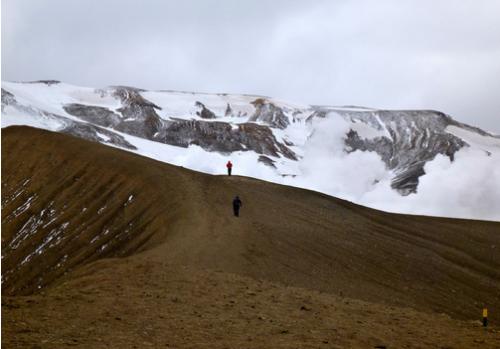
Here I am at Sugatami-ike in Daisetsuzan National Park, an impressive look-out over the fumaroles.

This volcano is LIVE.

It’s Asahidake (Mt Asahi), the highest mountain in Hokkaidō. (2,290.9 m or 7,516 ft)

… The mountain is popular with hikers in the summer and can be easily reached from Asahidake Onsen via Asahidake Ropeway.

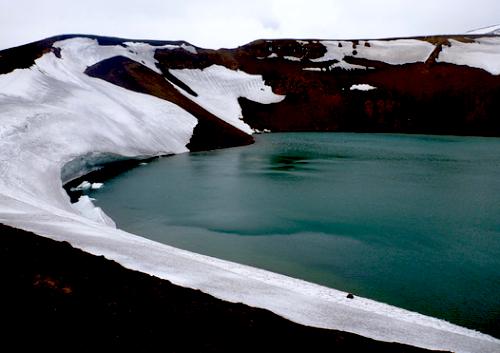
Sugatami Pond, directly below the peak, is famous for its reflection of the peaks, snow, and steam escaping from the volcanic vents. …

I’d climbed the 500m to here, quickly and easily.

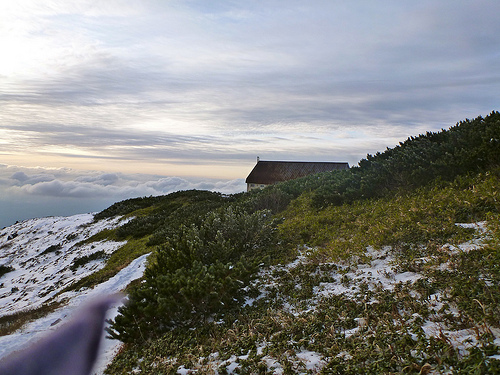
At this elevation the weather was quite reasonable — raining, but not hard. The emergency shelter was open.

From this point the top of the volcano was shrouded. Myself and Kim from Belgium were the only hikers bold (stupid) enough to climb higher. (It’s not popular with Japanese hikers end of October, as you’ve already guessed.)

We might have made it to 1900m before being driven off the mountain by wind and freezing, horizontal rain. Merde.

I slid and slipped back down the trail the way I’d come up. It was pretty much a waterfall by the time I reached bottom. Kim opted to take the Ropeway down, the cheater.

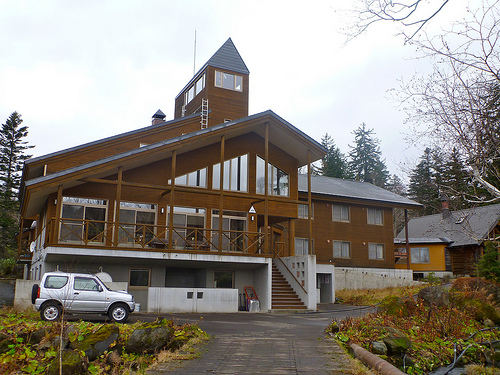
Happily, there was a gourmet dinner awaiting me below in Japan’s best and most expensive alpine hostel.

This ain’t the usual hostel grub. Even better, we had a private onsen (hot springs). I had it to myself each time as only 3 people stayed in the hostel that night.

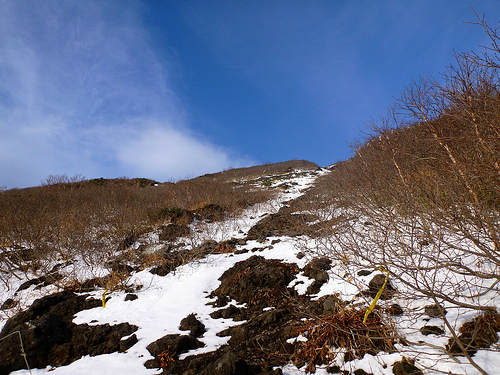
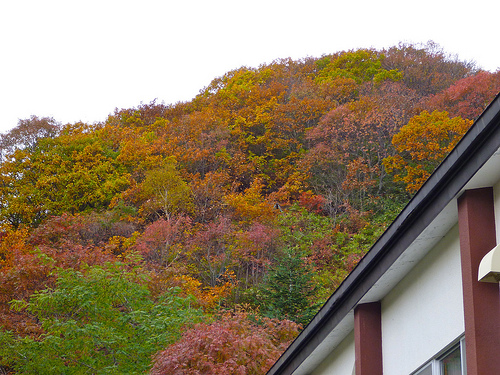
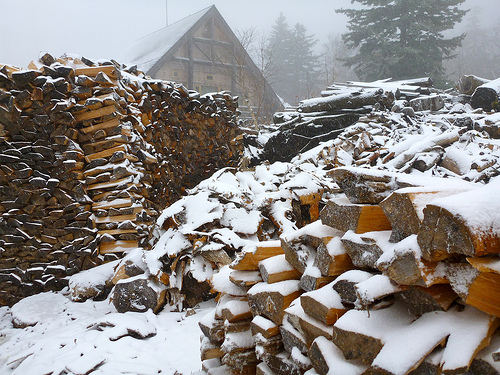
… Here was the scene next morning, the second major snowfall of the season. Looks like a long winter ahead.

See more photos from my failed attempt to climb Asahi.

I decided (for some reason) to head NORTH from here. Yep. North.

Mt Asahi hike, Japan

trip report by besthike editor Rick McCharles

Mount Asahi (旭岳 Asahi-dake) is the tallest mountain in Hokkaidō, Japan. … it is located in the northern part of the Daisetsuzan National Park.

The mountain is popular with hikers in the summer and can be easily reached from Asahidake Onsen via Asahidake Ropeway.

Sugatami Pond, directly below the peak, is famous for its reflection of the peaks, snow, and steam escaping from the volcanic vents. …

Lovely and welcoming … in Summer. Unfortunately I arrived Oct. 25th, closer to ski season. Many warned that the weather was too uncertain. In fact, it had been completely snowed over the week before I got there.

Eschewing the chair lift, instead (in about 90min) I walked up from Asahidake Onsen townsite to the main “hiking destination”, the top of the rope.

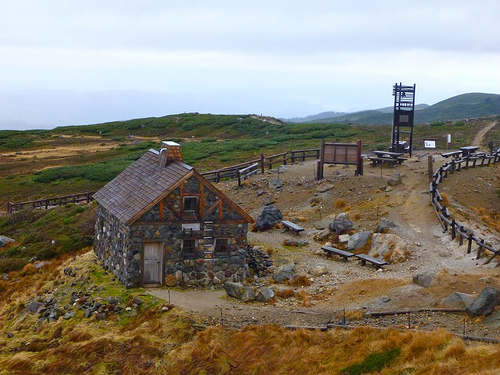
Emergency Shelter

I rang this bell, assuming it to be a “tradition” for new arrivals.

From there it’s about 2hrs to the top of the volcano. … But I only lasted about 1hr before high winds and horizontal rain forced me (and Kim from Belgium) to turn back.

The trail, wet and muddy on the way up …

… was in flood on the descent. Yuck.

Happily, there was a hot springs and gourmet dinner awaiting me below in Japan’s best and most expensive alpine hostel.

This ain’t the usual hostel grub.

So … the “highlight” of the hike, in the end, was my stay at Daisetsuzan-Shirakaba-So hostel.

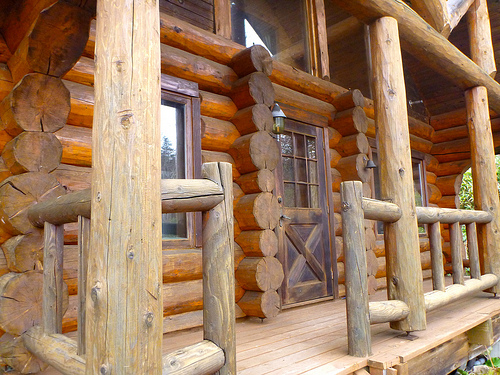
Check out the “Canadian log cabin” annex.

More photos from my day hike.

No bicycles. No tenting except at designated sites. No fires. Fishing is allowed.

_____ Update: Next morning the village and mountain both covered with snow. Time to move on.

Gullfoss (Golden Falls) Iceland

trip report by site editor Rick McCharles

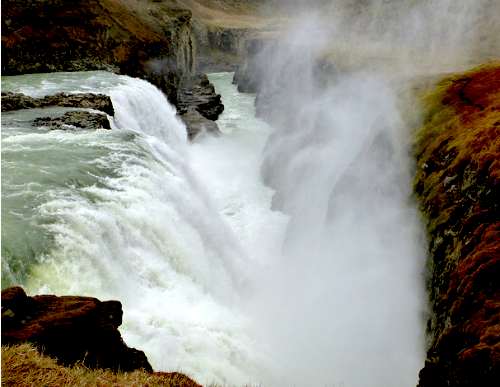
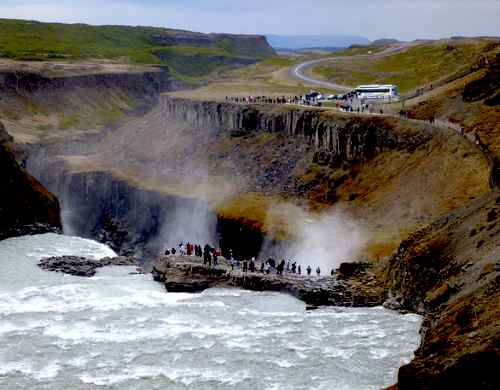
Of the many wonderful waterfalls of Iceland, these were the most impressive I saw.

They seem to suddenly disappear into the earth.

Gullfoss (English: Golden Falls) is a waterfall located in the canyon of Hvítá river in southwest Iceland.

Gullfoss is one of the most popular tourist attractions in the country. The wide Hvítá rushes southward. About a kilometer above the falls it turns sharply to the left and flows down into a wide curved three-step “staircase” and then abruptly plunges in two stages …

This is early season, yet the observation deck already seems near the breaking point.

I hiked down the river a ways to take in the vista from more of a distance.

See the rest of my Gullfoss photos.

More interesting photos tagged Gullfoss on flickr.

… there is another must see attraction near Gullfoss, the original Geysir. You can skip it. Go to Yellowstone, instead.

Þingvellir National Park, Iceland

trip report by site editor Rick McCharles

Historical hiking.

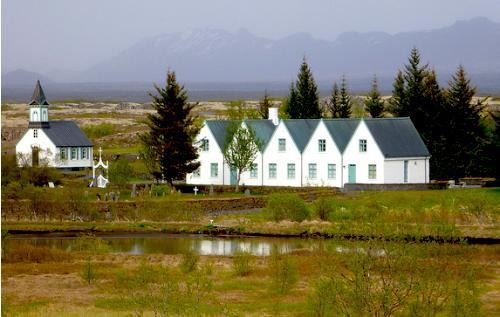
Þingvellir is a site of historical, cultural, and geological importance and is one of the most popular tourist destinations in Iceland. It is the site of a rift valley that marks the crest of the Mid-Atlantic Ridge.

Due to acoustics, historians feel this rift is the most likely spot for people to assemble.

… Parliament or Alþingi was established at Þingvellir in 930 and remained there until 1789. …

It’s speculated that Clan Chieftains from across the island met here regularly for a 2wk Assembly.

I quite enjoyed wandering the area, imagining times past, ancient and modern.

See more photos.

hiking Kjos, Skaftafell, Iceland

trip report by site editor Rick McCharles

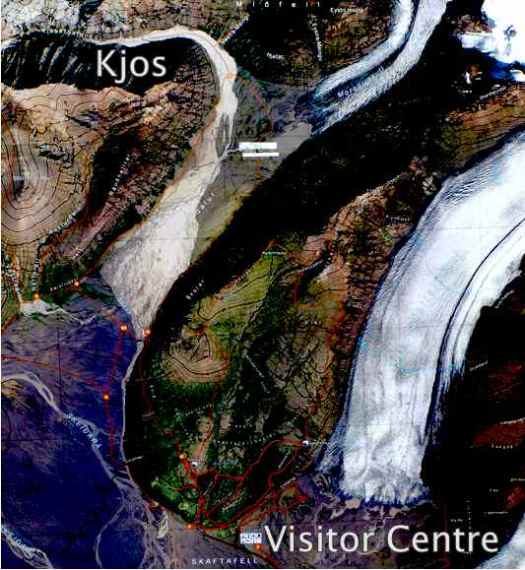
Kjós (‘Dell’)

Distance: 24 km

Walking time: 8 hrs.

Skaftafell, is part of Vatnajökull, the largest National Park in Europe.

Skaftafell Visitor Centre
is the most popular access. Indeed, this is the most popular campground in Iceland.

… OK, it’s EARLY in the season (June 13-14). The hordes have not yet arrived. It was closed 4 days not so long ago due to eruption of the Grímsvötn volcano, a fairly frequent occurrence, actually.

There are plenty of hiking & glacier walk options from this trailhead. Most are headed to Svartifoss.

hikers consulting the Trails map

The only backcountry tenting allowed out of Skaftafell Visitor Centre is Kjos (see map below), at the start of an unusual glacial flood plain valley called Morsárdalur.

One of the bridges had been washed out, so I needed to go in-and-out to Kjos via the same ‘route’ (It’s not signed all the way.)

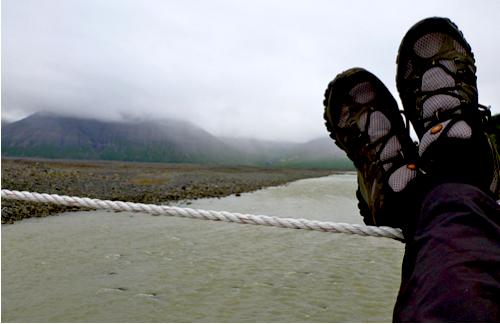
Here I’m taking the easiest Morsá river crossing.

Water crossings are the biggest challenge when hiking this island. I can see why Alastair Humphreys took a packraft on his crossing of Iceland, unsupported.

Aside from the route finding, Kjos is a pretty easy walk without much elevation gain.

There’s the campsite, just coming into view.

I set up here instead, under a rock overhang.

Instead of scrambling adjacent peaks, I relaxed in the tent. The weather was a continuous drizzle. Visibility was poor, anyway.

I was quite content listening to my audio book, The Girl Who Played with Fire.

This hike reminded me of similar walks towards glaciers in the Yukon. But a big difference here are the big, black desolate areas of volcanic ash. Stark and photogenic.

I’d love to do a long walk over the ash black wasteland one day. It would be like crossing salt flats.

See more photos from this hike on flickr.

Krafla caldera, Iceland

trip report by site editor Rick McCharles

The best of my hikes near Lake Mývatn was up to the Krafla Power Station. Especially since I had no idea what was going on here, at the time …

Click PLAY or watch it on YouTube.

Krafla is a caldera of about 10 km in diameter with a 90 km long fissure zone… Its highest peak reaches up to 818 m and it is 2 km in depth. There have been 29 reported eruptions in recorded history. …

You can hike close.

End of day, I headed for the new Mývatn Nature Baths, promoted as the Blue Lagoon North.

Leirhnjúkur geothermal area, Iceland

trip report by site editor Rick McCharles

Leirhnjúkur is a lava field close to Lake Mývatn in the north of Iceland. A loop of up to 5km in length is a popular day hike.

There was still a bit of snow, early in June.

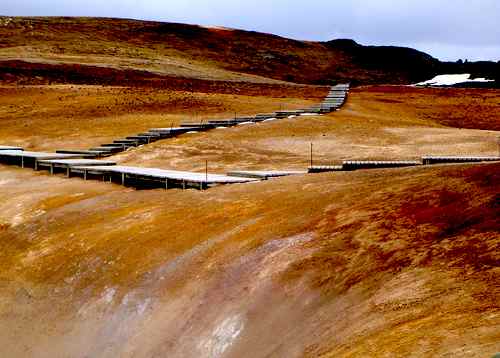
You must be careful where you step. You might get a hot foot if you step off the boardwalk.

The colours of Hell … and bizarre volcanic oddities, make for an entertaining walk.

See more photos from this day hike.

Hverir mudpots, Iceland

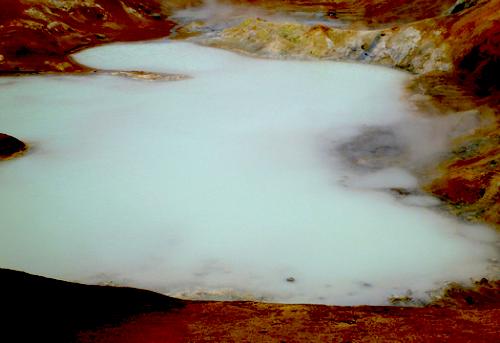
Hverir is a geothermal field to the east of Reykjahlid, to the side of the ridge known as Namafjall. The area is quite active, with mudpots and sulfurous puddles bubbling and steaming away. You will also see plenty of boiling springs, fumaroles and vents. The area naturally smells very heavily of sulfur, and you can often be engulfed in the steam clouds. A series of pathways meander through the area, which are roped off. Do not wander outside these areas as the area can be very dangerous. …

Iceland Attractions

more photos

Yet another of the excellent short walks close to Lake Mývatn

Mývatn pseudocraters, Iceland

trip report by site editor Rick McCharles

What’s a pseudocrater?

… a volcanic landform which resembles a true volcanic crater, but differs in that it is not an actual vent from which lava has erupted. …

They are pretty good fakes.

The best examples of pseudocraters are found near Lake Mývatn (lake of MIDGES) and on Mars.

see more photos from this short day hike
Hverfjall (Hverfell) Crater, Iceland

The Yellowstone National Park of Iceland is near Lake Mývatn (lake of MIDGES) in the North, an area of active volcanism.

Like Yellowstone, this area could blow up any time.

There are a dozen great day hikes to choose from. You could link them together – I met a British couple doing this – or drive trailhead to trailhead, as I did.
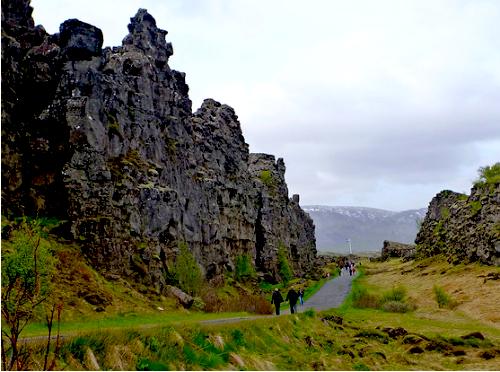
A short walk from the Information Centre is Hverfjall.

This one last erupted 2500 years ago. Whew.

It’s an easy walk up and around the rim. Weather permitting.

My photos.