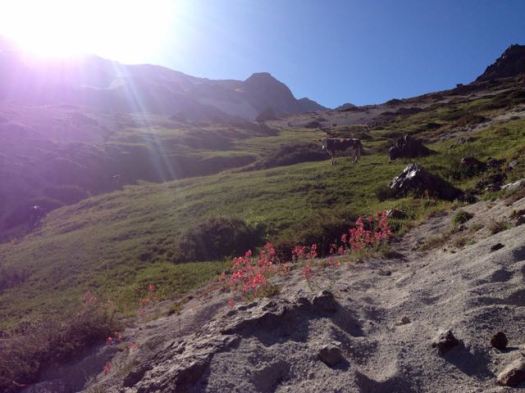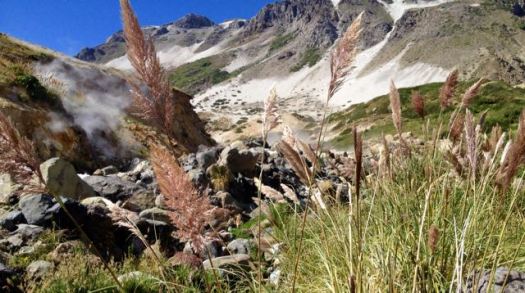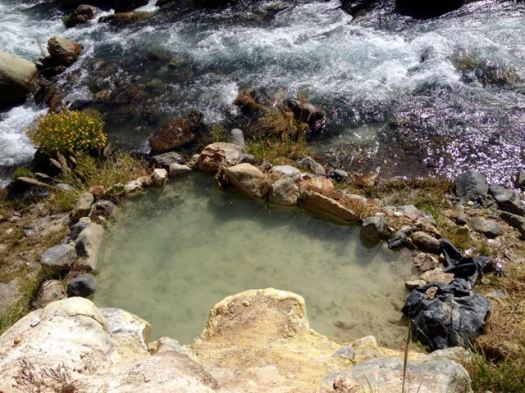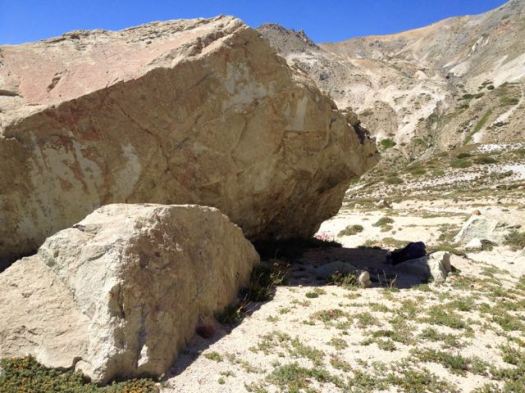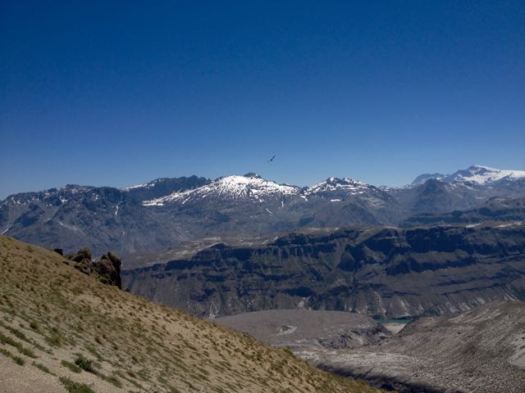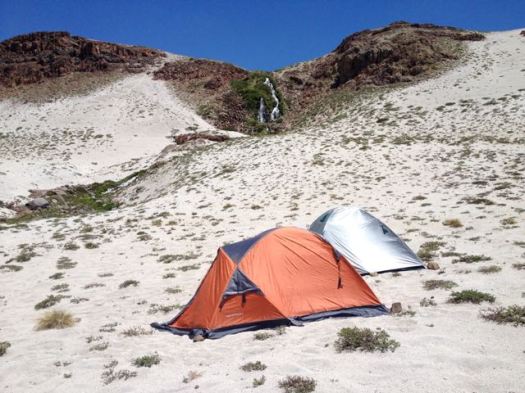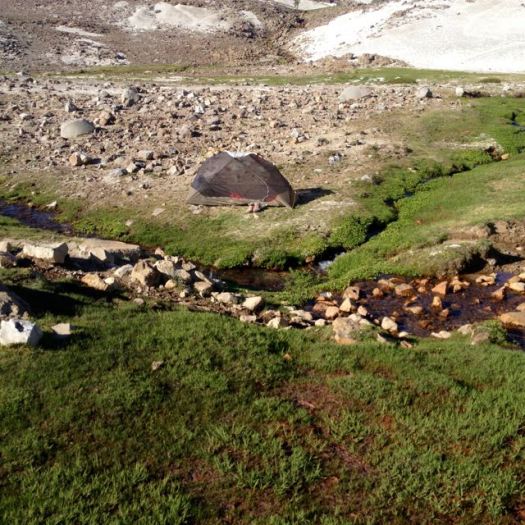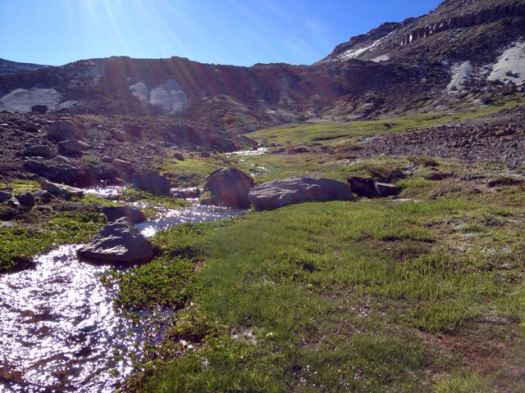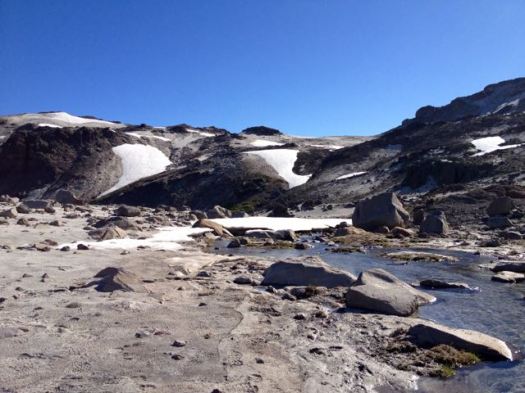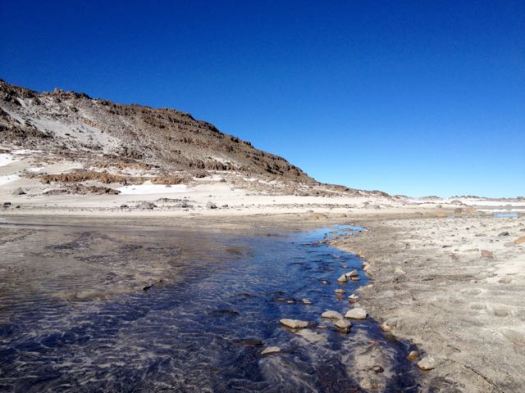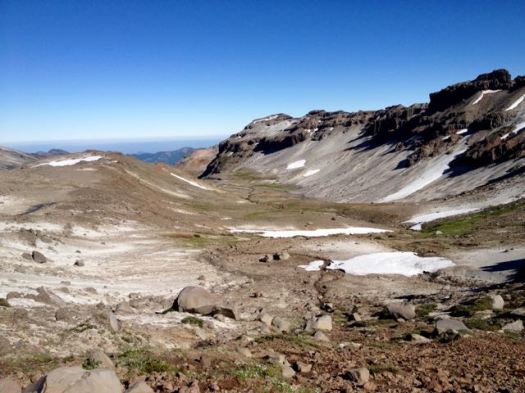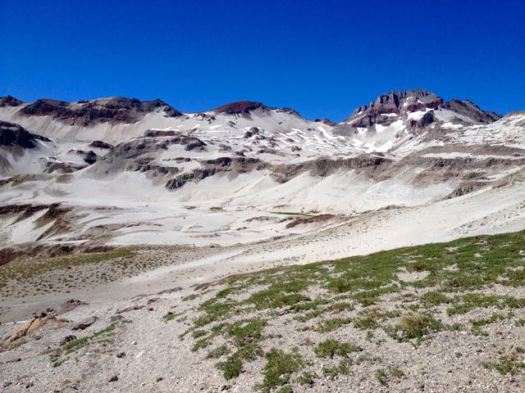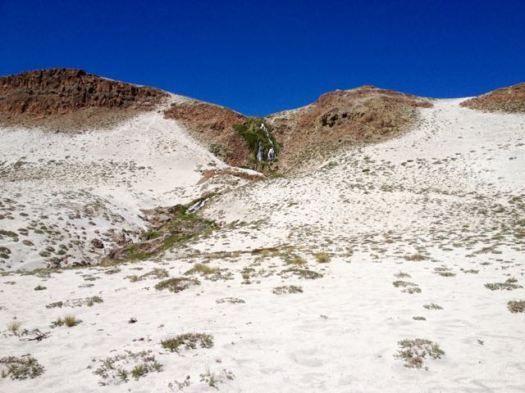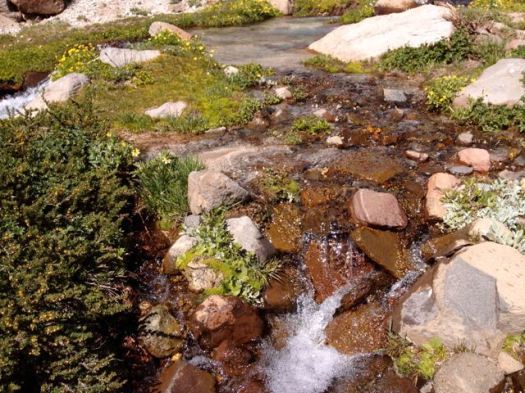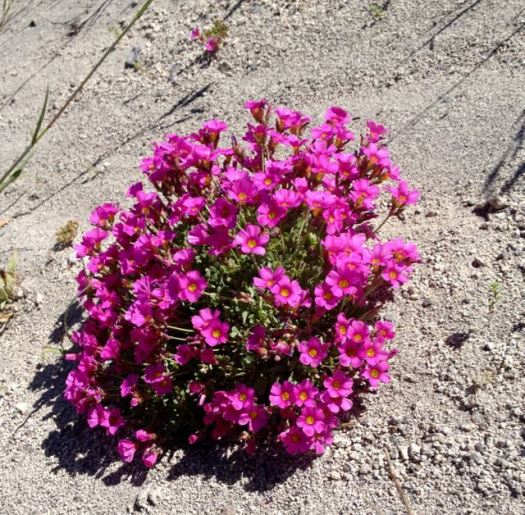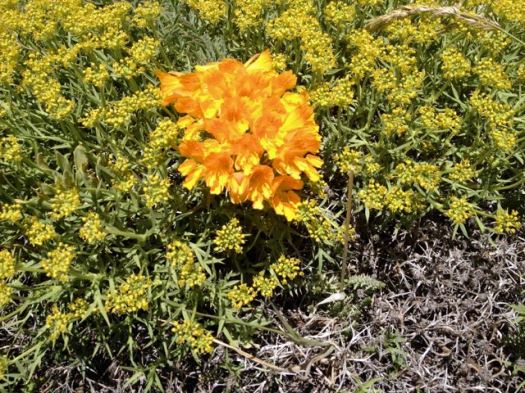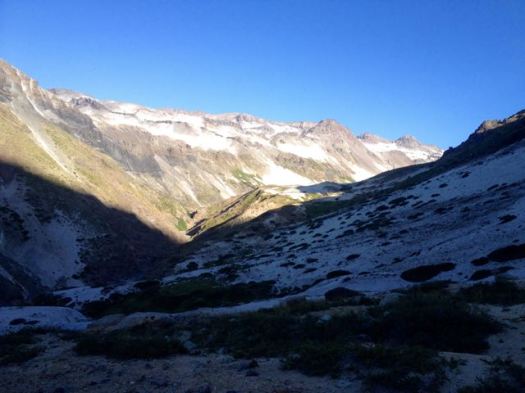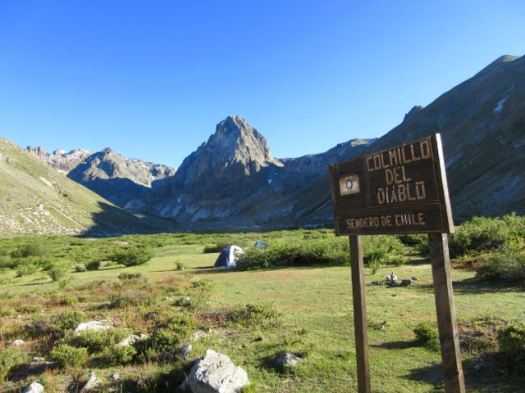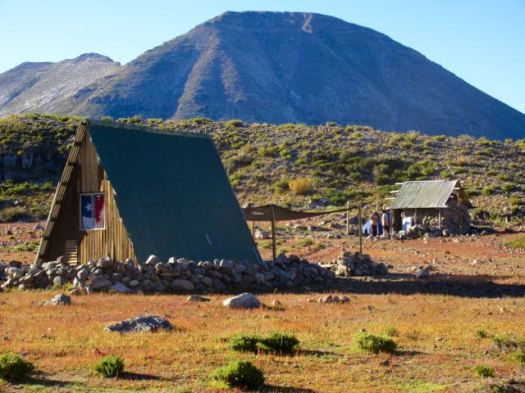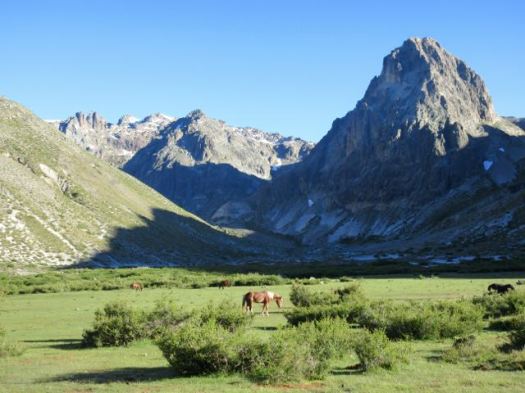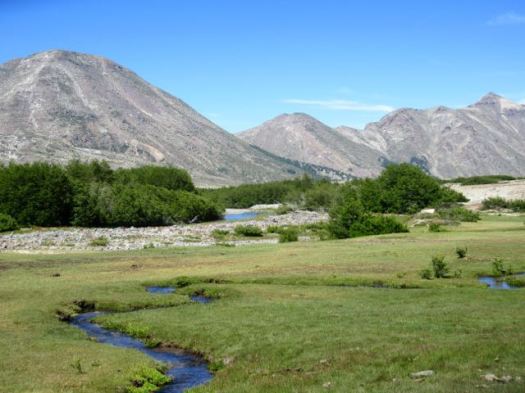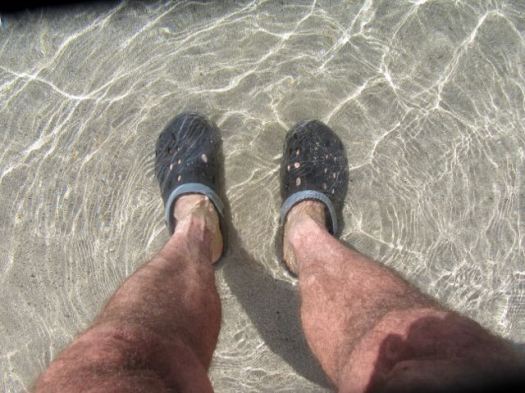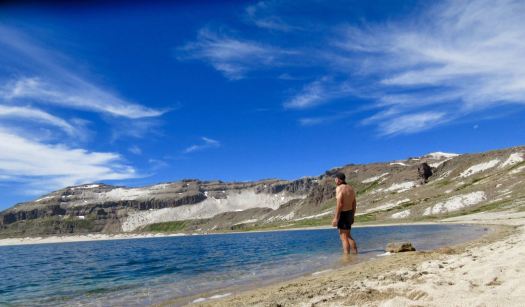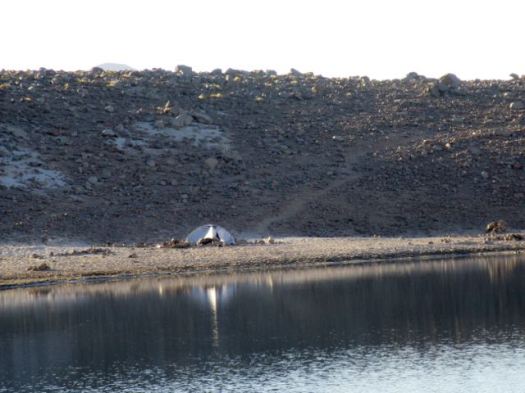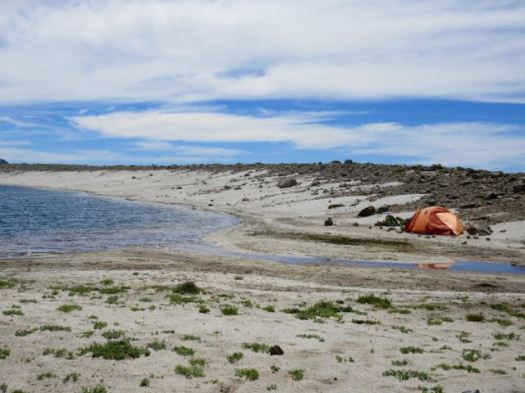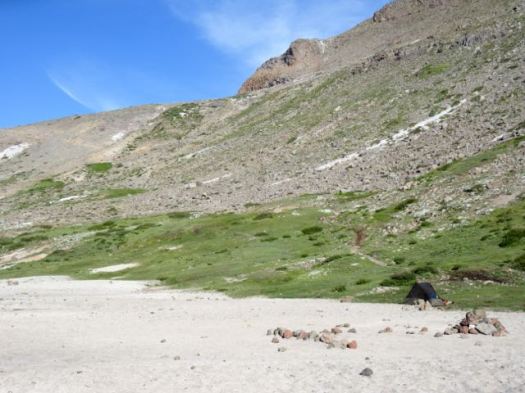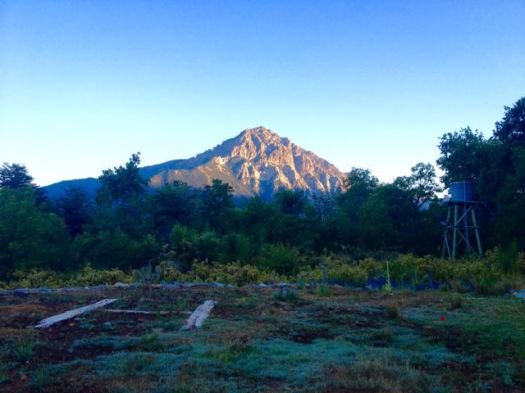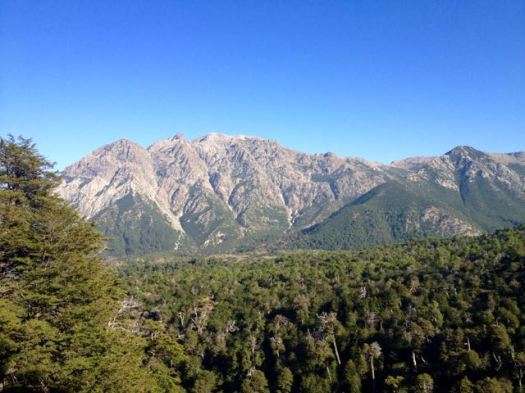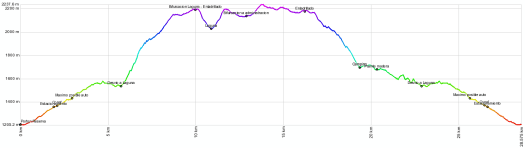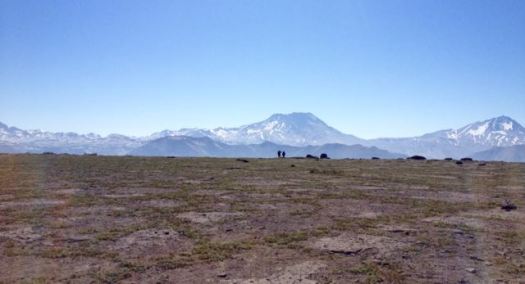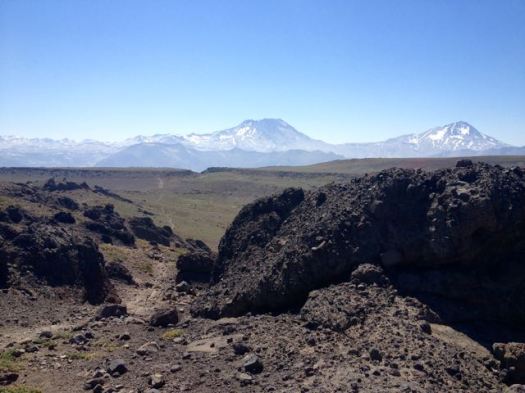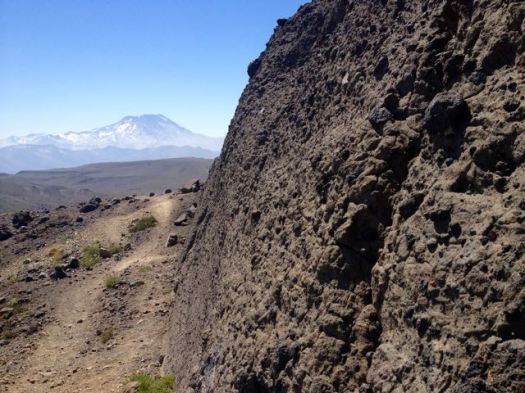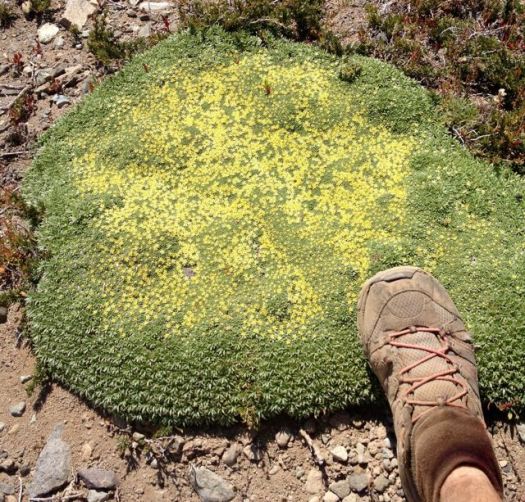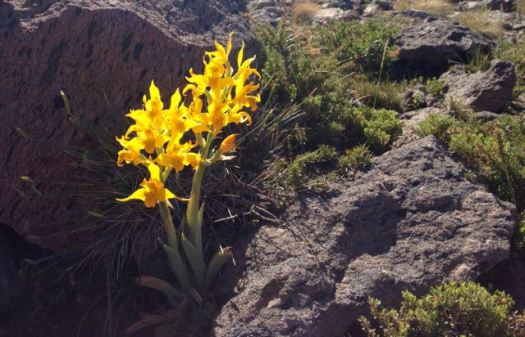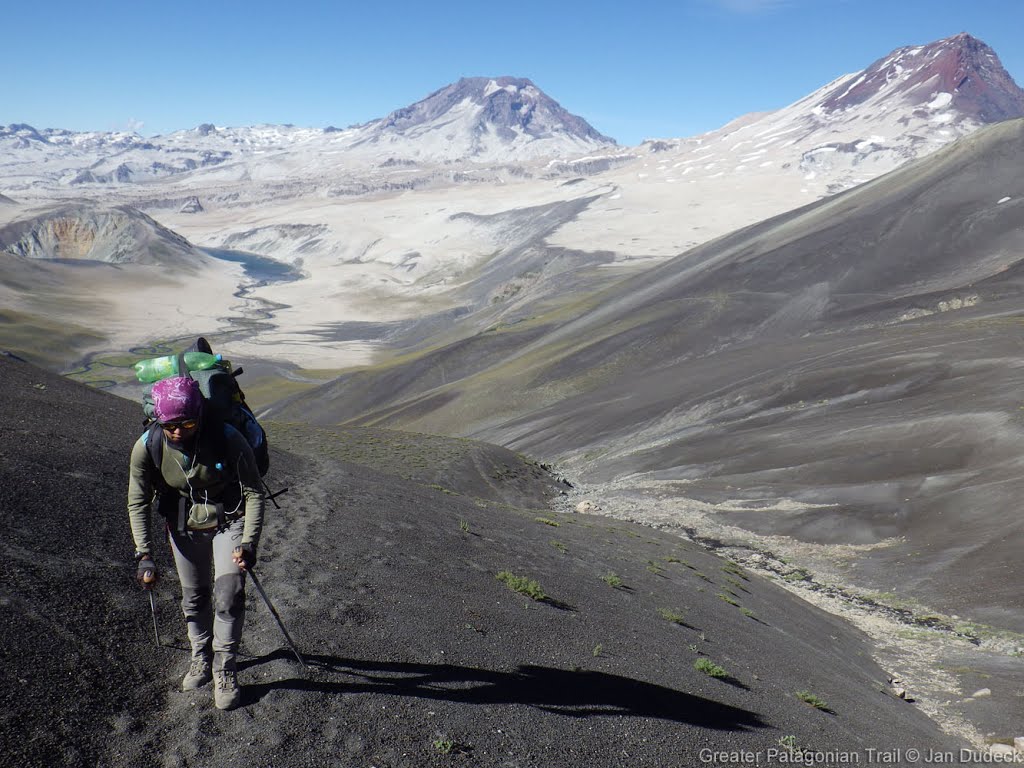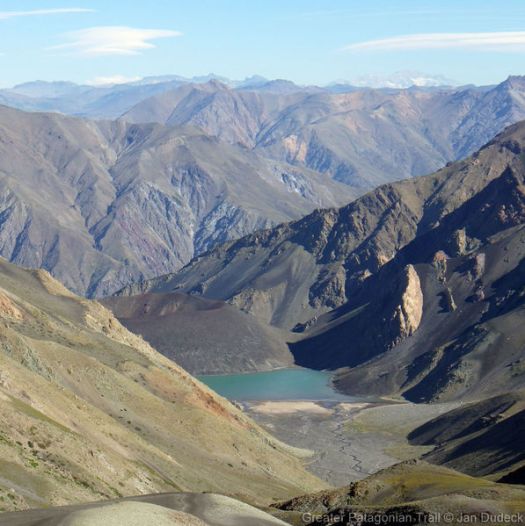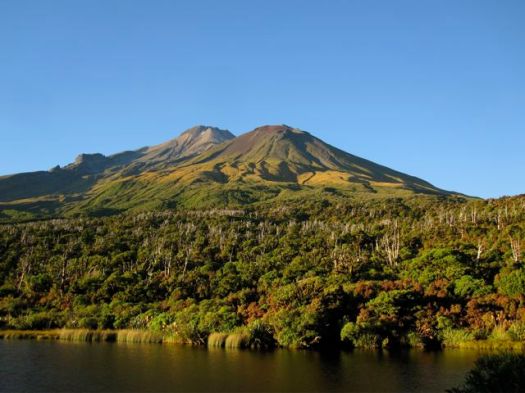

There’s a reason Bolsón is so popular. It’s a pretty alpine meadow, a green oasis on the edge of a volcanic wasteland.
Most who make it this far stop and day hike from here.
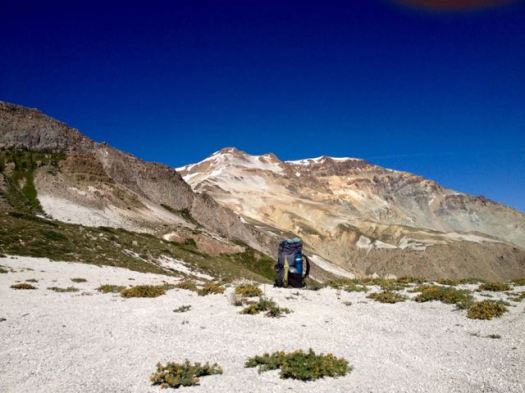
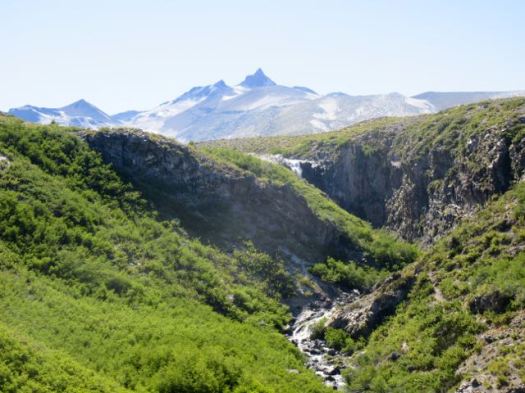
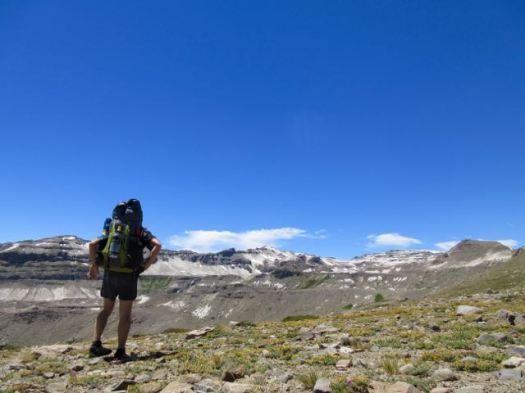
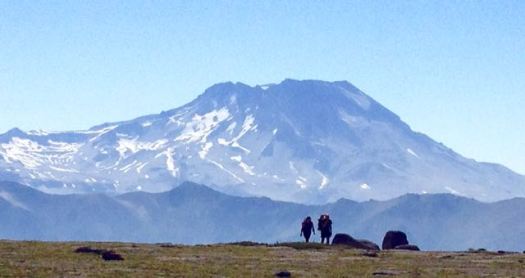
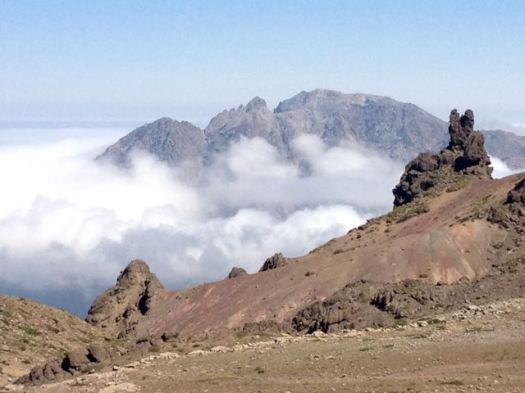
But I was determined to see – if not climb – Mt Decapitated. I’d have to get past that spiky peak in the distance to do so.
On the other hand, I took it easy today ascending steeply up to the next obvious campsite. Past that the next recommend camp is Laguna Mondaca, too far for me with full pack, I was thinking.
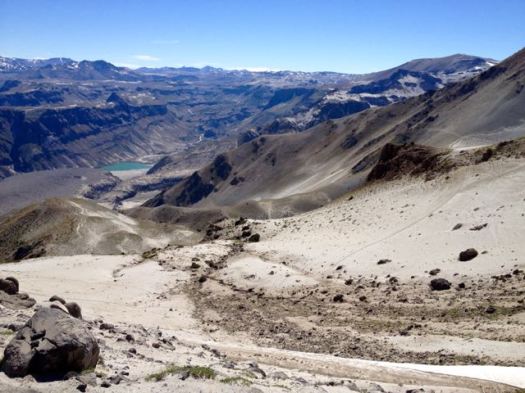
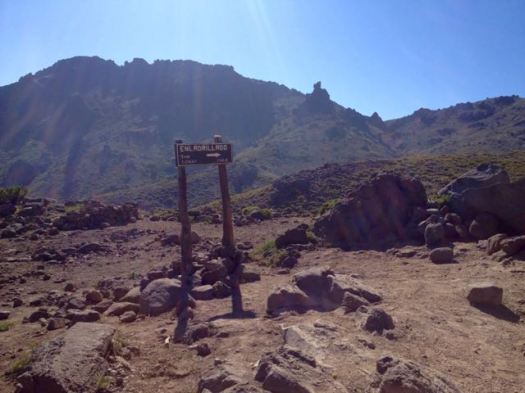
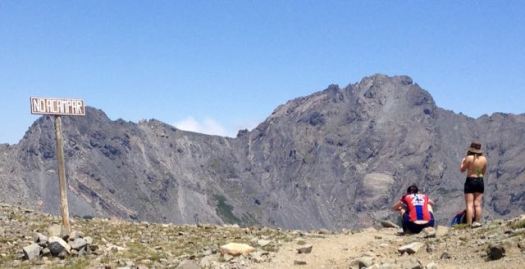
The trail is clearly signed up to Valle de Indio, another lush alpine meadow. It’s gets more volcanic after this point.
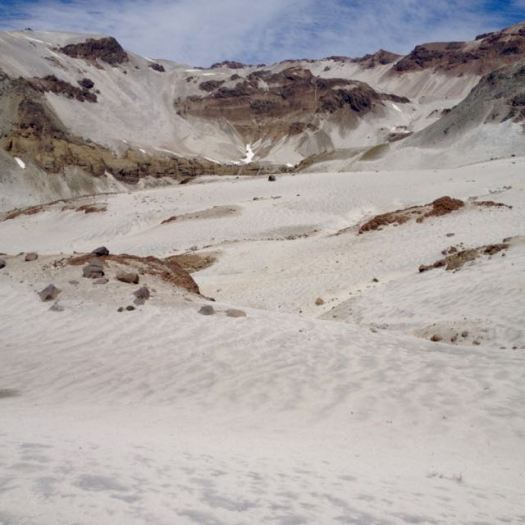
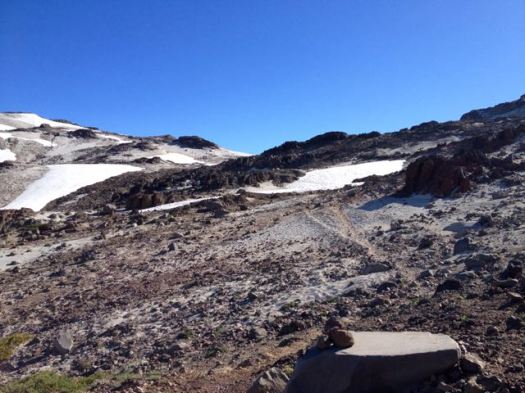
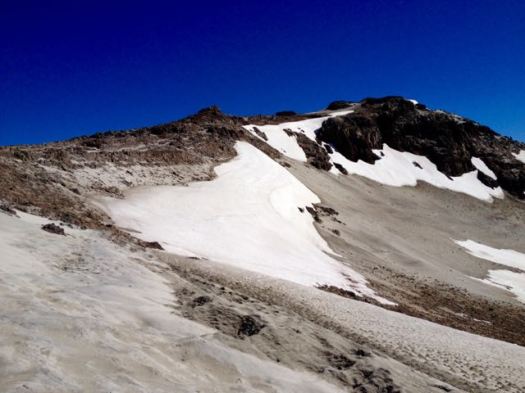
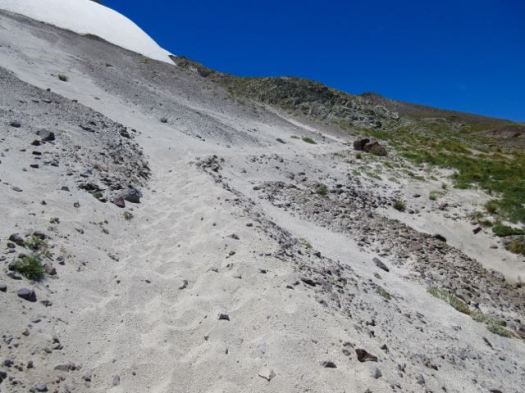
Despite the heat and intense sun, snow crossings were frequent. Early season would require an ice axe.
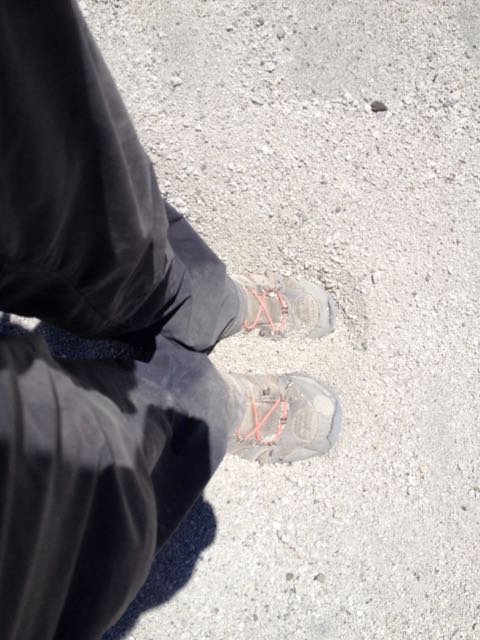
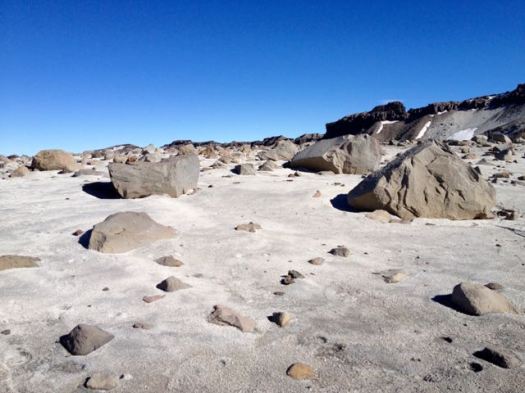
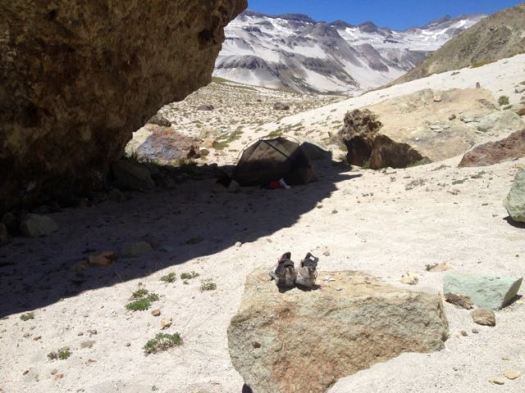
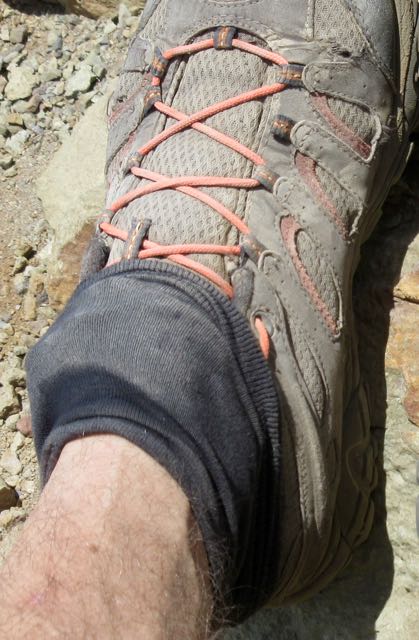
Footing is either bad up here. Or volcanic ash. I used the “instagator” system with my socks.
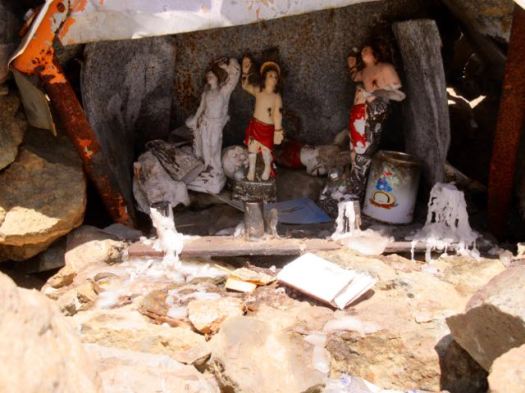
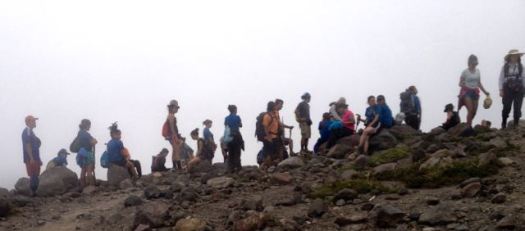
In South America you can expect to see at least one religious pilgrimage site every day.
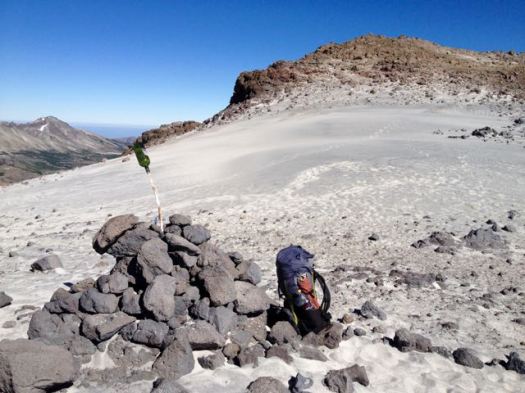
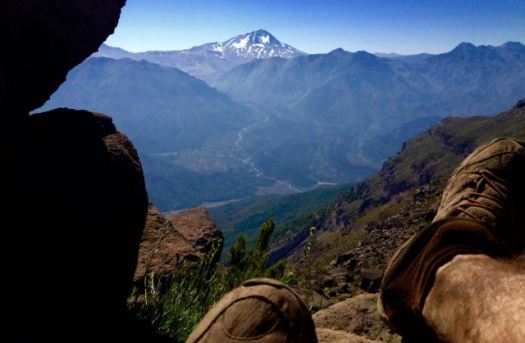
The higher I climbed, the better I liked it.
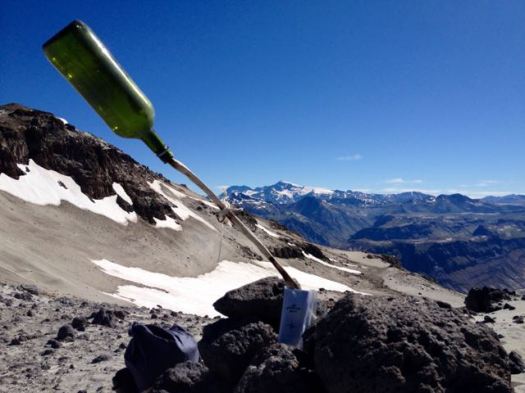
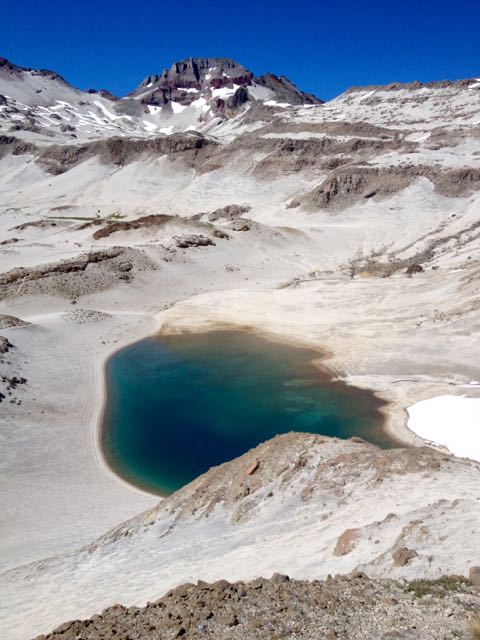
I arrived Ánimas before 3pm. With at least 5 hours of sunlight left, I was tempted to risk it and climb higher.
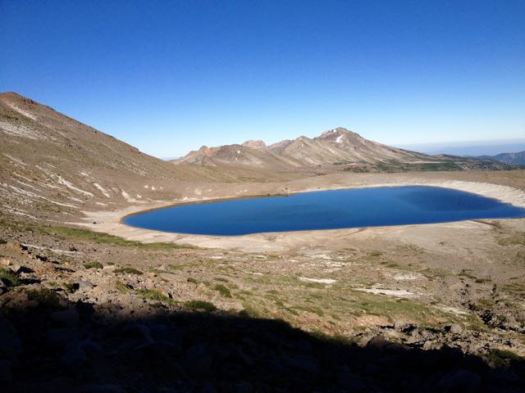
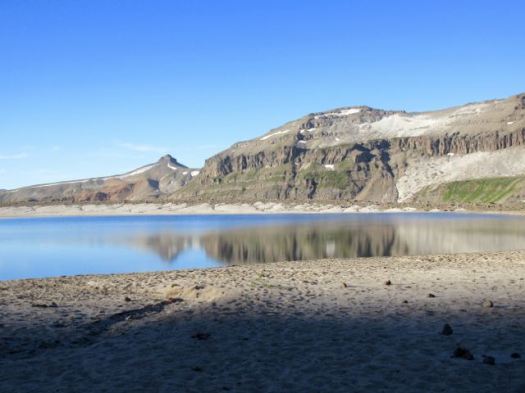
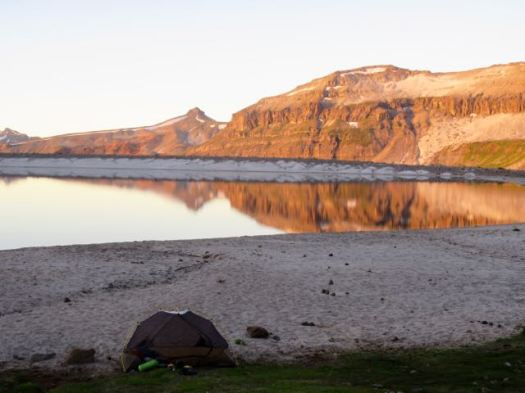
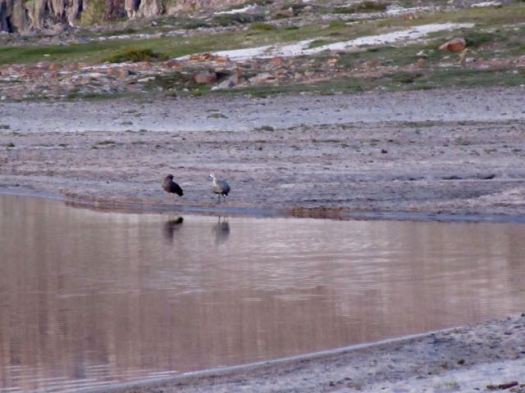
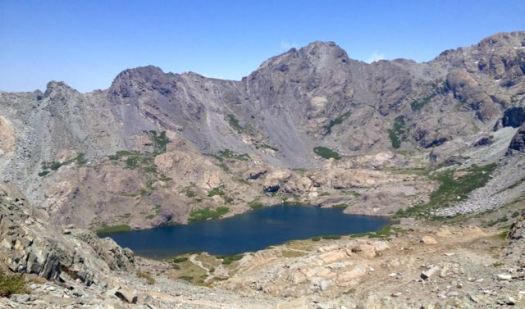
Instead I cooled my heels. Listened to my Coffee Break Spanish lessons. Walked the perimeter of the tarn.
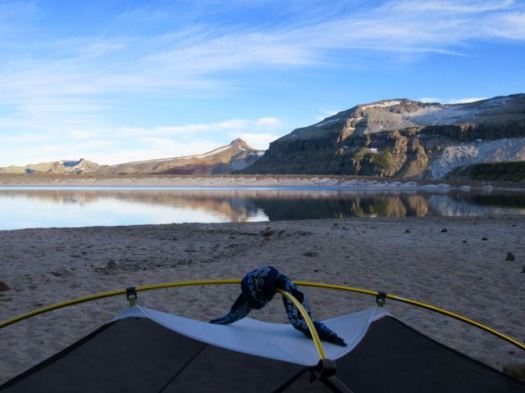
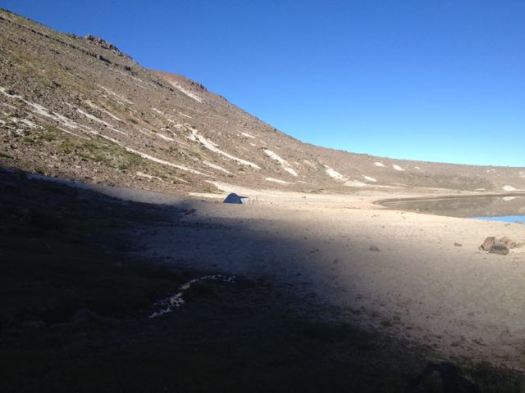
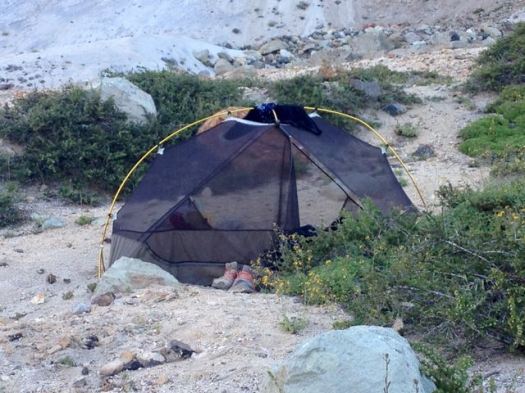
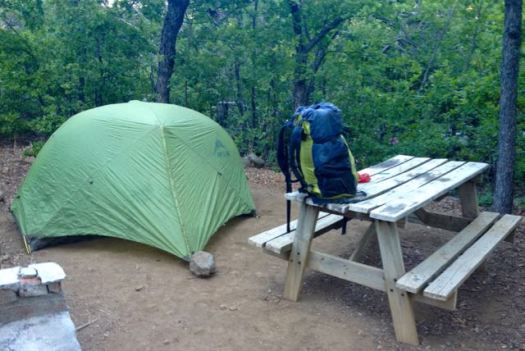
Not many carry tents up here from Bolsón, but there were a few groups with me at the lake.
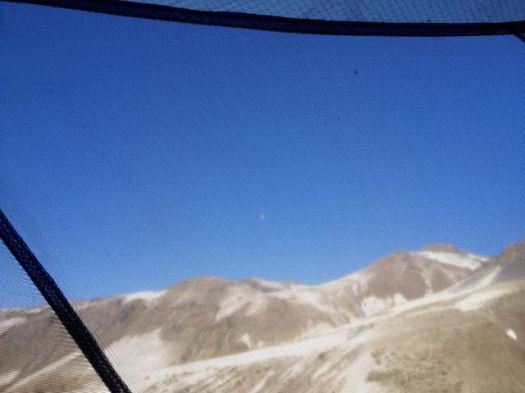
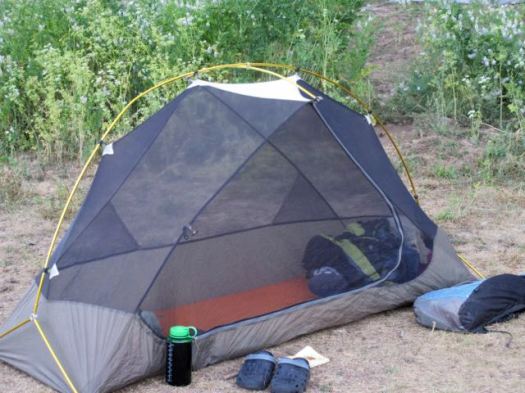
Just above my tent is the trail I’ll take in the morning.
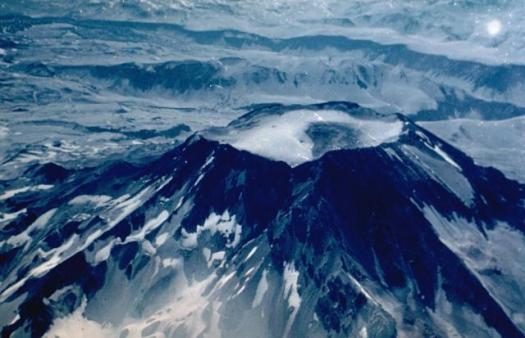
Descabezado Grande (also Cerro Azul or Quizapu) is a stratovolcano located in … central Chile. It is capped by a 1.4-kilometre-wide ice-filled caldera and named for its flat-topped form, asdescabezado means “headless” in Spanish. A smaller crater about 500 metres (1,600 ft) wide is found in the northeast part of the caldera, and it has active fumaroles. …
That’s 103km if I had done the whole thing. Plus the optional full day climb of .Descabezado. The trek is challenging enough without that scramble.
If that serious off trail adventure was impossible, Rangers recommended the somewhat easier Circuito de los Condores. (Condor Circuit)
But due to a series of problems I ended up doing something easier. An out and back from Parque Inglés.
What problems?
GPS did not work as I needed it to. Topo maps were sold out at the Ranger station in Parque Inglés. Scorching sun burned my weak Canadian flesh. My good camera broke. 😦
But I had a fantastic hike anyway. 🙂
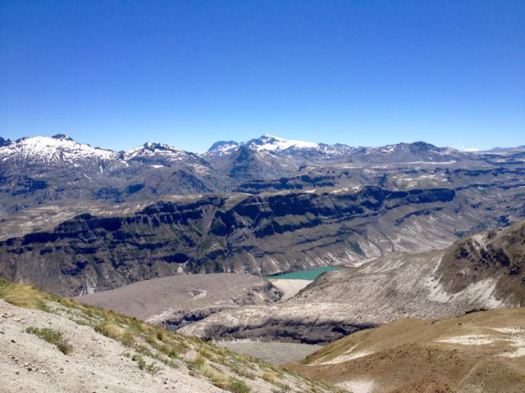
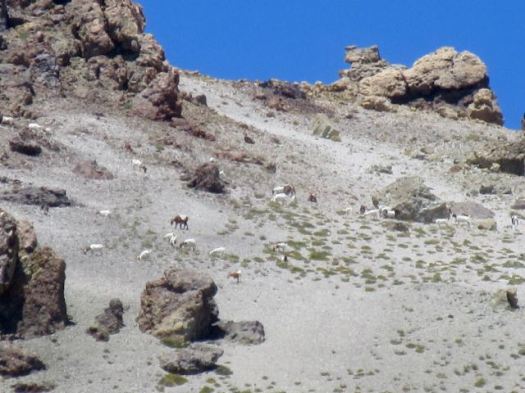
Descabezado and its nearby brothers have devastated the Andes here. The last major eruption was 1932 – Quizapu, 6km south of the main crater. It’s stark and beautiful.
___ day 0 – Santiago to Parque Inglés
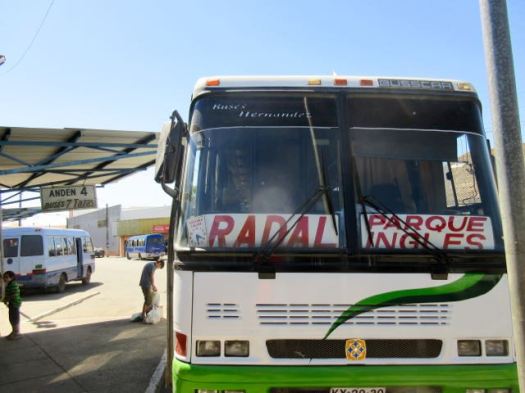
Though it’s only about 250km south of Santiago, it took me all day to get there via public transportation.
Hostel > Santiago bus station (University of Santiago metro station) > bus to Molina > bus to Radal Siete Tazas National Park.
Happily in high season (Jan/Feb) buses go all the way to the CONAF Ranger Station. (The rest of the year they stop in Radal, 10km short.) It’s a bad, bumpy road up into the mountains.
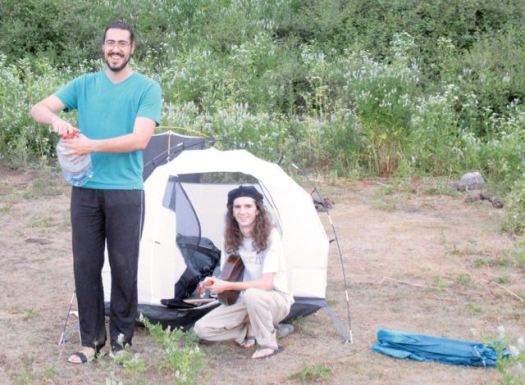
On the bus I’d met Pedro and Victor, Brazilian music students who were on the road on a break from school. In fact, they carried a copy of On the Road by Jack Kerouac.
… slightly more expensive than the other options but includes free entry to the park and some hidden ‘pozas’ (water pools) that people don’t usually get to see. It’s also much quieter …
It cost us 7000 Chilean pesos each rather than the 3-4000 asked at the cheapest campgrounds, but we agreed Valle las Catas was worth it. 🙂
This was the first time they’d sleep in their new tent.
I’d slept hundreds of times in my own.
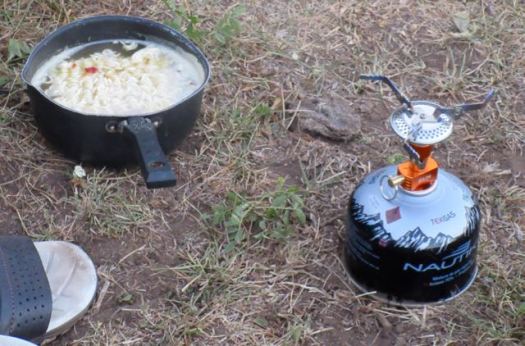
Their first meal on their new camp stove.
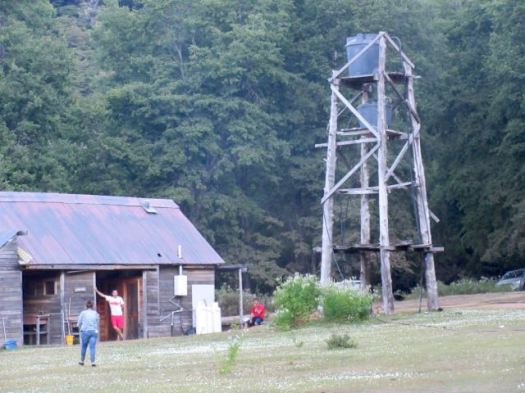
The campsite has a cute restaurant and shop. I ate pizza there.
We finished up the evening drinking my red wine, hanging out at the big campfire with anyone else who wished to socialize. The only language Spanish.
“… Arguably the best hike in all of middle Chile, the full-day Sendero Enladrillado takes you to the top of a unique 2300m basaltic plateau with stunning views. …”
– Lonely Planet
Descabezado volcano
How could I resist? 🙂
I reached Reserva Nacional Altos de Lircay from Talca bus station, 65km west of the Park. A sunny summer Friday afternoon, my Buses Vilches contraption headed to the mountains was packed. I was lucky to get a seat, one of the few perks of having grey hair.
From where the bus drops you off after 90min it’s around a 2km walk uphill to the Conaf administration building. Open even though it was after opening hours.
An older gentleman checked me in but – for some reason – charged me double for Park entrance. 10,000 rather than foreigner’s rate of 5000 pesos. I assumed the extra 5000 was for camping. At the time.
I was given a simple map and instructions on the best hike. A counterclockwise loop seeing all the highlights over about 8 hours.
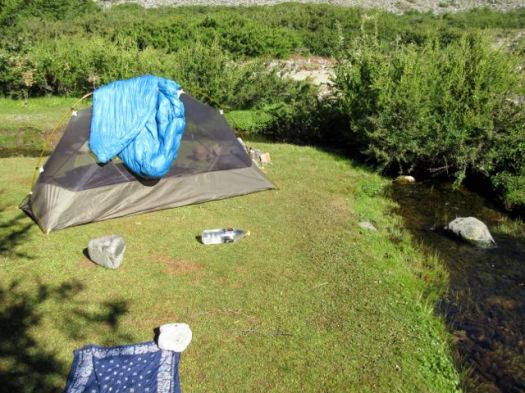
It was dusk by the time I walked uphill another 2km (in crocs) to Camping Antahuara, also run by Conaf. The boys at the campground – after seeing my two Park entrance receipts, did not charge me for camping. Gracias.
Conaf’s Camping Antahuara is an excellent campsite. And I actually had electricity!
I listened to audio books, Spanish lessons. And got to sleep early.
Morning dawned bright and sunny. Again. It was a summer heat wave in Chile.
By 8am I was started up to Enladrillado carrying only a day pack. It felt easy.
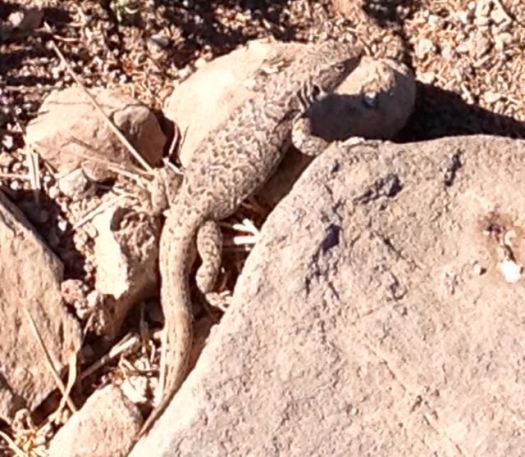
This is a popular hike. I saw nearly as many people as lizards.
It’s steep in places. I recommend you hike right to left, climbing more gradually to the Enladrillado, descending from the Laguna viewpoint.
Enladrillado is great. But if you’d climbed all the way up here without seeing Descabezado (“decapitated”), you’d be disappointed. This is a hike for good weather. Phone the Ranger station (71) 220 9517 to check on he visibility before heading up.
It was getting hot.
I hid out in the shade dreaming of hiking all the way to Descabezado base camp. And climbing. Some day.
Cerro Azul
Starting here and continuing to Parque inglés is called the Circuito de los Condores. (Condor Circuit)
That’s what I should have done this trip. 😦
Next I started looping back towards Camp across the dry plateau.
Up high I saw only 3 small water sources. It’s not easy for flora or fauna to live up here.
Some cloud was rolling in down in the valley. Rangers had warned that a “little rain” was in the forecast for the weekend.
Here’s the viewpoint overlooking the laguna.
It’s a lot further down than it looks.
Though all kinds of signage makes clear that camping is not allowed, it appears the rule is not enforced. Many hikers up here were carrying sleeping bags.
This large group did not get to the top of the plateau until 1:30pm. Sadly the clouds were climbing higher. They’d likely miss the views.
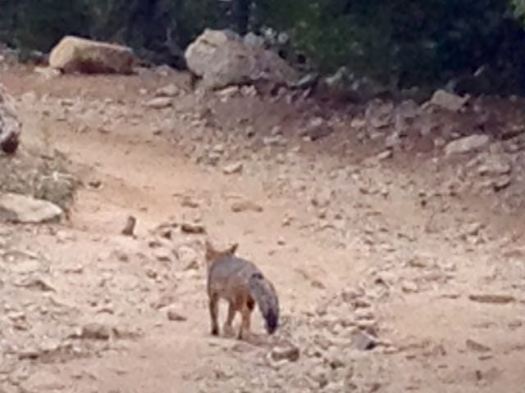
I was back in camp before 4pm. The only highlight on my return this fox. In Spanish you can call him “El Zorro”.
I’d seen his cousins in Patagonia (10yrs ago) brazenly rob tents. I resolved to be more careful hiding away my camping food in Chile.
Enjoying the campground, I decided to stay another night rather than bus back to the city. It rained all night. 😦 I missed the morning bus by 2 minutes 😦 delaying my exit by about 5 hours.
Still, I highly recommend Sendero Enladrillado in good weather. I’ve added it to our list of best hikes in South America.
The best guidebook I’ve seen is Trekking por Chile 40 Rutas 2015 (Spanish). It’s available in larger bookstores in Chile.
Just booked. I fly to Santiago, Chile January 12, 2016.
Having already done many of the most famous Patagonian hikes 10yrs ago (Paine, Fitz Roy, Cerro Castillo) , this time I’ll be more off the beaten trail.
During the last Patagonian summer I continued the investigation and publication of the Greater Patagonian Trail. The trail has now a total length of 1400 to 1500 km – depending on the options chosen – and the trail description contains may updates. I.e. section 17 and 18 were added this year and KMZ and GPX files with plenty of waypoints and several alternative routes are published for all sections.
Also the first hikers have completed the trail or parts of if base on this publication. One Israeli hiker walked sections 1 to 16 in about 50 days (all that was published at this time) and at least 8 more hikers did substantial parts of the Greater Patagonian Trail based on this trail description. …
This trail is not finished yet. There is plenty of terrain left till this trail finally reaches the southern tip of Patagonia and ends either on the shores of the Magellan street or even on Tierra del Fuego. But what is published so far can be hiked by a well experienced self-reliant hiker without much seek and search.
I also look forward that other hikers contribute to this trail by verifying some of the options and adding more sections. The publication on “wikiexplora” permits and facilitates such contributions because “wikiexplora” allows like “wikipedia” a collaboration of multiple authors.
… in South America leads right through the heart of the legendary Patagonian Andes. It’s a stunningly beautiful and diverse trail that crosses volcanic fields, idyllic Andean valleys, snow covered mountain ranges, lush green forests and deep blue lakes and rivers. …
The complete trail can be hiked in one summer season and requires approx. 90 to 120 days …
The generally recommended trekking direction is southbound …
The Greater Patagonian trail is not an official trail that is set up and managed by a government agency. Is simply a compilation of horse trails, minor roads and some cross country sections …
The trail is mostly unmarked, partly not visible and only smaller fractions are documented with maps. Therefore a GPS is essential for navigation. In addition an electronic topographical map is recommended. …
section 1section 2
River Crossings are possibly the greatest hazard …
… Malaysia’s Mt. Kinabalu, a 4095 meter (13,435 ft) trekking peak on the island of Borneo, was struck with a 5.9 magnitude earthquake that claimed the lives of at least 16 people, and left dozens of others injured and stranded on the mountain for a time.
There are believed to be at least two others still missing, and the death toll could rise even further as search and rescue teams continue their efforts. …
Of the 16 climbers who perished on the mountain, reports indicate that seven of them were from Singapore, Six were Malay, with the additional causalities coming from the Philippines, China, and Japan. …
I’ve been working my way through Cam Honan’s trip reports. He might just be the the world’s most traveled hiker. By the end of 2012 more than 50,000 miles (80,467 km) in some 55 countries.
Here’s a sample. From New Zealand.
Distance : 50km approx. (including side-trip up Mt. Taranaki)
Avg. Time : 3 days …
Sleeping : Outside of holiday times, the huts are rarely crowded. Leave the tent/shelter at home. …
In clear weather, the views on this trail are stunning. Definitely go for the High-level, rather than the Low-level route. …
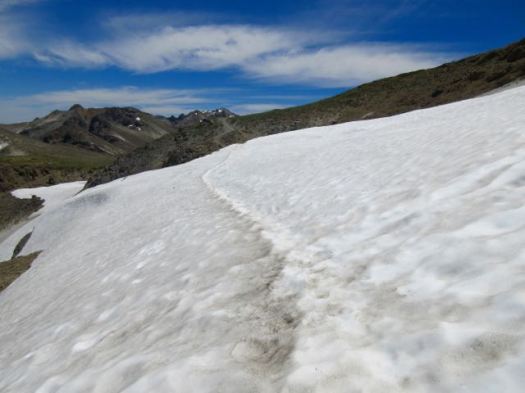
Arenal Volcano National Park (Spanish: Parque Nacional Volcán Arenal) is a Costa Rican national park in the central part of the country …
The park encompasses the Arenal Volcano, which “was” the most active in the country, which had previously been believed to be dormant until a major eruption in 1968. …
The park also contains a second volcano, Chato, whose crater contains a lagoon. It is also called Cerro Chato (literally Mount Chato) as it has been inactive for around 3500 years …
Looks great. Unfortunately I got rained out May 9th, 2015. May is the start of the rainy season. 😦
The most popular trails are short day hikes. Perhaps 4 miles in total.
jungle section
It’s been mostly inactive since 2010. Might remain dormant state for the next 600 or 800 years.