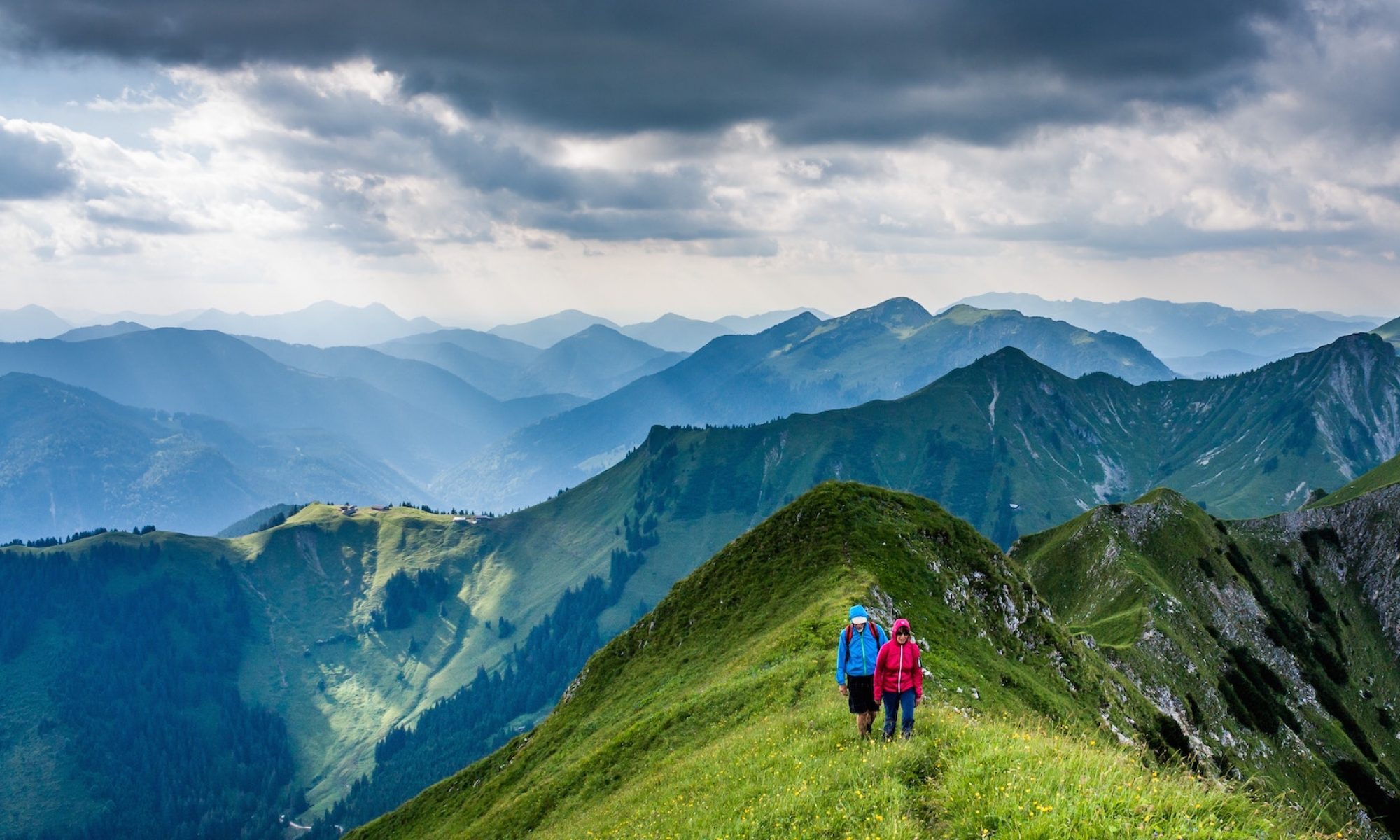

wandering Boracay, Philippines

trip report by site editor Rick McCharles

How long can a hiker lie around on a Beach before getting bored?

Not long.

Boracay is an island of the Philippines located approximately 315 km (196 mi) south of Manila …

The island is approximately seven kilometers long, dog-bone shaped with the narrowest spot being less than one kilometer wide …
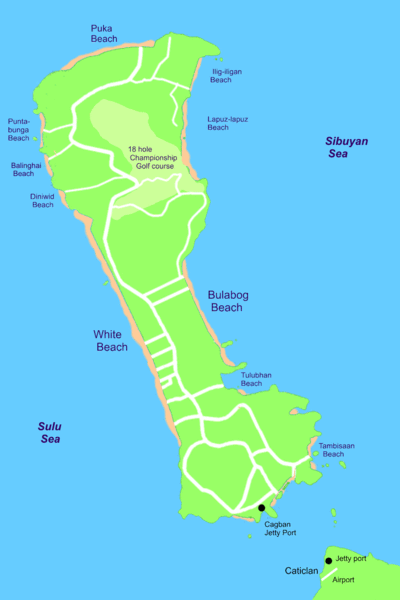
Once a day I’d take off jogging wherever tourists do not go.
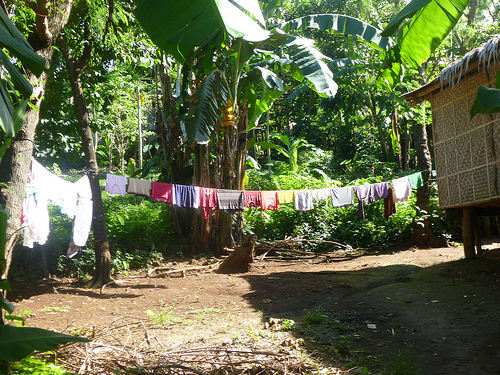

I checked out the dump. Excellent. And watched how trash is collected. Very efficiently.

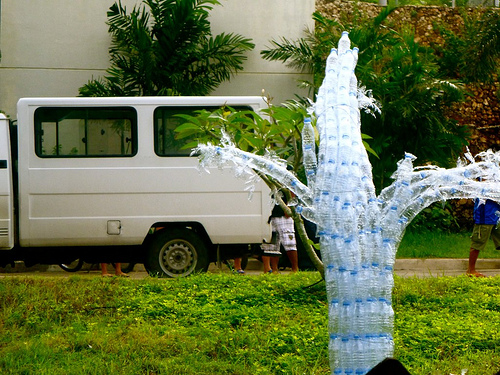
Bottles are recycled.
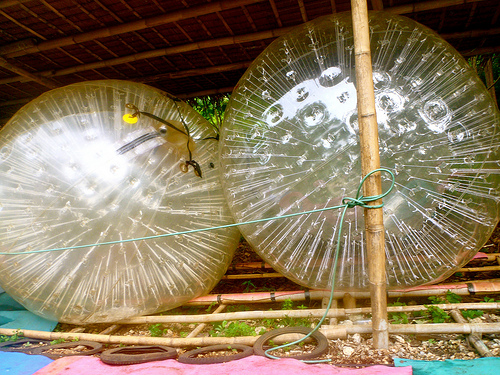
Here is a tourist attraction, a Zorb run. Unfortunately the Zorb doesn’t roll unless a group arrives together, pre-booked. Otherwise I would have signed up.
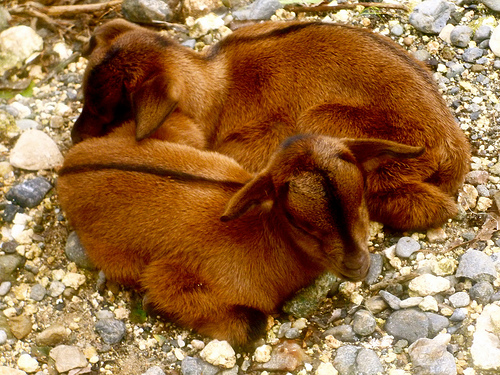
On another lonely road I found two new born goats. Mama nowhere to be found. When I jogged back a half hour later, they were still there.
The highlight was navigating narrow alleys where the poorest folks eek out a living. I didn’t take any photos, but it looks something like this.
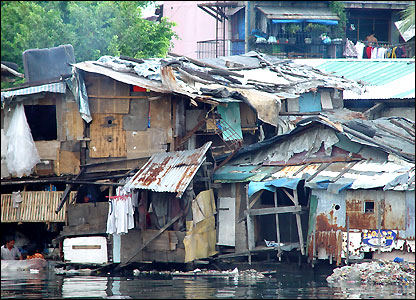
Actually, the people looked surprisingly healthy and happy. The animals sickly and pitiful. In fact, I saw an emaciated cat in it’s death throes, ignored by one and all. There was no way I could put it out of its misery.

Very best of all was arriving at a new Mosque being built by the minority Muslim population. Clearly it will be the pride and joy of the community, once finished. They asked how it compared with Mosques in Canada. Equally grand, I told them.

… It was always good to get back to my inexpensive hotel for a shower and a rest.
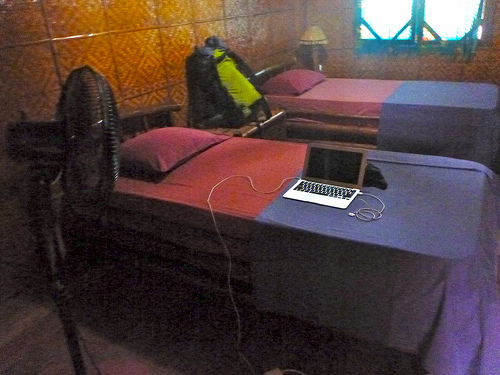
Before the long rest.
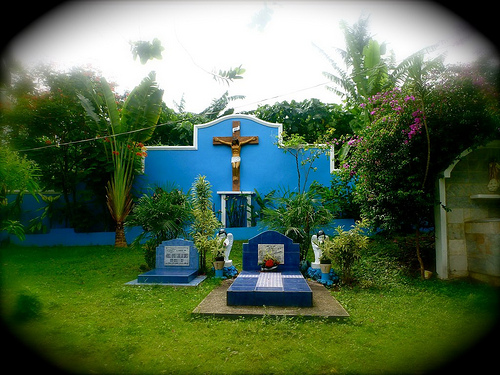
See more photos or check my Boracay holiday posts.
The Year in Volcanic Activity

The Atlantic:

Out of an estimated 1,500 active volcanoes around the world, 50 or so erupt every year, spewing steam, ash, toxic gases, and lava. In 2011, active volcanoes included Chile’s Puyehue, Japan’s Shinmoedake, Indonesia’s Lokon, Iceland’s Grímsvötn, Italy’s Etna, and recently Nyamulagira in the Democratic Republic of Congo. In Hawaii, Kilauea continues to send lava flowing toward the sea, and the ocean floor has been erupting near the Canary Islands.

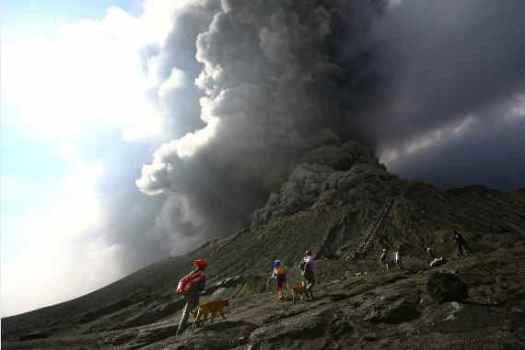
Indonesian worshipers descend from the crater of Mount Bromo in East Java province on January 28, 2011. The worshipers gave offerings to the god of the mountain, praying for the safety of local people. (Aman Rahman/AFP/Getty Images)

See all 36 photos – The Year in Volcanic Activity

I have friends hiking the Tongariro volcano in New Zealand right now.

(via kottke)

hiking Mt Yufu, Japan

trip report by site editor Rick McCharles

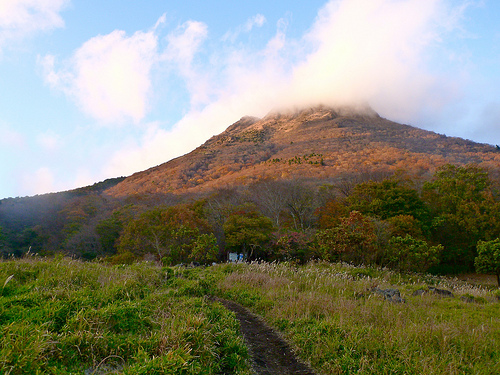
Mount Yufu (由布岳 Yufudake) is a 1,583.3 m (5,195 ft) volcano, located on the border of Yufu and Beppu, Ōita, Japan.

15km

Yufu is one of the hikes recommended in Lonely Planet Hiking in Japan.

I chose it as access is easy by public transport. In fact, when you get off the train in Yufuin, you know exactly where you’re going.

Or not. I spent perhaps 90min from that point before finding the actual trailhead. This is typically the end of the Yufu-dake hike, not the start.

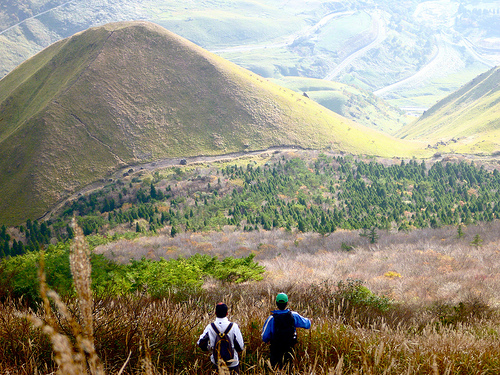
Once on the trail, it’s a fun and easy ascent … for a volcano. This far south, there are still some Autumn colours.

all signage is in Japanese

This far south, too, there are still plenty of hikers in November. Most were headed the opposite direction.

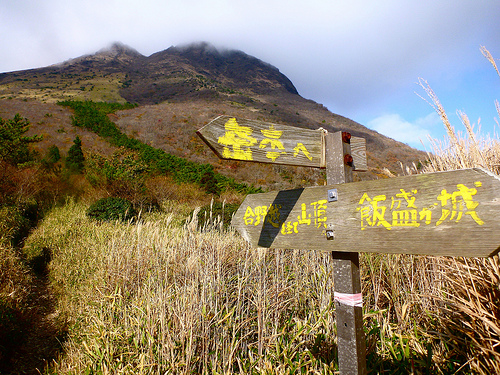
Decision time. Which of the twin peaks should I climb?

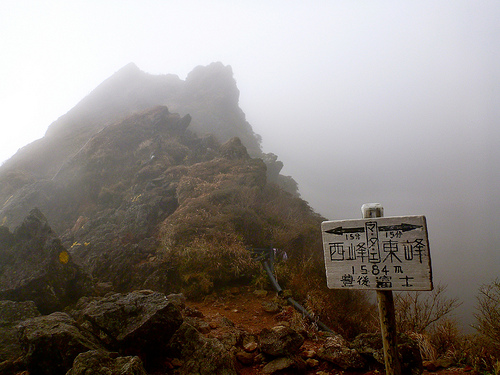
I took the one closest to Yufuin, Nishi-mine (1548m). It’s slightly higher and harder.

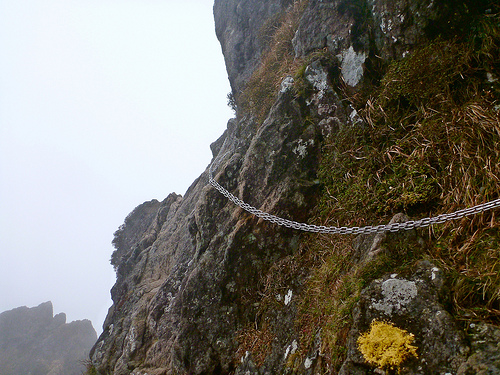
In fact, it turned out to be quite a scramble. This point of exposure in particular convinced a couple of men to turn back and try the other.

Finally, I saw a hiker atop Nishi-mine.

He cleared out when I arrived. As did the clouds.

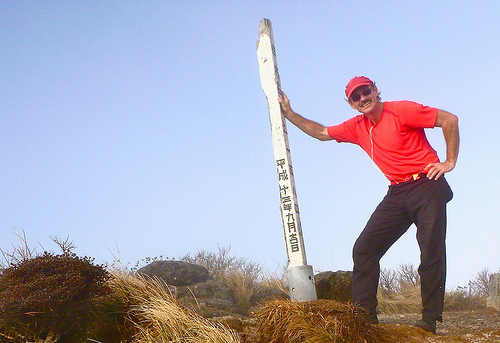
Fairly late in the day by this point, I left a Summit Stone, and hustled down to the nearer Yufu-tozan-guchi trailhead where I could catch a bus in either direction.

It was 45min before one arrived. A gentleman was tenting there, well prepared to do the hike next morning. We were both reeking of shōchū by the time the bus pulled up.

The Yufuin railway station has a hotsprings foot bath for waiting passengers. I couldn’t resist.

Yufuin is a hotsprings resort town, in fact, quite famous. I recommend it. I stayed at a great hostel in Beppu, though, another hot springs resort.

If you love hot springs, southern Japan is the place to go.

more photos from my day hike

Hiking Wakkanai, Japan

trip report by site editor Rick McCharles

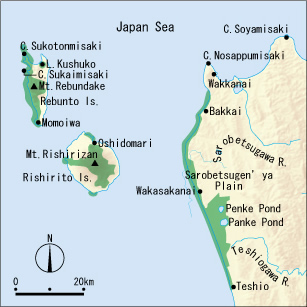
My “plan” was to travel to northernmost Japan and catch the ferry from Wakkanai to the remote island Rishiri-Zan.

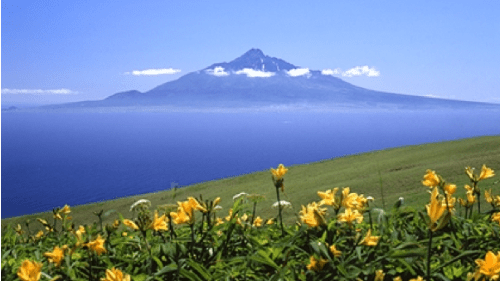
In my dreams, I’d camp one night. Then do the 8hr, 18km coast-to-coast over this volcano (1712m). (Oshidomari track up, Kutsugata track down)

more photos by le.sdf.free.fr

Certainly this is one of the best hikes in Japan. And that photo is a postcard, not reality.

… Unfortunately, it’s nearly impossible to pull off this hike later than September due to: unstable weather, hostels & campgrounds being closed and/or trails being impassable due to snow or washout.

I only conceived the faint hope of trying for it late October because I saw a fleeting TV weather report showing a smiling sun over the north tip of the island. …

Waking early the morning of my intended day hike, the weather was normal — grey and drizzling. I went back to sleep.

Depressed at having yet another of my hiking plans dashed, I defaulted to a lazy day wandering the town. Then catching the train and abandoning northern Japan altogether.

Unexpectedly, the weather cleared up. And I had an excellent day hike walking directly from the train station after locking up my pack.

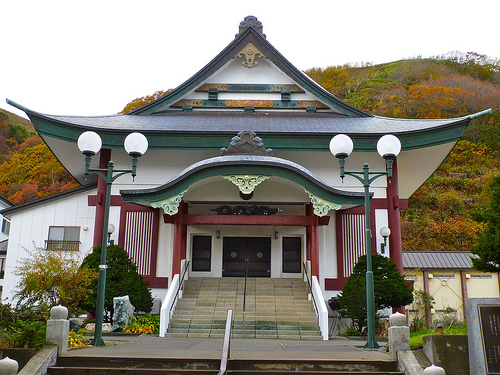
First stop a tranquil Temple much adorned with gardens and statuary.

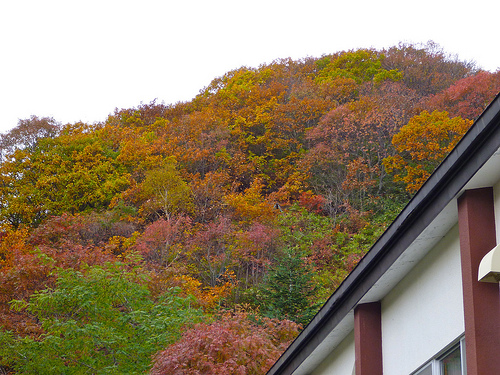
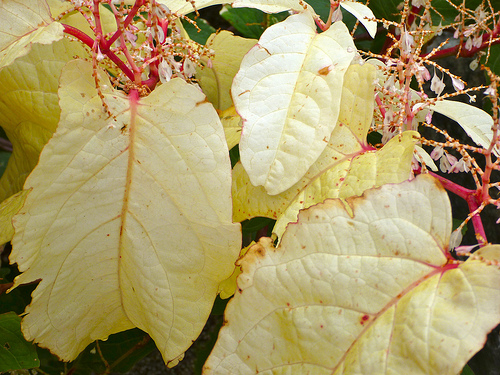
Fall colours were a highlight of the day.

I climbed up above town to Wakkanai Kōen (稚内公園) park. That’s the “Russian” island of Sakhalin, in the distance.

How about this?

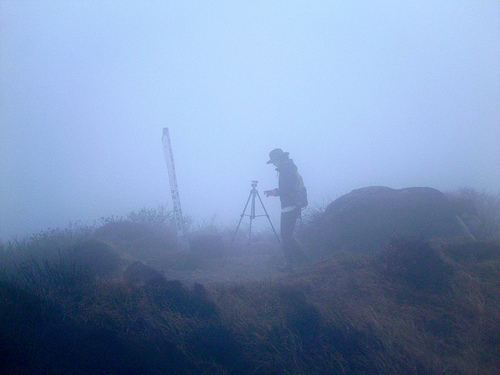
I began to wonder whether I should have jumped on the ferry. Nope. Here’s the micro-climate cloaking the volcano:

Instead I decided to walk the bluff, then descend down to the coast via animal trails.

Here are the animals.

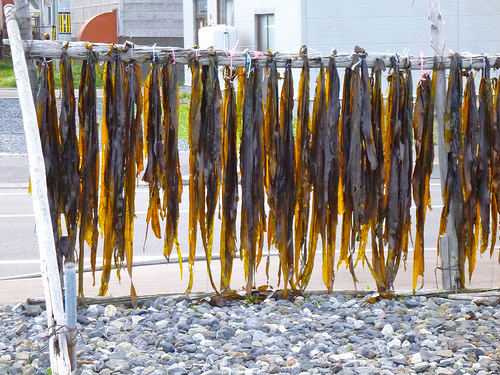
This region is famed for kelp though there wasn’t much drying end of October.

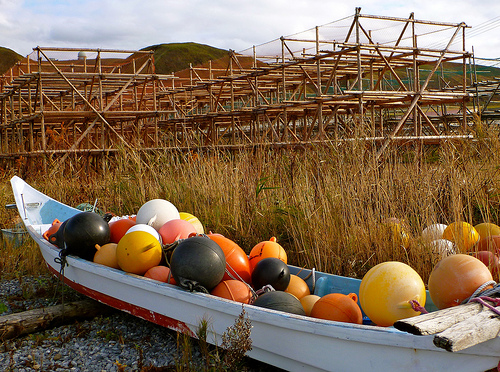
In peak times these racks might be covered with kelp.

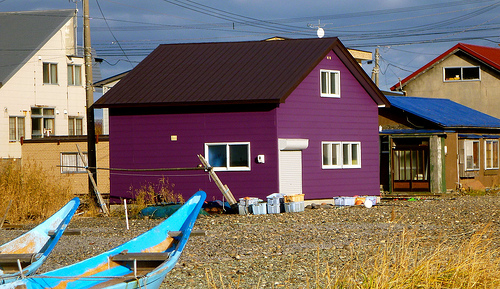
Like other parts of the world cold and inhospitable, locals like bright colours, making long winter nights less depressing.

This turned out to be one of my best hiking days in Japan :). … But I still caught the train south when it got dark.

Rishiri-Zan volcano must wait.

See more photos from my day hike of Wakkanai.

related – Climbing Rishiri-Zan trip report (2004) by Cameron L. Martindell

flushed off Mt Asahi, Japan

trip report by BestHike editor Rick McCharles

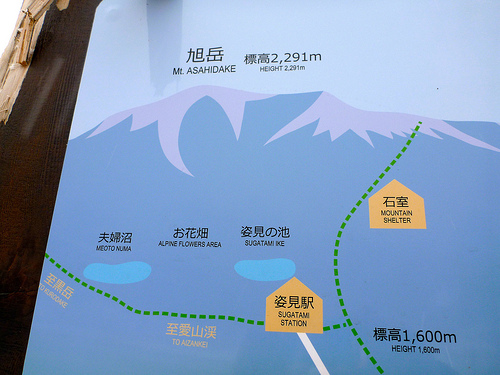
Here I am at Sugatami-ike in Daisetsuzan National Park, an impressive look-out over the fumaroles.

This volcano is LIVE.

It’s Asahidake (Mt Asahi), the highest mountain in Hokkaidō. (2,290.9 m or 7,516 ft)

… The mountain is popular with hikers in the summer and can be easily reached from Asahidake Onsen via Asahidake Ropeway.

Sugatami Pond, directly below the peak, is famous for its reflection of the peaks, snow, and steam escaping from the volcanic vents. …

I’d climbed the 500m to here, quickly and easily.

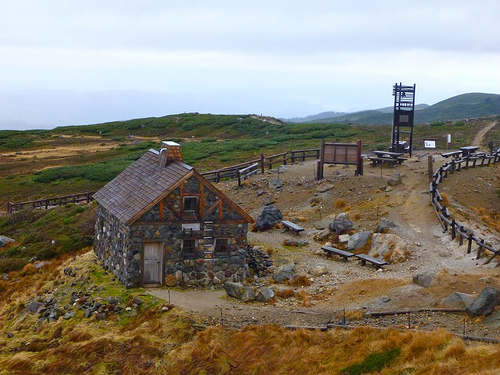
At this elevation the weather was quite reasonable — raining, but not hard. The emergency shelter was open.

From this point the top of the volcano was shrouded. Myself and Kim from Belgium were the only hikers bold (stupid) enough to climb higher. (It’s not popular with Japanese hikers end of October, as you’ve already guessed.)

We might have made it to 1900m before being driven off the mountain by wind and freezing, horizontal rain. Merde.

I slid and slipped back down the trail the way I’d come up. It was pretty much a waterfall by the time I reached bottom. Kim opted to take the Ropeway down, the cheater.

Happily, there was a gourmet dinner awaiting me below in Japan’s best and most expensive alpine hostel.

This ain’t the usual hostel grub. Even better, we had a private onsen (hot springs). I had it to myself each time as only 3 people stayed in the hostel that night.

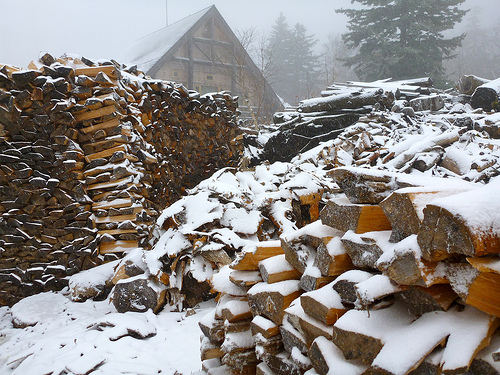
… Here was the scene next morning, the second major snowfall of the season. Looks like a long winter ahead.

See more photos from my failed attempt to climb Asahi.

I decided (for some reason) to head NORTH from here. Yep. North.

Mt Asahi hike, Japan

trip report by besthike editor Rick McCharles

Mount Asahi (旭岳 Asahi-dake) is the tallest mountain in Hokkaidō, Japan. … it is located in the northern part of the Daisetsuzan National Park.

The mountain is popular with hikers in the summer and can be easily reached from Asahidake Onsen via Asahidake Ropeway.

Sugatami Pond, directly below the peak, is famous for its reflection of the peaks, snow, and steam escaping from the volcanic vents. …
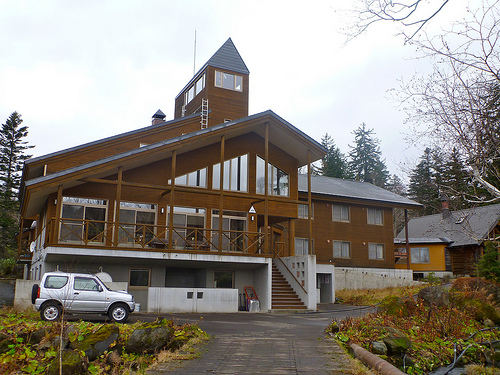
Lovely and welcoming … in Summer. Unfortunately I arrived Oct. 25th, closer to ski season. Many warned that the weather was too uncertain. In fact, it had been completely snowed over the week before I got there.
Eschewing the chair lift, instead (in about 90min) I walked up from Asahidake Onsen townsite to the main “hiking destination”, the top of the rope.

Emergency Shelter

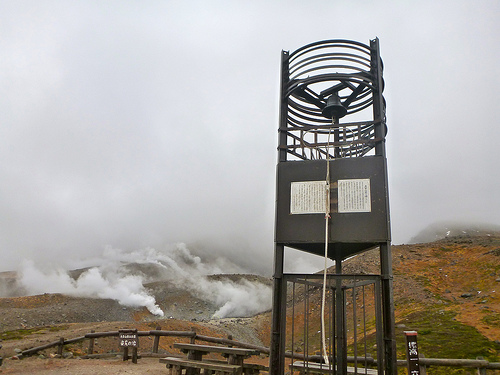
I rang this bell, assuming it to be a “tradition” for new arrivals.

From there it’s about 2hrs to the top of the volcano. … But I only lasted about 1hr before high winds and horizontal rain forced me (and Kim from Belgium) to turn back.

The trail, wet and muddy on the way up …

… was in flood on the descent. Yuck.

Happily, there was a hot springs and gourmet dinner awaiting me below in Japan’s best and most expensive alpine hostel.

This ain’t the usual hostel grub.

So … the “highlight” of the hike, in the end, was my stay at Daisetsuzan-Shirakaba-So hostel.

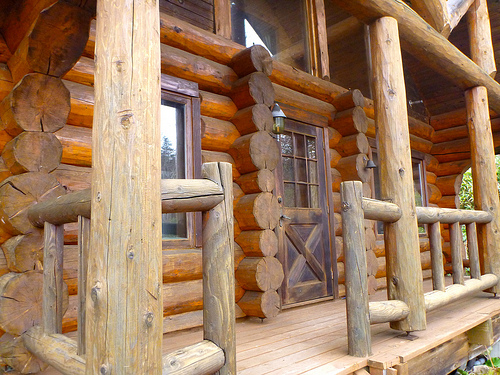
Check out the “Canadian log cabin” annex.

More photos from my day hike.

No bicycles. No tenting except at designated sites. No fires. Fishing is allowed.

_____ Update: Next morning the village and mountain both covered with snow. Time to move on.

Mount Takao, Tokyo

trip report by site editor Rick McCharles

Mount Takao

Standing 599 metres (1,965 ft) tall and located within an hour of downtown Tokyo, it is a popular hiking spot, with eight hiking courses and more than 2.5 million annual visitors. …

There did seem to be 10,000 or more the day I was there. Hordes of school children, too.

… choose to start climbing from the base, or take a funicular or ropeway ride halfway up the mountain. …

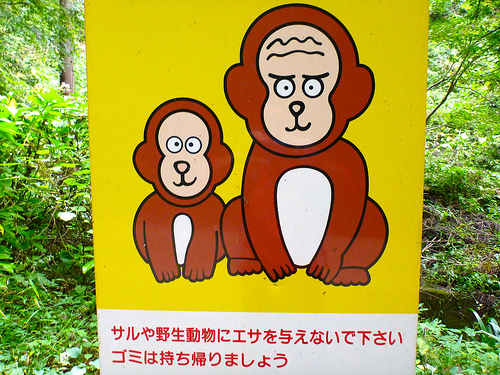
Climbing the paved trail #1 was mainly interesting for people watching. I had hoped to see monkeys (there’s an enclosure for them en route) but spotted none this day.

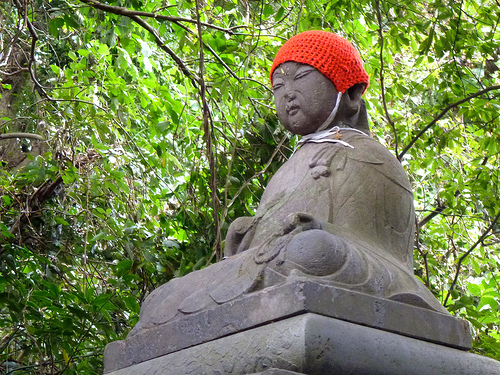
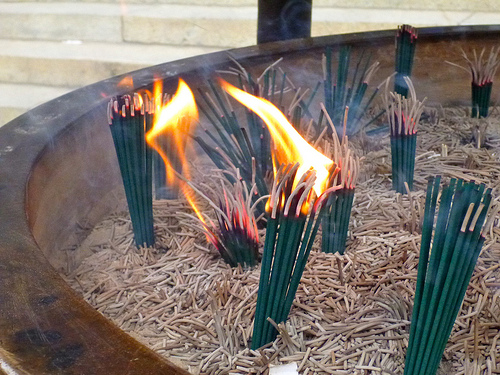
Trail 1 is nothing special for hiking. But there’s plenty of interesting history and culture, en route.

Most signage is in Japanese only, so I’m still mostly ignorant of what I was seeing.

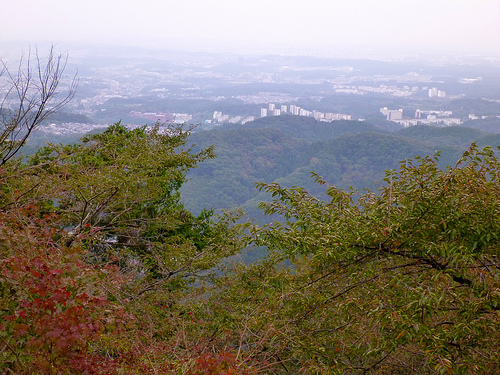
You can sometimes see Mt Fuji (photo) from Tokao — but not the hazy day I was there.

On the descent, I started on Trail 4 — unpaved and far less busy.

This is more like it. … Still, there were men in business suits “hiking”.

At one point I left Trail 4 in the direction of “waterfall”. On this path there were only myself, one trail runner and this protective land crab.

I learned that it doesn’t take much to get away from the crowds in Japan. … On the other hand, I came off the mountain far from where I had started. Lost.

Yet anywhere in Tokyo you can find a map directing you to the nearest train station. I was quickly unlost.

see more photos from my day hike
_____

This is one end of the 1,697 kilometres (1,054 mi) Tōkai Nature Trail (東海自然歩道 Tōkai Shizen Hodō) which runs all the way to Osaka.

But I’ll take the train to Osaka today, instead.