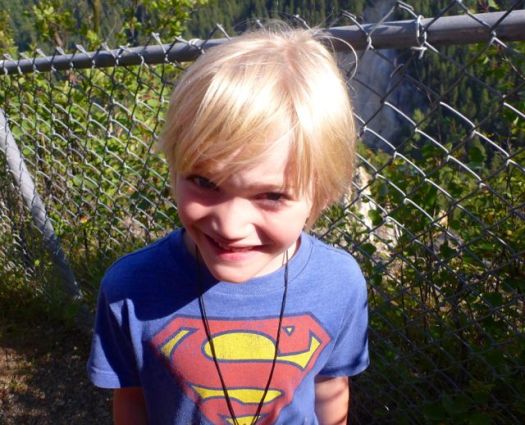
Superman led us out to the Pinnacles in the north central British Colombia town.
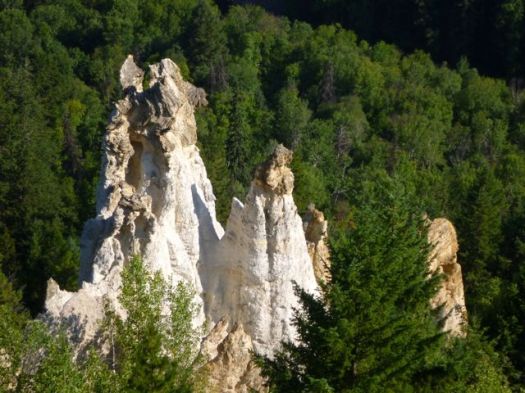
People have fallen and died climbing out on to those pinnacles. So stay off.
This provincial park is located 5.5 kilometres west of Quesnel on Baker Drive. The Pinnacles (Hoodoos) are unique geological formations about 12 million years old. There is a panoramic view of Quesnel from this location. The hike to the site is about one kilometre from the parking lot.
I thought I knew much about the history of Antarctic exploration. Yet I learned much, much more after reading this book.
The incredible story of Australia’s most famous polar explorer and the giants from the heroic age of polar exploration.
Douglas Mawson, born in 1882 and knighted in 1914, was Australia’s greatest Antarctic explorer. This is the incredible account of an expedition he led on December 2, 1911, from Hobart, to explore the virgin frozen coastline below, 2000 miles of which had never felt the tread of a human foot.
… he headed east on an extraordinary sledging trek with his companions, Belgrave Ninnis and Dr Xavier Mertz. After five weeks, tragedy struck—Ninnis was swallowed whole by a snow-covered crevasse, and Mawson and Mertz realized it was too dangerous to go on. Dwindling supplies forced them to kill their dogs to feed the other dogs, at first, and then themselves. Hunger, sickness, and despair eventually got the better of Ninnis, and he succumbed to madness and then to death.
Mawson found himself all alone, 160 miles from safety, with next to no food. This staggering tale of his survival, against all odds, also masterfully interweaves the stories of the other giants from the heroic age of polar exploration, to bring the jaw-dropping events of this bygone era dazzlingly back to life. …
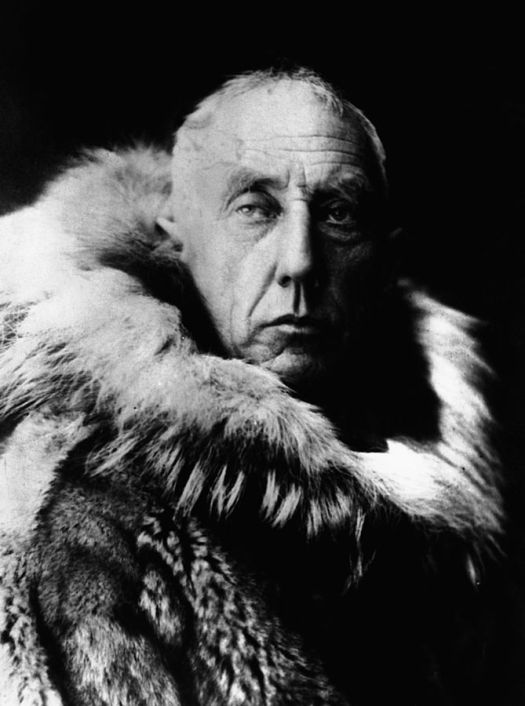
If you guessed the last man, you were right. Roald Amundsen not only led his party safely to the South Pole, ahead of Scott, but he managed to gain weight on the adventure.
In 1926, Amundsen was the first expedition leader to be recognized without dispute as having reached the North Pole. He is also known as the first to traverse the Northwest Passage (1903–06). He disappeared in June 1928 while taking part in a rescue mission.
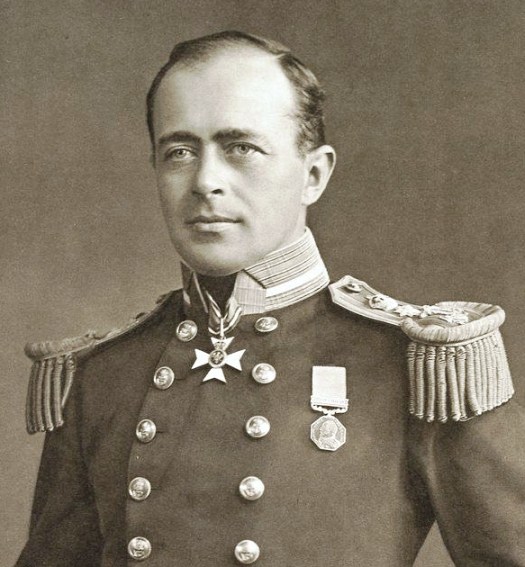
Robert Falcon Scott
Scott led a party of five which reached the South Pole on 17 January 1912, only to find that they had been preceded by Roald Amundsen‘s Norwegianexpedition. On their return journey, Scott and his four comrades all died from a combination of exhaustion, starvation and extreme cold.
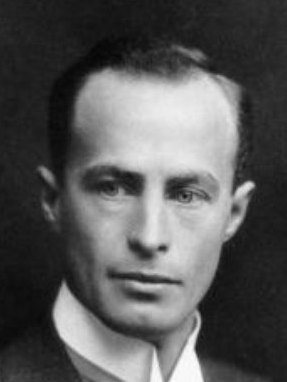
Douglas Mawson
Mawson turned down an invitation to join Robert Falcon Scott’s Terra Nova Expedition in 1910; Australian geologist Griffith Taylor went with Scott instead. Mawson chose to lead his own expedition, the Australasian Antarctic Expedition, to King George V Land and Adelie Land, the sector of the Antarctic continent immediately south of Australia, which at the time was almost entirely unexplored. The objectives were to carry out geographical exploration and scientific studies, including a visit to the South Magnetic Pole. …
There was a quick deterioration in the men’s physical condition during this journey. …
It was unknown at the time that Huskyliver contains extremely high levels of vitamin A. It was also not known that such levels of vitamin A could cause liver damage to humans. …
(Mertz and Ninnis died.) Mawson continued the final 100 miles alone. During his return trip to the Main Base he fell through the lid of a crevasse, and was saved only by his sledge wedging itself into the ice above him. He was forced to climb out using the harness attaching him to the sled. .
When Mawson finally made it back to Cape Denison, the ship Aurora had left only a few hours before. …
Ernest Shackleton
After the race to the South Pole ended in December 1911 with Roald Amundsen‘s conquest, Shackleton turned his attention to what he said was the one remaining great object of Antarctic journeying: the crossing of the continent from sea to sea, via the pole. To this end he made preparations for what became the Imperial Trans-Antarctic Expedition, 1914–17. Disaster struck this expedition when its ship, Endurance, became trapped in pack ice and was slowly crushed before the shore parties could be landed. There followed a sequence of exploits, and an ultimate escape with no loss of human life, that would eventually assure Shackleton’s heroic status, although this was not immediately evident. …
Morry Banes surveyed hiking bloggers with a simple question:
What’s the no.1 tool for your hikes?
I like this answer better than my own:
Chad Poindexter from Sticksblog.com:
In my opinion, the “no. 1 tool for hikes” (for anyone) is the tool between their ears.
Before anyone steps out for a hike, a backpacking trip, or anything in which they will be away from immediate help, one should take the time to learn about what they are getting themselves into.
Look at maps, at weather forecasts, and how much use the area gets. …
A short video showing some of the highlights of our traverse of Iceland during the summer of 2014. It took us 21 days to cross about 500km from the northern shore at Hraunhafnartangi to the southern coast at Skogar. …
We had 2 food parcels on the route – one in myvatn and another in landmannnalaugar. This meant the maximum amount of food we had to carry was 12 days giving a backpack weight of between 15 and 25kgs. We also got caught in a storm in the highlands midway through and had to use our SPOT device to get picked up by Iceland’s amazing Search and Rescue volunteers …





 besthike.com