hiking Cochamó valley, Chile – NOT recommended

trip report by besthike editor Rick McCharles 

Not being a rock climber, I’d never heard of Cochamó before this trip. But the photos were intriguing.

IMG_0517

… The valley has a striking similarity to Yosemite Valley, due to its granite domes and old-growth forests. Like Yosemite, rock climbers from around the world come to climb the valley’s several 1,000 meters (3,300 ft) granite walls. However, it is also an unexplored paradise for serious and hikers – with trails ranging from easy to challenging, a myriad of rare bird and plant life, and a stunning landscape. …

The trail’s most famous users were Butch Cassidy and the Sundance Kid, who, while hiding out for a couple of years at their ranch in Argentina, actually drove their own cattle down to sell in Cochamó. …

Almost the entire valley is privately owned …

International tourism was pioneered by German adventurer and maverick, Clark Stede, who brought the trail to the attention of mainly European visitors, and established two lodges – one at the mouth of the River Cochamó, and an “outback” lodge in the upper La Junta Valley (the ‘Yosemite’ of Chile). These evolved into Campo Aventura. (currently closed) This was in the early 1990s …

Getting to the Cochamó valley was more complicated that expected. The bus we awaited in Puerto Varas did not bother stopping as it was already full.

Myself and 2 other Canadians from Alberta decided to take a 30 min bus to Puerto Montt – the start – in order to get seats on the next bus to Cochamó.

In fact, many buses that Saturday were leaving Puerto Montt full. Cochamó is very popular with Chileans during the summer.

The bus drops you at Cochamó town or the turnoff to the trailhead, just past the town.
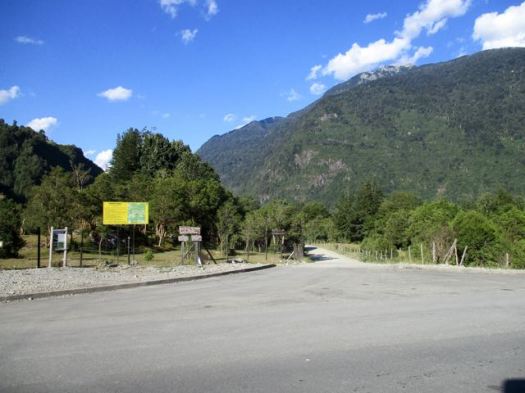
IMG_0467

From there I paid an additional couple of dollars for a shuttle to the trailhead itself.

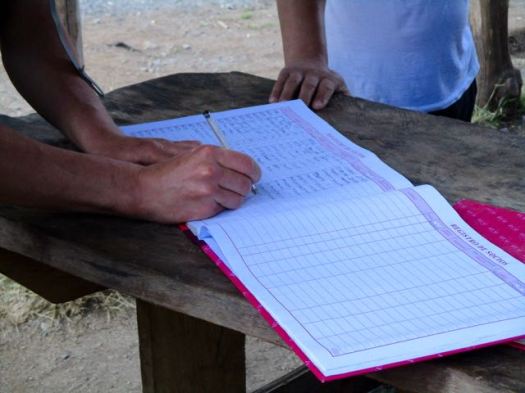
You are required to register but there’s no cost for the hike.
IMG_0471

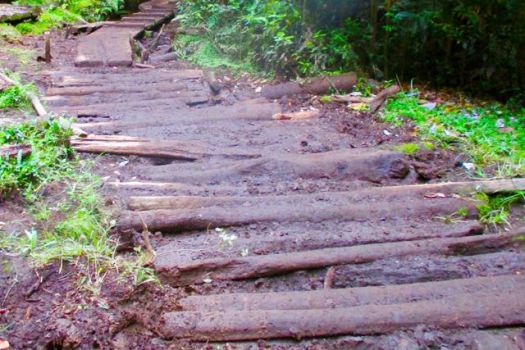
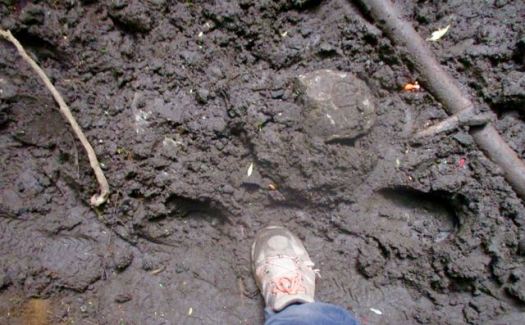
You head into the trees. For 13kms.
IMG_0562

IMG_0557

IMG_0563

13kms of muddy, horse churned muck.

Luckily, it had been sunny for weeks prior to my visit. I could almost get through without getting my feet wet.

About the only highlight was catching glimpses of the crystal clear, pretty river.

IMG_0480

I ran out of daylight putting up my tent near the trail about 10pm.

Very early next morning I hiked on another hour or so to La Junta.

IMG_0493

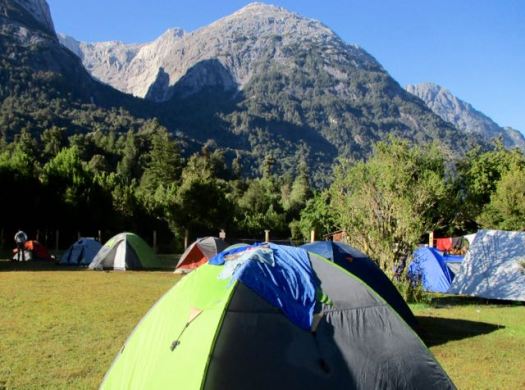
Of several campgrounds available, I was most impressed with Camping Trawen.
IMG_0496

IMG_0494

IMG_0497

But a petty tyrant lady terrorizing campers there motivated me to cross the river by cable car to stay at the next campground.

IMG_0499

IMG_0505

For hikers it’s recommended to camp in the valley. Day hike up, up, up on 3 different trails:

• Trinidad (13km return)
• Amphitheatre (8km return)
• Arco Iris (13km return)

I planned to do Trinidad & Amphitheatre day 1. Arco Iris day 2. Then hike out in time for the bus.

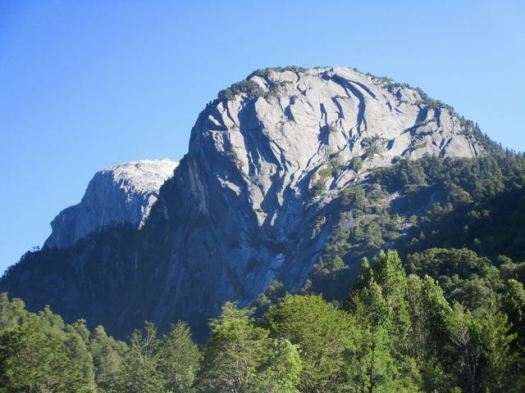
Views from La Junta were enticing. It did not look all that far to the walls.
IMG_0504

I started up quickly passing the famous water slide.

IMG_0509

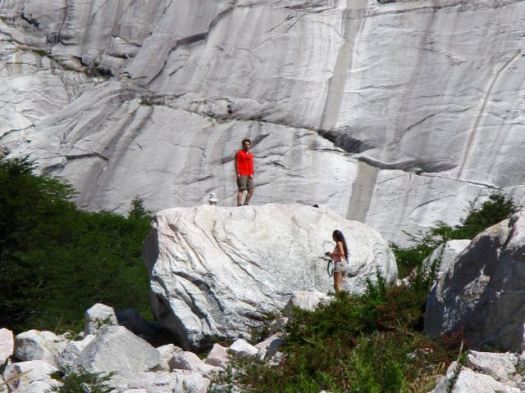
I was the first person to start up Trinidad that day. It took a couple of hours of scrambling (hands & feet) to get to granite. In the trees without all that many views.

IMG_0515

A couple of young guys caught me and we traversed together for another hour.

IMG_0518

Route finding is tricky. These are not park trails but rather bushwhacking routes – the fastest ways climbers have found to get to the lines they want.

When I got to this vista I sat down to enjoy lunch.
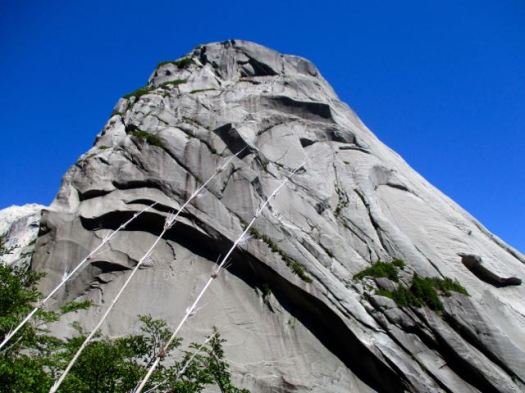
IMG_0519

A condor was checking us out.

IMG_0521

The boys sat too. They couldn’t find the route to the end-of-the-line laguna.
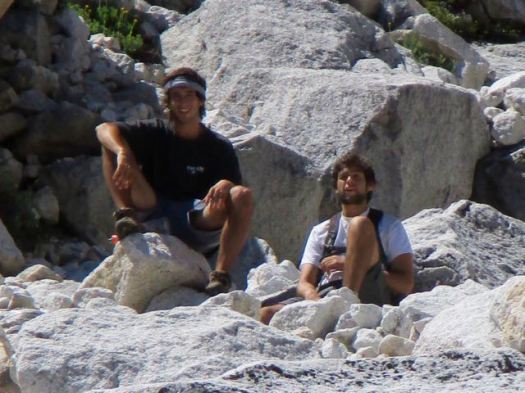
IMG_0523

It was us and the lizards.

IMG_0530

I turned back, still wanting to get to Amphitheatre in the afternoon.

IMG_0524

IMG_0528

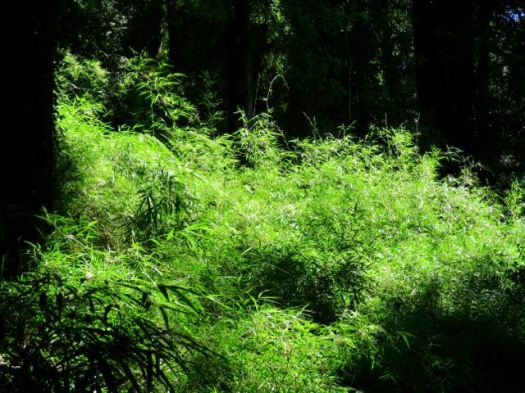
Back into the trees.

IMG_0531

It seems Amphitheatre is far less popular. I saw very few people on this “trail”. There was some rope assistance for scrambling over this rock. It would be very, very slippery when wet.

IMG_0534

Orchids, I assume.

IMG_0538

Amphitheatre is impressive. 🙂

IMG_0541

IMG_0542

IMG_0544

This was about 4:30pm, however. I didn’t stay long.

Sadly I left my camera at Amphitheatre. It was embarrassing to tell other hikers descending why I was going back up. Two hours back up. 😦

… It wasn’t there. Merde.

Happily, this guy had found my camera somewhere on the trail. Then hung it on a branch across the trail so I couldn’t miss it on my second descent. 🙂
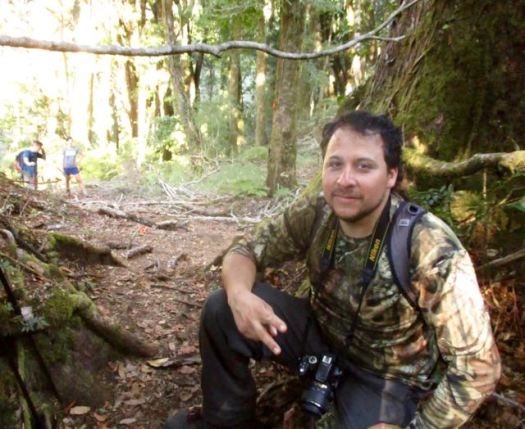
IMG_0548

That was about 7pm.

I hustled down as quickly as possible but it was still near dark before I reached my tent. I was exhausted from 15 hours or more on my feet. And fed up with narrow, dangerous scrambles.

Next morning was cloudy.
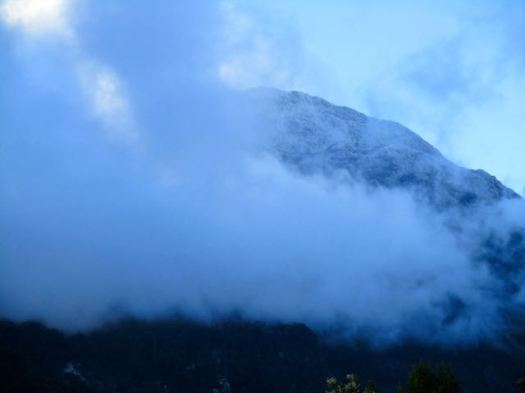
IMG_0553

IMG_0554

But I’d already decided to skip Arco Iris. That’s a shame.

Summit Post:

Arco Iris is probably the best “hike” in the valley. A relentless, steep hike involving fixed hand lines and good exposure takes you to treeline and a spectacular view point on the north side of the valley. From here, you can continue to scramble up to the summit and be rewarded with some of the best views you will probably ever see. Although this is certainly a serious scramble, trekkers comfortable with exposure and handlines should be able to make it. If big drop-offs scare you or you haven’t done any very steep trails requiring use of your hands extensively, then consider passing on this route.
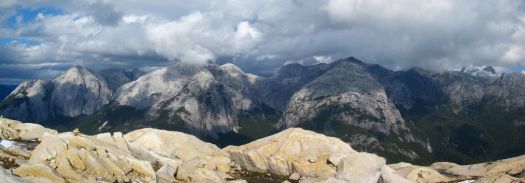
Arco Iris

I walked out. Very tired.

If this all appeals to you, go for it. But I’m not recommending this destination for hikers. 95% of the time you are tree locked. The 26kms return in muddy ruts is not worth the time when there are so many better hikes in Chile nearby.

Hopefully it will be made a National Park one day. Trails, access and navigation improved.
Greater Patagonian Trail update

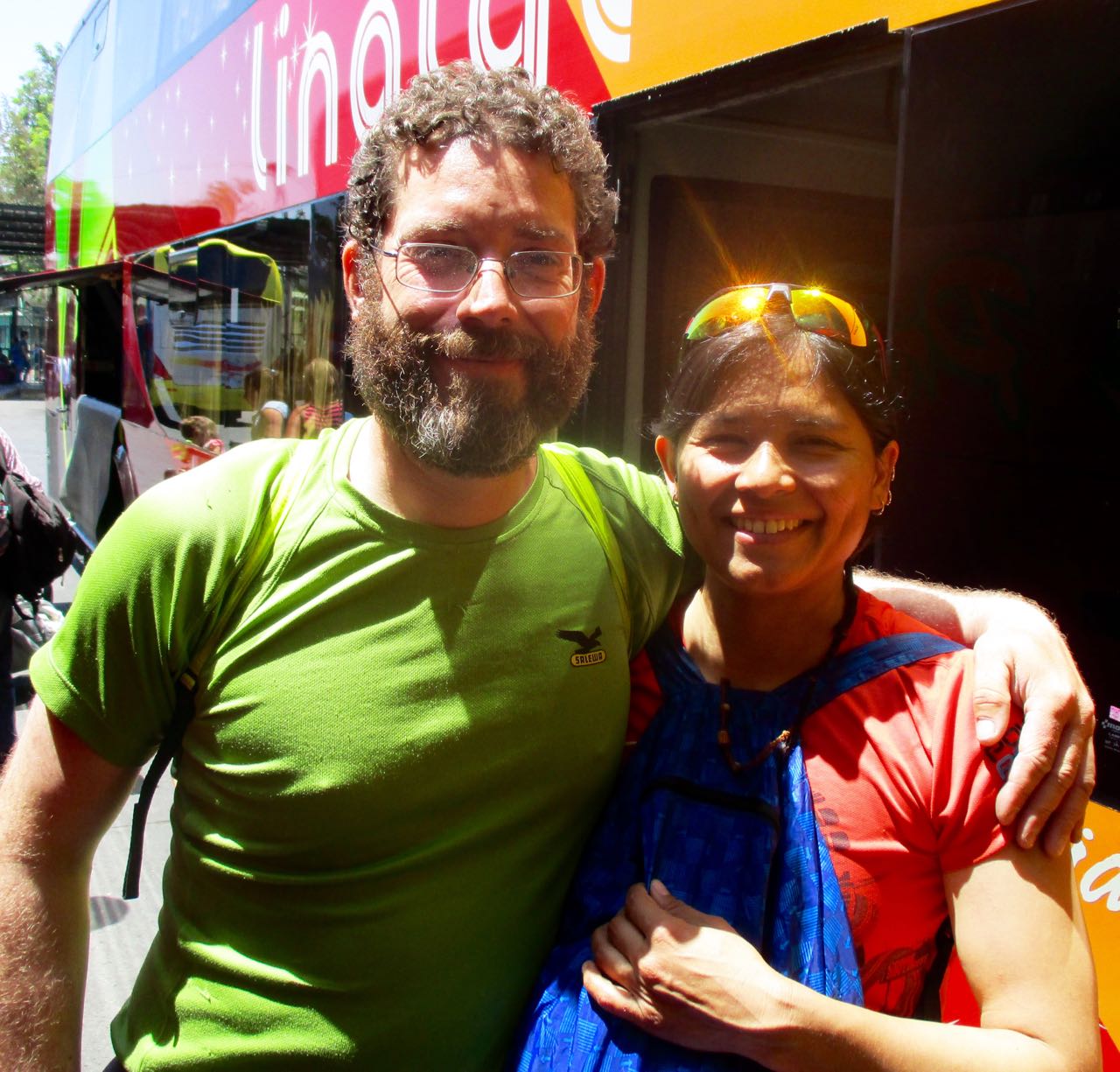
My last day in Chile I was lucky enough to meet up with Jan Dudeck and his partner at the Santiago bus station.

IMG_0582

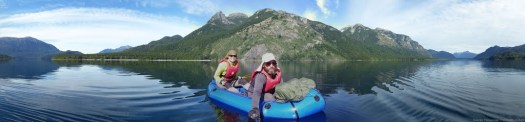
We carbo-loaded on ice cream while I got a personal update on what happened on this their 3rd season on the long distance hike. Carrying an Alpacka packraft on sections.

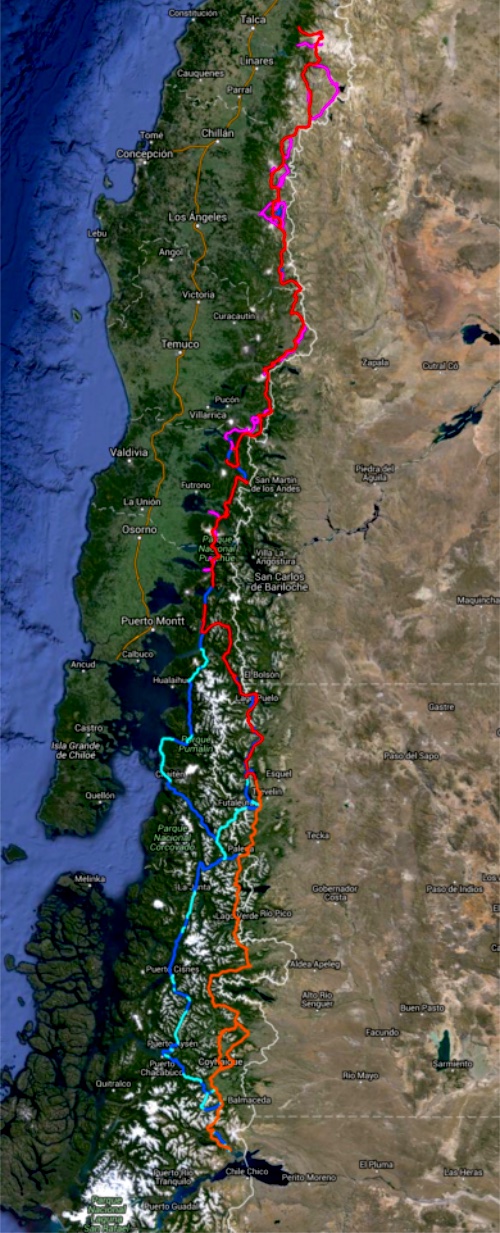
Greater Patagonian

Once back in Europe, Jan will be updating the wikiexplora page with new data. New alternative routes.

The Greater Patagonian is not an official trail but rather 1500km or more of connected best routes in Chile and Argentina. You’ll be lost for sure unless you have KMZ and GPX files downloaded from wikiexplora.

As they research possible new options Jan actually starts with cached Google Earth images. Then looks for the faint trails he sees there to mark waypoints on their GPS. They don’t bother carrying heavy topo maps.

I tried and failed on section 1 of the Greater Patagonian in January. But am very tempted to go back next Jan/Feb to try other sections.

Greater Patagonian Trail

day 4 – return to Laguna Ánimas

trip report by besthike editor Rick McCharles

day 0 | 1 | 2 | 3 | 4 | 5 | info Condor Circuit  

Sunburn was my biggest worry at this point. I had plenty of No-Ad Sport Sunscreen slathered on, but this sun is unrelenting. I was wearing socks on my hands as they were most burnt, so far.

IMG_4178

I made one last climb up to the “corner” of the valley to see if it looped back over a pass in the direction I wanted to go …

The cows thought I was crazy.

IMG_4184

I was crazy. Odds were slim that it would work. I turned back here.

IMG_4187

It was a relief, actually, to finally know where I was going.

River crossings are a big issue here. There are no bridges. Happily this was the most difficult I crossed. Not bad.

IMG_4188

Descending to the hot springs, the group had already vacated. I had the place to myself. 🙂

IMG_4190

IMG_4197

One last look back up my side valley.

IMG_4198

Mid-day I took the shade and studied Spanish for 90 minutes or so. Then resumed my high traverse of the massif.

IMG_4202

Today the two condors came to check me out.

IMG_4207

IMG_4215

I was clinging to life yet. 🙂

IMG_4217

People curse slogging through ash. Personally, I like it. Very soft on the feet. The best screeing surface possible.

IMG_4218

I was surprised to come across 4 Chilean hikers in the afternoon. They had put up the tents and got directions from me to the hot springs. Two had just been married. This was part of the honeymoon. Both were just about to move to Montreal for work. Small world.

IMG_4220

One of the guys asked me if I knew the way back to the Pass. Of course I did. I’d just come from that direction.

How could I get lost? 🙂

IMG_4223

I got lost. 😦

Things truly do look completely different when walking the opposite direction.

My good camera had broken, the telescoping lens mechanism wrecked. 😦 I wasn’t in much of a mood to take photos in any case. 😦

My audio book – Red Rising by Pierce Brown – kept me going.

I was first diverted for about 2 hours. Then about 30 minutes. (Several times I considered backtracking to the honeymoon party tents. I could have walked out with them next morning.)

But – finally – I found the way back to Ánimas. I set up my tent above the lake at this junction of alpine meadow and desert. My best campsite.

IMG_4224

day 0 | 1 | 2 | 3 | 4 | 5 | info Condor Circuit  

Nepal open for business

If you’ve been wanting to travel here but have been deterred by recent events, let this ease your mind. The trails are in good condition. Food and water are abundant. The tea houses are staffed. The only thing missing is you.

Chris Brinlee Jr. – Six Months After The Earthquake, Nepal Is Open For Adventure

Nepal

the Barkley Marathons

… In the nearly 30 years since the Barkley’s inception, only 14 people have finished the race. …

Outside – How Two Filmmakers Cracked the World’s Most Bizarre Trail Race

Stu Gleman fist pumps at the start of the Barkley Marathons

The Barkley Marathons is a 100 miles (160 km) run and a 60 miles (97 km) ‘fun run’ held annually in Frozen Head State Park near Wartburg, Tennessee in late March or early April.

The course itself, which has changed distance, route, and elevation many times since its inaugural run in 1986, currently consists of a 20-mile (32 km) loop with no aid stations except water at two points along the route and the runner’s parked car at the beginning of the loop. Runners of the 100 Mile version run this loop five times, with loops three and four being run in the opposite direction and loop five being runner’s choice. …

Click PLAY or watch the trailer on YouTube.

Buy it.

Cam Honan – off-trail hiking

Great interview.

Are there extra safety precautions you take when you hike an unmarked route?

I generally leave a more detailed description of my proposed route with friends or family before setting out. For someone that is relatively new to off-trail backpacking, I would recommend erring on the side of caution in regards to food, water, sufficient layers, distance estimates, etc. You may also consider carrying a personal locater beacon, such as a SPOT or Delorme inReach. …

What kinds of maps do you use? What Scale? Have they been difficult to get? How much do you study the maps before starting?

In western countries such as the United States, it’s easy to find great topo maps (e.g. USGS 1:24,000 series). In developing nations, it’s often a very different story. Over the decades I’ve made do with everything from 1:250,000 overview sheets to a sketch map on the back of a napkin from a waiter in Arequipa, Peru (Volcan Misti hike, 1996). …

HIKER Q & A – CAM ‘SWAMI’ HONAN ON CREATING ONE’S OWN HIKING ROUTES

Fording_Rio_Verde_Sinforosa_Canyon_CC

related – Cam’s 2015 – The Year in Pictures

“stupid light” hiking

Andrew Skurka :

Ten- or fifteen-thousand miles ago I believed fervently that “light is right” and “lighter is better.” I proudly considered myself a “lightweight,” “ultralight” or “super ultralight” backpacker, and I believed that the weight of my pack was linearly correlated with the quality of my experience — the lighter my pack got, the better the hiking became.

But in my blind pursuit to shed weight, I made decisions that compromised my efficiency, thus negatively impacting my trips. In other words, in an effort to “go light” I ended up going “stupid light.” (Special thanks to Phil Barton and Pat Starich for sharing this expression with me.)

I went “stupid light” by:

Not taking gear and supplies that were necessary given the conditions, and …
Taking gear and supplies that were too light.

read more – “Stupid light”: Why light is not necessarily right, and why lighter is not necessarily better

glacier-np-campsite-615x408